The thought of an interview can be nerve-wracking, but the right preparation can make all the difference. Explore this comprehensive guide to Penny Round Tile Installation interview questions and gain the confidence you need to showcase your abilities and secure the role.
Questions Asked in Penny Round Tile Installation Interview
Q 1. Describe your experience with installing penny round tiles.
I’ve been installing penny round tiles for over 10 years, working on a wide range of projects from small bathroom renovations to large-scale commercial installations. My experience encompasses various tile materials, including glass, ceramic, porcelain, and even metal penny rounds. I’ve mastered various installation techniques, troubleshooting common issues like uneven surfaces and inconsistent grout lines, ensuring a consistently high-quality finish. I’ve also worked extensively with different design styles, from classic mosaics to modern minimalist applications. A recent project involved installing over 500 square feet of iridescent glass penny rounds in a high-end spa, a project that truly tested my skills and attention to detail.
Q 2. What types of substrates are suitable for penny round tile installation?
Penny round tiles can be installed on a variety of substrates, but proper preparation is key to success. Suitable substrates include:
- Concrete: A common and robust choice, provided it’s clean, sound, and properly prepared (level, free of cracks and dust).
- Backer Board (Cement Board): This is the recommended substrate for most interior applications, offering superior moisture resistance compared to drywall. It provides a stable and even surface for tile adhesion.
- Drywall: While possible for some applications, drywall should only be used in dry areas and requires extra care to ensure it is properly primed and sealed to prevent moisture absorption and tile failure.
- Marble or other stone: These substrates require careful preparation, ensuring they are clean, level, and sealed properly to prevent staining from the grout.
Unsuitable substrates include those that are not stable, structurally unsound, or likely to flex or move, leading to tile cracking and failure.
Q 3. Explain the process of preparing a surface for penny round tile installation.
Surface preparation is critical for a successful penny round tile installation. This process typically involves these steps:
- Cleaning: Thoroughly clean the substrate to remove any dirt, dust, grease, or loose debris. Use a suitable cleaner appropriate for the substrate material.
- Repairing: Repair any cracks, holes, or imperfections in the substrate. Use patching compound or appropriate repair material suitable for the substrate.
- Leveling: Achieve a level surface. Uneven surfaces will result in uneven tile installation. Use self-leveling compound where necessary.
- Priming: Apply a suitable primer to enhance adhesion and prevent moisture absorption. The type of primer will depend on the substrate material.
- Sealing (if necessary): Certain substrates, like drywall or porous stone, benefit from sealing prior to tiling to prevent moisture damage and improve tile adhesion.
Failing to properly prepare the surface is the most common cause of tile failure. A little extra effort in preparation yields significantly better results.
Q 4. What are the different methods for laying penny round tiles?
There are two main methods for laying penny round tiles:
- Sheet-mounted: Penny rounds are pre-mounted on mesh sheets, making installation faster and easier. This method is ideal for larger areas and provides consistent spacing. Think of it like installing large tiles, but each tile is a collection of smaller penny rounds.
- Individual tiles: Each penny round is installed individually. This allows for more intricate designs and greater flexibility but is much more time-consuming and requires greater skill to achieve consistent spacing and a clean, professional look. This is better for small areas or intricate patterns.
The choice of method depends on the project’s scale, design complexity, and the installer’s skill level. Sheet-mounted is generally preferred for larger projects, while individual tile installation allows for greater creative control.
Q 5. How do you ensure proper grout spacing with penny round tiles?
Maintaining consistent grout spacing with penny round tiles is crucial for a professional finish. For sheet-mounted tiles, the spacing is predetermined by the manufacturer. For individually installed tiles, you can use several techniques:
- Spacers: Small plastic spacers are placed between the tiles to ensure uniform spacing. They are removed after the thinset has set.
- Tape: Masking tape can create evenly spaced lines to guide tile placement.
- Pre-measured layouts: Carefully planning the layout beforehand and marking the locations of each tile can ensure consistency.
Irregular spacing can create an unprofessional appearance. Using a consistent method throughout the installation is key to success.
Q 6. What types of grout are best suited for penny round tiles?
The best grout for penny round tiles depends on the application and tile material. However, some general guidelines apply:
- Epoxy grout: Offers superior stain resistance, durability, and water resistance. Ideal for wet areas such as showers or pools, and for high-traffic areas. It’s more expensive and requires more skill to work with.
- Cement-based grout: More common and less expensive than epoxy grout. Offers good durability and is suitable for most applications, though it may be less stain-resistant and water-resistant than epoxy grout. For less demanding applications, it is more practical and economical.
Avoid using sanded grout with small tiles like penny rounds as the sand particles can scratch the surface.
Q 7. Explain the process of grouting penny round tiles.
Grouting penny round tiles requires precision and attention to detail. The process involves:
- Mixing the grout: Follow the manufacturer’s instructions carefully for mixing consistency. Avoid mixing too much grout at once, as it can start to set before you use it.
- Applying the grout: Use a rubber grout float held at a 45-degree angle to push the grout into the gaps between the tiles. Work in small sections, ensuring complete coverage.
- Removing excess grout: After applying the grout, use a damp sponge or cloth to remove excess grout from the tile surfaces. Be careful not to dislodge the tiles. Wipe along the grout lines to clean them.
- Cleaning: Once the grout is mostly set (usually after 20-30 minutes), use a clean damp sponge to clean any remaining haze from the tiles. This should be done carefully to avoid scratching the tiles.
- Sealing (optional): Once the grout is fully cured, it is recommended to seal it to improve stain and water resistance. This is particularly crucial for grout in high-moisture areas.
Proper grouting ensures a clean and durable installation, greatly enhancing the overall aesthetics and longevity of the penny round tile project.
Q 8. How do you clean and maintain penny round tile installations?
Cleaning and maintaining penny round tile installations is surprisingly straightforward, but requires consistent attention to detail. Think of it like caring for a finely polished gemstone – regular, gentle care prevents bigger problems down the line.
Regular Cleaning: A simple sweep or vacuuming is your first line of defense against dust and debris. For deeper cleaning, use a pH-neutral cleaner diluted in warm water. Avoid harsh chemicals, abrasive cleaners, or scouring pads, as these can damage the grout and the tile’s finish. Apply the cleaner with a soft mop or sponge, rinsing thoroughly and allowing the surface to air dry.
Grout Care: Grout is porous and prone to staining. Regularly use a grout brush or a grout cleaning solution specifically designed to remove grime and mildew. For stubborn stains, you might need a stronger, oxygen-based bleach solution, but always test it in an inconspicuous area first. Consider sealing your grout after installation to make cleaning easier and prevent staining.
Specialized Cleaning: For particularly challenging stains, like oil or grease, you may need a specialized tile and grout cleaner. Remember to always follow the manufacturer’s instructions.
Q 9. What are some common challenges encountered when installing penny round tiles?
Penny round tile installation presents unique challenges compared to larger format tiles. One of the biggest hurdles is the sheer number of individual pieces. This means meticulous planning, precise cutting, and an abundance of patience are crucial.
- Maintaining Consistent Spacing: Ensuring even spacing between each tiny tile is a significant challenge. Uneven spacing can lead to an unappealing, unprofessional finish. This requires a steady hand, attention to detail, and possibly the use of spacers.
- Cutting Tiles: Cutting individual penny rounds precisely, particularly for curves or corners, requires specialized tools and skill. Improper cuts can lead to chipped or broken tiles.
- Leveling the Surface: Penny rounds highlight imperfections in the substrate, demanding a perfectly level surface before installation. Any irregularities will be magnified by the small size of the tiles.
- Time Consumption: The sheer number of tiles makes the installation process significantly more time-consuming compared to larger tiles.
Q 10. How do you handle uneven surfaces when installing penny round tiles?
Uneven surfaces are the enemy of a beautiful penny round installation. Before even considering tile placement, addressing surface imperfections is paramount. Think of it like building a house – you wouldn’t start building walls on an uneven foundation.
Self-Leveling Compound: For minor imperfections, a self-leveling compound is usually sufficient. This is a liquid compound that fills in low spots, creating a smooth, level surface once dried. Follow the manufacturer’s instructions carefully for proper mixing and application.
Backer Board: For more significant unevenness, installing a cement board backer board is necessary. This provides a stable and uniform base for the tile installation. Make sure the backer board is firmly secured and level before proceeding.
Thinset Mortar: Finally, the use of a high-quality thinset mortar is essential, as this is the adhesive that bonds the tiles to the substrate. Using the correct thinset for your tile type is crucial for proper adhesion and long-term durability.
Q 11. What safety precautions do you take when installing penny round tiles?
Safety is paramount in any tiling project, and penny round installations are no exception. The small size of the tiles and the tools involved necessitate extra care.
- Eye Protection: Always wear safety glasses to protect your eyes from flying debris during cutting.
- Gloves: Wear gloves to protect your hands from cuts and irritation from the tile and mortar.
- Dust Mask: A dust mask is essential, especially when cutting tiles, to avoid inhaling harmful dust particles.
- Proper Ventilation: Ensure adequate ventilation, particularly when working with adhesives and sealants, as these often emit fumes.
- Knee Pads: Working on your knees for extended periods can be strenuous. Knee pads can provide comfort and support.
- Caution with Cutting Tools: Be extremely careful when using cutting tools like wet saws, tile nippers, or scoring tools. Follow the manufacturer’s instructions and use appropriate safety measures.
Q 12. What tools and materials are essential for penny round tile installation?
The tools and materials needed for a successful penny round tile installation go beyond the basics. It’s a detailed process that demands precision.
- Penny Round Tiles: Obviously, this is the star of the show!
- Thinset Mortar: The adhesive that bonds the tiles to the substrate.
- Grout: The material that fills the spaces between the tiles.
- Notched Trowel: For applying the thinset evenly.
- Grout Float: For applying and smoothing the grout.
- Tile Spacers: To ensure consistent spacing between the tiles.
- Wet Saw (or Tile Nippers): For cutting tiles precisely.
- Measuring Tape & Pencil: For accurate measurements and marking.
- Sponge & Bucket: For cleaning up excess mortar and grout.
- Grout Cleaning Brush: For removing excess grout after setting.
- Safety Gear (Gloves, Glasses, Mask): Protecting yourself is essential!
Q 13. Describe your experience with different types of penny round tiles (e.g., ceramic, glass, porcelain).
I have extensive experience working with various penny round tile materials, each with its unique characteristics and challenges. It’s like choosing between different gemstones – each has a distinct beauty and requires a slightly different approach.
- Ceramic Penny Rounds: These are generally affordable and durable, but can be less resistant to scratches than porcelain or glass.
- Porcelain Penny Rounds: Offer superior durability and water resistance, making them a great choice for bathrooms and kitchens. They are often more expensive than ceramic.
- Glass Penny Rounds: Bring a unique elegance and light reflectivity. They are beautiful but can be more fragile than ceramic or porcelain and require extra care during installation and maintenance. They also tend to be on the higher end in terms of price.
- Metal Penny Rounds: An increasingly popular option offering a unique industrial or modern aesthetic. Requires special installation techniques and may be more susceptible to tarnishing.
Each tile type requires slightly different techniques and materials to ensure proper installation and longevity. For instance, the thinset used for glass tiles might differ from the one used for ceramic.
Q 14. How do you calculate the amount of materials needed for a penny round tile project?
Accurately calculating the necessary materials is crucial to avoid costly mistakes and delays. It’s like baking a cake – you need the right amount of ingredients for the desired outcome.
1. Measure the Area: Precisely measure the area to be tiled in square feet.
2. Account for Waste: Penny rounds are small, and many will require cutting. Add a 10-15% waste factor to your calculations to account for cuts, breaks, and potential errors.
3. Tile Coverage: Determine the coverage area of each tile sheet or box – usually stated on the packaging.
4. Calculate Tile Quantity: Divide the total square footage (including waste) by the coverage area of one tile sheet or box to determine the number of units needed.
5. Grout Calculation: Grout quantity is typically calculated by the linear foot of grout lines. This requires calculating the total length of grout lines and referring to the manufacturer’s guidelines for grout coverage per unit weight or volume.
6. Thinset Calculation: Thinset mortar requirements vary. Consult the manufacturer’s instructions for the recommended coverage rate based on tile type and surface texture.
Using these steps ensures you have enough materials on hand to complete your project without interruption.
Q 15. Explain the process of cutting penny round tiles.
Cutting penny round tiles requires precision and the right tools. The best method depends on the material – ceramic, glass, or metal – and the cut needed. For smaller cuts or adjustments, I typically use a wet saw with a diamond blade. This offers the cleanest cut, minimizing chipping. For more complex cuts, like creating curves or fitting around obstacles, a tile nipper or a hand-held tile cutter might be more appropriate. I always prioritize safety, wearing safety glasses and gloves, and ensuring proper ventilation in the workspace. A common mistake is applying too much pressure, leading to cracked tiles. Gentle, controlled cuts are key. For example, if I need to cut a tile to fit a corner, I’ll make a series of small cuts with the nipper instead of trying to force a single, large cut.
For larger-scale cuts, such as creating a perfectly circular design within a larger penny round installation, I might use a specialized tile-cutting tool designed for creating circular cuts. This allows for a more precise and professional look.
Career Expert Tips:
- Ace those interviews! Prepare effectively by reviewing the Top 50 Most Common Interview Questions on ResumeGemini.
- Navigate your job search with confidence! Explore a wide range of Career Tips on ResumeGemini. Learn about common challenges and recommendations to overcome them.
- Craft the perfect resume! Master the Art of Resume Writing with ResumeGemini’s guide. Showcase your unique qualifications and achievements effectively.
- Don’t miss out on holiday savings! Build your dream resume with ResumeGemini’s ATS optimized templates.
Q 16. How do you handle waste and disposal during penny round tile installation?
Waste management is a crucial aspect of any tile installation, especially with penny rounds. I meticulously plan the layout beforehand to minimize waste. This involves precise measuring, using full tiles wherever possible, and creating a detailed cutting diagram. Leftover tiles are carefully stored, labeled, and often saved for future small repairs or projects. For disposal, I follow local regulations, typically separating the tile waste from other construction debris. Broken tiles and excess thinset mortar are handled separately and often disposed of in designated construction waste receptacles. This helps to reduce the environmental impact and maintain a clean and organized workspace. On larger projects, I often work with a demolition crew to ensure responsible and safe disposal of all waste materials.
Q 17. Describe your experience with different tile installation patterns (e.g., running bond, herringbone).
My experience encompasses various penny round tile installation patterns. The classic running bond provides a simple yet elegant look; it’s straightforward to install and visually appealing. Herringbone patterns, on the other hand, offer a more intricate and visually engaging result, adding a sophisticated touch, but require more meticulous planning and cutting. I’ve also worked with basketweave patterns and even more unique, custom designs that clients have requested. Each pattern demands a slightly different approach, requiring careful consideration of tile spacing, cutting needs, and the overall design’s impact on the space. For example, a running bond pattern is perfect for a backsplash where a clean, straightforward look is desired, whereas a herringbone pattern might better suit a floor where visual interest is a priority.
Q 18. How do you ensure a consistent and even look with penny round tile installation?
Achieving a consistent and even look with penny round tiles requires a meticulous approach from start to finish. Precise layout planning is crucial. I often create a full-scale mock-up to visualize the final design and identify potential issues beforehand. This helps ensure proper spacing and addresses any challenges early on. During installation, I use spacers to maintain uniform grout lines. I also frequently check the installation for evenness, using a level to verify the flatness of the tile surface. Careful attention to detail when applying the thin-set mortar is also vital – ensuring the mortar is evenly distributed and the tiles are fully seated prevents unevenness later. I regularly check for alignment using a laser level, ensuring the overall surface is perfectly level and not dipping or tilting.
Q 19. What is your experience with using different types of thin-set mortar?
My experience includes working with various thin-set mortars, each suited for specific tile types and installation conditions. I’ve used modified thin-set mortars for enhanced bonding strength and workability, particularly beneficial for larger format tiles or those being installed in high-traffic areas. Unsanded mortars are ideal for smaller grout lines and work well with penny rounds. The choice of mortar depends on the project’s requirements and always matches the tile manufacturer’s recommendations. I also consider factors such as the substrate material (concrete, drywall, etc.) and the environmental conditions (humidity, temperature). For example, if working in a humid environment, I might opt for a thin-set designed to resist moisture.
Q 20. Explain your understanding of the importance of proper ventilation during tile installation.
Proper ventilation is paramount during tile installation. Thin-set mortars and some grouts release moisture as they cure. Without adequate ventilation, this moisture can become trapped, potentially causing issues like efflorescence (salt deposits on the tile surface), mold growth, and even tile delamination. It is crucial for the health of the installation and for the overall safety of those involved in the process. I always ensure proper ventilation by opening windows and doors, or using fans to circulate air, especially in enclosed spaces. This is especially crucial during the curing process of the thin-set, usually 24-72 hours after the job is done. I also take into account the local environmental conditions to make sure my installation has proper ventilation.
Q 21. How do you troubleshoot common problems during penny round tile installation (e.g., cracked tiles, uneven grout lines)?
Troubleshooting is an inherent part of tile installation. Cracked tiles often stem from improper cutting, excessive pressure during installation, or poor-quality tiles. Uneven grout lines typically result from inconsistent spacing or improper grout application. My approach is methodical. For cracked tiles, I carefully remove the affected tile, ensuring the underlying substrate is clean and sound. I then replace it with a new tile, ensuring proper mortar application and alignment. For uneven grout lines, I may use a grout saw to carefully adjust and clean up the existing grout before re-grouting, ensuring consistent spacing through the use of spacers. Prevention is key; careful planning and meticulous installation techniques minimize these problems. However, sometimes unforeseen issues arise, and a systematic troubleshooting approach, combined with experience, ensures a successful outcome.
Q 22. How do you measure and mark out the installation area for penny round tiles?
Accurately measuring and marking the installation area is paramount for a successful penny round tile project. It prevents wasted materials and ensures a professional finish. I begin by thoroughly cleaning the substrate, ensuring it’s level and free from debris. Then, I use a measuring tape to determine the precise dimensions of the area. I carefully transfer these measurements to the surface using a pencil and a straight edge, creating guidelines that account for any necessary cuts or adjustments around obstacles like pipes or door frames. For complex shapes, I might utilize a chalk line for extra precision. Think of it like creating a blueprint – a clear, detailed plan before starting any installation ensures efficiency and minimizes errors.
For example, if I’m tiling a shower floor, I’ll meticulously measure the length and width, noting any variations in the surface. Then, I’ll mark out the center point and work outwards from there to ensure symmetry. This methodical approach is especially important for penny rounds because the small size of the tiles magnifies any inaccuracies.
Q 23. Describe your experience with installing penny round tiles in wet areas (e.g., showers, bathrooms).
Installing penny rounds in wet areas like showers and bathrooms requires specialized knowledge and materials. The key is using a waterproof membrane and a suitable adhesive designed for wet environments. I have extensive experience with this, having worked on numerous bathroom and shower renovations. I always start by applying a waterproof membrane, like Schluter-KERDI, to the substrate to prevent water damage. This is crucial for longevity and to prevent mold and mildew growth. Then, I choose a high-quality, modified thin-set mortar specifically formulated for wet locations. This mortar offers superior adhesion and water resistance compared to standard mortars. Finally, I ensure proper grout selection – an epoxy grout is ideal for wet areas as it’s completely waterproof and resists staining.
For instance, in one project, I used a modified thin-set mortar with a high-flexibility additive to accommodate any slight movement in the shower pan, preventing cracks in the tile work over time. The result was a beautiful and durable shower installation that remains pristine even years later.
Q 24. What is your experience with using a tile saw?
Proficiency with a tile saw is essential for precise cuts, especially when working with penny rounds around corners, curves, or obstacles. I’m comfortable using both wet and dry tile saws, understanding their differences and limitations. A wet saw provides cleaner, more precise cuts, minimizing chipping, particularly important for small, delicate tiles like penny rounds. A dry saw, however, is useful in situations where a wet saw isn’t practical. Safety is always my top priority. I always wear appropriate safety glasses and a dust mask when using a tile saw, and I ensure proper ventilation.
I remember one instance where I needed to cut penny rounds to fit around a curved shower drain. Using the wet saw, I made several precise cuts, ensuring a perfect fit and a seamless transition between the tiles. The result was a professional, clean finish that complemented the overall design of the shower.
Q 25. Explain your understanding of different types of tile adhesives.
Different tile adhesives, or thin-set mortars, possess unique properties that make them suitable for specific applications. Understanding these differences is crucial for a successful installation. Modified thin-set mortars are generally preferred for most penny round tile installations because they offer superior adhesion, flexibility, and water resistance. Unmodified thin-set mortars are less expensive but less versatile and less suitable for wet areas or surfaces that may experience movement. For larger-scale installations or installations with demanding requirements (e.g., heated floors), I may use a high-performance, rapid-setting mortar. The choice of adhesive depends on factors such as the substrate material (concrete, plywood, backer board), the tile type, and the environment (dry or wet).
For example, when working on a project with a radiant floor heating system, I’d choose a modified thin-set specifically designed for heated floors to avoid cracking from the expansion and contraction of the substrate.
Q 26. What is your experience with installing penny round tiles on curved surfaces?
Installing penny rounds on curved surfaces presents a unique challenge, requiring careful planning and precision cutting. My approach involves creating a template of the curved surface first, usually by using flexible materials like cardboard or thin plastic sheeting to accurately reflect the curvature. I then use this template to pre-cut the tiles before installation. This minimizes on-site cutting and ensures a perfect fit. I also consider using a flexible adhesive to accommodate the curve and prevent cracking. It’s a delicate process, requiring patience and attention to detail. Think of it like sculpting with small pieces of mosaic to create a perfect curve rather than simply placing tiles.
In one project involving a curved wall, I used a flexible thin-set and a series of precisely cut penny rounds to create a stunning, flowing mosaic effect. The end result was a flawlessly curved surface that showcased the beauty of the tiles.
Q 27. How do you ensure the longevity and durability of a penny round tile installation?
Ensuring the longevity and durability of a penny round tile installation involves careful attention to every step of the process. Starting with a properly prepared substrate is key; it must be clean, level, and free of any loose debris. Using the correct adhesive for the substrate and environmental conditions is also crucial. Furthermore, proper grout selection is essential for water resistance and stain prevention. In wet areas, an epoxy grout is recommended for its superior water resistance and durability. Finally, proper sealing of the grout lines can prevent moisture penetration and staining, prolonging the lifespan of the installation. Regularly cleaning the tiles will also help maintain their appearance and prevent dirt from accumulating in the grout.
Properly maintaining the surface with appropriate cleaning products also helps prolong the life and beauty of the installation. Avoiding harsh chemicals is recommended.
Q 28. Describe your approach to quality control during penny round tile installation.
Quality control is an ongoing process throughout the penny round tile installation. I begin by carefully inspecting the tiles for any defects before the installation starts. During installation, I regularly check the levelness and alignment of the tiles, using a level and straight edge to ensure a consistent, even surface. I also pay close attention to the grout lines, ensuring they are consistently spaced and properly filled. After the grout has cured, I perform a final inspection, checking for any imperfections or areas requiring attention. This multi-stage approach ensures a high-quality, professional finish that meets my standards.
Think of it as a layered approach. First, I examine the materials; next, I monitor the process; and finally, I review the finished product. This comprehensive approach gives me the confidence that the installation is flawless and will stand the test of time.
Key Topics to Learn for Penny Round Tile Installation Interview
- Substrate Preparation: Understanding the importance of a level and properly prepared surface for successful installation. This includes considerations for different substrate types (e.g., concrete, drywall, backer board).
- Mortar Selection and Application: Knowing the different types of thin-set mortar and their appropriate uses for penny round tiles. Mastering consistent and proper mortar application techniques to ensure adhesion and prevent issues like lippage.
- Layout and Planning: Developing efficient layout strategies to minimize waste and maximize the aesthetic appeal of the finished product. This includes understanding different pattern options and dealing with cuts and corners.
- Tile Cutting and Shaping: Proficiency in using various tile cutting tools (e.g., wet saw, nippers) to accurately cut and shape penny round tiles to fit specific areas and achieve desired patterns.
- Grouting Techniques: Understanding different grout types and their suitability for penny round tile installations. Mastering proper grouting techniques to achieve a clean, even finish and prevent grout haze.
- Troubleshooting Common Issues: Identifying and addressing common problems encountered during penny round tile installation, such as uneven grout lines, lippage, cracked tiles, and poor adhesion. This includes understanding preventative measures.
- Safety Procedures: Understanding and adhering to all relevant safety protocols when working with tile installation tools and materials.
- Time and Material Estimation: Accurately estimating the time and materials required for a given penny round tile installation project.
Next Steps
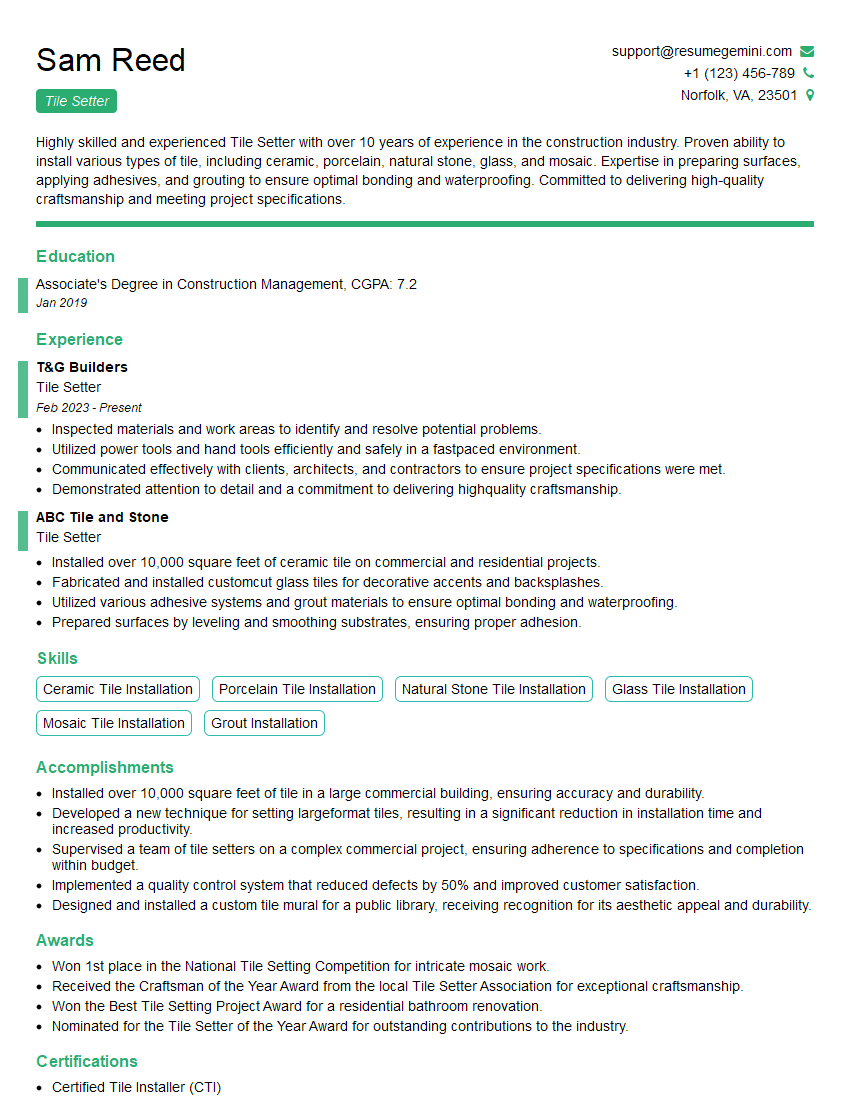
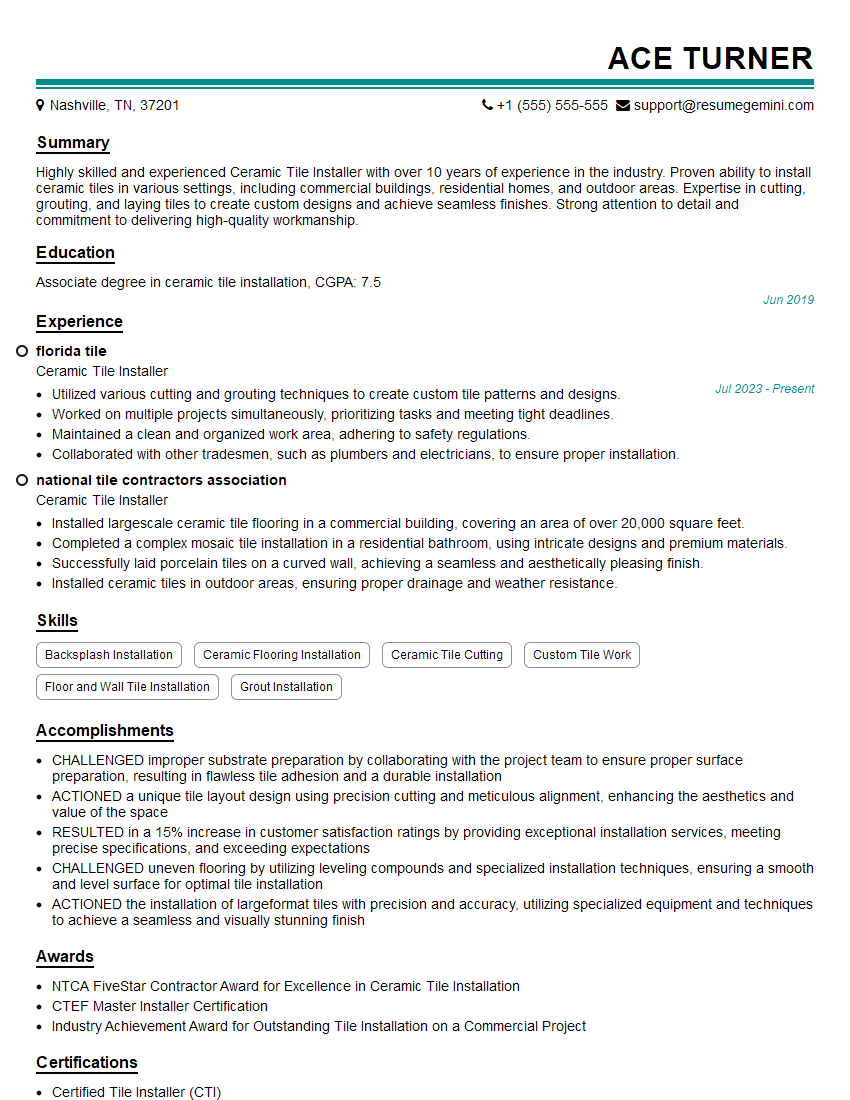
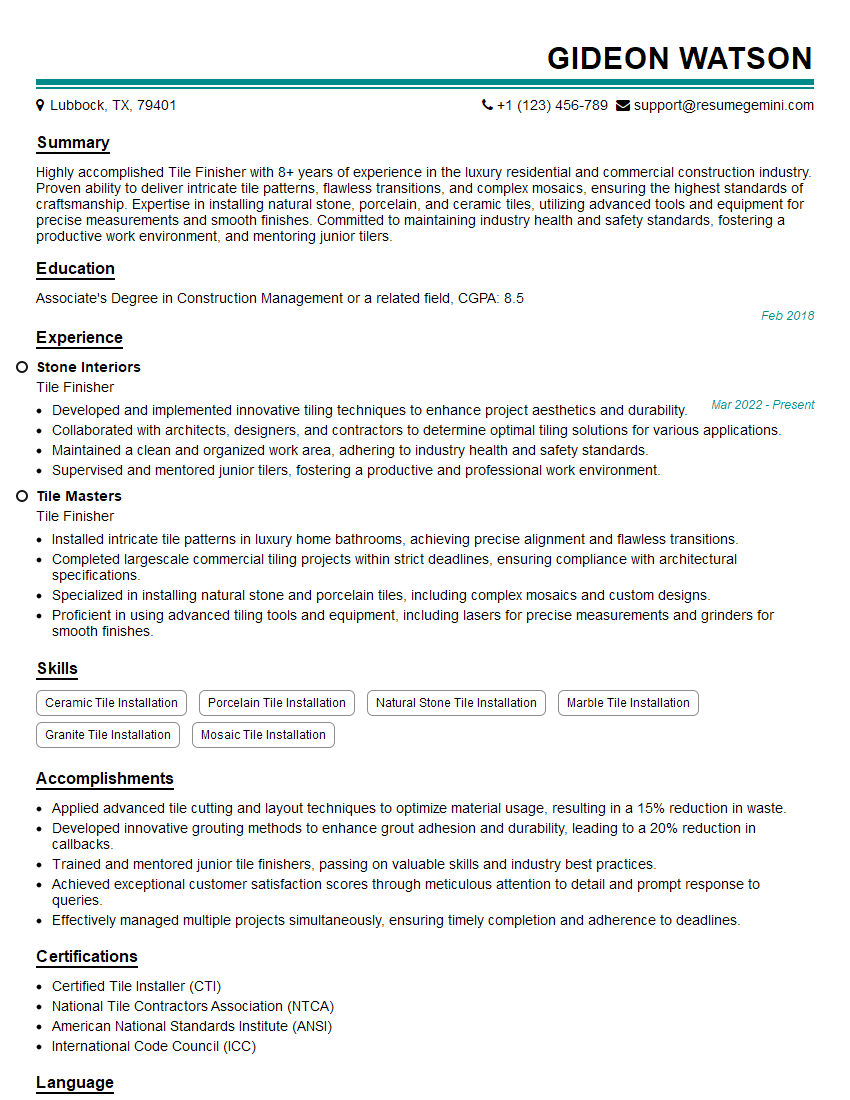
Mastering penny round tile installation opens doors to exciting career opportunities in the construction and renovation industries. Your skills in this specialized area are highly sought after, leading to higher earning potential and greater job satisfaction. To maximize your chances of landing your dream job, create a compelling, ATS-friendly resume that highlights your expertise. ResumeGemini is a trusted resource to help you build a professional and effective resume that showcases your abilities. Examples of resumes tailored to Penny Round Tile Installation are available to guide you.
Explore more articles
Users Rating of Our Blogs
Share Your Experience
We value your feedback! Please rate our content and share your thoughts (optional).
What Readers Say About Our Blog
To the interviewgemini.com Webmaster.
Very helpful and content specific questions to help prepare me for my interview!
Thank you
To the interviewgemini.com Webmaster.
This was kind of a unique content I found around the specialized skills. Very helpful questions and good detailed answers.
Very Helpful blog, thank you Interviewgemini team.