Cracking a skill-specific interview, like one for PLC Programming for Buffer Systems, requires understanding the nuances of the role. In this blog, we present the questions you’re most likely to encounter, along with insights into how to answer them effectively. Let’s ensure you’re ready to make a strong impression.
Questions Asked in PLC Programming for Buffer Systems Interview
Q 1. Explain the function of a buffer system in an automated manufacturing process.
In automated manufacturing, a buffer system acts as a temporary storage area between different stages of a process. Think of it like a waiting room for parts. This prevents disruptions caused by variations in the speed or timing of different machines. For example, a fast machine producing parts might feed into a slower assembly line. The buffer system holds the excess parts, preventing the fast machine from halting while the slower one catches up. This smooths out production flow, increases efficiency, and reduces downtime.
Buffers are crucial for decoupling processes, allowing each stage to operate independently at its optimal pace. Without a buffer, a single machine malfunctioning or slowing down could trigger a chain reaction, shutting down the entire line. The buffer absorbs these shocks and maintains the overall production rhythm.
Q 2. Describe different PLC programming methods used for buffer system control (e.g., FIFO, LIFO).
Several PLC programming methods manage buffer systems. The two most common are FIFO (First-In, First-Out) and LIFO (Last-In, First-Out).
FIFO: This method operates like a queue. The first part entering the buffer is the first one to leave. Imagine a conveyor belt; items are added at one end and removed from the other. This is ideal when maintaining part order is important, such as in assembly processes where components must be assembled in a specific sequence.
LIFO: This operates like a stack. The last part entering the buffer is the first one to leave. This is similar to stacking plates; the last plate added is the first one removed. LIFO is useful when the order isn’t critical, potentially offering faster access to recently added parts. It might be employed for tasks that prioritize the quick processing of urgent or recently produced components.
Implementation often involves using data structures like arrays or queues within the PLC program, coupled with counters to track the number of items in the buffer and pointers to manage the ‘head’ and ‘tail’ positions (for FIFO) or the ‘top’ of the stack (for LIFO). The choice depends entirely on the specific application’s requirements.
Q 3. How would you handle buffer overflow or underflow conditions in a PLC program?
Buffer overflow and underflow are critical situations that must be handled gracefully to prevent production disruptions.
Overflow: Occurs when the buffer is full, and more parts arrive. The PLC program should detect this condition using a sensor (e.g., a full level sensor) or by monitoring the buffer’s fill level. The response could involve stopping the upstream machine temporarily, activating an alarm, or diverting the excess parts to a secondary buffer. Implementing a system of prioritized alarms can be crucial, escalating responses from warnings to complete system halts as needed.
Underflow: Happens when the buffer is empty, and a downstream machine requests parts. The PLC should halt the downstream machine, signal an error, or potentially initiate a refill process from a secondary source. Careful monitoring of the buffer level through sensors is essential.
Proper error handling is crucial. It’s best practice to log error events for later analysis, and to ensure any halting of machinery is accompanied by clear visual and audible alerts to maintenance personnel. A well-designed system will provide clear indications of the nature of the error and its location, aiding quicker resolution.
Q 4. Explain how you would implement sensor integration (e.g., level sensors, proximity sensors) within a buffer system.
Sensor integration is essential for real-time buffer monitoring. Various sensors provide critical data:
Level Sensors: (Ultrasonic, capacitive, or optical) measure the fill level in the buffer. These are vital for detecting overflow and underflow conditions. The PLC reads the sensor’s analog or digital output to determine the buffer’s occupancy. The PLC uses this information to make decisions regarding production flow.
Proximity Sensors: (Inductive, capacitive, photoelectric) detect the presence or absence of parts at specific locations within the buffer. These are used for precise part counting, ensuring the accuracy of inventory management, and can help identify potential blockages within the buffer.
The PLC program must be configured to appropriately interface with these sensors. This usually involves reading the sensor’s input signals (digital or analog) through designated input modules. The PLC then processes this data to update internal variables tracking the buffer’s state. For example, if a level sensor exceeds a pre-defined threshold, the PLC may signal to stop feeding parts into the buffer, preventing an overflow.
Q 5. Describe your experience with different communication protocols (e.g., Ethernet/IP, Profibus) used in buffer system integration.
I have extensive experience with various communication protocols in buffer system integration. These protocols facilitate communication between the PLC, other automation devices, and supervisory systems.
Ethernet/IP: A widely used industrial Ethernet protocol, offering high bandwidth and robust communication capabilities. It’s ideal for large, complex buffer systems with many devices. Its efficiency makes it suitable for exchanging high volumes of sensor data.
Profibus: Another popular industrial fieldbus, known for its reliability and real-time performance. It’s frequently used in demanding applications requiring deterministic communication, essential in situations where the precise timing of actions is critical, such as automated transfer of parts from buffer to machine.
The choice of protocol depends on factors like system size, network topology, speed requirements, and existing infrastructure. Experience in configuring and troubleshooting these protocols is crucial for seamless system operation. In many situations, a hybrid approach employing multiple protocols for different parts of the system provides the optimal solution.
Q 6. How would you troubleshoot a buffer system malfunction using PLC diagnostic tools?
Troubleshooting a buffer system malfunction starts with using the PLC’s diagnostic tools. The approach is systematic:
Check PLC Error Logs: The PLC maintains logs of errors, providing valuable clues about the problem. This often pinpoints the faulty component, the time of failure, and sometimes even the cause.
Monitor I/O Signals: Verify the PLC is receiving correct signals from sensors and actuators. Use the PLC’s diagnostic functions to check input and output statuses, making sure sensors are reporting accurately and actuators are responding as expected. A discrepancy indicates a faulty sensor, wiring issue, or actuator malfunction.
Inspect Program Logic: Examine the PLC program’s logic to identify potential programming errors or flaws in the control sequence. Simulations or step-by-step tracing of the program can identify logical inconsistencies.
Check Communication: Inspect communication between the PLC and other devices. Communication failures can disrupt the system. Monitoring the network status, checking communication logs and employing network diagnostic tools can reveal bottlenecks or signal issues.
Analyze Sensor Data: Review sensor data over time. Trends in sensor readings can reveal developing issues before they cause a failure. Data logging and analysis are invaluable for preventative maintenance.
A combination of these techniques helps isolate the root cause, allowing for efficient repair or replacement of faulty components and correction of programming errors.
Q 7. Explain your experience with HMI programming and its role in buffer system monitoring and control.
HMI (Human-Machine Interface) programming is critical for monitoring and controlling buffer systems. A well-designed HMI provides operators with a clear overview of the system’s status and enables efficient intervention. I’ve extensively used HMI software to create intuitive interfaces. These interfaces typically include:
Visualizations: Graphical representations of the buffer’s status (e.g., fill level indicators, part counts, animation of part movement). These provide a quick understanding of system health.
Alarm Management: Displays of alarms generated by the PLC, providing real-time alerts for critical situations. These can be configured with different severity levels and options for acknowledging and resolving alarms.
Control Features: Capabilities for manual intervention, such as starting and stopping the system, overriding automated sequences, and adjusting parameters on-the-fly. These empower operators to react effectively to unexpected conditions.
Data Logging and Reporting: Tools for recording system performance data, useful for identifying trends, analyzing efficiency, and creating reports for management. Data is vital for tracking metrics and identifying areas for optimization.
Effective HMI design streamlines operations, reduces downtime, and enhances the overall efficiency of the buffer system. A user-friendly HMI is instrumental in empowering operators to take informed decisions, making it one of the most crucial aspects of a successful buffer system.
Q 8. How do you ensure data integrity and prevent data loss in a PLC program controlling a buffer system?
Data integrity in PLC buffer systems is paramount. Loss of data can lead to production stoppages, material loss, and safety hazards. We achieve this through several key strategies:
- Redundancy: Employing redundant PLCs or using a PLC with built-in redundancy features ensures that if one component fails, the system continues operating. Think of it like having a backup generator for your house—if the main power goes out, the backup kicks in.
- Data Logging and Mirroring: Continuously logging data to a separate device (e.g., a historian server) creates a backup record of all PLC operations. Mirroring the PLC program to a secondary PLC provides another layer of protection.
- Cyclic Redundancy Checks (CRCs): Using CRCs verifies data integrity during transmission. This is like having a checksum on a file—it ensures that the data hasn’t been corrupted during transfer.
- Error Detection and Handling: Implementing robust error detection mechanisms and handling routines within the PLC program is crucial. This includes checks for sensor failures, communication errors, and out-of-range values. If an error is detected, the system should enter a safe state, alert operators, and log the error event.
- Watchdog Timers: These timers constantly monitor the PLC program. If the program stops responding, the watchdog timer triggers a system reset, preventing catastrophic failures.
For example, in a system I worked on, we used a dual-redundant PLC setup with data logging to a historian server. This ensured continuous operation even if one PLC failed and provided a comprehensive record of the system’s history for analysis and troubleshooting.
Q 9. Describe your experience with PLC ladder logic programming.
I’ve been working extensively with PLC ladder logic programming for over 10 years, primarily using Allen-Bradley and Siemens PLCs. My experience encompasses designing, implementing, and maintaining complex control systems for various industrial applications, including numerous buffer systems. I’m proficient in creating efficient and robust ladder logic programs that meet strict performance and safety requirements.
My expertise includes using various instructions such as timers, counters, comparators, mathematical functions, and data manipulation instructions. I’m also experienced in utilizing structured text and function block diagrams for more complex logic. I can comfortably translate complex process requirements into efficient and maintainable ladder logic code. I’m adept at optimizing programs for speed and efficiency, reducing unnecessary instructions to minimize execution time and improve overall system performance.
For instance, I recently optimized a buffer system’s ladder logic to reduce cycle time by 15% by implementing more efficient data handling techniques. This resulted in a significant improvement in throughput.
Q 10. Explain the use of timers and counters in managing buffer system operations.
Timers and counters are essential for managing buffer system operations. They provide precise control over timing and sequencing of events.
- Timers: Used for time-based actions, such as setting dwell times for loading/unloading operations, monitoring buffer fill levels, or implementing timeout conditions for sensors. For instance, a timer might be used to ensure a conveyor belt stops after a specific time if a sensor indicating a full buffer isn’t triggered.
- Counters: Track the number of items processed or events occurring within the system. They’re vital for managing buffer levels, monitoring production rates, and triggering alerts when thresholds are reached. For example, a counter could track the number of parts entering a buffer, triggering an alarm if it exceeds a preset limit.
In a real-world example, I used timers to control the dwell time of a robotic arm placing parts in a buffer. This precise timing ensured consistent part placement and prevented damage. Counters were employed to track the number of parts in the buffer, preventing overfilling and ensuring optimal utilization.
Example (pseudo-code):IF Timer_Part_In_Buffer.ACC > T4 // Timer expiredTHENMove_Conveyor; //Move the conveyorEND_IFQ 11. How would you design a PLC program for a buffer system with multiple input and output points?
Designing a PLC program for a buffer system with multiple input and output points requires a structured approach. I’d use a modular design, breaking the system down into manageable sections. Each section will handle specific tasks, such as input management, buffer level control, and output control.
- Input Management: This module would read signals from all input sensors (e.g., proximity sensors, level sensors) and store the data in PLC memory. Data validation and error checks would be included here.
- Buffer Level Control: This crucial module monitors the buffer level based on sensor inputs and manages the flow of material into and out of the buffer. It utilizes timers and counters to ensure efficient buffer usage and prevent overflow or underflow situations.
- Output Control: This module controls the output devices, such as conveyors, valves, or robotic arms. It uses the buffer level data to determine when to activate or deactivate output devices.
- Inter-Module Communication: Structured communication between the modules is key to a well-functioning system. This could involve using PLC tags, data blocks, or message queues to facilitate data exchange between the different functional areas.
For example, imagine a buffer system with three input conveyors and two output conveyors. Each input conveyor would have a sensor to detect parts. The program would monitor these sensors, and if a buffer is below a set threshold, the corresponding input conveyor would be activated. Output conveyors would be activated based on buffer level and priorities defined in the program. The system would use counters to track buffer levels, preventing overflow and ensuring efficient material flow.
Q 12. How would you handle emergency stop conditions in a buffer system PLC program?
Emergency stop (EStop) conditions require immediate and safe shutdown of the buffer system. My approach involves implementing a failsafe mechanism to ensure a rapid and complete system stop.
- Hardwired EStop Circuitry: The EStop circuit must be hardwired directly to the PLC, bypassing all software logic. This ensures that even if the PLC program malfunctions, the EStop will function.
- PLC Program Logic: The PLC program should have dedicated logic to handle EStop signals. Upon receiving an EStop signal, all outputs are immediately deactivated, conveyors stopped, and safety mechanisms engaged.
- Safety Interlocks: Safety interlocks and sensors are used to monitor critical areas. If a safety condition is violated, the EStop signal will be triggered.
- Emergency Shutdown Sequence: A clear and defined shutdown sequence should be implemented, ensuring a safe and orderly shutdown of the system. This could involve a staged shutdown of components to minimize any potential hazards.
- Reset Procedure: A specific reset procedure should be in place, requiring manual confirmation and potentially verification of safety conditions before the system can be restarted.
In past projects, I’ve worked with systems where an EStop would immediately halt all actuators, engage safety brakes, and cut off power to non-essential components. A detailed log of the EStop event, including the time and triggering source, would also be recorded for later analysis.
Q 13. Describe your experience with different types of PLCs (e.g., Allen-Bradley, Siemens).
My experience spans various PLC platforms, including Allen-Bradley (primarily using RSLogix 5000 and Studio 5000) and Siemens (using TIA Portal). I’m comfortable working with different programming languages (Ladder Logic, Structured Text, Function Block Diagrams) and communication protocols (Ethernet/IP, Profibus, Profinet) associated with these platforms.
Each platform has its own strengths. Allen-Bradley is known for its intuitive ladder logic environment and extensive library of functions. Siemens PLCs are known for their robust features and suitability for complex automation systems. I’m able to leverage the specific strengths of each platform to optimize performance and efficiency in my projects. In a recent project involving a high-speed buffer system, I chose Siemens due to its advanced motion control capabilities. For a simpler system, Allen-Bradley’s user-friendly interface might be preferred.
Q 14. Explain your approach to testing and commissioning a PLC program for a buffer system.
Testing and commissioning a PLC program for a buffer system is a systematic process, crucial to ensuring safe and reliable operation.
- Unit Testing: Individual modules are tested independently using simulations and emulators before integration. This allows for early detection of bugs and simplifies troubleshooting.
- Integration Testing: After unit testing, modules are integrated and tested together to verify proper communication and interaction between different parts of the system.
- System Testing: This involves testing the entire system under various operating conditions to ensure that it functions correctly in real-world scenarios. This can include simulated faults and extreme conditions.
- Factory Acceptance Testing (FAT): FAT is conducted at the supplier’s location to verify that the system meets specifications before installation on-site.
- Site Acceptance Testing (SAT): SAT is performed after installation to verify proper integration with the existing infrastructure and to ensure the system operates as intended in its final location.
- Documentation: Thorough documentation is crucial throughout the testing and commissioning phase. This includes test plans, test reports, and user manuals.
For example, in a recent project, we simulated various fault conditions during system testing, ensuring that the safety mechanisms worked as expected. We also conducted rigorous SAT to ensure the system seamlessly integrated with existing conveyors and automated storage systems. Detailed test reports documented all testing procedures and results.
Q 15. How would you implement safety protocols (e.g., light curtains, emergency stops) into your PLC program for a buffer system?
Safety is paramount in any PLC-controlled system, especially in a buffer system where moving parts and material handling are involved. Implementing safety protocols involves a multi-layered approach, combining hardware and software solutions.
Light Curtains: These are optical sensors that create a safety field. When the beam is broken, indicating an object or person is in the hazardous area, the PLC receives a signal. Within the PLC program, this signal triggers an immediate stop of the conveyor or robotic arm, preventing accidents. This is typically handled using a safety relay that directly interacts with the PLC’s safety inputs. I’d use a dedicated safety PLC or a certified safety module within the main PLC to ensure compliance with relevant standards (e.g., IEC 61508).
Emergency Stops (E-Stops): E-Stops are hardwired directly into the PLC’s safety circuitry. They take precedence over all other commands, providing an immediate and complete shutdown of the system. The PLC’s program must be designed to respond instantly to an E-Stop signal, ensuring all moving parts come to a safe and controlled halt. This is usually implemented using a dedicated safety circuit that doesn’t rely on the main PLC’s control logic.
Software Implementation: The PLC program itself needs to monitor the safety inputs continuously. A safety function would be implemented, typically in a separate task, to run at a much higher priority than the main control logic, ensuring immediate response. Additionally, I’d implement self-diagnostic routines to monitor the safety circuitry and flag any errors or faults. This might include checking if the safety components are functioning correctly and reporting any malfunctions.
Example (Illustrative): A simple code snippet (using structured text, adapted to a specific PLC) could look like this:
IF LightCurtain_Input THEN Conveyor_Enable := FALSE; END_IF; IF EStop_Input THEN Conveyor_Enable := FALSE; EmergencyStop_Flag := TRUE; END_IF; This snippet demonstrates how a light curtain and E-Stop input would disable the conveyor immediately. The EmergencyStop_Flag would allow the system to handle the specific actions required following an E-Stop.
Career Expert Tips:
- Ace those interviews! Prepare effectively by reviewing the Top 50 Most Common Interview Questions on ResumeGemini.
- Navigate your job search with confidence! Explore a wide range of Career Tips on ResumeGemini. Learn about common challenges and recommendations to overcome them.
- Craft the perfect resume! Master the Art of Resume Writing with ResumeGemini’s guide. Showcase your unique qualifications and achievements effectively.
- Don’t miss out on holiday savings! Build your dream resume with ResumeGemini’s ATS optimized templates.
Q 16. What are the common challenges encountered in PLC programming for buffer systems?
PLC programming for buffer systems presents several common challenges:
- Complex System Dynamics: Buffer systems often involve multiple conveyors, robots, sensors, and actuators interacting simultaneously. Coordinating these elements efficiently and ensuring smooth material flow requires careful planning and programming.
- Synchronization and Timing: Precise synchronization of different components is crucial to avoid collisions, bottlenecks, and inefficiencies. Accurate timing control and real-time processing are necessary.
- Error Handling and Fault Tolerance: Buffer systems need robust error handling to deal with jams, sensor failures, or other unforeseen events. The PLC program must be designed to detect and handle these errors gracefully, minimizing downtime and preventing damage.
- Data Management: A large volume of data is generated by sensors and other components. Effective data management, storage, and retrieval are essential for monitoring system performance and troubleshooting issues.
- Debugging and Troubleshooting: Debugging complex PLC programs can be challenging. Simulators and effective debugging tools are necessary.
- Integration with other systems: Buffer systems often need to integrate with other systems, like ERP or MES systems, requiring sophisticated communication protocols and data exchange mechanisms.
For example, imagine a buffer system with several conveyors. Synchronizing the movement of products between them to avoid collisions requires sophisticated timing mechanisms and coordination through the PLC program. A poorly implemented system might lead to jams, product damage, or even safety hazards.
Q 17. How do you handle data logging and reporting in a buffer system application?
Data logging and reporting are vital for monitoring system performance, identifying areas for improvement, and troubleshooting problems. In a buffer system, this typically involves collecting data from various sensors, actuators, and system variables.
Data Acquisition: The PLC program needs to be designed to collect the relevant data at specified intervals or based on events. This may include data such as conveyor speeds, sensor readings, buffer levels, and production counts.
Data Storage: The collected data can be stored locally in the PLC’s memory (limited capacity), or more commonly, it’s transferred to a higher-level system like a SCADA (Supervisory Control and Data Acquisition) system, a historian database, or a cloud-based platform. I prefer using OPC UA (Open Platform Communications Unified Architecture) for seamless data transfer across different systems.
Data Reporting: This data can be used to generate various reports, such as production summaries, efficiency metrics, and downtime analyses. These reports can help optimize system performance, identify bottlenecks, and predict maintenance needs. Popular SCADA systems or custom reporting tools can be used for this purpose. I’ve found dashboards visualizing key performance indicators (KPIs) in real-time to be extremely effective for operators and management.
Example: The PLC might log the number of parts processed per hour, the duration of any stoppages, and the status of each sensor. This data could then be used to create reports showing overall efficiency, identify frequent error sources, and schedule maintenance before significant problems arise. The choice of database (SQL, NoSQL) would depend on the volume and type of data collected.
Q 18. Explain your experience with PLC programming using structured text or function block diagrams.
I have extensive experience with both Structured Text (ST) and Function Block Diagrams (FBD) in PLC programming. My choice depends on the complexity of the task and personal preference. ST provides a text-based approach, offering great flexibility for complex logic and algorithms. FBD is more graphical, making it easier to visualize the flow of data and control logic, particularly helpful for less complex systems.
Structured Text (ST): I frequently use ST for implementing sophisticated control algorithms, mathematical calculations, and complex logic. Its readability is a significant advantage for maintainability and collaboration. I find that ST’s clarity excels when dealing with intricate data structures and conditional statements.
Function Block Diagrams (FBD): FBD excels in visually representing the flow of data and the interconnection of different blocks. It’s particularly useful for tasks with a lot of Boolean logic and inter-component communication. Its visual nature makes it easier for less experienced programmers to grasp and debug. I prefer FBD for simple sequential operations or building visual blocks for complex control algorithms that are then called in ST.
Example (ST):
IF BufferLevel < LowThreshold THEN StartConveyor1 := TRUE; ELSE StartConveyor1 := FALSE; END_IF;Example (FBD): (A graphical representation illustrating the flow of data from a sensor, through a comparison block, and to a conveyor control.) This would be a graphical representation, and not easily replicated in text.
In practice, I often combine both. I might use FBD to represent the basic control flow and then use ST for more complex calculations or decision-making processes within those blocks, allowing a balance of visual clarity and efficient coding.
Q 19. How would you optimize the performance of a buffer system PLC program?
Optimizing a buffer system PLC program involves improving efficiency, reducing downtime, and enhancing reliability. Here are some key strategies:
- Efficient Data Handling: Minimize data transfer and processing by using efficient data structures and algorithms. Avoid unnecessary data reads and writes.
- Code Optimization: Employ structured programming practices, avoiding redundant code and using appropriate data types. Optimize loops and conditional statements for efficient execution.
- Task Prioritization: Design the PLC program with tasks prioritized according to their criticality. Safety-related tasks should have the highest priority.
- Real-time Optimization: Utilize real-time operating system features and cyclical tasks to ensure responsive control and minimize latency. Ensure appropriate scan times for different tasks.
- Modular Design: Break down the program into functional modules, promoting better organization, reusability, and easier debugging.
- Predictive Maintenance: Collect and analyze data to predict potential failures and schedule maintenance proactively, reducing downtime.
- Hardware Optimization: Choose appropriate PLC hardware with sufficient processing power, memory, and I/O capabilities for the application.
For instance, optimizing data transfer between the PLC and SCADA might involve using efficient communication protocols and reducing the amount of data transferred at each cycle. Likewise, using optimized algorithms for buffer level management can prevent unnecessary conveyor starts and stops. This holistic approach considers both software and hardware aspects for a more effective result.
Q 20. Describe your experience with PID control and its application in buffer systems.
PID control (Proportional-Integral-Derivative) is a widely used feedback control algorithm for regulating continuous processes. In buffer systems, PID control can be valuable for tasks requiring precise regulation of speed, temperature, or level. For example, I've used PID control to regulate the speed of a conveyor to maintain a consistent buffer level.
Application in Buffer Systems: A common application would be controlling the fill level of a buffer. A level sensor provides feedback to the PLC. The PID controller compares the measured level to the setpoint (desired level) and calculates adjustments to the conveyor speed to maintain the desired level. The proportional term responds to the current error, the integral term addresses accumulated error, and the derivative term anticipates future error based on the rate of change.
Implementation: I would implement the PID control algorithm in Structured Text (ST) using a well-defined function block. This function block would take the setpoint, the measured level from a sensor, and the output (conveyor speed) as inputs. It would calculate the PID control action and output the appropriate speed adjustment. The tuning of the PID parameters (Kp, Ki, Kd) is critical for optimal performance. This often involves trial-and-error or utilizing tuning methods such as Ziegler-Nichols.
Challenges: The effectiveness of PID control depends significantly on the accuracy of the sensors and the dynamics of the system. Non-linearities in the system or significant disturbances could affect performance. Careful tuning and system analysis are required.
Example (Illustrative ST Snippet): (Note that this is a simplified representation, and a real-world implementation would be considerably more complex):
FUNCTION_BLOCK PID_Controller VAR_INPUT Setpoint : REAL; MeasuredValue : REAL; END_VAR VAR_OUTPUT Output : REAL; END_VAR VAR Kp, Ki, Kd : REAL; Error, Integral, Derivative : REAL; END_VAR // PID algorithm calculations... Error := Setpoint - MeasuredValue; Integral := Integral + Error; Derivative := (Error - PreviousError); // ...more calculations and output... Output := Kp * Error + Ki * Integral + Kd * Derivative; END_FUNCTION_BLOCKQ 21. How would you handle asynchronous events within a buffer system PLC program?
Asynchronous events, such as sensor triggers, alarms, or manual interventions, require special handling in a PLC program. Ignoring these could lead to operational errors or safety issues. These events often occur unpredictably, interrupting the normal flow of the PLC's cyclic program.
Interrupt Handling: Many PLCs support interrupt mechanisms. When an asynchronous event occurs (e.g., a sensor is triggered), the PLC's interrupt routine is executed. This allows for immediate response without significantly impacting the main program's cyclic execution. Interrupt routines must be fast and efficient, to avoid delaying the main PLC scan cycle.
Event Queues: Another approach is to use event queues. The main program scans the event queue regularly. When an event occurs, it is added to the queue. The main program then processes the events from the queue in a prioritized manner. This is a more structured approach for handling a larger number of asynchronous events.
State Machines: State machines can effectively manage transitions between different operational states based on asynchronous events. For example, a state machine can transition from 'Idle' to 'Processing' when a sensor detects a part entering the buffer, and then transition to 'Complete' when the processing is finished. This structured approach makes the program more organized and understandable.
Example: Consider a sensor detecting a jam in a conveyor. An interrupt or an event queue entry triggered by the sensor would signal the PLC to immediately stop the conveyor, activate an alarm, and initiate a diagnostic routine. The choice of method will depend on the specific PLC architecture and the number and complexity of asynchronous events.
Q 22. Explain how you ensure the reliability and maintainability of your PLC programs.
Reliability and maintainability in PLC programming are paramount for any industrial system, especially buffer systems which are critical for smooth production flow. I achieve this through a multi-pronged approach focusing on structured programming, robust error handling, and thorough documentation.
Structured Programming: I employ a modular design, breaking down complex tasks into smaller, manageable functions. This improves readability, simplifies debugging, and allows for easier code reuse. Think of it like assembling a piece of furniture – individual components are easier to manage than a jumbled pile of parts.
Robust Error Handling: My programs incorporate extensive error detection and handling mechanisms. This includes using watchdog timers to detect program freezes, implementing input validation to prevent unexpected data, and providing clear error messages with logging capabilities for efficient troubleshooting. A simple example is checking if a sensor is functioning correctly before using its input. If the sensor fails, the program gracefully handles the situation instead of crashing.
Comprehensive Documentation: Clear and concise documentation is crucial. This goes beyond just comments in the code; it involves creating flowcharts, ladder logic diagrams, and detailed descriptions of the system's functionality. Think of it as a well-written instruction manual for the system. This ensures anyone maintaining the system can easily understand the logic and functionality.
Version Control: Using a version control system, such as Git, is essential. It allows me to track changes, revert to previous versions if necessary, and collaborate efficiently with other engineers. This is critical for managing the evolution of complex systems over time.
By combining these strategies, I create PLC programs that are not only reliable but also easily maintained and updated, minimizing downtime and maximizing operational efficiency.
Q 23. What are the key considerations when selecting PLCs and hardware for a buffer system?
Selecting the right PLC and hardware for a buffer system is crucial for its performance and reliability. The key considerations include:
I/O Requirements: The number of input and output points needed depends on the size and complexity of the buffer system. This includes sensors for level detection, actuators for conveyors or valves, and communication interfaces for other equipment.
Processing Power: The PLC should have sufficient processing power to handle the real-time demands of the system. This is crucial for fast and accurate control of material flow, especially in high-throughput environments. Overestimating processing power is better than underestimating it.
Communication Protocols: The PLC should support the necessary communication protocols to integrate with other equipment, such as Ethernet/IP, PROFINET, or Modbus TCP. The selection should align with the overall plant communication architecture.
Environmental Considerations: The PLC and associated hardware should be selected to withstand the environmental conditions of the installation, such as temperature, humidity, and vibration. This might include ruggedized or explosion-proof enclosures.
Scalability: The system should be designed for future expansion. A modular design allows for easier upgrades and expansion in the future.
Vendor Support and Cost: Choosing a reliable vendor with good technical support is essential for long-term system maintenance. While cost is a factor, it shouldn't compromise reliability or functionality.
For example, in a large buffer system with numerous conveyors and sensors, a high-end PLC with extensive I/O capabilities and robust communication protocols would be necessary. For a smaller system, a more compact PLC might suffice.
Q 24. Describe your experience with network security in industrial automation systems.
Network security is increasingly critical in industrial automation, and buffer systems are no exception. My experience involves implementing multiple layers of security to protect the system from unauthorized access and cyber threats.
Firewall Protection: Implementing firewalls to control network access and prevent unauthorized connections is fundamental. This includes configuring rules to allow only necessary traffic to and from the PLC.
Intrusion Detection/Prevention Systems (IDS/IPS): Deploying IDS/IPS systems to monitor network traffic for malicious activity is essential. These systems can detect and prevent attacks before they compromise the system.
Virtual Private Networks (VPNs): Using VPNs to create secure connections for remote access and data transfer is recommended for secure remote monitoring and maintenance.
Regular Security Audits and Updates: Regular security audits and software updates are crucial for identifying vulnerabilities and patching them promptly. This is an ongoing process, not a one-time event.
Access Control: Restricting access to the PLC and network devices to authorized personnel only is paramount. This involves using strong passwords and multi-factor authentication.
In practice, I've worked on projects where we segmented the industrial network into different zones with strict access controls, significantly reducing the risk of a widespread attack. A breach in one zone would not necessarily compromise the entire system.
Q 25. How would you implement a system for tracking and tracing materials within a buffer system?
Tracking and tracing materials within a buffer system requires a robust system for identifying and recording the movement of each item. This often involves a combination of hardware and software.
RFID or Barcode Scanners: Using RFID tags or barcodes attached to individual items allows for unique identification throughout the system. Scanners at various points in the buffer system record the item's location and movement.
PLC Data Logging: The PLC logs the timestamp, location, and ID of each item as it moves through the buffer system. This data is crucial for tracing the history of each item.
Database Management: A database stores all the tracking data, providing a central repository for accessing and analyzing the information. This allows for efficient querying and reporting.
SCADA or HMI Integration: Integrating the tracking system with a SCADA (Supervisory Control and Data Acquisition) system or an HMI (Human-Machine Interface) provides a user-friendly interface for monitoring and managing material flow in real-time.
For example, imagine a system using RFID tags on pallets. As pallets move through the buffer system, RFID readers record their movements, and this data is stored in a database. This enables the system to track the location of each pallet at any time, facilitating efficient inventory management and quick tracing of individual items.
Q 26. How would you integrate a buffer system with an ERP or MES system?
Integrating a buffer system with an ERP (Enterprise Resource Planning) or MES (Manufacturing Execution System) system provides a holistic view of production and facilitates efficient material management. This typically involves:
Data Exchange Protocols: Using standardized communication protocols like OPC UA is essential for seamless data exchange between the buffer system and the ERP/MES. This allows for the real-time transfer of information such as buffer levels, material movements, and production status.
API Integration: Developing Application Programming Interfaces (APIs) allows the ERP/MES to access and control the buffer system through software interactions. This enables more complex integration scenarios.
Data Mapping: Mapping data fields between the buffer system and the ERP/MES is crucial for ensuring consistent data interpretation. This requires careful planning and coordination between different system architectures.
Database Synchronization: Maintaining synchronization between the buffer system database and the ERP/MES database is crucial for data integrity. This may involve periodic data transfers or real-time updates.
For instance, the ERP system could trigger automated buffer adjustments based on planned production schedules, while the MES system could use real-time buffer level data to manage and optimize material flow.
Q 27. Describe your experience with different types of buffering strategies (e.g., circular buffers, queue-based buffers).
Different buffering strategies offer advantages depending on the specific application. My experience includes implementing both circular buffers and queue-based buffers.
Circular Buffers: These are particularly useful for applications where data needs to be overwritten when the buffer is full. Think of a conveyor belt looping around; once the oldest items are processed, new items are added to the space they vacated. This approach is efficient when dealing with continuous flows where the oldest data is less relevant.
Queue-based Buffers: These are better suited for applications where the order of items needs to be maintained (FIFO - First-In, First-Out). Imagine a line at a grocery store; items are processed in the order they arrived. This is common in buffer systems where item sequence matters, such as in automated assembly lines.
Other Strategies: Beyond circular and queue-based systems, other strategies exist, such as priority-based buffers (handling high-priority items first) and ring buffers (a more sophisticated version of circular buffers with added pointers). The optimal strategy depends on the specifics of the application and its requirements.
In a practical example, a circular buffer might be ideal for storing sensor data, where the latest readings are most important. A queue-based buffer would be preferable for managing orders or workpieces in a manufacturing process where maintaining sequence is crucial.
Key Topics to Learn for PLC Programming for Buffer Systems Interview
- Understanding Buffer System Fundamentals: Grasp the operational principles of buffer systems, including their purpose, types (FIFO, LIFO, etc.), and applications in industrial automation. Consider the advantages and disadvantages of different buffer system designs.
- PLC Programming for Material Handling: Develop a strong understanding of how PLCs control and monitor the flow of materials within a buffer system. This includes conveyor belts, sensors, actuators, and other related equipment.
- Sensor Integration and Data Acquisition: Learn how to effectively integrate various sensors (e.g., proximity sensors, level sensors) to monitor the buffer system's status and trigger appropriate PLC actions. Practice interpreting sensor data and handling potential signal errors.
- Logic and Control Algorithms: Master the design and implementation of PLC programs using ladder logic or structured text to manage material flow, prevent bottlenecks, and handle potential system failures (e.g., jams, sensor malfunctions).
- Safety and Emergency Stops: Understand the crucial role of safety protocols in PLC programming for buffer systems. Learn how to implement emergency stop mechanisms and safety interlocks to protect personnel and equipment.
- Troubleshooting and Debugging: Develop your skills in diagnosing and resolving issues within a PLC program controlling a buffer system. Practice using diagnostic tools and techniques to identify and fix errors efficiently.
- Human-Machine Interface (HMI) Interaction: Understand how to design and implement effective HMIs to provide operators with clear and concise information about the buffer system's status and allow for manual intervention when necessary.
- Data Logging and Reporting: Learn how to configure PLCs to collect and store operational data from the buffer system. This data can be used for performance analysis, troubleshooting, and process optimization.
Next Steps
Mastering PLC programming for buffer systems opens doors to exciting career opportunities in automation and manufacturing. Demonstrating this expertise is crucial for securing your dream role. To significantly improve your job prospects, invest time in crafting a compelling, ATS-friendly resume that highlights your skills and experience. ResumeGemini is a valuable resource to help you build a professional and impactful resume. They provide examples of resumes tailored to PLC Programming for Buffer Systems, giving you a head-start in showcasing your qualifications effectively. Take advantage of these resources to present yourself as the ideal candidate.

Project Engineer Resume Sample

Systems Integrator Resume Sample

Automation Engineer Resume Sample
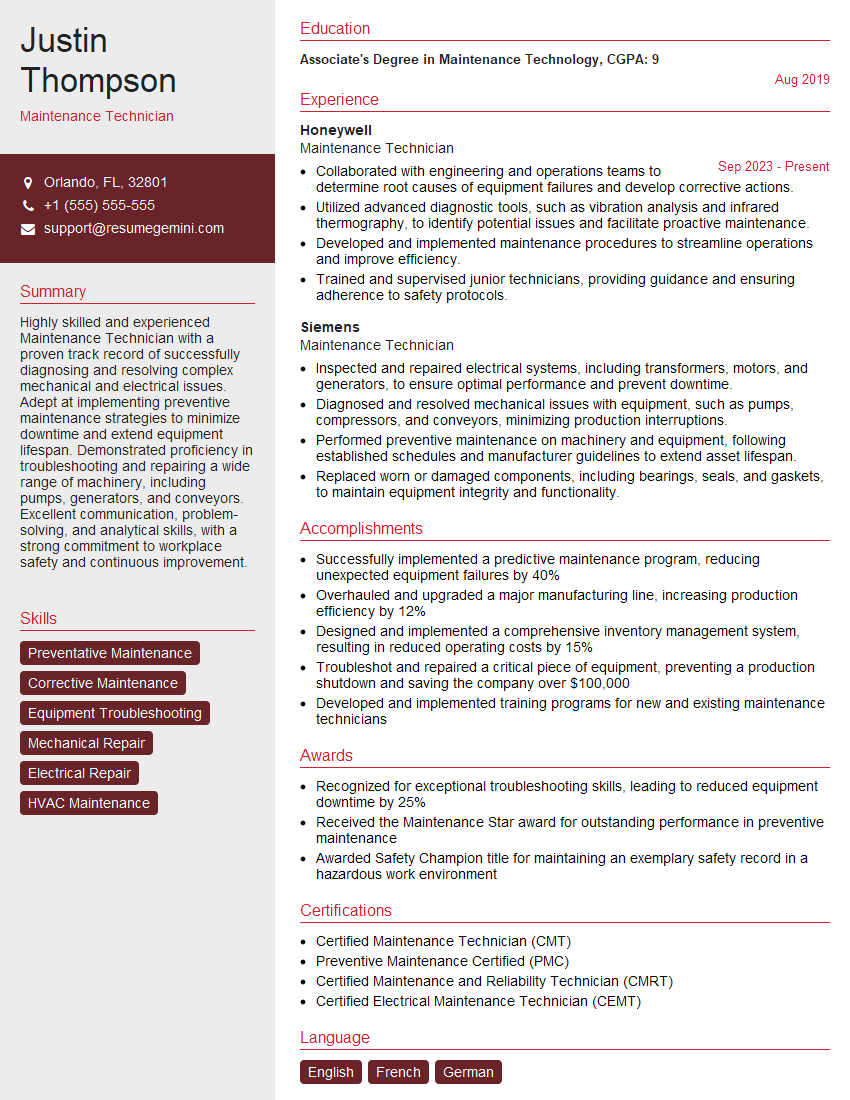
Maintenance Technician Resume Sample

Field Service Engineer Resume Sample

Electrical Engineer Resume Sample

Manufacturing Engineer Resume Sample

Production Engineer Resume Sample

Automation Specialist Resume Sample

Control Systems Engineer Resume Sample

Mechatronics Engineer Resume Sample

Robotics Engineer Resume Sample
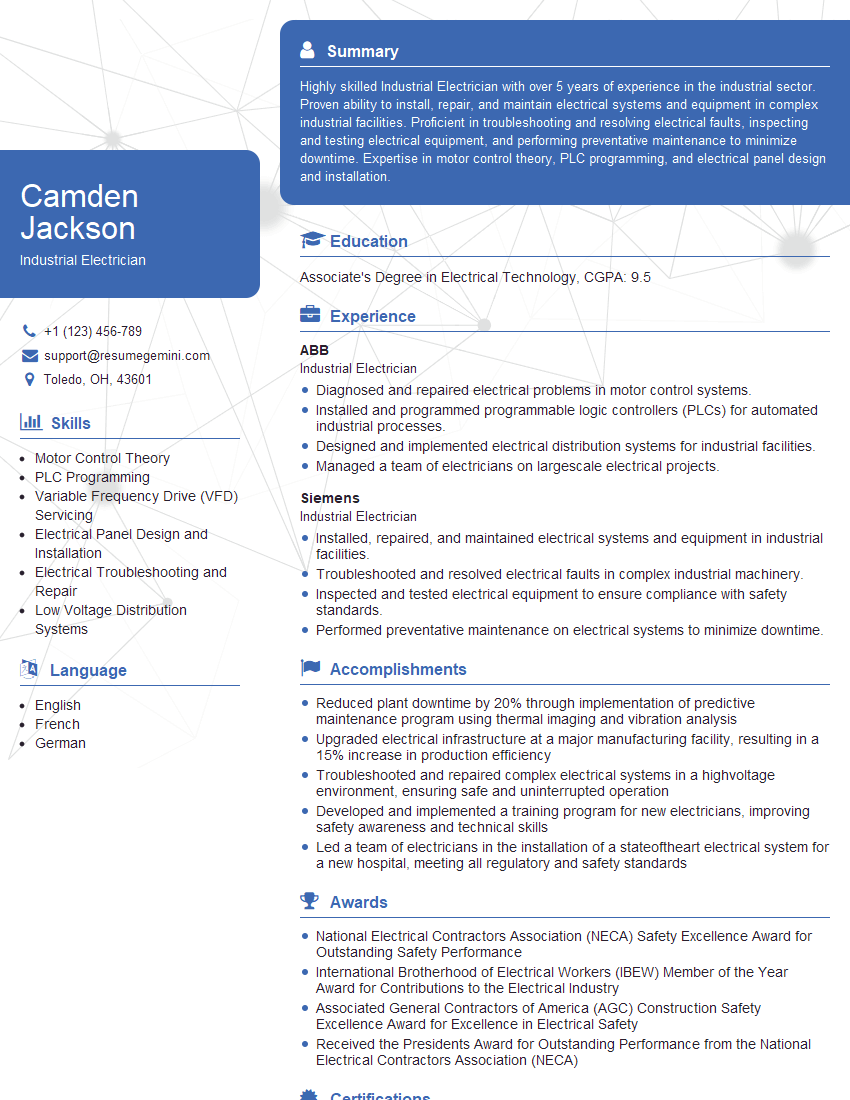
Industrial Electrician Resume Sample

Control Systems Technician Resume Sample
- Project Engineer
- Systems Integrator
- Automation Engineer
- Maintenance Technician
- Field Service Engineer
- Electrical Engineer
- Manufacturing Engineer
- Production Engineer
- Automation Specialist
- Control Systems Engineer
- Mechatronics Engineer
- Robotics Engineer
- Industrial Electrician
- Control Systems Technician
Explore more articles
Users Rating of Our Blogs
Share Your Experience
We value your feedback! Please rate our content and share your thoughts (optional).
What Readers Say About Our Blog
To the interviewgemini.com Webmaster.
Very helpful and content specific questions to help prepare me for my interview!
Thank you
To the interviewgemini.com Webmaster.
This was kind of a unique content I found around the specialized skills. Very helpful questions and good detailed answers.
Very Helpful blog, thank you Interviewgemini team.