Preparation is the key to success in any interview. In this post, we’ll explore crucial PLC Wiring interview questions and equip you with strategies to craft impactful answers. Whether you’re a beginner or a pro, these tips will elevate your preparation.
Questions Asked in PLC Wiring Interview
Q 1. Explain the difference between a hardwired and a programmed PLC.
The key difference between a hardwired and a programmed PLC lies in how the control logic is implemented. A hardwired PLC, or rather, a purely hardwired system, uses relays, timers, and counters interconnected physically with wires to execute the control sequence. Think of it like a complex, fixed circuit board. Changes require physically rewiring the system – a time-consuming and error-prone process. This approach is rarely seen in modern industrial automation due to its inflexibility.
In contrast, a programmed PLC uses a programmable logic controller that’s centrally processing the control logic. The logic is written in a programming language (like ladder logic) and stored in the PLC’s memory. This makes it highly flexible; changes to the control system simply involve modifying and uploading the program, avoiding extensive physical rewiring. This is the dominant approach in modern automation due to its ease of modification, scalability, and reduced downtime.
Example: Imagine controlling a conveyor belt that needs to stop when a sensor detects a full bin. A hardwired system would involve numerous hard-wired relays, timers, and contactors. A programmed PLC would use a simple sensor input, a program to check the sensor state, and an output to control the motor. Changing the behavior in the hardwired system might involve re-wiring. The programmed PLC allows a quick software change.
Q 2. Describe your experience with different types of PLC input and output modules.
My experience encompasses a wide range of PLC input and output modules. I’ve worked extensively with:
- Digital Input Modules: These receive signals from various sensors like limit switches, proximity sensors, and photoelectric sensors. I’m proficient in handling both AC and DC voltage levels, and understanding different input configurations (e.g., normally open, normally closed). For example, I’ve configured digital inputs to monitor emergency stops, detecting if a machine door is open or closed, etc.
- Analog Input Modules: These modules process continuous signals from sensors like temperature sensors (thermocouples, RTDs), pressure transducers, and flow meters. I’m familiar with various signal conditioning techniques and the conversion of analog signals to digital values within the PLC. I have experience working with 4-20mA current loops and 0-10V voltage signals, understanding the nuances of signal scaling and accuracy.
- Digital Output Modules: These modules control devices like solenoids, motors (through contactors or relays), lights, and alarms. I have experience working with various output configurations, voltage levels and current limits, ensuring safety and proper operation. For example, I’ve controlled actuators, conveyors and the lights in a facility.
- Analog Output Modules: These modules control devices requiring adjustable outputs, like proportional valves or speed controllers. I understand the importance of precisely controlling output signals, taking into account factors like resolution and linearity. I have experience setting up and using these in systems where precise control of speed or pressure is important.
I’m also adept at selecting the appropriate modules based on the specific application’s requirements and environmental conditions, considering factors like voltage, current, communication protocol, and environmental robustness.
Q 3. How do you troubleshoot a PLC program that is not functioning correctly?
Troubleshooting a malfunctioning PLC program involves a systematic approach. My process typically includes:
- Review the PLC Program: I start by carefully examining the ladder logic program, checking for syntax errors, logic flaws, or unexpected interactions between different parts of the code.
- Check the Input/Output Signals: I validate that the input modules are receiving the expected signals from sensors and that the output modules are correctly actuating the controlled devices. I use diagnostic tools to monitor signals and identify any discrepancies between expected and actual values. This often involves using a handheld programming device or PLC’s built-in diagnostic features.
- Inspect Wiring and Connections: Physical inspection of the wiring, terminations, and connections to ensure there are no loose wires, shorts, or open circuits. Using a multimeter is crucial here.
- Check the PLC Hardware: Verify that the CPU, input/output modules, and power supply are functioning correctly. This may involve replacing suspected faulty components.
- Use Diagnostic Tools: Leveraging the PLC’s built-in diagnostic capabilities – observing status bits, error codes, and monitoring runtime data – helps to isolate the problem.
- Simulate the Program (if possible): Utilizing PLC simulation software allows for testing different scenarios and validating the program’s behavior without affecting the physical system.
- Trace the Execution Flow: Using the PLC’s debugging tools, I can step through the program’s execution, observing the state of variables and timers at each step to identify the source of the issue.
Throughout the process, I meticulously document each step, noting observations, measurements, and corrective actions taken. This ensures traceability and aids in preventing future problems.
Q 4. What are the common safety precautions when working with PLC wiring?
Safety is paramount when working with PLC wiring. Here are some key precautions:
- Lockout/Tagout (LOTO): Always follow proper LOTO procedures to de-energize the equipment before working on it. This prevents accidental energization and potential injury.
- Personal Protective Equipment (PPE): Wearing appropriate PPE, including safety glasses, gloves, and safety shoes, is essential to protect against electrical hazards and potential physical injuries.
- Proper Wiring Techniques: Using the correct wire gauges, crimp connectors, and wire management techniques is crucial to avoid short circuits, open circuits, and other wiring-related problems.
- Grounding: Ensuring that the entire system is properly grounded is essential for safety and to prevent electrical shocks. This is especially crucial in environments with potential electrical noise.
- Working with Trained Personnel: Only qualified and trained personnel should work on PLC wiring and programming to minimize risks.
- Following Safety Standards: Adherence to relevant safety standards and regulations (e.g., NFPA 79, IEC 61131-2) is critical to ensuring a safe working environment.
- Respecting Voltage Levels: Always be mindful of the voltage levels involved. Higher voltages pose a greater risk, requiring extra caution and safety measures.
Q 5. Explain the importance of grounding in PLC systems.
Grounding in PLC systems is critical for several reasons:
- Safety: Grounding provides a low-impedance path for fault currents to flow, preventing dangerous voltage buildup on equipment casings and protecting personnel from electrical shock.
- Noise Reduction: Grounding helps to minimize electrical noise, which can interfere with signal integrity and cause malfunction in sensitive electronics.
- Surge Protection: Grounding helps to protect the system from damage caused by voltage surges and lightning strikes.
- Signal Integrity: A good ground helps ensure accurate and reliable signals between the PLC, input/output modules, and field devices.
A properly grounded system ensures that all components have a common reference point, minimizing the risk of unwanted currents flowing through the circuits and causing malfunctions or damage.
Example: Imagine a power surge hitting the power lines connected to the PLC. A good ground will provide a path for the excess current to flow to the earth, preventing damage to the PLC and its components.
Q 6. What are the different types of PLC communication protocols you’ve worked with?
My experience with PLC communication protocols includes:
- Profibus: A widely used fieldbus protocol, particularly in industrial automation settings for connecting PLCs to various sensors and actuators.
- Profinet: An Ethernet-based industrial communication protocol known for its speed and ability to support a large number of devices. I’ve used this in high-speed, data-intensive applications.
- Ethernet/IP: A common industrial Ethernet protocol used for communication between PLCs, I/O devices, and other industrial automation components. It is particularly popular in North America.
- Modbus TCP/RTU: A widely adopted standard for communication between industrial devices. I’ve worked with both the TCP (Ethernet-based) and RTU (serial) versions.
- Serial Communications (RS-232, RS-485): These older but still relevant protocols are employed for connecting PLCs to simpler devices or over longer distances.
I am also familiar with configuring and troubleshooting these protocols, understanding the specifics of data framing, addressing, and error handling for each.
Q 7. Describe your experience with ladder logic programming.
Ladder logic is the primary programming language I use for PLCs. I have extensive experience designing, implementing, and troubleshooting ladder logic programs for various industrial applications. My proficiency includes:
- Understanding Logic Gates: I have a deep understanding of Boolean logic and how it is represented using ladder logic elements such as AND, OR, NOT, and XOR gates.
- Timers and Counters: I’m proficient in using timers and counters to create timing sequences and count events within the PLC program.
- Data Handling: I have experience with manipulating data within the PLC using various instructions for comparison, arithmetic operations, and data movement.
- Sequential Control: I’ve designed and implemented complex sequential control systems using ladder logic, ensuring efficient and reliable operation.
- Program Optimization: I can optimize ladder logic programs for speed, efficiency, and readability, ensuring a maintainable and robust control system.
- Troubleshooting and Debugging: I’m skilled in using diagnostic tools and techniques to quickly identify and resolve issues within ladder logic programs.
Example: I recently developed a ladder logic program for a bottling plant to control the filling, capping, and labeling process. This involved integrating various sensors, actuators, and safety devices, creating a complex but efficient control sequence ensuring proper synchronization and safety protocols.
Q 8. How do you identify and resolve short circuits in PLC wiring?
Identifying and resolving short circuits in PLC wiring requires a systematic approach. Think of your PLC wiring like a network of roads; a short circuit is like a sudden, unexpected blockage. First, you need to safely de-energize the circuit completely. This is crucial for your safety and to prevent further damage. Then, using a multimeter, you systematically check for continuity. A low resistance reading (close to zero) indicates a short circuit.
- Visual Inspection: Start with a visual inspection. Look for any obvious damage to the wires, such as fraying, burns, or signs of physical contact between wires.
- Multimeter Testing: Use a multimeter set to the continuity test mode to check for short circuits between wires and ground, or between different wires within the same circuit. If the multimeter beeps or shows a low resistance reading, you’ve found your short.
- Tracing the Circuit: Once you’ve identified a short, you need to trace the affected wires back to their origin to pinpoint the exact location of the fault. This might involve following the wiring diagram and carefully examining each connection point.
- Repairing the Short: After finding the faulty section, repair it. This might involve replacing damaged wires, repairing faulty connections, or replacing components that caused the short. Always ensure the repair is secure and properly insulated.
For example, I once worked on a system where a rodent had chewed through some wiring causing multiple shorts. A systematic approach using a multimeter and carefully tracing the wiring allowed me to quickly locate and repair the damage, preventing a costly downtime.
Q 9. What are the common causes of PLC communication errors?
PLC communication errors can stem from various sources, each demanding a unique troubleshooting strategy. Think of it like a conversation: if one part doesn’t understand the other, there’s a problem. These errors disrupt the smooth flow of data between the PLC and other devices.
- Wiring Issues: Loose connections, broken wires, or incorrect wiring configurations can easily disrupt communication. Imagine a phone line with a break – no communication is possible.
- Network Problems: If your PLC is part of a larger network, issues like network congestion, IP address conflicts, or faulty network devices (switches, routers) can impact communication.
- Hardware Failures: Faulty communication ports on the PLC itself, or on devices it communicates with, can cause errors. This is like a faulty phone handset – no matter how good the line, you won’t hear anything.
- Software Glitches: Incorrectly configured communication parameters (baud rate, parity, etc.) within the PLC’s programming can also cause errors. This is similar to having the wrong language settings in a video conference.
- Environmental Factors: Excessive electromagnetic interference (EMI) or radio frequency interference (RFI) can also disrupt communication signals.
Troubleshooting involves systematically checking each of these possibilities, using tools like a multimeter for wiring issues, a network analyzer for network problems, and the PLC’s diagnostic tools for software and hardware glitches.
Q 10. How do you test the integrity of PLC wiring?
Testing the integrity of PLC wiring is critical for ensuring the safe and reliable operation of your system. Imagine a bridge; you wouldn’t want to drive across it without ensuring its structural integrity. We use several methods:
- Visual Inspection: Begin with a thorough visual inspection of all wires, connections, and terminals for any signs of damage, such as cuts, burns, or loose connections.
- Continuity Testing: Use a multimeter to test the continuity of each wire. A continuous signal indicates a good connection, while an open circuit suggests a break in the wire. This verifies that the physical pathway for signals is intact.
- Insulation Resistance Testing: This tests the insulation between wires to detect any shorts or leaks. A low insulation resistance indicates a problem with the insulation, which can lead to short circuits.
- High-Voltage Testing (where applicable): In high-voltage applications, specialized testing is conducted to ensure the integrity of insulation against potential voltage surges.
- Documentation Review: Cross-reference your test results with the PLC’s wiring diagram to ensure accuracy and consistency.
In my experience, a systematic approach combining visual inspection and electrical testing dramatically reduces the chances of encountering unexpected problems during operation.
Q 11. Explain your experience with different types of PLC power supplies.
My experience encompasses various PLC power supply types, each with its own characteristics and applications. Selecting the correct power supply is critical for the reliable operation of a PLC and associated equipment. Think of it like choosing the right fuel for your car – the wrong type could cause significant damage.
- AC Power Supplies: These are common and convert standard AC mains voltage to the lower DC voltage required by the PLC. They are generally robust and reliable.
- DC Power Supplies: These directly provide DC power, often used in situations where DC power is readily available, such as battery-backed systems. They offer a cleaner power supply.
- Redundant Power Supplies: Used in critical applications where downtime is unacceptable, these provide backup power if the primary supply fails, ensuring continuous operation. This adds a layer of safety and redundancy.
- Uninterruptible Power Supplies (UPS): These supply power to the PLC during temporary power outages, providing a buffer for data protection and preventing system crashes.
- DIN-Rail Power Supplies: These are compact and commonly used in industrial settings. Their ease of mounting is convenient within control panels.
I’ve worked with various manufacturers like Allen-Bradley, Siemens, and Schneider Electric, and have experience troubleshooting issues related to power supply failures, including voltage fluctuations, overload conditions, and fuse replacement.
Q 12. How do you handle PLC wiring in hazardous environments?
Handling PLC wiring in hazardous environments requires meticulous attention to safety regulations and the use of specialized equipment. Think of it as climbing a mountain – you need the right gear and techniques to ensure a safe ascent.
- Explosion-Proof Enclosures: In areas with flammable gases or dust, explosion-proof enclosures protect the PLC and its wiring from igniting explosive atmospheres.
- Intrinsically Safe Wiring: This method limits the energy available in the circuits, preventing ignition of flammable materials. It’s like having a low-power lighter – it’s not powerful enough to ignite a fire.
- Specialized Cables: Using cables rated for the specific hazardous environment is vital. These cables often have increased protection against environmental factors like moisture, chemicals, or extreme temperatures.
- Proper Grounding: Thorough grounding is essential to prevent electrical shocks and the accumulation of static electricity, which could be hazardous in certain environments.
- Lockout/Tagout Procedures: Strict adherence to lockout/tagout procedures is crucial to ensure that power is safely disconnected before any work is performed on the wiring.
Working in hazardous areas requires adherence to specific industry standards and codes like IEC 60079 and NFPA 70, which dictate the selection and installation of appropriate wiring and equipment.
Q 13. What is your experience with PLC documentation and schematics?
Comprehensive PLC documentation and schematics are crucial for efficient maintenance and troubleshooting. They’re the roadmap to your system. My experience includes creating, reviewing, and updating these documents for various PLC systems.
- Wiring Diagrams: These show the physical layout of the wires, connections, and components within the PLC system, allowing for easy tracing of signals and identification of faults.
- Logic Diagrams (Ladder Logic): These represent the PLC’s programming logic, illustrating how the inputs and outputs are interconnected and how the system functions.
- I/O Lists: These document all the inputs and outputs used by the PLC, including their assigned addresses and descriptions.
- Component Specifications: This includes detailed information about all components, including model numbers, specifications, and manufacturer details.
- As-Built Drawings: These reflect the actual physical installation and wiring of the PLC system after it has been completed.
I’m proficient in using various software packages for creating and managing PLC documentation, ensuring that the documentation is clear, accurate, and up-to-date. Clear and consistent documentation saves countless hours during troubleshooting and maintenance.
Q 14. Describe your process for installing and configuring a new PLC.
Installing and configuring a new PLC is a multi-step process requiring precision and attention to detail. It’s like building a house – you need a solid foundation and carefully planned construction.
- Planning and Design: This involves carefully reviewing the system requirements, creating a detailed wiring diagram, and selecting appropriate components.
- Physical Installation: This includes mounting the PLC, installing the power supply, and connecting the input and output modules.
- Wiring: Carefully wire the PLC according to the wiring diagram, ensuring proper grounding and connection of all components. This stage requires careful attention to detail to prevent errors.
- Programming: Upload the PLC program, ensuring proper communication between the PLC and programming software. Thorough testing of the program is crucial.
- Testing and Commissioning: This involves testing all inputs and outputs to verify proper operation. This is where you identify and fix any bugs or errors in the system.
- Documentation: Create and update all necessary documentation, including the wiring diagram, I/O list, and program descriptions.
Throughout the process, I strictly adhere to safety protocols, ensuring the proper grounding and isolation of circuits. I find a systematic and phased approach is critical for avoiding costly mistakes and ensuring a smooth installation.
Q 15. Explain your experience with PLC programming software (e.g., RSLogix, TIA Portal).
My experience with PLC programming software spans several leading platforms. I’ve extensively used Rockwell Automation’s RSLogix 5000 (now Studio 5000 Logix Designer) for Allen-Bradley PLCs, developing and troubleshooting programs for various industrial applications, from simple machine control to complex automated processes involving hundreds of I/O points. I’m also proficient in Siemens TIA Portal, working with their S7-1200 and S7-1500 PLC families. This includes creating HMI (Human Machine Interface) screens using WinCC, configuring communication networks (Profinet, Ethernet/IP), and implementing advanced functionalities like motion control and PID loops. I find both platforms powerful and versatile but choose the best option depending on the specific project requirements and client preference. For example, in one project involving a high-speed bottling line, the robust features of RSLogix 5000 were critical for handling the intricate timing and coordination required. In another project, focusing on a smaller, modular system, TIA Portal’s intuitive interface streamlined the development process significantly.
Career Expert Tips:
- Ace those interviews! Prepare effectively by reviewing the Top 50 Most Common Interview Questions on ResumeGemini.
- Navigate your job search with confidence! Explore a wide range of Career Tips on ResumeGemini. Learn about common challenges and recommendations to overcome them.
- Craft the perfect resume! Master the Art of Resume Writing with ResumeGemini’s guide. Showcase your unique qualifications and achievements effectively.
- Don’t miss out on holiday savings! Build your dream resume with ResumeGemini’s ATS optimized templates.
Q 16. How do you ensure the proper termination of PLC wiring?
Proper termination of PLC wiring is paramount to ensure signal integrity, prevent interference, and avoid system malfunctions. This involves several key steps. Firstly, selecting the correct type of wire and connector is crucial; the wire gauge should match the current requirements, and the connector should be appropriate for the I/O module. Secondly, all wires must be stripped and crimped correctly, using the right tools to ensure a secure and reliable connection. Incorrect crimping can lead to poor contact and signal loss. Thirdly, all connections should be protected from environmental factors such as moisture and extreme temperatures. This may involve the use of strain relief, sealing glands, and appropriate conduits or cable trays. Finally, a consistent and logical wiring scheme, ideally with a detailed wiring diagram, is vital for easy troubleshooting and future maintenance. For instance, in a recent project, we utilized color-coded wires and meticulously labeled all connectors to allow for quick identification of each signal. Failure to follow these best practices can lead to signal attenuation, intermittent faults, or even catastrophic failure.
Q 17. Describe your experience with different types of PLC I/O devices.
My experience encompasses a broad range of PLC I/O devices. I’ve worked with digital I/O modules (both sinking and sourcing), analog input modules (for temperature, pressure, flow rate measurement), analog output modules (for controlling valves, actuators), and specialized modules such as high-speed counters, communication modules (Ethernet/IP, Profibus, Profinet), and safety I/O modules. I understand the specific characteristics and limitations of each type. For example, I’ve worked with proximity sensors, limit switches, and photoelectric sensors as digital inputs and with 4-20 mA current loops for analog signal transmission. Understanding these different I/O types and their proper configuration is key to building efficient and reliable PLC systems. One instance involved troubleshooting a faulty analog input, where it turned out the signal was being corrupted by noise. Identifying the cause and implementing the necessary filtering allowed for correct and stable operation.
Q 18. How do you troubleshoot PLC hardware failures?
Troubleshooting PLC hardware failures involves a systematic approach. I start with a visual inspection, checking for loose connections, damaged wires, or obvious signs of overheating or physical damage. Then, I use diagnostic tools provided by the PLC manufacturer. This often involves checking the PLC’s status register and fault codes. Many PLCs have built-in diagnostic capabilities, displaying error messages that help pinpoint the problem. I also check input and output signals using multimeters to verify proper voltage and current levels. In case of communication problems, I would investigate the network configuration and check for cable faults using cable testers. Documenting each step is important. I also utilize the PLC’s diagnostic capabilities to identify the source of the issue. For example, if a specific output module is failing, I’d check the module’s status, and if necessary, swap it with a known good module. Using a methodical process ensures efficient problem resolution, minimizing downtime.
Q 19. What are the different types of PLC programming languages you are familiar with?
I am proficient in several PLC programming languages, including Ladder Logic (LD), Function Block Diagram (FBD), Structured Text (ST), and Instruction List (IL). Ladder Logic is my primary language due to its widespread use and intuitive graphical representation, making it easy to visualize and understand the program’s logic. However, I use other languages depending on the project’s needs. For instance, Structured Text is ideal for complex algorithms and mathematical calculations, while Function Block Diagram provides a modular approach to programming, making large programs more manageable. I’ve found that selecting the appropriate language greatly affects the efficiency and maintainability of the PLC program. In a recent project involving a complex robotic arm, using Structured Text significantly simplified the implementation of advanced motion control algorithms.
Q 20. Explain your experience with PLC network configurations.
My experience with PLC network configurations includes various industrial communication protocols, such as Ethernet/IP, Profibus, Profinet, and Modbus TCP/IP. I understand the importance of selecting the correct protocol based on factors like speed, distance, and the specific needs of the system. I’m also familiar with network topologies (star, ring, bus) and the considerations for configuring and troubleshooting industrial networks. This includes IP addressing, subnet masking, and configuring communication parameters in both the PLCs and connected devices. For example, I’ve designed and implemented an Ethernet/IP network connecting multiple PLCs and I/O modules across a large manufacturing facility. Understanding network communication is fundamental for coordinating control across different parts of a system.
Q 21. How do you perform a backup and restore of a PLC program?
Backing up and restoring PLC programs is a critical aspect of PLC maintenance. The method varies slightly depending on the PLC brand and model, but generally involves using the PLC programming software. In RSLogix 5000, for example, you would typically create a project backup by copying the entire project folder, including the program files, configuration settings, and I/O mappings. Similarly, in TIA Portal, the software allows for creating backups of the entire project. It’s recommended to regularly perform backups, preferably before making significant changes to the program. Restoring the program is typically done by importing the backup file into the programming software and downloading it back into the PLC. This ensures that you can quickly recover from accidental program deletion or corruption. In the event of a hardware failure, the backup allows seamless restoration onto a replacement unit, minimizing downtime. I always emphasize the importance of storing backups securely, both locally and on cloud storage, to protect against data loss.
Q 22. Describe your experience with PLC maintenance and preventative maintenance procedures.
PLC maintenance is crucial for ensuring reliable operation and preventing costly downtime. My experience encompasses both routine maintenance and preventative measures. Routine maintenance involves visually inspecting wiring for damage, checking connections for tightness, and verifying the functionality of I/O modules. Preventative maintenance is proactive, aiming to identify potential issues before they cause failures. This includes things like regularly cleaning the PLC enclosure to prevent overheating, testing backup power systems to ensure they’re working correctly, and performing regular firmware updates to patch vulnerabilities and incorporate bug fixes.
For example, in a recent project involving a bottling plant, I implemented a preventative maintenance schedule involving weekly checks of the air compressor supplying pneumatic actuators, monthly lubrication of moving parts on robotic arms, and quarterly checks of emergency stop circuits and safety relays. This reduced unscheduled downtime by over 60%. I always document maintenance activities thoroughly, including date, time, actions taken, and any findings. This documentation is essential for tracking the system’s health and predicting potential issues.
Q 23. Explain your experience with HMI programming and integration with PLCs.
HMI (Human-Machine Interface) programming is essential for user-friendly interaction with PLCs. My experience involves designing, programming, and integrating HMIs with various PLC platforms, using software like Rockwell Automation’s FactoryTalk View SE or Siemens’ WinCC. The integration process typically involves configuring communication protocols like Ethernet/IP, Profibus, or Modbus TCP between the PLC and the HMI. I develop HMIs that provide clear visualizations of process data, intuitive controls, and real-time monitoring capabilities.
For instance, I designed an HMI for a water treatment plant that displayed key parameters like flow rate, pH level, and chlorine concentration. The HMI included alarm functionalities for out-of-range values and provided operators with the ability to adjust setpoints remotely. The use of intuitive graphics and clear labels dramatically improved operator efficiency and reduced the risk of human error. I always consider factors such as user experience, system security, and maintainability during HMI design and development.
Q 24. How do you handle PLC wiring in a high-noise environment?
Wiring PLCs in high-noise environments requires careful consideration to prevent signal interference and ensure reliable operation. High-noise environments, such as those found in industrial settings with heavy machinery, can introduce electromagnetic interference (EMI) and radio frequency interference (RFI). To mitigate these issues, I employ several strategies. This includes using shielded cables, properly grounding the PLC and all connected devices, and using appropriate filtering techniques.
Shielded twisted-pair cables are essential in minimizing signal interference. These cables provide a conductive shield that blocks EMI and RFI. Proper grounding helps to create a low-impedance path for stray currents, reducing noise levels. Filtering techniques, such as the use of common-mode chokes and ferrite beads, further help to attenuate noise signals. In a project involving a steel mill, I used shielded cables and strategically placed ferrite beads to reduce interference significantly, preventing false signals and ensuring the reliable operation of the PLC in a high-noise environment. Careful planning and the selection of appropriate components are critical in these scenarios.
Q 25. Describe your experience working with safety PLCs and safety-related circuits.
Safety PLCs and safety-related circuits are crucial for ensuring the safety of personnel and equipment in industrial settings. My experience includes working with safety PLCs like those from Rockwell Automation (GuardLogix) or Siemens (Safety Integrated). I’m proficient in designing and implementing safety systems that conform to relevant safety standards like IEC 61131-2 and IEC 61508. This involves using safety-rated components, implementing redundant circuits, and employing techniques like fail-safe operation.
For example, I was involved in a project to improve the safety of a robotic arm assembly line. The design incorporated a safety PLC that monitored emergency stop buttons, light curtains, and pressure sensors. This PLC implemented fail-safe mechanisms to quickly shut down the robotic arm in case of any unsafe condition. Proper documentation and rigorous testing are essential aspects of safety-related work to ensure the system meets the required safety integrity levels (SILs).
Q 26. How do you ensure the proper grounding and shielding of PLC wiring?
Proper grounding and shielding are critical for preventing electrical noise and ensuring the safety of personnel and equipment. Grounding provides a low-impedance path to earth for stray currents, preventing the buildup of dangerous voltages. Shielding prevents electromagnetic interference (EMI) from affecting the signal integrity of the PLC wiring. My experience includes implementing grounding schemes and applying shielding techniques to ensure the PLC system is safe and reliable.
I always use a grounding system that complies with relevant standards, ensuring a solid connection to earth ground. Shielding is implemented using shielded cables and enclosures, and careful attention is given to ensuring that the shields are properly grounded. In a recent project, the proper grounding and shielding of the PLC wiring prevented electrical noise from causing intermittent failures in the control system. This systematic approach minimizes signal interference and maintains system integrity. Regular inspection and testing of the grounding and shielding system are crucial for maintaining safety and reliability over time.
Q 27. What is your experience with PLC diagnostics and troubleshooting tools?
Effective diagnostics and troubleshooting are essential skills for maintaining PLC systems. I’m proficient in using various diagnostic tools and techniques to quickly identify and resolve PLC issues. These tools range from simple multimeters to sophisticated PLC programming software with debugging capabilities. PLC programming software often includes built-in diagnostics, allowing me to monitor the status of I/O signals, read PLC memory contents, and trace program execution.
For instance, in a situation where a production line stopped unexpectedly, I used the PLC’s diagnostic tools to identify that a sensor was providing faulty data due to a broken wire. The software’s program tracing helped to pinpoint the exact location in the code where the faulty data was being used. Using a multimeter confirmed the wire break, and the repair restored the production line’s operation. I always document troubleshooting steps, findings, and corrective actions to improve future troubleshooting and preventive maintenance efforts. This systematic approach allows for efficient problem-solving and prevents similar issues from recurring.
Key Topics to Learn for PLC Wiring Interview
- PLC Hardware Understanding: Familiarize yourself with different PLC types (e.g., micro, mini, modular), input/output modules (digital, analog, specialized), and their functionalities. Understand the physical aspects of wiring and connection techniques.
- Wiring Diagrams and Schematics: Mastering the interpretation and creation of ladder logic diagrams, wiring schematics, and I/O tables is crucial. Practice tracing signals and identifying potential wiring faults.
- Safety Regulations and Practices: Demonstrate a strong understanding of relevant safety standards (e.g., NFPA 79) and safe work practices in industrial environments. This includes proper grounding, lockout/tagout procedures, and hazard identification.
- Input/Output (I/O) Configuration: Learn about different I/O addressing schemes, understanding how to configure and troubleshoot digital and analog inputs and outputs. Gain experience with various field devices (sensors, actuators).
- Troubleshooting and Diagnostics: Develop your problem-solving skills. Practice identifying and resolving common wiring issues, such as short circuits, open circuits, and incorrect connections. Understand diagnostic tools and techniques.
- Communication Protocols: Become familiar with common industrial communication protocols used with PLCs (e.g., Ethernet/IP, Profibus, Modbus). Understanding their basic principles and applications is beneficial.
- Practical Application: Consider working through simulated or real-world PLC wiring projects to solidify your understanding and build your confidence. Document your process and results for interview discussions.
Next Steps
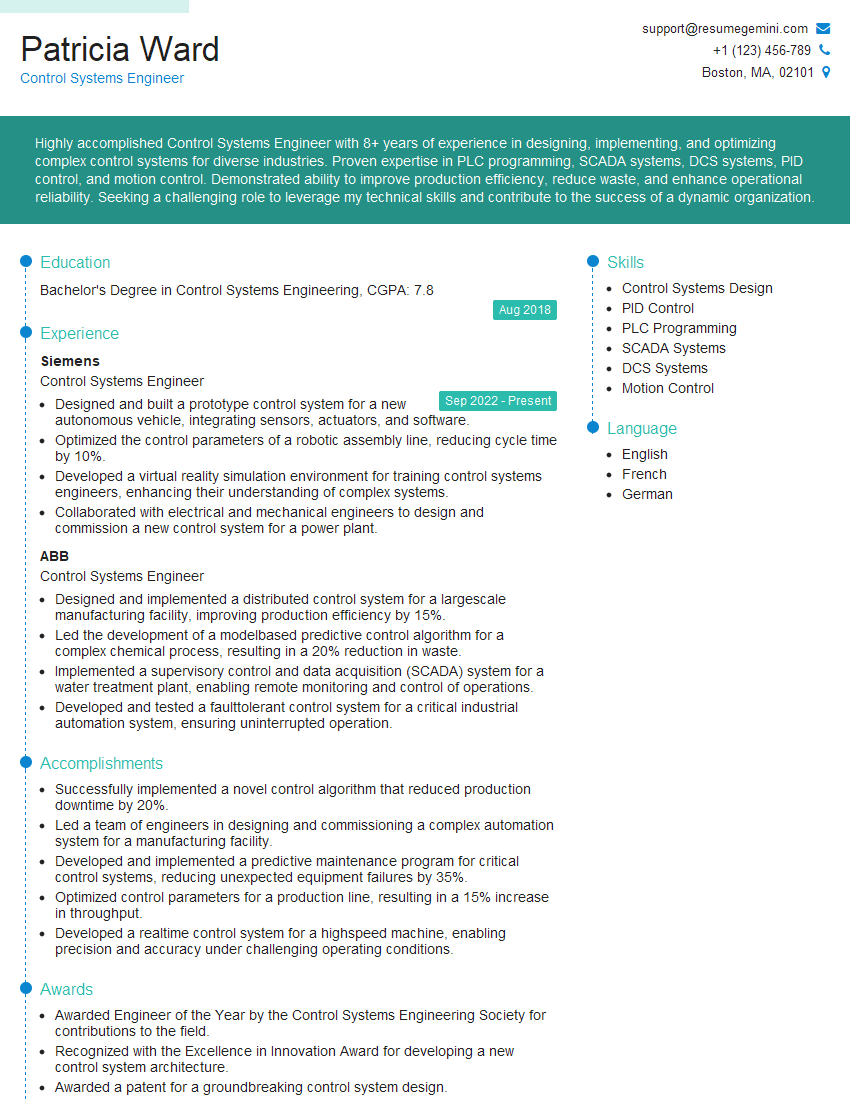
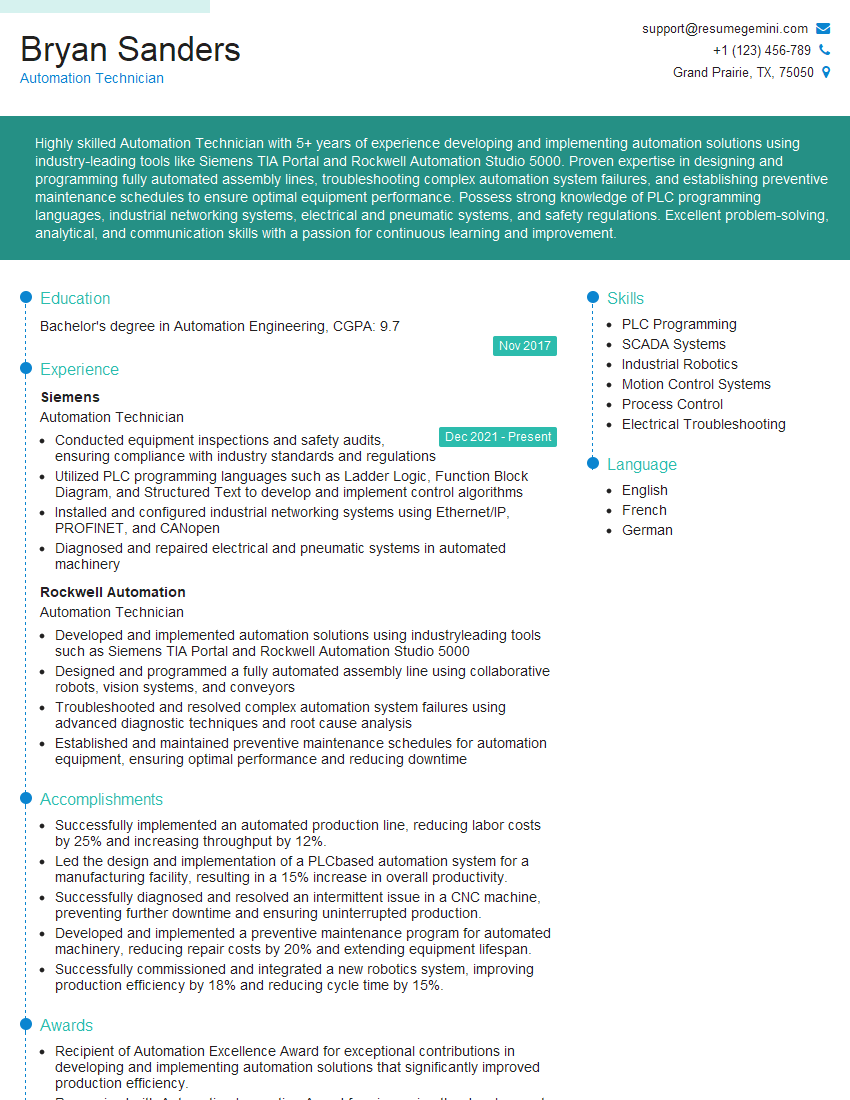
Mastering PLC wiring opens doors to exciting and rewarding careers in automation and industrial control. A strong understanding of these principles is highly sought after in many industries. To maximize your job prospects, invest time in creating a professional and ATS-friendly resume that highlights your skills and experience effectively. ResumeGemini is a trusted resource that can help you build a compelling resume that showcases your qualifications. They offer examples of resumes tailored to PLC Wiring professionals, providing you with a head start in your job search.

Explore more articles
Users Rating of Our Blogs
Share Your Experience
We value your feedback! Please rate our content and share your thoughts (optional).
What Readers Say About Our Blog
To the interviewgemini.com Webmaster.
Very helpful and content specific questions to help prepare me for my interview!
Thank you
To the interviewgemini.com Webmaster.
This was kind of a unique content I found around the specialized skills. Very helpful questions and good detailed answers.
Very Helpful blog, thank you Interviewgemini team.