Unlock your full potential by mastering the most common Port Authority Management interview questions. This blog offers a deep dive into the critical topics, ensuring you’re not only prepared to answer but to excel. With these insights, you’ll approach your interview with clarity and confidence.
Questions Asked in Port Authority Management Interview
Q 1. Describe your experience managing port operations during peak demand.
Managing port operations during peak demand requires a multifaceted approach focusing on optimizing resource allocation, enhancing communication, and proactively addressing potential bottlenecks. In my previous role at the Port of [Port Name], we experienced a significant surge in container traffic during the holiday season. To mitigate congestion, we implemented a real-time tracking system for all inbound and outbound vessels. This allowed us to predict arrival times with greater accuracy and schedule berthing, crane operations, and trucking efficiently. We also implemented a dynamic pricing model for terminal services, incentivizing off-peak operations and distributing the workload more evenly. Furthermore, close collaboration with shipping lines and trucking companies was essential. We held regular meetings to share real-time data and coordinate logistics, ensuring a smooth flow of goods even under immense pressure. This collaborative approach proved crucial in minimizing delays and maintaining operational efficiency during this peak period.
Q 2. How would you improve port efficiency and reduce congestion?
Improving port efficiency and reducing congestion requires a holistic approach integrating technological advancements, optimized processes, and strategic infrastructure development. For example, implementing an advanced terminal operating system (TOS) can automate many manual processes, reducing human error and improving the speed of cargo handling. This could include automated gate systems for faster truck entry and exit, as well as improved yard management systems for efficient container stacking and retrieval. Investing in larger, more efficient cranes and upgrading existing infrastructure, such as expanding berthing capacity or deepening channels, is also crucial for increased throughput. Furthermore, strategies such as promoting intermodal transportation (using rail and road in conjunction with shipping) can alleviate road congestion around the port. Finally, data-driven decision making, through the use of analytics and predictive modeling, can help identify and address potential bottlenecks before they occur. For instance, analyzing historical data can help predict peak demand periods, allowing for proactive resource allocation and staffing adjustments.
Q 3. Explain your understanding of port security protocols and best practices.
Port security is paramount. My understanding encompasses the International Ship and Port Facility Security (ISPS) Code and other relevant regulations. This includes implementing robust access control systems, utilizing CCTV surveillance, and conducting regular security drills and assessments. Furthermore, it involves fostering strong relationships with law enforcement agencies and other security stakeholders. A key aspect is the implementation of a comprehensive security plan that addresses all potential threats, from terrorism to theft and sabotage. This plan should clearly outline responsibilities, procedures, and communication protocols. Regular audits and reviews are essential to ensure the plan remains effective and current. Technology plays a critical role, from biometric identification systems to advanced detection technologies, like x-ray scanners and radiation detectors. The human element, however, is equally important: training personnel on security awareness and procedures, and creating a culture of security vigilance, is crucial for a truly effective security system. I have personally overseen the implementation and regular review of such security protocols in my previous role, ensuring compliance with all regulations and maintaining the highest security standards at the port.
Q 4. What strategies would you employ to enhance port safety and prevent accidents?
Enhancing port safety and preventing accidents involves a layered approach that prioritizes risk assessment, safety training, and robust operational procedures. Regular safety inspections of equipment and infrastructure are essential, as is proactive maintenance to prevent equipment failures. Comprehensive safety training programs for all port personnel are crucial, covering topics such as safe operating procedures, hazard identification, and emergency response. The implementation of safety management systems (SMS) that align with international standards (like ISM Code for ships) allows for structured risk assessment, mitigation planning, and incident investigation. In my experience, investing in modern technology such as automated guided vehicles (AGVs) can also significantly reduce the risk of accidents involving heavy machinery and human interaction. Furthermore, promoting a strong safety culture, where reporting near misses and hazards is encouraged without fear of reprisal, is paramount in fostering a safer work environment. Clear communication protocols during emergency situations, regular drills, and access to emergency response equipment are crucial components to minimize the impact of any incidents that may occur.
Q 5. Describe your experience in managing port infrastructure projects.
My experience in managing port infrastructure projects spans from initial planning and design through to construction and commissioning. At [Port Name], I oversaw the construction of a new container terminal, a project that involved meticulous planning, budget management, and stakeholder engagement. This included coordinating with various contractors, engineers, and regulatory bodies to ensure the project remained on schedule and within budget. Key to the success of this project was the use of project management methodologies like Agile or PRINCE2, allowing for efficient tracking of progress, risk management, and proactive resolution of any emerging issues. We also prioritized sustainability by incorporating green technologies into the design and construction, minimizing environmental impact. Thorough risk assessments were conducted throughout all phases of the project, and contingency plans were developed to address potential disruptions. This careful planning and meticulous execution ensured the timely and successful completion of the project, resulting in a significant increase in the port’s capacity and efficiency.
Q 6. How would you handle a major port disruption (e.g., natural disaster)?
Handling a major port disruption, such as a natural disaster, requires a well-defined emergency response plan and a strong command structure. The plan should outline roles and responsibilities for all stakeholders, including port personnel, emergency services, and government agencies. Immediate priorities would include ensuring the safety of personnel, securing the port facilities, and assessing the extent of damage. Effective communication is crucial, both internally among port staff and externally with stakeholders, shippers, and the public. In the aftermath, the focus shifts to damage assessment, repair and recovery efforts, and the resumption of operations. This involves coordinating with insurance companies, contractors, and supply chain partners. In my experience, leveraging technology for communication and coordination, using satellite imagery for damage assessment, and deploying mobile command centers can significantly improve response efficiency. Following a major event, a thorough post-incident review is necessary to identify lessons learned and improve future preparedness, perhaps involving strengthening infrastructure resilience to future such events.
Q 7. What are your strategies for attracting new businesses and cargo to the port?
Attracting new businesses and cargo requires a proactive approach focused on marketing the port’s strengths and competitive advantages. This includes developing a robust marketing strategy that highlights the port’s infrastructure, efficiency, and strategic location. Investing in improvements to port infrastructure, such as enhanced technology and improved connectivity, can attract businesses seeking modern, efficient facilities. Developing strong relationships with shipping lines, freight forwarders, and potential customers is essential. Offering competitive pricing and tailored solutions for specific cargo types, such as specialized handling equipment or cold storage facilities, is crucial in attracting a diverse range of businesses. Promoting the port’s commitment to sustainability and responsible environmental practices is also a key differentiator in today’s market. Finally, participating in industry trade shows and conferences provides opportunities for networking and showcasing the port’s capabilities to a wider audience. A strong online presence and user-friendly website further enhances the port’s visibility and attracts potential customers. Successful attraction relies on creating a strong, compelling narrative about the port’s value proposition.
Q 8. Explain your experience in developing and implementing port strategic plans.
Developing and implementing a port strategic plan is a multifaceted process requiring a deep understanding of the port’s current state, future aspirations, and the external environment. It begins with a comprehensive assessment of the port’s strengths, weaknesses, opportunities, and threats (SWOT analysis). This involves analyzing cargo volumes, infrastructure capacity, market trends, competitor analysis, and regulatory landscape.
Next, a vision and mission statement are crafted, outlining the long-term goals and strategic direction. This is followed by defining specific, measurable, achievable, relevant, and time-bound (SMART) objectives. For example, a SMART objective could be: “Increase container throughput by 15% within the next three years by investing in new container cranes and optimizing yard operations.”
Implementation involves detailed action plans, resource allocation, timelines, and key performance indicators (KPIs). Regular monitoring and evaluation are critical, with adjustments made as needed. In my experience leading the strategic planning process for the Port of [Fictional Port Name], we successfully implemented a new intermodal transport system, resulting in a 20% reduction in trucking congestion and a 10% increase in efficiency.
Q 9. How do you ensure compliance with environmental regulations in port operations?
Ensuring environmental compliance in port operations requires a proactive and multi-pronged approach. It starts with understanding and adhering to all relevant local, national, and international environmental regulations. This includes regulations on air emissions, water pollution, waste management, and noise pollution. Key elements include regular environmental audits, conducting environmental impact assessments for new projects, and implementing robust environmental management systems (EMS) such as ISO 14001.
Specific actions include investing in cleaner technologies, such as low-sulfur fuel for vessels and shore power connections to reduce emissions from ships at berth. Waste management programs are crucial, involving proper segregation, recycling, and disposal of hazardous materials. Continuous monitoring of air and water quality is essential, using data to identify areas for improvement and to demonstrate compliance. We implemented a comprehensive environmental monitoring program at [Fictional Port Name], reducing our carbon footprint by 12% in three years.
Q 10. What metrics do you use to assess the performance of port operations?
Assessing the performance of port operations requires a balanced scorecard approach, considering financial, operational, and customer-centric metrics. Key financial metrics include revenue growth, operating margins, return on investment (ROI) on infrastructure projects, and debt levels. Operational metrics focus on efficiency and productivity, such as cargo throughput (measured in TEUs for containers, tons for bulk cargo), vessel turnaround time, dwell time (time cargo spends in the port), and equipment utilization rates.
Customer-centric metrics gauge customer satisfaction and loyalty. These could include surveys measuring shipper and carrier satisfaction, on-time performance rates, and the speed and efficiency of customs clearance processes. By tracking these metrics and regularly analyzing trends, we can pinpoint areas for improvement, optimize processes, and measure the success of implemented strategies. For example, at [Fictional Port Name], we used a data-driven approach to reduce vessel turnaround time by 15% through improved coordination between various port stakeholders.
Q 11. How would you manage stakeholder relations (e.g., shipping lines, government agencies)?
Managing stakeholder relations is paramount in port management. It requires effective communication, transparency, and collaboration. Key stakeholders include shipping lines, freight forwarders, terminal operators, government agencies (customs, environmental protection), local communities, and employees. Regular meetings, open forums, and feedback mechanisms are crucial to maintain strong relationships.
Building trust through consistent communication and addressing concerns promptly is vital. This might involve establishing a dedicated stakeholder engagement team, implementing regular communication strategies (e.g., newsletters, online portals), and participating in community engagement initiatives. In my experience at [Fictional Port Name], we successfully navigated a challenging regulatory review by proactively engaging with government agencies, providing clear and comprehensive information, and addressing their concerns collaboratively.
Q 12. Explain your understanding of port finance and budgeting.
Port finance and budgeting involves managing complex revenue streams, capital expenditures, and operating costs. Revenue sources typically include port dues, tariffs on cargo handling, lease revenues from terminals, and other ancillary services. Expenditures include infrastructure development and maintenance (e.g., dredging, terminal upgrades, equipment purchases), operating expenses (staff salaries, utilities), and debt servicing. The budgeting process typically involves a detailed financial forecast, outlining projected revenues and expenses over a specific period.
Financial modeling and scenario planning are essential to assess the financial viability of new projects and investments. Understanding and managing financial risk is critical, including currency fluctuations, interest rate changes, and potential revenue shortfalls. Ensuring the financial health of the port requires effective financial control, transparency, and accountability, regularly audited financial statements and adherence to financial regulations are vital. At [Fictional Port Name], I was instrumental in securing funding for a major port expansion project through careful financial planning and persuasive presentations to investors and government agencies.
Q 13. Describe your experience in using port management software and systems.
My experience encompasses the utilization of various port management software and systems, including Terminal Operating Systems (TOS), Port Community Systems (PCS), and Geographic Information Systems (GIS). TOS manages container yard operations, optimizing the movement of cargo, tracking containers, and managing resources. PCS facilitates information sharing and collaboration among port stakeholders, streamlining processes such as customs clearance and cargo tracking. GIS provides a visual representation of port infrastructure, aiding in planning, monitoring, and managing assets.
I’m proficient in using industry-standard software like [mention specific software names, e.g., Navis N4, Oracle Transportation Management] and have experience integrating various systems to improve efficiency and data management. My role at [Fictional Port Name] involved overseeing the implementation of a new PCS, which resulted in a 20% reduction in processing time for customs declarations and enhanced information visibility across the supply chain.
Q 14. How do you ensure the effective coordination between different port departments?
Effective coordination between different port departments (e.g., operations, finance, marketing, security, engineering) is crucial for efficient port operations. This requires clear lines of communication, well-defined roles and responsibilities, and collaborative work processes. Regular interdepartmental meetings, shared goals, and a collaborative culture are key elements. Utilizing project management methodologies can further enhance coordination, especially for large-scale projects.
Technological solutions, such as integrated management systems, can streamline information flow and improve collaboration. Effective leadership and a focus on shared objectives are paramount in fostering a cohesive and efficient work environment. During my tenure at [Fictional Port Name], I successfully implemented a cross-departmental project management system to improve coordination during a major infrastructure upgrade project, minimizing disruptions and delays.
Q 15. What is your experience with customs procedures and international trade regulations?
My experience with customs procedures and international trade regulations is extensive. I’ve spent over 15 years working within port environments, directly overseeing the smooth flow of goods through customs. This includes a deep understanding of tariff classifications, import/export documentation requirements (like Bills of Lading and commercial invoices), and various trade agreements (like NAFTA/USMCA and WTO regulations). I’m familiar with the intricacies of customs inspections, risk assessment protocols, and the potential delays or penalties associated with non-compliance. For instance, I once successfully navigated a complex situation involving a shipment of perishable goods that were at risk of spoilage due to an unexpected customs hold. Through effective communication with customs officials and proactive documentation review, we were able to expedite the process and prevent significant financial losses.
My experience also encompasses working with diverse international stakeholders, including customs brokers, freight forwarders, and importers/exporters. This collaborative approach is crucial for efficient customs clearance and ensures adherence to all relevant regulations across varying jurisdictions.
Career Expert Tips:
- Ace those interviews! Prepare effectively by reviewing the Top 50 Most Common Interview Questions on ResumeGemini.
- Navigate your job search with confidence! Explore a wide range of Career Tips on ResumeGemini. Learn about common challenges and recommendations to overcome them.
- Craft the perfect resume! Master the Art of Resume Writing with ResumeGemini’s guide. Showcase your unique qualifications and achievements effectively.
- Don’t miss out on holiday savings! Build your dream resume with ResumeGemini’s ATS optimized templates.
Q 16. How would you address labor relations and negotiate with labor unions?
Addressing labor relations and negotiating with labor unions requires a collaborative, transparent, and respectful approach. My strategy centers on building strong working relationships based on mutual trust and open communication. I believe in proactive engagement, holding regular meetings to address concerns, and actively seeking input from union representatives. This fosters a climate of understanding and prevents misunderstandings from escalating into disputes.
Negotiations should focus on finding mutually beneficial solutions. This may involve compromising on certain issues while firmly advocating for the port’s operational efficiency and financial stability. In one instance, I successfully negotiated a new collective bargaining agreement that addressed union concerns regarding wages and benefits while simultaneously securing cost-effective solutions for the port. This was achieved through careful analysis of industry benchmarks, data-driven proposals, and a willingness to listen and address the unions’ specific needs.
Transparency is key – clearly communicating the port’s financial position, operational challenges, and strategic goals helps to build understanding and ensure the union understands the constraints and opportunities. Mediation and arbitration should be considered as a last resort, but having a clear process for resolving disputes is essential for maintaining stability.
Q 17. Describe your experience in managing port maintenance and repair programs.
My experience in managing port maintenance and repair programs involves a multi-faceted approach that prioritizes safety, efficiency, and cost-effectiveness. I’ve overseen comprehensive programs encompassing preventative maintenance, reactive repairs, and capital improvements across various port infrastructure components, including docks, cranes, navigational aids, and storage facilities.
My approach involves developing detailed maintenance schedules, utilizing predictive analytics to anticipate potential failures, and employing a robust system for tracking repairs and associated costs. I utilize a combination of in-house teams and external contractors, carefully selecting the most qualified and cost-effective providers. For instance, I implemented a preventative maintenance program for our container cranes, which reduced downtime by 15% and significantly extended the lifespan of the equipment. This involved regular inspections, lubrication schedules, and timely replacement of worn parts.
The program also includes robust safety protocols and rigorous quality control measures. Regular audits and inspections ensure adherence to industry best practices and compliance with all relevant regulations.
Q 18. What are your strategies for improving port technology and innovation?
My strategies for improving port technology and innovation are focused on enhancing efficiency, safety, and sustainability. This includes investing in cutting-edge technologies such as:
- Automated container terminals (ACT): These systems automate many of the manual processes involved in container handling, boosting throughput and reducing labor costs.
- Internet of Things (IoT) sensors: These sensors monitor real-time conditions of port equipment, facilitating predictive maintenance and preventing costly breakdowns.
- Data analytics and AI: These tools can optimize port operations, forecast demand, and improve decision-making processes.
- Blockchain technology: This can improve the transparency and security of cargo tracking and documentation.
Furthermore, I believe in fostering a culture of innovation within the port authority by encouraging collaboration between internal teams, external technology providers, and research institutions. This involves actively seeking out new technologies and exploring pilot projects to assess their feasibility and potential benefits. Continuous training and upskilling of the workforce is crucial for successful technology adoption.
Q 19. Explain your understanding of port capacity planning and future expansion needs.
Port capacity planning and future expansion needs require a long-term strategic vision that anticipates future growth in cargo volume and evolving trade patterns. My approach involves a multi-stage process:
- Demand forecasting: Accurate prediction of future cargo volume, based on economic trends, trade forecasts, and analysis of historical data.
- Infrastructure assessment: Thorough evaluation of existing port infrastructure, identifying capacity limitations and bottlenecks.
- Scenario planning: Developing multiple scenarios to account for different levels of future growth and potential disruptions.
- Expansion strategies: Developing plans for port expansion, considering factors like land availability, environmental impact, and financial feasibility.
- Stakeholder engagement: Involving relevant stakeholders, including local communities, businesses, and government agencies, in the planning process.
For instance, in a previous role, we projected a significant increase in container traffic over the next decade. This led us to develop a phased expansion plan that involved upgrading existing facilities, constructing new berths, and investing in additional handling equipment. The plan included detailed environmental impact assessments and a comprehensive engagement process with local communities to address concerns and obtain necessary approvals.
Q 20. How would you improve communication and information sharing within the port?
Improving communication and information sharing within the port is crucial for efficient operations and effective decision-making. My approach focuses on implementing a comprehensive communication strategy encompassing several key elements:
- Centralized information system: Establishing a single platform for sharing real-time data on vessel schedules, cargo movements, and operational status. This could involve a robust intranet or a specialized port management system.
- Improved communication channels: Utilizing various communication channels, including email, instant messaging, and dedicated communication platforms, to ensure timely and effective dissemination of information.
- Regular meetings and briefings: Holding regular meetings with key stakeholders to discuss operational updates, address challenges, and foster collaboration.
- Transparent and open communication: Establishing clear protocols for communication, ensuring that all relevant parties are kept informed of any changes or disruptions.
- Feedback mechanisms: Creating mechanisms for gathering feedback from stakeholders, allowing for identification of communication gaps and improvements.
In a previous port, I implemented a new intranet system that significantly improved communication flow. This centralized system allowed for better coordination of operations, reduced delays, and improved overall efficiency.
Q 21. Describe your experience in risk management within a port environment.
Risk management within a port environment requires a proactive and multi-layered approach. My strategy focuses on identifying, assessing, mitigating, and monitoring potential risks across various areas, including operational risks, security risks, environmental risks, and financial risks.
This involves developing a comprehensive risk assessment framework, identifying potential threats and vulnerabilities, and assigning risk levels based on likelihood and impact. Mitigation strategies are then developed and implemented to reduce the likelihood or impact of identified risks. For example, we implemented a robust cybersecurity program to protect sensitive data and infrastructure from cyber threats. We also developed detailed emergency response plans to address potential incidents such as hazardous material spills or security breaches. Regular drills and training exercises are conducted to ensure preparedness. Continuous monitoring and evaluation of the effectiveness of risk mitigation measures is vital, with adjustments made as needed. The process is also thoroughly documented, with regular reports generated and shared with relevant stakeholders.
Finally, effective communication and collaboration with relevant stakeholders (law enforcement, emergency services, and other agencies) is crucial for effective risk management.
Q 22. What are your thoughts on the use of data analytics to improve port efficiency?
Data analytics is revolutionizing port efficiency. Think of it as giving a port authority a powerful set of glasses to see its operations with unprecedented clarity. By analyzing vast datasets from various sources – vessel schedules, container tracking, weather patterns, equipment performance, and even social media sentiment – we can identify bottlenecks, optimize workflows, and predict potential disruptions.
For example, predictive analytics can forecast container throughput, allowing for proactive adjustments in staffing and equipment allocation. Real-time data on vessel arrivals and departures enables dynamic berth scheduling, minimizing waiting times and maximizing vessel turnaround. Analyzing historical data on maintenance schedules can predict equipment failures and prevent costly downtime. The result is smoother operations, reduced costs, and improved customer satisfaction.
- Improved forecasting: Accurate prediction of cargo volume, allowing for efficient resource allocation.
- Optimized resource allocation: Matching available resources (cranes, trucks, personnel) with demand in real-time.
- Enhanced decision-making: Data-driven insights informing strategic planning and operational improvements.
Q 23. How do you ensure the sustainable development of port operations?
Sustainable port development is crucial for long-term viability and environmental responsibility. It’s about balancing economic growth with environmental protection and social equity. This involves a multifaceted approach.
- Environmental stewardship: Implementing green technologies like shore power for vessels to reduce emissions, investing in renewable energy sources, and adopting sustainable waste management practices.
- Community engagement: Working collaboratively with local communities to address concerns about noise pollution, air quality, and traffic congestion. Transparency and open communication are key.
- Economic resilience: Diversifying revenue streams, attracting diverse businesses, and fostering innovation to create a robust and adaptable port ecosystem. This includes focusing on both short-term efficiency gains and long-term strategic vision.
- Social responsibility: Creating job opportunities for local residents, ensuring fair labor practices, and investing in education and training programs.
For example, a port might invest in electric vehicle fleets for internal operations, partner with local businesses for recycling programs, and implement robust air quality monitoring systems. These actions show commitment to sustainability and strengthen the port’s image and community relations.
Q 24. Describe your experience in crisis management within a port setting.
Crisis management in a port setting requires swift, decisive action and a well-defined plan. During my tenure at [Previous Port Authority Name], we faced a major storm that severely damaged port infrastructure. Our pre-existing emergency response plan proved invaluable.
Our actions included:
- Immediate assessment: Quickly evaluating the damage to infrastructure and assessing the safety of personnel.
- Communication: Establishing clear and consistent communication channels with stakeholders, including shipping lines, government agencies, and the media.
- Damage control: Prioritizing repairs and restoration of critical infrastructure, ensuring the safety of personnel and the port’s operations.
- Resource mobilization: Coordinating the allocation of resources, including personnel, equipment, and financial support.
- Post-incident review: Conducting a thorough review of the incident to identify areas for improvement in our emergency response plan and infrastructure resilience.
This experience underscored the importance of proactive planning, effective communication, and a strong, well-trained emergency response team.
Q 25. How would you manage a dispute between two different port users?
Resolving disputes between port users requires a fair, impartial, and efficient process. My approach involves:
- Facilitation: Bringing the disputing parties together to understand their perspectives and identify common ground.
- Mediation: If facilitation fails, acting as a neutral mediator to guide the parties toward a mutually agreeable solution.
- Arbitration: If mediation fails, employing a formal arbitration process with a neutral third party to make a binding decision.
- Enforcement: Enforcing the agreed-upon solution or arbitration decision to ensure compliance.
Maintaining transparency and fairness throughout the process is crucial to preserving trust and fostering positive relationships among port users. Clearly defined port regulations and efficient dispute resolution mechanisms are essential for minimizing conflict.
For instance, a conflict between a shipping line and a terminal operator regarding demurrage charges can be addressed through mediation, guiding them towards a fair agreement based on industry standards and contractual obligations.
Q 26. What is your experience with port marketing and public relations?
Port marketing and public relations are essential for attracting investment, enhancing the port’s reputation, and fostering positive relationships with stakeholders. My experience involves developing and implementing comprehensive marketing strategies, focusing on:
- Branding and messaging: Creating a strong brand identity that reflects the port’s values and capabilities.
- Market research: Understanding the needs and expectations of target customers (shipping lines, cargo owners, logistics providers).
- Targeted marketing campaigns: Developing and executing marketing campaigns to reach key audiences through various channels (online advertising, industry events, publications).
- Public relations: Building and maintaining positive relationships with the media, government agencies, local communities, and other stakeholders.
- Stakeholder engagement: Actively engaging with stakeholders through forums, meetings, and community outreach programs.
For example, a successful PR campaign might highlight the port’s sustainability initiatives or new infrastructure improvements, attracting potential investors and enhancing its global competitiveness.
Q 27. How do you stay updated on current trends and best practices in port management?
Staying abreast of current trends and best practices is paramount in port management. I actively engage in several strategies:
- Industry publications and journals: Regularly reading publications such as Journal of Transport Geography and Maritime Policy & Management.
- Conferences and workshops: Attending industry conferences, such as those organized by the International Association of Ports and Harbors (IAPH), to network and learn from experts.
- Professional organizations: Participating in professional organizations, such as the American Association of Port Authorities (AAPA), to access resources and networking opportunities.
- Online resources: Utilizing online platforms and databases to access research papers, case studies, and industry reports.
- Benchmarking: Regularly benchmarking the port’s performance against other leading ports globally to identify areas for improvement.
Continuous learning and adapting to the ever-evolving landscape is crucial to maintaining a competitive edge in the port industry.
Q 28. Describe your experience in implementing port automation technologies.
Implementing port automation technologies is crucial for enhancing efficiency, improving safety, and reducing costs. My experience includes overseeing the implementation of:
- Automated Guided Vehicles (AGVs): Deploying AGVs for efficient and safe transportation of containers within the terminal.
- Automated stacking cranes (ASCs): Utilizing ASCs to automate the stacking and retrieval of containers in the yard.
- Automated gate systems: Implementing automated gate systems to streamline the entry and exit of trucks.
- Container tracking systems: Using real-time container tracking systems to improve visibility and manage cargo flow more effectively.
- Smart Port solutions: Developing a data-driven approach to port operations, using analytics to optimize resource allocation and decision-making.
The successful implementation of these technologies necessitates careful planning, thorough training, and collaboration with various stakeholders. The benefits, however, include reduced operational costs, increased throughput, improved safety, and enhanced efficiency.
Key Topics to Learn for Port Authority Management Interview
- Port Operations & Efficiency: Understanding cargo flow, logistics optimization, and strategies for maximizing throughput. Practical application: Analyzing bottlenecks in port operations and proposing solutions to improve efficiency.
- Infrastructure Management & Development: Knowledge of port infrastructure planning, maintenance, and expansion projects. Practical application: Evaluating the feasibility of a new terminal or upgrading existing facilities considering budget, environmental impact, and safety regulations.
- Safety & Security: Implementing and maintaining robust security protocols, emergency response plans, and compliance with relevant regulations. Practical application: Developing a risk assessment strategy for a specific port operation and proposing mitigation measures.
- Financial Management & Budgeting: Understanding port revenue streams, cost control, budgeting processes, and financial reporting. Practical application: Analyzing financial data to identify areas for cost savings and revenue generation.
- Stakeholder Management & Communication: Effective communication and collaboration with various stakeholders, including government agencies, shipping lines, terminal operators, and the local community. Practical application: Developing a communication plan for a major port infrastructure project.
- Environmental Sustainability & Regulations: Understanding and complying with environmental regulations, implementing sustainable port practices, and managing environmental risks. Practical application: Developing and implementing a plan to reduce the environmental impact of port operations.
- Technology & Innovation: Familiarity with the latest technologies used in port management, such as automation, data analytics, and digital twinning. Practical application: Evaluating the potential benefits of implementing a new technology solution in port operations.
- Legal & Regulatory Compliance: Deep understanding of relevant laws, regulations, and international maritime conventions. Practical application: Ensuring compliance with all applicable laws and regulations in all port activities.
Next Steps
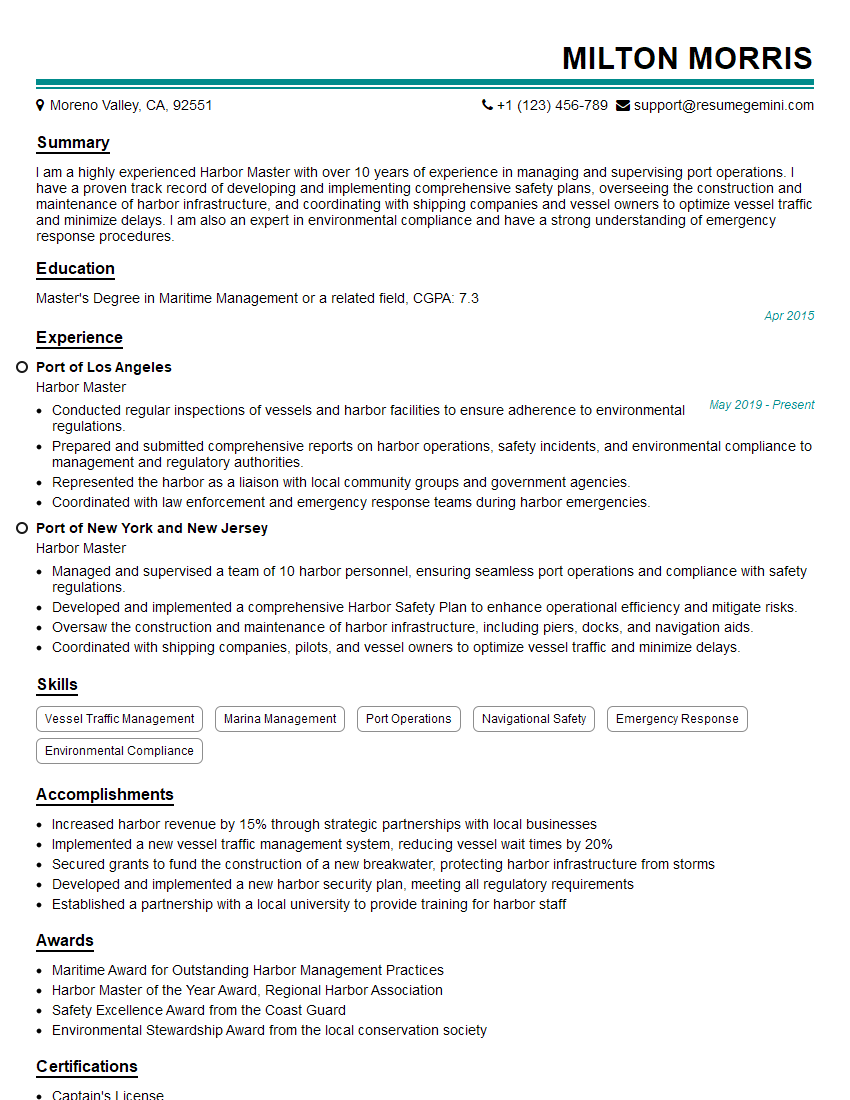
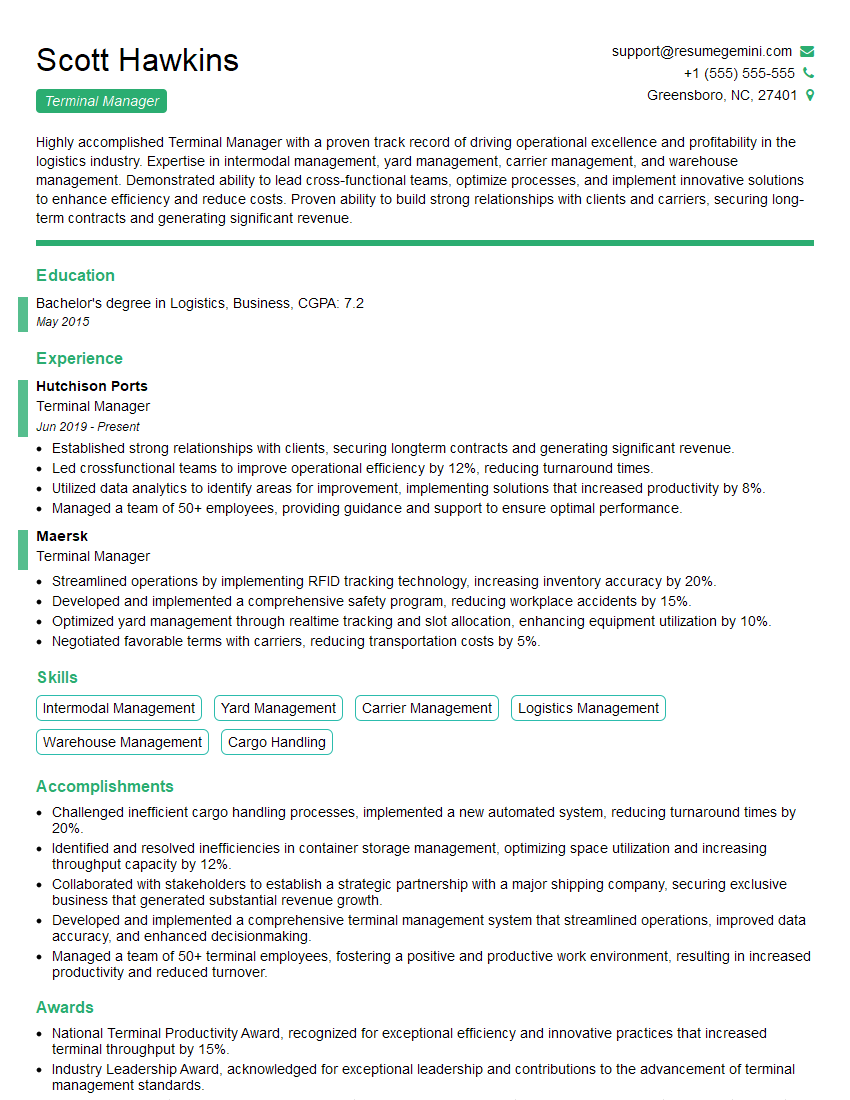
Mastering Port Authority Management opens doors to exciting career advancements and leadership roles within the dynamic maritime industry. To significantly improve your job prospects, crafting a compelling and ATS-friendly resume is crucial. ResumeGemini is a trusted resource that can help you build a professional and effective resume tailored to highlight your skills and experience in this specialized field. Examples of resumes specifically designed for Port Authority Management positions are available to help guide your resume creation. Invest time in crafting a strong resume – it’s your first impression and a critical step in securing your dream role.
Explore more articles
Users Rating of Our Blogs
Share Your Experience
We value your feedback! Please rate our content and share your thoughts (optional).
What Readers Say About Our Blog
To the interviewgemini.com Webmaster.
Very helpful and content specific questions to help prepare me for my interview!
Thank you
To the interviewgemini.com Webmaster.
This was kind of a unique content I found around the specialized skills. Very helpful questions and good detailed answers.
Very Helpful blog, thank you Interviewgemini team.