The thought of an interview can be nerve-wracking, but the right preparation can make all the difference. Explore this comprehensive guide to Proficiency in EMR and EHR Systems interview questions and gain the confidence you need to showcase your abilities and secure the role.
Questions Asked in Proficiency in EMR and EHR Systems Interview
Q 1. Explain the difference between EMR and EHR systems.
While the terms EMR and EHR are often used interchangeably, there’s a key distinction. An Electronic Medical Record (EMR) is a digital version of a patient’s chart, primarily focused on the clinical data from a single healthcare provider or practice. Think of it as a digital record of a patient’s visit to a specific doctor’s office. An Electronic Health Record (EHR), on the other hand, is a broader, more comprehensive record that includes information from multiple healthcare providers, spanning a patient’s entire medical history. It’s a more holistic view of a patient’s health journey. For example, an EMR might contain the notes from your last visit to your cardiologist, while an EHR would encompass those notes, plus your lab results from that visit, your allergy information from your primary care physician, and even records from hospitalizations.
In essence, an EMR is a component within a larger EHR system.
Q 2. Describe your experience with different EMR/EHR systems (e.g., Epic, Cerner, Meditech).
I have extensive experience working with several leading EMR/EHR systems, including Epic, Cerner, and Meditech. My experience with Epic includes managing user accounts, customizing workflows to enhance efficiency, and conducting extensive reporting and data analysis using its robust reporting tools. I found Epic’s strength lies in its comprehensive functionality and scalability, particularly well-suited for large healthcare systems. With Cerner, I’ve focused on implementing and troubleshooting various modules, such as order entry and clinical documentation. Cerner’s strength lies in its robust integration capabilities, allowing seamless data exchange between different departments. Finally, my work with Meditech involved training staff on its user interface, optimizing system configurations for different specialties, and performing system upgrades. Meditech stands out for its flexibility and adaptability to diverse clinical settings.
Each system presents its own unique challenges and advantages. For instance, Epic’s extensive functionality can also lead to a steeper learning curve for new users, while Cerner’s extensive integration options require careful planning and management to avoid complexities. My experience allows me to readily adapt to the intricacies of each platform and identify optimal solutions.
Q 3. How do you ensure data integrity within an EMR/EHR system?
Ensuring data integrity in an EMR/EHR system is paramount. It requires a multi-faceted approach. First, implementing strong data validation rules at the point of data entry prevents inaccurate or incomplete information from being recorded. This could involve automated checks for valid medical codes, ensuring consistent data formats, and flagging outliers or inconsistencies. Second, regular data audits are critical. These audits involve comparing the data in the EMR/EHR system against other sources, such as paper charts or lab results, to identify discrepancies. Third, implementing robust version control mechanisms allows tracking changes made to patient records, providing a clear audit trail. This helps in identifying and correcting any erroneous edits. Finally, proper staff training is crucial. Educating healthcare professionals on accurate data entry procedures and the importance of data integrity is a crucial preventative measure.
For example, imagine a data validation rule that prevents a physician from entering an illogical weight for a patient (e.g., a weight of 0 or a weight of 1000 kg). Regular audits can uncover discrepancies between manually entered medication dosages and automatically recorded information from medication dispensing systems. These processes, taken together, ensure that the data within the EMR/EHR system is accurate, reliable, and consistent.
Q 4. What are the key features of a well-designed EMR/EHR system?
A well-designed EMR/EHR system possesses several key features. It must be user-friendly, with an intuitive interface that allows clinicians to quickly access the information they need. It needs to be interoperable, enabling seamless data exchange with other healthcare systems, including labs, pharmacies, and hospitals. Security and privacy are essential, adhering to stringent regulations like HIPAA to protect patient information. The system must be scalable, capable of handling increasing volumes of data and users as the healthcare organization grows. Finally, it should incorporate robust reporting and analytics capabilities, allowing healthcare professionals to extract valuable insights from patient data for quality improvement and research.
Imagine a system with a cumbersome interface that requires many clicks to access crucial patient information – this would severely hamper efficiency. Conversely, a system that easily integrates with other systems saves time and reduces the risk of errors from manual data entry. The balance between all these features is crucial for an optimal EMR/EHR system.
Q 5. Describe your experience with data migration in EMR/EHR systems.
My experience with EMR/EHR data migration involves meticulous planning and execution. It begins with a thorough data assessment to understand the source data, its structure, and its quality. Then, a migration plan is developed, including timelines, resource allocation, and detailed procedures. This plan often involves data cleansing and transformation to ensure compatibility with the new system. Testing is crucial, using sample datasets to verify the accuracy and completeness of the migration process before going live with the full dataset. Post-migration, validation and reconciliation steps are essential to ensure all data has been successfully transferred and that data integrity remains intact.
I recall one project where we migrated data from an older, legacy system to a new EHR. We discovered inconsistencies in the coding of patient diagnoses during the data assessment. This required creating a mapping table to reconcile differences and ensure accuracy in the new system. Thorough testing and validation before the final cutover prevented major issues after the migration.
Q 6. How do you handle data security and privacy concerns within an EMR/EHR system?
Data security and privacy are critical in EMR/EHR systems. This starts with implementing robust access controls, ensuring that only authorized personnel can access patient data. Encryption both in transit and at rest is crucial to protect data from unauthorized access. Regular security audits are vital to identify and address potential vulnerabilities. Staff training on security best practices is also essential, emphasizing the importance of password security and recognizing phishing attempts. Compliance with regulations such as HIPAA is paramount, requiring the implementation of specific security measures to protect patient privacy.
For instance, implementing multi-factor authentication adds an extra layer of security beyond passwords. Regular penetration testing helps identify vulnerabilities before malicious actors can exploit them. A strong security culture, where data security is a shared responsibility, is crucial for effective protection.
Q 7. Explain your understanding of HIPAA compliance as it relates to EMR/EHR systems.
HIPAA (Health Insurance Portability and Accountability Act) compliance is a cornerstone of EMR/EHR system management. It sets national standards for the protection of sensitive patient health information (PHI). Compliance involves implementing administrative, physical, and technical safeguards to protect PHI. Administrative safeguards include policies and procedures for handling PHI, while physical safeguards involve protecting the physical environment where PHI is stored. Technical safeguards encompass access controls, encryption, and audit trails. HIPAA also mandates specific procedures for handling breaches and notifications in the event of a data security incident. Non-compliance can result in significant fines and legal repercussions.
For example, HIPAA requires that EMR/EHR systems have audit trails to track access to patient records. It also mandates the implementation of encryption for PHI both at rest and in transit. Understanding and adhering to these requirements are crucial to ensuring legal compliance.
Q 8. How do you troubleshoot common EMR/EHR system errors?
Troubleshooting EMR/EHR errors requires a systematic approach. I begin by identifying the error type – is it a system-wide issue, a user-specific problem, or a data entry error? My process involves the following steps:
- Reproduce the error: I try to replicate the error to understand the exact circumstances that trigger it. This often involves noting specific actions taken by the user, data entered, and the system’s response.
- Check for system-wide issues: I verify the EMR/EHR system’s overall status – are there any known outages, updates being performed, or network connectivity problems? Many times, a seemingly isolated error is a symptom of a larger problem.
- Consult documentation and support resources: The system usually has comprehensive documentation, including troubleshooting guides and FAQs. I’ll leverage these to find solutions or potential workarounds.
- Examine logs and error messages: Most EMR/EHR systems log events, including errors. These logs provide valuable clues about the root cause. Understanding error codes and messages is critical here. For example, a ‘database connection error’ would point to a network issue or database server problem, requiring a different approach than a ‘user permission’ error.
- Check user settings and permissions: User-specific errors often involve incorrect settings or insufficient permissions. Verifying user roles and access levels is a key part of troubleshooting.
- Escalate to IT support if necessary: If the issue persists after exhausting internal troubleshooting methods, I escalate it to the IT department. They have the tools and expertise to address deeper system-level problems.
For instance, I once encountered a situation where users couldn’t access patient records. After initial checks, I discovered a corrupted database index. While I couldn’t fix it directly, I quickly identified the issue for the IT team, enabling a swift resolution and minimizing downtime.
Q 9. Describe your experience with report generation and analysis using EMR/EHR data.
I have extensive experience generating and analyzing reports using EMR/EHR data. This involves utilizing the reporting functionalities built into the system, as well as exporting data for analysis in external tools like Excel, SPSS, or R. My process usually includes:
- Identifying the reporting need: Clearly defining the questions we need to answer guides the report development. For example, we might want to analyze patient demographics, track infection rates, or assess the efficiency of a specific clinical pathway.
- Selecting the appropriate data sources: EMR/EHR systems contain vast amounts of data. I carefully select relevant tables and fields to ensure the report’s accuracy and efficiency. Selecting unnecessary data increases processing time and can lead to reporting errors.
- Designing the report: I focus on creating clear, concise, and easily understandable reports. Data visualization (using charts, graphs, and tables) plays a key role in this step, enabling quick interpretation of complex data.
- Validating the report: Before disseminating the report, I verify its accuracy. This often involves cross-referencing data with other sources or conducting manual spot checks.
- Interpreting and presenting findings: The final step is to analyze the report findings, identify trends and insights, and present them in a meaningful way to stakeholders. This may involve presenting the report in a meeting or preparing a written summary.
For example, I once generated a report demonstrating the effectiveness of a new diabetes management program by comparing patient outcomes (A1C levels, blood pressure) before and after implementing the program. This data-driven analysis supported the program’s continued funding.
Q 10. How do you stay updated on the latest advancements in EMR/EHR technology?
Staying current in EMR/EHR technology is crucial. I actively employ several strategies:
- Professional organizations and conferences: I actively participate in organizations like HIMSS (Healthcare Information and Management Systems Society) and attend industry conferences to learn about the latest developments and best practices.
- Industry publications and journals: I regularly read journals like the Journal of the American Medical Informatics Association (JAMIA) and other relevant publications to remain informed about new technologies and research.
- Webinars and online courses: Many vendors and educational platforms offer webinars and online courses focusing on EMR/EHR advancements. These are valuable resources for continuous learning.
- Vendor-specific training: Our EMR/EHR system provider often offers updates and training on new features and functionalities. Attending these sessions helps me master the system’s full capabilities.
- Networking with colleagues: Connecting with other professionals in the field allows for exchanging experiences and insights on current trends.
For instance, I recently completed a course on the application of artificial intelligence in healthcare and am now exploring how we can integrate AI-powered tools within our EMR/EHR system for tasks like predictive analytics and improved patient care.
Q 11. What are some common challenges faced when implementing a new EMR/EHR system?
Implementing a new EMR/EHR system presents various challenges. Some of the most common include:
- Cost: The initial investment for software, hardware, implementation, and training can be substantial.
- Data migration: Transferring data from the old system to the new one can be complex and time-consuming, and risks data loss or corruption.
- Workflow disruption: A new system often necessitates changes to established workflows, leading to temporary inefficiencies and potential staff frustration.
- Training and adoption: Staff may require extensive training to adapt to the new system, and resistance to change can hinder successful implementation.
- Integration with other systems: Integrating the new EMR/EHR with existing systems (e.g., billing, pharmacy) can be challenging, requiring specialized expertise.
- Technical issues: System failures, downtime, and other technical problems can disrupt operations and cause frustration.
- Data security and compliance: Ensuring the new system complies with all relevant regulations (e.g., HIPAA) is essential to protect patient data.
A successful implementation requires careful planning, extensive user training, and proactive communication to address potential issues before they become major roadblocks. Strong project management and change management expertise are vital for a smooth transition.
Q 12. How do you ensure effective training for staff on a new EMR/EHR system?
Effective training is critical for successful EMR/EHR adoption. My approach involves:
- Needs assessment: Identifying the specific training needs of different staff groups (physicians, nurses, administrative staff) is the first step. Tailoring training to their roles ensures maximum effectiveness.
- Phased approach: Instead of overwhelming staff with all the features at once, I recommend a phased approach focusing on the most frequently used functions initially, followed by more advanced features later.
- Multiple learning modalities: Combining classroom training with online modules, hands-on practice, and ongoing support caters to diverse learning styles. This might include videos, interactive simulations, and quick reference guides.
- Mentorship and peer support: Assigning experienced users as mentors to new users can provide valuable guidance and support during the transition.
- Ongoing support and feedback mechanisms: Providing ongoing support through help desks, FAQs, and regular feedback sessions addresses emerging issues and allows for continuous improvement of the training process.
- Gamification and incentives: Incorporating game-like elements or incentives can enhance engagement and motivation, particularly for longer or more complex training programs.
For example, during a recent implementation, we used a combination of online modules, instructor-led sessions, and ‘buddy’ systems, resulting in a smooth transition with high staff satisfaction and proficiency within a short timeframe.
Q 13. Describe your experience with different types of electronic health records (e.g., inpatient, outpatient).
My experience encompasses both inpatient and outpatient electronic health records. While the core functionalities are similar, there are key differences:
- Inpatient EHRs: These systems are designed to manage the complex medical information of hospitalized patients. They typically incorporate features for managing medications, lab results, vital signs, and progress notes. They often integrate with other systems, like pharmacy and radiology, for seamless information flow.
- Outpatient EHRs: Outpatient systems focus on managing patient information in ambulatory settings, such as clinics and doctor’s offices. While they share some similarities with inpatient systems, they may emphasize features such as scheduling, billing, and patient portals.
I’ve worked with various systems supporting both inpatient and outpatient settings, including Epic, Cerner, and Meditech. Understanding these differences allows me to adapt my approach to different clinical environments and user needs. For instance, in an inpatient setting, rapid access to critical lab results and medication administration records is paramount, while in outpatient settings, the emphasis might be on efficient appointment scheduling and communication with patients.
Q 14. How familiar are you with clinical documentation improvement (CDI)?
Clinical Documentation Improvement (CDI) is a crucial process aimed at ensuring the accuracy, completeness, and clarity of patient medical records. My familiarity with CDI includes:
- Understanding CDI principles: I understand the importance of accurate documentation for quality of care, reimbursement, and legal purposes. This includes adhering to established guidelines and standards, like those from AHIMA (American Health Information Management Association).
- Working with CDI specialists: I collaborate effectively with CDI specialists to resolve documentation queries and ensure the medical records reflect the true clinical picture.
- Identifying areas for improvement: I can identify potential gaps in documentation that may impact clinical decision-making, billing accuracy, or compliance.
- Using CDI tools and technologies: I’m familiar with software tools used for CDI, including those that analyze documentation for potential issues or missing information.
In practice, my role often involves supporting the CDI process by ensuring data integrity and readily providing necessary information to CDI specialists. This collaborative approach ensures the highest quality and most complete medical records for all patients.
Q 15. Explain your understanding of HL7 messaging and its role in EMR/EHR interoperability.
HL7 (Health Level Seven) messaging is a standard for the exchange, integration, sharing, and retrieval of electronic health information. Think of it as a universal language for healthcare systems. It defines a set of protocols and data formats that allow different EMR/EHR systems, even from different vendors, to communicate seamlessly. This is crucial for interoperability, allowing healthcare providers to access a patient’s complete medical history regardless of where they received care. For example, a patient’s lab results from one hospital can be automatically sent to their primary care physician’s EMR system using HL7 messages, eliminating the need for manual data entry and reducing errors.
Different versions of HL7 exist, with newer versions offering enhanced capabilities. Common message types include ADT (Admit, Discharge, Transfer), ORM (Order), and ORU (Observation Result). These messages contain structured data elements, ensuring consistent interpretation across systems. For instance, an ADT message would detail patient admission, discharge, or transfer between different hospital units or facilities. Proper implementation of HL7 messaging significantly improves the efficiency and safety of patient care by facilitating the smooth flow of crucial medical data.
Career Expert Tips:
- Ace those interviews! Prepare effectively by reviewing the Top 50 Most Common Interview Questions on ResumeGemini.
- Navigate your job search with confidence! Explore a wide range of Career Tips on ResumeGemini. Learn about common challenges and recommendations to overcome them.
- Craft the perfect resume! Master the Art of Resume Writing with ResumeGemini’s guide. Showcase your unique qualifications and achievements effectively.
- Don’t miss out on holiday savings! Build your dream resume with ResumeGemini’s ATS optimized templates.
Q 16. Describe your experience with interface engines and their role in data exchange.
Interface engines act as translators between different EMR/EHR systems and other healthcare applications. Imagine them as the interpreters allowing different languages to communicate. They receive data in one format, transform it based on predefined mapping rules, and then send it in the desired format to the receiving system. This is essential for data exchange between disparate systems that may not natively understand each other’s data structures. For example, an interface engine might translate HL7 messages from an EMR system into a format understandable by a pharmacy system, facilitating the electronic transmission of prescriptions.
My experience includes working with various interface engines, configuring them to handle different data transformations and mapping specifications, troubleshooting integration issues, and ensuring the reliable flow of data. I’m proficient in monitoring interface engine performance, identifying bottlenecks, and implementing solutions to enhance data exchange efficiency and accuracy. This involves not just technical expertise but also a deep understanding of clinical workflows and the data requirements of different applications.
Q 17. How do you ensure the accuracy of patient data within an EMR/EHR system?
Ensuring the accuracy of patient data is paramount. This involves a multi-pronged approach: First, implementing robust data validation rules at the point of entry, preventing inaccurate or illogical data from being entered. For example, the system could automatically flag a birthdate that would make the patient impossibly old. Second, regular data quality audits are crucial, identifying and rectifying discrepancies through comparison with external sources or through manual review. Third, implementing strong data governance policies and procedures is vital; clear guidelines for data entry, maintenance, and access must be established and enforced. Fourth, the use of standardized terminologies (like SNOMED CT or LOINC) reduces ambiguity and improves data consistency. Finally, ongoing staff training is essential, ensuring that users understand and follow data entry protocols correctly. A culture of data accuracy needs to be fostered throughout the organization.
Q 18. What are your strategies for improving efficiency in using EMR/EHR systems?
Improving EMR/EHR efficiency involves optimizing workflows and leveraging system features. This includes customizing templates and shortcuts to streamline common tasks, utilizing system-generated reminders and alerts, and employing efficient charting methods (e.g., using dictation and structured data entry). Training staff on effective keyboard shortcuts and system navigation techniques is crucial, as is regularly reviewing and updating system configurations to reflect evolving needs. Furthermore, integrating EMR/EHR with other healthcare applications, such as scheduling systems and patient portals, can automate tasks and reduce manual efforts. Analyzing system usage patterns to identify areas for optimization, including potentially using workflow analysis tools, is also important.
For example, in one setting, we identified a significant time savings by implementing a standardized progress note template, reducing the average documentation time by 15%. Similarly, using voice recognition software for dictation instead of manual typing resulted in a substantial increase in clinician productivity.
Q 19. How would you handle a situation where patient data is compromised?
A data compromise is a serious incident requiring immediate action. My response would involve following a defined incident response plan, starting with containing the breach to prevent further damage. This includes isolating affected systems, disabling user access, and notifying relevant authorities (e.g., HIPAA breach notification). A thorough investigation is then conducted to identify the cause and extent of the compromise, determining which data was affected and how the breach occurred. Next, affected individuals need to be notified, and steps taken to mitigate any harm. Finally, a post-incident review is essential to learn from the incident, implement preventative measures, and strengthen security protocols to prevent future breaches. Accurate record-keeping and documentation throughout the entire process are critical for accountability and compliance.
Q 20. Explain your understanding of different data formats used in EMR/EHR systems.
EMR/EHR systems utilize various data formats to store and exchange information. These include structured formats like HL7, XML, and JSON, which organize data in a predefined manner, facilitating easier processing and integration. These structured formats are ideal for exchanging specific pieces of data between systems. Conversely, unstructured data, such as free-text notes and clinical images, requires different handling. Database systems employ various methods to store and manage unstructured data, often using techniques like indexing and search algorithms to allow retrieval. The choice of data format depends on the application and the level of structure required. Understanding these various formats and their strengths and weaknesses is crucial for effective data management and analysis.
Q 21. How familiar are you with database management concepts within the context of EMR/EHR systems?
My understanding of database management within the context of EMR/EHR systems is extensive. I’m familiar with relational databases (like SQL Server or Oracle), which are commonly used to store structured patient data, and NoSQL databases, which might be used for unstructured data like images. I understand database design principles, including normalization, indexing, and query optimization, all crucial for ensuring efficient data retrieval and system performance. I’m proficient in writing SQL queries to extract and analyze patient data for reporting and analytics. In a practical setting, this knowledge helps in optimizing database performance, ensuring data integrity, and building efficient reporting systems. For example, I can design queries to extract specific patient demographics or clinical data for research purposes or to identify trends in patient populations.
Q 22. Describe your experience working with different reporting tools within EMR/EHR systems.
My experience with EMR/EHR reporting tools is extensive, encompassing a range of systems including Epic Clarity, Allscripts, and Cerner’s reporting modules. I’m proficient in creating both standard and custom reports. For instance, at my previous role, we needed to track patient no-show rates across different physician specialties. Using Epic Clarity’s reporting tools, I built a custom report that segmented data by specialty, revealing significant variations. This allowed us to identify areas needing improvement in appointment scheduling and patient communication. I’m also familiar with data extraction methods like SQL queries for more complex data analysis, allowing me to tailor reports to specific clinical, operational, or financial needs. Beyond generating reports, I’m adept at interpreting data visualizations to extract meaningful insights for improving workflows and patient care. I’ve also had experience with integrating data from different EMR/EHR modules to create comprehensive reports providing a holistic view of patient care.
Q 23. What is your approach to problem-solving when encountering technical issues within an EMR/EHR system?
My approach to problem-solving in EMR/EHR systems is systematic and follows a structured process. First, I identify the issue, gathering all relevant information such as error messages, timestamps, and affected users. Then, I replicate the problem to understand its consistency and scope. Next, I consult the system’s documentation, knowledge base, and support resources to determine if a known solution exists or if there are similar reported issues. If the issue persists, I troubleshoot systematically, checking user permissions, network connectivity, and data integrity. If the problem requires more advanced technical knowledge, I collaborate with the IT department, following established escalation procedures. For example, I once encountered an issue where patient demographics were not properly updating. I systematically checked data entry forms, integration points with other systems, and database configurations. Ultimately, I discovered a minor coding error in the system’s integration module, which the IT team promptly corrected. Documentation of the issue, troubleshooting steps, and solution are always meticulously recorded to assist with future problem-solving and prevent recurrence.
Q 24. How do you prioritize tasks when managing multiple requests related to EMR/EHR systems?
Prioritizing tasks in a fast-paced EMR/EHR environment requires a strategic approach. I use a combination of methods, including urgency, impact, and dependencies. I use a ticketing system or project management software to track all requests and assign them a priority level (e.g., high, medium, low) based on urgency and potential impact on patient care or system functionality. Tasks with high urgency, like resolving system outages impacting patient access, always take precedence. Tasks with high impact, such as implementing critical security patches, are also prioritized. Dependencies between tasks are carefully considered to ensure that tasks are completed in the correct order. This is further refined by using tools like Eisenhower Matrix (urgent/important) or MoSCoW method (Must have, Should have, Could have, Won’t have) to further define priorities. This allows me to effectively manage multiple simultaneous requests and ensure that critical issues are addressed promptly while still making progress on other important tasks. Regularly reviewing and adjusting priorities based on changing circumstances is key to maintaining efficiency.
Q 25. Describe your experience with regulatory compliance related to EMR/EHR systems.
My experience with regulatory compliance related to EMR/EHR systems is extensive. I’m well-versed in HIPAA regulations, including the Privacy Rule and Security Rule. This includes understanding the importance of data security, access control, audit trails, and breach notification procedures. I’ve been involved in security audits, risk assessments, and the implementation of security measures to ensure compliance. For example, I’ve worked on implementing multi-factor authentication, data encryption, and regular security awareness training for staff. I understand the complexities of e-prescribing regulations and their impact on system configurations. I’m also familiar with other relevant regulations, like those pertaining to Meaningful Use requirements and data exchange standards (e.g., HL7, FHIR). I believe in proactively staying abreast of any changes or updates to these regulations to ensure continuous compliance. My approach emphasizes not just meeting regulatory minimums but exceeding them to ensure robust patient data protection and system integrity.
Q 26. What are your salary expectations for this role?
My salary expectations are commensurate with my experience and skills, and aligned with the market rate for a similar role. I’m open to discussing a specific salary range after learning more about the responsibilities and compensation structure of this position.
Q 27. What are your long-term career goals related to EMR/EHR systems?
My long-term career goals involve becoming a recognized leader in the field of EMR/EHR systems. I aspire to contribute to the improvement of healthcare through innovative solutions and advancements in technology. Specifically, I’m interested in specializing in data analytics within the EMR/EHR space, utilizing data to improve efficiency, patient outcomes, and reduce healthcare costs. I see myself taking on increasing levels of responsibility, potentially leading a team or spearheading strategic projects that optimize the use of EMR/EHR systems for healthcare organizations.
Q 28. Why are you interested in this specific EMR/EHR position?
I’m interested in this specific EMR/EHR position due to several factors. First, [Company Name]’s reputation for innovation and commitment to patient care strongly aligns with my professional values. Second, the opportunity to work with [Specific EMR/EHR system] is exciting given my experience and interest in [mention specific aspect, e.g., its advanced analytics capabilities or particular functionality]. Finally, the challenges described in the job description directly align with my expertise and desire to contribute to a dynamic healthcare environment. I am confident that my skills and experience can make a significant contribution to your team’s success.
Key Topics to Learn for Proficiency in EMR and EHR Systems Interview
- Data Entry and Management: Mastering accurate and efficient data entry, including patient demographics, medical history, and diagnostic information. Understand data integrity and its importance in patient care.
- Patient Charting and Documentation: Familiarize yourself with various charting methods, including SOAP notes and progress notes. Practice documenting patient encounters accurately and concisely, adhering to legal and ethical guidelines.
- Medication Management: Understand the processes for ordering, dispensing, and documenting medications within the EMR/EHR system. Be prepared to discuss medication reconciliation and potential drug interactions.
- Reporting and Analytics: Learn how to generate reports and analyze data within the system. Understand the use of data for quality improvement and decision-making.
- System Navigation and Functionality: Demonstrate proficiency in navigating the specific EMR/EHR system (mention specific systems if applicable, e.g., Epic, Cerner). Be prepared to discuss common features and functionalities.
- Security and Compliance: Understand HIPAA regulations and their implications for EMR/EHR use. Discuss data security protocols and best practices.
- Troubleshooting and Problem-Solving: Practice identifying and resolving common technical issues within the EMR/EHR system. Be ready to discuss your approach to problem-solving in a healthcare setting.
- Workflow Optimization: Discuss ways to improve efficiency and streamline workflows using the EMR/EHR system. This demonstrates your proactive and forward-thinking approach.
Next Steps
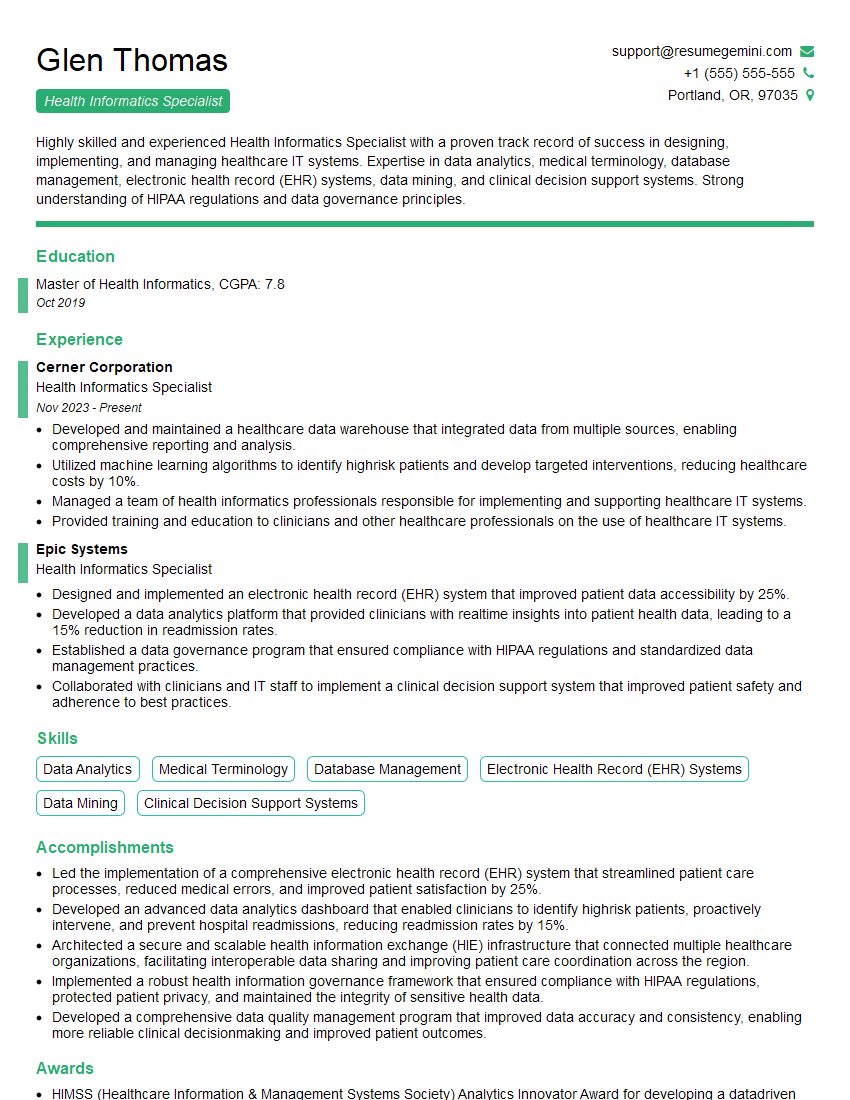
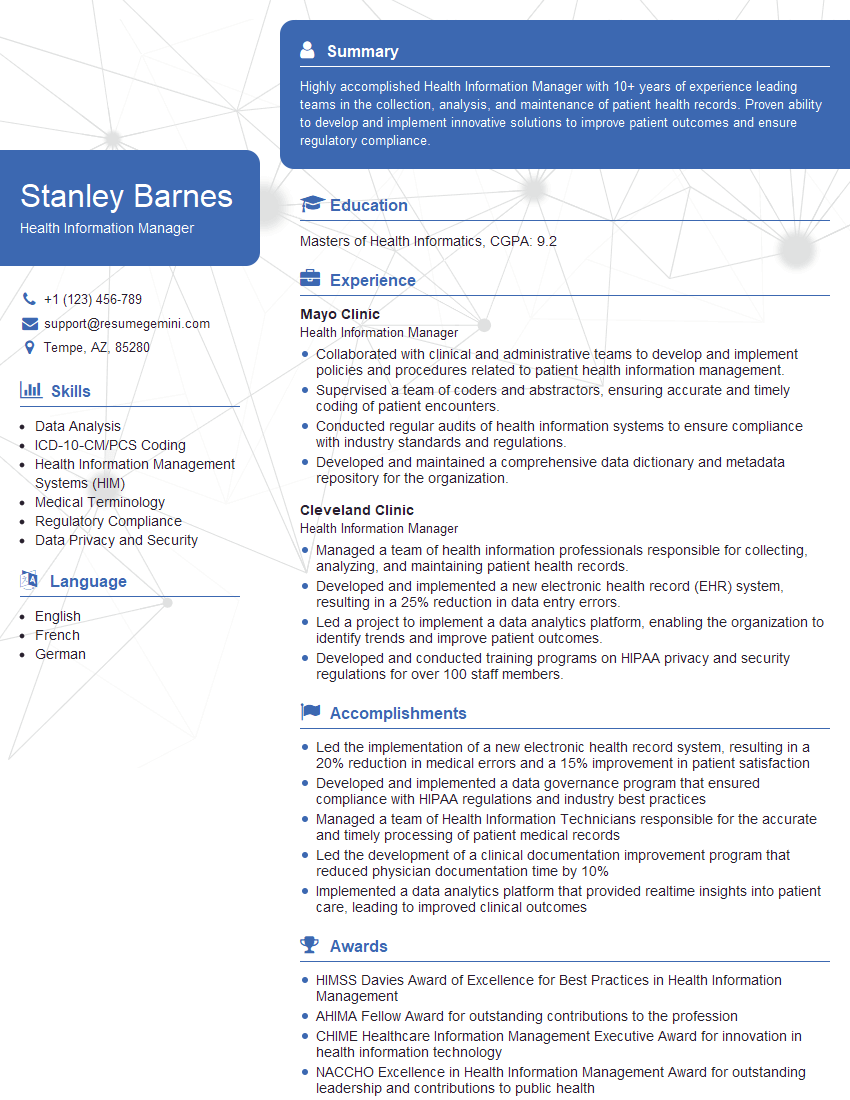
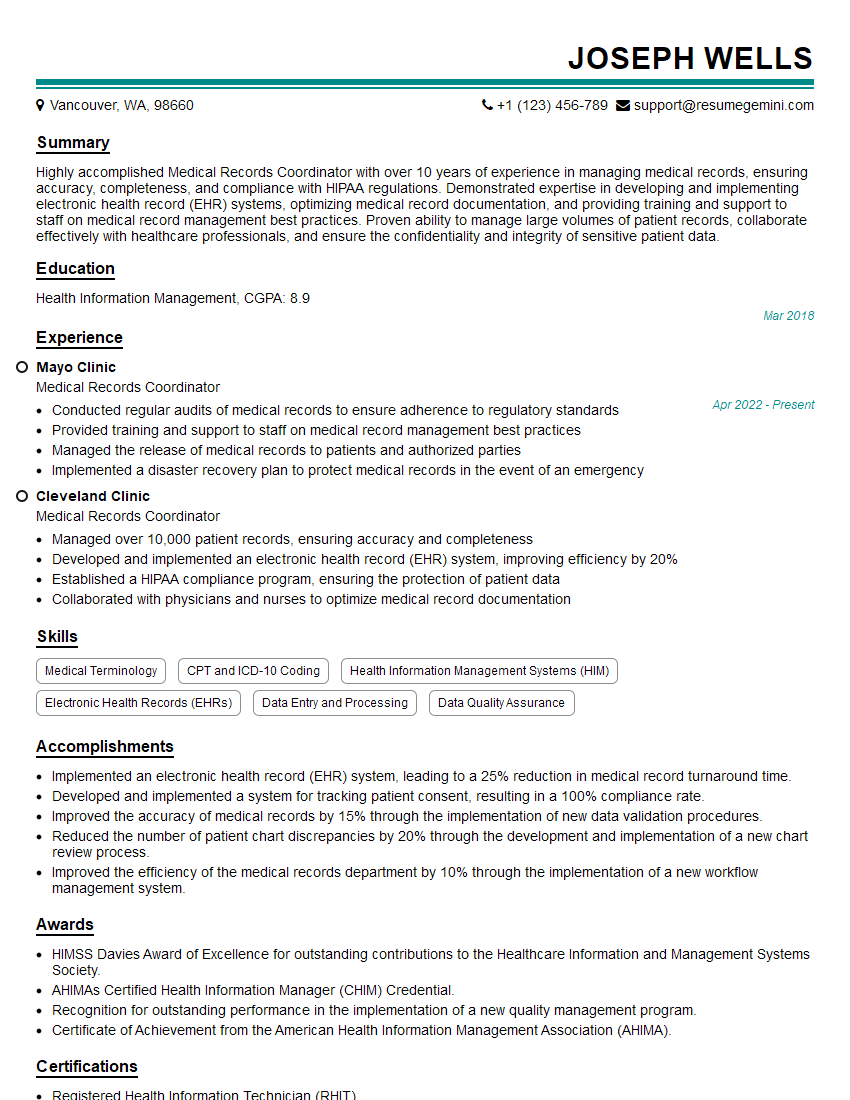
Mastering proficiency in EMR and EHR systems is crucial for career advancement in today’s healthcare landscape. It demonstrates your technical skills and commitment to efficient and accurate patient care. To significantly boost your job prospects, it’s vital to create an ATS-friendly resume that highlights your expertise. ResumeGemini is a trusted resource to help you build a professional and impactful resume that gets noticed by recruiters. We provide examples of resumes tailored to Proficiency in EMR and EHR Systems to guide you through the process. Invest in your future – build a winning resume today.
Explore more articles
Users Rating of Our Blogs
Share Your Experience
We value your feedback! Please rate our content and share your thoughts (optional).
What Readers Say About Our Blog
To the interviewgemini.com Webmaster.
Very helpful and content specific questions to help prepare me for my interview!
Thank you
To the interviewgemini.com Webmaster.
This was kind of a unique content I found around the specialized skills. Very helpful questions and good detailed answers.
Very Helpful blog, thank you Interviewgemini team.