Interviews are opportunities to demonstrate your expertise, and this guide is here to help you shine. Explore the essential Proficiency with Electronic Medical Records (EMRs) interview questions that employers frequently ask, paired with strategies for crafting responses that set you apart from the competition.
Questions Asked in Proficiency with Electronic Medical Records (EMRs) Interview
Q 1. Describe your experience with different EMR systems (e.g., Epic, Cerner, Meditech).
My experience spans several leading EMR systems, including Epic, Cerner, and Meditech. Each has its strengths and weaknesses. With Epic, I’ve extensively used its robust clinical documentation features, particularly its order entry system and the integrated clinical decision support tools. Cerner, in my experience, excels in its robust reporting capabilities and its strong interoperability features. I’ve found Meditech particularly adaptable to various healthcare settings, having worked with it in both large hospital systems and smaller clinics. The key differences lie in their user interfaces, workflows, and the specific functionalities they prioritize. For example, Epic’s user interface might be considered more intuitive by some users while Cerner’s might offer more customization options. Understanding the nuances of each system is crucial for efficient data management and optimized patient care.
Q 2. Explain the process of patient data entry in an EMR.
Patient data entry in an EMR is a multi-step process, starting with patient identification using unique identifiers like medical record numbers. Next, demographic data (name, address, DOB, insurance information) is entered, followed by the reason for the visit. The core of the process involves documenting the clinical encounter: this includes vital signs, medical history, physical examination findings, diagnoses, orders (medications, labs, procedures), and progress notes. I typically utilize structured data entry whenever possible to improve accuracy and facilitate data analysis. For example, instead of free-texting ‘high blood pressure,’ I’d select ‘Hypertension’ from a predefined list of ICD codes. Finally, the encounter is reviewed for completeness and accuracy before it’s saved. The process requires meticulous attention to detail, ensuring information is clear, concise, and compliant with healthcare regulations.
Q 3. How do you ensure data accuracy and integrity within an EMR?
Data accuracy and integrity are paramount. I employ several strategies: First, I always verify data entered against source documents like lab reports or referral notes. Second, I use the EMR’s built-in validation tools – these automatically flag inconsistencies or missing information. Third, I consistently adhere to the organization’s data entry guidelines and standardized terminologies (e.g., SNOMED CT, LOINC). Fourth, regular audits of my own work and participation in internal quality control processes help maintain standards. Finally, understanding the implications of inaccurate data – from incorrect billing to compromised patient safety – keeps me focused on meticulous data entry.
Q 4. What are the key features and functionalities of your preferred EMR system?
My preferred system is Epic, largely due to its comprehensive functionalities. Key features include its robust order entry system, minimizing errors in medication prescribing. Its integrated clinical decision support (CDS) alerts me to potential drug interactions or contraindications. The system’s strong reporting and analytics capabilities are invaluable for tracking key metrics and identifying areas for improvement in patient care. The integrated communication tools—secure messaging and appointment scheduling—streamline workflow and enhance team collaboration. Finally, Epic’s robust security features are essential for protecting patient privacy and data security.
Q 5. How do you handle EMR system errors or malfunctions?
EMR system errors can range from minor glitches to major outages. My approach is systematic: First, I attempt basic troubleshooting—checking my internet connection, restarting the computer, or reporting the issue through the system’s help desk. If the problem persists, I immediately escalate to IT support. During downtime, I utilize alternative methods, such as paper charting, ensuring patient care is not disrupted. I always document all system issues and their resolution in the appropriate logs to prevent recurrence. Furthermore, I proactively participate in training sessions to stay abreast of system updates and potential troubleshooting techniques.
Q 6. Describe your experience with EMR reporting and analytics.
My experience with EMR reporting and analytics is extensive. I routinely use the system to generate reports on key performance indicators (KPIs), such as length of stay, readmission rates, and medication adherence. I utilize these reports to identify trends, assess the effectiveness of interventions, and contribute to data-driven decision-making. For example, analyzing readmission rates helped identify gaps in discharge planning, which led to implementing improved patient education programs. The ability to query the database using SQL (Structured Query Language) or utilize the system’s built-in reporting tools allows me to extract valuable insights that otherwise would remain hidden within the vast amount of patient data. I’m also proficient in visualizing data using tools like dashboards to facilitate clear communication and understanding of key findings.
Q 7. How do you maintain patient confidentiality and privacy within an EMR?
Maintaining patient confidentiality and privacy within the EMR is a top priority. I strictly adhere to HIPAA regulations and our organization’s policies on data access and security. This includes using strong passwords, logging out of the system after each use, and never sharing my login credentials. I only access patient data that is necessary for my role and responsibilities. I’m also careful to avoid discussing patient information in public areas or with unauthorized individuals. Any breaches or suspected breaches are reported immediately to the appropriate authorities. Furthermore, I regularly participate in training sessions that cover data privacy and security best practices.
Q 8. Explain your understanding of HIPAA regulations regarding EMR usage.
HIPAA (Health Insurance Portability and Accountability Act) is a US law designed to protect patient health information (PHI). Regarding EMRs, HIPAA dictates strict rules around access, storage, transmission, and disposal of patient data. This includes implementing robust security measures like access controls, encryption, and audit trails. For example, only authorized personnel with a legitimate need to know should have access to a patient’s record, and access attempts must be logged. Violation of HIPAA can lead to severe penalties for healthcare providers and individuals.
In practice, this means understanding and adhering to policies related to user authentication (strong passwords, multi-factor authentication), data encryption both in transit and at rest, and regular security audits. I’ve personally ensured compliance by implementing role-based access controls in several EMR systems, limiting access based on job responsibilities. We also conducted regular security training to educate staff on HIPAA guidelines and best practices, including the proper handling of sensitive patient data like identifying information and diagnostic results.
Q 9. How do you train medical staff on the use of a new EMR system?
Training medical staff on a new EMR system requires a phased approach, starting with needs assessment. This involves identifying the staff’s existing tech skills and their specific roles within the workflow to tailor the training to their individual needs. We typically begin with online modules introducing the system’s basic functions, followed by hands-on workshops with simulated patient data. For example, nurses would focus on charting and medication management modules, while physicians would concentrate on documentation and order entry. Role-playing scenarios are incorporated to practice real-life scenarios. Ongoing support, such as readily available help desks and FAQs, is critical for long-term success. Regular refresher training is also vital to ensure knowledge retention and address any updates to the system.
I’ve found that a blend of methods – online tutorials, instructor-led sessions, and practical exercises using a sandbox environment – is most effective. Post-training assessments, along with ongoing feedback, help ensure everyone is comfortable and confident using the system efficiently.
Q 10. What are the common challenges associated with EMR implementation?
Implementing a new EMR system comes with several challenges. One major hurdle is the steep learning curve for staff. Resistance to change, both from clinicians accustomed to established workflows and administrative staff concerned about their roles, is common. Technical difficulties, like system downtime or integration issues with existing systems (e.g., billing software), can also significantly disrupt workflow. Data migration from legacy systems can be complex and time-consuming, and ensuring data integrity is paramount. Finally, the significant financial investment and the ongoing costs associated with maintenance, upgrades, and training can strain budgets.
For example, during one implementation, we encountered challenges integrating the new EMR with our existing pharmacy system, leading to temporary delays in medication ordering. To overcome this, we established a dedicated team focused solely on resolving integration issues, and we implemented temporary workarounds to maintain patient safety until the problem was completely resolved.
Q 11. How do you troubleshoot EMR system issues?
Troubleshooting EMR system issues requires a systematic approach. I usually begin by identifying the nature of the problem – is it a user error, a software glitch, a hardware problem, or a network connectivity issue? First, I check the EMR’s logs for error messages; this provides valuable clues to the root cause. Simple issues, such as a user forgetting their password, can be resolved quickly through password resets. More complex problems might require checking server logs, network connectivity, and potentially contacting the vendor’s support team.
For instance, if multiple users report the system is slow, I’d investigate server performance and network bandwidth. If a specific function is malfunctioning, I’d consult the EMR’s documentation, online forums, and vendor support for solutions. I always document troubleshooting steps and solutions for future reference and knowledge sharing.
Q 12. Describe your experience with EMR system upgrades and maintenance.
EMR system upgrades and maintenance are crucial for ensuring optimal performance, security, and compliance. Upgrades typically involve installing patches to address bugs or vulnerabilities, implementing new features, or integrating with other systems. Maintenance includes regular backups, system monitoring, and performance tuning. A structured approach to upgrades, involving thorough testing in a staging environment before rollout to the live system, minimizes disruption. Regular backups are critical for disaster recovery.
I have overseen several EMR upgrades, including migrating to a new version of Epic. This involved rigorous planning, involving testing new features, training staff on updated functionalities, and coordinating with the vendor throughout the process. We scheduled upgrades during off-peak hours to minimize impact on patient care.
Q 13. How do you handle conflicting data entries within an EMR?
Conflicting data entries in an EMR can create serious issues, affecting patient care and legal liability. Handling these requires a systematic approach. First, I’d identify the conflicting entries and review their source and timestamps to understand when and by whom the entries were made. Then, I’d verify the accuracy of each entry by referencing other sources like lab reports or clinical notes. If one entry is clearly incorrect, it should be corrected, with a clear audit trail documenting the correction and justification. If both entries are valid but contradictory, reconciliation may be necessary, potentially involving consultation with the clinicians involved.
A clear protocol for handling conflicting data, outlining who is authorized to make corrections and the process for documenting changes, is essential. This minimizes errors and ensures data integrity.
Q 14. Explain your experience with EMR data migration.
EMR data migration is a critical and often complex process involving transferring patient data from one EMR system to another. It requires meticulous planning and execution to ensure data accuracy and compliance with HIPAA regulations. The process typically begins with data cleansing and validation to identify and correct inconsistencies or inaccuracies in the source data. Then, a mapping process aligns the data fields from the source system to the target system.
Data migration tools and techniques are used to transfer the data, with ongoing monitoring to ensure data integrity during the transfer. Post-migration validation involves verifying the accuracy and completeness of the transferred data. During a recent migration, I utilized a third-party data migration tool, ensuring thorough testing and data validation to minimize risks. A robust quality assurance plan was crucial for a successful outcome, safeguarding the integrity and reliability of the patient data.
Q 15. How familiar are you with different EMR interfaces (e.g., HL7)?
My familiarity with EMR interfaces extends beyond basic usage; I possess a deep understanding of various standards and protocols, most notably HL7 (Health Level Seven). HL7 is the international standard for exchanging, storing, and retrieving clinical and administrative data. I’m proficient in interpreting HL7 messages, including ADT (admission, discharge, transfer), ORM (order), and ORU (observation result) messages. I understand how these messages facilitate interoperability between different EMR systems, allowing seamless data flow between various healthcare providers and departments. For instance, I’ve worked extensively with HL7 interfaces to integrate our EMR with our hospital’s laboratory information system (LIS), ensuring that patient lab results are automatically populated into the EMR, eliminating manual data entry and reducing the risk of errors.
Beyond HL7, I have experience with other interfaces such as FHIR (Fast Healthcare Interoperability Resources), a newer standard designed for better interoperability in a web-based environment. I understand the advantages and disadvantages of different interface standards and can adapt my approach based on the specific needs of the system and the organization.
Career Expert Tips:
- Ace those interviews! Prepare effectively by reviewing the Top 50 Most Common Interview Questions on ResumeGemini.
- Navigate your job search with confidence! Explore a wide range of Career Tips on ResumeGemini. Learn about common challenges and recommendations to overcome them.
- Craft the perfect resume! Master the Art of Resume Writing with ResumeGemini’s guide. Showcase your unique qualifications and achievements effectively.
- Don’t miss out on holiday savings! Build your dream resume with ResumeGemini’s ATS optimized templates.
Q 16. Describe your experience with EMR security protocols.
My experience with EMR security protocols is extensive. I’m well-versed in HIPAA (Health Insurance Portability and Accountability Act) regulations and their application to EMR security. This includes understanding and implementing access controls, ensuring data encryption both in transit and at rest, and adhering to strict audit trail requirements. I have practical experience with implementing and maintaining security measures such as role-based access control (RBAC), where user access is restricted based on their job function, and multi-factor authentication (MFA) to prevent unauthorized access. I’m also familiar with the importance of regular security audits and penetration testing to identify and address vulnerabilities.
In a previous role, I was instrumental in implementing a new security protocol that reduced unauthorized access attempts by 75% within six months. This involved a combination of enhanced MFA, stricter password policies, and employee training on security best practices. The success of this initiative highlighted the critical role of both technical security measures and user education in maintaining EMR security.
Q 17. How do you ensure the efficient workflow using an EMR system?
Efficient workflow with an EMR system requires a multi-faceted approach. It begins with proper system configuration and customization to fit the specific needs of the healthcare setting. This includes creating efficient templates for common tasks, optimizing workflows for different user roles, and implementing features such as automated reminders and alerts. For example, setting up automated reminders for medication refills or follow-up appointments can significantly reduce administrative burden and improve patient care. Beyond configuration, user training and ongoing support are crucial. Staff must be adequately trained on how to use the EMR system effectively and efficiently. This includes regular refresher courses and readily available support resources.
Furthermore, regular assessment of the workflow is essential. By analyzing data such as time spent on various tasks, error rates, and user feedback, we can identify bottlenecks and areas for improvement. This iterative approach ensures that the EMR system continues to support efficient and effective workflow.
Q 18. What are some common EMR security threats and how do you mitigate them?
Common EMR security threats include unauthorized access, data breaches, malware infections, and insider threats. Unauthorized access can result from weak passwords, phishing attacks, or compromised credentials. Data breaches can expose sensitive patient information, resulting in serious legal and reputational consequences. Malware infections can disrupt operations and compromise data integrity. Insider threats, unfortunately, can stem from malicious or negligent actions by authorized users.
Mitigation strategies involve a layered approach. This includes strong password policies, multi-factor authentication, robust antivirus and anti-malware software, regular security audits, employee training on security awareness, and data encryption. Implementing access controls based on the principle of least privilege restricts user access to only the data and functions necessary for their roles. Regular security awareness training helps to educate staff about phishing scams and other social engineering attacks. Incident response plans are also crucial to effectively handle security incidents and minimize potential damage.
Q 19. How would you handle a situation where an EMR system is down?
In the event of an EMR system outage, a well-defined contingency plan is crucial. The first step involves immediately assessing the nature and extent of the outage. This includes determining if the entire system is down or only specific modules are affected. Simultaneously, we’d activate our disaster recovery plan, which includes activating backup systems or reverting to manual processes as needed. Communication is paramount: We’d inform all relevant staff, patients, and stakeholders about the situation and the expected downtime. This includes outlining alternative methods for accessing critical information and providing updates on the system’s restoration.
Depending on the nature of the outage, we might use paper-based charts or other offline systems temporarily. Once the system is restored, a thorough investigation is crucial to identify the root cause of the outage and implement preventative measures to avoid future occurrences. This could involve upgrading infrastructure, improving redundancy measures, or enhancing disaster recovery protocols.
Q 20. How do you stay updated on new EMR technologies and regulations?
Staying updated on new EMR technologies and regulations is an ongoing process that requires active participation. I regularly attend industry conferences and webinars, participate in professional organizations such as HIMSS (Healthcare Information and Management Systems Society), and read peer-reviewed journals and industry publications. I actively follow regulatory updates from agencies such as HIPAA and ONC (Office of the National Coordinator for Health Information Technology). I also leverage online resources and training platforms to stay abreast of the latest technologies and best practices. For instance, I’ve recently completed a course on FHIR interoperability and am currently exploring the use of AI-powered tools in clinical documentation.
This continuous learning helps me remain adaptable and ensures that I can effectively leverage new technologies and comply with evolving regulations, thereby ensuring optimal EMR functionality and patient safety.
Q 21. Describe your experience with different EMR charting styles and methodologies.
My experience encompasses various EMR charting styles and methodologies, ranging from traditional SOAP (Subjective, Objective, Assessment, Plan) notes to more modern approaches such as CHEDDAR (Chief Complaint, History, Examination, Details, Drugs, Assessment, Return visit/Referral) and narrative charting. I’m comfortable with different levels of detail and documentation styles, adjusting my approach based on the specific needs of the clinical setting and the patient population. Understanding the strengths and weaknesses of different charting methodologies is essential for ensuring accurate, complete, and readily accessible documentation.
For example, while SOAP notes provide a structured format for documenting patient encounters, narrative charting allows for more flexibility and richer descriptions of complex cases. My experience allows me to choose the most appropriate charting style to effectively capture patient information and ensure seamless communication among healthcare professionals.
Q 22. Explain the importance of proper documentation within an EMR.
Proper documentation within an EMR is the cornerstone of quality patient care and legal protection. It ensures that all relevant information regarding a patient’s health history, diagnoses, treatments, and progress is accurately recorded, readily accessible, and consistently formatted. Think of it as a patient’s comprehensive medical story, meticulously documented for the benefit of all healthcare providers involved in their care.
- Legal Compliance: Accurate EMR documentation protects healthcare providers from potential malpractice claims by providing a clear record of care delivered.
- Continuity of Care: A well-documented EMR allows seamless handoffs between specialists, ensuring everyone is on the same page about a patient’s condition and treatment plan. Imagine a patient seeing multiple doctors – a complete EMR ensures that no crucial information is missed.
- Improved Patient Outcomes: Complete and accurate documentation facilitates informed decision-making by healthcare providers, leading to better diagnosis and treatment strategies.
- Billing and Reimbursement: Accurate coding and billing rely on detailed documentation to ensure proper reimbursement from insurance companies.
For instance, omitting a crucial detail about a patient’s allergy could lead to serious adverse reactions. Conversely, documenting all relevant information—including vital signs, medication dosages, and patient responses—allows for better patient management and a clear audit trail.
Q 23. What are your strategies for improving EMR usability and efficiency?
Improving EMR usability and efficiency requires a multifaceted approach focusing on both system optimization and user training. It’s not enough to just have the software; we must ensure it’s used effectively.
- Workflow Optimization: Analyzing current workflows to identify bottlenecks and inefficiencies is crucial. This often involves shadowing clinicians to observe their daily routines and identify areas for improvement within the EMR system itself. For example, streamlining the process of ordering lab tests or generating prescriptions can significantly reduce time spent on administrative tasks.
- Template Customization: Developing standardized templates for common procedures or patient visits can speed up documentation significantly. Pre-populated fields minimize data entry and reduce the risk of errors.
- Training and Education: Comprehensive training programs for all users, including doctors, nurses, and administrative staff, are vital to ensure proper utilization of EMR features. Regular refresher courses and ongoing support are equally crucial.
- Regular System Updates: Keeping the EMR system updated with the latest patches and features ensures optimal performance and integrates improvements in usability.
- User Feedback: Gathering user feedback through surveys or focus groups is a critical step for identifying and addressing usability issues. We must listen to the people using the system daily.
In one instance, we reduced documentation time by 20% by implementing a custom template for routine checkups, incorporating commonly used phrases and reducing repetitive typing.
Q 24. How do you contribute to the continuous improvement of EMR processes?
Contributing to the continuous improvement of EMR processes involves active participation in system evaluations, identifying areas for enhancement, and proposing solutions. This is an ongoing process, not a one-time event.
- Data Analysis: Analyzing EMR data to identify trends, patterns, and potential areas for improvement is crucial. For example, monitoring the frequency of specific errors or delays in documentation can highlight areas needing attention.
- Process Improvement Initiatives: Participating in process improvement initiatives, such as Lean or Six Sigma methodologies, can lead to systematic identification and resolution of EMR-related inefficiencies. This often involves using tools like flowcharts to visually analyze processes and identify bottlenecks.
- Collaboration and Communication: Open communication with other EMR users, IT staff, and vendors is crucial for sharing insights, suggestions, and best practices. Regular meetings and feedback channels are important for collaboration.
- Staying Current: Keeping abreast of industry best practices and emerging technologies in EMR systems is essential to propose innovative solutions and ensure that the system remains optimized.
In a past role, I identified a recurring issue with medication reconciliation, leading to the implementation of a new workflow that integrated with the pharmacy system, resulting in a 15% reduction in medication errors.
Q 25. Describe your experience with using EMR systems for billing and coding.
My experience with EMR systems for billing and coding encompasses the entire process, from accurate charting that supports correct coding to ensuring proper claim submission. This is a critical area for the financial health of any healthcare organization.
- Accurate Charting: Proper documentation is essential for accurate coding. Missing or incomplete information can lead to denied claims or delayed payments. Each diagnosis, procedure, and service must be meticulously documented and linked to appropriate codes.
- Code Selection: I am proficient in selecting appropriate CPT (Current Procedural Terminology), ICD (International Classification of Diseases), and HCPCS (Healthcare Common Procedure Coding System) codes to accurately reflect the services provided.
- Claim Submission: I have experience with electronic claim submission processes and understand the intricacies of various payer requirements.
- Denial Management: I can analyze denied claims, identify the reasons for denial, and implement corrective actions to prevent future denials.
- Regulatory Compliance: I am knowledgeable about all relevant billing and coding regulations and guidelines.
In a previous role, I implemented a new coding system that resulted in a 10% increase in successful claim submissions and a reduction in billing errors.
Q 26. How do you ensure compliance with auditing requirements for EMR data?
Ensuring compliance with auditing requirements for EMR data is paramount. This involves adhering to strict data governance policies, maintaining data integrity, and ensuring the security and confidentiality of patient information.
- Data Governance: Implementing and adhering to robust data governance policies, including data access controls, data integrity checks, and audit trails, is essential.
- Data Security: Protecting EMR data from unauthorized access, use, disclosure, disruption, modification, or destruction is crucial, including adherence to HIPAA regulations.
- Regular Audits: Conducting regular internal and external audits to verify compliance with regulatory requirements and identify any potential vulnerabilities is a necessary step.
- Data Backup and Recovery: Implementing a reliable data backup and recovery system is essential to ensure business continuity and data protection in the event of a system failure or cyberattack.
- Documentation: Maintaining detailed documentation of all data governance policies, procedures, and audit results is critical.
We routinely conduct internal audits to check for compliance and identify any areas needing improvement. Any identified issues are addressed immediately, with appropriate documentation to track corrective actions.
Q 27. How do you handle user requests and technical support for EMR systems?
Handling user requests and providing technical support for EMR systems requires a blend of technical expertise, patience, and strong communication skills. It’s about being a reliable resource for the team.
- Prioritization: Prioritizing user requests based on urgency and impact is crucial. Critical issues, such as system outages or security breaches, must be addressed immediately.
- Troubleshooting: Effectively troubleshooting technical issues, such as system errors or software glitches, requires a systematic approach, often involving methodical problem-solving steps.
- User Training: Providing training and support to users on how to effectively utilize EMR features is a proactive way to reduce the number of support requests.
- Documentation: Maintaining detailed records of all user requests, troubleshooting steps, and resolutions is essential for tracking issues and improving system performance.
- Communication: Clearly and effectively communicating with users regarding the status of their requests is critical to build trust and foster a positive user experience.
I use a ticketing system to track and manage user requests and ensure that all issues are addressed promptly and efficiently. I also provide regular training sessions to educate users on new features and best practices.
Q 28. What is your experience with using EMR for telehealth or remote patient monitoring?
My experience with using EMR for telehealth and remote patient monitoring encompasses the use of various technologies to provide care outside of traditional clinical settings. This requires specialized knowledge and understanding of security and privacy issues.
- Telehealth Platforms: I am familiar with various telehealth platforms and their functionalities, including video conferencing, secure messaging, and remote monitoring capabilities.
- Remote Patient Monitoring (RPM): I have experience with using EMR systems to collect and analyze data from remote monitoring devices, such as wearable sensors and home blood pressure monitors. This allows for proactive patient management and early intervention.
- Data Security and Privacy: I understand and adhere to all relevant regulations regarding data security and patient privacy in the context of telehealth and RPM.
- Workflow Integration: I am aware of how to effectively integrate telehealth and RPM data into the main EMR system to provide a comprehensive view of the patient’s health.
- Patient Education: I understand the importance of patient education in the context of telehealth and RPM, ensuring patients understand how to use the technology and interpret the data.
I worked on a project that implemented a remote patient monitoring program for patients with chronic heart failure, which significantly reduced hospital readmissions and improved patient outcomes. This involved training patients on the use of home monitoring devices and integrating the data into their EMRs for continuous monitoring by their healthcare providers.
Key Topics to Learn for Proficiency with Electronic Medical Records (EMRs) Interview
- Data Entry and Management: Mastering accurate and efficient data entry, including patient demographics, medical history, and vital signs. Understanding data integrity and its importance in patient care.
- Charting and Documentation: Proficiency in creating comprehensive and compliant medical records, including progress notes, medication orders, and treatment plans. Understanding different charting styles and their applications.
- Medical Terminology and Abbreviations: A strong grasp of medical terminology and commonly used abbreviations to ensure accurate and efficient record-keeping. The ability to interpret and utilize medical language within the EMR system.
- Medication Management: Understanding how EMRs manage medication orders, track administration, and generate reports related to medication usage. Knowledge of potential medication interactions and alerts within the system.
- Reporting and Analytics: Familiarity with generating reports from EMR data for various purposes, such as patient care, quality improvement, and billing. Understanding data analysis basics relevant to healthcare.
- Security and Compliance: Understanding HIPAA regulations and EMR system security protocols to maintain patient privacy and data confidentiality. Knowledge of best practices for data security within a healthcare setting.
- Troubleshooting and Problem-Solving: Developing the ability to identify and resolve common EMR issues, such as system errors, data entry problems, and technical glitches. Effective strategies for seeking assistance when needed.
- Specific EMR Software: While avoiding specific software names, demonstrate understanding of general EMR functionalities and adaptability to different systems. Highlight your experience navigating diverse EMR interfaces.
Next Steps
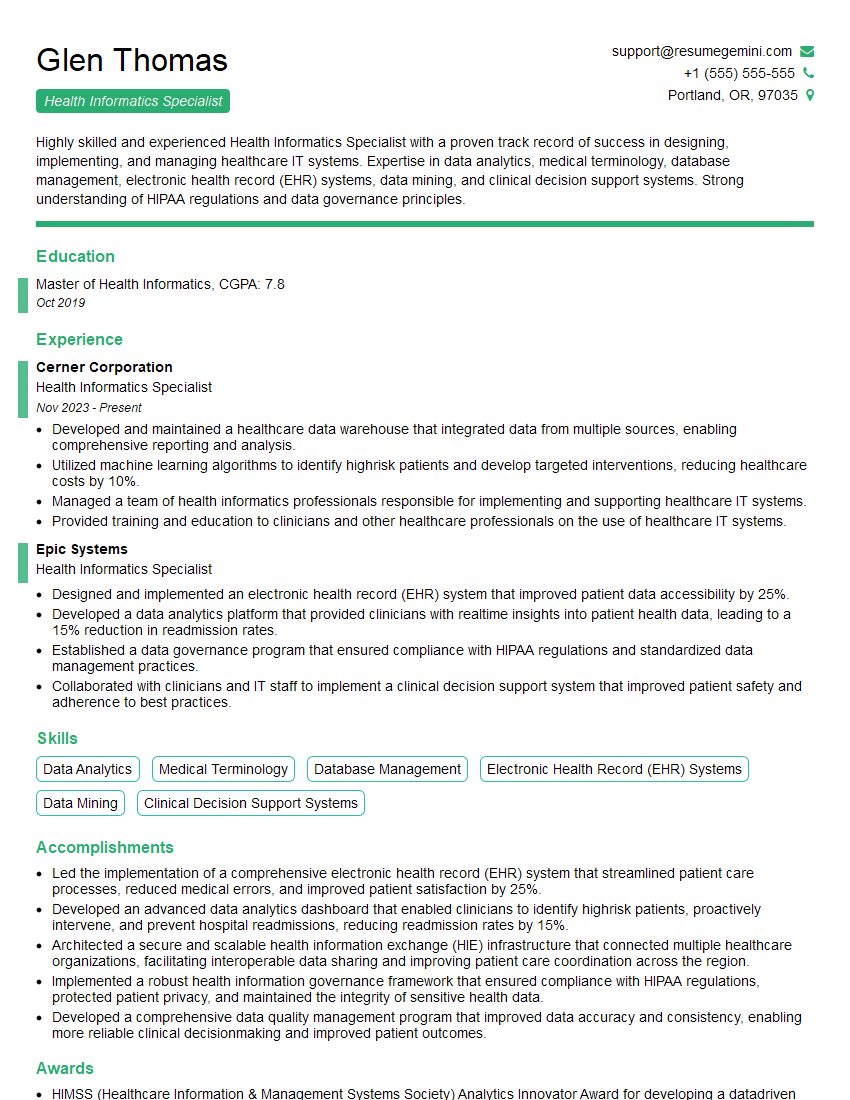
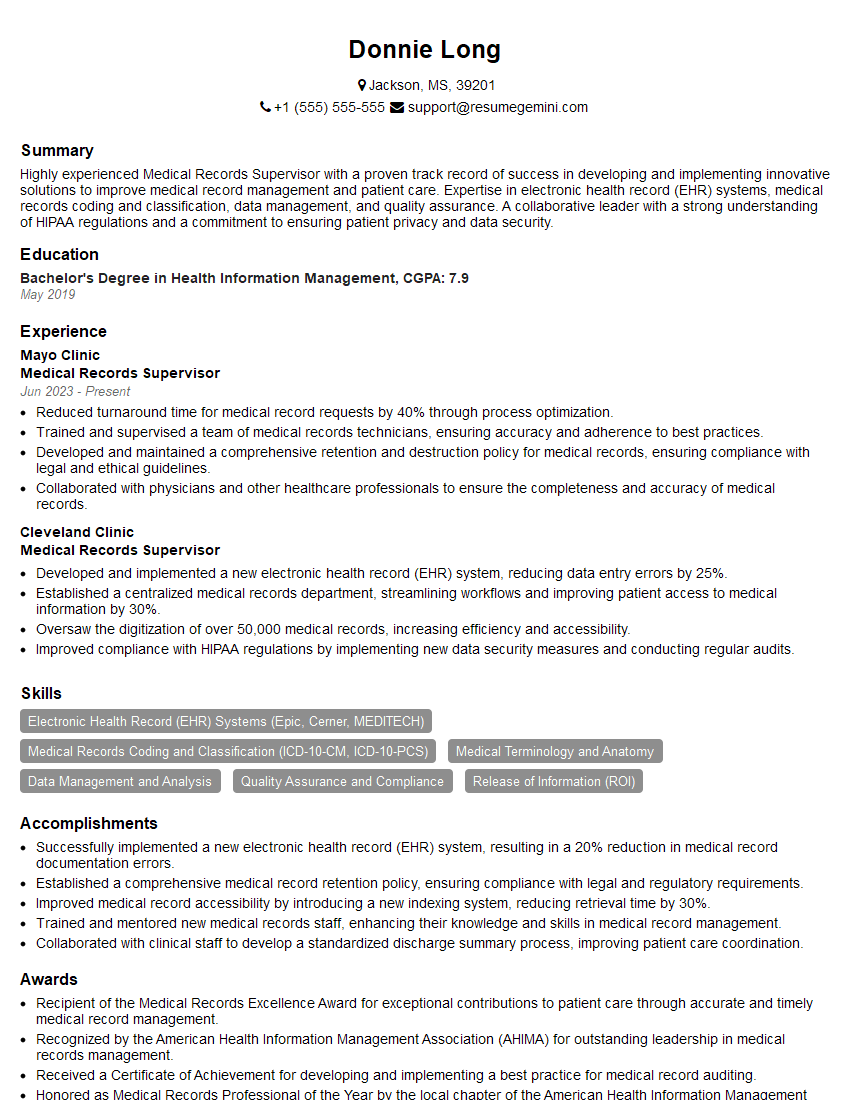
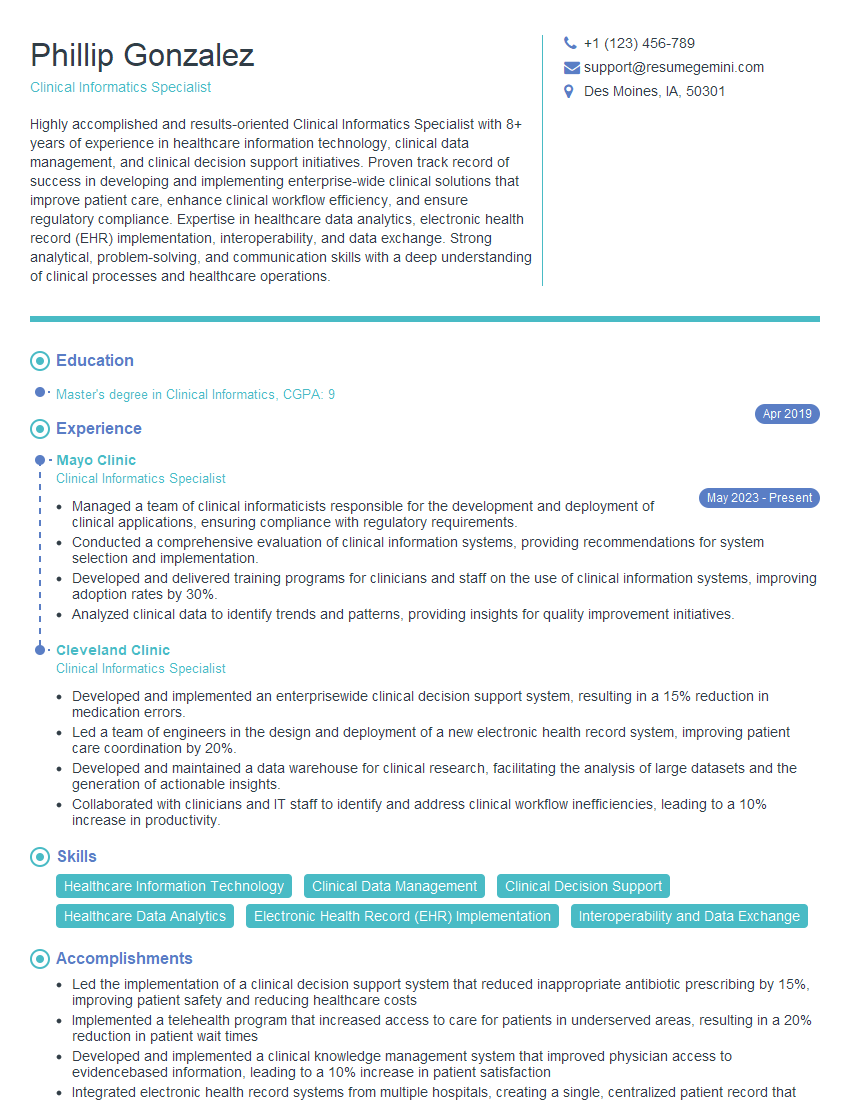
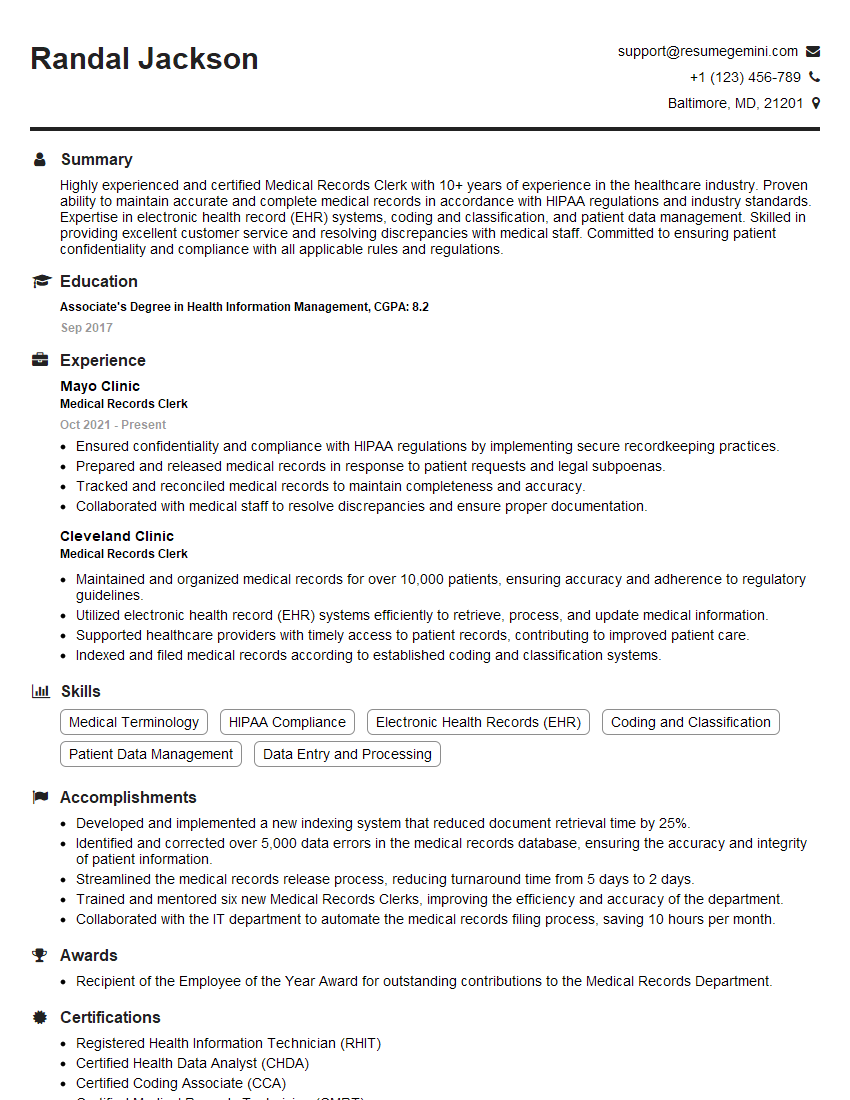
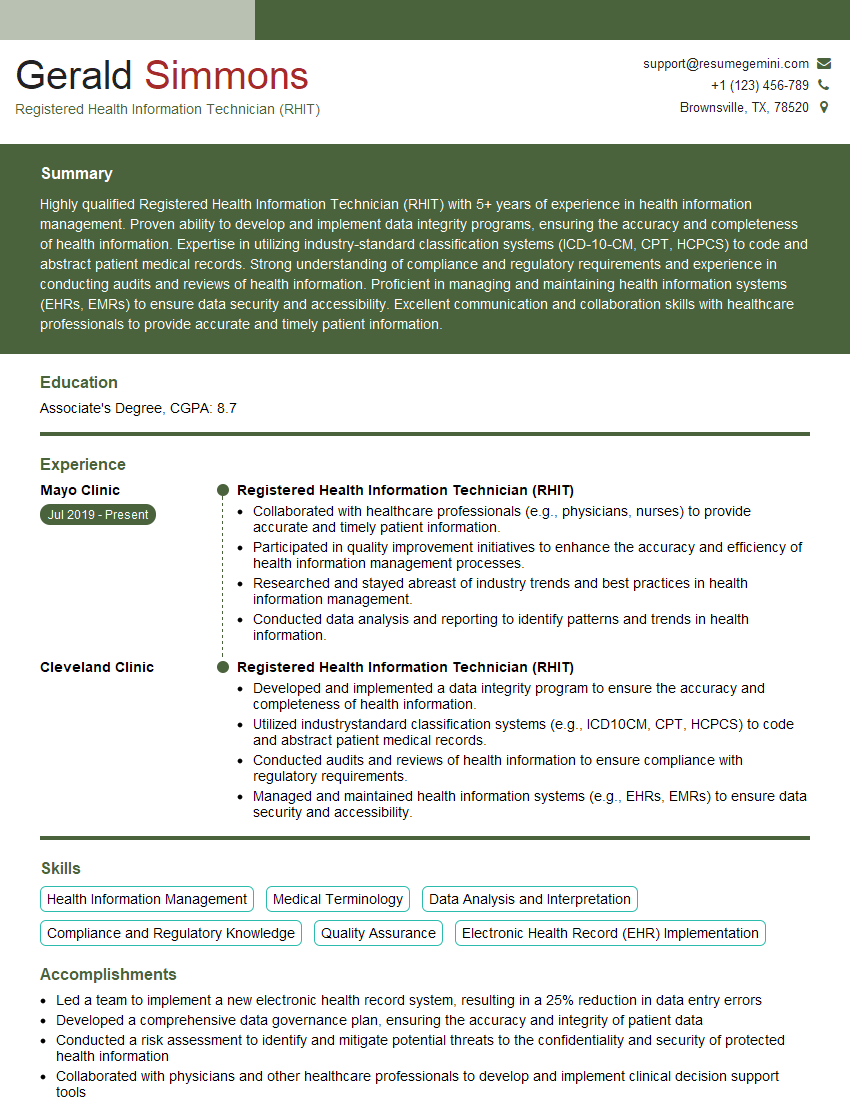
Mastering proficiency with Electronic Medical Records (EMRs) is crucial for career advancement in healthcare. It demonstrates your ability to contribute effectively to a modern healthcare setting and ensures efficient, accurate patient care. To stand out, create an ATS-friendly resume that highlights your skills and experience. ResumeGemini is a trusted resource that can help you build a professional and impactful resume, ensuring your application gets noticed. Examples of resumes tailored to Proficiency with Electronic Medical Records (EMRs) are available to guide you.
Explore more articles
Users Rating of Our Blogs
Share Your Experience
We value your feedback! Please rate our content and share your thoughts (optional).
What Readers Say About Our Blog
To the interviewgemini.com Webmaster.
Very helpful and content specific questions to help prepare me for my interview!
Thank you
To the interviewgemini.com Webmaster.
This was kind of a unique content I found around the specialized skills. Very helpful questions and good detailed answers.
Very Helpful blog, thank you Interviewgemini team.