Feeling uncertain about what to expect in your upcoming interview? We’ve got you covered! This blog highlights the most important Public Transportation Planning and Management interview questions and provides actionable advice to help you stand out as the ideal candidate. Let’s pave the way for your success.
Questions Asked in Public Transportation Planning and Management Interview
Q 1. Describe your experience with transit demand forecasting models.
Transit demand forecasting is crucial for effective public transportation planning. It involves predicting future ridership based on various factors like population growth, economic conditions, land use patterns, and service quality. I’ve extensive experience using a range of models, from simple regression techniques to sophisticated agent-based models. For instance, in a recent project for a rapidly growing suburban area, we used a four-step model – trip generation, trip distribution, mode choice, and trip assignment – to predict demand for a new light rail line. We incorporated data from demographic studies, land use maps, and origin-destination surveys. The results informed the design of the line’s capacity, frequency, and station locations. In other projects, I’ve successfully applied time series analysis to forecast short-term fluctuations in ridership, allowing for agile adjustments in service schedules.
More complex scenarios might necessitate agent-based modeling, which simulates the individual travel decisions of commuters, considering factors like route choices, travel time, and cost. This approach is particularly valuable when dealing with significant land-use changes or the introduction of innovative transit technologies.
Q 2. Explain different transit planning methodologies (e.g., TOD, network analysis).
Transit planning employs several methodologies to optimize network design and service delivery. Transit-Oriented Development (TOD) focuses on creating vibrant, mixed-use communities centered around high-quality public transit hubs. This approach reduces reliance on cars, promotes walkability and bikeability, and boosts economic activity around transit stations. I’ve worked on several TOD projects, helping to integrate land-use planning with transit network design to maximize the benefits of both. A successful TOD project I worked on involved revitalizing a previously underutilized area near a light rail station. By attracting new residential and commercial developments, the project increased ridership significantly and transformed the neighborhood.
Network analysis utilizes tools and techniques from graph theory to evaluate the efficiency and connectivity of a transit network. We use software like GIS to model the network, analyze shortest paths, identify bottlenecks, and assess overall accessibility. For example, we might use network analysis to optimize bus routes, minimizing travel times and maximizing coverage across a service area. The software allows us to test different scenarios, such as adding new routes or adjusting frequencies, before implementing them in the real world.
Q 3. How do you evaluate the effectiveness of a public transportation system?
Evaluating a public transportation system’s effectiveness requires a multi-faceted approach, looking beyond simple ridership numbers. We need to consider factors such as efficiency, accessibility, reliability, and customer satisfaction. Key metrics include on-time performance, passenger load factors, dwell times at stations, and customer feedback surveys. For instance, a system might boast high ridership but suffer from frequent delays, indicating operational inefficiencies. Conversely, a system with lower ridership might still be effective if it serves a geographically dispersed, low-density population efficiently.
Qualitative assessments, such as rider surveys and focus groups, are equally important. They reveal valuable information about passenger perceptions of safety, comfort, and overall experience. Integrating these qualitative data with quantitative performance indicators creates a holistic understanding of the system’s strengths and weaknesses, providing insights for targeted improvements.
Q 4. What are the key performance indicators (KPIs) you would track for a transit agency?
Tracking Key Performance Indicators (KPIs) is essential for monitoring and improving transit operations. I would track a range of KPIs, categorized for clarity:
- On-Time Performance: Percentage of trips arriving within a specified time window. This reflects the reliability of the service.
- Ridership: Total number of passengers carried, broken down by route, time of day, and day of the week. Provides insights into demand patterns.
- Passenger Load Factor: Average occupancy of vehicles, indicating capacity utilization.
- Dwell Time: Time spent by vehicles at stations or stops, impacting overall efficiency.
- Vehicle Miles Traveled (VMT): Total distance covered by the fleet, relevant for cost analysis and environmental impact assessments.
- Customer Satisfaction: Measured through surveys, feedback forms, and social media monitoring.
- Safety Incidents: Number and type of accidents or incidents involving vehicles or passengers.
- Operating Costs: Expenses related to labor, fuel, maintenance, and other operational activities.
Regular monitoring of these KPIs allows for data-driven decision making, identifying areas for improvement and optimizing resource allocation.
Q 5. Discuss your experience with GIS software in transportation planning.
Geographic Information Systems (GIS) software is indispensable in transportation planning. I have extensive experience using GIS software, such as ArcGIS, to manage, analyze, and visualize spatial data related to transit networks, demographics, land use, and other relevant factors. GIS allows us to create interactive maps showing transit routes, station locations, and service areas. It helps with route optimization, identifying areas with poor accessibility, and visualizing the impact of proposed transit projects. For example, we can use GIS to overlay population density maps with transit network data to identify areas with high demand and limited service. This helps us prioritize investments in expanding or improving service in those areas. Additionally, GIS is critical for developing visualizations to present our findings effectively to stakeholders.
Q 6. How would you address service disruptions and delays in a transit system?
Addressing service disruptions and delays requires a proactive and multi-pronged approach. A robust real-time monitoring system is crucial to detect issues quickly. This could involve GPS tracking of vehicles, passenger counting sensors, and real-time communication with drivers and control centers. Once a disruption occurs, effective communication is essential. Passengers need timely updates on delays and alternative routes through multiple channels: mobile apps, websites, social media, and announcements at stations. A well-defined incident response plan, detailing roles and responsibilities, is critical for efficient problem-solving. This plan would cover various scenarios, including accidents, mechanical failures, and severe weather. In addition to immediate response, post-incident analysis helps identify root causes and implement preventative measures.
For instance, during a severe snowstorm, our team utilized real-time data to dynamically reroute buses around blocked roads, and we proactively informed passengers through the transit agency’s app and website. We conducted post-incident analysis to review our snow response protocols and adapt our strategy for future winter events.
Q 7. Describe your experience with transit scheduling software and optimization techniques.
I have substantial experience with transit scheduling software and optimization techniques. These tools are vital for creating efficient and cost-effective service schedules. I’ve worked with software packages that use various optimization algorithms, such as linear programming and integer programming, to minimize costs while maximizing coverage and service quality. For example, we can use these tools to create schedules that consider factors like crew constraints, vehicle availability, and peak hour demand. These tools also help in generating robust schedules that can handle unexpected disruptions more effectively.
Optimization techniques often involve solving complex mathematical problems to find the best schedule given various constraints. Software allows us to model different scenarios and evaluate their impact on various metrics, such as operating costs, passenger waiting times, and crew overtime. This data-driven approach ensures the most efficient and effective allocation of resources.
Q 8. How do you ensure accessibility in public transportation planning and design?
Ensuring accessibility in public transportation is paramount for creating an inclusive and equitable system. It’s not just about compliance with regulations like the Americans with Disabilities Act (ADA), but about proactively designing a system that is truly usable by everyone, regardless of their abilities.
This involves a multi-faceted approach:
- Designing Accessible Infrastructure: This includes ramps, elevators, level boarding on buses and trains, tactile paving for visually impaired individuals, clear signage with braille and audio announcements, and appropriately sized and spaced seating.
- Route Planning and Scheduling: Consider the needs of individuals with mobility limitations when designing routes and schedules. This may involve prioritizing frequent service on key routes serving accessibility-sensitive locations, like hospitals and senior centers.
- Real-time Information and Communication: Providing real-time information about service disruptions and delays through multiple channels (mobile apps, websites, audio announcements) is crucial for all users, particularly those who may require additional time to navigate the system.
- Assistive Technology Integration: This includes exploring the use of apps that provide real-time navigation for visually impaired users and integrating with assistive devices for those with hearing impairments.
- Community Engagement: Involving disability advocacy groups and individuals with disabilities in the planning process is vital to ensure that the system truly meets their needs.
For example, when designing a new bus rapid transit (BRT) system, we would prioritize level boarding platforms at all stations, ensuring that wheelchair users can easily board and alight without needing assistance. We’d also work with local disability advocacy groups to ensure that our proposed signage and audio announcements are clear and understandable.
Q 9. Explain the importance of integrating public transit with other modes of transportation.
Integrating public transit with other modes of transportation – a concept known as multimodal transportation – is crucial for creating an efficient and attractive transportation network. It’s about providing seamless connections that allow passengers to easily switch between different modes, like buses, trains, subways, ride-sharing services, and cycling.
The benefits are significant:
- Increased Accessibility: By combining modes, passengers in areas with limited public transit access can still reach destinations easily.
- Reduced Congestion: Multimodal systems can reduce reliance on private vehicles, leading to less traffic congestion.
- Enhanced Efficiency: Passengers can choose the most convenient and efficient combination of modes for their journey.
- Environmental Benefits: Encouraging the use of public transit and other sustainable modes reduces carbon emissions.
- Improved First/Last Mile Connectivity: Addressing the challenge of connecting passengers from their homes or workplaces to public transit hubs.
Imagine a scenario where a commuter can seamlessly transfer from their local bus to a light rail system and then to a bike-sharing program to reach their final destination. This integrated approach significantly improves their overall travel experience and encourages them to choose public transit.
Successful integration requires careful coordination between different transportation agencies, including clear signage, coordinated schedules, and integrated ticketing systems.
Q 10. How do you incorporate sustainability principles into transit planning?
Sustainability is no longer an optional extra in transit planning; it’s a fundamental requirement. It’s about minimizing the environmental impact of our transportation systems while ensuring their long-term viability.
Incorporating sustainability involves:
- Electrification: Transitioning to electric buses and trains reduces greenhouse gas emissions and air pollution.
- Renewable Energy Sources: Powering transit facilities with renewable energy, such as solar or wind power.
- Sustainable Infrastructure Materials: Using eco-friendly materials in the construction of transit infrastructure.
- Transit-Oriented Development (TOD): Designing communities around transit hubs, encouraging walking, cycling, and reducing reliance on cars.
- Green Building Practices: Implementing environmentally friendly practices in the design and construction of transit stations and facilities.
- Reduced Energy Consumption: Optimizing operational efficiencies to minimize energy use.
- Waste Management: Implementing effective waste management strategies.
For instance, a city planning a new light rail line might incorporate TOD principles, developing high-density residential and commercial areas around stations to minimize the need for car travel. They might also opt for electric trains powered by renewable energy, reducing their carbon footprint.
Q 11. Describe your experience with transportation modeling software (e.g., TransCAD, Cube).
I have extensive experience with transportation modeling software, primarily using TransCAD and Cube. These tools are essential for analyzing transportation networks, simulating traffic flows, and forecasting future demand.
In TransCAD, I’m proficient in building and calibrating network models, running various traffic assignment models (like user equilibrium and system optimum), and performing sensitivity analysis. I’ve used it to assess the impact of new transit lines, changes in service frequency, and infrastructure improvements on overall network performance.
With Cube, I’ve worked on agent-based modeling, simulating individual passenger choices and their interactions within the transportation system. This has helped me understand factors influencing mode choice and assess the effectiveness of various demand management strategies.
For example, I recently used TransCAD to model the impact of a proposed bus rapid transit (BRT) line on traffic congestion and travel times in a congested urban corridor. The model helped demonstrate the potential benefits of the BRT in terms of reduced congestion and improved travel times, which was instrumental in securing funding for the project. I also used Cube to simulate the potential ridership on the new BRT line, considering factors like travel time, cost, and the proximity of bus stops to residential areas.
Q 12. How do you analyze ridership data to inform service improvements?
Analyzing ridership data is crucial for understanding passenger behavior and informing service improvements. It’s about moving beyond simple headcounts to gain actionable insights.
My approach involves:
- Data Collection and Cleaning: Gathering data from various sources (automatic passenger counters, fare card data, surveys) and cleaning it to ensure accuracy and consistency.
- Descriptive Statistics: Calculating key metrics like average ridership, peak hours, and origin-destination patterns.
- Spatial Analysis: Mapping ridership patterns to identify areas with high and low demand.
- Regression Analysis: Exploring the relationship between ridership and various factors like fare price, travel time, and service frequency.
- Demand Forecasting: Using historical data and forecasting techniques to predict future ridership demand.
For example, analyzing fare card data might reveal that ridership on a particular bus route is consistently low during off-peak hours. This could suggest an opportunity to optimize the schedule by reducing service frequency during those periods or redirecting resources to other routes with higher demand.
Furthermore, using spatial analysis to identify ridership hotspots can inform decisions about adding new stops or increasing service frequency in specific areas. Understanding the relationship between fare price and ridership can inform decisions about fare adjustments.
Q 13. Explain your understanding of different fare collection systems and their implications.
Fare collection systems are a critical component of public transportation, impacting both ridership and agency revenue. There’s a wide range of systems available, each with its own advantages and disadvantages.
Some common systems include:
- Cash Fare Collection: Simple but inefficient, prone to errors and security risks.
- Magnetic Strip Cards: Relatively inexpensive but limited functionality.
- Smart Cards (Contactless): Offer increased security, flexibility, and the ability to offer fare discounts and other features.
- Mobile Ticketing: Utilizing smartphones for fare payment, offering convenience and potentially reducing costs.
- Open Payment Systems: Allowing passengers to use various contactless payment methods like credit cards and mobile wallets.
The choice of system depends on factors like budget, technological infrastructure, passenger demographics, and agency goals. For instance, a large city with a technologically advanced population might opt for a sophisticated open payment system that allows for seamless integration with various payment methods. Smaller agencies with limited resources might choose a simpler smart card system.
Consider the implications: Cost of implementation and maintenance, user experience, security, potential for fare evasion, and data collection capabilities for operational improvements.
Q 14. How would you develop a capital improvement plan for a transit agency?
Developing a capital improvement plan (CIP) for a transit agency requires a systematic approach that balances needs, resources, and long-term goals.
My approach would involve:
- Needs Assessment: Identifying infrastructure deficiencies, capacity constraints, and unmet passenger needs through a combination of data analysis, stakeholder consultation, and asset management assessments.
- Financial Planning: Estimating the cost of proposed projects, identifying funding sources (grants, bonds, fares), and developing a long-term financial plan.
- Project Prioritization: Ranking projects based on their impact, cost-effectiveness, and alignment with agency goals using a multi-criteria decision analysis (MCDA) approach.
- Project Scheduling and Implementation: Developing a detailed schedule for project implementation, including design, construction, and testing phases.
- Risk Management: Identifying and mitigating potential risks associated with each project.
- Public Engagement: Engaging with the public to build support for the CIP and address concerns.
- Monitoring and Evaluation: Tracking project progress, evaluating outcomes, and making adjustments as needed.
For example, a needs assessment might reveal that a particular bus route is experiencing overcrowding and that the existing bus fleet is aging. The CIP would then prioritize projects to expand the fleet with new buses and potentially explore the possibility of bus lane improvements to increase efficiency.
A robust CIP ensures that transit agencies invest wisely in their infrastructure, improving service quality, increasing ridership, and enhancing the overall efficiency of the system.
Q 15. How do you manage stakeholder engagement in the transportation planning process?
Effective stakeholder engagement is crucial for successful transportation planning. It’s about building consensus and buy-in from all those affected by or interested in a project – from residents and businesses to government agencies and advocacy groups. My approach is multifaceted and iterative.
- Early and Frequent Communication: I initiate outreach early in the planning process, using a variety of methods like public forums, online surveys, focus groups, and individual meetings. This ensures that concerns are addressed proactively, rather than reactively.
- Transparency and Data Sharing: Openly sharing data, analysis, and project plans fosters trust. I use clear, accessible language, avoiding technical jargon whenever possible. Visual aids, like maps and charts, are invaluable.
- Collaboration and Conflict Resolution: I facilitate workshops and collaborative sessions where stakeholders can directly interact and discuss their perspectives. I actively mediate disagreements, striving to find common ground and compromise. This process is particularly vital when dealing with competing interests, like balancing environmental concerns with economic development.
- Feedback Incorporation: Stakeholder feedback is not just listened to; it’s integrated into the planning process. I document all feedback, analyze its implications, and adjust plans accordingly, ensuring transparency in decision-making.
- Ongoing Engagement: Engagement doesn’t end with project approval. I maintain communication throughout construction and implementation, addressing concerns and providing updates to keep stakeholders informed.
For example, during a recent light rail project, we used a combination of online surveys, community meetings, and a dedicated project website to gather input on route selection and station design. This resulted in a design that better met the needs of the community, leading to stronger public support for the project.
Career Expert Tips:
- Ace those interviews! Prepare effectively by reviewing the Top 50 Most Common Interview Questions on ResumeGemini.
- Navigate your job search with confidence! Explore a wide range of Career Tips on ResumeGemini. Learn about common challenges and recommendations to overcome them.
- Craft the perfect resume! Master the Art of Resume Writing with ResumeGemini’s guide. Showcase your unique qualifications and achievements effectively.
- Don’t miss out on holiday savings! Build your dream resume with ResumeGemini’s ATS optimized templates.
Q 16. Describe your experience with environmental impact assessments for transit projects.
Environmental impact assessments (EIAs) are critical for responsible transit project development. My experience includes conducting and reviewing EIAs for various projects, encompassing a wide range of environmental considerations.
- Baseline Studies: This involves conducting thorough assessments of existing environmental conditions, including air and water quality, noise levels, and ecological habitats. Data collection methods vary from on-site surveys to using existing environmental databases.
- Impact Prediction: Using specialized software and modeling techniques, I predict the potential environmental impacts of the proposed transit project. This includes assessing impacts on air quality from emissions, noise pollution from train operations, and potential habitat disruption from construction.
- Mitigation Measures: A key aspect of my work is identifying and designing mitigation measures to minimize negative impacts. This can range from implementing noise barriers to employing sustainable construction practices and utilizing green infrastructure.
- Regulatory Compliance: I ensure that the EIA complies with all relevant environmental regulations and guidelines, preparing comprehensive reports for regulatory agencies. This includes meticulous documentation and rigorous analysis to support the findings.
- Public Consultation: Engaging the public in the EIA process is crucial for transparency and accountability. I often present findings and mitigation strategies at public meetings and incorporate feedback into the final EIA report.
For instance, in a recent highway expansion project, we implemented measures such as installing sound barriers and utilizing electric buses to significantly reduce noise and air pollution, ensuring a minimized environmental impact.
Q 17. How do you handle budget constraints and prioritize projects in transit planning?
Budget constraints are a common challenge in transit planning. Prioritization requires a structured approach, combining quantitative and qualitative analysis.
- Cost-Benefit Analysis (CBA): I conduct CBAs to evaluate the economic viability of different projects, considering factors such as capital costs, operating costs, and user benefits. This helps to objectively compare projects and identify those with the highest return on investment.
- Multi-Criteria Decision Analysis (MCDA): MCDA incorporates various criteria beyond just cost, such as social equity, environmental impact, and system integration. This allows for a more holistic evaluation of projects, acknowledging their broader implications.
- Phasing and Sequencing: Instead of trying to implement everything at once, projects can be broken down into phases, prioritizing those with the most urgent needs or highest impact. This allows for flexibility in budget allocation and minimizes financial risk.
- Value Engineering: This involves critically reviewing project designs and specifications to identify opportunities for cost savings without compromising functionality or safety. This often involves exploring alternative materials, technologies, or construction methods.
- Seeking Alternative Funding Sources: Exploring options beyond traditional funding sources, like grants, public-private partnerships, and innovative financing models, can broaden the financial scope for projects.
In a recent city-wide transit improvement plan, we used a combination of CBA and MCDA to prioritize projects, resulting in a phased implementation plan that maximized the impact of limited funds.
Q 18. What are the main challenges in implementing transit-oriented development (TOD)?
Transit-oriented development (TOD) aims to create vibrant, walkable communities centered around public transit. However, implementing TOD faces several challenges:
- Land Use Regulations and Zoning: Existing zoning regulations may not be conducive to high-density development, hindering the creation of mixed-use areas around transit stations.
- Funding and Financing: TOD projects require significant upfront investment, and securing financing can be difficult, especially in areas with limited private investment.
- Community Resistance: Residents may resist changes to their neighborhoods, such as increased density or altered parking arrangements, even if the benefits of TOD are considerable.
- Infrastructure Limitations: Existing infrastructure, such as roads, utilities, and parking facilities, may need significant upgrades to accommodate increased density and transit ridership.
- Coordination and Collaboration: Successful TOD requires effective collaboration among various stakeholders, including transit agencies, developers, local governments, and community groups.
For example, a TOD project I worked on experienced delays due to challenges in securing necessary zoning approvals and navigating competing interests among various stakeholders. Addressing these challenges required extensive community outreach, flexible planning, and strong leadership.
Q 19. How do you ensure the safety and security of passengers on a transit system?
Ensuring passenger safety and security is paramount in transit planning. A multi-pronged approach is needed, focusing on both proactive measures and reactive responses.
- Crime Prevention Through Environmental Design (CPTED): Designing transit stations and vehicles with features that deter crime, such as good lighting, clear sightlines, and readily available security personnel, is a key proactive measure.
- Surveillance Systems: Employing CCTV cameras, both at stations and on vehicles, provides a deterrent to crime and assists in investigations.
- Emergency Response Plans: Developing and regularly testing emergency response plans is essential for handling incidents such as accidents, medical emergencies, or security threats. This includes clear communication protocols and effective coordination with emergency services.
- Staff Training: Equipping staff with the skills and knowledge to handle security situations, provide assistance to passengers, and de-escalate conflicts is crucial. This might include training on conflict resolution, first aid, and customer service.
- Passenger Education: Educating passengers on safety procedures, such as being aware of their surroundings and reporting suspicious activity, is an important preventative strategy.
For instance, in a recent project, we implemented a comprehensive security system incorporating CCTV cameras, emergency call buttons, and improved lighting in high-risk areas, resulting in a significant decrease in crime incidents.
Q 20. Describe your experience with transportation data analysis and reporting.
Transportation data analysis is central to effective planning and management. My experience includes using data to assess performance, identify trends, and make data-driven decisions.
- Data Collection: This includes working with Automated Passenger Counters (APCs), GPS data from vehicles, smart card fare data, and other sources to gather comprehensive information on ridership, travel patterns, and service performance.
- Data Analysis: I utilize statistical software (e.g., R, Python) and visualization tools (e.g., Tableau, Power BI) to analyze data, identify trends, and draw insights. This might involve analyzing ridership patterns to optimize service schedules or identifying areas with high congestion to inform infrastructure improvements.
- Performance Monitoring: I develop key performance indicators (KPIs) to track the effectiveness of transit operations and identify areas for improvement. This includes monitoring on-time performance, passenger satisfaction, and safety metrics.
- Reporting and Communication: I prepare clear and concise reports that effectively communicate findings to stakeholders, using visualizations to facilitate understanding and decision-making.
- Predictive Modeling: Using advanced statistical techniques, I can develop models to predict future ridership, travel patterns, and other key variables, enabling proactive planning and resource allocation.
In a recent project, we used GPS data to analyze bus speeds and identify areas where traffic congestion significantly impacted service reliability, allowing us to adjust routes and schedules to improve on-time performance.
Q 21. How would you develop a marketing and communication plan for a transit agency?
A comprehensive marketing and communication plan is essential for attracting and retaining transit riders. My approach includes:
- Target Audience Segmentation: Identifying different user groups (e.g., commuters, students, tourists) and tailoring messaging to their specific needs and preferences.
- Messaging Development: Crafting clear, concise, and engaging messages that highlight the benefits of using public transit, such as cost savings, convenience, and environmental benefits.
- Channel Selection: Choosing the most effective communication channels to reach the target audiences. This might include social media, websites, mobile apps, print advertisements, and partnerships with local businesses.
- Campaign Implementation: Developing and executing marketing campaigns using a mix of promotional activities, such as contests, giveaways, and public awareness events.
- Performance Measurement: Tracking key metrics, such as website traffic, social media engagement, and ridership numbers, to assess the effectiveness of marketing initiatives and make data-driven adjustments.
For a recent transit agency, we developed a multi-channel marketing campaign that included targeted social media ads, a new mobile app, and partnerships with local businesses, resulting in a significant increase in ridership.
Q 22. Explain your understanding of transportation regulations and compliance.
Transportation regulations and compliance are crucial for ensuring safety, efficiency, and fairness within the public transit system. This encompasses a wide range of laws, rules, and standards at local, regional, and national levels. These regulations cover various aspects, including vehicle maintenance and safety (think regular inspections and adherence to emission standards), driver licensing and training (ensuring drivers possess the necessary skills and certifications), accessibility for people with disabilities (compliant infrastructure and vehicle design according to ADA standards), fare collection and revenue management (transparent and accountable systems), and environmental regulations (minimizing the environmental impact of operations).
Compliance involves actively monitoring and adhering to all relevant regulations. This requires robust internal processes, regular audits, and proactive engagement with regulatory bodies. Failure to comply can result in significant penalties, operational disruptions, and damage to public trust. For example, a transit agency failing to meet ADA requirements could face lawsuits and fines, while neglecting vehicle maintenance could lead to accidents and service disruptions. My experience includes developing and implementing comprehensive compliance programs, ensuring our agency met all relevant regulations, and proactively identifying potential areas of non-compliance before they became issues.
Q 23. How do you utilize data analytics to improve transit efficiency and effectiveness?
Data analytics is transformative for improving transit efficiency and effectiveness. We leverage data from various sources – Automatic Vehicle Location (AVL) systems, smart card fare data, passenger surveys, social media sentiment, and real-time traffic information – to gain insights into system performance and passenger behavior. This allows us to make data-driven decisions, rather than relying on intuition or anecdotal evidence.
For instance, analyzing AVL data can identify bottlenecks in the network, allowing us to optimize routes and schedules to reduce delays and improve on-time performance. Analyzing fare data reveals ridership patterns, helping us to adjust service levels to meet demand more effectively. By combining passenger surveys with social media sentiment analysis, we can better understand customer satisfaction and address specific concerns. In a recent project, we used machine learning algorithms to predict ridership demand based on historical data and weather forecasts, enabling us to proactively adjust service levels and avoid overcrowding during peak hours.
Q 24. Describe your experience with project management methodologies in the context of transit projects.
My experience with project management in transit projects spans various methodologies, including Agile, Waterfall, and a hybrid approach tailored to the specific project needs. I’ve led and participated in projects ranging from implementing new fare collection systems to developing new bus routes and constructing light rail extensions. For larger, complex projects, a phased Waterfall approach, with its detailed planning and sequential execution, is often suitable. For smaller, iterative projects, such as software development or service adjustments, an Agile approach with its flexibility and rapid iteration cycles proves more effective.
Regardless of the methodology, I emphasize clear project goals, detailed planning, risk management, stakeholder engagement, and effective communication. I utilize project management software to track progress, manage resources, and ensure projects are completed on time and within budget. For example, in one project, we used a hybrid approach, combining the structured planning of Waterfall with the iterative development of Agile to deliver a new mobile ticketing application efficiently and effectively. This allowed us to adapt to changing requirements and deliver value incrementally throughout the project.
Q 25. How would you address concerns regarding equity and social justice in transportation planning?
Addressing equity and social justice in transportation planning is paramount. It’s not just about providing transportation; it’s about ensuring equitable access to opportunities. This means considering the needs of all residents, particularly vulnerable populations such as low-income individuals, people with disabilities, and communities of color, who may face disproportionate barriers to accessing transportation.
We can achieve this through various strategies: conducting thorough equity analyses to identify disparities in service coverage and accessibility; prioritizing investments in underserved communities; incorporating community input and engagement in planning processes; designing services that are accessible and affordable for all; and implementing policies that promote environmental justice, such as reducing air pollution in disadvantaged areas. For example, we might prioritize bus routes serving low-income neighborhoods or invest in accessible infrastructure in areas with high rates of disability. This requires a commitment to inclusive practices at all stages of the planning and implementation process.
Q 26. What are the key considerations for developing a comprehensive transit network plan?
Developing a comprehensive transit network plan requires careful consideration of numerous factors. It’s a holistic process that integrates various elements to create a system that is efficient, effective, equitable, and sustainable. Key considerations include:
- Demand Forecasting: Projecting future ridership based on population growth, land use patterns, and economic development.
- Network Design: Optimizing route alignments and frequencies to provide efficient service coverage.
- Mode Selection: Determining the appropriate modes of transportation (bus, rail, light rail, etc.) based on factors such as distance, capacity, and cost.
- Accessibility: Ensuring that the network is accessible to all residents, regardless of their physical abilities or socioeconomic status.
- Integration: Coordinating with other transportation modes (e.g., biking, walking) to create a seamless, integrated transportation system.
- Sustainability: Minimizing the environmental impact of the transit system by using clean energy sources and promoting sustainable practices.
- Financial Planning: Securing funding for capital investments and operational expenses.
- Community Engagement: Involving the community in the planning process to ensure that the network meets the needs of the residents.
A successful plan requires a robust analytical process, stakeholder collaboration, and a long-term vision.
Q 27. How do you assess the economic impact of public transportation investments?
Assessing the economic impact of public transportation investments requires a multifaceted approach, looking beyond just the direct costs and benefits. We employ various economic evaluation techniques, including cost-benefit analysis (CBA), to weigh the costs of construction, operation, and maintenance against the benefits of improved mobility, reduced congestion, environmental improvements, and economic development.
A CBA considers factors such as reduced travel times, increased productivity, lower fuel consumption, reduced air pollution, and the creation of jobs during construction and operation. We also analyze the broader economic impacts, such as increased property values near transit stations and the stimulation of economic activity in areas served by public transit. For example, a new light rail line might generate increased business activity along its corridor, creating jobs and boosting tax revenues. These economic benefits must be carefully measured and compared against the costs of the investment to determine its overall economic viability.
Q 28. Describe your experience with developing and implementing service improvement strategies.
Developing and implementing service improvement strategies involves a cyclical process of data analysis, planning, implementation, and evaluation. It starts with identifying areas for improvement through data analysis (as discussed earlier), such as low ridership on certain routes, high passenger wait times at specific stops, or negative feedback from passenger surveys.
Then, we develop strategies to address these issues. This could involve adjusting service frequencies, rerouting buses to better serve demand, introducing new technologies like real-time tracking and mobile ticketing, or implementing strategies to improve customer service. Once implemented, we continuously monitor the effectiveness of these improvements using key performance indicators (KPIs) and adjust our strategies as needed. For example, implementing a new bus rapid transit (BRT) system involves analyzing existing routes, improving infrastructure and bus stops, and implementing traffic signal prioritization. The success of this strategy is monitored using metrics like on-time performance, passenger satisfaction, and ridership increases. Continuous evaluation is vital to ensure improvements meet their intended goals.
Key Topics to Learn for Public Transportation Planning and Management Interview
- Demand Forecasting and Modeling: Understanding techniques like regression analysis and forecasting models to predict future ridership and optimize service planning. Practical application: Developing a ridership forecast for a new light rail line, considering factors like population growth and land use changes.
- Network Design and Optimization: Analyzing existing networks and proposing improvements to enhance efficiency and accessibility. Practical application: Designing efficient bus routes minimizing travel times and maximizing coverage, considering factors such as traffic patterns and geographical constraints.
- Service Planning and Scheduling: Developing efficient and effective schedules considering factors like frequency, headways, and crew scheduling. Practical application: Optimizing a subway system schedule to minimize delays and overcrowding during peak hours.
- Transportation Policy and Regulation: Familiarity with relevant legislation, regulations, and policies impacting public transportation. Practical application: Analyzing the impact of a new fare structure on ridership and revenue.
- Data Analysis and GIS (Geographic Information Systems): Utilizing data analysis techniques and GIS software to analyze ridership patterns, identify areas needing service improvements, and visualize transportation networks. Practical application: Using GIS to map areas with limited transit access and develop strategies to improve connectivity.
- Project Management and Implementation: Understanding the lifecycle of transportation projects, from planning and design to construction and operation. Practical application: Managing the implementation of a Bus Rapid Transit (BRT) system, coordinating various stakeholders and ensuring timely completion.
- Financial Planning and Budgeting: Developing and managing budgets for public transportation operations and capital investments. Practical application: Preparing a budget proposal for a new fleet of electric buses, justifying costs and demonstrating long-term financial benefits.
- Sustainability and Environmental Considerations: Understanding the environmental impact of public transportation and implementing sustainable practices. Practical application: Developing a plan to reduce the carbon footprint of a bus fleet through the adoption of alternative fuels or improved operational efficiencies.
Next Steps
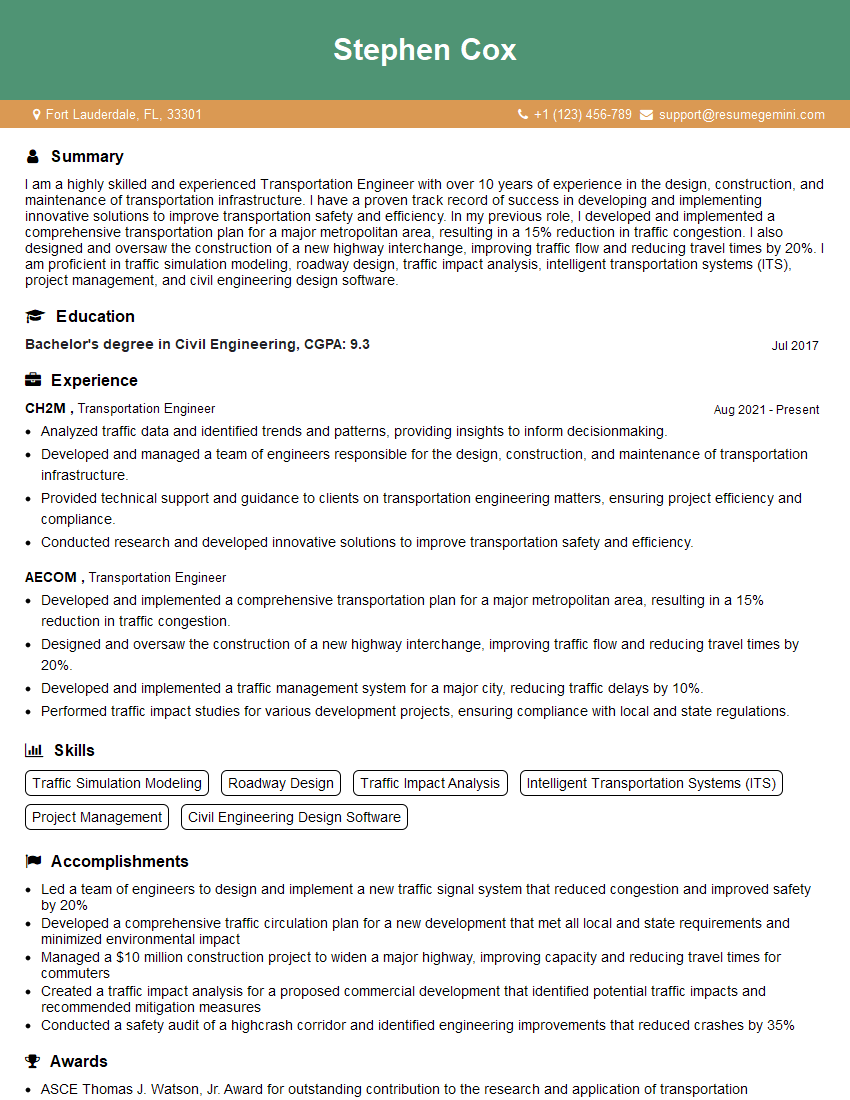
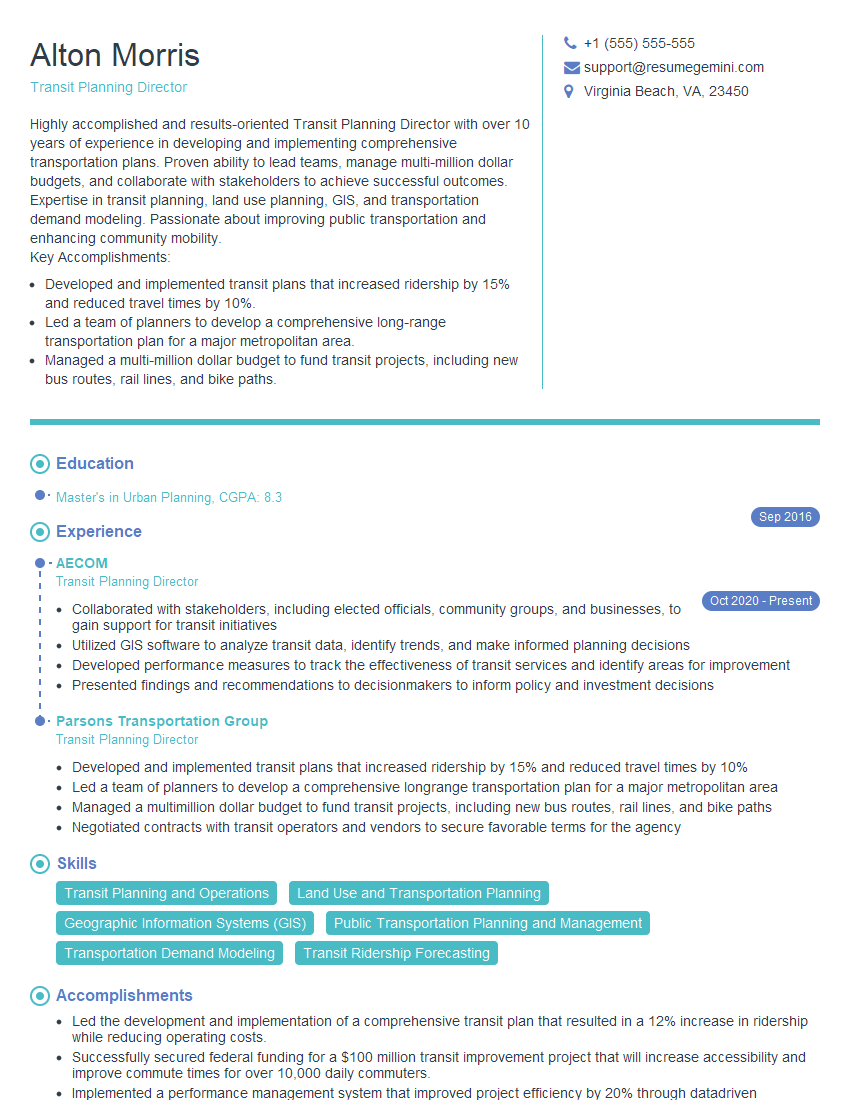
Mastering Public Transportation Planning and Management opens doors to a rewarding career with significant impact on communities. Your expertise in optimizing networks, improving efficiency, and enhancing accessibility is highly valuable. To maximize your job prospects, it’s crucial to present your skills effectively through a well-crafted, ATS-friendly resume. ResumeGemini is a trusted resource that can help you build a professional resume that highlights your accomplishments and keywords relevant to this field. Examples of resumes tailored to Public Transportation Planning and Management are available to guide you in this process. Take the next step towards your dream career today!

Explore more articles
Users Rating of Our Blogs
Share Your Experience
We value your feedback! Please rate our content and share your thoughts (optional).
What Readers Say About Our Blog
To the interviewgemini.com Webmaster.
Very helpful and content specific questions to help prepare me for my interview!
Thank you
To the interviewgemini.com Webmaster.
This was kind of a unique content I found around the specialized skills. Very helpful questions and good detailed answers.
Very Helpful blog, thank you Interviewgemini team.