Unlock your full potential by mastering the most common Program Evaluation and Accreditation interview questions. This blog offers a deep dive into the critical topics, ensuring you’re not only prepared to answer but to excel. With these insights, you’ll approach your interview with clarity and confidence.
Questions Asked in Program Evaluation and Accreditation Interview
Q 1. Describe your experience with different program evaluation methodologies (e.g., quantitative, qualitative, mixed methods).
Program evaluation employs various methodologies to assess program effectiveness. I’m proficient in quantitative, qualitative, and mixed methods approaches. Quantitative methods utilize numerical data and statistical analysis to measure program outcomes, often focusing on things like efficiency and impact. For example, I might use a randomized controlled trial (RCT) to compare the test scores of students in a new tutoring program versus a control group. Qualitative methods, on the other hand, delve into the richness of human experience, exploring perspectives, meanings, and contexts. This might involve conducting in-depth interviews with program participants to understand their experiences. Mixed methods cleverly combine both approaches, leveraging the strengths of each to provide a more comprehensive understanding. A mixed methods study might combine survey data (quantitative) with focus group discussions (qualitative) to examine both the impact and participant satisfaction of a community health initiative. My experience spans all three, allowing me to tailor the evaluation design to the specific program and research questions.
Q 2. Explain the key steps involved in a program evaluation.
A robust program evaluation follows a systematic process. It starts with a clear definition of the program’s goals and objectives. Think of it like a roadmap – you need to know your destination before you begin the journey. Next, we design the evaluation, selecting appropriate methods and data collection instruments based on the program’s context and research questions. Then comes data collection – this could involve surveys, interviews, observations, or document review. The collected data is then analyzed, comparing it against the program’s predetermined goals. Finally, we interpret the findings, drawing conclusions about the program’s effectiveness and making recommendations for improvement. This entire process is documented thoroughly, allowing for transparency and reproducibility.
- Define Goals & Objectives: Clearly articulate what the program aims to achieve.
- Design the Evaluation: Choose appropriate methods (quantitative, qualitative, mixed).
- Collect Data: Gather information using various instruments (surveys, interviews, etc.).
- Analyze Data: Use statistical or thematic analysis to interpret findings.
- Report Findings & Recommendations: Communicate results and suggest improvements.
Q 3. How do you ensure the validity and reliability of your evaluation data?
Ensuring validity and reliability is paramount. Validity refers to the accuracy of the evaluation – are we actually measuring what we intend to measure? Reliability refers to the consistency of the results – would we get similar results if we repeated the evaluation? To enhance validity, I employ strategies like triangulation, using multiple data sources to confirm findings. For example, I might corroborate survey data with interview data. I also meticulously check the instrument’s content validity (does it cover all aspects of the program?) and construct validity (does it accurately measure the underlying construct?). For reliability, I focus on using standardized instruments, employing clear operational definitions, and inter-rater reliability checks when dealing with subjective data (e.g., multiple raters code interview transcripts). Careful documentation and transparent methods are essential throughout the entire process.
Q 4. What are some common challenges in program evaluation and how do you address them?
Program evaluation faces numerous challenges. Resource constraints (time, funding, personnel) are common. Gaining access to necessary data can also be difficult, especially when dealing with sensitive information. Stakeholder buy-in is crucial; if key stakeholders aren’t supportive, the evaluation process can be severely hampered. Bias can also influence findings, both consciously and unconsciously. To address these, I advocate for meticulous planning and resource allocation from the outset. I build strong relationships with stakeholders to foster collaboration and trust. Transparent data collection and analysis procedures help mitigate bias. Using a mixed methods approach can also offer more robust and nuanced findings, addressing potential weaknesses of single-method approaches. For instance, if access to large-scale quantitative data is limited, supplementing it with in-depth qualitative interviews can still provide valuable insights.
Q 5. How do you communicate evaluation findings to stakeholders with diverse backgrounds?
Communicating evaluation findings effectively requires tailoring the message to the audience. I avoid jargon and use clear, concise language. Visual aids like graphs and charts are particularly effective in conveying key findings to diverse stakeholders. I tailor my report based on their level of understanding and interest. For example, a technical report for program managers might include detailed statistical analysis, while a summary for community members might focus on key takeaways and implications. Active listening and engagement during feedback sessions are critical to ensuring the findings are understandable and actionable. Providing opportunities for questions and follow-up discussions ensures the communication is effective.
Q 6. Explain your understanding of accreditation standards and their importance.
Accreditation standards are established criteria that organizations must meet to demonstrate their competence and quality. They provide benchmarks for excellence and ensure accountability. These standards vary depending on the field (e.g., healthcare, education) and the accrediting body. Their importance lies in maintaining quality, promoting continuous improvement, and building public trust. Accreditation demonstrates that an organization meets nationally recognized standards, which can improve its reputation, attract funding, and enhance its competitive advantage. For instance, accreditation in healthcare ensures patient safety and quality of care, while accreditation in education validates the quality of the educational program and the institution’s commitment to student success. My experience includes reviewing programs against established accreditation standards, identifying areas for improvement, and assisting organizations in strengthening their compliance.
Q 7. Describe your experience in developing or using evaluation instruments (e.g., surveys, interviews, observations).
Developing and using evaluation instruments is a core aspect of my work. I have extensive experience designing and administering surveys, conducting structured and semi-structured interviews, and performing systematic observations. For surveys, I carefully design questions to ensure clarity, avoid bias, and capture the necessary information. I utilize validated scales whenever possible to ensure reliability. Interviews allow for a deeper understanding of complex issues. For observations, I use structured observation protocols to ensure consistency and objectivity. My experience also encompasses piloting and refining instruments before wider implementation, ensuring they are fit for purpose and provide high-quality data. For instance, in a recent evaluation of a teacher training program, I used a combination of pre- and post-training surveys to measure changes in teacher knowledge and skills, followed by classroom observations to assess their application of newly acquired techniques.
Q 8. How do you analyze both quantitative and qualitative data to draw meaningful conclusions?
Analyzing both quantitative and qualitative data is crucial for a comprehensive program evaluation. Think of it like painting a complete picture – quantitative data provides the broad strokes (numbers, statistics), while qualitative data fills in the finer details (stories, perspectives).
Quantitative Analysis: This involves statistical methods to analyze numerical data. For example, we might use regression analysis to determine the relationship between program participation and improved outcomes, or t-tests to compare the performance of different groups. We look at means, standard deviations, correlations, and other metrics to identify patterns and trends.
Qualitative Analysis: Here, we delve into textual or visual data, such as interview transcripts, focus group notes, or observations. Techniques like thematic analysis help identify recurring themes and patterns within the data. For instance, we might analyze interview transcripts to understand participants’ experiences and perceptions of the program’s impact.
Integration: The key is to integrate these approaches. Quantitative data might show a statistically significant improvement in an outcome, but qualitative data can explain *why* that improvement occurred. For example, a positive quantitative result might be accompanied by qualitative data suggesting that a specific program component was particularly impactful. This triangulation of data strengthens the overall conclusions and provides a more nuanced understanding of the program’s effectiveness.
Q 9. How do you ensure ethical considerations are addressed in your evaluation work?
Ethical considerations are paramount in program evaluation. My approach prioritizes transparency, confidentiality, and respect for participants. Before any data collection begins, I obtain informed consent from all participants, ensuring they understand the purpose of the evaluation, how their data will be used, and their right to withdraw at any time. Data is anonymized or pseudonymized to protect participant identities. I maintain strict data security protocols to prevent unauthorized access.
For instance, in a recent evaluation of a community health program, I ensured that all participant information was handled according to HIPAA regulations. All data was de-identified, stored securely, and only accessible to authorized personnel. Any publications or reports stemming from the evaluation would not include any personally identifiable information. Furthermore, I meticulously documented all ethical considerations and procedures throughout the evaluation process.
Q 10. Describe your experience with different data analysis techniques (e.g., statistical analysis, thematic analysis).
My experience encompasses a range of data analysis techniques. On the quantitative side, I’m proficient in various statistical software packages, including SPSS and R. I’ve used regression analysis, ANOVA, t-tests, and chi-square tests to analyze data from randomized controlled trials, quasi-experimental designs, and descriptive studies. For example, in evaluating a literacy program, I used regression analysis to assess the impact of different instructional methods on reading scores.
In qualitative analysis, I utilize thematic analysis, grounded theory, and content analysis. I am comfortable with qualitative data software like NVivo for coding and analyzing interview transcripts and focus group data. For example, in evaluating a leadership development program, I employed thematic analysis to identify key themes emerging from participant interviews, helping us understand the program’s effectiveness in fostering leadership skills. I also have experience with mixed-methods approaches, which combine both quantitative and qualitative techniques to provide a richer understanding of the program being evaluated.
Q 11. How do you determine the appropriate evaluation design for a specific program?
Selecting the appropriate evaluation design is critical. It depends on several factors: the program’s goals, the resources available, the timeframe, and the research questions. There’s no one-size-fits-all approach.
I typically begin by clearly defining the evaluation questions and the program’s objectives. Then, I consider different design options: A randomized controlled trial (RCT) provides strong causal evidence but can be expensive and complex. A quasi-experimental design is a good alternative when randomization isn’t feasible. A descriptive design might suffice if the goal is simply to describe the program’s characteristics and outcomes.
For example, if evaluating a new teaching method’s impact on student learning, an RCT would be ideal, comparing a treatment group to a control group. However, if evaluating a long-term community development program, a quasi-experimental design or even a descriptive qualitative study focusing on participant narratives may be more suitable. The choice always aligns with the resources and the specific aims of the evaluation.
Q 12. How do you prioritize competing demands and manage your time effectively during an evaluation project?
Managing competing demands and time effectively in evaluation projects requires a structured approach. I use project management tools to track tasks, deadlines, and resources. This includes creating detailed work plans with clearly defined milestones, allocating time for each task realistically, and regularly monitoring progress.
Prioritization is crucial. I employ techniques like the Eisenhower Matrix (urgent/important) to identify high-priority tasks. Open communication with stakeholders is vital to manage expectations and address any unforeseen challenges. Delegating tasks where appropriate and proactively addressing potential delays are also key strategies. For instance, in one project with a tight deadline, I identified critical path activities and focused resources on them first, ensuring timely completion of the most important tasks.
Q 13. Explain your experience working with evaluation software and tools.
I have extensive experience with various evaluation software and tools. I am proficient in SPSS, R, and NVivo, as mentioned earlier. I also use Microsoft Excel and other spreadsheet software for data management and analysis. In addition, I’m familiar with survey platforms like SurveyMonkey and Qualtrics for data collection. My experience extends to specialized software for qualitative data analysis, allowing me to handle large datasets efficiently and rigorously.
The choice of software depends on the project’s specific needs. For quantitative data with large sample sizes, SPSS or R are ideal. For qualitative data, NVivo is a powerful tool. I always choose the most appropriate tool to ensure data analysis is efficient and accurate, generating credible and reliable findings.
Q 14. Describe a situation where you had to deal with conflicting stakeholder perspectives during an evaluation.
In an evaluation of a new school curriculum, I encountered conflicting stakeholder perspectives. Teachers felt the curriculum was too demanding, while administrators emphasized the importance of aligning with national standards. Parents were concerned about the impact on their children’s well-being.
To address this, I facilitated a series of stakeholder meetings, employing active listening techniques to understand each group’s concerns. I presented the evaluation findings transparently, highlighting both strengths and weaknesses of the curriculum. I then worked collaboratively with stakeholders to develop a plan that addressed the identified concerns while maintaining the overall goals of the curriculum. This included suggesting modifications to the curriculum’s pacing and providing additional teacher training. This participatory approach fostered a sense of ownership and resulted in a more constructive and collaborative approach to curriculum implementation.
Q 15. How do you adapt your evaluation approach to different contexts and stakeholder needs?
Adapting my evaluation approach hinges on understanding the unique context and needs of each program and its stakeholders. I begin by conducting a thorough needs assessment, engaging with key stakeholders – program staff, beneficiaries, funders, and governing bodies – to understand their perspectives, priorities, and data availability. This involves open-ended discussions, surveys, and document reviews to define the scope, goals, and desired outcomes of the evaluation.
For example, evaluating a community health program in a rural setting requires a different approach than evaluating a corporate training program. The rural program might necessitate qualitative methods like focus groups to capture nuanced community perspectives and account for logistical challenges like limited internet access. Conversely, the corporate training program could leverage quantitative data, like pre- and post-training assessments, to measure the impact on employee performance. My approach always adapts to the specific context, utilizing a mixed-methods approach when appropriate, integrating qualitative data to add depth and context to quantitative findings.
Ultimately, the evaluation design is tailored to answer specific questions relevant to the stakeholders’ needs, ensuring the results are meaningful, actionable, and directly address their concerns.
Career Expert Tips:
- Ace those interviews! Prepare effectively by reviewing the Top 50 Most Common Interview Questions on ResumeGemini.
- Navigate your job search with confidence! Explore a wide range of Career Tips on ResumeGemini. Learn about common challenges and recommendations to overcome them.
- Craft the perfect resume! Master the Art of Resume Writing with ResumeGemini’s guide. Showcase your unique qualifications and achievements effectively.
- Don’t miss out on holiday savings! Build your dream resume with ResumeGemini’s ATS optimized templates.
Q 16. What are some key performance indicators (KPIs) you would consider when evaluating a program?
Key Performance Indicators (KPIs) are crucial for evaluating program effectiveness. The selection depends heavily on the program’s goals and objectives, but generally, I consider a balanced mix of outcome, output, and process indicators.
- Outcome KPIs: These measure the long-term impact of the program on its intended beneficiaries. For instance, in a job training program, outcome KPIs could include employment rates, salary increases, and reduction in welfare dependency.
- Output KPIs: These measure the immediate, tangible results of program activities. In the same job training program, output KPIs might include the number of participants trained, number of certifications obtained, and number of job placements secured.
- Process KPIs: These assess the efficiency and effectiveness of program implementation. Examples include participant satisfaction rates, staff turnover, program completion rates, and adherence to program protocols.
Choosing the right KPIs requires careful consideration and alignment with the program’s logic model, which visually represents the relationship between program activities, outputs, outcomes, and impact. Data collection methods will be tailored to the chosen KPIs – surveys, administrative data, interviews, observations, etc.
Q 17. How do you ensure the sustainability of program improvements after an evaluation is completed?
Ensuring the sustainability of program improvements after an evaluation requires a multifaceted strategy focusing on embedding change within the program’s structure and culture.
- Building Ownership: Involving program staff in all phases of the evaluation, from design to dissemination of findings and implementation of recommendations, fosters a sense of ownership and increases the likelihood of sustained change.
- Capacity Building: Providing training and support to staff to implement and maintain improvements is critical. This might involve developing new protocols, providing technical assistance, or establishing ongoing monitoring systems.
- Resource Allocation: Securing ongoing funding and resources to support the implementation of recommendations is crucial for long-term sustainability. This may involve developing a strong case for continued funding based on evaluation findings.
- Advocacy and Communication: Communicating the evaluation findings and the implemented changes to stakeholders (funders, leadership, community members) helps maintain support and prevent backsliding.
- Monitoring and Evaluation: Establishing a system for ongoing monitoring and evaluation of the implemented changes allows for continuous improvement and early identification of challenges.
A successful sustainability plan necessitates a collaborative approach, ensuring that the changes are integrated into the program’s routine operations and are not viewed as a temporary fix.
Q 18. How familiar are you with specific accreditation bodies and their standards (e.g., CARF, Joint Commission)?
I am very familiar with several accreditation bodies and their standards, including CARF (Commission on Accreditation of Rehabilitation Facilities) and The Joint Commission. I understand their respective accreditation processes, criteria, and the implications for organizations seeking accreditation. My experience includes reviewing organizations’ documentation against these standards, conducting on-site surveys, and preparing reports that identify areas of compliance and non-compliance.
For instance, I know that CARF’s standards emphasize person-centered care and outcomes in rehabilitation settings. The Joint Commission, on the other hand, focuses on patient safety and quality of care across a broader range of healthcare organizations. I understand the nuances of each organization’s standards, enabling me to provide tailored support to organizations seeking accreditation.
My knowledge extends beyond just these two; I have a working understanding of other relevant accreditation bodies and standards tailored to specific sectors (e.g., education, child welfare) allowing me to provide effective guidance in various contexts.
Q 19. Describe your experience with developing recommendations based on evaluation findings.
Developing evidence-based recommendations is a cornerstone of my evaluation work. This process involves a thorough analysis of the evaluation findings, followed by the creation of specific, measurable, achievable, relevant, and time-bound (SMART) recommendations.
I begin by summarizing the key findings in a clear and concise manner, identifying both strengths and weaknesses of the program. I then synthesize this information to identify the root causes of any identified problems or areas for improvement. Recommendations are always grounded in data, avoiding assumptions or personal opinions. I also consider the feasibility and practicality of implementing the recommendations, taking into account the available resources and the program’s capacity.
For example, in evaluating a youth mentoring program that showed low retention rates, my recommendations might include improving the mentor training program, developing more robust communication strategies to engage mentors and mentees, and creating a structured system for addressing conflicts. These recommendations would be presented with specific actions and timelines, along with evidence from the evaluation supporting their effectiveness.
Q 20. How do you measure the impact of a program on its intended outcomes?
Measuring program impact requires a rigorous approach, often involving quantitative and qualitative methods to assess the extent to which a program achieved its intended outcomes. This requires defining clear, measurable outcomes early on and selecting appropriate evaluation methods to assess them.
This might involve utilizing statistical analysis (e.g., regression analysis) to determine the program’s effect on outcomes while controlling for other factors. For example, if evaluating a literacy program’s effect on reading scores, a pre- and post-test design, with a control group, would allow us to isolate the program’s impact. However, this should be complemented by qualitative data (interviews, focus groups) to understand the lived experiences of participants and contextual factors that may influence outcomes. In addition to quantitative measures, assessing qualitative changes in participants’ lives, including their self-reported perceptions of the program’s benefits and overall well-being, offers a holistic view of impact. These methods ensure a balanced and robust assessment of the program’s effect on its target population.
Q 21. Explain your experience in presenting evaluation findings to diverse audiences.
Presenting evaluation findings to diverse audiences requires adapting the communication style and content to suit the audience’s knowledge and interests. I tailor my presentations to be clear, concise, and engaging, avoiding overly technical jargon unless necessary.
For program staff, I focus on actionable recommendations and strategies for improvement. For funders, I emphasize the program’s effectiveness and return on investment. For community members, I highlight the program’s impact on their lives and the community as a whole. I often utilize visuals, such as graphs, charts, and photos, to enhance understanding and engagement. I’m also experienced in using interactive methods such as question-and-answer sessions and workshops to facilitate discussion and feedback.
Regardless of the audience, my presentations emphasize transparency, honesty, and a commitment to continuous improvement. I strive to create a dialogue rather than simply presenting a one-way communication, fostering a collaborative environment to ensure that the evaluation findings are understood and acted upon.
Q 22. How do you handle unexpected challenges or setbacks during an evaluation project?
Unexpected challenges are inevitable in program evaluation. My approach involves proactive risk management and robust contingency planning. Before the evaluation begins, I meticulously identify potential roadblocks – data collection difficulties, stakeholder resistance, funding limitations, or unforeseen changes in program implementation. For each potential issue, I develop a mitigation strategy. For example, if I anticipate difficulties accessing certain data, I build in alternative data sources or methods. If stakeholder resistance is a concern, I build in extra time for relationship building and communication.
During the evaluation, if a setback occurs – perhaps a key informant withdraws or a data set is incomplete – I don’t panic. I immediately assess the impact, consult with the stakeholders, and adjust the evaluation plan accordingly. This might involve revising the data analysis plan, modifying the timeline, or substituting a different methodology. Documentation of the challenge, the mitigation strategy, and its impact on the results is crucial for transparency and accountability. Transparency is key – I always keep stakeholders informed of any changes and the rationale behind them. I view unexpected challenges as learning opportunities that can strengthen the evaluation design for future projects.
Q 23. What are some best practices for conducting a needs assessment prior to program development or evaluation?
A comprehensive needs assessment is the bedrock of any successful program. It’s like building a house – you wouldn’t start constructing without a solid blueprint. My approach utilizes a mixed-methods strategy.
- Data Collection: I begin by gathering quantitative data, such as statistical reports on the prevalence of the problem the program aims to address. This could involve analyzing existing datasets from government agencies, surveys, or other relevant sources. Then, I supplement this with qualitative data through focus groups, interviews with key stakeholders (beneficiaries, program staff, community leaders), and document reviews. This provides rich context and deeper understanding.
- Stakeholder Engagement: Meaningful stakeholder engagement is paramount. I ensure all relevant parties have a voice, employing diverse methods that are culturally sensitive and accessible to all. This includes considering potential language barriers or accessibility needs.
- Data Analysis: I analyze the data using both descriptive and inferential statistical methods (for quantitative data) and thematic analysis (for qualitative data). This helps to identify patterns, prioritize needs, and determine the feasibility of potential solutions. Triangulation of data sources – comparing results across different data collection methods – is crucial for validating findings.
- Reporting: The findings are presented clearly and concisely in a report that includes a prioritized list of needs, informed by the data analysis. This report helps inform the development of effective and relevant programs.
For example, in a needs assessment for a youth employment program, I would analyze unemployment statistics, conduct interviews with young people, and hold focus groups with employers to understand skill gaps and job market demands. This comprehensive approach allows for a targeted and effective program design.
Q 24. How do you ensure that the evaluation process itself is rigorous and transparent?
Rigor and transparency are essential for building trust and credibility in evaluation findings. To ensure these qualities, I employ a range of strategies.
- Clearly Defined Methodology: The evaluation design is meticulously documented, outlining the evaluation questions, methods (e.g., quantitative, qualitative, mixed methods), data collection instruments, and data analysis techniques. This transparency allows for scrutiny and replication.
- Peer Review: Before initiating data collection, I often have the evaluation plan reviewed by colleagues or external experts to identify potential biases or methodological weaknesses. This ensures objectivity and rigor.
- Audit Trail: I maintain a detailed audit trail throughout the process, documenting all decisions, data collection procedures, and analysis steps. This enables accountability and allows for tracking changes or adjustments during the process.
- Data Quality Control: Rigorous data quality control measures are implemented, including checking for completeness, consistency, and accuracy of data. This might involve data cleaning, validation checks, and inter-rater reliability assessments (for qualitative data).
- Stakeholder Involvement: Stakeholders are actively involved throughout the evaluation process – from design to dissemination of findings. This ensures relevance and buy-in. They are informed about the process and have opportunities to provide feedback at multiple stages.
- Transparent Reporting: The final evaluation report is comprehensive, clearly presenting the methods, findings, limitations, and conclusions. It avoids biased language and presents both positive and negative results honestly.
Think of it like a scientific experiment – every step needs to be documented and replicable, so others can verify the results.
Q 25. Describe your experience with formative versus summative evaluation approaches.
Formative and summative evaluations are two crucial approaches with distinct purposes. Formative evaluation is like a ‘progress report’ conducted during program implementation, aimed at improving the program while it’s still underway. Summative evaluation, on the other hand, is a comprehensive assessment of the program’s overall effectiveness after its completion.
Formative Evaluation: I use formative evaluations to identify strengths and weaknesses of the program early on. This involves regular monitoring of program activities, collecting feedback from stakeholders, and making adjustments as needed. This could include observations of program activities, focus groups with participants, and feedback from staff. The goal is to make improvements throughout the program’s life cycle.
Summative Evaluation: Summative evaluations are conducted at the end of the program’s implementation to determine its overall impact and effectiveness in achieving its goals. This might involve analyzing data on program outcomes, conducting surveys of participants, and comparing the program’s results to benchmarks or control groups. The goal is to determine whether the program achieved its intended outcomes and whether it should be continued, modified, or discontinued.
Example: Imagine evaluating a new literacy program. Formative evaluation might involve observing classroom teaching methods, getting feedback from teachers and students mid-way, and modifying the curriculum based on the feedback received. Summative evaluation, conducted after the program concludes, would involve measuring students’ reading ability gains compared to a control group and assessing the long-term impact on their literacy skills.
Q 26. How do you use data visualization to effectively communicate evaluation results?
Data visualization is key to making complex evaluation data accessible and engaging. Instead of drowning stakeholders in tables of numbers, I use visual representations to convey key messages effectively.
- Charts and Graphs: Simple bar charts, line graphs, and pie charts effectively communicate trends, comparisons, and proportions. For example, a bar chart could compare the program’s outcomes across different groups, while a line graph could show changes in an outcome variable over time.
- Maps: If geographical data is relevant, maps can powerfully illustrate spatial patterns and disparities. For example, a map showing the geographic distribution of program participation or outcomes can highlight areas needing greater attention.
- Infographics: Infographics blend visual elements with concise text to present complex information in an easily digestible format. They are particularly useful for summarizing key findings for a broader audience.
- Dashboards: For complex datasets, interactive dashboards allow stakeholders to explore the data at different levels of detail, allowing them to filter data and customize their view. This provides greater flexibility in exploring the findings.
Choosing the appropriate visualization method depends on the type of data and the audience. I always prioritize clarity and avoid overly complex or misleading visual representations. The goal is to tell a compelling story with the data, making it easy for stakeholders to understand and act upon the findings.
Q 27. What are your strengths and weaknesses in program evaluation and accreditation?
My strengths lie in my strong methodological foundation, ability to manage complex projects, and experience in working with diverse stakeholders. I’m adept at designing and implementing mixed-methods evaluations, ensuring the rigor and validity of the findings. My experience includes working with various stakeholders, including community organizations, government agencies, and private sector clients, facilitating collaborative relationships to achieve successful evaluation outcomes. I’m also proficient in data analysis and visualization, effectively communicating complex findings to diverse audiences.
An area for continuous improvement is enhancing my expertise in specific statistical software packages. While I’m proficient in several, broadening my expertise in specialized programs will improve the sophistication and efficiency of my analysis. I’m actively pursuing professional development opportunities to address this. Another area is staying abreast of emerging trends in program evaluation. The field is constantly evolving, so continuous learning is crucial to maintaining my professional competence.
Key Topics to Learn for Program Evaluation and Accreditation Interview
- Program Evaluation Models: Understand various models (e.g., CIPP, Goal-Free, Utilization-Focused) and their strengths/weaknesses. Be prepared to discuss when each model is most appropriate.
- Data Collection Methods: Master the practical application of quantitative and qualitative data collection techniques like surveys, interviews, focus groups, document analysis, and observation. Discuss the ethical considerations involved.
- Data Analysis and Interpretation: Demonstrate your ability to analyze data (both quantitative and qualitative) and draw meaningful conclusions. Practice presenting findings clearly and concisely.
- Accreditation Standards and Processes: Familiarize yourself with relevant accreditation bodies and their specific standards. Understand the accreditation process, including self-study, site visits, and reporting.
- Reporting and Communication: Practice writing clear, concise, and persuasive evaluation reports tailored to different audiences (e.g., program administrators, funding agencies, accreditation bodies).
- Stakeholder Engagement: Discuss strategies for effectively engaging with stakeholders throughout the evaluation process, ensuring their input is valued and considered.
- Program Improvement: Explain how evaluation findings can be used to drive program improvement and enhance effectiveness. Discuss strategies for implementing recommendations.
- Ethical Considerations in Evaluation: Understand and be able to articulate the ethical principles guiding program evaluation, including confidentiality, informed consent, and objectivity.
Next Steps
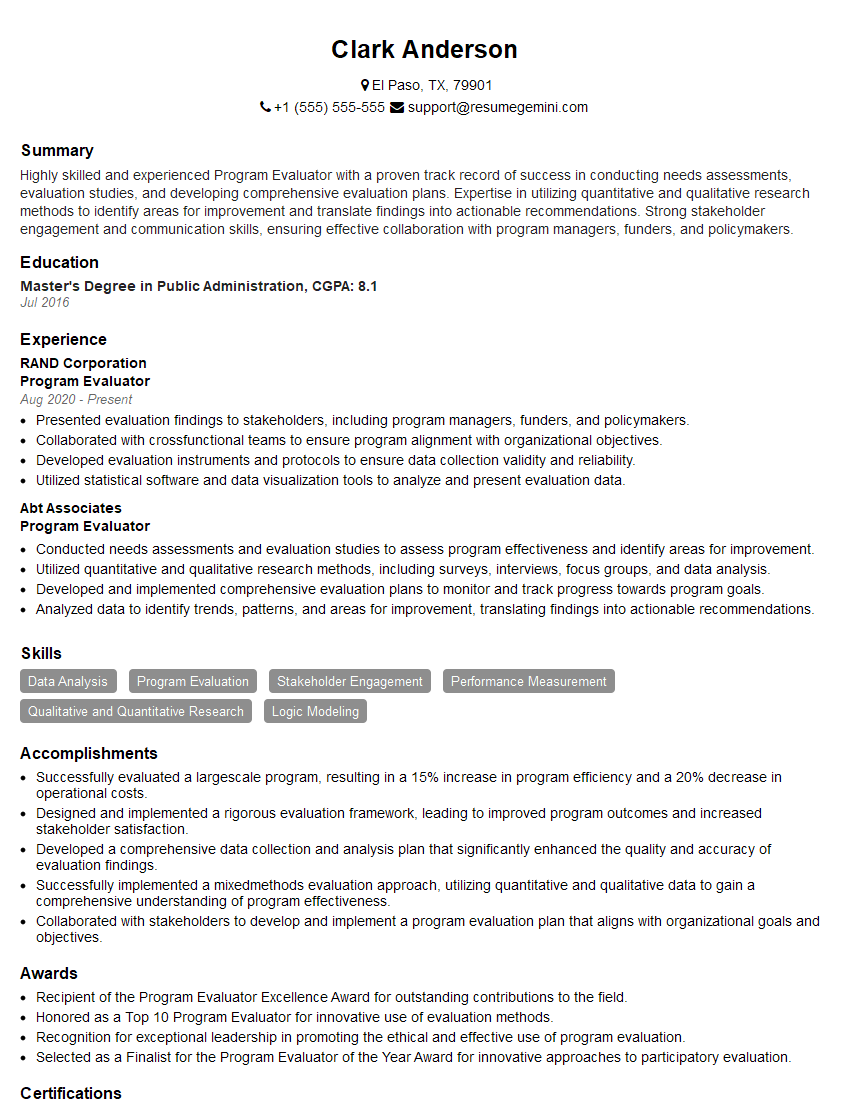
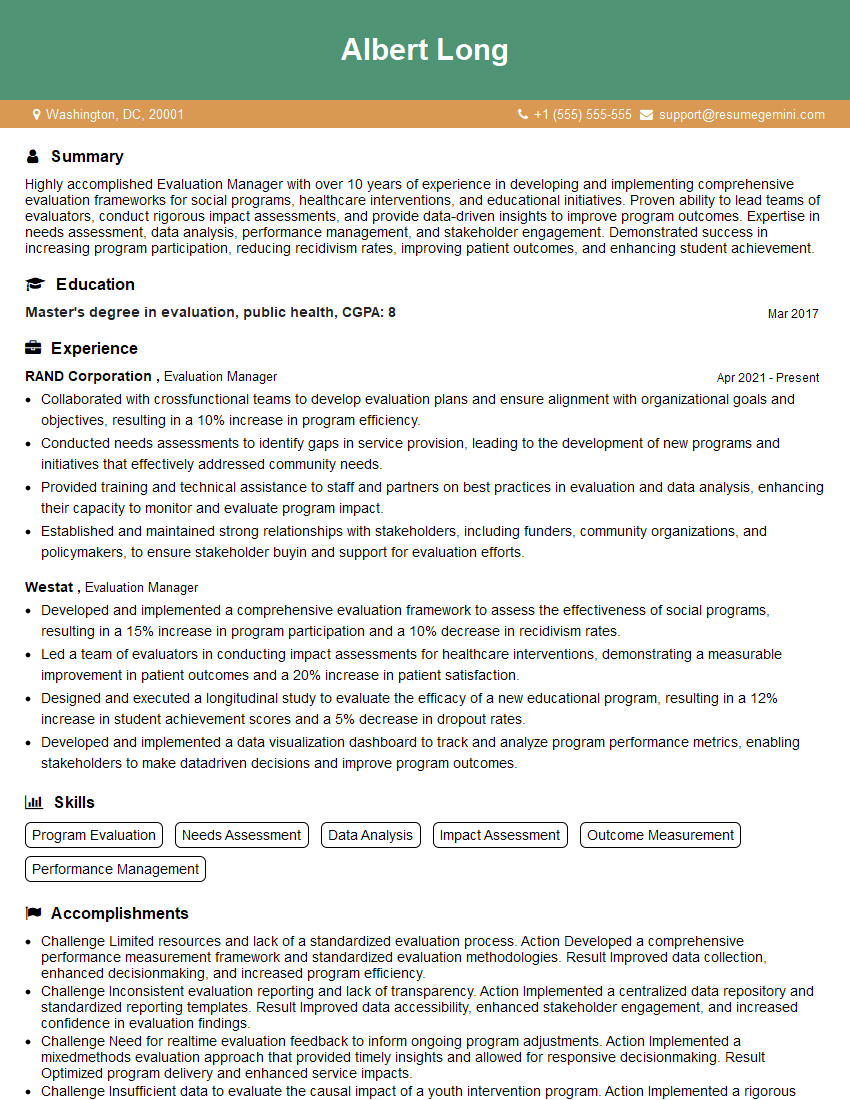
Mastering Program Evaluation and Accreditation opens doors to exciting career advancements, offering opportunities for leadership, impact, and continuous professional growth. A strong resume is crucial for showcasing your skills and experience to potential employers. To increase your chances of landing your dream role, create an ATS-friendly resume that highlights your achievements and qualifications effectively. ResumeGemini is a trusted resource that can help you build a professional and compelling resume. Examples of resumes tailored to Program Evaluation and Accreditation are available to guide you through the process.

Explore more articles
Users Rating of Our Blogs
Share Your Experience
We value your feedback! Please rate our content and share your thoughts (optional).
What Readers Say About Our Blog
To the interviewgemini.com Webmaster.
Very helpful and content specific questions to help prepare me for my interview!
Thank you
To the interviewgemini.com Webmaster.
This was kind of a unique content I found around the specialized skills. Very helpful questions and good detailed answers.
Very Helpful blog, thank you Interviewgemini team.