Unlock your full potential by mastering the most common Programming Skills (e.g., Python, R) interview questions. This blog offers a deep dive into the critical topics, ensuring you’re not only prepared to answer but to excel. With these insights, you’ll approach your interview with clarity and confidence.
Questions Asked in Programming Skills (e.g., Python, R) Interview
Q 1. Explain the difference between lists and tuples in Python.
Lists and tuples are both used to store sequences of items in Python, but they differ significantly in their mutability—that is, their ability to be changed after creation. Think of a list as a whiteboard, where you can easily erase and rewrite items, while a tuple is like a printed document—once it’s created, its contents are fixed.
Lists: Lists are mutable. You can add, remove, or change elements after the list is created. They are defined using square brackets
[].my_list = [1, 2, 'apple', 3.14] my_list.append(5) # Add an element my_list[0] = 10 # Modify an element print(my_list) # Output: [10, 2, 'apple', 3.14, 5]Tuples: Tuples are immutable. Once created, you cannot modify their contents. They are defined using parentheses
(). This immutability makes them suitable for situations where data integrity is paramount.my_tuple = (1, 2, 'apple', 3.14) # my_tuple[0] = 10 # This would raise a TypeError because tuples are immutable print(my_tuple) # Output: (1, 2, 'apple', 3.14)
In essence, choose lists when you need a dynamic collection that can change, and tuples when you need a fixed, unchanging sequence of items, like representing coordinates or configuration settings.
Q 2. What are lambda functions in Python and how are they used?
Lambda functions, also known as anonymous functions, are small, single-expression functions defined without a name. They are often used for short, simple operations that don’t require a full function definition. Think of them as quick, disposable functions.
They’re defined using the lambda keyword, followed by the input arguments, a colon, and the expression.
square = lambda x: x * x print(square(5)) # Output: 25 add = lambda x, y: x + y print(add(3, 7)) # Output: 10 Lambda functions are frequently used with higher-order functions like map, filter, and sorted to concisely apply operations to iterables.
numbers = [1, 2, 3, 4, 5] squared_numbers = list(map(lambda x: x * x, numbers)) print(squared_numbers) # Output: [1, 4, 9, 16, 25] For instance, imagine processing a large dataset where you need to quickly square each number. A lambda function provides a clean and efficient way to do this within the map function, avoiding the need to define a separate, named function.
Q 3. Describe different ways to handle exceptions in Python.
Exception handling is crucial for robust Python programs. It allows you to gracefully handle errors that might occur during execution, preventing crashes and providing informative error messages. Python uses the try...except block to manage exceptions.
Basic
try...except: Thetryblock contains code that might raise an exception. If an exception occurs, the correspondingexceptblock is executed.try: result = 10 / 0 except ZeroDivisionError: print("Error: Division by zero")Multiple
exceptblocks: You can handle different exception types with separateexceptblocks.try: file = open("myfile.txt", "r") # ... process the file ... except FileNotFoundError: print("Error: File not found") except IOError as e: print(f"An IO error occurred: {e}")elseandfinallyclauses: Theelseblock executes if no exception occurs in thetryblock. Thefinallyblock always executes, regardless of whether an exception occurred, making it ideal for cleanup actions (like closing files).try: file = open("myfile.txt", "r") # ... process the file ... except FileNotFoundError: print("Error: File not found") else: print("File processed successfully") finally: file.close() #Ensures file closure even if exception
Effective exception handling makes your code more resilient and user-friendly, preventing unexpected terminations and providing helpful feedback to users or developers.
Q 4. How do you perform object-oriented programming in Python?
Object-oriented programming (OOP) is a programming paradigm that organizes code around “objects” that contain both data (attributes) and functions (methods) that operate on that data. Python strongly supports OOP through classes and instances.
Classes: Classes are blueprints for creating objects. They define the attributes and methods that objects of that class will have.
Objects (Instances): Objects are specific instances of a class. Each object has its own set of attribute values.
Methods: Methods are functions that are defined within a class and operate on the object’s data.
Attributes: Attributes are variables that store data associated with an object.
class Dog: def __init__(self, name, breed): # Constructor to initialize attributes self.name = name self.breed = breed def bark(self): # Method print("Woof!") my_dog = Dog("Buddy", "Golden Retriever") # Creating an object (instance) print(my_dog.name) # Accessing attributes my_dog.bark() # Calling a method OOP promotes code reusability, modularity, and maintainability. Imagine building a complex application like a game—you might have classes for characters, items, and environments. Each class encapsulates the data and behavior relevant to its type, making the code organized and easier to manage.
Q 5. Explain the concept of decorators in Python.
Decorators are a powerful feature in Python that allows you to modify or enhance functions and methods in a clean and readable way without modifying their core logic. Think of them as wrappers that add extra functionality before or after a function’s execution.
A decorator is usually a function that takes another function as input, adds functionality, and returns a modified version of the original function.
import time def elapsed_time(func): def f_wrapper(*args, **kwargs): t_start = time.time() result = func(*args, **kwargs) t_elapsed = time.time() - t_start print(f"Execution time: {t_elapsed:.4f} seconds") return result return f_wrapper @elapsed_time # Decorator syntax def my_function(): time.sleep(1) print("Function completed") my_function() In this example, elapsed_time is a decorator that measures the execution time of my_function. The @elapsed_time syntax is shorthand for my_function = elapsed_time(my_function).
Decorators are commonly used for tasks like logging, access control, timing, and caching. They improve code readability and reduce code duplication by centralizing common functionalities.
Q 6. What are generators in Python and why are they useful?
Generators are a special type of function that produces a sequence of values one at a time, instead of generating the entire sequence at once and storing it in memory. They use the yield keyword instead of return.
This “lazy evaluation” makes them extremely memory-efficient when dealing with large datasets or infinite sequences, as they only generate the next value when it’s needed.
def my_generator(n): for i in range(n): yield i * i for num in my_generator(5): print(num) # Output: 0 1 4 9 16 Compare this to a regular function that would create and return a full list of squares. With a generator, memory usage is minimal, regardless of the size of n.
Generators are particularly useful when processing large files, streaming data, or generating infinite sequences (like Fibonacci numbers), where creating the entire sequence in memory would be impractical or impossible.
Q 7. How do you work with files in Python?
Python provides built-in functions for working with files, allowing you to read, write, and manipulate file data. The core function is open(), which takes the filename and mode as arguments (e.g., "r" for reading, "w" for writing, "a" for appending).
Reading files:
with open("myfile.txt", "r") as file: contents = file.read() # Read the entire file into a string lines = file.readlines() # Read into a list of lines for line in file: #Iterate line by line print(line.strip())Writing files:
with open("myfile.txt", "w") as file:     file.write("This is some text.
")     file.write("Another line.
")
Appending to files:
with open("myfile.txt", "a") as file:     file.write("This line will be appended.
")
The with statement ensures that the file is automatically closed even if errors occur. Remember to always handle potential exceptions like FileNotFoundError or IOError.
File I/O is fundamental for many applications, from data processing and analysis to creating and managing configuration files and storing user data. Understanding how to efficiently and safely work with files is essential for any Python programmer.
Q 8. Explain the concept of polymorphism in Python.
Polymorphism, meaning “many forms,” is a powerful concept in object-oriented programming that allows you to treat objects of different classes in a uniform way. Think of it like having a toolbox where different tools (objects) can perform the same action (method) even though they’re built differently. In Python, this is achieved primarily through inheritance and duck typing.
Inheritance: If you have a base class with a method, and you create subclasses that inherit from it, those subclasses can override the method to provide their own specific implementation. When you call the method on an object, Python automatically uses the correct implementation based on the object’s type.
class Animal:
    def speak(self):
        print("Generic animal sound")

class Dog(Animal):
    def speak(self):
        print("Woof!")

class Cat(Animal):
    def speak(self):
        print("Meow!")

animals = [Dog(), Cat(), Animal()]
for animal in animals:
    animal.speak()
This will print “Woof!”, “Meow!”, and “Generic animal sound” demonstrating polymorphism.
Duck Typing: Python’s dynamic nature allows for polymorphism even without explicit inheritance. If an object has the method you need, Python doesn’t care about its specific class; it simply calls the method. This is often called ‘If it walks like a duck and quacks like a duck, then it must be a duck’.
def make_sound(animal):
    animal.speak()

make_sound(Dog())  # Works!
make_sound(Cat())  # Works!
In real-world scenarios, polymorphism makes code more flexible, reusable, and maintainable. Imagine designing a game with different character types—each character could have a `attack()` method, but the implementation would vary depending on the character’s abilities. Polymorphism handles this neatly.
Q 9. What are the different data structures available in R?
R offers a rich variety of data structures, each designed for specific types of data and operations. Here are some key ones:
- Vectors: The fundamental data structure in R. Vectors hold a sequence of elements of the same data type (e.g., numeric, character, logical). Think of them as one-dimensional arrays.
- Lists: Lists are more flexible than vectors, allowing you to store elements of different data types within a single list. They can be thought of as ordered collections of objects.
- Matrices: Two-dimensional arrays where elements are arranged in rows and columns. All elements must be of the same data type.
- Arrays: Generalizations of matrices to more than two dimensions. Each dimension can have a different length.
- Data Frames: The workhorse of data analysis in R. A data frame is a tabular structure similar to a spreadsheet or SQL table, with rows representing observations and columns representing variables. Each column can be of a different data type.
- Factors: Special vectors used to represent categorical data. They assign integer values to different categories, making them efficient for statistical modeling.
Choosing the right data structure is crucial for efficient data manipulation and analysis. For example, vectors are ideal for numerical computations, while data frames are perfect for tabular datasets.
Q 10. Explain the difference between factors and characters in R.
Both factors and characters represent categorical data in R, but they differ significantly in how they store and handle that data.
- Characters: Character vectors store text strings. They are flexible but less efficient for statistical analysis involving categorical variables.
- Factors: Factors are more structured. They assign an integer value to each unique level (category) of a categorical variable. This integer representation is more efficient for statistical modeling, since it reduces storage space and simplifies computations. Factors also define the order of the levels, which is important for ordinal categorical data.
Consider an example of a variable representing colors: using character vectors, you could have c("red", "green", "blue", "red"); using factors, you could have factor(c("red", "green", "blue", "red")). The factor automatically assigns numerical codes to each color making it easier for statistical calculations like tabulation.
In essence, factors are optimized for statistical analysis, while characters are more general-purpose for text representation. Converting a character vector to a factor is often beneficial for data analysis.
Q 11. How do you handle missing data in R?
Handling missing data is crucial in any data analysis. In R, missing values are typically represented by NA (Not Available). Here’s how to handle them:
- Detection: Use functions like
is.na()to identify missing values in your dataset. - Removal: The simplest approach is to remove rows or columns containing
NAvalues. Usena.omit()to remove rows with anyNA, or you can filter withcomplete.cases(). This should be used carefully, as discarding data can introduce bias. - Imputation: Instead of removing data, you can replace
NAvalues with estimated values. Common methods include:- Mean/Median/Mode imputation: Replace
NAs with the mean, median, or mode of the non-missing values in the column. Simple, but can distort the distribution of data. - Regression imputation: Predict
NAvalues using a regression model based on other variables. - K-Nearest Neighbors (kNN) imputation: Impute values based on the values from similar data points.
- Mean/Median/Mode imputation: Replace
- Indicator Variables: Create a new variable to indicate the presence of missing data. This can preserve the information and is less prone to bias than imputation.
The best approach depends on the nature of your data, the extent of missingness, and the specific goals of your analysis. Carefully evaluate the impact of each method on the results.
Q 12. Describe different data manipulation techniques in R using dplyr.
The dplyr package provides a powerful set of functions for data manipulation in R. It utilizes a grammar of data manipulation, making code more readable and efficient. Key functions include:
filter(): Subsets rows based on specified conditions.select(): Selects specific columns.arrange(): Reorders rows based on specified columns.mutate(): Adds new columns or modifies existing ones.summarize(): Calculates summary statistics for groups of data.group_by(): Groups data for applying other functions separately to each group.
Example:
library(dplyr)
data <- data.frame(name = c("Alice", "Bob", "Charlie", "David"),
                    age = c(25, 30, 22, 28),
                    city = c("New York", "London", "Paris", "Tokyo"))

# Filter for people older than 25
filtered_data <- filter(data, age > 25)

# Select name and city
selected_data <- select(data, name, city)

# Add a new column 'age_group'
mutated_data <- mutate(data, age_group = ifelse(age > 25, "Older", "Younger"))

# Group by city and calculate the average age
summarized_data <- group_by(data, city) %>% summarize(avg_age = mean(age))
dplyr promotes a clean and efficient workflow, especially when dealing with large datasets, making it an essential tool for data scientists working in R.
Q 13. How do you create visualizations in R using ggplot2?
ggplot2 is a powerful and versatile package in R for creating elegant and informative visualizations. It follows a layered grammar of graphics, allowing you to build complex plots by adding layers incrementally.
The basic structure involves specifying the data, aesthetics (mapping variables to visual properties), and geometric objects (geoms) to represent the data. Common geoms include points (geom_point()), lines (geom_line()), bars (geom_bar()), and histograms (geom_histogram()).
Example: A scatter plot showing the relationship between age and income:
library(ggplot2)
data <- data.frame(age = c(25, 30, 35, 40, 45),
                    income = c(50000, 60000, 75000, 90000, 100000))

ggplot(data, aes(x = age, y = income)) +
    geom_point() +
    labs(title = "Age vs. Income", x = "Age", y = "Income")
This code creates a basic scatter plot. You can add layers for customizations such as adding a trend line (geom_smooth()), changing colors, adding labels, faceting, and much more. ggplot2‘s flexibility makes it a go-to package for creating publication-quality graphs.
Q 14. Explain the concept of linear regression in R.
Linear regression is a fundamental statistical method used to model the relationship between a dependent variable (outcome) and one or more independent variables (predictors). In R, it aims to find the best-fitting straight line (or hyperplane in multiple regression) through the data points.
The model assumes a linear relationship between the variables, meaning the change in the dependent variable is proportional to the change in the independent variable(s). The goal is to estimate the coefficients of the equation that minimizes the sum of squared differences between observed and predicted values (least squares estimation).
Simple Linear Regression (one predictor):
model <- lm(dependent_variable ~ independent_variable, data = your_data)
summary(model)
Multiple Linear Regression (multiple predictors):
model <- lm(dependent_variable ~ independent_variable1 + independent_variable2 + ..., data = your_data)
summary(model)
The summary() function provides key statistics like coefficients, R-squared (a measure of model fit), p-values (assessing the significance of the predictors), and more. Linear regression is widely used in various fields like finance (predicting stock prices), healthcare (modeling disease risk), and marketing (predicting sales).
Q 15. How do you perform data cleaning in Python?
Data cleaning in Python is the crucial process of transforming raw data into a usable format for analysis. Think of it as preparing ingredients before cooking – you wouldn’t start a recipe with dirty, inconsistent ingredients! It involves handling missing values, dealing with inconsistencies, and removing irrelevant data.
Here’s a breakdown of common techniques:
- Handling Missing Values: You can either remove rows or columns with missing data (using
pandas.dropna()), impute missing values using mean, median, or mode (usingpandas.fillna()), or use more sophisticated methods like k-Nearest Neighbors imputation. The best approach depends on the dataset and the nature of the missing data. - Dealing with Inconsistent Data: This might involve standardizing formats (e.g., converting dates to a consistent format), correcting spelling errors, or handling outliers. Libraries like
fuzzywuzzycan assist in fuzzy matching for string comparisons. - Removing Irrelevant Data: This step focuses on eliminating duplicate rows (
pandas.drop_duplicates()) and columns that aren’t relevant to the analysis. Sometimes, feature selection techniques are used to identify and keep only the most important features.
Example:
import pandas as pd
data = {'col1': [1, 2, None, 4], 'col2': [5, 6, 7, 8]}
df = pd.DataFrame(data)
df_cleaned = df.fillna(df.mean()) # Imputing missing values with the mean
Career Expert Tips:
- Ace those interviews! Prepare effectively by reviewing the Top 50 Most Common Interview Questions on ResumeGemini.
- Navigate your job search with confidence! Explore a wide range of Career Tips on ResumeGemini. Learn about common challenges and recommendations to overcome them.
- Craft the perfect resume! Master the Art of Resume Writing with ResumeGemini’s guide. Showcase your unique qualifications and achievements effectively.
- Don’t miss out on holiday savings! Build your dream resume with ResumeGemini’s ATS optimized templates.
Q 16. Explain different methods for data preprocessing in Python.
Data preprocessing in Python involves a series of transformations to prepare data for machine learning algorithms. It’s like getting your ingredients ready for a recipe; each step is essential for the final dish. Key methods include:
- Data Cleaning: (As discussed above) This is the foundation. Without clean data, your analysis is unreliable.
- Data Transformation: This involves changing the format or scale of your data. Common transformations include:
- Normalization/Standardization: Scaling features to a similar range (e.g., 0-1 or mean=0, std=1) using
sklearn.preprocessing.MinMaxScalerorsklearn.preprocessing.StandardScaler. This is crucial for algorithms sensitive to feature scaling (like k-NN or gradient descent). - Encoding Categorical Variables: Converting categorical data (e.g., colors, genders) into numerical representations using techniques like one-hot encoding (
pandas.get_dummies()) or label encoding (sklearn.preprocessing.LabelEncoder). - Feature Scaling: Transforming features to improve algorithm performance (log transformation, Box-Cox transformation).
- Feature Selection: Choosing the most relevant features for your model. This improves model performance and reduces complexity. Techniques include correlation analysis, recursive feature elimination, and feature importance from tree-based models.
- Data Reduction: Reducing the size of your dataset while preserving important information. Techniques include dimensionality reduction using PCA (
sklearn.decomposition.PCA).
Q 17. How do you handle large datasets in Python?
Handling large datasets in Python efficiently requires strategic approaches. You can’t load a massive dataset into memory all at once; it’ll crash your system! Instead, you need to process data in chunks or use specialized libraries.
- Chunking: Read the data in smaller, manageable chunks using libraries like
pandas.read_csv(chunksize=n)wherendefines the number of rows per chunk. Process each chunk individually and then combine the results. - Dask: Dask is a parallel computing library that allows you to work with datasets larger than your available RAM. It provides parallel versions of NumPy and Pandas functions.
- Vaex: Vaex is another excellent library designed for out-of-core data processing. It allows you to perform computations on datasets without loading the entire dataset into memory. It utilizes memory mapping and lazy evaluation.
- Spark: For extremely large datasets that need distributed processing across a cluster of machines, Apache Spark is a powerful solution. It’s more complex to set up than the other options but handles massive datasets with ease.
The choice depends on the dataset size and your computational resources. For moderately large datasets, chunking or Vaex might suffice. For extremely large datasets, Dask or Spark become necessary.
Q 18. What is NumPy and how is it used in data analysis?
NumPy (Numerical Python) is a foundational library for numerical computing in Python. It provides powerful N-dimensional array objects and tools for working with these arrays. Think of it as the building block for many other data science libraries.
In data analysis, NumPy is used for:
- Efficient array operations: Performing mathematical operations on large datasets significantly faster than using standard Python lists.
- Linear algebra: NumPy provides functions for matrix operations, which are fundamental to many machine learning algorithms.
- Random number generation: Creating random numbers for simulations and model initialization.
- Fourier transforms: Used in signal processing and image analysis.
Example:
import numpy as np
arr = np.array([1, 2, 3, 4, 5])
arr_squared = arr**2 # Element-wise squaring
Q 19. What is Pandas and how is it used for data manipulation?
Pandas is a powerful data manipulation and analysis library built on top of NumPy. It provides data structures like Series (1D) and DataFrames (2D) that are highly efficient for working with tabular data. Imagine it as an extremely versatile spreadsheet with powerful programming capabilities.
Pandas is extensively used for:
- Data cleaning and transformation: Handling missing values, data type conversion, and string manipulation (as previously discussed).
- Data manipulation: Filtering, sorting, grouping, and merging datasets.
- Data analysis: Calculating descriptive statistics, creating visualizations, and performing data exploration.
- Data wrangling: Reshaping and pivoting data for analysis and reporting.
Example:
import pandas as pd
data = {'Name': ['Alice', 'Bob', 'Charlie'], 'Age': [25, 30, 28]}
df = pd.DataFrame(data)
filtered_df = df[df['Age'] > 28] # Filtering data based on age
Q 20. Explain different machine learning algorithms and their applications.
Machine learning algorithms are categorized into several types, each with its applications. Choosing the right algorithm depends heavily on the problem you’re trying to solve and the nature of your data.
- Supervised Learning: Algorithms learn from labeled data (data with input features and known output values).
- Regression: Predicting a continuous value (e.g., house price prediction). Algorithms include Linear Regression, Support Vector Regression (SVR), Decision Tree Regression, Random Forest Regression.
- Classification: Predicting a categorical value (e.g., spam detection). Algorithms include Logistic Regression, Support Vector Machines (SVM), Decision Trees, Random Forests, Naive Bayes, k-Nearest Neighbors (k-NN).
- Unsupervised Learning: Algorithms learn from unlabeled data (data with only input features).
- Clustering: Grouping similar data points together (e.g., customer segmentation). Algorithms include k-Means Clustering, Hierarchical Clustering.
- Dimensionality Reduction: Reducing the number of features while preserving important information (e.g., Principal Component Analysis (PCA)).
- Reinforcement Learning: Algorithms learn through trial and error by interacting with an environment (e.g., game playing, robotics).
Applications: Machine learning is used across various industries: image recognition, natural language processing, fraud detection, medical diagnosis, recommendation systems, and much more.
Q 21. Describe different model evaluation metrics.
Model evaluation metrics quantify the performance of a machine learning model. The choice of metric depends on the type of problem (classification or regression).
- Regression Metrics:
- Mean Squared Error (MSE): The average squared difference between predicted and actual values. Lower is better.
- Root Mean Squared Error (RMSE): The square root of MSE. Easier to interpret since it’s in the same units as the target variable.
- R-squared: Represents the proportion of variance in the target variable explained by the model. Higher is better (closer to 1).
- Classification Metrics:
- Accuracy: The proportion of correctly classified instances. Simple but can be misleading with imbalanced datasets.
- Precision: The proportion of correctly predicted positive instances out of all predicted positive instances. High precision means few false positives.
- Recall (Sensitivity): The proportion of correctly predicted positive instances out of all actual positive instances. High recall means few false negatives.
- F1-score: The harmonic mean of precision and recall. Balances precision and recall.
- AUC-ROC (Area Under the Receiver Operating Characteristic Curve): Measures the ability of the classifier to distinguish between classes. Higher is better (closer to 1).
Choosing the right metric is crucial for evaluating a model’s effectiveness in a specific context. For example, in medical diagnosis, high recall (minimizing false negatives) is often prioritized over high precision.
Q 22. How do you implement a decision tree in Python or R?
Implementing a decision tree involves creating a tree-like model to make predictions based on a series of decisions. Both Python and R offer excellent libraries for this. In Python, the scikit-learn library is commonly used. In R, the rpart package is popular.
Here’s a simplified Python example using scikit-learn:
from sklearn.tree import DecisionTreeClassifier
from sklearn.model_selection import train_test_split
from sklearn.datasets import load_iris

# Load the iris dataset
iris = load_iris()
X = iris.data
y = iris.target

# Split data into training and testing sets
X_train, X_test, y_train, y_test = train_test_split(X, y, test_size=0.3)

# Create and train the decision tree
clf = DecisionTreeClassifier()
clf.fit(X_train, y_train)

# Make predictions
y_pred = clf.predict(X_test)
This code first loads a dataset (iris), splits it into training and testing sets, creates a DecisionTreeClassifier, trains it on the training data, and then makes predictions on the test data. The process in R is similar, replacing the libraries and syntax accordingly.
Imagine you’re diagnosing a car problem. A decision tree might ask: ‘Does the engine start?’ If yes, it might ask ‘Does it run smoothly?’, and so on, leading to a diagnosis based on a series of yes/no questions. This is analogous to how a decision tree works with data.
Q 23. How do you build a logistic regression model?
Building a logistic regression model involves predicting the probability of a binary outcome (0 or 1) based on predictor variables. The model uses a sigmoid function to map the linear combination of predictors to a probability between 0 and 1.
In Python (using scikit-learn):
from sklearn.linear_model import LogisticRegression
from sklearn.model_selection import train_test_split

# Assuming X is your feature matrix and y is your binary outcome vector
X_train, X_test, y_train, y_test = train_test_split(X, y, test_size=0.2)
model = LogisticRegression()
model.fit(X_train, y_train)
predictions = model.predict(X_test)
This code trains a logistic regression model and uses it to predict outcomes. The LogisticRegression class handles the underlying mathematics. Remember to handle potential issues like multicollinearity and feature scaling (discussed below).
Imagine predicting customer churn. Predictors could be usage, tenure, and demographics. The logistic regression model would give you the probability of a customer churning based on these factors.
Q 24. How do you perform feature scaling and selection?
Feature scaling and selection are crucial preprocessing steps in machine learning. Scaling transforms features to a similar range, preventing features with larger values from dominating the model. Selection aims to choose the most relevant features, improving model performance and reducing complexity.
Feature Scaling: Common methods include:
- Standardization (Z-score normalization): Centers data around 0 with a standard deviation of 1.
(x - mean) / std - Min-max scaling: Scales data to a range between 0 and 1.
(x - min) / (max - min)
Feature Selection: Techniques include:
- Filter methods: Rank features based on statistical measures (e.g., correlation, chi-squared test).
- Wrapper methods: Evaluate subsets of features based on model performance (e.g., recursive feature elimination).
- Embedded methods: Integrate feature selection into the model training process (e.g., L1 regularization in Lasso regression).
In scikit-learn, you can use StandardScaler for standardization, MinMaxScaler for min-max scaling, and SelectKBest for filter-based selection.
Consider predicting house prices. Scaling features like area and price prevents area from unduly influencing the model due to its larger magnitude. Feature selection might eliminate irrelevant features like house color.
Q 25. What are the different types of data in machine learning?
Machine learning data can be categorized into several types:
- Numerical: Represents quantities (e.g., age, temperature). Can be continuous (any value within a range) or discrete (only specific values).
- Categorical: Represents qualities or groups (e.g., color, gender). Can be nominal (unordered categories) or ordinal (ordered categories).
- Text: Unstructured data like sentences or paragraphs, often requiring preprocessing.
- Image: Visual data represented as pixels, used in computer vision tasks.
- Time series: Data points indexed in time order (e.g., stock prices).
Understanding data types is crucial because different algorithms handle them differently. For example, a decision tree can directly use categorical features, while some others may require numerical representations.
Q 26. Explain the concept of cross-validation.
Cross-validation is a technique to evaluate a model’s performance and prevent overfitting. It involves splitting the data into multiple folds (subsets), training the model on some folds and testing it on the remaining folds. This process is repeated, and the performance metrics are averaged.
k-fold cross-validation: The data is split into k folds. The model is trained k times, each time using k-1 folds for training and 1 fold for testing. The average performance across all k iterations is reported. k=10 is a common choice.
Leave-one-out cross-validation (LOOCV): A special case where k equals the number of data points. Each data point is used as a test set, providing a very robust but computationally expensive evaluation.
Imagine you’re building a spam filter. Cross-validation ensures your model generalizes well to unseen emails, not just the ones used for training.
Q 27. How do you handle imbalanced datasets?
Imbalanced datasets have a disproportionate number of samples in different classes. This can lead to biased models that perform poorly on the minority class. Several techniques address this:
- Resampling: Oversampling the minority class (creating copies) or undersampling the majority class (removing samples). Careful consideration is needed to avoid overfitting in oversampling.
- Cost-sensitive learning: Assign higher misclassification costs to the minority class, penalizing the model more for misclassifying minority instances.
- Ensemble methods: Use algorithms like SMOTE (Synthetic Minority Over-sampling Technique) to generate synthetic samples for the minority class, improving class balance.
In scikit-learn, you can use RandomOverSampler or RandomUnderSampler for resampling, and adjust class weights in algorithms like LogisticRegression for cost-sensitive learning.
Consider fraud detection. Fraudulent transactions are typically far fewer than legitimate ones. Imbalanced data handling ensures the model accurately identifies fraudulent transactions, even if they’re rare.
Q 28. Explain the differences between supervised and unsupervised learning.
Supervised and unsupervised learning differ fundamentally in how they use data:
- Supervised learning: Uses labeled data (data with known inputs and corresponding outputs). The goal is to learn a mapping from inputs to outputs to make predictions on new, unseen data. Examples include classification (predicting categories) and regression (predicting continuous values).
- Unsupervised learning: Uses unlabeled data (data without known outputs). The goal is to discover patterns, structures, or relationships in the data. Examples include clustering (grouping similar data points) and dimensionality reduction (reducing the number of variables while preserving essential information).
Think of teaching a child to identify animals (supervised). You show them pictures of cats and dogs and tell them which is which. Unsupervised learning would be like showing them a bunch of animal pictures and letting them group them based on their own observations.
Key Topics to Learn for Programming Skills (e.g., Python, R) Interview
- Data Structures and Algorithms: Understanding fundamental data structures like arrays, linked lists, trees, and graphs, and common algorithms like sorting and searching is crucial. Practice implementing these in your chosen language (Python or R).
- Object-Oriented Programming (OOP) Principles (Python): If focusing on Python, master concepts like encapsulation, inheritance, and polymorphism. Be prepared to discuss how you’ve used OOP to design and build efficient and maintainable code.
- Data Manipulation and Analysis (R & Python): Develop proficiency in data cleaning, transformation, and analysis techniques. Practice working with libraries like Pandas (Python) or dplyr (R) to manipulate and analyze datasets efficiently.
- Working with APIs and Libraries: Gain experience interacting with external APIs and utilizing relevant libraries for your chosen language. This demonstrates your ability to integrate your code with external systems and leverage existing tools.
- Version Control (Git): Understanding Git and its use in collaborative projects is essential. Be prepared to discuss your experience with branching, merging, and resolving conflicts.
- Problem-Solving and Debugging: Practice approaching coding challenges methodically. Demonstrate your ability to debug effectively and efficiently identify and resolve errors in your code. Use examples from your own projects to showcase this skill.
- SQL (Database Interaction): Familiarity with SQL for interacting with databases is a valuable asset, particularly for data analysis roles. Practice writing queries to retrieve and manipulate data.
- Software Design Principles: Understanding principles like SOLID (Single Responsibility, Open/Closed, Liskov Substitution, Interface Segregation, Dependency Inversion) can demonstrate your understanding of building robust and scalable software.
Next Steps
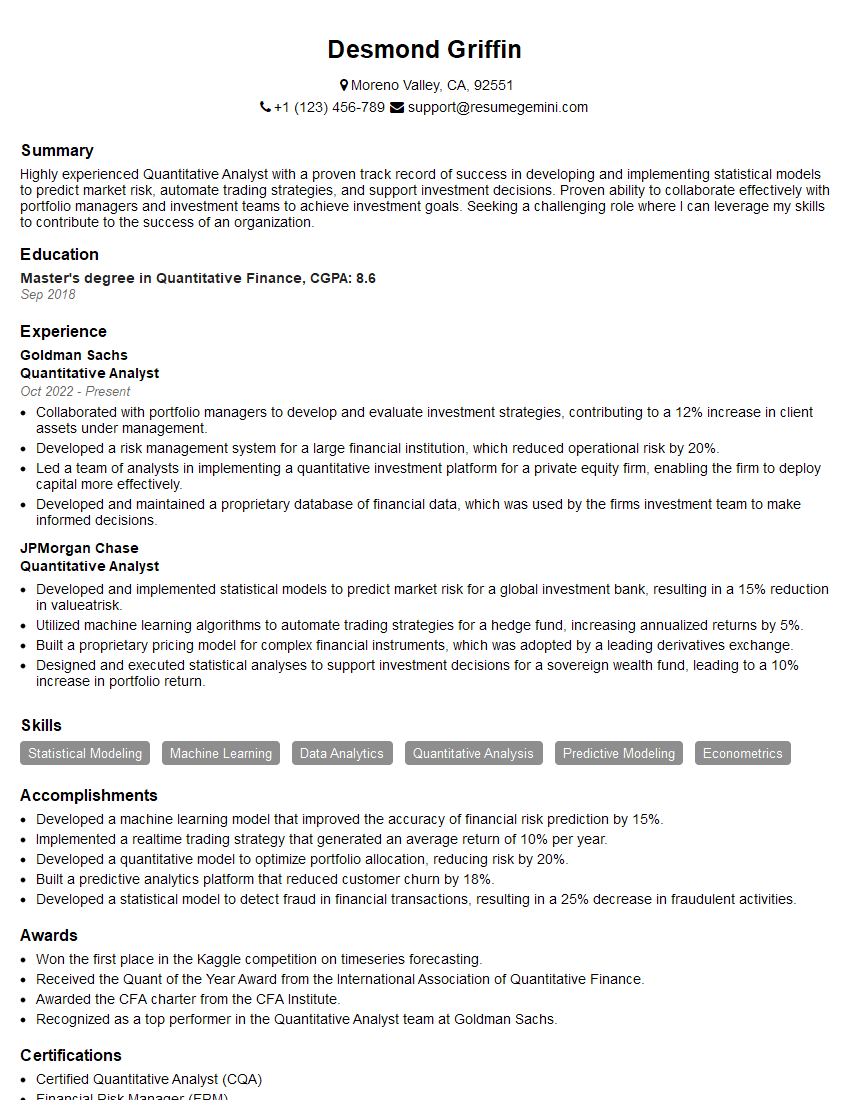
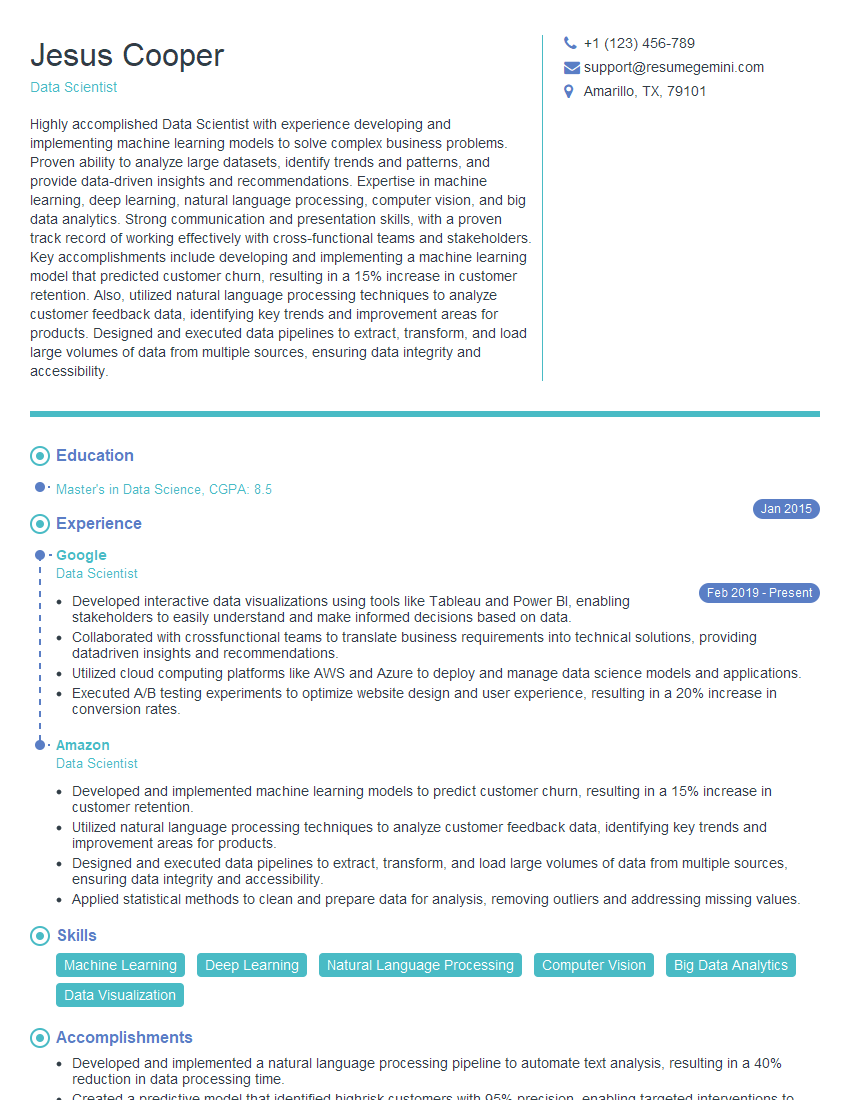
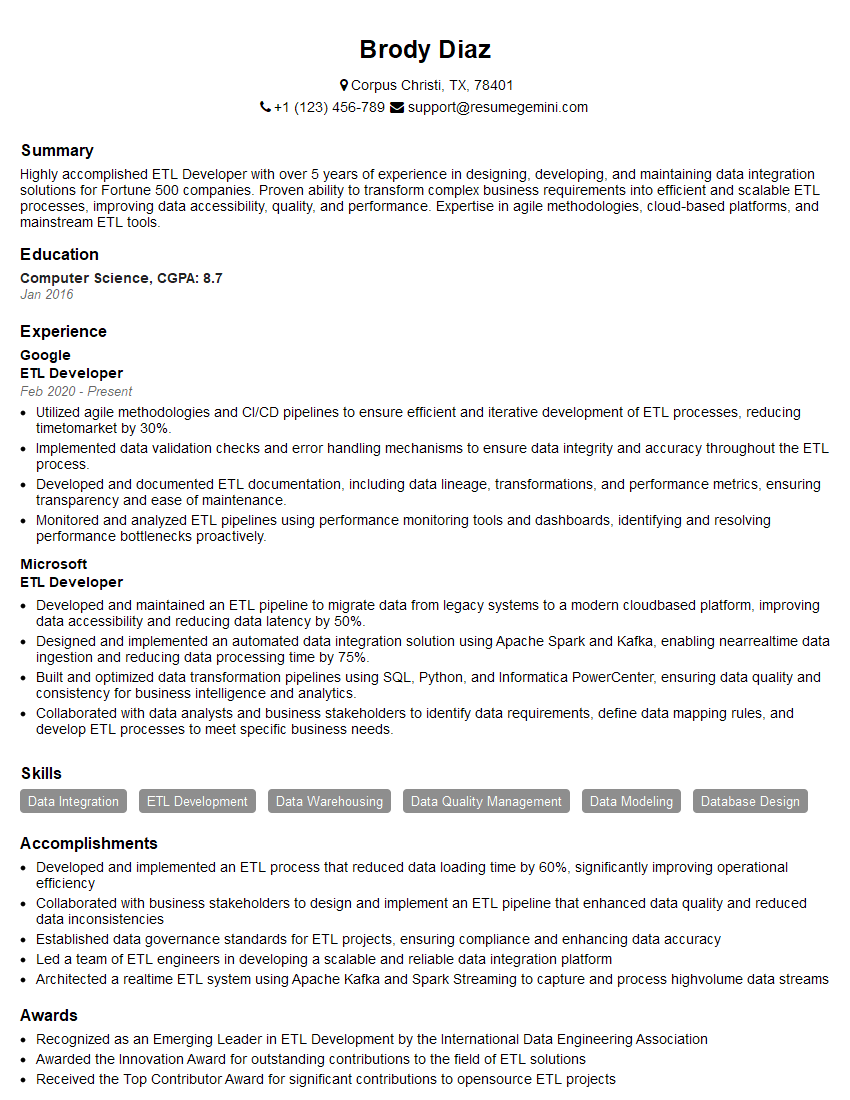
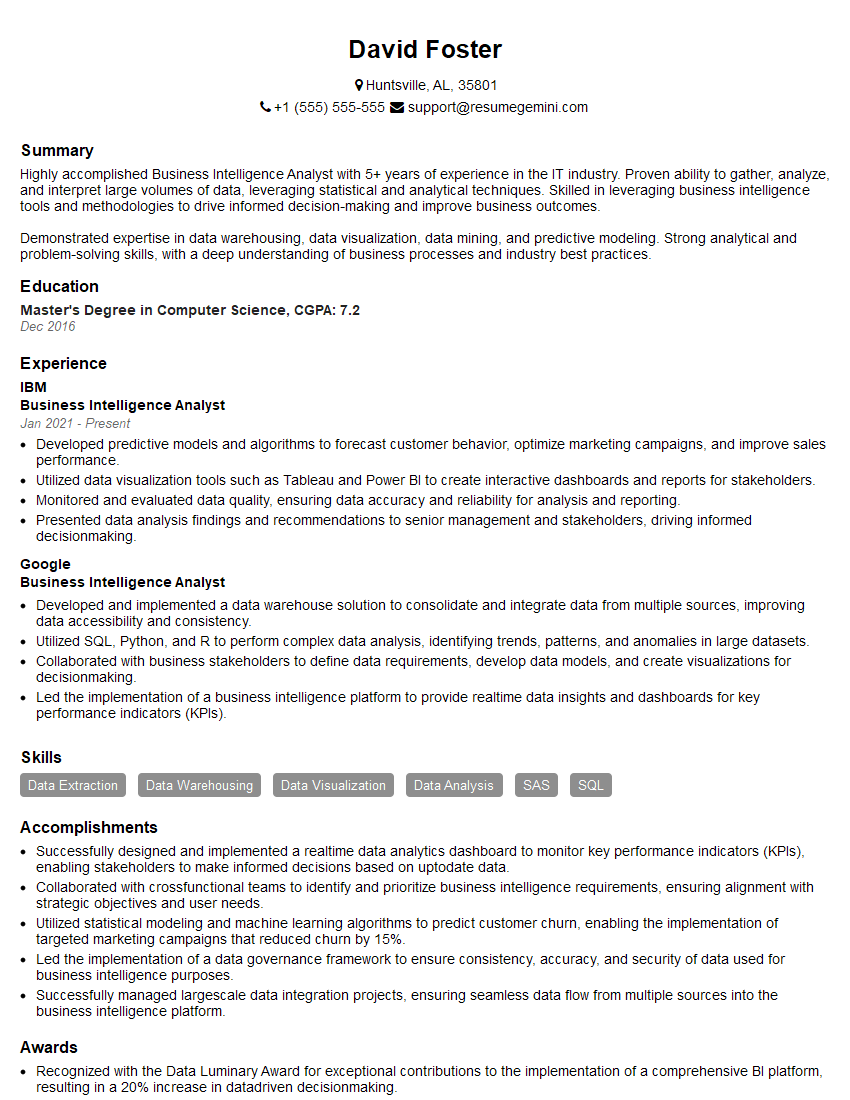
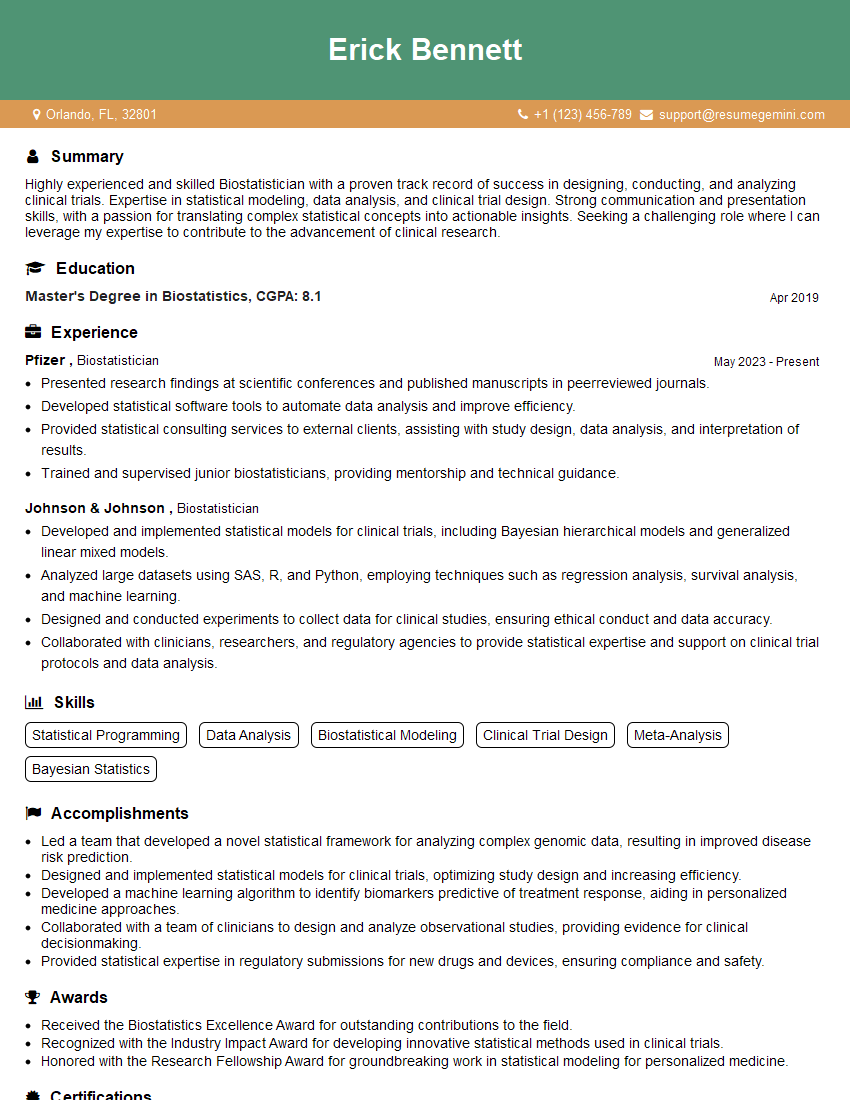
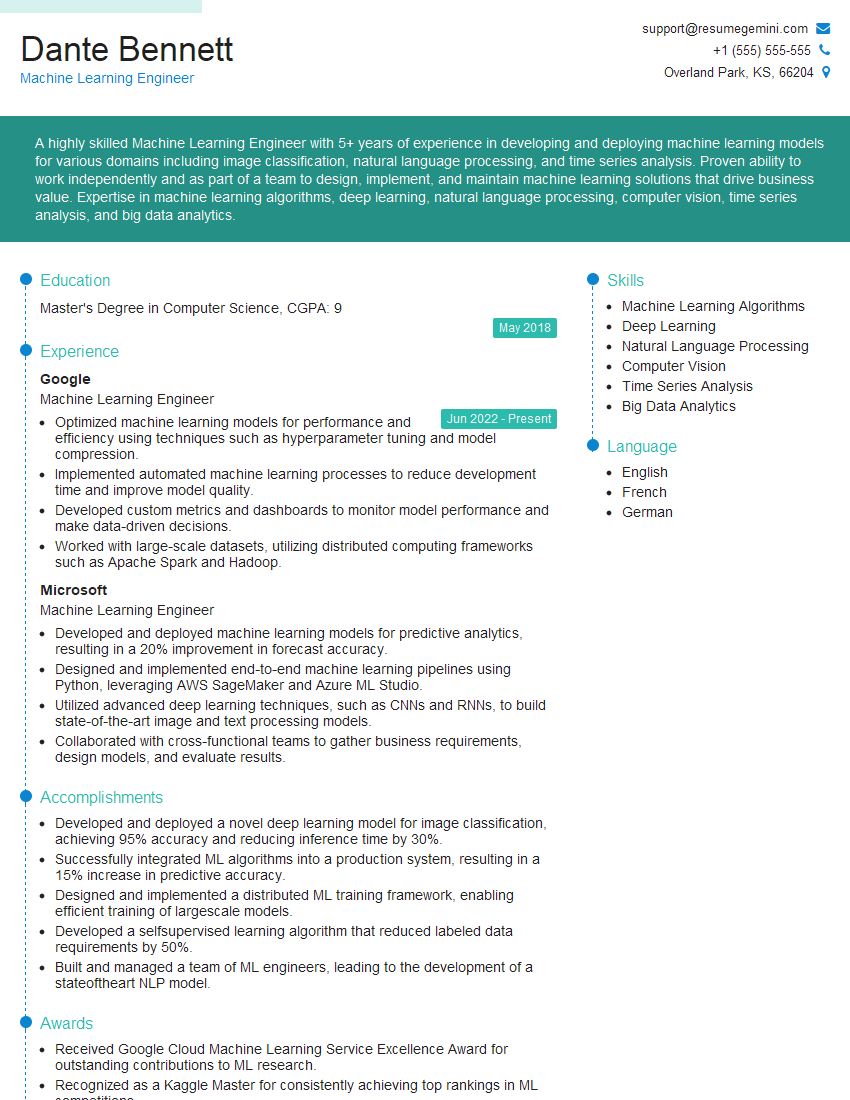
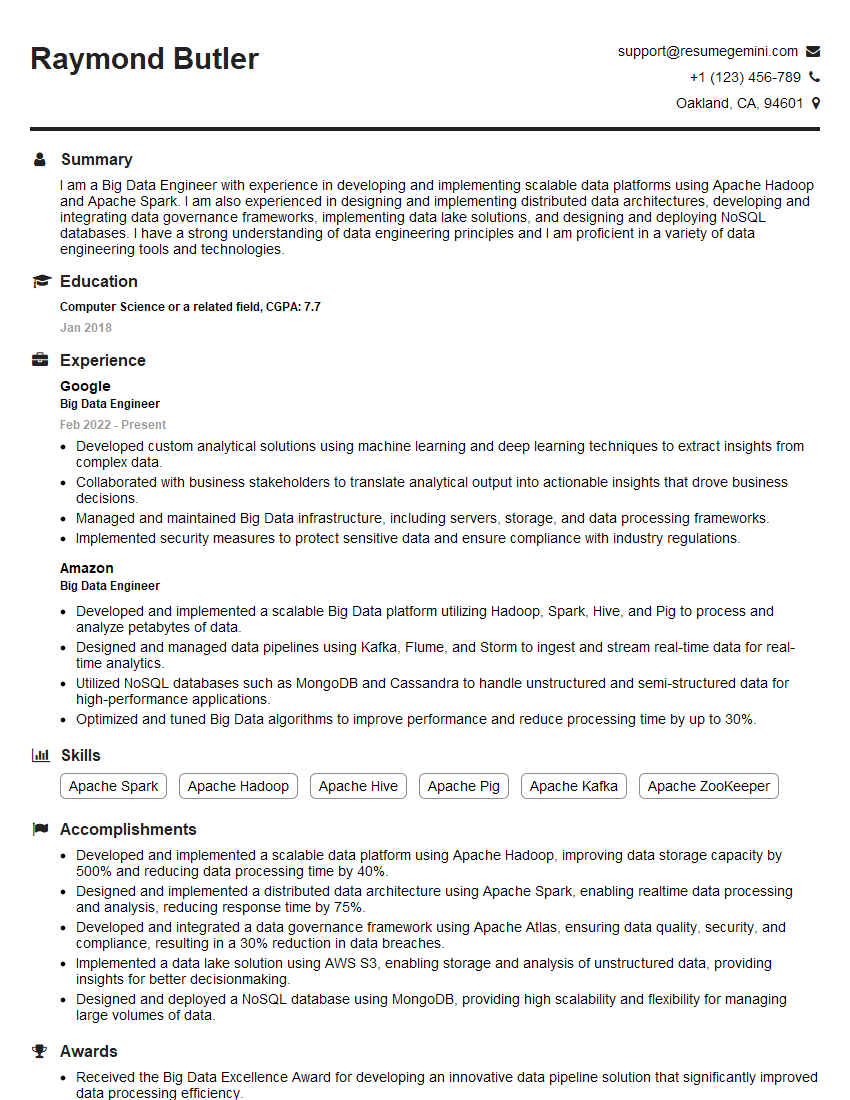
Mastering programming skills in Python or R is vital for a successful career in many high-demand fields. These skills open doors to exciting opportunities in data science, software engineering, and more. To significantly increase your chances of landing your dream job, it’s crucial to present your qualifications effectively. Create an ATS-friendly resume that highlights your achievements and skills clearly and concisely. ResumeGemini is a trusted resource to help you build a professional resume tailored to your specific skills and experience. We provide examples of resumes tailored to Programming Skills (e.g., Python, R) to help you get started. Take the next step towards a fulfilling career – build your best resume today!

Explore more articles
Users Rating of Our Blogs
Share Your Experience
We value your feedback! Please rate our content and share your thoughts (optional).
What Readers Say About Our Blog
To the interviewgemini.com Webmaster.
Very helpful and content specific questions to help prepare me for my interview!
Thank you
To the interviewgemini.com Webmaster.
This was kind of a unique content I found around the specialized skills. Very helpful questions and good detailed answers.
Very Helpful blog, thank you Interviewgemini team.