Cracking a skill-specific interview, like one for Project Management and Event Planning, requires understanding the nuances of the role. In this blog, we present the questions you’re most likely to encounter, along with insights into how to answer them effectively. Let’s ensure you’re ready to make a strong impression.
Questions Asked in Project Management and Event Planning Interview
Q 1. Describe your experience with Agile project management methodologies.
Agile project management methodologies, unlike traditional waterfall methods, emphasize iterative development, flexibility, and collaboration. Instead of a rigid, pre-defined plan, Agile uses short cycles called sprints (typically 2-4 weeks) to deliver working software or achieve specific milestones. This allows for continuous feedback and adaptation throughout the project lifecycle.
My experience spans several Agile frameworks, including Scrum and Kanban. In a recent project launching a new e-commerce platform, we employed Scrum. We had daily stand-up meetings to discuss progress, identify roadblocks, and coordinate tasks. We held sprint reviews to demonstrate completed functionalities to stakeholders and gather their feedback, which directly influenced the subsequent sprint’s priorities. This iterative approach allowed us to adapt to changing market demands and customer feedback, resulting in a more successful product launch than we would have achieved using a purely waterfall approach.
In another project, managing the development of a mobile application, we used Kanban, focusing on visualizing workflow and limiting work in progress. This helped us prioritize features based on their value and manage the team’s capacity effectively. The visual nature of Kanban boards proved extremely beneficial in communication and tracking progress transparently.
Q 2. Explain your process for creating a project budget.
Creating a project budget involves a thorough understanding of all projected costs and revenue. It’s more than just adding up anticipated expenses; it’s about forecasting accurately and building in contingency for unforeseen circumstances.
My process typically begins with a detailed work breakdown structure (WBS), breaking down the project into smaller, manageable tasks. For each task, I estimate the resources required (labor, materials, software licenses etc.) and their associated costs. I then consider indirect costs like overhead, office space, and administrative expenses. I use historical data from similar projects, vendor quotes, and industry benchmarks to refine cost estimations.
Crucially, I build a buffer or contingency into the budget. This accounts for potential risks and uncertainties – delays, unexpected expenses, or changes in market conditions. The size of the contingency depends on the project’s complexity and risk profile. For instance, a high-risk project involving a new technology might require a larger contingency than a low-risk, well-understood project.
Finally, I present the budget in a clear and concise manner, highlighting key assumptions and justifying major cost items. This allows stakeholders to understand how the budget was developed and facilitates informed decision-making.
Q 3. How do you handle project scope creep?
Scope creep, the uncontrolled expansion of project scope beyond the initial requirements, is a major threat to project success. My approach to managing scope creep involves proactive measures and a robust change management process.
Firstly, I ensure the project scope is clearly defined and documented from the outset. This involves creating a detailed scope statement that includes a comprehensive list of deliverables, acceptance criteria, and exclusions. The scope statement should be reviewed and approved by all key stakeholders. Regularly communicating the approved scope to the team and all stakeholders is critical in maintaining boundaries.
Secondly, I establish a formal change management process. Any proposed changes to the scope are documented, evaluated for their impact on cost, schedule, and resources, and approved by the appropriate stakeholders. This process ensures transparency and prevents uncontrolled additions to the project scope. Changes that are approved are documented, and the budget and timeline are updated accordingly. This ensures everyone is working from the same updated project plan.
Finally, I use tools like change request forms and project management software to track changes efficiently. Regular project status meetings provide opportunities to identify potential scope creep early and address any emerging issues. For example, if a stakeholder requests a new feature midway through a project, we evaluate the request using the change management process. This involves assessing if adding the feature is feasible within the existing budget and schedule. If not, we present alternative solutions, discuss priorities, or suggest delaying the request until a future phase.
Q 4. What risk management techniques have you used successfully?
Effective risk management is vital for project success. I employ a combination of qualitative and quantitative techniques.
One successful technique is the use of SWOT analysis (Strengths, Weaknesses, Opportunities, Threats) early in the project lifecycle to identify potential risks and opportunities. This provides a holistic view of the project landscape and informs planning. Then, a risk register is created to document identified risks, their likelihood, impact, and mitigation strategies. For each identified risk, we discuss mitigation strategies, contingency plans, and risk owners. For example, in a recent event planning project, the risk of inclement weather impacting the outdoor ceremony was identified. We developed mitigation strategies which included securing a backup indoor venue and having a plan to quickly transition to the indoor venue should the weather turn unfavorable.
Another technique is Monte Carlo simulation, a quantitative method used to analyze the impact of uncertainty on the project schedule and budget. It helps to identify potential delays and cost overruns, allowing for proactive adjustments. For instance, if the simulation shows a high probability of exceeding the deadline, then we can focus resources on critical tasks or adjust the schedule to achieve the project goals.
Regular risk reviews are essential. These provide opportunities to monitor identified risks, update the risk register, and implement mitigation strategies. By proactively identifying, assessing, and managing project risks, it helps to ensure the project’s success.
Q 5. Describe your experience with stakeholder management.
Stakeholder management is the art of identifying, analyzing, and engaging individuals or groups who have a vested interest in the project’s success. Effective stakeholder management ensures project alignment and buy-in from everyone involved.
My approach begins with identifying all stakeholders and creating a stakeholder register. This involves documenting each stakeholder’s role, interest level, influence, and communication preferences. Then, a communication plan is developed to outline how information will be disseminated to each stakeholder group. For example, regular progress reports might suffice for some stakeholders, while others might require more frequent updates or direct consultations.
I prioritize building strong relationships with stakeholders. This involves active listening, clear communication, and regular engagement. For instance, in a project involving a significant renovation, we held regular meetings with the building occupants to discuss progress, address concerns, and solicit feedback. This proactive engagement significantly reduced conflicts and ensured a smooth renovation process.
Proactive issue resolution is paramount. I actively monitor stakeholder sentiment and address any concerns or conflicts promptly. This ensures any issues are addressed before they escalate, preventing project derailment.
Q 6. How do you prioritize tasks in a high-pressure environment?
Prioritizing tasks under pressure requires a structured approach and clear decision-making criteria. I often utilize techniques like the Eisenhower Matrix (urgent/important) or MoSCoW method (Must have, Should have, Could have, Won’t have).
The Eisenhower Matrix helps categorize tasks based on their urgency and importance. Urgent and important tasks get immediate attention, while important but not urgent tasks are scheduled for later. Less important tasks are delegated or eliminated. This ensures focus on what truly matters in a high-pressure setting.
The MoSCoW method aids in prioritizing features or functionalities based on their necessity. ‘Must-have’ features are crucial for project success and get top priority. ‘Should-have’ features are important but not critical, while ‘Could-have’ and ‘Won’t-have’ features are lower priority or deferred. This method is particularly useful in situations where scope management is crucial.
Regardless of the method, transparency and open communication are key. Regularly reviewing priorities with the team ensures everyone is aligned and focused on the most critical tasks. Flexibility is also crucial. Priorities may shift based on new information or changing circumstances, necessitating an adaptive approach.
Q 7. What software or tools do you use for project management?
My project management toolset varies depending on project requirements and team preferences, but I’m proficient with several popular platforms.
For instance, Jira is excellent for Agile projects, particularly Scrum, facilitating sprint planning, task management, and progress tracking. Its issue tracking and reporting capabilities provide deep insights into project performance.
Microsoft Project is a robust tool for traditional project management, offering features like Gantt charts for visualizing schedules, resource allocation, and cost tracking. It’s particularly useful for projects with complex dependencies and resource constraints.
Asana and Trello are user-friendly tools ideal for smaller teams or projects, offering Kanban board functionalities and facilitating collaborative work. They are especially useful for simpler projects or those requiring quick task management and coordination.
In addition to software, I utilize other tools such as collaboration platforms like Microsoft Teams or Slack for communication and file sharing, and Google Workspace for document collaboration and storage.
The key is selecting tools that best support the project’s specific needs and the team’s workflow, ensuring seamless communication and collaboration throughout the project lifecycle.
Q 8. How do you track project progress and report to stakeholders?
Tracking project progress and reporting to stakeholders is crucial for success. My approach involves a multi-faceted strategy leveraging both quantitative and qualitative data. I begin by defining clear, measurable, achievable, relevant, and time-bound (SMART) goals and objectives at the outset of any project. These form the foundation against which progress is measured.
I utilize project management software like Asana or Jira to track tasks, deadlines, and resource allocation. These tools allow for real-time updates, creating transparency for the entire team and stakeholders. Regular progress reports, incorporating data visualizations like charts and graphs, are generated and distributed. These reports highlight key performance indicators (KPIs) such as task completion rates, budget adherence, and risk mitigation status.
For example, in a recent website development project, I used Jira to track individual developer tasks. Weekly reports, presented visually using a burn-down chart, showed the progress against the planned schedule, allowing stakeholders to understand the project’s health at a glance. This proactive approach facilitated early identification and mitigation of potential delays.
Beyond quantitative data, I prioritize regular communication with stakeholders through meetings, email updates, and informal check-ins. This ensures they’re not only informed about the project’s progress but also feel involved and heard. This two-pronged approach – rigorous data tracking and open communication – ensures effective progress monitoring and stakeholder satisfaction.
Q 9. What is your experience with Gantt charts and critical path analysis?
Gantt charts and critical path analysis are indispensable tools in my project management arsenal. A Gantt chart is a visual representation of a project schedule, displaying tasks on a timeline, highlighting dependencies and durations. It’s excellent for visualizing the project’s overall timeline and identifying potential bottlenecks.
Critical path analysis (CPA) identifies the sequence of tasks that determine the shortest possible duration for the project. Any delay on these critical path tasks directly impacts the project’s overall completion date. By pinpointing the critical path, we can prioritize resources and focus on mitigating risks associated with these tasks.
For instance, during the planning phase of a large-scale conference, I used a Gantt chart to illustrate the interdependencies between different tasks like venue booking, speaker confirmation, marketing, and logistics. The CPA analysis helped identify the critical path, which involved securing the venue and finalizing speaker contracts. We focused our resources and risk mitigation efforts on these critical tasks to avoid project delays.
I’m proficient in using project management software that automatically generates Gantt charts and performs CPA, simplifying the process and providing accurate, up-to-date insights. This allows for proactive adjustments to the project schedule based on real-time data.
Q 10. How do you manage conflicts within a project team?
Conflict resolution is a vital skill for any project manager. My approach prioritizes open communication, active listening, and a collaborative problem-solving approach. I believe that conflicts often stem from misunderstandings or unmet needs. I don’t see conflicts as inherently negative; instead, I view them as opportunities for improvement and team growth.
My first step is to create a safe and respectful environment where team members feel comfortable expressing their concerns. I encourage active listening, making sure I understand each perspective before offering solutions. I often facilitate structured discussions, ensuring all voices are heard and valued. The goal is not to assign blame but to identify the root cause of the conflict.
For example, in a previous project, a disagreement arose between the design and development teams regarding the feasibility of a design element. Instead of taking sides, I facilitated a meeting where both teams could explain their perspectives. We collaboratively explored alternative solutions, eventually finding a compromise that satisfied both parties. The outcome was not only a resolved conflict but also a strengthened working relationship between the teams.
If the conflict persists, I may mediate, offering impartial guidance to help the team find common ground. In rare cases, I might need to intervene more directly, but I always strive to empower the team to resolve conflicts themselves, fostering their problem-solving skills and strengthening team cohesion.
Q 11. Describe your experience with event budgeting and cost control.
Event budgeting and cost control are crucial for successful event planning. My approach starts with a thorough needs assessment and a detailed breakdown of all anticipated expenses. This includes venue rental, catering, entertainment, marketing, staffing, and any other relevant costs. I use budgeting software to create a comprehensive budget, tracking every expense and revenue stream.
Throughout the planning process, I regularly monitor expenses against the budget, identifying potential overruns early on. This requires careful tracking of invoices, contracts, and payments. I actively search for cost-effective alternatives while maintaining the event’s quality and objectives. For instance, negotiating favorable rates with vendors, exploring sponsorship opportunities, or opting for cost-effective catering options can significantly impact the overall budget.
For a recent corporate gala, I used a spreadsheet to track every expense, categorized by budget line items. This allowed for real-time monitoring of spending against the budget. By proactively identifying potential cost overruns, I was able to negotiate better rates with vendors and explore alternative options, keeping the event within budget.
Regular budget review meetings with stakeholders ensure everyone is aware of the financial status of the event and any potential issues. This proactive approach minimizes financial surprises and safeguards the event’s success.
Q 12. How do you select appropriate venues for events?
Selecting the right venue is paramount for a successful event. My selection process involves a careful evaluation of several factors, aligning the venue with the event’s goals, budget, and target audience. I start by defining the event’s specific needs, including the required capacity, desired ambiance, technical capabilities, accessibility features, and location.
I then research potential venues, considering factors like location (accessibility for attendees), capacity, available amenities (catering facilities, audio-visual equipment), cost, and overall suitability for the event’s theme and style. I often visit shortlisted venues in person to assess their suitability firsthand, paying close attention to the layout, atmosphere, and potential logistical challenges.
For a recent wedding, I considered several venues, carefully comparing their capacities, amenities, and pricing. Ultimately, we chose a venue that perfectly matched the couple’s vision – a charming rustic barn that accommodated their guest list and enhanced the overall wedding atmosphere. It was critical to consider elements such as parking, accessibility, and the availability of suitable vendors within the venue’s vicinity.
The final decision involves a thorough cost-benefit analysis, balancing the venue’s attributes with its cost, ensuring it aligns with the event’s budget and delivers optimal value for attendees.
Q 13. Explain your process for managing event logistics.
Managing event logistics involves meticulous planning and coordination to ensure a smooth and successful event. My process involves creating a comprehensive logistics plan that covers all aspects of event execution, from pre-event preparations to post-event activities. This plan includes detailed timelines, task assignments, contingency plans, and communication protocols.
Key areas of focus include: venue setup and breakdown, catering and beverage service, AV equipment management, transportation arrangements for speakers and attendees, staffing and volunteer coordination, and security arrangements. I work closely with vendors and suppliers, establishing clear expectations and timelines to ensure timely delivery of services.
For a large-scale music festival, I created a detailed logistics plan covering transportation arrangements for artists and equipment, coordinating food and beverage vendors, managing waste disposal, establishing clear security protocols, and implementing a comprehensive communication system for both staff and attendees. This meticulous approach ensured seamless execution, optimizing the experience for artists, staff and attendees.
Effective communication and regular progress updates are crucial for maintaining control and managing potential challenges. I establish communication channels with relevant teams and stakeholders to proactively address any arising issues and keep everyone informed throughout the event execution.
Q 14. What strategies do you use to market and promote events?
Marketing and promoting events requires a multi-channel approach to reach the target audience effectively. My strategies involve a combination of digital marketing, traditional marketing techniques and public relations to maximize reach and engagement. I begin by clearly defining the target audience, understanding their preferences and media consumption habits.
Digital marketing strategies include utilizing social media platforms (Facebook, Instagram, Twitter) to create targeted advertising campaigns, email marketing to nurture leads and build anticipation, and Search Engine Optimization (SEO) to improve online visibility. I also explore content marketing, creating engaging content relevant to the event and its themes to attract and engage the target audience.
Traditional methods such as print advertising, radio announcements, and partnerships with relevant media outlets supplement digital marketing. Public relations activities might involve sending press releases to media outlets or collaborating with influencers to promote the event to a wider audience. I carefully analyze the data gathered from each marketing channel, tweaking and refining my approach to maximize efficiency and ROI.
For example, when promoting a technology conference, I used a combination of targeted social media ads, email marketing campaigns to registered attendees, and collaborations with tech bloggers to amplify the message and build excitement among the target audience. By tracking key metrics like website traffic, social media engagement, and ticket sales, I could continuously optimize the marketing campaign, ensuring its success.
Q 15. How do you handle unexpected problems during an event?
Handling unexpected problems during an event requires a proactive and adaptable approach. My strategy centers around preparedness, quick thinking, and effective communication.
- Preparedness: A comprehensive risk assessment conducted well in advance identifies potential issues (e.g., power outages, speaker cancellations, inclement weather). We develop contingency plans for each, assigning responsibilities and resources. Think of it like a fire drill – you practice so you’re ready when the alarm sounds.
- Quick Thinking: When the unexpected occurs, my focus shifts to swift assessment. I gather information, assess the impact, and prioritize solutions. For example, if a speaker cancels, I immediately explore backup options: a pre-recorded presentation, a panel discussion with existing attendees, or a revised agenda.
- Effective Communication: Open and transparent communication is paramount. I keep the team, sponsors, and attendees informed of the situation and the steps being taken. This helps manage expectations and avoids panic. This might involve email blasts, social media updates, or on-site announcements.
During a large outdoor music festival, we faced a sudden torrential downpour. Our contingency plan, which included readily available tarps and a designated indoor area, was immediately implemented. We communicated the change of venue via social media and on-site signage, ensuring minimal disruption to the event.
Career Expert Tips:
- Ace those interviews! Prepare effectively by reviewing the Top 50 Most Common Interview Questions on ResumeGemini.
- Navigate your job search with confidence! Explore a wide range of Career Tips on ResumeGemini. Learn about common challenges and recommendations to overcome them.
- Craft the perfect resume! Master the Art of Resume Writing with ResumeGemini’s guide. Showcase your unique qualifications and achievements effectively.
- Don’t miss out on holiday savings! Build your dream resume with ResumeGemini’s ATS optimized templates.
Q 16. What is your experience with event registration and ticketing systems?
I have extensive experience with various event registration and ticketing systems, ranging from simple spreadsheet-based solutions to sophisticated platforms like Eventbrite, Ticketmaster, and others. My familiarity extends beyond simply using these systems; I understand their underlying functionalities, reporting capabilities, and integration with other event management tools.
- System Selection: Choosing the right system depends on the event scale and complexity. A small workshop might only need a basic online form, while a large conference requires a robust platform with features like attendee management, payment processing, and automated email communications.
- Data Management: I understand the importance of accurate data entry and its utilization for reporting, marketing, and future event planning. This involves understanding data fields, utilizing reporting tools, and ensuring data security and privacy.
- Integration: Many platforms offer integration with other tools such as CRM systems, email marketing platforms, and survey tools, streamlining processes and providing a holistic view of attendee data. I am skilled in leveraging these integrations to improve efficiency and data analysis.
For instance, in a recent conference, we integrated our ticketing system with our CRM to automatically segment attendees based on their registration details, allowing for targeted communication and personalized experiences.
Q 17. Describe your experience with vendor management for events.
Vendor management is a crucial aspect of event planning, requiring careful planning, communication, and monitoring. My approach involves a structured process to ensure all vendors deliver as expected.
- Selection: I meticulously research and select vendors based on their reputation, experience, pricing, and alignment with the event’s goals. Request for Proposals (RFPs) and thorough vetting are essential.
- Contracts: Clear, detailed contracts are paramount, outlining deliverables, timelines, payment schedules, and responsibilities. This mitigates potential disputes and ensures accountability.
- Communication and Monitoring: Regular communication with vendors is vital throughout the planning process. This involves progress updates, addressing concerns promptly, and ensuring that their services meet the event’s standards.
- Evaluation: Post-event, I conduct thorough evaluations of each vendor’s performance, providing feedback and identifying areas for improvement in future events. This fosters long-term relationships and improves quality.
In a past project, I managed numerous vendors for a large-scale festival. By establishing a centralized communication system and meticulously tracking their progress through shared spreadsheets, we ensured every vendor met their commitments, contributing to a successful event.
Q 18. How do you measure the success of an event?
Measuring event success goes beyond simply counting attendees. It involves assessing performance against pre-defined goals across various key performance indicators (KPIs).
- Quantitative KPIs: These include attendance figures, revenue generated, return on investment (ROI), social media engagement (likes, shares, comments), and sponsor satisfaction.
- Qualitative KPIs: These focus on attendee feedback (surveys, testimonials), speaker satisfaction, and overall event experience. This often involves analyzing post-event sentiment and identifying areas for improvement.
- Goal Alignment: The KPIs chosen must directly relate to the event’s objectives. For instance, a networking event might prioritize attendee satisfaction and the number of valuable connections made, while a fundraising event focuses on donations received.
For a recent conference, we measured success not only by attendance but also by the number of business deals closed post-event, as reported by attendees in a follow-up survey. This showed a strong connection between the event and achieving its intended business goals.
Q 19. What are your strengths in project management?
My strengths in project management lie in my ability to organize, plan meticulously, and lead teams effectively. I excel at:
- Strategic Planning: I develop clear project plans with well-defined goals, timelines, and resource allocation. I use tools like Gantt charts and project management software to visualize progress and manage dependencies.
- Risk Management: I proactively identify and mitigate potential risks throughout the project lifecycle, developing contingency plans to address unforeseen challenges.
- Team Leadership: I build strong relationships with team members, foster collaboration, and delegate effectively, ensuring everyone understands their roles and responsibilities. I also provide consistent feedback and support to team members.
- Communication: I maintain open and transparent communication with stakeholders, keeping them informed of progress, challenges, and any necessary adjustments.
I’m known for my ability to bring diverse teams together and to navigate complex situations with calm and decisive action, ensuring projects are completed on time and within budget.
Q 20. What are your weaknesses in project management?
While I strive for perfection, I acknowledge that my weakness lies in occasionally taking on too much responsibility. I’m a highly motivated individual and sometimes find it difficult to delegate tasks, especially when I believe I can accomplish them more efficiently myself. However, I am actively working to improve this by consciously delegating more and trusting my team’s abilities.
To address this, I’ve started using project management tools that clearly delineate tasks and responsibilities, allowing me to track progress effectively and trust my team to handle their assignments. I’ve also started practicing saying “no” to new tasks when I’m already at capacity.
Q 21. How do you handle stress and pressure?
Handling stress and pressure is an essential skill in both project management and event planning. My approach is multifaceted:
- Proactive Planning: Thorough planning and preparation significantly reduce stress. Having a detailed plan and contingency plans in place minimizes surprises and allows for more effective problem-solving.
- Time Management: Effective time management techniques, such as prioritization and time-blocking, help me stay organized and meet deadlines, minimizing last-minute rushes.
- Self-Care: Prioritizing self-care is crucial. This includes getting enough sleep, regular exercise, and maintaining a healthy work-life balance. It’s vital to avoid burnout.
- Mindfulness Techniques: Techniques like deep breathing and meditation help me stay calm and focused under pressure. Taking short breaks throughout the day helps to avoid overwhelming myself.
I view stress as a challenge to overcome rather than something to be feared. My experience has taught me that a calm, methodical approach is the most effective way to navigate stressful situations and ultimately deliver successful outcomes.
Q 22. Describe a time you failed in a project and what you learned from it.
One project that didn’t go as planned involved a large-scale corporate conference. We underestimated the time required for vendor coordination, leading to significant delays in setup and some last-minute scrambling. This resulted in a less-than-ideal attendee experience during the initial stages of the event. Specifically, the catering was significantly delayed due to miscommunication with the venue and catering company regarding delivery times and dietary restrictions. We also faced a technical glitch during the keynote presentation, resulting in a brief interruption.
The primary learning from this experience was the critical importance of meticulous risk assessment and contingency planning. We improved our processes by implementing a more robust risk management framework. This involved creating detailed checklists for each phase of the project, including vendor communication, technical rehearsals, and contingency plans for potential issues like equipment failure and catering delays. We also started using project management software that facilitated better collaboration and real-time tracking of tasks and timelines. Furthermore, we established clearer communication protocols with all stakeholders, ensuring everyone was on the same page and aware of potential challenges. As a result, subsequent projects have seen a significant reduction in unexpected problems and improved overall efficiency.
Q 23. What are your salary expectations?
My salary expectations are in line with the industry standard for someone with my experience and skillset in project management and event planning. Considering my demonstrated success in managing complex projects, delivering high-quality events, and consistently exceeding expectations, I am confident that my contribution will be a significant asset to your organization. I am open to discussing a specific salary range based on the comprehensive details of the role and the overall compensation package offered.
Q 24. What are your long-term career goals?
My long-term career goals center around becoming a recognized leader in the field of project and event management, specializing in large-scale, high-impact events. I envision myself leading and mentoring teams, driving innovation within the industry, and potentially establishing my own successful event management consultancy. I’m particularly interested in exploring opportunities that allow me to combine my expertise in project management with cutting-edge technologies, to create more engaging and sustainable event experiences. This includes exploring the use of AI and virtual reality in event design and execution. Continuous learning and development are also crucial to my long-term success; I plan to pursue advanced certifications and stay updated with industry best practices and emerging trends.
Q 25. Why are you interested in this position?
I am highly interested in this position because it aligns perfectly with my professional aspirations and experience. Your company’s reputation for innovation, its commitment to sustainability, and the challenges presented by this specific role particularly resonate with me. The opportunity to contribute to such a dynamic and forward-thinking organization, while utilizing and expanding my project and event management expertise, is incredibly exciting. The advertised focus on [mention specific aspects of the job description that appeal to you, e.g., technological advancements, sustainability initiatives, specific types of events] strongly appeals to my skills and interests. I believe I can make a significant contribution to your team’s success.
Q 26. Why are you leaving your current position?
I’m leaving my current position to pursue an opportunity that offers greater challenges and aligns more closely with my long-term career goals. While I’ve valued my time at [Previous Company Name], I’m seeking a role with increased responsibility and a greater scope for creative input and strategic decision-making. I’m looking for an organization where I can leverage my skills in a more impactful way and contribute to a more dynamic and innovative environment. My current role has reached a point of diminishing returns in terms of professional growth, making this transition the logical next step in my career progression.
Q 27. What is your experience with event technology?
My experience with event technology spans various platforms and applications. I am proficient in using project management software such as Asana, Monday.com, and Trello for task management, team collaboration, and progress tracking. I’m also experienced in utilizing event registration platforms like Eventbrite and Cvent, and have worked with various virtual event platforms like Zoom and Hopin. My skills also extend to using audio-visual equipment, including presentation software, lighting, and sound systems. Furthermore, I’m familiar with integrating various technologies to streamline event processes, from registration and ticketing to attendee engagement and post-event data analysis. For example, I’ve successfully implemented RFID tracking systems to improve attendee flow and data collection at large-scale events. I am a quick learner and readily adapt to new technologies as they emerge in the event industry.
Q 28. How do you ensure event sustainability and environmental responsibility?
Ensuring event sustainability and environmental responsibility is a core value in my approach to event planning. It’s not just about reducing our environmental impact; it’s about creating a positive and lasting legacy. My strategy incorporates several key elements:
- Sustainable Sourcing: I prioritize sourcing eco-friendly materials for event décor, catering, and marketing materials. This includes using recycled or biodegradable products and working with vendors committed to sustainable practices.
- Waste Reduction: Implementing comprehensive waste management plans is crucial. This involves minimizing waste generation through careful planning, promoting recycling and composting, and using reusable materials wherever possible. We encourage attendees to participate by providing clear signage and bins.
- Carbon Footprint Reduction: We consider the carbon footprint of transportation, venue selection, and energy consumption. We explore options like using public transport, choosing venues with green certifications, and optimizing energy use during the event.
- Digitalization: Leveraging digital tools can significantly reduce paper consumption and printing costs. We move towards digital invitations, registrations, and programs to minimize waste.
- Offsetting Emissions: For unavoidable emissions, we explore opportunities to offset our carbon footprint through verified carbon offset programs.
For instance, in a recent event, we partnered with a local composting company to handle food waste and used recycled materials for all event signage and décor. We also encouraged attendees to use public transportation by providing information about nearby transit options and even offering incentives. The result was a significant reduction in waste and a measurable decrease in the event’s carbon footprint.
Key Topics to Learn for Project Management and Event Planning Interview
- Project Initiation & Planning: Defining project scope, objectives, and deliverables; developing detailed project plans including timelines and resource allocation; risk assessment and mitigation strategies.
- Event Conceptualization & Design: Brainstorming and developing creative event concepts; budgeting and resource allocation; understanding target audience and tailoring the event experience accordingly.
- Project Execution & Event Management: Monitoring progress against the plan; managing teams and stakeholders; handling unexpected issues and resolving conflicts; executing event logistics flawlessly.
- Project Monitoring & Control & Event Evaluation: Tracking key performance indicators (KPIs); measuring project success and event impact; identifying areas for improvement and implementing corrective actions; post-event analysis and reporting.
- Communication & Stakeholder Management: Effective communication strategies for different stakeholders; managing expectations and building consensus; conflict resolution techniques.
- Agile Methodologies (for Project Management): Understanding Agile principles and frameworks like Scrum or Kanban; adapting to changing project requirements.
- Budget Management & Financial Planning (for both): Developing and adhering to budgets; tracking expenses; securing sponsorship (for events).
- Risk Management (for both): Identifying, assessing, and mitigating potential risks and challenges; developing contingency plans.
- Team Leadership & Motivation (for both): Building and motivating high-performing teams; delegating tasks effectively; fostering collaboration.
- Technology & Tools: Familiarity with project management software (e.g., Asana, Trello, MS Project) and event planning tools (e.g., Eventbrite, Cvent).
Next Steps
Mastering Project Management and Event Planning opens doors to diverse and rewarding career opportunities, offering both creative and analytical challenges. A strong foundation in these areas significantly enhances your employability and paves the way for career advancement. To maximize your job prospects, crafting an ATS-friendly resume is crucial. ResumeGemini is a trusted resource that can help you build a professional and impactful resume that highlights your skills and experience effectively. We offer examples of resumes tailored to Project Management and Event Planning to help you create a compelling application.
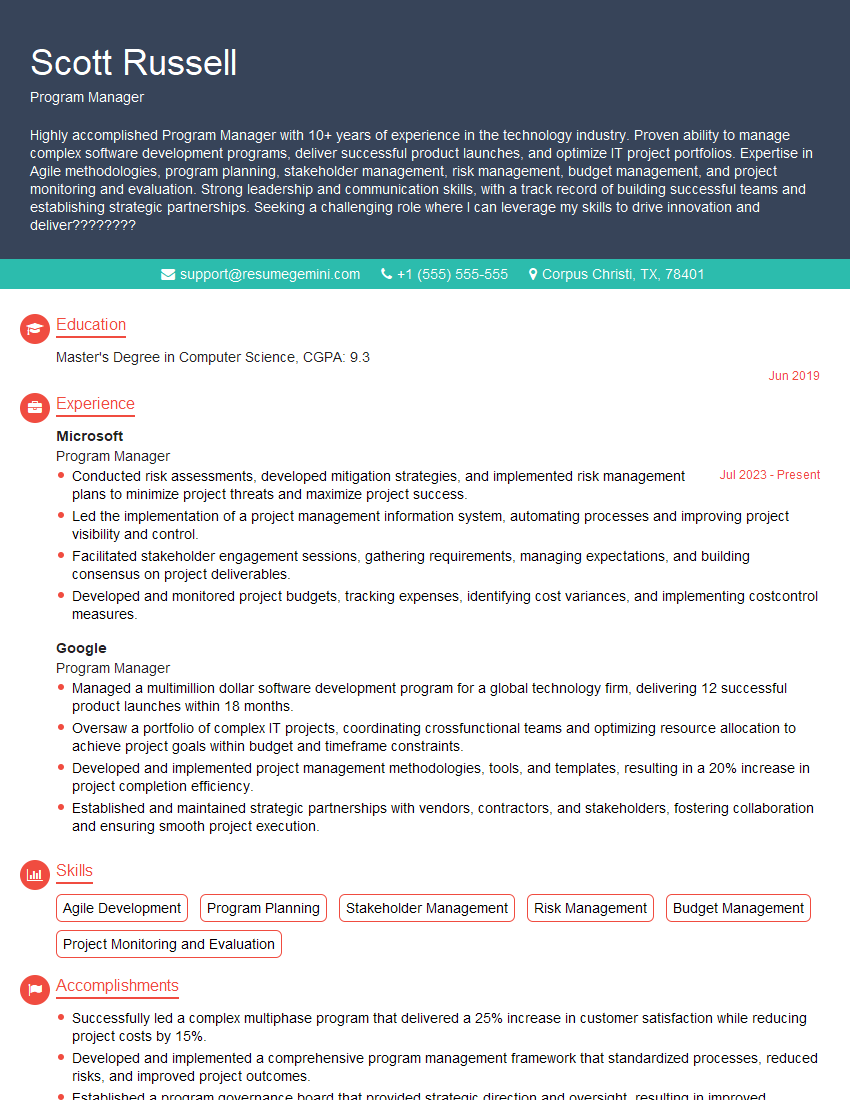
Program Manager Resume Sample

Operations Manager Resume Sample
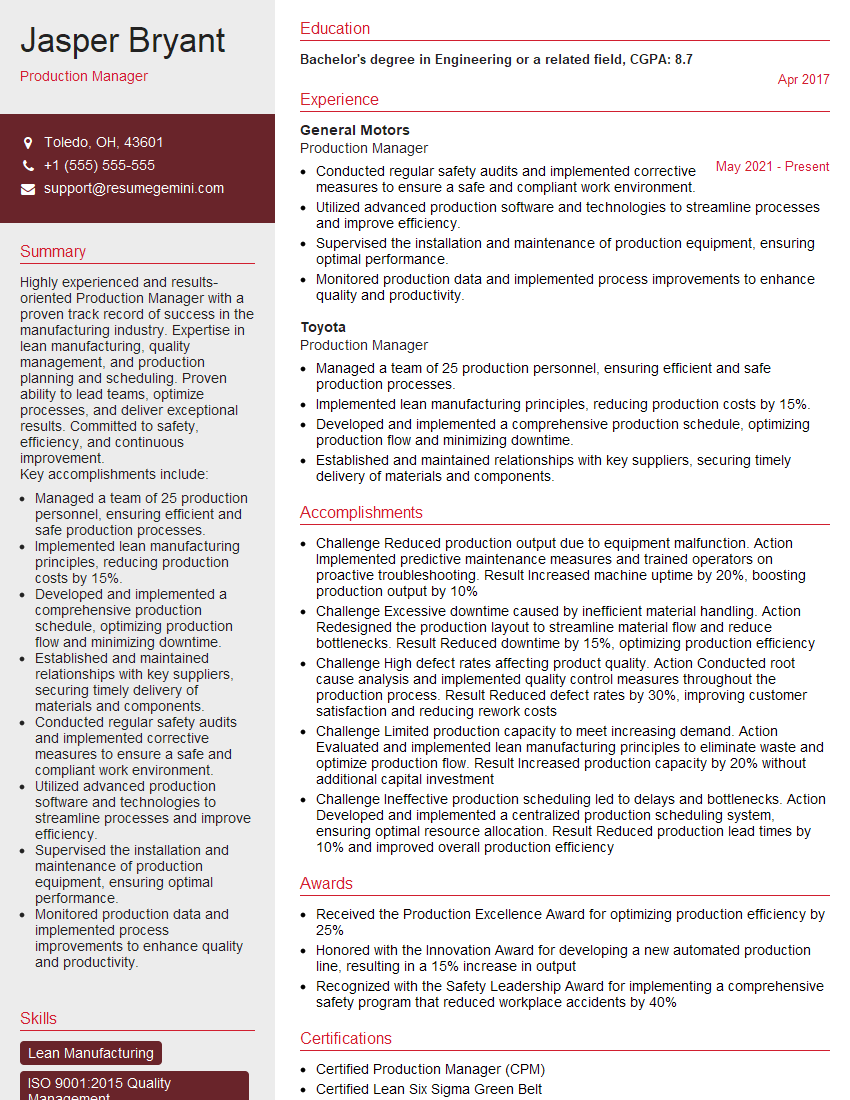
Production Manager Resume Sample
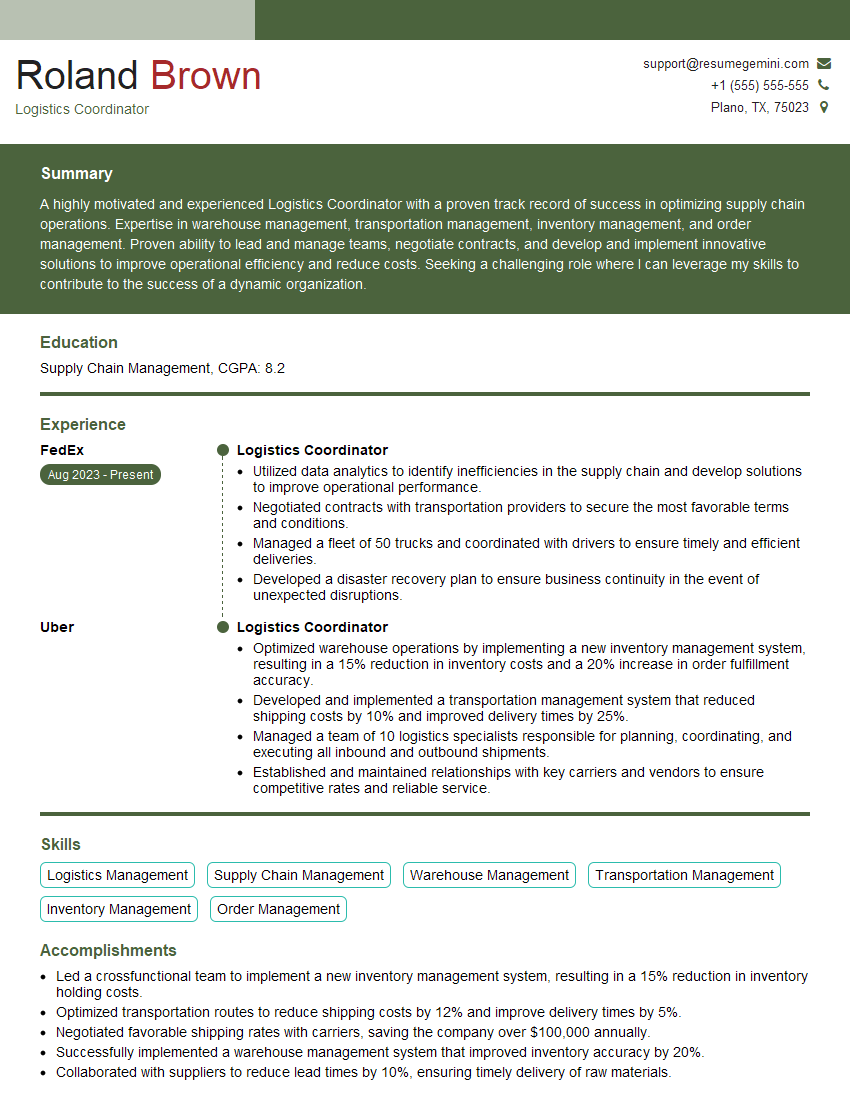
Logistics Coordinator Resume Sample
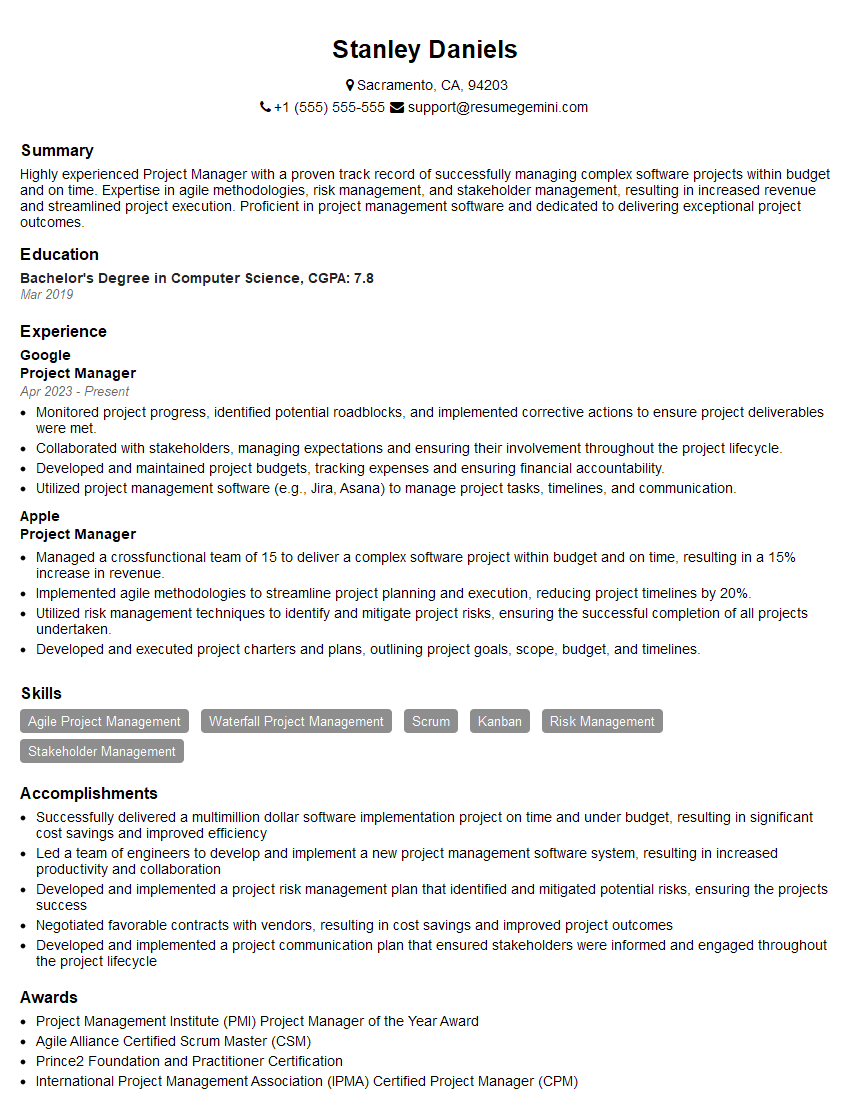
Project Manager Resume Sample
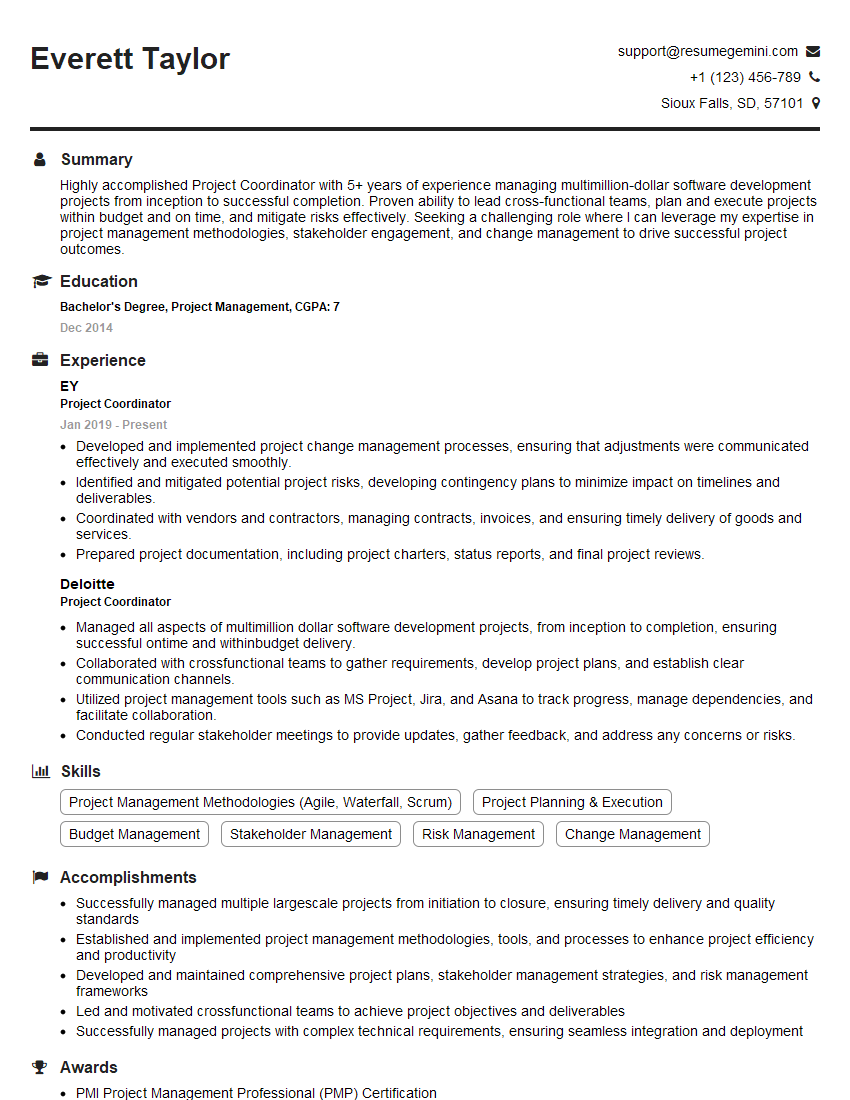
Project Coordinator Resume Sample
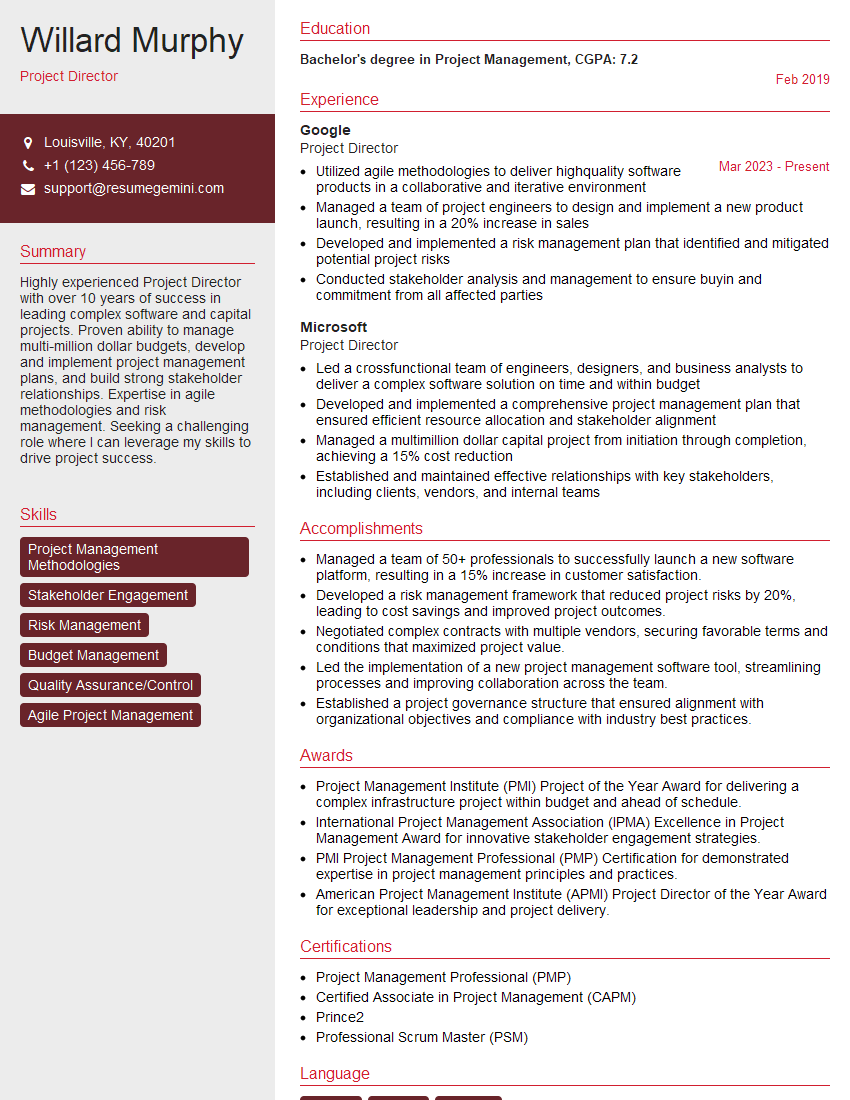
Project Director Resume Sample
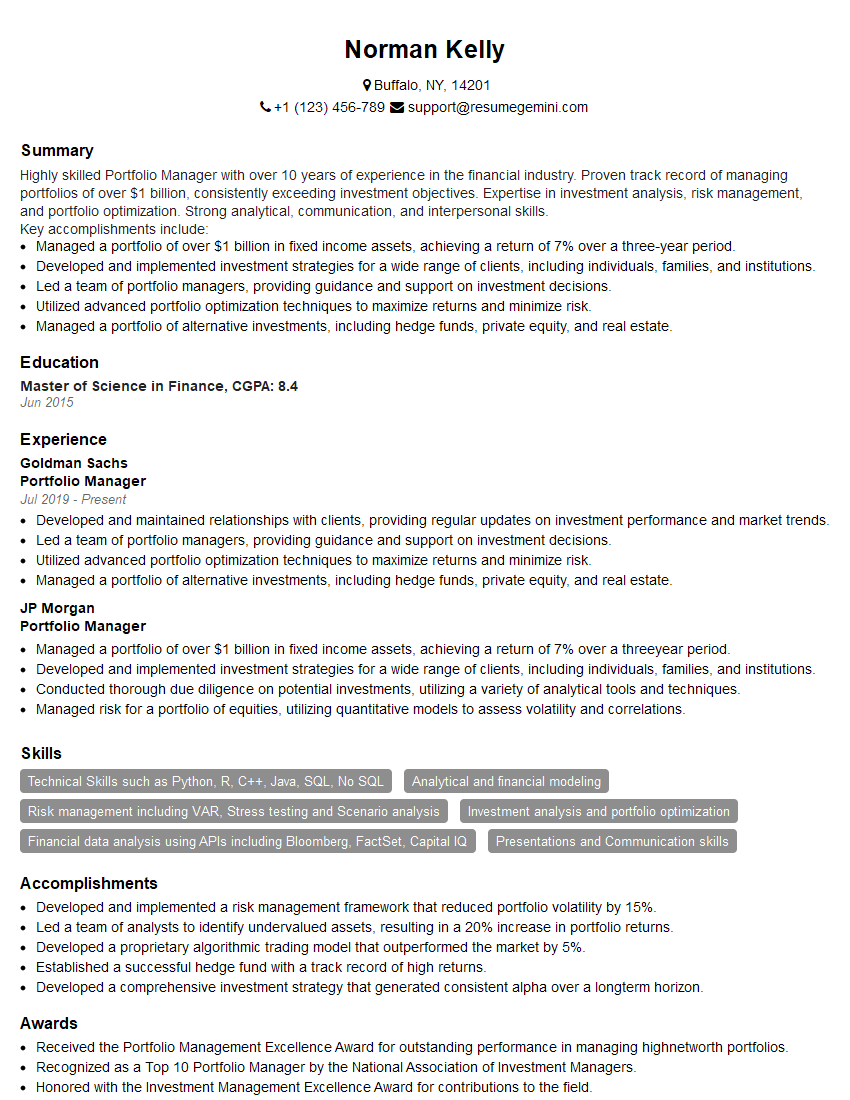
Portfolio Manager Resume Sample
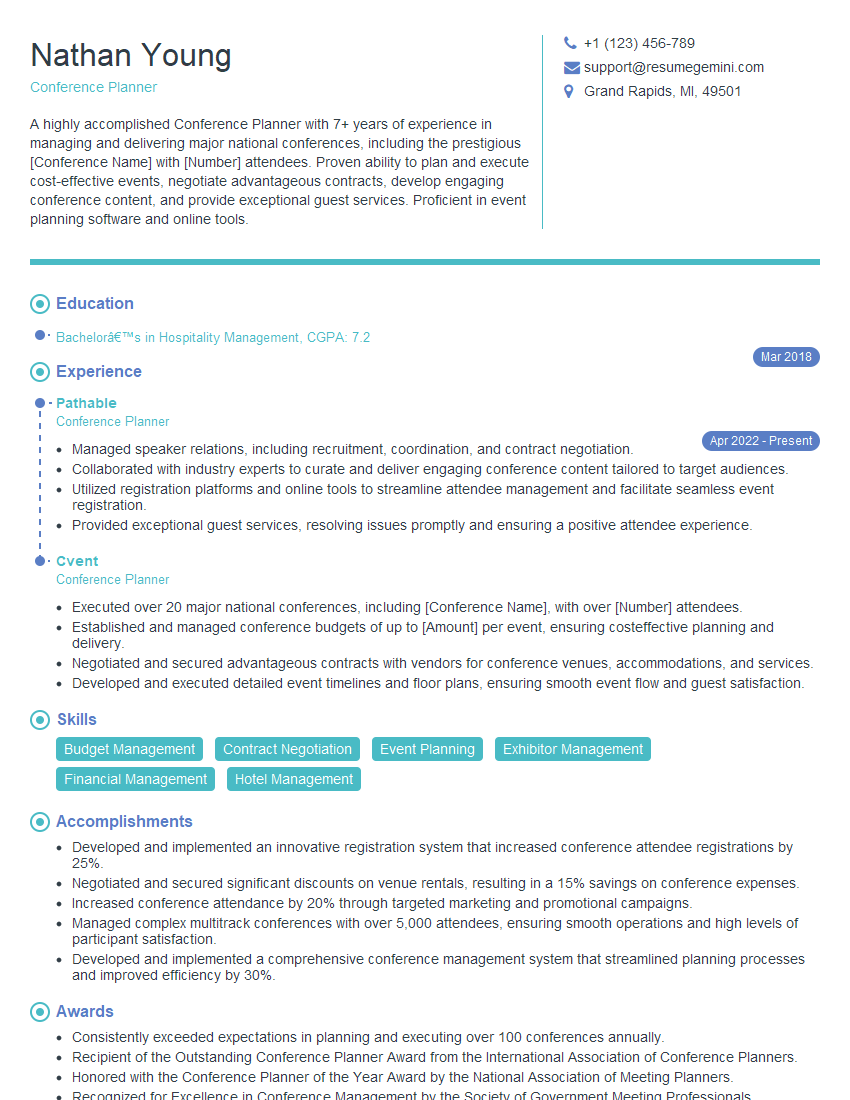
Conference Planner Resume Sample
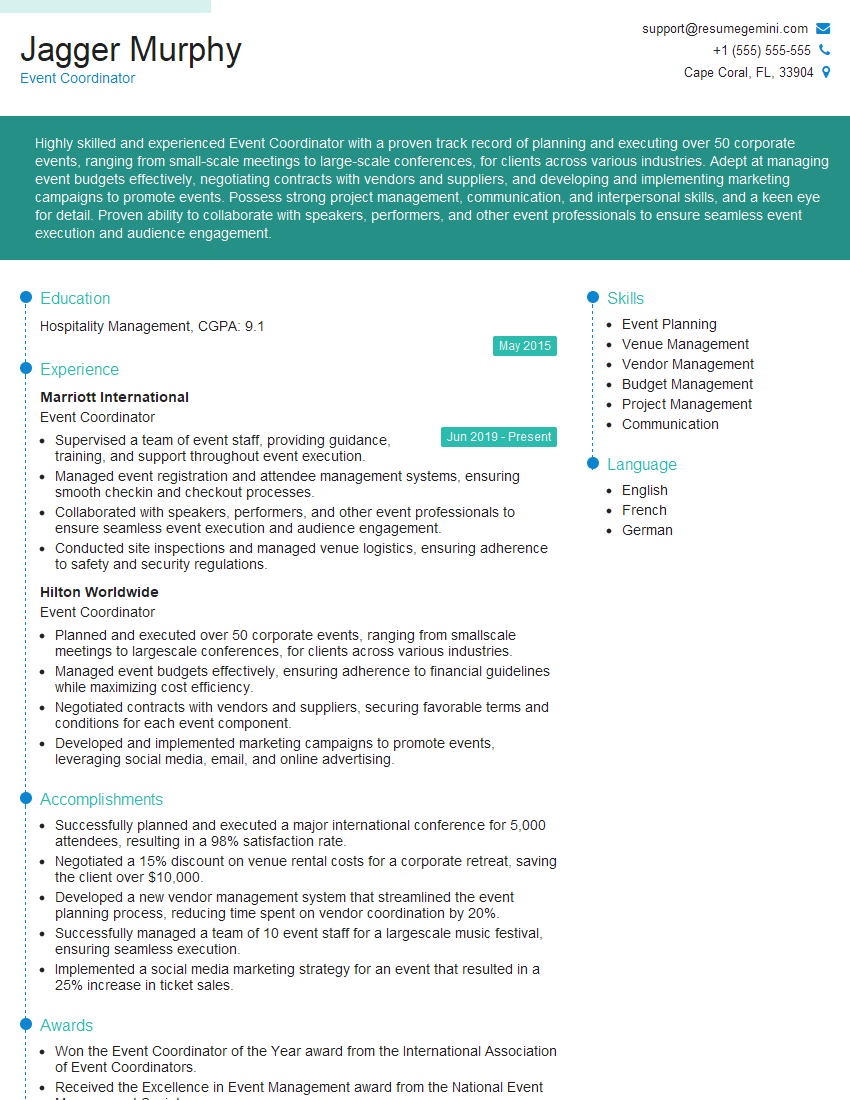
Event Coordinator Resume Sample
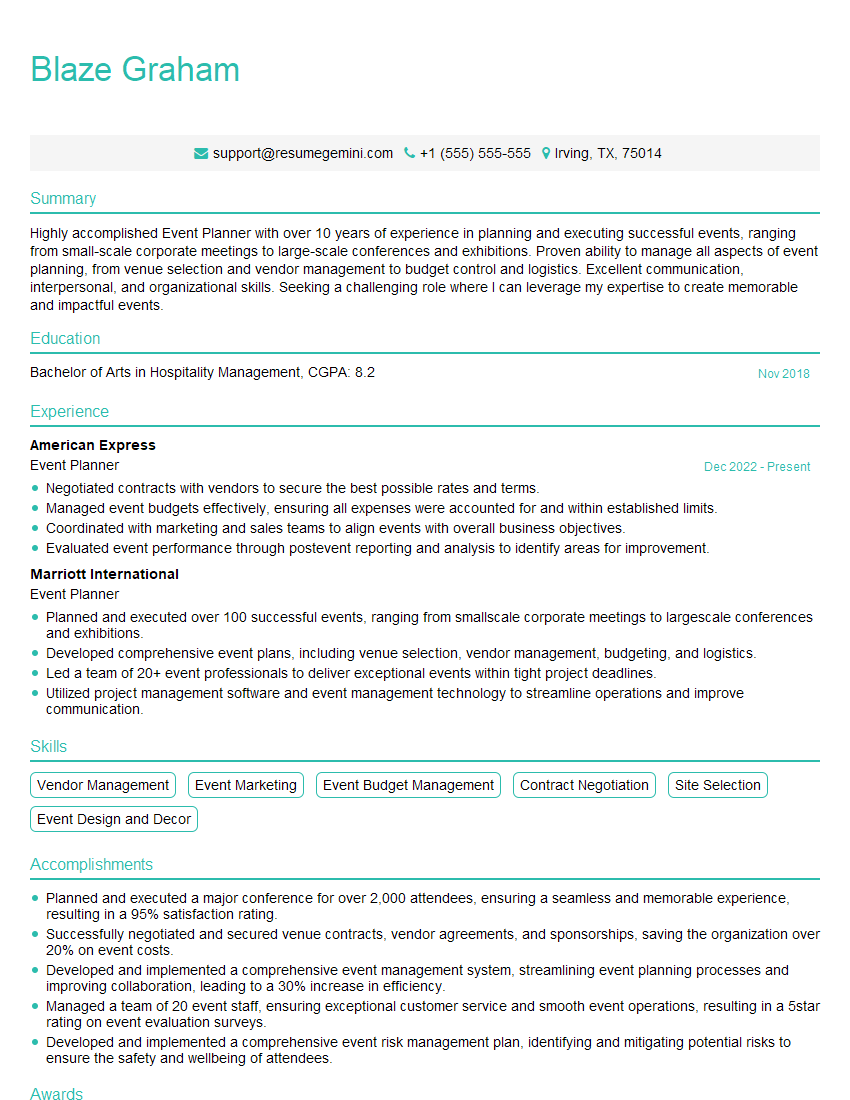
Event Planner Resume Sample
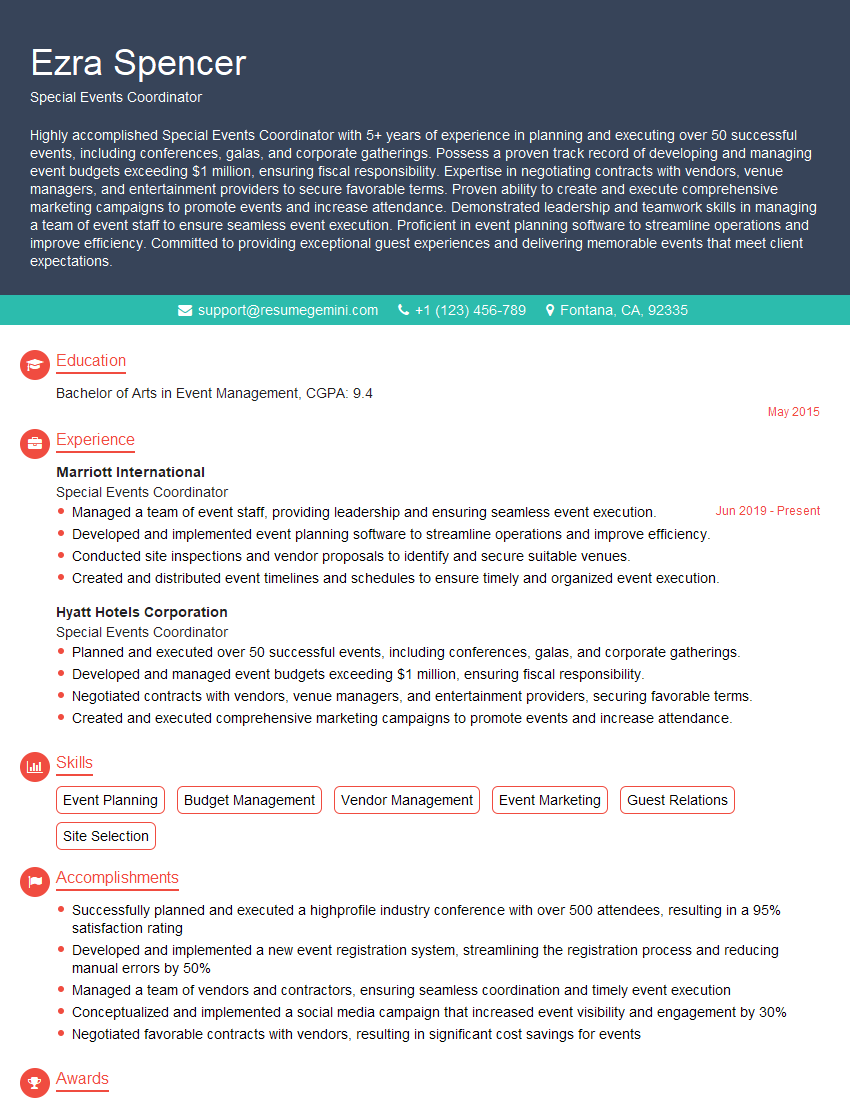
Special Events Coordinator Resume Sample
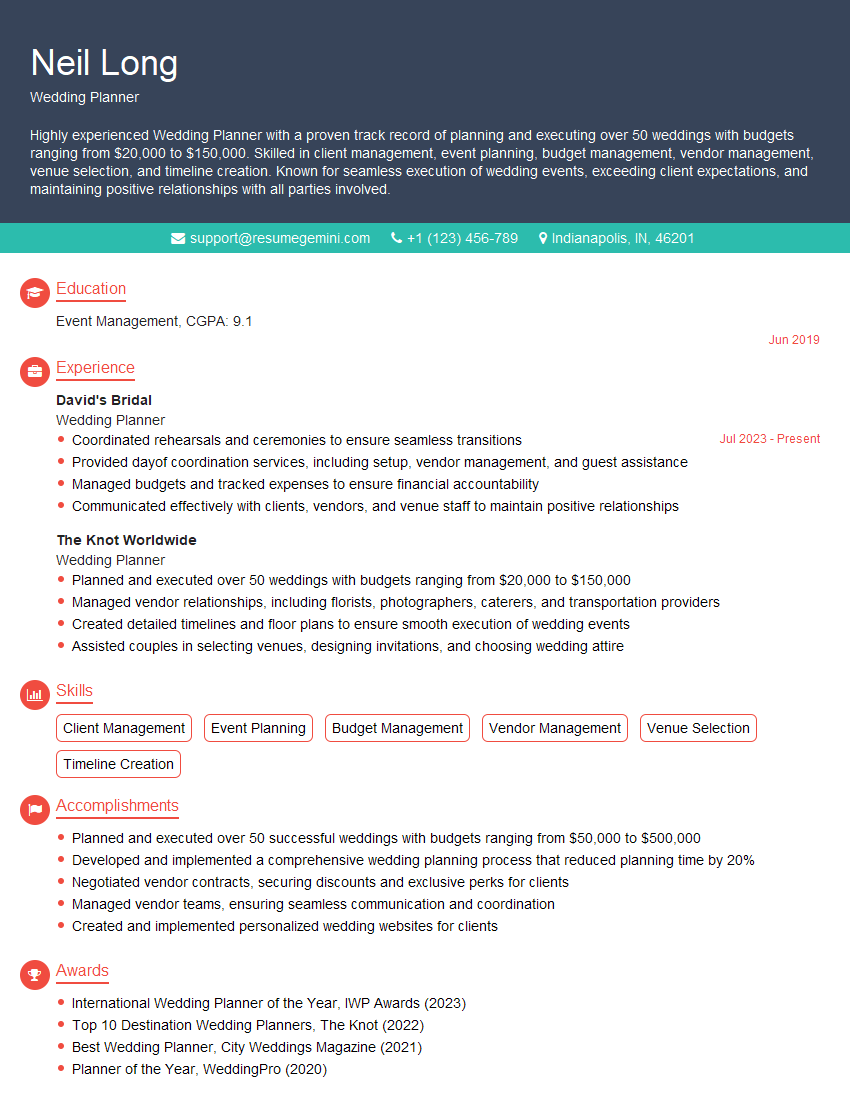
Wedding Planner Resume Sample
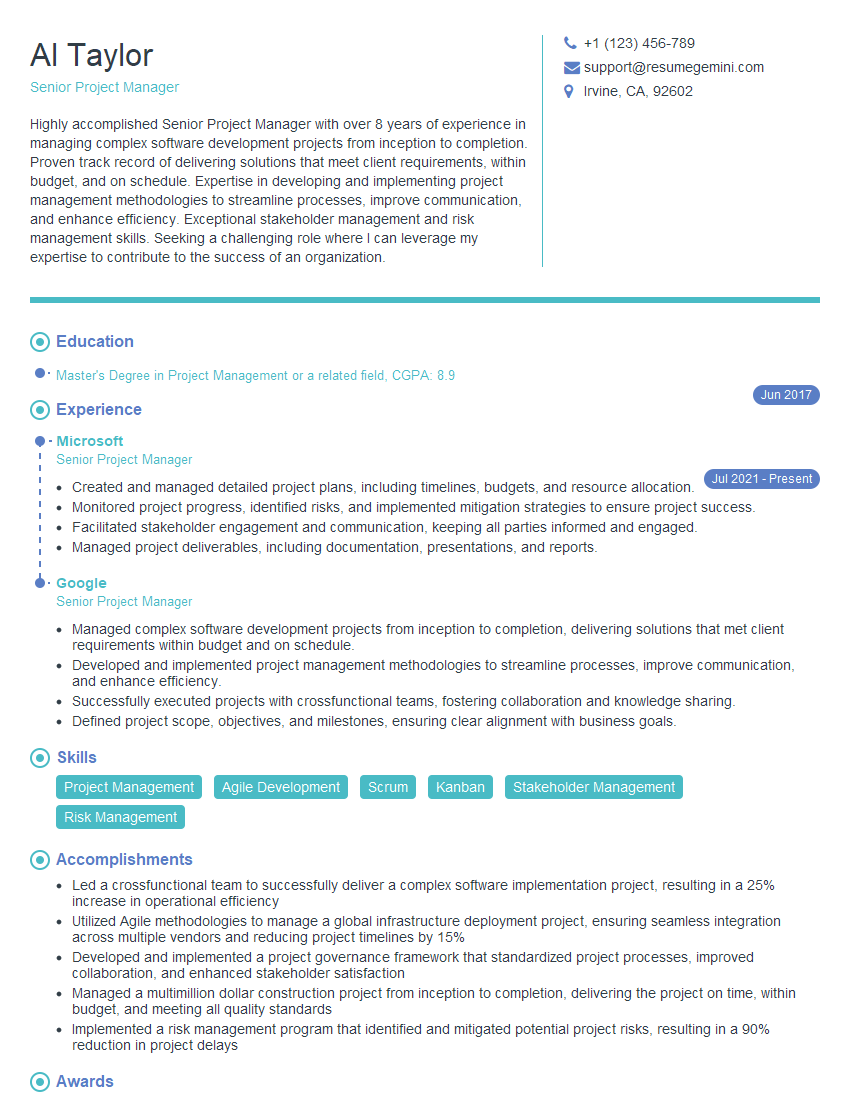
Senior Project Manager Resume Sample
Explore more articles
Users Rating of Our Blogs
Share Your Experience
We value your feedback! Please rate our content and share your thoughts (optional).
What Readers Say About Our Blog
To the interviewgemini.com Webmaster.
Very helpful and content specific questions to help prepare me for my interview!
Thank you
To the interviewgemini.com Webmaster.
This was kind of a unique content I found around the specialized skills. Very helpful questions and good detailed answers.
Very Helpful blog, thank you Interviewgemini team.