Preparation is the key to success in any interview. In this post, we’ll explore crucial Public Speaking and Communications interview questions and equip you with strategies to craft impactful answers. Whether you’re a beginner or a pro, these tips will elevate your preparation.
Questions Asked in Public Speaking and Communications Interview
Q 1. Describe your experience crafting compelling presentations.
Crafting compelling presentations is about more than just stringing words together; it’s about weaving a narrative that resonates with the audience. My approach involves a deep understanding of the target audience, the message’s core purpose, and the most effective delivery method. I begin by thoroughly researching the topic, identifying key takeaways, and structuring the information in a logical and engaging sequence. This might involve using storytelling techniques, incorporating visuals like charts and images, or employing interactive elements to maintain audience interest. For example, when presenting a complex financial model to a group of non-finance professionals, I would focus on translating the data into easily digestible narratives, using compelling visuals to support the key financial insights and avoiding technical jargon wherever possible.
I also pay close attention to the presentation’s overall design, ensuring visual consistency and clarity. A well-designed presentation supports the message, not distracts from it. Finally, I always practice the delivery, refining the pacing, tone, and body language to ensure a confident and persuasive presentation. The goal is not simply to inform but to inspire and motivate the audience to take action.
Q 2. How do you adapt your communication style to different audiences?
Adapting communication style is paramount for effective public speaking. It’s about recognizing that a presentation tailored for a boardroom of executives will differ significantly from one aimed at a group of university students. I consider several key factors when tailoring my approach. First, I analyze the audience’s level of prior knowledge and expertise on the topic. A technical audience will appreciate detailed explanations and nuanced arguments, whereas a less technical audience might benefit from simpler language and more illustrative examples. Second, I consider the audience’s cultural background and communication preferences. Some cultures value direct and assertive communication, while others prefer more indirect and nuanced approaches. Third, the setting of the presentation influences my style. A formal presentation in a conference hall demands a different level of formality than a workshop in a relaxed environment.
For instance, when presenting to a group of engineers, I would use technical terms and delve into the specifics of the data. Conversely, when speaking to a group of investors, I would focus on the high-level implications and the bottom line, highlighting the financial benefits and risks using straightforward language and clear visualizations. This flexible approach helps ensure my message is not only understood but also well-received by diverse audiences.
Q 3. Explain your process for developing a public speaking strategy.
Developing a public speaking strategy is a systematic process that begins long before stepping onto the stage. It’s not just about the content; it’s a holistic approach encompassing audience analysis, message crafting, and delivery optimization. My process typically follows these steps:
- Define the Objective: What do I want the audience to know, feel, or do after the presentation?
- Audience Analysis: Who am I speaking to? What are their needs, interests, and prior knowledge?
- Message Development: What’s the core message? How can it be structured for maximum impact? What evidence and examples will support my points?
- Content Creation: This involves crafting the presentation slides, script, or talking points, ensuring clarity, conciseness, and visual appeal.
- Delivery Planning: How will I deliver the message? What techniques (storytelling, humor, visuals) will be most effective? How can I ensure my body language and tone enhance the presentation?
- Practice and Refinement: Rehearsing the presentation multiple times allows for fine-tuning the delivery, anticipating potential questions, and identifying areas for improvement.
Throughout this process, continuous feedback and revision are crucial. By following this structured approach, I can ensure that the presentation achieves its intended objective and leaves a lasting impact on the audience.
Q 4. How do you handle challenging questions during a Q&A session?
Handling challenging questions during a Q&A session requires composure, quick thinking, and a genuine desire to engage with the audience. I begin by actively listening to the question, ensuring I fully understand the intent before responding. If the question is unclear, I don’t hesitate to ask for clarification. If I don’t know the answer, I’m honest about it. Instead of guessing or deflecting, I might say something like, “That’s a great question, and I don’t have a definitive answer off the top of my head, but I’ll be happy to research it and follow up with you after the session.” This maintains credibility and demonstrates transparency.
For complex or controversial questions, I break down the response into smaller, digestible parts, using clear and concise language. I may use examples or analogies to illustrate my points. I also avoid becoming defensive or argumentative. The goal is to address the question directly and constructively, providing a well-reasoned response that engages the audience and fosters a positive dialogue.
Q 5. Describe a time you had to overcome a communication barrier.
During a presentation to a multinational team about a new software implementation, I encountered a significant communication barrier. The team consisted of members from various cultural backgrounds with different levels of technical expertise. Initially, my technical explanations were met with confusion, and the Q&A session was unproductive. I realized that my style, while technically correct, lacked clarity and contextual understanding for the diverse audience.
To overcome this, I paused, reassessed my approach, and opted for a more collaborative and visual method. I broke down complex technical concepts into simple terms, used analogies related to their everyday experiences, and incorporated more visuals to illustrate the processes. Furthermore, I actively solicited feedback and questions throughout the presentation, creating a more interactive and inclusive environment. This shift in approach significantly improved understanding and resulted in a more productive discussion. This experience taught me the importance of adaptability and the need to constantly monitor audience engagement to ensure effective communication across diverse groups.
Q 6. How do you measure the effectiveness of your communication efforts?
Measuring the effectiveness of communication efforts involves a multifaceted approach. I use a combination of quantitative and qualitative methods to assess the impact of my presentations. Quantitative methods include tracking metrics such as audience attendance, survey responses (measuring knowledge gained, satisfaction, and engagement), and post-presentation actions (e.g., increased sales, improved processes, or changed behaviors). For example, if my presentation aims to increase sales, I track the sales figures before and after the presentation.
Qualitative methods focus on feedback gathering. This could involve collecting post-presentation reviews, conducting informal discussions with attendees, or analyzing social media mentions to understand the overall impact and identify areas for improvement. By combining these methods, I gain a comprehensive view of the effectiveness of my communication efforts, allowing for continuous improvement and refinement.
Q 7. What are your preferred methods for delivering impactful presentations?
My preferred methods for delivering impactful presentations blend several techniques to create a compelling and memorable experience for the audience. I prioritize storytelling as a powerful tool to connect with people on an emotional level and make the information relatable. I often incorporate visuals, such as high-quality images, charts, and graphs, to enhance understanding and keep the audience engaged. Interactive elements, such as polls or Q&A sessions, help to foster active participation and create a dynamic environment. Moreover, I believe in the power of confident and enthusiastic delivery, ensuring that my body language and tone effectively convey the message’s importance.
I also tailor my approach to the specific context and audience. For instance, a presentation to a large audience at a conference might benefit from a more formal and structured approach, while a smaller, intimate setting allows for a more conversational and interactive style. Ultimately, the goal is to create a cohesive presentation that is both informative and engaging, leaving a positive and lasting impact on the audience.
Q 8. Explain your understanding of different communication channels and their effectiveness.
Communication channels are the pathways we use to transmit information. Their effectiveness depends heavily on the context, audience, and message. Some channels are rich in non-verbal cues, while others rely solely on text.
- Face-to-face communication: This offers the richest channel, allowing for immediate feedback and nuanced interpretation through body language and tone. It’s ideal for sensitive conversations or building rapport. Example: A one-on-one meeting to deliver difficult performance feedback.
- Written communication (email, letters, reports): Provides a documented record and allows for careful consideration before sending. However, it lacks immediate feedback and can be misinterpreted without clear language. Example: Sending a formal project proposal to a client.
- Phone calls: Offer a more personal touch than written communication, enabling immediate feedback and clarification through voice tone. However, they lack visual cues. Example: Briefing a team on an urgent task.
- Video conferencing: Combines the benefits of face-to-face and phone calls, bridging geographical distances. It’s effective for presentations and collaborative work, but technical issues can be a drawback. Example: Leading a virtual team meeting.
- Social media: Excellent for reaching a wide audience quickly, but requires careful messaging to avoid misinterpretations and maintain a professional image. Example: Announcing a company initiative on LinkedIn.
Choosing the right channel is crucial. A casual message on social media might be inappropriate for formal announcements, which would be better suited to an email or press release.
Q 9. How do you use storytelling to enhance your communication?
Storytelling is a powerful communication tool because it connects with audiences on an emotional level. It transforms abstract concepts into relatable narratives, making information more memorable and engaging.
I use storytelling by structuring my presentations around compelling narratives. This involves identifying the core message, crafting a clear beginning, middle, and end, and incorporating elements of conflict and resolution. For example, when presenting data, instead of simply stating numbers, I might weave a story about the challenges faced and the innovative solutions implemented. This makes the data more meaningful and easier to understand.
I also tailor my stories to my audience. What resonates with a group of seasoned executives may differ from what engages a younger audience. I use relevant examples, metaphors, and analogies to ensure my stories are both memorable and impactful.
Q 10. Describe your experience in crisis communication.
My experience in crisis communication includes leading communication efforts during a product recall. We had to quickly and effectively communicate with customers, stakeholders, and media to manage the situation and mitigate reputational damage.
Our strategy involved:
- Rapid assessment of the situation: Identifying the core problem, potential impacts, and key stakeholders.
- Developing a clear and consistent message: Ensuring all communication channels delivered the same information, truthfully and transparently.
- Proactive communication: Reaching out to stakeholders first, rather than reacting to inquiries. This prevented misinformation from spreading.
- Establishing a dedicated communication team: Ensuring swift responses to inquiries and maintaining control over the narrative.
- Monitoring media and social media: Tracking public perception and adjusting our strategy as needed.
The experience underscored the importance of preparation, a well-defined communication plan, and a strong, unified team. Transparency and honesty, even in difficult situations, are crucial for maintaining trust and credibility.
Q 11. How do you manage your time when preparing for multiple presentations?
Managing time effectively when preparing multiple presentations requires a structured approach. I use a project management system to track deadlines, tasks, and progress.
My strategy involves:
- Creating a master schedule: Listing all presentations with their deadlines. This gives a clear overview of workload and allows for prioritization.
- Breaking down tasks: Each presentation is divided into smaller, manageable tasks like research, scriptwriting, slide design, and rehearsal.
- Allocating time realistically: Estimating the time required for each task, considering potential delays. I always add buffer time for unexpected issues.
- Prioritizing tasks: Focusing on the most urgent presentations first, then working on others in order of priority.
- Batching similar tasks: Grouping similar tasks together, such as writing scripts for multiple presentations at once, to improve efficiency.
- Utilizing time-blocking techniques: Allocating specific time blocks for specific tasks. This ensures focused work and minimizes distractions.
Regular review and adjustment of the schedule are essential to adapt to unforeseen circumstances or shifting priorities. This proactive management ensures that all deadlines are met and presentations are delivered to the highest standards.
Q 12. How do you incorporate visual aids effectively in presentations?
Visual aids are crucial for engaging audiences and enhancing message retention. However, they should support, not replace, the spoken word.
Effective incorporation involves:
- Relevance: Visuals should directly relate to the content, highlighting key points and avoiding unnecessary clutter.
- Clarity and Simplicity: Use clear fonts, concise text, and high-quality images. Avoid overwhelming the audience with too much information on a single slide.
- Visual Appeal: Use a consistent design style, appropriate color palettes, and engaging visuals to maintain audience interest.
- Variety: Combine different visual elements like charts, graphs, images, and videos to keep the presentation dynamic.
- Accessibility: Ensure visuals are accessible to all audience members, including those with visual impairments (consider alt text for images).
For instance, instead of simply stating that sales increased by 20%, I might use a visually appealing bar chart to show the increase over time. This makes the data instantly comprehensible and memorable. Remember, less is more; visuals should enhance understanding, not detract from it.
Q 13. Explain your experience with media training.
My media training experience has significantly improved my ability to communicate effectively with journalists and the wider public. I’ve learned how to deliver concise, compelling messages tailored to different media outlets.
Key aspects of my media training include:
- Message development: Crafting key messages that are clear, concise, and resonate with the target audience.
- Interview techniques: Learning how to answer questions directly, confidently, and avoid getting sidetracked.
- Handling difficult questions: Developing strategies for addressing challenging or contentious topics without losing composure.
- Body language and nonverbal communication: Understanding how body language influences message delivery and maintaining a professional demeanor.
- Media relations: Building relationships with journalists and understanding their needs and deadlines.
This training has been invaluable in managing public perception and delivering consistent messaging across multiple platforms. For example, during a recent crisis, I was able to effectively manage media interactions, ensuring a coherent narrative was communicated to the public, minimizing negative impact and maintaining public trust.
Q 14. How do you maintain a professional demeanor under pressure?
Maintaining a professional demeanor under pressure requires preparation, practice, and self-awareness. It’s about managing both internal and external pressures effectively.
My strategies include:
- Preparation: Thorough preparation minimizes unexpected surprises and builds confidence. Knowing the material well reduces anxiety.
- Deep breathing exercises: Practicing deep breathing before a presentation helps to calm nerves and center focus.
- Positive self-talk: Replacing negative thoughts with positive affirmations boosts confidence and reduces stress.
- Focusing on the audience: Remembering why I’m speaking and connecting with the audience shifts focus from internal anxieties to the communication goal.
- Visualizing success: Mentally rehearsing a successful presentation reinforces positive outcomes and reduces stress.
For example, during a high-pressure live interview, I was able to maintain composure by taking a deep breath before answering a difficult question. This allowed me to focus my thoughts and deliver a thoughtful, articulate response. Maintaining professionalism, even in challenging situations, projects competence and trustworthiness.
Q 15. How do you handle negative feedback or criticism?
Negative feedback, while initially challenging, is invaluable for growth. My approach is threefold: Listen actively, analyze constructively, and adapt strategically.
First, I listen without interruption, aiming to fully understand the critic’s perspective. I avoid defensiveness and focus on identifying the core issue. For example, if someone says my presentation was too technical, I wouldn’t argue; I’d analyze whether the content or delivery truly lacked accessibility.
Second, I analyze the feedback, separating valid criticism from personal opinions. Is the feedback specific and actionable? If so, I identify areas for improvement. If not, I might politely seek clarification. For instance, ‘I appreciate your feedback about my presentation being too lengthy. Could you perhaps elaborate on which sections felt particularly drawn-out?’
Finally, I adapt my approach. This might involve simplifying complex concepts, refining my delivery, or incorporating visual aids. I document the feedback and any changes made, using this as a learning opportunity for future presentations or communications. It’s about continuous improvement, not perfection.
Career Expert Tips:
- Ace those interviews! Prepare effectively by reviewing the Top 50 Most Common Interview Questions on ResumeGemini.
- Navigate your job search with confidence! Explore a wide range of Career Tips on ResumeGemini. Learn about common challenges and recommendations to overcome them.
- Craft the perfect resume! Master the Art of Resume Writing with ResumeGemini’s guide. Showcase your unique qualifications and achievements effectively.
- Don’t miss out on holiday savings! Build your dream resume with ResumeGemini’s ATS optimized templates.
Q 16. Describe your experience with internal communications.
Internal communications are vital for a cohesive and productive workplace. My experience encompasses various strategies, including:
- Developing and implementing communication plans: I’ve crafted strategies for disseminating critical information such as policy changes, project updates, and company-wide announcements, ensuring clarity and consistency across different departments and levels of seniority.
- Utilizing diverse communication channels: This includes emails, intranet platforms, town hall meetings, and team briefings, selecting the most appropriate channel for the message and the audience. For example, a quick update on a project milestone might be a brief email, while a major strategic shift would demand a town hall meeting.
- Building and maintaining relationships with stakeholders: Strong relationships are key to effective internal communication. I actively seek feedback, address concerns, and maintain open lines of communication to foster trust and transparency.
- Measuring communication effectiveness: It’s not just about sending messages; it’s about understanding if they’re being received and understood. I use feedback mechanisms like surveys and informal chats to assess the impact of communications.
In a previous role, I successfully implemented a new intranet system, leading to a significant improvement in information accessibility and employee engagement.
Q 17. How familiar are you with different presentation software (PowerPoint, Keynote, etc.)?
I’m proficient in PowerPoint, Keynote, and Google Slides. My skillset extends beyond simply creating visually appealing presentations; I understand how to leverage these tools to enhance communication effectiveness.
PowerPoint remains a widely used standard, particularly in corporate settings. Its vast template library and customization options make it versatile. Keynote, known for its intuitive design and animation features, is often preferred for presentations with a more creative flair. Google Slides offers seamless collaboration and accessibility across different devices.
My approach prioritizes clarity and conciseness. I avoid overwhelming slides with text, instead focusing on impactful visuals, bullet points, and data visualizations. I tailor the software choice to the context of the presentation and the audience’s expectations.
Q 18. How do you build rapport with an audience?
Building rapport is crucial for effective communication. My approach centers around connection, empathy, and authenticity.
I begin by actively acknowledging the audience, making eye contact, and smiling. This demonstrates respect and establishes a connection. I then strive to understand their perspective – what are their interests, challenges, and expectations? This might involve tailoring the content or language to resonate with their specific needs.
Empathy is key. I aim to communicate not just information but understanding. If appropriate, I might share relatable anecdotes or experiences to build common ground. Authenticity is vital; audiences can readily sense disingenuousness. I speak with conviction and sincerity, reflecting genuine passion for the subject matter.
For example, before delivering a presentation to a group of engineers, I would research their current projects and challenges. This allows me to tailor my message to their specific context, demonstrating respect and understanding.
Q 19. How do you ensure your messages are clear and concise?
Clarity and conciseness are paramount. I achieve this by following these principles:
- Know your audience: Tailor the language and complexity of the message to their understanding.
- Structure your message: Begin with a clear objective, present information logically, and summarize key points.
- Use simple language: Avoid jargon and technical terms unless absolutely necessary, and always define them if used.
- Visual aids: Use visuals like charts and graphs to reinforce key messages and simplify complex information.
- Practice: Rehearse your message to ensure a smooth and natural delivery.
Imagine explaining a complex financial report. Instead of using dense financial jargon, I would simplify the concepts using clear language, relevant visuals, and real-world examples to make it easy for even non-finance professionals to grasp the key insights.
Q 20. Describe your approach to using data to support your communications.
Data is crucial for supporting claims and making communication persuasive. My approach involves:
- Identifying relevant data: I begin by determining what data is needed to support my message effectively. This could include sales figures, market research, customer feedback, or internal performance metrics.
- Visualizing data effectively: Raw data is often unhelpful. I use charts, graphs, and infographics to present data in a clear, concise, and visually engaging manner. The type of visual used depends on the data and the message I’m conveying.
- Contextualizing data: Data alone is meaningless without context. I explain the significance of the data and how it relates to the overall message. For example, a chart showing rising sales figures needs context, explaining the factors contributing to that growth.
- Ensuring accuracy and reliability: The integrity of the data is paramount. I always cite sources and ensure the data is accurate and reliable.
For example, presenting a proposal for a new marketing campaign, I would use data to demonstrate the market opportunity, the potential ROI, and the effectiveness of similar campaigns in the past.
Q 21. How do you stay up-to-date on current communication trends?
Staying current in the dynamic field of communication is essential. My approach involves:
- Following industry publications and blogs: I regularly read publications such as the Harvard Business Review, Fast Company, and publications focused on communications and public speaking. I also follow influential bloggers and thought leaders in the field.
- Attending conferences and workshops: Conferences offer opportunities to learn from experts and network with peers. Workshops provide practical training on new skills and techniques.
- Engaging with online communities: Online forums and professional networks provide valuable insights and discussions on current trends.
- Experimenting with new tools and technologies: I actively explore new communication technologies and tools to see how they can enhance my work.
This continuous learning ensures my communication strategies remain relevant, effective, and aligned with the latest best practices.
Q 22. Explain your understanding of nonverbal communication.
Nonverbal communication encompasses all aspects of communication that don’t involve spoken or written words. It’s a powerful tool, often conveying more meaning than our verbal messages. This includes body language – posture, gestures, facial expressions, eye contact – as well as paralanguage – tone of voice, pace, and volume. Even seemingly minor details like proximity and personal space contribute significantly to the overall message received.
For instance, a slumped posture during a presentation might unintentionally communicate disinterest or lack of confidence, regardless of how compelling the spoken words are. Conversely, maintaining strong eye contact can foster trust and engagement. Understanding and effectively using nonverbal communication is crucial for clear and impactful public speaking.
In a team meeting, noticing a colleague consistently avoiding eye contact and fidgeting might suggest discomfort or disagreement with a particular topic, prompting me to address their concerns. Similarly, mirroring a client’s body language subtly (without being overly obvious) can build rapport and enhance trust during a negotiation.
Q 23. How do you ensure your communications are inclusive and accessible?
Inclusive and accessible communication ensures everyone can understand and engage with the message, regardless of their background, abilities, or disabilities. This involves using clear and concise language, avoiding jargon and complex terminology. It also requires considering different learning styles and communication preferences.
- Language: Using plain language, avoiding slang and idioms, and providing translations when necessary.
- Visuals: Ensuring all visuals (like presentations or videos) are accessible to those with visual impairments (alt text for images, sufficient color contrast).
- Format: Offering materials in multiple formats (e.g., audio, large print, digital text) to accommodate various needs.
- Delivery: Providing opportunities for questions and feedback, employing inclusive language (avoiding gendered or other potentially exclusionary terms).
For example, in a training session, I’d provide transcripts for videos, use visuals with clear captions, and allow for questions in multiple languages if necessary. During presentations, I employ inclusive language and use visuals that are universally understandable, avoiding cultural biases.
Q 24. Describe your experience working with diverse teams and stakeholders.
I thrive in diverse team environments. My experience spans collaborative projects with individuals from various cultural backgrounds, professional levels, and expertise areas. I’ve found that leveraging individual strengths and fostering open communication channels is key to success.
In one instance, we were developing a marketing campaign for a global audience. Our team included members from North America, Europe, and Asia. By actively encouraging everyone to share their perspectives and incorporating their regional insights, we created a campaign that resonated effectively across different cultures. This involved using a collaborative project management tool to ensure transparency and accountability, and scheduling regular meetings specifically for feedback and brainstorming.
Another example involves working with stakeholders holding differing priorities. Through active listening, clear articulation of goals, and structured communication protocols (such as regular progress reports), I’ve successfully managed expectations and ensured projects stay on track, even with competing demands.
Q 25. How do you manage competing priorities in a fast-paced communication environment?
In fast-paced communication environments, prioritizing effectively is paramount. I utilize a combination of techniques to manage competing priorities:
- Prioritization Matrix: I use a matrix (e.g., Eisenhower Matrix) to categorize tasks based on urgency and importance. This helps focus on high-impact activities first.
- Time Blocking: I schedule specific time slots for dedicated tasks, minimizing distractions.
- Delegation: I delegate tasks when appropriate, empowering team members and freeing up my time for strategic initiatives.
- Communication Planning: I develop detailed communication plans outlining key messages, target audiences, and timelines. This ensures focused and efficient message delivery.
For example, during a product launch, I would prioritize press releases and key stakeholder communications over less urgent tasks. By proactively delegating social media updates and email responses, I can dedicate time to addressing critical media inquiries.
Q 26. How do you utilize social media for effective communication?
Social media presents an excellent opportunity for targeted communication and engagement. I use various platforms strategically, tailoring content to each platform’s audience and format.
For example, LinkedIn is ideal for professional networking and sharing industry insights; Twitter excels at disseminating quick updates and engaging in real-time conversations; and Instagram is effective for visual storytelling and building brand awareness. Before posting, I ensure content is consistent with my organization’s brand voice and aligns with the overall communication strategy. I also monitor social media analytics to measure engagement and adapt my approach as needed.
For effective communication, I leverage features like polls, Q&A sessions, and live streams to increase audience interaction. Furthermore, I carefully monitor comments and messages, engaging with followers and addressing concerns promptly to foster positive relationships.
Q 27. How do you measure the return on investment (ROI) of your communication efforts?
Measuring the ROI of communication efforts requires a clear understanding of the objectives and metrics. We need to define what success looks like – whether it’s increased brand awareness, lead generation, improved employee engagement, or enhanced stakeholder relationships.
Methods for measuring ROI include:
- Website analytics: Tracking website traffic, bounce rates, and conversion rates to assess the impact of online communication campaigns.
- Social media analytics: Monitoring engagement metrics like likes, shares, comments, and follower growth to evaluate the effectiveness of social media strategies.
- Surveys and feedback forms: Gathering audience feedback on the clarity, impact, and value of communications.
- Sales data: Linking communication efforts to sales figures, especially for marketing campaigns.
- Employee surveys: Measuring employee satisfaction and understanding of organizational communications.
By consistently tracking these metrics and analyzing the data, we can demonstrate the value of our communication investments and make data-driven improvements.
Q 28. Describe your experience in developing communication plans and strategies.
I have extensive experience in developing and implementing comprehensive communication plans and strategies. This process typically involves several key steps:
- Audience Analysis: Identifying the target audiences and understanding their needs, preferences, and communication channels.
- Goal Setting: Defining specific, measurable, achievable, relevant, and time-bound (SMART) communication objectives.
- Message Development: Crafting clear, concise, and compelling messages tailored to each target audience.
- Channel Selection: Choosing the most effective communication channels to reach each audience.
- Implementation and Monitoring: Executing the plan, monitoring progress, and making adjustments as needed.
- Evaluation: Assessing the effectiveness of the communication plan against the established goals and making recommendations for future improvements.
For example, when developing a crisis communication plan, the steps involve identifying key stakeholders, crafting pre-approved messaging for different scenarios, assigning communication responsibilities, and establishing protocols for timely dissemination of information. This proactive approach ensures effective and coordinated response during a critical situation.
Key Topics to Learn for Public Speaking and Communications Interview
- Audience Analysis & Adaptation: Understanding your audience’s background, needs, and expectations to tailor your message effectively. Practical application: Analyzing an audience before a presentation and adjusting your delivery accordingly.
- Message Structuring & Storytelling: Crafting compelling narratives with a clear beginning, middle, and end. Practical application: Developing a presentation that uses storytelling techniques to engage the audience and convey key information memorably.
- Nonverbal Communication: Mastering body language, eye contact, and vocal delivery to enhance your message’s impact. Practical application: Practicing confident posture, maintaining eye contact, and modulating your tone to project authority and enthusiasm.
- Communication Channels & Strategies: Selecting the appropriate communication channel (e.g., presentation, email, report) based on the context and audience. Practical application: Choosing the best way to deliver a complex message to a large group versus a small team.
- Crisis Communication & Media Relations: Developing strategies for handling difficult situations and interacting with the media. Practical application: Preparing responses to potential negative feedback or challenging questions.
- Active Listening & Feedback: Effectively listening to and responding to audience questions and feedback. Practical application: Practicing active listening skills during a mock interview or presentation and providing constructive feedback to others.
- Public Relations & Reputation Management: Understanding how to build and maintain a positive public image. Practical application: Developing a communication plan to improve a company’s reputation.
Next Steps
Mastering public speaking and communications is crucial for career advancement in virtually any field. Strong communication skills are highly valued by employers and significantly improve your ability to influence, persuade, and collaborate effectively. To enhance your job prospects, invest time in crafting an ATS-friendly resume that showcases your skills and experience. ResumeGemini is a trusted resource that can help you build a professional and impactful resume. ResumeGemini provides examples of resumes tailored to Public Speaking and Communications to help guide you through the process. Take advantage of these resources to present yourself as a strong candidate.
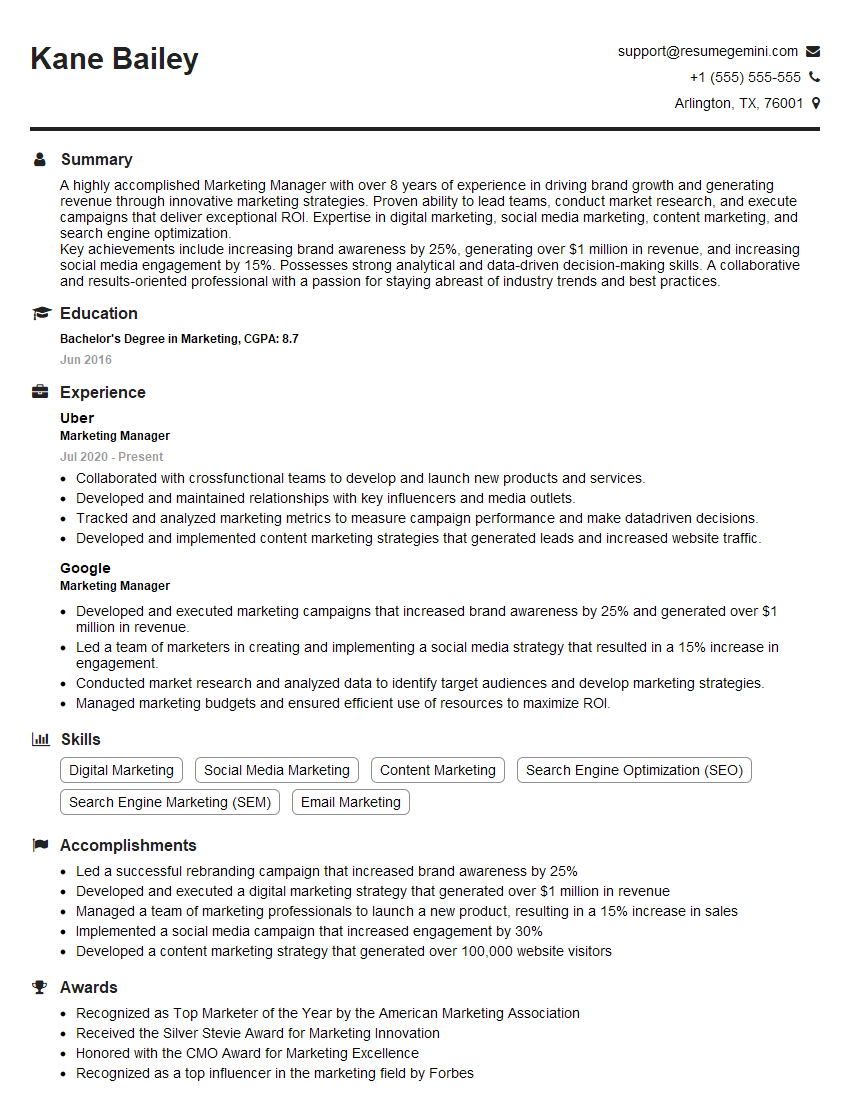
Marketing Manager Resume Sample

Communications Director Resume Sample
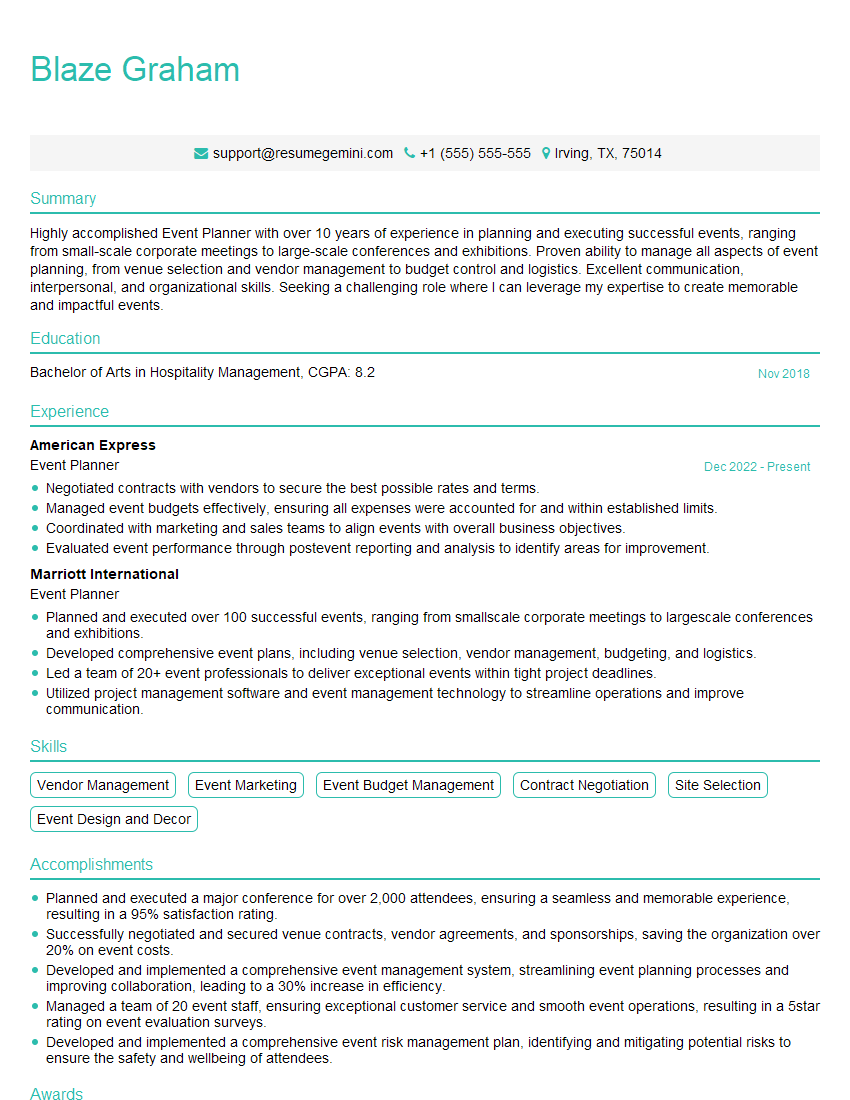
Event Planner Resume Sample

Training Specialist Resume Sample
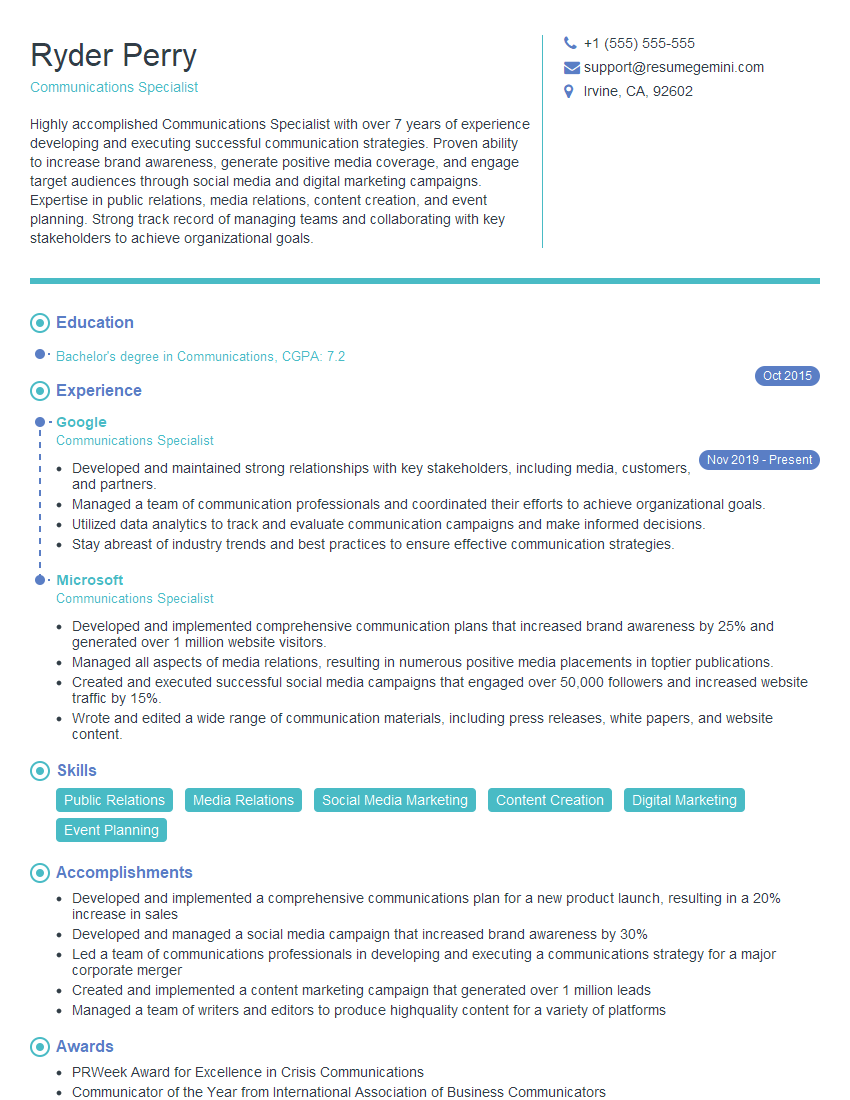
Communications Specialist Resume Sample

Social Media Manager Resume Sample
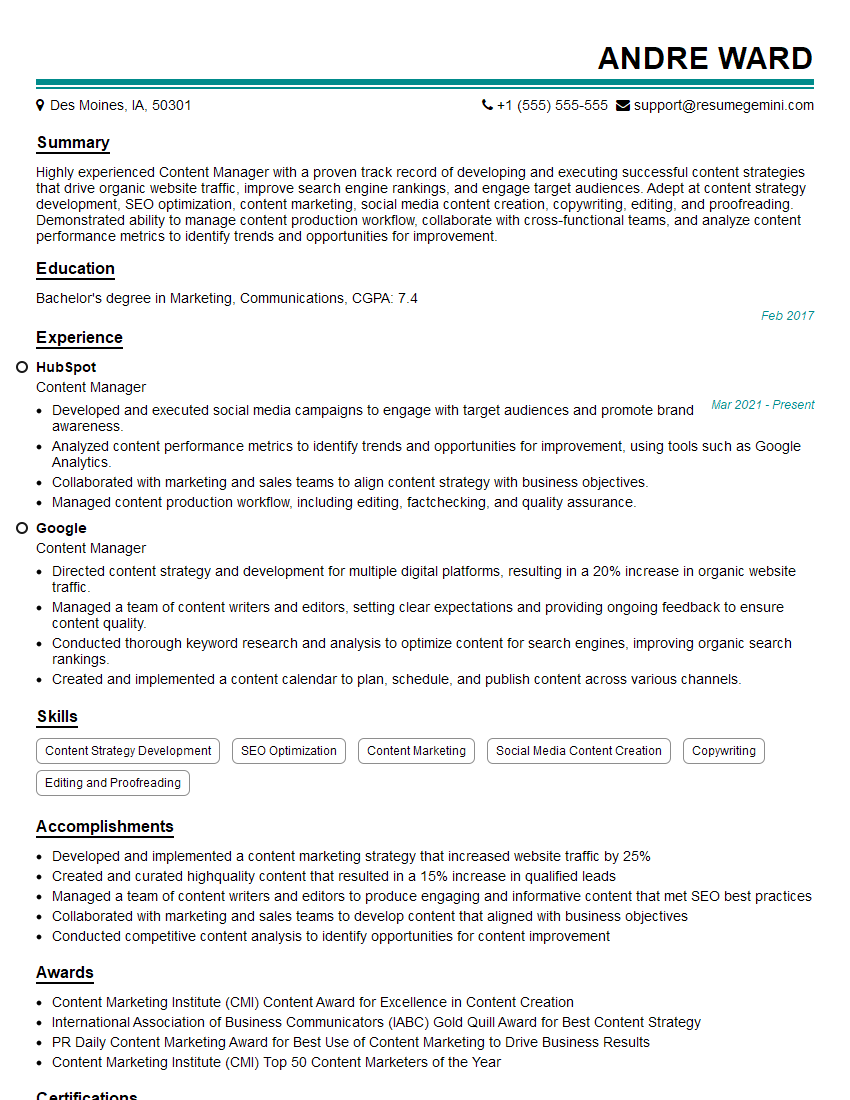
Content Manager Resume Sample

Communications Consultant Resume Sample

Content Strategist Resume Sample
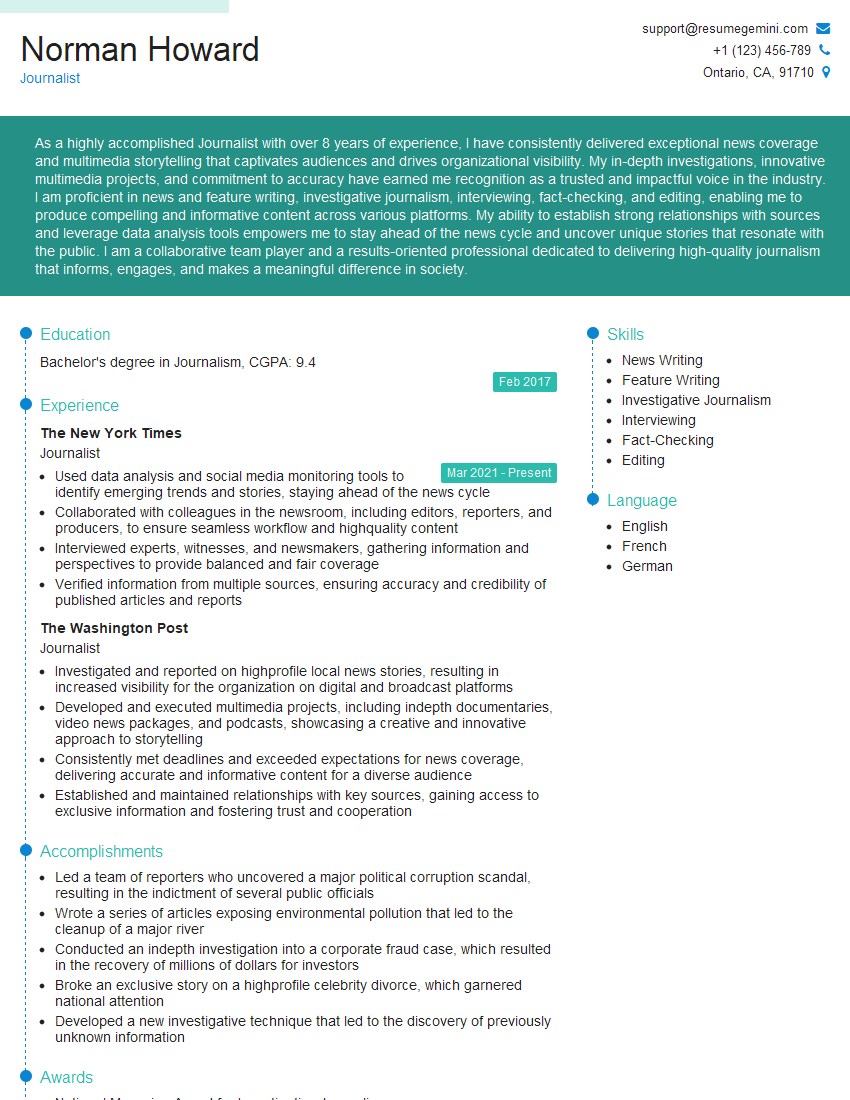
Journalist Resume Sample
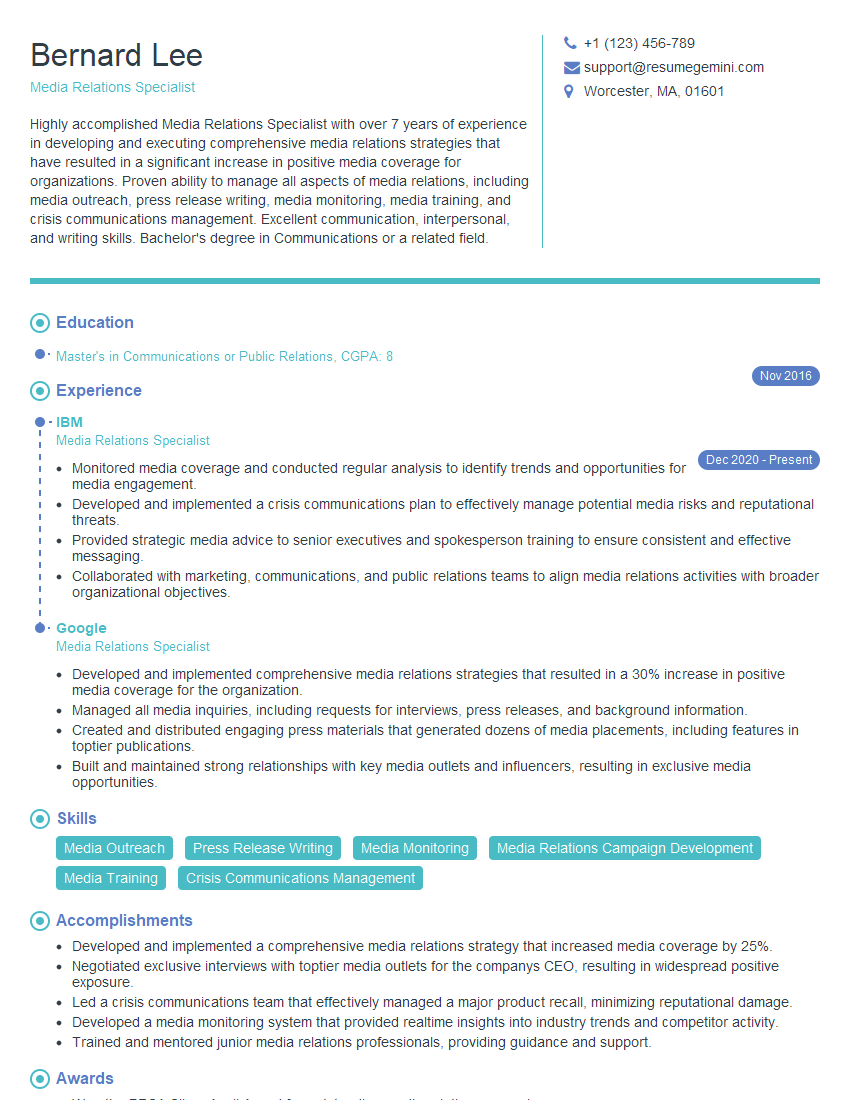
Media Relations Specialist Resume Sample
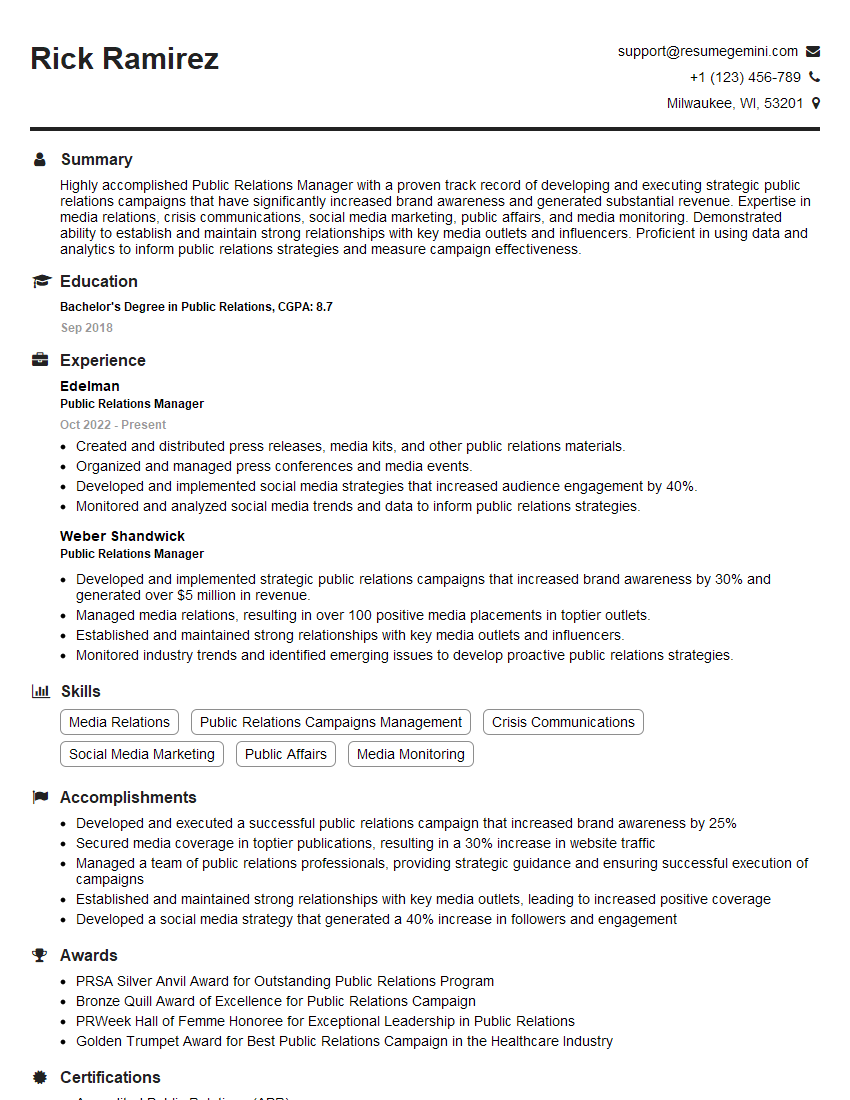
Public Relations Manager Resume Sample

Technical Writer Resume Sample

Copywriter Resume Sample
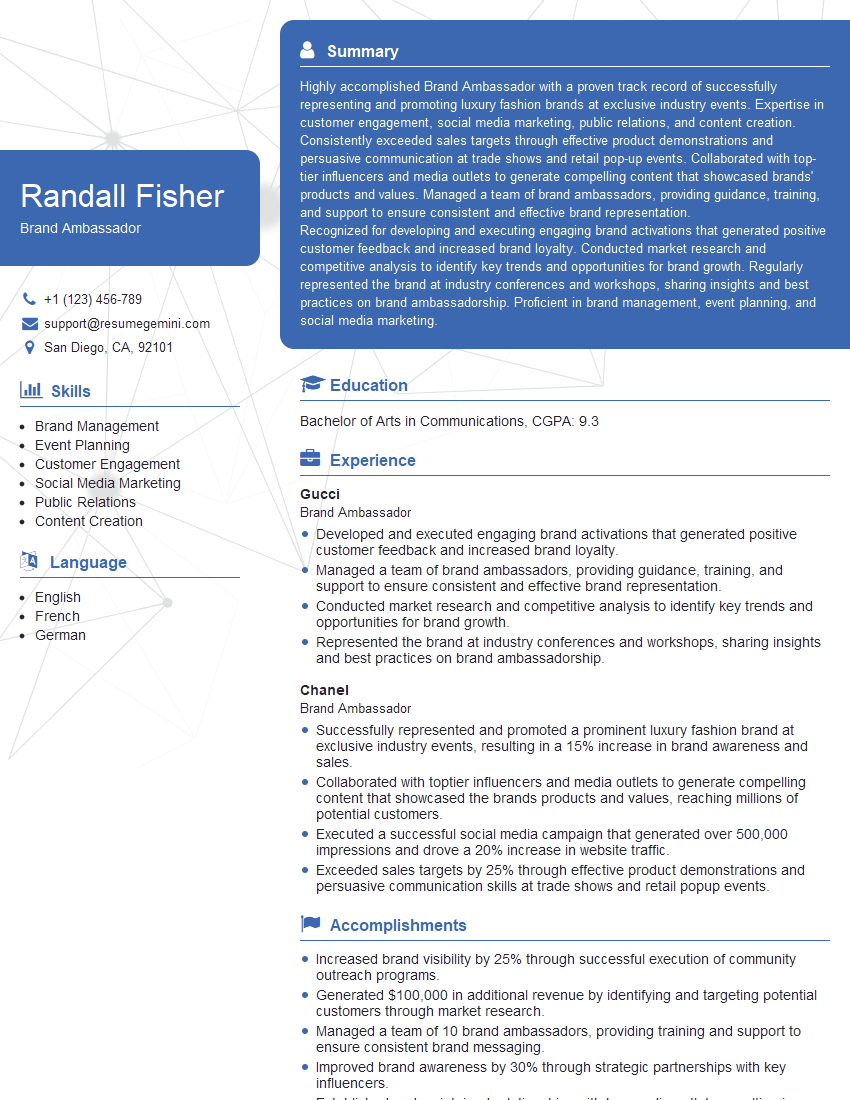
Brand Ambassador Resume Sample
Explore more articles
Users Rating of Our Blogs
Share Your Experience
We value your feedback! Please rate our content and share your thoughts (optional).
What Readers Say About Our Blog
To the interviewgemini.com Webmaster.
Very helpful and content specific questions to help prepare me for my interview!
Thank you
To the interviewgemini.com Webmaster.
This was kind of a unique content I found around the specialized skills. Very helpful questions and good detailed answers.
Very Helpful blog, thank you Interviewgemini team.