Interviews are more than just a Q&A session—they’re a chance to prove your worth. This blog dives into essential Radiation Detection interview questions and expert tips to help you align your answers with what hiring managers are looking for. Start preparing to shine!
Questions Asked in Radiation Detection Interview
Q 1. Explain the principles of ionizing radiation detection.
Ionizing radiation detection relies on the principle that when ionizing radiation (alpha, beta, gamma, or X-rays) interacts with matter, it ionizes atoms, creating ion pairs (electrons and positively charged ions). These ion pairs can be detected using various methods. The fundamental concept is to measure the effect of this ionization, which is proportional to the radiation’s energy and intensity. Imagine it like a ripple in a pond; the radiation is the rock thrown in, and the ionization is the expanding ripples, which we can measure.
Different detectors use different mechanisms to measure this ionization, from directly collecting the ions to detecting the light produced by the interaction of radiation with a scintillating material. The magnitude of the measured effect, like the size of the ripples, directly correlates with the strength of the radiation source.
Q 2. Describe different types of radiation detectors (e.g., Geiger-Müller counter, scintillation detector, ionization chamber).
Several types of radiation detectors exist, each with its strengths and weaknesses. Let’s explore three common ones:
- Geiger-Müller (GM) counter: This is a simple and robust detector that uses a gas-filled tube. Ionizing radiation entering the tube ionizes the gas molecules, creating an avalanche of ions, resulting in a measurable electrical pulse. It’s widely used for detecting the presence of radiation but is not highly precise in measuring radiation energy.
- Scintillation detector: These detectors use a scintillator material (like sodium iodide doped with thallium) that emits light when struck by ionizing radiation. A photomultiplier tube (PMT) converts this light into an electrical signal, providing information about both the presence and energy of the radiation. Think of it as a tiny flash of light, indicating a radiation event, whose intensity is proportional to the radiation energy. They’re excellent for spectroscopy (determining the energy distribution of the radiation).
- Ionization chamber: This detector directly measures the ionization produced by the radiation in a gas-filled chamber. The current produced is proportional to the radiation intensity. They’re known for their stability and ability to measure high radiation doses but are less sensitive than GM counters for low-level radiation detection. They are commonly used for radiation monitoring in high-radiation environments.
Q 3. What are the advantages and disadvantages of each detector type?
Here’s a comparison of the advantages and disadvantages:
- Geiger-Müller Counter:
- Advantages: Simple, robust, inexpensive, portable, high sensitivity for detecting even low levels of radiation.
- Disadvantages: Poor energy resolution (cannot differentiate between radiation types effectively), dead time (unable to detect multiple events close together), relatively low accuracy for quantitative measurements.
- Scintillation Detector:
- Advantages: Good energy resolution, high detection efficiency, can measure both the presence and the energy of radiation, suitable for spectroscopy.
- Disadvantages: More complex and expensive than GM counters, can be sensitive to environmental conditions (e.g., temperature), requires a high voltage power supply.
- Ionization Chamber:
- Advantages: High accuracy, good linearity (signal is proportional to dose), stable, can measure high radiation doses.
- Disadvantages: Low sensitivity for low-level radiation, less portable than GM counters.
Q 4. How do you calibrate and maintain radiation detection equipment?
Calibration and maintenance are crucial for accurate radiation measurements. Calibration involves comparing the detector’s readings to a known radiation source (usually a certified standard) to ensure accuracy. This process typically involves exposing the detector to a known radiation source and adjusting the instrument’s response to match the known value. Regular maintenance includes checking the detector’s high-voltage supply, gas pressure (for gas-filled detectors), and PMT performance (for scintillation detectors). Regular cleaning and inspection are also necessary to prevent dust accumulation or other issues that could affect the readings. A detailed service record should be maintained for each instrument, which will include all calibrations and maintenance steps, including the date, results, and any necessary corrections.
For example, a GM counter might be calibrated using a standardized gamma source, like Cobalt-60. The count rate from the source will be used to check and correct the detector’s sensitivity. If an issue is observed, it would lead to a more in-depth investigation for potential troubleshooting.
Q 5. Explain the concept of radiation shielding and its importance.
Radiation shielding is essential to reduce exposure to ionizing radiation, protecting individuals and equipment from harmful effects. It works by absorbing or scattering the radiation, reducing its intensity. The effectiveness of a shield depends on the type of radiation, the shielding material, and the thickness of the shield. Imagine it like a wall against a hail storm; a thin wall won’t stop all the hailstones, but a thick, sturdy wall will offer much better protection.
The importance of radiation shielding varies greatly depending on the radiation source’s strength and type and the radiation exposure levels. In scenarios involving high radiation levels, the protection of personnel becomes paramount, requiring adequate shielding measures to prevent radiation sickness or long-term health problems. Similarly, shielding sensitive equipment is essential to protect against damage due to radiation exposure.
Q 6. What are the different types of radiation shielding materials and their applications?
Several materials are used for radiation shielding, each with different properties and applications:
- Lead: Excellent for shielding gamma rays and X-rays due to its high atomic number. Commonly used in medical imaging facilities and nuclear power plants.
- Concrete: Cost-effective and readily available, offering good shielding for gamma rays and neutrons. Frequently used in nuclear reactor structures and radiation storage facilities.
- Water: Effective for neutron shielding. It’s used in nuclear reactors as a coolant and moderator as well as a radiation shield.
- Steel: Provides shielding for beta particles and low-energy gamma rays. Often used in combination with other materials in shielding designs.
- Polymers (e.g., polyethylene): Used to moderate fast neutrons. Often used in conjunction with other shielding materials to provide complete protection.
The choice of material depends on the type and energy of the radiation, the required level of attenuation, cost, and practical considerations.
Q 7. Describe the regulatory requirements for radiation safety in your area.
Regulatory requirements for radiation safety vary by location, but generally involve licensing, training, and operational procedures. For example, in many countries, organizations working with ionizing radiation must obtain licenses from the relevant regulatory body. Personnel working with radiation must undergo comprehensive training on radiation safety procedures, including safe handling, storage, and disposal of radioactive materials. Regular monitoring of radiation levels in the workplace is mandatory, along with strict adherence to safety protocols and emergency response plans. Accurate record-keeping, including radiation exposure levels for personnel, is crucial. Violations can result in severe penalties, including fines and legal action.
Specific regulations are often detailed within national or regional guidelines. These would dictate permissible exposure levels, required safety equipment, and reporting requirements for radiation incidents. Understanding and complying with these regulations is crucial for maintaining a safe working environment and preventing harm.
Q 8. How do you interpret radiation survey meter readings?
Interpreting radiation survey meter readings involves understanding the instrument’s units (usually counts per minute (CPM) or microsieverts per hour (µSv/h)), the background radiation level, and the meter’s sensitivity. Before taking any readings, you must establish a baseline—the background radiation level in the area. This is done by taking several readings in a location known to be free from radiation sources. Any readings significantly above this background level indicate the presence of a radiation source.
For example, if your background radiation is 10 CPM, and you measure 100 CPM near a specific object, you know there’s a significant source of radiation nearby. The difference (90 CPM) represents the radiation emanating from that object. Always remember to consider the type of radiation being measured (alpha, beta, gamma, or neutron) as different meters are designed to detect specific types of radiation.
It’s crucial to follow the manufacturer’s instructions for your specific meter, as calibration and proper usage are paramount for accurate readings. Reading the meter requires careful observation, recording of readings at multiple points and documenting any unusual readings.
Q 9. What are the units used to measure radiation (e.g., Becquerel, Gray, Sievert)?
Several units are used to measure different aspects of radiation. Let’s break them down:
- Becquerel (Bq): This unit measures the activity of a radioactive source—the number of nuclear decays per second. A higher Becquerel value indicates a more active source. For example, a 1 Bq source means one atom decays per second.
- Gray (Gy): This unit measures the absorbed dose of ionizing radiation. It quantifies the amount of energy deposited per unit mass of the absorbing material. One Gray equals one Joule of energy absorbed per kilogram of material. This measures the energy absorbed, not the biological effect.
- Sievert (Sv): This unit measures the equivalent dose, which takes into account the type of radiation and its biological effectiveness. It weighs the absorbed dose by a radiation weighting factor to account for different biological effects of various types of radiation. One Sievert represents a higher biological risk than one Gray.
Understanding the distinction between these units is crucial in radiation protection. The absorbed dose is a physical quantity, while the equivalent dose considers the biological impact.
Q 10. Explain the difference between absorbed dose and equivalent dose.
The difference between absorbed dose and equivalent dose lies in their consideration of biological effects.
- Absorbed dose (Gray) measures the energy deposited by ionizing radiation in a material, regardless of the type of radiation. It’s a physical quantity representing energy absorption.
- Equivalent dose (Sievert) considers both the absorbed dose and the type of radiation. Different types of radiation have different biological effects. For example, alpha particles cause more damage than gamma rays at the same absorbed dose. The equivalent dose accounts for this variation by using radiation weighting factors. This value is more relevant for assessing biological risks.
Imagine two people receiving the same amount of energy (absorbed dose) from radiation. If one is exposed to alpha particles and the other to gamma rays, the person exposed to alpha particles will likely suffer more severe biological damage, as reflected in the equivalent dose. This is why the Sievert is used for risk assessment in radiation protection.
Q 11. How do you calculate radiation exposure?
Calculating radiation exposure depends on the context. For simple scenarios involving external radiation, it might be straightforward, while complex scenarios require sophisticated modeling. For external exposure, we can use the following simplified formula:
Exposure = Dose Rate x Time
Where:
Exposureis typically measured in Sieverts (Sv).Dose Rateis measured in Sieverts per hour (Sv/h) or similar units and represents the intensity of radiation.Timeis the duration of exposure in hours.
Example: If a worker is exposed to a dose rate of 0.1 µSv/h for 8 hours, their exposure would be 0.8 µSv (0.1 µSv/h * 8 h = 0.8 µSv). For internal exposure, things are more complex. It is dependent on the radioactive material ingested, inhaled, or absorbed through the skin, its half-life, the amount and location where it was deposited in the body and factors such as the type of radioactive material, its chemical form, metabolic behavior in the body. In these cases, more complex biokinetic models are needed to estimate the radiation dose.
Q 12. What are the biological effects of ionizing radiation?
Ionizing radiation’s biological effects depend on several factors, including the type and energy of radiation, the dose, and the exposed tissue. The primary effect is the ionization of atoms within cells, potentially damaging DNA. This damage can lead to a range of outcomes:
- Acute Radiation Syndrome (ARS): High doses of radiation delivered over a short period can cause ARS, characterized by nausea, vomiting, fatigue, and potentially death. The severity depends on the dose received.
- Stochastic Effects: These are probabilistic effects that increase in likelihood with increasing radiation dose, such as cancer and hereditary effects. Even low doses can increase the risk, although the probability is low.
- Deterministic Effects: These effects have a threshold dose, meaning they only occur above a certain level of radiation exposure. Examples include skin burns, cataracts, and sterility. The severity increases with dose.
The body has mechanisms to repair some radiation damage, but extensive damage can overwhelm these repair systems, leading to the effects listed above.
Q 13. What are the safety procedures for handling radioactive materials?
Safety procedures for handling radioactive materials are stringent and vary based on the material’s activity and type. General principles include:
- Time: Minimize the time spent near radioactive sources.
- Distance: Increase the distance from the source; radiation intensity decreases rapidly with distance.
- Shielding: Use appropriate shielding materials (lead, concrete, etc.) to reduce radiation exposure.
- Containment: Keep radioactive materials in sealed containers to prevent dispersal.
- Personal Protective Equipment (PPE): Wear appropriate PPE, such as gloves, lab coats, and respirators, to prevent contamination.
- Monitoring: Regularly monitor radiation levels using survey meters and personal dosimeters.
- Training and Education: Personnel must receive thorough training on radiation safety procedures and handling techniques.
- Waste Disposal: Radioactive waste must be disposed of according to strict regulations.
All procedures must adhere to regulations and licensing requirements. Failure to comply can lead to severe health consequences and legal penalties.
Q 14. Explain the concept of ALARA (As Low As Reasonably Achievable).
ALARA, or As Low As Reasonably Achievable, is a fundamental principle of radiation protection. It emphasizes the importance of keeping radiation exposure as low as possible, while considering the feasibility and practicality of implemented safety measures. It’s not about eliminating all radiation exposure, which is often impossible, but about minimizing it to a level that balances protection and practicality.
This principle requires a risk assessment, considering the cost, benefit and feasibility of different radiation protection measures to optimize safety. For instance, consider replacing a piece of equipment that emits higher levels of radiation with a lower emission one. This might cost more, but it will minimize radiation exposure to the workers. If the cost is excessive and the risk is minimal, that trade-off might be acceptable, but careful justification must be in place. ALARA always guides us towards the best balance between effective radiation protection and feasibility.
Q 15. Describe your experience with radiation detection instrumentation.
My experience with radiation detection instrumentation spans over 15 years, encompassing a wide range of technologies. I’ve worked extensively with Geiger-Müller counters, ideal for detecting beta and gamma radiation, and their use in environmental monitoring and basic radiation surveys. I’m also proficient in using scintillation detectors, which offer higher sensitivity and energy resolution, particularly for identifying different radionuclides. These are frequently employed in nuclear medicine and research applications. Furthermore, I have experience with high-purity germanium (HPGe) detectors, known for their exceptional energy resolution, critical for complex isotopic analysis. My work has involved both portable and stationary systems, and I’m familiar with the data acquisition and analysis software associated with each.
For example, in a recent project involving environmental remediation, we used a network of Geiger-Müller counters to map radiation levels across a contaminated site, providing crucial data for cleanup efforts. In another project involving nuclear waste characterization, HPGe detectors played a pivotal role in identifying the specific radioactive isotopes present, informing safe disposal strategies.
Career Expert Tips:
- Ace those interviews! Prepare effectively by reviewing the Top 50 Most Common Interview Questions on ResumeGemini.
- Navigate your job search with confidence! Explore a wide range of Career Tips on ResumeGemini. Learn about common challenges and recommendations to overcome them.
- Craft the perfect resume! Master the Art of Resume Writing with ResumeGemini’s guide. Showcase your unique qualifications and achievements effectively.
- Don’t miss out on holiday savings! Build your dream resume with ResumeGemini’s ATS optimized templates.
Q 16. How do you identify and respond to radiation emergencies?
Responding to radiation emergencies requires a systematic approach. The initial step involves rapid assessment using portable radiation detection instruments to determine the type, magnitude, and extent of the radiation release. This helps define the affected area and the potential health risks. Next, we establish a perimeter to prevent further exposure and evacuate affected individuals. This is followed by contamination control measures, including decontamination of personnel and equipment. Throughout this process, communication is crucial. We collaborate with emergency response teams, health professionals, and regulatory agencies to coordinate efforts, provide accurate information, and implement appropriate remedial actions.
For instance, during a simulated nuclear accident drill, I led a team that successfully identified the source of radiation (a damaged transport container), established a safe zone using radiation detectors, and coordinated the evacuation of personnel. The careful application of these procedures ensured the safety of the public and first responders, highlighting the importance of a well-rehearsed emergency response plan.
Q 17. What are the common sources of background radiation?
Background radiation is the omnipresent radiation we’re constantly exposed to from natural sources. The primary contributors are cosmic rays from space, terrestrial radiation from naturally occurring radioactive materials in the soil and rocks (like uranium and thorium), and internally from the naturally occurring radioactive isotopes potassium-40 and carbon-14 present in our bodies.
Cosmic rays are more intense at higher altitudes, explaining why people living at higher elevations receive a slightly higher dose than those at sea level. Terrestrial radiation varies geographically depending on geological formations. For example, areas with high concentrations of granite often show higher background radiation levels. The internal radiation from potassium-40 and carbon-14 is a constant, low-level exposure, a natural part of being alive.
Q 18. Explain the process of radiation contamination control.
Radiation contamination control involves preventing the spread of radioactive materials. This starts with proper protective measures, including wearing personal protective equipment (PPE) like respirators, gloves, and protective clothing. Decontamination procedures are essential. This could involve washing down contaminated surfaces, using specialized cleaning agents, and employing vacuuming or other methods to remove radioactive particles. Careful disposal of contaminated materials is crucial, adhering to strict regulatory guidelines for radioactive waste management. Regular monitoring with radiation detection instruments ensures the effectiveness of decontamination efforts and confirms the safety of personnel and the environment.
For example, after a laboratory accident involving a spill of radioactive material, we followed strict protocols, including setting up a contamination control zone, using appropriate PPE, and implementing a thorough decontamination process. Regular monitoring confirmed the successful removal of contamination, ensuring the lab’s safe reopening.
Q 19. How do you ensure the accuracy of radiation measurements?
Ensuring the accuracy of radiation measurements involves a multi-pronged approach. First, regular calibration of instruments against traceable standards is essential. This ensures the instruments are providing accurate readings. Next, appropriate measurement techniques must be employed, considering factors like the type of radiation being measured, the geometry of the source and detector, and the background radiation levels. Quality control procedures are critical, including instrument checks, data validation, and the use of multiple detectors for cross-verification whenever possible. Finally, proper documentation of all procedures and results is vital for maintaining data integrity and traceability.
We routinely calibrate our radiation detectors using certified sources, and we maintain detailed records of these calibrations. We also participate in interlaboratory comparisons to verify the accuracy of our measurements against other accredited facilities. This rigorous approach ensures the reliability and accuracy of our radiation measurements.
Q 20. What are the limitations of radiation detection technologies?
Radiation detection technologies have limitations. The sensitivity of a detector is crucial; some detectors might not be able to detect very low levels of radiation. Different detectors have different energy resolutions; some might struggle to distinguish between different radionuclides. Detector efficiency varies; some radiation might not be detected at all, depending on the type of radiation and the detector’s design. Finally, environmental factors such as humidity and temperature can also affect measurements.
For example, a Geiger-Müller counter might be excellent for detecting the presence of radiation but may not be able to identify the specific isotopes present, which necessitates using a detector with better energy resolution. Similarly, the detection efficiency of a detector for neutrons is significantly different from its efficiency for gamma radiation.
Q 21. Describe your experience with radiation safety training programs.
I’ve been involved in developing and delivering radiation safety training programs for over a decade. My experience includes designing curricula, delivering lectures, and conducting practical training exercises. These programs cover a wide range of topics, from basic radiation physics and instrumentation to advanced topics such as radiation protection principles, emergency response procedures, and regulatory compliance. I focus on practical application, using real-world case studies and simulations to enhance learning and ensure trainees understand the importance of radiation safety practices.
For instance, I recently developed a new training program for technicians working with radioactive materials, emphasizing the proper use of personal protective equipment and the importance of following strict procedural guidelines. The program involved hands-on exercises simulating real-world scenarios, improving their ability to effectively manage radiation safety in the workplace.
Q 22. What is your understanding of radiation dosimetry?
Radiation dosimetry is the science and practice of measuring ionizing radiation exposure. It’s crucial for protecting individuals and the environment from the harmful effects of radiation. This involves measuring the amount, type, and distribution of radiation absorbed by a person or object. Think of it like measuring the temperature of a room – we need to know the ‘radiation temperature’ to understand potential risks.
Several techniques are used, including:
- Personal dosimetry: Using devices like film badges, thermoluminescent dosimeters (TLDs), and electronic personal dosimeters (EPDs) to monitor individual exposure over time. These are worn by workers in radiation-related fields.
- Environmental dosimetry: Measuring radiation levels in the environment using various detectors to assess background radiation and potential sources of contamination. This is important for assessing public health risks.
- Medical dosimetry: Precisely determining the radiation dose delivered during radiotherapy treatments to ensure effectiveness while minimizing side effects. This requires highly accurate calculations and sophisticated equipment.
The results are expressed in units like Sieverts (Sv) and Gray (Gy), representing the biological effect and absorbed dose, respectively. Proper dosimetry is essential for regulatory compliance, radiation safety programs, and accurate assessment of health risks.
Q 23. Explain your knowledge of radiation transport theory.
Radiation transport theory is the mathematical framework used to predict how radiation interacts with matter as it travels through a medium. It’s fundamentally important for designing radiation shielding, optimizing radiation therapy treatments, and assessing radiation risks in various applications. The theory uses complex equations to model processes like scattering, absorption, and emission of radiation particles.
Imagine throwing a ball into a crowd. The ball (radiation) will interact with people (matter) – some will catch it (absorption), some will deflect it (scattering), and the ball might lose energy during these interactions. Radiation transport theory provides the tools to mathematically describe this complex process.
Key methods include:
- Monte Carlo simulations: Statistical methods that use random sampling to simulate the individual interactions of radiation particles. This is extremely powerful for complex geometries and materials.
- Deterministic methods: These methods solve transport equations directly using numerical techniques like the Discrete Ordinates Method (DOM) or the Spherical Harmonics Method (PN). They are generally faster than Monte Carlo but less accurate for certain situations.
Understanding radiation transport theory is crucial for ensuring radiation safety in nuclear power plants, designing efficient radiation detectors, and developing effective radiation protection measures.
Q 24. Describe the different methods used for radiation waste management.
Radiation waste management involves the safe and responsible handling, treatment, storage, and disposal of radioactive materials. The methods employed depend heavily on the level of radioactivity and the physical form of the waste.
Common methods include:
- Volume reduction: Techniques like incineration, compaction, and melting reduce the volume of waste, making it easier and cheaper to manage.
- Treatment: Processes like chemical separation and vitrification (solidification into glass) stabilize the waste and reduce its leachability (ability to release radioactivity into the environment).
- Storage: Temporary or long-term storage in facilities designed to prevent leakage and exposure. This can include dry storage casks for spent nuclear fuel or underground repositories for high-level waste.
- Disposal: Permanent disposal in deep geological repositories for highly radioactive waste, ensuring isolation from the biosphere for thousands of years. This requires careful geological and hydrological studies to ensure long-term safety.
Each step is regulated stringently to minimize environmental impact and protect human health. The choice of method depends on the characteristics of the waste and the regulatory framework in place.
Q 25. How do you manage radiation safety records?
Radiation safety records are meticulously maintained to document radiation exposures, monitor compliance, and ensure worker safety. This involves a structured system encompassing several key elements.
My approach includes:
- Detailed record-keeping: Documenting individual radiation exposures from personal dosimeters, environmental monitoring, and any accidental exposures. This is often done through electronic databases.
- Regular audits: Periodic internal and external audits to ensure compliance with safety regulations and the effectiveness of the record-keeping system.
- Data analysis: Regular analysis of data to identify trends, potential issues, and areas for improvement in radiation safety practices.
- Secure storage: Secure electronic and physical storage of records, adhering to all relevant regulations regarding data privacy and security.
- Training and education: Providing thorough training to personnel on the proper handling and interpretation of radiation safety records.
The quality of these records is essential for demonstrating compliance, investigating incidents, and understanding long-term radiation exposure trends among workers.
Q 26. How do you assess and mitigate radiation risks?
Assessing and mitigating radiation risks involves a multi-step process employing the ALARA principle (As Low As Reasonably Achievable). This entails identifying potential sources of radiation, quantifying the associated risks, and implementing effective control measures.
The process typically follows these steps:
- Hazard identification: Identify all potential sources of radiation exposure, such as radioactive materials, X-ray equipment, or naturally occurring radiation.
- Risk assessment: Quantify the potential radiation doses to individuals and the environment. This requires understanding the radiation sources, exposure pathways, and potential health effects.
- Risk control: Implement appropriate control measures to minimize radiation exposure. These might include engineering controls (shielding, distance, time), administrative controls (work procedures, training), and personal protective equipment (PPE).
- Monitoring and evaluation: Continuously monitor radiation levels and worker exposures to ensure the effectiveness of control measures. Regularly review and update the risk assessment to reflect changes in operations or technology.
Effective risk management requires a thorough understanding of radiation physics, health effects, and regulatory requirements. It is an iterative process that requires continuous improvement and adaptation.
Q 27. Describe a situation where you had to troubleshoot a radiation detection issue. What was the problem, and how did you solve it?
During a routine survey at a research facility, a Geiger-Müller counter consistently registered unusually high readings in a specific area. Initial checks of the instrument indicated no malfunction. The problem was not immediately obvious.
My troubleshooting steps included:
- Systematic investigation: We carefully mapped the high-reading area to define its extent and identify possible sources.
- Source identification: We systematically checked for any unaccounted-for radioactive sources in the vicinity, including checking storage containers, examining recent experiments, and reviewing waste disposal logs.
- Instrument verification: Multiple Geiger-Müller counters and other radiation detection instruments were used to confirm the readings and rule out instrument error definitively.
- Background radiation check: Background radiation levels were compared with historical data to identify any significant increases.
- Contamination assessment: Swipes were taken to test for radioactive contamination on surfaces, instruments, and even clothing.
The high readings were eventually traced to a small, inadvertently misplaced vial containing a relatively high-activity radioactive isotope. It had been misfiled after an experiment several weeks earlier. The vial was properly secured, and the area was decontaminated.
Q 28. What are the latest advancements in radiation detection technology?
Advancements in radiation detection technology are continually improving the sensitivity, accuracy, and speed of detection, leading to better safety and security. Key advancements include:
- High-purity germanium (HPGe) detectors: Improved energy resolution for identifying specific radionuclides with greater precision.
- Miniaturized detectors: Smaller, more portable devices enabling wider applications and increased ease of deployment, even in hard-to-reach locations.
- Advanced scintillators: New materials with improved light output and faster decay times, allowing for faster and more sensitive detection.
- Digital signal processing: Improved data analysis techniques, enabling the extraction of more information from detector signals and increasing the accuracy of measurements.
- Artificial intelligence (AI) and machine learning (ML): Algorithms for automatic anomaly detection, pattern recognition, and data analysis, helping to improve efficiency and sensitivity.
- Radiation imaging techniques: Advanced techniques for three-dimensional imaging of radiation sources, such as Compton cameras, enhancing the ability to locate and characterize radioactive materials.
These advancements are leading to more effective radiation monitoring systems, improved security applications, and more efficient medical imaging techniques.
Key Topics to Learn for Radiation Detection Interview
- Types of Radiation: Understanding alpha, beta, gamma, and neutron radiation, their properties, and detection methods. This forms the foundational knowledge for the field.
- Detector Technologies: Familiarize yourself with various detector types like Geiger-Müller counters, scintillation detectors, semiconductor detectors (e.g., HPGe), and their respective strengths and limitations. Understanding their operational principles is crucial.
- Radiation Interactions with Matter: Grasp the fundamental processes by which radiation interacts with matter (ionization, excitation, scattering). This knowledge is essential for interpreting detector signals.
- Signal Processing and Data Acquisition: Learn about the electronic circuits and software used to process signals from radiation detectors and convert them into meaningful data. Understanding data acquisition techniques is vital for practical applications.
- Radiation Shielding and Safety: Understand the principles of radiation shielding and the safety precautions necessary when working with radioactive materials. This demonstrates a commitment to responsible practice.
- Applications of Radiation Detection: Explore diverse applications, including medical imaging, nuclear security, environmental monitoring, industrial gauging, and research. Highlighting your knowledge of specific applications showcases practical understanding.
- Data Analysis and Interpretation: Practice interpreting data from radiation detectors, including identifying sources of error and uncertainties in measurements. Proficiency in data analysis is highly valued.
- Troubleshooting and Problem Solving: Develop your ability to troubleshoot common issues in radiation detection systems and propose solutions to problems encountered in real-world scenarios. This demonstrates practical skills and adaptability.
Next Steps
Mastering radiation detection opens doors to exciting careers in various sectors, offering excellent growth potential and intellectual stimulation. A strong resume is your key to unlocking these opportunities. Creating an ATS-friendly resume that highlights your skills and experience is essential for getting noticed by recruiters. We highly recommend using ResumeGemini to build a professional and impactful resume. ResumeGemini provides a user-friendly platform and offers examples of resumes tailored to the Radiation Detection field to help you stand out from the competition.

Nuclear Engineer Resume Sample
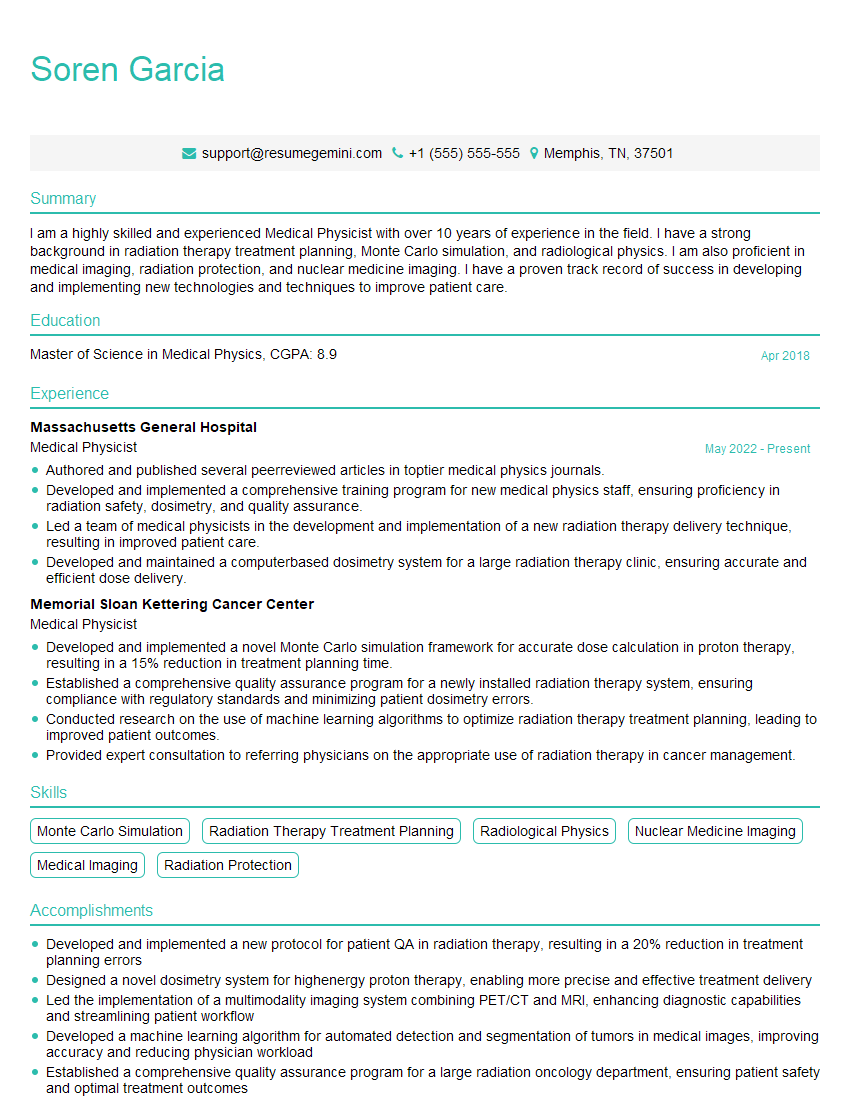
Medical Physicist Resume Sample

Health Physicist Resume Sample
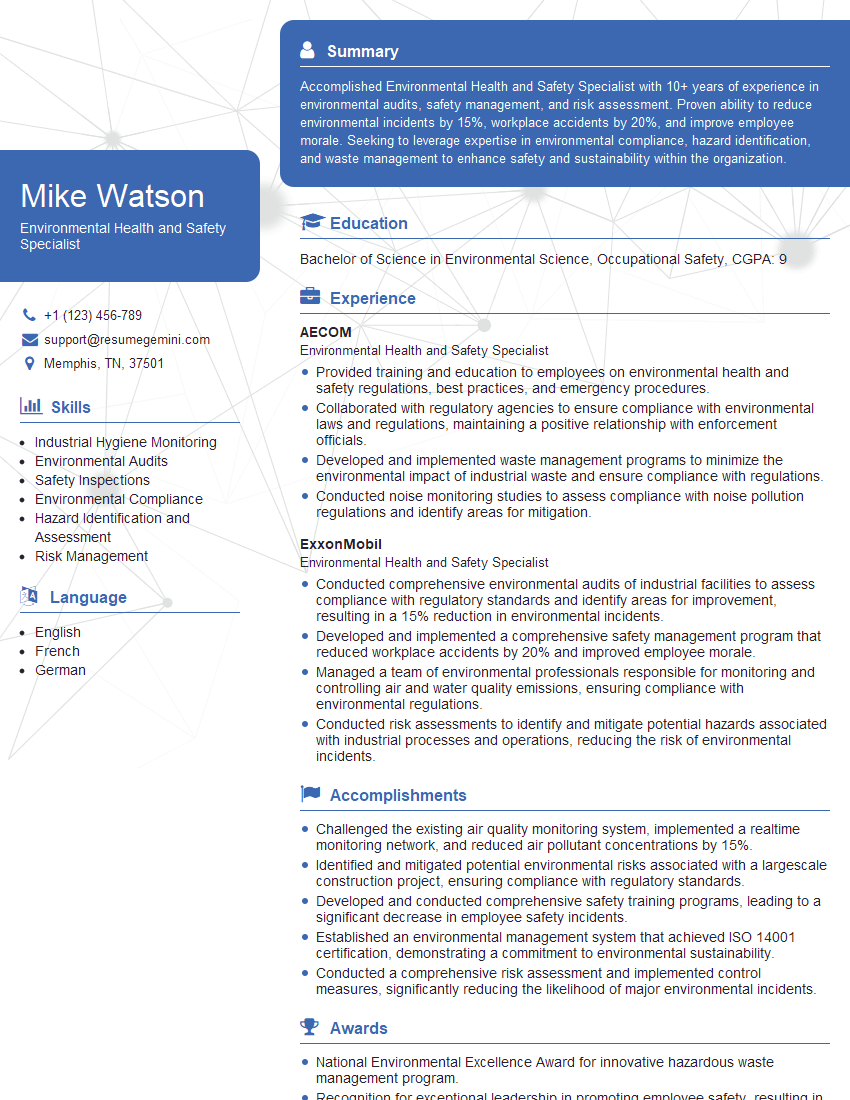
Environmental Health and Safety Specialist Resume Sample

Dosimetrist Resume Sample
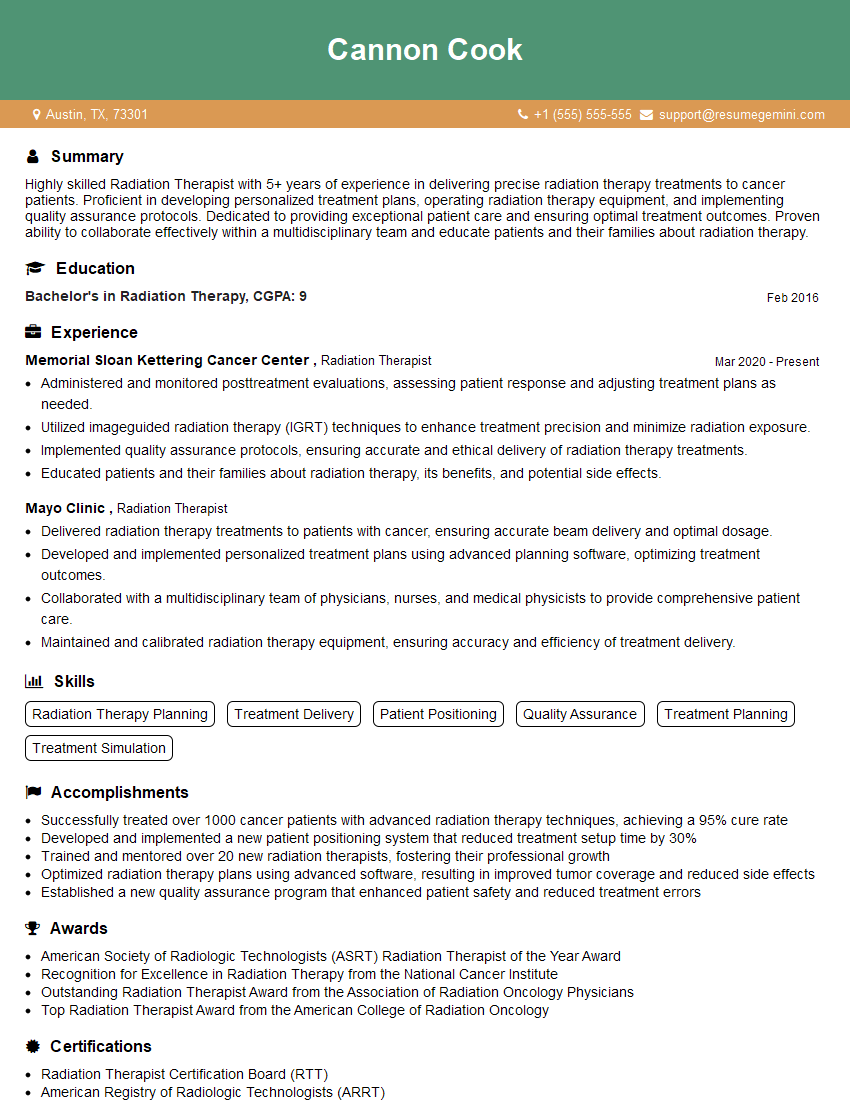
Radiation Therapist Resume Sample
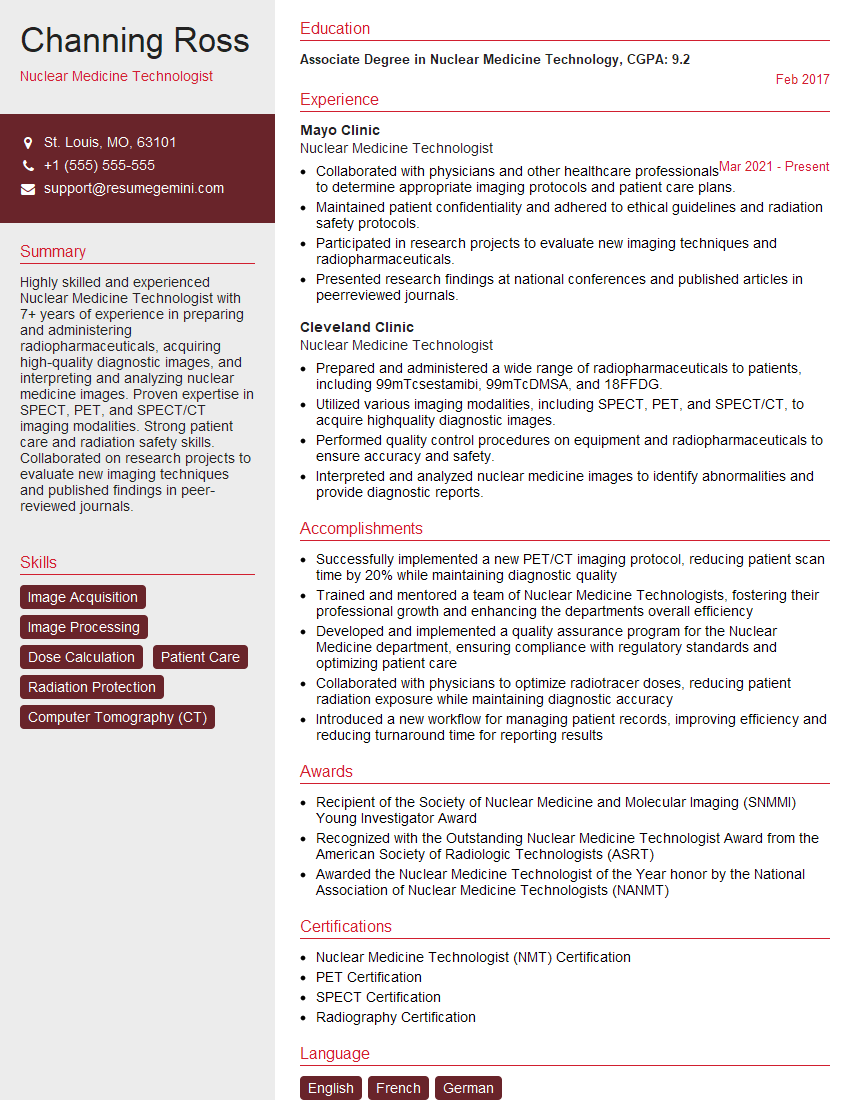
Nuclear Medicine Technologist Resume Sample

Radiation Safety Officer Resume Sample
Explore more articles
Users Rating of Our Blogs
Share Your Experience
We value your feedback! Please rate our content and share your thoughts (optional).
What Readers Say About Our Blog
To the interviewgemini.com Webmaster.
Very helpful and content specific questions to help prepare me for my interview!
Thank you
To the interviewgemini.com Webmaster.
This was kind of a unique content I found around the specialized skills. Very helpful questions and good detailed answers.
Very Helpful blog, thank you Interviewgemini team.