Interviews are more than just a Q&A session—they’re a chance to prove your worth. This blog dives into essential Radiation Measurement interview questions and expert tips to help you align your answers with what hiring managers are looking for. Start preparing to shine!
Questions Asked in Radiation Measurement Interview
Q 1. Explain the inverse square law and its application in radiation safety.
The inverse square law states that the intensity of radiation decreases proportionally to the square of the distance from the source. Imagine a light bulb: as you move farther away, the light intensity diminishes rapidly. Similarly, for a point source of radiation, if you double your distance, the radiation intensity drops to one-quarter. This is expressed mathematically as I1/I2 = (d2/d1)2, where I represents intensity and d represents distance.
In radiation safety, this law is crucial for distance-based protection. Working farther from a radioactive source significantly reduces your exposure. For example, if a radiation source delivers 100 mSv/hr at 1 meter, at 2 meters, the dose rate will be approximately 25 mSv/hr. This principle is fundamental in designing radiation shielding and establishing safe working distances around radioactive materials.
Q 2. Describe different types of radiation detectors and their operating principles.
Several types of radiation detectors exist, each operating on different principles:
- Geiger-Müller (GM) Counters: These are simple, robust detectors that detect ionizing radiation. When radiation enters the GM tube, it ionizes the gas inside, creating an electrical pulse. These pulses are counted, providing a measure of radiation activity. They are ideal for detecting alpha, beta, and gamma radiation, but lack energy discrimination.
- Scintillation Detectors: These detectors use a scintillating material that emits light when struck by radiation. A photomultiplier tube then converts this light into an electrical signal. Different scintillators offer varying sensitivities to different radiation types. They are often used for precise energy measurements and high-efficiency detection.
- Ionization Chambers: These measure the ionization created by radiation in a gas-filled chamber. They are typically used for high-dose-rate measurements and are very stable but have low sensitivity.
- Semiconductor Detectors: These utilize semiconductors like silicon or germanium. Radiation creates electron-hole pairs in the semiconductor, generating a measurable electrical signal. They offer excellent energy resolution, making them suitable for identifying different radioactive isotopes.
The choice of detector depends on the type of radiation being measured, the required sensitivity and energy resolution, and the application.
Q 3. What are the main methods for measuring radiation dose?
Radiation dose is measured using several methods, primarily focusing on:
- Personal Dosimetry: This uses devices like thermoluminescent dosimeters (TLDs) or optically stimulated luminescence (OSL) dosimeters, worn by individuals working with radiation. These devices measure the accumulated radiation dose received over a period.
- Area Monitoring: This involves using instruments like GM counters, ionization chambers, or scintillation detectors to measure the radiation levels in a specific area. These measurements are crucial for determining the radiation environment and ensuring worker safety.
- Direct Measurement using calorimetry: This is a very precise method that measures the amount of energy absorbed by a material using the heat it generates. It’s commonly used for standardizing radiation sources.
The choice of method depends on the context—personal exposure monitoring or environmental assessment.
Q 4. How do you calibrate radiation detection instruments?
Calibration of radiation detection instruments is essential to ensure accurate measurements. This typically involves using traceable radioactive sources with known activity and energy. The instrument’s response is compared against the known values of the calibration source. Calibration procedures vary depending on the instrument type, but generally involve:
- Source Selection: Choosing appropriate calibration sources with energies and activities relevant to the instrument’s intended use.
- Exposure Geometry: Ensuring consistent and reproducible geometry during the calibration process.
- Data Acquisition: Recording the instrument’s response to the calibration source, usually under various conditions.
- Comparison and Adjustment: Comparing the instrument’s readings to the known values of the calibration sources. If necessary, adjusting the instrument’s settings to match.
- Documentation: Maintaining detailed records of the calibration procedure, including date, source details, readings, and any adjustments made.
Regular calibration, typically annually or more frequently depending on usage and instrument type, is crucial to maintain accuracy and reliability.
Q 5. What are the safety regulations and procedures for handling radioactive materials?
Handling radioactive materials demands strict adherence to safety regulations and procedures. These vary depending on the material’s type and activity but typically include:
- ALARA Principle: As Low As Reasonably Achievable. This principle guides all practices to minimize radiation exposure.
- Time Minimization: Limiting the time spent near radioactive sources.
- Distance Maximization: Maintaining the maximum safe distance from sources.
- Shielding: Using appropriate shielding materials to reduce radiation exposure.
- Containment: Keeping radioactive materials securely contained to prevent spills or release.
- Personal Protective Equipment (PPE): Utilizing appropriate PPE, such as lead aprons, gloves, and respirators.
- Monitoring: Regular monitoring of radiation levels and individual dose.
- Waste Management: Proper disposal of radioactive waste according to regulatory guidelines.
Strict adherence to these procedures is crucial to prevent radiation exposure and protect the health of individuals and the environment.
Q 6. Explain the concept of half-life and its importance in radiation measurement.
Half-life is the time it takes for half of the radioactive atoms in a sample to decay. For example, if a radioactive source has a half-life of 10 years, after 10 years, half of the initial radioactive material will have decayed. After another 10 years, half of the remaining material will decay, and so on. This is an exponential decay process.
In radiation measurement, half-life is crucial for:
- Activity Determination: Knowing the half-life allows us to calculate the activity (decay rate) of a source at any given time.
- Safety Assessments: Understanding the half-life helps assess the long-term risks associated with radioactive materials. Longer half-lives mean the material remains radioactive for a much longer period.
- Waste Management: Half-life significantly influences the required storage time and disposal methods for radioactive waste.
For instance, knowing the half-life of 137Cs (approximately 30 years) is crucial for managing its long-term storage and disposal in nuclear waste facilities.
Q 7. Describe the different units used to measure radiation (e.g., Becquerel, Gray, Sievert).
Several units measure different aspects of radiation:
- Becquerel (Bq): This unit measures the activity of a radioactive source—the number of nuclear decays per second. 1 Bq represents one decay per second.
- Gray (Gy): This unit measures the absorbed dose—the amount of energy deposited per unit mass of material. 1 Gy represents 1 joule of energy absorbed per kilogram of tissue.
- Sievert (Sv): This unit measures the equivalent dose—a measure of the biological effect of radiation. It accounts for the different biological effectiveness of various radiation types. It is derived from the absorbed dose (Gy) and a radiation weighting factor, which considers the type of radiation and its biological impact. For example, 1 Gy of alpha particles has a much higher biological effect than 1 Gy of gamma rays.
Understanding these units is crucial to interpret radiation measurements accurately and assess potential health risks. For instance, a high absorbed dose (Gy) might translate into a high equivalent dose (Sv) depending on the radiation type, leading to higher health risks.
Q 8. How do you assess and mitigate radiation risks in a workplace?
Assessing and mitigating radiation risks in the workplace involves a multi-faceted approach emphasizing prevention, detection, and response. It begins with a thorough radiation survey to identify potential sources and exposure levels. This involves using instruments like Geiger counters and scintillation detectors to measure radiation dose rates.
Next, we implement engineering controls to minimize exposure. This could include shielding radiation sources with lead, concrete, or other appropriate materials; optimizing work processes to reduce time spent near radiation sources; and using remote handling techniques for radioactive materials. Administrative controls, such as implementing strict work procedures, providing specialized training, and establishing clear communication protocols, are crucial. Finally, personal protective equipment (PPE), like lead aprons and dosimeters, provides an extra layer of protection for workers in high-risk situations. Regular monitoring of worker dose using personal dosimeters is essential to ensure exposure remains below regulatory limits and to detect any potential overexposures promptly. A robust radiation safety program including regular training, drills, and incident reporting is paramount.
For example, in a nuclear medicine department, shielding around equipment is paramount, along with strict protocols for handling radioactive pharmaceuticals. In a research laboratory using radioactive isotopes, hoods and glove boxes are essential, complemented by meticulous waste handling procedures. Regular audits and reviews of the safety program are necessary to maintain efficacy.
Q 9. Explain the differences between alpha, beta, and gamma radiation.
Alpha, beta, and gamma radiation are all types of ionizing radiation, meaning they carry enough energy to remove electrons from atoms, potentially causing damage to living tissue. However, they differ significantly in their properties:
- Alpha radiation consists of two protons and two neutrons (a helium nucleus). It’s relatively large and heavy, making it highly ionizing but easily stopped by a sheet of paper or even the outer layer of skin. Alpha particles pose a significant internal radiation hazard if ingested or inhaled.
- Beta radiation consists of high-energy electrons or positrons. It’s more penetrating than alpha radiation, able to pass through several millimeters of aluminum or plastic. Beta particles present both external and internal radiation hazards.
- Gamma radiation is electromagnetic radiation (like X-rays, but higher energy). It’s highly penetrating, requiring thick shielding materials like lead or concrete to attenuate effectively. Gamma radiation presents a significant external radiation hazard.
Think of it like this: alpha is like a slow-moving bowling ball – easy to stop, but devastating if it hits you. Beta is like a fast baseball – harder to stop, but still manageable. Gamma is like a bullet – highly penetrating and requires substantial shielding.
Q 10. What are the common sources of background radiation?
Background radiation is the low-level radiation present in our environment from both natural and artificial sources. Natural sources include:
- Cosmic rays from outer space.
- Terrestrial radiation from radioactive elements in the soil and rocks (e.g., uranium, thorium, radon).
- Internal radiation from naturally occurring radioactive isotopes within our bodies (e.g., potassium-40).
Artificial sources contribute to background radiation as well, mainly from:
- Medical procedures (X-rays, nuclear medicine).
- Nuclear fallout from past atmospheric nuclear weapons testing.
- Nuclear power plants (though generally extremely low levels).
The level of background radiation varies geographically. Areas with high concentrations of radioactive minerals in the soil will experience higher background radiation levels than others. Understanding background radiation is crucial in radiation protection as it forms the baseline against which occupational exposures are measured.
Q 11. Describe different types of radiation shielding and their effectiveness.
Different materials effectively shield against different types of radiation. The choice of shielding depends on the type and energy of the radiation.
- Lead is excellent for shielding gamma and X-rays due to its high density. However, it offers limited protection against neutrons.
- Concrete is cost-effective and provides good shielding for gamma and X-rays, especially thicker layers. It’s also effective against beta radiation.
- Water is effective for shielding neutrons and gamma rays; its high hydrogen content effectively slows neutrons down.
- Steel is often used in combination with other shielding materials to provide structural support.
- Borosilicate glass is commonly used in neutron shielding as it has a high boron content which absorbs neutrons.
The thickness of the shielding required is directly related to the radiation’s energy and intensity. Higher-energy radiation requires thicker shielding. For example, a lead apron worn by a radiologist may be several millimeters thick to attenuate the X-rays used in medical imaging. Shielding around a nuclear reactor is significantly thicker, involving multiple layers of concrete and steel.
Q 12. How do you interpret radiation survey meter readings?
Interpreting radiation survey meter readings requires understanding the instrument’s units (usually µSv/h or mR/h) and its limitations. The reading represents the dose rate—the amount of radiation received per unit of time at the meter’s location. Several factors influence the readings:
- Distance from the source: Radiation intensity decreases rapidly with distance (inverse square law). A reading closer to a source will be much higher than one further away.
- Shielding: Shielding materials attenuate radiation, reducing the measured dose rate.
- Instrument calibration: Regular calibration is essential to ensure accurate readings.
- Background radiation: The instrument will always detect some background radiation, which needs to be subtracted from readings to obtain the net radiation dose from the source.
It’s crucial to follow the manufacturer’s instructions for operating and interpreting the instrument’s readings. Knowing the type of radiation being measured is essential, as different detectors are optimized for different radiation types. For instance, a Geiger-Müller counter is suitable for detecting beta and gamma radiation, while a specialized instrument may be necessary for alpha detection.
Q 13. What are the legal requirements for reporting radiation incidents?
Legal requirements for reporting radiation incidents vary by location and depend on the severity of the incident and the amount of radiation involved. In most countries, regulatory bodies such as the Nuclear Regulatory Commission (NRC) in the US or the equivalent in other nations mandate reporting. These incidents could range from minor spills of radioactive materials to major accidents involving significant radiation releases.
Typically, reports must include details such as the date, time, and location of the incident; the type and amount of radioactive material involved; the number and identity of individuals potentially exposed; the dose received by exposed individuals; and the measures taken to mitigate the incident. Failure to report significant radiation incidents can lead to severe penalties. There are specific thresholds for reporting depending on the exposure levels of individuals, levels of radioactive material released and the potential environmental impacts.
It’s critical to be familiar with all the applicable local, regional, and national regulations in your region regarding radiation safety and reporting requirements. These requirements are often found in official government publications or through your country’s radiation protection agency.
Q 14. What are the potential health effects of radiation exposure?
The potential health effects of radiation exposure depend on several factors, including the type and energy of the radiation, the dose received, and the duration of exposure. Low levels of radiation exposure may not cause any noticeable health effects. However, higher doses can cause a range of problems, including:
- Acute Radiation Syndrome (ARS): This occurs after high doses of radiation received over a short period. Symptoms can include nausea, vomiting, fatigue, and hair loss. Severe cases can lead to organ failure and death.
- Cancer: Radiation can damage DNA, increasing the risk of developing various cancers years or even decades after exposure.
- Genetic effects: High doses of radiation can cause mutations in germ cells (sperm and eggs), leading to genetic abnormalities in future generations.
- Other effects: Radiation exposure can cause cataracts, infertility, and other health problems.
The risk of developing health effects increases with increasing dose. The effects are usually stochastic (probabilistic), meaning the likelihood of an effect increases with dose, but there’s no threshold below which effects won’t occur. Deterministic effects, however, only appear once a specific threshold is exceeded.
Risk assessment and safety management are crucial to minimize the risk of health problems from radiation exposure. Always adhere to radiation safety procedures and guidelines.
Q 15. Explain the principles of radiation dosimetry.
Radiation dosimetry is the science and practice of measuring the dose of ionizing radiation received by individuals or objects. It’s crucial for assessing radiation exposure and its potential health effects. The fundamental principle revolves around measuring the energy deposited by ionizing radiation in a material – typically human tissue. This energy deposition is what causes biological damage.
Several methods exist. Direct measurement involves using devices like ionization chambers, Geiger-Müller counters, or thermoluminescent dosimeters (TLDs) to directly measure the radiation field. These devices respond to radiation, producing a signal proportional to the dose received. Indirect measurement, on the other hand, involves analyzing biological samples (e.g., blood samples) for indicators of radiation exposure. This can be used after an incident or over a longer period.
For example, a TLD works by storing energy in a crystal material when exposed to radiation. When heated, the crystal releases the stored energy as light, the intensity of which is proportional to the radiation dose. This light intensity is then precisely measured to determine the received dose.
Career Expert Tips:
- Ace those interviews! Prepare effectively by reviewing the Top 50 Most Common Interview Questions on ResumeGemini.
- Navigate your job search with confidence! Explore a wide range of Career Tips on ResumeGemini. Learn about common challenges and recommendations to overcome them.
- Craft the perfect resume! Master the Art of Resume Writing with ResumeGemini’s guide. Showcase your unique qualifications and achievements effectively.
- Don’t miss out on holiday savings! Build your dream resume with ResumeGemini’s ATS optimized templates.
Q 16. Describe the process of decontamination following a radiation spill.
Decontamination following a radiation spill is a crucial and potentially hazardous procedure requiring careful planning and execution. The process aims to reduce the level of radioactive contamination to safe levels, minimizing risks to personnel and the environment. It’s a multi-step process that needs to be tailored to the specific radioactive material involved, the extent of the spill, and the type of surface contaminated.
First, survey and assessment is done to determine the extent of contamination and the types of radiation involved using radiation monitoring equipment. Then, personnel protection is paramount – this includes protective clothing like respirators, gloves, and suits, as well as appropriate respiratory protection. The next step involves physical removal. This may involve sweeping, vacuuming, or washing the contaminated area with appropriate decontaminants. For difficult-to-remove contamination, techniques like chemical decontamination or abrasive blasting might be necessary. Finally, waste management of the contaminated materials needs to be done according to stringent regulations.
For instance, a spill of a liquid radioactive material might initially involve absorbing the liquid with absorbent materials, carefully collecting and packaging them as radioactive waste. Solid surfaces may be decontaminated using specific cleaning agents before being surveyed again to check efficiency. Proper documentation throughout the entire process is essential for tracking and auditing.
Q 17. How do you ensure the accuracy and reliability of radiation measurements?
Ensuring the accuracy and reliability of radiation measurements is paramount due to the potential health and safety implications. This requires a multi-pronged approach incorporating several key aspects.
- Calibration: Radiation measurement instruments must be regularly calibrated against traceable national or international standards. This ensures the readings are accurate and consistent.
- Quality Control: Implementing a robust quality control program involves regular checks of equipment function, performance testing, and maintenance. This includes using reference sources and proficiency testing.
- Proper instrument selection: Choosing the right instrument for the specific radiation type and energy levels is crucial. A Geiger-Müller counter is suitable for detecting beta and gamma radiation, but not alpha radiation.
- Environmental factors: Accounting for environmental factors that can affect measurements (e.g., temperature, humidity) is also important. Many instruments have temperature compensation, but this needs verification.
- Data analysis: Accurate data analysis, considering uncertainties and error propagation, is essential for drawing meaningful conclusions from the measurement.
For example, a facility regularly using a Geiger-Müller counter should ensure its calibration is checked annually against a standardized source. This calibration will verify the instrument’s accuracy and ability to correctly detect and measure radiation levels.
Q 18. Explain the concept of ALARA (As Low As Reasonably Achievable).
ALARA, which stands for ‘As Low As Reasonably Achievable,’ is a fundamental principle in radiation protection. It emphasizes minimizing radiation exposure to individuals and the environment to levels that are as low as practical, while considering economic and social factors. It’s not about eliminating all radiation exposure, which is often impossible, but about minimizing it to a level where the risk is justified by the benefits of the activity.
ALARA is implemented through a combination of strategies, including:
- Time: Minimizing the time spent in radiation areas reduces the exposure.
- Distance: Increasing the distance from the radiation source significantly reduces the dose received since radiation intensity decreases with the square of the distance.
- Shielding: Using appropriate shielding materials (e.g., lead, concrete) to absorb radiation before it reaches individuals.
For example, in a nuclear power plant, ALARA principles are applied by optimizing the design of shielding around nuclear reactors, using remote-controlled operations to minimize worker exposure near radiation sources, and implementing strict time limits for personnel working in radiation areas.
Q 19. Describe different types of radiation monitoring equipment.
A variety of radiation monitoring equipment exists, each designed for specific applications and radiation types.
- Geiger-Müller (GM) counters: These are widely used for detecting beta and gamma radiation. They are relatively inexpensive and easy to use, but less accurate for precise dosimetry.
- Ionization chambers: These provide more accurate measurements of radiation dose, especially at higher dose rates. They are used in various applications including radiation therapy and environmental monitoring.
- Proportional counters: These offer better energy resolution compared to GM counters, allowing for the identification of different radiation types.
- Scintillation detectors: These detectors use scintillating materials that emit light when interacting with radiation. The light is then detected by a photomultiplier tube, providing a signal proportional to the radiation energy. They are widely used in nuclear medicine and high-energy physics.
- Thermoluminescent dosimeters (TLDs): These are passive detectors that store energy from radiation exposure. When heated, they emit light, which is measured to determine the received dose. They are often used for personnel dosimetry.
- Neutron detectors: Specific detectors are used for measuring neutron radiation, such as Boron-lined proportional counters or Helium-3 detectors, which are crucial in nuclear reactor monitoring and research applications.
The choice of equipment depends on the type of radiation being measured, the required accuracy, and the application. For example, a nuclear medicine facility might utilize scintillation detectors for imaging, while a radiation safety officer might employ TLDs for personnel monitoring.
Q 20. How do you manage radioactive waste?
Radioactive waste management is a critical aspect of radiation safety and environmental protection. It involves a complex process of handling, storing, and disposing of radioactive materials to prevent environmental contamination and protect human health. The management strategy depends heavily on the level of radioactivity and the physical form of the waste.
Low-level waste (LLW), which contains small amounts of radioactivity, might be compacted, solidified, and disposed of in near-surface landfills designed specifically for radioactive waste. Intermediate-level waste (ILW), with higher activity, often requires more complex treatment, such as cementation or vitrification (encapsulation in glass), before being disposed of in engineered facilities. High-level waste (HLW), the most hazardous, from spent nuclear fuel and other high-activity sources, requires long-term storage or geological disposal in deep underground repositories. The goal is to isolate the waste from the biosphere for many thousands of years.
Each step involves strict regulatory oversight and adherence to safety protocols. The processes also focus on minimizing waste generation through improved techniques and recycling where possible. For example, spent nuclear fuel is initially stored in pools at nuclear power plants and then eventually transferred to dry storage facilities before a long-term solution, like deep geological disposal, is employed.
Q 21. What is the difference between ionizing and non-ionizing radiation?
The key difference between ionizing and non-ionizing radiation lies in their ability to ionize atoms. Ionizing radiation has enough energy to remove electrons from atoms, creating ions. This ionization can damage biological molecules, potentially leading to health problems. Examples include alpha, beta, gamma, and X-rays, and neutron radiation.
Non-ionizing radiation, on the other hand, does not have enough energy to ionize atoms. Instead, it can excite electrons to higher energy levels, but it generally does not directly cause ionization. Examples include ultraviolet (UV) radiation, visible light, infrared (IR) radiation, microwaves, and radio waves. While non-ionizing radiation generally poses lower health risks, prolonged or high-intensity exposure to certain types, such as UV radiation, can still have adverse effects.
The impact of ionizing radiation on biological systems is much more significant due to its ability to directly damage DNA, leading to mutations and potentially cancer. Non-ionizing radiation’s effects are typically thermal, heating up the tissue, though intense UV radiation can also cause cellular damage, albeit by a different mechanism.
Q 22. Explain the principles of radiation protection.
Radiation protection hinges on the ALARA principle: As Low As Reasonably Achievable. It’s about minimizing exposure to ionizing radiation to protect human health and the environment. This is achieved through a combination of three basic protective measures:
- Time: Reducing the time spent near a radiation source drastically reduces exposure. Think of it like sunbathing – the longer you stay out, the more sunburnt you get.
- Distance: Increasing the distance from a radiation source significantly decreases exposure. Radiation intensity follows an inverse square law: doubling the distance reduces exposure to one-quarter.
- Shielding: Using appropriate shielding materials (like lead, concrete, or water) absorbs radiation, preventing it from reaching personnel. This is like using sunscreen to protect your skin from the sun.
These measures are applied strategically based on the type and intensity of the radiation source, the potential exposure pathways, and the specific regulatory requirements.
Q 23. How do you perform a radiation survey?
A radiation survey involves systematically measuring radiation levels in a specific area using appropriate instruments. The process depends on the type of radiation being measured (alpha, beta, gamma, neutron) and the suspected source. A typical survey might involve these steps:
- Planning: Defining the scope of the survey, identifying potential radiation sources, and selecting the appropriate instruments.
- Instrument Calibration and Selection: Ensuring the instruments are properly calibrated and choosing detectors appropriate for the expected radiation types and energy levels. For example, a Geiger-Müller counter is suitable for gamma radiation detection, while a scintillation detector is better for more precise measurements and identification of specific isotopes.
- Measurement: Systematically scanning the area with the selected instruments, recording measurements at designated points, and noting any anomalies.
- Data Analysis: Analyzing the collected data to identify areas of high radiation levels, pinpoint potential sources, and assess any potential risks.
- Reporting: Documenting the survey methodology, results, and any recommendations for mitigation.
Safety precautions, like wearing personal protective equipment (PPE) where appropriate, are paramount throughout the survey.
Q 24. Describe the process of radiation exposure assessment.
Radiation exposure assessment involves determining the amount of ionizing radiation received by an individual or group. This crucial process uses various techniques and data to estimate the absorbed dose and resulting potential health effects. Key aspects include:
- Dosimetry: Using personal dosimeters (e.g., thermoluminescent dosimeters (TLDs), optically stimulated luminescence (OSL) dosimeters) to measure individual radiation exposure. These devices record cumulative radiation doses over time.
- Environmental Monitoring: Measuring radiation levels in the environment (air, water, soil) to assess potential exposure pathways. This might involve using various detectors and sampling methods.
- Bioassays: Analyzing biological samples (blood, urine) to detect the presence of radioactive materials in the body. This provides an indication of internal radiation exposure.
- Computational Modeling: Using computer simulations to model radiation transport and predict dose distributions, particularly in complex scenarios.
The assessment process aims to provide accurate estimates of exposure, compare these to regulatory limits, and evaluate any potential health risks. This information then informs appropriate protective actions.
Q 25. What are the limitations of different radiation detection methods?
Each radiation detection method has limitations. For example:
- Geiger-Müller counters: While simple and portable, they lack energy discrimination, meaning they can’t differentiate between different types of radiation or energy levels. They also have a relatively high detection threshold and provide limited information on the radiation source.
- Scintillation detectors: Offer better energy resolution than Geiger-Müller counters, allowing identification of isotopes and better quantification of radiation energy, but they are often more expensive and complex to operate.
- Ionization chambers: Excellent for high-dose-rate measurements, but they lack the sensitivity for low-level radiation detection.
- Proportional counters: Provide better energy resolution than Geiger-Müller counters but are less robust and more sensitive to environmental factors.
The choice of detection method depends entirely on the specific application and the nature of the radiation being measured. Understanding the limitations of each method is crucial for accurate and reliable results.
Q 26. How do you ensure the safety of personnel during radiation work?
Ensuring personnel safety during radiation work requires a multi-layered approach, combining administrative controls, engineering controls, and personal protective equipment (PPE). These measures should be strictly enforced, regularly reviewed, and adapted to changing conditions:
- Administrative Controls: Developing and implementing clear radiation safety procedures, providing thorough training, establishing a robust radiation safety program, and maintaining accurate records.
- Engineering Controls: Employing distance, shielding, and time limitations to reduce exposure. This might include designing work areas with shielding materials, implementing robotic systems for handling radioactive materials, and limiting access to radiation areas.
- Personal Protective Equipment (PPE): Using appropriate PPE, such as lead aprons, gloves, and respirators, to minimize exposure. Regular inspection and maintenance of PPE are critical.
- Monitoring and Dosimetry: Providing and regularly reviewing personal dosimeters to track individual radiation exposure.
- Emergency Response Plan: A comprehensive plan must be in place to address any potential radiation accidents or emergencies, ensuring swift and effective response.
Regular safety audits and training ensure adherence to safety protocols and adapt procedures as needed to maintain a safe working environment.
Q 27. Describe a situation where you had to troubleshoot a radiation measurement problem. What was your approach?
During a project involving environmental monitoring near a nuclear power plant, we encountered unexpectedly high readings from a specific gamma spectrometry system. Our initial troubleshooting steps were:
- Verification of Calibration: First, we verified that the instrument was properly calibrated and functioning correctly using a certified radiation source.
- Background Radiation Check: We conducted a thorough background radiation check to eliminate environmental factors as the cause of the high readings.
- Instrument Diagnostics: We performed diagnostic checks on the detector and associated electronics to identify any possible malfunctions.
- Sample Analysis Review: We reviewed the sample preparation and analysis procedures to ensure no errors had been introduced.
- Data Validation: The data was re-examined to ensure consistency and exclude any statistical outliers.
It turned out that a faulty component in the spectrometer’s high-voltage supply was causing the elevated readings. Replacing this component solved the problem. This situation highlighted the importance of methodical troubleshooting, systematic data review, and reliance on verified equipment.
Q 28. Explain your understanding of radiation regulations and standards (e.g., NRC, IAEA).
My understanding of radiation regulations and standards, such as those established by the Nuclear Regulatory Commission (NRC) in the US and the International Atomic Energy Agency (IAEA), centers around the principle of radiation protection, minimizing exposure while permitting beneficial uses of radiation sources. These regulations cover a wide range of aspects, including:
- Licensing and Permitting: The use of radioactive materials and radiation-producing devices usually requires licenses or permits, ensuring that operations meet safety standards.
- Exposure Limits: Clear limits are set for radiation exposure to workers and the public, establishing acceptable dose levels. These vary based on factors like occupation and age.
- Safety Standards: Detailed safety standards and guidelines must be followed in the design, construction, operation, and decommissioning of radiation facilities and the handling of radioactive materials.
- Emergency Preparedness: Regulations dictate the need for comprehensive emergency response plans to address potential accidents or incidents involving radioactive materials.
- Waste Management: Strict guidelines are imposed on the storage, handling, and disposal of radioactive waste to prevent environmental contamination.
Staying updated with these regulations and standards, and understanding the applicable laws for any specific location, is essential for ensuring compliance and protecting both personnel and the environment.
Key Topics to Learn for Radiation Measurement Interview
- Radiation Detection Principles: Understanding the fundamental mechanisms behind various radiation detectors (e.g., Geiger-Müller counters, scintillation detectors, ionization chambers). Explore their strengths and limitations in different applications.
- Radiation Measurement Units and Calculations: Mastering the use of units like Becquerel (Bq), Gray (Gy), Sievert (Sv), and their interconversions. Practice calculations involving activity, dose, and exposure.
- Radiation Shielding and Safety: Familiarize yourself with different shielding materials and their effectiveness against various types of radiation. Understand radiation safety protocols and regulations.
- Spectroscopy Techniques: Learn about gamma-ray spectroscopy and its applications in identifying radionuclides. Understand the principles of energy resolution and peak analysis.
- Data Analysis and Interpretation: Develop skills in analyzing radiation measurement data, identifying sources of error, and drawing meaningful conclusions. Practice interpreting spectral data and calculating statistical uncertainties.
- Practical Applications: Explore the diverse applications of radiation measurement in fields like nuclear medicine, environmental monitoring, industrial gauging, and security.
- Troubleshooting and Problem Solving: Prepare to discuss common challenges encountered in radiation measurement and your approaches to troubleshooting equipment malfunctions or unexpected results.
Next Steps
Mastering radiation measurement opens doors to exciting and impactful careers in diverse sectors. A strong understanding of these principles is crucial for securing your dream role. To significantly boost your job prospects, create a professional, ATS-friendly resume that highlights your skills and experience effectively. ResumeGemini is a trusted resource to help you build a compelling resume tailored to the specific requirements of Radiation Measurement positions. Examples of resumes tailored to this field are available to guide you through the process.

Nuclear Engineer Resume Sample
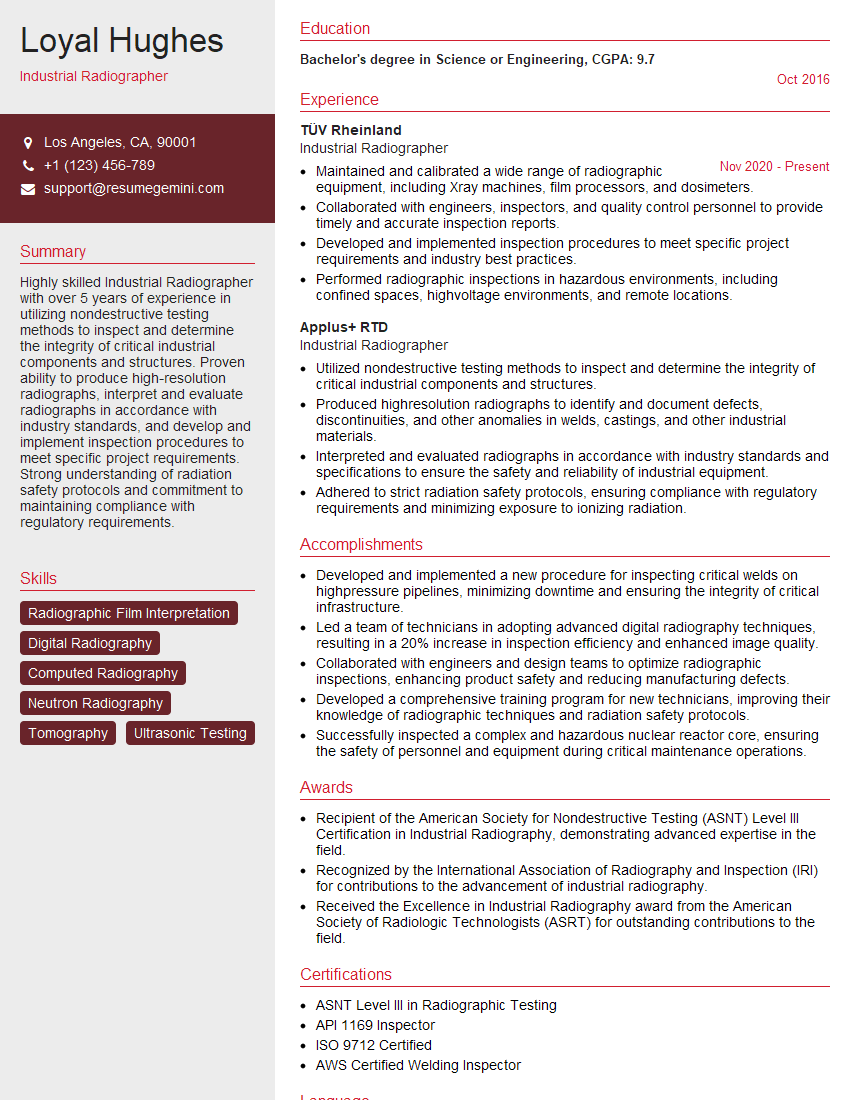
Industrial Radiographer Resume Sample
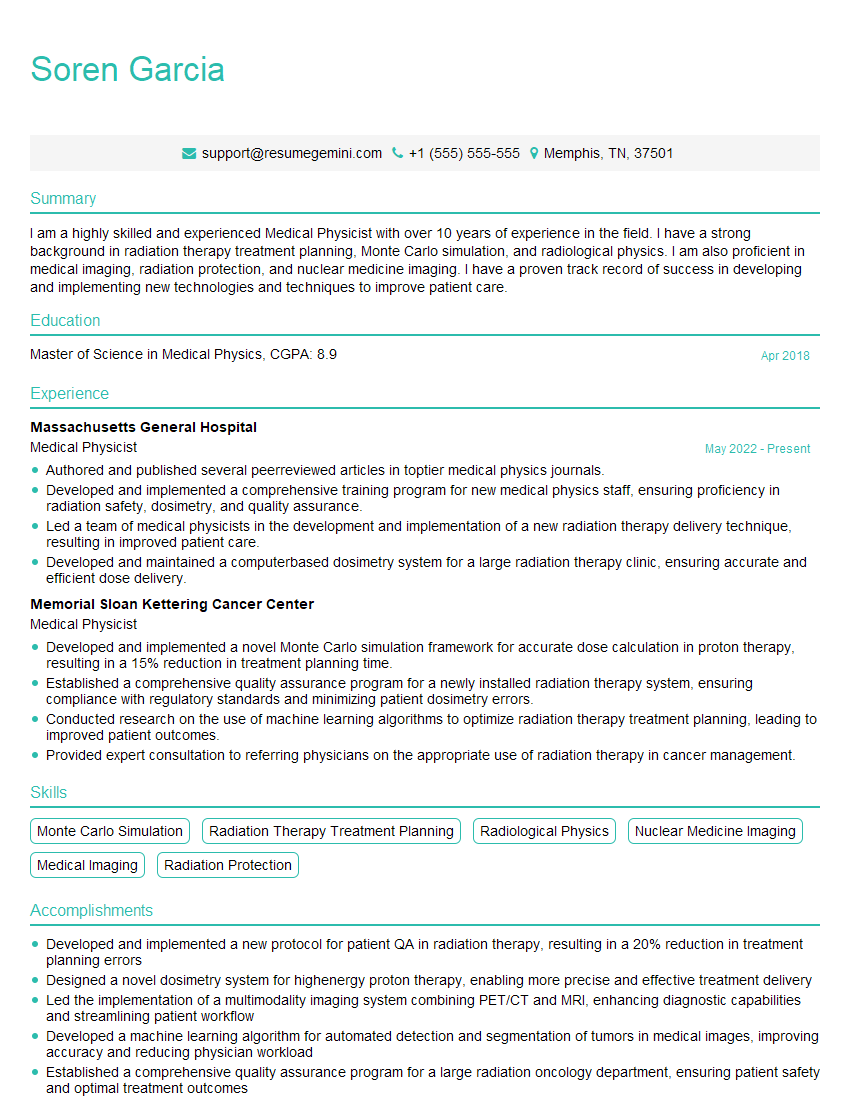
Medical Physicist Resume Sample

Health Physicist Resume Sample

Dosimetrist Resume Sample
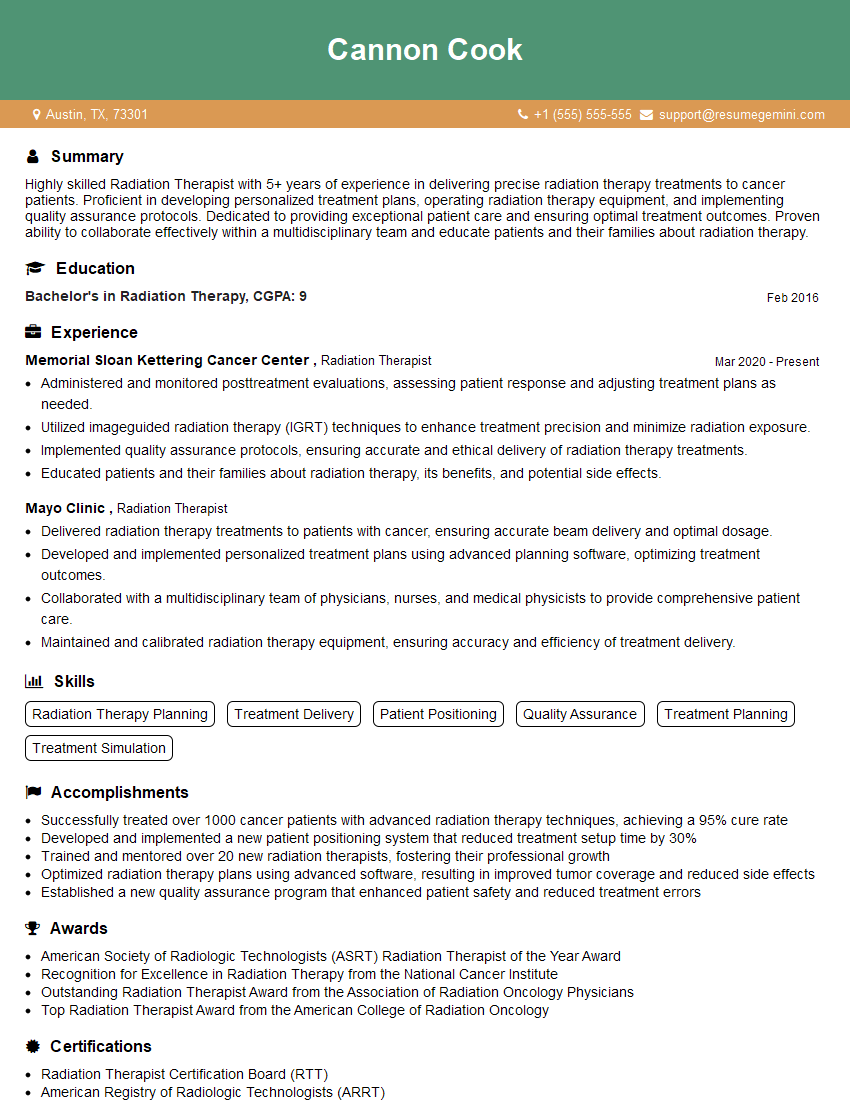
Radiation Therapist Resume Sample
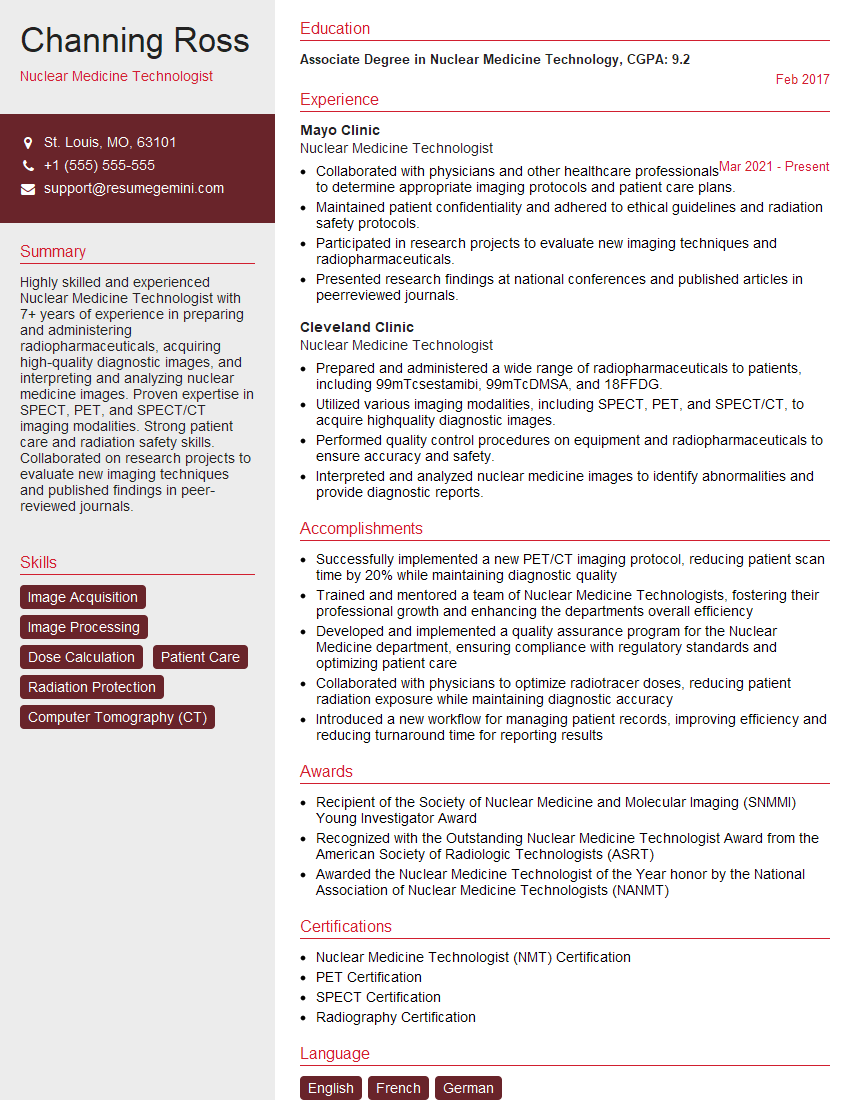
Nuclear Medicine Technologist Resume Sample

Radiation Safety Officer Resume Sample
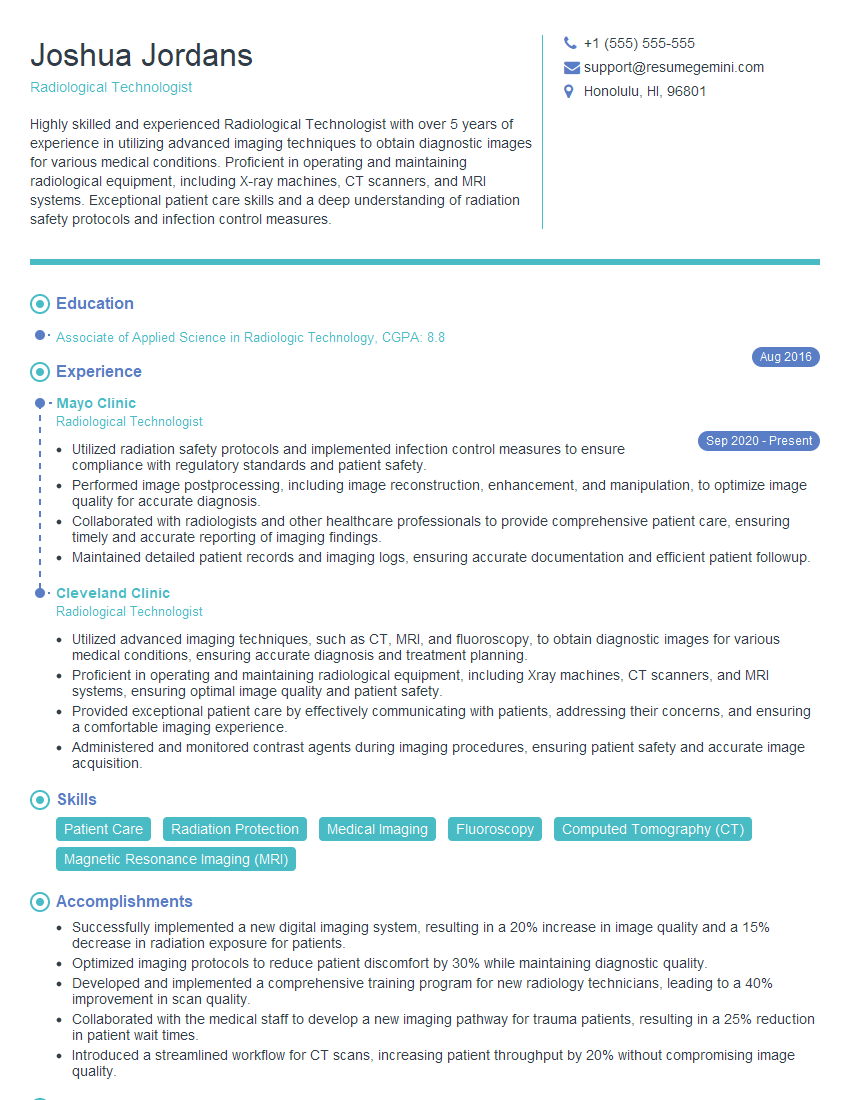
Radiological Technologist Resume Sample
Explore more articles
Users Rating of Our Blogs
Share Your Experience
We value your feedback! Please rate our content and share your thoughts (optional).
What Readers Say About Our Blog
To the interviewgemini.com Webmaster.
Very helpful and content specific questions to help prepare me for my interview!
Thank you
To the interviewgemini.com Webmaster.
This was kind of a unique content I found around the specialized skills. Very helpful questions and good detailed answers.
Very Helpful blog, thank you Interviewgemini team.