Are you ready to stand out in your next interview? Understanding and preparing for Radiation Safety in Nuclear Medicine interview questions is a game-changer. In this blog, we’ve compiled key questions and expert advice to help you showcase your skills with confidence and precision. Let’s get started on your journey to acing the interview.
Questions Asked in Radiation Safety in Nuclear Medicine Interview
Q 1. Describe the ALARA principle and its application in Nuclear Medicine.
The ALARA principle, which stands for As Low As Reasonably Achievable, is a fundamental tenet of radiation safety. It dictates that all radiation exposure should be kept as low as possible, taking into account social and economic factors. In Nuclear Medicine, this means we meticulously optimize procedures to minimize patient and staff dose while still achieving diagnostic or therapeutic goals.
For example, in a PET scan, ALARA principles are applied by using the lowest possible injected dose of radiotracer that still produces diagnostically useful images. We also utilize shielding, distance, and time optimization to reduce exposure during handling and administration.
Another example is using collimators on gamma cameras to focus the detected radiation, reducing scatter and improving image quality while minimizing unnecessary radiation exposure to the patient.
Q 2. Explain the different types of radiation used in Nuclear Medicine.
Nuclear Medicine utilizes various types of ionizing radiation, primarily gamma rays, beta particles, and positrons.
- Gamma rays are high-energy photons emitted by radioactive nuclei. They are used in many diagnostic procedures, such as SPECT and gamma camera imaging, because they can penetrate tissues and be detected outside the body.
- Beta particles are high-energy electrons or positrons emitted during radioactive decay. They have lower penetration power than gamma rays and are often used in therapeutic applications, such as brachytherapy (internal radiation therapy) where a sealed radioactive source is placed near or within a tumor.
- Positrons are antimatter counterparts of electrons. In PET (Positron Emission Tomography) scans, a positron-emitting radiotracer is injected into the patient. The positron annihilates with an electron, producing two gamma rays that are detected to create an image.
The choice of radiation type depends on the specific diagnostic or therapeutic application and its characteristics regarding penetration depth, tissue interaction, and imaging capabilities.
Q 3. What are the regulatory requirements for handling radioactive materials in your state/country?
Regulatory requirements for handling radioactive materials vary by country and state/province. However, generally, they involve strict licensing procedures, comprehensive safety protocols, and regular inspections. For example, in many jurisdictions, personnel handling radioactive materials must be appropriately trained and certified. Detailed record-keeping is mandatory, tracking the acquisition, use, and disposal of all radioactive materials. Facilities must also adhere to strict radiation safety standards, including proper shielding, monitoring equipment, and waste management procedures. Violations can result in significant penalties, including fines and suspension or revocation of licenses. The specific regulations are often defined by bodies like the Nuclear Regulatory Commission (NRC) in the USA or equivalent organizations in other countries.
Q 4. How do you calculate radiation exposure?
Radiation exposure is calculated using several factors: the activity of the source (measured in Becquerels or Curies), the time of exposure, the distance from the source, and the shielding used. The basic formula is often simplified to:
Exposure = Activity × Time × (1/Distance²) × Shielding FactorThis formula highlights the inverse square law: the intensity of radiation decreases proportionally to the square of the distance from the source. Shielding factors reduce the exposure by absorbing radiation. To obtain a precise calculation, sophisticated dosimetry systems and techniques are used. These include personal dosimeters (e.g., thermoluminescent dosimeters or TLDs) which are worn by radiation workers, and area monitors that measure radiation levels in specific areas.
For example, if a radiation worker spends 1 hour near a source with an activity of 10 mCi, the distance is doubled, and a lead shield is used, we could potentially reduce exposure substantially. The actual calculation requires incorporating specific shielding and other factors which are detailed in dosimetry protocols.
Q 5. What are the safety precautions for handling radioactive waste?
Radioactive waste handling requires stringent safety measures to prevent environmental contamination and protect personnel. Waste is categorized according to its level of radioactivity (low-level, intermediate-level, and high-level). Low-level waste, such as contaminated gloves or wipes, might be stored for decay before disposal according to local regulations. Intermediate and high-level waste, such as used radiopharmaceuticals or contaminated equipment, requires more specialized handling and often long-term storage in dedicated facilities designed for safe containment. This often involves specialized containers, shielding, and monitoring to ensure safe transport and disposal. All procedures must be rigorously documented, and strict adherence to all regulations and protocols is paramount.
Q 6. Describe different types of radiation detectors used in Nuclear Medicine.
Several radiation detectors are used in Nuclear Medicine. The choice depends on the type of radiation, energy, and the application:
- Geiger-Müller counters: Simple, portable detectors, ideal for detecting beta and gamma radiation but not energy-specific.
- Scintillation detectors: Employ a scintillator crystal that converts radiation into light, which is then detected by a photomultiplier tube. These are highly sensitive and commonly used in gamma cameras and PET scanners for accurate energy measurement.
- Ionization chambers: Measure the ionization produced by radiation, useful for measuring higher radiation levels, often found in area monitors.
- Semiconductor detectors: High-resolution detectors providing accurate energy measurement for various radiation types. Used in spectroscopy applications.
Each detector has specific advantages and limitations, and selecting the appropriate instrument is crucial for effective and safe radiation monitoring.
Q 7. Explain the concept of half-life and its importance in radiation safety.
Half-life is the time it takes for half of the radioactive atoms in a sample to decay. It’s a crucial concept in radiation safety because it dictates how long a radioactive material remains hazardous. For instance, a radioisotope with a short half-life will decay quickly, reducing its radiation intensity substantially over time, while a long half-life implies a longer period of significant radiation hazard. In Nuclear Medicine, we choose radiotracers with appropriate half-lives: short enough for the procedure to be completed with minimal radiation exposure, but long enough to perform the imaging or treatment effectively. Knowing the half-life allows us to calculate the remaining activity of a radioactive source after a certain time, aiding in safe handling and disposal planning.
For example, Technetium-99m, a commonly used radioisotope in Nuclear Medicine, has a half-life of about 6 hours. This means after 6 hours, half of its initial activity will have decayed, and after 12 hours, only a quarter will remain, allowing for relatively safe handling after a short period. Conversely, longer half-life isotopes need more specialized shielding and handling measures.
Q 8. What are the common shielding materials used for radiation protection?
The choice of shielding material for radiation protection in nuclear medicine depends on the type and energy of the radiation. We primarily deal with gamma rays and x-rays, which are high-energy electromagnetic radiation. Effective shielding necessitates materials with high atomic numbers and densities, which are better at absorbing these energetic photons.
- Lead: Lead (Pb) is a classic choice due to its high atomic number (82) and density. It’s commonly used in shielding for gamma rays and x-rays, often found in lead aprons, collimators, and storage containers.
- Concrete: Concrete is a cost-effective and readily available shielding material, particularly useful for higher-energy gamma rays. The density and thickness of concrete are adjusted depending on the radiation source’s energy.
- Tungsten: Tungsten (W) boasts a very high atomic number (74) and is employed in applications requiring thinner, yet effective, shielding, such as in collimators for imaging systems.
- Steel: Steel, although less effective than lead, concrete, or tungsten, can also offer some shielding, particularly for lower energy gamma rays and beta particles. It is often used in structural components where shielding is secondary to other considerations.
The thickness of the shielding material is crucial; it’s directly proportional to the energy of the radiation and inversely proportional to the density of the material. For instance, shielding a higher-energy gamma emitter requires thicker lead shielding compared to shielding a lower-energy emitter.
Q 9. How do you perform a radiation survey?
A radiation survey is a systematic measurement of radiation levels in a specific area. Its goal is to identify and quantify radiation exposure risks, ensuring compliance with regulatory limits and protecting personnel.
The procedure typically involves using a radiation detection instrument, such as a Geiger-Müller counter or a scintillation survey meter, to measure radiation levels. The surveyor meticulously scans the area, taking readings at various locations and documenting them. This process allows the surveyor to build a radiation map of the area, pinpointing areas of higher radiation intensity.
- Instrument Calibration: Before the survey, the instrument is rigorously calibrated using standardized sources to ensure its accuracy.
- Systematic Scanning: The survey is conducted systematically, ensuring the whole area is covered thoroughly, including potential hidden sources of radiation.
- Background Radiation: Background radiation levels are measured to subtract from the readings in the surveyed area, leading to precise measurements of the radiation of interest.
- Documentation: All measurements are precisely recorded, along with the time, date, location, and instrument used. This documentation is crucial for regulatory compliance and future reference.
Imagine it like a metal detector at an airport; we systematically sweep the area to detect any anomalies, but instead of metals, we are looking for radiation above background levels.
Q 10. What are the personal protective equipment (PPE) requirements for working with radioactive materials?
Personal Protective Equipment (PPE) for handling radioactive materials is crucial for minimizing radiation exposure. The specific PPE depends on the type and activity of the radioactive material, but common items include:
- Lead Aprons: These aprons, made of lead or lead-equivalent materials, provide shielding from scattered radiation during procedures involving gamma and x-ray emitters.
- Thyroid Shields: These collars protect the thyroid gland from radiation exposure during procedures like thyroid scans or therapy.
- Gloves: Gloves made of nitrile or latex provide a barrier between the hands and radioactive materials, preventing contamination.
- Eye Protection: Goggles or face shields offer protection for the eyes from radiation exposure.
- Film Badges or Dosimeters: These devices measure the amount of radiation exposure a worker receives. They are worn to monitor radiation levels and track accumulated dose.
The use of PPE should always be combined with adherence to ALARA (As Low As Reasonably Achievable) principles. For instance, even with shielding, we should maintain a safe distance from the radioactive sources and minimize exposure time.
Q 11. Explain the concept of effective dose equivalent.
Effective dose equivalent (often represented as E) is a measure of the overall biological harm caused by ionizing radiation. It considers not only the type and energy of the radiation but also the sensitivity of different organs and tissues to radiation damage. Unlike absorbed dose (measured in Gray, Gy), which simply quantifies the energy deposited in tissue, effective dose considers the varying radio-sensitivity of organs.
For example, the lens of the eye is far more sensitive to radiation damage than the skin. The effective dose accounts for this difference by weighting the absorbed dose in each organ by a radiation weighting factor (wR) that reflects the biological effectiveness of that radiation type, and a tissue weighting factor (wT) that represents the relative radiosensitivity of the organ or tissue.
The calculation is expressed as: E = Σ wT × wR × DT, where DT is the absorbed dose in a particular tissue T. The unit for effective dose is the Sievert (Sv).
Effective dose is a critical parameter in radiation protection, allowing us to compare the risks from different radiation exposures and to manage radiation safety effectively. It assists in setting exposure limits and optimizing radiation protection measures for workers in nuclear medicine.
Q 12. What are the emergency procedures in case of a radiation spill?
Emergency procedures for a radiation spill vary depending on the type and quantity of spilled material but generally follow these steps:
- Evacuation: Immediate evacuation of personnel from the affected area is the first priority. This prevents further exposure and contamination.
- Containment: The spill should be contained as quickly and safely as possible. This often involves using absorbent materials to soak up the spill and preventing its spread.
- Decontamination: Decontamination of affected individuals and equipment is performed using appropriate methods, such as washing with soap and water or using specialized decontamination solutions.
- Monitoring: Radiation levels are monitored extensively before, during, and after cleanup to ensure that the area is safe. This helps guide the decontamination process and verify its effectiveness.
- Waste Disposal: All contaminated materials are handled according to regulatory guidelines and safely disposed of as radioactive waste.
- Notification: The appropriate authorities (regulatory bodies, emergency responders) are notified about the spill, and a detailed report is prepared after the event.
Proper training and regular emergency drills are essential for effective response to such incidents. We need to know where the emergency supplies are, understand decontamination procedures, and have a designated emergency contact person.
Q 13. How do you ensure proper disposal of radioactive waste?
Proper disposal of radioactive waste is crucial for protecting public health and the environment. The process depends on the type and activity of the radioactive waste. It’s strictly regulated and requires adherence to stringent guidelines.
- Waste Classification: Radioactive waste is classified according to its activity levels and half-life. This classification determines the appropriate disposal method.
- Packaging and Labeling: Waste is packaged securely in containers that meet regulatory requirements. Containers are carefully labeled with relevant information, including the type and activity of the waste.
- Storage and Transportation: Waste is stored securely, often in specially designed facilities, until it is transported to a licensed disposal facility. Transportation follows strict safety regulations and uses specialized containers.
- Disposal Methods: Disposal methods vary depending on the waste’s characteristics. Low-level waste may be buried in designated landfills, while higher-level waste requires more specialized disposal approaches, such as deep geological repositories.
Following these procedures ensures that the radioactive waste does not pose a threat to human health or the environment. Failure to comply with regulations can lead to severe penalties and environmental damage.
Q 14. What are the legal and ethical responsibilities of a radiation safety officer?
A Radiation Safety Officer (RSO) has significant legal and ethical responsibilities to ensure the safe handling and use of radioactive materials. Legally, the RSO is responsible for compliance with all applicable radiation safety regulations and standards. These responsibilities include:
- Developing and Implementing Safety Programs: The RSO creates and implements radiation safety programs, including training protocols, emergency plans, and waste management strategies.
- Monitoring Radiation Levels: Regular radiation surveys and monitoring of personnel exposure are conducted to ensure compliance with regulations.
- Record Keeping: Meticulous records of radiation exposure, waste disposal, and safety procedures are maintained.
- Training and Education: The RSO provides training to personnel on radiation safety procedures and the use of radiation equipment.
- Regulatory Reporting: The RSO is responsible for reporting radiation incidents and maintaining regulatory compliance.
Ethically, the RSO has a responsibility to prioritize the safety of all individuals who may be exposed to radiation, taking all reasonable steps to minimize exposure. This includes honest and transparent communication about potential risks and responsible handling of radioactive materials, demonstrating respect for the health and well-being of others above all else. Ultimately, the ethical responsibility of an RSO is to uphold the highest standards of radiation safety, ensuring the protection of both workers and the public.
Q 15. Explain the concept of time, distance, and shielding in radiation protection.
The principles of Time, Distance, and Shielding (TDS) are fundamental to radiation protection. They represent the three primary ways to reduce radiation exposure. Think of it like this: the less time you spend near a radiation source, the less radiation you’ll absorb; the farther away you are, the weaker the radiation becomes; and shielding blocks or absorbs radiation, further reducing your exposure.
- Time: Reducing the duration of exposure directly minimizes the radiation dose. For example, a nuclear medicine technologist performing a short procedure with a radioactive source receives less radiation than one who performs a lengthy procedure. The relationship is directly proportional: half the time, half the dose.
- Distance: Radiation intensity decreases rapidly with increasing distance from the source. This follows the inverse square law: doubling the distance reduces the radiation intensity to one-fourth. So, moving even a short distance away from a radiation source significantly reduces exposure. In a nuclear medicine department, this is why technicians use long-handled tools when handling radioactive materials.
- Shielding: Various materials effectively attenuate (reduce) radiation. Lead is commonly used in nuclear medicine because of its high density and effectiveness at absorbing gamma rays and X-rays. Concrete and other dense materials are also used for shielding. The thickness and type of shielding depend on the type and energy of the radiation being shielded. For instance, thicker lead shielding is needed for high-energy gamma rays compared to lower-energy ones. Proper shielding is critical in minimizing stray radiation in imaging rooms and storage areas.
Career Expert Tips:
- Ace those interviews! Prepare effectively by reviewing the Top 50 Most Common Interview Questions on ResumeGemini.
- Navigate your job search with confidence! Explore a wide range of Career Tips on ResumeGemini. Learn about common challenges and recommendations to overcome them.
- Craft the perfect resume! Master the Art of Resume Writing with ResumeGemini’s guide. Showcase your unique qualifications and achievements effectively.
- Don’t miss out on holiday savings! Build your dream resume with ResumeGemini’s ATS optimized templates.
Q 16. Describe the different types of radiation monitoring devices.
Radiation monitoring devices are crucial for ensuring worker safety and environmental protection in nuclear medicine. They measure different types of radiation and provide quantitative data on radiation levels. Here are some examples:
- Geiger-Müller (GM) counters: These are portable instruments that detect ionizing radiation. They are simple to use and provide a rapid indication of radiation levels, although they don’t provide precise energy measurements. They’re often used for quick surveys.
- Scintillation detectors: These detectors use a scintillating crystal that produces light when radiation interacts with it. The light is then converted into an electrical signal, which is proportional to the energy of the radiation. Scintillation detectors are more sensitive and provide better energy resolution than GM counters. They are commonly used in radiation protection monitoring and for measuring activity of radioactive sources.
- Ionization chambers: These are used for measuring higher radiation levels, often used to calibrate other instruments. They are more accurate and less susceptible to damage than GM counters at high radiation doses.
- Personal dosimeters (e.g., thermoluminescent dosimeters (TLDs), optically stimulated luminescence (OSL) dosimeters): These are worn by radiation workers to measure their cumulative radiation exposure over a period of time (usually a month). TLDs store energy in a crystalline material and release it as light when heated. OSL dosimeters use light to stimulate the release of stored energy. These devices provide a more precise measurement of individual exposure.
Q 17. How do you interpret radiation monitoring results?
Interpreting radiation monitoring results requires understanding the units of measurement (like microsieverts (µSv) or millisieverts (mSv) for dose and counts per minute (cpm) for activity), the type of radiation measured, and the context of the measurement. Results must be compared to regulatory limits and established safety guidelines. For example:
- Elevated readings from a survey meter near a radioactive source indicate a potential radiation hazard, requiring actions to reduce exposure such as increased distance or additional shielding.
- High readings on a personal dosimeter might necessitate an investigation into the cause, such as a procedural error or equipment malfunction. Such readings trigger further review of the worker’s radiation practices and may require corrective actions.
- Readings within acceptable limits on both survey meters and personal dosimeters confirm that radiation protection measures are effective and workers are adequately protected.
Any deviations from expected values require careful evaluation and appropriate action to ensure continued safety. This might involve reviewing procedures, modifying equipment, or providing additional training.
Q 18. What is the role of a radiation safety committee?
The Radiation Safety Committee (RSC) is a crucial body responsible for overseeing and ensuring the safety of radiation practices within a nuclear medicine facility or institution. Its role encompasses several key areas:
- Developing and implementing radiation safety policies and procedures: The RSC creates comprehensive guidelines for handling radioactive materials, performing procedures, and managing radiation waste, ensuring compliance with all applicable regulations.
- Training and education: The RSC is responsible for ensuring that all staff receive adequate radiation safety training, including appropriate refresher courses.
- Radiation safety program oversight: The RSC regularly reviews the radiation safety program, monitors radiation levels, and evaluates the effectiveness of safety measures, identifying areas for improvement.
- Incident investigation: The RSC investigates any incidents or accidents involving radiation exposure to determine the cause and implement corrective actions to prevent future occurrences.
- Regulatory compliance: The RSC ensures that the facility complies with all relevant national and international radiation safety regulations.
In essence, the RSC acts as a watchdog, ensuring that radiation practices are safe and compliant. Its effectiveness relies on the commitment and expertise of its members.
Q 19. What are the potential biological effects of radiation exposure?
The biological effects of radiation exposure depend on several factors: the type and energy of the radiation, the dose received, and the duration of exposure. Effects can range from mild to severe, including:
- Stochastic effects: These effects are probabilistic; their probability of occurrence increases with dose, but their severity is independent of dose. Examples include cancer and genetic mutations. Even small doses have a theoretical risk, though at low doses the risk is very small.
- Deterministic effects: These effects have a threshold dose below which they do not occur. The severity of these effects increases with increasing dose. Examples include radiation burns (skin erythema), radiation sickness (nausea, vomiting, fatigue), and cataracts. These are generally associated with high-dose exposures.
The body’s response to radiation depends on its ability to repair damaged cells. Most cellular damage is repaired without any lasting effects, but some damage may persist, leading to long-term consequences. The human body is remarkably resilient to radiation, but reducing exposure is paramount to minimizing any risk.
Q 20. Describe the different types of radiation licenses.
The specific types of radiation licenses vary depending on the country and regulatory authority. However, generally, licenses categorize the use of radioactive materials based on their activity, type, and intended use. Common categories include:
- Specific licenses: These licenses are granted for specific uses of radioactive materials, such as the use of radiopharmaceuticals in nuclear medicine. They often involve stringent requirements for safety, security, and training.
- Broad licenses: These licenses cover a wider range of activities involving smaller quantities of radioactive materials. Requirements are generally less stringent than specific licenses.
- Exemptions: Some uses of radioactive materials may be exempt from licensing requirements entirely, provided they meet specific criteria set by the regulatory authority.
The licensing process involves a detailed application, demonstrating compliance with safety regulations and the applicant’s ability to handle radioactive materials safely and responsibly. The type of license needed is determined based on a comprehensive safety assessment performed by the regulatory authority.
Q 21. Explain the importance of radiation safety training for staff.
Radiation safety training is absolutely critical for all staff working with or near radiation sources in nuclear medicine. Inadequate training can lead to accidents, unnecessary radiation exposure, and potential long-term health consequences. Training should be comprehensive and tailored to individual roles and responsibilities. Key aspects include:
- Radiation physics and biology: Understanding the nature of radiation, its biological effects, and the mechanisms of radiation damage.
- Radiation protection principles: Applying the principles of Time, Distance, and Shielding, as well as understanding ALARA (As Low As Reasonably Achievable) philosophy.
- Radiation safety regulations: Compliance with national and international regulations and guidelines.
- Emergency procedures: Knowing how to respond to radiation spills or other accidents.
- Equipment operation and safety: Proper use of radiation detection instruments, imaging equipment, and handling radioactive materials.
- Waste disposal: Safe handling and disposal of radioactive waste according to regulations.
Regular refresher training ensures that staff remain up-to-date on safety procedures and best practices, mitigating risks and ensuring a safe working environment. Ongoing competency assessments demonstrate that personnel effectively implement learned principles in daily practices. Documentation is critical in demonstrating that training requirements are consistently met.
Q 22. How do you ensure compliance with radiation safety regulations?
Ensuring compliance with radiation safety regulations in nuclear medicine is paramount. It’s a multifaceted process involving adherence to national and international standards, like those set by the NRC (Nuclear Regulatory Commission) in the US or similar bodies in other countries. This includes meticulous record-keeping, regular equipment calibration and quality control, and staff training.
- Regulatory Knowledge: We stay updated on all relevant regulations and guidelines, understanding the specific requirements for handling different radiopharmaceuticals and equipment. This involves attending continuing education courses and reviewing updated regulations regularly.
- Procedural Adherence: We implement strict protocols for all procedures involving radioactive materials, from preparation and administration to waste disposal. These protocols are reviewed and updated frequently based on best practices and audit findings.
- Equipment Maintenance: Regular calibration and quality control checks of radiation detection instruments, like Geiger counters and dose calibrators, are essential. This ensures accuracy in measurements and minimizes potential errors. Malfunctioning equipment is immediately reported and taken out of service until repairs are complete.
- Staff Training: Comprehensive training programs for all personnel handling radioactive materials are crucial. This includes radiation safety principles, emergency procedures, and proper handling techniques. Regular refresher courses maintain competency.
Non-compliance can lead to severe penalties, including fines and even facility closure. Our commitment to safety is unwavering, and we prioritize continuous improvement in our practices.
Q 23. What is your experience with radiation safety audits and inspections?
I have extensive experience with radiation safety audits and inspections, both internal and external. Internal audits are conducted regularly to proactively identify and correct deficiencies before external inspections. External audits are often performed by regulatory bodies to ensure compliance with safety regulations.
- Internal Audits: These involve a thorough review of our safety protocols, equipment records, training documentation, and radiation waste management practices. Any identified issues are documented, investigated, and corrected with corrective and preventative actions (CAPA).
- External Audits/Inspections: These audits are more rigorous and involve detailed scrutiny of all aspects of our radiation safety program. They often include equipment testing, observation of procedures, and interviews with staff. We work collaboratively with inspectors to address any findings and demonstrate our commitment to compliance. Successful audits showcase our strong safety culture and the effectiveness of our program.
These audits are not just about meeting regulatory requirements; they also help identify areas for improvement and reinforce our dedication to maintaining a safe working environment for our staff and patients.
Q 24. Describe a time you had to troubleshoot a radiation safety issue.
During a routine quality control check, we discovered that our dose calibrator was consistently reading 15% lower than expected. This could have led to incorrect radiation doses being administered to patients, posing a significant safety risk.
- Problem Identification: The initial discrepancy was identified during a comparison with a secondary dose calibrator.
- Investigation: We systematically checked for possible causes: calibration issues, instrument malfunction, or even incorrect usage. We reviewed all recent calibration records and checked the instrument’s log files for any error messages.
- Troubleshooting: After eliminating other possibilities, we found a loose connection within the dose calibrator’s circuitry.
- Resolution: The connection was repaired, the instrument recalibrated, and a full quality control test was performed to verify accuracy. We also reviewed all patient doses administered since the last calibration to ensure that none were significantly affected.
- Preventative Measures: To prevent similar incidents, we implemented a more stringent daily quality control check procedure and improved our staff training on dose calibrator operation and maintenance. We also enhanced our internal audit procedures to more frequently check calibration and operational logs for any potential anomalies.
This experience highlighted the importance of rigorous quality control and the need for proactive identification and resolution of equipment problems. Patient safety remains our top priority.
Q 25. How do you communicate radiation safety information to non-technical personnel?
Communicating radiation safety information to non-technical personnel requires clear, concise, and relatable language, avoiding jargon. We use visual aids, like diagrams and infographics, to explain complex concepts.
- Analogies and Real-World Examples: We might compare radiation exposure to sunlight exposure, explaining that both are forms of radiation, but that we need to be mindful of the level of exposure and how to protect ourselves.
- Simple Language and Visual Aids: We avoid technical terms whenever possible, replacing them with everyday language. Infographics, videos, and brochures are effective tools to convey information visually.
- Interactive Training Sessions: Hands-on training sessions and Q&A sessions allow for direct interaction and clarify any concerns. This creates a safe space for individuals to ask questions and express any anxieties they may have.
- Tailored Communication: We adjust our communication style to suit the audience. The approach used to explain radiation safety to patients will differ from the approach taken when briefing administrative staff.
Effective communication builds trust and ensures that everyone understands their role in maintaining a safe environment.
Q 26. What are the specific safety considerations for different radiopharmaceuticals?
Safety considerations vary significantly depending on the specific radiopharmaceutical. Factors like half-life, type of radiation emitted (alpha, beta, gamma), and biological uptake influence safety protocols.
- Half-life: Short half-life radiopharmaceuticals require rapid processing and administration to minimize radiation exposure, as the radioactivity decays quickly. Longer half-life isotopes require more stringent shielding and storage protocols.
- Type of Radiation: Alpha particles are highly damaging but have limited range, requiring less external shielding. Beta particles have a moderate range, while gamma rays require more substantial shielding due to their penetrating power.
- Biological Uptake: The organs or tissues where a radiopharmaceutical concentrates affect the level of radiation exposure. For example, radiopharmaceuticals concentrating in the thyroid gland require specific safety precautions regarding handling and waste disposal.
- Specific Safety Measures: Specific handling and disposal procedures are developed for each radiopharmaceutical, encompassing personal protective equipment (PPE) like lead aprons and gloves, specialized storage containers, and dedicated waste disposal pathways.
Thorough knowledge of each radiopharmaceutical’s properties is crucial for developing and implementing effective safety protocols and minimizing the risk of radiation exposure.
Q 27. Explain the principles of radiation dosimetry.
Radiation dosimetry is the science of measuring radiation dose. It involves determining the amount of radiation absorbed by a person, organ, or tissue. This is crucial for assessing the potential biological effects of radiation exposure.
- Units of Measurement: The primary unit of absorbed dose is the Gray (Gy), which represents the energy deposited per unit mass of tissue. The Sievert (Sv) is the unit for effective dose, which accounts for the varying biological effects of different radiation types.
- Measurement Techniques: Different methods are employed, including personal dosimeters (e.g., film badges, thermoluminescent dosimeters – TLDs) that measure the radiation exposure of individuals. Area monitoring devices measure radiation levels in the environment.
- Dose Calculation: Calculations often involve complex formulas considering factors like the activity of the radioactive source, distance from the source, shielding, and the time of exposure. Software packages and specialized calculators are frequently used for these calculations.
- Applications: Accurate dosimetry is essential for radiation protection, determining safe working limits, and assessing potential health risks after radiation exposure. It plays a key role in medical applications, including radiation therapy planning and quality assurance in nuclear medicine procedures.
Precise dosimetry is critical for ensuring patient and staff safety and managing the risks associated with ionizing radiation.
Q 28. How do you maintain accurate radiation safety records?
Maintaining accurate radiation safety records is essential for compliance and demonstrating responsible radiation management. We utilize a combination of electronic and paper-based systems, ensuring data integrity and traceability.
- Electronic Record Keeping: We employ specialized software designed for radiation safety management. This software tracks radiation sources, equipment calibrations, personnel dosimetry readings, radiation waste disposal, and training records electronically.
- Paper Records: While electronic records are preferred, certain documents, such as original calibration certificates, may need to be maintained as hard copies. Secure storage is implemented for these paper records.
- Data Backup and Security: Data security is paramount. We implement regular data backups and access control measures to prevent data loss or unauthorized access.
- Auditable Trail: All records are meticulously maintained, providing an auditable trail for regulatory inspections. This ensures transparency and accountability.
- Regular Audits: Internal audits of radiation safety records are routinely conducted to ensure accuracy and completeness.
Maintaining accurate records protects both patients and staff and demonstrates a commitment to safety and regulatory compliance.
Key Topics to Learn for Radiation Safety in Nuclear Medicine Interview
- Radiation Protection Principles: Understand ALARA (As Low As Reasonably Achievable) principles, time, distance, and shielding, and their practical application in nuclear medicine procedures.
- Regulatory Compliance: Familiarize yourself with relevant national and international regulations (e.g., NRC, IAEA) governing radiation safety in nuclear medicine, including licensing requirements and reporting procedures.
- Radiation Detection and Measurement: Learn about various radiation detection instruments (e.g., Geiger counters, survey meters), their operation, calibration, and limitations. Understand the principles of radiation dosimetry.
- Radiopharmaceutical Handling and Administration: Master safe handling techniques for radioactive materials, including preparation, dispensing, and administration of radiopharmaceuticals, emphasizing patient safety and minimizing radiation exposure to staff.
- Radiation Safety in Specific Procedures: Gain a thorough understanding of radiation safety protocols for common nuclear medicine procedures such as SPECT, PET, and therapeutic radioisotope administration.
- Emergency Preparedness and Response: Know the procedures for handling radiation spills, emergencies, and accidents, including contamination control and personnel decontamination.
- Radiation Safety Training and Education: Understand the importance of ongoing radiation safety training for both staff and patients, and the methods for delivering effective training programs.
- Quality Assurance and Quality Control: Understand the role of QA/QC programs in maintaining radiation safety standards and ensuring the accuracy and reliability of radiation measurements and procedures.
- Waste Management: Learn about the safe handling, storage, and disposal of radioactive waste in compliance with regulations.
- Risk Assessment and Mitigation: Develop your skills in identifying and evaluating radiation risks in nuclear medicine settings, and implementing effective mitigation strategies.
Next Steps
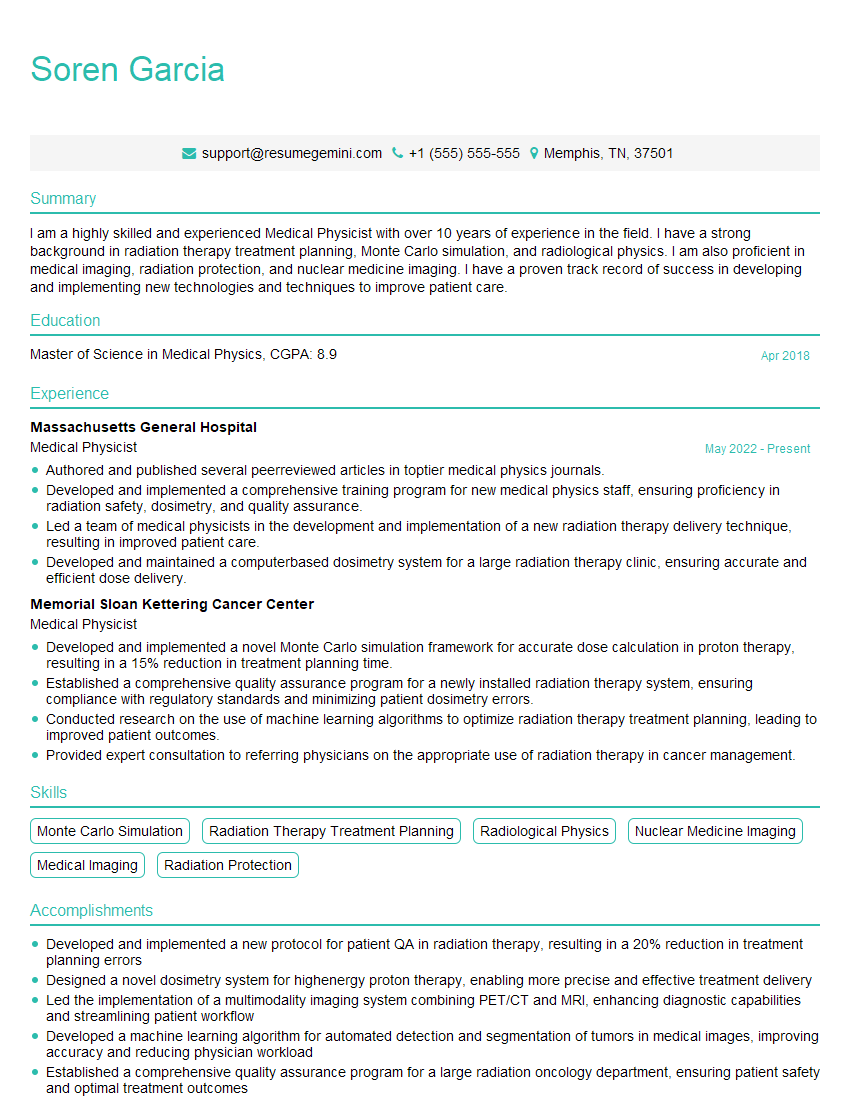
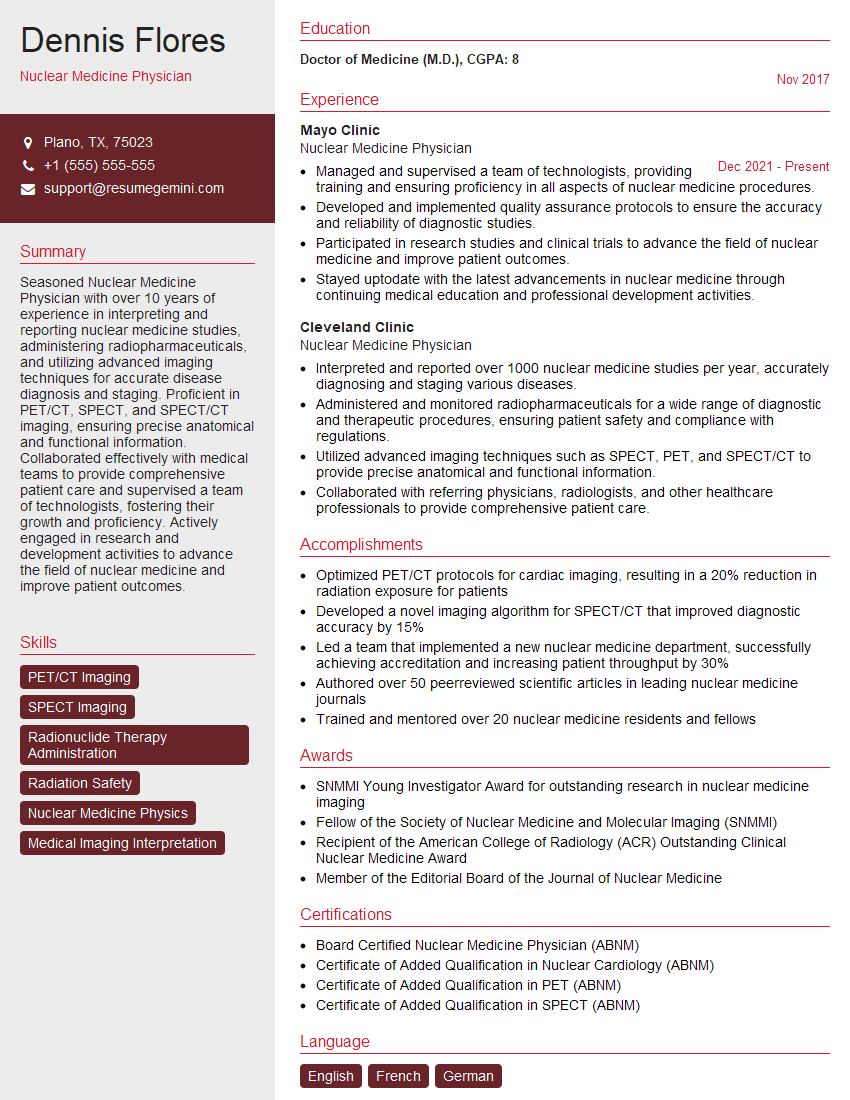
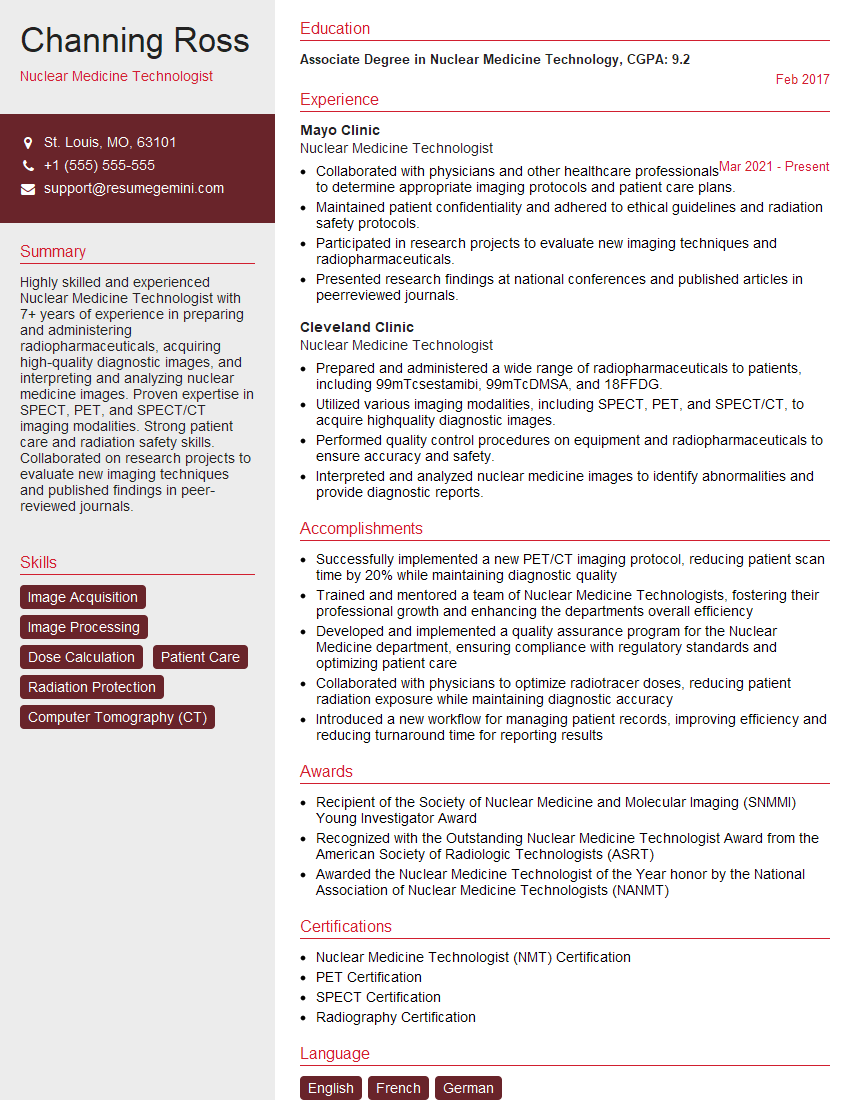
Mastering Radiation Safety in Nuclear Medicine is crucial for a successful and rewarding career in this vital field. It demonstrates your commitment to patient safety and regulatory compliance, opening doors to advanced roles and greater responsibility. To enhance your job prospects, creating a strong, ATS-friendly resume is paramount. ResumeGemini is a trusted resource that can help you build a professional and impactful resume, tailored to showcase your skills and experience in Radiation Safety. Examples of resumes tailored to Radiation Safety in Nuclear Medicine are provided to guide you. Take this opportunity to refine your application materials and confidently present yourself as a highly qualified candidate.

Explore more articles
Users Rating of Our Blogs
Share Your Experience
We value your feedback! Please rate our content and share your thoughts (optional).
What Readers Say About Our Blog
To the interviewgemini.com Webmaster.
Very helpful and content specific questions to help prepare me for my interview!
Thank you
To the interviewgemini.com Webmaster.
This was kind of a unique content I found around the specialized skills. Very helpful questions and good detailed answers.
Very Helpful blog, thank you Interviewgemini team.