Cracking a skill-specific interview, like one for Radiation Safety Instrumentation, requires understanding the nuances of the role. In this blog, we present the questions you’re most likely to encounter, along with insights into how to answer them effectively. Let’s ensure you’re ready to make a strong impression.
Questions Asked in Radiation Safety Instrumentation Interview
Q 1. Describe the principle of operation of a Geiger-Müller counter.
The Geiger-Müller (GM) counter is a classic radiation detection instrument renowned for its simplicity and robustness. Its operation relies on the ionization of gas within a tube. The tube consists of a cylindrical cathode and a central anode wire, filled with a low-pressure inert gas like argon. When ionizing radiation (alpha, beta, gamma, or X-rays) enters the tube, it collides with gas molecules, creating ion pairs (positive ions and electrons). The high voltage applied across the anode and cathode accelerates these ions and electrons. This acceleration triggers further ionization events, creating an avalanche of charge. This avalanche creates a measurable electrical pulse, indicating the detection of radiation. Each pulse represents a single ionizing event, regardless of the radiation type or energy. Therefore, GM counters are excellent for detecting the presence of radiation but don’t provide information on the type or energy of the radiation. Think of it like a smoke alarm; it tells you there’s smoke, but not what’s burning.
Q 2. Explain the difference between a proportional counter and a scintillation detector.
Proportional counters and scintillation detectors are both sensitive radiation detectors, but they differ significantly in their operating principles. A proportional counter, like a GM counter, relies on gas ionization. However, the applied voltage is lower than in a GM counter, resulting in a proportional relationship between the energy of the incident radiation and the amplitude of the output pulse. This means the output pulse size is directly related to the energy deposited by the radiation, allowing for energy discrimination. In contrast, a scintillation detector uses a scintillating material, such as NaI(Tl) crystal, that emits light photons when radiation interacts with it. The light photons are then detected by a photomultiplier tube (PMT), which converts them into an electrical signal. The amplitude of this signal is also proportional to the energy deposited by the radiation. The key difference lies in the detection medium: gas in proportional counters and scintillating material in scintillation detectors. Scintillation detectors often offer higher energy resolution and can detect a wider range of radiation types than proportional counters.
Imagine it this way: a proportional counter is like a sensitive microphone picking up the volume of a sound, while a scintillation detector is like a spectrograph that breaks down the sound into its constituent frequencies, offering much more detail.
Q 3. What are the common types of radiation detectors used in radiation safety?
Many radiation detectors are used in radiation safety, each with its strengths and weaknesses. Common types include:
- Geiger-Müller (GM) counters: Simple, robust, and widely used for area monitoring, detecting presence of various radiation types.
- Proportional counters: Offer better energy resolution than GM counters, used in specialized applications like spectrometry.
- Scintillation detectors: High sensitivity and energy resolution, widely used for gamma and X-ray spectrometry, and in many other applications.
- Ionization chambers: Measure radiation dose rate directly, often used for area monitoring and personal dosimetry.
- Solid-state detectors (e.g., semiconductor detectors): Offer excellent energy resolution and are used in spectrometry.
- Neutron detectors: Specialized detectors for measuring neutron radiation, using various techniques like boron-lined proportional counters or helium-3 detectors.
The choice of detector depends on the specific application, type of radiation being measured, required sensitivity and energy resolution.
Q 4. How does a survey meter work, and what are its limitations?
A survey meter is a portable instrument used to measure radiation levels. It typically consists of a radiation detector (often a GM tube or ionization chamber), signal processing electronics, and a display showing the radiation level. The detector measures the radiation interacting with it, converting this interaction into an electrical signal. The electronics process this signal to provide a reading in units like counts per minute (CPM), microsieverts per hour (µSv/h), or milliroentgens per hour (mR/h). Survey meters provide a real-time indication of the radiation environment. However, they have limitations:
- Directional dependence: Some detectors are more sensitive to radiation coming from certain directions.
- Energy dependence: The response can vary depending on the energy of the radiation.
- Limited range: Survey meters have a limited measuring range, potentially leading to inaccurate readings for very high or very low radiation levels.
- Environmental factors: Temperature, humidity, and electromagnetic fields can affect the accuracy of readings.
For example, a survey meter might miss a point source of radiation if it’s shielded or if the detector is not pointed directly at the source.
Q 5. What are the safety precautions when using radiation survey instruments?
Safety precautions when using radiation survey instruments are crucial to ensure both the user’s and the instrument’s safety. These precautions include:
- Proper training: Individuals should receive thorough training on the operation and limitations of the instrument before use.
- Calibration: Instruments must be regularly calibrated to ensure accurate readings.
- Personal protective equipment (PPE): In high-radiation areas, appropriate PPE, such as lead aprons and gloves, should be used.
- Distance and time: Minimize time spent in radiation fields and maintain a safe distance from sources.
- Shielding: Utilize shielding material, when appropriate, to reduce radiation exposure.
- Proper handling: Handle instruments carefully to avoid damage.
- Regular checks: Perform regular checks of the instrument’s functionality and battery levels before and after each use.
- Contamination checks: After use in potentially contaminated areas, check the instrument for contamination.
Always follow the manufacturer’s instructions and relevant safety protocols.
Q 6. Explain the concept of calibration and its importance in radiation instrumentation.
Calibration is the process of comparing the readings of a radiation instrument to a known standard, ensuring its accuracy. It’s essential because radiation detectors can drift over time due to aging, environmental factors, or component changes. A calibrated instrument provides reliable and traceable measurements, critical for radiation protection and regulatory compliance. The process usually involves exposing the instrument to a known radiation source with a traceable calibration certificate, comparing its response to the known standard and adjusting the instrument’s readings as needed. Without regular calibration, measurements might be inaccurate, leading to incorrect assessments of radiation levels and potentially compromising worker safety. A poorly calibrated instrument could underestimate or overestimate radiation levels, with potentially serious consequences. Think of it like regularly checking your car’s speedometer to make sure it accurately reflects your speed.
Q 7. How do you perform a radiation survey of a facility?
Performing a radiation survey of a facility requires a systematic approach. Steps typically include:
- Planning: Define the scope of the survey, identify areas to be surveyed, and select appropriate instruments.
- Preparation: Ensure the instruments are calibrated and functioning correctly. Gather any necessary PPE.
- Survey Execution: Systematically survey the areas, recording readings at multiple locations, paying attention to potential hot spots.
- Data recording and analysis: Document readings, locations, and any other relevant information. Analyze the data to identify high radiation areas and potential hazards.
- Report preparation: Prepare a detailed report summarizing the findings, including maps indicating radiation levels, recommendations for mitigation measures, and conclusions.
For example, in a nuclear medicine facility, the survey might focus on areas where radioactive materials are handled, stored, or disposed of, while in a research laboratory using X-ray equipment, it would involve surveying areas around the equipment. Safety procedures should be strictly followed throughout the entire process.
Q 8. What are the legal requirements for radiation safety instrumentation?
Legal requirements for radiation safety instrumentation vary significantly depending on location (national and regional regulations) and the specific application. However, several common threads exist. Regulations often mandate the calibration and regular testing of all radiation detection instruments to ensure accuracy and reliability. This typically involves traceable calibration to national or international standards, with records meticulously maintained. Furthermore, the type of instrument used must be appropriate for the type and energy of radiation being measured. Using a Geiger-Müller counter for neutron detection, for instance, would be inappropriate and inaccurate. Finally, many jurisdictions require documented safety procedures for instrument use, maintenance, and emergency response, including training for personnel operating the equipment. Failure to comply with these regulations can result in significant penalties, including fines and operational shutdowns. Think of it like a pilot needing a current license and regularly serviced aircraft – your instruments are your safety tools and require the same level of care and regulatory compliance.
Q 9. Describe different types of radiation (alpha, beta, gamma, neutron).
Radiation comes in several forms, each with its unique properties and hazards:
- Alpha (α): These are relatively large, heavy particles consisting of two protons and two neutrons (essentially a helium nucleus). They have low penetrating power, easily stopped by a sheet of paper or even the outer layer of skin. However, they are highly ionizing, meaning they cause significant damage if ingested or inhaled.
- Beta (β): These are high-energy electrons or positrons. They have greater penetrating power than alpha particles, able to penetrate several millimeters of aluminum. They are also ionizing, but less so than alpha particles.
- Gamma (γ): These are high-energy electromagnetic waves, similar to X-rays but with even higher energy. They have high penetrating power, requiring thick shielding materials like lead or concrete to effectively attenuate them. They are ionizing, but their interactions are less localized compared to alpha and beta.
- Neutron (n): These are uncharged particles found in the nucleus of atoms. They have high penetrating power, requiring specialized shielding materials like water, polyethylene, or boron-containing materials. They are indirectly ionizing; they interact with atomic nuclei, causing them to become unstable and emit ionizing radiation.
Understanding these differences is crucial for selecting the appropriate radiation detection instrumentation and implementing effective safety measures.
Q 10. How do you interpret radiation measurements?
Interpreting radiation measurements requires understanding the units (typically counts per minute (CPM), Becquerels (Bq), or Gray (Gy)), the type of radiation being measured, and the instrument’s limitations. The reading itself is just a number; context is crucial. For example, a high CPM reading in a nuclear medicine lab might be perfectly normal during a procedure, while the same reading in an office building would be a serious cause for concern. We must always consider the background radiation level. This baseline radiation is always present in the environment from natural sources like cosmic rays and radioactive materials in the earth. Subtracting the background from the measured reading gives us the net radiation level. Furthermore, understanding the instrument’s energy response is crucial. Some detectors are more sensitive to certain types of radiation than others. Finally, good measurement practice involves taking multiple readings and analyzing the statistical variation to ensure the data is reliable and representative of the actual radiation level.
Q 11. What is the significance of background radiation?
Background radiation is the naturally occurring radiation present in the environment. It’s a crucial consideration in radiation safety because it forms the baseline against which other radiation measurements are compared. Failing to account for background radiation can lead to inaccurate assessments of radiation levels and potential misinterpretations of safety risks. Sources of background radiation include cosmic rays from space, radioactive isotopes in the Earth’s crust (like uranium and potassium), and even naturally occurring radioactive materials in our bodies. Understanding background levels helps establish a context for any elevated radiation readings and is essential for identifying potential radiation anomalies.
Q 12. Explain the concept of radiation dose and its units.
Radiation dose refers to the amount of radiation energy absorbed by a material or living tissue. It’s a measure of the biological effect of radiation exposure. The most common units are:
- Gray (Gy): The unit of absorbed dose, representing the energy absorbed per unit mass of tissue (1 Gy = 1 joule/kilogram).
- Sievert (Sv): The unit of equivalent dose, which accounts for the biological effectiveness of different types of radiation. Alpha particles, for example, are more damaging than beta particles at the same absorbed dose, so they have a higher weighting factor in calculating the equivalent dose.
Understanding radiation dose is fundamental to assessing risk and establishing safety limits. Different organs have different sensitivities to radiation, and exposure limits are set to minimize the risk of adverse health effects.
Q 13. What is the purpose of a personal dosimeter?
A personal dosimeter is a small device worn by individuals working with or near sources of ionizing radiation to monitor their personal exposure. They come in various types, including film badges, thermoluminescent dosimeters (TLDs), and electronic personal dosimeters (EPDs). These devices measure the cumulative radiation dose received over a period of time (typically a month or a quarter), providing a record of individual exposure. This information is crucial for tracking radiation exposure, ensuring compliance with regulations, and protecting workers’ health. Think of it as a personal radiation ‘black box’ recording your exposure over time, offering invaluable protection and allowing for proactive safety management.
Q 14. How do you handle a radiation spill or emergency?
Handling a radiation spill or emergency involves a well-defined, multi-step process. First priority is to evacuate and isolate the area, preventing further exposure. Next, assess the situation, determining the type and amount of radioactive material involved, the extent of contamination, and the potential for further spread. This assessment will determine the specific emergency response measures. Then, implement containment and decontamination procedures. This might include using absorbent materials, specialized cleaning agents, or physical barriers. Personnel involved in cleanup must wear appropriate personal protective equipment (PPE), including respirators, protective clothing, and dosimeters. Finally, monitor radiation levels to ensure the area is safe before allowing access. Accurate documentation of the event, cleanup procedures, and radiation levels post-cleanup is vital. Regular training and drills are crucial in preparing for such emergencies, ensuring a coordinated and effective response and minimizing health risks.
Q 15. What is the difference between direct and indirect radiation measurements?
Direct radiation measurements involve directly detecting the interaction of ionizing radiation with a detector material. Think of it like seeing the bullet itself. Indirect methods measure the effects of radiation on the detector, like seeing the hole the bullet made.
For example, a Geiger-Müller tube is a direct measurement device. It detects the ionization caused by individual radiation particles directly. In contrast, a thermoluminescent dosimeter (TLD) is an indirect method. It measures the light emitted by a crystal after being exposed to radiation, which is a consequence of the radiation’s interaction with the crystal’s structure. This light emission is then correlated to the radiation dose received.
- Direct: Geiger-Müller counters, ionization chambers, scintillation detectors (some configurations).
- Indirect: Thermoluminescent dosimeters (TLDs), film badges, optically stimulated luminescence dosimeters (OSLDs).
The choice between direct and indirect methods depends on the application. Direct methods are often preferred for real-time monitoring and high-sensitivity measurements, while indirect methods are useful for long-term dose assessment and personal monitoring where continuous measurement isn’t needed.
Career Expert Tips:
- Ace those interviews! Prepare effectively by reviewing the Top 50 Most Common Interview Questions on ResumeGemini.
- Navigate your job search with confidence! Explore a wide range of Career Tips on ResumeGemini. Learn about common challenges and recommendations to overcome them.
- Craft the perfect resume! Master the Art of Resume Writing with ResumeGemini’s guide. Showcase your unique qualifications and achievements effectively.
- Don’t miss out on holiday savings! Build your dream resume with ResumeGemini’s ATS optimized templates.
Q 16. Describe the different types of personal dosimeters.
Personal dosimeters are devices worn by individuals to measure their accumulated radiation exposure. Several types exist, each with its strengths and weaknesses:
- Film badges: These are among the oldest types. They use photographic film that darkens upon exposure to radiation. The darkness level is then analyzed to determine the dose received. They are relatively inexpensive but have limitations in terms of energy dependence and dynamic range.
- Thermoluminescent dosimeters (TLDs): These use crystals that store energy when exposed to radiation. Heating the crystal releases this energy as light, the intensity of which is proportional to the radiation dose. TLDs are more accurate and sensitive than film badges, but they require special readers for analysis.
- Optically stimulated luminescence dosimeters (OSLDs): Similar to TLDs, these utilize the principle of luminescence, but stimulation is done with light instead of heat. They offer advantages in terms of reusability and wider dynamic range compared to TLDs.
- Electronic personal dosimeters (EPDs): These devices provide real-time radiation dose readings. They are typically small, lightweight, and offer features like dose rate alarms and data logging. However, they often have lower sensitivity than other types and require regular calibration.
The selection of a personal dosimeter depends on the type and energy of radiation being monitored, the required accuracy, and cost considerations.
Q 17. How do you maintain and troubleshoot radiation detection instruments?
Maintaining and troubleshooting radiation detection instruments is critical for ensuring accurate and reliable measurements. Regular maintenance prevents malfunctions and ensures regulatory compliance.
Maintenance typically involves:
- Calibration: Regularly calibrating instruments against traceable standards ensures accurate readings. The frequency depends on the instrument type and usage. A typical frequency might be annually or after significant use.
- Cleaning: Keeping instruments clean and free from dust and debris prevents malfunctions and extends their lifespan. Specific cleaning methods will depend on the instrument’s construction.
- Battery checks: Ensuring sufficient battery power prevents unexpected instrument failure.
- Visual inspections: Look for any signs of physical damage, such as cracks or loose connections.
Troubleshooting involves systematically identifying and resolving problems. It might include:
- Checking power supply: Verify that the instrument is properly powered and the batteries are functioning correctly.
- Inspecting connections: Ensure all cables and connections are securely attached.
- Testing functionality: Use known radiation sources or calibration sources to verify the instrument’s response.
- Consulting manuals: Refer to the manufacturer’s manuals for troubleshooting guidance and diagnostic codes.
In case of more complex issues, contacting qualified service technicians is essential to avoid further damage and ensure accurate calibration. Record keeping for maintenance and calibration is crucial for regulatory compliance and quality assurance.
Q 18. What are the common sources of error in radiation measurements?
Several factors can introduce errors into radiation measurements. Understanding these sources is critical for improving accuracy and reliability.
- Instrument calibration errors: Incorrectly calibrated instruments will consistently produce inaccurate readings.
- Background radiation: Natural background radiation from cosmic rays and terrestrial sources can interfere with measurements, especially at low radiation levels. Subtracting the background count is crucial.
- Detector efficiency variations: Detectors may have varying sensitivities to different radiation energies, leading to inaccuracies if the energy spectrum is not accounted for.
- Geometric factors: The positioning of the detector relative to the radiation source affects the measured radiation intensity. Improper geometry will lead to inaccurate measurements.
- Environmental factors: Temperature, humidity, and pressure can influence detector performance. This is why environmental controls and data logging are very important.
- Data processing errors: Mistakes in data recording, analysis, or interpretation can introduce errors.
- Statistical fluctuations: Radiation detection is a statistical process; inherent variations in the detected counts can influence the accuracy, especially at low radiation levels. It’s important to consider statistical uncertainties.
Minimizing these errors requires careful instrument calibration, proper measurement techniques, background radiation corrections, and rigorous data analysis. Understanding the limitations of the instruments and the measurement process is essential.
Q 19. Explain the concept of radiation shielding.
Radiation shielding reduces the intensity of ionizing radiation. The effectiveness depends on the type and energy of radiation and the shielding material. Think of it like a wall protecting you from bullets – the thicker the wall and the better the material, the more protection.
Different materials offer varying degrees of shielding effectiveness:
- Lead: Commonly used for gamma and X-ray shielding due to its high atomic number. It effectively absorbs high-energy photons through photoelectric and Compton scattering.
- Concrete: A cost-effective shielding material for gamma and neutron radiation. Its effectiveness depends on thickness and density.
- Water: Used for neutron shielding; water slows down neutrons via elastic collisions.
- Other materials: Various other materials are used for specialized shielding purposes, such as boron for neutron absorption or cadmium for thermal neutron absorption.
The amount of shielding required depends on the radiation source’s activity, the energy of the radiation, the acceptable dose rate, and the distance from the source. Calculations are typically performed to determine the necessary shielding thickness. This involves working with decay formulas and attenuation coefficients.
Q 20. What are the regulations concerning the use and disposal of radioactive materials?
Regulations concerning radioactive materials are stringent and vary by country and jurisdiction. The primary goals are to protect human health and the environment. These regulations cover the entire lifecycle of radioactive materials, including:
- Acquisition and use: Licenses and permits are usually required to possess or use radioactive materials. Stringent safety protocols and training are mandatory. This includes specific procedures to handle, store, and use materials safely.
- Transportation: Regulations dictate how radioactive materials are transported to ensure safety during transit. This includes requirements for packaging, labeling, and route planning.
- Storage: Secure storage facilities are essential to prevent unauthorized access, theft, and environmental contamination. Safe storage procedures are extremely important to reduce risk.
- Disposal: Disposal of radioactive waste is carefully controlled to minimize the risk of environmental contamination. Disposal methods vary depending on the radioactivity level and the type of waste. Special licensed facilities are often needed for appropriate disposal.
Organizations like the Nuclear Regulatory Commission (NRC) in the U.S. and similar bodies worldwide set and enforce these regulations. Failure to comply can result in severe penalties, including fines and legal action.
Q 21. How would you assess the effectiveness of radiation shielding?
Assessing the effectiveness of radiation shielding involves measuring the radiation levels with and without the shielding in place. The reduction in radiation intensity indicates the shielding’s effectiveness.
Methods for assessing shielding effectiveness include:
- Direct measurement: Use radiation detectors (e.g., Geiger-Müller counters, ionization chambers) to measure radiation levels at various points near the radiation source with and without the shielding. The reduction in radiation levels is a direct measure of shielding effectiveness.
- Monte Carlo simulations: Sophisticated computer simulations use probabilistic methods to model radiation transport through the shielding material. This allows for predicting the radiation levels with high accuracy and assessing various shielding configurations.
- Dosimetry: Using dosimeters (e.g., TLDs, OSLDs) to measure the radiation dose received at specific locations provides a measure of the shielding’s effectiveness in reducing the dose to personnel.
The results are often expressed as a reduction factor or attenuation factor, showing how much the radiation intensity was reduced by the shielding. Regular assessments are important to verify the shielding’s continued effectiveness and to detect potential issues like degradation of shielding materials over time.
Q 22. Explain the importance of quality control in radiation measurements.
Quality control in radiation measurements is paramount for ensuring the reliability and accuracy of data, ultimately protecting workers and the public. Think of it like a chef meticulously calibrating their kitchen scales – without accurate measurements, the recipe fails. In radiation safety, inaccurate measurements can lead to underestimation of risks, resulting in inadequate safety precautions or overestimation leading to unnecessary anxiety or expense.
- Regular Calibration and Maintenance: Radiation instruments, like Geiger counters and dosimeters, require regular calibration against traceable standards to ensure their readings are accurate. This involves comparing the instrument’s readings to known radiation sources and adjusting its response as needed. Failing to do this leads to systematic errors that could compromise safety.
- Instrument Selection: The choice of instrument directly impacts accuracy. Different instruments are suited for different types of radiation and energy levels. Using the wrong instrument will lead to inaccurate measurements. For example, a Geiger-Müller counter might not be suitable for measuring low-energy beta radiation.
- Proper Technique: The way measurements are taken is critical. Factors such as the distance from the source, the angle of measurement, and the background radiation level all influence the results. A poorly trained technician can easily introduce errors.
- Data Verification: Independent verification of measurements is an important aspect of quality control. This could involve using multiple instruments or having different technicians make measurements of the same source. This helps to identify potential errors and inconsistencies.
For example, in a nuclear power plant, a regular calibration schedule is mandated for all radiation detection instruments. Failure to adhere to this leads to possible penalties and safety concerns. This ensures that the instruments used for monitoring radiation levels are providing reliable and consistent readings.
Q 23. What are the safety regulations associated with using specific radiation instruments?
Safety regulations surrounding radiation instruments vary based on the type of instrument, the radiation it detects, and the regulatory authority (e.g., NRC in the US, IAEA internationally). However, some common regulations include:
- Licensing and Permits: Many radiation-emitting instruments or those measuring high levels of radiation require licenses or permits. These licenses often specify training requirements for users and the conditions under which the instruments can be used.
- Training and Certification: Personnel using radiation instruments must receive adequate training on radiation safety practices, including proper use, calibration, and maintenance of the instruments. This often involves certifications demonstrating competency.
- Safety Procedures: Stringent safety procedures must be followed when operating radiation instruments. These procedures often include the use of personal protective equipment (PPE), such as lead aprons and gloves, as well as measures to minimize exposure time and distance.
- Record Keeping: Detailed records of instrument calibration, use, and maintenance must be maintained. These records are often subject to regulatory audits.
- Emergency Procedures: Well-defined emergency procedures should be in place to address accidental spills or releases of radioactive materials. This includes procedures for containment, evacuation, and decontamination.
For instance, using a portable survey meter to measure radiation levels in a contaminated area would require following specific procedures outlined in the facility’s radiation safety manual. This often includes wearing a dosimeter, maintaining a safe distance, and using the instrument correctly. Violation of these regulations can lead to serious consequences, including fines and suspension of licenses.
Q 24. Describe different types of radiation monitoring programs.
Radiation monitoring programs are designed to assess and control radiation exposures. Their scope and complexity depend on the type of facility or work environment. They aim to ensure compliance with regulations and safeguard the health of workers and the public. Here are some examples:
- Environmental Monitoring: This type of program involves measuring radiation levels in the environment surrounding a facility handling radioactive materials. This includes air, water, and soil sampling. It helps to track any potential releases and their impact on the environment.
- Personnel Monitoring: This involves tracking the radiation dose received by individuals working with radioactive materials. This is typically done using dosimeters, which measure the accumulated radiation dose over a period of time. This ensures that worker doses stay below regulatory limits.
- Area Monitoring: Area monitoring involves the continuous or periodic measurement of radiation levels in specific areas within a facility. This includes the use of fixed radiation detectors and portable survey instruments to identify and control high-radiation zones.
- Waste Monitoring: This involves monitoring the levels of radioactivity in radioactive waste before disposal to ensure compliance with waste disposal regulations. Improper disposal can lead to environmental contamination.
A hospital using radioactive materials for medical procedures would have a comprehensive radiation monitoring program including personnel monitoring for staff working with those materials, area monitoring in treatment rooms, and waste monitoring for safe disposal of radioactive waste.
Q 25. How do you ensure the accuracy of radiation measurements?
Ensuring accuracy in radiation measurements requires a multi-faceted approach:
- Calibration: Instruments must be calibrated regularly against traceable standards. This establishes the relationship between the instrument’s reading and the actual radiation level.
- Traceability: The calibration standards themselves must be traceable to national or international standards to ensure consistency across measurements.
- Quality Control Checks: Periodic checks should be performed to verify instrument performance and identify any malfunctions or drift in readings.
- Background Radiation Correction: All measurements are affected by background radiation. This background level must be subtracted from the measurements to obtain the true radiation level from the source being measured.
- Uncertainty Analysis: A thorough uncertainty analysis should be performed to quantify the uncertainties associated with each measurement. This includes uncertainties related to the instrument, measurement technique, and environmental conditions.
- Cross-checking: Whenever possible, use multiple instruments or measurement techniques to cross-check results.
Imagine measuring the radiation from a sample. You would first measure the background radiation, then measure the sample’s radiation. Subtracting the background from the sample’s reading gives you a corrected value, and documenting the instrument’s calibration ensures that the value is traceable to national standards.
Q 26. How do you interpret the data from a radiation survey?
Interpreting data from a radiation survey involves several steps:
- Identify the Radiation Type and Energy: Different instruments detect different types of radiation. Knowing the type of radiation helps determine the appropriate safety measures.
- Compare Measurements to Regulatory Limits: The measured radiation levels should be compared to the relevant regulatory limits to assess compliance and potential hazards.
- Consider Spatial Distribution: Radiation levels are rarely uniform. Mapping the radiation levels across the survey area provides a comprehensive understanding of the radiation distribution.
- Analyze Temporal Trends: If the survey is conducted over time, analyzing the trends in radiation levels can identify potential sources or changes in radiation levels.
- Evaluate Uncertainties: The uncertainties associated with the measurements should be considered when interpreting the results. A small increase within uncertainty might not be significant.
For example, a higher-than-normal reading in a specific location might indicate a spill or a leak, requiring immediate action. Conversely, readings consistently within the permitted range would indicate safe operating conditions. The interpretation must be documented and potentially lead to actions like cleanup, repair, or changes in operating procedures.
Q 27. Discuss the ethical considerations related to radiation safety.
Ethical considerations in radiation safety are crucial. They center around the responsibility to protect individuals and the environment from unnecessary exposure to ionizing radiation:
- Transparency and Informed Consent: Individuals must be fully informed about the potential risks of radiation exposure before any procedures involving radiation are undertaken. This includes providing clear and accessible information about the risks and benefits.
- ALARA Principle: The ALARA (As Low As Reasonably Achievable) principle should always guide radiation safety practices. All efforts should be made to minimize radiation exposure to workers and the public, even if they are below regulatory limits.
- Data Integrity: Accurate and honest recording and reporting of radiation measurements and exposures is paramount. Any attempt to falsify or manipulate data is unethical and potentially hazardous.
- Equitable Protection: Radiation safety measures should be applied fairly and equitably to all individuals, regardless of their position or role.
- Environmental Responsibility: Radiation safety practices should also consider the impact of radiation on the environment. Efforts should be made to minimize any potential environmental contamination.
For example, a technician deliberately underreporting radiation levels to avoid disciplinary action is a severe breach of ethics that could have serious consequences. Maintaining the highest standards of ethical conduct is essential for building and maintaining public trust in radiation safety programs.
Q 28. Describe your experience with specific radiation safety instrumentation.
Throughout my career, I’ve extensively used various radiation safety instruments, including:
- Geiger-Müller Counters: I’ve used these extensively for general area surveys, contamination surveys, and assessing background radiation levels. I’m proficient in understanding their limitations, particularly their energy dependence.
- Proportional Counters: These instruments offer greater sensitivity and energy resolution compared to Geiger-Müller counters. I’ve employed them in applications requiring more precise measurements, like measuring low-level alpha and beta radiation.
- NaI(Tl) Scintillation Detectors: I’ve utilized these for spectrometric measurements to identify specific radionuclides and determine their concentrations. This is crucial in environmental monitoring and waste characterization.
- Dosimeters (TLDs and OSLs): I have experience working with both thermoluminescent dosimeters (TLDs) and optically stimulated luminescence (OSL) dosimeters for personnel monitoring. This includes reading and interpreting dosimeter results and ensuring their proper use.
- Survey Meters: My experience includes operating a variety of survey meters, from basic rate meters to more sophisticated instruments capable of measuring different radiation types and energies.
In one particular instance, I used a high-purity germanium (HPGe) detector for detailed spectrometric analysis of environmental samples, identifying several low-level radionuclides which were critical for environmental impact assessment following a minor industrial incident. My proficiency in using and interpreting data from these instruments helped ensure that the site was remediated effectively and safely.
Key Topics to Learn for Radiation Safety Instrumentation Interview
- Radiation Detectors: Understand the principles of operation for various detector types (e.g., Geiger-Müller counters, scintillation detectors, ionization chambers). Be prepared to discuss their strengths, weaknesses, and appropriate applications.
- Radiation Measurement Units and Calculations: Master the concepts of activity, exposure, absorbed dose, and equivalent dose. Practice converting between different units and performing calculations related to radiation protection.
- Health Physics Principles: Demonstrate a solid understanding of ALARA (As Low As Reasonably Achievable) principles, radiation shielding techniques, and the regulatory framework governing radiation safety.
- Instrumentation Calibration and Maintenance: Discuss the importance of regular calibration and preventative maintenance procedures for radiation safety instruments. Be prepared to explain common calibration methods and troubleshooting techniques.
- Data Analysis and Interpretation: Explain how to interpret data from radiation detection instruments, identify potential sources of error, and communicate findings effectively. This includes understanding statistical analysis relevant to radiation measurements.
- Specific Instrumentation: Explore the applications and limitations of specific instruments used in various fields (e.g., nuclear power plants, medical facilities, research laboratories). Consider the unique challenges posed by each environment.
- Emergency Response Procedures: Understand the role of radiation safety instrumentation in emergency response situations, including contamination control and assessment procedures.
Next Steps
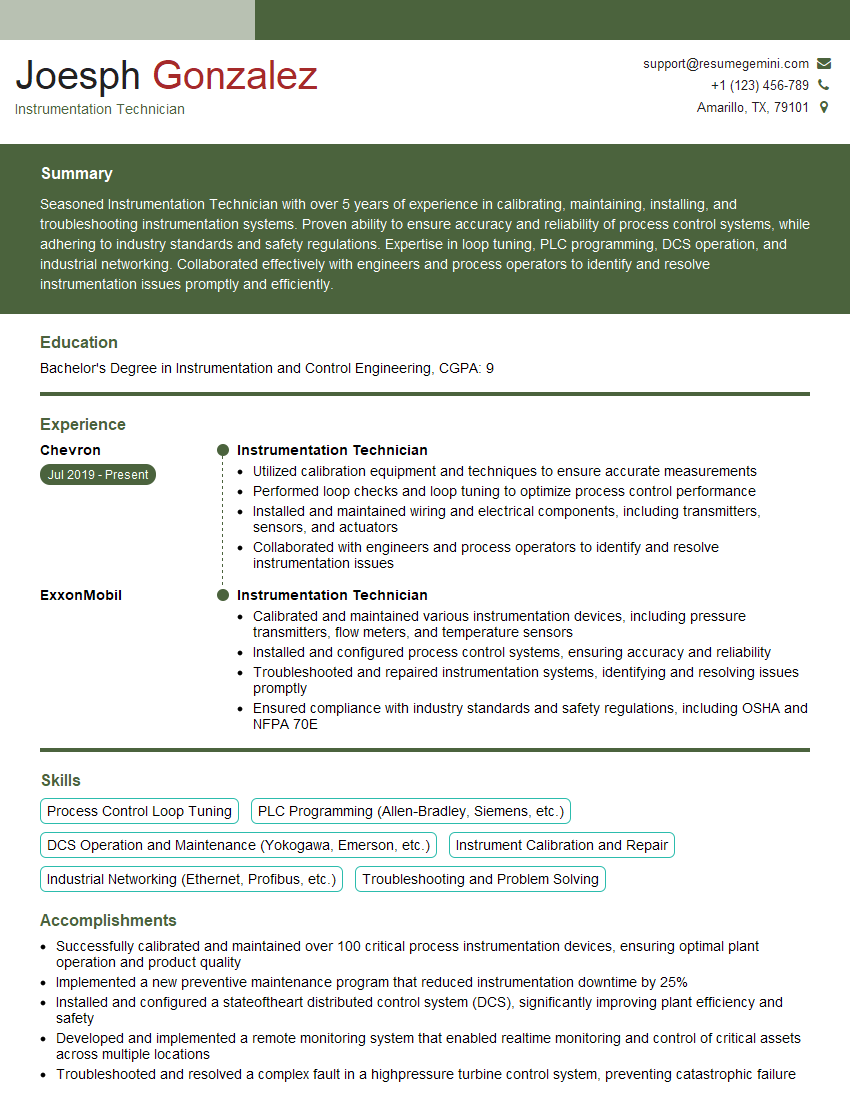
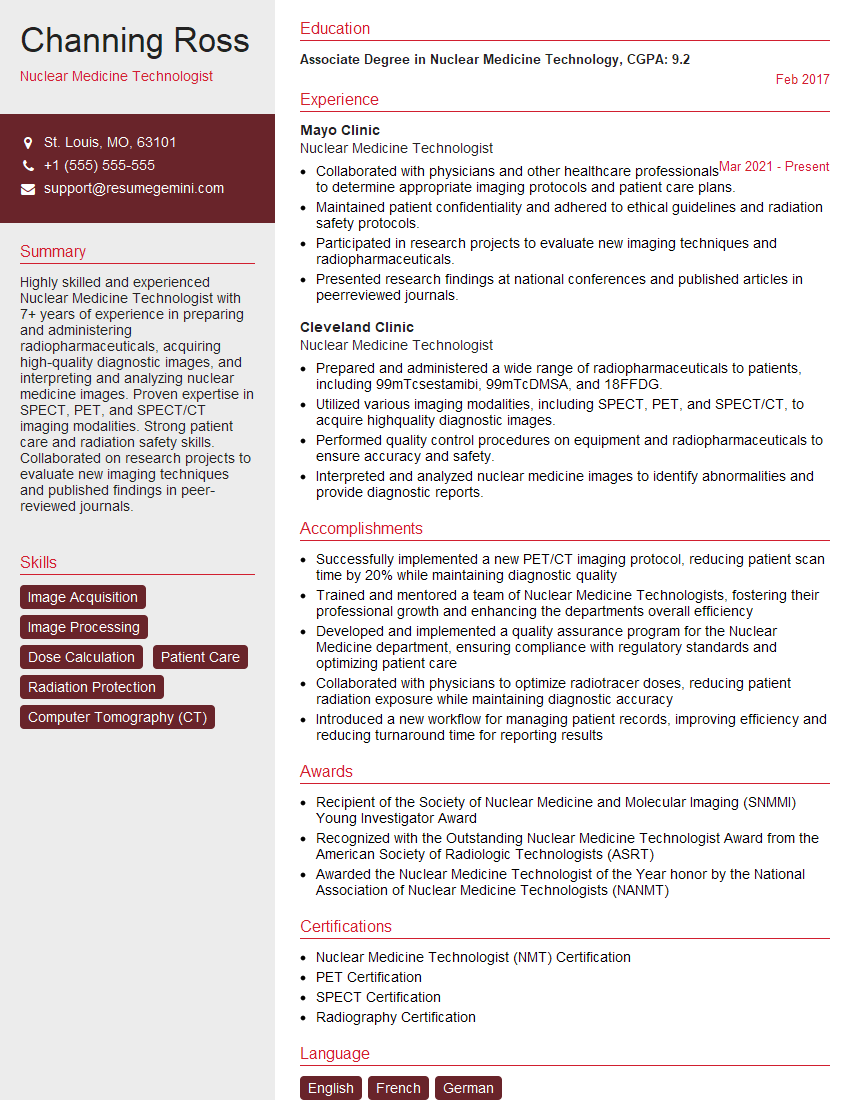
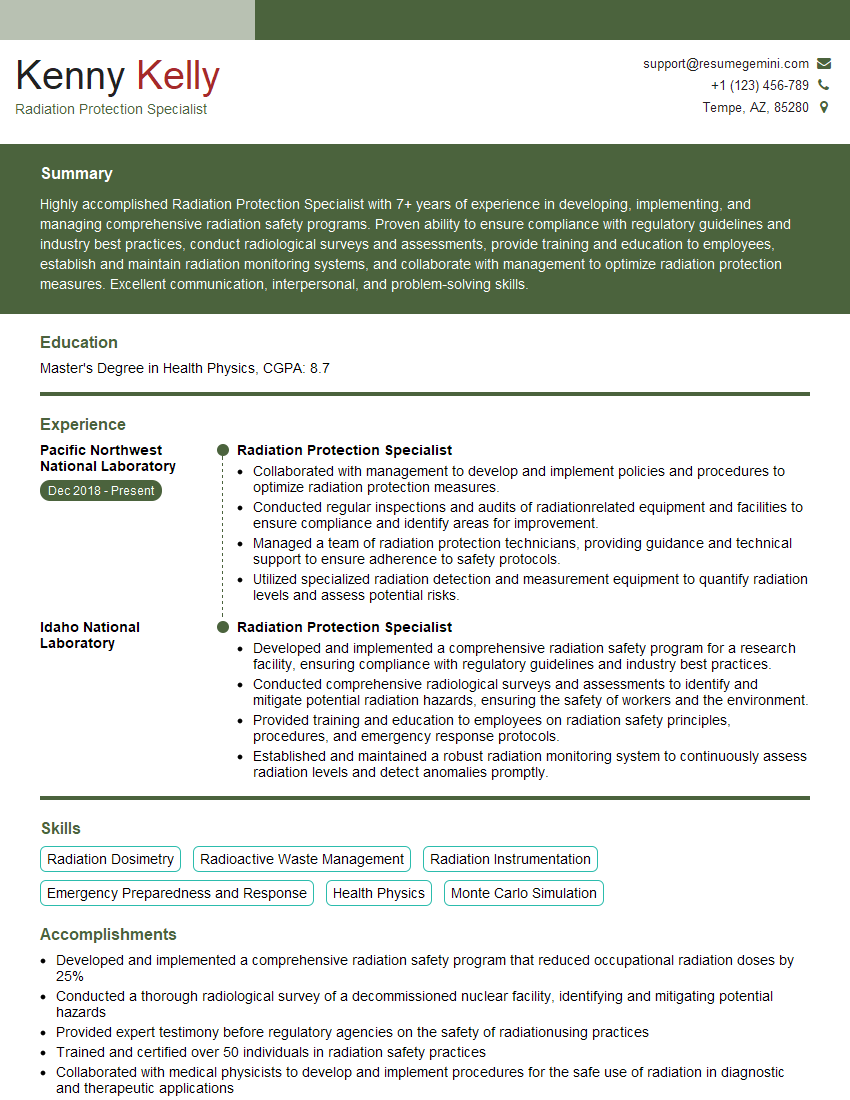
Mastering Radiation Safety Instrumentation is crucial for career advancement in this critical field. A strong understanding of these principles opens doors to exciting opportunities and positions you as a valuable asset to any organization working with ionizing radiation. To maximize your job prospects, invest time in creating an ATS-friendly resume that highlights your skills and experience effectively. ResumeGemini is a trusted resource that can help you build a professional and impactful resume tailored to the specific requirements of Radiation Safety Instrumentation roles. Examples of resumes specifically designed for this field are available through ResumeGemini, allowing you to see best practices in action.


Explore more articles
Users Rating of Our Blogs
Share Your Experience
We value your feedback! Please rate our content and share your thoughts (optional).
What Readers Say About Our Blog
To the interviewgemini.com Webmaster.
Very helpful and content specific questions to help prepare me for my interview!
Thank you
To the interviewgemini.com Webmaster.
This was kind of a unique content I found around the specialized skills. Very helpful questions and good detailed answers.
Very Helpful blog, thank you Interviewgemini team.