Cracking a skill-specific interview, like one for School-Based Speech-Language Services, requires understanding the nuances of the role. In this blog, we present the questions you’re most likely to encounter, along with insights into how to answer them effectively. Let’s ensure you’re ready to make a strong impression.
Questions Asked in School-Based Speech-Language Services Interview
Q 1. Describe your experience with various speech and language disorders in a school setting.
Throughout my career, I’ve worked extensively with a wide range of speech and language disorders in school settings. This includes articulation disorders (like difficulties pronouncing sounds), fluency disorders (such as stuttering), language disorders (affecting comprehension and expression), social communication disorders (including aspects of autism spectrum disorder), and voice disorders. For example, I’ve helped students with apraxia of speech, a neurological condition impacting the planning and coordination of speech movements, learn compensatory strategies and improve their articulation. I’ve also supported students with receptive and expressive language delays, using play-based activities and targeted language instruction to enhance their communication skills. Working with students who have phonological processing difficulties (trouble distinguishing sounds) has involved a multi-sensory approach, using visual cues and kinesthetic activities. Each case requires individualized assessment and a tailored intervention plan.
Q 2. How do you differentiate instruction for students with diverse learning needs in speech therapy?
Differentiation is crucial when working with diverse learners. I tailor my instruction based on each student’s strengths, weaknesses, learning styles, and preferred modalities. For example, a student with autism who excels visually might benefit from using picture cards and visual schedules during therapy, while a student with ADHD might need frequent breaks and highly engaging, interactive activities. I adjust the complexity of language used, the length of sessions, and the types of activities based on the individual’s cognitive and linguistic abilities. Some students may need more explicit instruction and structured activities, while others respond well to more implicit learning through play and natural interactions. Regular progress monitoring and adjustments to the plan are key to ensuring effective differentiation.
Q 3. What assessment tools do you utilize to evaluate student progress in speech and language development?
Assessment is a continuous process. I utilize a variety of tools, including standardized tests (like the Goldman-Fristoe Test of Articulation or the CELF-5), informal assessments (like language sampling and play-based observations), and curriculum-based measures to gauge progress. Standardized tests provide a norm-referenced comparison to peers, while informal assessments offer rich qualitative data about a student’s communication skills in real-world contexts. I also use dynamic assessment, which involves providing support and observing how a student responds to scaffolding, to better understand their learning potential. This comprehensive approach helps me create targeted goals and monitor their efficacy over time. For instance, if a student scores low on a standardized articulation test, I would conduct a language sample to analyze the types of errors made in natural conversation and determine the underlying phonological processes affecting their speech.
Q 4. Explain your approach to collaborating with teachers and other school professionals.
Collaboration is essential. I regularly communicate with teachers, providing them with strategies to support students’ communication in the classroom. This might involve co-teaching lessons, modifying classroom activities to accommodate a student’s communication needs, or suggesting strategies to improve classroom communication. I also collaborate with other professionals, such as special education teachers, psychologists, and occupational therapists, to ensure a holistic approach to student support. For instance, I might work with an occupational therapist to address fine motor skills that impact a student’s handwriting and ability to participate in writing activities. Regular meetings and shared documentation are crucial for successful collaboration and consistent support for the student.
Q 5. How do you incorporate technology into your speech therapy sessions?
Technology plays a significant role in my therapy sessions. I use apps like speech generating devices (SGD) to help students with limited verbal skills communicate more effectively. I incorporate interactive games and activities found on educational websites and apps to keep sessions engaging. For example, using apps that provide visual supports and interactive feedback makes learning more motivating and promotes active participation. I also utilize video recording to allow students to see and hear themselves, helping them become more aware of their speech and language. Teletherapy platforms facilitate virtual sessions, making services more accessible. Technology adds a layer of fun and efficiency to therapy, catering to different learning styles and making sessions more impactful.
Q 6. Describe your experience with Individualized Education Programs (IEPs).
I have extensive experience with IEPs. I participate in IEP meetings, contributing my expertise in speech and language development to the team’s decision-making process. I am involved in the assessment process, identifying specific areas of need, and developing measurable goals and objectives for the IEP. I work closely with the IEP team to ensure that the recommended services are implemented effectively and that progress towards the goals is regularly monitored. My role goes beyond simply providing direct therapy; I also help develop strategies for supporting the student across all school settings. For example, I might collaborate with teachers to develop communication supports or strategies to help the student participate successfully in classroom discussions and activities.
Q 7. How do you manage a diverse caseload of students with varying needs?
Managing a diverse caseload requires careful organization and prioritization. I use a caseload management system to track student progress, schedule sessions, and document interventions. I prioritize students with the most significant needs and those who require more frequent monitoring. Effective time management and efficient use of technology are essential. I strategically schedule sessions to maximize efficiency, considering student availability and needs. I also utilize data-driven decision making to ensure that my interventions are effective and tailored to the individual needs of each student. Regular review of student progress helps me adjust my approach and ensure that all students are receiving appropriate and impactful services.
Q 8. What strategies do you employ to engage students in speech therapy?
Engaging students in speech therapy is crucial for successful outcomes. I employ a multi-faceted approach that prioritizes student interests and learning styles. This includes:
- Play-based therapy: Incorporating games, toys, and activities relevant to the student’s interests makes therapy fun and motivating. For example, a student who loves superheroes might participate in a ‘superhero speech’ game where they practice sounds while acting out superhero scenarios.
- Technology integration: Apps, interactive software, and digital tools can enhance engagement and provide immediate feedback. I use apps that offer visual and auditory reinforcement, which can be particularly helpful for students who learn best through visual or auditory modalities.
- Choice-making: Allowing students to have a voice in selecting activities fosters a sense of ownership and increases motivation. This could involve letting them choose from a selection of games or activities targeting the same speech goal.
- Positive reinforcement: I consistently use positive reinforcement techniques like praise, stickers, and small rewards to encourage participation and celebrate successes. This positive feedback creates a motivating learning environment.
- Social interaction: Incorporating group activities and peer interaction whenever appropriate encourages collaborative learning and social communication skills.
Ultimately, I tailor my approach to each student’s unique personality and preferences to create a positive and effective therapy experience.
Q 9. Explain your experience with data collection and analysis in speech therapy.
Data collection and analysis are fundamental to evidence-based practice in speech therapy. I utilize a variety of methods to track student progress and inform treatment decisions. This includes:
- Baseline assessments: I conduct thorough initial assessments to establish a baseline of the student’s speech and language skills. This forms the foundation for setting goals and measuring progress.
- Progress monitoring: I regularly monitor student progress through standardized and informal assessments, charting data points regularly. This provides ongoing feedback and allows for adjustments to the treatment plan as needed.
- Data-driven decision making: I analyze collected data to identify areas of strength and weakness, inform goal setting, and adjust interventions accordingly. For example, if data shows limited progress on a particular goal, I might modify the intervention strategy.
- Documentation: Meticulous documentation of assessment results, treatment sessions, and student progress is essential for accountability and communication with parents and educators. This includes detailed session notes, progress reports, and data graphs.
My data analysis helps me demonstrate the effectiveness of my interventions and justify continued services. I also utilize data to collaborate effectively with teachers and parents, ensuring consistent support for the student across different environments.
Q 10. Describe a time you had to adapt your therapy approach based on a student’s unique needs.
I once worked with a student who had significant receptive language difficulties alongside a diagnosis of Autism Spectrum Disorder. My initial approach, which focused heavily on structured drills and direct instruction, proved largely ineffective. The student became frustrated and disengaged.
To adapt, I incorporated visual supports extensively, such as picture cards and social stories, to enhance understanding. I also transitioned to a play-based approach using his favorite toys and interests as a means to target language goals organically. This approach proved far more successful, as the student remained engaged and showed significant progress in his receptive language skills.
This experience highlighted the importance of flexibility and the need to individualize therapy plans to match each student’s unique learning style and needs. It reinforced the need to continuously assess the effectiveness of my approach and adapt as needed.
Q 11. How do you address challenging behaviors that may interfere with therapy sessions?
Challenging behaviors can significantly disrupt therapy sessions. My approach to addressing these behaviors is multifaceted and focuses on understanding the underlying cause:
- Functional Behavior Assessment (FBA): I conduct an FBA to identify the triggers, functions, and consequences of the challenging behavior. This helps determine the best intervention strategy.
- Positive Behavior Support (PBS): I implement PBS strategies that focus on teaching replacement behaviors and providing positive reinforcement for appropriate conduct. This might involve teaching the student alternative communication methods to express their needs.
- Environmental modifications: Altering the therapy environment can significantly reduce challenging behaviors. This might include reducing distractions, providing a quiet space, or using visual schedules.
- Collaboration with school staff: I work closely with teachers and other school professionals to ensure consistency in behavior management strategies across different settings.
- Parent involvement: Involving parents in behavior management plans ensures consistent support at home, increasing the likelihood of success.
My approach prioritizes understanding the student’s perspective and creating a supportive environment where they can learn and grow, even when faced with behavioral challenges.
Q 12. What is your experience with different articulation disorders and their treatment?
I have extensive experience with various articulation disorders, including:
- Phonetic errors: These involve difficulties producing specific sounds, such as lisps (difficulty with /s/ and /z/) or substituting sounds (e.g., saying ‘wabbit’ instead of ‘rabbit’). Treatment typically involves auditory discrimination training, phonetic placement cues, and practice in different contexts.
- Phonological processes: These are patterns of sound errors that affect multiple sounds (e.g., final consonant deletion, cluster reduction). Intervention focuses on targeting these patterns and facilitating the acquisition of more complex phonological structures.
- Articulation disorders due to structural abnormalities: Some articulation disorders stem from structural issues like cleft palate or tongue tie. In these cases, collaboration with other professionals (e.g., surgeons, orthodontists) is crucial, alongside targeted speech therapy.
My treatment approach is tailored to the specific type and severity of the articulation disorder. I use a combination of techniques including auditory bombardment, minimal pairs, and motor learning strategies, constantly monitoring progress and adapting as needed.
Q 13. How do you promote generalization of skills learned in therapy to the classroom?
Generalization of skills is key to successful speech therapy. I employ several strategies to ensure skills learned in therapy transfer to the classroom and other environments:
- In-situ training: Conducting therapy sessions in the student’s classroom allows for direct application of skills within the natural environment.
- Collaboration with teachers: I work closely with classroom teachers to provide strategies and activities that reinforce skills learned in therapy, creating a consistent approach.
- Homework assignments: I assign homework that provides opportunities to practice skills in different contexts with family members.
- Environmental modifications: When appropriate, I suggest changes to the student’s classroom environment to support their communication needs (e.g., visual schedules, communication boards).
- Self-monitoring strategies: Teaching students to self-monitor their speech and identify situations where they need to use learned skills.
Regular communication with teachers and parents, along with consistent practice across settings, are vital to achieving effective generalization of skills.
Q 14. What is your experience with fluency disorders and treatment approaches?
My experience encompasses various fluency disorders, primarily stuttering. Treatment approaches vary depending on the individual’s age, severity, and specific characteristics of their stuttering.
Techniques I employ include:
- Fluency shaping techniques: These focus on modifying speech production to reduce the frequency and severity of stuttering, including strategies like prolonged speech, easy onset, and gentle voicing.
- Stuttering modification techniques: These help the individual manage and modify their stuttering behaviors, including techniques like cancellation, pull-out, and preparatory sets.
- Cognitive-behavioral therapy (CBT): This approach addresses the emotional and psychological aspects of stuttering, helping the individual manage anxiety and negative thoughts associated with their speech.
- Parent/caregiver training: Providing education and support to parents and caregivers is crucial in creating a supportive home environment.
- Self-help strategies: Equipping individuals with self-management techniques to cope with stuttering in various situations.
I tailor my intervention to each individual’s unique needs and preferences, always focusing on empowering them to communicate effectively and confidently.
Q 15. Describe your knowledge of augmentative and alternative communication (AAC).
Augmentative and Alternative Communication (AAC) encompasses all forms of communication beyond typical spoken language. It’s a broad field encompassing various methods to help individuals express themselves and understand others. This includes low-tech options like picture exchange systems (PECS) and high-tech options like speech-generating devices (SGDs). My expertise lies in assessing an individual’s communication needs, selecting appropriate AAC systems, and providing training on its effective use.
For example, I’ve worked with a nonverbal student who utilized PECS to request items and participate in classroom activities. This allowed him to express his needs and engage socially, significantly impacting his academic and social-emotional development. Conversely, I’ve worked with another student using an SGD to participate in class discussions and elaborate on his thoughts and ideas, demonstrating the varied applications based on individual needs.
Choosing the right AAC system involves a thorough assessment considering the individual’s cognitive abilities, physical limitations, communication strengths and weaknesses, and their environment. Training encompasses not just the student but also their family and educators to ensure consistent and effective communication across different contexts.
Career Expert Tips:
- Ace those interviews! Prepare effectively by reviewing the Top 50 Most Common Interview Questions on ResumeGemini.
- Navigate your job search with confidence! Explore a wide range of Career Tips on ResumeGemini. Learn about common challenges and recommendations to overcome them.
- Craft the perfect resume! Master the Art of Resume Writing with ResumeGemini’s guide. Showcase your unique qualifications and achievements effectively.
- Don’t miss out on holiday savings! Build your dream resume with ResumeGemini’s ATS optimized templates.
Q 16. How do you involve parents/guardians in the therapy process?
Parent/guardian involvement is crucial for successful speech-language therapy. I believe in a collaborative partnership approach, viewing parents as essential members of the therapy team. I actively involve them through regular communication, joint goal setting, and collaborative implementation of strategies.
- Regular communication: I maintain open communication channels, providing regular updates on the child’s progress, challenges, and treatment plans. This includes utilizing various methods such as phone calls, emails, and parent-teacher conferences.
- Joint goal setting: I collaborate with parents to establish realistic and achievable goals for their child, ensuring alignment between home and school interventions.
- Collaborative implementation: I share strategies and activities with parents that can be practiced at home to maximize the therapy’s impact. This might include practicing specific speech sounds, implementing AAC strategies, or working on social communication skills.
For instance, with one student, I worked closely with his parents to implement a consistent communication routine at home. This involved incorporating language-rich activities into daily routines, such as mealtimes and bedtime stories, thereby strengthening his language skills in a familiar and supportive environment.
Q 17. What is your familiarity with various language disorders and their interventions?
My familiarity with language disorders is extensive, encompassing a wide range of conditions and their respective interventions. This includes articulation disorders (e.g., lisps, sound substitutions), fluency disorders (e.g., stuttering), language impairments (receptive and expressive), phonological disorders, and social communication disorders.
- Articulation disorders: Interventions often involve articulation drills, phonological awareness activities, and use of visual aids.
- Fluency disorders: Techniques include slow and easy speech, reducing speech rate, and modifying breathing patterns.
- Language impairments: Interventions focus on expanding vocabulary, improving sentence structure, and enhancing comprehension skills through play, storytelling, and language-based games.
- Social communication disorders: Interventions emphasize social skills training, pragmatic language development, and perspective-taking activities.
For instance, I successfully treated a student with a phonological disorder using a combination of minimal pair contrast therapy (distinguishing similar sounds) and play-based activities that focused on phonological awareness. This resulted in a significant improvement in his speech sound production.
Q 18. Describe your experience with social communication skills training.
Social communication skills training is a core component of my practice, particularly relevant for students with autism spectrum disorder (ASD) and other social communication challenges. I use evidence-based techniques like social stories, role-playing, and video modeling to help students understand and navigate social situations.
For example, I’ve used social stories to help students understand appropriate classroom behavior. These stories depict social situations in a simple, sequential manner, highlighting the expectations and consequences of certain actions. Role-playing allows students to practice social interactions in a safe environment, while video modeling provides visual examples of appropriate social behaviors.
My approach is highly individualized, tailoring interventions to the specific needs and challenges of each student. I assess their strengths and weaknesses in social communication, then develop targeted interventions that address their areas of difficulty. Regular monitoring and feedback are essential to ensure the efficacy of the training.
Q 19. How do you prioritize your caseload and manage your time effectively?
Effective caseload prioritization and time management are crucial for providing high-quality services. My approach involves a combination of strategic planning, efficient scheduling, and utilizing technology.
- Prioritization: I prioritize students based on their needs, considering factors such as severity of the disorder, IEP goals, and the potential impact of intervention. Students with the most significant needs receive priority.
- Efficient Scheduling: I utilize a scheduling system to optimize my time, ensuring balanced distribution of services among students. This involves allocating appropriate time slots for individual and group sessions, and incorporating travel time between schools.
- Technology Utilization: I leverage technology, such as electronic documentation systems and online resources, to streamline paperwork and access materials quickly, freeing up valuable time for direct service.
For instance, I use a digital calendar to schedule all appointments, track student progress, and ensure all necessary paperwork is completed in a timely fashion. This system allows for proactive planning and efficient use of time.
Q 20. How do you maintain confidentiality and comply with relevant regulations?
Maintaining confidentiality and complying with regulations are paramount. I adhere strictly to HIPAA (Health Insurance Portability and Accountability Act) and FERPA (Family Educational Rights and Privacy Act) guidelines. This includes securing student files, using password-protected electronic systems, and only sharing information with authorized personnel.
I only discuss student information with parents/guardians and other authorized professionals involved in the student’s education, always obtaining consent before sharing any information. All paperwork and electronic records are stored securely, adhering to district and school policies. I regularly update my knowledge of relevant regulations and professional ethics to ensure compliance.
In addition to adherence to legal regulations, I emphasize ethical conduct, building trusting relationships with families and school personnel. This fosters open communication and collaboration, promoting a safe and respectful environment for all.
Q 21. What is your experience working with students who have autism spectrum disorder?
I have extensive experience working with students diagnosed with Autism Spectrum Disorder (ASD). My approach is individualized and focuses on addressing the unique communication challenges presented by this diverse population. This includes addressing challenges in verbal and nonverbal communication, social interaction, and repetitive behaviors.
I use a variety of evidence-based strategies, including Applied Behavior Analysis (ABA) principles, structured teaching methods (e.g., visual supports, schedules), social skills training, and augmentative and alternative communication (AAC) as needed. I collaborate closely with parents, educators, and other professionals involved in the student’s care to create a comprehensive and supportive learning environment.
For example, I worked with a student who struggled with social interactions and nonverbal communication. By incorporating visual supports such as social stories and picture schedules, and providing explicit instruction in social skills using role-playing and video modeling, we significantly improved his ability to engage in social interactions and participate successfully in the classroom. This highlights the importance of a multi-faceted, collaborative approach tailored to each individual’s specific needs.
Q 22. Describe your understanding of the role of play in speech therapy.
Play is absolutely crucial in speech therapy, especially with younger children. It’s not just fun and games; it’s a powerful tool that leverages children’s natural inclination to learn through engagement. Think of it as a disguised learning opportunity. Instead of directly instructing a child on proper articulation, we might incorporate that skill into a game of pretend play, where they’re role-playing a character who needs to clearly pronounce words to communicate effectively. This approach makes the learning experience less intimidating and more enjoyable, leading to better engagement and faster progress.
- Example 1: For a child working on /s/ sounds, we might play a game of “Snake Charmer,” requiring them to hiss (producing the /s/ sound) to charm a toy snake. The success of “charming” the snake is intrinsically motivating, encouraging repetition of the target sound.
- Example 2: A child struggling with sentence construction could be engaged in storytelling using puppets, where each puppet’s dialogue requires the child to formulate grammatically correct sentences. The creative context masks the therapeutic purpose, fostering natural language development.
The key is to select play activities that align with the child’s individual speech goals and developmental level, ensuring the activity remains both engaging and therapeutic.
Q 23. How familiar are you with the Common Core State Standards and their impact on speech therapy?
I’m very familiar with the Common Core State Standards (CCSS) and their significant influence on speech therapy. The CCSS emphasize communication skills across all subjects, and speech-language pathologists (SLPs) play a vital role in helping students meet these standards. The standards influence my practice by providing a framework for targeting language skills crucial for academic success. For example, if a student is struggling with reading comprehension, which is a key area in the CCSS, I would integrate therapy activities focusing on vocabulary development, narrative skills, and inferencing to directly support their academic progress.
Specifically, the CCSS’s emphasis on complex language, oral presentations, and written communication informs my therapy goals and assessment methods. I regularly consult the relevant standards for each grade level to ensure my intervention aligns with the curriculum and supports the student’s overall academic performance. This collaborative approach involves close communication with classroom teachers to integrate therapy goals into classroom activities.
Essentially, the CCSS help me create a cohesive and comprehensive support system, bridging the gap between speech therapy and the broader educational context.
Q 24. Explain your approach to providing progress reports to parents and educators.
My approach to progress reports is collaborative and transparent. I believe in providing parents and educators with clear, concise, and actionable information. I avoid using overly technical jargon and focus on explaining the student’s progress in simple, easy-to-understand terms.
- Data-Driven Reporting: I use data collected throughout therapy sessions (e.g., percentage accuracy on target sounds, number of sentences produced, etc.) to illustrate progress. I present this data visually using graphs and charts to make it easily digestible.
- Goal-Oriented Reporting: Each report explicitly states the student’s therapy goals, their current level of performance, and a plan for future intervention. I focus on both strengths and areas needing further development.
- Recommendations for Home and School: I provide specific, practical recommendations for parents and teachers to support the student’s progress in both academic and social settings, focusing on strategies that can be easily implemented.
- Collaborative Meetings: I regularly schedule meetings with parents and teachers to discuss the student’s progress, address any concerns, and collaboratively develop strategies for optimal support.
Ultimately, I aim for my reports to be a catalyst for continued collaboration and a pathway to successful student outcomes.
Q 25. Describe your experience with using evidence-based practices in speech therapy.
Evidence-based practice (EBP) is the cornerstone of my work. I consistently integrate research-supported interventions into my therapy plans. This involves staying current with the latest research in speech-language pathology, critically evaluating the effectiveness of different approaches, and adapting them to meet the unique needs of each student.
- Examples of EBPs I regularly use include: Articulation therapy using the cycles approach, phonological awareness interventions based on the principles of minimal pairs, social skills training utilizing role-playing and social stories, and augmentative and alternative communication (AAC) strategies for students with complex communication needs.
- Data Collection: I meticulously collect data throughout therapy to track the effectiveness of my chosen interventions. This data informs modifications to the therapy plan to ensure it remains effective and responsive to the student’s progress.
- Professional Development: To maintain proficiency in EBP, I consistently engage in professional development activities, such as attending workshops, conferences, and reviewing relevant peer-reviewed journals.
This commitment to EBP ensures that I am providing the most effective and efficient therapy services possible, maximizing the benefits for my students.
Q 26. What are your professional development goals in school-based speech-language pathology?
My professional development goals center around enhancing my skills in several key areas. I aim to deepen my expertise in AAC and assistive technology to better support students with complex communication needs. I also want to expand my knowledge of culturally responsive practices to ensure my services are equitable and effective for all students, regardless of their cultural background.
Furthermore, I plan to further develop my skills in data analysis and utilizing technology to enhance data collection and progress monitoring. This includes exploring the use of telehealth platforms and digital assessment tools. Finally, I’m interested in becoming a mentor to other SLPs, sharing my knowledge and experience to support the growth of the profession.
Q 27. How do you adapt your therapy techniques for students with diverse cultural backgrounds?
Cultural responsiveness is paramount in my therapy approach. I understand that language development is deeply intertwined with cultural identity, and I strive to create a culturally sensitive and respectful therapeutic environment. This involves understanding the student’s linguistic background, including their first language, dialects, and communication styles. It is crucial to avoid pathologizing dialectal differences.
- Culturally Relevant Materials: I use therapy materials and activities that reflect the student’s cultural background and interests, ensuring they feel seen and understood. This might involve incorporating familiar stories, songs, or games from their culture.
- Collaboration with Families: I actively collaborate with families to understand their perspectives, beliefs, and values related to communication and education. This collaborative approach ensures that therapy aligns with their cultural beliefs and priorities.
- Linguistic Diversity: I recognize that some students may be bilingual or multilingual. I work to support their development in both languages, understanding that proficiency in one language can positively influence development in another.
- Professional Development: I actively seek out professional development opportunities focused on cultural competency and working effectively with diverse populations.
By creating a therapeutic environment that embraces and celebrates cultural diversity, I can better meet the unique needs of my students and promote their successful language development.
Q 28. What are your salary expectations for this position?
My salary expectations are commensurate with my experience, qualifications, and the demands of this position. I am comfortable discussing my salary expectations further in a confidential setting, taking into consideration the specifics of this role and the compensation packages offered by the school district. I am more interested in a position that offers professional growth and the opportunity to make a meaningful impact on students’ lives than solely focusing on a specific salary figure.
Key Topics to Learn for School-Based Speech-Language Services Interview
- Assessment and Evaluation: Understanding various assessment tools and methods for diagnosing speech and language disorders in school-aged children, including standardized and informal assessments. Practical application: Describing your experience selecting appropriate assessment measures based on student needs and age.
- Individualized Education Program (IEP) Development and Implementation: Proficiency in writing, implementing, and monitoring IEPs, including goal setting, data collection, and progress monitoring. Practical application: Explaining your approach to collaborating with IEP teams and adapting interventions to meet individual student needs.
- Intervention Strategies: Knowledge of evidence-based intervention strategies for various communication disorders, such as articulation disorders, fluency disorders, language disorders, and social communication disorders. Practical application: Describing specific therapeutic techniques and how you adapt them based on student response.
- Collaboration and Communication: Skills in effectively collaborating with teachers, parents, administrators, and other professionals within the school setting. Practical application: Providing examples of successful communication strategies used to foster a supportive learning environment.
- Data Analysis and Reporting: Ability to collect, analyze, and interpret data to track student progress and inform intervention decisions. Practical application: Describing your experience using data to modify intervention plans and justify continued services.
- Ethical Considerations and Legal Frameworks: Understanding relevant laws and regulations, including the Individuals with Disabilities Education Act (IDEA), and ethical considerations in school-based practice. Practical application: Demonstrating an understanding of confidentiality and appropriate professional boundaries.
- Technology Integration: Familiarity with assistive technology and other technological tools used to support communication and learning. Practical application: Describing your experience utilizing technology to enhance intervention effectiveness.
Next Steps
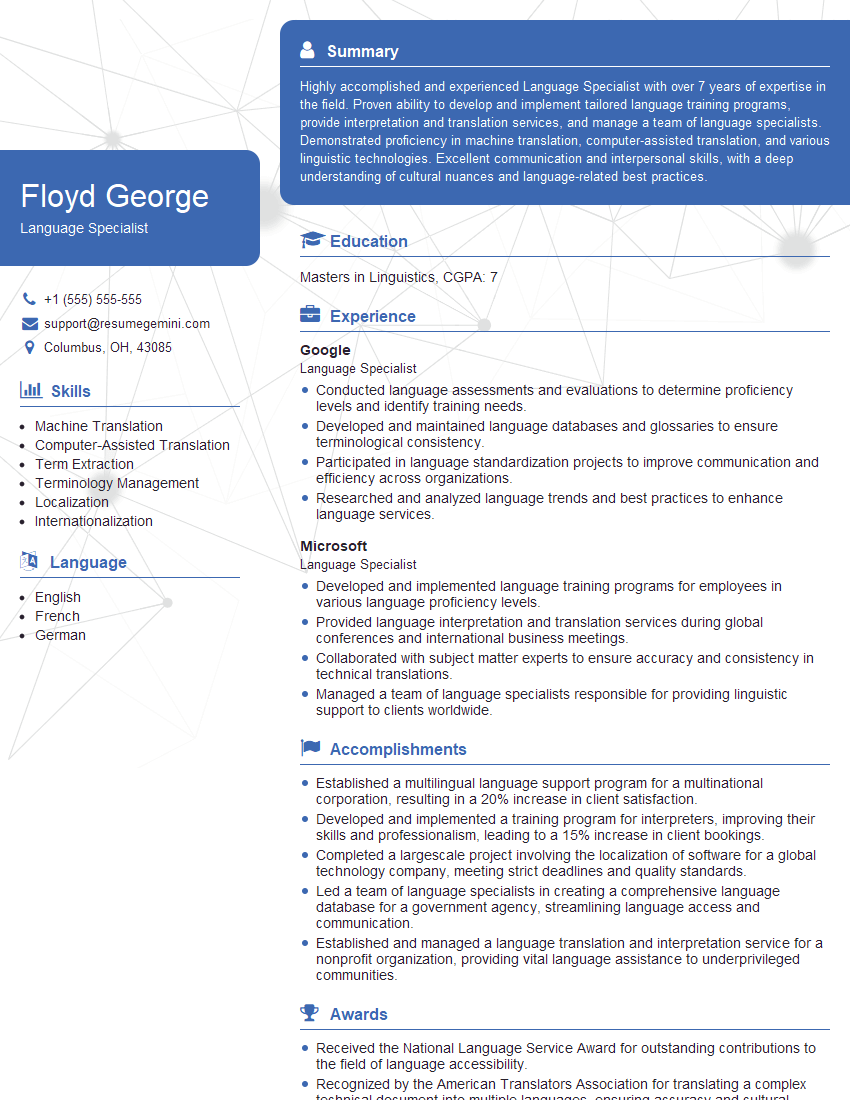
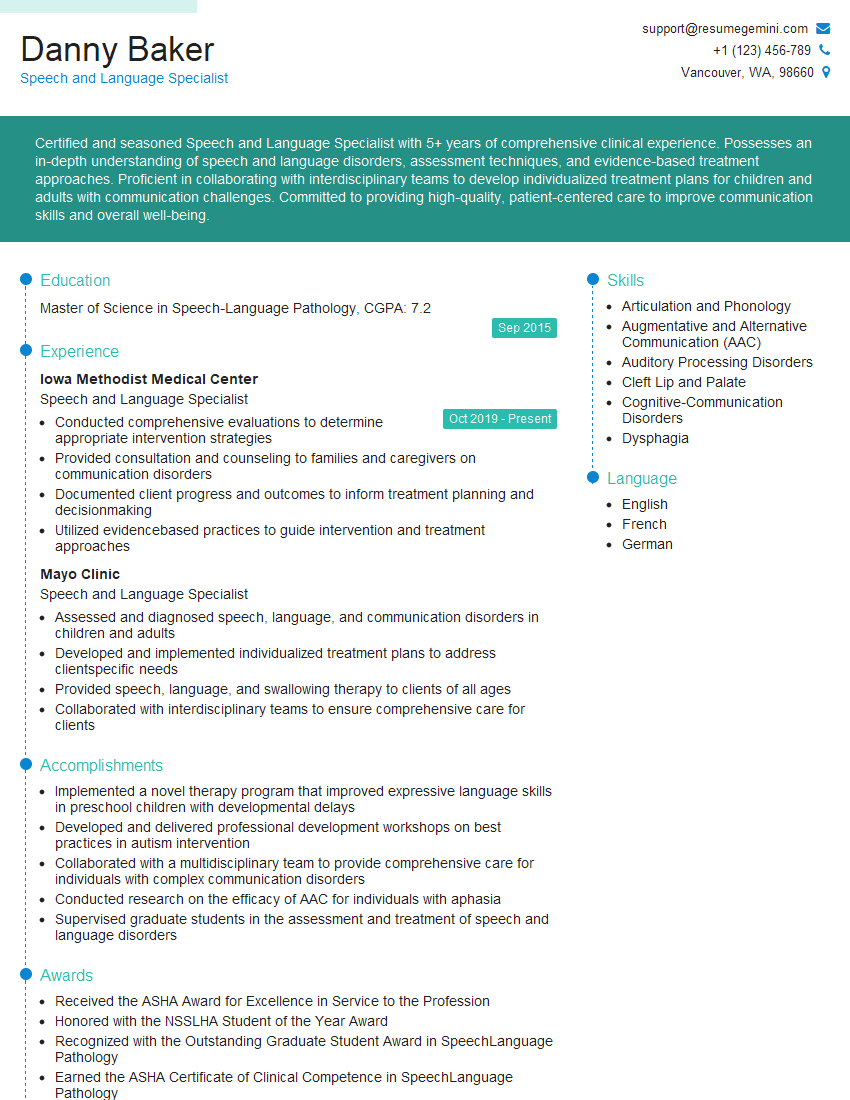
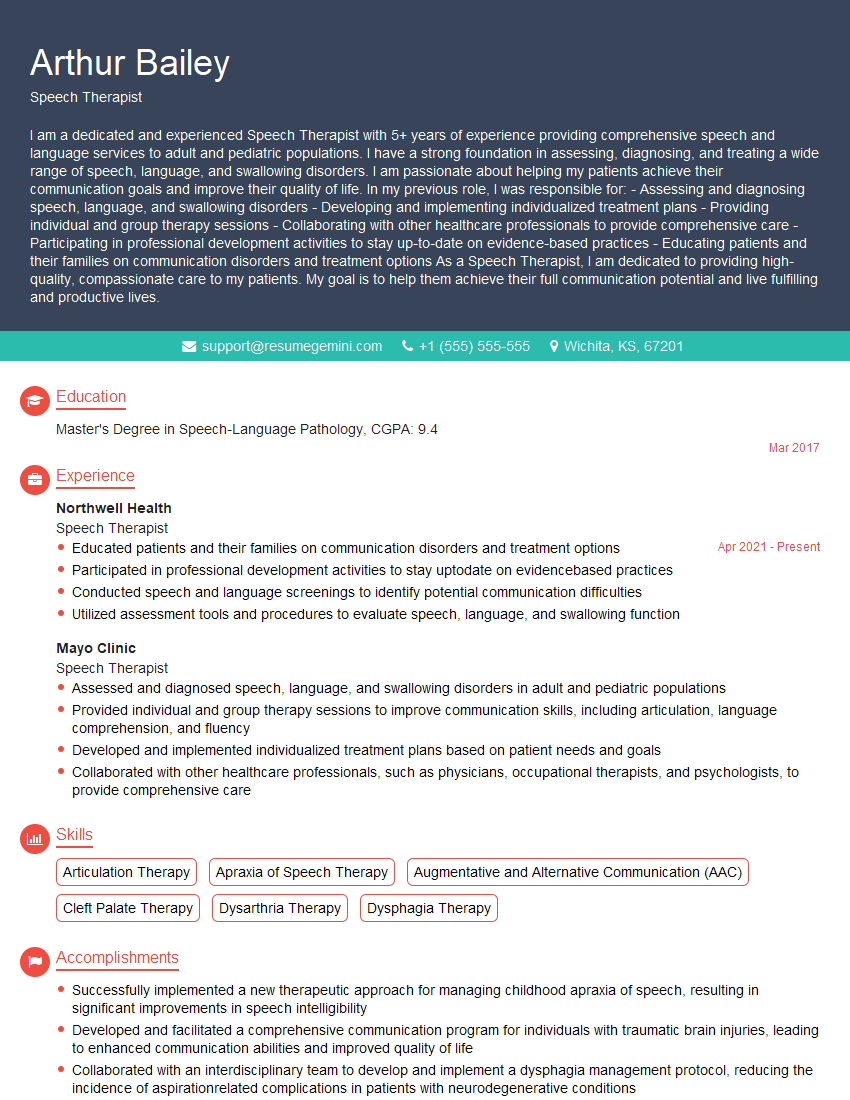
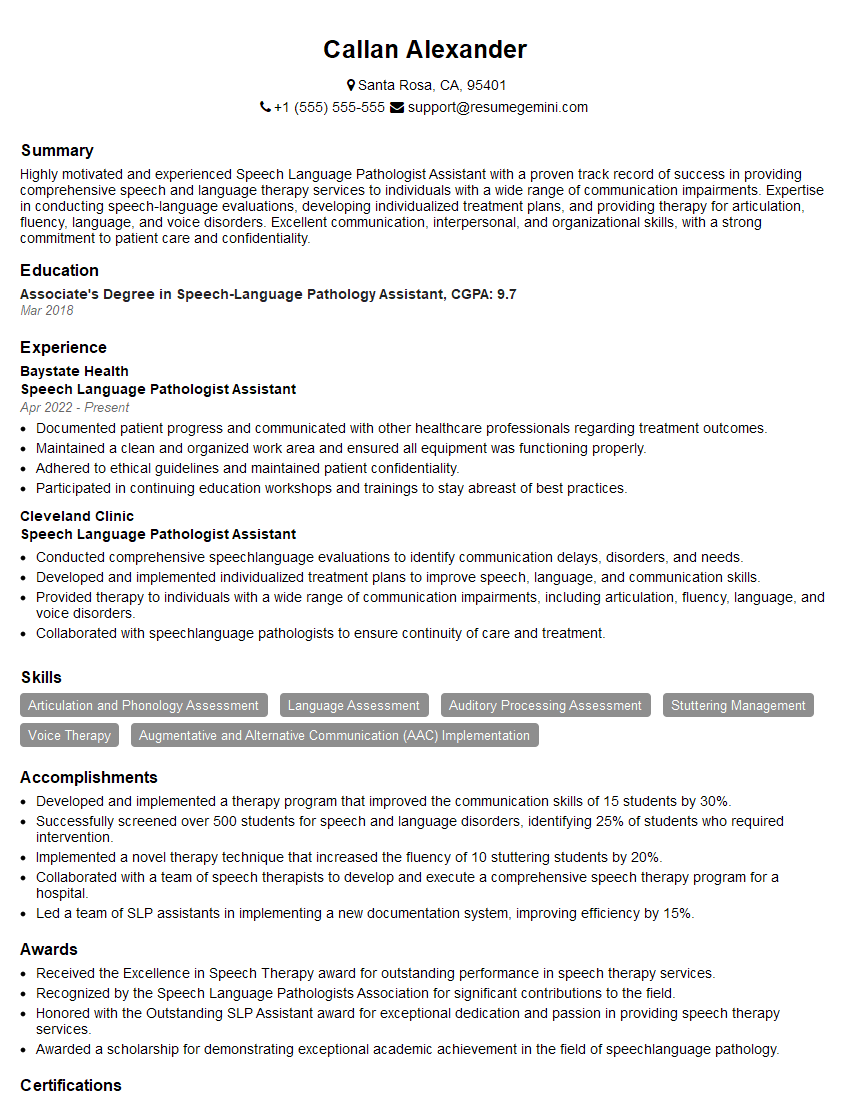
Mastering school-based speech-language services opens doors to a rewarding career with significant growth potential. You’ll be making a real difference in the lives of children, impacting their academic success and overall well-being. To maximize your job prospects, creating an ATS-friendly resume is crucial. This ensures your qualifications are effectively highlighted to potential employers. We highly recommend using ResumeGemini to build a professional and impactful resume. ResumeGemini offers a streamlined process and provides examples of resumes tailored to School-Based Speech-Language Services, helping you present your skills and experience in the best possible light.

Explore more articles
Users Rating of Our Blogs
Share Your Experience
We value your feedback! Please rate our content and share your thoughts (optional).
What Readers Say About Our Blog
To the interviewgemini.com Webmaster.
Very helpful and content specific questions to help prepare me for my interview!
Thank you
To the interviewgemini.com Webmaster.
This was kind of a unique content I found around the specialized skills. Very helpful questions and good detailed answers.
Very Helpful blog, thank you Interviewgemini team.