Every successful interview starts with knowing what to expect. In this blog, we’ll take you through the top Radiochemistry and Isotope Analysis interview questions, breaking them down with expert tips to help you deliver impactful answers. Step into your next interview fully prepared and ready to succeed.
Questions Asked in Radiochemistry and Isotope Analysis Interview
Q 1. Explain the principles of radioactive decay.
Radioactive decay is the process by which an unstable atomic nucleus loses energy by emitting radiation, such as alpha particles, beta particles, or gamma rays. This process transforms the unstable nucleus into a more stable one. Think of it like a ball rolling down a hill; the unstable nucleus is at the top of the hill (high energy state), and it wants to reach a lower, more stable energy state at the bottom. The emission of radiation is the ball’s way of losing that extra energy as it rolls down.
The type of decay and the energy released depend on the specific nuclide (a specific type of atom defined by the number of protons and neutrons in its nucleus) and its nuclear structure. Some nuclei decay very quickly, while others have half-lives that span billions of years.
Q 2. Describe different types of radioactive decay (alpha, beta, gamma).
There are three major types of radioactive decay:
- Alpha decay: An alpha particle, which is essentially a helium nucleus (2 protons and 2 neutrons), is emitted from the nucleus. This reduces the atomic number by 2 and the mass number by 4. For example, Uranium-238 decays via alpha emission to Thorium-234. Alpha particles are relatively large and heavy, and therefore have low penetration power; a sheet of paper can stop them.
- Beta decay: A beta particle, which is a high-energy electron (or positron), is emitted from the nucleus. This happens when a neutron transforms into a proton (beta-minus decay) or a proton transforms into a neutron (beta-plus decay). Beta-minus decay increases the atomic number by 1, while beta-plus decay decreases it by 1. The mass number remains unchanged. Beta particles are more penetrating than alpha particles; a thin sheet of aluminum can stop them.
- Gamma decay: A gamma ray, which is a high-energy photon (electromagnetic radiation), is emitted from the nucleus. This doesn’t change the atomic number or mass number but simply releases excess energy from an excited nucleus. Gamma rays are highly penetrating and require thick lead or concrete shielding.
Sometimes, a nucleus undergoes a series of decays before reaching a stable state. This is called a decay chain, and we often see this with heavy, radioactive elements like Uranium and Thorium.
Q 3. What are the common methods for radioisotope detection and measurement?
Radioisotope detection and measurement techniques depend on the type and energy of the emitted radiation. Common methods include:
- Geiger-Müller counters: Detect ionizing radiation (alpha, beta, gamma) by measuring the ionization it causes in a gas-filled tube. Simple, robust, and widely used for radiation surveys.
- Scintillation detectors: Detect radiation by the flashes of light (scintillations) produced when radiation interacts with a scintillating material. Very sensitive and can measure different types of radiation with good energy resolution.
- Semiconductor detectors: Similar to scintillation detectors but use semiconductors instead of scintillators. Offer excellent energy resolution and are widely used in high-resolution spectrometry.
- Autoradiography: A photographic technique used to visualize the distribution of radioactive isotopes in a sample. The radiation exposes a photographic film, creating an image.
- Liquid scintillation counting: A highly sensitive method used for measuring low-energy beta emitters, particularly useful for carbon-14 dating.
The choice of method depends on factors such as the type of radiation, the activity of the sample, and the required sensitivity and energy resolution.
Q 4. Explain the concept of half-life and its importance in radiochemistry.
The half-life of a radioactive isotope is the time it takes for half of the atoms in a sample to decay. It’s a constant characteristic of each radioactive isotope and is independent of the initial amount of the isotope. For example, if a sample has a half-life of 10 years, after 10 years, half the original amount will remain, after another 10 years, a quarter will remain, and so on.
The half-life is crucial in radiochemistry for several reasons:
- Dating: Half-lives are used to determine the age of materials, such as rocks and fossils (radiocarbon dating).
- Safety calculations: Knowing the half-life is essential for assessing the radiation risk associated with a radioactive material, predicting its decay rate, and designing appropriate storage and shielding.
- Radiopharmaceutical development: In medical applications, half-life is a crucial factor in selecting appropriate radioisotopes for diagnostics and therapeutics; you need an isotope that decays quickly enough to reduce radiation exposure after treatment, but slowly enough for effective diagnosis or therapy.
Q 5. Describe different techniques used in Isotope Dilution Mass Spectrometry (IDMS).
Isotope Dilution Mass Spectrometry (IDMS) is a highly accurate technique used to measure the abundance of isotopes in a sample. It involves adding a known amount of an isotopic standard (a sample with known isotopic composition) to the unknown sample. After thorough mixing, the isotopic composition of the mixture is measured using a mass spectrometer. The original abundance of the isotope in the unknown sample is then calculated using isotopic ratios.
Different techniques within IDMS include:
- Thermal Ionization Mass Spectrometry (TIMS): Used for measuring long-lived isotopes, particularly those with low isotopic abundances.
- Inductively Coupled Plasma Mass Spectrometry (ICP-MS): Used for measuring a wide range of isotopes and elements. This technique is often preferred for its ability to handle a wider range of sample matrices and its high sensitivity.
- Gas Source Mass Spectrometry (GSMS): Ideal for analyzing gaseous samples or those that can be easily converted to gases.
The choice of technique depends on factors such as the type of isotopes being measured and the matrix of the sample.
Q 6. How do you calculate the activity of a radioactive sample?
The activity of a radioactive sample is the rate at which it decays, typically expressed in Becquerels (Bq) or Curies (Ci). One Becquerel is equal to one decay per second. The activity (A) can be calculated using the following formula:
A = λNwhere:
Ais the activityλis the decay constant (related to the half-life:λ = ln(2) / t1/2, wheret1/2is the half-life)Nis the number of radioactive atoms in the sample
To calculate the activity, you need to know the half-life of the isotope and the number of radioactive atoms present. The number of atoms can be determined from the mass of the sample and Avogadro’s number.
Example: If you have 1 gram of Carbon-14 (half-life = 5730 years), you can calculate the number of Carbon-14 atoms, then using the formula, determine its activity.
Q 7. What are the safety precautions to be taken while handling radioactive materials?
Handling radioactive materials requires strict adherence to safety protocols to minimize radiation exposure. Key precautions include:
- Time: Minimize the time spent near radioactive sources. The shorter the exposure time, the lower the dose.
- Distance: Increase the distance from the source. Radiation intensity decreases with the square of the distance (inverse square law).
- Shielding: Use appropriate shielding materials (lead, concrete) to absorb radiation.
- Personal Protective Equipment (PPE): Wear protective clothing, gloves, and respirators as needed.
- Containment: Use appropriate containment systems (e.g., fume hoods, glove boxes) to prevent the spread of radioactive materials.
- Monitoring: Use radiation monitors to measure radiation levels and ensure safety.
- Training: Receive adequate training on safe handling procedures and emergency protocols.
- Waste disposal: Follow strict procedures for proper disposal of radioactive waste.
It is crucial to follow all regulations and guidelines set by regulatory bodies. Working with radioactive materials requires careful planning, meticulous execution, and a thorough understanding of radiation safety principles.
Q 8. Explain the principles of liquid scintillation counting.
Liquid scintillation counting (LSC) is a highly sensitive technique used to measure low-energy beta-emitting radionuclides. It works by converting the energy of beta particles (electrons or positrons) into light. The sample containing the radioactive material is dissolved or suspended in a liquid scintillation cocktail. This cocktail contains fluorescent molecules that absorb the energy from the beta particles and re-emit it as photons of light.
These light photons are then detected by photomultiplier tubes (PMTs) within the LSC instrument. The number of light pulses detected is directly proportional to the amount of radioactivity in the sample. It’s like a tiny, highly sensitive light show where each flash of light represents a radioactive decay event.
How it works in detail:
- Beta particle interaction: The beta particle interacts with the scintillation cocktail, exciting the fluorescent molecules.
- Light emission: The excited molecules return to their ground state, emitting photons of light in the visible or near-ultraviolet range.
- PMT detection: The PMTs detect these photons, converting them into electrical signals.
- Signal processing: The instrument processes these signals to determine the number of counts (decay events) per minute (CPM) or per second (CPS), which is then used to calculate the activity of the sample.
Applications: LSC is widely used in various fields, including environmental monitoring (measuring tritium in water), biomedical research (measuring the uptake of radiolabeled compounds in cells or tissues), and pharmaceutical research (measuring drug metabolism). For example, scientists use LSC to study how quickly a new drug is processed by the body by labeling the drug with a beta-emitting isotope like carbon-14 and monitoring its disappearance over time.
Q 9. Describe the applications of radioisotopes in medicine.
Radioisotopes have revolutionized medicine, finding applications in diagnosis, treatment, and research. They are used as tracers to visualize internal organs and processes, and as targeted therapies to destroy cancerous cells.
- Diagnosis: Techniques like Single Photon Emission Computed Tomography (SPECT) and Positron Emission Tomography (PET) use radiotracers, such as technetium-99m (Tc-99m) for SPECT and fluorodeoxyglucose (FDG) labeled with fluorine-18 (18F) for PET, to create images of the body’s internal structures and functions. For example, Tc-99m is commonly used in bone scans to detect fractures or infections.
- Treatment: Radioisotopes are used in radiotherapy to target and destroy cancerous cells. Examples include iodine-131 (131I) for thyroid cancer treatment and cobalt-60 (60Co) for external beam radiation therapy. Brachytherapy involves placing radioactive sources directly into or near the tumor.
- Research: Radioisotopes are essential tools in biomedical research for studying various biological processes at the molecular level. They allow researchers to track the movement and fate of molecules within the body, which is crucial in drug development and understanding disease mechanisms.
The choice of radioisotope depends on the specific application, considering factors such as half-life, type of radiation emitted, and its chemical behavior. For instance, the short half-life of Tc-99m (6 hours) minimizes radiation exposure to the patient during imaging, whereas the longer half-life of 131I (8 days) allows for sufficient time for it to target and destroy thyroid cells effectively.
Q 10. Explain the applications of radioisotopes in environmental science.
Radioisotopes are indispensable tools in environmental science, allowing scientists to study various environmental processes and track pollutant movement. They offer unique capabilities to monitor and analyze complex systems.
- Tracing water flow: Radioactive tracers, like tritium (3H) and deuterium (2H), are used to study groundwater movement and infiltration rates. This helps understand aquifer recharge and contaminant transport in groundwater systems.
- Pollution monitoring: Radioactive isotopes can be used to track the movement and fate of pollutants in the environment, such as the spread of pesticides or heavy metals. This can help assess the impact of pollutants on ecosystems and guide remediation efforts.
- Dating techniques: Radiocarbon dating (using 14C) is a cornerstone method in archaeology and geology for determining the age of organic materials. This method is fundamental for understanding past climates and human history.
- Sediment transport studies: Radioactive tracers can be used to study sediment transport in rivers and oceans, providing insights into erosion, deposition, and the dynamics of coastal systems.
For example, by introducing a small amount of a radioactive tracer into a river, scientists can monitor its movement downstream, revealing patterns of water flow and identifying potential pollution hotspots.
Q 11. What are the different types of radiation detectors?
Radiation detectors are instruments used to detect and measure ionizing radiation. The choice of detector depends on the type of radiation, the energy range, and the required sensitivity.
- Gas-filled detectors: These include Geiger-Müller counters, proportional counters, and ionization chambers. They work by ionizing gas atoms within a chamber, creating an electrical signal proportional to the radiation’s energy. Geiger counters are particularly sensitive and widely used for general radiation detection.
- Scintillation detectors: As described in LSC, these use a scintillator material to convert radiation energy into light, which is then detected by photomultiplier tubes. These are highly versatile and sensitive, offering excellent energy resolution for gamma and X-ray detection.
- Semiconductor detectors: These include high-purity germanium (HPGe) detectors and silicon detectors. They rely on the interaction of radiation with a semiconductor material, creating electron-hole pairs, resulting in an electrical signal. HPGe detectors offer extremely high energy resolution for gamma-ray spectroscopy.
- Thermoluminescent detectors (TLDs): TLDs store radiation energy as trapped electrons in a crystal lattice. When heated, these electrons are released, emitting light proportional to the absorbed dose. They are often used for personal dosimetry.
Each detector type has its own strengths and limitations, making the selection a crucial aspect of radiation measurement.
Q 12. How does a Geiger-Müller counter work?
A Geiger-Müller (GM) counter is a type of gas-filled radiation detector that detects ionizing radiation. It’s simple, robust, and relatively inexpensive, making it commonly used for radiation monitoring.
How it works: A GM counter consists of a cylindrical metal tube (cathode) filled with a gas (like argon) and a thin wire (anode) running down its center. A high voltage is applied across the anode and cathode. When ionizing radiation enters the tube, it ionizes the gas atoms, creating ion pairs (electrons and positive ions).
The electrons are accelerated towards the anode, and the ions towards the cathode. This process creates an avalanche of ionizations, resulting in a large electrical pulse. This pulse is amplified and recorded, indicating a detection event. Each pulse represents a single ionizing event, regardless of the radiation energy—the GM counter simply detects whether radiation is present rather than measuring its energy precisely.
Applications: GM counters are widely used in radiation safety monitoring, environmental monitoring, and in research for detecting the presence of alpha, beta, and gamma radiation, but not necessarily their energy. Think of it as a radiation ‘alarm’ system, indicating the presence of radiation but not precisely quantifying its intensity.
Q 13. Explain the concept of neutron activation analysis.
Neutron activation analysis (NAA) is a powerful non-destructive analytical technique used to determine the elemental composition of a sample. It relies on the principle that when a sample is bombarded with neutrons, some of the stable isotopes within the sample will absorb neutrons, becoming radioactive.
The process:
- Neutron irradiation: The sample is exposed to a neutron flux (a stream of neutrons) in a nuclear reactor or other neutron source.
- Radioisotope formation: Some stable isotopes in the sample capture neutrons, transforming into radioactive isotopes (radioisotopes). Each element has a unique set of isotopes and characteristic activation products.
- Decay and gamma emission: These radioisotopes then decay, emitting gamma rays with characteristic energies.
- Gamma spectroscopy: The emitted gamma rays are measured using a high-resolution gamma spectrometer. The energies and intensities of the gamma rays are used to identify and quantify the elements present in the original sample.
Applications: NAA is a highly sensitive and versatile technique used in a wide range of fields, including archaeology, geology, environmental science, and forensic science. It’s particularly useful for analyzing trace elements in samples and can determine the concentration of numerous elements simultaneously.
For example, NAA has been used to analyze the elemental composition of ancient pottery shards to determine their origin and age. It can also be used to detect trace contaminants in environmental samples, providing valuable data for assessing environmental pollution.
Q 14. Describe the principles of gamma spectroscopy.
Gamma spectroscopy is a technique used to identify and quantify gamma-emitting radionuclides in a sample. It’s based on the principle that each radionuclide emits gamma rays with characteristic energies, acting like a ‘fingerprint’ for the specific isotope.
The process: A sample containing gamma-emitting radionuclides is placed near a high-resolution gamma detector, often a high-purity germanium (HPGe) detector. The detector measures the energy of the gamma rays emitted by the sample. The spectrum of energies is then analyzed to identify the radionuclides present.
Gamma-ray spectrum: The resulting spectrum displays peaks at specific energies, each peak representing a specific gamma ray energy emitted by a particular radionuclide. The area under each peak is proportional to the amount of that radionuclide in the sample. Sophisticated software analyzes these spectra, helping to identify and quantify the various radionuclides present.
Applications: Gamma spectroscopy is widely used in various fields, including nuclear medicine (measuring the activity of radiopharmaceuticals), environmental monitoring (measuring the presence of radioactive contaminants), and nuclear safeguards (verifying the composition of nuclear materials).
For instance, in environmental monitoring, gamma spectroscopy is used to analyze soil and water samples to identify and quantify radioactive contaminants resulting from nuclear accidents or waste disposal sites. This provides crucial information for assessing environmental risks and implementing remediation measures.
Q 15. What are the challenges in handling low-level radioactive waste?
Handling low-level radioactive waste (LLRW) presents unique challenges due to its widespread nature and the long-term risks associated with even small amounts of radioactivity. The primary challenge lies in the sheer volume of LLRW generated from various sources like hospitals, research labs, and nuclear power plants. This volume necessitates efficient and cost-effective management strategies.
- Storage and Disposal: LLRW often requires long-term storage in specially designed facilities, which can be expensive to build and maintain. Finding suitable geological repositories that prevent leakage into the environment for thousands of years is a significant undertaking.
- Treatment and Volume Reduction: Before disposal, LLRW often needs treatment to reduce its volume and radioactivity. Methods like incineration, compaction, and solidification are employed, each with its own challenges and potential environmental impacts.
- Monitoring and Regulation: Continuous monitoring is critical to ensure the safety and integrity of storage sites and to prevent environmental contamination. Stringent regulations and licensing requirements add to the complexity of LLRW management, requiring meticulous record-keeping and compliance procedures.
- Public Perception: Public concerns about the potential risks of LLRW disposal can be significant and often impact the siting and operation of disposal facilities. Effective communication and transparency are essential to address these concerns.
For example, consider the challenge of managing contaminated medical waste from hospitals. The volume is substantial, the materials are diverse (e.g., syringes, bandages, fluids), and the handling requires specialized precautions to prevent accidental exposure. Efficient sorting, treatment, and secure disposal are crucial to minimizing environmental and health risks.
Career Expert Tips:
- Ace those interviews! Prepare effectively by reviewing the Top 50 Most Common Interview Questions on ResumeGemini.
- Navigate your job search with confidence! Explore a wide range of Career Tips on ResumeGemini. Learn about common challenges and recommendations to overcome them.
- Craft the perfect resume! Master the Art of Resume Writing with ResumeGemini’s guide. Showcase your unique qualifications and achievements effectively.
- Don’t miss out on holiday savings! Build your dream resume with ResumeGemini’s ATS optimized templates.
Q 16. Explain the concept of isotopic fractionation.
Isotopic fractionation is the process where isotopes of an element are differentially incorporated into various compounds or phases. This happens because isotopes of the same element have slightly different masses, leading to subtle differences in their physical and chemical properties. These differences, though small, can have significant consequences in various natural and industrial processes.
Imagine two isotopes, a lighter one (e.g., 12C) and a heavier one (e.g., 13C). The lighter isotope will generally react faster and diffuse more readily than the heavier one. This means that in a chemical reaction or a physical process like evaporation, the lighter isotope will be preferentially enriched in one product or phase compared to the heavier isotope.
Examples:
- Carbon Isotope Fractionation in Photosynthesis: Plants preferentially take up the lighter 12C isotope during photosynthesis, resulting in lower 13C/12C ratios in plant tissues compared to atmospheric CO2. This isotopic signature is used in various applications, including paleoclimatology and tracing the sources of organic matter.
- Kinetic Isotope Effects: During chemical reactions, the lighter isotope often reacts faster than the heavier one. The difference in reaction rates is called a kinetic isotope effect and can provide information about the reaction mechanism.
Understanding isotopic fractionation is crucial in diverse fields, including geochemistry, environmental science, and archaeology, enabling scientists to decipher past environmental conditions, trace pollution sources, and investigate metabolic pathways.
Q 17. How do you determine the isotopic composition of a sample?
Determining the isotopic composition of a sample involves precise measurement of the relative abundances of different isotopes of an element within that sample. The most common technique is mass spectrometry.
Mass Spectrometry: In mass spectrometry, the sample is first ionized, creating charged particles (ions). These ions are then accelerated and separated based on their mass-to-charge ratio (m/z) using a magnetic or electric field. The abundance of each isotope is measured by detecting the number of ions arriving at the detector for each m/z value.
Procedure:
- Sample Preparation: The sample needs to be prepared appropriately, often involving dissolution, purification, and conversion into a suitable form for introduction into the mass spectrometer. The nature of preparation heavily depends on the sample matrix and the element of interest.
- Ionization: Several ionization techniques exist, including electron ionization (EI), chemical ionization (CI), and inductively coupled plasma mass spectrometry (ICP-MS). The choice depends on the sample and analytical requirements.
- Mass Separation: The ions are then separated based on their m/z ratio in the mass analyzer (e.g., quadrupole, time-of-flight).
- Detection: The separated ions are detected, and the signal intensity is proportional to the abundance of each isotope.
- Data Analysis: The isotopic ratios are calculated from the measured ion intensities after correcting for background noise and instrumental mass bias.
Other techniques, such as nuclear magnetic resonance (NMR) spectroscopy, can provide isotopic information in specific cases, but mass spectrometry remains the most prevalent method for precise isotopic measurements.
Q 18. What is the difference between alpha, beta and gamma radiation in terms of penetration power?
Alpha, beta, and gamma radiation are all types of ionizing radiation emitted from radioactive materials, but they differ significantly in their penetrating power.
- Alpha (α) radiation: Consists of helium nuclei (two protons and two neutrons). Alpha particles are relatively large and highly charged, meaning they interact strongly with matter. They have a low penetrating power and can be stopped by a sheet of paper or even the outer layer of skin. However, if alpha-emitting isotopes are ingested or inhaled, they pose a significant internal radiation hazard.
- Beta (β) radiation: Consists of high-energy electrons or positrons. Beta particles are smaller and less charged than alpha particles, giving them greater penetrating power. They can penetrate a few millimeters of aluminum or a few centimeters of tissue. Shielding against beta radiation requires denser materials than those needed for alpha radiation.
- Gamma (γ) radiation: Consists of high-energy photons. Gamma rays are electromagnetic radiation and have no mass or charge. They are highly penetrating, requiring thick shielding materials such as lead or concrete for effective attenuation. Gamma rays can easily penetrate the human body, posing a significant external radiation hazard.
In summary, the penetrating power increases from alpha to beta to gamma radiation. This difference necessitates the use of appropriate shielding measures depending on the type of radiation being handled.
Q 19. Explain the concept of radiochemical separation techniques.
Radiochemical separation techniques are methods used to isolate and purify specific radioactive isotopes from a mixture of radioactive and non-radioactive substances. These techniques are crucial in various applications, including radioisotope production, environmental monitoring, and nuclear fuel reprocessing.
These techniques leverage the differences in chemical properties of the various components, such as solubility, ion exchange, and volatility, to achieve separation. The radioactive isotopes are often present in trace amounts, demanding highly sensitive and selective procedures.
Common Techniques:
- Solvent Extraction: This technique uses two immiscible solvents to selectively extract the desired radioactive isotope from a solution. The distribution of the isotope between the two solvents depends on its chemical properties and the properties of the solvents used.
- Ion Exchange Chromatography: This method uses a resin that selectively binds certain ions, allowing for the separation of different isotopes based on their charge and affinity for the resin.
- Precipitation: This involves adding a reagent that causes the radioactive isotope to precipitate out of solution, leaving other substances in solution. The precipitate can then be separated by filtration or centrifugation.
- Distillation: Used to separate volatile radioactive isotopes from non-volatile substances.
The choice of separation technique depends on several factors, including the chemical properties of the isotopes involved, the matrix of the sample, and the desired level of purity. For example, in the production of medical radioisotopes, highly pure isotopes are needed, requiring multiple steps of sophisticated radiochemical separation techniques to eliminate radioactive and non-radioactive contaminants.
Q 20. Describe the application of radiotracers in chemical reactions.
Radiotracers are radioactive isotopes that are incorporated into a chemical system to study its behavior. They act as tiny tags that can be followed throughout the reaction, providing insights into the reaction mechanism, reaction rates, and the fate of various reactants and products.
Applications:
- Reaction Mechanism Studies: By tracking the movement of a radiolabeled reactant or intermediate, one can determine the sequence of steps involved in the reaction and identify possible reaction pathways. For example, using a 14C-labeled reactant could trace the carbon atom’s path in an organic reaction.
- Reaction Rate Determination: Radiotracers can be used to measure the rate of a chemical reaction by monitoring the disappearance of the reactant or appearance of the product. The rate of change in radioactivity is directly related to the rate of reaction.
- Tracing the Fate of Reactants: Radiotracers can be employed to determine where the reactants end up after the reaction. This is particularly useful in complex reactions where the products are numerous or difficult to separate.
- Studying Transport and Distribution: Radiotracers are used to study the transport and distribution of substances in various systems. For example, the movement of pollutants in the environment can be investigated by introducing a radiolabeled pollutant.
The use of radiotracers requires careful selection of the radioisotope based on its half-life, decay properties, and ease of detection. The choice also considers the chemical compatibility of the isotope with the system under investigation and any potential safety implications.
Q 21. What are the regulatory requirements for handling radioactive materials?
Regulations for handling radioactive materials are stringent and vary depending on the type and quantity of radioactive material, the application, and the location. These regulations aim to protect workers, the public, and the environment from the harmful effects of ionizing radiation.
Key Regulatory Aspects:
- Licensing and Permits: The use and possession of radioactive materials usually require licenses or permits from the relevant regulatory authorities. These licenses stipulate strict conditions for handling, storage, and disposal.
- Radiation Safety Training: Personnel working with radioactive materials must receive adequate training in radiation safety principles and practices. This training includes proper handling procedures, radiation protection measures, emergency response procedures, and waste management protocols.
- Radiation Monitoring and Dosimetry: Regular monitoring of radiation levels and worker exposure is mandatory using instruments like Geiger counters and personal dosimeters. Exposure records must be maintained carefully.
- Shielding and Containment: Appropriate shielding and containment measures must be implemented to prevent radiation exposure and environmental contamination. The choice of shielding materials depends on the type and energy of radiation involved.
- Waste Management: Strict regulations govern the management of radioactive waste, encompassing collection, storage, treatment, and disposal. Different types of radioactive waste require different handling approaches based on their radioactivity levels and physical forms.
- Emergency Preparedness: Facilities handling radioactive materials must have comprehensive emergency plans in place to deal with accidental spills, leaks, or other unforeseen events.
Regulatory bodies like the Nuclear Regulatory Commission (NRC) in the United States or the equivalent agencies in other countries set these standards and ensure compliance through inspections and enforcement activities. These regulations are designed to protect health and safety while allowing for the responsible use of radioactive materials in research, medicine, and industry.
Q 22. How does mass spectrometry work and how is it used in isotope analysis?
Mass spectrometry is a powerful analytical technique used to determine the mass-to-charge ratio (m/z) of ions. In essence, it works by ionizing a sample, separating the ions based on their m/z ratio using electric and magnetic fields, and then detecting the abundance of each ion. This allows us to determine the precise mass of molecules and the relative abundance of different isotopes within a sample.
In isotope analysis, mass spectrometry is indispensable. Different isotopes of the same element have the same number of protons but varying numbers of neutrons, resulting in slightly different masses. Mass spectrometry allows us to precisely measure these mass differences, enabling us to determine the isotopic composition of a sample. For example, we can determine the ratio of 12C to 13C in a sample of organic matter, which can provide information about its origin and age. This is crucial in various fields, including archaeology, environmental science, and geochemistry.
Different types of mass spectrometers exist, each with its strengths and weaknesses. For instance, Inductively Coupled Plasma Mass Spectrometry (ICP-MS) is widely used for trace element analysis, while Accelerator Mass Spectrometry (AMS) offers exceptional sensitivity for measuring long-lived radioisotopes like 14C.
Q 23. Explain different methods for sample preparation in radiochemistry.
Sample preparation in radiochemistry is critical as it determines the success of subsequent analyses. It involves several steps aiming to isolate and purify the analyte of interest while ensuring safety. Methods vary greatly depending on the sample matrix and the radionuclide being analyzed.
- Wet Chemistry Techniques: These involve dissolving the sample using acids or bases, followed by chemical separations like precipitation, solvent extraction, or ion exchange chromatography. For example, dissolving a soil sample in aqua regia (a mixture of nitric and hydrochloric acid) to extract trace elements before analysis.
- Dry Ashing: Involves heating the sample at high temperatures to oxidize organic matter and leave behind inorganic components, useful when analyzing radionuclides in biological samples. Careful control of temperature is crucial to avoid the loss of volatile radionuclides.
- Microwave Digestion: A faster alternative to traditional wet ashing, employing microwave energy to accelerate the dissolution process. This is more efficient and reduces the volume of reagents needed.
- Fusion Techniques: These involve melting the sample with a flux at high temperatures to convert it into a soluble form, suitable for samples that are difficult to dissolve by conventional methods.
After the initial dissolution or ashing, further purification steps are often necessary. This might involve specialized techniques like liquid chromatography or electrophoresis, depending on the specific requirements of the analysis.
Q 24. How do you ensure quality control and quality assurance in radiochemical analysis?
Quality control (QC) and quality assurance (QA) are paramount in radiochemical analysis, given the potential health hazards and the need for accurate results. They involve a multi-faceted approach encompassing:
- Standard Reference Materials (SRMs): Using certified SRMs with known concentrations of the analytes to calibrate instruments and validate analytical methods. This ensures the accuracy and precision of measurements.
- Blank Samples: Analyzing blank samples (free of the analyte) to assess background contamination and correct for potential interferences.
- Duplicate Samples: Analyzing duplicate samples to evaluate the precision of the measurements. High variability indicates problems with the method or equipment.
- Spike Recovery Studies: Adding a known amount of the analyte (a spike) to a sample before analysis to determine the recovery efficiency of the method. This helps assess the accuracy of the analysis.
- Regular Instrument Calibration and Maintenance: Regular calibration and preventative maintenance are crucial to ensure the accuracy and reliability of instruments used in radiochemical analysis.
- Personnel Training and Proficiency Testing: Well-trained personnel are essential. Regular proficiency tests help monitor the competence of analysts.
Rigorous documentation of all procedures and results is essential for traceability and regulatory compliance.
Q 25. Describe the principles of radioimmunoassay (RIA).
Radioimmunoassay (RIA) is a highly sensitive technique used to measure the concentration of a substance (the analyte) in a sample, typically a biological fluid. It leverages the highly specific binding between an antigen and its antibody. The principle involves competitive binding:
A known amount of radioactively labeled analyte (a radiotracer) and an unlabeled analyte (from the sample) compete for binding sites on a limited amount of specific antibody. The amount of radiolabeled analyte bound to the antibody is inversely proportional to the concentration of unlabeled analyte in the sample. By measuring the radioactivity in the bound fraction, one can determine the concentration of the unlabeled analyte.
For instance, RIA is used to measure hormone levels in blood. A known amount of radiolabeled hormone competes with the hormone in the patient’s blood sample for binding to a specific antibody. The more hormone in the sample, the less radiolabeled hormone will bind, resulting in lower radioactivity in the bound fraction. RIA has been superseded in many applications by enzyme-linked immunosorbent assays (ELISAs), but it remains valuable due to its high sensitivity.
Q 26. Discuss the ethical considerations in handling radioactive materials.
Ethical considerations in handling radioactive materials are paramount due to their potential for harm. These include:
- Radiation Safety: Strict adherence to radiation safety protocols is mandatory. This involves minimizing exposure to radiation through the use of appropriate shielding, remote handling techniques, and personal protective equipment (PPE).
- Waste Management: Proper disposal of radioactive waste is crucial to prevent environmental contamination and protect human health. Radioactive waste must be handled and disposed of according to strict regulatory guidelines.
- Security and Safeguarding: Radioactive materials must be secured against theft or unauthorized access. Robust security measures are necessary to prevent their misuse for illicit purposes, such as making radiological weapons.
- Transparency and Informed Consent: In research involving human subjects, informed consent must be obtained. Transparency in research protocols and risk assessment is also essential.
- Regulatory Compliance: Strict adherence to all relevant national and international regulations governing the handling, use, and disposal of radioactive materials.
Ethical considerations extend to the responsible use of radioactive materials in research, medicine, and industry, ensuring that the benefits outweigh the risks.
Q 27. Explain the impact of radiation on living organisms.
Radiation’s impact on living organisms depends on several factors: the type of radiation, the dose received, and the duration of exposure. Ionizing radiation, such as alpha, beta, and gamma radiation, can damage DNA and other cellular components. This can lead to:
- Acute Radiation Sickness: High doses of radiation can cause acute radiation sickness, characterized by nausea, vomiting, fatigue, and potentially death.
- Cancer: Radiation exposure increases the risk of developing various types of cancer. The risk is dose-dependent; higher doses lead to a greater risk.
- Genetic Damage: Radiation can damage DNA, leading to mutations that can be passed on to future generations.
- Other Health Effects: Other effects can include cataracts, sterility, and immune system suppression.
The severity of these effects depends on the dose received. Low doses generally have a smaller impact, while high doses can lead to severe and potentially fatal consequences. The biological effects of radiation are complex and are actively researched to improve risk assessment and mitigation strategies.
Q 28. Describe the role of radiochemistry in nuclear forensics.
Radiochemistry plays a vital role in nuclear forensics, which involves investigating the origin and use of nuclear and radioactive materials in criminal activities or incidents like nuclear terrorism or illicit trafficking of nuclear materials.
Radiochemical analysis is used to identify the specific radionuclides present in a sample, their isotopic ratios, and their concentration. This information helps determine the source of the material, the type of nuclear reactor or process involved, and the time elapsed since the material was produced. For example, the isotopic ratios of uranium or plutonium can provide clues about the origin of the material.
Techniques like neutron activation analysis (NAA), inductively coupled plasma mass spectrometry (ICP-MS), and alpha/gamma spectroscopy are crucial for characterizing nuclear materials. By comparing the isotopic signature of the seized material with known signatures from various sources, investigators can trace its origin and potentially identify those responsible for its illicit use or trafficking.
Key Topics to Learn for Your Radiochemistry and Isotope Analysis Interview
Ace your upcoming interview by focusing on these key areas. Remember, demonstrating a deep understanding of both theoretical principles and practical applications is crucial.
- Nuclear Chemistry Fundamentals: Radioactive decay kinetics (including half-life calculations), nuclear reactions, and the principles of radioactivity.
- Isotope Separation Techniques: Understand the principles and applications of various separation methods, such as mass spectrometry, gas chromatography, and centrifugation. Be prepared to discuss their advantages and limitations.
- Radioactive Tracer Techniques: Master the use of radioisotopes in tracing chemical and biological processes. Discuss specific applications in your field of interest.
- Radiation Detection and Measurement: Familiarize yourself with different types of radiation detectors (e.g., Geiger counters, scintillation detectors) and their applications. Understand the concepts of radiation shielding and safety.
- Sample Preparation and Analysis: Discuss techniques for preparing samples for radiochemical analysis, including dissolution, extraction, and purification methods. Understand quality control and quality assurance procedures.
- Data Analysis and Interpretation: Be comfortable interpreting data obtained from various analytical techniques, performing calculations, and drawing meaningful conclusions. Understanding statistical analysis is key.
- Health and Safety Regulations: Demonstrate familiarity with relevant safety regulations and best practices for handling radioactive materials.
- Specific Applications (Tailor to your experience): Focus on applications relevant to your background and the specific job description. This could include environmental monitoring, medical imaging, or industrial applications.
- Problem-Solving and Critical Thinking: Practice approaching complex problems systematically and explaining your thought process clearly. Be ready to discuss challenges you’ve overcome in your previous work.
Next Steps: Position Yourself for Success
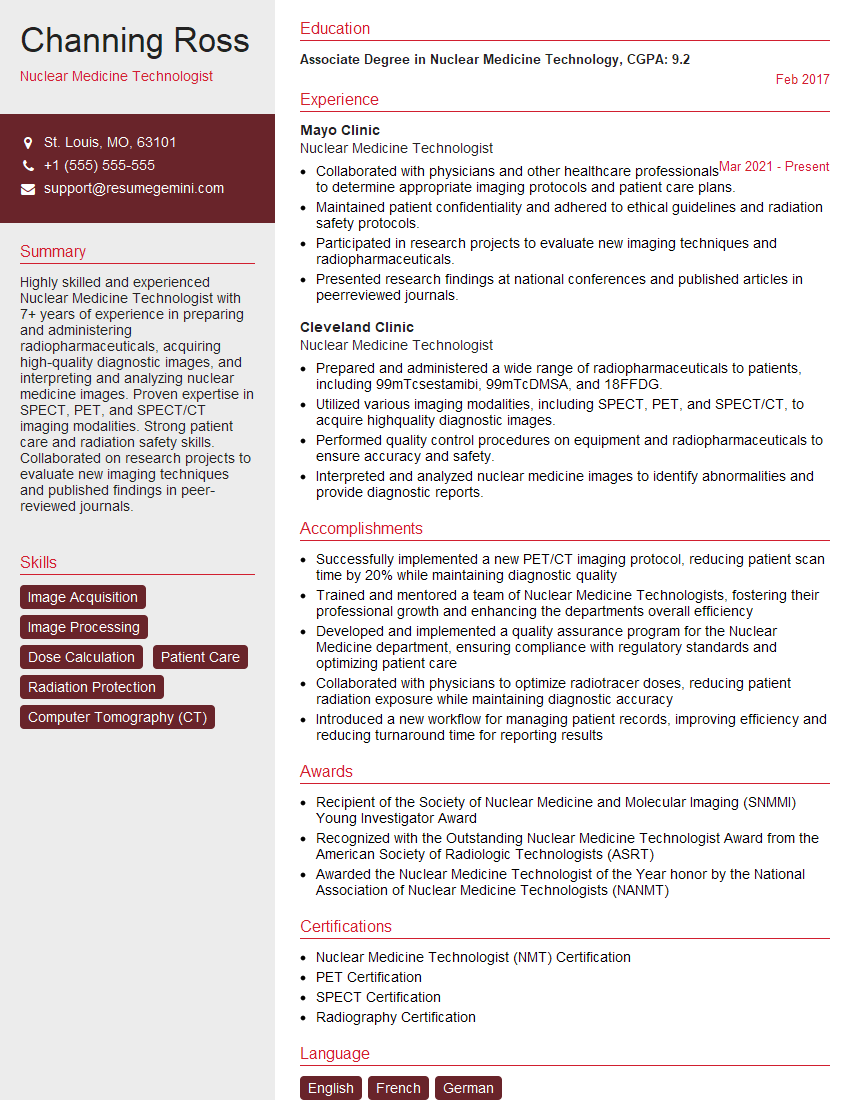
Mastering Radiochemistry and Isotope Analysis opens doors to exciting career opportunities in research, industry, and government. To maximize your job prospects, a strong resume is essential. Building an ATS-friendly resume is crucial for getting your application noticed by recruiters and hiring managers. We highly recommend using ResumeGemini to craft a compelling resume that highlights your skills and experience effectively.
ResumeGemini offers a user-friendly platform and provides examples of resumes tailored to Radiochemistry and Isotope Analysis, helping you present your qualifications in the best possible light. Take the next step towards your dream career today!


Explore more articles
Users Rating of Our Blogs
Share Your Experience
We value your feedback! Please rate our content and share your thoughts (optional).
What Readers Say About Our Blog
To the interviewgemini.com Webmaster.
Very helpful and content specific questions to help prepare me for my interview!
Thank you
To the interviewgemini.com Webmaster.
This was kind of a unique content I found around the specialized skills. Very helpful questions and good detailed answers.
Very Helpful blog, thank you Interviewgemini team.