The thought of an interview can be nerve-wracking, but the right preparation can make all the difference. Explore this comprehensive guide to Radiological Health Risk Assessment interview questions and gain the confidence you need to showcase your abilities and secure the role.
Questions Asked in Radiological Health Risk Assessment Interview
Q 1. Explain the ALARA principle and its application in radiological protection.
The ALARA principle, which stands for As Low As Reasonably Achievable, is a fundamental cornerstone of radiological protection. It dictates that all exposures to ionizing radiation should be kept as far below regulatory limits as is reasonably achievable, taking into account economic and social factors. This isn’t about eliminating all radiation exposure – that’s often impractical – but about minimizing it to the greatest extent possible.
Application in radiological protection: ALARA is implemented through a multi-faceted approach. For instance, in a hospital setting using X-ray machines, ALARA might involve optimizing imaging techniques to reduce the dose needed to achieve a diagnostic image. This could include using higher-speed image receptors, shielding patients with lead aprons, or employing collimation to restrict the X-ray beam to the area of interest. In nuclear power plants, ALARA could mean using robotic systems for maintenance tasks in high-radiation areas, minimizing personnel exposure. It’s a continuous process of evaluating practices and implementing improvements to reduce exposure wherever feasible.
Q 2. Describe the different types of ionizing radiation and their potential health effects.
Ionizing radiation encompasses various types of energetic particles or waves capable of removing electrons from atoms, leading to ionization. The main types include:
- Alpha particles: Heavily ionizing but with low penetrating power, easily stopped by a sheet of paper or skin. Internally, however, alpha emitters are highly damaging.
- Beta particles: Less ionizing than alpha particles but with greater penetrating power, able to penetrate several millimeters of tissue. Shielding requires thicker materials like aluminum or plastic.
- Gamma rays and X-rays: Electromagnetic radiation with high penetrating power, requiring thick shielding like lead or concrete. They can penetrate deeply into the body, causing damage throughout.
- Neutrons: Uncharged particles that interact strongly with atomic nuclei, causing significant damage. Shielding often involves materials rich in hydrogen, such as water or polyethylene.
Potential Health Effects: Exposure to ionizing radiation can cause a range of health effects, from mild skin reddening to severe health problems like cancer, depending on the dose, type of radiation, and the exposed tissue. High doses can lead to acute radiation syndrome (ARS), characterized by nausea, vomiting, and other serious symptoms. Even low doses are thought to have a small risk of increasing the probability of cancer over a lifetime. The effects can be stochastic (probabilistic, like cancer) or deterministic (certain to occur above a threshold dose, like skin burns).
Q 3. What are the key regulatory requirements for radiological protection in your country/region?
(Note: Regulatory requirements vary significantly by country/region. The following is a general example and may not reflect the specific regulations of any particular jurisdiction. Always consult your country’s or region’s specific regulatory authority for the accurate and up-to-date information.)
Many countries have regulatory frameworks for radiological protection based on the recommendations of the International Commission on Radiological Protection (ICRP). These typically include:
- Dose limits: Regulations set limits on the amount of radiation workers and the public can be exposed to, usually expressed in effective dose (mSv). Occupational limits are typically higher than public limits.
- Licensing and registration: Requirements for licenses and registrations for facilities handling radioactive materials or operating radiation-producing equipment.
- Safety standards and practices: Prescriptions for the design, construction, and operation of radiation facilities and equipment, including safety procedures.
- Emergency preparedness: Requirements for plans and procedures to respond to radiation accidents or emergencies.
- Monitoring and reporting: Regulations mandate radiation monitoring programs to assess exposure levels and report any incidents or unusual findings.
It’s crucial to consult the relevant national or regional regulatory bodies such as the Nuclear Regulatory Commission (NRC) in the USA or the Environment Agency in the UK for precise and comprehensive details.
Q 4. How do you conduct a radiological risk assessment, including identifying hazards, assessing risks, and implementing controls?
A radiological risk assessment involves a systematic process to identify, evaluate, and control potential hazards from radiation exposure.
- Hazard Identification: This step involves identifying all potential sources of radiation exposure, including radioactive materials, X-ray equipment, and other sources. This requires a thorough survey of the area and the processes involved.
- Risk Assessment: This involves determining the magnitude of the potential risks associated with each identified hazard. This is often done by estimating the potential dose to individuals or populations, considering the type and energy of the radiation, the time of exposure, and the distance from the source. This often involves calculations using dose-rate equations and specific factors based on the type of radiation.
- Risk Control: This step involves implementing control measures to mitigate the identified risks. These could include administrative controls (e.g., limiting access to radiation areas, implementing work procedures), engineering controls (e.g., shielding, containment, ventilation), and personal protective equipment (PPE) like lead aprons and dosimeters.
- Monitoring and Review: Regular monitoring of radiation levels and worker doses is vital to ensure that the implemented controls remain effective and that risks remain within acceptable limits. Regular reviews of the risk assessment are essential to address changes in processes or equipment.
For example, a risk assessment for a medical X-ray facility might involve reviewing the shielding of X-ray rooms, ensuring proper collimation, optimizing imaging parameters to minimize radiation dose, and providing lead aprons to patients and staff. Regular testing of radiation levels and staff dosimeter readings are also crucial elements in the ongoing process.
Q 5. Explain the concept of effective dose and its significance in radiation protection.
Effective dose is a measure of the overall radiation risk to the whole body from different types of radiation and different organs. It accounts for the varying sensitivities of different organs and tissues to radiation. It’s expressed in Sieverts (Sv) or millisieverts (mSv), where 1 Sv = 1000 mSv.
Significance in radiation protection: Effective dose is crucial because it provides a single metric to compare the risks from different radiation sources and exposure scenarios. Regulatory limits are often expressed in terms of effective dose, and it’s used in risk assessments to estimate the potential health consequences of radiation exposure. It’s a weighted average dose which considers the type of radiation and the tissue weighting factors that reflect the relative radiosensitivity of different organs.
For instance, an effective dose of 1 mSv from gamma rays is considered more harmful than a 1 mSv effective dose from beta particles to the whole body, due to the penetrating power and therefore the tissue affected. This calculation allows us to compare seemingly disparate doses and manage the risk more effectively.
Q 6. Describe different methods for measuring radiation dose.
Several methods exist for measuring radiation dose, each with its own advantages and limitations:
- Dosimetry: Personal dosimeters (e.g., thermoluminescent dosimeters (TLDs), optically stimulated luminescence (OSL) dosimeters, film badges) are worn by radiation workers to measure the cumulative dose received over a period.
- Area Monitoring: Instruments such as Geiger-Müller counters, ionization chambers, and scintillation detectors measure the radiation levels in the environment to assess the radiation field in a specific area. This is used for environmental surveys and to identify areas with high radiation levels.
- Biological Dosimetry: This method uses biological markers (e.g., chromosome aberrations, DNA damage) in blood samples to estimate the radiation dose received by an individual, mostly used in cases of accidental overexposure.
The choice of method depends on the application. Personal dosimetry tracks individual exposures, area monitoring assesses environmental levels, and biological dosimetry helps estimate doses in cases where the exposure circumstances are unclear.
Q 7. What are the different types of radiation detectors and their applications?
A variety of radiation detectors are used, each suited to different types of radiation and applications:
- Geiger-Müller (GM) counters: These are widely used for detecting beta and gamma radiation. They’re relatively simple, portable, and inexpensive but lack precision in dose measurement.
- Ionization chambers: These provide more accurate dose measurements than GM counters and are used for a broader range of radiation types. They’re often used for calibrating other instruments and environmental monitoring.
- Scintillation detectors: These detectors convert ionizing radiation into light pulses, which are then detected and measured. They offer high sensitivity and can be used for a wide range of radiation types, including alpha, beta, gamma, and X-rays.
- Thermoluminescent dosimeters (TLDs): These are commonly used as personal dosimeters. They store energy when exposed to radiation, which is released as light when heated, allowing the absorbed dose to be measured.
- Optically stimulated luminescence (OSL) dosimeters: Similar to TLDs, these measure radiation exposure by releasing light upon stimulation with laser light. They provide better accuracy than TLDs and can be reused multiple times.
The selection of a detector depends on the type of radiation being measured, the required accuracy, portability needs, and cost considerations. For example, a GM counter might be ideal for a quick radiation survey, while a scintillation detector might be necessary for precise measurements in a research laboratory.
Q 8. How do you calculate the shielding required to reduce radiation exposure to acceptable levels?
Calculating the shielding required to reduce radiation exposure involves understanding the basic principles of radiation attenuation. Essentially, we’re aiming to reduce the intensity of the radiation reaching a person to an acceptable level. This is primarily done using a material that absorbs radiation, like lead, concrete, or even water. The calculation itself depends on several factors.
- Initial Radiation Intensity: This is the starting point – how much radiation is present before shielding is applied. It’s measured in units like Gray (Gy) or Sieverts (Sv).
- Shielding Material: Different materials have different attenuation properties. Lead is highly effective, but concrete is often more cost-effective for lower energy radiation.
- Radiation Energy: Higher energy radiation (like gamma rays) requires significantly more shielding than lower energy radiation (like alpha particles).
- Required Reduction Factor: This is the factor by which you need to reduce the initial radiation intensity. For instance, if you want to reduce exposure by a factor of 10, this is your reduction factor.
The calculation often involves the concept of Half-Value Layer (HVL). The HVL is the thickness of shielding material required to reduce the radiation intensity by half. We can use this to determine the total shielding thickness required. For example, if the HVL for a specific shielding material and radiation energy is 5 cm, and we need a reduction factor of 10, we’ll need approximately 15 cm of shielding (as 10 is approximately 2 to the power of 3.3, and 3.3 * 5cm ≈ 15cm).
In practice, this calculation often involves complex software or specialized radiation physics calculations. The exact formula can vary based on the type of radiation and the geometry of the shielding setup. It’s crucial to consult relevant regulations and standards, as well as experienced radiation safety professionals to ensure accurate and safe shielding design.
Q 9. Explain the difference between internal and external radiation exposure.
The key difference between internal and external radiation exposure lies in where the radioactive material is located relative to the body.
- External Exposure: This occurs when a source of radiation is outside the body. Your body is exposed to radiation emitted from the source. Think of an X-ray – the machine is external, and the radiation passes through your body. Shielding is effective against external exposure.
- Internal Exposure: This happens when radioactive material gets inside the body through inhalation, ingestion, or absorption through the skin. The radiation is then emitted from within the body, directly damaging cells and tissues. This is much more serious than external exposure because shielding is ineffective.
Think of it like this: external exposure is like standing outside a bonfire, you can move away or shield yourself. Internal exposure is like having embers inside your clothing, causing continuous harm.
The consequences of each type also differ. Internal exposure often leads to higher effective doses due to proximity to sensitive organs and the prolonged exposure period.
Q 10. Describe the process of developing and implementing a radiation safety program.
Developing and implementing a robust radiation safety program is crucial for protecting workers and the public. It involves a systematic approach encompassing several key steps:
- Risk Assessment: Identify all radiation sources, estimate potential exposures, and evaluate associated risks.
- Establishment of Procedures: Define clear procedures for handling radioactive materials, performing radiological work, managing waste, and responding to emergencies.
- Training and Education: Comprehensive training for all personnel involved, tailored to their roles and responsibilities.
- Monitoring and Surveillance: Implementing radiation monitoring programs to track exposure levels, ensuring compliance with regulations.
- Record Keeping: Maintain detailed records of radiation doses, material inventories, and safety procedures.
- Emergency Preparedness: Developing and regularly practicing emergency response plans to deal with potential accidents or spills.
- Regulatory Compliance: Ensuring the program adheres to all relevant national and international regulations and standards.
For example, a hospital with a nuclear medicine department needs a comprehensive radiation safety program that includes procedures for handling radioactive pharmaceuticals, training for technicians administering those pharmaceuticals, and protocols for managing the radioactive waste generated. The program must also cover proper use of radiation shielding, and regular monitoring of radiation levels in the facility.
Q 11. How do you manage and dispose of radioactive waste safely and effectively?
Safe and effective management and disposal of radioactive waste is paramount to preventing environmental contamination and protecting public health. This involves several stages:
- Segregation: Categorize waste based on radioactivity level (e.g., low-level, intermediate-level, high-level).
- Storage: Secure short-term storage in designated areas that meet safety standards.
- Treatment: Methods include volume reduction (e.g., incineration for low-level waste), solidification (embedding in concrete), or chemical treatment to stabilize the waste.
- Disposal: Low-level waste may be disposed of in specially licensed landfills. High-level waste requires long-term geological repositories, often involving deep underground storage.
Each stage requires careful monitoring and record-keeping to ensure compliance with regulations and minimize environmental impact. The disposal options vary significantly based on the type and level of radioactivity in the waste.
For example, liquid radioactive waste from a research laboratory would need to undergo treatment to reduce its volume and immobilize the radioactive materials before disposal. Spent nuclear fuel from a power plant would require significantly more sophisticated treatment and long-term storage in a geological repository.
Q 12. What are the emergency response procedures in case of a radiological incident?
Emergency response procedures for radiological incidents must be comprehensive, clearly defined, and regularly practiced. Key elements include:
- Immediate Actions: Evacuation of personnel, isolation of the affected area, containment of the source if possible.
- Notification: Alerting relevant authorities (e.g., emergency services, regulatory agencies).
- Assessment: Determining the extent and nature of the incident, radiation levels, and potential health effects.
- Decontamination: Removing radioactive material from personnel and the environment, which could involve specialized equipment and procedures.
- Medical Treatment: Providing appropriate medical care for individuals exposed to radiation.
- Post-Incident Investigation: Conducting a thorough investigation to identify the cause of the incident and to implement preventative measures.
These procedures must be tailored to the specific context, considering the type and amount of radioactive material involved, and the potential impact on the environment and population.
For example, a spill of radioactive material in a laboratory would require a different emergency response than a reactor accident at a nuclear power plant. Regular drills are crucial to ensure personnel are prepared to react effectively in a real-world situation.
Q 13. How do you conduct a radiation survey and interpret the results?
A radiation survey involves measuring radiation levels in a specific area using specialized instruments. This is crucial for assessing potential risks and ensuring compliance with regulations. The process includes:
- Instrument Selection: Choosing the right instrument based on the type of radiation being measured (e.g., Geiger-Müller counters for gamma and beta radiation, scintillation detectors for alpha radiation).
- Survey Methodology: Establishing a systematic survey plan, defining survey areas and measurement points.
- Measurement: Recording radiation levels at each measurement point, noting any anomalies or elevated readings.
- Data Analysis: Interpreting the collected data to assess compliance with regulatory limits and identify areas requiring further investigation or remediation.
Interpretation of results involves comparing measured values to established radiation protection guidelines and regulations. If radiation levels exceed acceptable limits, corrective actions, such as shielding or remediation, might be needed. Accurate data recording and reporting are vital for tracking potential exposure and informing future safety measures.
For example, a radiation survey in a nuclear medicine facility would involve checking radiation levels in different areas of the facility, such as treatment rooms, waiting areas, and storage rooms. Any elevated readings would require immediate attention to identify the source and implement corrective actions.
Q 14. What are the ethical considerations in radiological health risk assessment?
Ethical considerations in radiological health risk assessment are paramount. It requires a commitment to transparency, justice, and beneficence, focusing on protecting the well-being of individuals and the environment. Key ethical considerations include:
- Transparency and Informed Consent: Individuals should be fully informed about potential risks and benefits of radiation exposure, and their consent should be obtained before any radiological procedures are performed.
- Justice and Equity: Ensuring equitable distribution of risks and benefits, avoiding disproportionate exposure to vulnerable populations.
- Precautionary Principle: Taking preventive measures to minimize potential harm, even in the absence of complete scientific certainty.
- Confidentiality: Protecting the privacy of individuals’ radiation exposure data.
- Scientific Integrity: Conducting rigorous risk assessments based on sound scientific principles and avoiding bias or undue influence.
For example, when conducting an environmental radiation assessment near a nuclear facility, the results should be made public in an accessible format, and all stakeholders should be given a chance to participate in the decision-making process related to mitigating any risks identified. Ethical considerations guide all actions related to radiation safety, ensuring that decisions protect both individuals and the environment from undue harm.
Q 15. Explain the concept of bioassays in internal dosimetry.
Bioassays in internal dosimetry are crucial for estimating the amount of radioactive material that has been absorbed into the body. Unlike external dosimetry, which measures radiation from sources outside the body, internal dosimetry focuses on quantifying the radiation dose from radionuclides that have been ingested, inhaled, or absorbed through the skin. Bioassays involve analyzing biological samples like urine, feces, blood, or tissue to detect and measure the presence of specific radionuclides. This allows us to determine the intake and estimate the resulting radiation dose to specific organs.
For example, if a worker is suspected of inhaling plutonium, a urine bioassay would be conducted. The concentration of plutonium in the urine sample can be used to estimate the initial intake and the resulting dose to the lungs and other organs. This is done using sophisticated models that take into account the radionuclide’s metabolic behavior, the biological half-life, and the organ’s sensitivity to radiation.
Different bioassay techniques exist depending on the radionuclide in question. Some use sophisticated spectrometric methods to identify and quantify the radioactive material, while others may rely on immunoassay techniques for greater sensitivity.
Career Expert Tips:
- Ace those interviews! Prepare effectively by reviewing the Top 50 Most Common Interview Questions on ResumeGemini.
- Navigate your job search with confidence! Explore a wide range of Career Tips on ResumeGemini. Learn about common challenges and recommendations to overcome them.
- Craft the perfect resume! Master the Art of Resume Writing with ResumeGemini’s guide. Showcase your unique qualifications and achievements effectively.
- Don’t miss out on holiday savings! Build your dream resume with ResumeGemini’s ATS optimized templates.
Q 16. Discuss the limitations of various radiation monitoring techniques.
Radiation monitoring techniques, while invaluable, do have limitations. For instance, personal dosimeters, such as thermoluminescent dosimeters (TLDs) or optically stimulated luminescence (OSL) dosimeters, only provide a summary dose over a period of time, not real-time exposure levels. This means they might miss short, high-intensity bursts of radiation. They also have energy dependence; the measured dose may vary depending on the energy of the radiation.
Environmental monitoring techniques, like area radiation surveys using Geiger-Müller counters or scintillation detectors, provide data on radiation levels in a specific area, but might not reflect the actual dose received by an individual due to variations in exposure geometry and time spent in that area. Furthermore, these instruments are not sensitive to all types of radiation equally.
In-vivo counting, while directly measuring radioactivity in the body, is limited by the detection sensitivity, the radionuclide’s distribution within the body, and the ability to accurately model the geometry and shielding effects.
Ultimately, each method has its strengths and weaknesses and often a combination is used to obtain a comprehensive radiation monitoring program. It’s crucial to select methods appropriate to the specific circumstances and to understand their limitations to properly interpret the results.
Q 17. How do you assess the potential health impacts of low-level radiation exposure?
Assessing the health impacts of low-level radiation exposure is a complex issue. The most widely accepted model is based on the linear no-threshold (LNT) model, which posits that any amount of radiation, no matter how small, increases the risk of cancer and other health effects proportionally. However, it’s important to acknowledge that the LNT model is a conservative approach, based on extrapolations from high-dose exposures. We lack definitive data on the effects of extremely low doses.
Risk assessment at low levels usually involves using epidemiological studies and the LNT model to estimate excess cancer risks. This process considers factors like the dose received, the type of radiation, the age and health status of the exposed individuals, and the duration of exposure. Often, sophisticated models that account for various factors are employed. The outcome is usually expressed as an excess cancer risk compared to the background natural radiation exposure.
It’s crucial to remember that the probabilities are usually small at low doses and that the uncertainty associated with these assessments is inherently large. Therefore, communicating the results to the public requires clear and transparent explanation of the limitations and uncertainties involved.
Q 18. Describe your experience with radiation safety software and databases.
Throughout my career, I’ve extensively used various radiation safety software and databases. I’m proficient in using software packages like MCNP (Monte Carlo N-Particle Transport Code) for radiation transport simulations, and EGSnrc for electron-gamma shower simulations. These help predict radiation dose distributions in different scenarios, facilitating optimization of radiation protection measures. I also have experience with database management systems for tracking personal dosimetry data, environmental monitoring results, and incident reports, ensuring that all information is easily accessible and compliant with regulatory requirements. In addition, I am familiar with several commercial software packages used for calculating radiation doses, optimizing shielding designs, and performing risk assessments.
My experience includes using specific software designed for dose reconstruction following radiation accidents. These tools require careful input of various parameters to accurately estimate the individual’s radiation exposure. Proper use of these tools requires a thorough understanding of the underlying physics and biological processes involved.
Q 19. What are the key performance indicators (KPIs) for a successful radiation safety program?
Key Performance Indicators (KPIs) for a successful radiation safety program are multifaceted. They include:
- Dose rates: Maintaining dose rates below regulatory limits for all workers and members of the public.
- Personal dose monitoring: Low average and maximum individual effective doses, demonstrating effective ALARA (As Low As Reasonably Achievable) practices.
- Incident rates: A low number of radiation-related incidents and accidents.
- Compliance rate: High adherence to radiation safety regulations and procedures.
- Training and competency: Consistent high levels of training and competency among radiation workers.
- Equipment functionality: Regular calibration and maintenance of radiation monitoring and safety equipment, minimizing malfunctions.
- Waste management: Efficient and safe management of radioactive waste.
- Emergency preparedness: Effective emergency response plans and drills, ensuring readiness to manage any potential radiation incidents.
Tracking these KPIs allows for continuous improvement of the radiation safety program and demonstrates regulatory compliance. Regular review and analysis of these KPIs are essential to identify areas for improvement and to adapt the program to changes in operational activities or regulatory requirements.
Q 20. How do you ensure compliance with relevant regulations and standards?
Ensuring compliance with relevant regulations and standards is paramount. This involves staying up-to-date with all applicable national and international regulations, such as those from the NRC (Nuclear Regulatory Commission) in the US or the IAEA (International Atomic Energy Agency) internationally. We follow a multi-pronged approach:
- Regular Audits: Conducting internal audits to assess our adherence to regulations and identify areas needing improvement.
- Regulatory Inspections: Cooperating fully with regulatory inspections and addressing any identified non-compliances promptly and effectively.
- Training: Providing comprehensive radiation safety training to all personnel to ensure understanding and compliance with procedures.
- Documentation: Maintaining detailed records of all radiation safety activities, including dose records, calibration certificates, and training records.
- Continuous Improvement: Regularly reviewing and updating our radiation safety program based on audit findings, regulatory guidance, and best practices.
Proactive compliance is not just about avoiding penalties; it is a commitment to ensuring the safety and well-being of our workers and the public. This includes the establishment of robust safety culture throughout the organization and empowers all employees to raise any safety concerns without fear of reprisal.
Q 21. Explain the different types of radiation injuries and their treatment.
Radiation injuries range from mild skin redness (erythema) to severe organ damage or even death, depending on several factors such as dose, type of radiation, and the area exposed. Acute radiation syndrome (ARS), also known as radiation sickness, is a severe form of radiation injury occurring after exposure to high doses of radiation. The severity of ARS depends on the dose received. Symptoms can include nausea, vomiting, fatigue, and various other effects depending on the severity.
Deterministic effects have a threshold dose below which no effects are observed, such as skin burns or cataracts. Stochastic effects such as cancer, are those that have no threshold, meaning that any amount of radiation exposure carries some level of risk, but the severity isn’t dose dependent. The risk of stochastic effects increases with dose.
Treatment for radiation injuries depends on the severity. For mild skin burns, supportive care might suffice. For ARS, treatment may involve blood transfusions, bone marrow transplantation, or supportive medical care to manage symptoms. There is no cure for the stochastic effects of radiation exposure; however, early detection and appropriate medical treatment may help manage and minimize their impact.
It’s critical to note that the treatment is tailored to the specific injury and the overall health status of the affected individual. Specialized medical facilities and healthcare professionals with expertise in radiation injuries are crucial in providing proper care.
Q 22. What are the best practices for maintaining radiation safety records?
Maintaining accurate and readily accessible radiation safety records is paramount for ensuring compliance, facilitating investigations, and demonstrating a commitment to radiation protection. Best practices involve a multi-faceted approach:
- Centralized System: Employ a robust, preferably digital, system for record-keeping. This might involve a dedicated database or software designed for radiation safety management, ensuring easy data retrieval and analysis.
- Comprehensive Documentation: Meticulously document all aspects of radiation safety, including personnel monitoring data (e.g., dosimeter readings), equipment calibrations, safety training records, incident reports, and any modifications to radiation safety procedures.
- Data Integrity: Implement strict quality control measures to ensure data accuracy and completeness. This includes regular audits and verification of recorded information against physical measurements or other supporting documentation.
- Accessibility & Security: Ensure easy access to records for authorized personnel, while simultaneously maintaining strict security to protect sensitive information. Access control mechanisms and data encryption are crucial.
- Retention Policy: Establish a clear and legally compliant policy for retaining radiation safety records. This policy should specify the duration for which records must be maintained and procedures for their archiving and disposal.
- Regular Review: Periodically review and update safety records and procedures to ensure they remain current and effective. This is particularly important after significant events, changes in technology, or updates to regulatory guidance.
For example, in a hospital setting, a comprehensive radiation safety program would include detailed records of each patient’s radiation exposure during diagnostic imaging procedures, alongside meticulous records of equipment maintenance and staff training. Failure to maintain accurate records could lead to legal liabilities and jeopardize patient safety.
Q 23. How would you handle a situation where radiation exposure limits are exceeded?
Exceeding radiation exposure limits is a serious event requiring immediate and decisive action. The response should be systematic and follow established protocols:
- Immediate Action: Remove the exposed individual from the radiation source and assess their condition. Provide any necessary immediate medical attention.
- Investigation: Conduct a thorough investigation to determine the cause of the overexposure. This includes examining operational procedures, equipment functionality, and environmental factors. The investigation should aim to identify any equipment malfunctions, procedural errors, or inadequate safety measures. For example, identifying whether a dosimeter malfunctioned or if a shielding procedure was not properly followed.
- Reporting: Report the incident to the appropriate regulatory authorities (e.g., the Nuclear Regulatory Commission in the US) within the stipulated timeframe. This involves submitting detailed reports outlining the incident, the investigation findings, and corrective actions taken.
- Medical Evaluation: Provide the exposed individual with a comprehensive medical evaluation, including biological dosimetry if necessary. The goal is to assess the extent of the radiation damage and provide appropriate medical treatment and monitoring.
- Corrective Actions: Implement corrective actions to prevent similar incidents from recurring. This may involve modifying procedures, upgrading equipment, providing additional training, or improving safety protocols. The corrective actions should be documented and verified.
- Documentation: Meticulously document all aspects of the incident, the investigation, the medical evaluation, and the corrective actions taken. This documentation serves as an essential resource for future reference and regulatory compliance.
Imagine a scenario where a technician receives an unexpectedly high radiation dose during a procedure due to a faulty shielding device. The prompt response, thorough investigation, regulatory reporting, and implementation of corrective actions, such as replacing or repairing the equipment and retraining staff, would be critical in ensuring future safety.
Q 24. Explain your understanding of deterministic and stochastic effects of radiation.
Radiation effects on the human body are broadly categorized into deterministic and stochastic effects. These terms describe the different ways radiation can cause harm.
Deterministic effects, also known as non-stochastic effects, are characterized by a threshold dose. This means that a certain level of radiation exposure must be exceeded before the effect manifests. The severity of the effect increases with the dose. Examples include:
- Skin erythema (redness): A sunburn-like effect appearing after a significant radiation exposure.
- Radiation sickness: A suite of symptoms (nausea, vomiting, fatigue) appearing after high doses of radiation.
- Cataracts: Opacity of the eye’s lens, appearing after substantial radiation doses to the eyes.
Stochastic effects, on the other hand, have no threshold; there’s no minimum dose below which the effect cannot occur. The probability of an effect increases with the dose, but the severity does not. The most significant stochastic effect is cancer. Other examples include:
- Cancer: The likelihood of developing various types of cancer increases with cumulative radiation exposure.
- Hereditary effects: Radiation can damage genetic material, potentially leading to genetic mutations that can be passed down to future generations.
Understanding the difference is vital for risk assessment. Deterministic effects are predictable and their severity is dose-dependent, enabling us to set dose limits to prevent them. Stochastic effects are probabilistic, making risk management a matter of reducing the probability of occurrence, rather than preventing it entirely. For example, a high dose might cause severe skin burns (deterministic), while a low dose might slightly increase the risk of cancer (stochastic) over a lifetime.
Q 25. How do you communicate complex radiation safety information to non-technical audiences?
Communicating complex radiation safety information to non-technical audiences requires careful planning and a tailored approach. The key is to avoid jargon and use relatable analogies to make the information easily understandable:
- Simple Language: Use everyday language, avoiding technical terms unless absolutely necessary. If a technical term must be used, provide a clear, simple definition.
- Visual Aids: Utilize visual aids such as diagrams, charts, and infographics to illustrate complex concepts. Pictures can often convey information more effectively than words.
- Relatable Examples: Use real-world examples and analogies to illustrate the concepts. For instance, comparing radiation exposure to sunlight exposure, explaining it as a form of energy, or explaining the concept of radiation with a simple illustration of radioactive decay.
- Interactive Sessions: Encourage questions and actively engage the audience through interactive sessions, such as Q&A sessions, polls, or hands-on demonstrations.
- Tailored Messaging: Adjust the messaging based on the audience’s background knowledge and concerns. A presentation to hospital staff will differ from one for the general public.
For example, when explaining the concept of radiation dose limits to a patient, you wouldn’t use terms like ‘Sievert’ or ‘Becquerel’. Instead, you could use an analogy like, ‘Think of it like the amount of sunlight you can safely expose your skin to before it burns; we have similar limits for radiation exposure.’
Q 26. What is your experience with radiation protection in different work environments (e.g., medical, industrial, research)?
My experience in radiation protection spans diverse sectors, including medical, industrial, and research environments. Each presents unique challenges and considerations:
- Medical: In medical settings, the focus is on optimizing radiation use in diagnostic and therapeutic procedures while minimizing patient and staff exposure. This includes optimizing imaging protocols, implementing ALARA (As Low As Reasonably Achievable) principles, utilizing appropriate shielding, and ensuring regular equipment calibration and maintenance.
- Industrial: Industrial radiation protection often involves working with sealed sources for gauging, sterilization, or other industrial processes. Here, the emphasis is on strict adherence to safety protocols, regular inspections, proper handling and storage of radioactive materials, and comprehensive emergency preparedness planning. This includes designing radiation safety procedures for operations involving industrial radiography, for instance.
- Research: Research environments often involve open radioactive sources, requiring stringent controls to prevent contamination and exposure. This necessitates meticulous planning of experiments, ensuring adequate shielding and ventilation, robust waste management systems, and strict adherence to laboratory safety protocols.
For instance, in a research lab using radioactive isotopes, the handling of these materials would be vastly different compared to the use of x-ray machines in a hospital. In a research lab, specialized ventilation and containment facilities are often critical for mitigating airborne radioactive materials.
Q 27. Describe your experience with the development and implementation of radiation safety training programs.
I have extensive experience in developing and implementing radiation safety training programs tailored to diverse audiences and work environments. My approach involves a multi-stage process:
- Needs Assessment: Begin by assessing the training needs of the target audience, considering their existing knowledge, job roles, and exposure risks.
- Curriculum Development: Develop a comprehensive curriculum encompassing regulatory requirements, radiation safety principles, practical procedures, emergency response protocols, and relevant case studies.
- Training Materials: Create engaging and easy-to-understand training materials, incorporating various learning modalities such as presentations, videos, hands-on exercises, and interactive simulations.
- Delivery & Evaluation: Deliver the training using a variety of methods – classroom sessions, online modules, or on-the-job training – and evaluate its effectiveness through assessments, feedback mechanisms, and observations.
- Ongoing Support: Provide ongoing support and resources, such as refresher courses, updates on regulatory changes, and access to subject matter experts.
One example is a program I developed for medical imaging technicians. It included a combination of classroom lectures, hands-on training with phantom models, and online modules to ensure comprehensive understanding of radiation protection principles in a hospital setting. Regular assessments and feedback loops helped tailor future training sessions for maximum impact.
Q 28. Explain your understanding of the International Commission on Radiological Protection (ICRP) recommendations.
The International Commission on Radiological Protection (ICRP) provides internationally recognized recommendations for radiation protection. These recommendations are based on scientific evidence and aim to minimize the risks associated with radiation exposure. Key aspects of their recommendations include:
- Justification: Any practice involving radiation exposure must be justified, meaning that its benefits must outweigh the risks. This principle underscores the need for careful consideration of alternative techniques before resorting to radiation-based procedures.
- Optimization (ALARA): All exposures should be kept As Low As Reasonably Achievable (ALARA), taking into account social and economic factors. This involves implementing appropriate shielding, optimizing techniques, and using appropriate radiation detection instruments.
- Dose Limits: The ICRP sets dose limits for occupational exposures and for members of the public, ensuring that exposures remain well below levels where deterministic effects are likely to occur. These limits are regularly reviewed and updated based on the latest scientific understanding.
- Protection and Safety Systems: The ICRP emphasizes the importance of robust safety systems and protection measures, including engineering controls (e.g., shielding), administrative controls (e.g., work practices), and personal protective equipment (PPE).
These recommendations serve as a cornerstone of radiation protection practices globally, guiding the development of national regulations and international standards. For example, the ICRP’s recommendations underpin the regulatory frameworks of many countries in setting dose limits for medical and occupational radiation exposure, as well as influencing safety procedures across various industries.
Key Topics to Learn for Radiological Health Risk Assessment Interview
- Radiation Sources & Types: Understanding the different types of ionizing radiation (alpha, beta, gamma, X-rays, neutrons) and their sources (medical, industrial, environmental).
- Dosimetry & Measurement: Familiarity with radiation detection instruments, measurement techniques, and interpretation of dose estimations (e.g., effective dose, organ dose).
- Biological Effects of Radiation: Knowledge of the mechanisms of radiation damage at cellular and organismal levels, including stochastic and deterministic effects.
- Risk Assessment Methodologies: Proficiency in applying quantitative risk assessment frameworks, including exposure pathways analysis and dose-response modeling.
- Regulatory Frameworks & Standards: Understanding relevant national and international regulations and safety standards governing radiation protection.
- Risk Communication & Public Engagement: Ability to effectively communicate risk information to diverse audiences, including stakeholders and the public.
- Practical Application: Case studies and examples demonstrating the application of risk assessment principles in real-world scenarios (e.g., nuclear power plant safety, medical imaging, environmental remediation).
- Problem-Solving & Critical Thinking: Ability to analyze complex scenarios, identify potential hazards, and develop effective risk mitigation strategies.
- Software & Tools: Familiarity with relevant software and tools used in radiological health risk assessment (if applicable to the specific role).
Next Steps
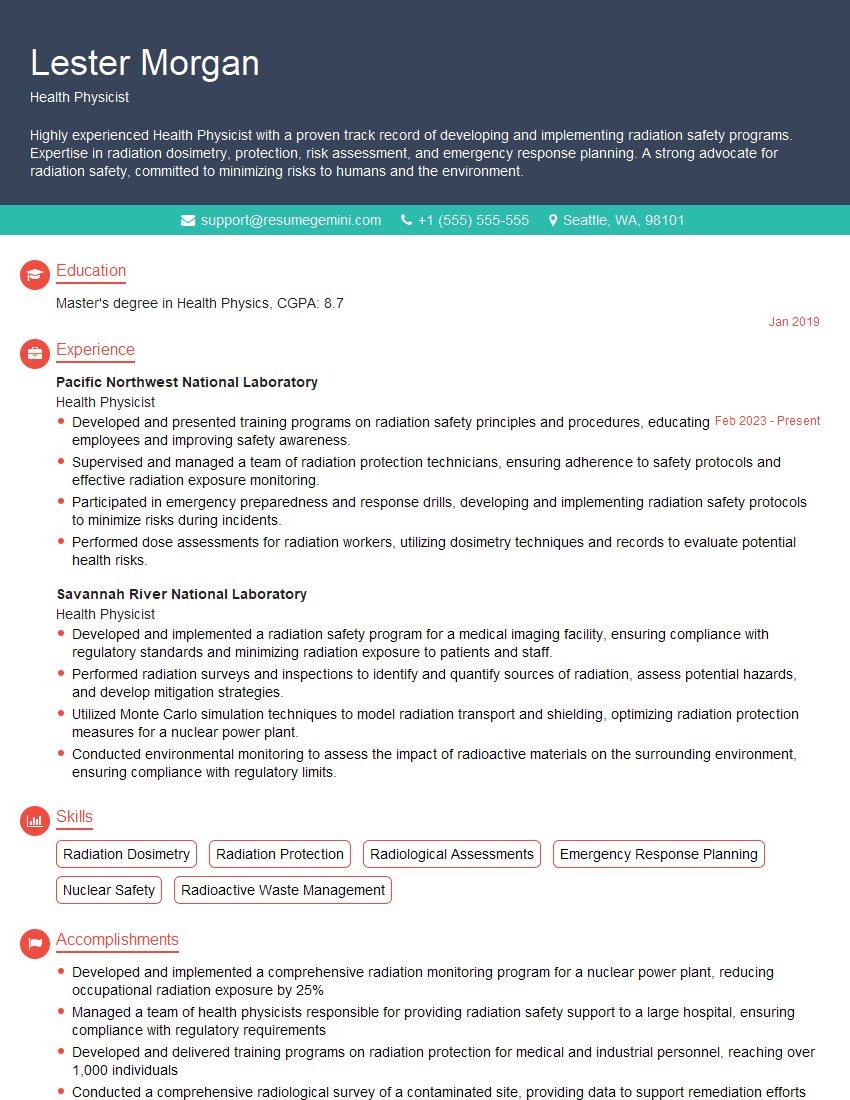
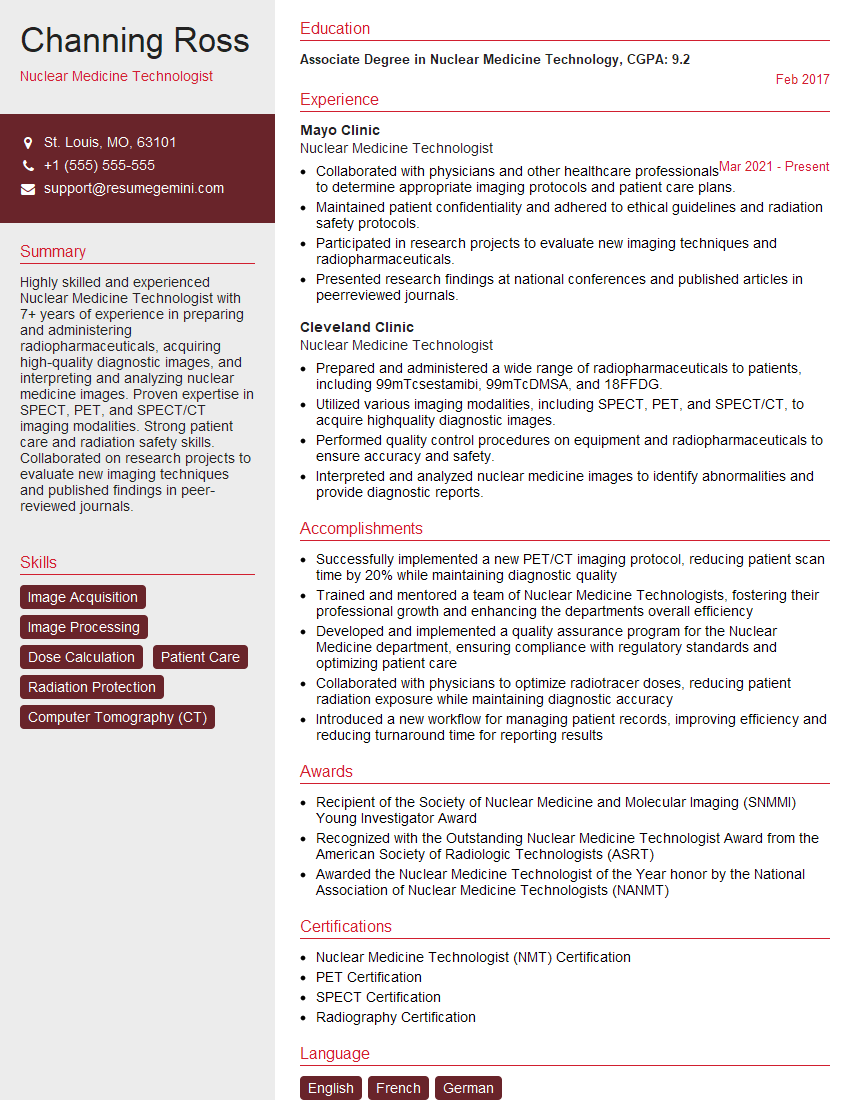
Mastering Radiological Health Risk Assessment is crucial for career advancement in this specialized field. It opens doors to challenging and rewarding roles with significant impact on public health and safety. To maximize your job prospects, creating a strong, ATS-friendly resume is essential. ResumeGemini is a trusted resource that can help you build a professional and impactful resume that highlights your skills and experience effectively. Examples of resumes tailored to Radiological Health Risk Assessment are available through ResumeGemini to guide you in crafting your own compelling application materials. Invest time in perfecting your resume—it’s your first impression on potential employers.



Explore more articles
Users Rating of Our Blogs
Share Your Experience
We value your feedback! Please rate our content and share your thoughts (optional).
What Readers Say About Our Blog
To the interviewgemini.com Webmaster.
Very helpful and content specific questions to help prepare me for my interview!
Thank you
To the interviewgemini.com Webmaster.
This was kind of a unique content I found around the specialized skills. Very helpful questions and good detailed answers.
Very Helpful blog, thank you Interviewgemini team.