Every successful interview starts with knowing what to expect. In this blog, we’ll take you through the top Regulatory Compliance and Accreditation interview questions, breaking them down with expert tips to help you deliver impactful answers. Step into your next interview fully prepared and ready to succeed.
Questions Asked in Regulatory Compliance and Accreditation Interview
Q 1. Describe your experience with ISO 9001, ISO 14001, or other relevant accreditation standards.
My experience with ISO standards, specifically ISO 9001 (Quality Management Systems) and ISO 14001 (Environmental Management Systems), is extensive. I’ve been involved in multiple projects across various sectors, from manufacturing to healthcare, leading audits, implementing systems, and providing training. For instance, in my previous role at a pharmaceutical company, I spearheaded the implementation of ISO 9001, which involved a complete overhaul of our quality processes. This included documenting procedures, conducting internal audits, and managing corrective and preventative actions (CAPA). The result was not only certification but also a significant improvement in product quality and customer satisfaction. With ISO 14001, my focus has been on reducing environmental impact through waste reduction, energy efficiency, and responsible resource management. I have personally witnessed the transformative effect these standards have on organizational efficiency and sustainability.
Beyond ISO 9001 and 14001, I’m also familiar with other accreditation standards like ISO 27001 (Information Security Management) and ISO 22301 (Business Continuity Management), understanding their interconnectedness and how they contribute to an organization’s overall risk management framework. I find the continual improvement ethos inherent in these standards particularly valuable.
Q 2. Explain the process of conducting a compliance audit.
A compliance audit is a systematic and independent examination of an organization’s adherence to relevant laws, regulations, and internal policies. Think of it as a health check for your compliance posture. The process typically involves these stages:
- Planning: Defining the scope, objectives, and methodology of the audit, identifying relevant regulations and standards, and selecting an audit team.
- Documentation Review: Examining policies, procedures, and other relevant documents to assess their completeness and effectiveness.
- On-site Observation: Observing processes and activities to confirm compliance with documented procedures and regulations.
- Interviews: Conducting interviews with personnel at all levels to understand their understanding and application of compliance requirements.
- Evidence Gathering: Collecting evidence to support findings and conclusions.
- Reporting: Documenting audit findings, including any non-conformances, and providing recommendations for corrective actions.
- Follow-up: Verifying the implementation of corrective actions and ensuring continued compliance.
For example, in a financial institution, a compliance audit might focus on anti-money laundering (AML) regulations, reviewing transaction records, and interviewing staff involved in financial transactions to ensure adherence to KYC (Know Your Customer) procedures. The thoroughness of the audit is crucial to identify any weaknesses in the compliance system.
Q 3. How do you identify and assess compliance risks within an organization?
Identifying and assessing compliance risks requires a proactive and systematic approach. I use a risk-based methodology that considers:
- Legal and Regulatory Landscape: Analyzing applicable laws, regulations, and industry-specific standards to identify potential areas of non-compliance.
- Internal Processes and Controls: Evaluating internal processes, systems, and controls to identify weaknesses that could lead to non-compliance.
- External Factors: Considering external factors such as changes in legislation, technological advancements, and evolving industry best practices.
- Stakeholder Analysis: Identifying key stakeholders and their expectations regarding compliance.
Risk assessment often involves a qualitative and quantitative approach. Qualitative assessment identifies the likelihood and impact of potential non-compliances, while quantitative assessment assigns numerical values to these factors. For example, a small business might use a simple risk matrix to prioritize compliance risks, while a large multinational corporation might utilize a sophisticated risk management software to model potential financial and reputational losses from non-compliance.
Q 4. What are your strategies for mitigating compliance risks?
Mitigating compliance risks is an ongoing process that requires a multi-faceted approach. My strategies typically include:
- Developing and Implementing Policies and Procedures: Creating clear, concise, and readily accessible policies and procedures that outline compliance requirements and expectations.
- Training and Awareness Programs: Providing regular training and awareness programs to employees to ensure they understand and comply with relevant regulations and policies.
- Monitoring and Oversight: Establishing a system for monitoring compliance, including regular audits and reviews.
- Corrective and Preventative Actions (CAPA): Implementing a robust CAPA process to address identified non-conformances and prevent their recurrence.
- Technology Solutions: Leveraging technology such as compliance management software to automate tasks and improve efficiency.
- Continuous Improvement: Regularly reviewing and updating compliance programs to adapt to changes in the regulatory landscape and best practices.
A practical example: If an audit reveals a weakness in a company’s data security, mitigation strategies could include implementing stronger access controls, providing employee training on cybersecurity best practices, and investing in encryption technology. The key is to not just address the immediate issue but also to build resilience against future risks.
Q 5. Describe your experience with developing and implementing compliance programs.
I have extensive experience in developing and implementing comprehensive compliance programs. This involves a collaborative process with stakeholders across different departments. The development process generally follows these steps:
- Needs Assessment: Identifying the organization’s specific compliance needs based on its size, industry, and geographic location.
- Risk Assessment: Conducting a thorough risk assessment to identify potential compliance risks.
- Policy and Procedure Development: Developing clear, concise, and comprehensive policies and procedures to address identified risks.
- Implementation: Implementing the compliance program through training, communication, and monitoring.
- Monitoring and Evaluation: Regularly monitoring and evaluating the effectiveness of the compliance program to ensure it remains current and effective.
For example, in a healthcare organization, I helped develop a compliance program addressing HIPAA regulations, which included establishing protocols for data security, employee training on patient privacy, and establishing a system for reporting and investigating potential breaches. This involved close collaboration with IT, HR, and clinical staff to ensure the program integrated seamlessly into their daily operations.
Q 6. How do you stay up-to-date with changes in regulations and industry best practices?
Staying current with changes in regulations and best practices is crucial. My strategy involves a multi-pronged approach:
- Subscription to Regulatory Updates: Subscribing to relevant newsletters, journals, and online resources to stay informed about changes in legislation and industry standards.
- Professional Development: Attending conferences, workshops, and training courses to enhance my knowledge and skills.
- Networking: Building and maintaining a professional network to share information and best practices with other compliance professionals.
- Monitoring Regulatory Bodies: Regularly checking the websites of relevant regulatory bodies for updates and announcements.
- Utilizing Compliance Software: Many software solutions offer automated updates on regulatory changes and facilitate easier tracking.
This continuous learning ensures I remain abreast of the ever-evolving regulatory landscape and can provide my clients with the most up-to-date and effective compliance solutions. It’s a dynamic field; complacency is simply not an option.
Q 7. Explain your understanding of the Sarbanes-Oxley Act (SOX) or other relevant legislation.
The Sarbanes-Oxley Act of 2002 (SOX) is a landmark piece of US legislation designed to protect investors by improving the accuracy and reliability of corporate disclosures. It mandates enhanced corporate responsibility and financial disclosures to deter corporate fraud and increase investor confidence. Key aspects of SOX include:
- Corporate Responsibility: Holding senior executives accountable for the accuracy of financial reporting.
- Internal Controls: Requiring companies to establish and maintain robust internal controls over financial reporting.
- Independent Audits: Mandating independent audits of financial statements.
- Enhanced Disclosure Requirements: Increasing transparency and disclosure requirements for public companies.
Understanding SOX, and similar legislation in other jurisdictions, involves understanding not just the legal text but also its practical implications for businesses. For example, a company must implement effective internal controls and provide evidence of their effectiveness to auditors during audits. Failure to comply can lead to significant penalties, reputational damage, and even criminal charges. My expertise involves not only understanding the legal requirements but also helping organizations develop effective SOX compliance programs to mitigate risks and ensure adherence to all applicable regulations.
Q 8. How do you handle non-compliance issues or violations?
Handling non-compliance is a multi-step process that begins with prompt identification and investigation. Think of it like diagnosing an illness – you need to understand the root cause before prescribing a cure.
- Identification: We utilize robust monitoring systems, regular audits, and employee reporting mechanisms to identify potential non-compliance. This could involve reviewing transaction logs, monitoring employee activities, or analyzing data for irregularities.
- Investigation: Once an issue is flagged, a thorough investigation is launched to determine the extent of the non-compliance, its root cause, and any contributing factors. This often involves interviewing staff, reviewing documentation, and potentially engaging external experts.
- Remediation: Based on the investigation’s findings, we develop a remediation plan. This plan outlines corrective actions, preventative measures to avoid future occurrences, and a timeline for implementation. For example, if a data breach occurred, the remediation might involve upgrading security protocols, employee retraining, and notifying affected individuals.
- Reporting and Monitoring: We document the entire process meticulously, including the non-compliance event, the investigation, remediation steps, and any follow-up actions. Ongoing monitoring ensures the effectiveness of the remediation plan and prevents recurrence.
- Disciplinary Action (if applicable): Depending on the severity of the non-compliance and company policy, disciplinary action may be necessary. This could range from retraining to more serious consequences.
For instance, if a financial institution discovers it hasn’t properly reported a suspicious transaction, the remediation would involve filing the necessary report with the relevant authorities, conducting an internal audit to identify weaknesses in the reporting process, and implementing new controls to prevent similar lapses in the future.
Q 9. Describe your experience with regulatory reporting and documentation.
Regulatory reporting and documentation are crucial for demonstrating compliance. Imagine it as keeping a meticulous record of your actions to prove you’ve followed all the rules.
My experience involves managing the entire lifecycle of regulatory reports: from understanding the specific requirements of various regulatory bodies (like the SEC, FDA, or HIPAA, depending on the industry) to data collection, analysis, report generation, and submission. This includes proficiency in various reporting formats, both electronic and paper-based.
I’m adept at using various software tools to streamline the process, ensure accuracy, and maintain comprehensive records. This often involves using databases to store and manage the relevant information, as well as specialized reporting software to generate and submit reports in the required formats. For example, in a pharmaceutical setting, accurate and timely reporting of clinical trial data to regulatory agencies is paramount. Any delay or inaccuracy could have serious consequences.
I’ve also developed and implemented robust documentation procedures to maintain an audit trail for all reporting activities. This ensures transparency and facilitates easy retrieval of information in case of audits or investigations.
Q 10. How do you ensure compliance across different departments or geographical locations?
Ensuring consistent compliance across different departments and geographical locations requires a strategic approach. It’s like orchestrating a large-scale project, making sure everyone is following the same playbook.
- Centralized Compliance Management System: Implementing a centralized system for managing compliance policies, procedures, and training ensures consistency. This allows for easy access to information and facilitates the monitoring of compliance activities across different locations.
- Standardized Processes and Procedures: Developing and deploying standardized processes and procedures for all key compliance-related activities minimizes variations and ensures a uniform approach regardless of the location or department. For instance, a standardized data security protocol applies across all departments and offices.
- Regular Audits and Inspections: Conducting regular audits and inspections across all locations and departments helps to identify compliance gaps and ensures that all parties are adhering to the established standards. This is like a regular health check for your compliance system.
- Effective Communication and Training: Clear and consistent communication of compliance requirements is essential. Regular compliance training programs, tailored to the specific needs of each department and location, ensure everyone understands their responsibilities. For example, a global company might use online training platforms with translated materials to cater to different languages and cultural contexts.
- Regional Compliance Officers: Appointing regional compliance officers provides localized expertise and accountability. These individuals act as points of contact for their respective regions, ensuring compliance standards are adapted and enforced effectively considering local regulations.
Q 11. What metrics do you use to measure the effectiveness of a compliance program?
Measuring the effectiveness of a compliance program isn’t simply about checking boxes; it’s about demonstrating that the program is achieving its intended goals. Key metrics are similar to those used to assess the effectiveness of any successful business operation.
- Number and Severity of Non-Compliance Events: Tracking the number of non-compliance events, categorized by their severity, provides an indication of the program’s overall effectiveness. A decrease in the number and severity of events suggests improvements in compliance.
- Time to Remediation: Measuring the time it takes to identify, investigate, and remediate non-compliance incidents helps assess the efficiency of the compliance processes. Shorter remediation times indicate a more effective response system.
- Employee Compliance Training Completion Rates: Tracking employee participation in and completion of compliance training programs demonstrates awareness and buy-in. High completion rates suggest a more engaged workforce.
- Audit Findings: Internal and external audit findings provide valuable insights into the program’s effectiveness. A reduction in critical audit findings indicates success.
- Employee Feedback and Surveys: Gathering feedback from employees on the compliance program helps identify areas for improvement. This is akin to customer feedback; understanding the user experience is crucial.
- Cost of Non-Compliance: Tracking and analyzing the cost associated with non-compliance incidents (fines, penalties, remediation costs, reputational damage) highlights the program’s return on investment.
Q 12. Describe your experience with internal controls and their role in compliance.
Internal controls are the backbone of a robust compliance program. They are the safeguards that help prevent, detect, and correct errors and irregularities. Think of them as the safety features of a car – they are designed to protect you.
My experience spans the design, implementation, and testing of various internal controls, including those related to financial reporting, operational efficiency, and information security. For example, segregation of duties prevents fraud by ensuring that no single person has complete control over a process. Strong access controls, such as password management and multi-factor authentication, help protect sensitive data from unauthorized access.
I’m proficient in utilizing frameworks like COSO (Committee of Sponsoring Organizations of the Treadway Commission) to assess and improve internal control effectiveness. This framework provides a structured approach to evaluating and strengthening control systems, helping organizations to mitigate risks and ensure compliance.
The role of internal controls in compliance is paramount. They provide a proactive defense against non-compliance, ensuring that processes are designed and implemented to minimize the likelihood of violations. They also assist in the detection of irregularities, enabling timely remediation and minimizing potential negative consequences. Strong internal controls provide confidence to stakeholders, demonstrating a commitment to good governance and regulatory compliance.
Q 13. How do you build and maintain relationships with regulatory bodies?
Building and maintaining strong relationships with regulatory bodies is essential for proactive compliance. It’s about establishing open communication and collaboration, not just responding to demands. Think of it as a partnership focused on maintaining a fair and safe environment.
My approach involves:
- Proactive Communication: Regularly engaging with regulatory bodies to stay informed about changes in regulations and guidance. This can include attending industry events, subscribing to regulatory updates, and actively participating in consultations.
- Transparency and Openness: Maintaining open and honest communication with regulators, providing them with timely and accurate information. This builds trust and helps foster a collaborative relationship.
- Responding Promptly and Professionally: Responding promptly and professionally to any inquiries or requests from regulatory bodies. This shows respect for their role and ensures a smooth interaction.
- Understanding Their Perspective: Taking the time to understand the regulatory body’s perspective and goals helps to build rapport and facilitates a more productive relationship. It’s essential to remember that they are not adversaries, but partners in ensuring a safe and fair playing field.
- Networking and Professional Development: Actively participating in professional organizations and networking events that involve regulatory officials builds valuable relationships and keeps you up-to-date on industry trends and regulatory changes.
A strong relationship helps in navigating complex regulatory landscapes effectively, reducing the likelihood of non-compliance and minimizing the impact of any potential issues.
Q 14. Explain your experience with conducting compliance training.
Effective compliance training is not just about ticking boxes; it’s about fostering a culture of compliance within an organization. It’s like teaching someone to ride a bike – it requires practice and reinforcement.
My experience includes developing and delivering compliance training programs tailored to various audiences and regulatory frameworks. This includes:
- Needs Assessment: Conducting a thorough needs assessment to identify training requirements based on the organization’s specific risks and regulatory obligations.
- Content Development: Developing engaging and easily digestible training materials, utilizing various formats such as presentations, videos, interactive modules, and scenarios to maximize understanding and retention. Gamification techniques can enhance engagement.
- Delivery Methodologies: Employing various delivery methods, including in-person training, online learning platforms, and blended learning approaches to cater to diverse learning styles and preferences. I tailor the approach to fit the specific needs and location of the audience.
- Assessment and Evaluation: Implementing robust assessment methods, including quizzes, tests, and simulations, to measure the effectiveness of the training and ensure employee understanding. Post-training assessments gauge long-term retention.
- Ongoing Reinforcement: Providing opportunities for ongoing reinforcement, such as refresher training sessions, job aids, and regular communication, to ensure that compliance principles remain top-of-mind. This keeps the training relevant and promotes a culture of continuous improvement.
A well-structured compliance training program is a powerful tool for driving a culture of compliance, empowering employees to make ethical and responsible decisions, and minimizing the risk of non-compliance.
Q 15. How do you handle conflicts between business objectives and regulatory requirements?
Balancing business objectives and regulatory requirements is a crucial aspect of any successful organization. It’s not a matter of choosing one over the other, but rather finding a synergistic approach. Think of it like navigating a ship – your business objectives are your destination, while regulatory requirements are the navigational charts and safety regulations. Ignoring either leads to disaster.
My approach involves a three-step process:
- Identify and Analyze: First, we meticulously identify all relevant regulations impacting the business objective. This involves thorough research, consultations with legal experts, and internal stakeholder reviews. We then analyze how these requirements might affect the timeline, budget, and operational aspects of the objective.
- Integrate and Innovate: Next, we integrate the regulatory requirements into the business strategy, rather than treating them as an afterthought. This might involve adjusting project plans, adopting new technologies, or restructuring processes to ensure compliance. Sometimes, this necessitates creative solutions – finding innovative ways to achieve the business goals while adhering to regulations.
- Monitor and Adapt: Finally, we implement robust monitoring systems to track our compliance efforts. Regulations evolve, and businesses change, so continuous monitoring is key. This step involves regular audits, performance reviews, and proactive adjustments based on evolving regulatory landscapes. For example, if a new data privacy law is introduced, we promptly assess its impact and update our processes.
In a previous role, we faced a situation where a new environmental regulation threatened to significantly delay a major product launch. By working closely with the engineering team and regulatory affairs specialists, we developed a modified manufacturing process that met both the regulatory requirements and the launch deadline. This involved investing in new equipment and retraining staff, but ultimately protected us from potential penalties and ensured the project’s success.
Career Expert Tips:
- Ace those interviews! Prepare effectively by reviewing the Top 50 Most Common Interview Questions on ResumeGemini.
- Navigate your job search with confidence! Explore a wide range of Career Tips on ResumeGemini. Learn about common challenges and recommendations to overcome them.
- Craft the perfect resume! Master the Art of Resume Writing with ResumeGemini’s guide. Showcase your unique qualifications and achievements effectively.
- Don’t miss out on holiday savings! Build your dream resume with ResumeGemini’s ATS optimized templates.
Q 16. Describe your experience with data privacy regulations such as GDPR or CCPA.
Data privacy regulations like GDPR and CCPA are paramount in today’s digital world. They aim to protect individuals’ personal data and grant them control over their information. My experience spans several years in developing and implementing data privacy strategies, including data mapping exercises, privacy impact assessments (PIAs), and the development of data protection policies and procedures.
With GDPR, I’ve been involved in establishing lawful bases for processing personal data (e.g., consent, contract, legitimate interests), ensuring data minimization, implementing data subject access requests (DSAR) processes, and managing cross-border data transfers. Similarly, with CCPA, I’ve handled California Consumer Privacy Act (CCPA) compliance, including providing consumers with the right to know, delete, and opt-out of data sales.
For example, in a previous project, we developed a comprehensive GDPR compliance program for a multinational company. This involved conducting a thorough data mapping exercise to identify all personal data processed, implementing technical safeguards such as data encryption and access controls, and establishing a robust incident response plan to handle data breaches effectively. The result was a significantly improved data privacy posture and a reduction in compliance risk.
Q 17. How do you ensure the confidentiality, integrity, and availability of sensitive data?
Ensuring the confidentiality, integrity, and availability (CIA triad) of sensitive data is a fundamental principle of cybersecurity and regulatory compliance. It’s about safeguarding data from unauthorized access, modification, and disruption.
- Confidentiality: This involves protecting data from unauthorized disclosure. We use techniques like encryption (both at rest and in transit), access control lists (ACLs), and data masking to achieve this. For instance, encrypting databases and using strong passwords prevent unauthorized access.
- Integrity: Maintaining data integrity means ensuring that data remains accurate and reliable. We employ checksums, digital signatures, and version control to detect and prevent unauthorized modifications. Regular backups are also crucial in case of accidental or malicious data corruption.
- Availability: This ensures that authorized users have timely access to data when needed. We implement measures like redundant systems, disaster recovery plans, and robust infrastructure to ensure high system uptime and resilience against outages. Regular system maintenance and patching are key.
Think of a bank – confidentiality protects account details from prying eyes, integrity ensures accurate transaction records, and availability guarantees that customers can access their accounts when needed. A breach in any of these areas can have severe consequences.
Q 18. What is your experience with cybersecurity compliance frameworks?
I have extensive experience working with various cybersecurity compliance frameworks, including ISO 27001, NIST Cybersecurity Framework, SOC 2, and PCI DSS. Each framework offers a structured approach to managing cybersecurity risks, but their focus and requirements vary.
ISO 27001 provides a comprehensive framework for establishing, implementing, maintaining, and continually improving an information security management system (ISMS). NIST focuses on identifying, assessing, and mitigating cybersecurity risks. SOC 2 ensures that service organizations meet certain security, availability, processing integrity, confidentiality, and privacy criteria. PCI DSS is specifically designed for organizations that handle credit card information.
In a recent engagement, I guided a healthcare organization through the SOC 2 Type II audit process. This involved documenting their security controls, conducting vulnerability assessments, performing penetration testing, and providing evidence to demonstrate their compliance with the relevant criteria. The successful completion of the audit enhanced their reputation and strengthened their relationships with clients.
Q 19. How do you prioritize compliance activities when resources are limited?
Prioritizing compliance activities with limited resources requires a strategic and risk-based approach. It’s not about doing everything at once, but doing the most important things first.
My methodology involves:
- Risk Assessment: Identifying and assessing the potential risks associated with non-compliance. This includes analyzing the likelihood and impact of potential violations. High-risk areas should receive higher priority.
- Prioritization Matrix: Creating a matrix that categorizes compliance activities based on their risk and effort. This allows us to focus on high-impact, low-effort activities first, followed by high-impact, high-effort activities. Low-impact activities can be deferred or delegated.
- Resource Allocation: Strategically allocating resources based on the prioritized activities. This might involve negotiating additional resources or re-allocating existing resources to critical areas.
- Continuous Monitoring: Regularly reviewing progress and adjusting priorities as needed. This is an iterative process that requires flexibility and adaptability.
For example, if a company faces a high risk of data breach, investing in security controls (e.g., intrusion detection system) would be prioritized over compliance with a less critical regulation.
Q 20. Describe your experience with using compliance management software or tools.
I possess significant experience using various compliance management software and tools. These tools enhance efficiency and effectiveness in managing compliance programs. They typically offer features such as:
- Centralized Repository: A single location for storing all relevant policies, procedures, and documentation.
- Risk Management: Tools for identifying, assessing, and mitigating risks.
- Audit Management: Streamlining the audit process through automated workflows and reporting.
- Policy and Procedure Management: Facilitating the creation, review, and approval of policies and procedures.
- Reporting and Analytics: Generating reports on compliance status and identifying areas for improvement.
I’ve worked with tools like ServiceNow, Archer, and MetricStream. In one instance, we implemented ServiceNow to automate the annual SOX compliance process. This reduced the time required for compliance by 50% and improved the accuracy of reporting.
Q 21. Explain your understanding of the difference between compliance and ethics.
While both compliance and ethics are important for organizational success, they are distinct concepts. Compliance refers to adherence to laws, regulations, and internal policies. It’s about meeting minimum requirements. Ethics, on the other hand, are principles of right and wrong that guide behavior. It’s about doing what is morally right, even if it’s not legally required.
Think of it this way: compliance is following the rules, while ethics is doing what’s right. A company could be fully compliant with all laws but still engage in unethical practices. For instance, a company might legally avoid paying taxes through loopholes, but this behavior is ethically questionable. Conversely, a company might go above and beyond legal requirements to treat employees fairly and sustainably source its materials, reflecting strong ethical values.
A strong ethical culture often leads to improved compliance. When employees understand and embody ethical principles, they are less likely to engage in illegal or unethical activities. Therefore, a robust compliance program should be underpinned by a solid ethical framework.
Q 22. How do you measure the success of a compliance initiative?
Measuring the success of a compliance initiative isn’t simply about avoiding penalties; it’s about embedding a culture of ethical conduct and risk mitigation. I use a multi-faceted approach, focusing on both qualitative and quantitative metrics.
Quantitative Metrics: These include tracking the number of compliance incidents, the cost of non-compliance (including fines, remediation efforts, and reputational damage), the effectiveness of training programs (measured by post-training assessments and observed behavior changes), and the completion rate of compliance audits and self-assessments.
Qualitative Metrics: These are equally crucial and involve assessing employee understanding of compliance requirements through surveys and interviews, evaluating the strength of the compliance program through internal audits, and monitoring improvements in ethical decision-making through observed behaviors and incident reporting. For example, a significant decrease in reported near misses can be a strong qualitative indicator of improved compliance awareness.
Benchmarking: Comparing our performance against industry best practices and similar organizations provides a valuable context for measuring progress. This allows us to identify areas for improvement and to celebrate successes relative to our peers.
Ultimately, success is measured by a demonstrable reduction in risk, a strengthened organizational culture of ethical conduct, and continuous improvement in our compliance processes. It’s not a one-time achievement but an ongoing journey.
Q 23. What is your approach to root cause analysis when a compliance issue arises?
My approach to root cause analysis when a compliance issue arises is systematic and data-driven. I utilize a structured methodology, often employing the ‘5 Whys’ technique and supplemented with more advanced tools like fault tree analysis when necessary. This ensures we don’t just address the symptom but delve deep to understand the underlying cause.
Identify the Problem: Clearly define the compliance issue and gather all relevant data.
Ask ‘Why’: Repeatedly ask ‘why’ to uncover the root cause. For example, if a data breach occurred, the first ‘why’ might be ‘because of a security vulnerability’. The next ‘why’ might be ‘because security updates weren’t applied promptly’. This process continues until the fundamental reason is identified.
Verify the Root Cause: Conduct further investigation to validate the identified root cause. This may involve interviews, reviews of procedures, and analysis of logs.
Develop Corrective Actions: Based on the root cause, develop targeted corrective and preventive actions (CAPA) to prevent recurrence.
Implement and Monitor: Implement the CAPAs, monitor their effectiveness, and document all findings.
I find involving all relevant stakeholders in this process is critical. This not only ensures a comprehensive understanding of the issue but also fosters a sense of shared responsibility for preventing future occurrences.
Q 24. Describe your experience with conducting a gap analysis to determine compliance status.
Conducting a gap analysis is a cornerstone of any robust compliance program. It involves comparing the organization’s current state of compliance against a set of regulatory requirements or industry standards. I’ve utilized this extensively in various settings.
Define Scope and Standards: First, I clearly define the scope of the analysis—which regulations, standards, and laws are relevant. This often includes specifying the specific sections or clauses that need to be assessed.
Gather Information: I collect all relevant documentation including policies, procedures, training materials, audit reports, and operational data.
Compare Current State to Requirements: This is where the meticulous comparison takes place. We systematically review our existing practices against the defined requirements, identifying any gaps or deficiencies.
Document Findings: All findings are meticulously documented, including a clear description of each gap, its potential impact, and any associated risks.
Develop Remediation Plan: Based on the identified gaps, we develop a comprehensive remediation plan that outlines actions needed to achieve full compliance. This often includes timelines, responsibilities, and resource allocation.
For example, in a recent gap analysis for a healthcare provider, we identified a gap in their patient data privacy procedures. The remediation plan involved updating policies, implementing new training, and strengthening technical safeguards. This resulted in improved compliance and minimized the risk of data breaches.
Q 25. How do you effectively communicate compliance requirements to different stakeholders?
Effective communication is paramount in compliance. Different stakeholders—from senior management to frontline employees—require different communication styles and levels of detail. My approach involves tailoring the message to the audience’s needs and understanding.
Senior Management: Concise executive summaries highlighting key risks, potential impacts, and resource requirements are most effective.
Middle Management: Detailed reports outlining compliance requirements, timelines for implementation, and responsibilities are necessary.
Frontline Employees: Clear, simple, and easily understandable training materials and job aids are crucial. Using interactive methods and real-world scenarios enhances understanding and engagement. The focus should be on ‘how compliance impacts their daily work’.
I utilize various communication channels, including regular newsletters, interactive workshops, online training modules, and one-on-one coaching. Regular feedback mechanisms, such as surveys and forums, are essential for assessing the effectiveness of communication and identifying areas for improvement.
Q 26. Describe a time you had to navigate a complex regulatory environment.
During my time at a financial institution, we faced the challenge of adapting to the rapidly evolving regulations surrounding anti-money laundering (AML) and know-your-customer (KYC) compliance. These regulations were complex, constantly updated, and varied significantly across jurisdictions.
My approach involved establishing a dedicated team of compliance specialists, investing in advanced technology solutions for transaction monitoring, and developing a robust training program to ensure all staff members understood their AML/KYC responsibilities. We also established strong relationships with regulatory bodies to stay informed about changes and best practices. This proactive approach allowed us to navigate the complex regulatory environment successfully, reducing risk and avoiding potential penalties.
We implemented a system of continuous monitoring and improvement, regularly updating our procedures to reflect regulatory changes. This required close collaboration with legal counsel and technology teams to ensure our systems and processes were not only compliant but also efficient and effective.
Q 27. How do you build a culture of compliance within an organization?
Building a culture of compliance isn’t about imposing rules; it’s about fostering a shared understanding and commitment to ethical conduct. This requires a multi-pronged approach focusing on leadership, communication, and accountability.
Leadership Commitment: Visible and active support from senior management is essential. Leaders need to champion compliance, demonstrating their commitment through their actions and decisions. This includes allocating resources, setting clear expectations, and holding individuals accountable.
Effective Communication: Regular and transparent communication is crucial to keep everyone informed about compliance requirements and expectations. This includes using various methods such as training, newsletters, and town hall meetings.
Accountability Mechanisms: Clear accountability mechanisms are essential. This includes establishing reporting procedures for violations, conducting regular audits, and ensuring that appropriate disciplinary actions are taken when necessary. A ‘speak-up’ culture that encourages reporting of potential violations without fear of retribution is also crucial.
Continuous Improvement: Regularly reviewing and improving the compliance program demonstrates a commitment to continuous improvement. This involves conducting regular audits, analyzing data, and updating policies and procedures as needed.
Creating a culture of compliance is an ongoing process, not a one-time project. It requires consistent effort, clear communication, and a commitment from everyone in the organization.
Q 28. What are your salary expectations for this role?
My salary expectations for this role are in the range of [Insert Salary Range] annually. This is based on my extensive experience in regulatory compliance and accreditation, my proven track record of success, and my understanding of the market value for similar roles with comparable responsibilities. I am, of course, open to discussing this further based on the specifics of the role and the overall compensation package.
Key Topics to Learn for Regulatory Compliance and Accreditation Interview
- Understanding Regulatory Frameworks: Explore the intricacies of relevant regulations (e.g., HIPAA, GDPR, SOX) and their practical implications for different industries. Consider the evolution of these frameworks and potential future changes.
- Accreditation Standards and Processes: Familiarize yourself with common accreditation bodies (e.g., ISO, Joint Commission) and their respective standards. Practice explaining the accreditation process, including audits and ongoing compliance requirements.
- Risk Assessment and Management: Develop your ability to identify and assess compliance risks, implement mitigation strategies, and document the entire risk management process. Be prepared to discuss practical scenarios and solutions.
- Internal Controls and Audits: Gain a strong understanding of designing and implementing effective internal controls to ensure compliance. Practice describing audit procedures, reviewing audit findings, and developing corrective action plans.
- Data Privacy and Security: Deepen your knowledge of data protection regulations and best practices for ensuring data confidentiality, integrity, and availability. Be prepared to discuss specific security measures and incident response plans.
- Compliance Program Development and Implementation: Understand the lifecycle of building and maintaining a comprehensive compliance program, including policy development, training, monitoring, and reporting.
- Ethical Considerations and Professional Responsibility: Demonstrate a strong understanding of ethical considerations within regulatory compliance and your responsibility as a compliance professional.
Next Steps
Mastering Regulatory Compliance and Accreditation is crucial for career advancement in today’s increasingly regulated business environment. A strong understanding of these concepts opens doors to exciting opportunities and demonstrates your commitment to ethical and responsible business practices. To significantly enhance your job prospects, focus on creating an ATS-friendly resume that highlights your skills and experience effectively. ResumeGemini is a trusted resource that can help you build a professional and impactful resume. We offer examples of resumes tailored to Regulatory Compliance and Accreditation to guide you in crafting your own compelling application materials.
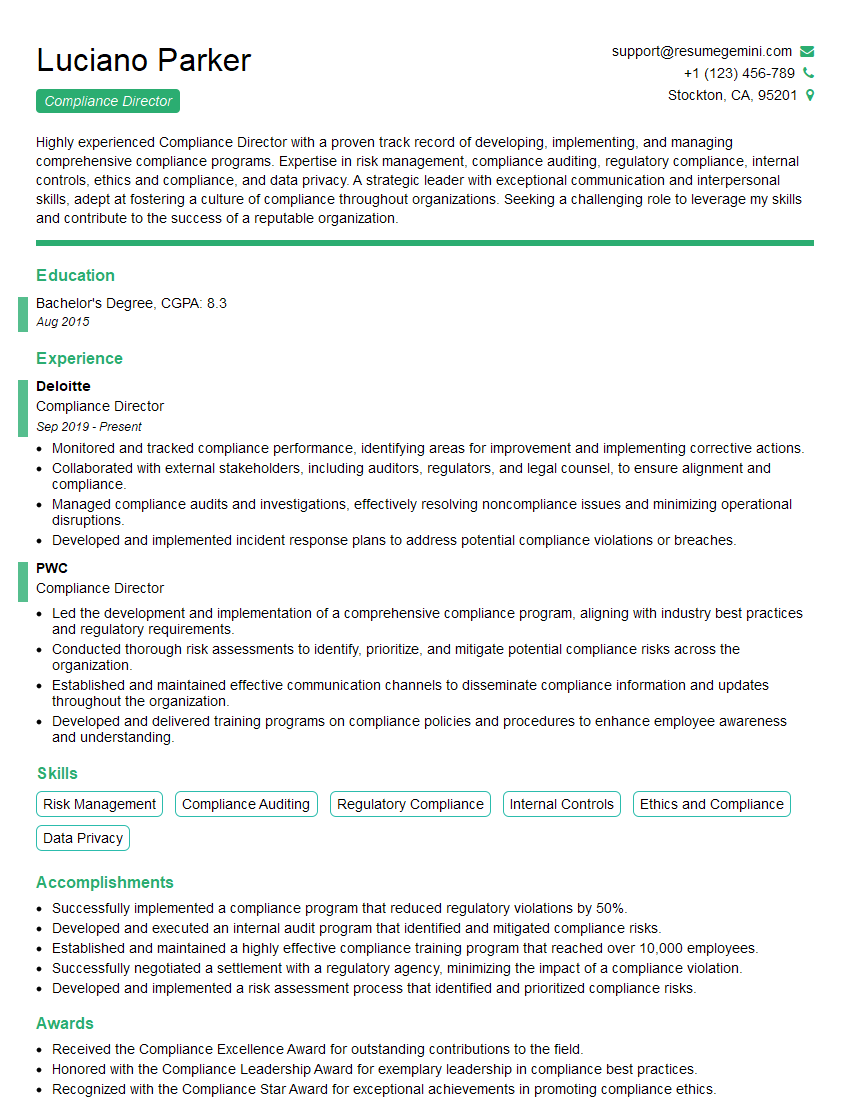
Compliance Director Resume Sample
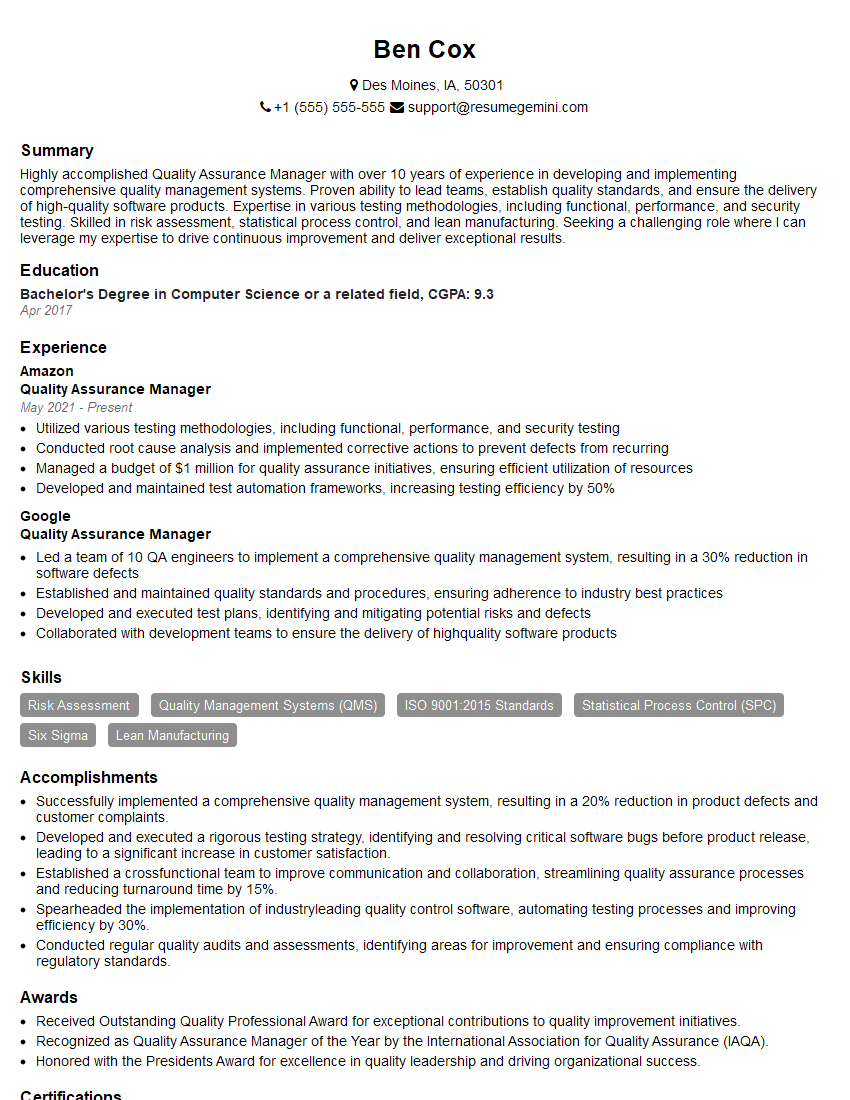
Quality Assurance Manager Resume Sample
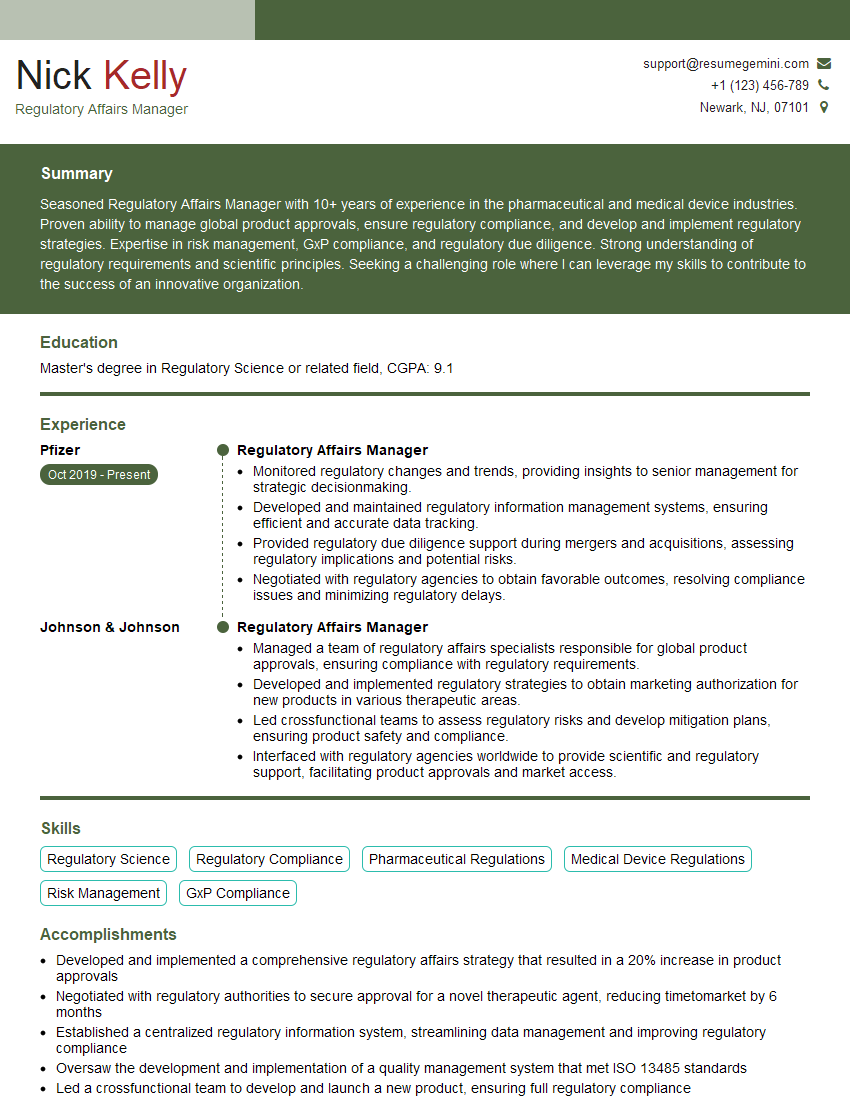
Regulatory Affairs Manager Resume Sample
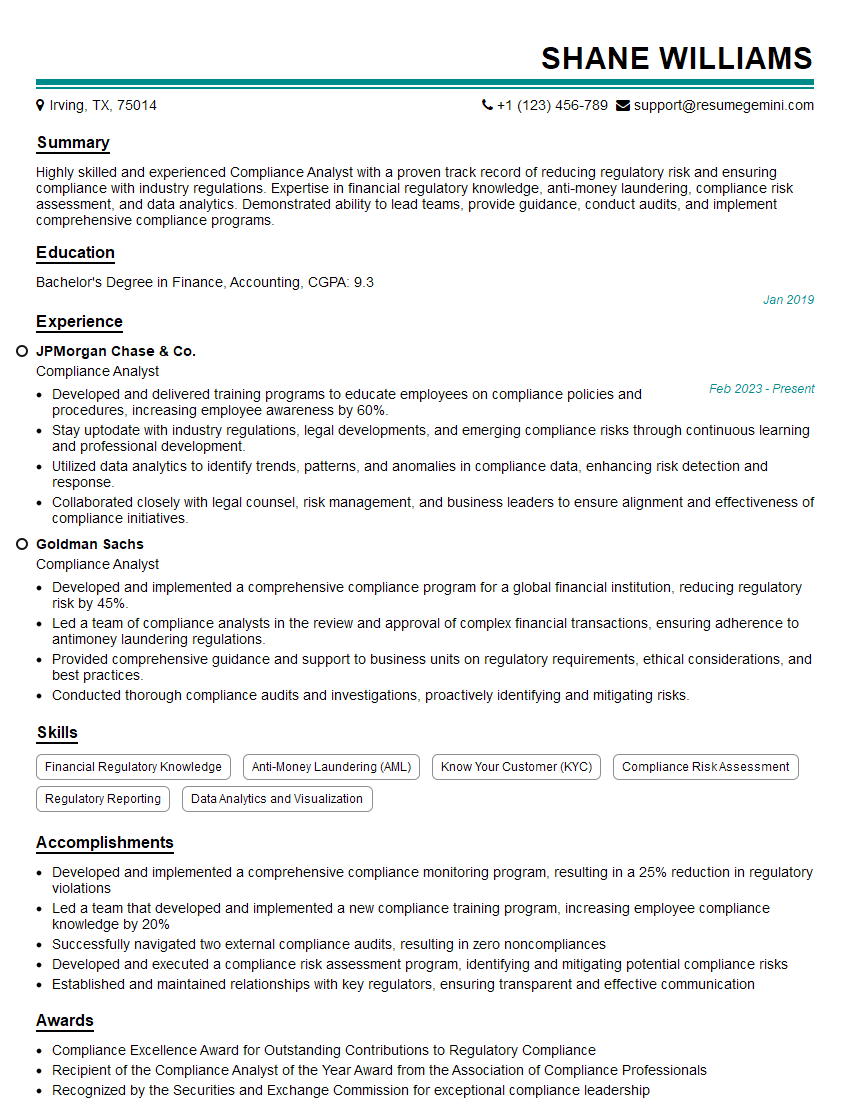
Compliance Analyst Resume Sample

Compliance Officer Resume Sample
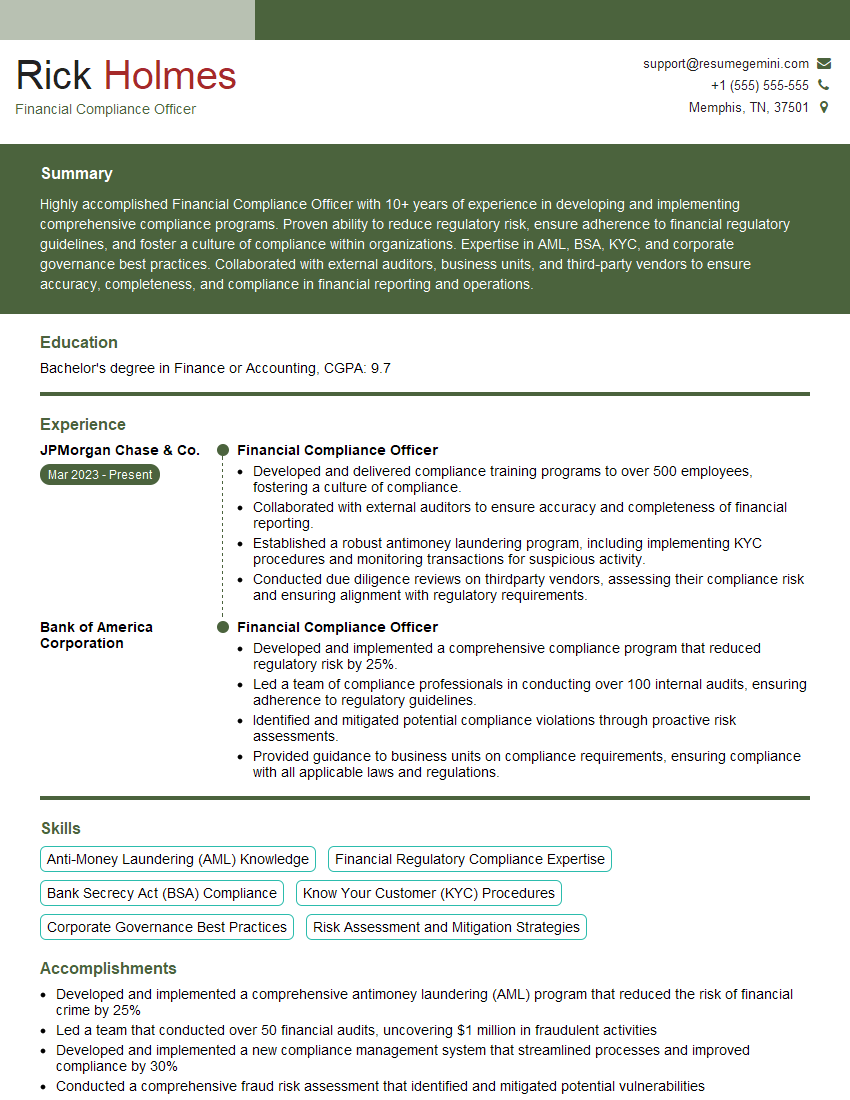
Financial Compliance Officer Resume Sample
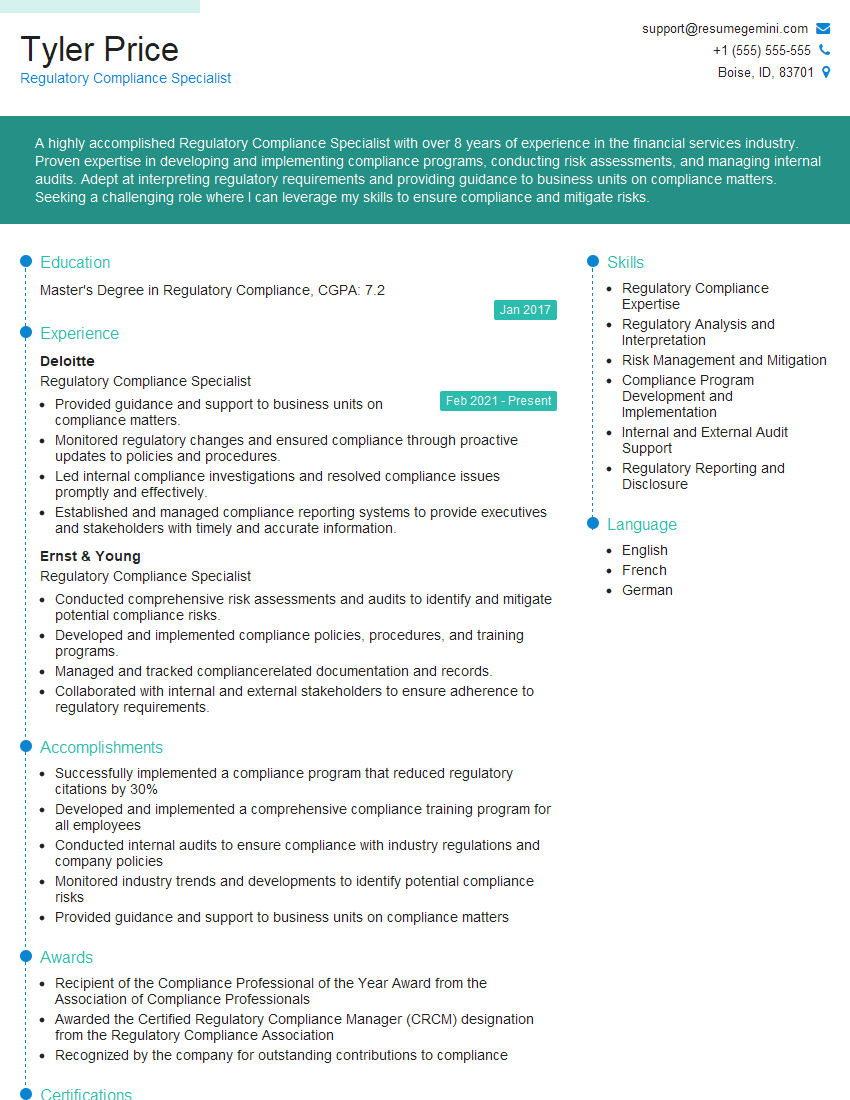
Regulatory Compliance Specialist Resume Sample
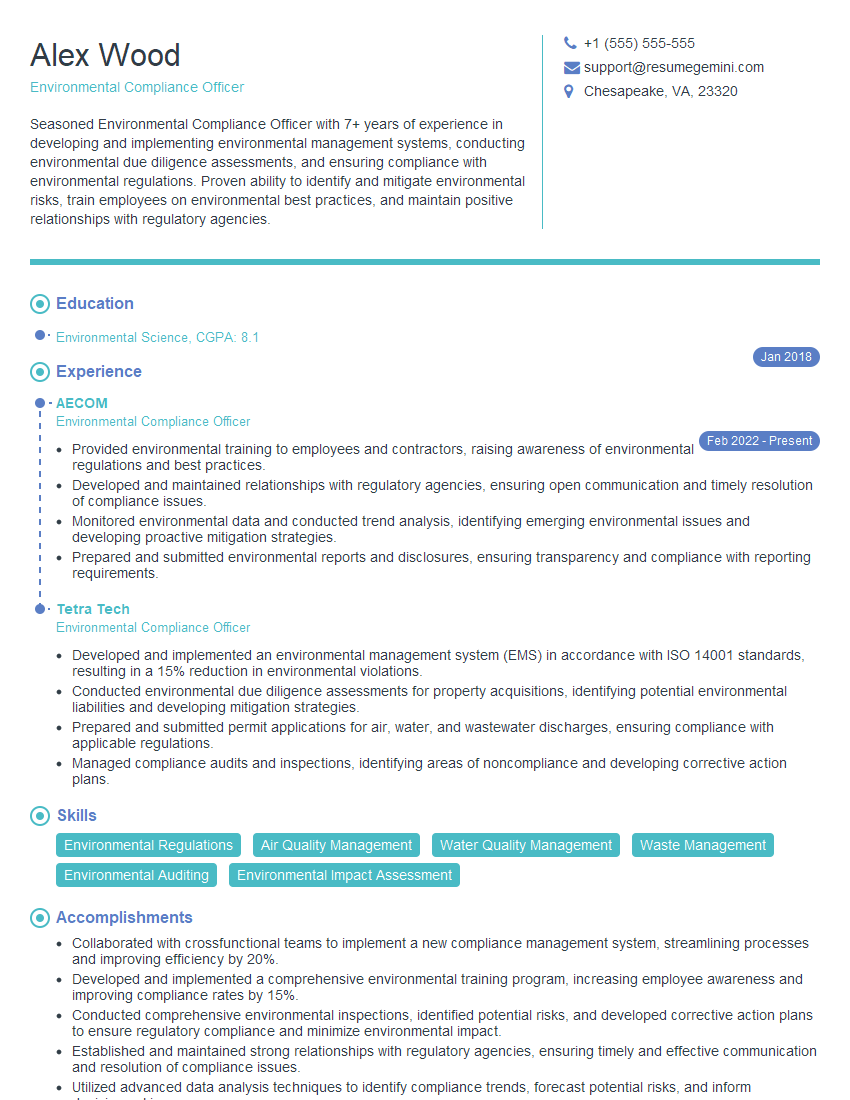
Environmental Compliance Officer Resume Sample
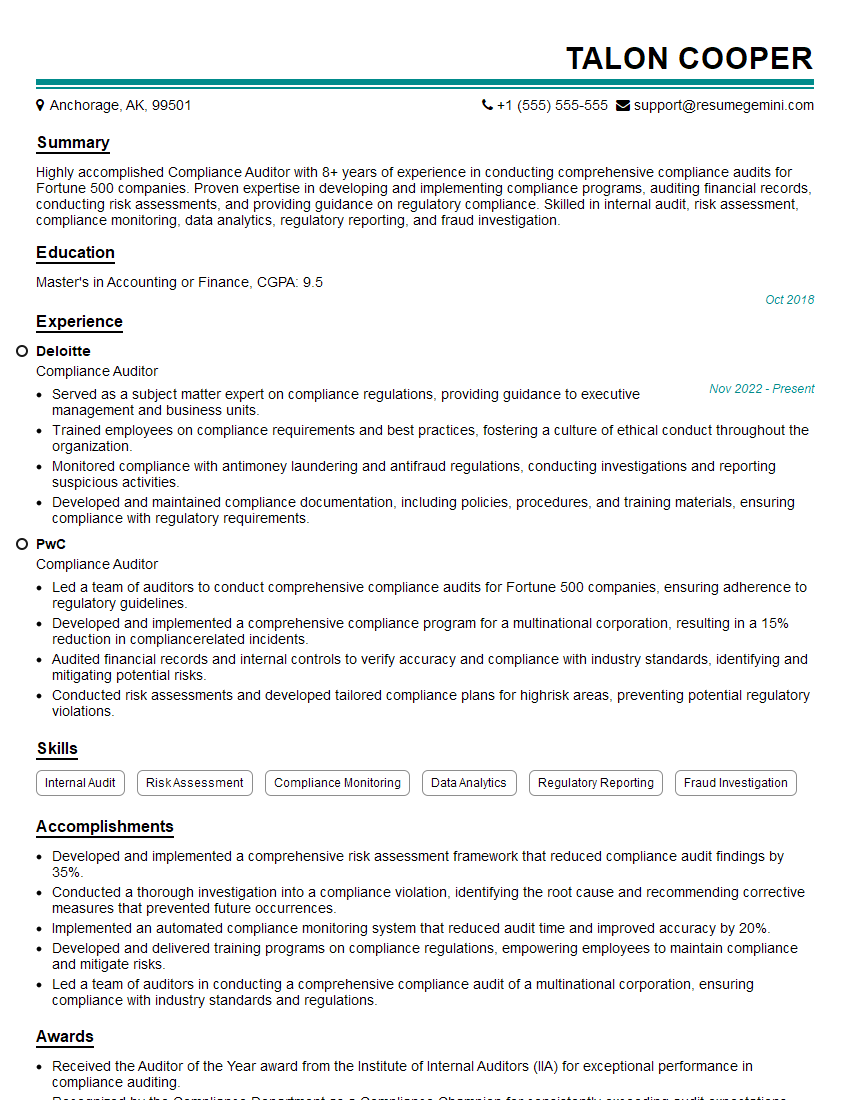
Compliance Auditor Resume Sample
Explore more articles
Users Rating of Our Blogs
Share Your Experience
We value your feedback! Please rate our content and share your thoughts (optional).
What Readers Say About Our Blog
To the interviewgemini.com Webmaster.
Very helpful and content specific questions to help prepare me for my interview!
Thank you
To the interviewgemini.com Webmaster.
This was kind of a unique content I found around the specialized skills. Very helpful questions and good detailed answers.
Very Helpful blog, thank you Interviewgemini team.