Interviews are more than just a Q&A session—they’re a chance to prove your worth. This blog dives into essential Regulatory Compliance (ISO, PCI) interview questions and expert tips to help you align your answers with what hiring managers are looking for. Start preparing to shine!
Questions Asked in Regulatory Compliance (ISO, PCI) Interview
Q 1. Describe your experience with PCI DSS compliance.
My experience with PCI DSS compliance spans over eight years, encompassing various roles from security analyst to lead consultant. I’ve worked with numerous organizations across diverse sectors – from small retail businesses to large financial institutions – guiding them through the complexities of achieving and maintaining PCI DSS compliance. This involved conducting vulnerability assessments, penetration testing, implementing security controls, and managing remediation efforts. I’ve successfully led numerous PCI DSS audits, addressing findings and working with Qualified Security Assessors (QSAs) to ensure certifications were obtained and maintained. A key project involved developing a custom security awareness training program that significantly reduced phishing attacks and improved overall employee security posture within a large e-commerce company, directly impacting their PCI DSS compliance score.
Specifically, I have hands-on experience with:
- Vulnerability scanning and penetration testing
- Firewall management and configuration
- Intrusion detection and prevention systems
- Data loss prevention (DLP) strategies
- Security awareness training and phishing simulations
- Incident response planning and execution
Q 2. Explain the key differences between ISO 27001 and ISO 9001.
While both ISO 27001 and ISO 9001 are internationally recognized standards focused on management systems, they address different aspects of an organization. ISO 27001 focuses specifically on information security management, aiming to protect the confidentiality, integrity, and availability of information assets. Think of it as a framework for building a robust security posture. ISO 9001, on the other hand, centers on quality management, focusing on processes that ensure consistent customer satisfaction through product and service quality. It’s more about ensuring things are done efficiently and correctly.
Here’s a table summarizing the key differences:
| Feature | ISO 27001 | ISO 9001 |
|---|---|---|
| Focus | Information Security | Quality Management |
| Scope | Information assets and security risks | Processes for delivering products/services |
| Key Controls | Access control, encryption, vulnerability management, incident response | Process mapping, risk assessment (related to quality), customer satisfaction |
| Certification | Demonstrates compliance with information security best practices | Demonstrates commitment to quality management |
In essence, an organization might use both standards – ISO 27001 to manage security risks and protect sensitive data, and ISO 9001 to improve the quality of its processes. They are complementary, not mutually exclusive.
Q 3. What are the 12 PCI DSS requirements?
The 12 PCI DSS requirements are categorized into six broad areas, each with specific controls. They are not easily summarized in a single sentence. The key objective is to ensure the secure storage, processing, and transmission of cardholder data.
- Build and Maintain a Secure Network: Firewalls, strong passwords, change default settings.
- Protect Cardholder Data: Encrypt transmission of cardholder data across open, public networks.
- Maintain a Vulnerability Management Program: Regularly test systems and applications for vulnerabilities and fix identified problems.
- Implement Strong Access Control Measures: Restrict access to cardholder data by business need-to-know.
- Regularly Monitor and Test Networks: Implement and maintain an information security policy.
- Maintain an Information Security Policy: Maintain a policy that addresses information security for all systems and personnel.
- Restrict Access to Cardholder Data by Business Need-to-Know: Implement strong access control measures.
- Identify and Authenticate Access to System Components: Restrict access to systems, applications, and cardholder data.
- Restrict Physical Access to Cardholder Data: Restrict access to areas with physical cardholder data.
- Track and Monitor All Access to Network Resources and Cardholder Data: Track and monitor all access.
- Regularly Test Security Systems and Processes: Regularly test security systems and processes.
- Maintain an Information Security Policy: Maintain an information security policy that addresses all systems and personnel.
Think of these requirements as layers of security working together. Each requirement is crucial in building a strong defense against data breaches.
Q 4. How do you conduct a risk assessment for PCI DSS compliance?
A risk assessment for PCI DSS compliance is a systematic process to identify, analyze, and prioritize potential vulnerabilities that could compromise cardholder data. It involves several key steps:
- Identify Assets: Determine all systems, applications, and data involved in storing, processing, or transmitting cardholder data.
- Identify Threats: Determine potential threats, both internal (malicious employees) and external (hackers, malware).
- Identify Vulnerabilities: Determine weaknesses in systems and applications that could be exploited by threats.
- Determine Likelihood and Impact: Assess the probability of each threat exploiting a vulnerability and the impact if it occurs (e.g., financial loss, reputational damage).
- Determine Risk: Calculate the overall risk by combining likelihood and impact. This is often represented with a risk matrix.
- Develop Mitigation Strategies: Develop and implement controls to reduce the risk to an acceptable level. This could involve technical controls (firewalls, encryption), administrative controls (policies, procedures), or physical controls (access control).
- Monitor and Review: Regularly monitor the effectiveness of controls and update the risk assessment as needed.
For example, if the risk assessment identifies a high risk associated with weak passwords, a mitigation strategy could be implementing a strong password policy and password management tool. The risk assessment should be a living document, updated regularly to reflect changes in the environment.
Q 5. Explain the process of implementing ISO 27001 in an organization.
Implementing ISO 27001 is a structured process that requires commitment from top management and involves several key phases:
- Scope Definition: Determine the boundaries of the information security management system (ISMS).
- Gap Analysis: Compare current security practices with the requirements of ISO 27001 to identify areas for improvement.
- Risk Assessment: Identify and assess information security risks.
- ISMS Design: Develop and document policies, procedures, and controls to address the identified risks.
- Implementation: Put the ISMS into practice, training employees and integrating security controls into daily operations.
- Testing and Evaluation: Conduct internal audits to ensure the ISMS is effective.
- Certification (Optional): Seek certification from a third-party certification body to demonstrate compliance.
- Maintenance and Improvement: Regularly review and update the ISMS to maintain its effectiveness and address evolving threats and vulnerabilities.
Think of it like building a house. You start with a plan (scope definition and risk assessment), then build the foundation (ISMS design), construct the house (implementation), inspect the house (testing and evaluation), and maintain it over time (maintenance and improvement). Certification is like getting an occupancy permit.
Q 6. What are the key controls for protecting cardholder data?
Protecting cardholder data requires a multi-layered approach involving technical, administrative, and physical controls. Key controls include:
- Encryption: Encrypting cardholder data both in transit (using HTTPS/TLS) and at rest (using encryption at the database level).
- Access Control: Implementing strong authentication methods (multi-factor authentication), authorization policies (principle of least privilege), and regular access reviews.
- Intrusion Detection/Prevention Systems (IDS/IPS): Monitoring network traffic for malicious activity and automatically blocking or alerting on suspicious events.
- Vulnerability Management: Regularly scanning systems and applications for vulnerabilities and patching them promptly.
- Security Awareness Training: Educating employees about security threats and best practices to prevent social engineering attacks and data breaches.
- Data Loss Prevention (DLP): Implementing tools and policies to prevent sensitive data from leaving the organization’s control.
- Physical Security: Controlling physical access to areas where cardholder data is stored or processed (e.g., using access control systems, surveillance cameras).
- Regular Security Audits: Conducting periodic audits to assess the effectiveness of security controls and identify areas for improvement.
These controls work in conjunction with each other, creating a robust security posture.
Q 7. How do you manage vulnerabilities identified during a security audit?
Managing vulnerabilities identified during a security audit is a crucial part of maintaining a strong security posture. The process involves several steps:
- Prioritization: Prioritize vulnerabilities based on their severity and likelihood of exploitation (using a risk matrix). Critical vulnerabilities must be addressed immediately.
- Remediation: Develop and implement solutions to fix the vulnerabilities. This might involve patching software, changing configurations, or implementing new security controls.
- Verification: Verify that the remediation steps have effectively resolved the vulnerabilities (e.g., through rescanning or retesting).
- Documentation: Document all vulnerabilities, remediation steps, and verification results. This is essential for audit trails and compliance reporting.
- Reporting and Communication: Regularly report the status of vulnerability management to management and stakeholders. Transparency is key.
- Continuous Monitoring: Continuously monitor systems for new vulnerabilities and repeat the process.
For example, if a vulnerability scan identifies a critical vulnerability in a web server, the remediation might involve installing the latest security patches and verifying the patch installation. Failure to properly remediate vulnerabilities can leave an organization exposed to significant security risks.
Q 8. What is the importance of regular security awareness training?
Regular security awareness training is paramount for maintaining a strong security posture. It’s not just about checking a box; it’s about cultivating a security-conscious culture within an organization. Think of it like this: even the best lock is useless if someone leaves the key in the door. Training empowers employees to recognize and avoid common threats, protecting the organization from insider threats and phishing attacks, among others.
Effective training programs should incorporate a variety of methods, including interactive modules, simulated phishing exercises, and regular updates on emerging threats. For example, a program might simulate a phishing email to test employee responses, providing immediate feedback and reinforcement. This hands-on approach makes learning more engaging and memorable than simply reading a manual. Furthermore, the program should be tailored to different roles within the organization, addressing specific risks and vulnerabilities based on job responsibilities. For instance, finance employees would receive different training than IT personnel.
Q 9. Explain your understanding of data encryption and its role in compliance.
Data encryption is the process of converting readable data into an unreadable format, called ciphertext, to protect sensitive information from unauthorized access. It’s a cornerstone of compliance with standards like ISO 27001 and PCI DSS. Imagine a valuable piece of jewelry – encryption is like putting it in a safe; only someone with the right key (the decryption key) can access it.
In the context of compliance, encryption plays a vital role in ensuring data confidentiality and integrity. For instance, encrypting data at rest (data stored on servers or hard drives) prevents unauthorized access if a device is lost or stolen. Similarly, encrypting data in transit (data transmitted over networks) protects sensitive information from eavesdropping. Different encryption methods exist, each with varying levels of security. Symmetric encryption uses the same key for encryption and decryption, while asymmetric encryption uses a pair of keys – a public key for encryption and a private key for decryption. The choice of encryption method depends on the specific security requirements and the sensitivity of the data. For example, HTTPS uses asymmetric encryption for secure communication over the internet.
Q 10. Describe your experience with vulnerability scanning and penetration testing.
Vulnerability scanning and penetration testing are crucial components of a robust security program. Vulnerability scanning is like a health check-up for your IT infrastructure; it identifies potential weaknesses in your systems. Penetration testing goes a step further, simulating real-world attacks to assess the effectiveness of your security controls. I have extensive experience using a range of tools for both, including Nessus, OpenVAS, and Metasploit.
In my previous roles, I’ve led vulnerability scans on multiple enterprise-level networks, identifying critical vulnerabilities such as SQL injection flaws, cross-site scripting (XSS) vulnerabilities, and outdated software. I then worked closely with development and IT teams to remediate these issues, ensuring that the identified risks were addressed promptly. Penetration testing has been equally critical, allowing us to discover vulnerabilities that automated scans often miss. For example, in one project, a manual penetration test revealed a poorly configured firewall rule that exposed a critical internal system to external access, a vulnerability that automated scanning overlooked. These findings led to significant improvements in our overall security posture.
Q 11. How do you ensure compliance with data privacy regulations (e.g., GDPR)?
Ensuring compliance with data privacy regulations like GDPR requires a multi-faceted approach that prioritizes data minimization, purpose limitation, and user consent. It’s not just about having a privacy policy; it’s about embedding data privacy principles throughout the entire organization. Imagine it like building a house – you need strong foundations (policies and procedures) and careful construction (implementation and monitoring) to ensure it’s sturdy and compliant.
My experience includes developing and implementing comprehensive data privacy programs, including data mapping exercises to identify and classify personal data, implementing appropriate technical and organizational measures to safeguard that data, and establishing clear data retention policies. This involves working closely with legal and business teams to ensure that our practices align with all applicable regulations. For example, we implemented a Data Subject Access Request (DSAR) process to efficiently handle requests from individuals to access, rectify, or erase their personal data. We also conducted regular data protection impact assessments (DPIAs) to evaluate the risks associated with new data processing activities. Finally, we established employee training programs to raise awareness of data privacy obligations and responsibilities.
Q 12. What is your experience with incident response and handling security breaches?
Incident response is the process of handling security breaches or other security incidents. It’s about mitigating damage, containing the breach, and learning from the experience. Think of it as a well-rehearsed fire drill – you have a plan, you know your roles, and you act quickly to minimize the damage.
I have extensive experience in leading incident response teams, developing and implementing incident response plans, and conducting post-incident reviews. This includes coordinating with forensic investigators, legal counsel, and other relevant stakeholders. In one instance, we experienced a ransomware attack. My team followed our established incident response plan, isolating the affected systems, containing the spread of the malware, and working with specialized recovery services to restore our systems. Post-incident analysis revealed vulnerabilities that allowed the attack, leading to improved security measures. This proactive approach demonstrates our dedication to learning from incidents and continually improving our security capabilities.
Q 13. Explain your experience with conducting internal audits.
Conducting internal audits is crucial for ensuring ongoing compliance with relevant standards and regulations. It’s an independent assessment of your security controls to identify weaknesses and ensure effectiveness. It’s like having a professional home inspector check your house for potential problems before they become major issues.
My experience in conducting internal audits encompasses various methodologies such as using established frameworks like ISO 27001 and NIST Cybersecurity Framework. I meticulously plan and execute audits, documenting findings and recommendations. I’ve worked across different industries, including finance and healthcare. In a recent internal audit, I identified a lack of multi-factor authentication on critical systems, creating a significant security risk. My report detailed the risk, recommended solutions, and tracked the remediation efforts. I also work closely with management to ensure that identified weaknesses are addressed efficiently and effectively.
Q 14. How do you stay up-to-date with changes in regulatory compliance standards?
Staying current with regulatory compliance standards is a continuous process. The landscape is constantly evolving, with new threats and regulations emerging regularly. It’s like learning a living language – it requires constant effort to remain fluent.
My approach includes subscribing to industry publications, attending conferences and webinars, and actively participating in professional organizations such as ISACA and (ISC)² to access valuable resources and insights. I also engage with regulatory bodies like NIST and the UK’s ICO to monitor updates to standards like NIST Cybersecurity Framework, ISO 27001, GDPR, and PCI DSS. This proactive approach ensures my expertise remains current, allowing me to advise and guide organizations on implementing effective and compliant security practices.
Q 15. How would you handle a situation where a team member isn’t following security protocols?
Addressing a team member’s non-compliance with security protocols requires a multi-step approach focused on education, remediation, and, if necessary, disciplinary action. It’s crucial to remember that a supportive and understanding environment fosters better compliance.
Initial Conversation: I’d begin with a private conversation to understand the root cause of the non-compliance. Was there a misunderstanding of the protocol? Lack of training? Technical difficulty? A non-judgmental approach encourages open communication. For example, if a team member failed to log out of a system, I’d ask if they were aware of the policy and if they faced any obstacles in following it.
Training and Reinforcement: Based on the conversation, I’d provide additional training or clarify the security protocol. This might involve revisiting training materials, conducting hands-on sessions, or providing written guidance. Regular refresher training on security best practices is crucial to maintain compliance.
Documentation and Monitoring: I’d document the incident, the corrective actions taken, and any follow-up needed. Continued monitoring ensures the issue is resolved and doesn’t recur. For instance, I’d track the team member’s adherence to the protocol after the training to ensure the issue is completely addressed.
Disciplinary Action (if necessary): If the non-compliance is repeated despite training and coaching, disciplinary action might be necessary, in accordance with company policy. This could range from a written warning to more serious consequences, depending on the severity and recurrence of the violation. Every instance should be documented and handled consistently to maintain fairness.
Career Expert Tips:
- Ace those interviews! Prepare effectively by reviewing the Top 50 Most Common Interview Questions on ResumeGemini.
- Navigate your job search with confidence! Explore a wide range of Career Tips on ResumeGemini. Learn about common challenges and recommendations to overcome them.
- Craft the perfect resume! Master the Art of Resume Writing with ResumeGemini’s guide. Showcase your unique qualifications and achievements effectively.
- Don’t miss out on holiday savings! Build your dream resume with ResumeGemini’s ATS optimized templates.
Q 16. Explain your approach to documenting compliance activities.
Effective documentation of compliance activities is crucial for demonstrating adherence to standards like ISO and PCI DSS. My approach is built on the principles of accuracy, completeness, and accessibility. I use a combination of tools and methods to ensure comprehensive documentation.
Centralized Repository: I favor a centralized, secure repository (e.g., a shared drive with access controls, a dedicated compliance management system) to store all compliance-related documents. This eliminates scattered information and ensures everyone can easily access necessary materials.
Version Control: Utilizing version control (like using a document management system with version history) ensures that we always have access to the latest version of documents, allowing for easy tracking of changes and approvals.
Standardized Templates: I utilize standardized templates for reports, risk assessments, and audit findings to maintain consistency and ease of review. This helps ensure that all information is captured consistently.
Audit Trails: All actions related to compliance, including changes to configurations, risk assessments, and remediation efforts, are meticulously documented with clear timestamps and user identification. This creates an audit trail that allows easy tracking and verification of activities.
Regular Reviews: Regular review and updates of the documentation ensure it remains current and relevant. This is vital as regulations, technologies, and organizational structures change over time.
Q 17. How do you measure the effectiveness of your compliance program?
Measuring the effectiveness of a compliance program is an ongoing process that involves both quantitative and qualitative measures. It’s not enough to just ‘check the boxes’; we need to assess if our program is achieving its goal of minimizing risk.
Key Performance Indicators (KPIs): I would use KPIs such as the number of security incidents, the time taken to remediate vulnerabilities, the number of successful audits, and the percentage of employees completing security training. These metrics provide a quantitative measure of success.
Vulnerability Assessments and Penetration Testing: Regular vulnerability assessments and penetration testing are crucial to identify weaknesses in our security posture. The results show the effectiveness of the program in mitigating identified risks.
Internal Audits: Regular internal audits provide an independent assessment of our compliance posture, highlighting areas for improvement. The frequency of these audits depends on the risk profile and regulatory requirements.
Employee Feedback: Gathering employee feedback through surveys or focus groups provides qualitative data on the program’s effectiveness. This helps us understand whether the program is practical, accessible, and understood by all team members. For example, low feedback scores might highlight areas needing improvement in training materials or clarity of policies.
By combining these methods, we obtain a comprehensive picture of our compliance program’s effectiveness and identify areas for continuous improvement. This iterative approach ensures the program remains relevant and effective over time.
Q 18. What are the common challenges in achieving and maintaining PCI DSS compliance?
Achieving and maintaining PCI DSS compliance presents several challenges, often stemming from the complexity of the standard and the evolving threat landscape. Some common challenges include:
Keeping up with updates: PCI DSS is regularly updated, requiring organizations to constantly adapt their security controls. Failure to stay current increases vulnerability.
Complexity of the standard: The standard is comprehensive and can be difficult to interpret and implement fully, particularly for smaller businesses.
Vulnerability management: Identifying and addressing vulnerabilities in systems and applications is an ongoing process and requires constant vigilance and patching.
Third-party vendor management: Managing the security risks posed by third-party vendors, like payment processors, can be challenging; ensuring they meet PCI DSS standards is crucial.
Cost of compliance: Implementing and maintaining PCI DSS compliance can be costly, requiring investments in technology, training, and personnel.
Staff training and awareness: Employees need sufficient training and awareness to understand and follow security procedures. This is a continuous process needing periodic refreshers.
Overcoming these challenges requires a proactive approach, including thorough risk assessments, regular security audits, and a strong commitment to security awareness training among all staff.
Q 19. Describe your experience with remediation of identified compliance gaps.
Remediation of compliance gaps is a critical part of any compliance program. My approach is structured, documented, and risk-based. I’ve handled numerous situations requiring remediation, involving various ISO and PCI DSS requirements.
Identify and Assess: The first step is to clearly identify the compliance gaps through audits, assessments, or vulnerability scans. Then, I assess the risk associated with each gap to prioritize remediation efforts. High-risk gaps, such as critical vulnerabilities, are tackled first.
Develop Remediation Plan: Once gaps are identified and prioritized, a detailed remediation plan is developed. This plan includes specific steps, timelines, assigned personnel, and required resources. For example, if a gap involves outdated software, the plan would detail the upgrade process, testing requirements, and the date of completion.
Implement and Test: The plan is implemented, and rigorous testing is conducted to validate the effectiveness of the remediation actions. For example, after patching a vulnerability, I’d perform penetration testing to confirm the patch resolved the issue and didn’t introduce new vulnerabilities.
Document and Monitor: All remediation activities are meticulously documented, including the initial findings, the remediation steps, testing results, and any remaining open issues. Ongoing monitoring ensures the remediation is sustained and doesn’t need further attention.
Reporting: Regular reporting is crucial to keep stakeholders informed about the progress and status of remediation efforts.
A successful remediation process is systematic, documented, and demonstrably effective in closing identified gaps.
Q 20. What are the key elements of a successful compliance program?
A successful compliance program is more than just meeting regulatory requirements; it’s about building a strong security culture within the organization. Key elements include:
Leadership Commitment: Strong leadership commitment is vital, ensuring that compliance is viewed as a strategic priority, not just a checklist to be completed.
Risk-Based Approach: A risk-based approach allows resources to be focused on the most critical areas, minimizing the impact of vulnerabilities. It’s about prioritizing the most impactful risks first.
Clear Policies and Procedures: Clear, concise, and readily accessible policies and procedures ensure everyone understands their responsibilities and how to meet compliance requirements.
Regular Training and Awareness: Regular training and awareness programs keep employees informed about security best practices and their roles in maintaining compliance.
Effective Monitoring and Auditing: Regular monitoring and auditing provide insights into the effectiveness of the program and identify areas for improvement. This creates a feedback loop for continuous improvement.
Incident Response Plan: A comprehensive incident response plan outlines the steps to be taken in the event of a security incident, minimizing its impact.
Continuous Improvement: A culture of continuous improvement is vital. The program should always be reviewed and updated to adapt to evolving threats and regulations.
Q 21. How do you prioritize compliance initiatives based on risk?
Prioritizing compliance initiatives based on risk is crucial for efficient resource allocation and minimizing vulnerabilities. I use a risk-based approach that combines quantitative and qualitative assessments.
Risk Assessment: I begin with a comprehensive risk assessment identifying potential threats, vulnerabilities, and the likelihood and impact of each risk. This may involve utilizing risk assessment frameworks such as NIST, OCTAVE, or FAIR.
Risk Scoring: Each risk is assigned a score based on its likelihood and impact. This allows for ranking risks and prioritizing the most critical ones. A simple scoring system can be used, assigning weights to likelihood and impact, and summing these weights to get a total risk score.
Prioritization Matrix: A prioritization matrix, such as a risk heatmap, helps visualize the risks and their relative importance. High-risk items should receive immediate attention, while low-risk items can be addressed later.
Resource Allocation: Based on the risk assessment and prioritization, resources, including budget, personnel, and time, are allocated to address the most critical risks first. This ensures that the most impactful vulnerabilities are addressed promptly.
Regular Review: The risk assessment and prioritization are regularly reviewed and updated to reflect changes in the threat landscape and organizational context. This ensures the approach remains relevant and effective over time. Changes in technology, processes, or even external events can shift the relative importance of risks.
Q 22. Explain the concept of a ‘control environment’ and its role in compliance.
The control environment is the foundation of any effective compliance program. Think of it as the overall tone at the top – the culture, values, and structure within an organization that influences how seriously compliance is taken. It’s not a single policy, but a combination of factors that shape how risk is managed and controls are implemented.
- Leadership Commitment: Does senior management actively champion compliance? Do they allocate sufficient resources and demonstrate visible support?
- Organizational Structure: Is responsibility for compliance clearly defined? Are roles and responsibilities documented and understood?
- Competence: Does the organization employ individuals with the necessary skills and knowledge to implement and maintain compliance?
- Accountability: Are individuals held accountable for compliance-related activities? Are there processes for identifying and addressing shortcomings?
For example, a company with a strong control environment will have regular compliance training, clear lines of reporting for security incidents, and a culture that encourages employees to report potential issues without fear of retribution. In contrast, a weak control environment might lack these elements, leading to increased risk and vulnerability.
Q 23. How do you ensure alignment between business objectives and compliance requirements?
Aligning business objectives and compliance requirements is crucial. Treating compliance as a separate, afterthought activity is a recipe for disaster. Instead, compliance should be integrated into the core business strategy. This requires a proactive and holistic approach.
- Risk Assessment: Conduct a thorough risk assessment that identifies potential compliance gaps and their impact on business goals. This allows prioritization of efforts.
- Integrated Planning: Incorporate compliance requirements into project planning from the outset. Don’t just add compliance as an afterthought; build it in.
- Performance Indicators: Develop key performance indicators (KPIs) that measure both business performance and compliance effectiveness. This creates a direct link between success and adherence.
- Continuous Monitoring: Regularly monitor and review compliance against the established benchmarks. This ensures any deviations are identified and addressed promptly.
Imagine a bank launching a new mobile banking app. A strong alignment would ensure that PCI DSS compliance is built into the development lifecycle from day one, rather than bolted on after the app is released.
Q 24. What are the penalties for non-compliance with PCI DSS and ISO standards?
Penalties for non-compliance can be severe and vary depending on the jurisdiction, the specific standard violated, and the severity of the breach.
- PCI DSS: Non-compliance can result in fines from payment card brands (Visa, Mastercard, etc.), increased transaction fees, loss of ability to process card payments, reputational damage, and potential legal action from affected parties.
- ISO Standards (e.g., ISO 27001): While there aren’t direct fines for non-compliance with ISO standards, failure to meet requirements can lead to loss of certification, reputational damage, loss of customer confidence, and increased risk of data breaches with subsequent financial and legal ramifications.
The impact extends beyond direct financial penalties. A data breach stemming from non-compliance can lead to significant legal costs, brand damage, loss of customer trust, and even criminal charges in some situations.
Q 25. Describe your understanding of the different types of security controls (physical, technical, administrative).
Security controls are implemented to mitigate risks and safeguard information assets. They are categorized into three main types:
- Physical Controls: These protect physical assets and the physical environment. Examples include access control systems (e.g., security guards, key card access), surveillance cameras, fire suppression systems, and secure data centers with environmental controls.
- Technical Controls: These use technology to enhance security. Examples include firewalls, intrusion detection systems (IDS), antivirus software, encryption, multi-factor authentication (MFA), and data loss prevention (DLP) systems.
Example: Implementing strong password policies and using encryption for sensitive data in transit and at rest. - Administrative Controls: These are policies, procedures, and guidelines that govern the behavior of users and the management of systems. Examples include security awareness training, access control policies, incident response plans, change management procedures, and regular security audits.
A layered approach, combining all three control types, is the most effective strategy for comprehensive security.
Q 26. How do you communicate compliance requirements and expectations to stakeholders?
Communicating compliance requirements is vital for ensuring everyone understands their roles and responsibilities. Effective communication needs to be tailored to the audience and utilize various channels.
- Targeted Communication: Tailor messages to different stakeholder groups (e.g., executive management, IT staff, end-users). Management might need high-level overviews, while IT staff need detailed technical specifications.
- Multiple Channels: Use a variety of methods—training sessions, newsletters, intranet articles, policy manuals, and regular meetings—to reach a wider audience and reinforce key concepts.
- Interactive Training: Engage stakeholders actively through interactive training sessions, quizzes, and scenario-based exercises to improve understanding and retention.
- Feedback Mechanisms: Establish clear channels for stakeholders to seek clarification, report potential issues, or provide feedback on compliance initiatives.
For instance, using gamified training modules for employees can make learning about security policies more engaging and memorable than simply sending out a lengthy policy document.
Q 27. How do you use metrics and reporting to demonstrate compliance to management?
Metrics and reporting are essential for demonstrating compliance to management and identifying areas for improvement. This requires a robust system for tracking and measuring key compliance indicators.
- Key Performance Indicators (KPIs): Define and monitor relevant KPIs that reflect the effectiveness of compliance measures. This could include the number of security incidents, the time taken to remediate vulnerabilities, or the completion rate of security awareness training.
- Regular Reporting: Develop a regular reporting schedule (e.g., monthly or quarterly) that provides management with an overview of compliance status and identifies any emerging risks. Reports should be clear, concise, and visually engaging.
- Dashboarding: Use dashboards to visually represent key metrics, making it easier for management to grasp the overall compliance status at a glance.
- Audits and Assessments: Conduct regular audits and assessments to independently verify compliance status and identify areas that require attention. These should be documented thoroughly.
For example, a dashboard showing the percentage of employees who have completed security awareness training, the number of vulnerabilities remediated, and the average time to resolve security incidents can provide a clear picture of the organization’s compliance posture.
Key Topics to Learn for Regulatory Compliance (ISO, PCI) Interview
- ISO 27001: Understanding the scope, principles, and implementation of an Information Security Management System (ISMS). Consider practical applications like risk assessments, incident response planning, and internal audits.
- PCI DSS: Mastering the key requirements for protecting cardholder data, including network segmentation, access control, vulnerability management, and regular security testing. Think about real-world scenarios involving data breaches and mitigation strategies.
- Compliance Frameworks: Familiarize yourself with the differences between ISO and PCI DSS standards, and how they can complement each other within an organization’s overall security posture. Explore the role of regulatory bodies and potential penalties for non-compliance.
- Auditing and Monitoring: Learn about the various audit methodologies used to assess compliance, including internal audits, external audits, and penetration testing. Understand the importance of continuous monitoring and logging.
- Risk Management: Develop a solid understanding of risk assessment methodologies, risk treatment strategies, and the creation of effective risk mitigation plans. This is crucial for both ISO and PCI DSS compliance.
- Data Security and Privacy: Explore the intersection of regulatory compliance with data privacy regulations (e.g., GDPR). Understand data classification, access control, and data encryption techniques.
- Incident Response: Prepare to discuss incident response planning, incident handling procedures, and post-incident activities. Consider how to effectively communicate during a security incident.
Next Steps
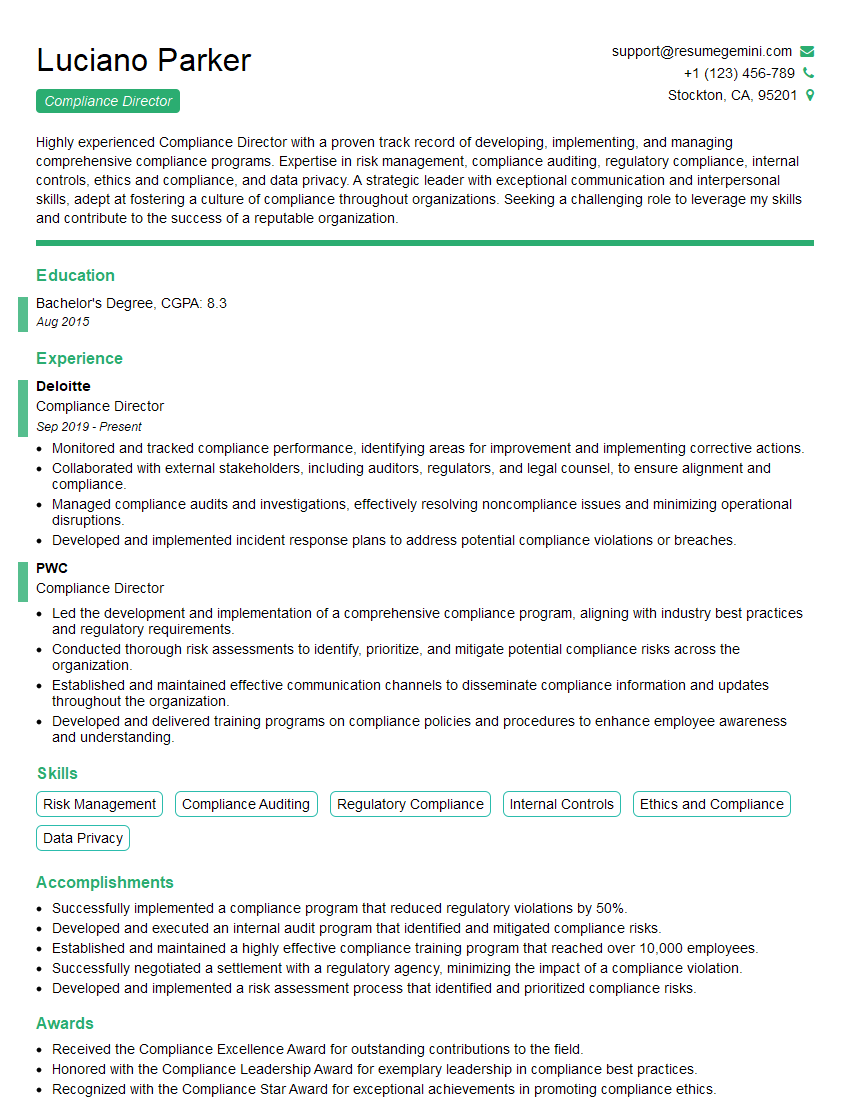
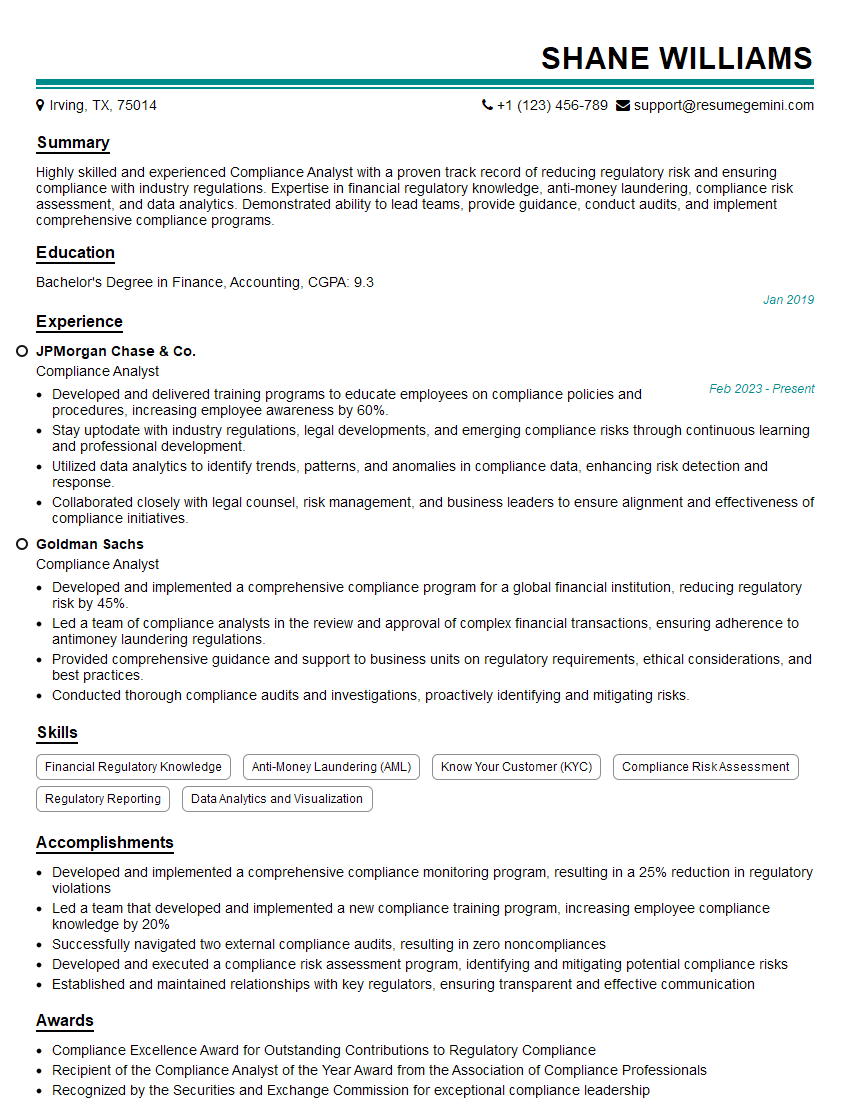
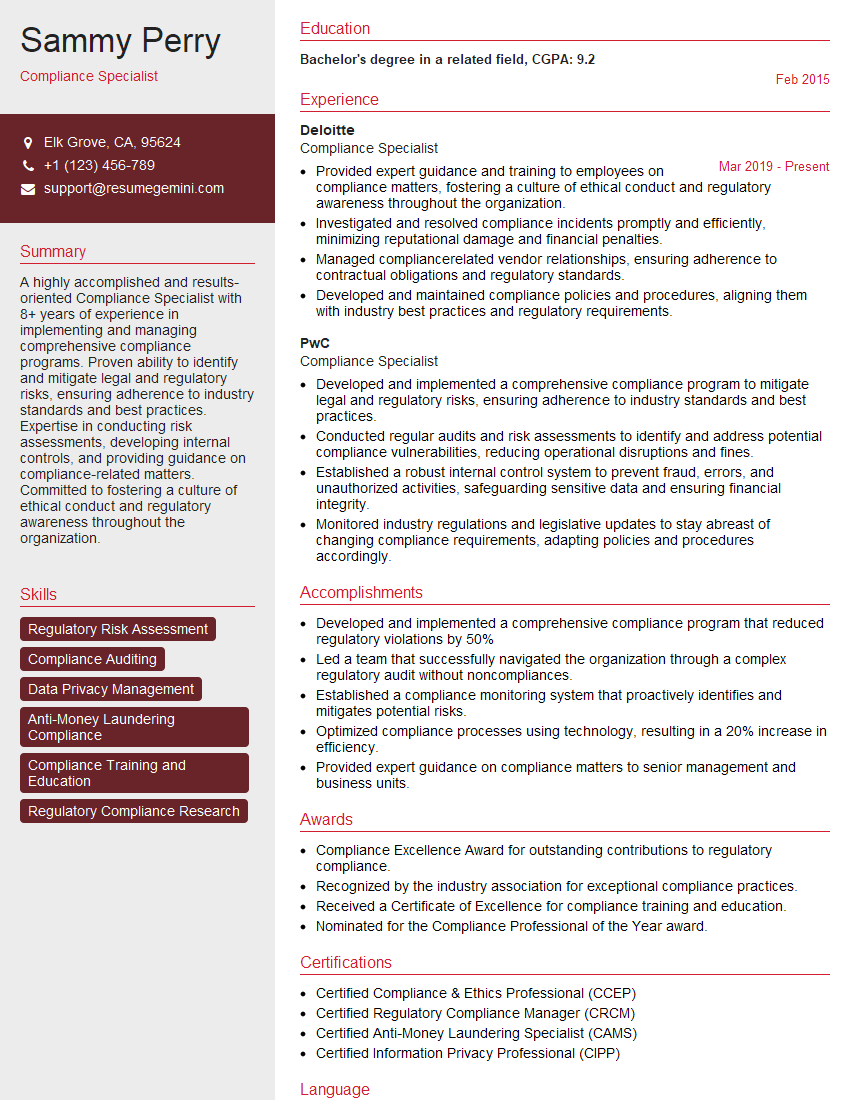
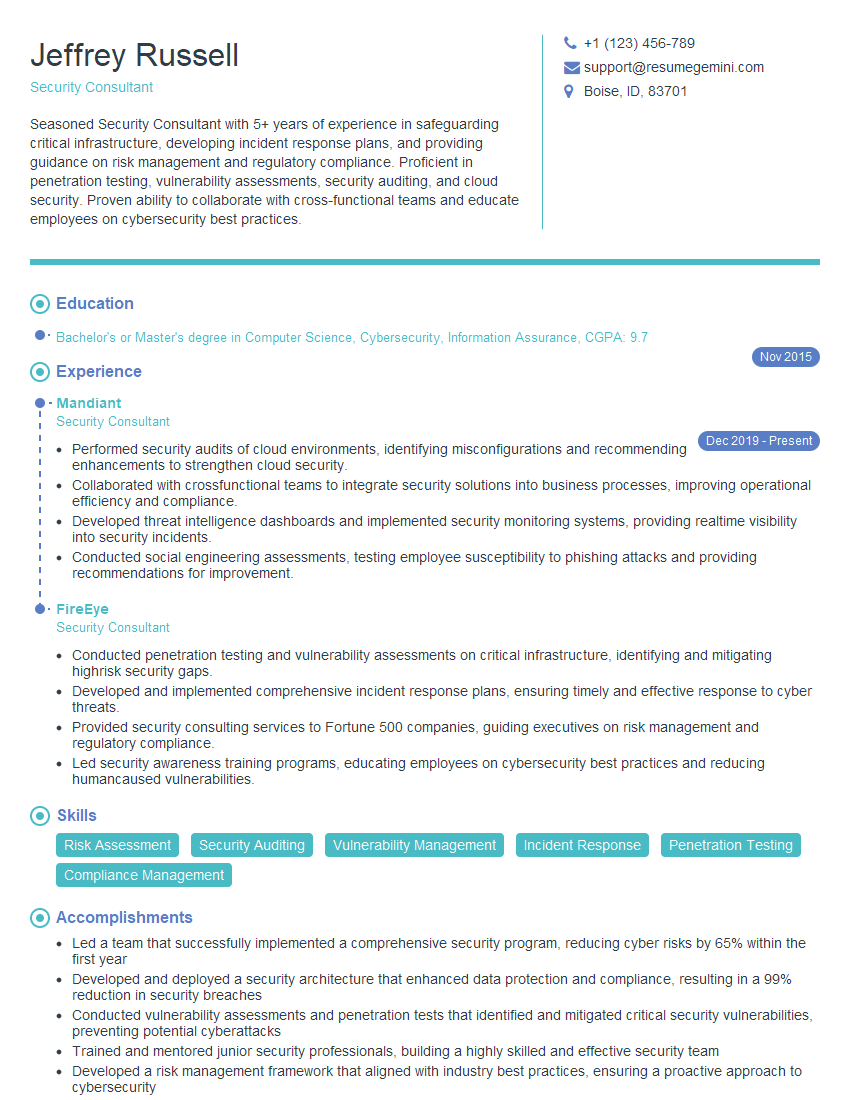
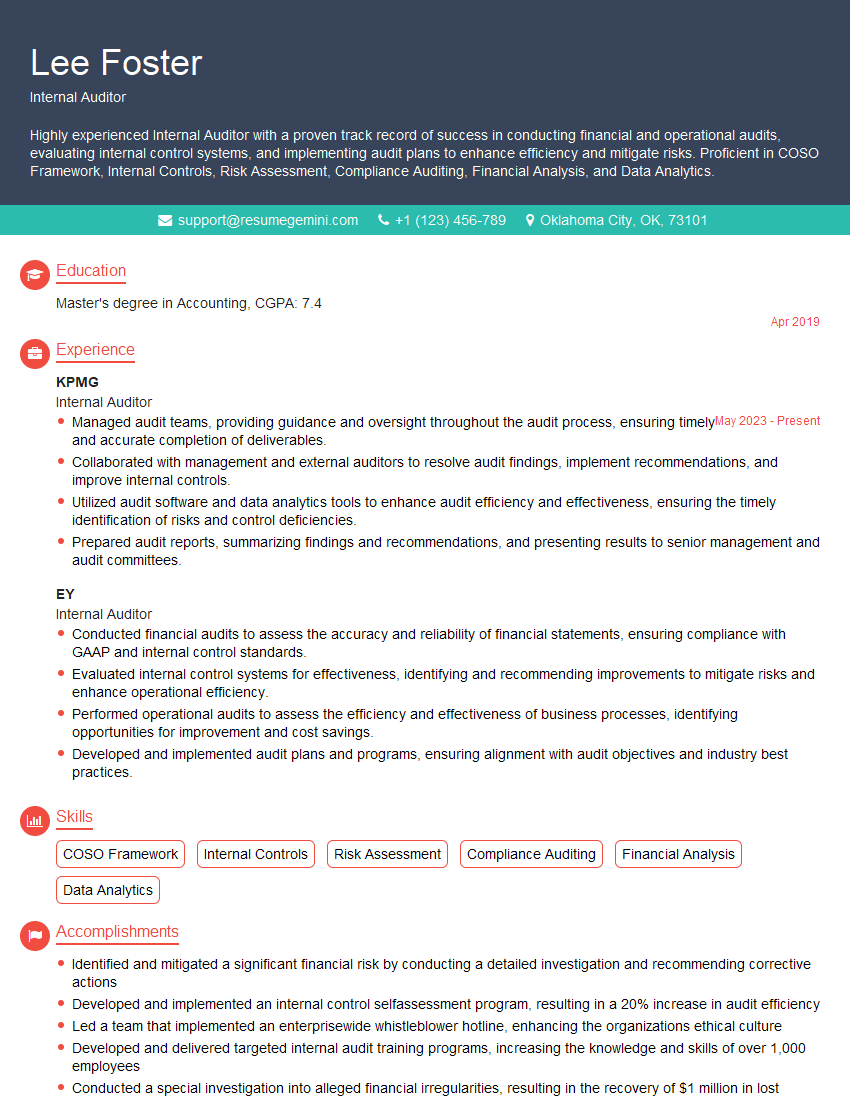
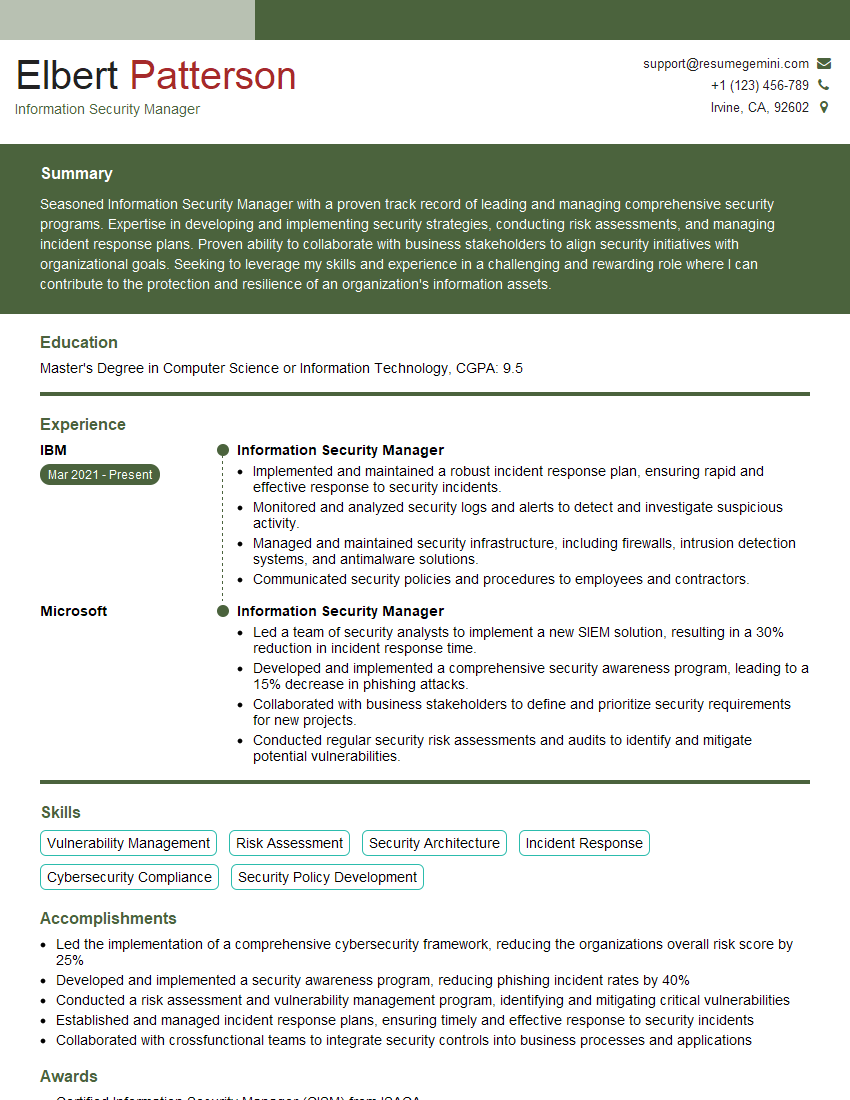
Mastering Regulatory Compliance (ISO, PCI) is crucial for a thriving career in cybersecurity and IT. These certifications demonstrate a high level of expertise and open doors to exciting opportunities with significant earning potential. To maximize your job prospects, creating a compelling and ATS-friendly resume is essential. ResumeGemini can help you build a professional, impactful resume that highlights your skills and experience in the best possible light. ResumeGemini offers examples of resumes tailored to Regulatory Compliance (ISO, PCI) roles to guide you through the process. Invest in your future – build a standout resume with ResumeGemini today!

Explore more articles
Users Rating of Our Blogs
Share Your Experience
We value your feedback! Please rate our content and share your thoughts (optional).
What Readers Say About Our Blog
To the interviewgemini.com Webmaster.
Very helpful and content specific questions to help prepare me for my interview!
Thank you
To the interviewgemini.com Webmaster.
This was kind of a unique content I found around the specialized skills. Very helpful questions and good detailed answers.
Very Helpful blog, thank you Interviewgemini team.