Preparation is the key to success in any interview. In this post, we’ll explore crucial Resident and Student Supervision interview questions and equip you with strategies to craft impactful answers. Whether you’re a beginner or a pro, these tips will elevate your preparation.
Questions Asked in Resident and Student Supervision Interview
Q 1. Describe your experience in providing constructive feedback to residents/students.
Providing constructive feedback is crucial for resident and student development. My approach focuses on a balanced combination of positive reinforcement and specific, actionable suggestions for improvement. I start by highlighting strengths and achievements before addressing areas needing attention. This positive framing helps maintain morale and fosters a receptive environment for feedback.
I utilize the SBI (Situation-Behavior-Impact) model: I describe the Situation (e.g., ‘During yesterday’s patient interaction’), the specific Behavior observed (e.g., ‘you interrupted the patient mid-sentence’), and the Impact of that behavior (e.g., ‘this could make the patient feel unheard and less comfortable’). I avoid generalizations and instead offer concrete examples and suggestions for improvement (e.g., ‘Next time, try using active listening techniques to allow the patient to fully express their concerns before responding.’). I always conclude by reaffirming my belief in their potential for growth and offering further support.
For instance, with a medical student who struggled with patient history-taking, I observed a specific encounter, pointed out the rushed questioning, and showed them how a more structured approach – using the mnemonic ‘SOAP’ (Subjective, Objective, Assessment, Plan) – would improve data gathering. This practical application helped them improve dramatically.
Q 2. How do you assess resident/student performance objectively?
Objective assessment of resident/student performance requires a multifaceted approach. It goes beyond subjective impressions and relies on measurable data and clearly defined criteria. I typically utilize a combination of methods:
- Direct Observation: I regularly observe residents and students during clinical rotations, procedures, and patient interactions, using standardized checklists and rating scales.
- Case Reviews: We discuss patient cases together, analyzing their approach to diagnosis, treatment planning, and patient management. This helps identify strengths and weaknesses in clinical reasoning and decision-making.
- Performance Data: This includes metrics like procedural skills competency scores, patient satisfaction surveys, and completion of assigned tasks. These objective measures provide concrete evidence of performance levels.
- 360-degree Feedback: Where appropriate, feedback from peers, patients, and other staff members can offer a more holistic perspective.
It’s crucial to ensure that the assessment criteria are clearly communicated upfront and that any rating system is consistently applied to prevent bias. Regular feedback sessions help ensure alignment between expectations and performance.
Q 3. What methods do you use to identify learning gaps in residents/students?
Identifying learning gaps requires a proactive and observant approach. I use several strategies:
- Regular Feedback Sessions: These provide a formal setting to discuss performance, identify areas needing improvement, and address questions.
- Direct Observation and Mentoring: Through close observation of their work, I can identify areas where they struggle or show inconsistencies in their understanding or skills.
- Assessment Tools: Using quizzes, tests, or simulated scenarios allows me to gauge knowledge and skills in a structured way.
- Self-Assessment: Encouraging residents and students to reflect on their own performance and identify their areas of weakness is crucial. This fosters self-awareness and encourages ownership of their learning.
- Review of Patient Charts and Documentation: Analyzing their documentation reveals areas where they may lack precision or miss crucial details.
For instance, if a resident consistently struggled with interpreting complex lab results, I’d schedule extra sessions focused on that topic, utilizing case studies and interactive exercises to solidify their understanding.
Q 4. Explain your approach to mentoring residents/students.
Mentoring goes beyond simply providing feedback; it’s about fostering a supportive and collaborative relationship that promotes professional growth. My approach involves:
- Establishing Clear Goals: Working collaboratively to define clear, achievable goals for the mentee, aligning them with their career aspirations and learning needs.
- Regular Check-ins: Scheduled meetings to discuss progress, address challenges, and offer guidance.
- Active Listening and Support: Creating a safe space where the mentee feels comfortable sharing their concerns and challenges.
- Role Modeling: Demonstrating professional behavior, ethical conduct, and effective communication skills.
- Resource Provision: Connecting them with relevant resources, such as workshops, conferences, or experienced professionals.
- Feedback and Encouragement: Providing constructive feedback and celebrating achievements to maintain motivation.
I believe a strong mentor-mentee relationship built on trust and mutual respect is essential for fostering professional development. One of my mentees, a struggling first-year resident, found confidence through regular mentoring sessions and personalized support, ultimately excelling in their subsequent rotations.
Q 5. How do you handle conflicts between residents/students?
Conflicts between residents or students require a prompt, fair, and impartial approach. My strategy emphasizes:
- Early Intervention: Addressing issues promptly before they escalate.
- Creating a Safe Space: Facilitating a meeting where all parties can express their concerns without interruption or judgment.
- Active Listening and Mediation: Understanding each party’s perspective and helping them find common ground.
- Collaborative Problem-Solving: Guiding them toward mutually acceptable solutions.
- Fair and Consistent Enforcement of Policies: Applying program rules consistently to ensure fairness.
- Documentation: Keeping detailed records of the conflict, the steps taken to resolve it, and the outcomes.
If necessary, involving higher authorities – such as program directors – ensures compliance with program policies and protects all involved.
Q 6. Describe a time you had to address a performance issue with a resident/student.
I once had to address a performance issue with a resident who was consistently late for rounds and often unprepared. After initial informal discussions proved ineffective, I scheduled a formal meeting. I started by acknowledging their positive contributions, then objectively presented the data showing their pattern of lateness and lack of preparation. I avoided accusatory language, focusing instead on the impact of their behavior on the team and patient care. We discussed the underlying reasons for their lateness and explored strategies to improve time management, like creating a daily schedule and prioritizing tasks.
We collaborated to create a performance improvement plan with specific, measurable goals and timelines. Regular check-ins were scheduled to monitor progress, offer support, and adjust strategies as needed. This approach, emphasizing collaboration and support, rather than punishment, helped the resident significantly improve their punctuality and preparation. The experience highlighted the importance of combining firm expectations with understanding and supportive guidance.
Q 7. How do you ensure residents/students adhere to professional standards?
Ensuring adherence to professional standards is paramount. My approach is multifaceted:
- Clear Communication of Expectations: Providing residents and students with clear guidelines and expectations regarding professional conduct, ethical principles, and program policies from the outset.
- Role Modeling: Demonstrating professional behavior and ethical conduct in all interactions.
- Regular Education and Training: Offering sessions on topics such as medical ethics, professionalism, and communication skills.
- Mentorship and Guidance: Providing ongoing support and guidance to help them navigate challenging situations and maintain high professional standards.
- Consistent Enforcement of Policies: Addressing any breaches of professional conduct promptly and consistently, following established program policies and procedures.
- Feedback Mechanisms: Creating opportunities for feedback from residents, students, and staff to identify and address potential issues early on.
By fostering a culture of accountability and providing ongoing support, we ensure a high standard of professional conduct within the program.
Q 8. How do you incorporate feedback from residents/students to improve your supervision?
Incorporating feedback from residents and students is crucial for effective supervision. I utilize a multi-faceted approach. Firstly, I conduct regular, structured feedback sessions, using a combination of formal evaluations and informal check-ins. These sessions are designed to be open and honest dialogues, where residents and students feel comfortable sharing both positive and constructive criticism. Secondly, I actively solicit feedback through anonymous surveys or suggestion boxes, ensuring all voices are heard without fear of retribution. This allows for capturing perspectives I might miss in one-on-one interactions. Finally, I actively observe residents and students during their work, noting areas for improvement and discussing these observations during our scheduled meetings. For example, if a student consistently struggles with a particular procedure, I’ll discuss their approach, offer alternative techniques, and provide additional resources for improvement. This continuous feedback loop allows me to tailor my supervision style to individual needs and adapt my teaching methods to enhance learning outcomes.
Q 9. What strategies do you employ to foster a positive learning environment?
Fostering a positive learning environment is paramount. My strategies involve creating a culture of respect, trust, and open communication. I prioritize a collaborative approach, emphasizing teamwork and peer learning. This includes facilitating group discussions, encouraging residents and students to share their experiences and insights, and promoting peer mentoring. I also focus on providing constructive criticism in a supportive and encouraging manner, highlighting strengths alongside areas for improvement. For example, I might frame feedback as, “I noticed you excel at X, but consider this alternative approach for Y to improve efficiency.” Furthermore, I create opportunities for residents and students to share their learning goals and preferences, helping me tailor my teaching style to their individual needs. Creating a safe space where questions are encouraged and mistakes are seen as learning opportunities is key. Regular social events, even informal ones, can also help build camaraderie and a supportive learning community.
Q 10. Explain your experience with different teaching methodologies.
My experience encompasses a range of teaching methodologies. I regularly employ problem-based learning (PBL), where residents and students tackle real-world clinical scenarios, fostering critical thinking and problem-solving skills. I also utilize one-on-one mentoring, providing individualized guidance and support tailored to their specific strengths and weaknesses. Small group teaching allows for interactive discussions and peer learning. I frequently incorporate case studies, simulations, and role-playing to enhance practical application of theoretical knowledge. Finally, I utilize technology effectively, integrating online learning platforms, interactive simulations, and digital resources to supplement traditional teaching methods. The choice of methodology is dictated by the learning objectives, the learners’ needs, and the available resources. For instance, while PBL is great for developing independent problem-solving, case studies can be more effective for addressing specific knowledge gaps.
Q 11. How do you maintain confidentiality while supervising residents/students?
Maintaining confidentiality is crucial. I strictly adhere to HIPAA regulations and institutional policies regarding patient privacy. All discussions about residents and students, including their performance and progress, are conducted in private settings. I never discuss sensitive information in public areas or with unauthorized individuals. Any written documentation is securely stored and only accessible to authorized personnel. I clearly communicate the importance of confidentiality to residents and students at the outset of our relationship, emphasizing the ethical and legal implications of breaches. When necessary, I use anonymized case studies in teaching to illustrate concepts without compromising patient privacy. For example, when discussing a challenging case, I’d remove identifying patient details, focusing only on the relevant clinical aspects. This approach ensures the educational value while safeguarding confidentiality.
Q 12. Describe your experience with curriculum development or revision.
I have extensive experience in curriculum development and revision. I’ve participated in several committees tasked with updating and improving our residency and student training programs. My involvement has included needs assessment, identifying knowledge gaps, designing learning objectives, selecting appropriate teaching methods, and developing assessment strategies to evaluate learner competency. For example, I helped design a new curriculum module on a newly emerging medical technology by conducting thorough research on current best practices and incorporating hands-on training exercises alongside theoretical lectures. I strongly believe in a continuous improvement model, regularly evaluating the effectiveness of the curriculum and making adjustments as needed based on resident and student feedback, assessment results, and emerging best practices in the field.
Q 13. How do you manage the workload and time demands of supervising residents/students?
Managing the workload of supervising residents and students requires effective time management and organizational skills. I utilize a calendar and task management system to schedule meetings, allocate time for feedback sessions, and track progress. Prioritizing tasks based on urgency and importance is crucial. I batch similar tasks together for efficiency. For example, I might dedicate a specific time block each week to reviewing resident progress notes. Delegation, where appropriate, plays a significant role in managing the workload. I might assign specific tasks to senior residents or students, providing mentorship opportunities while streamlining my own work. Regular self-reflection and adjustment of workload distribution are essential to prevent burnout and maintain a sustainable work-life balance. Maintaining open communication with my supervisees about expectations and timelines ensures mutual understanding and reduces potential scheduling conflicts.
Q 14. How do you ensure equitable supervision across all residents/students?
Ensuring equitable supervision requires a conscious effort to provide equal opportunities and support to all residents and students. This includes establishing clear expectations and evaluation criteria for all individuals, ensuring these are applied consistently. I actively work to identify and address any biases that might impact my interactions with residents or students. Regular self-reflection on my own practices is crucial to ensure fairness. I also dedicate equal time and resources to all supervisees, ensuring everyone receives the same level of support and guidance. If some individuals require more attention due to specific needs, I adjust my time allocation accordingly, ensuring others don’t feel neglected. For example, if one student requires extra support in a particular area, I provide additional mentoring sessions while still dedicating adequate time to other supervisees’ progress. Establishing open communication channels allows for early identification and addressing of potential inequities.
Q 15. How do you adapt your supervision style to different learning styles?
Adapting my supervision style hinges on understanding and catering to diverse learning preferences. I believe in employing a multifaceted approach, recognizing that learners aren’t monolithic. Instead of a one-size-fits-all method, I utilize a combination of techniques.
- Visual Learners: For visual learners, I incorporate diagrams, charts, presentations, and videos into my teaching materials and sessions. For instance, when explaining a complex surgical procedure, I might use anatomical diagrams and surgical videos to enhance understanding.
- Auditory Learners: I leverage discussions, lectures, and audio recordings. Regular feedback sessions, where I explain concepts verbally and solicit their understanding, prove beneficial here. Case presentations and discussions are excellent tools.
- Kinesthetic Learners: Hands-on activities, simulations, and role-playing are crucial. For medical students, this could involve simulated patient encounters or practicing procedures on models. For residents, it means active participation in surgeries or procedures under supervision.
- Reading/Writing Learners: I provide detailed written materials, articles, and case studies. I encourage them to maintain reflective journals and write up their experiences.
Regularly assessing their learning styles through informal discussions and observing their responses helps me tailor my approach effectively. It’s a continuous process of adjustment based on individual needs.
Career Expert Tips:
- Ace those interviews! Prepare effectively by reviewing the Top 50 Most Common Interview Questions on ResumeGemini.
- Navigate your job search with confidence! Explore a wide range of Career Tips on ResumeGemini. Learn about common challenges and recommendations to overcome them.
- Craft the perfect resume! Master the Art of Resume Writing with ResumeGemini’s guide. Showcase your unique qualifications and achievements effectively.
- Don’t miss out on holiday savings! Build your dream resume with ResumeGemini’s ATS optimized templates.
Q 16. What resources do you utilize to support resident/student learning?
Supporting resident and student learning requires a diverse range of resources. My approach is multi-pronged, integrating various tools to foster a rich learning environment.
- Access to Databases and Journals: Providing access to reputable medical databases like PubMed and UpToDate ensures access to the most current research and clinical guidelines.
- Educational Platforms: Online learning platforms offering interactive modules, quizzes, and video lectures provide supplemental learning opportunities and tailored education.
- Mentorship Programs: Pairing students/residents with experienced mentors provides personalized guidance and support beyond formal supervision.
- Simulation Labs: These provide a safe space to practice clinical skills and develop decision-making abilities without real-world risks.
- Case Studies and Clinical Vignettes: Real-world scenarios help learners apply theoretical knowledge to practice and develop problem-solving skills.
- Textbooks and Reference Materials: I provide a list of recommended textbooks and supplementary readings relevant to their curriculum.
I ensure that all resources are accessible and appropriate for the skill level and learning style of each individual. Regular feedback on resource utilization helps me adapt and improve the learning experience.
Q 17. Describe your experience with evaluating resident/student research projects.
Evaluating research projects requires a structured approach combining assessment of methodology, data analysis, and interpretation. My evaluation process typically involves:
- Initial Project Review: I assess the research question, methodology, and feasibility of the project during the planning phase, providing guidance and ensuring alignment with ethical considerations.
- Mid-Project Review: A check-in to assess progress, address any challenges, and provide constructive feedback on data collection and analysis techniques.
- Final Project Evaluation: A comprehensive assessment of the entire project, considering the following criteria: the clarity and rigor of the research question, the appropriateness of the methodology, the quality of data analysis, the validity of the conclusions, and the overall presentation of the findings. This might include feedback on writing style, data visualization, and the overall argument presented.
- Feedback & Mentoring: Throughout the process, I provide regular feedback to improve the resident’s research skills and understanding of the research process.
I use a rubric or standardized evaluation form to ensure consistency and fairness. I encourage residents to present their findings, whether through presentations or written reports, providing opportunities to hone their communication skills.
For example, I once supervised a resident conducting a study on the effectiveness of a new treatment. During the final review, while I praised the rigorous methodology, I also highlighted areas where the data interpretation could be strengthened. This resulted in a revised paper that was ultimately submitted for publication.
Q 18. How do you handle difficult conversations with residents/students?
Difficult conversations are inevitable in supervision. My approach focuses on creating a safe, respectful environment conducive to open communication. It involves careful preparation, empathy, and clear communication.
- Prepare: Before the conversation, I carefully consider the issues, my desired outcome, and potential solutions. I aim to be specific about concerns rather than relying on generalizations.
- Private Setting: The conversation needs to take place in a private setting, away from distractions, ensuring confidentiality and psychological safety for the student/resident.
- Active Listening: I focus on listening attentively to understand their perspective before offering my own. This demonstrates respect and builds trust.
- Constructive Feedback: I use the “sandwich method”—starting with positive feedback, followed by constructive criticism, and ending with another positive comment or encouragement. I focus on behaviors rather than personal attributes.
- Collaboration and Problem Solving: The conversation should be collaborative, focusing on finding solutions together rather than assigning blame. I encourage participation in developing a plan for improvement.
- Documentation: After the conversation, I document the key issues discussed, the action plan agreed upon, and the follow-up schedule.
For example, if a resident is consistently late for rounds, instead of directly accusing them of unprofessionalism, I might ask about any potential barriers, listening to their perspective before collaboratively devising a plan for better time management.
Q 19. How do you promote self-directed learning in residents/students?
Promoting self-directed learning is crucial for developing independent and competent professionals. My strategies focus on empowering residents and students to take ownership of their learning journey.
- Goal Setting: I encourage them to set realistic, achievable learning goals, aligned with their professional aspirations and career development plan.
- Resource Identification: I guide them in identifying and evaluating relevant learning resources, including textbooks, journals, online courses, and professional organizations.
- Time Management Skills: I help them develop effective time management strategies to balance their learning responsibilities with clinical duties.
- Reflective Practice: I encourage keeping reflective journals, enabling them to analyze their experiences, identify areas for improvement, and articulate their learning.
- Independent Research Projects: Providing opportunities to work on research projects fosters the ability to formulate research questions, design methodologies, and analyze results.
- Feedback and Self-Assessment: Regular feedback sessions coupled with self-assessment tools helps them monitor progress and adjust their learning approach as needed.
For example, I might suggest a resident explore a specific area of interest through independent study, providing feedback on their chosen resources and progress. This allows them to explore areas of personal and professional growth independently, while still having access to guidance.
Q 20. What strategies do you use to evaluate the effectiveness of your supervision?
Evaluating the effectiveness of my supervision involves a multi-faceted approach, incorporating both quantitative and qualitative data.
- Resident/Student Feedback: Regular anonymous feedback surveys provide insights into their learning experience, identifying areas of strength and areas needing improvement.
- Performance Evaluation: Formal performance evaluations assess their clinical skills, knowledge base, and professionalism, reflecting the effectiveness of my supervisory approach.
- Observation of Clinical Performance: Direct observation of their clinical practice during patient encounters and procedures provides real-time feedback on their competence.
- Portfolio Review: Reviewing their portfolios, which include clinical notes, case studies, and research projects, provides a comprehensive assessment of their overall development.
- Self-Reflection: Regular self-reflection on my teaching methods and supervisory techniques helps me identify areas where adjustments are needed.
- Data Analysis: Tracking key metrics, such as resident performance on examinations or completion rates of educational modules, provides quantitative data on the effectiveness of my approach.
The data gathered from these diverse sources informs my ongoing professional development and allows me to refine my supervision methods to maximize learning outcomes.
Q 21. How do you stay current with best practices in resident/student supervision?
Staying current with best practices in resident and student supervision requires continuous effort. My approach involves a combination of strategies:
- Professional Development Courses and Workshops: Actively participating in workshops and courses focused on medical education and supervision.
- Professional Organizations: Membership in professional organizations specializing in medical education provides access to resources, publications, and networking opportunities.
- Journals and Publications: Regularly reviewing journals and publications focused on medical education to stay updated on research and best practices in supervision.
- Mentorship and Peer Learning: Engaging in mentorship relationships with experienced educators and peers to share ideas and best practices.
- Self-Reflection and Critical Appraisal: Regular self-reflection on my supervision techniques, coupled with critical appraisal of my methods, identifies areas for improvement.
- Feedback from Peers and Mentees: Seeking feedback from colleagues and mentees on my effectiveness as a supervisor to gain insights into my strengths and weaknesses.
This continuous learning helps me adapt my methods to meet the ever-evolving demands of medical education and ensure I’m providing the best possible support to those I supervise.
Q 22. Describe your experience with using assessment tools to evaluate performance.
Assessing resident and student performance requires a multifaceted approach beyond simple observation. I utilize a variety of assessment tools, tailored to the specific learning objectives and competency levels. These include direct observation of clinical skills using standardized checklists (e.g., for procedures like lumbar punctures or central line placement), 360-degree feedback incorporating input from patients, nurses, and attending physicians, review of patient charts to assess diagnostic reasoning and treatment planning, and formative assessments like mini-CEX (mini-Clinical Evaluation Exercise) and DOPS (Direct Observation of Procedural Skills). The choice of tool depends on the stage of training and the specific competency being evaluated. For instance, early in training, feedback might focus on fundamental skills and professionalism, while later stages would involve more complex clinical reasoning and independent decision-making. I regularly analyze assessment data to identify strengths and weaknesses, allowing for targeted interventions and personalized learning plans.
For example, if a resident consistently struggles with patient communication, we’d incorporate role-playing exercises and feedback sessions focusing on active listening and empathetic communication techniques. Similarly, if chart review reveals a pattern of incomplete documentation, we’d address this through focused training on documentation standards and practical exercises.
Q 23. How do you integrate feedback from attending physicians into your supervisory practice?
Integrating feedback from attending physicians is crucial for a comprehensive and balanced evaluation. I actively seek regular feedback from attendings through formal evaluations, informal discussions, and dedicated feedback sessions. I ensure that this feedback is specific, constructive, and actionable. I then synthesize this input with my own observations to create a holistic picture of the resident’s or student’s performance. This collaborative approach ensures that the evaluation is fair, accurate, and reflects multiple perspectives. It’s important to create a safe space for constructive criticism; I always frame the feedback discussions as opportunities for growth and learning.
For instance, if an attending notes inconsistencies in a resident’s physical exam technique, I would schedule a focused session to review the proper technique, provide hands-on practice, and offer opportunities for observation and feedback in subsequent clinical encounters. I also make a point of discussing any discrepancies between the attending’s observations and my own, ensuring a shared understanding of the areas needing improvement.
Q 24. How do you balance the needs of individual residents/students with the overall program goals?
Balancing individual resident/student needs with overall program goals is a delicate but essential aspect of supervision. It requires a personalized approach, recognizing that each learner has unique strengths, weaknesses, and learning styles. I begin by carefully reviewing each individual’s learning objectives and personal goals, ensuring alignment with the program’s curriculum and milestones. This includes discussions about career aspirations and personal learning preferences. I then develop individualized learning plans that incorporate both structured learning opportunities (e.g., lectures, workshops) and personalized experiences tailored to their needs and interests.
For example, a student interested in research might be encouraged to participate in research projects while a student focused on clinical practice might receive more mentorship in direct patient care. Regular progress reviews allow for adjustments to the learning plan based on individual progress and unforeseen circumstances. This ensures both individual growth and overall program success.
Q 25. How do you ensure residents/students are prepared for independent practice?
Preparing residents and students for independent practice is a continuous process, starting from day one. This involves a structured curriculum that gradually increases responsibility and autonomy. We emphasize a stepwise approach, moving from supervised practice to progressively more independent tasks. Regular feedback and assessments, as mentioned previously, are crucial. We also focus on developing essential skills beyond clinical competence, including effective communication, professionalism, teamwork, critical thinking, and ethical decision-making. Simulations and case-based learning are invaluable tools in preparing for challenging scenarios encountered in independent practice.
For instance, a structured curriculum might involve starting with observation, then assisting with procedures under supervision, performing procedures independently under supervision, and finally performing procedures completely independently with appropriate oversight. Regular feedback and performance reviews are key to monitoring progress and identifying any areas needing further development before independent practice is granted.
Q 26. Describe your experience with managing resident/student well-being.
Resident and student well-being is paramount. I prioritize creating a supportive and inclusive learning environment where learners feel comfortable seeking help and expressing concerns. This involves regular check-ins, both formal and informal, to address their academic, personal, and professional challenges. We have established clear policies and procedures for addressing issues such as stress, burnout, and mental health concerns. Access to mental health resources, such as counseling services and employee assistance programs, is readily available and promoted actively. I also foster a culture of open communication and peer support, encouraging residents and students to support one another.
For example, I conduct regular one-on-one meetings with each learner, providing space for discussing both academic progress and personal well-being. I also organize team-building activities to foster a sense of community and support among the residents and students.
Q 27. How do you address burnout in yourself and your residents/students?
Addressing burnout in myself and my residents/students requires proactive strategies and a commitment to self-care. For myself, I prioritize maintaining a healthy work-life balance, setting realistic expectations, and utilizing stress-management techniques. This includes regular exercise, sufficient sleep, and mindful practices. I also make sure to take breaks and utilize vacation time. For my residents and students, I model these behaviors and encourage them to prioritize their own well-being. I actively promote work-life balance, stress-management resources, and opportunities for personal growth outside of their academic responsibilities.
Regular check-ins, as mentioned earlier, are invaluable in identifying early signs of burnout. If burnout is detected, I will refer the individual to appropriate resources and provide support and guidance. We also regularly discuss coping mechanisms and stress reduction strategies as part of our teaching and mentorship activities.
Q 28. How do you foster a culture of professionalism and respect in your supervisory role?
Fostering a culture of professionalism and respect is essential. This starts by modeling the behaviors I expect. I communicate clearly, provide constructive feedback respectfully, and treat all individuals with dignity and respect, regardless of their position or background. I promote open communication and create a safe space for dialogue and disagreement. We regularly review professional conduct guidelines and discuss ethical dilemmas. I also hold residents and students accountable for their actions, using a restorative justice approach to address unprofessional conduct, focusing on learning and growth rather than solely on punishment.
For instance, we might use case studies to discuss scenarios involving unprofessional behavior and explore different approaches to resolving conflict professionally. We also encourage peer feedback and mentorship to promote a culture of mutual respect and support. Zero-tolerance policies for harassment and discrimination are explicitly communicated and reinforced. By creating a culture of respect and accountability, I aim to cultivate an environment where learning flourishes.
Key Topics to Learn for Resident and Student Supervision Interview
- Educational Principles & Learning Styles: Understanding diverse learning approaches and adapting your supervision style accordingly. Practical application: Developing individualized learning plans for residents and students based on their strengths and weaknesses.
- Feedback & Assessment Strategies: Mastering constructive criticism, providing regular feedback, and utilizing effective assessment methods. Practical application: Implementing a system for regular progress reviews and performance evaluations, focusing on both strengths and areas for improvement.
- Mentorship & Professional Development: Cultivating a supportive mentoring relationship, fostering professional growth, and guiding career trajectory. Practical application: Connecting residents and students with relevant resources, networking opportunities, and professional development programs.
- Conflict Resolution & Communication: Effectively addressing conflicts, fostering open communication, and creating a positive learning environment. Practical application: Developing strategies for mediating disagreements between residents or students, and addressing challenging behaviors professionally.
- Legal & Ethical Considerations: Understanding relevant regulations, maintaining confidentiality, and upholding ethical standards in supervision. Practical application: Knowing and adhering to institutional policies regarding resident and student supervision, and handling sensitive situations appropriately.
- Curriculum Design & Implementation (if applicable): Understanding curriculum development principles and their application in practical settings. Practical application: Contributing to the design and implementation of effective training programs for residents and students.
- Program Evaluation & Improvement: Assessing the effectiveness of supervision strategies and implementing changes to enhance learning outcomes. Practical application: Analyzing feedback from residents and students to improve the quality of supervision and the overall program.
Next Steps
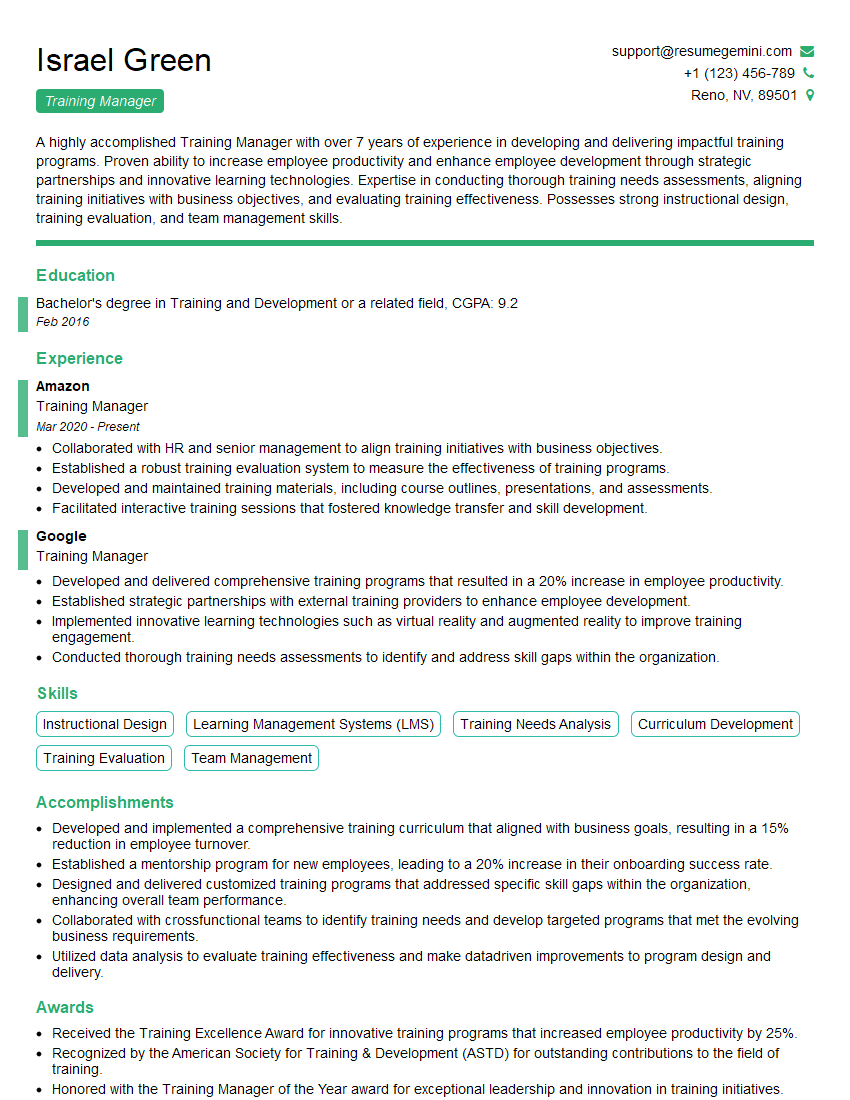
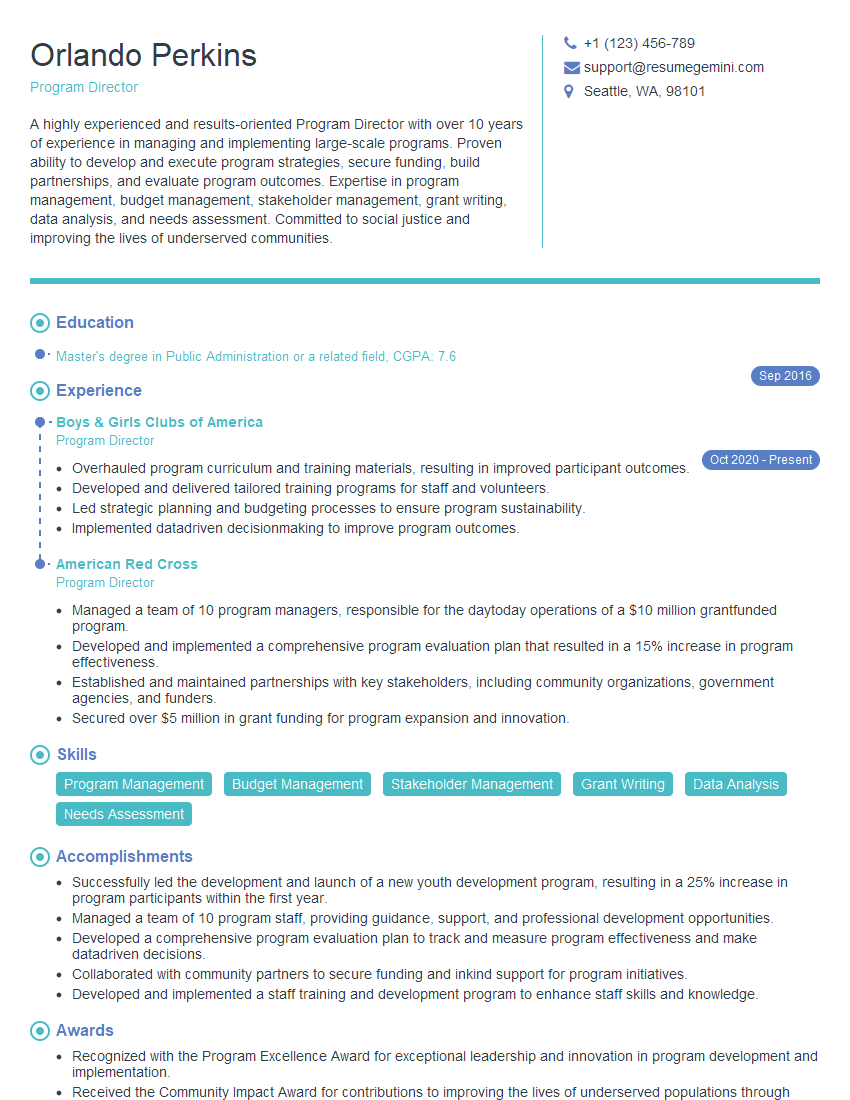
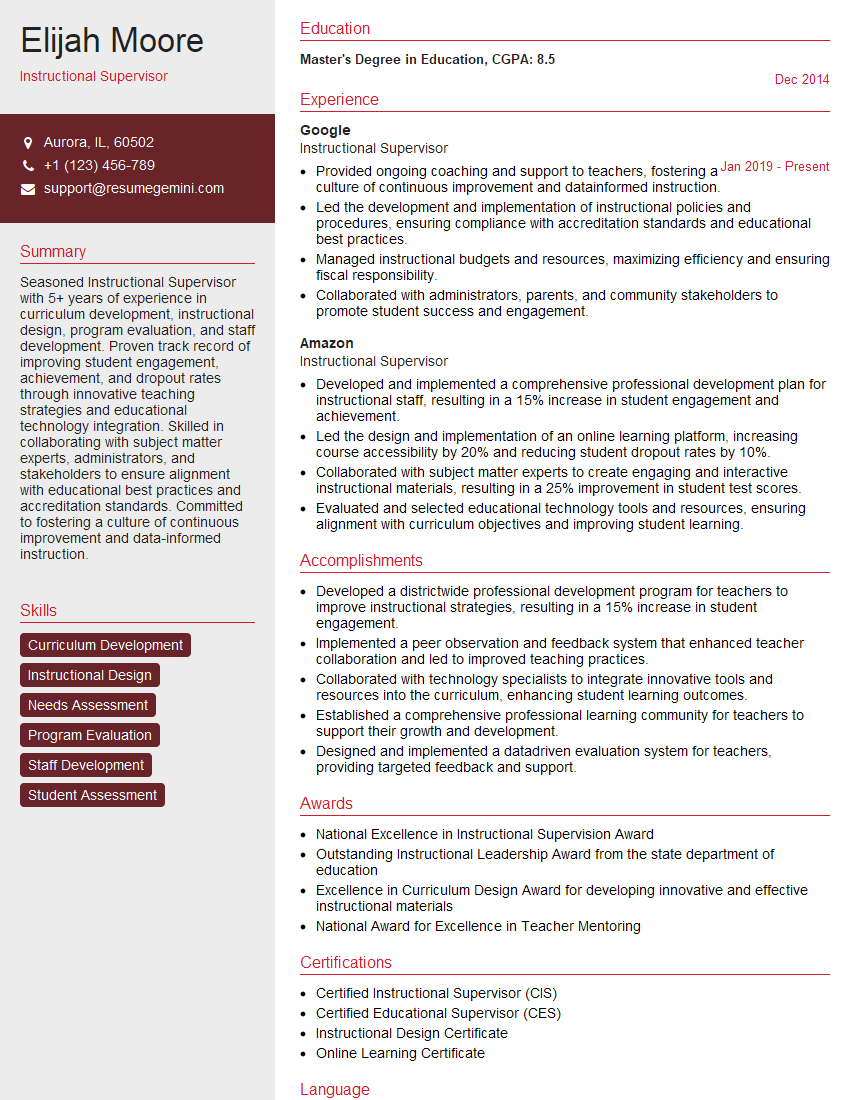
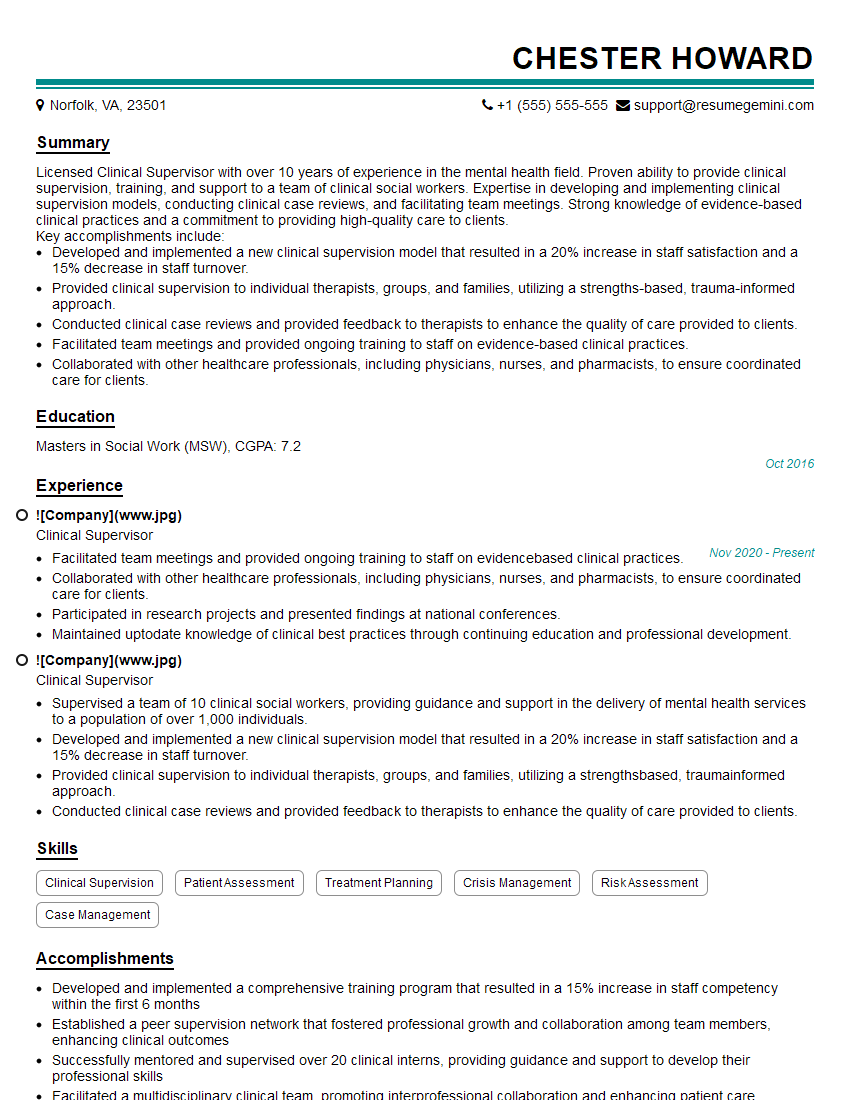
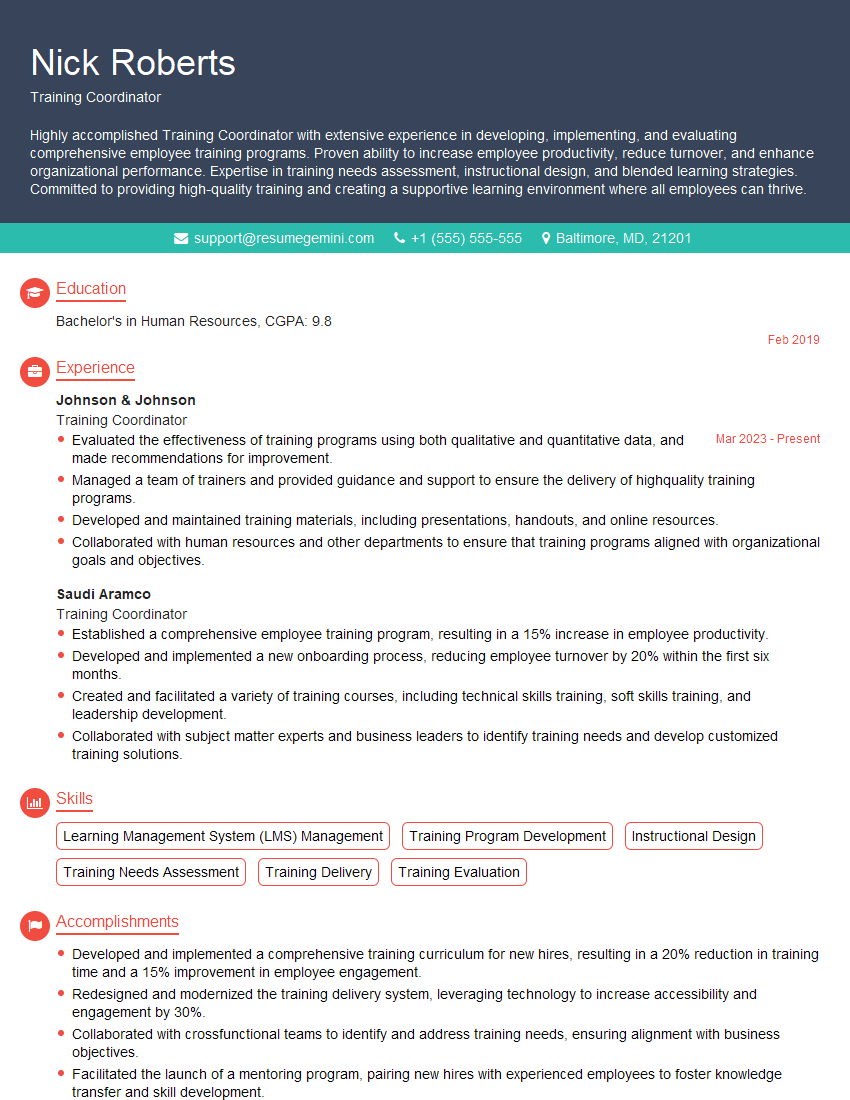
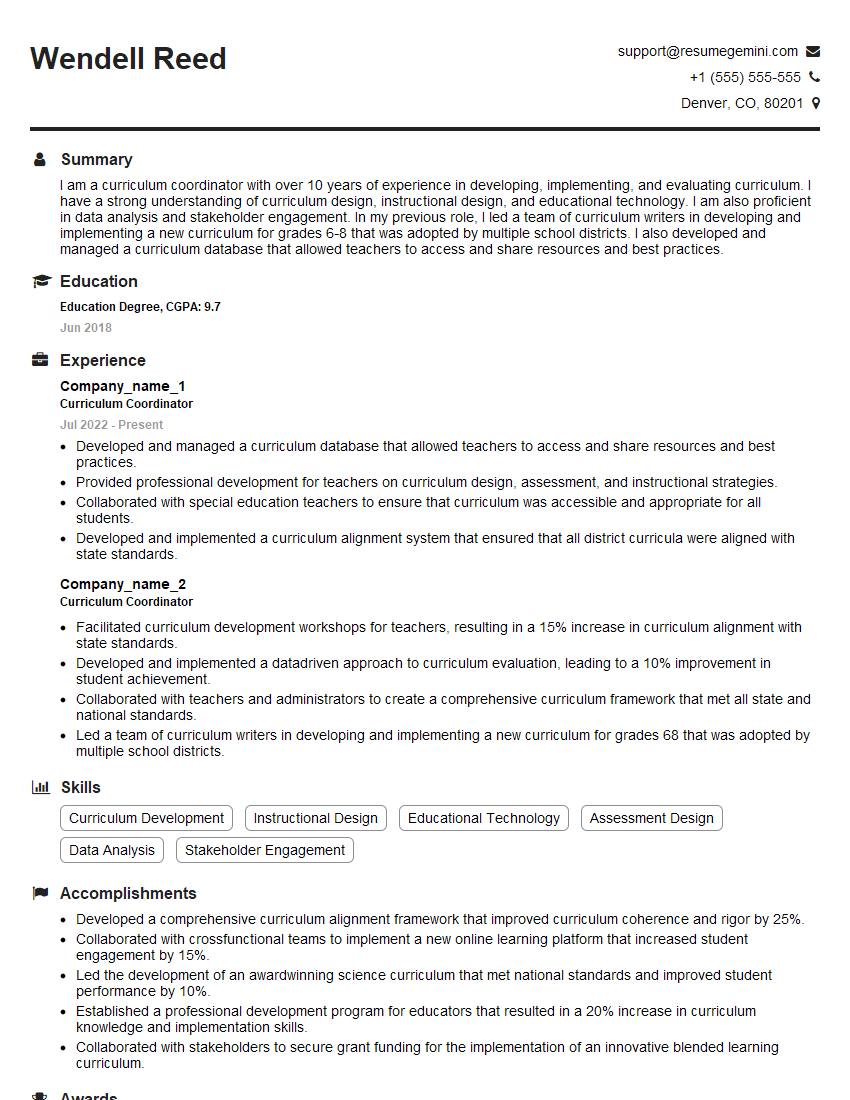
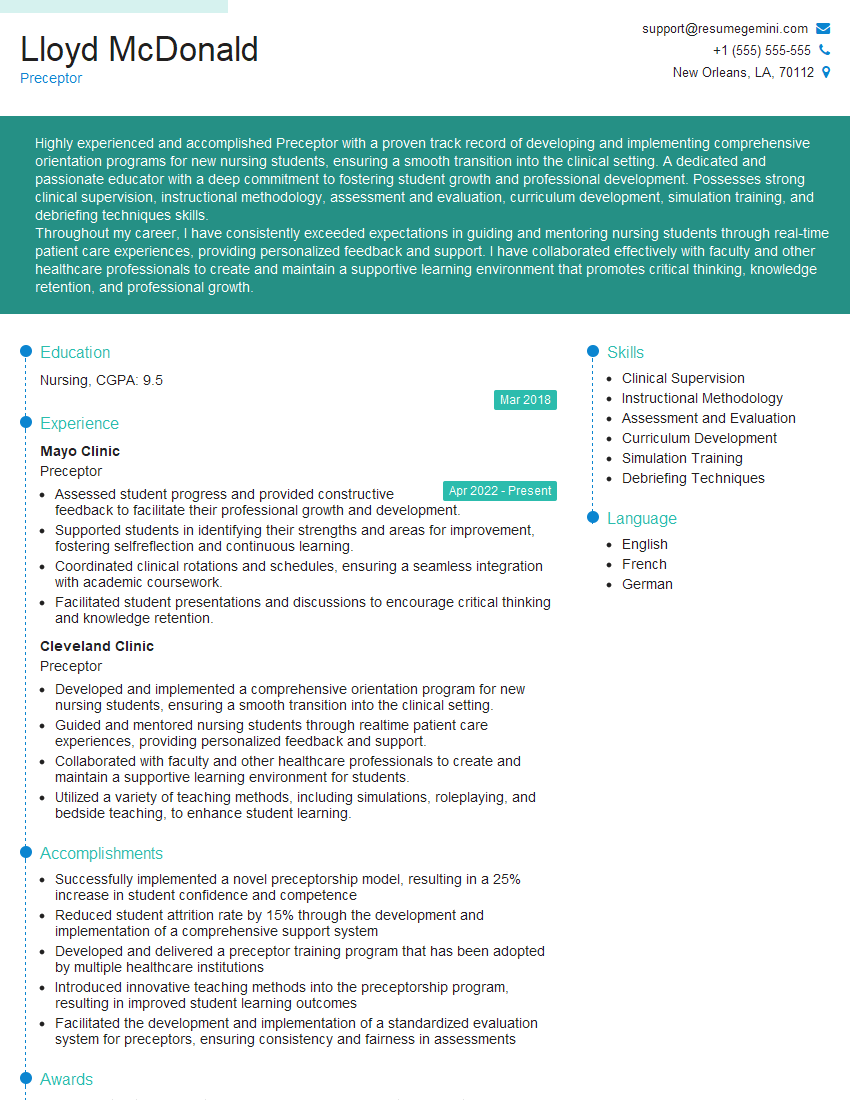
Mastering Resident and Student Supervision is crucial for career advancement, demonstrating your leadership abilities and commitment to professional development. A strong, ATS-friendly resume is essential for showcasing your skills and experience to prospective employers. To enhance your job prospects, leverage the power of ResumeGemini to create a compelling and effective resume. ResumeGemini offers a user-friendly platform and provides examples of resumes tailored specifically to Resident and Student Supervision roles, helping you present your qualifications in the best possible light. Take the next step toward your dream career today!
Explore more articles
Users Rating of Our Blogs
Share Your Experience
We value your feedback! Please rate our content and share your thoughts (optional).
What Readers Say About Our Blog
To the interviewgemini.com Webmaster.
Very helpful and content specific questions to help prepare me for my interview!
Thank you
To the interviewgemini.com Webmaster.
This was kind of a unique content I found around the specialized skills. Very helpful questions and good detailed answers.
Very Helpful blog, thank you Interviewgemini team.