Interviews are opportunities to demonstrate your expertise, and this guide is here to help you shine. Explore the essential Restoration and Mitigation Techniques interview questions that employers frequently ask, paired with strategies for crafting responses that set you apart from the competition.
Questions Asked in Restoration and Mitigation Techniques Interview
Q 1. Explain the difference between structural drying and surface drying.
The key difference between structural drying and surface drying lies in the depth of moisture removal. Surface drying addresses only the visible moisture on surfaces. Think of it like wiping up a spill – you remove the obvious water, but moisture might remain trapped deeper within materials. Structural drying, on the other hand, is a far more comprehensive process. It aims to remove moisture from all affected building materials, including those hidden within walls, floors, and ceilings. It requires specialized equipment and a deep understanding of how moisture migrates through a structure. For example, surface drying might suffice for a small spill on a hardwood floor, but structural drying is crucial after a major flood event to prevent mold growth and structural damage.
Imagine a sponge: surface drying is like wiping the outside, leaving the inside still wet; structural drying is like squeezing out every drop from the entire sponge.
Q 2. Describe your experience with various water extraction methods.
My experience encompasses a wide range of water extraction methods, selected based on the specific situation. I’m proficient with various types of extractors, from lightweight portable units ideal for small spills to larger, truck-mounted systems capable of handling significant flooding. I’ve used wet/dry vacuums for initial water removal and submerged pumps for removing standing water from basements or crawl spaces. I also have extensive experience using specialized equipment such as air movers to accelerate evaporation and dehumidifiers to control the moisture content within the structure. The choice of method depends on factors such as the amount of water, the type of material affected, and the accessibility of the affected area. For example, in a basement flood, I’d likely begin with a submerged pump to remove standing water, followed by wet/dry vacuums and then air movers and dehumidifiers for structural drying.
Q 3. How do you determine the extent of water damage in a structure?
Determining the extent of water damage requires a systematic approach. It begins with a thorough visual inspection, noting the areas affected and the apparent severity of the damage. Beyond visual assessment, I utilize moisture meters to measure the moisture content in various materials like drywall, flooring, and insulation. These meters provide quantitative data, allowing for precise identification of moisture levels and the extent of penetration. In more complex cases, thermal imaging can be used to detect hidden moisture. Finally, I consider factors such as the source of the water (clean, grey, or black), the duration of the water exposure, and the type of materials involved to build a complete picture of the damage and scope of restoration needed. For instance, a seemingly small leak behind a wall could lead to significant damage if left untreated, as moisture can penetrate deep within the structure.
Q 4. What are the different categories of water damage (Category 1, 2, 3)?
Water damage is categorized into three classes based on the level of contamination and the potential health risks involved:
- Category 1 (Clean Water): This is water from a sanitary source, such as a broken pipe carrying clean water. It poses minimal health risk.
- Category 2 (Grey Water): This water is contaminated with some pollutants, such as water from a dishwasher, washing machine, or a toilet that doesn’t contain fecal matter. It poses a moderate health risk.
- Category 3 (Black Water): This water is heavily contaminated with sewage, flood water, or other substances containing harmful pathogens. It poses a significant health risk.
The classification dictates the approach to remediation. Category 3 requires more rigorous decontamination procedures compared to Category 1.
Q 5. Explain the process of mold remediation, including safety precautions.
Mold remediation is a specialized process requiring strict adherence to safety protocols. It begins with containment to prevent the spread of spores. This involves setting up a physical barrier, such as plastic sheeting and negative air pressure to prevent the spread of mold.
Next, we carefully remove all visibly moldy materials, ensuring proper disposal in sealed containers to avoid cross-contamination. Any porous materials that absorbed moisture and are beyond salvage are removed, even if no visible mold is present. Surfaces are thoroughly cleaned and disinfected with antimicrobial solutions. Air quality testing is typically conducted before and after remediation to verify the effectiveness of the process.
Safety precautions are paramount. This includes wearing personal protective equipment (PPE) such as respirators (N95 or higher), gloves, eye protection, and coveralls. Proper training and adherence to industry standards, such as IICRC S520, are critical for both safety and effective remediation.
Q 6. What are the common causes of fire damage and how are they addressed?
Fire damage is often multifaceted, stemming from various sources. Electrical issues, such as faulty wiring or overloaded circuits, are common culprits. Cooking accidents, particularly involving unattended stoves or deep fryers, also lead to frequent fires. Heating equipment malfunctions, like improperly maintained furnaces or fireplaces, pose another significant risk. Smoking materials, intentionally or accidentally left unattended, are a leading cause of residential fires. Arson, intentionally set fires, is another significant consideration.
Addressing fire damage involves a coordinated response. First, the fire must be extinguished and the scene secured. Then, fire damage restoration begins, focusing on stabilization, including things like removing smoke-damaged materials and water damage from extinguishing efforts.
Q 7. Describe your experience with fire damage restoration techniques.
My experience in fire damage restoration is extensive, encompassing both the immediate response and the long-term remediation. I’m adept at handling various aspects of the restoration process including the initial assessment of the damage, using both visual inspection and specialized equipment. My expertise includes smoke and soot damage remediation through cleaning, deodorization, and the appropriate selection of cleaning agents. I’m experienced in the techniques for cleaning and repairing various surfaces affected by fire and smoke including drywall repair, painting, and flooring restoration.
One challenging case involved a kitchen fire. The initial damage was significant, with soot covering all surfaces and substantial water damage from extinguishing the fire. We used a combination of wet cleaning techniques, air scrubbing to remove soot particles, and odor removal to restore the kitchen to a habitable condition. Careful content cleaning and packing was also critical to minimize further damage to the homeowner’s belongings.
Q 8. How do you assess the safety of a structure after a fire?
Assessing structural safety after a fire is paramount and requires a multi-faceted approach. It’s not just about visible damage; hidden weaknesses can pose significant risks. My process begins with a thorough visual inspection, looking for signs of charring, weakened structural members (beams, columns, joists), and compromised foundations. I’d then use specialized tools like thermal imaging cameras to detect hidden heat damage within walls or ceilings, which might not be evident to the naked eye. Next, I’d employ a structural engineer to conduct a more in-depth assessment, potentially including load testing or core sampling to determine the structural integrity. This ensures that the building is safe for occupants and workers during the restoration process and prevents further damage or collapse.
For instance, in one project involving a significant kitchen fire, the initial inspection revealed superficial damage, but thermal imaging revealed extensive damage within the wall cavities. The structural engineer’s assessment revealed that the supporting beams needed significant reinforcement before further work could proceed. This highlights the importance of a thorough, multi-stage assessment for post-fire safety.
Q 9. What are the different types of cleaning agents used in restoration?
Selecting the right cleaning agent is crucial in restoration, as inappropriate choices can damage materials or even cause further harm. The choice depends heavily on the type of soiling and the material being cleaned. We generally categorize cleaning agents into several types:
- Water-based cleaners: These are usually the first choice, suitable for removing soot and smoke residue from many surfaces. However, their effectiveness varies depending on the type of soot and the porosity of the material.
- Solvent-based cleaners: Used for tougher stains and greasy residues not easily removed by water. These require careful handling due to their flammability and potential health risks. Proper ventilation is crucial.
- Abrasive cleaners: These are used sparingly, primarily for removing stubborn stains from durable surfaces. Their use should be limited to avoid damage to more delicate materials.
- Enzymatic cleaners: Excellent for breaking down organic matter such as blood or food stains. They are environmentally friendly and relatively safe.
- Specialized cleaners: These include products designed for specific materials, such as stone or marble cleaners. Using the wrong cleaner can permanently damage these surfaces.
I always perform test cleaning in an inconspicuous area before applying any cleaning agent on a larger scale. This helps assess the effectiveness and potential for damage.
Q 10. How do you handle asbestos or lead-based paint during restoration?
Handling asbestos and lead-based paint during restoration requires strict adherence to safety regulations and protocols. Both substances are highly hazardous, and improper handling can lead to serious health problems. My approach follows these key steps:
- Asbestos Abatement: First, I conduct an asbestos survey to identify the presence and location of asbestos-containing materials. If asbestos is found, I must engage a licensed asbestos abatement contractor. They follow stringent protocols, including encapsulation, enclosure, or removal, all in compliance with relevant regulations. Air monitoring is essential throughout the process to ensure worker and environmental safety.
- Lead-Based Paint Removal: For lead-based paint, the approach is similar. A lead paint inspection is necessary to locate affected areas. Removal should only be performed by trained professionals following strict safety guidelines. Containing the dust and debris generated during the process is critical. The EPA’s guidelines are strictly adhered to, and proper waste disposal is paramount.
I never attempt to handle asbestos or lead paint myself; it’s crucial to prioritize safety and work only with licensed and insured professionals to ensure compliance and minimize health risks. Documentation and proper reporting are essential aspects of this process.
Q 11. Explain your experience with content restoration techniques.
Content restoration is a vital part of my work, covering everything from documents and photographs to artwork and furniture. My experience includes cleaning, stabilizing, and repairing damaged items. Techniques vary greatly depending on the item and the type of damage. For example:
- Document restoration: This might involve careful cleaning of water-damaged documents using specialized solutions, followed by drying and preservation techniques.
- Photograph restoration: I use techniques ranging from image editing software to repair minor tears and discoloration to more advanced methods involving specialized chemicals for cleaning and repairing heavily damaged photographs.
- Artwork restoration: This usually involves intricate cleaning, repairs of tears or cracks, and potentially color correction, often done in collaboration with professional art conservators.
- Furniture restoration: This includes techniques for cleaning, repairing, and refinishing damaged furniture. My experience encompasses various methods, from repairing wood damage to restoring upholstery.
I’ve worked on numerous projects, including the restoration of irreplaceable family heirlooms and valuable artwork, consistently prioritizing the preservation of the items’ original character and value while ensuring their longevity.
Q 12. What software or technology do you use for estimating or documentation?
Technology plays a significant role in efficient and accurate restoration project management. I use a variety of software and technology, including:
- Estimating software: Xactimate is a widely used software for creating detailed estimates, incorporating material costs, labor, and other expenses. It integrates with other project management tools.
- Project management software: Software like Asana or Monday.com helps me manage tasks, deadlines, and communication within the project team. This improves efficiency and organization.
- Documentation software: I utilize software for creating comprehensive project reports, including photographic documentation and detailed notes on the work completed. This ensures clear records for insurance claims and future reference.
- 3D modeling software: In complex projects, 3D modeling can be useful to visualize the damage, plan repairs, and communicate the restoration plan effectively to clients and stakeholders.
This technology ensures accuracy, improves communication, and streamlines the entire project lifecycle.
Q 13. How do you manage a restoration project timeline and budget?
Managing restoration project timelines and budgets requires a structured approach. I begin by creating a detailed project scope, which includes a thorough assessment of the damage and a realistic plan for restoration. Next, I develop a detailed schedule, breaking down the project into manageable phases with specific deadlines. This schedule is regularly reviewed and updated as the project progresses. Budgeting involves creating a detailed cost estimate, including material costs, labor, equipment rental, and permits. This estimate is presented to the client, and we agree on a payment plan. Throughout the project, I track expenses carefully, comparing them against the budget. Any significant deviations are discussed with the client promptly.
For example, in a recent water damage restoration project, I utilized a Gantt chart to visualize the project timeline, ensuring all phases were appropriately sequenced and time-bound. This proactive approach allowed us to complete the project on time and within budget.
Q 14. Describe your experience with working with insurance adjusters.
My experience working with insurance adjusters is extensive and positive. I understand the importance of clear and thorough communication. I aim to provide adjusters with comprehensive documentation, including detailed photos, reports, and receipts, to support the insurance claim. I’m accustomed to their procedures and requirements. My goal is to make the claims process as smooth and efficient as possible. I believe in building professional relationships based on trust and transparency. I’m adept at explaining technical aspects of the restoration process in a clear and understandable way.
I find that proactive communication and detailed documentation often lead to quicker claim settlements and a more satisfying experience for both the client and the insurance company. One example is when I worked on a complex fire damage case. By providing comprehensive documentation up front, I was able to streamline the adjuster’s assessment and help expedite the client’s claim.
Q 15. How do you prioritize tasks during an emergency restoration situation?
Prioritizing tasks in emergency restoration is crucial for efficient and effective damage control. It’s like putting out a fire – you address the most immediate threats first. We use a tiered system, typically based on the following:
- Life Safety: Securing the site to prevent further injuries or fatalities is paramount. This includes stabilizing unstable structures, shutting off utilities (gas, electricity, water) if unsafe, and addressing immediate health hazards.
- Structural Integrity: Preventing further damage to the building is next. This involves actions such as covering roof breaches, containing water ingress, and supporting weakened structural elements.
- Containment: We focus on limiting the spread of damage. For instance, containing water damage to prevent it from affecting other areas of the building or preventing mold growth by drying affected materials quickly.
- Content Protection: Protecting belongings and valuable items from further damage, including salvaging what is possible and storing it properly.
- Restoration: Once the immediate threats are addressed, we begin the restoration process, beginning with the most severely affected areas.
For example, in a flood scenario, we’d first address any electrical hazards, then focus on pumping out water and preventing mold growth before we start cleaning and repairing.
Career Expert Tips:
- Ace those interviews! Prepare effectively by reviewing the Top 50 Most Common Interview Questions on ResumeGemini.
- Navigate your job search with confidence! Explore a wide range of Career Tips on ResumeGemini. Learn about common challenges and recommendations to overcome them.
- Craft the perfect resume! Master the Art of Resume Writing with ResumeGemini’s guide. Showcase your unique qualifications and achievements effectively.
- Don’t miss out on holiday savings! Build your dream resume with ResumeGemini’s ATS optimized templates.
Q 16. What are your skills in identifying and addressing potential safety hazards?
Identifying and addressing safety hazards is ingrained in my approach. It’s not just about following regulations; it’s a proactive mindset. My skills include:
- Hazard Recognition: I am trained to spot potential dangers such as asbestos, lead paint, mold, structural instability, electrical hazards, and chemical spills.
- Risk Assessment: I meticulously assess the severity and likelihood of each hazard, using established risk assessment methodologies.
- Protective Measures: I implement appropriate safety measures, including the use of personal protective equipment (PPE), such as respirators, gloves, safety glasses, and specialized clothing. This selection is tailored to the specific hazards.
- Emergency Procedures: I’m well-versed in emergency response protocols, including evacuation plans and communication strategies during crises.
- Compliance: Ensuring adherence to all relevant OSHA, EPA and local safety regulations is always top priority.
For example, before starting demolition in a suspected asbestos-containing structure, we’d first conduct an air quality test and implement containment procedures to mitigate the risk of asbestos exposure.
Q 17. Describe your experience in working with various types of building materials.
My experience encompasses a broad range of building materials, from traditional to modern constructions. I’ve worked with:
- Wood: Understanding various wood types, their reactions to water damage, and appropriate drying and restoration techniques.
- Drywall: Identifying types, assessing the extent of damage (water, fire, etc.), and implementing appropriate repair methods, including replacement or remediation.
- Concrete: Repairing cracks, addressing efflorescence (salt deposits), and understanding the implications of moisture intrusion.
- Plaster: Repairing and restoring plaster walls and ceilings, often requiring specialized techniques.
- Metals: Working with steel, aluminum, and other metals, knowing their susceptibility to corrosion and appropriate treatment methods.
- Insulation: Handling different insulation materials, addressing moisture damage, and selecting suitable replacements.
Recently, I worked on a project where we had to carefully restore antique plasterwork in a historical building, requiring specialized techniques and materials to maintain its integrity and aesthetic value.
Q 18. How do you ensure proper ventilation during the restoration process?
Proper ventilation is essential to prevent mold growth and accelerate the drying process. It’s like opening a window after a rain shower to air out a room. Our strategies include:
- Air Movers: Utilizing powerful air movers to circulate air and accelerate evaporation of moisture from affected materials.
- Dehumidifiers: Employing dehumidifiers to reduce the moisture content of the air, creating a drier environment that inhibits mold growth.
- Exhaust Fans: Installing exhaust fans to remove humid air from enclosed spaces.
- Ventilation Systems: When possible, we leverage or restore existing building ventilation systems to aid in drying.
- Open Windows and Doors: Where safe and feasible, we use natural ventilation to help dry out the structure.
The specific approach depends on the size and type of damage. In a large-scale water damage event, a combination of air movers, dehumidifiers and exhaust fans might be deployed strategically to ensure thorough drying.
Q 19. How do you handle biohazard cleanup and disposal according to regulations?
Biohazard cleanup requires strict adherence to regulations and safety protocols. It’s not just about cleaning; it’s about safe handling and proper disposal. My experience includes:
- Assessment: Determining the nature and extent of the biohazard, identifying specific pathogens (e.g., bloodborne pathogens, mold), and assessing the risk level.
- Containment: Establishing a secure containment area to prevent the spread of contamination.
- Decontamination: Using appropriate disinfectants and cleaning agents to eliminate the biohazard, following manufacturer’s instructions and safety protocols.
- Disposal: Properly disposing of contaminated materials according to local, state, and federal regulations (including medical waste disposal regulations if applicable).
- Documentation: Maintaining thorough documentation of the entire process, including safety measures taken and waste disposal procedures.
We recently handled a biohazard cleanup following a serious medical incident. We followed rigorous protocols, using specialized PPE and disinfectants, and ensured all waste was disposed of according to regulations. We also kept detailed documentation for regulatory compliance and insurance purposes.
Q 20. Explain your knowledge of relevant building codes and regulations.
Understanding building codes and regulations is crucial for ensuring the safety and compliance of our work. My knowledge encompasses:
- International Building Code (IBC): I’m familiar with the IBC and its various sections related to building construction, fire safety, and accessibility.
- Local Building Codes: I’m adept at navigating the specific requirements of various local jurisdictions, as building codes can vary significantly.
- Accessibility Codes (ADA): Ensuring restored structures meet ADA compliance for individuals with disabilities.
- Environmental Regulations (EPA): Understanding and adhering to environmental regulations concerning hazardous materials, waste disposal, and air quality.
- Insurance Requirements: Familiarity with insurance requirements and documentation needed for claims.
For example, when restoring a building damaged by fire, we ensure that all electrical work meets the National Electrical Code (NEC) and that structural repairs adhere to the IBC requirements for fire resistance.
Q 21. How do you communicate effectively with clients and other stakeholders?
Effective communication is the cornerstone of successful restoration projects. I approach communication strategically:
- Initial Assessment: Clearly explaining the damage assessment and proposed restoration plan to the client, using plain language and avoiding technical jargon where possible.
- Regular Updates: Providing regular updates on the progress of the project, including any unexpected delays or cost adjustments.
- Transparency: Openly communicating any challenges encountered and the solutions being implemented.
- Active Listening: Attentively listening to client concerns and responding promptly and professionally.
- Documentation: Providing clear and concise documentation of all communication, including emails, phone calls, and meeting minutes.
In one instance, a client was anxious about the restoration timeline. By proactively communicating updates, addressing their concerns, and providing realistic estimates, I was able to build trust and ensure a positive client experience.
Q 22. Describe your experience with psychometric testing related to mold or water damage.
While psychometric testing isn’t directly used in mold or water damage assessment in the way it is in psychological evaluations, the principles of objective measurement and data analysis are crucial. We use various instruments to collect data – moisture meters, infrared cameras, and even visual inspections – to objectively assess the extent of damage. The interpretation of this data, similar to psychometric testing, relies on established standards and professional judgment. For example, a moisture meter reading above a certain threshold in a wall cavity isn’t simply a number; it’s an indicator requiring specific remediation actions based on established industry guidelines, such as IICRC standards. Our interpretation is informed by experience and understanding of how water migrates, mold develops, and building materials react.
Q 23. What are the different types of drying equipment and their applications?
We utilize a variety of drying equipment tailored to the specific situation.
- Air Movers: These circulate air to accelerate evaporation. Think of them as large fans, moving air across affected surfaces. Different sizes and styles cater to varied spaces, from small rooms to large commercial areas.
- Dehumidifiers: These are essential for removing moisture from the air, greatly speeding up the drying process. They come in various capacities, from portable units for smaller jobs to industrial-strength models for extensive water damage. The capacity (CFM – cubic feet per minute) needs to match the size of the affected area.
- Desiccants (Desiccant Dehumidifiers): These use a desiccant material to absorb moisture, rather than condensation, making them effective in low-temperature situations where standard dehumidifiers are less efficient.
- Thermal Dryers (Air scrubbers): These accelerate drying by combining heated air and air filtration (often with HEPA filtration to remove airborne contaminants like mold spores).
Q 24. Explain the concept of relative humidity and its importance in drying.
Relative humidity (RH) is the percentage of moisture in the air compared to the maximum amount it can hold at a given temperature. It’s crucial in drying because materials dry when the moisture content in them is higher than the moisture content in the surrounding air. The lower the RH, the faster the drying process because there’s a bigger difference, and thus a steeper gradient, between the moisture content of the material and the surrounding air, promoting the release of moisture. Think of a sponge: it dries faster in a dry desert than in a humid rainforest. In restoration, maintaining a low RH, typically below 60%, is vital to prevent mold growth and ensure materials dry thoroughly and evenly, preventing long-term damage.
Q 25. How do you use moisture meters to assess water damage?
Moisture meters are indispensable tools for assessing the extent of water damage. They measure the moisture content of materials, allowing us to pinpoint areas requiring attention. We use different types of meters depending on the material:
- Pin-type meters: These are inserted into materials like wood to measure moisture content directly.
- Surface meters: These measure moisture content from the surface of materials and provide a less invasive measurement.
- In-situ meters: These advanced meters can measure moisture content deep within materials.
Q 26. What are some common mistakes to avoid in water damage restoration?
Common mistakes to avoid include:
- Insufficient drying: Not addressing all affected areas or leaving materials damp, which is a recipe for mold growth.
- Incorrect equipment selection: Using the wrong type or size of equipment for the job, resulting in slow or ineffective drying.
- Ignoring hidden moisture: Not inspecting areas behind walls or under floors, where moisture can accumulate and cause hidden damage.
- Failure to address the source: Not identifying and addressing the root cause of the water damage, allowing it to recur.
- Lack of proper ventilation: Inadequate ventilation can prolong the drying process and create a favorable environment for mold growth.
- Improper demolition/removal: Not selectively removing only the affected materials, leading to unnecessary and expensive work.
Q 27. How do you ensure proper documentation of the restoration process?
Meticulous documentation is vital for insurance claims, legal purposes, and demonstrating compliance with industry standards. Our documentation includes:
- Initial assessment report: This details the extent of the damage, including photos and moisture readings.
- Scope of work: A detailed outline of the planned restoration activities.
- Daily logs: Recording the progress of the work, equipment used, and any challenges encountered.
- Moisture readings: Regular measurements throughout the drying process.
- Before & after photos: Visual documentation of the damage and the completed restoration.
- Final report: Summarizing the work performed, including the materials used, and confirming that the moisture levels are within acceptable ranges.
Q 28. Describe a challenging restoration project and how you overcame it.
One particularly challenging project involved a significant flood in a historic building. The age of the structure, with its intricate woodwork and plaster, complicated the process. The floodwater had penetrated deeply, saturating not only the visible surfaces but also hidden structural elements. Our solution involved a phased approach:
- Emergency stabilization: Immediate removal of standing water and implementation of the drying strategy, using a combination of air movers, dehumidifiers, and thermal dryers.
- Structural assessment: A detailed inspection to identify areas of structural compromise and the extent of hidden damage.
- Selective demolition and reconstruction: Careful removal of severely damaged components, such as irreplaceable wood elements, and reconstruction utilizing salvaged materials where possible, preserving the historic integrity.
- Mold remediation: Extensive cleaning and sanitization to eliminate any mold growth.
- Repairs and restoration: Skillful repair and restoration of the damaged materials using traditional techniques to maintain the building’s historic character.
Key Topics to Learn for Restoration and Mitigation Techniques Interview
- Water Damage Restoration: Understanding different types of water (Category 1, 2, 3), drying methods (air movers, dehumidifiers), and the importance of mold prevention.
- Fire Damage Restoration: Techniques for soot removal, smoke odor remediation, structural stabilization, and content cleaning/restoration.
- Mold Remediation: Identifying mold types, assessing mold damage, implementing proper containment and remediation procedures, and adhering to safety protocols.
- Structural Drying Principles: Applying psychrometrics to understand moisture movement, selecting appropriate drying equipment, and monitoring drying progress effectively.
- Health and Safety Regulations: Familiarity with OSHA regulations, proper use of personal protective equipment (PPE), and understanding hazardous materials handling.
- Estimating and Project Management: Developing accurate estimates, managing project timelines and budgets, and communicating effectively with clients.
- Insurance Claim Processes: Understanding the role of insurance adjusters, documentation requirements, and the mitigation process within the insurance claim lifecycle.
- Industry-Specific Software and Technology: Familiarity with commonly used software for estimating, project management, and documentation in restoration.
- Disaster Response and Emergency Services: Understanding the procedures involved in responding to large-scale disasters and working within a team environment.
- Restoration Techniques for Different Materials: Understanding specific cleaning and restoration methods for various materials like wood, drywall, textiles, and other building components.
Next Steps
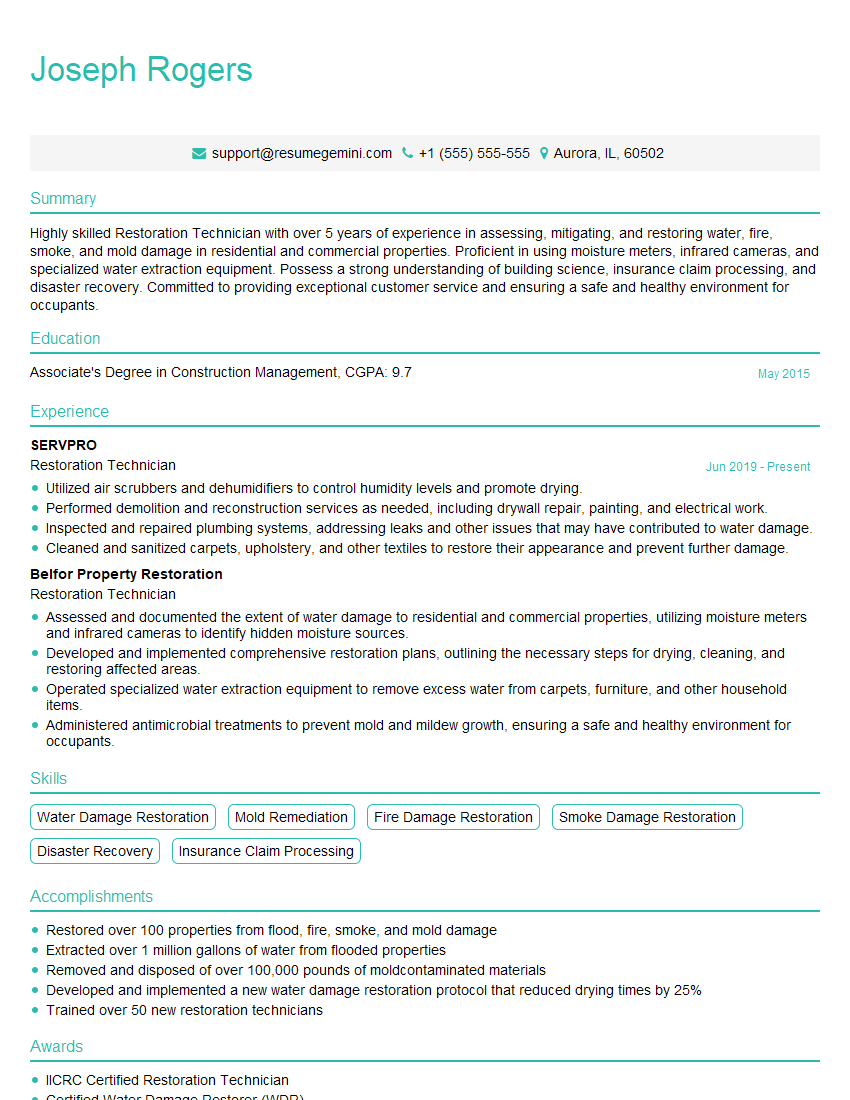
Mastering Restoration and Mitigation Techniques is crucial for career advancement in this dynamic field. A strong understanding of these principles will set you apart and open doors to exciting opportunities. To significantly increase your chances of landing your dream job, creating a well-structured, ATS-friendly resume is essential. ResumeGemini is a trusted resource that can help you build a professional and impactful resume. We provide examples of resumes specifically tailored to the Restoration and Mitigation Techniques industry to guide you. Take the next step towards your successful career today!
Explore more articles
Users Rating of Our Blogs
Share Your Experience
We value your feedback! Please rate our content and share your thoughts (optional).
What Readers Say About Our Blog
To the interviewgemini.com Webmaster.
Very helpful and content specific questions to help prepare me for my interview!
Thank you
To the interviewgemini.com Webmaster.
This was kind of a unique content I found around the specialized skills. Very helpful questions and good detailed answers.
Very Helpful blog, thank you Interviewgemini team.