Are you ready to stand out in your next interview? Understanding and preparing for Reverse Osmosis (RO) interview questions is a game-changer. In this blog, we’ve compiled key questions and expert advice to help you showcase your skills with confidence and precision. Let’s get started on your journey to acing the interview.
Questions Asked in Reverse Osmosis (RO) Interview
Q 1. Explain the principle of Reverse Osmosis.
Reverse Osmosis (RO) is a water purification technology that uses a semipermeable membrane to remove dissolved salts, minerals, and other impurities from water. Imagine a sieve that only allows water molecules to pass through, leaving behind larger contaminants. That’s essentially what an RO membrane does. Instead of relying on natural osmosis (water moving from a low solute concentration to a high concentration), RO applies pressure to force the water through the membrane, leaving behind the impurities in a concentrated stream called brine or concentrate.
In simpler terms: Imagine you have a jug with salty water separated by a special filter from a jug with pure water. Naturally, the pure water would move towards the salty water to balance the concentration. RO reverses this process. We apply pressure to the salty water side, forcing the water through the filter, leaving the salt behind. This results in purified water.
Q 2. Describe the different types of RO membranes and their applications.
RO membranes are categorized primarily by their material and pore size. Common types include:
- Cellulose Acetate (CA): An older technology, CA membranes are relatively inexpensive but have lower salt rejection and are less resistant to chlorine. They’re typically used in less demanding applications.
- Thin-Film Composite (TFC): This is the most prevalent type used today. TFC membranes are made of a thin, selective layer on a more porous support layer. They offer higher salt rejection, better chlorine resistance, and longer lifespan compared to CA membranes, making them suitable for a wider range of applications, including residential, commercial, and industrial water treatment.
- Spiral Wound Membranes: This is a common configuration for the membrane itself. The membrane is wrapped around a central permeate collection tube, creating a compact and efficient design for large-scale systems.
- Hollow Fiber Membranes: These membranes are thin tubes through which water flows, providing a large surface area in a compact design often seen in smaller, high-pressure systems.
The application of each membrane type depends on factors like water quality, required purity level, pressure limitations, and budget constraints. For example, TFC spiral-wound membranes are common in large-scale desalination plants, while hollow fiber membranes are more prevalent in smaller point-of-use systems.
Q 3. What are the key parameters used to monitor the performance of an RO system?
Key parameters to monitor RO system performance include:
- Permeate Flow Rate: The amount of purified water produced per unit time (e.g., gallons per minute or liters per hour). A decrease in flow often indicates membrane fouling or a problem with pressure.
- Product Water Quality: This refers to the concentration of dissolved solids (TDS), typically measured in parts per million (ppm). High TDS indicates poor rejection.
- Rejection Rate: The percentage of a specific solute removed by the membrane (discussed further in the next question).
- Recovery Rate: The percentage of feed water that becomes permeate. It’s a measure of system efficiency.
- Operating Pressure: The pressure applied to the feed water. Insufficient pressure leads to reduced permeate flow.
- Brine Concentration: The concentration of rejected solutes in the brine stream. Excessive concentration can cause scaling or other problems.
Regular monitoring of these parameters is crucial for optimizing performance, preventing problems, and ensuring consistent water quality.
Q 4. How do you calculate the rejection rate of an RO system?
The rejection rate is calculated to determine the efficiency of the RO membrane in removing a specific solute. It’s expressed as a percentage:
Rejection Rate (%) = [(Concentration of solute in feed water - Concentration of solute in permeate water) / Concentration of solute in feed water] * 100
For example, if the feed water has a TDS of 500 ppm and the permeate water has a TDS of 50 ppm, the rejection rate for TDS is:
Rejection Rate = [(500 - 50) / 500] * 100 = 90%
This means the RO system removed 90% of the dissolved solids from the feed water.
Q 5. Explain the concept of osmotic pressure and its role in RO.
Osmotic pressure is the pressure required to prevent the flow of water across a semipermeable membrane from a region of low solute concentration to a region of high solute concentration. Think of it as the ‘push’ exerted by dissolved solutes in a solution. In RO, the feed water (high solute concentration) has a higher osmotic pressure than the permeate (low solute concentration).
The role of osmotic pressure in RO is crucial. To overcome the osmotic pressure and force water through the membrane, the applied pressure must be greater than the osmotic pressure of the feed water. Without sufficient pressure, osmosis will prevail, and water will not be effectively purified.
Q 6. What are the common causes of RO membrane fouling and how are they addressed?
RO membrane fouling is the accumulation of unwanted materials on the membrane surface, reducing its efficiency and lifespan. Common causes include:
- Scaling: The precipitation of dissolved minerals like calcium carbonate or calcium sulfate on the membrane surface.
- Organic Fouling: The buildup of organic matter, such as bacteria, algae, humic acids, and other natural organic matter.
- Colloidal Fouling: The deposition of tiny particles such as clay and silt.
- Biological Fouling: The growth of microorganisms on the membrane surface.
Addressing these issues involves a multi-pronged approach including:
- Pre-treatment: Employing filtration methods like multimedia filters, activated carbon filters, and softening to remove suspended solids, organics, and hardness before the water reaches the RO membrane.
- Chemical Cleaning: Periodically cleaning the membrane using various chemicals to dissolve and remove accumulated fouling.
- Regular Maintenance: Implementing a robust maintenance schedule that includes regular inspections and cleaning to prevent severe fouling.
Q 7. Describe the process of cleaning and sanitizing RO membranes.
Cleaning and sanitizing RO membranes is essential for maintaining their performance and extending their lifespan. Cleaning involves removing accumulated fouling, while sanitizing eliminates microorganisms. The process typically involves these steps:
- Pre-rinse: Flush the system with clean water to remove loose debris.
- Chemical Cleaning: Circulate a cleaning solution (acid, alkali, or chelating agents) through the membrane system for a specific duration and at the recommended concentration. The choice of cleaning agent depends on the type of fouling.
- Post-rinse: Thoroughly rinse the system with clean water to remove any residual cleaning chemicals.
- Sanitization: Circulate a sanitizing solution (e.g., sodium hypochlorite) to kill bacteria and other microorganisms.
- Final Rinse: Perform a final rinse with clean water to ensure the removal of all sanitizing chemicals.
The specific cleaning and sanitizing procedures vary depending on the type of membrane and the nature of the fouling. Detailed instructions are provided by the membrane manufacturer, and following these instructions is critical to avoid damaging the membrane.
Q 8. How do you troubleshoot a decrease in permeate flow rate in an RO system?
A decrease in permeate flow rate in an RO system is a common issue, often indicating a problem within the system. Troubleshooting involves a systematic approach to identify the root cause. This could range from simple issues like membrane fouling to more complex problems like pump failure.
Here’s a step-by-step troubleshooting guide:
- Check the feed pressure: Low feed pressure is a primary cause of reduced permeate flow. Ensure the high-pressure pump is functioning correctly and delivering the required pressure. Check for leaks in the high-pressure lines.
- Inspect the membrane: Over time, membranes become fouled with dissolved solids, colloids, and biological matter. This reduces their permeability and decreases flow. Consider cleaning the membrane using appropriate chemicals as specified by the manufacturer.
- Examine the pre-treatment system: Ineffective pre-treatment leads to faster fouling of the RO membranes. Verify that filters (sediment, carbon, etc.) are functioning correctly and not clogged. Replace them if necessary.
- Assess the permeate flow meter: Make sure the flow meter itself isn’t malfunctioning. Calibrate the meter if required or replace it if faulty.
- Check for leaks: Leaks in the system can significantly impact permeate flow. Carefully inspect all connections and fittings for leaks.
- Evaluate the concentrate flow rate: A higher-than-expected concentrate flow rate indicates a problem with the membrane or system design.
- Consider membrane integrity: If cleaning and checking the other components don’t resolve the issue, the membrane itself might be damaged and need replacement.
For instance, I once worked on a system where a seemingly low permeate flow was actually due to a partially clogged sediment filter upstream. Replacing that filter instantly restored the system’s performance. A systematic approach is crucial to effectively troubleshoot this issue.
Q 9. What are the advantages and disadvantages of using RO for water purification?
Reverse Osmosis (RO) is a highly effective water purification technology, but like any technology, it has both advantages and disadvantages.
Advantages:
- High Rejection Rate: RO systems effectively remove a wide range of contaminants, including dissolved salts, minerals, bacteria, viruses, and other dissolved solids.
- Versatile Application: They can be applied to various water sources, from brackish water to seawater, making them adaptable to diverse situations.
- Relatively Low Operating Costs: Once installed, operational costs are relatively low, mainly associated with energy consumption and occasional membrane replacement.
- High Purity Water Production: They produce high-purity water suitable for numerous applications, including drinking water, pharmaceutical industries, and semiconductor manufacturing.
Disadvantages:
- High Initial Investment Costs: The initial investment for equipment and installation can be significant.
- Membrane Fouling: Membranes can foul over time, reducing efficiency and requiring regular cleaning or replacement.
- Wastewater Generation: RO systems generate a concentrated stream of wastewater requiring proper disposal or treatment. This is a crucial consideration from an environmental perspective.
- Energy Intensive: The high-pressure pumps needed for RO require significant energy input.
- Potential for Scaling: Depending on the water source, scaling can occur on the membrane, reducing efficiency.
For example, in a coastal community, an RO system would be ideal to produce drinking water from seawater, despite the higher energy consumption compared to using a less saline source.
Q 10. Explain the role of pre-treatment in an RO system.
Pre-treatment plays a vital role in protecting the expensive and sensitive RO membranes from damage and prolonging their lifespan. Essentially, it’s like preparing food before cooking; you wouldn’t throw raw ingredients directly into a pan without washing and chopping them first. Similarly, pre-treatment removes impurities that could harm or clog the RO membranes.
The main goals of pre-treatment are:
- To remove suspended solids: These can physically clog the membrane pores.
- To reduce the concentration of organic matter: Organic matter can foul the membranes, impacting their performance.
- To control pH and remove oxidizing agents: These can damage the membranes chemically.
- To reduce scaling potential: This minimizes the formation of mineral deposits on the membrane surface.
Effective pre-treatment ensures the RO system operates efficiently and economically over its lifespan.
Q 11. What are the different types of pre-treatment methods used in RO systems?
Several pre-treatment methods are employed, often in combination, to effectively prepare the feed water for RO:
- Sediment filtration: Removes larger suspended solids using various filter media (sand, gravel, cartridge filters).
- Activated carbon filtration: Removes organic matter, chlorine, and other dissolved compounds that could foul the membranes or affect their performance.
- Media filtration: This involves using specific media like anthracite and garnet to remove fine suspended particles.
- Ultrafiltration (UF): A membrane-based process that removes smaller particles and colloidal matter.
- Softening (lime softening or ion exchange): Reduces the concentration of hardness ions (calcium and magnesium) to minimize scaling.
- Chemical dosing: Adjusting pH or adding antiscalants to prevent scaling and fouling.
The choice of pre-treatment methods depends on the quality of the raw water. For instance, a system treating highly turbid water might require multiple stages of filtration, including sedimentation and multiple filter layers, while a system treating relatively clean water might only need carbon filtration and antiscalant addition.
Q 12. How do you select the appropriate RO membrane for a specific application?
Selecting the appropriate RO membrane is crucial for optimal system performance. The selection process involves considering several factors:
- Water quality: The type and concentration of contaminants in the feed water dictate the membrane’s required rejection rate and ability to withstand fouling.
- Desired permeate quality: The required purity of the treated water influences the membrane’s selectivity and rejection rate.
- Operating pressure: Different membranes have different optimal operating pressure ranges.
- Recovery rate: The desired percentage of feed water to be converted into permeate influences membrane selection.
- Membrane material: Different materials (e.g., cellulose acetate, thin-film composite) have different characteristics and resistances to various contaminants.
- Membrane element size and configuration: The size and type of membrane elements influence the overall system design and flow rate.
For example, a desalination plant treating seawater will require a high-pressure, high-salt-rejection membrane, while an application requiring only moderate desalination might use a lower-pressure membrane. Careful consideration of these factors ensures the chosen membrane effectively meets the specific application’s demands.
Q 13. Describe the different types of RO system configurations.
RO systems can be configured in several ways depending on the application and required water quality:
- Single-pass system: The feed water passes through the membrane only once. This is simple but less efficient in terms of water recovery.
- Multi-pass system: The feed water passes through the membrane multiple times to increase recovery and reduce water waste.
- Pressure-retarded osmosis (PRO): A relatively newer approach that uses the osmotic pressure difference between a concentrated and dilute solution to generate energy, thereby improving efficiency.
- Electrodialysis Reversal (EDR): This isn’t strictly an RO configuration, but is frequently used in conjunction with RO for enhanced purification.
The choice of configuration influences the system’s cost, efficiency, and environmental impact. For large-scale applications like desalination, multi-pass systems or PRO might be preferred to maximize water recovery, while smaller systems might utilize a single-pass configuration for simplicity.
Q 14. What are the safety considerations when working with RO systems?
Safety is paramount when working with RO systems, as high-pressure components and chemicals are involved. Key considerations include:
- High-pressure systems: Always follow lockout/tagout procedures before performing maintenance or repairs on high-pressure components. Never work on pressurized systems without proper training and safety equipment.
- Chemical handling: Use appropriate personal protective equipment (PPE) like gloves, goggles, and respirators when handling cleaning chemicals. Always follow the manufacturer’s instructions for safe handling and disposal of chemicals.
- Electrical safety: Ensure all electrical components are properly grounded and protected from moisture. Avoid working on electrical systems when wet.
- Wastewater disposal: Properly manage and dispose of wastewater according to local regulations. Some wastewater may require additional treatment before disposal.
- Membrane handling: Membranes are fragile; handle them carefully to avoid damage.
Ignoring safety procedures can lead to serious injury or damage to equipment. Regular safety training and adherence to safety protocols are essential for safe operation and maintenance of RO systems.
Q 15. Explain the importance of regular maintenance in an RO system.
Regular maintenance is crucial for the longevity and efficiency of an RO system. Think of it like servicing your car – neglecting it leads to breakdowns and costly repairs. In an RO system, consistent maintenance prevents scaling, fouling, and membrane damage, ensuring optimal water quality and production.
- Membrane Cleaning: Regular cleaning (frequency depends on water quality) removes accumulated minerals and organic matter that reduce membrane permeability. This involves chemical cleaning with specialized solutions, followed by thorough rinsing.
- Pre-filter Replacement: Pre-filters trap sediment and other large particles, protecting the RO membranes. They need regular replacement, typically every 3-6 months, depending on feed water quality.
- Pump Inspection: Pumps are the heart of the system. Regular checks ensure proper operation, identifying leaks, wear, and tear early on. Lubrication and belt adjustments are essential.
- Pressure Gauge Monitoring: Regularly monitoring pressure gauges helps identify issues like membrane fouling or pump malfunction. Significant drops or spikes require immediate attention.
- Sanitization: Periodic sanitization using a chlorine solution prevents bacterial growth within the system and maintains water purity.
For example, a neglected RO system in a food processing plant could lead to compromised water quality, affecting product safety and potentially causing costly production downtime. Proactive maintenance prevents such scenarios.
Career Expert Tips:
- Ace those interviews! Prepare effectively by reviewing the Top 50 Most Common Interview Questions on ResumeGemini.
- Navigate your job search with confidence! Explore a wide range of Career Tips on ResumeGemini. Learn about common challenges and recommendations to overcome them.
- Craft the perfect resume! Master the Art of Resume Writing with ResumeGemini’s guide. Showcase your unique qualifications and achievements effectively.
- Don’t miss out on holiday savings! Build your dream resume with ResumeGemini’s ATS optimized templates.
Q 16. How do you interpret data from an RO system’s monitoring instruments?
Monitoring instruments in an RO system provide vital data for assessing its performance and identifying potential problems. Key parameters include:
- Feed Water Pressure: This indicates the pressure at the system’s inlet. Low pressure may indicate a problem with the feed pump or pre-filters.
- Product Water Pressure: This represents the pressure of the purified water. Low pressure suggests membrane fouling or damage.
- Permeate Flow Rate: The volume of purified water produced per unit of time. A decrease indicates declining membrane performance.
- Concentrate Pressure (brine): The pressure of the rejected water stream. High pressure indicates potential membrane issues.
- TDS (Total Dissolved Solids): Measures the amount of dissolved solids in both feed and product water. High TDS in the product water indicates membrane failure.
- Recovery Rate: The percentage of feed water converted to product water. A lower-than-expected rate suggests problems with the system.
By regularly monitoring these parameters, we can quickly identify deviations from normal operating conditions and take corrective action. For instance, a sudden drop in permeate flow rate might indicate membrane fouling, necessitating a cleaning cycle. Similarly, consistently high TDS in the product water warrants immediate attention and potential membrane replacement.
Q 17. Describe the different types of pumps used in RO systems and their applications.
RO systems employ various pumps, each suited for specific tasks. The choice depends on factors like flow rate, pressure requirements, and budget.
- High-Pressure Pumps: These are essential for pushing water through the semi-permeable RO membranes. Centrifugal pumps are commonly used, chosen for their high efficiency and relatively low cost. Positive displacement pumps offer better pressure control and are used in applications requiring consistent high pressure.
- Booster Pumps: Often used to increase the feed water pressure to the RO system, ensuring sufficient pressure for efficient operation, particularly if the source water pressure is low.
- Chemical Feed Pumps: These deliver cleaning solutions and other chemicals to the system during cleaning cycles or for pH adjustment. Precise dosing is critical to avoid membrane damage.
- Brine Pumps: Used to move the concentrated brine (rejected water) to a disposal system. The pump selection depends on the disposal method (e.g., drain, evaporation).
For example, in a large-scale desalination plant, high-pressure centrifugal pumps are favored for their capacity to handle large flow rates, while in smaller RO units serving residential purposes, smaller, more energy-efficient pumps are employed.
Q 18. What are the energy considerations in the design and operation of RO systems?
Energy consumption is a significant concern in RO system design and operation. The primary energy consumer is the high-pressure pump, responsible for overcoming the osmotic pressure across the membranes. Careful consideration is necessary to minimize energy use and reduce operational costs.
- Pump Selection: High-efficiency pumps with optimal operating points are crucial. Variable frequency drives (VFDs) can further optimize pump energy consumption by adjusting the pump speed based on demand.
- Membrane Selection: Membranes with higher water permeability require less pressure, translating into lower energy consumption. Selecting membranes appropriate for the feed water quality is crucial.
- Energy Recovery Devices (ERDs): ERDs use the energy in the high-pressure brine stream to pre-pressurize the feed water, significantly reducing the work required by the high-pressure pump.
- System Optimization: Regular maintenance and proper system operation contribute to lower energy consumption. Fouling reduces membrane permeability, necessitating higher pressure and energy use.
For instance, integrating an ERD in a large industrial RO system can reduce energy consumption by up to 50%, significantly improving the system’s overall efficiency and reducing environmental impact.
Q 19. How do you manage the disposal of brine from an RO system?
Brine disposal is a critical aspect of RO system operation. The brine stream contains concentrated salts and other rejected substances, and improper disposal can have adverse environmental impacts. The approach depends on local regulations and site conditions.
- Discharge to a Sanitary Sewer: This is the simplest option, but subject to strict limits on salt concentration to avoid harming sewer systems. It may require pre-dilution of the brine.
- Deep Well Injection: Brine is injected into deep geological formations, minimizing environmental impact. This requires careful geological assessment and permits.
- Evaporation Ponds: Brine is collected in evaporation ponds, allowing water to evaporate and leaving behind solid salts. Land requirements are substantial, and environmental considerations like salt runoff must be addressed.
- Zero Liquid Discharge (ZLD): This advanced approach uses evaporation or crystallization techniques to recover all water, leaving behind dry solids for disposal. It’s energy-intensive but minimizes water waste.
For example, a coastal desalination plant might opt for deep-well injection, while a smaller RO unit in an inland location might discharge brine to a sewer after appropriate dilution. Regulations always dictate appropriate measures.
Q 20. Explain the concept of recovery rate in an RO system.
Recovery rate is the percentage of feed water that is converted into permeate (purified water) in an RO system. It’s a key indicator of system efficiency. A higher recovery rate means more purified water is produced from a given amount of feed water, reducing water waste and operating costs.
It’s calculated as: Recovery Rate (%) = (Permeate Flow Rate / Feed Water Flow Rate) x 100
For example, if an RO system processes 100 gallons of feed water per hour and produces 60 gallons of permeate, its recovery rate is 60%. The remaining 40% is the rejected brine stream. The optimal recovery rate depends on various factors, including the feed water quality, membrane type, and pressure. A higher recovery rate generally increases the concentration of salts and other impurities in the brine, which can impact disposal requirements and membrane life.
Q 21. Describe the different types of RO membrane failures and their causes.
RO membrane failures can significantly impact system performance and water quality. Understanding the different types and their causes is crucial for effective troubleshooting and preventative maintenance.
- Organic Fouling: Accumulation of organic matter like bacteria, algae, or humic substances on the membrane surface, reducing its permeability. This is common in systems with untreated surface water sources.
- Inorganic Scaling: Precipitation of dissolved minerals like calcium carbonate or sulfate on the membrane surface, leading to reduced permeability and ultimately membrane failure. This often occurs in hard water conditions.
- Biological Fouling: Growth of microorganisms within the membrane pores, clogging them and reducing water flow. Regular sanitization is critical for prevention.
- Physical Damage: Mechanical damage to the membrane, such as punctures or tears, caused by high pressure surges, improper handling, or abrasive particles in the feed water. Careful operation and proper pre-filtration are essential.
- Chemical Attack: Exposure to chemicals incompatible with the membrane material, leading to degradation and loss of performance. Using appropriate cleaning chemicals is crucial.
For example, a sudden increase in feed water TDS might indicate inorganic scaling, requiring chemical cleaning. Conversely, a gradual decrease in permeate flow rate might suggest organic fouling and necessitates more frequent membrane cleaning or pre-treatment upgrades.
Q 22. How do you determine the optimal operating pressure for an RO system?
Determining the optimal operating pressure for an RO system is crucial for maximizing water recovery and product quality while minimizing energy consumption and membrane fouling. It’s a balancing act.
The ideal pressure isn’t a fixed value; it depends on several factors including the feed water characteristics (TDS, temperature, pH, and silica content), the membrane type and specifications (manufacturer’s data sheets are key!), and the desired permeate quality (product water TDS).
Typically, you start with the manufacturer’s recommended operating pressure range. Then, you conduct operational tests, gradually increasing pressure while monitoring key performance indicators (KPIs) like permeate flux (water production rate), salt rejection, and energy consumption. You’ll look for the pressure that provides the best combination of high permeate flux and high salt rejection. Going too high increases energy costs and can damage the membranes; too low, and you won’t get sufficient production or purification.
For example, imagine an RO system designed for seawater desalination. The optimal pressure might be around 60-80 bar. However, a system treating relatively clean groundwater might operate efficiently at 15-25 bar. Monitoring is critical. A gradual increase in pressure, combined with careful data analysis, allows for fine tuning and optimization, avoiding unnecessary strain on the system.
Q 23. What are the environmental impacts of RO systems?
Reverse osmosis systems, while offering clean water, have environmental impacts that need careful consideration. The most significant impact is brine disposal, the highly concentrated salty wastewater produced during the RO process.
Improper disposal of this brine can lead to soil and water salinity, harming aquatic life and surrounding ecosystems. Furthermore, energy consumption during operation contributes to greenhouse gas emissions, especially in large-scale applications. Membrane manufacturing and disposal also generate waste, though advancements are being made in developing more sustainable membrane materials and disposal methods.
Mitigation strategies include employing brine management techniques like evaporation ponds (though land use and evaporation impact must be carefully weighed), deep-well injection (with careful geological assessment to prevent contamination), and the exploration of brine reuse in specific industrial processes. Energy efficiency improvements in RO systems, such as using energy-recovery devices and optimizing operational parameters, are crucial to minimize the carbon footprint.
The environmental footprint of RO is context-dependent. A small, residential system will have a far smaller impact than a large-scale industrial or desalination plant. Comprehensive Life Cycle Assessments (LCAs) are increasingly necessary for evaluating the overall environmental impact.
Q 24. How do you calculate the total dissolved solids (TDS) rejection of an RO system?
Calculating the TDS rejection of an RO system assesses its effectiveness in removing dissolved solids from the feed water. The formula is straightforward:
TDS Rejection (%) = [(TDSfeed - TDSpermeate) / TDSfeed] * 100
Where:
TDSfeedis the total dissolved solids concentration in the feed water (in mg/L or ppm).TDSpermeateis the total dissolved solids concentration in the permeate (product water) (in mg/L or ppm).
For example, if the feed water has a TDS of 500 mg/L and the permeate has a TDS of 50 mg/L, the rejection is:
TDS Rejection (%) = [(500 - 50) / 500] * 100 = 90%
This indicates the RO system effectively removes 90% of the dissolved solids. Note that the accuracy depends on precise TDS measurements using reliable instruments, typically a TDS meter properly calibrated.
Q 25. Describe the different types of RO system controls and automation.
Modern RO systems utilize a range of controls and automation to optimize performance, ensure safety, and minimize manual intervention. These include:
- Pressure control systems: Maintain optimal operating pressure using pressure sensors and control valves. These prevent over-pressurization and ensure consistent water production.
- Flow control systems: Regulate the feed water flow rate to maintain consistent permeate flux and prevent overloading the membranes.
- pH and chemical dosing systems: Automatically adjust the pH of the feed water and dose chemicals (anti-scalants, biocides) as needed to prevent scaling and microbial growth.
- Level control systems: Maintain optimal liquid levels in various tanks and vessels within the system.
- Data acquisition and monitoring systems (SCADA): Collect and display real-time data on system performance, including pressure, flow rate, TDS, and other KPIs. This allows for remote monitoring and early detection of anomalies.
- Automated cleaning cycles: Employ various cleaning protocols (chemical cleaning, backwashing) to remove accumulated fouling and maintain membrane performance.
These control systems can be implemented using Programmable Logic Controllers (PLCs), Supervisory Control and Data Acquisition (SCADA) systems, and advanced process control strategies. The level of automation varies depending on the system size and application complexity. A small RO system might rely on basic pressure and flow controls, while a large industrial system incorporates sophisticated automated control systems with remote monitoring and predictive maintenance capabilities.
Q 26. What are the factors influencing the lifespan of RO membranes?
Several factors influence the lifespan of RO membranes, ultimately impacting the system’s overall performance and longevity. These include:
- Feed water quality: High levels of suspended solids, organic matter, hardness minerals (calcium, magnesium), and silica can cause fouling, reducing membrane permeability and lifespan. Pre-treatment is critical.
- Operating pressure: Excessive pressure can damage the membrane structure, leading to premature failure. Maintaining optimal pressure according to manufacturer’s specifications is crucial.
- Cleaning frequency and effectiveness: Regular and appropriate cleaning is essential to remove accumulated fouling. Improper cleaning methods or infrequent cleaning can shorten the membrane’s lifespan.
- Membrane type and material: Different membrane materials (e.g., cellulose acetate, thin-film composite) have varying sensitivities to fouling and chemical cleaning agents. Choosing the right membrane for the specific application is important.
- Operating temperature: High temperatures can accelerate membrane degradation. Maintaining the recommended operating temperature range is important.
- Exposure to chlorine and other oxidizing agents: Chlorine can damage RO membranes. Appropriate pre-treatment to remove chlorine is usually needed.
Proper maintenance, including regular monitoring of system performance, timely cleaning, and adherence to manufacturer’s recommendations, can significantly extend the lifespan of RO membranes. Proactive maintenance is key in ensuring long-term reliability and cost-effectiveness.
Q 27. Explain the process of selecting and sizing an RO system for a given application.
Selecting and sizing an RO system for a given application requires a systematic approach, combining engineering principles with practical considerations.
1. Define application requirements: What’s the desired permeate flow rate (gallons per minute or liters per hour)? What is the required TDS rejection rate? What’s the feed water quality (TDS, pH, temperature, suspended solids)? This involves a thorough water quality analysis.
2. Membrane selection: Based on the feed water quality and application requirements, select the appropriate membrane type (e.g., spiral-wound, hollow fiber) and material. Manufacturer’s data sheets are essential here.
3. System configuration: Determine the number of stages and the configuration of the RO system (single-stage, multi-stage). Multi-stage systems provide higher rejection rates but are more complex.
4. System sizing: Based on the desired permeate flow rate, membrane performance characteristics (permeate flux, salt rejection), and recovery rate, calculate the required membrane area. Software tools and manufacturer’s sizing guides are often used for this stage.
5. Pre-treatment selection: Design an appropriate pre-treatment system to protect the RO membranes from fouling. This might include filtration, softening, and chemical dosing.
6. Post-treatment selection: Decide if post-treatment is needed to meet the specific quality standards (e.g., disinfection, polishing filtration).
7. Equipment selection: Select the necessary pumps, valves, pressure vessels, and other components based on the system design and capacity.
8. Cost analysis: Evaluate the capital and operating costs of the system, including membrane replacement, energy consumption, and maintenance.
This detailed approach ensures that the selected RO system meets the specific requirements of the application while optimizing cost and performance.
Q 28. How do you optimize the performance of an existing RO system?
Optimizing the performance of an existing RO system involves a systematic approach focused on maximizing water production, maintaining high product water quality, and minimizing operating costs. It’s a continual process.
1. System evaluation: Begin with a thorough assessment of the system’s current performance, including reviewing historical data on permeate flux, TDS rejection, operating pressure, energy consumption, and cleaning cycles. Identify areas for improvement.
2. Membrane cleaning: Implement a regular and effective cleaning program based on the type of membrane and feed water characteristics. This can involve chemical cleaning, backwashing, or a combination of both.
3. Pre-treatment optimization: Optimize the pre-treatment process to reduce fouling and improve membrane lifespan. This may involve adjusting filter types, cleaning schedules, or chemical dosing rates.
4. Operating pressure adjustment: Fine-tune the operating pressure to find the optimal balance between permeate flux and energy consumption. Monitor KPIs carefully.
5. Energy efficiency improvements: Consider implementing energy-recovery devices, variable-frequency drives on pumps, and other energy-saving measures to reduce operating costs.
6. Data analysis and monitoring: Regularly monitor system performance using SCADA or other data acquisition systems. This enables proactive identification of potential problems and provides valuable insights for optimization.
7. Membrane replacement: Replace aged or deteriorated membranes as needed to maintain optimal performance. A proactive replacement schedule often makes economic sense.
By addressing these aspects, one can systematically improve the efficiency, reliability, and cost-effectiveness of an existing RO system.
Key Topics to Learn for Reverse Osmosis (RO) Interview
- Fundamentals of Osmosis and Reverse Osmosis: Understand the principles of osmosis, osmotic pressure, and how reverse osmosis works to overcome it. Consider the role of semi-permeable membranes.
- Membrane Technology: Explore different types of RO membranes (e.g., cellulose acetate, thin-film composite), their characteristics, and selection criteria based on application requirements. Discuss membrane fouling and cleaning strategies.
- RO System Design and Operation: Familiarize yourself with the components of a typical RO system (pre-treatment, high-pressure pump, membrane modules, post-treatment) and their functions. Understand system operation parameters such as pressure, flow rate, and recovery rate.
- Water Quality Parameters and their Impact: Analyze the influence of various water quality parameters (TDS, salinity, hardness, pH, etc.) on RO system performance and membrane life. Discuss pretreatment strategies to mitigate these impacts.
- Energy Efficiency and Cost Optimization: Explore strategies for maximizing energy efficiency in RO systems, minimizing operational costs, and optimizing system design for specific applications.
- Troubleshooting and Maintenance: Learn to identify common RO system problems (e.g., low permeate flow, high salt passage, membrane fouling) and develop effective troubleshooting and maintenance procedures.
- Practical Applications: Consider the diverse applications of RO technology across various industries, including desalination, water purification for drinking water, industrial process water treatment, and wastewater reclamation. Be prepared to discuss specific examples.
- Emerging Technologies and Advancements: Stay updated on the latest developments in RO technology, such as improved membrane materials, energy-efficient designs, and advanced control systems. This demonstrates your commitment to the field.
Next Steps
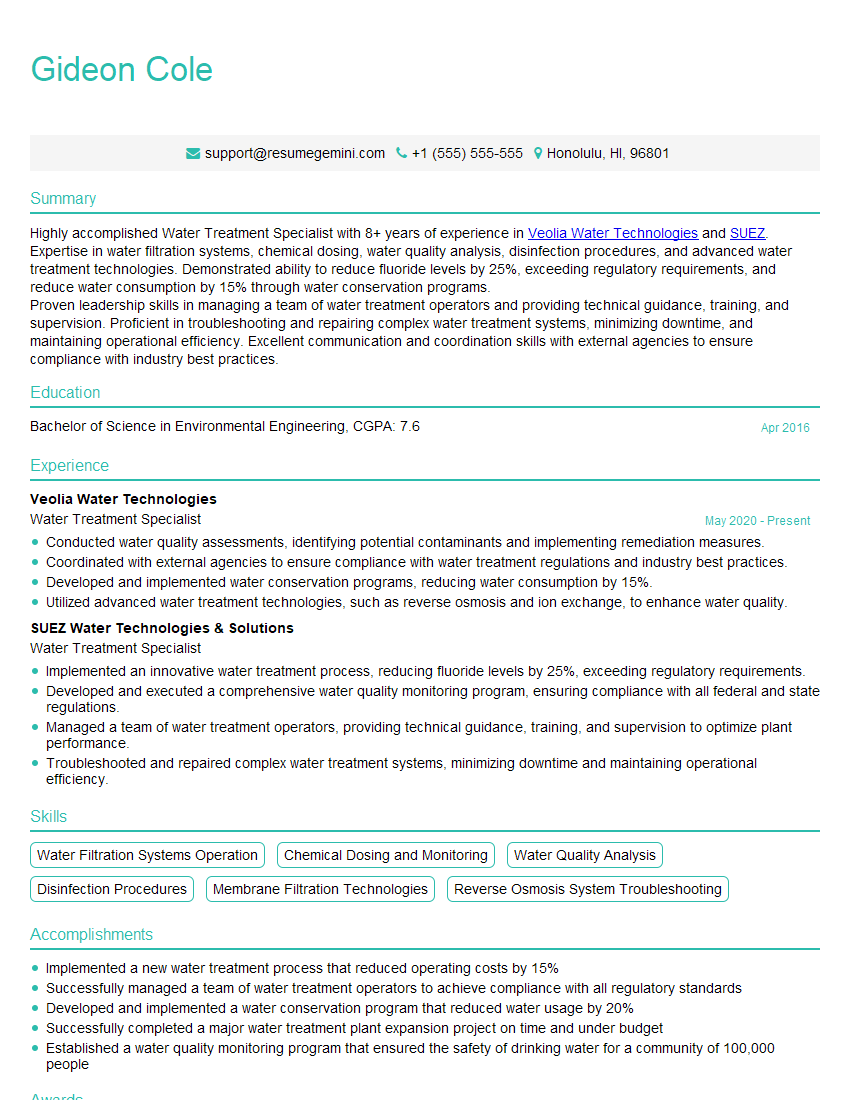
Mastering Reverse Osmosis (RO) opens doors to exciting and impactful careers in water treatment, environmental engineering, and related fields. A strong understanding of RO principles and applications is highly sought after by employers. To maximize your job prospects, it’s crucial to create a professional and ATS-friendly resume that highlights your skills and experience effectively. ResumeGemini is a trusted resource to help you build a powerful resume that showcases your expertise in Reverse Osmosis. Examples of resumes tailored to Reverse Osmosis (RO) roles are available to guide you. Invest the time to craft a compelling resume – it’s your first impression on potential employers.
Explore more articles
Users Rating of Our Blogs
Share Your Experience
We value your feedback! Please rate our content and share your thoughts (optional).
What Readers Say About Our Blog
To the interviewgemini.com Webmaster.
Very helpful and content specific questions to help prepare me for my interview!
Thank you
To the interviewgemini.com Webmaster.
This was kind of a unique content I found around the specialized skills. Very helpful questions and good detailed answers.
Very Helpful blog, thank you Interviewgemini team.