The thought of an interview can be nerve-wracking, but the right preparation can make all the difference. Explore this comprehensive guide to Storefront Glazing interview questions and gain the confidence you need to showcase your abilities and secure the role.
Questions Asked in Storefront Glazing Interview
Q 1. Describe your experience with different types of storefront glazing systems (e.g., stick systems, unitized systems).
My experience encompasses a wide range of storefront glazing systems, primarily focusing on stick-built and unitized systems. Stick systems, which are assembled on-site, offer greater flexibility in design and are ideal for complex projects or those with unusual shapes. Think of building with LEGOs – each piece (frame and glass) is meticulously put together on the spot. However, this on-site assembly requires more skilled labor and time. Unitized systems, on the other hand, involve pre-fabricated modules assembled in a factory before being transported and installed on-site. This significantly reduces on-site time and labor but limits design flexibility. Imagine a pre-built wall section that just needs to be slotted into place. I’ve worked extensively with both, choosing the system based on project requirements such as budget, design complexity, and timeline.
For example, I recently completed a project where a custom curved storefront was required. The flexibility of a stick system allowed us to achieve the precise design the client envisioned. In contrast, a previous project with a large, high-rise building benefited greatly from the efficiency of a unitized system, speeding up the installation process significantly and minimizing disruption to the ongoing construction.
Q 2. What are the common materials used in storefront glazing, and what are their respective advantages and disadvantages?
Storefront glazing utilizes a variety of materials, each with its own set of advantages and disadvantages. The most common are:
- Aluminum: A popular choice due to its strength, lightweight nature, and corrosion resistance. It’s relatively inexpensive and easy to work with, making it suitable for many projects. However, its thermal conductivity can be a concern, impacting energy efficiency unless thermal breaks are incorporated.
- Steel: Offers superior strength and durability compared to aluminum but is heavier and more susceptible to corrosion. It also tends to be more expensive. However, its structural integrity makes it a preferred option in high-wind or high-impact areas.
- Glass: Various types of glass are used (we’ll discuss this further in a later question), each offering different properties in terms of strength, safety, and energy performance. The selection of glass is crucial for the overall performance and aesthetics of the storefront.
- Sealants and Glazing Tape: These are essential for creating a watertight and airtight seal around the glass, preventing air and water infiltration. The choice of sealant depends on the specific conditions and the type of materials used in the system.
The selection of materials is always a balancing act, weighing factors like cost, aesthetics, performance requirements (energy efficiency, security), and longevity against each other.
Q 3. Explain the process of installing storefront glazing, including preparation, installation, and sealing.
Storefront glazing installation is a meticulous process demanding precision and experience. It typically involves the following steps:
- Preparation: This includes careful site surveying, ensuring the structural framework is sound, and verifying the accuracy of the glazing system’s dimensions. We ensure all necessary tools and materials are on-site and that any potential hazards are addressed.
- Installation: For stick systems, the framing is assembled piece-by-piece, ensuring accurate alignment and squareness. Glass is carefully set into the frames, typically using suction cups and specialized tools for safe handling. Unitized systems are simpler in this stage, involving the careful placement and securing of pre-assembled modules.
- Sealing: Once the glass is in place, high-quality sealants are applied to create a watertight and airtight seal between the glass and the frame, as well as around any joints in the system. This step is crucial for preventing water damage and energy loss. We always follow manufacturer’s specifications for sealant type and application methods.
Throughout the process, quality control checks are performed to ensure accuracy and adherence to building codes and safety standards. Proper ventilation is always maintained during installation to avoid the build-up of harmful fumes from sealants.
Q 4. How do you ensure the proper sealing and weatherproofing of storefront glazing systems?
Proper sealing and weatherproofing are paramount for the longevity and performance of a storefront glazing system. We achieve this through a multi-layered approach:
- High-Quality Sealants: Selecting appropriate sealants based on material compatibility, environmental conditions, and expected movement is crucial. We use sealants with high durability and UV resistance to ensure long-term performance.
- Proper Application Techniques: Sealants must be applied correctly, ensuring complete coverage and adhesion to prevent leaks. This includes proper surface preparation before application, applying the sealant according to the manufacturer’s instructions, and tool selection for creating neat, consistent beads.
- Multiple Seal Lines: Many systems incorporate multiple seal lines to provide redundancy and enhanced protection against water penetration. This ensures that even if one seal fails, others provide a backup.
- Glazing Tape: This is often used in conjunction with sealants to create a secondary barrier against air and water infiltration.
- Regular Inspection and Maintenance: Even with careful installation, regular inspection is crucial to identify and address any potential problems early on. This preventative maintenance prevents larger issues from developing.
Failing to implement these measures can result in water ingress, leading to damage to the building’s interior and potential mold growth. A properly sealed system ensures the building’s energy efficiency, reducing heating and cooling costs.
Q 5. What safety measures do you take when working at heights or with glass?
Safety is our top priority. When working at heights or with glass, we adhere strictly to safety regulations and best practices. This includes:
- Fall Protection: Using appropriate harnesses, lifelines, and fall arrest systems when working at heights. This is non-negotiable on all projects involving elevated work.
- Scaffolding and Access Equipment: Employing properly erected and inspected scaffolding or other access equipment to ensure safe and stable access to working areas.
- Glass Handling Procedures: Using suction cups, specialized lifting devices, and protective gloves when handling glass to prevent cuts and breakage. Proper storage and transportation of glass are also essential to prevent damage.
- Personal Protective Equipment (PPE): All team members wear appropriate PPE, including safety glasses, gloves, and hard hats. Depending on the specific task, additional PPE such as respirators might be required.
- Site Safety Plans: Developing comprehensive site safety plans for each project that outline potential hazards and mitigation strategies. This plan is reviewed and updated as needed.
We conduct regular safety briefings and toolbox talks to ensure everyone is aware of the hazards and understands safe working practices. Regular inspections of equipment and work areas are critical in maintaining a safe working environment.
Q 6. Describe your experience with different types of glass (e.g., annealed, tempered, laminated).
My experience includes working with various types of glass, each with distinct properties:
- Annealed Glass: This is the most common and least expensive type of glass, but it’s relatively brittle and shatters into sharp fragments when broken. Its use is generally limited to interior applications where safety isn’t a primary concern.
- Tempered Glass (Heat-Strengthened): This type is much stronger and safer than annealed glass. When broken, it crumbles into small, relatively harmless pieces, reducing the risk of injury. It’s commonly used in storefront applications where impact resistance is essential.
- Laminated Glass: This consists of two or more layers of glass bonded together with a layer of interlayer material, typically polyvinyl butyral (PVB). This makes it extremely strong and resistant to impact. It also holds together even when broken, preventing penetration and offering increased security. Laminated glass is often preferred for high-security areas or where enhanced safety is crucial.
The choice of glass depends on the project requirements – high-traffic areas might require tempered or laminated glass for safety reasons, while less critical areas might use annealed glass to save costs. Energy-efficient coatings can be added to any type of glass to improve its thermal performance, minimizing energy loss and reducing heating and cooling costs.
Q 7. How do you handle damaged or defective glass during installation?
Handling damaged or defective glass during installation requires careful attention to safety and efficiency. The process typically involves:
- Immediate Assessment: Thoroughly assess the extent of the damage, carefully noting the type and location of the defect. Safety is paramount; we ensure the area is secured to prevent further injury or damage.
- Removal: Carefully remove the damaged glass, using proper techniques to prevent further breakage or injury. Suction cups and other specialized tools are utilized for safe handling.
- Replacement: Replace the damaged glass with a new piece of the correct specifications, ensuring it is properly installed and sealed. This requires precision and adherence to manufacturer’s guidelines.
- Documentation: We document the entire process, including photos of the damage, details of the replacement process, and any necessary adjustments to the project schedule. This ensures accountability and provides a record for future reference.
- Communication: Maintain open communication with the client or project manager to update them on the situation and provide a clear timeline for resolving the issue. Transparency prevents misunderstandings and ensures efficient project completion.
By following these steps, we minimize disruption to the project and ensure the final installation meets the highest standards of quality and safety.
Q 8. Explain your experience with different types of framing materials (e.g., aluminum, steel).
My experience spans a wide range of framing materials used in storefront glazing. Aluminum is a popular choice due to its lightweight nature, durability, and corrosion resistance, making it ideal for various architectural styles. I’ve worked extensively with different aluminum alloys, each possessing unique strength and thermal properties. For instance, I’ve used 6063-T5 aluminum extensively for its balance of strength and workability. Steel, while heavier, offers exceptional strength and can support larger glass panes, especially in high-traffic areas or buildings subject to significant wind loads. I’ve worked with both hot-dipped galvanized steel and stainless steel, selecting the appropriate type based on the project’s requirements and budget. The choice between aluminum and steel often involves a trade-off between weight, strength, cost, and aesthetic considerations.
In one project, a high-rise building required the use of steel framing for its large storefront windows to withstand wind loads. Conversely, a smaller retail store benefited from the cost-effectiveness and ease of installation offered by aluminum framing.
Q 9. How do you measure and cut glass for storefront glazing installations?
Precise glass measurement and cutting are paramount in storefront glazing. It starts with meticulous on-site measurements, accounting for all framing dimensions and potential irregularities in the building structure. I always double-check measurements and utilize laser measuring tools for ultimate accuracy. These measurements are then transferred to detailed shop drawings, which guide the cutting process. We use specialized glass cutting equipment like automated glass cutting tables with diamond-tipped wheels for clean, precise cuts. The process requires careful handling to avoid chipping or cracking. Post-cutting, edges are usually ground and polished to remove sharp edges, ensuring both safety and a professional finish.
Imagine a scenario where a millimeter error in glass cutting leads to a mismatch with the frame, resulting in delays, potential damage, and increased costs. That is why precision is key.
Q 10. What tools and equipment are commonly used in storefront glazing?
Storefront glazing involves a range of specialized tools and equipment. For measuring, we rely on laser measuring tools and digital levels for exceptional accuracy. Cutting is done with automated glass cutting tables and diamond-tipped wheels, while grinding and polishing are handled with specialized tools. Installation necessitates the use of suction cups, glass handling equipment, and various types of sealant applicators. We also utilize power drills, specialized fasteners, and leveling systems for accurate frame alignment. Safety equipment, such as gloves and safety glasses, is always a priority.
- Laser measuring tools
- Automated glass cutting tables
- Suction cups and glass handling equipment
- Sealant applicators
- Power drills and specialized fasteners
- Leveling systems
- Safety glasses and gloves
Q 11. How do you ensure the alignment and accuracy of storefront glazing installations?
Precise alignment and accuracy are crucial for a successful storefront glazing installation. We achieve this through a combination of careful planning, meticulous measurement, and the use of specialized tools. The framing system is initially installed with the utmost precision, using levels, plumb bobs, and alignment tools. Glass panes are then carefully inserted, ensuring they fit perfectly within the frame. Shims are strategically used to ensure perfect alignment and to accommodate minor irregularities in the building structure. Final adjustments are made before sealing and finishing. The entire process demands patience and attention to detail; rushing can lead to misalignments and potential glass breakage.
We use a ‘step-by-step’ approach, regularly checking for alignment at each stage. Any deviation is immediately corrected to prevent compounding errors. Regular quality control checks are vital.
Q 12. Describe your experience with different types of hardware (e.g., hinges, locks, handles).
My experience encompasses a wide variety of hardware, including hinges, locks, and handles, each chosen carefully to complement the overall design and security requirements of a project. Hinges, for instance, come in various types, from simple butt hinges to more complex concealed hinges, depending on the aesthetic and functional requirements. I’ve worked with various lock mechanisms, including multi-point locking systems for enhanced security. Handles, similarly, range from simple push bars to more elaborate designs, selected to match the overall architectural style. Durability, corrosion resistance, and ease of operation are key factors in hardware selection. I always consider the long-term durability and maintenance of each hardware component.
For example, in a high-security building, I might use heavy-duty multi-point locking systems, while a more aesthetically-driven project might call for elegant, minimalist hardware.
Q 13. How do you troubleshoot common problems encountered during storefront glazing installations?
Troubleshooting is an integral part of storefront glazing. Common problems include misaligned frames, sealant failure, and glass breakage. Misaligned frames are often addressed by carefully adjusting shims and fasteners. Sealant failure is usually due to improper application or low-quality sealant; this requires removing the old sealant, cleaning the surfaces, and applying new sealant according to manufacturer’s instructions. Glass breakage may require replacement; careful assessment determines the cause of breakage, whether it’s due to mishandling or structural issues. Systematic problem-solving, starting from a thorough visual inspection, helps identify the root cause and implement the most appropriate solution. Experience helps in anticipating potential problems and taking preventative measures.
A systematic approach to troubleshooting, coupled with an understanding of the various components and their interaction, ensures swift and effective solutions. Detailed documentation helps in preventing the recurrence of such issues.
Q 14. Explain your understanding of building codes and regulations related to storefront glazing.
A thorough understanding of building codes and regulations is essential. Storefront glazing is subject to stringent safety and performance standards related to impact resistance, energy efficiency, and structural integrity. These regulations vary depending on location and project specifics. I’m familiar with codes like the International Building Code (IBC) and relevant local ordinances, ensuring that all installations comply with the required safety and performance standards. This includes selecting appropriately rated glass and framing materials, ensuring proper installation techniques are followed, and obtaining necessary permits. Regular updates on these codes are crucial to ensure adherence to current regulations. Negligence in this aspect can result in legal issues and safety hazards.
For example, I ensure all glazing meets the required impact resistance ratings based on the building’s occupancy type and location, preventing potential damage during extreme weather events or accidental impact.
Q 15. How do you manage time and resources effectively during storefront glazing projects?
Effective time and resource management in storefront glazing projects relies on meticulous planning and proactive execution. It’s like orchestrating a symphony – every instrument (resource) needs to play its part at the right time. We begin with a detailed project schedule, breaking down tasks into smaller, manageable units. This allows for precise resource allocation – from materials and equipment to personnel and subcontractors. Critical Path Method (CPM) scheduling is invaluable here, highlighting tasks that directly impact project completion and allowing us to prioritize them. We use project management software to track progress, manage deadlines, and identify potential bottlenecks. For instance, if a glass supplier is running late, we immediately adjust the schedule and communicate this to the client to avoid delays. Regular progress meetings with the team ensure everyone stays on track and issues are addressed promptly. We also build in buffer time to accommodate unforeseen circumstances, such as inclement weather or material defects. This proactive approach prevents costly overruns and ensures timely project completion.
Career Expert Tips:
- Ace those interviews! Prepare effectively by reviewing the Top 50 Most Common Interview Questions on ResumeGemini.
- Navigate your job search with confidence! Explore a wide range of Career Tips on ResumeGemini. Learn about common challenges and recommendations to overcome them.
- Craft the perfect resume! Master the Art of Resume Writing with ResumeGemini’s guide. Showcase your unique qualifications and achievements effectively.
- Don’t miss out on holiday savings! Build your dream resume with ResumeGemini’s ATS optimized templates.
Q 16. Describe your experience working with blueprints and shop drawings.
My experience with blueprints and shop drawings is extensive. I’m proficient in interpreting architectural plans, structural details, and specifications. I’m comfortable working with various drafting software, such as AutoCAD and Revit. I understand how to extract the crucial information necessary for accurate storefront glazing fabrication and installation. This includes dimensions, glass types, frame profiles, hardware specifications, and sealant requirements. For example, in a recent project, the blueprint showed a slight discrepancy in the window dimensions. By carefully reviewing the shop drawings and cross-referencing them with the site survey, we identified the error and adjusted our fabrication accordingly, preventing a costly on-site modification. Identifying and resolving these discrepancies before installation is critical in avoiding costly delays and rework.
Q 17. How do you ensure quality control during storefront glazing installations?
Quality control is paramount in storefront glazing. It’s not just about aesthetics; it’s about ensuring safety, durability, and energy efficiency. Our quality control process starts even before installation – with a rigorous inspection of all materials upon arrival. This involves checking for defects, verifying dimensions, and ensuring compliance with specifications. During the installation process, we maintain meticulous records, documenting every step. We use precision measuring tools and levels to ensure the accuracy of the frame installation and the precise placement of the glass. We perform regular quality checks throughout the project, including visual inspections for cracks, chips, or sealant imperfections. We carefully seal all joints to prevent leaks and ensure a weathertight system. Finally, upon completion, a thorough final inspection is conducted, including checking for proper functionality of all hardware and ensuring that the finished product meets the client’s expectations and building codes. This multi-layered approach assures a high-quality, long-lasting storefront glazing system.
Q 18. What are some common challenges in storefront glazing, and how do you overcome them?
Storefront glazing projects present several challenges. Weather conditions, for example, can significantly impact progress and require careful planning and flexible scheduling. Another common challenge is coordinating with other trades, ensuring their work doesn’t compromise the glazing installation. A project I worked on involved coordinating with the electrical and HVAC teams to ensure their conduits and ducts wouldn’t interfere with the storefront frame. We overcame this by holding regular meetings, sharing detailed plans, and establishing clear communication protocols. Accurate measurements are also critical; any discrepancies can lead to costly rework. We mitigate this risk through thorough site surveys and precise measurements using laser technology. Finally, managing client expectations is crucial. We address concerns promptly and maintain clear communication to ensure their satisfaction. We always aim to be proactive in identifying and addressing potential problems, even before they become major issues.
Q 19. Describe your experience with different types of glazing sealants and their applications.
My experience encompasses a wide range of glazing sealants, each with specific properties and applications. Silicone sealants, for example, are incredibly versatile, offering excellent adhesion and flexibility. They are commonly used for structural glazing applications, where flexibility is required to accommodate building movement. Polyurethane sealants provide superior strength and durability, making them ideal for areas exposed to extreme weather conditions. Butyl sealants are known for their excellent water resistance and are often used in insulated glass units (IGUs). The choice of sealant depends on various factors, such as the type of glass, frame material, environmental exposure, and structural requirements. For instance, a high-rise building might require a sealant with high UV resistance to prevent degradation over time. Proper sealant application is crucial, and we follow manufacturer’s instructions meticulously to ensure long-lasting performance and prevent leaks.
Q 20. How do you maintain and repair existing storefront glazing systems?
Maintaining and repairing existing storefront glazing systems involves regular inspections to identify potential issues early on. We look for cracks, leaks, sealant degradation, and hardware malfunctions. Minor repairs, such as sealant replacement, can often be done quickly and easily, preventing more extensive damage. More significant repairs, like replacing broken glass, require careful planning and execution to minimize disruption to the business operations. We use specialized tools and techniques to ensure the repairs are seamless and aesthetically pleasing. Regular cleaning and maintenance also extend the life of the glazing system. This includes cleaning the glass to maintain visibility and using appropriate cleaning agents to prevent damage. Proactive maintenance is cost-effective in the long run, preventing costly repairs and extending the lifespan of the entire system.
Q 21. What are the different types of glass finishes available, and their applications?
Numerous glass finishes are available, each offering unique properties. Low-E coatings (Low-Emissivity) are commonly used to improve energy efficiency by reducing heat transfer. They’re fantastic for reducing energy costs. Tinted glass can reduce glare and heat penetration, creating a more comfortable interior environment. Laminated glass enhances safety and security by holding the glass together even when broken. It’s often mandated in high-traffic areas. Reflective glass can reduce solar heat gain and glare while also providing privacy. Acid-etched glass offers a frosted or translucent finish, ideal for privacy while still allowing diffused light. The application depends on the building’s purpose and the desired aesthetic and performance characteristics. For example, a retail store might choose tinted glass to reduce glare, while a residential building might opt for laminated glass for increased safety. Choosing the right glass finish is crucial for achieving the optimal balance of aesthetics, functionality, and energy efficiency.
Q 22. How do you handle the installation of curved or shaped glass?
Installing curved or shaped glass requires meticulous planning and specialized techniques. Unlike standard rectangular panes, curved glass necessitates precise measurements and custom fabrication. We start by creating detailed templates from the architectural drawings, ensuring a perfect fit. This often involves 3D modeling to account for any irregularities. The glass itself is typically heat-bent to achieve the desired curvature, a process that requires specialized equipment and expertise. During installation, we use specialized glazing systems designed for curved applications, paying close attention to the sealant placement to prevent leaks and ensure structural integrity. We also employ strong support structures during installation to prevent breakage, which can be significantly higher with curved glass. For example, on a recent project involving a large, curved storefront for a boutique, we used a combination of custom-fabricated stainless steel brackets and structural silicone to safely and effectively install the glass.
Think of it like assembling a complex jigsaw puzzle, but with potentially expensive and fragile pieces. Each step requires precision and attention to detail.
Q 23. Describe your experience with insulated glazing units (IGUs).
Insulated glazing units (IGUs) are a cornerstone of modern storefront glazing. My experience encompasses the full spectrum, from specifying the appropriate IGU for a project based on thermal performance requirements and budget constraints, to managing their installation and troubleshooting any potential issues. I’m familiar with various IGU configurations, including different gas fills (argon, krypton, xenon) and spacer bar types. The choice of IGU greatly impacts the building’s energy efficiency, reducing heating and cooling costs. For example, in colder climates, using IGUs with krypton fill significantly improves insulation. I’ve worked on several projects where the selection of high-performance IGUs resulted in LEED certification or significant energy savings for the building owner. I also understand the importance of properly handling and installing IGUs to avoid damage to the glass or seal during transportation and installation.
Q 24. What are the best practices for cleaning and maintaining storefront glazing?
Proper cleaning and maintenance are crucial for extending the lifespan and maintaining the aesthetic appeal of storefront glazing. Regular cleaning prevents dirt and grime buildup, which can obscure visibility and potentially damage the glass over time. We recommend using a soft cloth or sponge and a non-abrasive cleaner specifically designed for glass. Avoid harsh chemicals or abrasive materials which can scratch the glass surface. For high-rise buildings or large storefronts, specialized cleaning equipment such as window cleaning robots or reach and wash systems may be necessary. Regular inspection is also crucial to detect any signs of damage or deterioration, such as cracked glass, sealant failure, or water intrusion. Early detection allows for prompt repairs, preventing larger, more costly issues. For example, in a recent project, regular inspection revealed a small crack in the sealant of one IGU, allowing us to replace the unit before it caused further damage or led to water leakage.
Q 25. Explain your experience with specialized glazing systems, such as those with integrated shading devices.
I have extensive experience with specialized glazing systems, including those with integrated shading devices. These systems can significantly enhance the building’s energy performance and occupant comfort. I’m familiar with various technologies, such as electrochromic, thermochromic, and suspended particle devices, each with unique properties and applications. The selection of the appropriate system depends on the specific project requirements, considering factors like budget, desired level of control, and aesthetic preferences. Installation of these systems often requires specialized knowledge and expertise due to their complex nature. For instance, we recently installed a building with electrochromic glass, allowing for dynamic control of light and heat transmission throughout the day. This involved close coordination with the electrical contractor to ensure proper integration of the control system. Careful planning and execution were key to a successful installation.
Q 26. How do you handle difficult or unexpected situations during an installation?
Unexpected situations are part and parcel of the glazing industry. My approach focuses on thorough preparation, proactive problem-solving, and effective communication. Before starting any installation, we conduct a detailed site survey to identify and address potential challenges. If unforeseen issues arise, I prioritize safety and swiftly assess the situation. This may involve consulting with engineers, suppliers, or other relevant parties to develop a solution. Open communication with the client is critical to keep them informed and manage expectations. For example, during the installation of a large glass curtain wall, we discovered a discrepancy in the framing. Instead of attempting a rushed fix, we stopped work, documented the issue, and worked collaboratively with the structural engineer and the framing contractor to develop a safe and effective solution. Transparent communication with the client prevented delays and maintained trust.
Q 27. What is your experience with different types of silicone sealants and their applications in glazing?
Silicone sealants are vital in glazing, providing weather resistance and structural integrity. My experience covers a wide range of silicone types, including neutral cure, acetic cure, and oxime cure, each with distinct properties. The selection of the appropriate sealant depends on the specific application and environmental conditions. For example, neutral cure silicones are commonly used in IGUs due to their low corrosion potential on aluminum frames. Acetic cure silicones are often preferred for exterior applications due to their faster curing time, but they need careful consideration because the acetic acid released during curing can corrode certain metals. I understand the importance of proper surface preparation, correct application techniques (e.g., tooling), and adequate curing time to ensure optimal performance and prevent sealant failure. We always follow manufacturer’s recommendations regarding sealant selection and application to guarantee the long-term durability of the glazing system.
Q 28. Describe your understanding of thermal performance and energy efficiency in storefront glazing.
Thermal performance and energy efficiency are paramount in modern storefront glazing. My understanding encompasses the key factors influencing these aspects, including the U-value (representing heat transfer), solar heat gain coefficient (SHGC), and visible light transmittance (VLT). We select glazing systems to optimize these properties based on the specific climate and building design. High-performance IGUs with low U-values and appropriate SHGC are crucial for reducing energy consumption. The selection also considers the building’s orientation and shading to minimize heat gain during summer and maximize solar heat gain during winter. For example, in a hot and sunny climate, we might specify glazing with a low SHGC to reduce solar heat gain, minimizing cooling loads. In contrast, a cooler climate may benefit from glazing with a higher SHGC to maximize solar heat gain and reduce heating loads. Understanding these performance characteristics allows us to specify and install glazing systems that contribute to sustainable building design.
Key Topics to Learn for Storefront Glazing Interview
- Types of Storefront Glazing Systems: Understand the differences between curtain wall systems, stick systems, and unit-glazed systems. Consider their respective advantages and disadvantages in different building contexts.
- Glass Selection and Properties: Become familiar with various types of glass (e.g., annealed, tempered, laminated, insulated) and their performance characteristics regarding strength, thermal insulation, and acoustic properties. Be prepared to discuss how these properties influence project selection.
- Installation Techniques and Best Practices: Familiarize yourself with safe and efficient installation procedures, including sealing, anchoring, and weatherproofing. Understanding quality control measures is crucial.
- Code Compliance and Safety Regulations: Demonstrate knowledge of relevant building codes and safety standards related to storefront glazing installation and maintenance. This includes understanding load calculations and wind load considerations.
- Troubleshooting and Problem Solving: Be prepared to discuss common issues encountered during installation or maintenance, such as leaks, cracks, or structural problems, and how to effectively address them.
- Project Management and Estimation: Understanding the process of estimating project costs, scheduling timelines, and managing resources is a valuable asset. Knowing how to interpret blueprints and specifications is also important.
- Materials and Tools: Familiarity with common materials used in storefront glazing (sealants, frames, fasteners) and the tools required for installation and maintenance will showcase your practical experience.
Next Steps
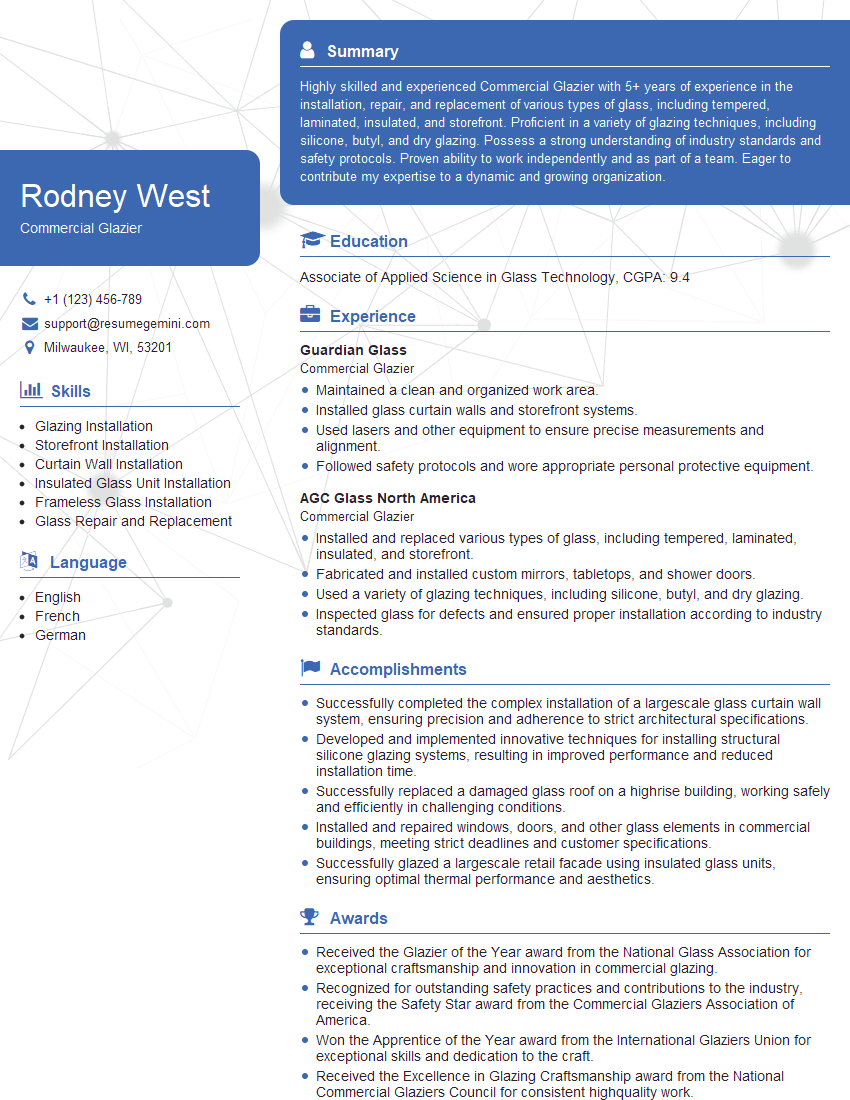
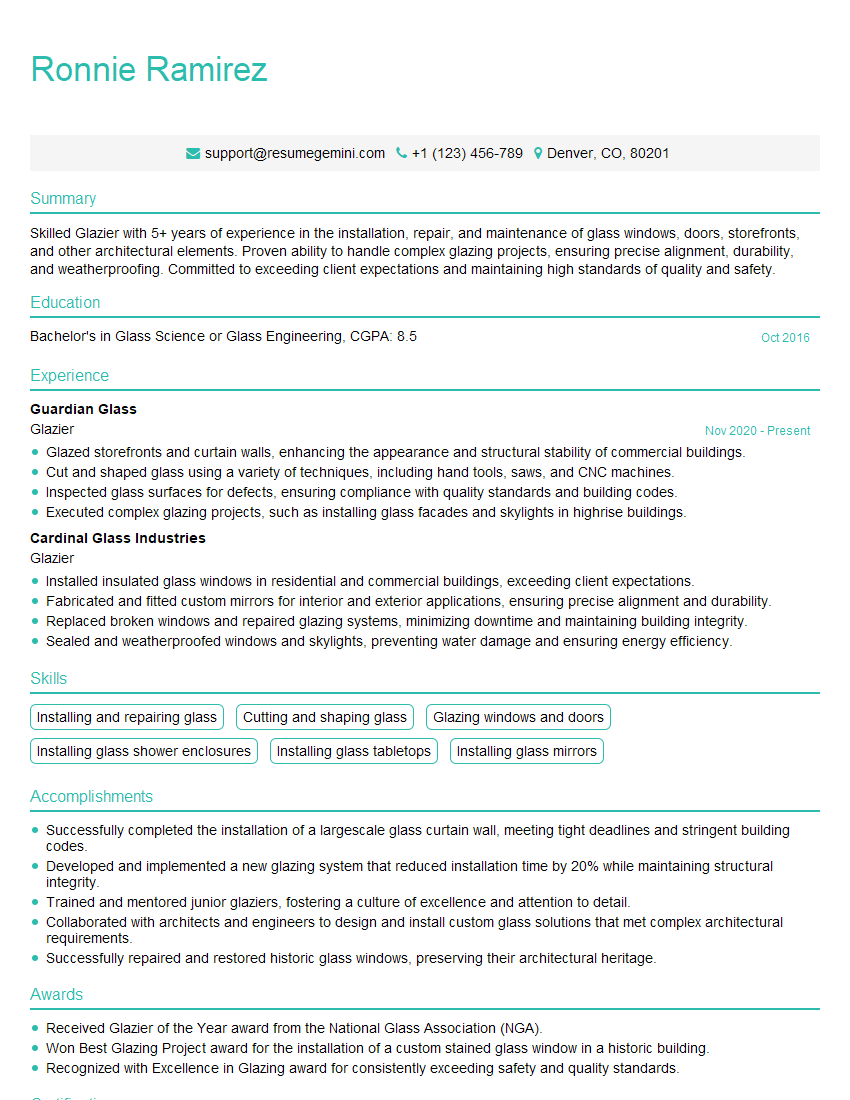
Mastering storefront glazing opens doors to exciting career opportunities in the construction and architectural industries, offering diverse roles and potential for growth. To maximize your chances of landing your dream job, creating a strong, ATS-friendly resume is essential. This is where ResumeGemini can help! ResumeGemini provides a trusted platform to build a professional resume that showcases your skills and experience effectively. Examples of resumes tailored to the Storefront Glazing field are available to help guide you. Take advantage of this resource to make a strong first impression.
Explore more articles
Users Rating of Our Blogs
Share Your Experience
We value your feedback! Please rate our content and share your thoughts (optional).
What Readers Say About Our Blog
To the interviewgemini.com Webmaster.
Very helpful and content specific questions to help prepare me for my interview!
Thank you
To the interviewgemini.com Webmaster.
This was kind of a unique content I found around the specialized skills. Very helpful questions and good detailed answers.
Very Helpful blog, thank you Interviewgemini team.