Unlock your full potential by mastering the most common Rigged and hoisted materials interview questions. This blog offers a deep dive into the critical topics, ensuring you’re not only prepared to answer but to excel. With these insights, you’ll approach your interview with clarity and confidence.
Questions Asked in Rigged and hoisted materials Interview
Q 1. Explain the different types of rigging hardware.
Rigging hardware encompasses a wide range of components crucial for safely lifting and moving materials. Think of it as the ‘bones’ of a lifting system. These components work together to create a secure connection between the load, the sling, and the hoisting equipment. Key types include:
- Shackles: These U-shaped metal fasteners with a screw pin or bolt are used to connect slings to other rigging components. They’re like strong, reusable links in a chain. Different types exist (bow shackles, Dee shackles) depending on the application.
- Hooks: These are vital for attaching slings to the load or hoist. They come in various designs, including clevis hooks and safety hooks (with a latch to prevent accidental slippage). Safety is paramount; never use a damaged hook.
- Rings: These are circular components used to create connection points or redirect forces. They’re frequently found in master links and other assemblies.
- Sling Protectors: These devices protect slings from abrasion and damage when lifting against sharp edges. Imagine them as the ‘gloves’ for your slings, preventing premature wear and tear.
- Turnbuckles: Adjustable components used to tighten or loosen slings, ensuring proper tension. They’re the ‘fine-tuning’ elements of the rigging system.
- Wire Rope Clips (Clamps): These are used to secure wire rope ends, preventing unraveling. They’re like the ‘ends’ for your wire rope, creating a safe and secure termination. Correct installation is absolutely crucial.
The selection of appropriate rigging hardware depends on the load’s weight, the lifting method, and environmental conditions. Using the wrong hardware can lead to catastrophic failure.
Q 2. Describe the safe working load (SWL) and its importance.
The Safe Working Load (SWL) is the maximum load that a piece of equipment, such as a sling or hook, can safely support. It’s the absolute limit you should never exceed. Think of it as the ‘speed limit’ for your lifting equipment; exceeding it could lead to a dangerous situation. The SWL is usually stamped or marked on the equipment itself.
The SWL’s importance cannot be overstated. Using equipment beyond its SWL dramatically increases the risk of failure, potentially leading to serious injury, damage to property, or even death. It’s a fundamental safety precaution that every rigger must adhere to. Always check the SWL before any lift and ensure the total weight of the load, including rigging equipment, is well below this limit. Consider factors like angles and sling configuration, which can affect the SWL of a system.
Q 3. What are the different types of slings and their applications?
Slings are the flexible components that connect the load to the hoisting equipment. They come in various types, each suited for specific applications:
- Polyester Web Slings: These are flat slings made of strong woven polyester fabric, chosen for their flexibility, lightweight nature, and high strength-to-weight ratio. They’re great for handling diverse materials and shapes.
- Nylon Web Slings: Similar to polyester, but with slightly different properties and slightly lower strength.
- Chain Slings: Made of interconnected metal links, they are extremely durable and resistant to abrasion, making them ideal for heavy-duty applications and sharp-edged loads. They may have higher SWL’s but are heavier.
- Wire Rope Slings: Constructed from multiple strands of wire rope, offering high strength and durability, particularly useful in high-stress environments. However, they can be more prone to damage from abrasion and sharp edges. Proper end terminations are essential.
The choice of sling depends heavily on factors such as the load’s weight, shape, and material. Using the incorrect sling can compromise safety and lead to equipment failure.
Q 4. How do you inspect rigging equipment before use?
Inspecting rigging equipment before each use is non-negotiable. This prevents accidents and ensures the safety of personnel and property. A thorough inspection involves:
- Visual Examination: Carefully inspect all components for any signs of damage, such as fraying, cracks, kinks, corrosion, or deformations. Pay close attention to welds, hooks, and attachments.
- SWL Verification: Confirm that the SWL markings are clearly visible and legible. This ensures you are working within safe parameters.
- Wear and Tear Assessment: Look for signs of wear and tear that could affect the structural integrity of the equipment, including excessive stretching in slings or rusting in chains.
- Functionality Test: Check that moving parts operate smoothly without binding or sticking. In the case of chain slings, check each link individually for integrity.
- Documentation: Record your inspection findings. A pre-lift checklist is a valuable practice. This ensures accountability and traceability.
If any damage or defects are found, the equipment should be immediately removed from service and replaced. Never compromise on safety.
Q 5. What are the common causes of rigging failures?
Rigging failures stem from a variety of causes. Often, they are a combination of factors rather than a single point of failure. Common causes include:
- Overloading: Exceeding the SWL of any component is the most frequent cause. This can lead to sudden, catastrophic failure.
- Improper Use: Incorrect rigging techniques, such as improper hitching or sling angles, significantly reduce the SWL and increase the risk of failure.
- Equipment Defects: Using damaged or worn equipment, such as slings with fraying or hooks with cracks, is inherently dangerous.
- Environmental Factors: Exposure to harsh weather conditions, such as extreme temperatures or corrosive chemicals, can weaken rigging equipment over time.
- Lack of Inspection: Failing to conduct regular inspections greatly increases the risk of using defective equipment.
- Improper Maintenance: Neglecting regular maintenance can lead to accumulated damage and ultimately cause failure.
Rigging failures can have serious consequences. A systematic approach to safety, starting with careful planning and rigorous inspections, is paramount.
Q 6. Explain the different types of hoisting equipment.
Hoisting equipment is used to lift and lower loads. Several types exist:
- Overhead Cranes: These are commonly found in industrial settings and consist of a bridge structure spanning an area with a trolley that moves along the bridge, allowing for lifting and moving loads across a wide space. They often have high SWLs.
- Mobile Cranes (e.g., Truck Cranes, Crawler Cranes): These cranes are mounted on vehicles or crawler tracks, making them mobile and allowing lifting operations at various locations. They are highly versatile, but their stability is critical to consider.
- Chain Hoists: These are manually or electrically powered hoists using a chain to lift loads vertically. Simple yet effective for medium-duty work.
- Wire Rope Hoists: Similar to chain hoists but using wire rope instead of a chain. They usually provide higher lifting capacities than chain hoists.
- Jacks: Hydraulic or mechanical jacks are used for lifting smaller loads and often for positioning rather than actual lifting operations.
The selection of hoisting equipment depends on the load’s weight, the required lift height, and the work environment.
Q 7. Describe the components of a typical crane.
A typical crane comprises several key components:
- Boom: The long arm that extends from the crane’s base, allowing it to reach out and lift loads at a distance. It can be fixed or telescopic.
- Hoist Mechanism: This includes the motor, gears, and drums that raise and lower the load. It’s the ‘engine’ of the crane.
- Trolley: This is a mechanism that runs along the boom, allowing the load to be moved horizontally as well as vertically. It provides the sideways movement.
- Counterweight: This is located at the rear of the crane to provide balance and stability, preventing the crane from tipping over under heavy loads.
- Cab/Operator’s Station: This is where the crane operator controls all the movements of the crane. This is where the operator controls the crane.
- Base/Chassis: This forms the foundation of the crane, providing support and stability. For mobile cranes, this includes the undercarriage (wheels or tracks).
- Swing Mechanism: This allows the entire boom structure to rotate, enabling the crane to cover a wide area.
Each component plays a critical role in the crane’s operation and must be maintained to ensure safe and efficient lifting.
Q 8. What safety procedures are followed during rigging operations?
Rigging safety is paramount. It’s not just about following rules; it’s about a mindset of constant vigilance. Before any lift, a thorough risk assessment is crucial. This involves identifying potential hazards, like unstable ground, overhead obstructions, or unpredictable weather. We use a system of checks and double-checks – think of it as a safety net within a safety net.
- Pre-lift Inspection: All equipment, including slings, shackles, hooks, and the crane itself, undergoes a meticulous inspection for any damage or wear. We look for things like frayed fibers in slings, bent hooks, or hydraulic leaks in the crane.
- Safe Working Load (SWL): We never exceed the SWL of any component. This rating, clearly marked on the equipment, represents the maximum load the item can safely handle. Exceeding the SWL is a recipe for disaster.
- Communication: Clear and consistent communication among the rigging crew, crane operator, and anyone else in the vicinity is critical. Hand signals, radios, and a pre-lift briefing all play vital roles.
- Personal Protective Equipment (PPE): Hard hats, safety glasses, high-visibility clothing, and appropriate footwear are mandatory. We also often utilize fall protection equipment depending on the specific job.
- Emergency Procedures: We have well-defined emergency procedures in place, including evacuation plans and contact information for emergency services. Regular drills reinforce these procedures.
Imagine lifting a heavy piece of machinery – you wouldn’t want a snapped sling causing it to fall. That’s why stringent safety procedures are more than just best practices; they are lifesavers.
Q 9. How do you calculate the center of gravity for a load?
Calculating the center of gravity (CG) is fundamental to safe rigging. The CG is the point where the weight of an object is considered to be concentrated. For simple, regularly shaped objects, the CG is straightforward. However, for complex shapes, it requires more detailed analysis.
Methods for Calculating CG:
- Simple Shapes: For symmetrical objects like cubes or spheres, the CG is at the geometric center.
- Irregular Shapes: For irregular shapes, we often use a plumb bob method. We suspend the object from several different points, tracing the plumb bob line each time. The intersection of these lines approximates the CG.
- Complex Loads: For complex loads with multiple components, we calculate the CG of each component separately, then use weighted averages to find the overall CG of the combined load. This often involves detailed calculations and may require specialized software.
Example: Consider a rectangular steel plate. Its CG is located at the intersection of its diagonals. However, if we add a smaller, heavier component to one side of the plate, the combined CG shifts towards the heavier component.
Accurate CG determination is crucial. An incorrectly calculated CG leads to unbalanced loads, increasing the risk of tipping, sway, or even equipment failure.
Q 10. Explain the importance of load charts and how to interpret them.
Load charts are essential documents that provide crucial information about the safe working loads (SWLs) for various rigging components and configurations. They are like instruction manuals for safe lifting. They help prevent accidents by ensuring we never overload equipment.
Interpreting Load Charts: Load charts typically depict different sling angles and their corresponding SWLs for various sling types and configurations (e.g., single-leg, choker hitch, basket hitch). They show the SWL graphically and numerically, often using tables and diagrams. The SWL decreases as the sling angle increases – it’s much safer to lift with a sling close to vertical than at a wide angle.
Example: A load chart may show that a 10,000 lb capacity sling has a reduced SWL of 7,000 lbs when used in a 30-degree choker hitch. Ignoring this information and lifting a 10,000 lb load could lead to catastrophic failure.
Always consult the load chart provided by the sling manufacturer. Different manufacturers will have different load charts, and using the wrong chart could easily lead to dangerous consequences.
Q 11. What are the different types of knots used in rigging?
Knots are the backbone of rigging, yet improper knot tying can be catastrophic. We use specific knots designed to hold heavy loads securely. It’s not about decorative knots; it’s about safety and functionality.
- Bowline: Forms a fixed loop that won’t slip. Excellent for attaching a sling to a load.
- Clove Hitch: Quick and easy to tie, but its holding power is compromised with heavy loads or sharp bends.
- Figure Eight: Used for creating a secure loop at the end of a rope or sling.
- Running Bowline: Creates a sliding loop, useful for adjusting the length of a sling.
- Fisherman’s Knot: Used to join two ropes of similar diameter.
Each knot has its strengths and weaknesses, and the correct choice is crucial. Using the wrong knot for a particular application can lead to the load slipping or the knot failing. Furthermore, a poorly tied knot, regardless of the type, represents a severe risk.
Q 12. Describe the proper techniques for attaching slings to loads.
Proper sling attachment is crucial. Incorrect attachments can lead to load slippage, sling damage, or even complete failure, potentially causing injury or death. We follow a rigorous procedure.
- Inspect the Sling: Before attaching the sling, we meticulously inspect it for any signs of wear, damage, or defects. This involves checking for fraying, cuts, burns, or any other imperfections.
- Proper Sling Angle: We aim for the shortest practical sling length and maintain a balanced load configuration to reduce stress on the sling and attachments. Sharp bends are to be avoided.
- Protect the Load: We use proper padding or protection to prevent damage to the load during the lifting process. Sharp edges or corners require chafing protection to avoid sling damage.
- Correct Hitches: The choice of hitch (e.g., choker, basket, vertical) depends on the load’s shape and weight distribution. The correct hitch ensures even load distribution across the sling legs.
- Secure Attachment: We ensure the sling is securely attached to both the load and the lifting device, double-checking the connection to prevent slippage.
Imagine lifting a delicate piece of equipment. Improper sling attachment could cause it to shift during the lift, leading to damage or even a drop.
Q 13. How do you handle unbalanced loads?
Unbalanced loads are a major concern in rigging. They increase the risk of load sway, equipment damage, and accidents. We address them systematically.
- Identify the Imbalance: First, we accurately determine the location of the center of gravity (CG) of the load and identify the source of the imbalance.
- Adjust Load Distribution: We adjust the load distribution by repositioning the load or using additional slings to balance it. If necessary, we might use additional support points to stabilize the load.
- Use of Tag Lines: Tag lines (guide ropes) are often used to control the load’s movement and prevent sway during the lift, especially with unbalanced loads. These ropes are operated by trained personnel.
- Crane Positioning: The crane’s positioning is also crucial; careful positioning helps counteract the imbalance and maintain stability.
- Reduce Swing Radius: The swing radius is kept to a minimum to prevent unexpected movements that would create further issues with an unbalanced load.
For example, imagine lifting a long, heavy beam. If one end is significantly heavier, the beam might tilt during the lift. Properly balancing such a load is non-negotiable to ensure a safe lift.
Q 14. What are the limitations of different types of slings?
Different sling types have different strengths and limitations, making the choice of sling crucial for safety and efficiency. These limitations need to be well understood.
- Wire Rope Slings: Strong and durable but susceptible to abrasion, kinking, and corrosion. They require careful inspection for broken wires or damage.
- Synthetic Web Slings: Lightweight and easy to handle, but vulnerable to cutting, abrasion, and UV degradation. Heat can also affect their strength.
- Chain Slings: Durable and resistant to many hazards but can stretch and become permanently deformed under high loads.
Example Limitations:
- Sharp Edges: Web slings are particularly susceptible to damage from sharp edges, while wire rope slings can be somewhat better protected with proper padding.
- High Temperatures: Synthetic web slings can lose strength at high temperatures, while chain slings can withstand relatively higher temperatures.
- Chemical Exposure: Certain chemicals can weaken or degrade various sling materials.
Understanding these limitations and selecting the appropriate sling is critical for ensuring a safe lift. Using the wrong type of sling for a particular job can have disastrous consequences.
Q 15. Explain the importance of communication during rigging operations.
Effective communication is the cornerstone of safe and efficient rigging operations. It’s not just about giving instructions; it’s about ensuring everyone on the team understands the plan, potential hazards, and their individual roles. Miscommunication can lead to accidents, delays, and costly damage.
Clear communication starts with pre-lift planning meetings where the rigging plan, load details (weight, center of gravity, dimensions), and potential hazards are discussed. During the lift, clear hand signals, radio communication, and designated signal personnel are crucial. A dedicated signal person, for example, ensures the crane operator understands the exact movements required, preventing misinterpretations that could result in a dropped load or equipment damage. Post-lift debriefs allow the team to identify what went well, what could be improved, and to learn from any near misses.
Imagine a scenario where the crane operator doesn’t understand the hand signals given by the rigger. This simple misunderstanding could easily lead to a load being swung into a building or other equipment, causing significant damage or injury. Robust communication protocols significantly mitigate this risk.
Career Expert Tips:
- Ace those interviews! Prepare effectively by reviewing the Top 50 Most Common Interview Questions on ResumeGemini.
- Navigate your job search with confidence! Explore a wide range of Career Tips on ResumeGemini. Learn about common challenges and recommendations to overcome them.
- Craft the perfect resume! Master the Art of Resume Writing with ResumeGemini’s guide. Showcase your unique qualifications and achievements effectively.
- Don’t miss out on holiday savings! Build your dream resume with ResumeGemini’s ATS optimized templates.
Q 16. What are the regulations and standards relevant to rigging?
Rigging operations are governed by a complex web of regulations and standards that prioritize safety. These vary by location, but generally include national and international standards from organizations like OSHA (Occupational Safety and Health Administration) in the US, or similar bodies in other countries. Specific standards often address aspects like crane operation, sling selection and inspection, load calculations, and personnel qualifications.
Key regulations often involve:
- Safe Working Loads (SWL): Every piece of rigging equipment (slings, shackles, hooks) has a SWL, which must never be exceeded. Exceeding the SWL risks catastrophic failure.
- Inspection and Certification: Rigging equipment requires regular inspections to identify wear and tear, damage, or potential defects. Many jurisdictions require certification of equipment and personnel.
- Competent Personnel: Rigging operations should only be performed by trained and qualified personnel who understand the relevant regulations and safe operating procedures.
- Risk Assessments: A thorough risk assessment must be carried out before any rigging operation to identify and mitigate potential hazards.
Ignoring these regulations can lead to severe penalties, including fines, suspension of operations, and legal action in the event of accidents or injuries.
Q 17. How do you address potential hazards during a rigging operation?
Addressing potential hazards during a rigging operation is paramount. It begins with a thorough risk assessment, identifying all potential hazards, such as unstable ground, overhead obstructions, environmental conditions (wind, rain), and the inherent risks associated with the specific load being lifted. We then develop a mitigation plan to control these hazards.
Specific mitigation strategies may include:
- Ground conditions: Using cribbing or mats to provide a stable base for the crane and equipment.
- Overhead obstructions: Assessing clearances and adjusting the rigging plan accordingly, potentially using alternative lifting methods.
- Environmental conditions: Postponing the lift if weather conditions are unsafe, or implementing additional safety measures such as wind monitoring.
- Load characteristics: Using appropriate slings and rigging hardware based on the load’s weight, shape, and center of gravity.
- Personnel safety: Establishing exclusion zones around the lift area and ensuring all personnel wear appropriate PPE (Personal Protective Equipment).
Regular communication and monitoring throughout the operation are essential to ensure that the mitigation plan is effective and that any new hazards are immediately addressed. A safety observer independent of the lifting team can help identify and communicate potential problems.
Q 18. Describe your experience with different types of lifting points.
My experience encompasses a wide range of lifting points, each suited to different load types and conditions. These include:
- Eye Bolts: Common for lifting relatively lightweight, uniformly shaped objects. Critical to ensure they are properly installed and rated for the load.
- Lifting Rings: Often found on machinery and equipment, providing a secure attachment point. Careful inspection is needed to verify integrity.
- Welded Lifting Loops: Permanently attached to the load, offering a robust lifting point but requiring careful design and inspection to prevent fatigue failure.
- Shackles: Used to connect slings to lifting points, offering flexibility and strength. Choosing the correct type and size based on load and application is essential.
- Spreader Beams: Used for distributing the load across multiple slings, essential for handling wide or awkwardly shaped objects to prevent the load from twisting or tilting.
I have extensive experience selecting the appropriate lifting point considering the load’s weight, size, shape, and material properties, always ensuring the chosen point has a sufficient safety factor and is in good condition.
Q 19. How do you determine the appropriate rigging configuration for a load?
Determining the appropriate rigging configuration involves several key considerations:
- Load characteristics: Weight, dimensions, center of gravity, shape, fragility, and material properties are crucial factors in selecting the right slings, hardware, and rigging angles.
- Lifting equipment: Crane capacity, reach, and stability must be considered in relation to the load weight and the intended lift path.
- Work environment: Obstructions, ground conditions, and weather conditions all impact rigging configuration.
- Safety factors: Applying appropriate safety factors to account for uncertainties and potential dynamic forces during lifting.
The rigging plan should be documented, including diagrams, calculations, and a list of all equipment used. This ensures that everyone understands the configuration and that all safety measures are in place. For instance, a heavy, irregularly shaped object might require a multi-leg sling configuration with a spreader beam to distribute the load evenly and prevent damage or tilting. A lighter, symmetrical object might only require a single-leg sling.
Q 20. What is your experience with load testing?
Load testing is a critical component of ensuring rigging equipment and systems function correctly under stress. My experience includes overseeing and participating in both proof testing and destructive testing.
Proof testing involves subjecting the rigging system to a load that is typically 125% of the intended working load. This demonstrates the capacity of the system to safely handle the anticipated load. It’s a non-destructive test designed to verify that the equipment is fit for purpose. Detailed records are meticulously maintained, documenting the load, equipment used, and any observations.
Destructive testing, while less common, is performed to determine the ultimate strength of a component or the entire system. This involves incrementally increasing the load until failure occurs, providing data to evaluate design margins and material properties. This is typically done on a sample of rigging equipment of the same type to prevent damage to the equipment intended for use.
In both cases, meticulous documentation, including detailed load measurements and equipment identification, is crucial to maintain a verifiable record for future reference and compliance purposes. All testing must adhere to relevant industry standards and regulations.
Q 21. Describe a time you had to troubleshoot a rigging problem.
During a large-scale industrial project, we were tasked with lifting a particularly large and oddly shaped transformer. The initial rigging plan, using a four-leg sling configuration, proved unstable during the lift. The transformer started to swing dangerously, creating a significant safety hazard. The issue was traced to an uneven weight distribution and inadequate consideration of the transformer’s center of gravity in the initial plan.
My immediate response was to halt the lift, and then I began troubleshooting. I collaborated with the engineering team and the crane operator to reassess the load’s center of gravity and weight distribution. We decided to switch to a six-leg sling configuration using a specially designed spreader beam. This ensured more even weight distribution and greater stability during the lift. This change required careful recalculation of the load distribution and the individual sling capacities. The revised plan was carefully reviewed by the entire team before restarting the lift, which was ultimately completed successfully and safely.
This incident highlighted the importance of thorough planning, flexibility, and robust communication during rigging operations. The initial error was not a lack of expertise, but a failure in careful consideration of a complex load’s characteristics. The successful resolution demonstrates problem-solving skills and a commitment to safety above all else.
Q 22. How do you ensure the safety of personnel during rigging operations?
Ensuring personnel safety during rigging operations is paramount and relies on a multi-layered approach. It starts with meticulous planning, encompassing a thorough risk assessment that identifies potential hazards and develops mitigation strategies. This includes analyzing the load’s weight, dimensions, and center of gravity, as well as the environment – considering wind speed, ground conditions, and potential obstructions.
Next, selecting the appropriate rigging equipment is crucial. This means choosing equipment with a sufficient safety factor, ensuring it’s in excellent condition, and properly inspected before each use. We’re talking about checking for any signs of wear, damage, or corrosion on slings, ropes, shackles, and other components. A pre-lift inspection is mandatory.
Furthermore, clear communication is key. The rigging team, crane operator, and anyone in the vicinity must understand the plan, signals, and emergency procedures. This often involves using standardized hand signals, two-way radios, and pre-defined communication protocols. Designated signal persons are essential, and everyone should know their roles and responsibilities.
Finally, strict adherence to safety regulations and best practices is non-negotiable. This includes maintaining safe distances from the load, wearing appropriate personal protective equipment (PPE) such as hard hats, safety glasses, and high-visibility clothing, and ensuring that the work area is properly barricaded to prevent unauthorized access. Regular training and competency assessments for all personnel involved are also paramount.
For instance, on a recent project involving the lift of a heavy transformer, we implemented a detailed lift plan, conducted a thorough pre-lift inspection, designated signal persons, and used two cranes for redundancy and safety. The result was a flawless lift, completed without incident.
Q 23. What are the key differences between wire rope and synthetic slings?
Wire rope and synthetic slings each possess distinct advantages and disadvantages, making the choice dependent on the specific application. Wire rope, traditionally favored for its high strength-to-weight ratio and durability, is often used in heavy-duty lifting scenarios. However, it’s susceptible to corrosion, abrasion, and internal damage, requiring regular inspections and maintenance. Furthermore, its stiffness can make it less versatile for certain applications.
Synthetic slings, conversely, are lighter, more flexible, and less prone to corrosion. They offer excellent shock absorption, reducing stress on the load and the lifting equipment. Different types of synthetics (nylon, polyester, etc.) exist, each with varying strengths and properties. However, synthetic slings can be susceptible to UV degradation and damage from sharp edges or chemicals, limiting their longevity in harsh environments.
Think of it like this: wire rope is the strong, reliable workhorse, while synthetic slings are the more agile and adaptable team member. The selection depends on the job’s demands. For a heavy steel beam in a dry environment, wire rope might be preferred, whereas a delicate piece of machinery in a potentially abrasive environment might benefit from a synthetic sling.
Q 24. Describe your experience with different types of cranes.
My experience encompasses various crane types, including tower cranes, mobile cranes (both crawler and rough terrain), and overhead cranes. Tower cranes are ideal for high-rise construction projects, offering substantial lifting capacity and reach. Their height and stability are key benefits. However, their establishment and dismantling are complex procedures requiring careful planning and execution.
Mobile cranes, characterized by their mobility and versatility, are frequently used for projects demanding site-to-site movement. Crawler cranes, with their track-mounted base, offer superior stability on uneven terrain, whereas rough terrain cranes are better suited to navigating challenging landscapes. Selecting the correct crane for the job is critical based on ground conditions, reach requirements, and load capacity.
Overhead cranes, commonly found in industrial settings, are fixed structures providing efficient material handling within a defined area. They’re indispensable for repetitive lifting tasks, offering quick and precise movements. However, their lack of mobility restricts their applications to locations where the crane is permanently installed. Each crane type demands specific operational knowledge and safety protocols.
For example, while working on a bridge construction project, we utilized a combination of tower and mobile cranes to efficiently lift and position the bridge segments. Understanding the strengths and limitations of each type allowed for an optimized and safe operation.
Q 25. How do you manage rigging operations in challenging environmental conditions?
Managing rigging operations in challenging environmental conditions requires careful planning and the implementation of robust safety measures. Factors like high winds, extreme temperatures, rain, snow, or poor visibility necessitate modifications to the standard operating procedures. For instance, high winds might require reducing the load capacity or postponing the operation altogether.
Extreme temperatures can affect the strength of rigging materials, requiring the use of materials rated for the expected conditions. Rain and snow can compromise visibility and grip, necessitating additional safety precautions and possibly specialized equipment. Poor visibility may necessitate the use of additional lighting and potentially more personnel for improved communication and observation.
We might utilize weather forecasting data to plan operations, incorporating contingency plans for unexpected changes in weather. The use of specialized equipment such as wind monitors and load cells might be necessary to enhance safety and accuracy. Furthermore, additional personnel may be required for supervision and safety oversight. In some cases, alternative lifting methods or technologies may need to be considered.
A real-world example involved a high-altitude lift in freezing temperatures. We used specialized cold-weather rated slings and ropes, employed additional personnel for observation, and implemented a detailed communication plan to ensure safe and efficient completion of the lift, despite the difficult conditions.
Q 26. Explain your knowledge of different rigging techniques (e.g., vertical lift, horizontal pull).
Rigging techniques vary based on the load’s characteristics, the desired movement, and the available equipment. Vertical lifts are the most common, involving directly lifting the load vertically upwards. This requires careful attention to the load’s center of gravity to prevent swaying or tipping. We often use multiple slings or a spreader beam to distribute the load evenly.
Horizontal pulls, on the other hand, involve moving the load horizontally. This technique necessitates careful consideration of friction, load stability, and the potential for unintended movement. The use of appropriate rigging hardware such as shackles, blocks, and pulleys is essential. We frequently use taglines to control the load’s movement and prevent unintended swings.
Other techniques include angled lifts, which combine vertical and horizontal movements, and specialized techniques for unusual loads or environments. Each technique demands a comprehensive understanding of physics and the equipment used. Incorrect technique can lead to accidents and damage.
For example, in a recent warehouse relocation, we used vertical lifts for smaller items, while larger items required horizontal pulls with taglines for precise placement. Understanding these different techniques and their associated safety protocols allowed us to execute the relocation smoothly and safely.
Q 27. What is your experience with risk assessment related to rigging and hoisting?
Risk assessment is an integral part of every rigging and hoisting operation. It involves a systematic identification of potential hazards and the evaluation of their associated risks. This process typically begins with a thorough site survey, identifying potential hazards like unstable ground, overhead obstructions, or environmental factors. The next step is to evaluate the potential consequences of each identified hazard and their likelihood of occurrence.
After identifying the hazards and assessing their risks, we develop mitigation strategies to reduce or eliminate the risks. This might involve implementing engineering controls such as using stronger rigging equipment, or administrative controls such as establishing clear communication protocols. Personal protective equipment (PPE) is another important aspect of risk mitigation. The chosen strategy must be appropriate for the identified hazard and effective in controlling the risk.
A comprehensive risk assessment also considers the human factor, including fatigue, lack of training, and poor communication. Proper training, regular inspections of equipment, and clear communication protocols are essential to minimize human error. The assessment is documented and reviewed before, during, and after the operation to ensure the safety of personnel and equipment.
For instance, in a project involving a challenging lift near a power line, we conducted a thorough risk assessment that identified the potential for electrical shock. Our mitigation strategy included hiring a qualified spotter, establishing a safe working distance, and using non-conductive materials whenever possible. This careful approach ensured the safety of the crew and the successful completion of the lift.
Q 28. Describe your familiarity with relevant safety regulations (OSHA, etc.)
I am thoroughly familiar with relevant safety regulations, primarily OSHA (Occupational Safety and Health Administration) in the United States, and other internationally recognized standards like those from ANSI (American National Standards Institute). OSHA regulations cover various aspects of rigging and hoisting, including equipment inspection, operator training, load capacity calculations, and safe operating procedures. A deep understanding of these regulations is crucial for compliance and the prevention of accidents.
These regulations mandate regular inspections of rigging equipment, detailed lift plans, and the use of certified operators. They also require proper training and competency assessments for all personnel involved in rigging and hoisting operations. Furthermore, they emphasize the importance of risk assessment, hazard identification, and the implementation of control measures.
My experience includes ensuring compliance with these regulations in all projects I’ve overseen. This involved developing detailed safety plans, implementing rigorous inspection programs, and providing regular training to personnel. I understand that adhering to these standards is not merely a matter of compliance but a vital commitment to ensuring the safety of everyone involved in the operation.
For example, during a large-scale industrial project, I ensured strict adherence to OSHA standards regarding load capacity, equipment inspection frequency, and operator certification. Regular audits were performed to maintain compliance and ensure the safety of all personnel involved throughout the project’s duration.
Key Topics to Learn for Rigged and Hoisted Materials Interview
- Fundamentals of Lifting and Rigging: Understanding load capacity, center of gravity, and safe working loads. This includes various types of lifting equipment and their limitations.
- Types of Hoisting Equipment: Become familiar with cranes (tower, mobile, overhead), hoists (electric, pneumatic, manual), and other lifting devices. Know their operational principles and safety features.
- Rigging Hardware and Techniques: Master the use of slings (chain, wire rope, synthetic), shackles, hooks, and other rigging components. Understand proper rigging techniques for different loads and situations.
- Safety Procedures and Regulations: Thoroughly understand relevant safety standards, regulations, and best practices for rigging and hoisting operations. This includes pre-lift inspections, risk assessments, and emergency procedures.
- Practical Application: Consider case studies involving different lifting scenarios, challenges encountered, and problem-solving approaches. Think about how you would assess risks and ensure safe operation.
- Troubleshooting and Maintenance: Familiarize yourself with common issues that arise with rigging and hoisting equipment and the steps involved in identifying and resolving them. Basic maintenance practices are also crucial.
- Material Handling Techniques: Understand proper techniques for handling various materials (steel, timber, precast concrete, etc.) considering their weight, shape, and fragility.
Next Steps
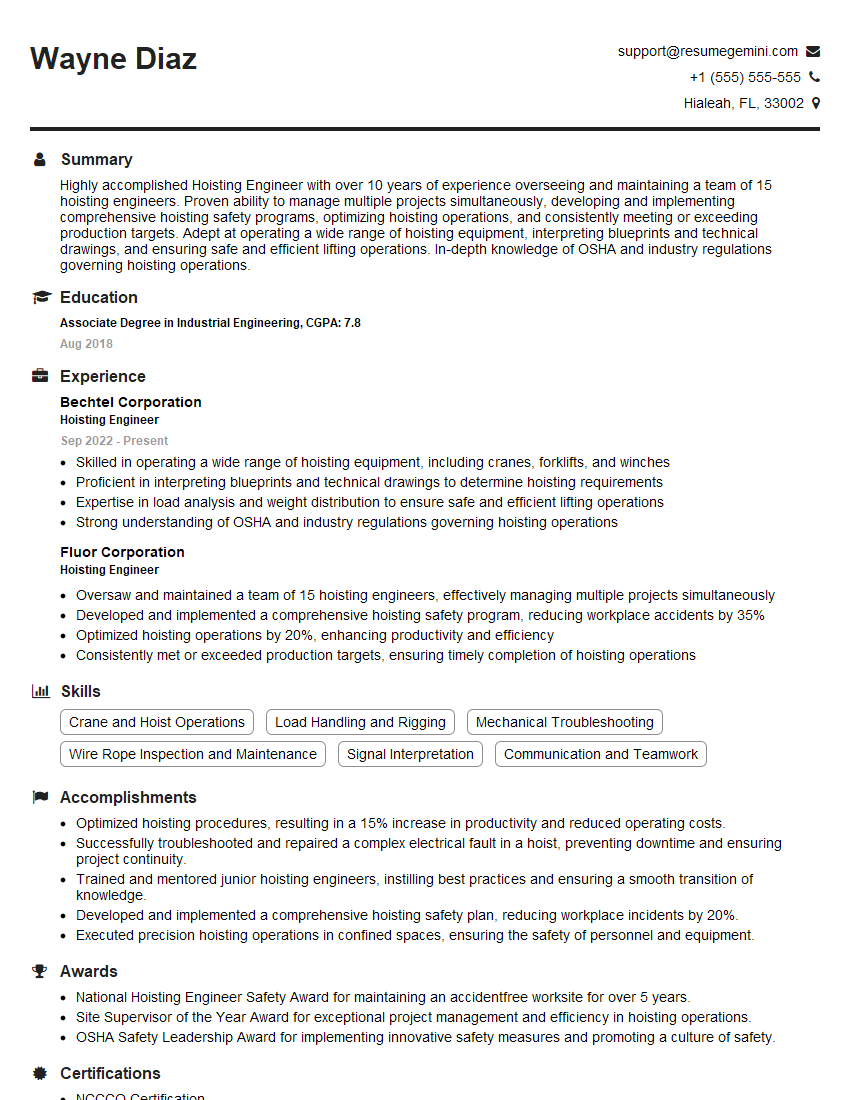
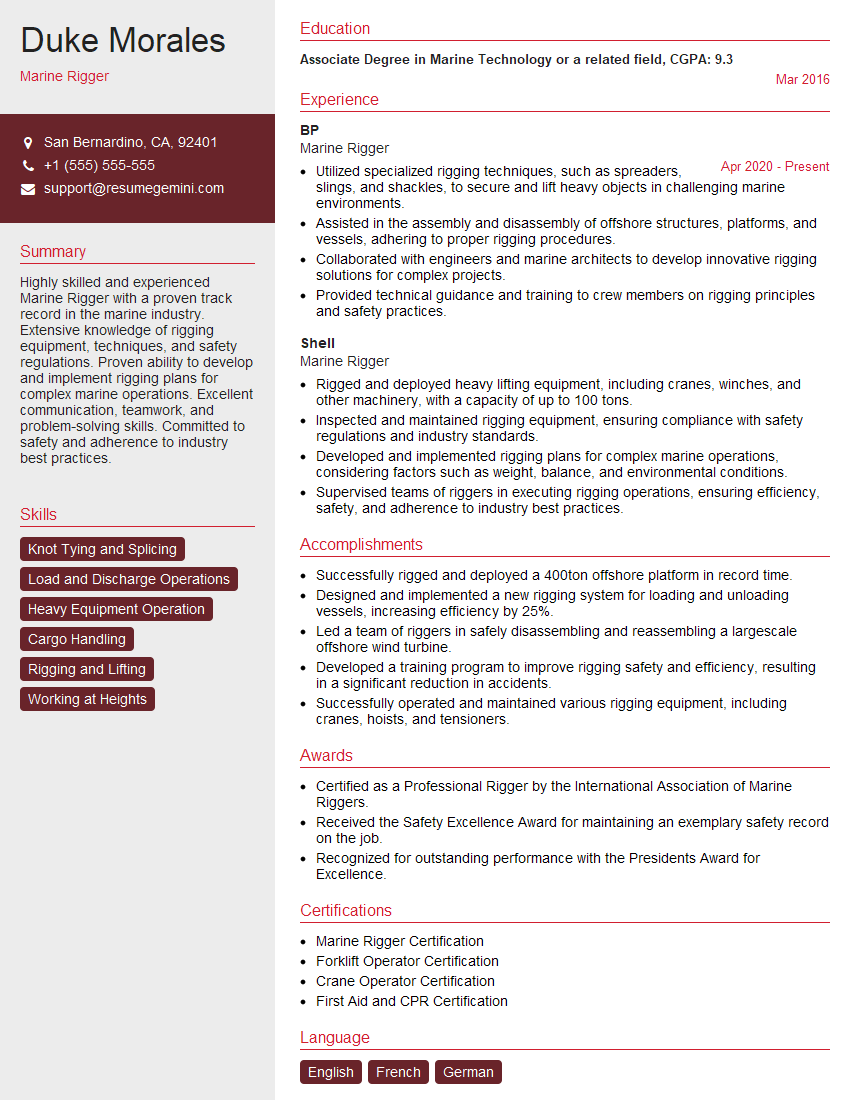
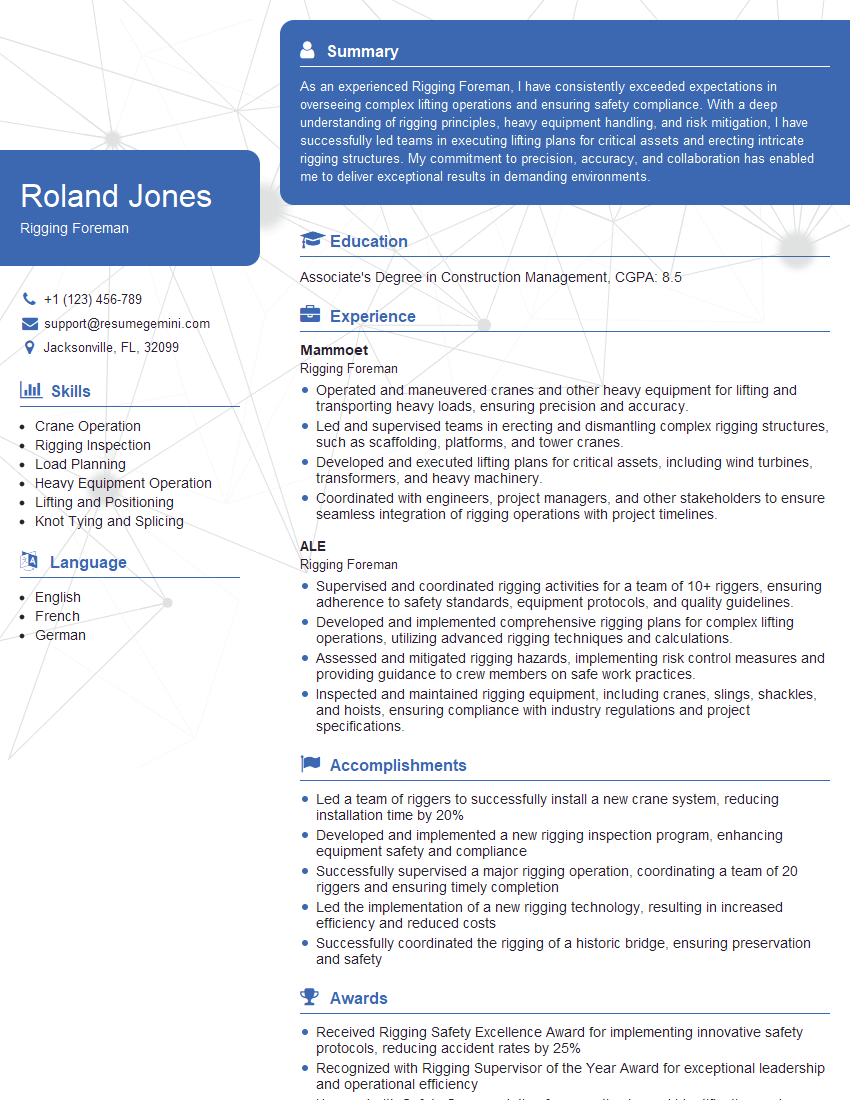
Mastering the principles of rigged and hoisted materials is crucial for career advancement in construction, manufacturing, and logistics. A strong understanding of safety and efficiency in these operations is highly valued by employers. To increase your job prospects, focus on building an ATS-friendly resume that highlights your skills and experience effectively. ResumeGemini is a trusted resource that can help you create a professional and impactful resume tailored to the Rigged and Hoisted Materials industry. Examples of resumes tailored to this field are available within ResumeGemini to guide you.




Explore more articles
Users Rating of Our Blogs
Share Your Experience
We value your feedback! Please rate our content and share your thoughts (optional).
What Readers Say About Our Blog
To the interviewgemini.com Webmaster.
Very helpful and content specific questions to help prepare me for my interview!
Thank you
To the interviewgemini.com Webmaster.
This was kind of a unique content I found around the specialized skills. Very helpful questions and good detailed answers.
Very Helpful blog, thank you Interviewgemini team.