Every successful interview starts with knowing what to expect. In this blog, we’ll take you through the top Safety Equipment Training interview questions, breaking them down with expert tips to help you deliver impactful answers. Step into your next interview fully prepared and ready to succeed.
Questions Asked in Safety Equipment Training Interview
Q 1. Describe your experience in developing and delivering safety equipment training programs.
Throughout my 10 years in safety training, I’ve developed and delivered numerous programs, tailoring them to various industries and specific equipment. My approach always begins with a thorough needs analysis, identifying the unique hazards and the employees’ existing knowledge. For example, when developing training for a construction firm, I focused on fall protection and harness use, emphasizing practical application through hands-on exercises. For a chemical plant, the focus shifted to respirator fit testing and hazardous material handling. I utilize a blended learning approach, incorporating online modules for self-paced learning, followed by in-person sessions with interactive demonstrations and practical assessments. This ensures knowledge retention and skill development.
I’ve also developed and implemented comprehensive training record-keeping systems, enabling efficient tracking of employee progress and ensuring compliance with regulatory requirements. This includes creating customized training manuals, presentations, and videos, consistently updating the content to reflect the latest safety standards and technologies.
Q 2. What are the key elements of a successful safety equipment training program?
A successful safety equipment training program hinges on several key elements. Firstly, it must be relevant, addressing the specific hazards faced by the employees. Secondly, it needs to be engaging, utilizing diverse methods like interactive exercises, videos, and real-life scenarios to capture attention and boost retention. Thirdly, practical application is crucial; learners should have ample opportunities to practice using the equipment correctly.
Clear communication is paramount. The training materials should be easy to understand, regardless of the employees’ literacy levels. It also needs to be easily accessible, with options for various learning styles and schedules. Finally, the program must include regular evaluations to monitor effectiveness and identify areas for improvement. Think of it like building a house – a solid foundation (needs analysis), strong walls (engaging content), a functional roof (practical application), and regular inspections (evaluations) are essential for a successful outcome.
Q 3. How do you assess the effectiveness of your safety training programs?
Assessing training effectiveness involves a multi-faceted approach. Immediately after training, I conduct written and practical tests to gauge immediate knowledge and skill acquisition. For example, after respirator training, participants will demonstrate proper donning, doffing, and fit-checking procedures. Later, I conduct on-the-job observations to monitor how well employees apply their learning in real-world situations. This might involve observing proper harness use during a high-altitude work task.
Beyond immediate assessment, I track incident rates involving the equipment covered in the training. A reduction in incidents related to improper equipment use directly demonstrates the training’s impact. Finally, I regularly gather feedback from employees through surveys or informal discussions to identify areas needing improvement or further clarification. By combining these methods, I gain a comprehensive understanding of the program’s effectiveness and make data-driven adjustments.
Q 4. Explain different types of Personal Protective Equipment (PPE) and their applications.
Personal Protective Equipment (PPE) encompasses a wide range of items designed to protect employees from various hazards.
- Eye and Face Protection: Safety glasses, goggles, face shields protect against impacts, chemicals, and radiation.
- Head Protection: Hard hats safeguard against falling objects and impacts.
- Hearing Protection: Earplugs and earmuffs reduce exposure to harmful noise levels.
- Respiratory Protection: Respirators filter out airborne contaminants such as dust, fumes, and gases. Different respirators exist for different hazards – N95 masks for particulate matter, full-face respirators for chemicals, etc.
- Hand Protection: Gloves provide protection against cuts, abrasions, chemicals, and extreme temperatures. The type of glove varies based on the hazard.
- Foot Protection: Safety footwear protects against punctures, crushing, and slips. Steel-toe boots are a common example.
- Body Protection: This includes aprons, coveralls, and high-visibility clothing to protect against chemicals, impacts, and enhance visibility.
- Fall Protection: Harnesses, lanyards, and safety nets prevent falls from heights.
The selection of appropriate PPE depends heavily on the specific hazard assessment for the job task. A thorough risk assessment dictates which PPE is necessary and appropriate.
Q 5. What are the legal requirements for safety equipment training in your industry?
Legal requirements for safety equipment training vary depending on the industry and location but are generally governed by national and local occupational safety and health regulations (OSHA in the US, for instance). These regulations typically mandate training on the proper use, selection, and maintenance of PPE. They often specify training requirements for hazardous materials handling, confined space entry, and working at heights. Failure to comply can result in hefty fines, legal action, and damage to company reputation. Furthermore, employers are legally obligated to ensure that employees receive adequate training and use the appropriate PPE for the jobs they perform. The training should be documented to prove compliance.
Q 6. How do you handle non-compliance with safety equipment regulations?
Handling non-compliance starts with a thorough investigation to understand the root cause. This might involve interviewing the employee, reviewing the training records, and assessing the work environment. Is there a lack of understanding? Inadequate equipment? Are there systemic issues? Once the cause is identified, corrective action is implemented. This could involve refresher training, providing additional resources, improving communication, or addressing equipment deficiencies. Disciplinary actions may also be necessary in cases of willful non-compliance. The key is to address both the immediate issue and prevent future recurrences through improved training, better communication, and a strong safety culture.
Q 7. Describe your experience in training employees on the proper use of specific safety equipment (e.g., respirators, harnesses).
My experience training employees on specific safety equipment, particularly respirators and harnesses, emphasizes hands-on learning and practical application. For respirator training, I conduct fit testing to ensure a proper seal, followed by demonstrations on proper donning, doffing, and maintenance. Employees then practice these skills, and I provide immediate feedback and address individual questions or concerns. This interactive approach is critical for ensuring the effectiveness and proper use of this life-saving equipment.
Harness training includes instruction on proper selection of harnesses based on the task, inspection procedures to identify any damage, and the correct way to attach lanyards and other fall protection equipment. We conduct practical exercises simulating different scenarios, such as anchoring points and emergency procedures. I encourage asking questions and emphasize the importance of understanding the equipment’s limitations and potential failure points. This ensures employees feel confident and competent in using harnesses safely.
Q 8. How do you adapt your training methods to accommodate different learning styles?
Adapting training to different learning styles is crucial for effective safety equipment instruction. I utilize a multi-modal approach, catering to visual, auditory, and kinesthetic learners.
- Visual Learners: I use diagrams, videos, and demonstrations to illustrate equipment use and safety procedures. For example, when explaining the proper donning of a respirator, I’d show a step-by-step video alongside a clear visual guide.
- Auditory Learners: I incorporate lectures, discussions, and clear verbal explanations. I also encourage questions and answer them thoroughly. For example, I’d discuss the importance of regular inspection of fall protection harnesses, emphasizing the sounds of worn straps or loose buckles.
- Kinesthetic Learners: Hands-on activities and simulations are key. Participants get to practice using the equipment under supervision, reinforcing learning through physical engagement. For example, trainees would practice putting on and adjusting their harnesses while working at height.
By combining these methods, I ensure everyone, regardless of their learning preference, grasps the material effectively.
Q 9. How do you maintain up-to-date knowledge of safety regulations and best practices?
Staying current in safety regulations and best practices is paramount. I employ several strategies:
- Regularly reviewing relevant standards: I subscribe to professional journals like those published by OSHA and NIOSH, and I actively follow updates from relevant regulatory bodies.
- Attending industry conferences and workshops: These events provide opportunities to learn about emerging technologies and best practices from experts in the field.
- Networking with other professionals: Staying connected with other safety professionals through industry associations allows me to share knowledge and learn from others’ experiences.
- Participating in continuing education programs: I dedicate time to professional development courses that cover updates to safety regulations and equipment advancements.
This continuous learning ensures I deliver the most accurate and up-to-date training, keeping participants informed about evolving safety standards.
Q 10. Describe a time you had to troubleshoot a safety equipment issue during a training session.
During a fall protection training session, a participant’s harness locking mechanism malfunctioned during a simulated rescue. The immediate concern was safety, so I calmly stopped the exercise.
My troubleshooting involved:
- Safety First: Ensuring all participants were safe and the environment was secure.
- Inspection: Carefully examining the harness to identify the cause of the malfunction. The issue turned out to be a small piece of debris lodged in the mechanism.
- Demonstration & Explanation: I used the incident as a teaching moment, showing the trainees how to perform a thorough equipment check before each use, emphasizing the importance of regular maintenance.
- Alternative Solution: We switched to a backup harness to continue the training, emphasizing the importance of having spare equipment on hand.
This incident underscored the importance of practical training and the need for trainees to understand basic troubleshooting for their own safety.
Q 11. How do you ensure that your training programs are engaging and effective?
Engagement and effectiveness are achieved through a variety of techniques:
- Interactive Learning: I incorporate quizzes, games, and group discussions to keep participants actively involved.
- Real-World Scenarios: Using case studies and realistic simulations makes the training more relevant and memorable. For instance, I might present a scenario involving a workplace accident and have trainees analyze what went wrong and how it could have been prevented.
- Clear Objectives and Outcomes: Participants understand the learning objectives from the start, knowing what they’ll be able to do after completing the training.
- Regular Feedback: I provide constructive feedback throughout the training, using both formal and informal assessments to gauge comprehension and address any misconceptions.
- Storytelling and Relatable Examples: I often use anecdotes and real-world examples to illustrate concepts and make the training more engaging.
By combining these methods, I create a dynamic learning environment that enhances knowledge retention and skill development.
Q 12. What are some common misconceptions about safety equipment usage?
Several misconceptions surround safety equipment usage:
- “It’s bulky and uncomfortable, so I won’t wear it”: This highlights the need to demonstrate the proper fit and adjustment of equipment, emphasizing its importance in preventing injuries.
- “It’s just a formality”: I stress the life-saving potential of safety equipment, using real-life accident statistics to illustrate the consequences of neglecting its use.
- “It’s only necessary in high-risk situations”: I explain that safety equipment should be used consistently, even in seemingly low-risk situations, to prevent minor injuries that can accumulate into more serious problems.
- “It’s indestructible”: I emphasize the importance of regular inspection and maintenance of safety equipment, stressing that even the sturdiest equipment can fail if neglected.
Addressing these misconceptions directly during training fosters a culture of safety and responsible equipment use.
Q 13. How do you incorporate hazard identification and risk assessment into your training?
Hazard identification and risk assessment are fundamental to my training. I integrate them in several ways:
- Pre-training assessments: Participants assess the potential hazards within their own work environment before the training, which serves as a launching point for the course.
- Interactive exercises: I conduct simulations where trainees identify hazards in mock workplace scenarios, applying risk assessment methodologies (like the Hierarchy of Controls) to devise appropriate control measures.
- Case studies: Real-world examples of incidents caused by inadequate hazard identification are presented to underscore the seriousness of the issue.
- Practical application: Trainees practice applying their knowledge by conducting on-site risk assessments within their workplace after the training.
By embedding these elements into the training, participants develop practical skills in recognizing and mitigating risks using appropriate safety equipment.
Q 14. Explain your experience with different training methodologies (e.g., classroom, online, on-the-job).
My experience spans various training methodologies:
- Classroom Training: This allows for direct interaction and immediate feedback. It’s effective for conveying complex information and facilitating group discussions. I use presentations, demonstrations, and hands-on activities to maintain engagement.
- Online Training: This offers flexibility and accessibility. I utilize interactive modules, videos, and assessments to ensure engagement. Online platforms allow for tracking progress and providing personalized feedback.
- On-the-Job Training (OJT): This practical approach allows trainees to apply their knowledge in a real-world setting, under direct supervision. It’s particularly effective for developing practical skills, but requires careful planning and close monitoring.
I adapt my approach based on the specific training objectives, the learners’ needs, and the nature of the safety equipment. For example, complex equipment might necessitate a blended approach involving classroom instruction, online modules, and on-the-job practice.
Q 15. How do you evaluate the effectiveness of different types of safety equipment?
Evaluating safety equipment effectiveness involves a multi-faceted approach combining quantitative and qualitative methods. We start by defining clear performance criteria based on relevant safety standards and the specific hazards the equipment is designed to mitigate. For example, for a hard hat, this might include impact resistance, penetration resistance, and comfort.
- Performance Testing: We conduct rigorous testing, often using accredited labs, to verify the equipment meets or exceeds these criteria. This involves subjecting the equipment to simulated real-world scenarios, such as drop tests for hard hats or pressure tests for respirators. Results are meticulously documented and compared to manufacturer specifications.
- Field Observations: We observe equipment use in real-world conditions. This allows us to assess its practicality, usability, and durability in the specific work environment. Are employees comfortable using it? Does it interfere with their work? Does it withstand the wear and tear of daily use?
- Incident Analysis: We review any incidents or near misses involving the equipment to identify potential areas for improvement. Did the equipment fail? If so, why? What could be done differently to prevent future incidents?
- Employee Feedback: We actively solicit feedback from employees regarding the comfort, usability, and effectiveness of the equipment. This provides valuable insights into real-world challenges and opportunities for improvement.
By combining these methods, we obtain a comprehensive understanding of the equipment’s effectiveness and identify areas for improvement, ensuring optimal worker safety.
Career Expert Tips:
- Ace those interviews! Prepare effectively by reviewing the Top 50 Most Common Interview Questions on ResumeGemini.
- Navigate your job search with confidence! Explore a wide range of Career Tips on ResumeGemini. Learn about common challenges and recommendations to overcome them.
- Craft the perfect resume! Master the Art of Resume Writing with ResumeGemini’s guide. Showcase your unique qualifications and achievements effectively.
- Don’t miss out on holiday savings! Build your dream resume with ResumeGemini’s ATS optimized templates.
Q 16. How do you handle emergency situations related to safety equipment failures?
Handling emergency situations related to safety equipment failures requires a swift and organized response. Our protocol emphasizes immediate action to mitigate risk, followed by thorough investigation to prevent recurrence.
- Immediate Action: The first priority is to ensure the safety of affected personnel. This might involve evacuating the area, administering first aid, or initiating emergency response procedures. The faulty equipment is immediately removed from service.
- Incident Investigation: A detailed investigation is launched to determine the root cause of the failure. This involves examining the equipment, interviewing witnesses, reviewing maintenance records, and analyzing the work environment. We use a structured approach, such as a fault tree analysis, to identify contributing factors.
- Corrective Actions: Based on the investigation findings, corrective actions are implemented to prevent similar incidents from happening again. This could involve replacing faulty equipment, improving maintenance procedures, or providing additional training to employees.
- Documentation: All aspects of the incident, from initial response to corrective actions, are meticulously documented. This documentation serves as a valuable resource for future incident prevention efforts.
For example, if a respirator malfunctions during a hazardous material spill, the immediate action is to evacuate the area and have the affected employee use a backup respirator. A thorough investigation would follow, examining the malfunctioned respirator to determine the cause of the failure – was it due to improper maintenance, a manufacturing defect, or misuse? Corrective actions might involve retraining on proper respirator use or implementing a more robust maintenance schedule.
Q 17. What are your strategies for maintaining employee engagement throughout the training process?
Maintaining employee engagement throughout safety equipment training is critical for its success. We use a variety of strategies to make training interactive, relevant, and enjoyable.
- Interactive Training Methods: We avoid lengthy lectures and incorporate interactive elements such as hands-on activities, simulations, and group discussions. This allows employees to actively participate and learn by doing.
- Relevance to Job Tasks: We tailor training to the specific hazards and tasks faced by employees in their respective roles. This makes the training more relevant and meaningful, fostering a sense of ownership.
- Gamification: We incorporate gamification elements such as quizzes, challenges, and leaderboards to increase motivation and engagement. A friendly competition can make learning more fun.
- Positive Reinforcement: We celebrate success and provide positive reinforcement to employees who actively participate and demonstrate competency. This creates a supportive and encouraging learning environment.
- Feedback and Iteration: We regularly solicit feedback from employees to continuously improve the training program. This ensures the training remains relevant and engaging.
For example, instead of a lecture on fall protection, we might use a virtual reality simulation to let employees experience a fall and learn about the importance of proper harness use. We also provide opportunities for hands-on practice with the equipment under the supervision of a trained instructor.
Q 18. How do you ensure that your safety training is accessible to employees with disabilities?
Ensuring accessibility for employees with disabilities is a paramount concern. We adhere to accessibility guidelines and provide reasonable accommodations to ensure all employees can participate fully in safety equipment training.
- Accessible Training Materials: We provide training materials in various formats, including large print, Braille, and audio versions, to cater to different learning styles and disabilities.
- Assistive Technologies: We ensure that our training facilities and equipment are compatible with assistive technologies, such as screen readers and voice recognition software.
- Individualized Support: We provide individualized support and accommodations based on the specific needs of each employee. This might include one-on-one training sessions, interpreters, or modified training schedules.
- Universal Design Principles: We incorporate universal design principles into the development of our training programs to make them naturally accessible to all employees, regardless of their abilities.
For example, if an employee is visually impaired, we might provide tactile models of safety equipment and use verbal descriptions to guide them through the training. We might also arrange for a certified interpreter to translate the training materials into sign language.
Q 19. How do you deal with resistance or pushback from employees regarding safety equipment usage?
Resistance to safety equipment usage often stems from discomfort, inconvenience, or perceived unnecessary restrictions. Addressing this requires a proactive and empathetic approach.
- Open Communication: We actively listen to employee concerns and address them openly and honestly. This helps build trust and fosters a collaborative environment.
- Demonstrate Value: We highlight the benefits of safety equipment, emphasizing how it protects employees from harm and reduces the risk of injuries. We use real-world examples and statistics to underscore the importance of safety.
- Address Concerns: We address specific concerns regarding discomfort or inconvenience by exploring alternative solutions, such as providing different sizes or styles of equipment. We might also involve employees in selecting equipment to ensure their preferences are considered.
- Positive Reinforcement and Recognition: We acknowledge and reward employees who consistently use safety equipment properly. This helps to build a positive culture of safety.
- Leadership Support: We ensure that leadership actively supports and promotes the use of safety equipment, setting a strong example for all employees.
For instance, if employees resist wearing hard hats due to discomfort, we might offer a selection of hard hats with different features and padding. We emphasize the importance of preventing head injuries by demonstrating the potential severity of head trauma through accident videos or case studies. Positive reinforcement is provided through regular recognition of employees using safety gear properly.
Q 20. Explain the importance of regular inspections and maintenance of safety equipment.
Regular inspections and maintenance of safety equipment are crucial for ensuring its effectiveness and preventing accidents. Neglecting these tasks can lead to equipment failure, which can have severe consequences.
- Preventative Maintenance: Regular inspections identify potential problems before they lead to failures. This includes checking for wear and tear, damage, and any signs of malfunction. Preventive maintenance, such as cleaning and lubrication, extends the lifespan of the equipment.
- Compliance: Regular inspections ensure compliance with safety standards and regulations. Failure to comply can result in fines, legal liabilities, and reputational damage.
- Employee Safety: Properly maintained equipment is more reliable and less likely to fail, thus ensuring worker safety. A malfunctioning piece of safety equipment can dramatically increase the likelihood of injury.
- Cost Savings: Regular maintenance can prevent costly equipment failures and repairs in the long run. Repairing a piece of equipment is generally far cheaper than paying for medical expenses or legal damages caused by equipment failure.
For instance, regular inspections of a fall arrest system might reveal worn ropes or damaged components before they lead to a failure during a fall. This proactive approach ensures the system continues to function effectively and protects employees from potential injury.
Q 21. What are some common causes of safety equipment-related incidents?
Safety equipment-related incidents are often caused by a combination of factors. Understanding these causes is essential for implementing effective preventative measures.
- Improper Use: Employees may not be properly trained on the correct use of the equipment or may not follow established procedures. This can lead to equipment malfunction or failure to provide adequate protection.
- Lack of Maintenance: Insufficient or inadequate maintenance of safety equipment can lead to deterioration, damage, and eventual failure.
- Defective Equipment: Manufacturing defects or damage incurred during transport or storage can render equipment ineffective. Poor-quality or counterfeit equipment poses a significant risk.
- Inadequate Training: Insufficient or inadequate training on the use, care, and limitations of safety equipment increases the likelihood of improper use and accidents.
- Environmental Factors: Harsh environmental conditions such as extreme temperatures, moisture, or chemicals can negatively affect the functionality and lifespan of the equipment.
For example, a poorly maintained harness might fail during a fall due to frayed ropes or damaged buckles. A worker who hasn’t received adequate training on respiratory protection might improperly use a respirator, leading to exposure to hazardous substances. Understanding these common causes allows for targeted interventions, like enhanced training programs, regular equipment inspections, and robust procurement processes that ensure quality.
Q 22. Describe your experience in using various training aids (e.g., videos, presentations, simulations).
Throughout my career, I’ve extensively utilized a variety of training aids to deliver engaging and effective safety equipment training. My experience encompasses the full spectrum, from traditional methods to cutting-edge technologies.
Videos: I’ve developed and utilized short, focused videos demonstrating proper donning and doffing procedures for various PPE (Personal Protective Equipment), including respirators, safety glasses, and harnesses. These videos often include real-world scenarios, highlighting the consequences of improper use.
Presentations: I frequently employ interactive presentations, incorporating visuals, quizzes, and real-life case studies to reinforce learning. For instance, a presentation on fall protection might include images of actual fall incidents to emphasize the importance of proper equipment usage.
Simulations: I’ve leveraged simulations to recreate hazardous environments, allowing trainees to practice using safety equipment in a controlled setting. For example, a virtual reality simulation of working at heights allows trainees to experience the sensation of working at height while using safety harnesses, reinforcing their understanding of proper techniques.
Interactive Modules: I incorporate interactive e-learning modules which allow for personalized learning paths and immediate feedback, improving knowledge retention.
The selection of training aids depends heavily on the specific safety equipment being trained and the learning styles of the participants. A multi-modal approach, incorporating various techniques, often yields the best results.
Q 23. How do you ensure that your training materials are clear, concise, and easy to understand?
Ensuring clarity, conciseness, and ease of understanding in training materials is paramount. I employ several strategies to achieve this:
Plain Language: I avoid technical jargon and utilize simple, everyday language, ensuring accessibility for all participants regardless of their technical background. Complex concepts are broken down into smaller, digestible chunks.
Visual Aids: I heavily rely on visuals such as diagrams, illustrations, and photographs to complement text and enhance understanding. A picture is truly worth a thousand words when explaining the proper fit of a respirator.
Active Learning Techniques: I incorporate interactive elements such as quizzes, group discussions, and hands-on activities to promote active learning and engagement. This helps convert passive absorption into active application of knowledge.
Testing and Feedback: Before finalizing any training material, I pilot test it with a small group to gather feedback. This iterative process ensures the materials are clear, concise, and easily understood before widespread distribution.
Accessibility Considerations: I design materials that are accessible to all learners, including those with visual or auditory impairments. This might involve using alternative text for images, providing transcripts for videos, and ensuring compatibility with assistive technologies.
Q 24. How do you measure the ROI of your safety equipment training programs?
Measuring the ROI (Return on Investment) of safety equipment training programs requires a multi-faceted approach. It’s not solely about the cost of the training itself, but rather the overall impact on safety and productivity.
Reduced Incident Rates: A significant indicator is a decrease in workplace accidents and injuries directly related to the use of the safety equipment covered in the training. We track the number and severity of incidents before and after the implementation of the training.
Improved Compliance: We measure the increase in compliance rates related to the use of the safety equipment. This might involve observations, audits, or self-reporting by employees.
Increased Productivity: Effective training leads to increased efficiency. When employees are confident and competent in using safety equipment, they can work more safely and productively, resulting in less downtime due to injuries or equipment malfunctions.
Cost Savings: Reduced incidents lead to lower costs associated with workers’ compensation claims, medical expenses, lost productivity, and potential legal fees. These savings are directly attributed to the training’s effectiveness.
Employee Feedback: Gathering feedback from participants through surveys or focus groups provides valuable qualitative data to assess the program’s effectiveness and identify areas for improvement.
By meticulously tracking and analyzing these metrics, we can accurately assess the ROI of our safety equipment training programs and justify ongoing investment in safety initiatives.
Q 25. What are your experience with different types of safety equipment certification and accreditation?
My experience encompasses a range of safety equipment certifications and accreditations. I’m familiar with various standards and regulatory requirements, ensuring our training programs meet the highest industry benchmarks.
OSHA (Occupational Safety and Health Administration): I’m well-versed in OSHA standards and regulations concerning various types of safety equipment, including fall protection, respiratory protection, and lockout/tagout procedures. Our training programs are designed to meet or exceed these requirements.
ANSI (American National Standards Institute): I understand and apply ANSI standards for safety equipment, ensuring our training aligns with nationally recognized best practices.
Specific Manufacturer Certifications: Depending on the equipment, we may incorporate training that aligns with specific manufacturer certifications. For instance, training on using a particular brand of respirator might include elements specific to that manufacturer’s instructions and maintenance procedures.
Industry-Specific Certifications: Our training is adaptable to meet the unique needs of different industries. For example, construction, manufacturing, and healthcare each have their own specific safety equipment requirements, and our training reflects these differences.
Staying updated on the latest certifications and accreditation standards is crucial to maintain the relevance and effectiveness of our training programs. We continuously monitor changes in regulations and update our materials accordingly.
Q 26. Describe a time when you had to modify a training program based on feedback from participants.
During a recent training program on the use of respirators, we received feedback that participants found the initial module on respirator selection overly complex. The feedback indicated confusion regarding different respirator types and their appropriate applications.
Based on this feedback, we modified the program in several ways:
Simplified Explanations: We simplified the explanations of different respirator types, focusing on key distinctions and practical applications. We used more visuals and less technical jargon.
Interactive Exercises: We added interactive exercises that allowed participants to practice identifying the appropriate respirator for various scenarios. This hands-on approach improved understanding and knowledge retention.
Case Studies: We incorporated case studies illustrating the consequences of selecting the incorrect respirator type for a specific task. This helped reinforce the importance of proper selection.
Following these modifications, we re-administered a post-training assessment. The results demonstrated a significant improvement in participants’ understanding and ability to select the appropriate respirator.
This experience underscored the importance of continuously evaluating training programs and adapting them based on participant feedback. It’s a critical component of ensuring the training is effective and relevant.
Q 27. What are your career aspirations related to safety equipment training?
My career aspirations center around advancing the field of safety equipment training through innovation and leadership. I’m particularly interested in:
Developing cutting-edge training methods: I want to explore and implement new technologies such as virtual reality and augmented reality to create more immersive and engaging training experiences.
Promoting best practices: I aim to share my expertise and contribute to the development of industry best practices and standards for safety equipment training.
Leadership roles: I aspire to take on leadership roles within the safety training community, guiding and mentoring other trainers to enhance the overall quality and impact of safety training initiatives.
Research and Development: I’d like to contribute to the research and development of new and improved safety equipment training methods and technologies.
Ultimately, my goal is to make a significant contribution to creating safer workplaces through effective and innovative safety equipment training.
Q 28. How would you address a situation where an employee refuses to use provided safety equipment?
Addressing an employee’s refusal to use provided safety equipment requires a multi-step approach that prioritizes both safety and understanding. It’s crucial to approach the situation with empathy and patience, while ensuring adherence to company safety policies.
Understanding the Reason: The first step is to have a private conversation with the employee to understand the reasons behind their refusal. Are they uncomfortable with the equipment? Do they believe the equipment is unnecessary or inconvenient? Addressing the underlying concerns is crucial.
Education and Training: If the refusal stems from a lack of understanding or confidence, further education and training are necessary. This might involve hands-on demonstrations, additional training sessions, or one-on-one instruction.
Addressing Concerns: If the employee raises valid concerns about the equipment’s functionality or comfort, these concerns need to be addressed. This might involve providing alternative equipment, adjusting the equipment to fit better, or making modifications to the work environment.
Reinforcing Policy: It’s important to clearly communicate the company’s safety policies and the mandatory use of safety equipment. Explain the potential consequences of non-compliance, including disciplinary action.
Progressive Discipline: If education, training, and addressing concerns fail to resolve the issue, progressive disciplinary action, as outlined in the company’s policies, may be necessary. This could involve verbal warnings, written warnings, and ultimately, termination if the safety violation poses a significant risk.
Documentation: Thorough documentation of all communications, training provided, and disciplinary actions taken is essential.
Throughout this process, the emphasis should be on creating a safe and productive work environment. The goal is not to punish the employee, but to ensure their safety and the safety of their colleagues.
Key Topics to Learn for Your Safety Equipment Training Interview
- Personal Protective Equipment (PPE): Understanding different types of PPE (e.g., respirators, eye protection, hearing protection, gloves), their applications, limitations, and proper selection based on workplace hazards.
- Hazard Identification and Risk Assessment: Learning to identify potential hazards in various work environments and conduct thorough risk assessments to determine appropriate safety measures and PPE requirements. Practical application includes conducting mock risk assessments and explaining your methodology.
- Safety Regulations and Standards: Familiarity with relevant OSHA (or equivalent international) regulations and industry standards concerning safety equipment, training, and usage. This includes understanding the legal implications of non-compliance.
- Equipment Inspection and Maintenance: Knowing how to properly inspect and maintain safety equipment to ensure its effectiveness and longevity. This includes understanding the procedures for reporting damaged or malfunctioning equipment.
- Emergency Procedures and Response: Understanding emergency response protocols related to workplace accidents and injuries involving safety equipment failure or misuse. Practical application might involve describing your approach to an emergency situation.
- Training Methodology and Delivery: Understanding effective training techniques for delivering safety equipment training to diverse audiences, including considerations for different learning styles and communication strategies.
- Communication and Teamwork: Demonstrating effective communication skills to convey safety information clearly and concisely and the ability to collaborate effectively within a team environment to ensure workplace safety.
Next Steps
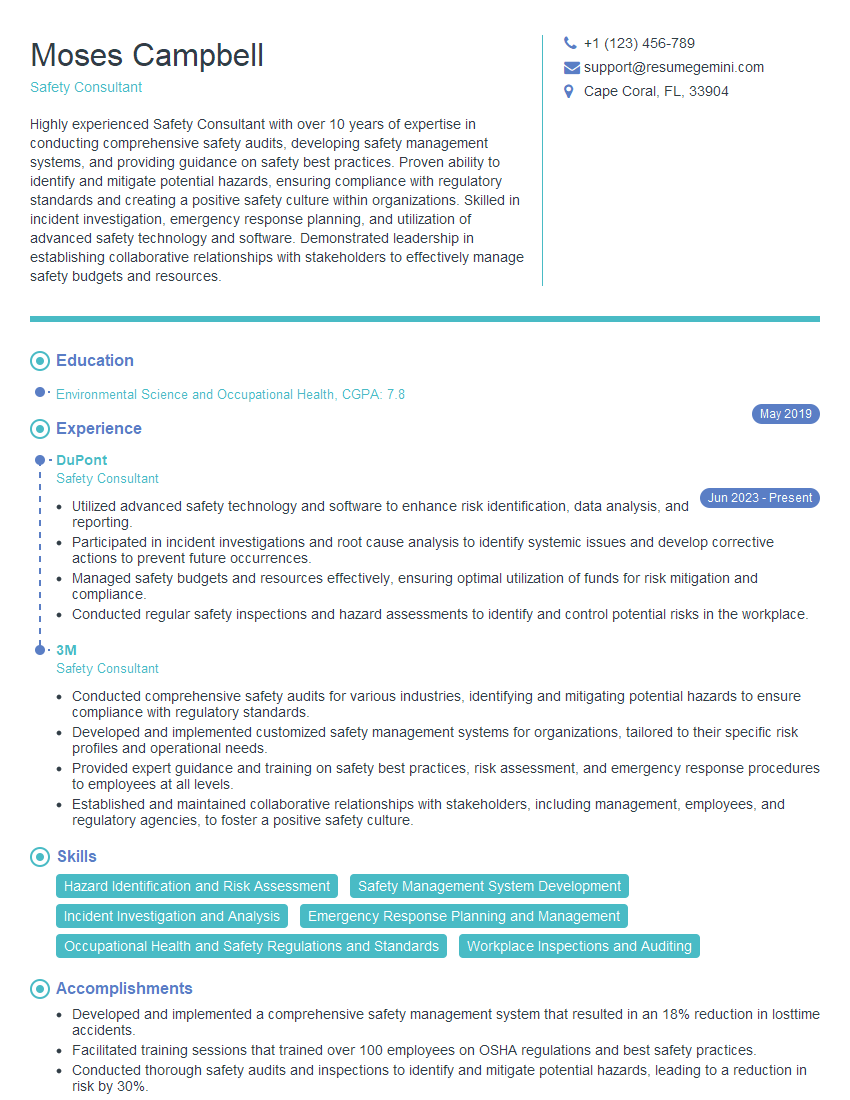
Mastering Safety Equipment Training opens doors to rewarding careers with significant impact. Your expertise in protecting workers is invaluable. To showcase your skills effectively, building an ATS-friendly resume is crucial for getting your application noticed. ResumeGemini is a trusted resource that can help you create a compelling resume that highlights your qualifications. We provide examples of resumes tailored to Safety Equipment Training to guide you. Take advantage of these resources to present your skills and experience in the best possible light and land your dream job!
Explore more articles
Users Rating of Our Blogs
Share Your Experience
We value your feedback! Please rate our content and share your thoughts (optional).
What Readers Say About Our Blog
To the interviewgemini.com Webmaster.
Very helpful and content specific questions to help prepare me for my interview!
Thank you
To the interviewgemini.com Webmaster.
This was kind of a unique content I found around the specialized skills. Very helpful questions and good detailed answers.
Very Helpful blog, thank you Interviewgemini team.