Are you ready to stand out in your next interview? Understanding and preparing for Safety Glazing Installation interview questions is a game-changer. In this blog, we’ve compiled key questions and expert advice to help you showcase your skills with confidence and precision. Let’s get started on your journey to acing the interview.
Questions Asked in Safety Glazing Installation Interview
Q 1. What types of safety glazing are you familiar with?
As a safety glazing expert, I’m familiar with a range of safety glass types, each designed for specific applications and risk levels. These include:
- Tempered Glass (Toughened Glass): This is the most common type, created by heating annealed glass to a high temperature and then rapidly cooling it. This process significantly increases its strength and shatter resistance. When it breaks, it shatters into small, relatively harmless, granular pieces.
- Laminated Glass: Composed of two or more sheets of glass bonded together by a layer of polyvinyl butyral (PVB) interlayer. This interlayer holds the glass fragments together even after breakage, preventing penetration and reducing injury.
- Wired Glass: An older type of safety glass containing a wire mesh embedded within the glass during manufacturing. While it offers some level of protection, it doesn’t meet current safety standards in many high-risk applications due to its tendency to shatter into sharp fragments.
- Polycarbonate Glass (Acrylic): A very impact-resistant plastic alternative to traditional glass. It’s lightweight, flexible and ideal for situations where high impact resistance and minimal weight are crucial, such as vehicle windshields or security applications.
- Insulated Glass Units (IGUs): These are made of two or more glass panes separated by a spacer filled with air or inert gas to improve thermal insulation. IGUs often incorporate tempered or laminated glass for safety.
The choice of safety glazing depends heavily on the specific application, regulatory requirements, and desired level of protection.
Q 2. Explain the difference between tempered and laminated glass.
The key difference between tempered and laminated glass lies in how they react to impact and break. Imagine throwing a small stone at both types of glass:
- Tempered Glass: When broken, it disintegrates into many small, relatively blunt pieces, minimizing the risk of severe cuts. Think of it like shattering a candy bar into many crumbly pieces.
- Laminated Glass: Upon impact, the glass may crack or even shatter, but the PVB interlayer keeps the fragments bonded together. The glass remains largely intact, acting as a barrier. Picture a sandwich: the glass is the bread, and the PVB is the filling, holding everything together.
Therefore, while both are safer than annealed glass, laminated glass offers better protection against penetration and is often preferred where security or personal safety is paramount (e.g., vehicle windshields, security doors).
Q 3. Describe the process of installing laminated safety glass.
Installing laminated safety glass is a precise process requiring careful attention to detail. Here’s a typical procedure:
- Preparation: Ensure the frame is clean, dry, and free of debris. Accurate measurements of the glass are critical to ensure a proper fit.
- Sealant Application: Apply a continuous bead of structural sealant to the frame’s rabbet (the recess where the glass sits). The type and amount of sealant will depend on the manufacturer’s recommendations and the specific application.
- Glass Placement: Carefully place the laminated glass into the frame, ensuring it’s properly seated and aligned. Avoid excessive pressure or force.
- Excess Sealant Removal: Remove any excess sealant immediately using a suitable tool, keeping the glass clean.
- Curing: Allow the sealant to fully cure according to the manufacturer’s instructions. This is crucial for achieving a strong and durable bond.
- Inspection: Once cured, inspect the installation for any imperfections or potential weaknesses. Check for sealant gaps, cracks, or any signs of stress on the glass.
The specific techniques might vary slightly depending on the type of frame and glass, but the fundamental steps remain consistent. Following the manufacturer’s guidelines is always paramount.
Q 4. What safety precautions are crucial during safety glazing installation?
Safety is paramount during safety glazing installation. Crucial precautions include:
- Personal Protective Equipment (PPE): Always wear safety glasses, gloves, and sturdy footwear. Depending on the project, additional PPE like a hard hat or dust mask might be required.
- Handling Precautions: Use appropriate lifting techniques to avoid dropping the glass, which can cause breakage and injury. Always use suction cups or other lifting aids for large glass sheets.
- Working at Heights: When working at heights, use proper fall protection equipment and follow all relevant safety regulations.
- Sharp Edges and Fragments: Handle glass with utmost care to avoid cuts. Dispose of broken glass fragments safely using appropriate containers.
- Environmental Considerations: Be mindful of any weather conditions that could affect the installation process or the sealant’s curing.
A thorough risk assessment should be conducted before commencing any installation to identify potential hazards and implement appropriate control measures.
Q 5. How do you ensure proper sealant application in safety glazing?
Proper sealant application is critical for the longevity and structural integrity of the safety glazing installation. Here’s how to ensure this:
- Choose the right sealant: Select a sealant specifically designed for safety glazing applications and compatible with the glass and frame materials. Consider factors like weather resistance, UV stability, and adhesion properties.
- Prepare the surfaces: Thoroughly clean and dry both the frame and the glass to ensure optimal adhesion. Primers might be necessary depending on the materials.
- Apply a consistent bead: Use a caulking gun to apply a continuous, even bead of sealant, avoiding gaps or air pockets. The bead size should adhere to the manufacturer’s recommendations.
- Tooling: Use a suitable tool (e.g., smoothing tool) to create a smooth, consistent sealant surface immediately after application.
- Cure time: Allow sufficient curing time for the sealant to achieve its full strength before subjecting the glass to any stress or load.
Failure to follow these steps can lead to sealant failure, compromising the glass’s structural integrity and potentially resulting in glass breakage.
Q 6. What are the common causes of safety glass failure?
Safety glass failures can arise from several sources:
- Impact: Excessive force or impact, exceeding the glass’s strength, is the most common cause of failure.
- Improper Installation: Faulty sealant application, incorrect glass fitting, or using unsuitable materials can lead to premature failure.
- Thermal Stress: Significant temperature fluctuations can induce stress within the glass, especially in large panels or those with constrained edges. This is particularly relevant in extreme climates.
- Manufacturing Defects: Although rare, defects in the glass manufacturing process can create weaknesses prone to failure.
- Chemical Attack: Exposure to certain chemicals can degrade the glass or the sealant over time, compromising the installation’s structural integrity.
Understanding these potential causes helps in choosing the correct glass type and ensuring proper installation techniques to prevent failures.
Q 7. How do you handle damaged or cracked safety glass during installation?
Handling damaged or cracked safety glass during installation requires caution and adherence to safety protocols:
- Safety First: Do not attempt to reuse damaged glass. Replace any cracked or damaged glass immediately.
- Secure the Area: Isolate the area to prevent accidental contact with broken glass. Use caution tape or barriers to warn others of the hazard.
- Protective Gear: Wear appropriate PPE, including safety glasses, gloves, and potentially a dust mask, to minimize the risk of injury during cleanup.
- Careful Removal: Use appropriate tools to carefully remove the damaged glass without causing further breakage or injury. Suction cups can be helpful for larger pieces.
- Safe Disposal: Dispose of the broken glass responsibly, following local regulations and using appropriate containers to prevent accidental cuts.
- Re-installation: Once the damaged glass is removed, follow the standard installation procedures for replacing it with a new pane of safety glass.
Remember, compromised safety glass poses a significant risk; prompt and careful handling is essential.
Q 8. Describe your experience with different types of glass fixings.
My experience encompasses a wide range of glass fixings, from simple mechanical fasteners like screws and bolts to more specialized systems. I’m proficient with various types of clamps, including those designed for specific glass thicknesses and applications. For instance, I’ve extensively used channel systems for larger glass panels, ensuring proper load distribution and preventing stress concentrations. I’m also familiar with structural silicone sealants, crucial for creating a watertight and secure bond between the glass and the frame. My expertise extends to hidden fixings, which offer a cleaner, more aesthetic look, often requiring precise measurement and installation techniques. I’ve worked with both surface-mounted and recessed fixings, choosing the optimal option depending on the design, structural requirements, and the type of glass used.
- Mechanical Fasteners: Screws, bolts, and rivets for securing glass to frames.
- Clamps: Various types for different glass thicknesses and materials.
- Channel Systems: For larger panels, distributing weight evenly.
- Structural Sealants: Silicone-based sealants for watertight bonds.
- Hidden Fixings: For a more aesthetic appearance.
Q 9. Explain your understanding of building codes related to safety glazing.
My understanding of building codes related to safety glazing is thorough. I’m intimately familiar with codes such as the International Building Code (IBC) and relevant local ordinances. These codes dictate the minimum requirements for safety glazing in various applications, including storefront windows, doors, railings, and partitions. Key considerations include the impact resistance rating of the glass (e.g., ANSI Z97.1), the type of glass suitable for different hazard zones (like areas with children), and the proper installation methods to guarantee the structural integrity of the glazing system. Non-compliance can lead to significant safety hazards and legal repercussions. I always ensure our work adheres strictly to these regulations, regularly reviewing updates to codes to maintain best practices.
For example, I know that in high-traffic areas, the required impact resistance for safety glass is higher than in less-frequented spaces. This understanding ensures that we select the appropriate glass type and installation method for each specific project. My experience includes documenting all code-compliant measures for easy review during inspections.
Q 10. How do you determine the appropriate type of safety glass for a specific application?
Determining the appropriate type of safety glass involves a careful assessment of several factors. First, I consider the location and potential hazards. A high-traffic area might require tempered or laminated glass with a higher impact resistance rating than a less-used location. The type of hazard is also critical. For example, if there’s a risk of ballistic impact, a specialized bullet-resistant glass is required. The aesthetic requirements of the project, the budget, and the specific design constraints all play a role. I meticulously analyze these factors to choose the most suitable type of safety glass: tempered, laminated, wired, or specialty glass like bullet-resistant glass or patterned glass. A clear understanding of each glass type’s properties is crucial for making informed decisions.
For instance, in a school’s gymnasium, I would recommend impact-resistant tempered glass because of the high traffic and potential for accidental impacts. For a decorative feature with good sound insulation, laminated glass might be more suitable.
Q 11. What tools and equipment are essential for safety glazing installation?
Essential tools and equipment for safety glazing installation are crucial for safety and efficiency. These include:
- Measuring tools: Measuring tapes, squares, and levels for accurate measurements.
- Cutting tools: Glass cutters, scoring tools, and wet saws for precise cuts. (Safety glasses are always worn during this process.)
- Handling tools: Suction cups, glass lifters, and carrying straps to prevent damage to the glass and injury to the installer.
- Fastening tools: Drills, impact drivers, and specialized fasteners appropriate for the chosen fixing system.
- Safety equipment: Safety glasses, gloves, and protective footwear are mandatory, and harnesses and fall protection are required for work at heights.
- Sealants and applicators: Silicone sealants and caulking guns for creating watertight and secure joints.
In addition, specialized tools might be needed depending on the type of safety glazing being installed. For instance, installing bullet-resistant glass would require specialized tools and equipment.
Q 12. Describe your experience with measuring and cutting glass.
My experience with measuring and cutting glass is extensive. Precise measurement is paramount to avoid errors that could lead to wasted materials or installation problems. I use high-quality measuring tools and always double-check my measurements. When cutting glass, I use a glass cutter to score the glass precisely, followed by a controlled snapping action to ensure a clean break. For intricate shapes or thicker glass, I utilize a wet saw to achieve accurate and smooth cuts. Safety is always my top priority; safety glasses, gloves, and a clear work area are essential. Experience allows me to anticipate potential challenges, such as avoiding excessive pressure that can cause the glass to crack or shatter.
I’ve handled various glass thicknesses and types, from thin decorative panels to thick tempered glass. Each type requires a slightly different approach to cutting to avoid breakage and ensure the final cut is suitable for its intended purpose. I am very proficient with both manual cutting and utilizing automated equipment for large scale jobs.
Q 13. How do you ensure the structural integrity of the installed safety glass?
Ensuring the structural integrity of installed safety glass requires meticulous attention to detail throughout the entire process, from the initial design and selection of materials to the final installation and inspection. This includes selecting the right type and thickness of glass for the specific application, using appropriate fasteners and fixings, and ensuring proper sealant application. I always follow manufacturer’s guidelines and relevant building codes. Post-installation inspections are critical to verify that the glass is securely fixed and that there are no visible cracks or other defects. I frequently use load testing as a preventative measure, especially for large installations, to confirm the glass’s ability to withstand the expected loads.
For example, in high-wind areas, I would pay particular attention to the sealant and the strength of the fixing system to prevent the glass from failing under wind pressure. Consistent use of quality materials and adherence to best practices are vital in ensuring structural integrity and long-term performance.
Q 14. Explain your experience with working at heights.
I have significant experience working at heights, always prioritizing safety. I’m proficient in using appropriate fall protection equipment, including harnesses, lifelines, and anchors, ensuring they are correctly installed and inspected before commencing work. I’m fully aware of potential hazards associated with working at heights and adhere strictly to safety protocols. This includes regular safety briefings, use of appropriate safety equipment, and maintaining a clear understanding of the work environment and potential risks. I’ve worked on various high-rise buildings and large-scale projects, consistently demonstrating a commitment to safety and adhering to all regulations. My training and experience ensure that I can effectively manage the risks associated with working at heights and complete the job safely and efficiently.
I have comprehensive training in fall protection and rescue techniques. I never compromise on safety and I always ensure the appropriate permits and inspections are carried out prior to beginning work at heights.
Q 15. How do you manage waste materials during safety glazing installation?
Managing waste during safety glazing installation is crucial for environmental responsibility and site safety. We adhere to strict protocols, starting with careful planning to minimize waste generation. This includes precise measurements and ordering to avoid excess materials. On-site, we segregate waste meticulously. Glass fragments are handled with extreme caution, using specialized containers and protective gear to prevent injuries. We typically separate glass from other debris like packaging, wood, and metal. This allows for easier recycling and proper disposal according to local regulations. For example, in one recent project, we partnered with a local recycling center specializing in glass processing, diverting over 90% of our glass waste from landfills.
We also document all waste materials, including quantities and disposal methods, as part of our comprehensive project documentation and compliance with environmental regulations. Proper waste management is not just an environmental consideration; it’s integral to maintaining a safe and efficient worksite.
Career Expert Tips:
- Ace those interviews! Prepare effectively by reviewing the Top 50 Most Common Interview Questions on ResumeGemini.
- Navigate your job search with confidence! Explore a wide range of Career Tips on ResumeGemini. Learn about common challenges and recommendations to overcome them.
- Craft the perfect resume! Master the Art of Resume Writing with ResumeGemini’s guide. Showcase your unique qualifications and achievements effectively.
- Don’t miss out on holiday savings! Build your dream resume with ResumeGemini’s ATS optimized templates.
Q 16. Describe your experience with troubleshooting safety glass installation issues.
Troubleshooting safety glass installations often involves careful observation and systematic problem-solving. A common issue is misalignment. If the glass isn’t perfectly aligned, it can compromise structural integrity and aesthetics. To solve this, we’d first inspect the framing system for any irregularities. Is the frame square? Are the shims placed correctly? We then use precise measuring tools to identify the exact deviation and adjust accordingly. Sometimes, we might need to remove and re-install sections to achieve perfect alignment.
Another challenge is sealant failure. This could stem from improper application, using an unsuitable sealant, or environmental factors. To diagnose this, we examine the sealant’s condition, looking for cracks, gaps, or signs of degradation. The solution depends on the cause: sometimes, simple cleaning and re-sealing suffices, while other times, it might require replacing the entire sealant system. In one instance, a leaky sealant was traced to a flawed frame component. Replacing that component solved the issue, preventing extensive rework.
Q 17. How do you maintain quality control throughout the installation process?
Maintaining quality control throughout the safety glazing installation process is paramount. We start with rigorous pre-installation checks, verifying the glass type, dimensions, and quality against the specifications. We meticulously inspect the framing system to ensure it is structurally sound, properly leveled, and free from defects. Our installation process adheres to strict guidelines, using only approved tools and techniques. Every stage is meticulously documented, including photos and measurements, to track progress and identify potential issues early on.
Regular inspections are performed throughout the process, including checks for glass breakage, sealant integrity, and proper alignment. We use precision laser levels to guarantee accurate measurements and alignment. Upon completion, a thorough final inspection is conducted, including a quality assurance review of all documentation. This multifaceted approach ensures that the final installation meets the highest quality standards and complies with all relevant safety codes.
Q 18. Explain your understanding of different glazing systems (e.g., curtain walls).
My understanding of glazing systems encompasses a wide range, including curtain walls, which are exterior building walls made of a series of vertical and horizontal framing members with glass panels infilled. Curtain walls present unique challenges due to their scale and complexity, demanding meticulous planning and execution. We handle aspects such as thermal break design (to minimize heat transfer), structural integrity (to withstand wind loads), and water tightness (to prevent leaks). Other systems include storefront systems (typically used for commercial entrances), skylights, and sloped glazing systems, each with their own specific installation requirements.
Each system requires a different approach to installation. For instance, curtain wall installation frequently involves working at heights, requiring strict adherence to safety protocols. Storefront systems, while usually smaller in scale, still require precise alignment and sealing to ensure weather resistance. Understanding the unique challenges and design considerations of each system is vital for successful installation.
Q 19. What is your experience with different types of glass sealants?
My experience with glass sealants extends to various types, each suited for different applications and environmental conditions. Silicone sealants are common for their durability, flexibility, and resistance to weathering. However, their curing time needs to be carefully considered. Polyurethane sealants offer high strength and rapid curing, suitable for applications requiring quick turnaround. But they can be less flexible than silicone, making them less suitable for dynamic environments.
Choosing the right sealant is critical. Factors to consider include substrate compatibility (ensuring adhesion), environmental exposure (UV resistance, temperature fluctuations), and movement capability (ability to handle building expansion and contraction). In projects involving structural glazing, for example, we might use high-performance structural sealants designed to withstand extreme loads. Incorrect sealant selection can lead to leaks, structural issues, and premature failure of the glazing system.
Q 20. Describe your experience working with various substrates.
I have experience working with various substrates, including steel, aluminum, concrete, and masonry. Each material requires a specific approach to ensure proper adhesion and structural support for the glazing system. Steel and aluminum are common framing materials in curtain wall systems, requiring specific fasteners and preparation methods to prevent corrosion. Concrete and masonry require careful consideration of surface irregularities and the use of suitable anchors to secure the framing system. For example, expansion anchors are frequently used with concrete substrates to ensure a secure bond.
Substrate compatibility is essential for successful installations. Improper preparation of the substrate, such as insufficient cleaning or use of inappropriate fasteners, can lead to problems down the line, such as sealant failure or glass breakage. Before beginning any installation, I always conduct a thorough assessment of the substrate to ensure its suitability and prepare it accordingly.
Q 21. How do you ensure the proper alignment and leveling of safety glass?
Ensuring proper alignment and leveling of safety glass is paramount to the safety and structural integrity of the glazing system. We use a combination of techniques to achieve this precision. Laser levels are crucial for establishing accurate vertical and horizontal planes, guiding the placement of the glass and framing members. Shims are used to adjust for minor irregularities in the framing, ensuring that the glass sits flush and is level. We use precisely calibrated measuring tools to verify alignment and levelness at each stage.
Before setting the glass, we carefully check the frame to ensure that it is square and level. Once the glass is in place, we perform multiple checks using a level and a measuring tape, adjusting the shims as needed to achieve perfect alignment. This meticulous approach minimizes stress on the glass, preventing potential breakage and ensuring the long-term performance of the glazing system.
Q 22. What are your experience with specialized safety glass applications (e.g., bullet-resistant glass)?
My experience with specialized safety glass applications, such as bullet-resistant glass, is extensive. I’ve worked on numerous projects involving the installation of laminated glass, polycarbonate, and other materials designed to withstand high-impact forces. This includes understanding the specific properties of these materials – their thickness, layers, and interlayers – and how these impact installation techniques. For instance, a recent project involved installing bullet-resistant glazing in a bank. This required meticulous attention to detail, ensuring a seamless and secure fit to meet the stringent security requirements. We used a specialized sealant and followed precise manufacturer guidelines for every step of the installation process, including careful handling to avoid damaging the glass. Another project involved installing impact-resistant glass in a high-traffic public space, where we had to account for potential vandalism and accidental damage. This required selecting a material that not only met the safety standards but also offered a balance of strength and aesthetics.
Beyond installation, I’m also experienced in assessing existing installations to determine their suitability for upgraded security measures. This often involves evaluating the existing framing system, the type of glass used, and the overall structural integrity before proposing solutions. This holistic approach is essential to ensuring the long-term effectiveness of the security measures.
Q 23. How familiar are you with relevant safety standards and regulations (e.g., ANSI, OSHA)?
I’m thoroughly familiar with relevant safety standards and regulations, including those set forth by ANSI (American National Standards Institute) and OSHA (Occupational Safety and Health Administration). Specifically, I have a deep understanding of ANSI Z97.1, which covers safety glazing materials, and the relevant OSHA standards concerning fall protection, personal protective equipment (PPE), and safe work practices in construction environments. I regularly consult these standards to ensure that every project adheres to the highest safety benchmarks. For example, when working at heights, we use harnesses and appropriate fall arrest systems that meet OSHA guidelines. We also meticulously document all aspects of the installation process, including the type of glass, manufacturer specifications, and any deviations from the standard procedures, to ensure compliance and traceability.
Furthermore, my knowledge extends to local building codes and regulations, which often have specific requirements for safety glazing based on the intended use of the building or space. I make sure to stay updated on any amendments or new standards to ensure our practices are always current.
Q 24. Describe your experience with post-installation inspections.
Post-installation inspections are a crucial part of my process. They ensure the safety and integrity of the installation and provide verification that the work meets the specified requirements. My inspections are thorough and multi-faceted. They begin with a visual check for any damage to the glass, sealant imperfections, or issues with the frame. I then use specialized tools to test the structural integrity of the installation and verify that the glazing is securely fastened and meets the performance standards. This might involve checking the strength and adhesion of the sealant. For example, I’ve used ultrasonic testing to determine the adhesion of laminated glass to its frame and other non-destructive testing methods to check the integrity of the glass itself. Detailed photographic documentation is always included in the inspection report.
This detailed inspection process goes beyond simply identifying defects. It helps us understand if there were any unexpected challenges during installation, and it allows us to adjust our future techniques to prevent similar issues. It also provides a critical piece of documentation for warranty purposes and client assurance.
Q 25. How do you handle customer complaints or concerns?
Handling customer complaints or concerns is paramount. I believe in addressing them promptly and professionally. My first step is to actively listen to the client’s concerns, showing empathy and understanding. I then thoroughly investigate the issue, examining both the installation itself and the surrounding circumstances. I gather evidence, including photos and documentation, to understand the root cause. Depending on the issue, this could involve reviewing installation records or conducting further inspections.
Once the root cause is determined, I propose a resolution that is fair, efficient, and meets the client’s expectations. This could involve repairs, replacements, or adjustments to the installation. Transparency and clear communication are key throughout the process. I keep the client informed every step of the way, ensuring they are satisfied with the outcome. Building trust and maintaining a positive relationship is a priority.
Q 26. Explain your problem-solving approach when facing unexpected challenges during installation.
My approach to problem-solving during unexpected challenges relies heavily on a systematic, methodical process. When facing an unforeseen issue, my first step is to pause and assess the situation calmly. I carefully analyze the problem, identifying the specific challenge and its potential impact on the project timeline and safety. I then gather relevant information, consult available resources like manufacturer specifications and industry best practices, and discuss the situation with my team to gain multiple perspectives.
Based on this analysis, I develop potential solutions, evaluating each one based on its feasibility, cost-effectiveness, and safety implications. I prioritize solutions that ensure safety and minimize disruptions. For example, if we encounter a framing issue that compromises the integrity of the installation, we wouldn’t proceed until a safe and approved solution is in place. After selecting a solution, we implement it meticulously, monitoring progress closely and documenting each step. A post-solution inspection is crucial to verify the effectiveness of our solution and ensure safety.
Q 27. How do you prioritize safety and efficiency during the installation process?
Prioritizing safety and efficiency is fundamental to my approach. It’s not a balancing act; they are intrinsically linked. Safety is paramount; compromising it for efficiency is unacceptable. We implement strict safety protocols before, during, and after installation. This includes thorough risk assessments, proper use of PPE (such as safety glasses, gloves, harnesses), and regular safety briefings. Efficient work practices are also prioritized using techniques that streamline the process while maintaining a high level of safety. This often involves meticulous planning, careful material handling, optimized work sequencing, and effective communication within the team.
For instance, we use pre-fabricated components whenever feasible to speed up on-site assembly, while ensuring that the pre-fabrication process doesn’t compromise the quality or safety of the final product. We also use technology, such as laser measuring tools, to ensure precise measurements and minimize errors, which improves both efficiency and safety by reducing the need for rework.
Q 28. Describe your experience working as part of a team on large-scale glazing projects.
I have extensive experience working as part of a team on large-scale glazing projects. Effective teamwork is essential for successful project completion. My role often involves coordinating with other trades, such as structural steel erectors, drywall installers, and electricians. This requires clear communication, collaborative planning, and a shared understanding of project goals and timelines. I am adept at managing multiple tasks, coordinating the efforts of various team members, and troubleshooting problems collaboratively.
One example is a large-scale museum project where we worked with architects, engineers, and other contractors to install a complex curtain wall system. We developed detailed schedules, held regular progress meetings, and proactively addressed potential conflicts to maintain the project’s timeline and budget. Successful team collaboration on such projects necessitates clear communication channels, mutual respect, and a shared commitment to high-quality work and safety.
Key Topics to Learn for Safety Glazing Installation Interview
- Understanding Safety Glazing Standards and Regulations: Familiarize yourself with relevant building codes, safety regulations (e.g., ANSI Z97.1), and industry best practices related to safety glazing installation.
- Types of Safety Glazing: Learn the properties and applications of different types of safety glazing materials, including tempered glass, laminated glass, and polycarbonate. Understand their strengths, weaknesses, and appropriate use cases.
- Installation Techniques and Procedures: Master the practical skills and techniques involved in installing safety glazing, including measuring, cutting, fitting, and securing the glass. This includes understanding various framing systems and installation methods.
- Safety Precautions and Risk Management: Demonstrate a thorough understanding of safety protocols for handling glass, using appropriate tools and personal protective equipment (PPE), and mitigating potential hazards during installation.
- Troubleshooting and Problem-Solving: Be prepared to discuss common problems encountered during safety glazing installation and explain how to effectively troubleshoot and resolve them. This includes dealing with imperfections, breakage, and unexpected challenges.
- Quality Control and Inspection: Understand the importance of quality control measures and how to perform thorough inspections to ensure the safety and integrity of the installed glazing.
- Tools and Equipment: Become familiar with the various tools and equipment used in safety glazing installation and their safe and efficient operation.
- Material Selection and Specification: Understand how to select appropriate safety glazing materials based on project requirements, such as impact resistance, weather conditions, and aesthetic considerations.
Next Steps
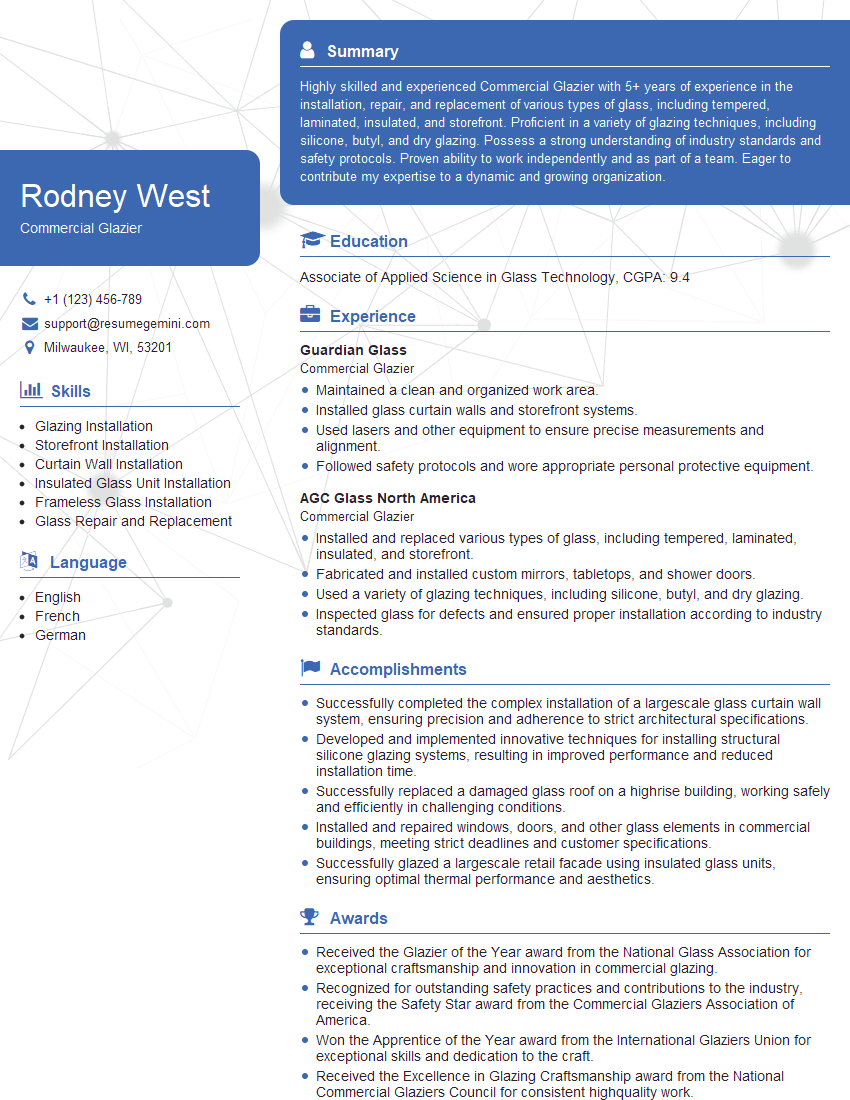
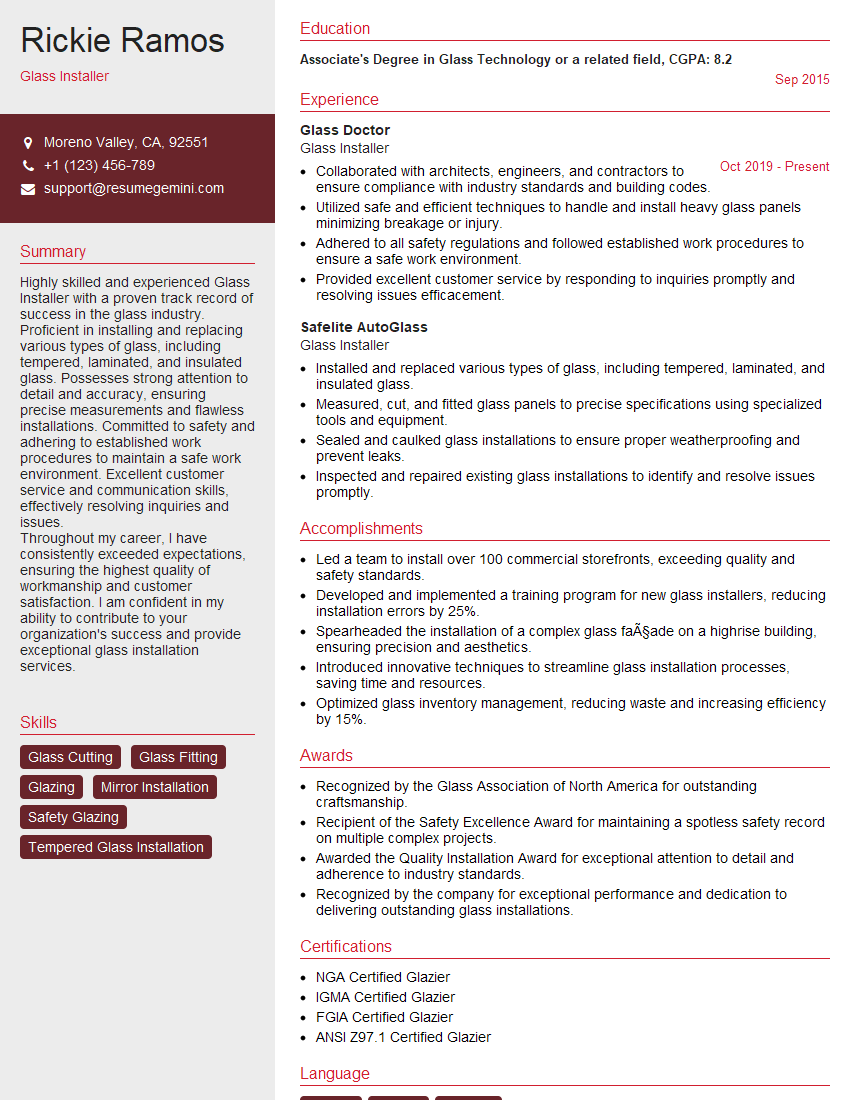
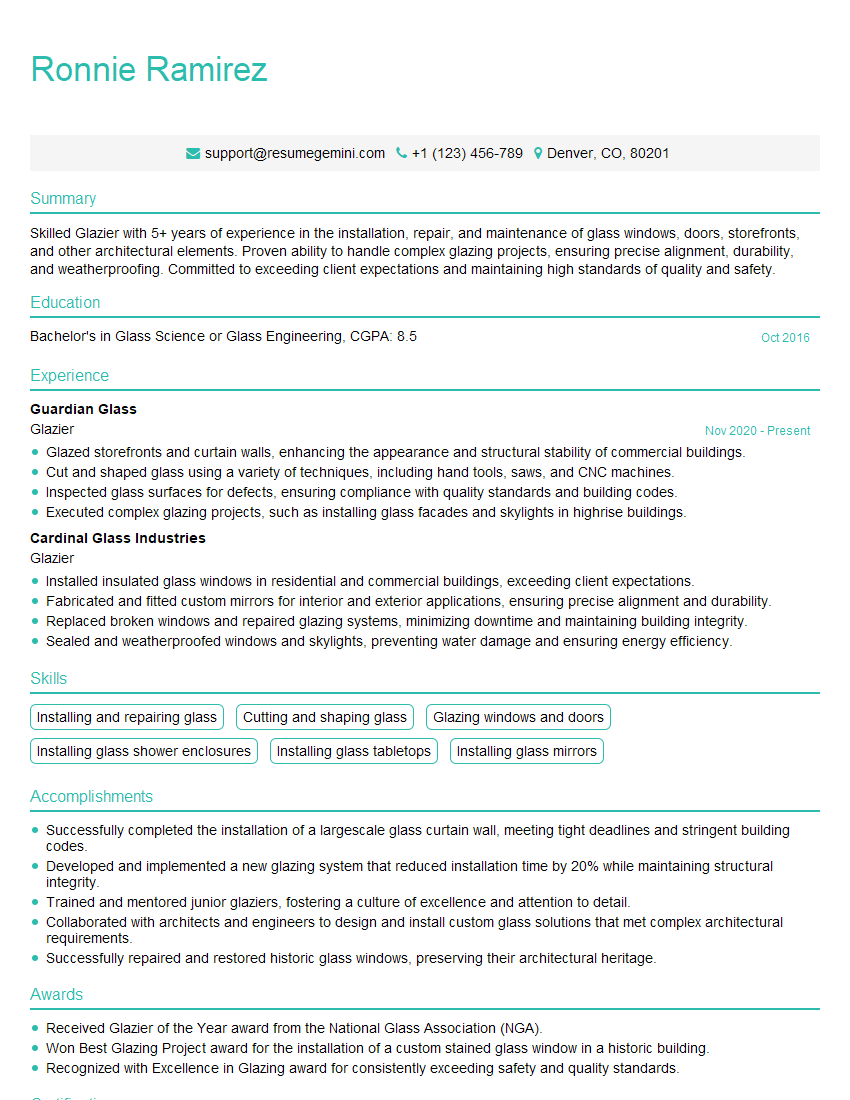
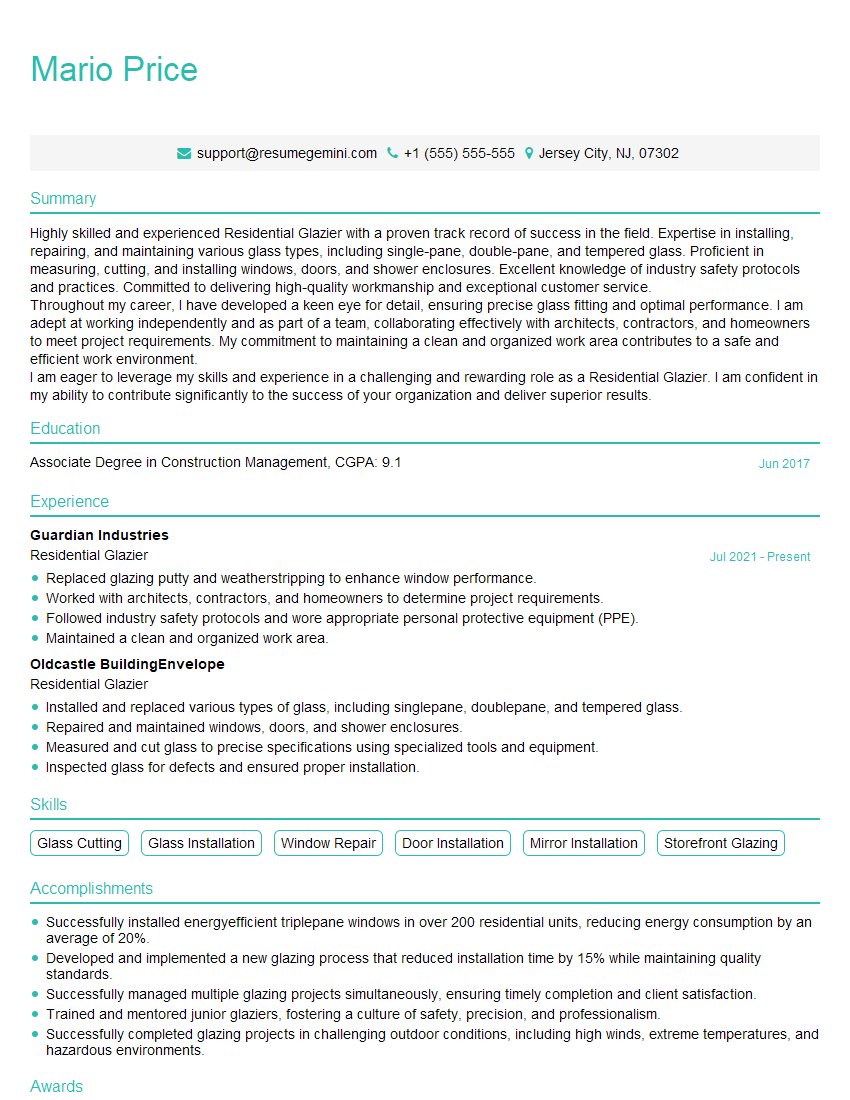
Mastering safety glazing installation opens doors to a rewarding career with excellent growth potential in the construction and building maintenance industries. To maximize your job prospects, it’s crucial to have a strong, ATS-friendly resume that highlights your skills and experience effectively. ResumeGemini is a trusted resource to help you craft a professional and impactful resume. They provide examples of resumes tailored to Safety Glazing Installation, ensuring your application stands out from the competition. Invest time in creating a compelling resume; it’s your first impression with potential employers.
Explore more articles
Users Rating of Our Blogs
Share Your Experience
We value your feedback! Please rate our content and share your thoughts (optional).
What Readers Say About Our Blog
To the interviewgemini.com Webmaster.
Very helpful and content specific questions to help prepare me for my interview!
Thank you
To the interviewgemini.com Webmaster.
This was kind of a unique content I found around the specialized skills. Very helpful questions and good detailed answers.
Very Helpful blog, thank you Interviewgemini team.