Cracking a skill-specific interview, like one for Sensor Technology and Applications, requires understanding the nuances of the role. In this blog, we present the questions you’re most likely to encounter, along with insights into how to answer them effectively. Let’s ensure you’re ready to make a strong impression.
Questions Asked in Sensor Technology and Applications Interview
Q 1. Explain the difference between analog and digital sensors.
The core difference between analog and digital sensors lies in how they represent the measured physical quantity. Analog sensors output a continuous signal that varies proportionally to the measured value. Think of a traditional speedometer needle – its position smoothly changes as speed varies. Digital sensors, on the other hand, output a discrete numerical value representing the measured quantity. It’s like a digital odometer, which displays numbers that increment in steps.
Analog Sensors: These sensors directly measure a physical quantity and produce a continuous signal, usually a voltage or current. This signal needs to be converted to digital format for processing by a microcontroller or computer. Examples include potentiometers (measuring angle or position), thermocouples (measuring temperature), and strain gauges (measuring force or pressure). The continuous nature of the signal makes analog sensors potentially more precise, but they are also more susceptible to noise and require analog-to-digital conversion (ADC) for digital systems.
Digital Sensors: These sensors incorporate built-in analog-to-digital conversion, producing a digital output that is easily readable by microcontrollers. They are typically more robust to noise, simpler to interface with digital systems, and often have built-in features like temperature compensation or self-diagnostics. Examples include digital potentiometers, digital thermometers, and some pressure sensors.
In essence, the choice between analog and digital depends on the application’s requirements for precision, noise tolerance, and complexity of signal processing.
Q 2. Describe various sensor types and their applications (e.g., temperature, pressure, proximity).
Sensor types are vast, but here are a few common examples with applications:
- Temperature Sensors: Thermocouples (measuring temperature differences), thermistors (measuring resistance change with temperature), RTDs (Resistance Temperature Detectors), infrared (IR) sensors. Applications: Climate control, industrial process monitoring, medical devices.
- Pressure Sensors: Piezoresistive sensors (measuring resistance changes due to pressure), capacitive sensors (measuring capacitance changes), strain gauge-based sensors. Applications: Automotive tire pressure monitoring, weather forecasting (barometric pressure), medical blood pressure monitoring.
- Proximity Sensors: Ultrasonic sensors (measuring distance using sound waves), infrared sensors (measuring distance or presence based on reflected infrared light), capacitive sensors (detecting nearby objects by capacitance change). Applications: Robotic obstacle avoidance, automated door systems, proximity detection in industrial automation.
- Light Sensors: Photodiodes (converting light into current), photoresistors (changing resistance with light intensity), phototransistors. Applications: Camera light metering, automatic lighting control, environmental monitoring.
- Accelerometers: Measure acceleration in one, two, or three axes. Applications: Smartphones (motion detection), automotive airbag deployment, inertial navigation systems.
- Gyroscopes: Measure angular velocity. Applications: Drones, motion tracking, stabilizing cameras.
This is only a small subset of available sensor types; many specialized sensors exist for niche applications.
Q 3. What are the key performance indicators (KPIs) for evaluating sensor performance?
Key Performance Indicators (KPIs) for evaluating sensor performance include:
- Accuracy: How close the measured value is to the true value.
- Precision: How consistent the measurements are when repeated under the same conditions. Think of it like hitting the same spot repeatedly on a target; high precision means tight grouping, regardless of whether the grouping is centered.
- Sensitivity: The ratio of output change to input change. A highly sensitive sensor will show a large response to a small change in the measured quantity.
- Resolution: The smallest detectable change in the measured quantity. The finer the resolution, the smaller the changes the sensor can detect.
- Linearity: How well the sensor’s output follows a linear relationship with the input. Deviations from linearity introduce error.
- Range: The span of values the sensor can measure.
- Drift: Gradual change in the sensor’s output over time.
- Hysteresis: The difference in output for the same input value depending on whether the input is increasing or decreasing.
- Temperature Sensitivity: How the sensor’s performance is affected by temperature changes.
- Noise: Random variations in the sensor’s output.
The relative importance of these KPIs depends greatly on the specific application. For example, a medical sensor may require exceptionally high accuracy and precision, while a simple proximity sensor may prioritize cost-effectiveness over extreme accuracy.
Q 4. How do you handle noisy sensor data?
Noisy sensor data is a common problem. Several techniques can mitigate it:
- Averaging: Taking multiple readings and calculating the mean reduces the impact of random noise.
- Median Filtering: Replacing each data point with the median of its neighboring points is robust to outliers caused by noise spikes.
- Moving Average Filtering: Similar to averaging, but uses a sliding window of data points.
- Kalman Filtering: A sophisticated algorithm that uses a model of the system and sensor noise to estimate the true value.
- Low-Pass Filtering: This filter attenuates high-frequency noise while preserving lower frequencies representing the actual signal. It’s like smoothing out the jagged edges of the data.
The choice of method depends on the nature of the noise and the application’s requirements. Simple averaging might suffice for low-noise applications, while Kalman filtering is better suited for complex scenarios with significant noise and dynamic changes.
For example, imagine an accelerometer on a robot measuring its acceleration. If the data is noisy, averaging can smooth the data and prevent jerky movements. However, for high-speed applications, a more sophisticated method like Kalman filtering may be needed to provide accurate and real-time estimates.
Q 5. Explain signal conditioning techniques used in sensor applications.
Signal conditioning is crucial for preparing sensor signals for effective use. It involves several techniques:
- Amplification: Increasing the amplitude of the sensor’s output signal to make it more easily measurable.
- Attenuation: Reducing the amplitude of the signal to prevent overload or saturation.
- Filtering: Removing noise and unwanted frequencies from the signal using techniques like low-pass, high-pass, band-pass, or notch filters.
- Linearization: Compensating for non-linear relationships between sensor input and output.
- Offset Compensation: Correcting for a non-zero output when the input is zero.
- Shielding and Grounding: Minimizing interference from external electromagnetic fields.
Imagine a thermocouple measuring temperature. The output voltage is very small, requiring amplification before it can be accurately measured. Filtering is also needed to eliminate noise from the environment. Many sensors are also non-linear, so the signal needs to be linearized to obtain an accurate measurement. Proper signal conditioning ensures the sensor’s data is clean, accurate, and ready for use.
Q 6. Describe different sensor interface protocols (e.g., I2C, SPI, UART).
Sensor interface protocols define how sensors communicate with microcontrollers or other systems. Here are some popular ones:
- I2C (Inter-Integrated Circuit): A two-wire serial bus commonly used for low-speed communication. It uses a clock line and a data line to transmit data. It is simple and efficient, particularly suitable for multiple sensors sharing the same bus. Many sensors use this protocol.
- SPI (Serial Peripheral Interface): A four-wire serial bus that is faster than I2C and allows for full-duplex communication. It’s commonly used for sensors requiring high data rates or more complex communication.
- UART (Universal Asynchronous Receiver/Transmitter): A simple serial communication protocol using only two wires for transmitting data. It is widely used, but lacks the efficiency of I2C or SPI for multiple sensors. It’s frequently used for simple applications like sending sensor data over a long distance.
- USB (Universal Serial Bus): A very common standard for high-speed communication, often used for high-bandwidth sensors or applications requiring high data transfer rates.
- CAN (Controller Area Network): This protocol is commonly used in automotive applications and industrial automation environments where real-time communication and robustness are crucial.
The choice of protocol depends on factors like data rate requirements, the number of sensors, power consumption, and complexity of the system.
Q 7. How do you calibrate a sensor?
Sensor calibration is the process of determining the relationship between the sensor’s output and the true value of the measured quantity. It’s essential for ensuring accurate measurements. The process typically involves:
- Defining the Calibration Standards: Identify reliable sources to define true values. This might involve using a known standard, a traceable calibration certificate from a testing facility, or a highly accurate reference sensor.
- Gathering Data: Measure the sensor’s output across the sensor’s expected range, while simultaneously measuring the true value. This will create a calibration curve showing the relationship between the sensor’s output and true value.
- Developing a Calibration Model: Use the gathered data to create a mathematical model (e.g., linear regression, polynomial fit) to describe the relationship between sensor output and true value. This is the calibration curve.
- Applying the Calibration Model: Use the calibration model to correct future sensor readings. This may involve a software adjustment or a hardware modification.
For example, consider a load cell (measures force). It might be calibrated using known weights. The sensor’s readings will then be adjusted using the calibration model to compensate for any offset or non-linearity. Regular calibration ensures consistent and reliable measurements over time.
Q 8. What are the common sources of error in sensor measurements?
Sensor measurements are rarely perfect; various sources introduce errors. Think of it like aiming an arrow – even the best archer will have some deviation. These errors can be broadly classified into:
Systematic Errors: These are consistent and predictable errors, often caused by factors like sensor bias (a constant offset from the true value), scale factor error (a consistent multiplicative error), or temperature effects on the sensor’s sensitivity. For example, a temperature sensor might consistently read 2°C higher than the actual temperature.
Random Errors: These are unpredictable fluctuations due to noise in the system, such as electronic noise in the sensor circuitry, or environmental factors like vibrations. These errors are typically modeled using statistical distributions like Gaussian noise. An example is the slight variations you might see in repeated measurements of the same physical quantity.
Human Errors: These stem from incorrect calibration, improper handling, or faulty installation. For instance, if a pressure sensor isn’t properly calibrated before use, all measurements will be off by a certain amount.
Understanding these error sources is crucial for accurate data interpretation and necessitates careful calibration, signal conditioning, and potentially employing error correction techniques.
Q 9. Explain sensor fusion and its benefits.
Sensor fusion is the process of combining data from multiple sensors to obtain a more accurate and complete understanding of the environment or system being monitored. Imagine having multiple witnesses describing an accident – each might have a slightly different perspective, but combining their accounts provides a more comprehensive picture. Similarly, sensor fusion integrates data to improve accuracy, robustness, and reliability.
Benefits:
Increased Accuracy: Combining data reduces the impact of individual sensor errors. If one sensor malfunctions, others can compensate.
Improved Reliability: Redundancy provided by multiple sensors makes the system more robust against sensor failures.
Enhanced Functionality: Fusion allows for the estimation of parameters that are not directly measurable by individual sensors. For instance, combining accelerometer and gyroscope data allows for the accurate estimation of orientation (attitude) of a moving object.
Reduced Uncertainty: The fused data typically has lower uncertainty than individual sensor readings.
Examples include using GPS, IMU (Inertial Measurement Unit), and barometer data in autonomous vehicles for precise localization or employing multiple cameras for 3D object reconstruction.
Q 10. Describe your experience with different sensor technologies (e.g., MEMS, optical, ultrasonic).
My experience encompasses a wide range of sensor technologies. I’ve worked extensively with:
MEMS (Microelectromechanical Systems) Sensors: These miniaturized sensors, such as accelerometers, gyroscopes, and pressure sensors, are ubiquitous in consumer electronics, automotive applications, and robotics. I’ve used them in projects involving motion tracking, vibration analysis, and inertial navigation. I’m familiar with their limitations, particularly their sensitivity to temperature variations and potential for drift over time.
Optical Sensors: My work with optical sensors includes cameras (both visible and near-infrared), LiDAR (Light Detection and Ranging) systems, and photodiodes. I’ve applied these in projects focused on image processing, 3D mapping, and environmental monitoring (measuring light intensity, for example). Understanding factors like ambient light conditions and calibration procedures is essential when using optical sensors.
Ultrasonic Sensors: I have experience using ultrasonic sensors for distance measurement, object detection, and flow rate measurement. These sensors are valuable in robotics, automotive parking assist systems, and level sensing applications. The key challenges with ultrasonic sensors are their sensitivity to environmental conditions (e.g., temperature, humidity), and the potential for multipath interference causing inaccurate readings.
Throughout my work, I’ve focused on understanding the strengths and weaknesses of each technology to make informed choices in sensor selection and data interpretation.
Q 11. How do you select the appropriate sensor for a specific application?
Selecting the right sensor involves a systematic approach. It’s like choosing the right tool for a job – a hammer isn’t suitable for every task. Here’s my approach:
Define the application requirements: What needs to be measured? What is the desired accuracy, precision, range, and response time? What are the environmental conditions (temperature, pressure, humidity)?
Identify potential sensor technologies: Based on the requirements, research suitable sensor technologies that can measure the desired parameter.
Evaluate sensor specifications: Compare the specifications of different sensors, paying attention to accuracy, resolution, sensitivity, range, power consumption, size, cost, and interface.
Consider practical limitations: Think about factors like sensor integration, calibration requirements, data processing needs, and the overall system design.
Prototype and test: Conduct experiments with selected sensors to evaluate their performance under real-world conditions.
For example, if you need to measure the heart rate of a patient, a photoplethysmography (PPG) sensor might be appropriate, but if you need to measure extremely low-frequency vibrations, an accelerometer with high sensitivity at low frequencies is better suited.
Q 12. Explain the concept of sensor drift and how it is addressed.
Sensor drift is a gradual change in the sensor’s output over time, even when the measured quantity remains constant. Think of an old clock – it might initially be accurate, but slowly drifts out of sync over time. This drift can be caused by several factors such as temperature fluctuations, aging components, or mechanical wear.
Addressing Sensor Drift:
Calibration: Regular calibration against a known standard is crucial. This involves adjusting the sensor’s output to match the true value.
Temperature compensation: If temperature is a significant factor, incorporating temperature sensors and algorithms to compensate for temperature-induced drift is essential.
Signal processing techniques: Techniques like filtering and drift estimation can help reduce the impact of drift in the processed data. For example, a high-pass filter can remove the low-frequency components associated with drift.
Sensor selection: Choosing sensors with inherently low drift characteristics can minimize the problem from the start. Higher-grade sensors often exhibit better stability.
The choice of mitigation strategy depends on the specific application and the level of accuracy required. Often a combination of these approaches is necessary for optimal performance.
Q 13. Discuss your experience with sensor data acquisition systems.
My experience with sensor data acquisition systems includes designing, implementing, and troubleshooting systems ranging from simple microcontroller-based setups to more complex systems using data acquisition (DAQ) boards and software. I’ve worked with various interfaces like analog-to-digital converters (ADCs), digital-to-analog converters (DACs), and communication protocols like I2C, SPI, and USB.
In one project, we used a National Instruments DAQ system to acquire data from multiple sensors simultaneously for a structural health monitoring application. This involved careful consideration of sampling rates, signal conditioning, data synchronization, and data storage. Another project involved developing a custom microcontroller-based system for acquiring data from a network of wireless temperature sensors, requiring careful attention to power management, data transmission protocols, and error handling.
I’m familiar with considerations such as noise reduction, signal amplification, and data logging techniques for effective data acquisition. Software proficiency in LabVIEW and Python for data acquisition and analysis has been essential throughout these projects.
Q 14. Describe your experience with sensor data processing and analysis techniques.
My sensor data processing and analysis techniques encompass a wide range of approaches, depending on the application and the nature of the data.
Signal filtering: I routinely use various filtering techniques (e.g., moving average, Kalman filtering, wavelet transforms) to remove noise and isolate relevant signals from sensor data. The choice of filter depends on the type and characteristics of noise.
Feature extraction: I extract relevant features from the sensor data using techniques like Fourier transforms (for frequency analysis), time-domain analysis (for detecting trends and patterns), and statistical methods (to calculate means, variances, and other statistical parameters).
Machine learning: I utilize machine learning techniques such as classification, regression, and clustering to analyze sensor data for pattern recognition, anomaly detection, and predictive modeling. For example, I’ve used Support Vector Machines (SVMs) to classify different types of defects in a material based on sensor data and neural networks for predicting future trends.
Data visualization: Effectively visualizing data is crucial. I use tools like MATLAB and Python libraries (matplotlib, seaborn) to create plots, graphs, and other visualizations that aid in interpreting sensor data.
My proficiency extends to handling large datasets, requiring efficient data handling techniques and the use of appropriate algorithms and software libraries to manage computational complexity.
Q 15. How do you troubleshoot sensor-related problems?
Troubleshooting sensor problems is a systematic process that involves careful observation, data analysis, and a methodical approach. It begins with understanding the sensor’s expected behavior and comparing that to its actual output.
My approach typically follows these steps:
- Identify the symptom: What is the sensor not doing correctly? Is it providing incorrect readings, no readings at all, or exhibiting erratic behavior?
- Inspect the sensor and its connections: Check for physical damage to the sensor itself, loose wires, corroded connectors, or incorrect wiring. A simple visual inspection often reveals the problem. For example, a temperature sensor might be malfunctioning if it’s not properly seated in its housing.
- Check the power supply: Verify that the sensor is receiving the correct voltage and current. An insufficient power supply can lead to inaccurate or intermittent readings.
- Review the sensor’s datasheet: Understand the sensor’s specifications, operating range, and potential sources of error. This is crucial for interpreting the data and identifying potential problems.
- Analyze the sensor data: Look for patterns or trends in the data. Are the readings consistently off, or are they fluctuating erratically? Software tools can be very useful here, allowing for visualization and statistical analysis.
- Calibrate the sensor: If possible, calibrate the sensor using known standards. This helps to correct for systematic errors and improve accuracy.
- Test with a known good sensor: Replacing the sensor with a known good one helps isolate whether the problem lies with the sensor itself or elsewhere in the system. This is a powerful way to rule out hardware failures.
- Examine the surrounding environment: Environmental factors like temperature, humidity, or electromagnetic interference can significantly affect sensor performance. For instance, a humidity sensor placed near a vent might provide inaccurate readings.
Through this systematic approach, I’ve successfully resolved issues ranging from simple wiring faults to more complex problems related to sensor drift or environmental interference. One memorable instance involved a project using ultrasonic sensors for distance measurement. After several failed attempts at troubleshooting, I realised that the sensors were affected by reflections from nearby surfaces, requiring the addition of signal filters to improve data quality.
Career Expert Tips:
- Ace those interviews! Prepare effectively by reviewing the Top 50 Most Common Interview Questions on ResumeGemini.
- Navigate your job search with confidence! Explore a wide range of Career Tips on ResumeGemini. Learn about common challenges and recommendations to overcome them.
- Craft the perfect resume! Master the Art of Resume Writing with ResumeGemini’s guide. Showcase your unique qualifications and achievements effectively.
- Don’t miss out on holiday savings! Build your dream resume with ResumeGemini’s ATS optimized templates.
Q 16. Explain your experience with embedded systems programming related to sensor integration.
My experience with embedded systems programming for sensor integration is extensive. I’ve worked with various microcontrollers, including ARM Cortex-M and AVR architectures, and programming languages like C and C++. My work frequently involves the direct interfacing of sensors with the microcontroller using various communication protocols.
For instance, in a recent project, I integrated several environmental sensors (temperature, humidity, pressure, and light) into a wireless sensor node. This involved:
- Selecting appropriate sensors and interfaces: I carefully chose sensors based on accuracy requirements, power consumption, and interface compatibility with the microcontroller.
- Writing low-level drivers: I developed firmware to read data from the sensors, using SPI, I2C, or analog-to-digital converters (ADCs) based on each sensor’s interface.
- Data pre-processing: I implemented algorithms for filtering and calibration to compensate for sensor noise and drift, improving data quality before transmission.
- Power management: This is critical for battery-powered sensor nodes. I implemented low-power modes and optimized code to extend the battery life.
- Wireless communication: I integrated the node into a wireless network using protocols like LoRaWAN or Zigbee, ensuring reliable data transmission to a central processing unit.
// Example C code snippet for reading data from an I2C temperature sensor: #include
This involved detailed understanding of timing, interrupt handling, and real-time considerations. The key to successful sensor integration is a deep understanding of both hardware and software aspects. I constantly seek efficient and reliable ways to integrate sensors and ensure robust data acquisition.
Q 17. Describe your experience with sensor network design and implementation.
Sensor network design and implementation requires a holistic approach, encompassing hardware selection, communication protocols, data management, and power considerations. My experience includes designing and deploying various sensor networks for environmental monitoring, industrial automation, and building management systems.
My design process typically involves:
- Defining network requirements: This includes identifying the types of sensors needed, the desired spatial coverage, data transmission rates, and network topology (e.g., star, mesh, tree).
- Sensor selection and placement: Choosing sensors with appropriate specifications for accuracy, range, power consumption and optimal placement to minimize redundancy and maximize coverage is key. The physical location of sensors greatly affects data quality.
- Communication protocol selection: Choosing a communication protocol is critical depending on factors such as range, data rate, power consumption, and network size. Options include Zigbee, Z-Wave, LoRaWAN, Bluetooth, or even wired solutions like RS-485.
- Network architecture design: This involves determining the structure of the network, including the number of nodes, the routing strategy, and the communication protocols used between nodes and the central gateway.
- Data acquisition and processing: Data from sensor nodes is collected and processed, which may involve data aggregation, filtering, and analysis. This step often involves using cloud platforms or dedicated server infrastructure.
- Power management and battery life: Battery-powered sensor nodes require careful power management techniques such as duty cycling and low-power modes to extend their operational lifespan.
- Network security: Implementing security measures to protect the network from unauthorized access and data manipulation is crucial, especially in critical applications. This might involve encryption and authentication protocols.
I have successfully deployed several large-scale sensor networks, one example is a system for monitoring soil moisture across a large agricultural field. This project involved the careful selection of water content sensors, a star topology using a central gateway, a LoRaWAN network, and a cloud-based data dashboard for visualization and analysis. The success of this project relied heavily on robust error handling, efficient communication, and careful consideration of power consumption.
Q 18. What are the challenges of working with wireless sensors?
Wireless sensors offer significant advantages in terms of flexibility and ease of deployment but present unique challenges:
- Signal interference and attenuation: Wireless signals can be affected by various factors such as obstacles, multipath propagation, and interference from other devices operating on the same frequency. This can lead to signal loss or data corruption.
- Limited bandwidth and data rates: Wireless communication protocols typically have limited bandwidth, especially low-power wide-area networks (LPWANs). This means the amount of data that can be transmitted is limited, and data sampling rates must be carefully managed.
- Power consumption: Wireless communication consumes significant power, which can significantly affect the battery life of sensor nodes. Power management is crucial for extending the operational lifetime of the network.
- Security vulnerabilities: Wireless networks can be vulnerable to eavesdropping and unauthorized access. Robust security measures, such as encryption and authentication, are essential to protect the data and ensure the integrity of the network.
- Range limitations: The range of wireless signals can be limited by factors such as the transmit power of the sensor nodes and environmental conditions. Repeater nodes or carefully planned network topologies may be required to cover larger areas.
- Reliability and robustness: Wireless connections are inherently less reliable than wired connections. The network needs to be designed to handle packet loss, dropped connections, and other communication failures.
For instance, in a project using wireless sensors for environmental monitoring in a remote location, we had to account for potential signal interference from nearby buildings and terrain. Implementing error correction codes and employing robust communication protocols were key to ensuring data reliability.
Q 19. Explain the concept of sensor reliability and how it is ensured.
Sensor reliability refers to the consistency and dependability of a sensor’s measurements over time and under various operating conditions. A reliable sensor provides accurate and consistent readings even when subjected to changes in temperature, humidity, or other environmental factors. Ensuring sensor reliability involves a multi-faceted approach.
- Sensor Selection: Choosing high-quality sensors from reputable manufacturers is paramount. Carefully reviewing datasheets and understanding their specifications, such as accuracy, precision, stability, and drift characteristics is crucial.
- Environmental Protection: Protecting sensors from harsh environmental conditions (extreme temperatures, moisture, dust) is important. This often involves appropriate housings, sealing, and thermal management.
- Calibration and Characterization: Regular calibration of sensors against known standards helps maintain accuracy. Characterization involves understanding the sensor’s behavior under different conditions and creating correction algorithms to compensate for systematic errors.
- Redundancy and Fault Tolerance: Employing redundant sensors or incorporating fault-tolerant mechanisms within the sensor network helps mitigate the impact of individual sensor failures. For example, using multiple temperature sensors and averaging their readings can improve accuracy and reduce the effect of a single sensor malfunction.
- Data Validation and Filtering: Implementing data validation techniques and applying digital filters to remove noise and outliers can greatly improve the quality and reliability of sensor readings. Algorithms can be designed to identify and flag anomalous data points based on statistical analysis.
- Regular Monitoring and Maintenance: Regularly monitoring the performance of sensors and performing preventative maintenance helps prevent failures and ensures optimal performance over time. This may include cleaning sensors, checking connections, and performing recalibration.
In a critical application like industrial process control, the reliability of sensors is paramount. Employing redundant sensors and implementing rigorous data validation procedures are crucial to ensure that faulty sensor readings don’t compromise the safety and efficiency of the system.
Q 20. How do you ensure data integrity from sensors?
Ensuring data integrity from sensors is crucial for making accurate decisions based on sensor measurements. This involves preventing data corruption, loss, and ensuring data authenticity. My approach involves several strategies:
- Error Detection and Correction Codes: Implementing error detection and correction codes during data transmission helps identify and correct errors introduced during communication. Techniques such as parity checks, checksums, and cyclic redundancy checks (CRCs) are commonly used.
- Data Encryption: Encrypting sensor data protects it from unauthorized access and modification during transmission and storage. Secure communication protocols, like TLS/SSL, can be used.
- Data Validation and Filtering: Implementing data validation rules and filters helps identify and remove outliers or erroneous data points before they are used in further analysis. For example, setting reasonable bounds for sensor readings can eliminate impossible values.
- Timestamping: Adding timestamps to sensor data helps correlate data from different sensors and identify data acquisition timing issues. This is essential in time-critical applications.
- Data Logging and Auditing: Maintaining a detailed log of sensor data, including metadata such as timestamps, sensor IDs, and calibration information, provides traceability and helps in auditing data integrity. This is vital for debugging and troubleshooting.
- Secure Data Storage: Storing sensor data in a secure database or cloud storage service protects it from unauthorized access and corruption. Using secure storage practices, such as data backups and access controls, is essential.
In a healthcare application where sensor data is used for patient monitoring, data integrity is paramount. Using robust encryption and employing rigorous data validation techniques ensures that only accurate and authentic data is used for diagnosis and treatment.
Q 21. What are the safety considerations when working with sensors?
Safety considerations when working with sensors are crucial, especially in applications involving hazardous environments or sensitive data. The specific safety concerns depend heavily on the application, but some general considerations include:
- Electrical Safety: Proper grounding, insulation, and fusing of sensor circuits are essential to prevent electrical shocks and fires. Following relevant electrical safety standards and regulations is mandatory.
- Mechanical Safety: Ensuring sensors are securely mounted and protected from physical damage is important to prevent injury or malfunction. This may involve using protective housings or guarding mechanisms.
- Environmental Hazards: Protecting sensors from hazardous environmental conditions, such as extreme temperatures, corrosive chemicals, or flammable gases, is essential. Selecting sensors and enclosures designed for the specific environment is crucial.
- Data Security and Privacy: When working with sensors that collect sensitive data, like personal health information or location data, it is crucial to implement robust security measures to protect data privacy and confidentiality. This may involve encryption, access controls, and compliance with relevant data protection regulations.
- System Integration and Functional Safety: Ensuring the correct integration of sensors into the overall system, paying special attention to sensor failure modes and their potential impact on the system’s function, is vital. Techniques such as functional safety analysis, fault tolerance, and redundancy are important to avoid catastrophic failures.
- Emergency Shutdown Mechanisms: In applications where sensors are used to monitor critical parameters, such as temperature or pressure, it is essential to have an emergency shutdown mechanism in place to prevent accidents in case of sensor failure or dangerous conditions.
In a process control environment, for instance, the failure of a temperature sensor could lead to a dangerous situation. Employing redundant sensors, fail-safe mechanisms, and emergency shutdown procedures is critical to ensure safety.
Q 22. Describe your experience with sensor testing and validation methods.
Sensor testing and validation is crucial to ensure accuracy, reliability, and performance. My experience encompasses a wide range of methods, starting with initial characterization to assess fundamental sensor parameters like sensitivity, linearity, and resolution. This often involves controlled experiments where the sensor’s response to known inputs is meticulously measured and compared against specifications.
Beyond basic characterization, I’ve extensively used statistical methods to analyze sensor data, identifying potential sources of error and noise. Techniques like ANOVA and regression analysis are invaluable in this process. For example, in a project involving soil moisture sensors, we used ANOVA to determine if differences in readings between sensors were statistically significant, leading to the identification of a faulty batch.
Furthermore, I have experience in environmental testing, subjecting sensors to various conditions like temperature extremes, humidity, and vibration to evaluate their robustness and long-term stability. This often involves accelerated life testing, where sensors are exposed to harsher conditions than anticipated to predict their lifespan. Finally, field testing in real-world scenarios is essential for validating sensor performance under realistic operating conditions, providing valuable feedback for design improvements.
Q 23. Explain the differences between various sensor communication protocols.
Sensor communication protocols define how data is transmitted between the sensor and the processing unit. The choice of protocol depends heavily on factors such as data rate, power consumption, distance, and cost. Here are some key differences:
- Analog communication: Data is transmitted as a continuous signal, often a voltage or current proportional to the measured quantity. Simple to implement, but susceptible to noise and interference. Example: A thermocouple directly connected to a data acquisition system.
- Digital communication: Data is transmitted as discrete bits, offering better noise immunity and longer transmission distances. Several protocols exist:
- I2C (Inter-Integrated Circuit): A low-speed, two-wire serial bus, ideal for short distances and low power consumption. Common in embedded systems.
- SPI (Serial Peripheral Interface): Faster than I2C, using three or four wires for data transfer. Popular in microcontrollers for high-speed applications.
- UART (Universal Asynchronous Receiver/Transmitter): A simple, widely used serial protocol. Often used for communication with computers or other devices.
- CAN (Controller Area Network): A robust protocol designed for automotive applications, offering high reliability and fault tolerance. Often employed in industrial automation.
- Wireless protocols: Bluetooth, Wi-Fi, Zigbee, LoRaWAN, etc. provide wireless communication, enabling remote monitoring and flexibility but introducing considerations of power, range, and security.
The selection of the appropriate protocol involves carefully considering the application’s specific needs. For instance, a high-speed industrial sensor might employ SPI, while a low-power sensor in a remote location may rely on LoRaWAN.
Q 24. How do you handle sensor data in real-time applications?
Handling sensor data in real-time applications requires efficient data acquisition, processing, and analysis. This often involves embedded systems or dedicated hardware capable of high-speed data acquisition and data processing algorithms running concurrently. The key is to minimize latency.
For instance, in a robotic navigation system, sensor data (e.g., from lidar or cameras) needs to be processed quickly to enable immediate responses. This might involve using specialized hardware accelerators, such as FPGAs or DSPs, which are optimized for numerical computation.
Software plays a crucial role. Real-time operating systems (RTOS) prioritize tasks to ensure timely processing of sensor data, preventing missed deadlines. Data buffering techniques are essential to handle data streams and reduce the chance of buffer overflows. Efficient algorithms are necessary to reduce processing times, and data filtering techniques, like Kalman filtering, are used to eliminate noise and improve accuracy. Finally, communication protocols are vital to ensure timely transfer of processed data to actuators or display systems.
Imagine a system monitoring structural integrity in a bridge. Sensors provide real-time information on stress and strain. Real-time processing flags any critical changes and triggers an immediate alert, preventing potential catastrophes.
Q 25. What experience do you have with different types of sensor packaging?
Sensor packaging is crucial for protecting the sensitive sensing element and ensuring its long-term performance. My experience includes various packaging techniques, each tailored to the application and environmental conditions.
- Hermetic sealing: Provides the highest level of protection against environmental factors. Often used for sensors operating in harsh environments (e.g., aerospace, deep sea). Expensive but essential for long-term reliability.
- Epoxy encapsulation: A cost-effective method for providing basic protection against moisture and mechanical shock. Suitable for less demanding environments.
- Molding: Using plastics or other materials to create a robust enclosure. Offers good protection and can be customized for specific needs.
- Surface mount technology (SMT): Ideal for compact and miniaturized sensors used in electronics. Allows for automation in manufacturing.
The choice of packaging material depends on the application. For instance, a sensor used in a high-temperature industrial furnace requires high-temperature resistant materials and hermetic sealing, whereas a consumer electronics sensor might only need a simple epoxy encapsulation.
One project I worked on involved designing a pressure sensor for use in a deep-sea submersible. Hermetic sealing was crucial to protect the sensor from the crushing pressure and corrosive seawater. The chosen package underwent rigorous testing to ensure its integrity at extreme depths.
Q 26. Discuss your familiarity with relevant industry standards and regulations.
Familiarity with industry standards and regulations is paramount for ensuring sensor safety, reliability, and compliance. I’m well-versed in standards such as:
- IEC 60068: Environmental testing standards for electronic components and equipment.
- ISO 9001: Quality management systems.
- ISO 17025: General requirements for the competence of testing and calibration laboratories.
- RoHS (Restriction of Hazardous Substances): Regulates the use of hazardous materials in electronic equipment.
- CE marking (Conformité Européenne): Indicates that a product meets EU safety, health, and environmental protection requirements.
Understanding these standards is vital for designing and manufacturing sensors that meet quality and safety requirements and for ensuring the legal compliance of our products. For instance, ensuring compliance with RoHS ensures that our sensors do not use banned or restricted substances.
Q 27. Describe your experience with designing sensor systems for specific environmental conditions.
Designing sensor systems for specific environmental conditions requires a comprehensive understanding of the challenges posed by the environment and the appropriate mitigation strategies. The design process starts with a thorough analysis of the environmental factors, such as temperature, humidity, pressure, vibration, radiation, and corrosive chemicals.
For example, designing a sensor for use in a high-temperature environment necessitates the use of materials with high-temperature resistance. Special considerations should be given to the sensor’s physical packaging, the choice of electronics, and thermal management strategies to prevent overheating. Similar considerations apply to other environmental factors like corrosion, pressure, or radiation. This is often coupled with designing robust calibration and compensation algorithms to account for environmental influences on the sensor’s output.
In one project, we designed a sensor system for monitoring temperature and humidity in a high-altitude weather balloon. This required careful consideration of the extreme temperatures, low air pressure, and potential for radiation exposure. We selected components with appropriate operating ranges, implemented thermal insulation, and developed calibration procedures to ensure accurate measurements throughout the balloon’s flight.
Q 28. How do you ensure the long-term stability and accuracy of sensors in challenging environments?
Ensuring the long-term stability and accuracy of sensors in challenging environments requires a multi-faceted approach that addresses both hardware and software aspects. Hardware considerations include using high-quality, durable components, robust packaging, and appropriate thermal management techniques.
On the software side, advanced calibration and compensation algorithms are crucial. These algorithms use data from auxiliary sensors (e.g., temperature sensors) to correct for environmental influences on the primary sensor’s readings. Regular calibration and recalibration procedures, which could include using reference standards or periodic in-situ checks against known values, are also necessary. Finally, employing data fusion techniques that combine information from multiple sensors to improve accuracy and robustness helps address potential sensor drift or failures.
Imagine a sensor network deployed in a remote oil field monitoring pressure and temperature in pipelines. To ensure long-term reliability, sensors would be housed in robust enclosures, regularly calibrated using known reference values, and compensated for temperature variations using algorithms. Data fusion would help identify and flag inconsistencies, providing early warnings of potential issues.
Key Topics to Learn for Sensor Technology and Applications Interview
- Sensor Fundamentals: Understanding sensor principles, types (e.g., capacitive, resistive, optical, piezoelectric), and their operating characteristics. Consider signal-to-noise ratio, sensitivity, and resolution.
- Signal Processing and Conditioning: Explore techniques for amplifying, filtering, and digitizing sensor signals. Familiarize yourself with analog-to-digital conversion (ADC) and data acquisition systems.
- Specific Sensor Technologies: Deepen your knowledge in areas like MEMS sensors (accelerometers, gyroscopes), imaging sensors (CMOS, CCD), chemical sensors (gas sensors, biosensors), and environmental sensors (temperature, humidity, pressure).
- Data Acquisition and Analysis: Learn about methods for collecting, storing, and analyzing sensor data. This includes understanding data formats, databases, and statistical analysis techniques.
- Embedded Systems and Microcontrollers: Gain familiarity with interfacing sensors with microcontrollers and embedded systems for data acquisition and control applications. Consider programming languages like C/C++.
- Applications and Case Studies: Explore real-world applications of sensor technology, such as in automotive, healthcare, industrial automation, environmental monitoring, and consumer electronics. Prepare to discuss specific examples.
- Calibration and Error Correction: Understand the importance of sensor calibration and techniques for compensating for systematic and random errors in sensor readings.
- Wireless Sensor Networks (WSNs): Explore the architecture, protocols, and challenges associated with deploying and managing WSNs for various applications.
- Troubleshooting and Problem-Solving: Develop your ability to diagnose and resolve issues related to sensor malfunction, data inaccuracy, and system integration problems.
Next Steps
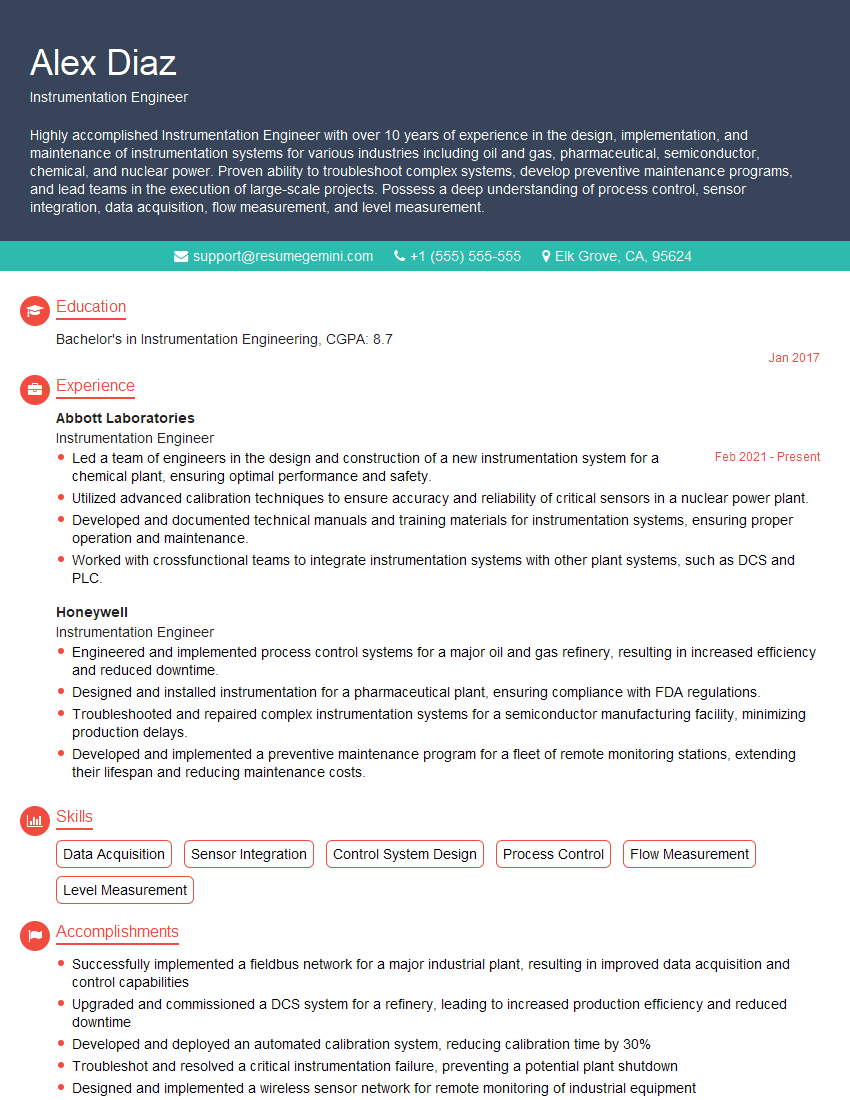
Mastering Sensor Technology and Applications opens doors to exciting and impactful careers across various industries. A strong foundation in this field significantly enhances your job prospects and allows you to contribute to innovative solutions. To maximize your chances of landing your dream role, creating a compelling and ATS-friendly resume is crucial. ResumeGemini is a trusted resource that can help you build a professional and effective resume tailored to highlight your skills and experience. ResumeGemini provides examples of resumes specifically designed for candidates in Sensor Technology and Applications to help guide your process. Invest the time to craft a strong resume – it’s your first impression on potential employers.
Explore more articles
Users Rating of Our Blogs
Share Your Experience
We value your feedback! Please rate our content and share your thoughts (optional).
What Readers Say About Our Blog
To the interviewgemini.com Webmaster.
Very helpful and content specific questions to help prepare me for my interview!
Thank you
To the interviewgemini.com Webmaster.
This was kind of a unique content I found around the specialized skills. Very helpful questions and good detailed answers.
Very Helpful blog, thank you Interviewgemini team.