Unlock your full potential by mastering the most common Leading Art Therapy Workshops interview questions. This blog offers a deep dive into the critical topics, ensuring you’re not only prepared to answer but to excel. With these insights, you’ll approach your interview with clarity and confidence.
Questions Asked in Leading Art Therapy Workshops Interview
Q 1. Describe your experience leading art therapy workshops for diverse populations.
My experience leading art therapy workshops spans over a decade, encompassing diverse populations including children, adolescents, adults, and seniors, as well as individuals with varying cultural backgrounds, disabilities, and trauma histories. I’ve facilitated workshops in various settings: schools, hospitals, community centers, and private practices. My approach emphasizes inclusivity and adapting techniques to meet the unique needs of each group. For example, with children, I might use play therapy techniques incorporated into art-making, whereas with adults experiencing trauma, I prioritize a safe and supportive environment emphasizing self-expression and emotional regulation through art. Working with seniors, I often focus on reminiscence and life review through creative methods, stimulating cognitive functions and fostering social interaction. Each population presents unique challenges and rewards, enriching my understanding of the power of art therapy in promoting well-being.
Example: In a workshop with refugees, I observed a significant reticence to engage. To address this, I introduced collaborative mural projects where participants could contribute individually and collectively, fostering a sense of belonging and shared experience. The resulting artwork became a powerful symbol of resilience and hope.
Q 2. What are the key ethical considerations in leading art therapy workshops?
Ethical considerations are paramount in art therapy. These include maintaining confidentiality, ensuring informed consent, establishing clear boundaries, respecting cultural diversity, and avoiding power imbalances.
- Confidentiality: Participants’ artwork and verbal expressions are treated with the utmost confidentiality, unless legally required to be disclosed (e.g., suspicion of child abuse).
- Informed Consent: Participants must understand the purpose, methods, and limitations of the workshop before participation. This includes outlining the voluntary nature of participation and their right to withdraw at any time.
- Boundaries: Maintaining professional boundaries is crucial. This involves avoiding dual relationships (e.g., becoming friends with participants) and handling any potential conflicts of interest appropriately.
- Cultural Sensitivity: Art therapy techniques must be adapted to respect participants’ cultural backgrounds and beliefs. This might involve using culturally relevant materials or adjusting therapeutic approaches to align with their values.
- Power Dynamics: The therapist’s role is to empower participants, not to exert control. This necessitates creating a safe space where participants feel comfortable expressing themselves without fear of judgment.
Example: In a workshop with adolescents, I always begin by explicitly discussing confidentiality and their right to choose what they share. This open dialogue helps establish trust and facilitates a more productive therapeutic experience.
Q 3. How do you adapt art therapy techniques to meet the specific needs of different age groups?
Adapting art therapy techniques for different age groups requires a deep understanding of developmental stages and cognitive abilities. For instance, young children benefit from sensory art activities, focusing on process rather than product. Adolescents might explore self-identity and social issues through more abstract art forms, while adults may benefit from reflective art exercises focusing on personal growth or trauma processing.
- Children (Preschool-Elementary): Focus on sensory exploration using varied media (clay, paint, collage). Simple, structured activities help build self-esteem and encourage self-expression.
- Adolescents (Middle-High School): Explore identity, peer relationships, and emotional regulation through journaling, mixed media, and self-portraits. Encourage experimentation and individual expression.
- Adults: Use art therapy to address specific issues such as stress, anxiety, or trauma. This may involve symbolic art, expressive painting, or collage techniques, focusing on reflection and insight.
- Seniors: Reminiscence, memory work, and creative journaling through adapted art activities may be used. Focus on maintaining cognitive function and social connection.
Example: When working with preschoolers, I might incorporate finger painting and playdough activities to facilitate sensory exploration and self-expression. For teenagers, I’d offer opportunities for collaborative art projects and more abstract forms of art-making to foster self-discovery and connection.
Q 4. Explain your approach to managing challenging behaviors in an art therapy workshop setting.
Managing challenging behaviors in an art therapy workshop requires a proactive, empathetic, and consistent approach. It’s crucial to understand the underlying reasons for the behavior, which could stem from anxiety, frustration, or unmet needs.
- Prevention: Establishing clear rules and expectations from the outset, creating a safe and structured environment, and building rapport with participants helps prevent disruptive behavior.
- Intervention: If challenging behavior arises, I address it calmly and directly, validating the participant’s feelings while setting limits. Redirecting attention, offering alternative activities, or taking short breaks may be helpful.
- Collaboration: Working with parents, caregivers, or other professionals can provide additional support and strategies for addressing challenging behaviors.
- Individualized Approach: Understanding the individual’s specific needs and preferences is key. A flexible and adaptable approach allows me to modify activities and interventions as needed.
Example: If a participant becomes frustrated during a task, I might offer them a different medium or a simpler activity to help them regain a sense of control and success.
Q 5. How do you ensure the safety and confidentiality of participants in your workshops?
Ensuring safety and confidentiality is an ethical imperative. This involves creating a safe physical space, establishing clear guidelines for behavior, maintaining confidentiality, and having procedures for handling emergencies.
- Physical Safety: The workshop space should be free from hazards and appropriately equipped for the activities planned. Materials should be non-toxic and age-appropriate.
- Emotional Safety: Creating a trusting and supportive atmosphere is key. Participants should feel safe to express themselves without fear of judgment or criticism.
- Confidentiality: All information shared by participants, including their artwork, is treated with strict confidentiality, except in cases where there is a legal obligation to disclose (e.g., child abuse).
- Emergency Procedures: Having clear procedures in place for dealing with emergencies, such as injuries or emotional distress, is vital. This includes knowing who to contact and how to provide appropriate first aid.
Example: Before each workshop, I explicitly discuss confidentiality guidelines with participants and explain the procedures for handling emergencies.
Q 6. Describe your methods for assessing participant progress in an art therapy workshop.
Assessing participant progress in art therapy is a multifaceted process involving qualitative and quantitative data. It’s not solely about evaluating the quality of the artwork but rather observing changes in emotional expression, self-awareness, and interpersonal skills.
- Observation: Observing participants’ behavior, engagement levels, and emotional responses during the sessions provides valuable qualitative data.
- Self-Reflection: Encouraging participants to reflect on their experiences and the meaning they derive from their artwork provides insights into their personal growth.
- Art Analysis: Analyzing the artwork itself, considering color choices, imagery, and composition, can reveal underlying emotional states and themes.
- Feedback: Gathering feedback from participants, through questionnaires or informal conversations, allows for a more comprehensive understanding of their progress.
Example: I might track a participant’s progress by noting changes in their color choices, the themes depicted in their artwork, and their ability to verbalize their feelings during sessions. This combined data helps me understand their growth throughout the workshop.
Q 7. What are your preferred methods for documenting participant engagement and outcomes?
Documenting participant engagement and outcomes ensures accountability and facilitates ongoing evaluation. My methods include maintaining detailed session notes, collecting participant feedback, and using standardized assessment tools where appropriate.
- Session Notes: Detailed notes are kept for each session, including observations of participants’ behavior, emotional responses, and the themes explored in their artwork. These notes are confidential and stored securely.
- Participant Feedback: Collecting feedback through questionnaires or informal conversations provides valuable information about participants’ experiences and perceived outcomes.
- Assessment Tools: In some cases, standardized assessment tools might be used to measure specific aspects of participants’ progress, such as anxiety levels or self-esteem.
- Artwork Documentation: Photographs or digital scans of participants’ artwork are kept (with their consent), providing a visual record of their creative journey and therapeutic progress.
Example: I use a standardized format for my session notes, recording observations about the participant’s engagement, mood, and the content of their artwork. This detailed record allows me to track progress over time and inform future sessions.
Q 8. How do you incorporate therapeutic goals into the design and facilitation of art therapy workshops?
Incorporating therapeutic goals into art therapy workshops requires a thoughtful, client-centered approach. It begins with a clear understanding of the workshop’s overall objective. For example, a workshop aimed at stress reduction might focus on goals like improved self-awareness, emotional regulation, and increased relaxation. This overarching goal is then broken down into smaller, achievable steps.
Design Phase: The selection of art mediums, activities, and the workshop structure itself all directly relate to these goals. If emotional expression is a key goal, we might choose collage or painting, allowing for a wider range of emotional representation. If the goal is improved focus and concentration, perhaps intricate mandalas or detailed drawing exercises would be more suitable. The session’s pacing, length of activities, and the level of instructor guidance are also carefully planned to support the stated objectives.
Facilitation Phase: During the workshop, facilitation focuses on gently guiding participants towards their goals. This involves providing constructive feedback, prompting self-reflection through open-ended questions (e.g., “What emotions do you associate with the colors you’ve chosen?”), and creating a space for shared experience and learning. Regular check-ins ensure the activities remain relevant and supportive of individual progress. For example, if a participant struggles with a specific activity, we might explore alternative approaches or adjust the task to better suit their needs and capabilities.
Q 9. How do you handle conflicts or disagreements among participants in a group art therapy setting?
Conflicts in group art therapy settings are opportunities for growth and learning, reflecting real-world dynamics. My approach is grounded in creating a safe, respectful environment where expressing diverse viewpoints is encouraged, while simultaneously establishing clear boundaries.
I typically address conflicts by first validating each participant’s feelings and perspectives. I use active listening and empathetic responses to help them feel heard and understood. For instance, I might say, “I hear your frustration, and I understand that this is a sensitive topic.” Then, I facilitate a constructive dialogue, guiding the participants towards finding common ground or identifying acceptable compromises.
If the conflict escalates or involves personal attacks, I might briefly interrupt to remind everyone of the workshop’s ground rules (established at the beginning), emphasizing respect and empathy. In severe cases, individual conversations might be necessary to address underlying issues or explore alternative methods for resolving conflict. The emphasis remains on fostering self-awareness and responsible communication skills.
Q 10. What techniques do you use to create a safe and supportive environment in your workshops?
Establishing a safe and supportive environment is paramount in art therapy. This starts with clear communication of expectations and ground rules. Participants are informed about confidentiality, respect for boundaries, and the non-judgmental nature of the space. We emphasize that there are no ‘right’ or ‘wrong’ ways to create art; the process is more important than the product.
Creating a physical space that feels welcoming is also crucial. This could involve comfortable seating, soft lighting, and the availability of a variety of art materials. I start each session with a brief mindfulness exercise to promote relaxation and focus. I also employ techniques like icebreakers to encourage interaction and build rapport among participants. Throughout the session, I use positive reinforcement and offer encouragement, validating participants’ efforts and artistic choices. Creating a space where mistakes are viewed as learning opportunities rather than failures is key. Finally, I frequently use prompts that promote self-compassion and self-acceptance.
Q 11. How do you maintain your own professional development in art therapy?
Maintaining professional development in art therapy is an ongoing commitment. I actively participate in continuing education workshops and conferences, staying abreast of the latest research and therapeutic techniques. This allows me to refine my skills and incorporate innovative approaches into my workshops.
I also engage in peer supervision with other art therapists. This allows for the critical review of my practices and offers opportunities to learn from other professionals’ experiences and perspectives. Furthermore, I regularly review relevant literature, including journals and books on art therapy, mental health, and related fields. This helps to expand my knowledge base and inform my practice with the most current and evidence-based approaches. Finally, I actively seek opportunities for self-reflection, such as journaling or personal art practice, to ensure my own well-being and to enhance my capacity for empathy and understanding.
Q 12. Describe your experience using different art mediums in art therapy workshops.
My experience encompasses a broad range of art mediums, each chosen strategically to meet the specific needs and goals of a workshop. For instance, clay offers a tactile, grounding experience, which can be particularly beneficial for individuals experiencing anxiety or trauma. The act of shaping and molding clay can be a cathartic process, allowing for the expression of pent-up emotions.
Painting provides a vibrant avenue for emotional expression, allowing participants to explore different colors and textures to symbolize their feelings. Collage, on the other hand, offers a unique opportunity to integrate and reframe past experiences, working with found objects to create a new narrative. Drawing, especially for those less comfortable with color, can facilitate a more focused and introspective process. Each medium provides unique avenues for self-discovery and expression, and my selection is driven by the therapeutic objectives of each workshop.
Q 13. How do you incorporate mindfulness techniques into art therapy workshops?
Mindfulness practices are seamlessly integrated into my art therapy workshops to enhance self-awareness and promote a state of presence. We begin sessions with simple mindfulness exercises, such as focused breathing or body scans, to help participants settle into a calmer state before engaging with art-making.
During the creative process, I encourage mindful attention to the sensations of the art materials – the texture of the clay, the feel of the brush on the canvas, the coolness of the watercolor paints. This helps participants connect with their senses and ground themselves in the present moment. I also integrate mindful observation and reflection prompts throughout the process, encouraging participants to notice their thoughts and feelings without judgment. For example, I might ask them to reflect on the colors they are using and the emotions those colors evoke. This integration of mindfulness promotes a deeper connection between the art-making process and inner experience.
Q 14. What are the benefits and limitations of using art therapy in group settings?
Group art therapy offers several advantages. It fosters a sense of community and shared experience, allowing participants to learn from one another and realize they are not alone in their struggles. The group dynamic can also be a powerful catalyst for change, with participants offering support and encouragement. Witnessing others’ vulnerability can also facilitate empathy and self-acceptance.
However, limitations also exist. Confidentiality concerns need careful consideration, and the group setting may not be suitable for all individuals. Some participants may feel uncomfortable sharing their work or engaging in group discussions. The group dynamic itself can sometimes be challenging, with potential for conflict or power imbalances. Therefore, careful screening of participants and a well-structured therapeutic approach are essential to ensure a positive and beneficial group experience. Individualized support may need to be woven into the group sessions, especially for those who are struggling to engage fully.
Q 15. How do you adapt your facilitation style to different group dynamics?
Adapting my facilitation style to different group dynamics is crucial for effective art therapy. It’s like being a conductor of an orchestra – each group has its unique rhythm and tempo. I begin by observing the group’s energy and interaction. Is it a quiet, introspective group, or is it energetic and extroverted? Are there clear leaders or is it more evenly distributed? This initial assessment informs my approach.
Quiet Groups: I might start with gentle, individual exercises to build trust and encourage self-expression before moving to group activities. For example, I might have them create self-portraits using soft pastels, a medium that often invites gentle exploration.
Energetic Groups: With a more boisterous group, I might begin with a collaborative project that allows for immediate interaction and shared creation. A large-scale mural or a collective sculpture could be a great starting point.
Groups with Conflict: If conflict arises, I utilize conflict-resolution techniques within the art-making process. For instance, I might have the group create a collaborative piece where each member contributes a specific element, teaching them to negotiate and compromise.
Throughout the workshop, I remain flexible, adjusting my communication style and activities as needed. My goal is to create a safe and supportive space where everyone feels comfortable expressing themselves, regardless of the group’s dynamic.
Career Expert Tips:
- Ace those interviews! Prepare effectively by reviewing the Top 50 Most Common Interview Questions on ResumeGemini.
- Navigate your job search with confidence! Explore a wide range of Career Tips on ResumeGemini. Learn about common challenges and recommendations to overcome them.
- Craft the perfect resume! Master the Art of Resume Writing with ResumeGemini’s guide. Showcase your unique qualifications and achievements effectively.
- Don’t miss out on holiday savings! Build your dream resume with ResumeGemini’s ATS optimized templates.
Q 16. Describe your experience working with clients who have specific mental health diagnoses.
My experience working with clients who have specific mental health diagnoses emphasizes the importance of individualized approaches within a structured framework. I’ve worked with clients experiencing anxiety, depression, PTSD, and trauma. Each diagnosis presents unique challenges and opportunities in art therapy.
Anxiety: With anxiety, the focus is often on grounding and regulation. I might use calming art-making processes, such as mindful drawing or creating mandalas, to help clients center themselves and manage their anxious thoughts.
Depression: Art therapy can provide a non-verbal avenue for expression, particularly for clients struggling to articulate their feelings. Creating expressive collages or working with clay can help them explore and process their emotions in a safe and controlled environment.
PTSD & Trauma: Trauma-informed art therapy utilizes techniques designed to empower clients and promote a sense of safety. I often use expressive arts techniques that allow them to process their experiences at their own pace and comfort level. This includes using metaphors and symbols to represent trauma without explicit re-enactment.
Ethical considerations are paramount. I always ensure that clients feel safe and supported, respecting their boundaries and working within the parameters of my professional license and ethical guidelines. Collaboration with their therapists or psychiatrists is also crucial for integrated care.
Q 17. Explain your understanding of art therapy theories and their application in workshop settings.
My understanding of art therapy theories is deeply rooted in various approaches, which I adapt and integrate depending on the workshop’s goals and the participants’ needs. Some key theories that inform my practice include:
Jungian Psychology: This approach emphasizes the symbolic language of the unconscious mind. We might use active imagination techniques where participants create images that represent their inner world, allowing them to explore their unconscious processes through art.
Gestalt Therapy: This focuses on the present moment and uses art-making as a tool for increased self-awareness. Exercises could involve creating self-portraits reflecting their current state of being or engaging in sensory art experiences.
Psychodynamic Therapy: This lens views art as a form of communication, exploring themes of the past and how they impact the present. Participants might create artwork representing significant relationships or life events.
In workshops, I don’t strictly adhere to one theory. Instead, I draw upon different theoretical perspectives to create a holistic and individualized experience for each participant. The choice of medium and the specific art-making activities are tailored to the workshop’s objectives and the needs of the group.
Q 18. How do you integrate feedback from participants to improve future workshops?
Integrating participant feedback is essential for continuous improvement. I employ several strategies:
Post-Workshop Surveys: Anonymous surveys provide valuable quantitative and qualitative data. Questions focus on the workshop’s structure, activities, facilitation style, and overall impact.
Focus Groups: Small group discussions allow for more in-depth feedback, exploring participants’ experiences and suggestions for improvement. This helps me understand the nuances of their opinions.
Individual Feedback Sessions: When possible, I offer brief one-on-one sessions to delve deeper into individual experiences and gather personalized feedback.
I analyze the feedback using both descriptive and thematic analysis to identify patterns and recurring themes. This allows me to refine my lesson plans, activities, and facilitation techniques to enhance future workshops. The goal is to create workshops that are engaging, effective, and deeply meaningful for participants.
Q 19. Describe your experience developing and implementing lesson plans for art therapy workshops.
Developing and implementing lesson plans for art therapy workshops involves meticulous planning and a deep understanding of the workshop’s aims. I typically follow a structured process:
Defining Objectives: Clearly defining the workshop’s learning outcomes ensures that all activities are aligned with the overall goals. What specific skills or insights do I want participants to gain?
Selecting Appropriate Media and Techniques: I choose art materials and techniques based on the workshop’s objectives and the target audience’s needs and skills. For example, a workshop focusing on emotional expression might use a range of expressive materials, while a workshop on mindful art might utilize more structured techniques.
Structuring Activities: Activities are sequenced logically, progressing from simpler to more complex tasks. This gradual progression builds confidence and encourages participation.
Incorporating Reflective Practices: I include time for reflection and processing throughout the workshop. This might involve journaling, guided meditation, or group sharing, depending on the workshop’s focus.
Creating a Safe and Supportive Environment: I establish clear guidelines to promote a respectful and inclusive environment where everyone feels comfortable participating.
My lesson plans are always flexible, adapting to the group’s needs and energy levels during the session. The process is iterative, constantly refined based on past experience and participant feedback.
Q 20. How do you promote creativity and self-expression in your workshops?
Promoting creativity and self-expression is at the heart of art therapy. I use several strategies:
Removing Judgment: I emphasize that there are no right or wrong answers in art therapy. The process is about self-discovery and exploration, not producing a masterpiece.
Providing a Variety of Materials: Offering a diverse range of art materials – paints, clay, collage elements, found objects – encourages experimentation and allows participants to find mediums that resonate with them.
Using Open-Ended Prompts: Instead of giving specific instructions, I often provide open-ended prompts that invite creativity and personal interpretation. For example, rather than saying “Paint a tree,” I might say, “Express your feelings about nature through art.”
Encouraging Process over Product: The focus is on the art-making process itself – the exploration, the experimentation, the emotional release – rather than the final product.
By fostering a non-judgmental and supportive environment, I empower participants to express themselves authentically and discover their creative potential.
Q 21. What strategies do you use to foster a sense of community among participants?
Fostering a sense of community among participants is essential for creating a safe and supportive environment. I use several techniques:
Icebreaker Activities: I start each workshop with icebreaker activities that encourage interaction and help participants get to know one another. These could be simple art-based introductions or shared experiences.
Collaborative Projects: Collaborative art-making activities foster teamwork, shared creativity, and a sense of accomplishment.
Group Sharing (Optional): Depending on the group’s comfort level, I may incorporate structured group sharing sessions where participants can discuss their artwork and experiences, creating a space for connection and mutual support.
Creating a Shared Space: I arrange the workshop space to facilitate interaction and a sense of community. For instance, arranging seating in a circle rather than rows encourages a more intimate and connected atmosphere.
Building trust and establishing a shared sense of purpose are crucial for fostering a strong group dynamic. My role as facilitator is to guide and support this process, ensuring that each participant feels valued and connected.
Q 22. How do you handle participants who are reluctant to engage in art-making activities?
Reluctance to engage in art-making is common, especially in therapeutic settings. It often stems from feelings of inadequacy, fear of judgment, or past negative experiences. My approach is built on empathy and respect for individual comfort levels. I start by creating a safe and non-judgmental environment, emphasizing that there’s no right or wrong way to participate.
I begin with gentle introductions to art materials, perhaps offering sensory explorations like playing with texture or exploring color mixing without pressure to create a ‘finished’ piece. Sometimes, simply talking about their feelings and experiences related to art can break down initial resistance. If the reluctance persists, I might offer alternative expressive methods, such as writing prompts or collaborative projects where they can contribute in ways that feel comfortable. The key is patience, understanding, and building trust over time.
For example, with a participant who expressed fear of failure, we started by exploring different textures of clay – simply feeling it, and not attempting to shape anything. This helped build a sense of confidence and eventually led to more structured art-making.
Q 23. Describe your experience with different workshop formats (e.g., individual, group, online).
I’ve had extensive experience with diverse workshop formats. Individual sessions offer deep, personalized exploration, allowing me to tailor the process to the individual’s unique needs and pace. Group workshops offer a rich environment for social interaction, peer support, and learning from others’ experiences. The group dynamic itself can be a powerful therapeutic element. Online workshops, while presenting unique challenges, have also proven valuable, leveraging technology to facilitate remote participation.
In individual settings, I often utilize a more conversational and deeply introspective approach, allowing the art to emerge organically from the individual’s inner world. In group settings, I might use icebreakers and collaborative projects to foster connection and trust before moving to more individual-focused activities. For online workshops, I use interactive platforms with screen sharing capabilities to demonstrate techniques and engage participants remotely. Adapting the format to the specific needs and preferences of the participants is paramount, regardless of the setting.
Q 24. What are the crucial elements for evaluating the success of an art therapy workshop?
Evaluating the success of an art therapy workshop involves multiple layers. It’s not solely about the aesthetic quality of the artwork. Rather, I focus on measuring the participants’ increased self-awareness, emotional regulation, and improved coping skills.
Key elements include:
- Participant feedback: Anonymous questionnaires or interviews gather insights on their experience and perceived benefits.
- Qualitative observations: Observing changes in participants’ engagement, self-expression, and emotional responses throughout the sessions provides valuable data.
- Art analysis: Examining the artwork, not for aesthetic judgment but for thematic content, symbolic expression, and emotional shifts. Changes in color palette, subject matter, or style can reveal progress.
- Pre and post-assessments: Employing standardized measures to assess emotional well-being or specific target areas, like anxiety or depression levels, can quantitatively demonstrate impact. This requires informed consent and ethical considerations.
For instance, in a workshop focused on stress reduction, a successful outcome could be demonstrated by a reduction in reported stress levels combined with an increase in the use of calming colors and imagery in the participants’ art.
Q 25. How do you ensure accessibility and inclusivity in your art therapy workshops?
Accessibility and inclusivity are core to my practice. This involves considering various aspects of diversity: physical abilities, cognitive differences, cultural backgrounds, and socioeconomic status.
I adapt the workshop activities to suit different needs. This might include:
- Adapting materials: Providing alternatives to traditional art materials for individuals with physical limitations; for example, using larger paintbrushes or assistive tools.
- Sensory considerations: Creating a calming, less stimulating environment for individuals with sensory sensitivities or employing sensory-based activities as a therapeutic introduction.
- Cultural sensitivity: Selecting themes and activities that resonate with diverse cultural backgrounds and avoiding cultural stereotypes.
- Financial accessibility: Offering sliding-scale fees or scholarships to ensure economic barriers don’t hinder participation.
- Language support: Offering workshops in multiple languages or providing translation services as needed.
For example, I’ve adapted clay work sessions for participants with limited hand mobility by offering pre-made forms and focusing on texture and color exploration rather than fine motor skills.
Q 26. What is your approach to incorporating technology into art therapy workshops?
Technology offers exciting possibilities in art therapy. I use technology thoughtfully, always prioritizing the therapeutic relationship and the individual needs of participants.
My approach involves:
- Digital art tools: Introducing tablets and digital painting software for participants comfortable with technology, expanding their expressive possibilities.
- Online platforms: Utilizing secure online platforms for remote workshops, ensuring confidentiality and participant safety.
- Virtual reality (VR): Exploring VR environments for creating immersive experiences that facilitate deeper emotional processing in selected cases and with careful consideration of potential triggers.
- Photo and video documentation (with consent): Using technology to document the artistic process, providing a visual record of progress, but strictly adhering to ethical guidelines regarding privacy and data protection.
I find that digital tools can be particularly empowering for certain participants who may feel more comfortable expressing themselves in a less traditional medium.
Q 27. Describe your experience with crisis intervention techniques in an art therapy workshop setting.
Crisis intervention within an art therapy workshop requires immediate action and a thorough understanding of crisis management principles. My approach is to prioritize the participant’s safety and well-being.
Steps I take include:
- Immediate assessment: Calmly assess the situation, identifying the immediate danger and the participant’s emotional state.
- Safety first: Ensure the safety of the participant and others present. This may involve removing triggering stimuli or seeking additional support from colleagues or emergency services.
- Validation and empathy: Validating the participant’s emotions and experiences without judgment is crucial. This helps them feel understood and less alone.
- Grounding techniques: Utilizing art-based grounding techniques like simple drawing or focusing on sensory details can help the individual regain a sense of control.
- Connecting with support: Connecting the participant with appropriate support systems, such as family, friends, mental health professionals, or crisis hotlines, depending on the situation.
- Documentation: Thorough documentation of the incident, including actions taken, to ensure appropriate follow-up and support.
I always maintain ethical awareness and referral protocols, referring participants to appropriate professional care when necessary.
Q 28. How do you maintain professional boundaries in your interactions with workshop participants?
Maintaining professional boundaries is paramount in art therapy. This involves establishing clear guidelines at the outset of the workshop and consistently upholding them throughout.
Key aspects include:
- Confidentiality: Clearly stating the limits of confidentiality and ensuring that all information shared remains protected.
- Professional relationship: Maintaining a strictly professional relationship, avoiding dual relationships or personal disclosures that could blur boundaries.
- Appropriate touch: Avoiding any physical touch unless it is clinically necessary and appropriate within the therapeutic context (and with informed consent).
- Gift giving: Having a policy on gifts, usually declining personal gifts and suggesting alternative ways to express appreciation.
- Time boundaries: Respecting scheduled time limits and adhering to the structure of the workshop.
- Self-care: Practicing self-care to ensure personal well-being and avoid burnout, enabling effective boundary maintenance.
For instance, if a participant shares intensely personal information, I would acknowledge their vulnerability while reaffirming the professional nature of our interaction and, if needed, guide them towards appropriate additional support.
Key Topics to Learn for Leading Art Therapy Workshops Interview
- Theoretical Foundations of Art Therapy: Understand the core principles and models underpinning art therapy practice, including psychodynamic, humanistic, and cognitive-behavioral approaches.
- Practical Application of Art Therapy Techniques: Demonstrate knowledge of various art mediums and their therapeutic applications, such as drawing, painting, sculpting, and collage, and how to adapt them to diverse client populations.
- Assessment and Treatment Planning: Explain your understanding of assessing clients’ needs through art-making and developing appropriate treatment plans incorporating art therapy interventions.
- Ethical Considerations in Art Therapy: Discuss the ethical dilemmas and professional boundaries specific to art therapy practice, including confidentiality, informed consent, and dual relationships.
- Group and Individual Art Therapy: Compare and contrast the methods and approaches used in individual and group art therapy settings, highlighting the benefits and challenges of each.
- Documentation and Record Keeping: Explain the importance of thorough and accurate documentation in art therapy, including session notes, progress reports, and client files.
- Crisis Intervention and Safety Planning: Demonstrate understanding of how to identify and manage potential crises within art therapy sessions and develop appropriate safety plans for clients.
- Cultural Competence and Diversity: Explain how to adapt art therapy techniques to address the cultural, social, and individual needs of diverse client populations.
- Professional Development and Continuing Education: Discuss the importance of ongoing professional development and staying current with the latest research and best practices in art therapy.
Next Steps
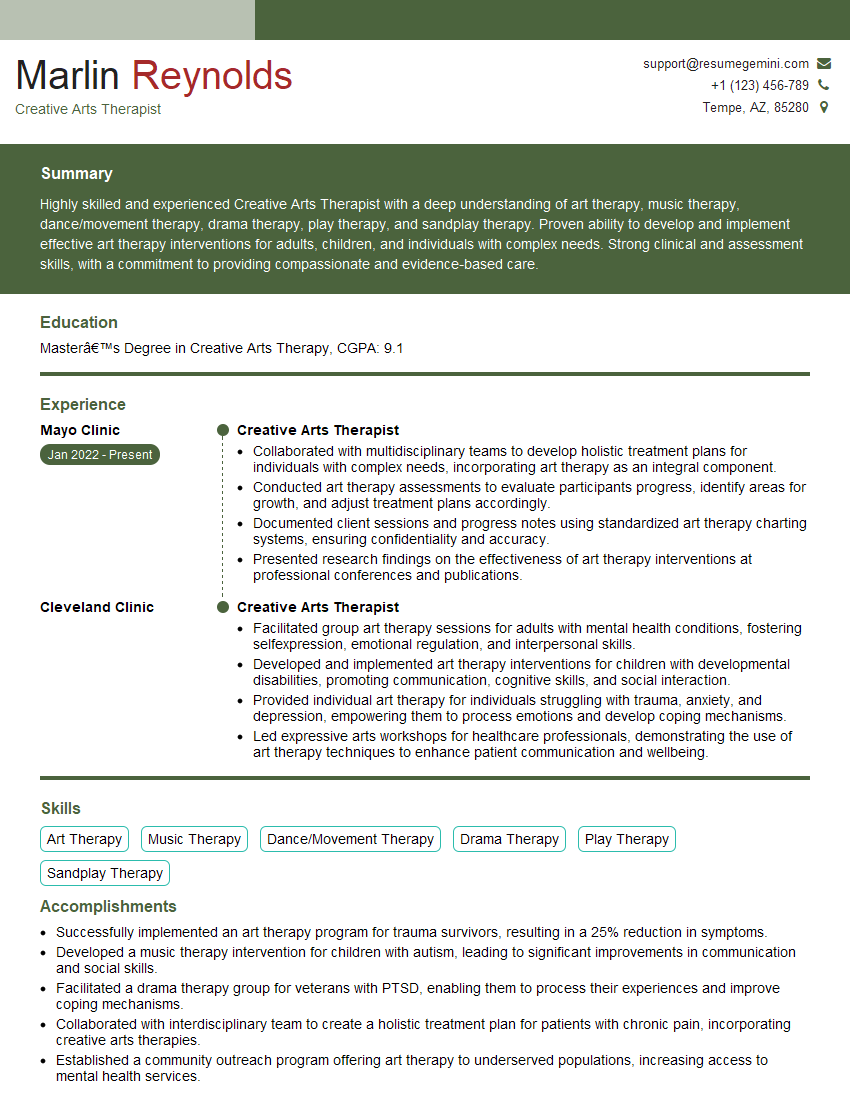
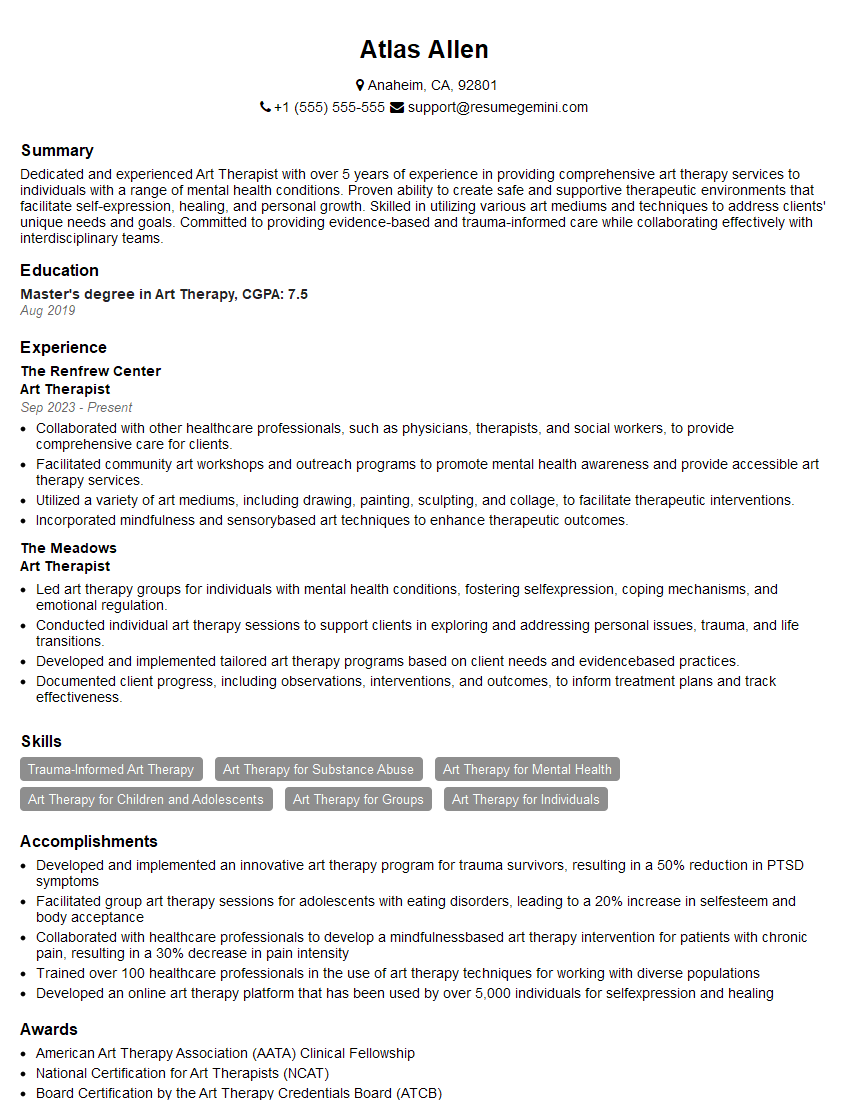
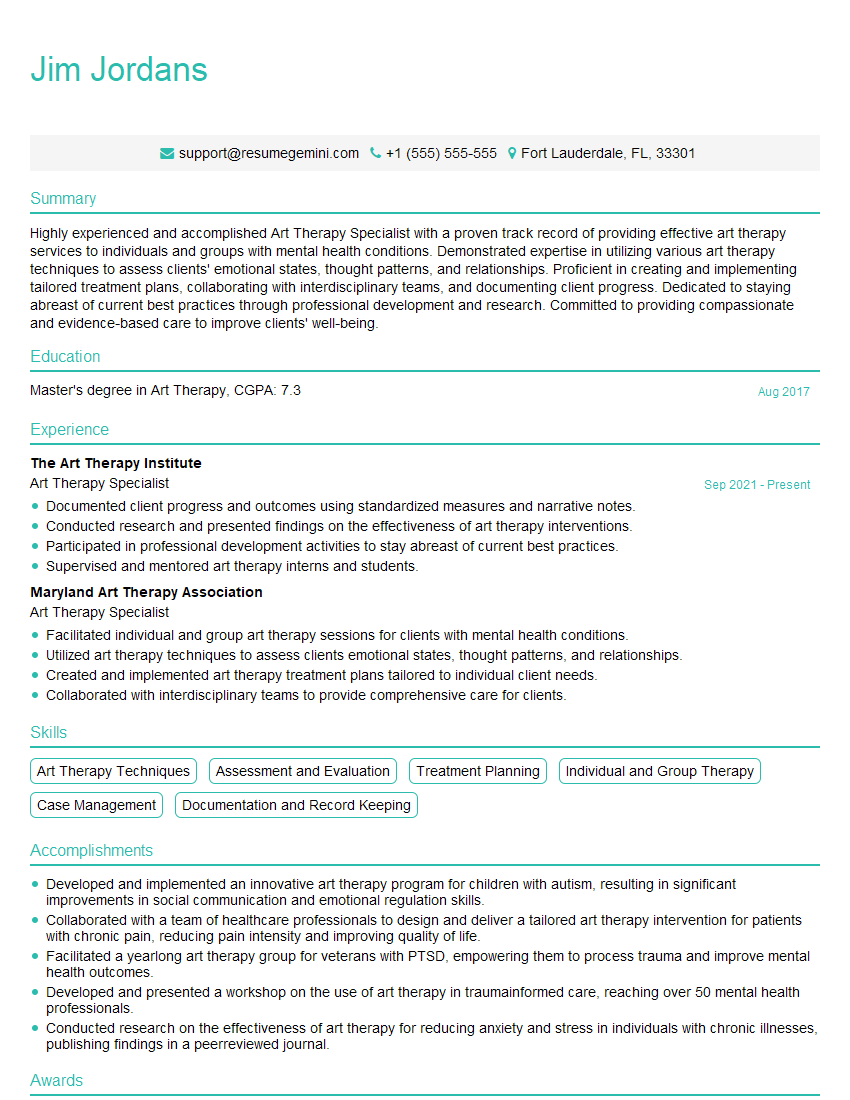
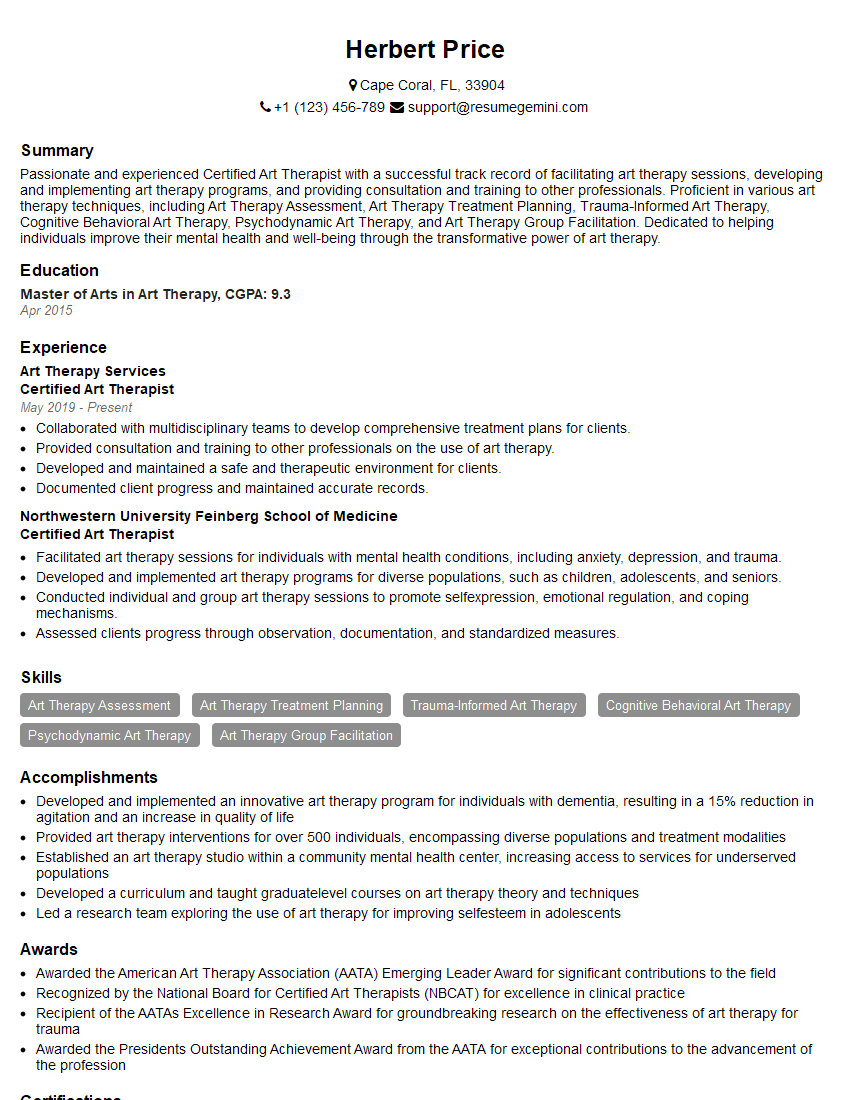
Mastering the key concepts of Leading Art Therapy Workshops is crucial for advancing your career in this rewarding field. A strong understanding of these areas will significantly enhance your interview performance and open doors to exciting opportunities. To maximize your job prospects, it’s essential to craft an ATS-friendly resume that highlights your skills and experience effectively. We recommend using ResumeGemini, a trusted resource for building professional resumes, to create a compelling document that showcases your qualifications. ResumeGemini provides examples of resumes tailored to Leading Art Therapy Workshops, helping you present your strengths in the most impactful way.
Explore more articles
Users Rating of Our Blogs
Share Your Experience
We value your feedback! Please rate our content and share your thoughts (optional).
What Readers Say About Our Blog
To the interviewgemini.com Webmaster.
Very helpful and content specific questions to help prepare me for my interview!
Thank you
To the interviewgemini.com Webmaster.
This was kind of a unique content I found around the specialized skills. Very helpful questions and good detailed answers.
Very Helpful blog, thank you Interviewgemini team.