Cracking a skill-specific interview, like one for Speech Production Disorders, requires understanding the nuances of the role. In this blog, we present the questions you’re most likely to encounter, along with insights into how to answer them effectively. Let’s ensure you’re ready to make a strong impression.
Questions Asked in Speech Production Disorders Interview
Q 1. Describe the different types of articulation disorders.
Articulation disorders involve difficulties producing speech sounds correctly. These difficulties can range from mild to severe and affect intelligibility. They are categorized based on the type of error made.
- Substitutions: Replacing one sound with another (e.g., saying ‘wabbit’ for ‘rabbit’).
- Omissions: Leaving out sounds (e.g., saying ‘ca’ for ‘cat’).
- Distortions: Producing sounds imprecisely (e.g., a lisp, where the /s/ or /z/ sounds are produced with the tongue between the teeth).
- Additions: Adding extra sounds (e.g., saying ‘buh-lack’ for ‘black’).
The specific articulation errors observed often help pinpoint the underlying cause, which can range from developmental delays to structural abnormalities in the mouth or tongue.
For example, a child might have difficulty with /r/ sounds due to a tongue-tie (ankyloglossia), a structural issue. In contrast, a child might struggle with several sounds due to a phonological processing disorder, affecting the organization of speech sounds.
Q 2. Explain the difference between apraxia of speech and dysarthria.
Apraxia of speech and dysarthria are both motor speech disorders, meaning they affect the ability to plan and execute the movements needed for speech. However, they differ significantly in their underlying causes and the resulting speech characteristics.
Apraxia of speech is a neurological disorder where the brain has difficulty planning and programming the motor movements for speech. Individuals with apraxia understand what they want to say but struggle to coordinate the muscles involved in speech production. This often results in inconsistent errors, groping for sounds, and difficulty initiating speech. Think of it like having a perfectly good recipe but struggling to follow the instructions to cook the meal.
Dysarthria, on the other hand, is a group of speech disorders caused by weakness, incoordination, or paralysis of the muscles used for speech. This weakness can stem from various neurological conditions like stroke, cerebral palsy, or Parkinson’s disease. Dysarthria usually results in consistent errors, slurred speech, and reduced speech clarity. The recipe is fine, but the cook lacks the necessary strength or coordination to follow it.
In short: Apraxia is a planning problem, while dysarthria is an execution problem.
Q 3. What are the common causes of childhood fluency disorders?
Childhood fluency disorders, most commonly stuttering, have complex causes, often involving a combination of genetic predisposition and environmental factors.
- Genetics: Family history of stuttering is a significant risk factor, suggesting a genetic component.
- Neurological factors: Differences in brain structure and function have been observed in individuals who stutter compared to those who don’t.
- Developmental factors: Rapid speech development, high expectations, or stressful family environments might increase the likelihood of stuttering.
- Psychological factors: While not the primary cause, anxiety and emotional stress can exacerbate stuttering.
It’s crucial to remember that stuttering is not a sign of low intelligence or psychological disturbance. A comprehensive evaluation considers various factors to determine the most appropriate intervention strategy.
Q 4. How do you assess voice disorders in adults?
Assessing adult voice disorders requires a multi-faceted approach.
- Case History: Detailed information about the onset, progression, and nature of the voice problem, including medical history and lifestyle factors (e.g., smoking, alcohol use).
- Otolaryngological Examination: A physician examines the larynx (voice box) using a laryngoscope to identify structural abnormalities or lesions.
- Acoustic Analysis: Computerized tools measure the acoustic properties of the voice, such as frequency, intensity, and jitter (variations in frequency), providing objective data on voice quality.
- Perceptual Assessment: A speech-language pathologist evaluates the voice subjectively, considering factors like breathiness, hoarseness, and roughness.
- Aerodynamic Assessment: This evaluates the airflow during speech production, identifying potential problems in respiratory support for the voice.
The combination of these assessments provides a comprehensive understanding of the underlying cause and severity of the voice disorder, guiding treatment planning.
Q 5. Discuss various treatment approaches for dysphagia.
Dysphagia, or difficulty swallowing, requires tailored treatment based on the underlying cause and severity.
- Dietary Modifications: Changing the consistency of foods and liquids (e.g., pureed, thickened) to make swallowing easier.
- Swallowing Exercises: Specific exercises to improve muscle strength and coordination involved in swallowing (e.g., tongue exercises, Mendelsohn maneuver).
- Postural Adjustments: Changing the head and body position during swallowing can optimize swallowing efficiency.
- Thermal-Tactile Stimulation: Using cold or warm stimuli on the lips and throat to trigger the swallowing reflex.
- Electrical Stimulation: Applying electrical stimulation to swallowing muscles to improve their function.
- Surgical Intervention: In some cases, surgery might be necessary to address anatomical abnormalities hindering swallowing.
Treatment is often multidisciplinary, involving speech-language pathologists, physicians, and dieticians, working collaboratively to improve swallowing safety and efficiency.
Q 6. What are some assessment tools used to evaluate speech sound disorders?
Several assessment tools are used to evaluate speech sound disorders, encompassing different aspects of speech production.
- Articulation Tests: Standardized tests such as the Goldman-Fristoe Test of Articulation assess the production of individual speech sounds in different contexts. These tests provide a quantitative measure of articulation errors.
- Phonetic Inventories: A comprehensive list of sounds a child can produce, irrespective of accuracy, is created to determine the range of sounds available.
- Phonological Assessment: Tools evaluate underlying patterns of sound errors rather than focusing on individual sounds. This helps identify potential phonological processes, such as stopping (replacing fricatives with stops), that are affecting the child’s speech.
- Oral-Motor Examination: Observing the structure and function of the oral-motor system helps identify any anatomical limitations that might contribute to speech sound errors.
The choice of assessment tool depends on the child’s age, developmental level, and suspected nature of the speech sound disorder.
Q 7. How would you differentiate between functional and organic voice disorders?
The distinction between functional and organic voice disorders lies in their underlying cause.
Organic voice disorders are caused by identifiable physical changes or abnormalities in the vocal mechanism. These abnormalities might include vocal nodules, polyps, cysts, or laryngeal cancer. The physical changes directly impact voice production, leading to symptoms such as hoarseness, breathiness, and reduced vocal range.
Functional voice disorders lack identifiable physical changes in the larynx. Instead, they stem from inappropriate use or misuse of the vocal mechanism, often related to vocal habits, psychological factors, or neurological conditions. Examples include vocal nodules from excessive yelling but without any other underlying medical cause, or muscle tension dysphonia resulting from excessive muscle tension in the larynx. The vocal symptoms are a consequence of how the voice is being used, rather than a specific physical damage.
Careful clinical assessment, including laryngoscopy and voice analysis, is essential to differentiate between these two categories, as the treatment approaches differ substantially.
Q 8. Describe your experience using AAC devices.
My experience with Augmentative and Alternative Communication (AAC) devices spans over a decade, encompassing various types of devices and user populations. I’ve worked with individuals ranging from young children with developmental delays to adults who have acquired speech impairments due to neurological conditions like stroke or traumatic brain injury. This includes experience with low-tech AAC, such as picture exchange systems (PECS) and communication boards, as well as high-tech options like speech-generating devices (SGDs) with synthesized speech and customizable vocabularies.
For instance, I collaborated with a young boy diagnosed with autism who had limited verbal communication. We started with PECS, gradually progressing to an SGD as his communication skills developed. The key was customizing the device’s vocabulary to reflect his interests and daily needs. Similarly, I worked with an adult who suffered a stroke resulting in aphasia. We used a combination of SGD and low-tech strategies tailored to improve functional communication during daily life activities. This involved careful selection of vocabulary, and the systematic incorporation of the device across various settings to encourage consistent use and promote generalization.
My approach emphasizes individualized assessment to determine the most appropriate AAC system and ongoing support to ensure effective use. This includes training the client, family, and caregivers on device operation and communication strategies. I believe in a holistic approach, blending AAC with other therapy techniques to maximize the client’s overall communication capabilities.
Q 9. Explain the role of the SLP in a multidisciplinary team.
As a Speech-Language Pathologist (SLP) in a multidisciplinary team, my role is multifaceted and crucial to patient care. We’re not just treating speech, we’re addressing the whole person. The team, which might include occupational therapists, physical therapists, neurologists, psychologists, and educators, works collaboratively to create a comprehensive plan.
My specific contributions revolve around identifying, assessing, and treating communication disorders affecting speech, language, fluency, cognition, and swallowing. This includes providing individualized therapy, recommending assistive technologies, and collaborating with other specialists to ensure holistic support. For example, in a team working with a child with cerebral palsy, the occupational therapist might address fine motor skills, the physical therapist might work on gross motor skills, while I’d focus on communication skills. We would regularly communicate and coordinate our plans, ensuring a cohesive approach that optimizes the child’s progress.
Furthermore, I offer expertise in interpreting assessment results, suggesting modifications to the patient’s environment, and educating the team and family regarding effective communication strategies. Effectively communicating assessment findings and treatment plans to the team and family is essential for successful collaboration and holistic patient care.
Q 10. How do you adapt your treatment strategies for diverse populations?
Adapting treatment strategies for diverse populations is fundamental to ethical and effective speech therapy. This requires understanding and addressing cultural differences, linguistic backgrounds, socioeconomic factors, and individual learning styles.
For example, when working with a child from a Spanish-speaking family, I would incorporate bilingual techniques and collaborate with a translator if necessary. I might also use culturally relevant materials and examples to engage the child more effectively. Similarly, when working with a client from a low-income background, I would consider their access to resources and adapt my treatment strategies to be more cost-effective, such as utilizing readily available materials for home practice. This could also involve providing recommendations for free community resources.
Understanding the client’s learning style is crucial. Some clients learn best through hands-on activities, while others benefit more from visual or auditory instruction. I tailor my sessions accordingly, using a variety of methods to cater to individual needs and maximize engagement.
Cultural sensitivity extends beyond language; it includes understanding and respecting the family’s values, beliefs, and communication styles. Open communication and collaboration with the family are key elements in ensuring treatment respects and accommodates their cultural background.
Q 11. What is your experience with evidence-based practice in speech therapy?
Evidence-based practice (EBP) is the cornerstone of my approach to speech therapy. EBP involves integrating the best available research evidence with clinical expertise and client values to make informed treatment decisions. I regularly consult peer-reviewed journals, research databases, and professional organizations to stay updated on the latest research findings and best practices.
For instance, when treating childhood apraxia of speech, I incorporate techniques supported by robust scientific evidence, such as dynamic temporal and tactile cueing (DTTC), which has demonstrated effectiveness in improving speech motor planning. I also carefully consider the child’s specific needs, preferences, and learning style when selecting and adapting these evidence-based interventions.
Moreover, I actively participate in professional development activities, attend conferences, and engage in continuing education to enhance my knowledge and skills. This ensures that my practice remains current and aligned with the most effective and ethical treatment approaches available.
Q 12. Describe a challenging case and how you addressed it.
One particularly challenging case involved a young adult with severe stuttering and significant anxiety surrounding communication. His anxiety made it difficult for him to participate in therapy, let alone make progress.
Initially, traditional fluency shaping techniques proved ineffective due to his high levels of anxiety. I realised I needed a different approach. We began by focusing on building rapport and creating a safe, non-judgmental therapeutic environment. This involved incorporating relaxation techniques, such as deep breathing and progressive muscle relaxation, into our sessions. We also explored cognitive behavioral therapy (CBT) techniques to address his negative thoughts and beliefs about his stuttering.
Slowly, as his anxiety reduced, we introduced gradual fluency shaping techniques, starting with easier tasks and gradually increasing the complexity of the activities. We celebrated small successes to build his confidence and motivate him. We also involved his family in the process, educating them on how to support him effectively. This multi-faceted approach, combining anxiety management, CBT, and fluency shaping, eventually led to significant progress. His fluency improved considerably, and more importantly, his confidence and self-esteem increased.
Q 13. How do you document your clinical sessions?
Thorough and accurate documentation is crucial for ethical and effective speech therapy practice. My documentation process typically includes detailed session notes, utilizing SOAP notes (Subjective, Objective, Assessment, Plan) format to ensure comprehensive record-keeping.
The Subjective section captures the client’s self-report of their progress, challenges, and overall feelings. The Objective section details measurable data, such as the number of stuttered words, the accuracy of articulation, or the length of utterances. The Assessment section synthesizes the subjective and objective data, providing a clinical interpretation of the client’s progress. The Plan section outlines the treatment goals and plans for the next session.
I also maintain comprehensive case files containing assessment reports, treatment plans, progress reports, and relevant correspondence. All documentation is kept securely and confidentially, complying with HIPAA regulations and maintaining the highest level of professional ethics.
Q 14. What are the ethical considerations in speech therapy practice?
Ethical considerations are paramount in speech therapy. Maintaining client confidentiality (HIPAA compliance), informed consent, professional boundaries, cultural competence, and continuing competence are fundamental aspects.
Confidentiality ensures client information remains private and protected. Informed consent means clients must fully understand the nature of the therapy, potential risks and benefits, and their right to withdraw at any time. Professional boundaries maintain appropriate relationships with clients, avoiding conflicts of interest. Cultural competence involves understanding and respecting diverse cultural perspectives and adapting treatment accordingly. Continuing competence requires ongoing professional development to maintain up-to-date knowledge and skills, ensuring the best possible patient care.
Addressing ethical dilemmas requires careful consideration of all relevant factors, consulting with colleagues or supervisors if needed, and prioritizing the client’s best interests. For example, if a client reveals information suggesting potential harm to themselves or others, the duty to protect overrides confidentiality, requiring appropriate intervention.
Q 15. Describe your proficiency in different assessment and therapy techniques.
My assessment and therapy techniques encompass a wide range of approaches tailored to the individual needs of each client. I utilize standardized tests like the Apraxia Battery for Adults (ABA) or the Frenchay Dysarthria Assessment (FDA) to objectively measure speech production skills. These assessments help pinpoint the specific areas of difficulty, whether it’s articulation, phonation, resonance, or prosody. Beyond standardized tests, I employ informal assessments, observing spontaneous speech samples in various contexts (conversation, reading, storytelling) to get a holistic view.
In therapy, I utilize evidence-based techniques such as articulatory-kinematic approaches which focus on the precise movements of the articulators (tongue, lips, jaw). For clients with apraxia, I use techniques like melodic intonation therapy (MIT) or the integral stimulation approach. For dysarthria, I may employ strategies focusing on respiratory support, strengthening exercises, and pacing techniques. I also integrate AAC (Augmentative and Alternative Communication) strategies where appropriate, providing clients with additional means of communication.
For example, a child with childhood apraxia of speech might benefit from the integral stimulation approach, where I model the correct production and provide tactile cues to guide their articulators. An adult with dysarthria due to a stroke might require respiratory exercises and strategies to improve speech intelligibility, along with AAC to supplement verbal communication as needed.
Career Expert Tips:
- Ace those interviews! Prepare effectively by reviewing the Top 50 Most Common Interview Questions on ResumeGemini.
- Navigate your job search with confidence! Explore a wide range of Career Tips on ResumeGemini. Learn about common challenges and recommendations to overcome them.
- Craft the perfect resume! Master the Art of Resume Writing with ResumeGemini’s guide. Showcase your unique qualifications and achievements effectively.
- Don’t miss out on holiday savings! Build your dream resume with ResumeGemini’s ATS optimized templates.
Q 16. How do you manage a caseload effectively?
Effective caseload management is crucial, and I prioritize organization and time management. I use a digital calendar system to schedule sessions and track client progress, ensuring efficient use of my time. I also dedicate specific time slots for administrative tasks like charting, report writing, and communication with caregivers and other professionals. Prioritization is key; I focus on clients with the most urgent needs first, while maintaining consistent contact and support for all clients.
I find that regular review of client goals and progress reports helps to identify any adjustments needed in the therapy plan. This proactive approach prevents issues from escalating and maximizes the effectiveness of the intervention. I also maintain open communication with clients and their families, ensuring they feel heard and involved in the process. This collaborative approach contributes to greater client engagement and successful outcomes.
Q 17. What are your professional development goals?
My professional development goals focus on staying current with the latest research and best practices in speech-language pathology, particularly in the field of motor speech disorders. I plan to pursue advanced training in specific areas, such as neurogenic speech disorders or the application of technology in speech therapy. This could involve attending workshops, conferences, or pursuing continuing education units (CEUs) in these areas.
I also aim to enhance my skills in telehealth services, as it’s become an increasingly important aspect of healthcare delivery. Furthermore, I’m committed to expanding my knowledge of multicultural competence to better serve a diverse population and adapt my approach to meet their unique cultural and linguistic needs. I believe continuous learning is essential for providing high-quality, effective care.
Q 18. Explain your understanding of the neurological basis of speech production.
Speech production is a complex process involving intricate coordination between multiple brain regions. The motor cortex initiates voluntary movements, sending signals through the corticobulbar and corticospinal tracts to the cranial and spinal nerves that control the muscles involved in speech. The cerebellum plays a critical role in coordinating these movements, ensuring precise and smooth articulation.
The basal ganglia are involved in regulating the timing and force of movements, contributing to fluency. Damage to any of these areas can result in speech production disorders. For example, damage to the Broca’s area (a crucial area for language processing in the frontal lobe) can cause Broca’s aphasia, characterized by non-fluent speech. Lesions in the cerebellum can lead to ataxic dysarthria, characterized by irregular articulation and incoordination.
Understanding this neurological basis is crucial for accurate diagnosis and effective therapy planning. Identifying the location and extent of neurological damage helps predict the type and severity of the speech disorder and informs the selection of appropriate therapeutic interventions.
Q 19. How do you incorporate family involvement in therapy?
Family involvement is critical for successful therapy. I actively involve families by providing education on the client’s diagnosis, prognosis, and treatment plan. We work together to establish realistic goals, and I provide families with strategies and resources to support their child or loved one at home. This collaboration strengthens communication and ensures consistent support throughout the therapy process.
For instance, I might provide families with specific exercises to practice with the client between sessions, or suggest ways to adapt their communication style to facilitate the client’s understanding and expression. Regular communication with the family – through meetings, phone calls, or emails – keeps everyone informed and ensures a unified approach to the client’s care. This collaborative model builds trust and fosters a positive therapeutic relationship.
Q 20. What is your approach to collaborating with teachers and other school personnel?
Collaboration with teachers and school personnel is vital for students with speech production disorders. I initiate communication early on to share assessment results, treatment goals, and strategies for supporting the student in the classroom. This might involve providing suggestions for classroom modifications, such as preferential seating or assistive technology. I also offer training to teachers on strategies to support the student’s communication skills and participation in class.
Regular meetings and progress reports keep everyone informed of the student’s progress. I work closely with the special education team to ensure the student’s Individualized Education Program (IEP) reflects their therapeutic needs. A multidisciplinary approach ensures consistency and facilitates optimal learning outcomes for the student. For instance, I might collaborate with an occupational therapist to address potential oral motor issues impacting speech production.
Q 21. Describe your knowledge of the different types of dysarthria.
Dysarthria refers to a group of motor speech disorders resulting from neurological damage. Different types of dysarthria are characterized by distinct patterns of speech impairment, reflecting the specific area of the nervous system affected. These include:
- Spastic Dysarthria: Characterized by harsh, strained, and slow speech due to bilateral upper motor neuron damage.
- Flaccid Dysarthria: Results from lower motor neuron damage, leading to weakness, breathiness, and reduced articulation.
- Ataxic Dysarthria: Caused by cerebellar damage, resulting in irregular articulation, impaired coordination, and poor prosody (rhythm and intonation).
- Hypokinetic Dysarthria: Associated with Parkinson’s disease, characterized by reduced volume, monotonous speech, and difficulty initiating speech.
- Hyperkinetic Dysarthria: Caused by damage to the basal ganglia, resulting in involuntary movements that affect speech.
- Mixed Dysarthria: Often involves a combination of features from several types, reflecting damage to multiple neurological areas.
Accurate identification of the dysarthria type is crucial for targeted therapy. For example, a client with spastic dysarthria might benefit from exercises to reduce muscle tone and improve articulation, while a client with ataxic dysarthria would require interventions focused on improving coordination and control of movement.
Q 22. How do you assess and treat apraxia of speech in children?
Assessing and treating apraxia of speech in children requires a multi-faceted approach. Apraxia of speech is a neurological disorder affecting the planning and programming of speech movements, leading to inconsistent errors in speech sound production. The assessment begins with a thorough case history, including developmental milestones and any potential contributing factors.
Assessment: This involves various speech tasks such as:
- Speech sound inventory: Identifying sounds the child can produce accurately.
- Phonetic inventory: Listing all sounds produced, regardless of accuracy.
- Stimulability testing: Determining if the child can produce sounds correctly with cues and models.
- Oral-motor examination: Assessing the structure and function of the oral mechanism (lips, tongue, jaw).
- Repetition tasks: Asking the child to repeat single words, phrases, and sentences of increasing complexity.
- Imitation tasks: Assessing the child’s ability to imitate sounds and words.
- Spontaneous speech sample: Evaluating natural speech production to observe consistency and patterns of errors.
Treatment: Treatment targets vary based on the child’s specific needs, and often involves:
- Multisensory approaches: Using visual, auditory, and kinesthetic cues (touch and movement).
- Articulatory placement techniques: Guiding the child’s articulators (tongue, lips) into the correct position.
- Repetition and practice: Providing extensive opportunities to practice accurate speech sound production through drills and games.
- Use of visual aids: Pictures, charts, or videos that demonstrate proper articulation.
- Targeting specific error patterns: Focusing on the types of sounds or sound sequences the child consistently struggles with.
- Dynamic temporal and tactile cueing (DTTC): A technique involving a combination of rhythmic cues and tactile feedback, particularly helpful for severe apraxia.
For example, I worked with a young boy who had difficulty producing /k/ and /g/ sounds. We used visual aids showing tongue placement, paired with tactile cues and repeated practice words starting with these sounds (e.g., ‘cat,’ ‘goat’). His progress was significant, and his confidence improved greatly.
Q 23. Explain your experience with motor speech disorders in adults with neurological conditions.
My experience with motor speech disorders in adults with neurological conditions, such as stroke, traumatic brain injury, and Parkinson’s disease, is extensive. These conditions often result in dysarthria (weakness or incoordination of speech muscles) or apraxia of speech, impacting articulation, prosody (intonation and rhythm), and intelligibility.
Assessment involves a thorough neurological examination, along with assessment of speech characteristics such as rate, rhythm, articulation precision, and respiratory support. I utilize standardized tests like the Frenchay Dysarthria Assessment and the Apraxia Battery for Adults to quantify the severity and identify specific deficits. I also gather information about the individual’s medical history, communication needs, and personal goals.
Treatment is highly individualized and might include:
- Oral-motor exercises: Strengthening and improving coordination of the speech muscles.
- Articulation therapy: Focusing on improving the accuracy of individual sounds and sound combinations.
- Prosody therapy: Working on improving stress, intonation, and rhythm in speech.
- Augmentative and alternative communication (AAC): Supplementing or replacing speech with other methods of communication if necessary.
- Respiratory and phonatory exercises: Improving breath support and voice quality.
- Behavioral therapies: Shaping desired speech behaviors through feedback and reinforcement.
For instance, I worked with a patient who experienced dysarthria after a stroke. We focused on improving breath support and oral motor strength to enhance his speech clarity. We incorporated strategies like pacing boards and visual cues to improve his ability to articulate words.
Q 24. What is your understanding of the impact of cultural and linguistic backgrounds on communication?
Cultural and linguistic backgrounds significantly impact communication. A person’s first language, dialect, and cultural norms profoundly shape their communication style, including speech patterns, nonverbal cues, and conversational turn-taking. Understanding these differences is crucial for effective assessment and treatment.
For instance, a child who is a bilingual speaker might demonstrate different speech patterns in each language, potentially leading to misinterpretation of a speech disorder. Similarly, cultural norms regarding eye contact, personal space, and expression of emotions can influence communication dynamics and must be taken into account during assessment and therapy. A therapist must avoid imposing their own cultural biases when assessing a client’s speech and communication abilities. It’s essential to adapt assessment and intervention techniques to be culturally and linguistically appropriate, possibly consulting with interpreters or other cultural experts.
Moreover, accurate diagnosis requires differentiating between speech disorders and communication differences due to dialect or language variations. A therapist must have a good understanding of the client’s linguistic background and speech community to make accurate diagnostic judgments and avoid mislabeling cultural differences as speech impairments.
Q 25. How do you counsel patients and their families regarding diagnosis and prognosis?
Counseling patients and their families is an integral part of my role. I approach this with sensitivity and empathy, ensuring that information is provided in a clear, understandable way. The process is tailored to the individual’s emotional and cognitive capacity.
Diagnosis: I explain the diagnosis in simple terms, avoiding jargon. I provide written summaries, and use visual aids where appropriate. I encourage questions and address concerns openly and honestly. For example, if a child is diagnosed with apraxia, I explain what the disorder entails in terms of its impact on speech and communication, and provide examples of therapy goals and strategies.
Prognosis: I am upfront about the likely course of the disorder, based on research and experience, while maintaining hope and positivity. I discuss potential challenges and realistic expectations, while highlighting the individual’s strengths and capabilities. I stress the importance of consistent therapy, and I collaborate with families to create strategies that support the patient’s communication across various settings.
For example, I might explain to a family that progress with apraxia is gradual but achievable. I provide them with resources to facilitate therapy at home and help them develop strategies for communicating with their child. I frequently emphasize that collaboration between the family, the patient and myself is crucial for better outcomes.
Q 26. Discuss your knowledge of different types of augmentative and alternative communication strategies.
Augmentative and alternative communication (AAC) strategies are crucial for individuals with severe speech impairments. These strategies supplement or replace spoken language, improving communication effectiveness. They range from low-tech to high-tech options.
Low-tech AAC:
- Picture Exchange Communication System (PECS): Using pictures to communicate wants and needs.
- Sign language: Using gestures to represent words and phrases.
- Communication boards: Boards with pictures or words for the individual to point to.
High-tech AAC:
- Speech-generating devices (SGDs): Electronic devices that produce speech when a button is pressed.
- Eye-gaze systems: Allow individuals to select words or phrases by looking at them on a screen.
- Tablet-based apps: Using apps with speech-generating capabilities.
Selecting the appropriate AAC system involves considering the individual’s cognitive abilities, physical limitations, communication needs, and access to technology. For example, a child with limited motor skills might benefit from an eye-gaze system, while an adult with mild dysarthria might use a communication board or speech-generating app to supplement their speech.
Q 27. Describe your experience with using technology in speech therapy (e.g., telehealth).
Technology plays a significant role in contemporary speech therapy. Telehealth, in particular, has expanded access to services and improved the quality of care. I have extensive experience using telehealth platforms for both assessment and intervention.
Benefits of telehealth:
- Increased accessibility: Individuals in remote areas or with mobility challenges can access therapy.
- Convenience: Therapy can be conducted from the comfort of home.
- Cost-effectiveness: Reduced travel time and expenses.
- Data collection and tracking: Technology facilitates detailed data collection, tracking progress, and adjusting treatment plans.
Challenges of telehealth:
- Technical issues: Internet connectivity and equipment malfunctions can disrupt sessions.
- Limited interaction: The lack of physical presence can affect the therapist-patient relationship.
- Privacy concerns: Ensuring confidentiality of patient information is paramount.
Despite these challenges, the benefits generally outweigh the drawbacks. I use various telehealth platforms that offer secure communication, screen sharing, and tools for conducting speech tasks. I always ensure informed consent is obtained before conducting sessions through telehealth.
Q 28. How do you ensure the safety and well-being of your patients during therapy sessions?
Ensuring patient safety and well-being is my top priority. This involves creating a safe and comfortable therapeutic environment, both in-person and virtually. Key aspects include:
- Building rapport and trust: Creating a positive and supportive relationship with patients.
- Informed consent: Obtaining informed consent before any assessment or treatment.
- Appropriate modifications: Adapting therapy activities to the patient’s physical and cognitive abilities.
- Monitoring for signs of distress: Being attentive to signs of fatigue, frustration, or discomfort and adjusting the session as needed.
- Emergency preparedness: Having a plan in place for handling emergencies.
- Confidentiality: Maintaining patient confidentiality and adhering to ethical guidelines.
- Infection control (in-person sessions): Maintaining a hygienic environment and following infection control protocols.
For instance, if a patient becomes overwhelmed during a session, I adjust the pace or activity to reduce their stress. I regularly communicate with family members to ensure their understanding and collaboration in creating a supportive home environment. By creating a space where the patient feels respected and supported, I ensure the sessions are productive and beneficial, while remaining mindful of their physical and emotional safety.
Key Topics to Learn for Speech Production Disorders Interview
- Articulation Disorders: Understand the different types (e.g., phonological processes, phonetic errors), assessment methods (e.g., phonetic inventory, speech sound analysis), and intervention strategies (e.g., minimal pairs, cycles approach).
- Fluency Disorders (Stuttering): Learn about the various theories of stuttering, assessment techniques (e.g., speech sample analysis, stuttering severity instruments), and evidence-based intervention approaches (e.g., fluency shaping, stuttering modification).
- Voice Disorders: Familiarize yourself with vocal anatomy and physiology, common voice disorders (e.g., vocal nodules, polyps, dysphonia), diagnostic procedures (e.g., laryngeal examination, acoustic analysis), and treatment options (e.g., voice therapy, surgical intervention).
- Motor Speech Disorders (Apraxia and Dysarthria): Differentiate between apraxia of speech and dysarthria, understand their underlying neurological bases, and be prepared to discuss assessment and treatment approaches for each.
- Assessment and Diagnosis: Master the process of conducting comprehensive speech-language evaluations, including case history, oral-motor examination, and standardized testing. Practice integrating assessment findings to formulate accurate diagnoses.
- Intervention Planning and Implementation: Develop skills in designing individualized treatment plans based on assessment results. Understand the principles of effective therapy and be prepared to discuss specific intervention techniques.
- Evidence-Based Practice: Demonstrate understanding of the importance of using evidence-based practices in assessment and intervention. Be able to discuss relevant research and its implications for clinical practice.
- Ethical and Legal Considerations: Be familiar with professional ethics and legal considerations related to the practice of speech-language pathology, including confidentiality, informed consent, and scope of practice.
Next Steps
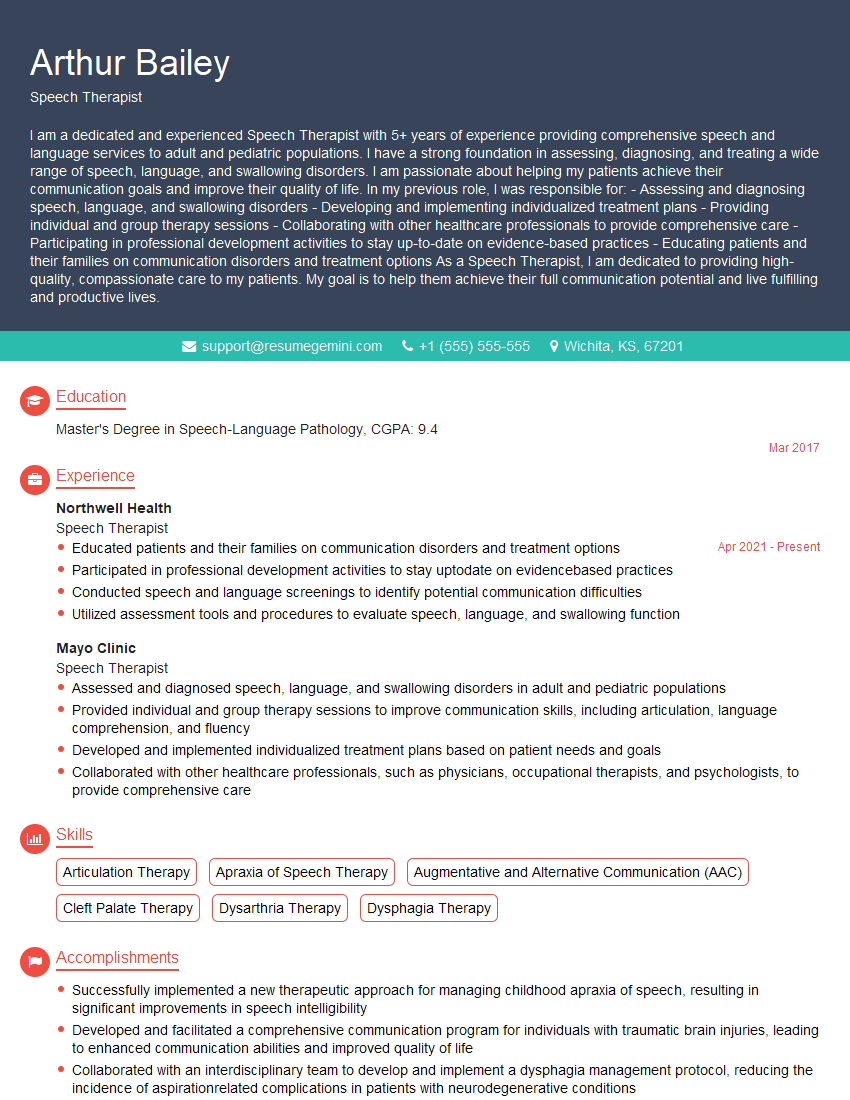
Mastering Speech Production Disorders is crucial for a successful and rewarding career in speech-language pathology. A strong foundation in these areas will significantly enhance your job prospects and allow you to make a real difference in the lives of your clients. To maximize your chances of landing your dream job, creating an ATS-friendly resume is essential. ResumeGemini is a trusted resource that can help you build a professional and impactful resume that highlights your skills and experience. ResumeGemini provides examples of resumes tailored to Speech Production Disorders to guide you through the process.
Explore more articles
Users Rating of Our Blogs
Share Your Experience
We value your feedback! Please rate our content and share your thoughts (optional).
What Readers Say About Our Blog
To the interviewgemini.com Webmaster.
Very helpful and content specific questions to help prepare me for my interview!
Thank you
To the interviewgemini.com Webmaster.
This was kind of a unique content I found around the specialized skills. Very helpful questions and good detailed answers.
Very Helpful blog, thank you Interviewgemini team.