Interviews are more than just a Q&A session—they’re a chance to prove your worth. This blog dives into essential Speech Sound Production interview questions and expert tips to help you align your answers with what hiring managers are looking for. Start preparing to shine!
Questions Asked in Speech Sound Production Interview
Q 1. Explain the difference between articulation and phonological disorders.
Articulation and phonological disorders both affect speech sound production, but they differ significantly in their underlying causes and the types of errors observed. Articulation disorders are motor-based difficulties; the child understands the sounds but struggles to physically produce them correctly. Think of it like learning to play the piano – you understand the music, but your fingers aren’t coordinated enough yet. Phonological disorders, on the other hand, are pattern-based errors. The child might not fully grasp the sound system of their language. They might simplify or substitute sounds consistently across words, indicating a deeper problem in their phonological representation rather than just motor skill. For example, a child with an articulation disorder might only mispronounce the /r/ sound in certain words, while a child with a phonological disorder might systematically replace all /r/ sounds and other similar sounds (like /l/) with /w/.
Q 2. Describe the process of assessing a child’s speech sound production skills.
Assessing a child’s speech sound production involves a multi-step process. First, I gather case history information from parents or caregivers to understand the child’s developmental milestones, medical history, and family history of speech difficulties. Next, I conduct a comprehensive oral-peripheral examination to assess the structure and function of the articulators (tongue, lips, teeth, palate). This helps identify any physical limitations that might contribute to speech errors. Then, I use standardized speech sound tests, such as the Goldman-Fristoe Test of Articulation-2 or the Khan-Lewis Phonological Analysis, to obtain a detailed inventory of the child’s sounds, noting errors and patterns. I also conduct a spontaneous speech sample to observe the child’s speech in a natural context and analyze the frequency and types of errors. Finally, I integrate all this information to develop a diagnosis and treatment plan tailored to the child’s specific needs.
Q 3. What are the common types of speech sound errors?
Common types of speech sound errors include:
- Substitutions: Replacing one sound with another (e.g., ‘wabbit’ for ‘rabbit’).
- Omissions: Leaving out sounds (e.g., ‘ca’ for ‘cat’).
- Distortions: Producing a sound imprecisely (e.g., a lateral lisp for /s/).
- Additions: Adding extra sounds (e.g., ‘buhlack’ for ‘black’).
Q 4. How do you differentiate between developmental and acquired speech sound disorders?
The key difference between developmental and acquired speech sound disorders lies in their onset. Developmental speech sound disorders are present from the beginning of speech development. These are often related to genetic factors, early auditory experiences, or slower language development. A child might consistently struggle with certain sounds even after they have reached an age where those sounds should be mastered. In contrast, acquired speech sound disorders emerge after a period of normal speech development. They often result from neurological damage (like stroke or traumatic brain injury), or other medical conditions causing physical changes to the articulatory structures, impacting speech sound production. For instance, a child with normal speech might develop a lisp after a palate surgery.
Q 5. Explain your approach to treating childhood apraxia of speech.
Childhood apraxia of speech (CAS) is a neurological disorder affecting the planning and programming of speech movements. My approach to treating CAS is highly individualized and intensive. I focus on building motor planning skills through techniques like:
- Dynamic Temporal and Tactile Cueing (DTTC): Providing multi-sensory cues to help children plan and sequence speech movements.
- Phonetic Sequencing and Motor Speech Exercises: Gradually increasing the complexity of sounds and syllables to improve motor planning.
- Intensive, repetitive practice: Focusing on high levels of repetition and practice to strengthen new motor patterns.
Q 6. Describe your experience with various assessment tools used in speech sound production.
Throughout my career, I’ve had extensive experience using various assessment tools. These include standardized tests like the Goldman-Fristoe Test of Articulation-2, the Clinical Assessment of Articulation and Phonology, and the Khan-Lewis Phonological Analysis. Each test has unique strengths; some focus on articulation, while others assess phonological processes. Beyond standardized measures, I utilize informal assessment tools, such as spontaneous speech samples and oral-mechanism examinations to gain a holistic understanding. I believe in using a combination of formal and informal assessment measures to get a complete picture of a child’s speech sound production abilities, understanding both the strengths and weaknesses.
Q 7. How do you adapt your therapy techniques based on a client’s age and developmental level?
Adapting therapy techniques to a client’s age and developmental level is crucial for effective intervention. With younger children, I use highly playful and engaging activities, incorporating games, songs, and stories. I might use visual aids and manipulatives to make the learning process more concrete and accessible. Older children benefit from a more structured and goal-oriented approach, involving self-monitoring and metacognitive strategies. For example, I might use visual schedules with older children or introduce concepts of self-correction and error detection techniques. Furthermore, I always adjust the complexity of the target sounds and tasks to match their cognitive and linguistic abilities, ensuring they remain challenged but not overwhelmed. Communication is key – involving families and caregivers is essential in understanding each client’s unique needs and ensuring consistent support during therapy.
Q 8. What are some evidence-based intervention strategies for speech sound disorders?
Evidence-based intervention strategies for speech sound disorders are multifaceted and tailored to the individual child’s needs, encompassing their age, developmental stage, and the specific sounds affected. These strategies generally fall under two broad categories: articulation therapy and phonological therapy.
Articulation Therapy: This approach focuses on the precise motor movements needed to produce individual sounds. It often utilizes techniques like:
- Phonetic placement: Guiding the child to position their tongue, lips, and jaw correctly.
- Sound discrimination: Helping the child differentiate between the target sound and their error sound.
- Production practice: Repetitive drills and activities to strengthen the motor skills for the target sound, progressing from isolation to syllables, words, phrases, and sentences.
- Stimulability: Exploiting sounds the child can already produce to help them learn similar sounds.
Phonological Therapy: This approach targets the underlying patterns or rules that govern a child’s sound system. Common techniques include:
- Minimal pairs: Using word pairs that differ by only one phoneme (e.g., ‘cat’ vs. ‘hat’).
- Maximal oppositions: Comparing sounds that are maximally different in their articulation.
- Cycles approach: Focusing on several target sounds for a short period, then cycling back to them later.
- Metaphon therapy: Raising the child’s awareness of sound patterns and rules.
For example, a child struggling with /s/ may benefit from articulation therapy focusing on lip and tongue positioning, while a child with multiple sound errors reflecting a consistent pattern might respond better to phonological therapy targeting those patterns.
Q 9. How do you incorporate family involvement in speech therapy?
Family involvement is crucial for successful speech therapy. Parents or caregivers are the child’s primary language models, spending the most time with them, and are essential in generalizing speech skills across settings. I incorporate family involvement in several ways:
Regular communication: I maintain open communication with families, providing regular updates on the child’s progress, explaining therapy techniques, and addressing their concerns.
Home practice activities: I design and provide specific home practice activities, tailored to the child’s age and abilities, ensuring these activities are fun and engaging for both the child and family. This could involve playing games, reading books, or using specific apps.
Parent training: I provide parents with training on how to support their child’s speech development. This might include teaching them how to use specific techniques at home, providing positive reinforcement, or modeling correct pronunciation.
Collaboration: I actively collaborate with families to set realistic goals and discuss how therapy fits into the child’s daily routine. I also regularly seek input from families and respect their insights into the child’s behaviors and communication styles.
For instance, if a child is working on the /r/ sound, we might practice together in sessions and send home fun activities like reading books with many ‘r’ sounds or playing games focusing on identifying the sound.
Q 10. Explain the role of phonological awareness in speech sound development.
Phonological awareness, the ability to consciously analyze and manipulate the sound structure of language, plays a vital role in speech sound development. It’s the foundation for reading and spelling skills, but its impact on speech production is often underestimated. Children with poor phonological awareness often struggle with speech sound disorders.
Segmenting and blending: The ability to break down words into individual sounds (segmenting) and put them back together (blending) is crucial for both phonological awareness and speech sound production. If a child struggles with this, they may also struggle with accurately producing and sequencing sounds.
Rhyming: Understanding and producing rhymes helps children perceive the sound similarities and differences between words, which directly aids sound development.
Alliteration: Recognizing and using alliteration (words starting with the same sound) enhances phonetic awareness, supporting speech production.
For example, a child who can’t segment the sounds in ‘cat’ (c-a-t) may also have difficulty producing those sounds accurately in isolation or in words. Improving their phonological awareness skills through games and activities can often positively impact their speech production.
Q 11. Describe your understanding of the International Phonetic Alphabet (IPA).
The International Phonetic Alphabet (IPA) is a system for representing the sounds of spoken language. It’s a crucial tool for speech-language pathologists because it provides a standardized, universally understood way to transcribe speech sounds, irrespective of language. Each symbol in the IPA represents a single distinct speech sound, unlike the English alphabet where single letters can represent multiple sounds.
Transcription: The IPA allows for precise documentation of a child’s speech errors, allowing for objective measurement of progress and accurate planning of therapy. This is critical in documenting sound substitutions, omissions, and distortions.
Diagnosis: Using IPA, we can identify specific patterns of sound errors, guiding our choice of intervention strategies. This helps differentiate between articulation and phonological disorders.
Communication: The IPA ensures clear communication among speech-language pathologists and other professionals working with children, avoiding potential misunderstandings due to variations in pronunciation and terminology across geographical regions.
For example, the sound represented by /θ/ in the IPA is the ‘th’ sound in ‘thin,’ distinct from /ð/ which is the ‘th’ sound in ‘this’. Using the IPA avoids ambiguity and ensures accurate documentation of a child’s speech patterns.
Q 12. How do you monitor treatment progress and adjust therapy plans accordingly?
Monitoring treatment progress and adjusting therapy plans is an ongoing process, central to effective speech therapy. I use a variety of methods to track progress and make necessary adjustments:
Regular assessments: I conduct regular formal and informal assessments, using standardized tests and informal probes, to measure the child’s production of target sounds across various contexts.
Data collection: I meticulously document the child’s performance during therapy sessions. This might include percentage correct scores, error patterns, and the child’s responses to different therapy activities.
Graphing progress: I visually represent the child’s progress using graphs and charts, making it easy to identify trends, plateaus, and areas needing modification. This visual representation aids communication with parents.
Plan adjustment: Based on the data collected, I regularly review and adjust the therapy plan. This might involve modifying therapy goals, introducing new techniques, or altering the intensity or frequency of sessions.
For instance, if a child’s progress on a particular sound plateaus, we might adjust the therapy approach by introducing a new technique or focusing on a different aspect of sound production (e.g., focusing on coarticulation). Continuous monitoring and adaptation are key to maximizing the effectiveness of the therapy.
Q 13. What are some common challenges faced in treating speech sound disorders?
Treating speech sound disorders presents several challenges:
Inconsistent performance: Children may produce a sound correctly in one context but not in another, making assessment and treatment challenging.
Motivation and engagement: Maintaining a child’s engagement and motivation throughout therapy, especially for longer-term cases, can be difficult.
Comorbid conditions: Many children with speech sound disorders also have other conditions, such as language impairments or hearing difficulties, that can complicate treatment.
Generalization: Helping children generalize newly learned sounds from clinical settings to real-life situations can be a significant hurdle.
Family involvement: While essential, securing consistent family involvement and support can be a challenge.
Resource constraints: Access to therapy, particularly specialized services, can be limited due to geographical location or financial constraints.
Addressing these challenges requires a flexible and individualized approach, using creative strategies to enhance engagement, collaborating with families, and tailoring therapy to accommodate co-occurring conditions.
Q 14. Explain your approach to data collection and analysis in speech therapy.
Data collection and analysis are foundational to evidence-based practice in speech therapy. My approach involves a systematic process:
Baseline data: Before starting therapy, I conduct a thorough assessment to establish a baseline measure of the child’s speech sound production, documenting errors, sound productions, and context.
Ongoing data collection: During therapy sessions, I collect data using a variety of methods, including:
- Percentage of correct responses: Tracking the percentage of correct sound productions in different contexts.
- Error patterns: Identifying and documenting consistent errors or patterns in sound production.
- Qualitative observations: Noting observations related to the child’s motivation, attention, and overall participation.
Data analysis: After each session or at regular intervals, I analyze collected data to identify trends, assess the effectiveness of interventions, and make informed decisions about modifications to the therapy plan.
Data-driven decision making: The data collected informs my decisions regarding goal setting, treatment techniques, and the overall progress of therapy.
This approach ensures that therapy is tailored to the individual child’s needs and that progress is monitored closely, leading to more effective outcomes. I use a combination of quantitative (numerical) and qualitative (observational) data to paint a complete picture of the child’s progress.
Q 15. How do you collaborate with other professionals (e.g., teachers, doctors)?
Collaboration is crucial in speech therapy. I regularly work with teachers to understand a child’s classroom performance and communication challenges, ensuring consistency between therapeutic and educational settings. For example, I might collaborate with a teacher to implement strategies like visual supports or communication boards in the classroom to complement therapy. With doctors, particularly those specializing in neurology or pediatrics, I coordinate assessments and treatment plans, particularly for clients with complex medical histories or neurological conditions. This might involve discussing a client’s medication side effects or sharing insights on the impact of a neurological diagnosis on speech sound production. Open communication and shared goal setting are fundamental to effective collaboration.
Career Expert Tips:
- Ace those interviews! Prepare effectively by reviewing the Top 50 Most Common Interview Questions on ResumeGemini.
- Navigate your job search with confidence! Explore a wide range of Career Tips on ResumeGemini. Learn about common challenges and recommendations to overcome them.
- Craft the perfect resume! Master the Art of Resume Writing with ResumeGemini’s guide. Showcase your unique qualifications and achievements effectively.
- Don’t miss out on holiday savings! Build your dream resume with ResumeGemini’s ATS optimized templates.
Q 16. What is your experience with using technology in speech therapy?
Technology plays a significant role in modern speech therapy. I use a variety of digital tools, including speech-generating devices (SGDs) for augmentative and alternative communication (AAC), interactive apps for articulation practice (e.g., apps using gamification to target specific sounds), and telehealth platforms for remote sessions. Telehealth has proven especially beneficial in providing access to services for clients in remote areas or with mobility challenges. Furthermore, I utilize software for data analysis to track client progress and adjust interventions as needed. For instance, I might use software to analyze audio recordings of a client’s speech to identify patterns and areas for improvement. This data-driven approach allows for more precise and effective therapy.
Q 17. How do you handle challenging client behaviors or parent concerns?
Handling challenging behaviors and parental concerns requires patience, empathy, and a multi-faceted approach. For challenging behaviors, I employ positive reinforcement strategies, focusing on rewarding positive communication attempts. For instance, I might use a reward chart or a token economy system. If needed, I collaborate with behavioral specialists or psychologists to address underlying behavioral issues. Regarding parental concerns, open and honest communication is key. I actively listen to parents’ perspectives, address their anxieties, and work collaboratively to establish realistic goals and expectations. I explain therapy techniques clearly, provide regular updates on progress, and encourage active parental involvement in therapy exercises at home. This collaborative approach builds trust and ensures a supportive therapeutic environment.
Q 18. Describe a situation where you had to adapt your therapy plan due to a client’s response.
I once worked with a young client who was highly resistant to traditional articulation drills. My initial therapy plan focused on minimal pairs, contrasting sounds like /s/ and /ʃ/. However, he found these exercises frustrating and disengaging, leading to decreased motivation and participation. I adapted the plan by incorporating play-based activities, such as using puppets to elicit target sounds in a fun and interactive way. I also introduced visual supports and incorporated his interests, such as superheroes, into the therapy sessions. This adapted approach significantly improved his engagement and resulted in quicker progress. The shift from direct drill to a play-based approach demonstrates the importance of adapting to individual client needs and preferences for optimal outcomes.
Q 19. Explain your understanding of motor speech disorders.
Motor speech disorders affect the physical ability to plan, sequence, and execute the motor movements necessary for speech production. These disorders stem from damage to the nervous system, impacting the muscles and neural pathways responsible for speech. They can range in severity, affecting articulation, fluency, phonation, and prosody. Causes can vary, including stroke, cerebral palsy, traumatic brain injury, Parkinson’s disease, and other neurological conditions. The resulting speech difficulties can significantly impact communication, impacting a person’s ability to participate in daily life. Assessment involves identifying the specific nature and extent of the motor speech impairment to develop a tailored intervention plan.
Q 20. How do you differentiate between dysarthria and apraxia?
Dysarthria and apraxia are both motor speech disorders, but they differ significantly in their underlying mechanisms. Dysarthria results from weakness, incoordination, or paralysis of the muscles involved in speech. Speech characteristics often include slurred speech, reduced intelligibility, and abnormal rate and rhythm. Apraxia, on the other hand, is a neurological speech disorder affecting the planning and programming of motor movements for speech. While muscle strength and coordination are relatively intact, the ability to sequence and execute speech movements is impaired. Apraxia often presents with inconsistent errors, groping attempts to produce sounds, and difficulty with volitional speech tasks. Careful assessment considering the nature of speech errors, consistency of errors, and presence of muscle weakness helps differentiate between the two.
Q 21. What is your experience with different therapeutic approaches like cycles approach or minimal pairs?
I have extensive experience with various therapeutic approaches. The cycles approach is particularly effective for children with multiple speech sound errors, focusing on targeting specific sound patterns rather than individual sounds. This approach emphasizes auditory bombardment and introduces sounds in cycles, moving to a new sound before mastery of the previous one is achieved. Minimal pairs therapy, conversely, focuses on contrasting sounds that differ by only one phonetic feature. This approach helps clients discriminate between sounds and develop accurate production. I select the most appropriate approach based on a client’s specific needs and goals. For example, the cycles approach may be ideal for a child with multiple phonological processes, while minimal pairs might be better suited for a client who has difficulty differentiating between similar sounds. My approach is always data-driven and adapts to the client’s response.
Q 22. Describe your experience with articulation therapy techniques such as sound production, auditory bombardment etc.
Articulation therapy hinges on improving the accuracy and consistency of speech sounds. My experience encompasses a wide range of techniques, focusing on both the motoric aspects of sound production and the auditory perception of sounds. Sound production techniques include:
Phonetic placement: Guiding the client to position their articulators (tongue, lips, jaw) correctly to produce a target sound. For example, I might use a tongue depressor to gently guide a child’s tongue to the alveolar ridge for the /t/ sound.
Multisensory approaches: Integrating visual, auditory, and tactile cues to enhance learning. This might involve using mirrors to visualize articulator placement, listening to recordings of the target sound, and feeling the vibrations of the sound in the client’s chest or face.
Minimal pairs: Using pairs of words that differ by only one phoneme (e.g., ‘sun’ and ‘fun’) to highlight the contrast and help the client differentiate between sounds.
Auditory bombardment, a crucial component, involves repeated exposure to the correct sound. This isn’t just passive listening; it’s actively engaging the client in listening discrimination tasks, identifying the target sound in words and sentences. I often incorporate this into play-based activities to make it engaging. For example, I might hide a toy and have the child listen carefully for the /s/ sound in my clues to find it.
Q 23. How do you address the co-occurrence of speech sound disorders and language disorders?
Speech sound disorders (SSDs) and language disorders often coexist. Addressing them requires a holistic approach that acknowledges their interconnectedness. Ignoring the language component while focusing solely on articulation is insufficient. For example, a child with a phonological disorder might struggle with sound patterns (like final consonant deletion) alongside grammatical difficulties. My approach involves:
Comprehensive assessment: Thorough evaluation of both speech sound production and language skills, including phonology, morphology, syntax, semantics, and pragmatics.
Integrated intervention: Targeting both SSDs and language impairments simultaneously, often weaving articulation practice into language activities. This might involve incorporating target sounds into sentence construction exercises or narrative retellings.
Collaboration: Working closely with other professionals like educational psychologists and teachers to ensure a consistent and comprehensive approach across settings.
For instance, I might work with a teacher to incorporate target sounds into classroom activities, reinforcing the learning during therapy sessions. This holistic, integrated approach ensures maximized therapeutic benefit.
Q 24. What is your familiarity with the various assessment protocols for speech sound production?
I’m proficient in various assessment protocols for speech sound production, tailored to the client’s age and needs. These include:
Formal assessments: Standardized tests like the Goldman-Fristoe Test of Articulation (GFTA-3) and the Khan-Lewis Phonological Analysis (KLPA) provide quantitative data on sound production and phonological processes. These are essential for establishing a baseline and tracking progress.
Informal assessments: Speech samples (conversation, reading passages), connected speech samples, and play-based assessments allow for observation of speech in natural contexts, providing qualitative information about sound production in different contexts. This gives us a more complete picture than standardized tests alone.
Oral-motor examinations: Assessing the structural and functional integrity of the oral-motor mechanism to identify any potential underlying factors affecting speech sound production.
The selection of assessments depends on the individual child. Younger children may benefit from play-based assessments, while older children could undergo more formal standardized testing. Combining these methods offers a robust understanding of each client’s unique needs.
Q 25. How would you determine the severity of a speech sound disorder?
Determining the severity of an SSD involves considering multiple factors. It’s not simply a matter of counting errors.
Percentage of consonants correct (PCC): A commonly used metric, calculating the percentage of correctly produced consonants in a speech sample. A lower PCC generally indicates greater severity.
Type and consistency of errors: The presence of multiple phonological processes (e.g., stopping, fronting, cluster reduction) often suggests a more severe disorder compared to isolated sound errors. The consistency of errors across different speaking contexts is also important.
Impact on intelligibility: How well the client’s speech is understood by others is a crucial indicator of severity. A child with significantly reduced intelligibility will likely be classified as having a more severe disorder.
Client’s age and developmental stage: Errors that are typical for younger children might be considered more severe in older children.
Severity is ultimately a clinical judgment, integrating quantitative data from assessments with qualitative observations of the client’s communication skills and the impact of the disorder on their daily life.
Q 26. Discuss your experience with documenting progress and writing reports.
Accurate and comprehensive documentation is crucial. My documentation process includes:
Detailed progress notes: Recording each session’s goals, activities, client performance, and any observed challenges or successes. This includes noting not just the quantitative data but also the client’s emotional engagement and responses to therapy.
Data collection and graphing: Tracking client progress visually through graphs and charts representing PCC, intelligibility scores, or other relevant metrics. This provides a clear, objective measure of treatment effectiveness.
Formal reports: Summarizing the assessment findings, treatment plan, progress, and recommendations for continued care. These reports are concise yet thorough, employing clear and accessible language for parents and other professionals.
I use a combination of electronic health record systems and personal note-taking to ensure comprehensive records. Regular review of this documentation is integral to adapting my strategies and ensuring effective therapy.
Q 27. How do you ensure culturally competent and inclusive therapy practices?
Culturally competent and inclusive therapy practices are paramount. My approach involves:
Understanding cultural background: Taking the time to learn about the client’s cultural background, including communication styles, family values, and expectations. This information informs my therapy approach and helps build rapport.
Using culturally appropriate materials: Selecting assessment and therapy materials that reflect the client’s cultural diversity and avoid perpetuating stereotypes.
Adapting communication styles: Adjusting my communication style to match the client’s preferences and comfort level, respecting individual differences in communication patterns.
Involving the family: Engaging the family in the therapy process, understanding their perspectives, and collaborating to create a culturally sensitive and effective treatment plan.
For example, I might use stories or examples from a client’s cultural background to make therapy more relatable and engaging. I also ensure that my language is accessible and avoids jargon that may not be understood by all families.
Q 28. How do you stay up-to-date with the latest research and advancements in speech-language pathology?
Staying current in this field requires continuous learning. My strategies include:
Professional development: Actively attending conferences, workshops, and seminars related to speech-language pathology. This offers opportunities to learn about the latest research and innovative techniques.
Reading professional journals: Regularly reviewing journals like the American Journal of Speech-Language Pathology and Language, Speech, and Hearing Services in Schools to stay abreast of new research findings and clinical best practices.
Continuing education courses: Participating in continuing education courses to maintain licensure and enhance my expertise in specific areas like phonological disorders or specific populations.
Networking with colleagues: Engaging with peers through professional organizations and online forums to share knowledge, discuss challenges, and learn from each other’s experiences.
Continuous learning ensures that I’m providing the most effective and evidence-based interventions for my clients. This commitment to professional growth benefits both my clients and myself.
Key Topics to Learn for Speech Sound Production Interview
- Articulatory Phonetics: Understand the physiological mechanisms of speech sound production, including the roles of the lungs, larynx, vocal tract, and articulators. Consider the differences between consonants and vowels.
- Acoustic Phonetics: Analyze the acoustic properties of speech sounds, focusing on frequency, intensity, and duration. Be prepared to discuss spectrograms and their interpretation.
- Phonetic Transcription: Demonstrate proficiency in using the International Phonetic Alphabet (IPA) to accurately transcribe speech sounds. Practice transcribing different accents and dialects.
- Speech Disorders: Familiarize yourself with common speech sound disorders such as articulation disorders, phonological disorders, and apraxia of speech. Understand assessment and intervention strategies.
- Clinical Application: Be ready to discuss practical applications of your knowledge, such as conducting assessments, developing intervention plans, and collaborating with other professionals.
- Research in Speech Sound Production: Stay updated on current research and advancements in the field. Be prepared to discuss relevant studies and their implications for clinical practice.
- Assessment & Intervention Techniques: Understand various assessment tools and intervention approaches used in clinical settings. Be able to discuss their strengths and limitations.
- Data Analysis & Interpretation: Develop your skills in analyzing and interpreting data from speech assessments, including understanding statistical concepts relevant to the field.
Next Steps
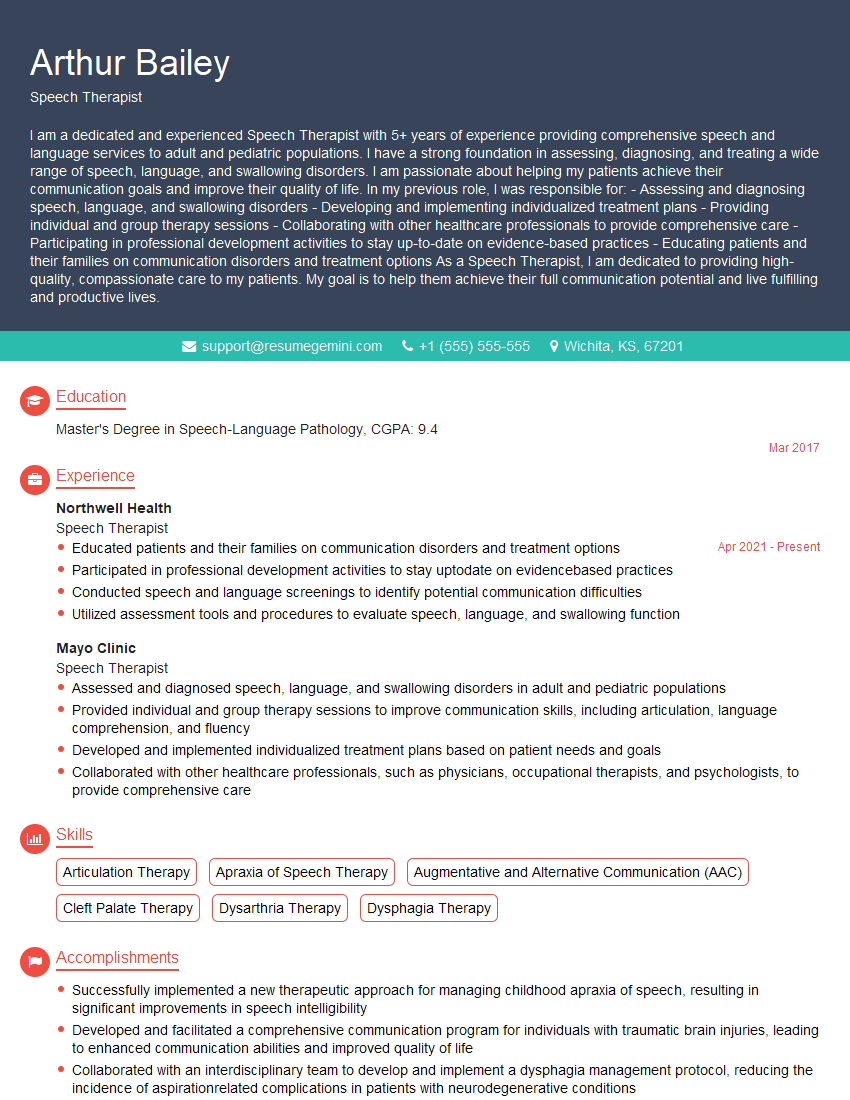
Mastering speech sound production opens doors to rewarding careers in speech-language pathology, research, and education. A strong foundation in this area is highly sought after by employers. To significantly boost your job prospects, create a compelling and ATS-friendly resume that showcases your skills and experience effectively. ResumeGemini is a trusted resource that can help you build a professional resume that stands out. They offer examples of resumes tailored to Speech Sound Production to guide you through the process, ensuring your qualifications shine through.
Explore more articles
Users Rating of Our Blogs
Share Your Experience
We value your feedback! Please rate our content and share your thoughts (optional).
What Readers Say About Our Blog
To the interviewgemini.com Webmaster.
Very helpful and content specific questions to help prepare me for my interview!
Thank you
To the interviewgemini.com Webmaster.
This was kind of a unique content I found around the specialized skills. Very helpful questions and good detailed answers.
Very Helpful blog, thank you Interviewgemini team.