Feeling uncertain about what to expect in your upcoming interview? We’ve got you covered! This blog highlights the most important Spiritual Support interview questions and provides actionable advice to help you stand out as the ideal candidate. Let’s pave the way for your success.
Questions Asked in Spiritual Support Interview
Q 1. Describe your understanding of the client-spiritual support provider relationship.
The client-spiritual support provider relationship is a sacred partnership built on trust, respect, and a shared commitment to the client’s spiritual growth and well-being. It’s not a hierarchical relationship but rather a collaborative journey where the provider acts as a guide, offering support and resources, but the client ultimately leads the way in defining their spiritual path.
This relationship requires strong boundaries, clear communication, and a deep understanding of confidentiality. The provider creates a safe and non-judgmental space where the client feels empowered to explore their beliefs, values, and spiritual experiences without fear of criticism or dismissal. It’s crucial to remember that the client’s autonomy is paramount; the provider facilitates their exploration, not dictates it. Think of it as a collaborative exploration rather than a teacher-student dynamic.
For instance, I might work with a client grappling with existential questions. Instead of offering definitive answers, I guide them toward self-discovery through reflective practices like journaling or meditation, helping them find their own meaning and purpose.
Q 2. How do you approach working with clients from diverse spiritual and religious backgrounds?
Working with clients from diverse spiritual and religious backgrounds requires deep humility, cultural sensitivity, and a commitment to inclusivity. I approach each client with an open mind, recognizing that their spiritual beliefs are deeply personal and integral to their identity. I don’t impose my own beliefs or perspectives but actively seek to understand theirs.
My methodology is rooted in person-centered care, focusing on the client’s unique needs and experiences. This means understanding their specific spiritual practices, values, and traditions before offering support. For instance, a client from a Buddhist tradition may find solace in meditation, while a Christian client might prefer prayer. I adapt my approach accordingly.
Open-ended questions and active listening are essential in this context. Instead of making assumptions, I carefully inquire about their spiritual history, practices, and current needs, ensuring that our work is aligned with their beliefs and values. I also prioritize ongoing education about diverse spiritual traditions to ensure my understanding remains comprehensive and respectful.
Q 3. Explain your methodology for providing spiritual support in a crisis situation.
In a crisis situation, my primary goal is to provide immediate emotional and spiritual stabilization. My approach combines practical support with spiritual coping mechanisms. The initial focus is on safety and well-being. This might involve connecting the client with emergency services if needed, ensuring their basic needs are met (food, shelter, etc.), and offering a calming presence.
Once the immediate crisis is addressed, I help the client connect with their inner resilience. This can involve employing spiritual practices tailored to their needs. This could include guided meditation, prayer, journaling, or mindful breathing exercises to help manage anxiety and promote self-regulation. The emphasis is always on empowering them to access their own internal resources and coping mechanisms.
For example, if a client is experiencing a profound loss, I might guide them in a reflective practice focused on remembering positive aspects of the deceased, promoting acceptance and fostering a sense of peace. The aim is to help them find meaning and hope amidst the pain.
Q 4. How do you assess a client’s spiritual needs and goals?
Assessing a client’s spiritual needs and goals involves a careful and sensitive process of exploration, utilizing a combination of techniques. It begins with establishing rapport and trust through open-ended questions and active listening. I would start by exploring the client’s understanding of spirituality itself; this understanding varies vastly from person to person.
Next, I gently inquire about their current spiritual practices, if any, and their beliefs, values, and sources of meaning. I also explore their past experiences with spirituality, including both positive and negative ones, to gain a holistic perspective. Finally, we collaboratively set realistic and attainable goals. These goals might focus on cultivating inner peace, fostering connection with something greater than themselves, exploring their sense of purpose, or addressing any specific spiritual concerns they might have.
For instance, a client might express a desire to deepen their connection with nature. We’d then collaboratively develop a plan involving nature walks, journaling reflections, or other suitable practices to achieve this goal.
Q 5. What are some common spiritual challenges faced by your clients, and how do you address them?
Many clients present with spiritual challenges such as feelings of meaninglessness, existential anxiety, loss of faith, spiritual disillusionment, or difficulty connecting with a higher power. Others grapple with guilt, shame, or forgiveness issues. Others still experience moral conflicts or a sense of being disconnected from their values.
My approach to addressing these challenges is multifaceted. I utilize various techniques, including narrative therapy to help clients reinterpret their experiences and discover new meanings. Spiritual practices such as meditation, mindfulness, or prayer, adapted to the client’s needs and background, can help cultivate inner peace and resilience. Cognitive behavioral techniques can address negative thought patterns contributing to spiritual distress. Collaborative goal setting empowers clients to take ownership of their spiritual journey.
For example, if a client is experiencing a loss of faith, I would explore their reasons, listen empathetically, and assist in finding new sources of meaning and hope in their lives, perhaps through nature, relationships, or creative expression. The aim is not to reinstate their old faith but to support their journey toward new sources of comfort and spiritual grounding.
Q 6. Describe your experience with grief and loss counseling from a spiritual perspective.
Grief and loss counseling from a spiritual perspective acknowledges the profound impact of death and loss on a person’s faith, beliefs, and sense of meaning. It recognizes that spiritual beliefs can offer both comfort and challenge during times of bereavement. Some find solace in their faith, while others struggle with their beliefs in the face of suffering. My approach focuses on validating the client’s experiences and creating a safe space for exploring their emotional and spiritual responses to loss.
I work collaboratively with clients to find meaning and purpose in the midst of their grief. This may involve exploring their spiritual beliefs about death and the afterlife, or assisting them in finding ways to honor their loved one’s memory that are consistent with their values and beliefs. It’s about helping them integrate the loss into their lives in a way that promotes healing and growth.
For instance, I might guide a client through rituals that help them process their grief, such as writing letters to the deceased, creating a memorial space, or participating in religious ceremonies. The goal is to support their emotional healing and spiritual reintegration while respecting their unique beliefs and coping mechanisms.
Q 7. How do you integrate spiritual practices into your therapeutic approach?
I integrate spiritual practices into my therapeutic approach in a way that is ethical, culturally sensitive, and client-centered. It’s not about imposing my own beliefs but about supporting the client’s exploration of their own spirituality and utilizing practices that align with their needs and values.
This integration might involve using mindfulness techniques to enhance self-awareness, employing guided imagery to promote relaxation and emotional regulation, or facilitating journaling to encourage self-reflection and spiritual exploration. Prayer, meditation, and other practices can be introduced when appropriate and desired by the client, always keeping client autonomy paramount. The emphasis is always on empowering clients to access their own inner resources and connect with their spiritual strengths.
For example, if a client is struggling with anxiety, I might introduce mindfulness meditation as a way to help them manage their symptoms. If a client is facing a difficult moral dilemma, I may help them clarify their values and beliefs through reflective journaling exercises.
Q 8. What are the ethical considerations you consider when providing spiritual support?
Ethical considerations in spiritual support are paramount. They guide my practice to ensure I act with integrity, respect, and responsibility. My primary ethical concern is to avoid causing harm. This includes respecting client autonomy – their right to choose their own path and beliefs – and avoiding coercion or imposing my own beliefs upon them.
- Non-maleficence: I prioritize doing no harm, both physically and emotionally. This involves being mindful of the potential for inadvertently triggering past trauma or reinforcing harmful beliefs.
- Beneficence: I strive to act in the best interests of my clients, promoting their well-being and spiritual growth. This necessitates careful discernment and a focus on their needs, not my own.
- Respect for autonomy: I fully respect a client’s right to self-determination, including their right to refuse or discontinue services at any time. Their spiritual journey is their own.
- Justice: I strive for fairness and equity in my practice, ensuring that all clients receive respectful and appropriate care, regardless of their background or circumstances.
- Confidentiality: Maintaining the strictest confidentiality is crucial, as trust is the foundation of a supportive relationship. Exceptions exist only in cases mandated by law, such as reporting child abuse or imminent harm to self or others.
For example, if a client shares a deeply personal struggle, I would listen empathetically and offer support without judgment, ensuring they feel safe and respected throughout the process.
Q 9. Explain your understanding of different spiritual traditions and their practices.
My understanding of spiritual traditions is broad and inclusive. I recognize that spirituality encompasses a wide range of beliefs and practices, and I approach each client with an open mind and a willingness to learn about their unique spiritual perspective. I’ve studied various traditions, including:
- Abrahamic traditions (Christianity, Judaism, Islam): I understand the emphasis on faith, prayer, scripture, and community in these faiths. I’m aware of the varying interpretations and practices within each tradition.
- Eastern traditions (Buddhism, Hinduism, Taoism): I’m familiar with concepts like karma, reincarnation, meditation, and mindfulness, and the importance of self-cultivation and inner peace.
- Indigenous traditions: I appreciate the deep connection to nature and the importance of ancestral wisdom in many indigenous spiritualities. I approach these traditions with respect and understanding of their unique contexts.
- Secular spirituality: I acknowledge the growing number of individuals who find meaning and purpose in life through ethical living, community engagement, and connection with nature, without adhering to organized religion.
I avoid imposing my personal beliefs and strive to create a safe space for clients to explore their own spiritual paths, whatever they may be. Understanding these various approaches helps me better adapt my support to each individual’s needs.
Q 10. How do you maintain your own spiritual well-being while providing support to others?
Maintaining my own spiritual well-being is essential to effectively support others. It’s a crucial aspect of self-care, preventing burnout and ensuring I can continue providing compassionate and effective support. My practices include:
- Regular meditation and mindfulness: This helps me to center myself, reduce stress, and cultivate inner peace, allowing me to be more present and empathetic with clients.
- Spending time in nature: Connecting with the natural world renews my energy and provides a sense of perspective and grounding.
- Engaging in creative activities: Artistic pursuits, such as writing or painting, help me to process emotions and express myself in healthy ways.
- Maintaining healthy boundaries: Setting clear boundaries between my professional and personal life is crucial. This includes limiting the number of clients I see, scheduling regular breaks, and engaging in activities outside of my work.
- Seeking supervision and peer support: Regularly discussing my cases with experienced colleagues helps me process challenges and refine my approach.
Just as I guide my clients, I also seek guidance and support for myself. It’s a continuous process of self-reflection and growth.
Q 11. Describe a time you faced a challenging ethical dilemma in spiritual support. How did you resolve it?
One challenging ethical dilemma involved a client who was contemplating ending their life due to severe depression and a loss of faith. They sought spiritual guidance, but their despair was profound. The dilemma was whether to prioritize their autonomy (respecting their right to choose their own path) or my responsibility to protect their life (potentially overriding their autonomy). I carefully listened without judgment, validating their pain and exploring their spiritual beliefs with them.
My approach involved:
- Empathetic listening: I created a safe space for them to express their feelings without interruption or judgment.
- Exploring their spiritual resources: We discussed their past experiences of meaning and connection, searching for sources of strength and hope.
- Connecting them with professional resources: I emphasized the importance of seeking professional mental health support alongside spiritual guidance. I helped them connect with a psychiatrist and therapist.
- Ongoing support: I continued to provide spiritual support, but with a clear understanding that mental health professionals were their primary care providers.
The outcome was a gradual shift in their perspective. While the suicidal thoughts didn’t vanish overnight, professional help, coupled with continued spiritual support, helped them develop coping mechanisms and a renewed sense of hope. It underscored the importance of collaboration between spiritual and mental health professionals when working with clients facing life-threatening crises.
Q 12. How do you ensure confidentiality and boundaries in spiritual support sessions?
Confidentiality and boundaries are essential to building trust and ensuring the safety and well-being of my clients. I clearly articulate my confidentiality policy at the outset of our work, explaining limitations only as mandated by law (such as suspected child abuse or harm to self or others). I also establish clear boundaries regarding the scope of my services and the nature of our relationship.
- Written informed consent: I have clients sign a form outlining the limits of confidentiality and the boundaries of our relationship.
- Professional distance: I maintain appropriate professional distance, avoiding dual relationships (e.g., becoming friends or engaging in social interactions outside of sessions).
- Time limits: I stick to scheduled session times to maintain clear boundaries and respect client’s time.
- Referral process: If a client’s needs fall outside my expertise (e.g., needing medical or psychological intervention), I refer them to appropriate professionals.
For instance, I would never share details of a session with anyone outside of my supervision team (if applicable) without the client’s explicit permission. This builds trust and fosters a safe space for vulnerable individuals to share their experiences.
Q 13. Describe your experience using specific spiritual practices (e.g., meditation, prayer, mindfulness) in your work.
I integrate various spiritual practices into my work, adapting them to the specific needs of each client. These practices aren’t performed *on* the client but rather inform my approach and my ability to create a supportive space.
- Mindfulness: I utilize mindfulness techniques to remain present and attentive during sessions, allowing me to fully listen and respond to my client’s experiences without judgment. This helps me connect with my client’s emotional state without being overwhelmed by their stories.
- Meditation: Personal meditation cultivates inner peace and self-awareness, which enhances my capacity for empathy and compassion.
- Prayer (in a non-denominational way): While I don’t impose my own beliefs, I understand the power of prayer or reflective contemplation for some clients. I might offer silent moments for reflection or offer to hold a space for their personal prayers or contemplation if they request it.
- Nature-based practices: For clients who resonate with it, we might engage in nature walks or other nature-based practices to connect with the restorative power of the natural world. This is always discussed beforehand and presented as an option, not a mandatory activity.
These practices enhance my ability to offer a truly supportive and nurturing environment for spiritual exploration and growth.
Q 14. How do you adapt your approach to spiritual support based on the client’s age, cultural background, and life circumstances?
Adapting my approach is crucial for effective spiritual support. I consider a client’s age, cultural background, and life circumstances to ensure that the support I provide is culturally sensitive, developmentally appropriate, and contextually relevant.
- Age: I adjust my language and communication style to suit the developmental stage of my client. For example, I would use simpler language and imagery with children and adolescents, while engaging in more nuanced conversations with adults.
- Cultural background: I recognize that spiritual beliefs and practices vary significantly across cultures. I strive to learn about the client’s cultural background to understand their unique perspective and adapt my approach accordingly. This may involve being mindful of cultural norms around touch, eye contact, and expression of emotions.
- Life circumstances: I consider the client’s current life situation, such as health issues, grief, loss, or stressful life events. I tailor my support to address their specific needs and challenges in a compassionate and effective manner.
For example, when working with an elderly client facing end-of-life issues, my focus would be on fostering acceptance, peace, and spiritual connection. In contrast, when working with a young adult navigating career choices, I would support exploration of their values and purpose.
Q 15. What are some resources you utilize to enhance your spiritual support skills?
Enhancing my spiritual support skills is an ongoing process of learning and self-reflection. I utilize several key resources to ensure I provide the most effective and compassionate care.
Continuing Education: I regularly attend workshops, conferences, and webinars focused on spiritual care, chaplaincy, and related fields. This keeps me updated on best practices and emerging research. For example, I recently completed a course on integrating mindfulness techniques into spiritual support sessions.
Supervision and Peer Support: I participate in regular supervision sessions with a senior spiritual care professional. This provides a safe space to discuss challenging cases, process my own emotional responses, and refine my techniques. I also benefit from peer support groups, where I can share experiences and learn from colleagues.
Spiritual Practices: My own personal spiritual life is crucial to my work. Through regular prayer, meditation, and engagement with my faith community, I cultivate self-awareness, empathy, and a deep understanding of spirituality’s role in well-being. This allows me to connect more authentically with clients from diverse backgrounds.
Relevant Literature: I stay current with scholarly articles and books on spirituality, religion, and healthcare. This informs my understanding of diverse spiritual traditions and helps me adapt my approach to meet individual needs. For instance, I recently read a study on the impact of spiritual interventions on patients with chronic illness.
Career Expert Tips:
- Ace those interviews! Prepare effectively by reviewing the Top 50 Most Common Interview Questions on ResumeGemini.
- Navigate your job search with confidence! Explore a wide range of Career Tips on ResumeGemini. Learn about common challenges and recommendations to overcome them.
- Craft the perfect resume! Master the Art of Resume Writing with ResumeGemini’s guide. Showcase your unique qualifications and achievements effectively.
- Don’t miss out on holiday savings! Build your dream resume with ResumeGemini’s ATS optimized templates.
Q 16. How do you deal with clients who have conflicting spiritual beliefs?
Respecting client autonomy and maintaining a non-judgmental stance are paramount when working with individuals holding conflicting spiritual beliefs. I approach these situations with a focus on understanding, collaboration, and shared decision-making.
Active Listening: I begin by actively listening to understand each client’s perspective without imposing my own beliefs. This involves creating a safe space where they feel comfortable sharing their thoughts and feelings, even if they differ from mine.
Identifying Common Ground: I look for common ground, such as shared values or goals related to well-being, hope, or meaning. Even with drastically different spiritual belief systems, we can often find points of connection around human experience.
Focusing on Shared Goals: I collaboratively set goals for the spiritual support process, prioritizing what matters most to the client. This ensures that the sessions are meaningful and tailored to their specific needs, regardless of their spiritual beliefs.
Referral if Necessary: If I feel unable to provide effective support due to significant differences in beliefs, I offer a referral to another spiritual care provider who might be a better fit. This prioritizes the client’s well-being and ensures they receive appropriate care.
For example, I once worked with a client who held strong creationist beliefs, while I hold a more scientifically-informed worldview. By focusing on their experience of finding meaning and purpose in life, rather than on debating scientific theories, I was able to establish a trusting relationship and offer meaningful support.
Q 17. Describe your experience working within a healthcare or community setting.
I have extensive experience providing spiritual support in both healthcare and community settings.
Hospital Chaplaincy: I served as a chaplain in a large urban hospital for five years. This involved providing spiritual care to patients and their families from diverse backgrounds, faiths, and beliefs, often during times of crisis or significant illness. I worked closely with medical teams to integrate spiritual care into the holistic treatment plan. I assisted in facilitating grief support groups and providing end-of-life care.
Community Ministry: I also have experience leading spiritual programs within a community center. This included facilitating faith-based discussion groups, providing individual spiritual counseling, and offering spiritual guidance to individuals dealing with life’s challenges outside the hospital setting. We frequently organized events focused on building community and fostering spiritual growth.
In both settings, my focus has been on providing compassionate, respectful, and individualized spiritual care that honors the unique beliefs and values of each person I serve.
Q 18. How do you measure the effectiveness of your spiritual support interventions?
Measuring the effectiveness of spiritual support interventions requires a nuanced approach that goes beyond simply quantifiable metrics. I employ both qualitative and quantitative methods.
Qualitative Measures: These focus on the client’s subjective experience. I regularly utilize open-ended questions during sessions to assess their perceived changes in spiritual well-being, hope, peace of mind, and sense of purpose. I also analyze client feedback through written reflections or informal conversations.
Quantitative Measures: While more challenging in spiritual care, standardized assessment tools can provide valuable data. Some scales measure spiritual well-being, hope, and coping mechanisms. These provide a baseline for comparison over time. However, it’s important to remember that these measures should be interpreted with caution and in conjunction with qualitative data.
Observational Data: Changes in the client’s behavior, emotional state, and engagement in life activities can also indicate the effectiveness of interventions. For example, a decrease in anxiety, an increase in social participation, or improved coping strategies could signal positive outcomes.
It’s crucial to remember that spiritual growth is a personal journey, and improvements might not always be linear or easily measurable.
Q 19. How do you handle situations where a client’s spiritual beliefs conflict with their medical treatment?
When a client’s spiritual beliefs conflict with their medical treatment, a collaborative and respectful approach is crucial. My role is to support the client in making informed decisions that align with their values and beliefs, while also ensuring their safety and well-being.
Understanding the Conflict: I begin by carefully listening to the client to fully understand the nature of the conflict. What specific aspects of their beliefs clash with the recommended treatment? What are their concerns and fears?
Facilitating Dialogue: I facilitate a dialogue between the client, their medical team, and, if appropriate, their spiritual community leaders. The goal is to find common ground and explore options that respect the client’s beliefs while addressing their medical needs.
Exploring Alternatives: If possible, we explore alternative treatments or approaches that might be more compatible with the client’s beliefs. This often involves interdisciplinary collaboration with physicians, nurses, and other healthcare professionals.
Respecting Autonomy: Ultimately, the decision about medical treatment rests with the client. I help them weigh the risks and benefits of different options, but I do not impose my own beliefs or judgments. My role is to support them in making the decision that feels most right for them, even if it means accepting a less medically optimal outcome.
For example, I once worked with a client whose religious beliefs prohibited blood transfusions. I worked with the medical team and the client’s family to explore alternative treatments and ensure that the client’s spiritual and physical needs were respected throughout the process.
Q 20. Explain your understanding of spiritual distress and its manifestations.
Spiritual distress is a state of suffering related to one’s belief system, values, or sense of purpose. It can manifest in various ways, depending on the individual and their circumstances.
Emotional Manifestations: These include anxiety, fear, anger, guilt, shame, grief, hopelessness, and despair.
Cognitive Manifestations: These might involve questioning one’s faith, experiencing a loss of meaning or purpose, feeling disconnected from spirituality, or struggling with existential questions about life, death, and suffering.
Behavioral Manifestations: These could include changes in religious practices, withdrawal from social interactions, increased substance use, or engaging in self-destructive behaviors.
Physical Manifestations: While not directly caused by spiritual distress, it can exacerbate existing physical conditions or lead to new physical symptoms such as sleep disturbances, appetite changes, or somatic complaints.
It’s important to note that spiritual distress is not a mental illness, but it can significantly impact mental and emotional well-being. It is a complex experience requiring a compassionate and holistic approach to care.
Q 21. What is your approach to working with clients struggling with existential questions?
Existential questions—regarding life’s meaning, purpose, suffering, and death—are a normal part of the human experience, but they can become particularly challenging during times of crisis or significant life transitions.
Creating a Safe Space: I begin by creating a safe and non-judgmental space where clients feel comfortable exploring these questions without fear of criticism or ridicule.
Active Listening and Empathy: I actively listen to their thoughts and feelings, offering empathy and validation without attempting to provide easy answers. The focus is on understanding their unique perspective and struggles.
Exploring Personal Resources: I help clients explore their existing resources and coping mechanisms to navigate their existential concerns. This might involve reflecting on past experiences of resilience, tapping into their support networks, or engaging in activities that bring meaning and purpose.
Facilitating Self-Reflection: I use guided reflection techniques to help clients examine their beliefs, values, and personal experiences in relation to their existential questions. This might involve journaling, meditation, or other reflective practices.
Connecting with Larger Meaning Systems: Depending on the client’s spiritual background, I may help them reconnect with their faith community, explore philosophical perspectives, or engage in creative or artistic expression as a way of finding meaning and purpose.
It’s important to remember that there are no easy answers to existential questions. My role is to support clients in their journey of self-discovery and help them find ways to cope with their anxieties and uncertainties, fostering hope and resilience in the face of life’s inherent uncertainties.
Q 22. Describe your experience with providing spiritual support to individuals facing terminal illness.
Providing spiritual support to individuals facing terminal illness is a profound privilege and a deeply sensitive undertaking. It requires a nuanced understanding of grief, loss, and the search for meaning in the face of mortality. My approach centers on active listening, empathy, and creating a safe space for the individual to explore their beliefs, values, and spiritual concerns without judgment. This might involve simply being present, offering a comforting presence, or engaging in meaningful conversations about their life, legacy, or relationship with the divine, however they define it.
For example, I worked with a client, let’s call him David, who was facing his final days. He was a deeply religious man, and his faith provided him considerable comfort. Our sessions focused on helping him reconcile with unresolved issues and find peace with his impending death. We explored passages from his sacred texts, prayed together at his request, and discussed his legacy and the impact he’d had on others. This fostered a sense of acceptance and peace in his final moments. In contrast, another client, Sarah, was not religiously affiliated but deeply connected to nature. Our sessions focused on reflecting on her life’s experiences through the lens of nature’s cycles and appreciating the beauty and impermanence of life. The key is to meet each individual where they are spiritually.
Q 23. How do you maintain professional boundaries while building rapport with clients?
Maintaining professional boundaries while building rapport is crucial in spiritual support. It’s a delicate balance between genuine connection and maintaining ethical conduct. I achieve this through several strategies. First, clear and upfront communication of my role and limitations is essential. I clearly state my professional capacity and any limitations to my expertise or ability to provide specific types of support. Second, consistent adherence to professional guidelines and ethical codes is non-negotiable. This includes respecting client confidentiality, avoiding dual relationships (e.g., becoming a client’s friend), and managing personal boundaries. This might mean setting clear time limits for sessions, avoiding personal disclosures beyond what’s therapeutically necessary, and maintaining professional objectivity. Third, regular self-reflection and supervision help me to identify any potential boundary crossings and address them proactively.
For instance, while building empathy is important, I avoid offering personal opinions or advice outside my professional realm. I focus on empowering the client to find their own answers and solutions, acting as a guide rather than a director. This approach fosters a collaborative relationship grounded in respect and professional integrity.
Q 24. What is your understanding of the role of hope and resilience in spiritual well-being?
Hope and resilience are fundamental to spiritual well-being, particularly during times of adversity. Hope acts as a source of motivation and strength, providing a sense of possibility and the belief that things can improve, even amidst difficult circumstances. Resilience, on the other hand, refers to the capacity to adapt and recover from setbacks, bounce back from adversity, and maintain a sense of well-being. These two concepts are deeply intertwined; hope fuels resilience, and resilience fosters hope. In spiritual support, nurturing hope and resilience often involves helping clients identify their inner strengths, connect with supportive resources, and develop coping strategies that align with their values and beliefs.
For example, working with someone grieving a loss, I might help them identify past experiences where they showed resilience, reminding them of their inner strength. We might explore ways to connect with their spiritual community or find meaning-making practices that offer solace and hope. Helping clients cultivate gratitude and mindfulness can also significantly boost resilience and promote a sense of inner peace and hope.
Q 25. How do you support clients in discovering their own spiritual path?
Supporting clients in discovering their own spiritual path is a collaborative process that respects individual agency and autonomy. It’s not about imposing any particular belief system but rather creating a space for self-discovery and exploration. This often involves guiding clients through self-reflection exercises, encouraging them to explore different spiritual practices and traditions (meditation, prayer, nature connection, etc.), and assisting them in identifying their unique values, beliefs, and life purpose. I often use open-ended questions to facilitate exploration, such as: “What gives your life meaning?”, “What are your core values?”, or “What experiences have deepened your sense of connection to something greater than yourself?”
A crucial aspect is acknowledging that spiritual paths are diverse and personal. Some clients may find solace in organized religion, while others may find their spirituality through nature, art, or human connection. My role is to support and validate their unique path, whatever it may be, fostering self-acceptance and personal growth.
Q 26. Describe your experience collaborating with other healthcare professionals to provide holistic care.
Collaborating with other healthcare professionals is vital for providing holistic care. In my experience, effective collaboration requires open communication, shared goals, and a mutual understanding of each professional’s role. I often work alongside medical doctors, nurses, social workers, and therapists to coordinate care and ensure clients receive comprehensive support. This might involve attending care team meetings, sharing relevant information (with client consent), and coordinating interventions to address physical, emotional, and spiritual needs. For instance, I might work with a medical team to ensure the client’s spiritual needs are considered alongside their physical treatment plan. I might also liaise with social workers to address practical concerns that may impact the client’s spiritual well-being.
A successful collaboration requires clear communication and a willingness to work together towards a shared vision of holistic well-being. This approach ensures that the client’s needs are met comprehensively and holistically, improving the quality of life and facilitating a more peaceful experience.
Q 27. What are your professional development plans for continuing to enhance your spiritual support skills?
My professional development plan focuses on continuously enhancing my skills and knowledge in spiritual support. This includes pursuing ongoing education through workshops, conferences, and relevant courses. I am currently focusing on deepening my understanding of specific spiritual traditions and practices, and expanding my knowledge of grief and loss counseling. I also participate in regular supervision with a senior spiritual care professional to receive feedback and ensure ethical practice. This allows me to maintain high standards of care and continuously learn from my experiences and the evolving needs of my clients. I also aim to stay current with research and best practices in spiritual care by reading relevant literature and engaging with professional networks.
For example, I am currently enrolled in a course on trauma-informed spiritual care to enhance my ability to work effectively with individuals who have experienced trauma. I believe this continuous learning is essential to providing compassionate and effective spiritual support.
Key Topics to Learn for Spiritual Support Interview
- Understanding Diverse Spiritual Beliefs: Explore various religious and spiritual traditions, including their core tenets, practices, and cultural contexts. This includes sensitivity to diverse worldviews and recognizing the limits of one’s own understanding.
- Active Listening and Empathetic Communication: Develop skills in providing a safe and supportive space for individuals expressing their spiritual needs and concerns. Practice techniques for reflecting feelings, validating experiences, and offering compassionate presence.
- Ethical Considerations in Spiritual Support: Grasp the ethical boundaries and responsibilities inherent in providing spiritual support, including maintaining confidentiality, avoiding imposing personal beliefs, and recognizing when professional referral is necessary.
- Grief and Loss Counseling: Familiarize yourself with the stages of grief and develop strategies for providing comfort and support to those experiencing loss, regardless of their spiritual background. Understand the role of spiritual beliefs in coping with grief.
- Hope and Resilience: Learn how to foster hope and resilience in individuals facing difficult circumstances. This includes identifying their strengths and resources, and helping them connect with their inner spiritual strength.
- Working with Interdisciplinary Teams: Understand the role of spiritual support within a larger healthcare or social service team, including collaboration with medical professionals, social workers, and other support personnel.
- Self-Care and Boundary Setting: Develop strategies for maintaining your own well-being while providing support to others. This includes understanding the importance of setting healthy boundaries to avoid burnout.
Next Steps
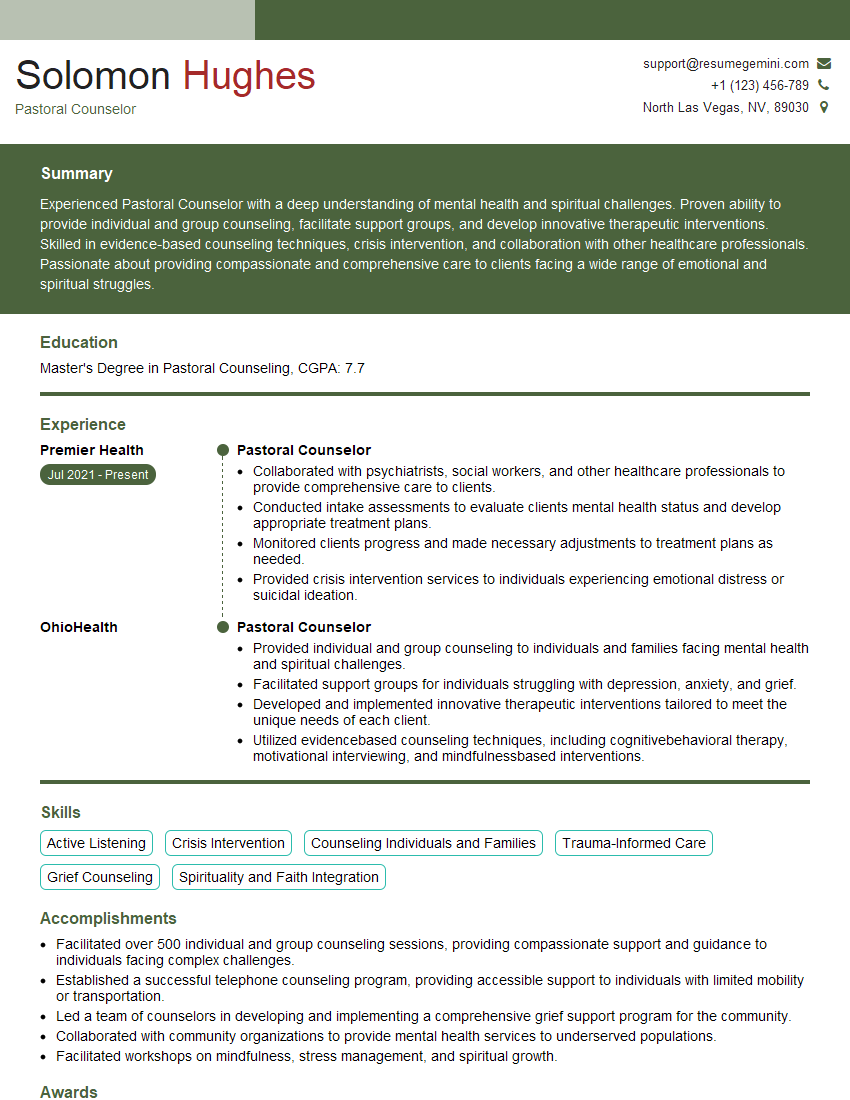
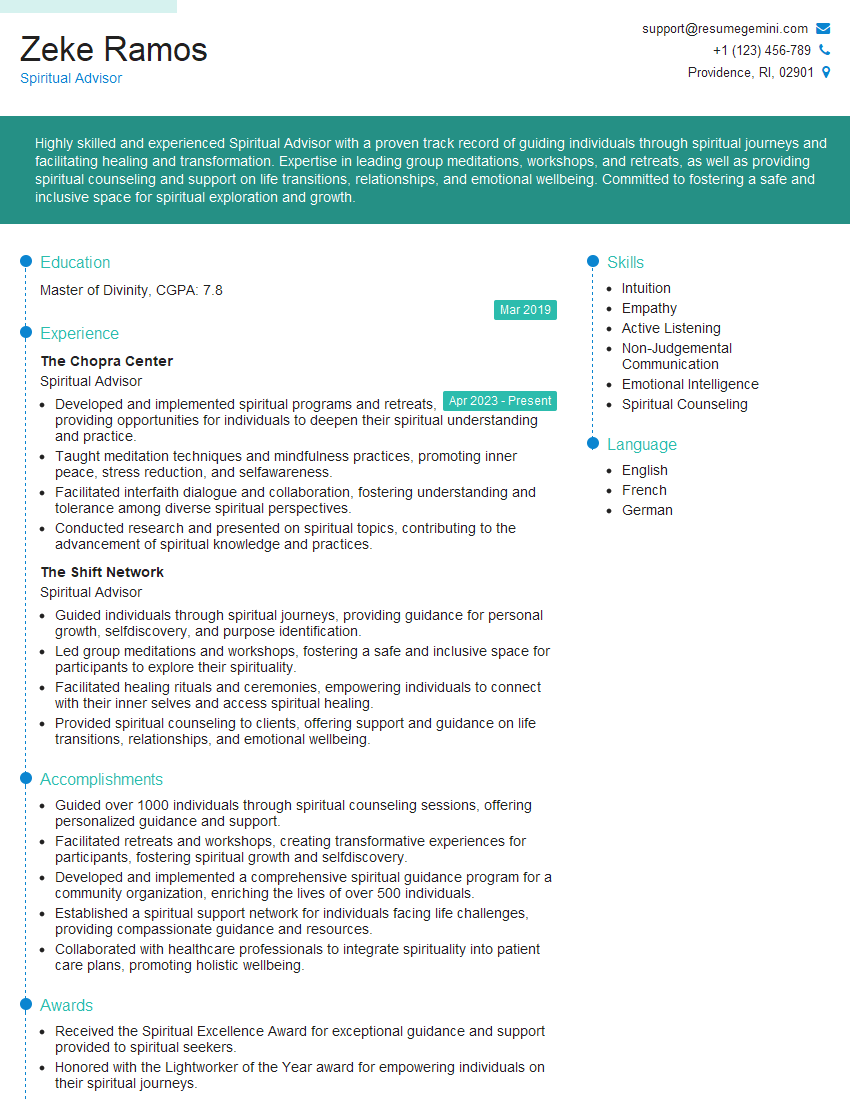
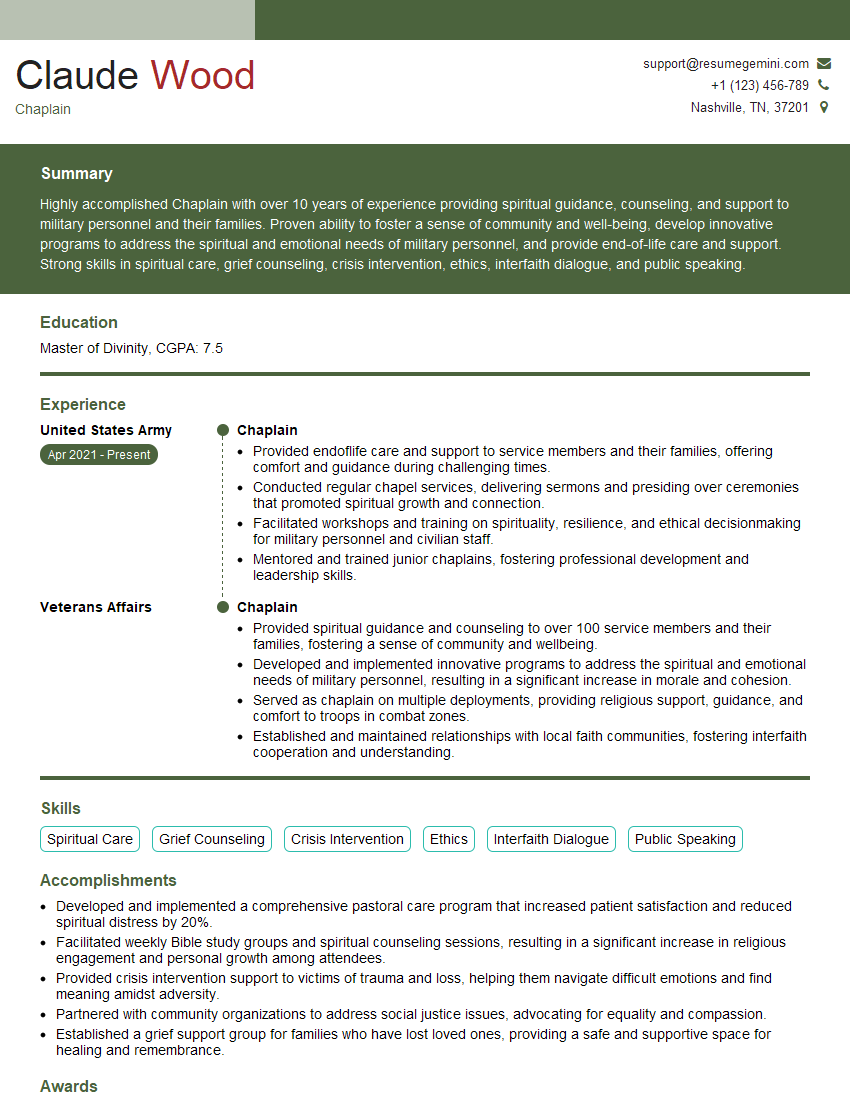
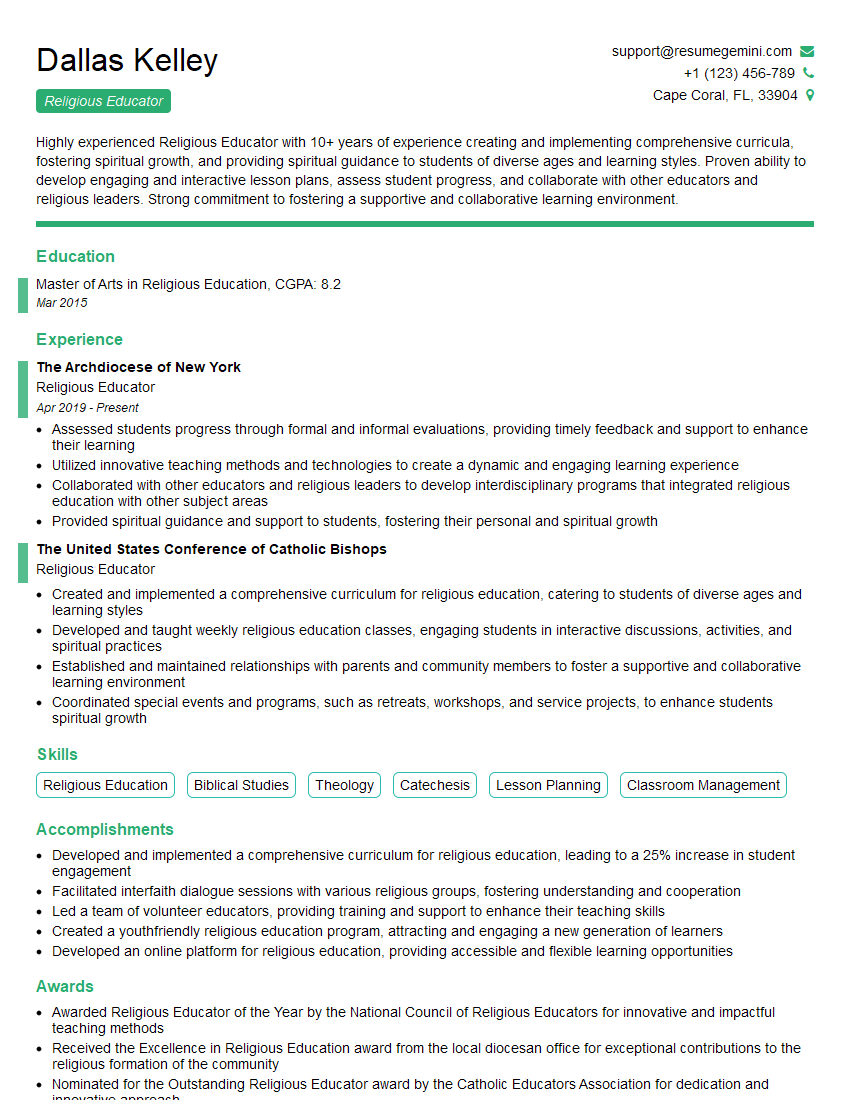
Mastering spiritual support skills opens doors to rewarding careers offering profound personal fulfillment and significant positive impact on the lives of others. To increase your job prospects, crafting an ATS-friendly resume is crucial. A well-structured resume highlights your skills and experiences effectively, maximizing your chances of landing interviews. We strongly encourage you to use ResumeGemini, a trusted resource, to build a professional and impactful resume that showcases your unique abilities in spiritual support. Examples of resumes tailored to this field are available within ResumeGemini to guide you.
Explore more articles
Users Rating of Our Blogs
Share Your Experience
We value your feedback! Please rate our content and share your thoughts (optional).
What Readers Say About Our Blog
To the interviewgemini.com Webmaster.
Very helpful and content specific questions to help prepare me for my interview!
Thank you
To the interviewgemini.com Webmaster.
This was kind of a unique content I found around the specialized skills. Very helpful questions and good detailed answers.
Very Helpful blog, thank you Interviewgemini team.