Interviews are more than just a Q&A session—they’re a chance to prove your worth. This blog dives into essential Statistics for Remote Sensing interview questions and expert tips to help you align your answers with what hiring managers are looking for. Start preparing to shine!
Questions Asked in Statistics for Remote Sensing Interview
Q 1. Explain the difference between supervised and unsupervised classification techniques in remote sensing.
Supervised and unsupervised classification techniques are two fundamental approaches in remote sensing image analysis, differing primarily in how they learn to categorize pixels. Imagine you’re sorting a pile of colorful candies:
Supervised classification is like having a labelled candy chart. You already know which color corresponds to which candy type (e.g., red = cherry, green = lime). You then use this ‘training data’ to teach a computer algorithm to identify the candy types based on their color. Common supervised methods include Maximum Likelihood Classification (MLC) and Support Vector Machines (SVM). In remote sensing, this means you’d provide the algorithm with samples of known land cover types (e.g., forest, water, urban) to train it, then apply it to classify the entire image.
Unsupervised classification is more like grouping similar candies together without pre-defined labels. You might notice that all the round candies cluster together, and the square ones form another group. The algorithm identifies natural groupings of pixels based on their spectral characteristics (e.g., brightness values in different bands) without prior knowledge of their classes. K-means clustering is a popular unsupervised technique. In remote sensing, this is useful for exploratory analysis where you might not have ground truth data or want to discover unknown patterns in the image.
Q 2. Describe various methods for atmospheric correction in remote sensing imagery.
Atmospheric correction is crucial in remote sensing as the atmosphere significantly alters the signal received by sensors. Imagine trying to photograph a flower through a fogged window – the fog distorts the true color and clarity of the flower. Similarly, atmospheric components like aerosols, gases, and water vapor scatter and absorb electromagnetic radiation, affecting the accuracy of remote sensing measurements.
- Dark Object Subtraction (DOS): A simple method assuming the darkest pixel in an image represents zero reflectance, used primarily for correcting shortwave infrared (SWIR) imagery. It’s quick but susceptible to errors if the darkest pixel isn’t truly zero reflectance.
- Empirical Line Methods: These methods use the relationship between two spectral bands (often visible and near-infrared) to estimate atmospheric effects. They are simple but require clear atmospheric conditions.
- Radiative Transfer Models (RTMs): These are physically-based models that simulate the interaction of radiation with the atmosphere. Models like MODTRAN and 6S are commonly used and provide detailed correction, but require extensive input parameters and are computationally more demanding.
- Image-Based Atmospheric Correction: This involves using reference images with known atmospheric conditions or using ancillary data such as aerosol optical depth to correct for atmospheric effects.
The choice of method depends on factors such as sensor characteristics, atmospheric conditions, computational resources, and the desired accuracy. RTMs are generally preferred for high-accuracy applications, while simpler methods might suffice for preliminary analysis or when computational resources are limited.
Q 3. How do you handle outliers in remote sensing datasets?
Outliers, those data points significantly deviating from the rest, can heavily skew statistical analyses in remote sensing. Think of a single extremely bright pixel in a mostly dark night-time image – it’s likely an error, not a genuine feature.
Several strategies exist for handling outliers:
- Visual inspection: Often, outliers are easily spotted on histograms or image displays. Manual removal or masking can then be applied, but this is subjective and time-consuming.
- Statistical methods: Techniques like the Boxplot method, identifying data points beyond a certain multiple of the interquartile range (IQR), can automatically flag outliers. Similarly, robust statistical methods, less sensitive to outliers, such as median instead of mean, can be used.
- Spatial filtering: Methods like median filtering smooth the image, reducing the influence of isolated outliers. This might however also smooth out genuine small features.
- Data transformation: Transforming the data (e.g., using logarithmic or Box-Cox transformations) can sometimes reduce the impact of outliers.
The choice of approach depends on the nature of the outliers, their potential causes, and the overall data quality. A combination of methods is often optimal.
Q 4. What are the common statistical measures used to assess the accuracy of remote sensing classifications?
Assessing the accuracy of remote sensing classifications is vital. We need to know how well our classified map represents reality. Key measures include:
- Overall Accuracy: The percentage of correctly classified pixels overall. A simple and intuitive measure, but can be misleading if classes are imbalanced.
- Producer’s Accuracy (User’s Accuracy): Producer’s accuracy indicates the probability that a pixel actually belonging to a particular class will be correctly classified. User’s accuracy refers to the probability that a pixel classified as belonging to a particular class actually does belong to that class.
- Kappa Coefficient (κ): Measures the agreement between the classification and reference data, correcting for chance agreement. A higher κ value (closer to 1) indicates better agreement.
- Confusion Matrix: A table showing the counts of pixels correctly and incorrectly classified for each class. It provides detailed information about the performance of the classification for individual classes.
These measures, often calculated using a reference data set (ground truth data), provide a comprehensive evaluation of the classification’s reliability and help identify areas needing improvement.
Q 5. Explain the concept of spatial autocorrelation and its implications for statistical analysis.
Spatial autocorrelation describes the tendency of nearby spatial locations to have similar values. Imagine a map of house prices: houses in the same neighborhood tend to have similar prices. This spatial dependence violates the assumption of independence often made in traditional statistical analysis.
Implications for statistical analysis:
- Inflated Type I error: Ignoring spatial autocorrelation can lead to falsely rejecting the null hypothesis (finding significant relationships where none exist) because the apparent variation in your data is less than what you’d expect from independent data.
- Inefficient estimators: Standard statistical techniques can produce inefficient or biased estimates if spatial autocorrelation is not considered.
Addressing spatial autocorrelation:
- Geostatistical techniques: Methods like kriging explicitly model spatial autocorrelation to improve estimation and prediction.
- Spatial regression models: Models like spatial lag or spatial error models account for spatial dependence in the error structure or the spatial relationships among variables.
Failing to account for spatial autocorrelation can lead to incorrect conclusions in remote sensing studies. It’s crucial to assess for spatial autocorrelation and apply appropriate methods to correct for it.
Q 6. What are the advantages and disadvantages of using different spatial resolutions in remote sensing?
Spatial resolution, the size of the smallest discernible detail, is a critical factor in remote sensing. Think of comparing a high-resolution photograph with a pixelated image – the high-resolution image provides much more detail.
Advantages of high spatial resolution:
- Greater detail: Enables mapping and analysis of smaller features.
- Improved accuracy: Leads to more accurate classification and measurements.
Disadvantages of high spatial resolution:
- Higher cost: Acquiring and processing high-resolution data is expensive.
- Increased data volume: Requires significant storage and processing capacity.
Advantages of low spatial resolution:
- Lower cost: Less expensive to acquire and process.
- Larger area coverage: Allows for monitoring of larger regions.
Disadvantages of low spatial resolution:
- Loss of detail: Smaller features might be missed or misclassified.
- Reduced accuracy: Might lead to lower accuracy in analyses.
The optimal spatial resolution depends on the application. High resolution is needed for detailed mapping of urban areas, while low resolution might be sufficient for monitoring large-scale deforestation.
Q 7. How do you address the problem of multicollinearity in remote sensing data analysis?
Multicollinearity arises when predictor variables in a remote sensing dataset are highly correlated. Imagine trying to predict crop yield using both rainfall and soil moisture – they’re likely strongly correlated, making it hard to isolate the effect of each independently.
Consequences of multicollinearity:
- Unstable regression coefficients: Small changes in the data can lead to large changes in the estimated coefficients, making the results unreliable.
- Inflated standard errors: The uncertainty associated with the coefficient estimates increases, making it harder to assess their statistical significance.
Addressing multicollinearity:
- Principal Component Analysis (PCA): Reduces the dimensionality of the data by creating uncorrelated principal components, which are linear combinations of the original variables. Often used to preprocess remote sensing data before further analysis.
- Variable selection: Selecting a subset of predictor variables that are less correlated. Techniques like stepwise regression can help automate this process.
- Ridge regression or Lasso regression: These methods shrink the regression coefficients, reducing their sensitivity to multicollinearity. They are particularly useful when dealing with high dimensional data.
- Variance Inflation Factor (VIF): Assessing the degree of multicollinearity using VIF; If VIF > 10, multicollinearity is often considered a problem.
The best approach depends on the specific dataset and the goals of the analysis. PCA is commonly used as a preprocessing step in remote sensing, while variable selection or regularization techniques might be employed in subsequent analyses.
Q 8. Describe different resampling techniques used in remote sensing image processing.
Resampling in remote sensing involves changing the spatial resolution of an image. This is crucial because different sensors have different spatial resolutions, and we often need to align images from different sources or change the resolution for processing efficiency or analysis needs. Several techniques exist, each with its strengths and weaknesses:
Nearest Neighbor: This is the simplest method. It assigns the value of the nearest pixel in the original image to the new pixel. It’s fast but can introduce aliasing artifacts (blocky appearance) and is not suitable for preserving spectral information.
Bilinear Interpolation: This method calculates the new pixel value based on a weighted average of the four nearest pixels in the original image. It’s faster than more complex methods and generally produces smoother results than nearest neighbor, but can still lead to some blurring, especially at large resampling factors.
Bicubic Interpolation: This uses a weighted average of 16 neighboring pixels, resulting in smoother and more accurate results than bilinear interpolation. It’s computationally more expensive but offers better preservation of detail and minimizes blurring. It’s a popular choice for many applications.
Cubic Convolution: Similar to bicubic, but often considered superior in minimizing artifacts. It’s a more sophisticated interpolation method that offers a better balance between speed and accuracy.
The choice of resampling method depends on the specific application and the trade-off between computational cost and accuracy. For example, if speed is paramount and minor artifacts are acceptable, nearest neighbor might suffice. However, for high-quality image analysis requiring preservation of detail, bicubic or cubic convolution are preferred.
Q 9. Explain the difference between pixel-based and object-based image analysis.
Pixel-based and object-based image analysis (OBIA) represent fundamentally different approaches to extracting information from remote sensing imagery. Imagine looking at a satellite image: pixel-based analysis treats each individual pixel as the unit of analysis, while OBIA considers groups of pixels that represent meaningful objects.
Pixel-based analysis uses each pixel’s spectral signature (its reflectance values in different bands) to classify it into different categories. This is often done using statistical methods like supervised or unsupervised classification (e.g., maximum likelihood classification, support vector machines). It’s computationally efficient but can struggle with mixed pixels (pixels containing multiple land cover types).
Object-based image analysis (OBIA) first segments the image into meaningful objects (e.g., buildings, trees, fields) based on spectral and spatial characteristics. Then, classification is performed on these objects, rather than individual pixels. This approach leverages spatial context, improving classification accuracy and reducing the impact of mixed pixels. Segmentation algorithms, like region growing or watershed segmentation, are used to create the objects.
In essence, OBIA adds a layer of spatial context that pixel-based methods lack, leading to better results in many complex landscapes. For example, classifying individual trees in a forest is much more accurate using OBIA because it considers the spatial arrangement and spectral characteristics of groups of pixels representing a single tree rather than classifying each pixel individually.
Q 10. How would you approach the problem of cloud cover in satellite imagery analysis?
Cloud cover is a major challenge in satellite imagery analysis as it obscures the Earth’s surface. Several strategies are used to mitigate its impact:
Image Selection: The simplest approach is to select images with minimal cloud cover. This requires careful examination of cloud masks and potentially acquiring images from multiple dates.
Cloud Masking: This involves identifying and removing cloudy pixels from the image using algorithms that detect high reflectance in near-infrared bands or other indicators of cloud presence. Numerous algorithms are available, some incorporating atmospheric correction techniques.
Cloud Filling/Interpolation: If cloud cover is extensive, you can use various techniques to fill in the missing data. This might involve using data from neighboring cloud-free images (temporal interpolation) or sophisticated methods using spatial interpolation or even machine learning models trained on cloud-free areas to predict the reflectance values in cloudy areas.
Multi-temporal Analysis: Combining images from different dates can help overcome cloud cover. If a particular area is cloudy in one image, it might be clear in another, allowing for a more complete dataset.
The best approach depends on the extent of cloud cover, the specific application, and the availability of suitable data. For example, if cloud cover is minor, cloud masking might be sufficient. However, for extensive cloud cover, a combination of image selection, cloud filling, and multi-temporal analysis may be necessary.
Q 11. What are some common errors associated with remote sensing data acquisition and processing?
Remote sensing data acquisition and processing are prone to various errors. These can be broadly categorized as:
Atmospheric Effects: The atmosphere scatters and absorbs radiation, affecting the accuracy of measurements. Atmospheric correction techniques are vital to minimize these errors.
Sensor Errors: Sensors can have calibration issues, leading to systematic biases in the data. Regular calibration and validation are essential.
Geometric Errors: These include errors in geolocation (incorrect positioning of pixels) and distortions due to sensor viewing geometry. Geometric correction techniques are used to rectify these.
Radiometric Errors: These involve errors in the measurement of radiance or reflectance. This might stem from sensor noise, or inconsistencies in atmospheric conditions.
Processing Errors: Mistakes during data pre-processing (e.g., incorrect atmospheric correction or resampling) or analysis (e.g., misinterpretation of results) can introduce significant errors.
Understanding the sources of error and employing appropriate quality control measures are crucial for reliable remote sensing analysis. For example, a common check is to compare the results with ground truth data or other independent data sources.
Q 12. Explain how you would validate a remote sensing model.
Validating a remote sensing model involves assessing its accuracy and reliability. This is typically done by comparing model predictions with independent ground truth data. The specific validation methods depend on the type of model. Here are some common approaches:
Accuracy Assessment: For classification models, this involves creating a confusion matrix, which shows the counts of correctly and incorrectly classified pixels. Metrics like overall accuracy, producer’s accuracy, user’s accuracy, and kappa coefficient are then calculated to evaluate performance.
Root Mean Square Error (RMSE): For regression models, RMSE measures the difference between predicted and observed values. A lower RMSE indicates better model accuracy.
R-squared (R²): Also for regression, R² represents the proportion of variance in the dependent variable explained by the model. Higher R² values indicate better fit.
Independent Validation Dataset: It’s crucial to use a separate dataset for validation that was not used for model training. This ensures a more robust assessment of model generalizability.
A successful validation demonstrates the model’s ability to generalize to unseen data, signifying its practical utility. For instance, if a model for predicting crop yields from satellite imagery is validated against field measurements from a different region, it demonstrates the model’s broader applicability.
Q 13. How would you choose appropriate statistical tests for analyzing remote sensing data?
Choosing the appropriate statistical tests for analyzing remote sensing data depends on the nature of the data and the research question. Here’s a framework:
Data Type: Are the data continuous (e.g., reflectance values) or categorical (e.g., land cover classes)?
Research Question: Are you comparing means, testing for correlations, or examining relationships between variables?
Number of Groups: Are you comparing two groups or more?
Data Distribution: Are the data normally distributed? This is crucial for selecting parametric vs. non-parametric tests.
Examples:
t-test: For comparing the means of two groups of continuous data (e.g., comparing vegetation indices between two different land cover types).
ANOVA (Analysis of Variance): For comparing the means of three or more groups of continuous data (e.g., comparing soil moisture across multiple land use classes).
Correlation analysis (Pearson’s r): To assess the linear relationship between two continuous variables (e.g., relationship between vegetation index and rainfall).
Chi-square test: For analyzing the association between two categorical variables (e.g., relationship between land cover type and presence/absence of a certain species).
Non-parametric alternatives exist for data that violate assumptions of normality. Always ensure your chosen test is appropriate for your data and research question.
Q 14. Describe your experience with different types of remote sensing data (e.g., Landsat, Sentinel, LiDAR).
My experience encompasses a broad range of remote sensing data, including:
Landsat: I’ve extensively utilized Landsat data (e.g., Landsat 7 ETM+, Landsat 8 OLI/TIRS) for various applications, including land cover classification, change detection, and vegetation monitoring. The long temporal record of Landsat makes it ideal for studying land use changes over decades.
Sentinel: I’m proficient in working with Sentinel data (Sentinel-2 MSI, Sentinel-1 SAR), particularly appreciating the high spatial and temporal resolution offered by Sentinel-2 for detailed land cover mapping. Sentinel-1’s SAR capabilities are invaluable for applications where cloud cover is a significant concern, like flood mapping.
LiDAR: I have considerable experience processing and analyzing LiDAR data for applications like digital elevation model (DEM) generation, canopy height modeling, and urban feature extraction. The high-accuracy 3D point cloud data provided by LiDAR offers unparalleled detail for many applications.
Beyond these specific platforms, I have worked with other datasets like MODIS and ASTER, always adapting my statistical methods to the specific characteristics and limitations of each sensor. My experience allows me to seamlessly integrate data from different sources for comprehensive analysis.
Q 15. Explain your familiarity with relevant software packages for remote sensing data analysis (e.g., ArcGIS, ENVI, R).
My experience with remote sensing software is extensive. I’m highly proficient in R, leveraging its powerful statistical capabilities and diverse packages like raster, sp, and rgdal for data manipulation, analysis, and visualization. For example, I’ve used raster::calc() to perform complex calculations across entire raster datasets, greatly accelerating processing time compared to manual methods. I also possess solid working knowledge of ENVI, particularly for its image pre-processing functionalities like atmospheric correction and geometric rectification. Finally, I’m familiar with ArcGIS, primarily utilizing its geoprocessing tools for tasks like spatial analysis and map production. The choice of software depends heavily on the specific task; R excels in statistical modeling and analysis, while ENVI is ideal for image processing, and ArcGIS provides strong GIS capabilities. I often combine these packages for comprehensive analyses.
Career Expert Tips:
- Ace those interviews! Prepare effectively by reviewing the Top 50 Most Common Interview Questions on ResumeGemini.
- Navigate your job search with confidence! Explore a wide range of Career Tips on ResumeGemini. Learn about common challenges and recommendations to overcome them.
- Craft the perfect resume! Master the Art of Resume Writing with ResumeGemini’s guide. Showcase your unique qualifications and achievements effectively.
- Don’t miss out on holiday savings! Build your dream resume with ResumeGemini’s ATS optimized templates.
Q 16. How do you handle missing data in remote sensing datasets?
Missing data is a common challenge in remote sensing. The best approach depends on the nature and extent of the missing data. Simple methods like replacing missing values with the mean or median of neighboring pixels are often insufficient, as they can introduce bias. More sophisticated techniques include:
- Spatial interpolation: Methods like inverse distance weighting (IDW) or kriging estimate missing values based on the spatial correlation of surrounding pixels. IDW is computationally less demanding, while kriging provides more accurate estimations but requires assumptions about the spatial autocorrelation.
- Temporal interpolation: If time series data is available, missing values can be estimated by interpolating from surrounding time points. Methods like linear interpolation or more advanced techniques, including spline interpolation, can be applied.
- Machine learning: Advanced methods such as K-nearest neighbors (KNN) imputation or more complex machine learning models can learn patterns from the available data to predict missing values, achieving higher accuracy for complex patterns.
The choice of method hinges on the spatial and temporal distribution of missing data, the underlying data structure, and the tolerance for error. It is crucial to document the chosen method and assess its impact on subsequent analyses.
Q 17. Describe different methods for change detection in remote sensing images.
Change detection in remote sensing involves identifying differences between images acquired at different times. Numerous methods exist, each with its strengths and weaknesses:
- Image differencing: This simple technique subtracts pixel values of two images. Significant differences indicate changes. It is sensitive to noise, and its interpretation requires careful consideration of various factors.
- Image ratioing: Dividing corresponding pixel values from two images highlights relative changes, reducing the effect of illumination variations. This is particularly useful in vegetation studies.
- Post-classification comparison: Each image is individually classified, and the resulting classification maps are compared to identify changes in land cover or land use.
- Principal Component Analysis (PCA): PCA transforms the data to emphasize variations between images, effectively highlighting changed areas. The first principal component captures the majority of the common variance between the images, while subsequent components highlight the variations.
- Object-Based Image Analysis (OBIA): This method segments the images into meaningful objects before comparing their attributes over time. It’s advantageous for handling complex scenes with heterogeneous features.
The optimal method depends on factors such as the type of change, image characteristics, and available resources. For example, image differencing is suitable for rapid assessment, while post-classification comparison provides more detailed information but is time-consuming.
Q 18. Explain the concept of NDVI and its applications.
The Normalized Difference Vegetation Index (NDVI) is a widely used indicator of vegetation health and density. It’s calculated as: (NIR - Red) / (NIR + Red), where NIR represents near-infrared reflectance and Red represents red reflectance. Higher NDVI values (ranging from -1 to 1) generally indicate healthier and denser vegetation, while lower values suggest sparse or stressed vegetation.
Applications of NDVI are numerous and include:
- Monitoring vegetation growth and health: Tracking crop yields, assessing forest health, and detecting drought stress.
- Mapping vegetation types: Distinguishing between different types of vegetation based on their NDVI signatures.
- Detecting changes in land cover: Identifying deforestation, urban sprawl, or other land-use changes.
- Precision agriculture: Guiding site-specific management practices to optimize resource allocation.
For example, in precision agriculture, NDVI maps help farmers identify areas within a field that require additional irrigation or fertilization.
Q 19. What is your experience with time series analysis of remote sensing data?
I have extensive experience with time series analysis of remote sensing data. This involves analyzing datasets acquired repeatedly over time to monitor changes and trends. Techniques commonly used include:
- Trend analysis: Identifying overall trends in vegetation cover, land surface temperature, or other variables over time using linear regression or other methods.
- Seasonal decomposition: Separating seasonal patterns from long-term trends to better understand temporal dynamics.
- Change point detection: Identifying specific points in time when abrupt changes occur, such as after a major natural disaster or due to policy changes.
- Time series modeling: Using statistical models like ARIMA or more advanced methods like state-space models to forecast future values or to capture complex temporal relationships.
I’ve applied these techniques to study diverse phenomena, including deforestation patterns, glacier retreat, and agricultural productivity changes. For instance, I once used time series analysis of Landsat data to quantify deforestation rates in the Amazon rainforest over two decades. This involved carefully addressing issues like atmospheric and topographic correction, cloud cover, and sensor differences across different missions.
Q 20. How do you evaluate the quality of remote sensing data?
Evaluating remote sensing data quality is crucial for reliable analysis. Key aspects include:
- Geometric accuracy: Assessing the spatial alignment and accuracy of the data using ground control points (GCPs) or other reference data. Root Mean Square Error (RMSE) is often used to quantify positional error.
- Radiometric accuracy: Evaluating the accuracy of the spectral values, often done through comparison with ground measurements or other high-quality data. This may involve assessing atmospheric effects, sensor calibration, and noise levels.
- Atmospheric effects: Assessing and correcting for the influence of the atmosphere on the measured radiance, using techniques like atmospheric correction models.
- Cloud cover: Identifying and handling cloud-contaminated areas. Strategies include cloud masking, cloud removal techniques or using composite images built from multiple dates to minimize cloud impact.
- Data consistency: Checking the consistency of data across different acquisitions, addressing potential differences in sensor characteristics, viewing angles, and acquisition times.
I use a combination of quantitative and qualitative methods for quality assessment, including visual inspection, statistical analysis, and comparison with reference data. A detailed quality report is vital for documenting the assessment and its impact on any inferences or conclusions drawn from the data.
Q 21. Explain your understanding of different types of spatial interpolation techniques.
Spatial interpolation techniques estimate values at unsampled locations based on known values at surrounding locations. Common methods include:
- Nearest neighbor: Assigns the value of the nearest known point to the unsampled location. Simple but can result in sharp discontinuities.
- Inverse Distance Weighting (IDW): Weights the known values inversely proportional to their distance from the unsampled location. Closer points have more influence. The power parameter controls the influence of distance.
- Kriging: A geostatistical method that models the spatial autocorrelation of the data to estimate values. It provides an estimate of the uncertainty associated with the interpolation, but requires assumptions about the spatial autocorrelation model.
- Spline interpolation: Fits a smooth surface through the known data points. Different types of splines (e.g., thin-plate splines) offer varying degrees of smoothness.
The choice of method depends on the data characteristics and the desired level of smoothness and accuracy. For example, nearest neighbor is suitable for categorical data, while kriging is preferable when spatial autocorrelation is significant. Careful consideration of the assumptions and limitations of each method is crucial to ensure reliable interpolation.
Q 22. How do you ensure the reproducibility of your remote sensing analysis?
Reproducibility in remote sensing analysis is paramount for ensuring the validity and reliability of our findings. It’s like a recipe – if someone else follows your steps, they should get the same results. To achieve this, I meticulously document every stage of my workflow, from data acquisition and preprocessing to analysis and visualization. This includes:
Detailed Metadata: I meticulously record all information about the data, including sensor type, acquisition date, atmospheric conditions, and any preprocessing steps applied. This is crucial for tracing back any inconsistencies.
Version Control: I use version control systems like Git to manage my code and data, allowing me to track changes and revert to previous versions if needed. This is essential for collaborative projects and identifying sources of error.
Reproducible Code: My code is written to be modular, well-commented, and easily understandable. I avoid using hard-coded values whenever possible and opt for configuration files to ensure flexibility and consistency. For instance, instead of writing
my_threshold = 0.5directly in the code, I’d store it in a configuration file that can be easily modified.Containerization (e.g., Docker): For complex workflows, I utilize containerization to create a self-contained environment with all the necessary software and dependencies. This guarantees that the analysis will run consistently across different platforms and systems.
Open-Source Tools: Whenever possible, I use open-source software and libraries to maximize transparency and accessibility. This allows others to review and replicate my work easily.
For example, in a recent project analyzing deforestation using Landsat imagery, I meticulously documented the atmospheric correction methods used, the specific band combinations selected for analysis, and the classification algorithms employed. This detailed documentation allowed other researchers to replicate my findings and verify their accuracy.
Q 23. Describe your experience with geostatistical modeling techniques.
Geostatistical modeling is a powerful tool for analyzing spatially correlated data, which is extremely common in remote sensing. My experience includes applying techniques like kriging (ordinary, universal, and indicator) to interpolate values at unsampled locations, estimate uncertainties, and understand spatial patterns. I’ve also worked extensively with variogram analysis to model spatial dependence. This involves analyzing the semi-variance between data points at different distances to understand the spatial structure of the data. For example, a high semi-variance at short distances suggests strong spatial autocorrelation, while a lower semi-variance at longer distances signifies weaker correlation.
In one project, we used kriging to interpolate soil moisture content from sparsely distributed ground measurements across a large agricultural region. The variogram analysis helped us determine the appropriate kriging model and assess the prediction uncertainty at each location. This provided valuable insights into the spatial variability of soil moisture, crucial for precision agriculture applications.
Beyond kriging, I have experience with other techniques, such as co-kriging (utilizing secondary variables to improve interpolation accuracy) and geostatistical simulation (generating multiple possible realizations to represent the uncertainty). The choice of technique depends heavily on the specific research question and characteristics of the data. For instance, when dealing with categorical data like land cover types, indicator kriging is often more suitable than ordinary kriging.
Q 24. Explain how you handle uncertainty in remote sensing data analysis.
Uncertainty is inherent in remote sensing data due to factors like atmospheric effects, sensor limitations, and data preprocessing. Ignoring uncertainty can lead to misleading conclusions. My approach to handling it involves:
Quantifying Uncertainty: I use various statistical methods to quantify uncertainty. This includes calculating confidence intervals around estimates, employing error propagation techniques, and generating uncertainty maps using geostatistical methods. For example, when classifying land cover, I might generate a probability map showing the likelihood of each land cover class at each pixel, representing the uncertainty associated with the classification.
Error Propagation: I carefully consider how uncertainties propagate through the analysis chain. If the input data has uncertainty, this uncertainty will affect subsequent calculations. I use statistical methods to estimate the resulting uncertainty in derived variables.
Sensitivity Analysis: I conduct sensitivity analyses to determine how sensitive the results are to variations in input parameters or assumptions. This helps identify critical factors influencing the analysis outcome and assess the robustness of the conclusions.
Monte Carlo Simulation: For complex analyses, Monte Carlo simulations are valuable. These simulations generate many realizations of the input data, considering their uncertainties, and then propagate these uncertainties through the analysis to assess the overall uncertainty in the results.
For instance, in a study analyzing vegetation health, I might use error propagation to quantify the uncertainty in vegetation indices calculated from remotely sensed reflectance data, accounting for uncertainties in atmospheric correction and calibration parameters.
Q 25. What are some common challenges in applying statistical methods to remote sensing data?
Applying statistical methods to remote sensing data comes with several challenges:
High Dimensionality: Remote sensing data often has a large number of variables (bands), leading to computational challenges and the risk of overfitting. Dimensionality reduction techniques are crucial to overcome this.
Spatial Autocorrelation: Spatial dependence between neighboring pixels violates the independence assumption of many statistical methods. Geostatistical techniques are necessary to handle this properly.
Heteroscedasticity: The variability of the data may not be constant across the spatial domain, requiring robust statistical methods that account for this heteroscedasticity.
Mixed Data Types: Remote sensing often involves mixed data types (continuous, categorical, ordinal) requiring the application of suitable statistical techniques appropriate for each data type.
Missing Data: Gaps in data due to cloud cover or sensor failures necessitate imputation strategies which must be carefully chosen to avoid bias.
Computational Cost: Analyzing large datasets can be computationally intensive, requiring optimization strategies and high-performance computing resources.
Addressing these challenges requires a deep understanding of both statistical principles and the characteristics of remote sensing data. For example, the choice of a classification algorithm needs to consider the presence of spatial autocorrelation. Ignoring this could lead to overestimation of classification accuracy.
Q 26. Describe your approach to data visualization and presentation of results in remote sensing.
Data visualization is key to communicating findings effectively in remote sensing. My approach focuses on clarity and accuracy, employing a variety of techniques to present results in a meaningful way. This includes:
Maps: Georeferenced maps are fundamental, using appropriate color schemes and legends to clearly represent spatial patterns. I use tools like ArcGIS or QGIS to generate high-quality maps.
Charts and Graphs: I use various charts (e.g., histograms, scatter plots, box plots) to summarize statistical distributions and relationships between variables. These are crucial for showing changes over time or differences between groups.
Interactive Dashboards: For complex datasets, interactive dashboards allow users to explore the data dynamically and delve into specific areas of interest. This provides a richer and more insightful presentation.
3D Visualization: Where appropriate, 3D visualizations (using tools like ArcGIS Pro or specialized software) can enhance understanding of complex spatial patterns.
Animations: Time series data can be effectively presented using animations to show change over time, for example, changes in vegetation health throughout a growing season.
I prioritize selecting the most appropriate visualization technique for the specific data and the intended audience. For example, when presenting to a non-technical audience, I might focus on simple, easily interpretable maps and charts, while a more technical audience might benefit from more detailed statistical summaries and interactive visualizations.
Q 27. How do you stay updated with the latest advancements in remote sensing and statistics?
Staying current in the rapidly evolving fields of remote sensing and statistics requires a multifaceted approach:
Conferences and Workshops: I actively attend international conferences such as IEEE IGARSS and relevant statistical conferences, presenting my research and networking with leading experts.
Peer-Reviewed Journals: I regularly read leading journals like Remote Sensing of Environment, IEEE Transactions on Geoscience and Remote Sensing, and journals focusing on spatial statistics.
Online Courses and Webinars: Platforms like Coursera, edX, and various university websites offer valuable online courses on advanced statistical methods and remote sensing techniques.
Professional Networks: I actively participate in professional organizations such as the IEEE Geoscience and Remote Sensing Society and relevant statistical societies, engaging in discussions and learning from colleagues.
Software Updates and Documentation: I stay updated on the latest releases and features of software packages crucial to my work, such as R, Python libraries (e.g., scikit-learn, geostatspy), ArcGIS, and ENVI.
Continuous learning is vital. By combining these approaches, I ensure I am abreast of the latest advancements and can effectively apply them to my work.
Key Topics to Learn for Statistics for Remote Sensing Interview
- Descriptive Statistics in Remote Sensing: Understanding and applying measures of central tendency, dispersion, and distribution to analyze remotely sensed data. Practical application: Interpreting histograms and box plots of spectral reflectance values.
- Inferential Statistics for Remote Sensing: Hypothesis testing, confidence intervals, and regression analysis for drawing conclusions from remotely sensed data. Practical application: Evaluating the accuracy of a land cover classification map.
- Spatial Statistics: Geostatistics, spatial autocorrelation, and techniques for analyzing spatially dependent data. Practical application: Modeling the spatial distribution of vegetation using kriging.
- Image Classification and Accuracy Assessment: Understanding error matrices, Kappa statistics, and other metrics for evaluating the accuracy of classified imagery. Practical application: Comparing the performance of different classification algorithms.
- Time Series Analysis in Remote Sensing: Analyzing changes in remotely sensed data over time, including trend analysis and change detection techniques. Practical application: Monitoring deforestation using Landsat time series data.
- Multivariate Analysis: Principal Component Analysis (PCA) and other multivariate techniques for dimensionality reduction and feature extraction from hyperspectral data. Practical application: Reducing the dimensionality of hyperspectral data for improved classification.
- Remote Sensing Data Preprocessing and Noise Reduction: Understanding and applying statistical methods for atmospheric correction, geometric correction, and noise reduction in remotely sensed imagery. Practical application: Removing cloud cover from satellite images using statistical methods.
Next Steps
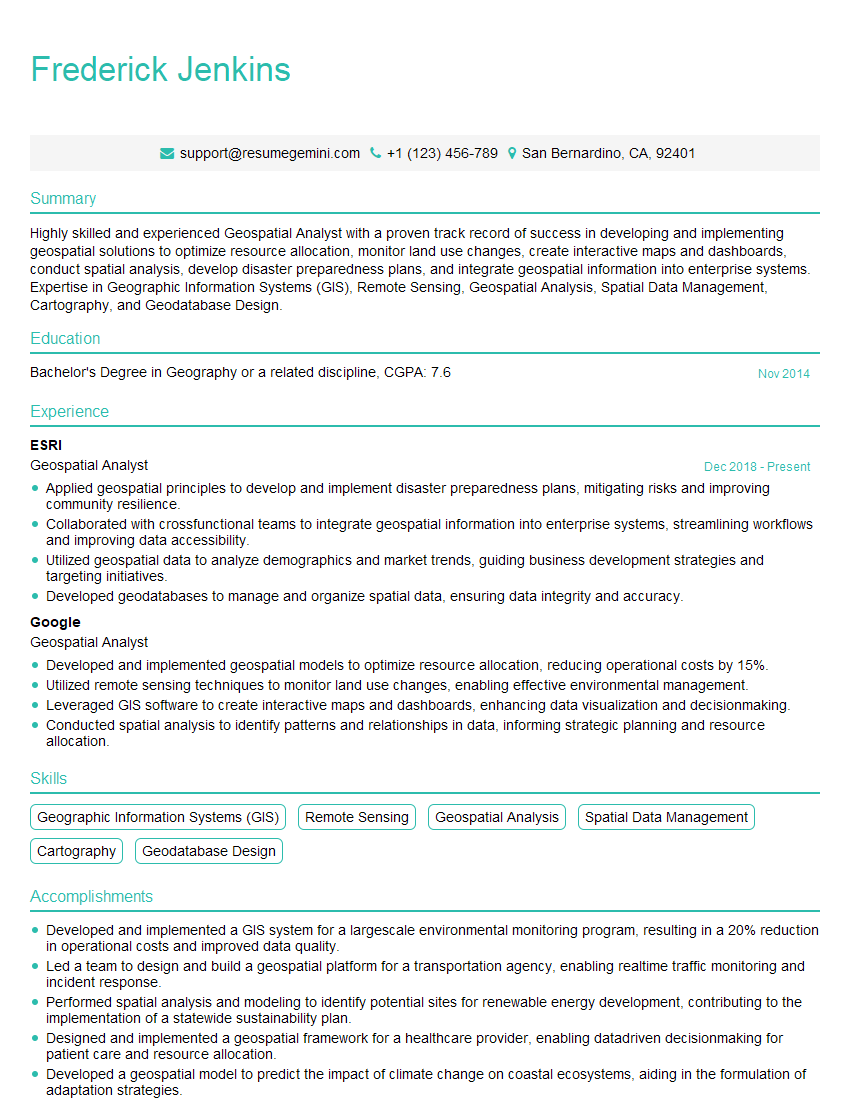
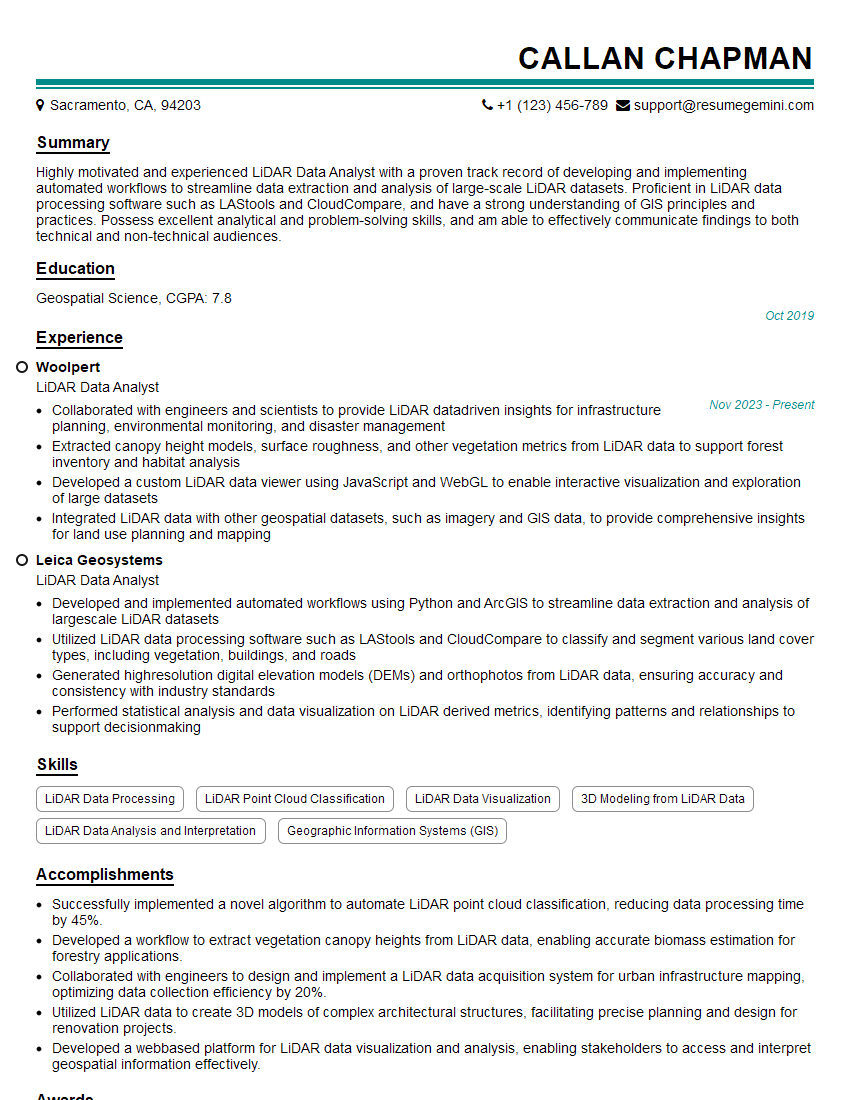
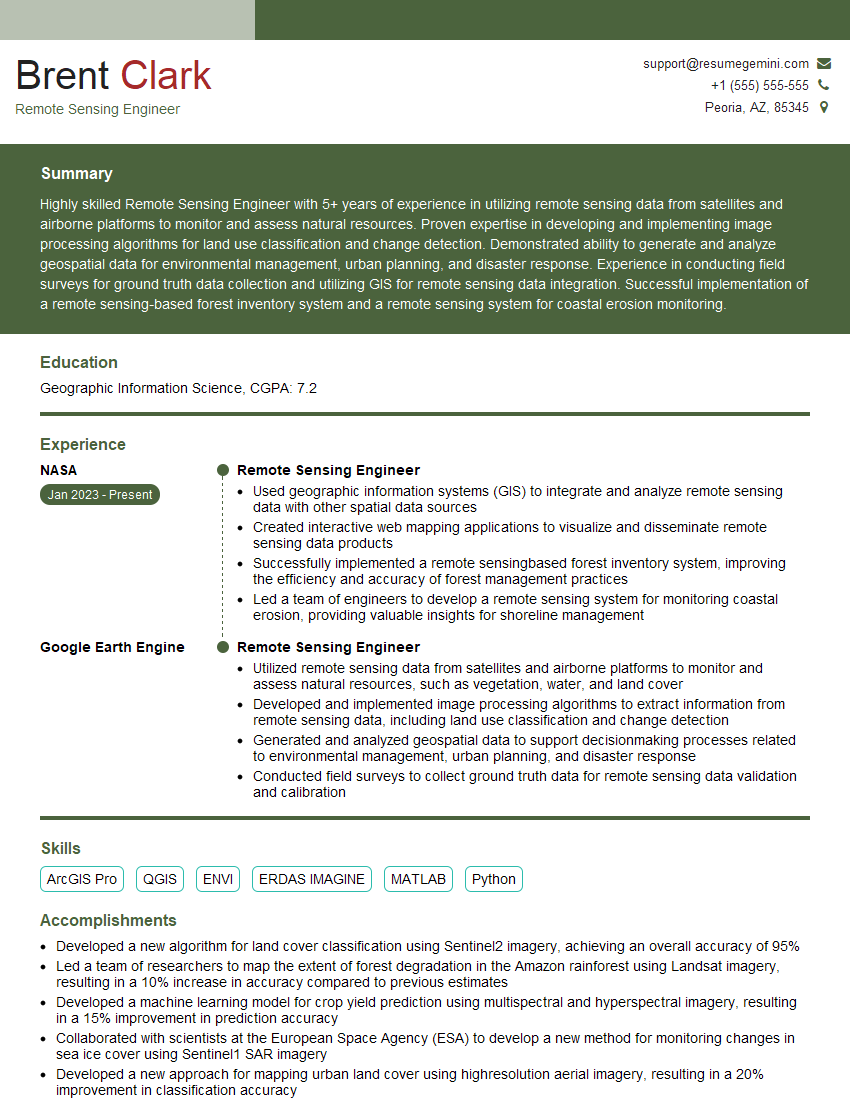
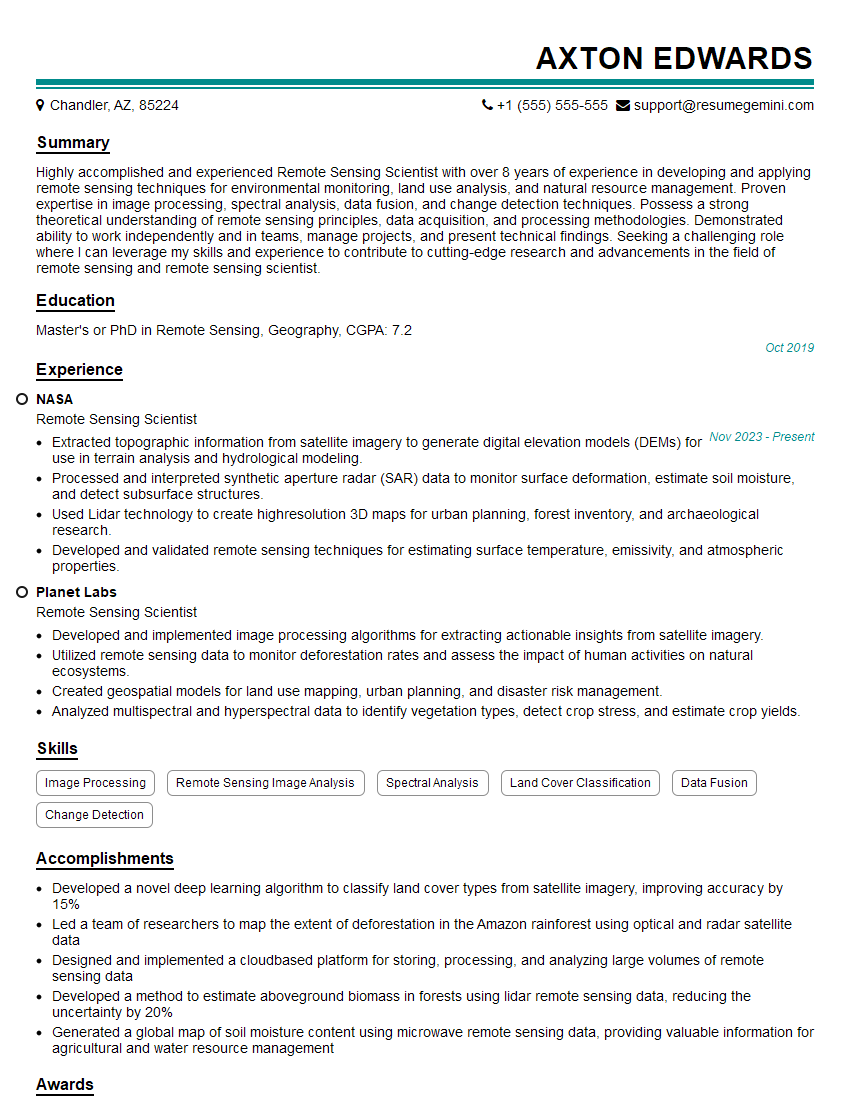
Mastering Statistics for Remote Sensing opens doors to exciting career opportunities in environmental monitoring, precision agriculture, urban planning, and many other fields. A strong understanding of these statistical methods is crucial for success in this rapidly growing sector. To maximize your job prospects, it’s essential to present your skills effectively. Creating an ATS-friendly resume is key to getting your application noticed by recruiters. We highly recommend using ResumeGemini to build a professional and impactful resume that highlights your expertise in Statistics for Remote Sensing. ResumeGemini provides examples of resumes tailored to this field, guiding you towards creating a document that stands out from the competition.
Explore more articles
Users Rating of Our Blogs
Share Your Experience
We value your feedback! Please rate our content and share your thoughts (optional).
What Readers Say About Our Blog
To the interviewgemini.com Webmaster.
Very helpful and content specific questions to help prepare me for my interview!
Thank you
To the interviewgemini.com Webmaster.
This was kind of a unique content I found around the specialized skills. Very helpful questions and good detailed answers.
Very Helpful blog, thank you Interviewgemini team.