Interviews are opportunities to demonstrate your expertise, and this guide is here to help you shine. Explore the essential Steam Pressure and Temperature Control interview questions that employers frequently ask, paired with strategies for crafting responses that set you apart from the competition.
Questions Asked in Steam Pressure and Temperature Control Interview
Q 1. Explain the relationship between steam pressure and temperature.
For saturated steam, there’s a direct, invariant relationship between pressure and temperature. This means that at a specific pressure, there’s only one corresponding saturation temperature. Think of it like this: imagine a pot of water boiling on the stove. The harder you boil it (higher pressure), the hotter the steam gets (higher temperature). This relationship is defined by the steam tables, which provide precise values for various pressures and temperatures.
However, it’s crucial to differentiate between saturated steam and superheated steam. Saturated steam is at its saturation temperature for a given pressure – any additional heat input will lead to superheating, where the temperature rises above the saturation temperature at that pressure. In superheated steam, the relationship between pressure and temperature is not as straightforward and depends on other factors like the amount of heat added.
Understanding this relationship is fundamental in steam system design and operation. For instance, knowing the steam pressure allows immediate determination of the steam temperature, crucial for process control and safety.
Q 2. Describe different methods for controlling steam pressure.
Controlling steam pressure is vital for efficient and safe operation. Several methods exist:
- Throttle Valves: These valves restrict steam flow, reducing pressure downstream. Think of it like partially closing a water faucet – less water flows, resulting in lower pressure. Simple but can be inefficient due to pressure drop and energy loss.
- Pressure Reducing Valves (PRVs): These sophisticated valves automatically maintain a constant downstream pressure despite upstream pressure fluctuations. They are the most common method for precise pressure control (discussed in more detail below).
- Back Pressure Regulators: These maintain a constant pressure in a vessel or process by controlling the outlet pressure. They’re particularly useful in systems where maintaining a specific backpressure is critical.
- Steam Traps (indirectly): While primarily for condensate removal, malfunctioning steam traps can impact system pressure. Ensuring efficient steam trap operation indirectly contributes to stable pressure.
The choice of method depends on factors like the required precision, system complexity, and cost considerations. For instance, simple throttling might suffice for less critical applications, while a PRV is essential for processes demanding precise pressure control.
Q 3. How does a pressure reducing valve work?
A pressure reducing valve (PRV) is a self-acting control valve that reduces high-pressure steam to a lower, more manageable pressure. It works on the principle of balancing the force exerted by the high-pressure steam against a spring or a piston.
Imagine a diaphragm with a spring acting on it. High-pressure steam enters the valve, pushing against the diaphragm. When the downstream pressure falls below the setpoint, the force exerted by the steam overcomes the spring’s force, causing the valve to open and allow more steam to flow. When the downstream pressure reaches the setpoint, the forces balance, maintaining the desired lower pressure. Some PRVs use a pilot-operated system for more precise control, where a smaller pilot valve regulates the main valve’s opening.
PRVs are crucial in industrial settings where processes require steam at specific lower pressures than the boiler provides. For example, a textile plant might use a PRV to reduce the boiler’s high-pressure steam to a lower pressure suitable for the fabric-treating machines.
Q 4. Explain the principle of a steam trap and its importance.
A steam trap is a crucial component in steam systems. Its primary function is to automatically remove condensate (liquid water) from steam lines while preventing the escape of valuable steam. Think of it as a one-way valve for water – letting the water out but not the steam.
Why is this important? Condensate buildup in steam lines leads to several issues:
- Reduced Efficiency: Condensate absorbs heat, reducing the effectiveness of the steam for its intended purpose (heating, processing, etc.).
- Water Hammer: Rapid condensation can cause pressure surges (water hammer), damaging pipes and equipment.
- Corrosion: Condensate can be acidic, leading to corrosion in the pipes and equipment.
Efficient steam trap operation ensures optimal steam delivery and prevents these detrimental effects. Regular maintenance and inspection of steam traps are essential for maintaining system efficiency and preventing costly downtime.
Q 5. What are the common types of steam traps and their applications?
Many steam trap types exist, each with unique operating principles and applications:
- Thermodynamic Traps: These utilize the difference in properties between steam and condensate (e.g., temperature, density) to operate. They are reliable and relatively low-maintenance.
- Thermostatic Traps: These use a temperature-sensitive element to distinguish between steam and condensate. They are suitable for applications with consistent steam conditions.
- Mechanical Traps: These use a float or bucket mechanism to sense the presence of condensate. They are robust and handle high condensate loads effectively.
- Inverter Traps: These combine the advantages of thermostatic and thermodynamic traps for broader applications and improved efficiency.
The choice of steam trap depends on factors such as steam pressure, condensate load, and the specific process requirements. For example, a thermodynamic trap might be suitable for high-pressure systems, while a thermostatic trap might be better for lower-pressure applications.
Q 6. Describe different methods for controlling steam temperature.
Controlling steam temperature, especially for superheated steam, involves different techniques:
- Desuperheating: This process reduces the temperature of superheated steam by injecting water or condensate. This is a common method for adjusting steam temperature to a specific level for a particular process.
- Temperature Control Valves: These valves regulate the flow of steam to maintain a desired temperature. They often incorporate temperature sensors to adjust the valve opening accordingly.
- Mixing Valves: These blend saturated steam and condensate or cooler water to achieve a precise temperature. They are simple and effective for many applications.
- Pressure Control (indirectly): Since temperature and pressure are related (especially in saturated steam), controlling pressure indirectly impacts the temperature.
Careful temperature control is crucial for processes sensitive to temperature variations, such as food processing or chemical reactions. Incorrect temperature control can lead to product degradation or safety hazards.
Q 7. How does a temperature control valve work?
A temperature control valve regulates the flow of steam (or other media) to maintain a set temperature. It typically comprises a valve body, an actuator, and a temperature sensor. The sensor monitors the process temperature and sends a signal to the actuator. The actuator, which might be pneumatic, electric, or hydraulic, adjusts the valve opening to maintain the desired temperature.
Imagine a thermostat controlling your home’s heating system. The thermostat (sensor) detects the room temperature. If it’s too cold, it signals the valve to open, allowing more hot water/steam to flow; if it’s too warm, it signals the valve to close, reducing the flow. Temperature control valves function similarly, but on a larger and often more sophisticated scale.
These valves are widely used in various industries where precise temperature control is vital, ensuring optimal process conditions and product quality. Examples include chemical reactors, heat exchangers, and sterilizers.
Q 8. Explain the concept of superheated steam and its properties.
Superheated steam is steam that has been heated beyond its saturation temperature at a given pressure. Imagine water boiling in a kettle; at 100°C (at atmospheric pressure), it turns into saturated steam. But if you continue heating that steam, it becomes superheated. Its key properties are higher temperature than saturated steam at the same pressure, lower density, and increased internal energy. This increased energy makes it exceptionally useful in various industrial applications requiring high-temperature heat transfer.
For example, superheated steam is used in power generation to drive turbines more efficiently. The higher temperature translates to greater energy available for work, leading to improved power output. It is also widely used in various industrial processes that need high-temperature heat transfer such as in sterilizing equipment or driving large industrial machines.
Q 9. What are the safety considerations when working with high-pressure steam?
Working with high-pressure steam presents significant safety risks due to its immense energy potential. High-temperature burns are a primary concern, as contact with high-pressure steam can cause severe and life-altering injuries. Explosions are another grave risk if pressure vessels or pipes fail. This can be caused by equipment malfunction, corrosion, or operator error. Proper training, regular inspections, and robust safety protocols are essential. These include the use of appropriate Personal Protective Equipment (PPE), such as heat-resistant gloves, clothing, and eye protection, and regular maintenance checks to prevent equipment failures. Emergency shutdown procedures should also be meticulously planned and frequently practiced to minimize the risk of accidents.
A key example is the importance of pressure relief valves, which are designed to release excess pressure and prevent catastrophic failures. Regular testing and maintenance of these valves are paramount for safety. Regular inspection of pipelines, fittings and steam traps is also essential to early detection and prevent catastrophic failure.
Q 10. Describe different types of steam boilers and their operating principles.
Several types of steam boilers exist, each with its operating principle. Fire-tube boilers, a classic design, have hot gases passing through tubes surrounded by water. Water-tube boilers, more common in large-scale applications, circulate water through tubes surrounded by hot gases. These are more efficient for higher pressures and larger capacities. Electric boilers utilize electricity to heat water directly, making them cleaner but often less efficient for large-scale applications. Once the water reaches its boiling point, it turns to steam, collected and piped to other parts of the system. The heat source – which can be gas, oil, or coal for fire-tube/water-tube boilers – heats the water, converting it into steam.
For example, a power plant might use a large water-tube boiler to generate high-pressure steam for electricity generation. A smaller fire-tube boiler might be used in a factory to provide steam for heating or industrial processes. The choice of boiler depends on factors such as scale, fuel availability, and the required steam pressure and temperature.
Q 11. Explain the importance of steam quality in industrial processes.
Steam quality, the percentage of steam by weight in a steam-water mixture, is crucial in industrial processes. High-quality steam (dry saturated steam or superheated steam) is essential for many applications because wet steam (containing water droplets) can cause damage through erosion and reduced heat transfer efficiency. Wet steam can also lead to inefficient operation in turbines or industrial machinery, impacting production output and potentially causing equipment damage. In processes like sterilization, high-quality steam is essential to ensure proper temperature and thus efficacy.
For instance, in a textile factory, high-quality steam is crucial for efficient dyeing and finishing processes. Low-quality steam would lead to uneven heating and poor fabric quality. Similarly, in power generation, high-quality steam is required for optimal turbine performance, maximizing energy conversion efficiency.
Q 12. How do you troubleshoot a malfunctioning steam system?
Troubleshooting a malfunctioning steam system requires a systematic approach. Start by identifying the symptom – low steam pressure, erratic temperature, leaks, etc. Then, inspect the system, checking for obvious issues like leaks, clogged valves, or faulty gauges. Consult system diagrams and operational manuals to understand the system flow and identify potential problem areas. Use diagnostic tools such as pressure gauges, temperature sensors, and steam quality meters to obtain accurate readings. For example, if there’s low steam pressure, checking the fuel supply, boiler water level, and burner operation is crucial. A systematic approach combined with a thorough understanding of the system architecture is necessary for effectively identifying and resolving issues.
If a problem is beyond your capabilities, it’s important to contact qualified technicians or engineers to avoid further damage or safety risks.
Q 13. What are the common causes of steam leaks and how are they repaired?
Steam leaks stem from various causes: corrosion in pipes or fittings, gasket failure, valve malfunction, or even physical damage to the system. Corrosion, especially in older systems, weakens pipe walls, leading to leaks. Failed gaskets, which seal joints, can cause steam to escape. Faulty valves might not seal properly, creating leaks. Repairing leaks depends on the severity and cause. Minor leaks from small cracks might be repairable with specialized sealant. Larger leaks or those stemming from significant corrosion often require pipe replacement or fitting repair. Safety is paramount; always isolate the affected section before attempting any repair. This could involve shutting down the relevant parts of the system. For major repairs, a qualified professional should always be consulted.
For example, a pinhole leak in a pipe might be temporarily patched with a high-temperature sealant, but a significant crack would necessitate replacing the pipe section entirely.
Q 14. Describe different types of steam instrumentation and their applications.
Various instruments monitor and control steam systems. Pressure gauges measure steam pressure, vital for safety and process control. Temperature sensors track steam temperature, essential for maintaining optimal operating conditions. Steam flow meters measure the amount of steam flowing through the system, allowing for efficient control and energy management. Level sensors monitor the water level in boilers, preventing dangerous conditions such as low water level. These sensors can range from simple float-type sensors to more sophisticated ultrasonic or radar-based level detection systems. Steam quality meters determine the percentage of moisture in the steam, providing insights into efficiency and potential problems. Data from these instruments are often integrated into control systems, enabling automated operation and optimization of the steam system.
For instance, in a power plant, advanced control systems use data from numerous sensors to adjust fuel input and steam generation to meet demand while maintaining optimal system operation.
Q 15. Explain the use of pressure gauges and thermometers in steam systems.
Pressure gauges and thermometers are essential for monitoring and controlling steam systems. Think of them as the vital signs of your steam operation. Pressure gauges, typically Bourdon tube gauges, directly measure the steam pressure, ensuring it remains within safe and efficient operating parameters. Thermometers, which can be liquid-in-glass, thermocouples, or RTDs (Resistance Temperature Detectors), measure the steam temperature, crucial for determining the steam’s enthalpy and ensuring the process operates at the correct temperature.
Example: In a food processing plant using steam for sterilization, a pressure gauge ensures the autoclave reaches and maintains the required pressure for effective sterilization, while a thermometer ensures the steam temperature is high enough to kill harmful microorganisms. Incorrect pressure or temperature could compromise the sterilization process.
Career Expert Tips:
- Ace those interviews! Prepare effectively by reviewing the Top 50 Most Common Interview Questions on ResumeGemini.
- Navigate your job search with confidence! Explore a wide range of Career Tips on ResumeGemini. Learn about common challenges and recommendations to overcome them.
- Craft the perfect resume! Master the Art of Resume Writing with ResumeGemini’s guide. Showcase your unique qualifications and achievements effectively.
- Don’t miss out on holiday savings! Build your dream resume with ResumeGemini’s ATS optimized templates.
Q 16. What are the principles of steam flow measurement?
Steam flow measurement is vital for optimizing steam usage and identifying inefficiencies. Several methods exist, each with its strengths and weaknesses. Orifice plates, for example, are simple and inexpensive, creating a pressure drop across a restriction in the pipe, which is proportional to the flow rate. Venturi meters offer higher accuracy and lower pressure drop than orifice plates. Flow nozzles provide a balance between accuracy and cost. Magnetic flow meters, suitable for conductive fluids, measure the voltage induced by the moving steam, directly providing flow rate data. Ultrasonic flow meters measure the transit time of sound waves through the steam, offering a non-invasive measurement.
The choice depends on factors like the steam’s pressure, temperature, cleanliness, and the required accuracy and budget. Consider also the potential for erosion and maintenance requirements.
Q 17. How do you perform a steam system energy audit?
A steam system energy audit systematically assesses the efficiency of the entire steam generation and distribution system. It aims to identify areas of energy loss and suggest cost-effective improvements. The audit typically involves:
- Instrumentation and Data Acquisition: Measuring steam pressure, temperature, flow rates at various points in the system using the methods described above.
- Inspection of Insulation: Assessing the condition of insulation on pipes, valves, and equipment, looking for damage or deterioration.
- Trap Inspection and Testing: Checking the functionality of steam traps to ensure they are efficiently removing condensate and preventing steam loss.
- Leak Detection: Identifying steam leaks using acoustic leak detectors or visual inspection.
- Equipment Efficiency Analysis: Evaluating the performance of boilers, turbines, and other equipment to identify areas of improvement.
By analyzing the collected data, we can pinpoint inefficiencies, such as excessive heat loss due to poor insulation or inefficient steam traps. This allows for targeted improvements such as insulation upgrades, trap replacement, or even equipment upgrades to significantly reduce energy consumption.
Q 18. What are the different types of steam valves and their functions?
Steam valves are critical control elements regulating steam flow and pressure. Several types exist, each tailored for specific applications:
- Globe Valves: Provide good throttling control, ideal for regulating flow. They are prone to higher pressure drop, however.
- Gate Valves: Primarily used for on/off service, not suitable for precise flow control. They offer minimal pressure drop when fully open.
- Ball Valves: Offer quick on/off control with minimal pressure drop when fully open. Generally not used for throttling.
- Butterfly Valves: Offer compact design and relatively low pressure drop but are generally used for on/off or coarse control.
- Control Valves: These valves automatically adjust steam flow based on a setpoint, often used in automated systems. They can be pneumatic or electric, enabling precise and dynamic steam control.
Proper valve selection depends on factors like the required flow control precision, pressure drop tolerance, and the application’s operating conditions.
Q 19. Explain the importance of steam system insulation.
Steam system insulation is crucial for minimizing heat loss, maximizing energy efficiency, and ensuring personnel safety. Uninsulated pipes and equipment radiate significant amounts of heat to the surroundings, leading to energy waste and increased operating costs. Proper insulation creates a thermal barrier, reducing heat loss and maintaining steam temperature over longer distances.
Example: A poorly insulated steam line loses a significant amount of heat to the environment. This not only wastes energy but also could increase the risk of burns for nearby personnel. Proper insulation drastically reduces heat loss, improving efficiency and safety. Different insulation materials (fiberglass, mineral wool, calcium silicate) are chosen based on the steam’s temperature and pressure and the environmental conditions.
Q 20. How do you calculate steam consumption in a process?
Calculating steam consumption in a process requires understanding the process’s heat demands and the steam’s properties. The basic equation is:
Steam Consumption (kg/hr) = (Heat Required (kJ/hr)) / (Steam Enthalpy (kJ/kg))
Heat Required depends on the specific process, which may involve heating a liquid, generating steam, or maintaining a temperature. Steam Enthalpy is a property of the steam determined by its pressure and temperature using steam tables or specialized software.
Example: If a process requires 1000 kJ/hr of heat and the steam enthalpy is 2500 kJ/kg, then the steam consumption is: 1000 kJ/hr / 2500 kJ/kg = 0.4 kg/hr.
Measuring steam flow using the methods discussed earlier and accounting for any losses provides a more practical approach.
Q 21. Describe the different types of steam turbines and their applications.
Steam turbines convert the thermal energy of high-pressure steam into mechanical energy, which is then used to drive various equipment. Several types exist, differing primarily in their design and application:
- Impulse Turbines: Utilize the kinetic energy of high-velocity steam jets striking turbine blades. They are robust and suitable for high-pressure, low-volume steam.
- Reaction Turbines: Utilize both the kinetic and potential energy of the steam as it expands through the turbine. They are more efficient at lower steam pressures but require more stages.
- Condensing Turbines: Exhaust steam into a condenser, creating a vacuum that enhances efficiency. Common in power generation plants.
- Non-condensing Turbines: Exhaust steam to the atmosphere or a downstream process. Often used in industrial applications where the exhaust steam has further utility.
Applications: Steam turbines are used in power generation, driving pumps, compressors, and other industrial machinery. Their selection depends on factors like steam conditions, power requirements, and efficiency considerations.
Q 22. What are the maintenance requirements for a steam boiler?
Regular maintenance of a steam boiler is crucial for safety, efficiency, and longevity. Think of it like a car – neglecting regular check-ups leads to breakdowns and costly repairs.
- Water Treatment: Regular testing and treatment of boiler feedwater is paramount to prevent scale buildup and corrosion. Scale reduces heat transfer efficiency, while corrosion weakens the boiler’s structure. We use chemical treatments tailored to the water’s specific composition to mitigate these problems.
- Blowdown: Periodic blowdown removes accumulated solids and impurities from the boiler water, maintaining water quality and preventing scaling. The frequency depends on the boiler’s operating pressure and water quality.
- Inspection & Cleaning: Regular internal and external inspections are vital. Internal inspections detect corrosion, scale deposits, and potential structural damage. We use specialized tools and techniques for thorough cleaning. External inspections focus on components such as valves, pipes, and safety devices.
- Safety Valve Testing: Safety relief valves are life-savers. Regular testing ensures they function correctly, relieving excess pressure and preventing catastrophic failures. We conduct these tests using specialized equipment and according to strict safety protocols.
- Burner Maintenance: Efficient combustion requires regular cleaning and adjustments to burners and fuel delivery systems. Improper combustion leads to incomplete fuel burning, reduced efficiency, and potential hazards like carbon monoxide buildup.
- Documentation: Maintaining meticulous records of all maintenance activities is essential for compliance and troubleshooting. It helps track performance, predict potential issues, and ensures continuous improvement.
Failing to perform these routine checks can lead to significant operational disruptions, safety hazards, and costly repairs. A well-maintained boiler operates efficiently, safely, and has a longer lifespan.
Q 23. Explain the concept of steam flashing.
Steam flashing refers to the rapid vaporization of a liquid when its pressure is suddenly reduced. Imagine opening a shaken soda bottle – the sudden pressure drop causes the carbon dioxide to rapidly transform into bubbles.
Similarly, if high-pressure, saturated or superheated water is suddenly released to a lower pressure environment, a significant portion of the liquid will flash into steam. This occurs because the water’s temperature is now above the saturation temperature for the lower pressure. The energy used to heat the water above the saturation temperature at the higher pressure is released as latent heat of vaporization, causing the flashing effect.
This phenomenon is commonly observed in power plants, where high-pressure steam is expanded through turbines. Controlled flashing is essential in many industrial processes; however, uncontrolled flashing can be hazardous, leading to rapid pressure surges and equipment damage.
Q 24. How do you handle a steam line rupture?
A steam line rupture is a serious emergency requiring immediate and decisive action. The first priority is safety.
- Isolate the Rupture: Immediately shut off the steam supply to the affected section using isolation valves. If possible, locate and isolate the section of piping.
- Evacuate the Area: Clear the immediate vicinity of personnel. Steam is extremely hot and can cause severe burns. Establish a safety perimeter.
- Emergency Response: Activate the plant’s emergency response plan and contact emergency services if necessary. This includes notifying relevant personnel and authorities.
- Containment and Repair: Once the steam is isolated, focus on containing any escaped steam and preventing further damage. Assess the extent of the damage and plan for repairs. This might include temporarily patching the leak or replacing damaged piping.
- Investigation: After the emergency is contained, a thorough investigation is needed to determine the cause of the rupture. This investigation should identify contributing factors and prevent future occurrences.
The severity of the rupture will dictate the response’s urgency and complexity. Always prioritize personnel safety and follow established emergency procedures.
Q 25. What are the environmental considerations related to steam generation?
Steam generation has environmental considerations primarily relating to greenhouse gas emissions and water usage.
- Greenhouse Gas Emissions: The combustion of fossil fuels (coal, natural gas, oil) to generate steam releases significant amounts of carbon dioxide (CO2), a major greenhouse gas contributing to climate change. The choice of fuel and the efficiency of the boiler significantly impact emissions. Consideration should be given to renewable energy sources, such as biomass or geothermal energy, to reduce the carbon footprint.
- Water Consumption: Steam generation requires substantial amounts of water. Efficient boiler operation and condensate recovery minimize water consumption. Wastewater from boiler blowdown and other steam processes must be treated properly to prevent environmental pollution.
- Air Pollution: Depending on the fuel source and boiler design, combustion can release other pollutants such as nitrogen oxides (NOx) and particulate matter (PM). Appropriate emission control technologies, such as low-NOx burners and electrostatic precipitators, are employed to mitigate these emissions.
Implementing efficient technologies, adopting best practices, and using cleaner fuel sources are vital in reducing the environmental impact of steam generation. Sustainable practices are increasingly important in meeting environmental regulations and promoting responsible operations.
Q 26. What is the role of a safety relief valve in a steam system?
A safety relief valve (SRV) is a critical safety device in any steam system, acting as a pressure-relieving mechanism. Imagine it as a pressure-release valve in a pressure cooker – preventing dangerous over-pressurization.
When the steam pressure in a boiler or vessel exceeds a predetermined setpoint, the SRV automatically opens, releasing steam to the atmosphere or a designated discharge point. This prevents the system from exceeding its design pressure and potential explosion or catastrophic failure. It’s a fail-safe mechanism, designed to protect equipment and personnel.
Regular testing and maintenance of SRVs are essential to ensure they function correctly during an overpressure event. Failure of an SRV can have severe consequences.
Q 27. Describe the different methods of steam condensate recovery.
Steam condensate recovery is crucial for efficiency and cost savings. Condensate is essentially purified water that has given up its latent heat. Think of it like reclaiming rainwater for reuse.
- Gravity Return Systems: Utilizes gravity to return condensate to the boiler feedwater tank. This is simplest but requires a suitable elevation difference.
- Pump Return Systems: Employs pumps to lift and return condensate, particularly suitable for systems with low elevations or long distances.
- Flash Steam Recovery: If condensate is at a higher pressure and temperature than the boiler feedwater, it can be flashed, generating additional steam before returning to the tank. This recovers some of the latent heat lost during initial steam use.
- Traps: Condensate traps are essential components. They automatically remove condensate from the steam lines while preventing steam loss. Different trap types, such as thermostatic, thermodynamic, and float-and-thermostatic traps, are chosen based on the system’s characteristics.
Effective condensate recovery reduces water consumption, lowers energy costs by reclaiming heat, and minimizes the load on the boiler feedwater system. It’s a key aspect of any well-designed steam system.
Q 28. Explain the concept of steam tracing and its applications.
Steam tracing involves running insulated steam pipes alongside process pipes or equipment to maintain a desired temperature. Imagine wrapping a warm towel around a frozen pipe to prevent it from bursting.
In industrial processes, this is essential for preventing liquids from freezing or solidifying, particularly in cold environments or during periods of inactivity. It’s also useful for maintaining the viscosity of liquids, preventing wax buildup, and ensuring consistent flow rates.
Steam tracing applications are widespread. Examples include:
- Process Piping: Maintaining the fluidity of viscous materials like oils and chemicals in pipelines.
- Storage Tanks: Preventing the freezing of liquids stored in outdoor tanks.
- Instrumentation: Protecting sensitive instruments and sensors from freezing temperatures.
Proper design and maintenance of steam tracing systems are crucial to prevent steam leaks, energy waste, and equipment damage. Careful consideration must be given to the insulation, trap selection, and steam supply to achieve efficient operation.
Key Topics to Learn for Steam Pressure and Temperature Control Interview
- Fundamentals of Thermodynamics: Understanding concepts like enthalpy, entropy, and the ideal gas law as they relate to steam.
- Steam Generation and Properties: Familiarize yourself with boiler operation, steam quality, and the effects of pressure and temperature on steam properties.
- Pressure Control Systems: Study various pressure control valves, their operation, and selection criteria for different applications. Understand pressure reducing valves, pressure relief valves, and backpressure regulators.
- Temperature Control Systems: Explore different temperature control methods, including direct and indirect heating, and the role of temperature sensors and actuators in maintaining setpoints.
- Instrumentation and Control: Learn about the various instruments used to measure pressure and temperature (e.g., pressure transmitters, thermocouples, RTDs) and how they integrate into control loops.
- Control Loop Design and Tuning: Understand the principles of PID control and how to tune a control loop for optimal performance and stability. Consider different control strategies (e.g., cascade control).
- Safety and Regulations: Be aware of relevant safety standards and regulations concerning high-pressure steam systems and potential hazards.
- Troubleshooting and Problem-Solving: Develop your ability to diagnose common issues in steam pressure and temperature control systems, such as leaks, valve malfunctions, and control system errors.
- Practical Applications: Consider case studies involving industrial processes where steam pressure and temperature control is critical (e.g., power generation, chemical processing, food processing).
Next Steps
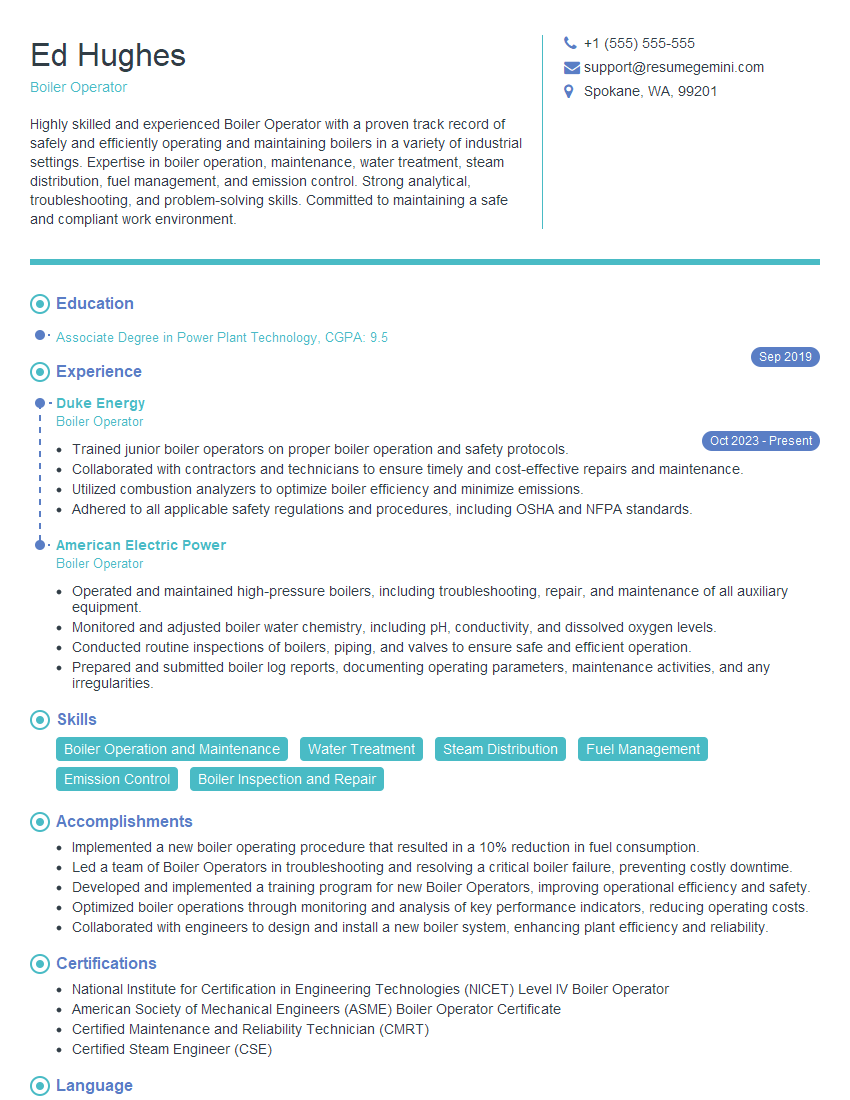
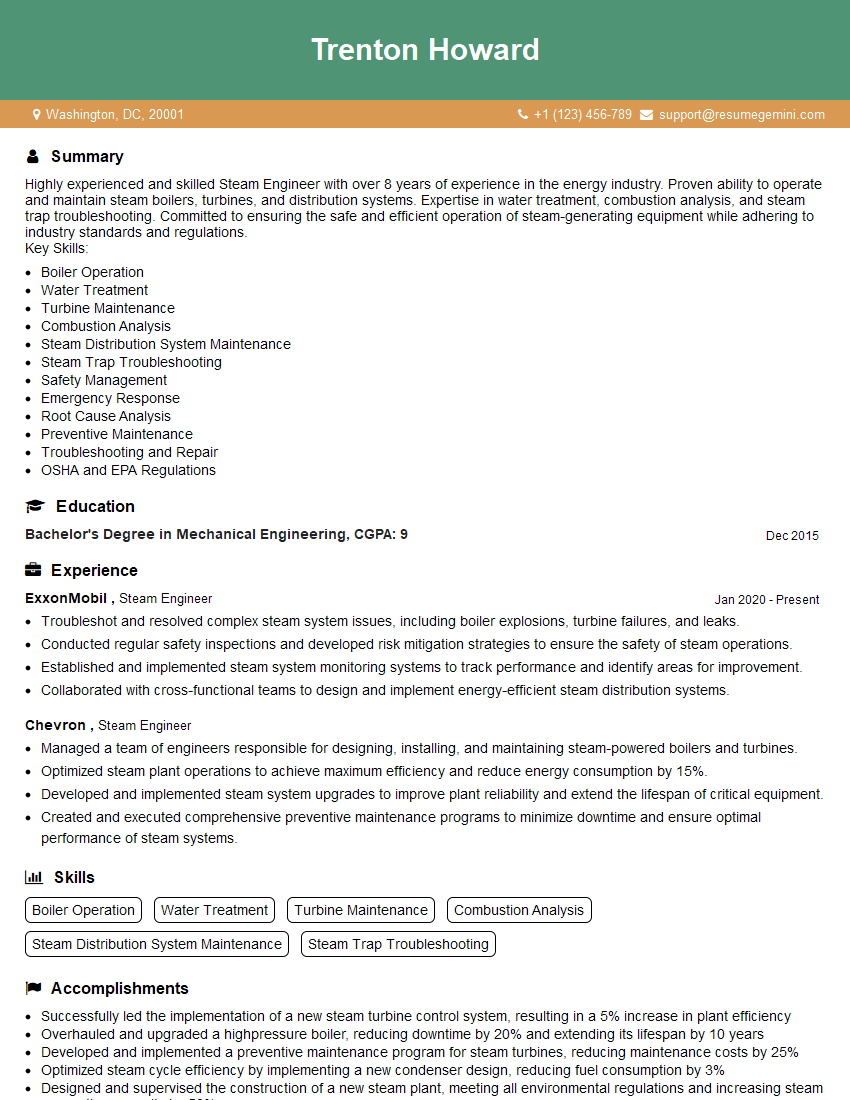
Mastering steam pressure and temperature control opens doors to rewarding careers in various industries. A strong understanding of these concepts demonstrates valuable technical skills and problem-solving abilities, making you a highly competitive candidate. To maximize your job prospects, create an ATS-friendly resume that highlights your expertise. ResumeGemini is a trusted resource to help you build a professional and impactful resume that gets noticed. They offer examples of resumes tailored to the Steam Pressure and Temperature Control field to help guide you. Invest the time to create a compelling resume – it’s your first impression with potential employers.
Explore more articles
Users Rating of Our Blogs
Share Your Experience
We value your feedback! Please rate our content and share your thoughts (optional).
What Readers Say About Our Blog
To the interviewgemini.com Webmaster.
Very helpful and content specific questions to help prepare me for my interview!
Thank you
To the interviewgemini.com Webmaster.
This was kind of a unique content I found around the specialized skills. Very helpful questions and good detailed answers.
Very Helpful blog, thank you Interviewgemini team.