Interviews are more than just a Q&A session—they’re a chance to prove your worth. This blog dives into essential Instrumentation Wiring interview questions and expert tips to help you align your answers with what hiring managers are looking for. Start preparing to shine!
Questions Asked in Instrumentation Wiring Interview
Q 1. Explain the difference between single and multi-pair wiring.
The core difference between single and multi-pair wiring lies in the number of independent signal paths within a single cable. Single-pair wiring, as the name suggests, uses a single twisted pair of wires to transmit a single signal. Think of it like a single lane highway for your data. Multi-pair wiring, on the other hand, contains multiple twisted pairs, each carrying a separate signal. This is analogous to a multi-lane highway, allowing for the simultaneous transmission of many signals within the same cable.
Single-pair wiring is typically simpler, cheaper, and easier to manage for applications requiring only one signal, like connecting a single temperature sensor. Multi-pair cables are essential when you need to transmit multiple signals simultaneously, such as in complex industrial control systems or data acquisition systems. For instance, you might use a multi-pair cable to transmit temperature, pressure, and flow rate readings all at once from a single process unit.
Q 2. Describe various types of instrument cables and their applications.
Instrument cables come in various types, each designed for specific applications. The choice depends on factors such as the signal type, distance, environmental conditions, and the required level of noise immunity.
- Shielded Twisted Pair (STP): This is a common choice offering excellent noise rejection. Each twisted pair is surrounded by a conductive shield, effectively blocking electromagnetic interference (EMI). I’ve used these extensively in noisy industrial settings where EMI from motors and other equipment can corrupt signals.
- Coaxial Cable: Known for its high bandwidth and low signal loss, coaxial cable is ideal for high-frequency signals like those used in some types of communication systems or high-speed data acquisition. I recall a project where we used coaxial cable to transmit video signals from a remote camera to a control room.
- Fiber Optic Cable: For long-distance transmission and applications requiring exceptionally high bandwidth and immunity to EMI, fiber optic cables are unparalleled. They transmit data as light pulses, making them resistant to electrical noise and capable of carrying vast amounts of information.
- Multi-conductor Cable: These cables consist of multiple individual conductors, often unshielded, used for carrying power and various signal lines within a single cable. I’ve found these useful in situations needing a more compact and cost-effective solution for simpler applications.
The selection of the appropriate cable is critical. Incorrect choice can lead to signal degradation, inaccurate readings, and even equipment damage.
Q 3. What are the safety precautions for working with instrumentation wiring?
Safety is paramount when working with instrumentation wiring. Here are some key precautions:
- Lockout/Tagout Procedures: Always follow proper lockout/tagout procedures before working on any energized equipment to prevent accidental shock or injury. This is non-negotiable.
- Personal Protective Equipment (PPE): Always wear appropriate PPE, including safety glasses, gloves, and insulated tools. I always emphasize this to my team.
- Voltage Testing: Verify that power is OFF before working on any circuit. Use a reliable voltage tester to confirm the absence of voltage. Never rely solely on visual inspection.
- Proper Grounding: Ensure that all equipment is properly grounded to prevent electrical shocks and reduce noise interference. Grounding is crucial for both safety and signal integrity.
- Awareness of Hazardous Areas: Be aware of potential hazards like chemicals, high temperatures, or moving machinery in the area where you’re working.
Ignoring these precautions can lead to severe consequences, ranging from minor injuries to fatalities.
Q 4. How do you identify and troubleshoot common wiring faults?
Identifying and troubleshooting wiring faults requires a systematic approach. Here’s a common strategy:
- Visual Inspection: Begin with a thorough visual inspection of the wiring, looking for any obvious signs of damage, such as cuts, breaks, loose connections, or corrosion.
- Continuity Testing: Use a multimeter to check the continuity of each wire. This confirms that there’s a continuous, uninterrupted path for current to flow. An open circuit indicates a break in the wire.
- Voltage Testing: Measure the voltage at various points in the circuit to identify where the voltage is present or absent, helping to pinpoint the location of the fault.
- Signal Tracing: Utilize signal tracing equipment, such as an oscilloscope, to observe the signal integrity. This can help to detect signal attenuation, noise, or other signal-related problems.
- Documentation Review: Refer to wiring diagrams and documentation to ensure that the wiring is correctly installed and connected according to specifications.
Remember, documenting every step is crucial, not only for troubleshooting but also for future maintenance.
Q 5. Explain the importance of proper grounding and shielding in instrumentation wiring.
Proper grounding and shielding are essential for reliable and safe instrumentation wiring. Grounding provides a low-impedance path for fault currents, preventing dangerous voltage buildup and protecting personnel. It’s like providing an escape route for stray electricity. Shielding, on the other hand, helps to reduce noise interference from external sources by creating a barrier against electromagnetic fields. This ensures signal integrity and accurate measurements.
Without proper grounding, stray currents can cause inaccurate readings, damage sensitive equipment, and even create a shock hazard. Likewise, without shielding, external noise can corrupt signals, leading to unreliable measurements and operational problems. Imagine trying to have a conversation in a loud, crowded room – the noise makes it difficult to hear the other person. Shielding does the same for signals by reducing noise interference.
Q 6. What are the different types of wire terminations used in instrumentation?
Several wire termination methods are used in instrumentation, each with its advantages and disadvantages:
- Screw Terminals: Simple, widely used, and relatively inexpensive. They provide a good mechanical connection but can be prone to loosening over time.
- Crimp Terminals: Offer a secure connection when properly crimped. I prefer these for their reliability and consistent connection quality. The use of a proper crimping tool is crucial.
- Solder Terminals: Provide a strong and reliable connection, particularly useful for fine-gauge wires. However, they require more skill and care and can be susceptible to cold solder joints if not done correctly.
- Connectors: Various connectors (e.g., D-Sub, RJ45, etc.) provide standardized interfaces for easy connection and disconnection. These are efficient but add complexity and cost.
The choice of termination method often depends on the specific application, wire size, and required level of reliability.
Q 7. Describe your experience with different wiring diagrams (e.g., loop diagrams, ladder diagrams).
I have extensive experience interpreting and working with various wiring diagrams, including loop diagrams and ladder diagrams. Loop diagrams, commonly used in process control, show the flow of signals in a closed loop system. They highlight the sequence of signal transmission from the sensor, to the controller, and back to the actuator. This helps in understanding the overall system behavior.
Ladder diagrams, on the other hand, are used extensively in programmable logic controllers (PLCs). These diagrams visually represent the logic of the system using symbolic notation, making it easier to understand and modify the control logic. I’ve worked on projects where both types of diagrams were used in conjunction – the loop diagram showing the overall process flow, and the ladder diagram detailing the specific logic implemented within a PLC. My proficiency in reading and interpreting these diagrams has been crucial for successful project execution and troubleshooting.
Q 8. How do you ensure the integrity of signal transmission in instrumentation wiring?
Ensuring signal integrity in instrumentation wiring is paramount for accurate and reliable data acquisition. It involves minimizing signal attenuation (loss of strength), noise, and distortion. We achieve this through several key strategies:
- Proper Shielding: Using shielded cables prevents electromagnetic interference (EMI) from external sources like motors or radio waves from corrupting the signal. Think of it as wrapping the signal in a protective metal jacket. For example, a twisted-pair cable with an overall foil shield is commonly used for analog signals.
- Grounding and Bonding: Establishing a common ground point throughout the system prevents ground loops, which are a major source of noise. Imagine a loop in the electrical system – the loop acts as an antenna, picking up stray signals. Bonding connects different metallic parts of the system to the same ground, minimizing potential differences.
- Cable Selection: Choosing the right cable type is crucial. The cable’s impedance, capacitance, and shielding effectiveness all affect signal quality. For high-speed digital signals, a coaxial cable might be preferred for its superior shielding, while for low-noise analog signals, a twisted-pair cable is frequently used.
- Signal Filtering: Filters at the input and output of the instrument can attenuate noise within specific frequency bands. This is like using a sieve to separate the desired signal from unwanted noise.
- Careful Wiring Practices: Routing cables away from potential noise sources, using proper cable clamps and strain relief, and avoiding sharp bends all contribute to signal integrity. A messy cable run can introduce unwanted inductance and capacitance, leading to signal degradation.
For instance, in a process control system monitoring temperature, a poorly shielded thermocouple wire can pick up electrical noise from nearby motors, leading to inaccurate temperature readings, potentially causing safety hazards or production problems. Rigorous attention to these details is essential for reliable operation.
Q 9. Explain the process of wire routing and cable management in an industrial setting.
Wire routing and cable management in industrial settings are crucial for safety, maintainability, and efficient operation. It’s not just about neatly arranging cables; it’s about designing a system that’s easily accessible, prevents damage, and minimizes interference. The process typically involves:
- Planning and Design: Before any wiring begins, a detailed plan is created, showing the exact location of each cable, its routing path, and connection points. This plan is usually integrated with the overall plant layout.
- Cable Tray Installation: Cable trays provide support and organization for cables, preventing them from being damaged or tangled. They are typically made of steel or aluminum and are designed to handle different cable weights and environmental conditions. Proper spacing and support are important to prevent sagging and potential shorts.
- Cable Labeling and Identification: Every cable must be clearly labeled with its function, destination, and other relevant information. This simplifies troubleshooting and maintenance significantly. Think of it like creating a detailed map of your wiring system.
- Routing and Securing: Cables are routed along designated paths, avoiding sharp bends and potential hazards like moving machinery or high-temperature areas. Cable ties, clamps, and other fastening devices ensure cables stay securely in place.
- Junction Boxes and Termination Points: Junction boxes provide organized termination points for connecting wires and protect them from the environment. Neat and organized wiring within junction boxes is essential for safety and maintainability.
In a refinery, for example, proper cable management is critical due to the presence of hazardous materials and the need for quick and easy access for maintenance. A well-planned cable tray system with clear labeling ensures safety and minimizes downtime during repairs or upgrades.
Q 10. How do you test for continuity and insulation resistance in instrumentation wiring?
Testing for continuity and insulation resistance is essential to verify the integrity of instrumentation wiring before commissioning and periodically during operation. Specialized instruments are used for this purpose:
- Continuity Test: This verifies that there is an unbroken path for current flow between two points. A multimeter or continuity tester is used – it applies a small voltage and checks for current flow. A beep or indication signifies a continuous circuit; no beep indicates an open circuit (break). We use this test to identify broken wires or loose connections.
- Insulation Resistance Test (Megger Test): This test measures the resistance between the conductor and the surrounding insulation. A high insulation resistance (typically expressed in megaohms) indicates good insulation, while low resistance points to insulation damage, potential shorts, or moisture ingress. A Megger, a high-voltage insulation resistance tester, is typically used for this purpose.
For example, after installing new wiring in a control panel, a continuity test ensures all connections are secure, and an insulation resistance test verifies that the insulation on the wires protects against shorts and electrical hazards. These tests are crucial for preventing faults and ensuring safe operation.
The tests should be done according to the specific requirements outlined in the relevant standards and safety regulations for the system.
Q 11. What are the common causes of signal noise in instrumentation wiring, and how do you mitigate them?
Signal noise in instrumentation wiring can be caused by various sources, significantly impacting the accuracy and reliability of measurements. Common causes include:
- Electromagnetic Interference (EMI): Nearby electrical equipment, power lines, and radio frequency transmissions can induce unwanted voltages and currents in the wiring.
- Radio Frequency Interference (RFI): Similar to EMI, but specifically from radio frequencies.
- Ground Loops: Differences in ground potential between different parts of the system can create circulating currents that introduce noise.
- Capacitive Coupling: Capacitive coupling between wires can cause signals to leak from one wire to another.
- Inductive Coupling: Similar to capacitive coupling, but caused by magnetic fields.
Mitigation strategies include:
- Shielding: Using shielded cables as described in question 1.
- Grounding and Bonding: Establishing a single-point ground to eliminate ground loops.
- Twisted-Pair Wiring: Reduces the impact of EMI and RFI.
- Signal Filtering: Installing filters to attenuate noise at specific frequencies.
- Proper Cable Routing: Keeping signal wires away from noise sources.
- Using Differential Signaling: This technique makes the signal less susceptible to common-mode noise.
In a process control application, noise in a level sensor signal can lead to inaccurate level readings, potentially causing overflow or underflow situations. Implementing the above strategies helps to minimize noise and maintain accuracy.
Q 12. Describe your experience with different types of connectors used in instrumentation wiring.
My experience encompasses a wide range of connectors used in instrumentation wiring, each selected based on specific application requirements such as signal type, environment, and required durability. Some examples include:
- Screw Terminals: Simple, robust connectors suitable for general-purpose wiring. They are often used in control panels and junction boxes. Their reliability and ease of use make them common.
- Phoenix Contact Connectors: These spring-loaded connectors are widely used in industrial applications due to their quick connection and release features, and high reliability.
- D-Subminiature Connectors (D-Sub): Primarily used for computer and data communication, but also find application in industrial control systems where multi-pin connections are needed. They provide a standardized interface.
- Circular Connectors (e.g., Cannon, Amphenol): Highly durable, waterproof connectors suited for harsh environments. Often used in outdoor or high-vibration applications. They are usually designed to lock securely and resist disconnection.
- Fiber Optic Connectors (e.g., SC, ST, LC): Used for high-speed data transmission in fiber optic networks, they offer superior signal integrity over long distances and immunity to EMI/RFI.
The choice of connector depends heavily on the application. For example, a ruggedized circular connector would be ideal for a sensor on a robotic arm, while screw terminals would suffice in a dry, controlled indoor environment. Careful consideration of the connector’s specifications, including its current rating, voltage rating, and environmental protection rating (IP rating), is essential for a reliable installation.
Q 13. Explain your understanding of intrinsically safe wiring practices.
Intrinsically safe wiring practices are essential in hazardous areas where flammable gases or vapors are present. The goal is to prevent any electrical spark or heat that could ignite the atmosphere. It’s not about eliminating risk completely; it’s about limiting the energy available to a level that’s too low to cause ignition. This is achieved through several approaches:
- Intrinsic Safety Barriers: These devices limit the voltage and current supplied to the field devices to levels below those required for ignition. They act as safety buffers between potentially hazardous circuits and the safe areas.
- Specialized Intrinsically Safe Equipment: All devices in a hazardous area (sensors, actuators, transmitters) must be certified as intrinsically safe and designed to operate within specified energy limits.
- Proper Cable Selection and Installation: Special intrinsically safe cables with limited energy transmission capabilities are required. Installation guidelines must be strictly followed to avoid creating pathways for energy to reach hazardous levels.
- Regular Inspection and Testing: Rigorous inspection and testing are performed periodically to ensure the integrity of the intrinsically safe system. This ensures that the barriers and equipment are functioning as designed.
In an oil refinery, for instance, instrumentation in areas with flammable gases necessitates intrinsically safe wiring practices. Any failure to adhere to strict regulations and standards could have catastrophic consequences. A detailed risk assessment and adherence to relevant codes (like IEC 60079) are crucial in such environments.
Q 14. How do you ensure compliance with relevant wiring standards and codes?
Compliance with wiring standards and codes is non-negotiable in instrumentation wiring. These standards ensure safety, reliability, and interoperability. My approach involves:
- Thorough Understanding of Applicable Codes: I am familiar with relevant standards like the National Electrical Code (NEC) in the US, IEC 60079 (intrinsically safe systems), and other region-specific codes. Knowing which codes apply to a given project is the first step.
- Following Best Practices: Adhering to best practices for cable selection, routing, termination, testing, and documentation is critical. This includes using the correct cable types, employing proper grounding techniques, and ensuring clear labeling.
- Detailed Documentation: Complete documentation of the wiring system, including cable schedules, diagrams, and test results, is essential. This aids in troubleshooting and future modifications.
- Regular Audits and Inspections: Periodic inspections and audits ensure that the system continues to comply with standards and best practices. This helps in early detection and correction of any discrepancies.
- Using Certified Equipment and Materials: Ensuring that all equipment and materials used in the installation are certified to meet the relevant standards is crucial for safety and compliance.
In any project, compliance is not just a matter of checking boxes. It’s a mindset that starts with planning and continues through installation, testing, and maintenance. Neglecting this critical aspect can result in significant safety hazards, costly repairs, and regulatory penalties.
Q 15. Describe your experience with installing and troubleshooting field instrumentation.
My experience with installing and troubleshooting field instrumentation spans over ten years, encompassing various industrial settings including refineries, chemical plants, and power generation facilities. I’ve worked extensively with a wide range of instruments, from simple pressure transmitters to complex analyzers. Installation involves meticulous planning, adhering strictly to safety protocols, and precise execution. This includes carefully routing cables, ensuring proper grounding and shielding, and thoroughly testing each connection. Troubleshooting involves systematically identifying the source of malfunctions using diagnostic tools, schematics, and loop diagrams. I’ve successfully resolved issues ranging from simple wiring faults to complex calibration problems, often under pressure and within tight deadlines. For instance, I once resolved a production halt caused by a faulty level transmitter in a critical process by isolating the faulty wiring, tracing its route, and implementing a quick repair, minimizing downtime.
A typical installation involves understanding the instrument’s specifications, preparing the appropriate wiring, connecting to the termination points, performing a loop test and documenting the complete wiring run.
Career Expert Tips:
- Ace those interviews! Prepare effectively by reviewing the Top 50 Most Common Interview Questions on ResumeGemini.
- Navigate your job search with confidence! Explore a wide range of Career Tips on ResumeGemini. Learn about common challenges and recommendations to overcome them.
- Craft the perfect resume! Master the Art of Resume Writing with ResumeGemini’s guide. Showcase your unique qualifications and achievements effectively.
- Don’t miss out on holiday savings! Build your dream resume with ResumeGemini’s ATS optimized templates.
Q 16. What is the difference between analog and digital signals in instrumentation?
Analog and digital signals represent fundamentally different ways of transmitting information. Think of an analog signal like a continuously adjustable dimmer switch – the brightness changes smoothly. The signal’s strength directly reflects the measured value. Conversely, a digital signal is like a light switch; it’s either on or off (represented by 1 or 0). Information is encoded as a sequence of these binary digits.
- Analog Signals: Transmit data as continuous electrical signals whose amplitude or frequency is proportional to the measured variable. Examples include 4-20 mA current loops commonly used for measuring pressure, temperature, and flow.
- Digital Signals: Transmit data as discrete values using digital codes like binary. These signals are more resistant to noise and easier to process digitally. Examples include fieldbuses like Profibus or Modbus, commonly used for complex data communication between instruments and control systems.
Choosing between analog and digital depends on factors such as the required accuracy, distance of transmission, noise immunity, and cost. Often, modern systems integrate both analog and digital components, utilizing the strengths of each.
Q 17. How do you handle a situation where wiring needs to be modified or replaced in a live system?
Modifying or replacing wiring in a live system demands extreme caution and adherence to strict safety procedures. The priority is to prevent electrical shocks, arcs, and fires. This often involves a lock-out tag-out (LOTO) process, ensuring that the power to the relevant circuits is completely isolated and verified as such by multiple personnel. Then, the steps involve:
- Detailed planning: Carefully study schematics and loop diagrams to understand the affected circuits.
- Proper PPE: Wearing appropriate personal protective equipment (PPE), including safety glasses, gloves, and insulated tools is mandatory.
- Isolation and Verification: Verify that the power is disconnected and the equipment is grounded. This usually involves using a voltage tester to confirm the absence of voltage.
- Careful disconnection: Safely disconnect the existing wiring, labeling each wire for identification during reconnection.
- Wiring installation: Carefully install new wiring, adhering to the original layout or a revised plan, ensuring proper routing and termination.
- Testing and verification: Thoroughly test the new wiring after installation to ensure continuity and correct connections. This might involve using a multimeter or a specialized instrument testing tool.
- Documentation: Update all relevant documentation to reflect the changes.
I once had to replace a section of wiring in a running pump control system. We followed strict LOTO procedures and double-checked all connections using a multimeter before energizing the system, preventing a potential catastrophic failure.
Q 18. Explain your experience with using different types of wire strippers and crimpers.
My experience includes using a variety of wire strippers and crimpers, selecting the right tool for the job based on the wire gauge and type. I’m proficient with both manual and automated tools.
- Wire strippers: I’ve used various types ranging from simple manual strippers to automated ones that allow precise stripping of different wire sizes without damaging the conductor. Proper selection ensures efficient stripping while minimizing damage to the wire insulation.
- Crimpers: I’m experienced in using various crimpers, including manual hand tools for small wire gauges and hydraulic crimpers for larger ones. Choosing the correct crimper die ensures a strong and reliable connection, preventing corrosion and signal degradation.
In a recent project, the use of a hydraulic crimper with the correct die ensured a secure termination of heavy gauge wiring to a high-current connector. This was crucial for the reliable operation of a large motor. I also frequently use self-adjusting wire strippers to ensure consistent results across numerous wire types and sizes.
Q 19. How do you document wiring changes and updates?
Documenting wiring changes and updates is critical for maintaining the integrity of the system and ensuring safe and efficient troubleshooting. I utilize a combination of methods, including:
- Updated schematics: All wiring changes are reflected on the relevant electrical schematics, clearly showing the modified sections with date and initials of the person who made the changes.
- Wiring diagrams: Detailed wiring diagrams are kept up-to-date, showing the exact routing of cables and connection points. These could be digital documents or paper copies stored in a well-organized system.
- Maintenance logs: A comprehensive maintenance log records all modifications, including the date, time, reason for the change, and the impact on the system’s performance.
- Asset Management system: In larger facilities, an asset management system might be used, linking the wiring details to the associated instruments and equipment.
Maintaining accurate and readily accessible documentation allows for efficient troubleshooting, future modifications and prevents potential safety hazards resulting from outdated wiring information.
Q 20. What are your preferred methods for labeling and identifying instrumentation wiring?
Clear and consistent labeling is essential for easy identification and traceability of instrumentation wiring. My preferred methods include:
- Heat-shrink sleeves: Provide durable and weatherproof labels directly attached to the wires. These sleeves can be printed or written on for clear identification of the circuit, wire designation and other pertinent details.
- Wire markers: These pre-printed or write-on markers can be easily attached to wires for quick identification. It’s important to use a marker that withstands the environmental conditions of the installation.
- Color coding: Employing a consistent color code, where each color signifies a specific circuit, is helpful in quickly recognizing the purpose of a wire. However, a color-coding system should always be documented and consistently followed.
- Digital Asset Tags: These tags with embedded chips can store more comprehensive information and allow for centralized management.
For instance, in a recent project, a combination of heat-shrink sleeves and a clearly defined color-coding system drastically simplified troubleshooting when a problem arose in the system, speeding up the repair time and reducing production delays.
Q 21. Explain your understanding of different types of conduit and their applications.
Different types of conduit are selected based on factors like environmental conditions, cable type, and required protection.
- Rigid metal conduit (RMC): Offers excellent protection against physical damage and provides a high degree of fire and corrosion resistance. Commonly used in hazardous locations.
- Intermediate metal conduit (IMC): Lighter than RMC, suitable for less demanding applications where high mechanical protection isn’t paramount. Offers good protection against physical damage and fire.
- Electrical metallic tubing (EMT): Lightweight and flexible, ideal for installations needing more flexibility than RMC. Provides decent physical protection, but its fire resistance is lower than RMC.
- Plastic conduit (PVC): Lightweight, corrosion-resistant, and cost-effective, suitable for less demanding applications where high mechanical protection is not critical. However, this can be more vulnerable to physical damage compared to metal conduits.
Selecting the appropriate conduit is critical for the safe and reliable operation of the instrumentation system. For example, RMC is chosen in hazardous areas due to its higher fire resistance and mechanical strength. In less harsh environments, the cost-effectiveness and flexibility of PVC can make it a suitable option.
Q 22. How do you ensure proper cable support and strain relief?
Proper cable support and strain relief are crucial for ensuring the longevity and reliability of instrumentation wiring. Without them, cables can become damaged, leading to signal degradation, inaccurate readings, and even complete system failure. Think of it like a well-supported bridge – without proper supports, it will eventually collapse under stress.
- Cable Trays and Ladders: These provide structured support, keeping cables organized and preventing sagging or kinking. We typically use these for larger cable bundles.
- Cable Ties and Clamps: These secure cables to support structures at regular intervals, preventing excessive movement and strain. Proper spacing is key to avoid damaging the cable insulation.
- Strain Relief Fittings: These are essential at termination points, like instrument connections or junction boxes. They absorb stress from pulling or bending, preventing damage to the cable at the connection point. Examples include grommets, clamps, and specialized strain relief connectors.
- Conduit: For harsh environments or areas prone to damage, running cables through conduit offers superior protection against physical stress and environmental factors.
For instance, in a recent petrochemical plant project, we used a combination of cable trays and clamps, along with heavy-duty strain relief connectors, to manage high-voltage instrumentation cables in a vibration-prone environment. This ensured a robust and reliable system.
Q 23. Describe your experience with using wire pulling equipment.
I have extensive experience with a range of wire pulling equipment, from simple hand-pulling techniques for smaller runs to using sophisticated motorized cable pullers for larger projects. My experience includes using different types of equipment for various cable sizes and conduit types.
- Hand Pulling: I’m proficient in using various hand-pulling techniques, including the use of pulling lubricant to reduce friction and prevent cable damage. This is ideal for smaller cable runs and delicate instrumentation cables.
- Motorized Cable Pullers: I’m skilled in operating different types of motorized cable pullers, including those with variable speed control and integrated tension meters. This allows for safe and efficient pulling of large cable bundles through long conduit runs.
- Fish Tapes and Rods: I’m adept at using fish tapes and rods to navigate tight spaces and bends in conduits, guiding the pulling rope or cable before the main pull.
In one project, we used a motorized cable puller with a dynamic braking system to pull a large bundle of fiber optic cables through a long, complex conduit system. The braking system prevented any potential damage from excessive tension during the pulling process.
Q 24. How do you troubleshoot a wiring fault that results in an inaccurate instrument reading?
Troubleshooting inaccurate instrument readings due to wiring faults requires a systematic approach. The problem might be simple, like a loose connection, or it could be a more complex issue, such as a damaged cable or interference.
- Visual Inspection: Start with a thorough visual inspection of the entire wiring run, looking for obvious issues such as loose connections, damaged insulation, or signs of water ingress. Often, the most obvious things are missed.
- Continuity Testing: Use a multimeter to check for continuity in the wiring. This ensures a complete circuit with no breaks in the conductors.
- Resistance Measurement: Measure the resistance of the wires to check for unusually high resistance, indicating a potential problem with the wire itself, perhaps from corrosion or damage.
- Signal Tracing: Using a signal tracer or oscilloscope can help locate the point of signal degradation or interruption.
- Loop Checking (explained in more detail in the next answer): This comprehensive test ensures the entire signal path, including the instrument itself, is functional.
For example, I once resolved an inaccurate pressure reading by identifying a small crack in the cable shielding causing noise interference. The visual inspection initially didn’t reveal the crack, but careful probing with a multimeter eventually led to its discovery.
Q 25. Explain your understanding of loop checking and its importance.
Loop checking is a critical procedure in instrumentation wiring that verifies the integrity of the entire signal path from the instrument sensor to the control system. It involves systematically checking the electrical continuity, resistance, and signal strength throughout the loop. It’s like checking the entire chain of a bicycle – one weak link could affect the whole system.
Importance of Loop Checking:
- Early Fault Detection: Identifies potential wiring problems before they lead to significant operational issues or safety hazards.
- Improved Accuracy: Ensures that the signals are being transmitted accurately and without interference.
- Reduced Downtime: Helps prevent unexpected shutdowns or production delays by identifying and addressing wiring problems promptly.
- Compliance: Often mandated by safety regulations in industrial settings.
Loop checking typically involves using specialized testing equipment to measure the signal and verify its consistency throughout the loop. Failure to conduct thorough loop checking can lead to inaccurate measurements, equipment malfunction, and even safety risks.
Q 26. What software or tools do you use to assist with instrumentation wiring tasks?
Various software and tools assist with instrumentation wiring tasks, enhancing efficiency and accuracy. The exact tools depend on the project’s complexity and the specific requirements.
- CAD Software: AutoCAD Electrical and similar software helps in designing the wiring layout, creating schematics, and generating documentation. This assists in planning the wiring routes and minimizing errors.
- Cable Management Software: Software packages help to manage cable specifications, lengths, and routing information, ensuring proper cable selection and preventing conflicts.
- Multimeters and Loop Testers: These are essential hardware tools for checking continuity, voltage, resistance, and performing loop tests. High-quality, calibrated instruments are crucial for reliable results.
- Documentation Software: Maintaining clear and concise documentation is critical. Software like Microsoft Visio or similar tools help create professional-looking diagrams and reports.
For example, in a recent large-scale project, we used AutoCAD Electrical to design the wiring layout, a cable management software package to select and track cables, and dedicated loop testers to verify the integrity of the wiring loops before commissioning.
Q 27. Describe a time you had to troubleshoot a complex wiring problem. How did you approach it?
I once encountered a complex wiring problem in an older chemical processing plant. A critical temperature sensor was providing erratic readings, leading to process instability. Initial troubleshooting steps, like checking connections and continuity, yielded no results.
My approach involved a systematic investigation:
- Detailed Documentation Review: I started by meticulously reviewing the existing wiring diagrams and documentation to understand the signal path. This revealed some discrepancies between the documentation and the actual wiring.
- Signal Tracing with Oscilloscope: I used an oscilloscope to trace the signal along the entire loop, identifying points of significant noise and signal attenuation. This highlighted a section of cable running near a high-voltage power cable.
- Electromagnetic Interference (EMI) Testing: Suspecting EMI, I performed EMI testing to confirm electromagnetic interference was the cause of the erratic readings.
- Re-routing and Shielding: We re-routed the sensor’s cable away from the high-voltage power cable and implemented proper shielding to minimize EMI. This involved careful planning and execution to avoid disrupting ongoing operations.
By systematically investigating the problem and using appropriate testing equipment, we identified the root cause—electromagnetic interference. The re-routing and shielding successfully resolved the issue, restoring accurate temperature readings and process stability.
Key Topics to Learn for Instrumentation Wiring Interview
- Signal Transmission and Noise Reduction: Understanding different signal types (analog, digital), transmission methods (wired, wireless), and techniques to minimize signal interference and noise for accurate data acquisition.
- Wiring Diagrams and Schematics: Interpreting and creating detailed wiring diagrams, including understanding symbols, conventions, and proper documentation practices. Practical application: troubleshooting wiring issues using schematic diagrams.
- Instrumentation Wiring Standards and Codes: Familiarity with relevant industry standards (e.g., NEC, ISA) for safe and compliant wiring practices. This includes understanding grounding, shielding, and safety regulations.
- Wiring Hardware and Components: Knowledge of various connectors, cables, conduits, and termination methods. Practical application: selecting appropriate components based on application requirements.
- Troubleshooting and Diagnostics: Developing systematic approaches to identify and resolve wiring faults, including the use of testing equipment (multimeters, loop testers). Understanding common wiring problems and their solutions.
- Instrumentation Loop Design: Understanding the principles of instrument loops (4-20mA, HART, Fieldbus), including loop configuration, calibration, and troubleshooting. Practical application: Designing and implementing instrument loops for specific processes.
- Safety Procedures and Practices: Understanding and adhering to relevant safety protocols when working with electrical systems and instrumentation. This includes lockout/tagout procedures and personal protective equipment (PPE).
Next Steps
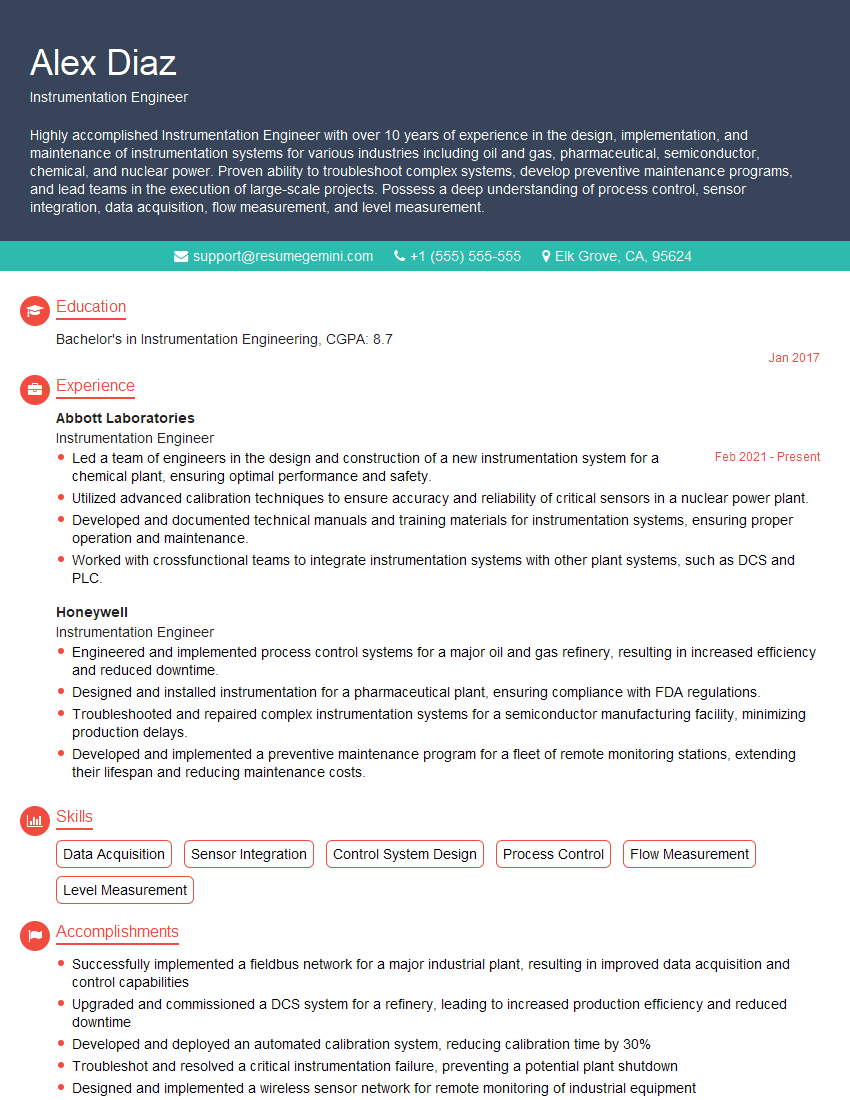
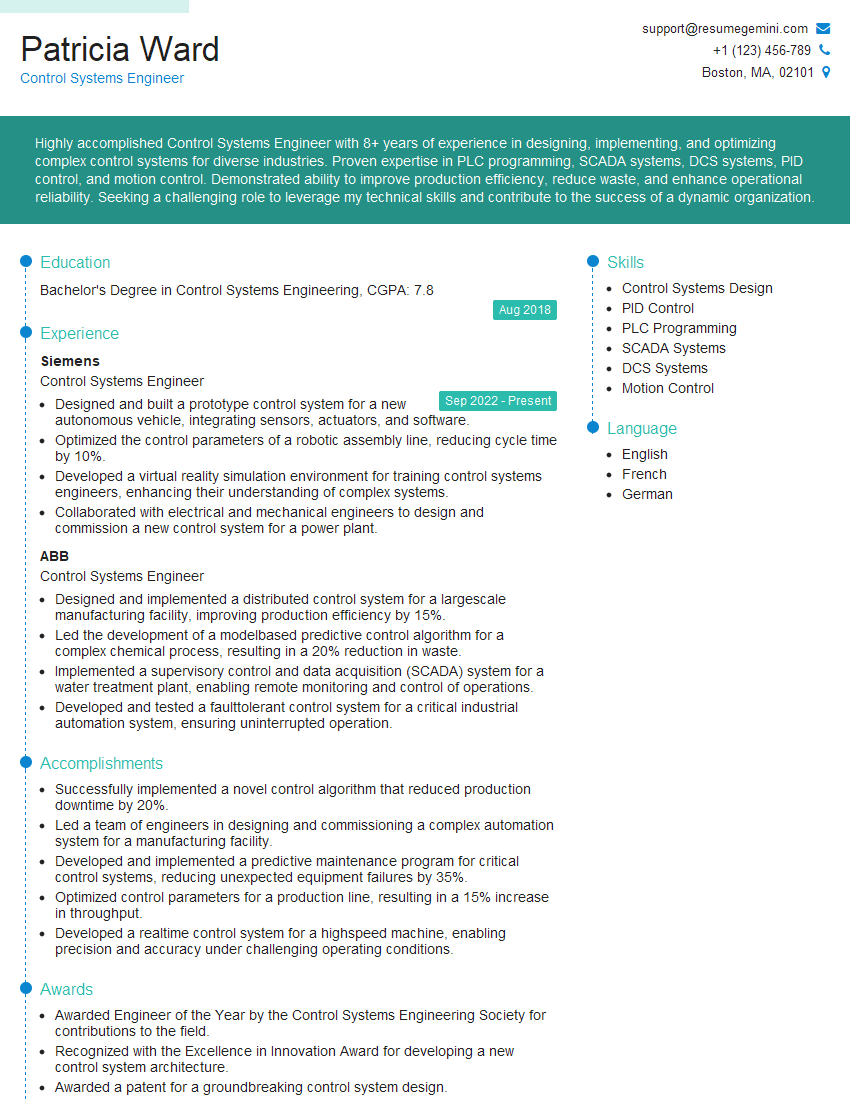
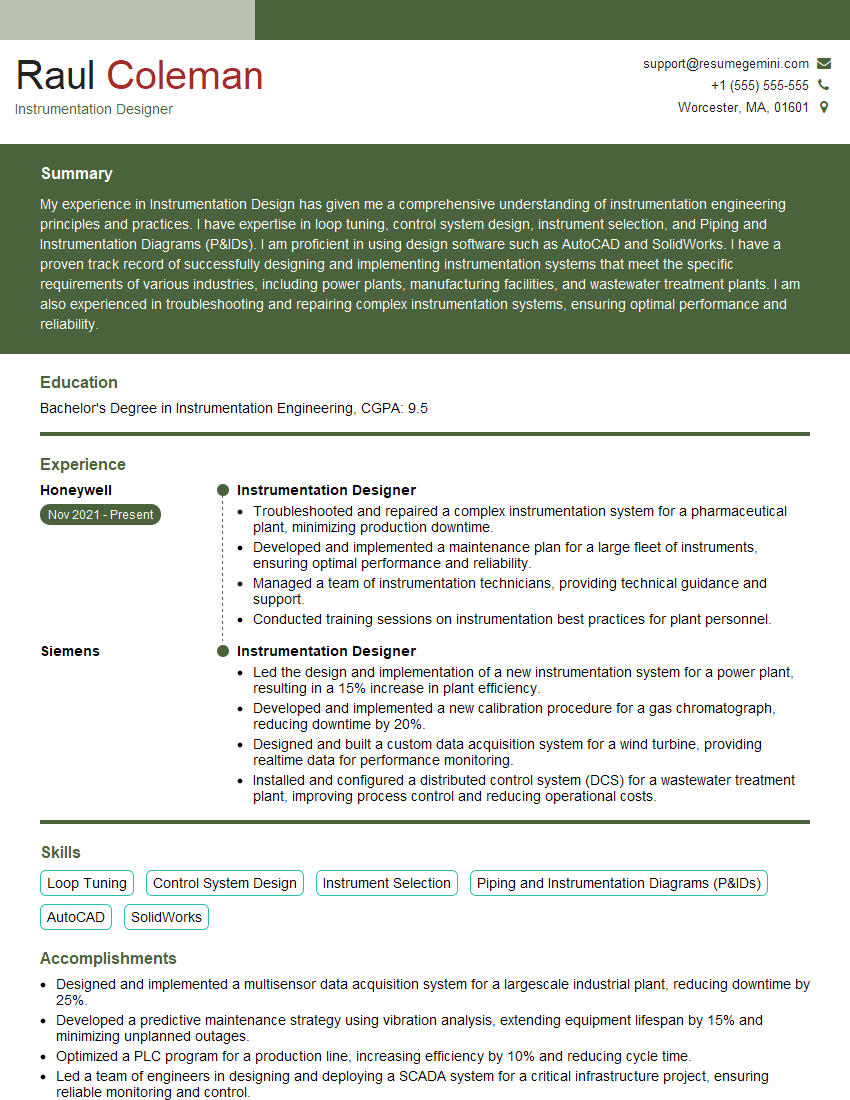
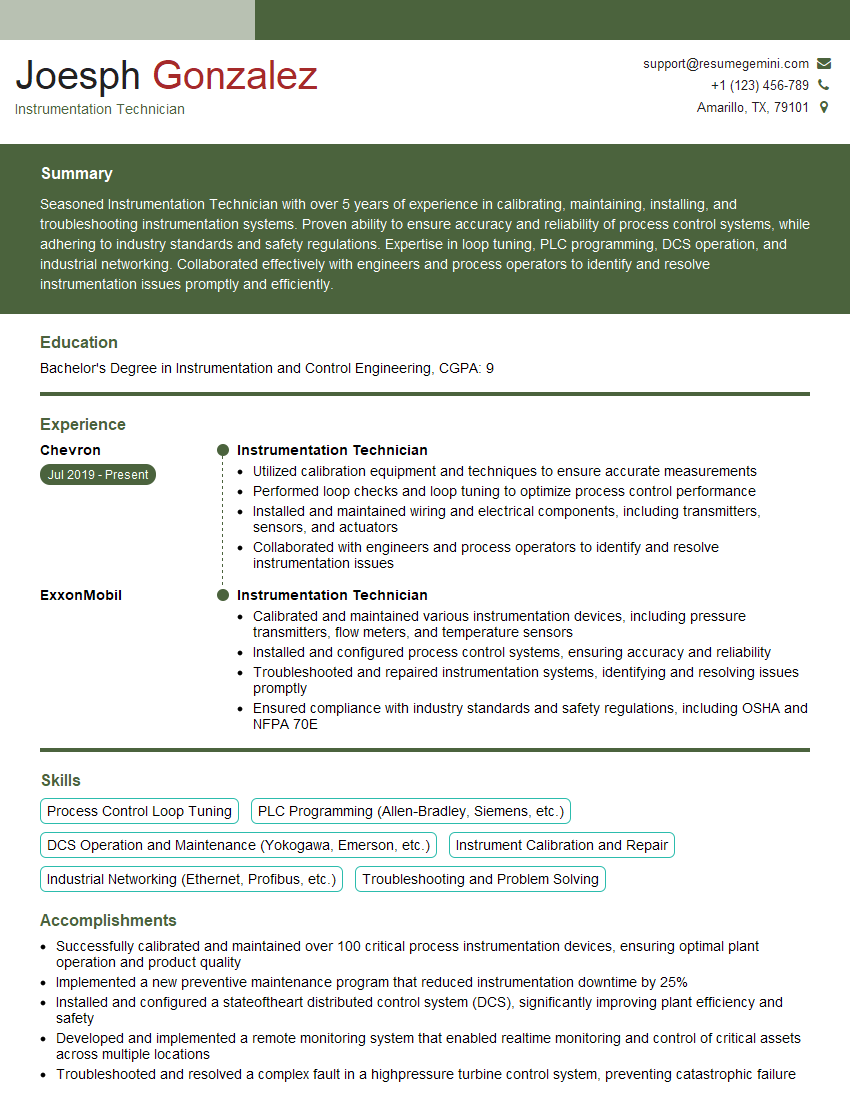
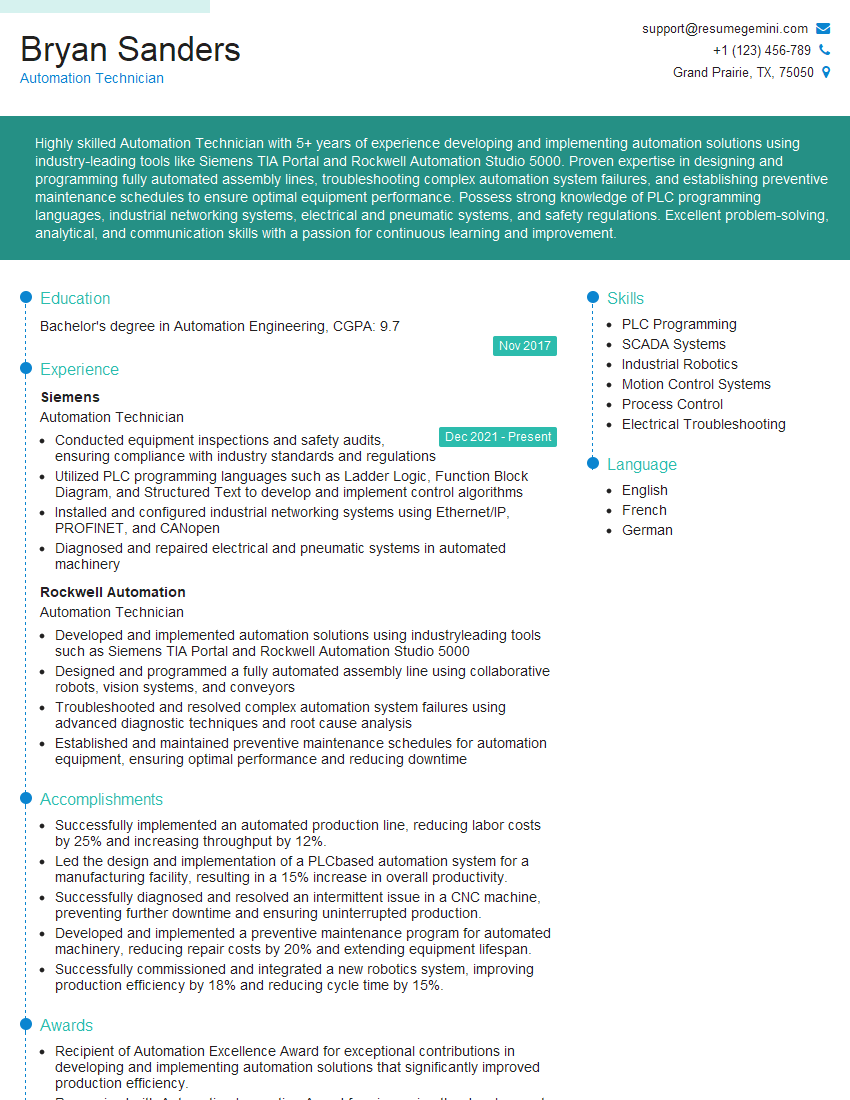
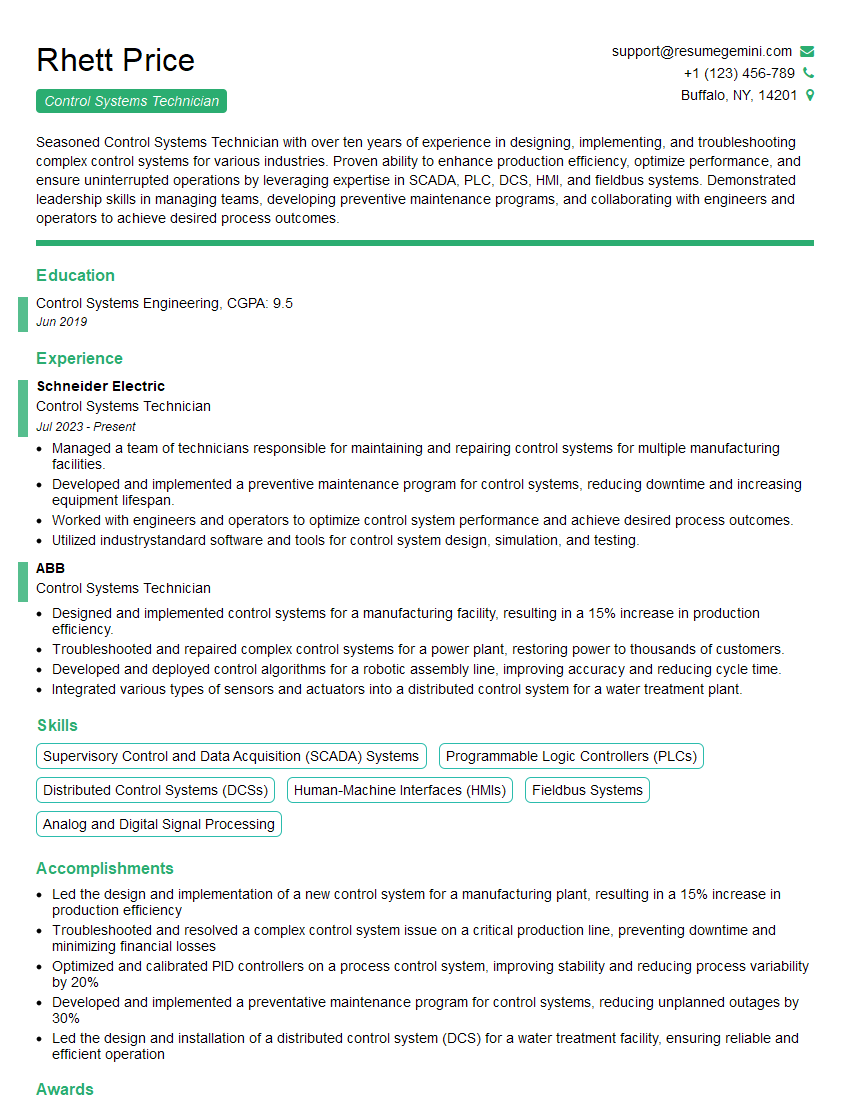
Mastering Instrumentation Wiring opens doors to exciting career opportunities in diverse industries. A strong understanding of these principles is crucial for success in roles demanding precision, problem-solving, and technical expertise. To maximize your job prospects, invest time in creating a compelling and ATS-friendly resume that highlights your skills and experience effectively. ResumeGemini is a trusted resource to help you build a professional resume that stands out. We provide examples of resumes tailored specifically to Instrumentation Wiring to guide you through the process. Take advantage of these resources and confidently showcase your expertise in your job search.
Explore more articles
Users Rating of Our Blogs
Share Your Experience
We value your feedback! Please rate our content and share your thoughts (optional).
What Readers Say About Our Blog
To the interviewgemini.com Webmaster.
Very helpful and content specific questions to help prepare me for my interview!
Thank you
To the interviewgemini.com Webmaster.
This was kind of a unique content I found around the specialized skills. Very helpful questions and good detailed answers.
Very Helpful blog, thank you Interviewgemini team.