Every successful interview starts with knowing what to expect. In this blog, we’ll take you through the top Stone Veneer Application interview questions, breaking them down with expert tips to help you deliver impactful answers. Step into your next interview fully prepared and ready to succeed.
Questions Asked in Stone Veneer Application Interview
Q 1. Describe the different types of stone veneer materials.
Stone veneer comes in a variety of materials, each with its own unique characteristics and aesthetic appeal. The most common types include:
- Natural Stone: This encompasses a wide range, from classic granite and marble to more rustic options like limestone, sandstone, and fieldstone. Natural stone offers unparalleled durability and a timeless look, but can be more expensive and require more careful handling.
- Manufactured Stone: This is a cost-effective alternative often made from concrete or a mixture of cement, aggregates, and pigments. It mimics the appearance of natural stone but is typically lighter and easier to install. The quality varies greatly depending on the manufacturer, so it’s crucial to select a reputable supplier.
- Thin Veneer: This type is significantly thinner than traditional stone veneer, making it ideal for projects where weight is a concern or for applications over existing surfaces. It usually requires a different installation method compared to thicker veneers.
Choosing the right material depends on factors like budget, desired aesthetic, project requirements, and the climate of the location. For example, a coastal project might benefit from a durable material like granite, while an interior application might use a lighter manufactured stone to reduce weight and installation complexity.
Q 2. Explain the process of preparing a surface for stone veneer application.
Surface preparation is critical for a successful stone veneer installation. A poorly prepared surface can lead to adhesion problems, cracking, and ultimately, a costly failure. The process typically involves these steps:
- Cleaning: The surface must be thoroughly cleaned to remove any loose debris, dirt, dust, oil, or other contaminants. Power washing is often employed, followed by a thorough brushing.
- Repairing: Any cracks, holes, or imperfections in the underlying structure need to be repaired using appropriate patching materials. This ensures a solid and even base for the veneer.
- Priming (Often Necessary): Applying a suitable primer improves adhesion and helps to prevent moisture problems. The choice of primer depends on the substrate material (e.g., concrete, wood, metal) and the type of veneer being used.
- Waterproofing (When Applicable): In areas prone to moisture, a waterproof membrane may be applied behind the veneer to prevent water damage to the underlying structure. This is especially important in climates with heavy rainfall or snowfall.
- Framing (If Required): For some installations, especially over complex shapes or for creating recesses, a framework might be required to support the stone veneer.
Imagine it like preparing a canvas for a painting – a smooth, clean, and properly primed surface will ensure the ‘painting’ (stone veneer) adheres perfectly and lasts for years.
Q 3. What are the key considerations for selecting mortar for stone veneer?
Selecting the right mortar is crucial for the longevity and aesthetic appeal of your stone veneer installation. Here are key considerations:
- Type: Mortar types are categorized by their mix ratios. Type N is general purpose and often used, while other types like Type S (higher strength) might be preferred for larger or heavier stones.
- Color: Mortar color should complement the stone veneer. Matching or slightly contrasting colors can enhance the overall design.
- Adhesion: The mortar must have excellent adhesion properties to ensure the stone veneer stays securely in place. Poor adhesion is a common cause of failure.
- Workability: The mortar should be easy to work with, allowing for precise placement of the stones. It shouldn’t be too stiff or too runny.
- Durability: The mortar needs to withstand weathering, temperature changes, and freeze-thaw cycles without cracking or crumbling.
A professional installer will carefully consider these aspects and choose the mortar best suited to the specific project. For example, in harsh coastal environments, a high-strength, waterproof mortar may be necessary.
Q 4. How do you ensure proper ventilation behind stone veneer installations?
Proper ventilation behind stone veneer is essential to prevent moisture buildup, which can lead to mold, mildew, and structural damage. This is achieved through:
- Weep Holes: Small holes are drilled near the bottom of the veneer installation to allow any trapped moisture to escape. These weep holes should be positioned strategically and left unobstructed.
- Drainage Planes: A drainage plane, often a layer of waterproof membrane, is installed behind the veneer, allowing any water to run down and out through the weep holes.
- Air Gaps: In some cases, an air gap is created between the back of the veneer and the wall sheathing to allow for better air circulation. This is particularly important in areas with high humidity.
Think of it like a rain jacket – the ventilation ensures that moisture doesn’t get trapped and cause problems within the wall assembly.
Q 5. Describe your experience with different stone veneer installation methods.
My experience encompasses a range of stone veneer installation methods, including:
- Direct Application: This involves applying the stone veneer directly to a properly prepared substrate using mortar. This method is common for many projects.
- Metal Lath System: A metal lath is installed over a substrate, providing additional support and reinforcement, especially for larger or heavier stones. This method is advantageous in cases with less-than-ideal base materials.
- Thin Veneer Installation: This method utilizes specialized adhesives and techniques due to the thinner nature of the material and often involves different panel sizes. Precision and careful application are paramount.
I’ve worked on projects ranging from small residential repairs to large-scale commercial buildings, and my choice of installation method is always tailored to the project’s unique requirements, the type of stone veneer, and the site conditions. Experience has taught me that adaptability and attention to detail are key.
Q 6. What are the common challenges encountered during stone veneer installation?
Common challenges encountered during stone veneer installation include:
- Uneven Surfaces: Dealing with irregularities requires careful planning and the use of shims or varying mortar depths to create a level plane.
- Moisture Issues: This can lead to mold, mildew, and deterioration of the veneer. Proper waterproofing and ventilation are crucial to mitigate this risk.
- Mortar Color Consistency: Maintaining a consistent color and texture throughout the installation requires careful mixing and application techniques.
- Stone Breakage: Natural stones can be fragile, requiring extra care during handling, cutting, and installation.
- Adhesion Problems: Improper surface preparation can lead to poor adhesion and premature failure. Careful attention to detail during the surface prep stage is vital.
Addressing these challenges requires careful planning, preparation, and the use of proper techniques and materials. Proactive problem-solving, often involving creative solutions based on years of experience, is essential for success.
Q 7. How do you handle uneven surfaces when applying stone veneer?
Handling uneven surfaces during stone veneer application is a crucial skill. Several strategies are employed:
- Shimming: Thin pieces of material (shims) are placed behind the stone veneer to level out irregularities in the substrate. This ensures a consistent, flush look across the entire installation.
- Varying Mortar Depth: Adjusting the mortar depth behind individual stones can compensate for minor surface variations. This is a technique that requires experience and precision.
- Substrate Preparation: In cases with significant irregularities, significant substrate preparation may be necessary before applying the veneer. This can involve patching, leveling, or other corrective measures.
- Proper Planning: Careful planning and layout of the stones prior to installation can help minimize the impact of uneven surfaces.
Think of it as building a mosaic – each piece is carefully placed and adjusted to create a cohesive and aesthetically pleasing result. This is where experience and precision really make a difference.
Q 8. What safety precautions do you take when working with stone veneer?
Safety is paramount when working with stone veneer. Think of it like handling delicate, yet heavy, artwork. We always begin by assessing the worksite for potential hazards, ensuring a stable and clear working area. This includes proper scaffolding or ladder use, with appropriate fall protection measures like harnesses and guardrails. We also wear personal protective equipment (PPE) consistently, including safety glasses to protect against flying debris, dust masks to prevent silicosis from inhaling stone dust, work gloves to prevent cuts and abrasions, and steel-toed boots for foot protection. Proper lifting techniques are crucial to avoid back injuries; we use lifting aids where necessary for heavier stones. Finally, we always follow the manufacturer’s safety guidelines for specific products, such as adhesives and sealants. For instance, ensuring adequate ventilation when using certain adhesives is critical.
Q 9. Explain your experience with cutting and shaping stone veneer.
Cutting and shaping stone veneer requires precision and the right tools. My experience spans various techniques, from using a wet saw for precise cuts – essential for achieving clean, straight lines – to employing angle grinders with diamond blades for more intricate shaping. I’m adept at making adjustments to ensure a perfect fit, using a combination of scoring, snapping, and chiseling for more delicate adjustments. Remember, each stone is unique, so flexibility is key. For example, on a recent project, we encountered a particularly hard granite veneer; precise scoring with a diamond blade followed by careful tapping with a chisel allowed us to shape it without causing damage. This often involves pre-planning and carefully measuring to minimize waste and ensure a consistent look. We also consider the specific type of stone when choosing our cutting methods; softer stones are more prone to chipping, requiring a gentler approach.
Q 10. How do you ensure proper drainage behind stone veneer installations?
Proper drainage is critical to prevent water damage and ensure the longevity of the stone veneer installation. Imagine a wall as a house for your veneer: it needs proper ventilation! We establish a drainage plane behind the veneer using a weather-resistant membrane, such as a building wrap, ensuring a continuous layer that prevents moisture penetration. This membrane allows water to drain freely while protecting the wall structure. We also maintain proper weep holes at the base of the wall, allowing any trapped moisture to escape. These weep holes are typically installed at regular intervals and are often covered with a mesh to prevent insects or debris from entering. The proper flashing and sealing around windows and other penetrations are also vital to prevent water from entering behind the veneer, directing it towards the weep holes. Neglecting drainage can lead to significant problems such as mold growth, deterioration of the substrate, and eventual veneer failure.
Q 11. What tools and equipment are essential for stone veneer application?
A range of tools and equipment are essential for efficient and high-quality stone veneer application. Think of it as a well-equipped artist’s studio. This includes a variety of masonry saws (wet saw and angle grinder with diamond blades), chisels and hammers for shaping and fitting, levels and plumb bobs to ensure accurate installation, trowels for applying mortar and adhesive, mixing buckets, safety equipment (as previously mentioned), and measuring tapes. We also use scaffolding or ladders for safe access to higher areas, and potentially a lift for extremely heavy materials. A material hoist is also extremely helpful in larger projects. The specific tools will vary slightly based on the type of stone and complexity of the design. For instance, a specialized tool like a brick saw might be preferred for precise cuts on certain stone types.
Q 12. How do you maintain the integrity of the veneer during transportation and handling?
Maintaining the integrity of the veneer during transportation and handling is crucial to prevent damage. We treat each piece with care; imagine handling a priceless artifact. We use proper lifting techniques and equipment to prevent breakage. The veneer is often palletized and wrapped to protect it from impacts and scratches. For transportation, we utilize appropriate vehicles equipped to safely handle the weight and fragility of the material. On arrival, we carefully unpack and store the veneer in a protected area to prevent moisture damage or accidental breakage before installation. Additionally, we inspect each piece for any damage before commencing installation. Any damaged pieces are set aside for possible repair, or replacement if necessary. This careful handling ensures the quality of the final installation and reduces waste.
Q 13. What are the building codes and regulations related to stone veneer installation in your area?
Building codes and regulations regarding stone veneer installation vary by location. In my area, we strictly adhere to the International Building Code (IBC) and any local amendments. Key aspects include requirements for proper substrate preparation, the type and strength of the bonding agent, the thickness and placement of the veneer, and the implementation of proper drainage systems as discussed earlier. We also need to adhere to regulations concerning fire safety, ensuring the veneer’s flammability is compliant. Inspections are frequently required throughout the installation process, and final inspections are necessary before project completion. All documentation is diligently maintained, including material certifications, method statements, and inspection records. Non-compliance can lead to significant delays and potential project failure. Therefore, we actively work with local authorities and inspectors to ensure we always meet or exceed the relevant building codes.
Q 14. Describe your experience with different types of bonding agents for stone veneer.
My experience encompasses a range of bonding agents for stone veneer, each with its own properties and applications. The choice of adhesive depends on several factors, including the type of stone, substrate material, and environmental conditions. I’ve worked with Portland cement-based mortars, which are strong and durable but require a longer setting time. Polymer-modified mortars offer enhanced flexibility and faster setting times, ideal for certain projects. Specialty adhesives, like those designed for thin brick veneer, are also in my repertoire. Choosing the correct adhesive is crucial, as the wrong one can lead to veneer failure. For example, using an incorrect adhesive in high-moisture environments can compromise the installation and lead to premature deterioration. I always consider the manufacturer’s specifications and perform appropriate testing, where necessary, to select the most appropriate bonding agent for each project and always follow recommended application practices.
Q 15. How do you account for expansion and contraction of stone veneer due to temperature changes?
Stone veneer, like all natural materials, expands and contracts with temperature fluctuations. Ignoring this can lead to cracking and damage. To account for this, we always incorporate expansion joints. Think of them as planned breaks in the veneer to allow for movement. These joints are typically placed every 10 to 15 feet horizontally and at corners and around openings. The type of joint (e.g., caulked, filled with flexible material) depends on the project’s specifics and the type of stone used. We also use a flexible mortar, a special mortar formulated to accommodate this movement, reducing stress on the veneer. For example, on a large project with significant temperature swings, we might add more expansion joints or opt for a high-performance flexible mortar specifically designed for extreme climates. This ensures the longevity and aesthetic appeal of the project.
Career Expert Tips:
- Ace those interviews! Prepare effectively by reviewing the Top 50 Most Common Interview Questions on ResumeGemini.
- Navigate your job search with confidence! Explore a wide range of Career Tips on ResumeGemini. Learn about common challenges and recommendations to overcome them.
- Craft the perfect resume! Master the Art of Resume Writing with ResumeGemini’s guide. Showcase your unique qualifications and achievements effectively.
- Don’t miss out on holiday savings! Build your dream resume with ResumeGemini’s ATS optimized templates.
Q 16. How do you inspect and assess the quality of stone veneer materials before installation?
Inspecting stone veneer before installation is crucial. It’s like a quality check before starting a painting; you want to make sure you’re working with the best materials. We meticulously examine each piece for:
- Cracks or chips: Any significant damage renders the stone unsuitable.
- Color consistency: Variations are natural but extreme differences might indicate a batch problem.
- Moisture content: Excess moisture can lead to problems later on. We often check using a moisture meter.
- Caliber (size and thickness): Inconsistent sizing can affect installation and aesthetics.
We thoroughly review the manufacturer’s specifications and compare the delivered materials. We typically create a sample layout to check the color and texture variations before full installation, enabling us to make adjustments early on. Rejecting substandard materials is a non-negotiable part of our process. For instance, on a recent project, we rejected a significant portion of a delivery because of inconsistent sizing, avoiding costly rework later.
Q 17. What are the signs of improper stone veneer installation?
Signs of improper stone veneer installation can range from subtle to glaring. Here are some key indicators:
- Cracking or spalling: This indicates stress on the veneer, likely from poor planning, improper mortar use, or insufficient expansion joints.
- Uneven grout lines: Inconsistent mortar application suggests a lack of attention to detail.
- Loose stones: Stones that easily move or are not securely fastened indicate poor adhesion or insufficient support.
- Sagging or bowing: These are clear signs of structural issues, possibly related to insufficient backing or improper support system.
- Water penetration: Evidence of water damage, such as efflorescence (salt deposits), shows failure in waterproofing.
For example, a project I inspected had significant sagging due to inadequate weep holes which resulted in water accumulating behind the veneer causing significant damage.
Q 18. How do you address issues such as cracking or shifting of stone veneer?
Addressing cracking or shifting requires a careful assessment of the cause. Simple cracking might be fixed with specialized epoxy mortar, carefully matching the existing color. More extensive damage might necessitate replacing sections or even entire panels. Shifting stones often point to foundational issues or improper installation. Before any repairs, we investigate the root cause. This might involve inspecting the backing system, checking the mortar strength, and evaluating the flashing details. Our approach is always to stabilize the area before attempting cosmetic repairs; otherwise, the problem will reoccur. On a recent job, we discovered cracked stones due to a poorly installed backing system. Repair involved removing the affected sections, reinforcing the backing, and reinstating the veneer.
Q 19. Describe your experience with waterproofing techniques for stone veneer installations.
Waterproofing is critical. We employ several methods, prioritizing proper flashing, weep holes, and a water-resistant backing system. Flashing, essentially a layer of impermeable material, prevents water from penetrating behind the veneer. Weep holes allow accumulated water to drain. A proper backing system provides support and a barrier against moisture. We often use specialized waterproofing membranes behind the veneer, acting as an extra layer of defense. The choice of membrane depends on the project’s climate and the type of stone. For example, in high-humidity areas, we may use a highly breathable membrane to prevent moisture buildup while still providing protection. A critical element is ensuring the proper installation of these systems; a small gap in the waterproofing can create significant problems.
Q 20. Explain your experience with different types of flashing details in stone veneer applications.
Flashing is crucial in preventing water damage. We use various flashing details depending on the situation:
- Base flashing: A continuous layer at the bottom of the veneer, preventing water from entering at the foundation.
- Window and door flashing: Carefully fitted around openings to prevent water penetration.
- Step flashing: Used for intersections with roofs or other elements, overlapping the layers to create a waterproof barrier.
The design and installation of flashing details are crucial. A poorly installed flashing system can lead to significant water damage. We work closely with the architects and engineers to ensure proper details. I’ve seen instances where improper flashing led to expensive repairs, so we take this stage extremely seriously.
Q 21. How do you manage the project timeline and budget for a stone veneer installation?
Managing project timelines and budgets involves detailed planning and rigorous monitoring. We start with a thorough site assessment and develop a comprehensive plan with detailed schedules and cost estimates. This includes accounting for material procurement, labor costs, potential delays, and contingency plans. We establish a communication plan with the client, providing regular updates on progress and any potential issues. We use project management software to track progress against deadlines, manage resources, and control costs. For example, we use a specific software to track the quantity of materials used daily to control costs and identify any material discrepancies. Throughout the project, we actively monitor the budget and make adjustments as needed, always keeping the client informed. Proactive communication is key to avoiding budget overruns and ensuring client satisfaction.
Q 22. Describe your experience with working with various types of substrates.
My experience with various substrates is extensive, encompassing everything from standard wood-framed walls and concrete block to engineered wood panels and even properly prepared metal studs. Each substrate requires a unique approach to ensure a successful and lasting stone veneer installation. For example, wood framing necessitates the use of a water-resistant barrier like a building wrap to prevent moisture damage. Concrete block often requires the use of a bonding agent to ensure the veneer adheres properly. Engineered wood panels present their own challenges in terms of ensuring sufficient structural support for the veneer weight, and often require additional furring strips. I’ve worked on projects where we had to meticulously assess the substrate’s condition, perform necessary repairs (like patching cracks or addressing rot), and then choose the appropriate attachment method — whether that’s adhesive, mechanical fasteners, or a combination of both – to guarantee a secure and lasting installation.
- Wood Framing: Requires careful moisture management and often the use of furring strips for a level surface.
- Concrete Block: Needs a bonding agent and consideration of the block’s texture and porosity.
- Engineered Wood Panels: Demands careful consideration of structural integrity and often requires additional support.
- Metal Studs: Needs specialized fasteners and a thorough understanding of thermal expansion and contraction.
Q 23. What is your approach to problem-solving during the installation process?
My approach to problem-solving during installation is systematic and proactive. I start by thoroughly understanding the nature of the problem, whether it’s a substrate issue, a mismatch in stone sizes, or an unexpected change in the design. I then carefully assess available solutions, considering factors like cost, time constraints, and the long-term impact on the installation’s integrity. I always prioritize safety and adherence to building codes. For instance, if I encounter a section of damaged substrate, I wouldn’t simply try to patch it over. Instead, I’d carefully repair the underlying issue, ensuring that the substrate is structurally sound and prepared for the veneer. I frequently document the problem, the solution chosen and the outcome to refine my methodology and improve future projects. If I encounter a particularly complex problem, I don’t hesitate to consult with engineers or other specialists to ensure the best possible outcome. Collaboration and continuous learning are key to effectively addressing any challenges.
Q 24. How do you ensure the longevity and durability of a stone veneer installation?
Ensuring longevity and durability hinges on several key elements. First and foremost is proper substrate preparation – a sound foundation is crucial. This means addressing any existing moisture problems, ensuring the substrate is level and structurally sound, and using appropriate weather barriers. Secondly, the correct selection and application of the mortar or adhesive is critical. I meticulously follow manufacturer’s instructions and use high-quality materials suited for the specific environment. Thirdly, proper flashing and sealing are essential to prevent water penetration. I meticulously seal all joints and vulnerable areas, using high-quality sealant to prevent water damage which is the leading cause of stone veneer failure. Lastly, choosing the right type of stone veneer for the climate is important. Porous stones might not be ideal in areas with freezing temperatures, and certain stones may be better suited to coastal environments. I always recommend using a weep screed system to allow for moisture escape behind the veneer. Thinking about these aspects proactively throughout the project, from planning to completion, is paramount.
Q 25. What are your preferred methods for cleaning and maintaining installed stone veneer?
Cleaning and maintaining stone veneer is relatively straightforward but requires the right approach to avoid damage. I recommend regular cleaning with a soft-bristled brush and mild detergent, avoiding harsh chemicals or abrasive cleaners that could scratch the stone’s surface. High-pressure water jets should also be avoided as they can dislodge the veneer. For tougher stains, a specialized stone cleaner may be needed, but always test it on an inconspicuous area first. Regular inspection for loose stones or damaged mortar is essential. Promptly addressing these issues prevents further damage. For example, a small crack in the mortar can quickly escalate if left unattended. Protecting the veneer from extreme weather conditions – such as covering it during harsh winter storms – can further extend its lifespan. Prevention is key, making routine inspections and maintenance a vital component of a long-lasting installation.
Q 26. Describe your experience with working from blueprints and specifications.
I have extensive experience interpreting and working from blueprints and specifications. My process involves carefully reviewing the plans to understand the scope of work, the types of stone to be used, the required detailing (e.g., around windows and doors), and any special installation requirements. I pay close attention to details like elevations, sections, and construction notes, ensuring I fully grasp the designer’s vision. I then translate these designs into a practical installation plan, often creating detailed shop drawings to guide my team’s work. I always maintain open communication with the architects or designers, clarifying any ambiguities and addressing any potential discrepancies before the installation begins. This meticulous approach ensures that the final installation accurately reflects the design intent and meets the project’s specifications.
Q 27. How do you coordinate your work with other trades on a construction site?
Coordinating work with other trades is crucial for a smooth and efficient project. I begin by establishing clear lines of communication with other contractors, including framers, electricians, plumbers, and insulation installers. Careful planning and scheduling are essential to ensure that each trade completes its work in the correct sequence. For example, the framing and insulation must be completed before the stone veneer can be installed. I also emphasize proactive problem-solving; if issues arise that might impact my work, I address them immediately to prevent delays. I actively participate in regular site meetings to stay informed and to coordinate my work with other trades. Maintaining a collaborative and respectful approach ensures that everyone is on the same page and that potential conflicts are addressed swiftly and effectively. This proactive collaboration makes the project not only efficient but also strengthens the overall quality of the final product.
Key Topics to Learn for Stone Veneer Application Interview
- Material Selection and Preparation: Understanding different types of stone veneer (natural, manufactured), their properties, and appropriate substrate preparation techniques for optimal adhesion and longevity.
- Installation Techniques: Mastering various installation methods, including thin-set mortar application, proper layering techniques, and achieving consistent mortar joints for a professional finish. Consider different wall types and their implications.
- Tools and Equipment: Familiarity with essential tools (e.g., trowels, chisels, levels, safety equipment) and their proper usage for efficient and safe installation.
- Mortar Mixing and Application: Understanding the importance of proper mortar consistency and application techniques to ensure strong bond and prevent issues like cracking or delamination.
- Cutting and Shaping Stone Veneer: Developing skills in accurately cutting and shaping stone veneer to fit various architectural details and corners, minimizing waste and maximizing aesthetic appeal.
- Quality Control and Inspection: Knowing how to identify and address potential problems during installation, ensuring adherence to building codes and best practices for a high-quality final product.
- Safety Procedures and Regulations: Understanding and implementing relevant safety protocols to prevent accidents and injuries during the installation process.
- Estimating and Project Planning: Developing skills in accurately estimating material quantities, labor costs, and project timelines for efficient project management.
- Troubleshooting Common Issues: Identifying and resolving common problems encountered during stone veneer application, such as uneven mortar joints, cracking, or loose stones.
- Understanding Building Codes and Specifications: Familiarity with relevant building codes and specifications related to stone veneer installation to ensure compliance and project success.
Next Steps
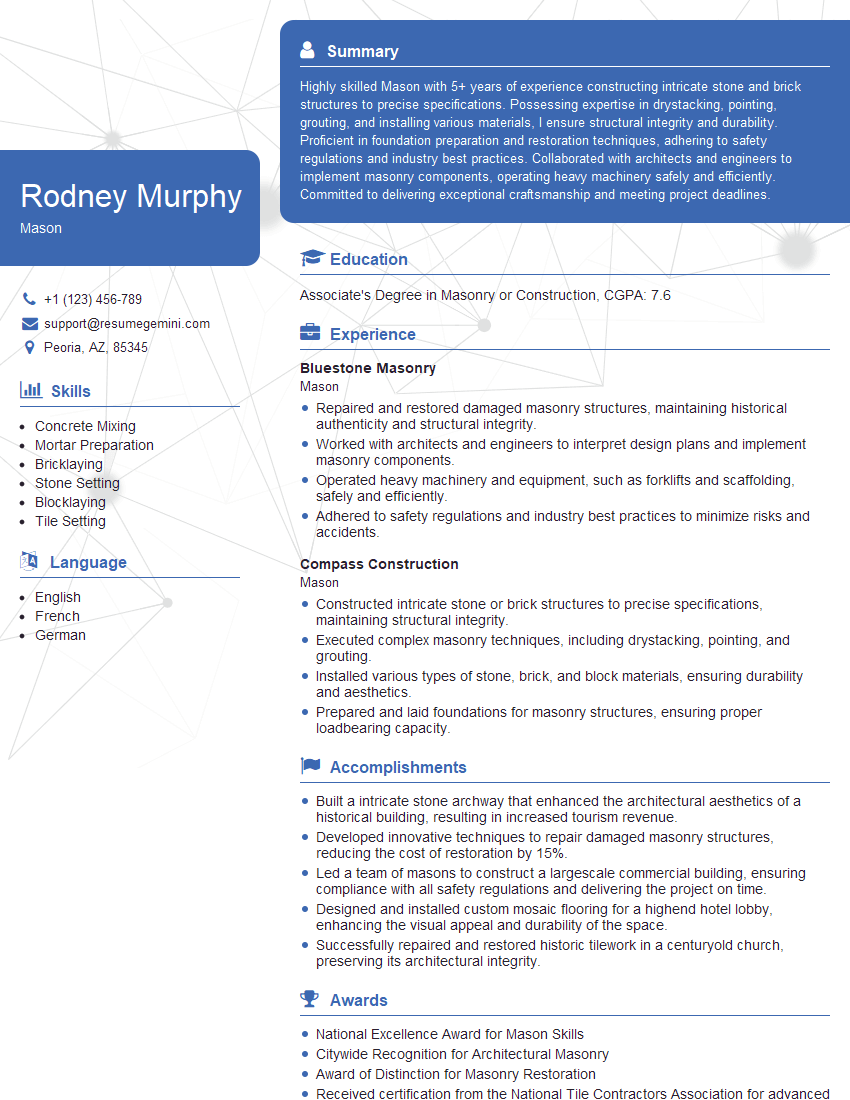
Mastering stone veneer application opens doors to rewarding careers in construction and home improvement. This skill is highly sought after, offering excellent job prospects and potential for career advancement. To increase your chances of landing your dream job, crafting an ATS-friendly resume is crucial. ResumeGemini is a trusted resource to help you build a professional and effective resume that highlights your skills and experience. Examples of resumes tailored specifically to stone veneer application are provided to guide you.
Explore more articles
Users Rating of Our Blogs
Share Your Experience
We value your feedback! Please rate our content and share your thoughts (optional).
What Readers Say About Our Blog
To the interviewgemini.com Webmaster.
Very helpful and content specific questions to help prepare me for my interview!
Thank you
To the interviewgemini.com Webmaster.
This was kind of a unique content I found around the specialized skills. Very helpful questions and good detailed answers.
Very Helpful blog, thank you Interviewgemini team.