The right preparation can turn an interview into an opportunity to showcase your expertise. This guide to Sustainable Electrical Practices interview questions is your ultimate resource, providing key insights and tips to help you ace your responses and stand out as a top candidate.
Questions Asked in Sustainable Electrical Practices Interview
Q 1. Explain the concept of embodied carbon in electrical systems.
Embodied carbon in electrical systems refers to the greenhouse gas emissions generated throughout the entire lifecycle of electrical equipment, from raw material extraction and manufacturing to transportation, installation, and eventual disposal. Think of it as the carbon footprint ‘baked into’ the product itself, unlike the operational carbon emitted during its use. This includes emissions associated with the production of materials like copper, aluminum, steel, and concrete used in transformers, cables, switchgear, and power plants.
For example, the embodied carbon in a large power transformer is significant due to the extensive use of steel and the energy-intensive manufacturing process. Minimizing embodied carbon requires focusing on sustainable material sourcing, efficient manufacturing techniques, and designing for longer lifespans and recyclability. This is becoming increasingly important as the world transitions to net-zero emissions.
Q 2. Describe different methods for improving the energy efficiency of existing electrical infrastructure.
Improving the energy efficiency of existing electrical infrastructure involves a multi-pronged approach. One key strategy is upgrading to more efficient equipment. This could involve replacing outdated transformers with those featuring advanced cooling systems and lower core losses, swapping out incandescent lighting for LEDs, or installing smart meters to monitor energy consumption in real-time.
- Smart Controls: Implementing smart building management systems can optimize energy usage based on occupancy and time of day, minimizing energy waste.
- Power Factor Correction: Installing capacitors to improve the power factor reduces energy losses in transmission and distribution lines.
- Demand-Side Management: Implementing programs to encourage energy conservation during peak demand periods can reduce strain on the grid.
- Regular Maintenance: Consistent maintenance, including cleaning and inspecting equipment, ensures optimal performance and reduces energy losses due to inefficiencies.
Consider a scenario where an older industrial facility is retrofitted with variable-frequency drives (VFDs) on its motors. VFDs allow for precise speed control, reducing energy consumption compared to constantly running motors at full speed. This is a simple yet impactful way to improve efficiency.
Q 3. What are the key performance indicators (KPIs) used to measure the success of sustainable electrical projects?
Key Performance Indicators (KPIs) for sustainable electrical projects vary depending on the project’s scope, but some common ones include:
- Energy Consumption Reduction: Measured in kWh or MWh saved, this directly reflects the project’s efficiency gains.
- Greenhouse Gas Emissions Reduction: Expressed in tons of CO2e (carbon dioxide equivalent) avoided, this quantifies the environmental impact.
- Return on Investment (ROI): The financial benefit of the project, considering initial investment costs and long-term savings.
- Embodied Carbon Reduction: Measured in kg CO2e per unit of equipment or per project, this shows the success in reducing the carbon footprint of materials.
- Renewable Energy Penetration: The percentage of electricity sourced from renewable sources, demonstrating the shift towards cleaner energy.
- Grid Reliability Improvement: Metrics such as reduced outages and improved voltage stability reflect enhanced system resilience.
For example, a solar panel installation project might be evaluated based on its energy generation, greenhouse gas emissions reduction, and the payback period of the investment. Comprehensive KPI tracking is essential for demonstrating project success and informing future initiatives.
Q 4. How do you evaluate the lifecycle cost of different electrical equipment options?
Evaluating lifecycle cost (LCC) involves considering all costs associated with an electrical equipment option throughout its entire lifespan. This includes initial purchase price, installation costs, operation and maintenance expenses, and eventual decommissioning and disposal costs. LCC analysis helps make informed decisions by comparing the total cost of ownership across different options, rather than focusing solely on the upfront investment.
A common approach is to calculate the present value of all future costs, using a discount rate to account for the time value of money. Software tools and spreadsheets are often used to facilitate this complex calculation. For example, comparing the LCC of a standard transformer versus a more efficient, but pricier, transformer will factor in the higher initial investment of the efficient model against the lower operational costs and longer lifespan.
This approach often reveals that the seemingly more expensive option with lower operational costs and a longer lifespan can be more cost-effective in the long run.
Q 5. Discuss the advantages and disadvantages of different renewable energy sources for electricity generation.
Different renewable energy sources for electricity generation each have their unique advantages and disadvantages:
- Solar Photovoltaic (PV): Advantages: Abundant sunlight in many regions, decreasing costs, modular and scalable. Disadvantages: Intermittency (sunlight dependent), land use requirements, manufacturing impacts.
- Wind Energy: Advantages: High energy density in windy locations, established technology, relatively low environmental impact (excluding bird and bat mortality). Disadvantages: Intermittency (wind dependent), visual impact, noise pollution, location limitations.
- Hydropower: Advantages: High efficiency, reliable power generation, long lifespan. Disadvantages: Environmental impacts on rivers and ecosystems, large upfront investment, potential for displacement of communities.
- Geothermal Energy: Advantages: Reliable and consistent power generation, minimal environmental impact compared to fossil fuels. Disadvantages: Geographic limitations (requires geothermal resources), high upfront capital costs, potential for induced seismicity.
The optimal choice depends on factors like geographical location, resource availability, environmental considerations, and economic feasibility. A diversified renewable energy portfolio, combining different sources, is often the most resilient and sustainable approach.
Q 6. Explain the role of smart grids in promoting sustainable electrical practices.
Smart grids play a crucial role in promoting sustainable electrical practices by enabling efficient energy management and integration of renewable sources. They utilize advanced sensors, communication networks, and data analytics to optimize power generation, distribution, and consumption.
Smart grids facilitate:
- Improved Grid Stability: Real-time monitoring and control help maintain grid stability even with intermittent renewable energy sources.
- Demand-Side Management: Smart meters and smart appliances allow for dynamic load management, reducing peak demand and improving overall efficiency.
- Enhanced Renewable Energy Integration: Smart grids provide the infrastructure to efficiently integrate distributed renewable energy resources like rooftop solar and small wind turbines.
- Reduced Energy Losses: Optimized power flow management minimizes transmission and distribution losses.
- Improved Grid Resilience: Faster detection and response to outages and disturbances improves grid reliability.
For instance, smart grids can dynamically adjust power distribution to accommodate fluctuations in solar energy production, ensuring a consistent supply of electricity while minimizing reliance on fossil fuel-based backup generators.
Q 7. What are some strategies for reducing peak demand in electrical systems?
Reducing peak demand is critical for ensuring grid stability and promoting sustainable electrical practices. Strategies include:
- Time-of-Use Pricing: Charging higher rates during peak demand periods incentivizes consumers to shift their energy consumption to off-peak hours.
- Demand Response Programs: Offering incentives to consumers to reduce energy consumption during peak demand periods, often through automated controls or voluntary participation.
- Energy Storage: Deploying energy storage systems (batteries, pumped hydro) to store energy during off-peak hours and release it during peak periods.
- Load Shifting: Encouraging consumers to shift energy-intensive tasks to off-peak times, such as running clothes dryers or dishwashers at night.
- Peak Load Shaving: Employing technologies to reduce the peak demand by small amounts, like smart thermostats that automatically adjust temperatures during peak demand.
Imagine a large data center employing demand response – during peak demand, the data center’s cooling system might be slightly less aggressive, while still maintaining safe operating temperatures, thereby reducing its overall load on the electricity grid.
Q 8. How do building codes and regulations influence the design of sustainable electrical systems?
Building codes and regulations are crucial in driving the adoption of sustainable electrical systems. They set minimum standards for energy efficiency, safety, and the use of renewable energy sources. For example, many jurisdictions now mandate minimum insulation levels, energy-efficient windows, and the installation of solar panels on new buildings or during significant renovations. These regulations often incorporate elements from established green building rating systems like LEED (Leadership in Energy and Environmental Design) or BREEAM (Building Research Establishment Environmental Assessment Method). This influence is felt throughout the design process, from initial feasibility studies to final system commissioning. A building’s electrical design must comply with these codes, impacting choices about things like lighting systems, HVAC controls, and the overall power distribution network. For instance, a code might require a certain percentage of lighting to be energy-efficient LEDs or mandate the use of smart thermostats for optimized energy consumption. Essentially, the regulations act as a baseline ensuring a level of sustainability is built into the project from the start.
Q 9. Describe your experience with energy modeling and simulation software.
I have extensive experience with various energy modeling and simulation software packages, including EnergyPlus, TRNSYS, and IES VE. These tools are indispensable for predicting the energy performance of buildings and electrical systems before construction. My work involves using these programs to create virtual models of buildings, incorporating detailed information on building geometry, materials, equipment, and the electrical systems themselves. For instance, in a recent project, I used EnergyPlus to simulate the performance of a proposed green office building, testing different HVAC system configurations, lighting strategies, and renewable energy integration scenarios. The software allowed us to optimize the electrical design for minimum energy consumption while meeting the project’s functional requirements. For example, a simple script might involve inputting parameters such as lighting power density, occupancy schedules, and window U-values to generate a detailed energy consumption profile. The outputs provide insights into energy usage patterns, peak demands, and potential cost savings. This data helps make informed decisions that lead to more efficient and cost-effective designs.
Q 10. Explain the importance of considering the whole-building energy performance when designing electrical systems.
Considering the whole-building energy performance is paramount in sustainable electrical system design. Electrical systems don’t operate in isolation; they are deeply interconnected with other building systems like HVAC, lighting, and even water heating. A holistic approach ensures that the electrical design supports overall energy efficiency goals. Imagine designing a highly efficient lighting system, but neglecting the building envelope’s thermal performance. The increased heating and cooling loads required to compensate for poor insulation will negate the energy savings from the lighting system. Therefore, the design needs to consider the synergy between these systems. For example, a smart building management system (BMS) can integrate data from various sources, allowing for coordinated control and optimization of all systems. This integrated approach ensures that energy is used efficiently, reducing overall consumption and operational costs while minimizing environmental impact. The integration of renewable energy sources further necessitates a holistic perspective, as the efficient use and integration of these sources depend on the overall energy consumption profile of the building.
Q 11. What are the challenges associated with integrating renewable energy sources into existing electrical grids?
Integrating renewable energy sources, such as solar and wind power, into existing electrical grids presents several significant challenges. Intermittency is a major hurdle; renewable energy generation is dependent on weather conditions, resulting in fluctuating power output. This variability requires sophisticated grid management strategies, including energy storage solutions and advanced forecasting techniques, to maintain grid stability and reliability. Another key challenge is the geographical distribution of renewable energy resources. Solar farms are ideally located in sunny areas, while wind farms require consistent wind. This can create uneven distribution, requiring grid upgrades to handle increased transmission capacity in some regions. Furthermore, the integration requires proper grid infrastructure, including smart meters, advanced communication systems, and flexible power generation resources, to accommodate the dynamic nature of renewable energy sources. These upgrades represent significant capital investments. Last but not least, managing the different technical specifications and operating requirements of different renewable technologies is also crucial, along with policy and regulatory frameworks to ensure effective integration and incentives for renewable energy adoption.
Q 12. How do you ensure the safety and reliability of sustainable electrical systems?
Ensuring the safety and reliability of sustainable electrical systems is paramount. This involves adhering to strict safety codes and standards, incorporating robust protective devices such as circuit breakers and ground fault circuit interrupters (GFCIs), and employing rigorous testing and commissioning procedures. Regular maintenance and inspection are crucial to prevent failures and ensure continuous operation. Design choices should prioritize redundancy and resilience to minimize the impact of component failures. For example, using multiple inverters for a photovoltaic system provides backup power in case of a single unit failure. Furthermore, the selection of high-quality components and materials plays a crucial role in longevity and reliability. Risk assessments should be incorporated at every stage of the design and installation process, identifying potential hazards and implementing appropriate mitigation strategies. Detailed documentation is essential for future maintenance and troubleshooting activities. Finally, training of personnel involved in the operation and maintenance of these systems is essential to ensure safe and reliable operation.
Q 13. Discuss the role of energy storage technologies in promoting grid stability and renewable energy integration.
Energy storage technologies are increasingly important in promoting grid stability and renewable energy integration. They help address the intermittency of renewable sources like solar and wind power by storing excess energy during periods of high generation and releasing it when demand is high or generation is low. This helps balance the grid, improving reliability and reducing the need for backup fossil fuel power plants. Examples of these technologies include batteries (lithium-ion, flow batteries), pumped hydro storage, and compressed air energy storage. Batteries offer fast response times and high efficiency, but can be expensive and have limited lifecycles. Pumped hydro storage is a more established technology with large-scale storage capacity, but is geographically limited and requires significant infrastructure. The choice of storage technology depends on factors such as scale, cost, and application requirements. The integration of energy storage systems into the electrical grid enhances grid resilience, enabling smoother transition to a higher penetration of renewable energy sources, and reducing overall reliance on carbon-intensive fossil fuels. This improved stability translates into lower electricity costs and a reduced carbon footprint for the power grid.
Q 14. What are some examples of energy-efficient lighting technologies and their applications?
Several energy-efficient lighting technologies are available, each with specific applications. LED (Light Emitting Diode) lighting is widely adopted due to its high energy efficiency, long lifespan, and versatility. LEDs are used in a wide range of applications, from residential lighting to street lighting and industrial settings. OLED (Organic Light Emitting Diode) technology offers improved light quality and design flexibility, suitable for applications requiring high-quality illumination and aesthetics. They are found in high-end displays, architectural lighting, and some interior applications. High-intensity discharge (HID) lamps, such as metal halide and high-pressure sodium lamps, provide high light output but are less energy-efficient than LEDs and have shorter lifespans. They are frequently used in large outdoor areas like parking lots and sports fields. Smart lighting systems, incorporating sensors and controls, can further improve energy efficiency by dynamically adjusting lighting levels based on occupancy and ambient light conditions. These are commonly used in offices, schools, and other commercial buildings to optimize energy usage and improve user experience. Choosing the right technology depends on factors such as cost, light quality, lifespan, application requirements, and desired level of control.
Q 15. Explain the concept of demand-side management and its benefits.
Demand-side management (DSM) is a strategy that focuses on modifying electricity consumption patterns to reduce peak demand and overall energy use. Instead of solely focusing on increasing power generation, DSM proactively manages the demand side. Think of it like managing your personal spending – you don’t just earn more money, you also budget and find ways to reduce unnecessary expenses.
Peak Demand Reduction: DSM programs incentivize consumers to shift their energy consumption away from peak demand periods (typically evenings and early mornings). This reduces the strain on the power grid and minimizes the need for expensive peaking power plants.
Energy Efficiency Improvements: Incentives and programs are offered to encourage the adoption of energy-efficient appliances and technologies, like LED lighting or smart thermostats. This directly lowers overall energy consumption.
Load Shifting: Customers can be encouraged to shift energy-intensive tasks to off-peak hours, such as charging electric vehicles overnight.
Benefits: DSM offers significant benefits, including reduced electricity costs for consumers, improved grid reliability, decreased environmental impact due to lower fossil fuel consumption, and deferred investments in new power generation infrastructure. For example, a large industrial facility might implement time-of-use pricing to reduce its peak demand charges, saving substantial amounts annually.
Career Expert Tips:
- Ace those interviews! Prepare effectively by reviewing the Top 50 Most Common Interview Questions on ResumeGemini.
- Navigate your job search with confidence! Explore a wide range of Career Tips on ResumeGemini. Learn about common challenges and recommendations to overcome them.
- Craft the perfect resume! Master the Art of Resume Writing with ResumeGemini’s guide. Showcase your unique qualifications and achievements effectively.
- Don’t miss out on holiday savings! Build your dream resume with ResumeGemini’s ATS optimized templates.
Q 16. Describe different types of electric vehicle charging infrastructure and their requirements.
Electric vehicle (EV) charging infrastructure varies widely depending on power capacity and charging speed. We can broadly categorize them as follows:
Level 1 Charging: This uses a standard 120V household outlet, offering the slowest charging speeds. It’s suitable for overnight charging and is generally found in residential settings.
Level 2 Charging: This utilizes a dedicated 240V circuit, similar to that used for clothes dryers or ovens. It offers significantly faster charging than Level 1 and is commonly seen in workplaces, apartment complexes, and public spaces. Installation typically requires a dedicated circuit and may involve upgrades to the building’s electrical service.
DC Fast Charging (Level 3): This uses high-voltage DC power to deliver the fastest charging speeds. These stations are generally found along highways and in urban areas where quick charging is essential. They require specialized equipment and significant power capacity, often necessitating upgrades to local grid infrastructure.
Requirements: The requirements vary depending on the level of charging. Level 1 requires minimal infrastructure, while Level 2 and 3 demand careful planning, including assessing available power capacity, load balancing, and potentially grid upgrades to handle the increased demand.
Q 17. What are your experiences with LEED certification or other green building rating systems?
I have extensive experience with LEED (Leadership in Energy and Environmental Design) certification, having worked on numerous projects achieving Gold and Platinum ratings. My involvement has encompassed all phases, from initial design and strategy development to the final documentation and commissioning. For example, on a recent hospital project, we integrated high-efficiency HVAC systems, optimized lighting strategies, and implemented a comprehensive building automation system, all contributing to a significant reduction in energy consumption and the attainment of LEED Gold certification. I am also familiar with other green building rating systems like BREEAM (Building Research Establishment Environmental Assessment Method) and Green Globes, understanding their respective strengths and focusing on the overlap in sustainable principles to optimize the design and construction processes.
Q 18. How do you assess the environmental impact of different materials used in electrical installations?
Assessing the environmental impact of materials in electrical installations involves a Life Cycle Assessment (LCA). This comprehensive methodology analyzes the environmental burdens associated with a product or process throughout its entire lifespan, from raw material extraction to disposal. We consider factors such as:
Embodied Carbon: The greenhouse gas emissions produced during the manufacturing, transportation, and installation of materials. For example, copper wiring has a lower embodied carbon footprint compared to aluminum in some scenarios, but other factors like manufacturing process efficiency must also be considered.
Recyclability and End-of-Life Management: The ease with which materials can be recycled and the environmental impact of their disposal. Using recycled content and selecting materials with high recyclability rates are crucial aspects of sustainable electrical installations.
Resource Depletion: The impact on the extraction and use of finite resources, including the potential for mineral scarcity and environmental degradation associated with mining.
Toxicity: The potential for hazardous substances used in the manufacturing process to impact human health and the environment.
Using LCA software and databases, we can quantitatively compare the environmental performance of different materials and make informed decisions that minimize the overall environmental footprint of electrical installations.
Q 19. Explain the principles of power quality and its importance in sustainable electrical systems.
Power quality refers to the consistency and stability of the electrical power supply. It encompasses several factors, including voltage variations, frequency fluctuations, harmonics, and transient disturbances. Maintaining good power quality is critical for the efficient and reliable operation of electrical equipment and systems, especially in sustainable settings where the reliance on sensitive electronic devices like renewable energy inverters and building management systems is high.
Importance in Sustainable Systems: Power quality issues can significantly reduce the lifespan and efficiency of energy-efficient equipment. For instance, voltage sags can damage sensitive electronics like LED lighting and variable-speed drives, resulting in premature failure and increased energy consumption. Harmonics generated by nonlinear loads (such as computers and switching power supplies) can lead to increased heating in transformers and other equipment, further impacting energy efficiency and reliability. A well-designed sustainable electrical system proactively addresses power quality issues through proper equipment selection, effective grounding, and the implementation of power conditioning equipment where needed.
Q 20. Discuss the role of building automation systems in optimizing energy consumption.
Building automation systems (BAS) are sophisticated control systems that monitor and manage various building functions, including HVAC, lighting, security, and energy management. They play a vital role in optimizing energy consumption by dynamically adjusting these systems based on real-time occupancy, weather conditions, and other relevant factors.
Optimizing Energy Consumption: BAS can significantly reduce energy waste by implementing strategies such as:
Occupancy-Based Control: Turning off lights and adjusting HVAC systems in unoccupied spaces.
Daylighting and Shading Control: Utilizing natural light and minimizing the need for artificial illumination.
Demand Response: Responding to grid signals by reducing energy consumption during peak demand periods.
Predictive Maintenance: Monitoring equipment performance and identifying potential issues before they lead to failures or energy inefficiencies.
A well-designed BAS can lead to significant energy savings and improve the overall operational efficiency of a building. For example, we recently implemented a BAS in a large office building that resulted in a 20% reduction in energy consumption within the first year of operation.
Q 21. How do you approach the selection and specification of energy-efficient electrical equipment?
Selecting and specifying energy-efficient electrical equipment is a crucial aspect of sustainable electrical practices. My approach involves a multi-faceted strategy:
Energy Efficiency Ratings: Prioritizing equipment with high energy efficiency ratings, such as Energy Star certification for appliances and motors, and considering the IEEE standard 802.3 for power efficiency in networking devices.
Life Cycle Cost Analysis: Comparing the initial cost of equipment with its operating costs over its lifespan. While energy-efficient equipment may have a higher upfront cost, the long-term savings on energy bills often outweigh this initial investment.
Technological Advancements: Staying informed about the latest energy-efficient technologies and incorporating them into the designs. For example, selecting variable-frequency drives (VFDs) for motors can significantly improve efficiency.
Load Profiling and Optimization: Analyzing the building’s electrical loads to identify opportunities for optimization and choosing equipment that aligns with these load profiles.
Vendor Collaboration: Working closely with vendors to identify suitable equipment and solutions that meet the project’s specific requirements and sustainability goals.
By carefully considering these factors, we can ensure that the selected equipment contributes significantly to the overall energy efficiency and sustainability of the project. For instance, specifying high-efficiency transformers and choosing LED lighting instead of traditional incandescent bulbs can drastically reduce a building’s electricity consumption.
Q 22. What are the different types of energy audits and their methodologies?
Energy audits are crucial for identifying energy waste and inefficiencies in buildings and systems. They come in various types, each with its methodology:
- Walk-through audits: These are the simplest, involving a visual inspection of the building and its electrical systems to identify obvious inefficiencies like outdated equipment or poor insulation. The methodology involves observation, documentation, and basic calculations based on readily available data.
- Level 1 audits: These provide a more comprehensive assessment, using readily available data to estimate energy consumption and identify areas for improvement. They usually involve detailed energy billing analysis and simple calculations. Methodology includes data collection from utility bills, building plans, and equipment specifications.
- Level 2 audits: These involve more in-depth analysis using on-site measurements of energy consumption and equipment performance. Data loggers and specialized testing equipment are often employed. The methodology includes detailed energy metering, load profiling, and performance testing of equipment.
- Level 3 audits: These are the most comprehensive, involving detailed modeling and simulations of the building’s energy performance. This might include advanced computational fluid dynamics (CFD) modeling for HVAC systems. This methodology involves using specialized software and advanced data analysis techniques.
The choice of audit type depends on the complexity of the building and the level of detail needed. For example, a small office might only need a Level 1 audit, while a large industrial facility would require a Level 3 audit.
Q 23. Describe your experience with lifecycle assessments of electrical products and systems.
Lifecycle assessments (LCAs) are crucial for evaluating the environmental impact of electrical products and systems over their entire lifespan, from material extraction to disposal. My experience encompasses conducting LCAs using various methodologies like ISO 14040/44. I’ve worked on numerous projects, analyzing the environmental impacts related to different stages, including:
- Raw material acquisition: Evaluating the energy used and emissions generated during the extraction and processing of raw materials like copper and plastics.
- Manufacturing: Assessing energy consumption, waste generation, and emissions from the manufacturing process.
- Transportation and distribution: Analyzing the environmental impacts associated with moving the products from the factory to the end-user.
- Use phase: Evaluating the energy consumed during the operational life of the product or system. This is often the largest contributor to the overall environmental impact.
- End-of-life: Assessing the impacts associated with recycling, reuse, or disposal of the product.
For example, in a recent project assessing the LCA of LED lighting systems, we found that although manufacturing had a higher upfront impact, the significantly lower energy consumption during the use phase resulted in a much lower overall carbon footprint compared to traditional incandescent lighting.
Q 24. How do you incorporate sustainability considerations into project planning and execution?
Sustainability is integrated into every phase of my project planning and execution. This involves:
- Defining sustainable goals: Setting clear, measurable targets for reducing energy consumption, emissions, and waste.
- Material selection: Prioritizing recycled and renewable materials, considering embodied carbon in construction materials.
- Design optimization: Employing energy-efficient design principles, maximizing natural light, and optimizing building orientation.
- Equipment selection: Specifying high-efficiency electrical equipment with low environmental impacts and long lifespans.
- Construction practices: Implementing sustainable construction techniques, minimizing waste, and ensuring efficient energy use during the construction phase.
- Monitoring and evaluation: Tracking energy consumption and environmental performance post-project completion to identify areas for improvement.
For instance, in a recent building renovation project, we incorporated solar panels to reduce reliance on the grid, utilized recycled steel for structural components, and implemented a smart building management system to optimize energy consumption based on occupancy and weather conditions.
Q 25. Explain your understanding of carbon footprint reduction strategies in electrical infrastructure projects.
Reducing the carbon footprint of electrical infrastructure projects requires a multifaceted approach:
- Renewable energy integration: Maximizing the use of renewable energy sources like solar and wind power to reduce reliance on fossil fuels.
- Energy efficiency improvements: Implementing energy-efficient technologies and practices to minimize energy consumption throughout the project lifecycle.
- Sustainable material selection: Choosing construction materials with low embodied carbon, such as recycled steel or timber from sustainably managed forests.
- Waste reduction: Minimizing waste generation during construction and operation, and implementing effective waste management strategies.
- Carbon offsetting: Investing in carbon offset projects to compensate for unavoidable emissions.
- Lifecycle carbon accounting: Tracking and analyzing carbon emissions throughout the entire project lifecycle, from design to demolition.
For example, a project might involve using low-carbon concrete, optimizing cable routing to reduce material use, and installing energy-efficient lighting and HVAC systems. The goal is to minimize the project’s overall contribution to climate change.
Q 26. What are some emerging technologies in sustainable electrical practices?
Several emerging technologies are revolutionizing sustainable electrical practices:
- Smart grids: These utilize advanced sensors and communication technologies to optimize energy distribution and integrate renewable energy sources more effectively.
- Microgrids: These localized grids enhance energy resilience and allow for greater integration of renewable sources.
- Energy storage technologies: Advanced battery technologies and pumped hydro storage are improving energy storage capabilities, enabling greater use of intermittent renewable energy.
- Building-integrated photovoltaics (BIPV): Integrating solar panels into building materials, increasing renewable energy generation while reducing visual impact.
- Artificial intelligence (AI) in energy management: AI-powered systems optimize energy consumption in real-time based on various parameters.
- Power electronics and high voltage DC (HVDC) transmission: Improving efficiency in power transmission and distribution networks.
These technologies, while still developing, hold immense promise for building a more sustainable and resilient energy future.
Q 27. How would you address stakeholder concerns related to the cost and implementation of sustainable electrical projects?
Addressing stakeholder concerns about the cost and implementation of sustainable electrical projects requires a strategic approach:
- Life-cycle cost analysis (LCCA): Demonstrating that while upfront costs may be higher, long-term savings from reduced energy consumption and maintenance often outweigh initial investment. This involves comparing the total cost of ownership over the project’s lifespan.
- Incentives and financing: Highlighting available government incentives, tax credits, and financing options to reduce the financial burden on stakeholders.
- Risk mitigation strategies: Identifying and addressing potential risks associated with the project, such as technology risks or regulatory uncertainties.
- Stakeholder engagement: Communicating the benefits of sustainable practices clearly and transparently to all stakeholders, building consensus and support for the project.
- Phased implementation: Implementing the project in phases, starting with cost-effective measures and gradually incorporating more advanced technologies.
For example, I’ve successfully addressed stakeholder concerns by presenting a comprehensive LCCA that showed substantial long-term savings, securing government grants to offset initial costs, and providing clear communication about the project’s environmental and economic benefits.
Q 28. Describe a time you had to troubleshoot a problem in a sustainable electrical system.
During a project involving a smart grid implementation, we experienced intermittent power outages in a newly installed microgrid. The system was designed to seamlessly switch to backup power during grid failures, but this wasn’t functioning correctly. Our troubleshooting involved:
- Initial investigation: Carefully reviewing system logs and sensor data to pinpoint the timing and frequency of the outages.
- On-site inspections: Visually inspecting the system’s components, including cables, connectors, and protection devices, for any signs of damage or malfunction.
- Testing and verification: Using specialized testing equipment to verify the functionality of individual components, such as the backup power source and the switching mechanism.
- Software analysis: Inspecting the control software for bugs or glitches that might be causing the outages.
- Root cause identification: We discovered a software bug in the automated switching system that caused it to prematurely switch off the backup power.
- Solution implementation: The software bug was identified and corrected through a software patch, restoring the system’s functionality.
This experience highlighted the importance of robust testing and monitoring in sustainable electrical systems to ensure reliable and resilient performance. We implemented additional redundancy measures in the system to prevent future similar issues.
Key Topics to Learn for Sustainable Electrical Practices Interview
- Renewable Energy Integration: Understanding the technical challenges and solutions involved in integrating solar, wind, and other renewable energy sources into the electrical grid. This includes considerations for energy storage and grid stability.
- Energy Efficiency Technologies: Familiarize yourself with various energy-efficient technologies like smart grids, LED lighting, and energy management systems. Be prepared to discuss their practical applications and cost-benefit analyses.
- Sustainable Building Design & Electrical Systems: Explore how electrical systems contribute to sustainable building practices, including passive and active design strategies, and the role of building codes and standards.
- Life Cycle Assessment (LCA) of Electrical Equipment: Understand the environmental impact of electrical equipment throughout its entire life cycle, from manufacturing to disposal. Be prepared to discuss sustainable material choices and end-of-life management.
- Smart Grid Technologies and Demand-Side Management: Discuss the principles and applications of smart grid technologies in optimizing energy consumption and managing peak demand. Consider practical examples and case studies.
- Electromagnetic Compatibility (EMC) and Sustainable Practices: Explore how minimizing electromagnetic interference contributes to energy efficiency and overall sustainability. Consider mitigation strategies and regulatory compliance.
- Green Building Certifications (LEED, BREEAM): Become familiar with the requirements and impact of green building certifications on electrical system design and implementation.
- Problem-Solving in Sustainable Electrical Design: Practice analyzing case studies involving challenges in integrating sustainable electrical practices and developing effective solutions.
Next Steps
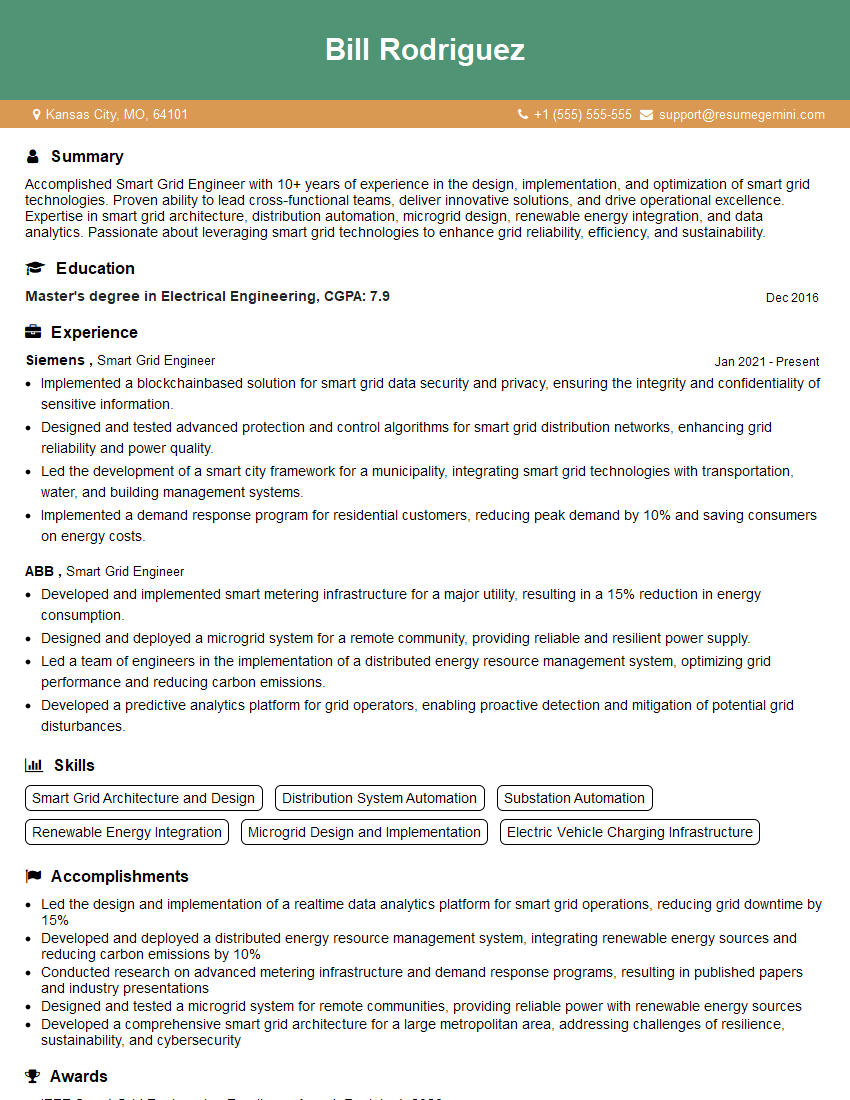
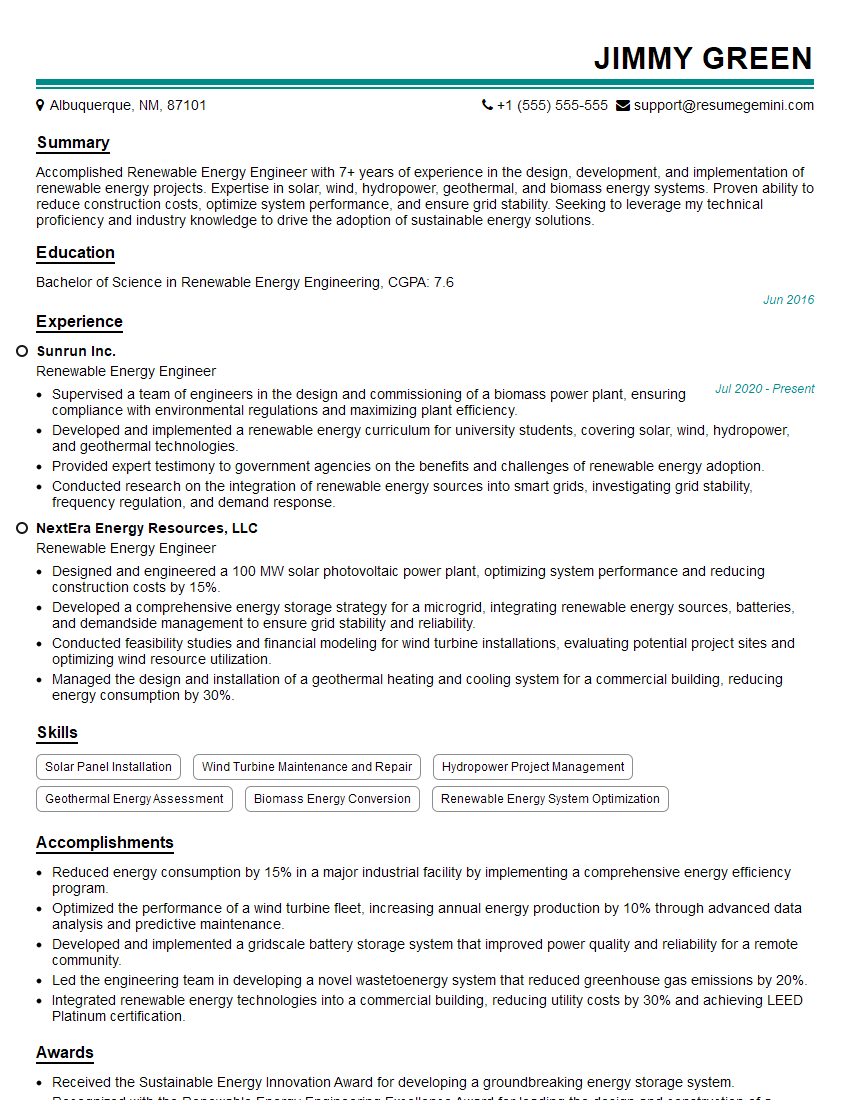
Mastering Sustainable Electrical Practices is crucial for a successful and rewarding career in a rapidly evolving industry. Demonstrating your knowledge in this area will significantly enhance your job prospects and position you as a valuable asset to any organization committed to environmental responsibility. To further strengthen your application, create an ATS-friendly resume that highlights your skills and experience effectively. ResumeGemini is a trusted resource for building professional and impactful resumes. Use it to create a compelling document that showcases your expertise. Examples of resumes tailored to Sustainable Electrical Practices are available to help guide you.
Explore more articles
Users Rating of Our Blogs
Share Your Experience
We value your feedback! Please rate our content and share your thoughts (optional).
What Readers Say About Our Blog
To the interviewgemini.com Webmaster.
Very helpful and content specific questions to help prepare me for my interview!
Thank you
To the interviewgemini.com Webmaster.
This was kind of a unique content I found around the specialized skills. Very helpful questions and good detailed answers.
Very Helpful blog, thank you Interviewgemini team.