Feeling uncertain about what to expect in your upcoming interview? We’ve got you covered! This blog highlights the most important Transit Ridership Forecasting interview questions and provides actionable advice to help you stand out as the ideal candidate. Let’s pave the way for your success.
Questions Asked in Transit Ridership Forecasting Interview
Q 1. Explain the different types of transit ridership forecasting models.
Transit ridership forecasting models come in various forms, each with its strengths and weaknesses. They can be broadly categorized into several types:
- Time Series Models: These models focus on historical ridership data to predict future trends. Simple methods like moving averages or more sophisticated techniques like ARIMA (Autoregressive Integrated Moving Average) models are used. For example, if ridership has consistently increased by 5% annually for the past five years, a simple time series model might project a similar increase for the coming years. However, they struggle to capture the impact of external factors.
- Regression Models: These models identify the relationship between ridership and various explanatory variables (e.g., population density, income levels, transit fares, service frequency). Linear regression, multiple regression, and even more advanced techniques like non-linear regression are frequently employed. A multiple regression model might consider the impact of population, fare, and service frequency on ridership, allowing for a more nuanced understanding. The limitation here is the assumption of linearity, which might not always be true.
- Agent-Based Models (ABMs): These are complex simulation models that represent individual travelers’ decision-making processes. Each ‘agent’ (representing a person) makes choices based on their preferences and the available transit options. ABMs are powerful tools to simulate the impact of changes to the transit system, such as new routes or altered service frequencies, but require significant computational power and data. These are useful for understanding complex interactions.
- Four-Step Travel Demand Models: These traditional models consist of four steps: trip generation, trip distribution, modal split, and trip assignment. While still widely used, they often struggle to accurately capture the dynamic nature of travel behavior. These are more extensively discussed in the later sections.
- Activity-Based Models (ABMs): These models focus on individual daily activities and the travel required to complete them. They capture temporal aspects of travel and how people integrate transit into their daily lives. These often combine aspects of ABM and traditional four step models.
The choice of model depends on the specific context, data availability, and the desired level of detail.
Q 2. Describe the role of demographic data in transit ridership forecasting.
Demographic data plays a crucial role in transit ridership forecasting because it provides insights into the characteristics of the population that utilize or could potentially utilize public transportation. Key demographic variables include:
- Population size and distribution: Knowing the number of people in a given area and their spatial distribution helps predict the potential demand for transit services. A densely populated area will typically have higher ridership than a sparsely populated one.
- Age and household size: Different age groups exhibit different travel patterns. For example, older individuals might rely more on transit, while younger people might use more personal vehicles. Household size impacts the number of trips generated.
- Income levels: Income influences the choice of transportation mode. Lower-income individuals tend to rely more on transit due to its affordability.
- Employment characteristics: The number of jobs in a given area and the distribution of work hours affect peak-hour demand. Areas with high employment concentrations typically see higher transit ridership during peak hours.
- Car ownership rates: High car ownership rates often correlate with lower transit ridership, as people have the option of using their vehicles.
By incorporating these demographic factors into forecasting models, we can generate more accurate and reliable predictions of future transit ridership.
Q 3. What are the key limitations of traditional four-step travel demand models?
Traditional four-step travel demand models, while foundational, suffer from several key limitations:
- Static nature: They assume a static relationship between variables, failing to capture the dynamic interactions between travel behavior and changes in the transportation system or land use.
- Independence of choices: The sequential nature of the four steps assumes independence between decisions, ignoring the fact that individuals often consider multiple modes simultaneously. For example, someone deciding between a car and transit isn’t making two separate decisions.
- Difficulty in handling uncertainty: They often struggle to incorporate uncertainty associated with future land use patterns, economic conditions, and policy changes. These models rely on predicted values which themselves have inherent errors.
- Limited consideration of behavioral factors: They often overlook the influence of individual preferences, perceptions, and attitudes on mode choice. People’s choices are much more complex than simply minimizing travel time or cost.
- Data requirements: These models require significant data for calibration and validation. Gathering comprehensive and reliable data, such as an origin-destination survey, can be expensive and time-consuming.
These limitations highlight the need for more sophisticated models, like activity-based models, that account for the dynamic and behavioral aspects of travel decisions.
Q 4. How do you incorporate land use data into your ridership forecasts?
Land use data is fundamentally important in transit ridership forecasting as it directly influences trip generation and distribution. The density and type of land uses significantly impact the number of trips originating from and destined to certain areas. The incorporation is usually done through:
- Zonal aggregation: Land use data is often aggregated into zones, with each zone characterized by its land use mix (residential, commercial, industrial, etc.) and employment densities. These zones are the basic units in the four step models.
- Land use regression (LUR): This technique uses regression models to relate land use characteristics (e.g., employment density, residential density, retail floor area) to trip generation and attraction rates. The results of the regression are then used as input parameters into larger models.
- Integration with Geographic Information Systems (GIS): GIS software provides powerful tools to visualize and analyze land use data in conjunction with the transit network. This allows for spatial analysis which allows researchers to better understand the interaction between land use and the transit system.
For example, a high concentration of employment in a zone will result in higher trip generation to that zone in the morning and higher trip attraction from that zone in the evening. By incorporating land use data, we can more accurately predict the spatial distribution of transit trips.
Q 5. Explain the process of calibrating and validating a transit ridership model.
Calibrating and validating a transit ridership model is a critical step to ensure its accuracy and reliability. The process typically involves:
- Calibration: This involves adjusting the model parameters to best fit the observed historical data. This often involves iterative adjustments to coefficients in regression models or adjusting parameters in agent based simulations until a reasonable fit between the model’s predictions and the real world is found. Statistical measures, such as R-squared, are often used to assess the goodness of fit.
- Validation: This involves testing the calibrated model’s performance on a separate dataset (not used in calibration). This ensures that the model generalizes well and does not overfit the historical data. Methods include split sample validation or using data from a different time period.
- Sensitivity analysis: Once the model is calibrated, a sensitivity analysis is performed to examine how the model’s predictions vary when input parameters are changed. This gives the analysts an understanding of the uncertainty associated with the predictions.
For example, we might use a portion of the historical ridership data for calibration and the remaining portion for validation. If the validated model accurately predicts ridership in the validation dataset, it indicates that the model is reliable.
Q 6. What are some common sources of error in transit ridership forecasting?
Several factors can contribute to errors in transit ridership forecasting:
- Data limitations: Inaccurate or incomplete data (e.g., missing or unreliable ridership counts, inaccurate land use data) are common sources of error. Errors in data collection methods can significantly impact results.
- Model limitations: The simplifying assumptions embedded in any model can lead to inaccuracies. For example, the assumption of constant travel behavior in a time series model can be misleading.
- Unforeseen events: Unexpected events (e.g., economic downturns, natural disasters, changes in public policy) can significantly affect ridership and are difficult to incorporate into forecasts.
- Changes in travel behavior: Shifts in travel patterns due to technological advancements (e.g., ride-hailing services), changes in lifestyle, or perception of public transit can lead to errors. The model may not capture new social trends.
- Calibration and validation issues: Poorly calibrated or validated models can also produce inaccurate forecasts. This can be a result of using too little data or using inappropriate statistical techniques.
It’s important to acknowledge these potential sources of error when interpreting forecasts and to consider using alternative methods or sensitivity analyses to improve prediction accuracy.
Q 7. How do you account for the impact of special events on transit ridership?
Special events, such as concerts, sporting events, festivals, or conventions, significantly impact transit ridership, often causing dramatic increases in demand at specific times and locations. To accurately account for this, several strategies can be used:
- Historical data analysis: Examining historical ridership data from previous similar events can provide insights into the magnitude and patterns of event-related ridership. This allows analysts to build statistical models that take into account event information.
- Event-specific adjustments: Forecasts can be adjusted to incorporate known upcoming events by adding event specific increases in demand. This could be done with additional data from event organizers or by running simulation models.
- Scenario planning: Creating different scenarios representing different event attendance levels can provide a range of possible ridership outcomes. This is important since it is often difficult to predict the exact attendance of an event ahead of time.
- Real-time data integration: Using real-time data on event attendance and transit usage can help in refining the forecasts during the event itself, allowing transit agencies to respond appropriately.
For instance, during a major concert, a model might incorporate expected attendance figures to adjust forecasts for increased ridership on specific routes and at specific times. This allows for better resource allocation.
Q 8. Describe your experience with different software packages used for transit modeling (e.g., TransCAD, Cube, VISUM).
Throughout my career, I’ve extensively used various software packages for transit modeling, each with its strengths and weaknesses. TransCAD, for instance, is a powerful tool for network analysis and geographic information system (GIS) integration. I’ve leveraged its capabilities for creating complex transit networks, assigning travel times and costs, and performing origin-destination (OD) matrix analysis. Its strong visualization features are particularly useful for presenting findings to stakeholders. Cube is another robust platform; I’ve utilized its four-step modeling capabilities for large-scale transit planning projects, particularly appreciating its efficiency in handling large datasets and its sophisticated calibration features. Finally, VISUM provides a comprehensive suite of tools for microsimulation, allowing for detailed analysis of individual traveler behavior. I’ve employed it in scenarios where understanding individual choices and their impact on overall system performance was critical, such as evaluating the impact of new bus routes on congestion. My experience spans the entire workflow, from data preprocessing and model calibration to scenario development and result interpretation across these platforms.
Q 9. How do you handle missing data in a transit ridership dataset?
Handling missing data is crucial for accurate ridership forecasting. My approach is multifaceted and depends on the nature and extent of the missing data. First, I carefully assess the pattern of missingness – is it random, systematic, or missing not at random (MNAR)? Understanding this pattern guides my imputation strategy. For instance, if the missingness is random, I might use simple imputation techniques like mean/median imputation or more sophisticated methods like k-nearest neighbors (KNN) imputation. For systematic missingness, I might use regression imputation, incorporating related variables to predict the missing values. For MNAR, which is the most challenging, I might employ multiple imputation, creating several plausible datasets to account for the uncertainty introduced by the missing data. Regardless of the technique, I always document the imputation method and assess the impact on the overall forecast, ensuring transparency and robustness of my analysis. A crucial part of the process involves sensitivity analysis to examine how different imputation strategies affect the forecast results.
Q 10. Explain the concept of elasticity in transit ridership forecasting.
Elasticity in transit ridership forecasting measures the responsiveness of demand to changes in a particular factor, such as fare, travel time, or service frequency. For example, fare elasticity measures the percentage change in ridership in response to a one percent change in fare. A highly elastic demand (-1 or lower) implies that a small fare increase will significantly reduce ridership, while an inelastic demand (between 0 and -1) suggests that ridership is relatively insensitive to fare changes. Understanding elasticity is crucial for decision-making. For instance, if a transit agency is considering a fare increase, it must assess fare elasticity to predict the potential impact on ridership and revenue. Similarly, understanding travel time elasticity helps predict the ridership implications of infrastructure investments or service improvements. I routinely estimate elasticity using regression models, such as log-linear models, ensuring the analysis accounts for other influencing factors to obtain reliable and useful estimates for effective transit planning and policy implementation.
Q 11. What are the key factors influencing transit ridership?
Transit ridership is a complex phenomenon influenced by numerous factors. These can be broadly categorized into service-related factors, demographic and socioeconomic factors, and contextual factors.
- Service-related factors include fare levels, service frequency, travel time, convenience (e.g., proximity to stops, accessibility), route coverage, and the quality of the vehicles and stations.
- Demographic and socioeconomic factors encompass population density, income levels, age distribution, car ownership rates, and employment patterns.
- Contextual factors involve land use patterns, competition from other modes of transportation (e.g., personal vehicles, ride-sharing services), parking availability and cost, and broader urban planning policies.
Q 12. How do you incorporate behavioral factors into your ridership forecasts?
Incorporating behavioral factors is essential for creating accurate and realistic ridership forecasts. I use various techniques to achieve this. One is stated preference (SP) surveys, where I present hypothetical scenarios to respondents and gather their choices, which reveal preferences for different service attributes. Revealed preference (RP) data, from actual ridership data, provides insights into past choices. I often combine SP and RP data using mixed logit models to estimate the choice probabilities and predict ridership under different scenarios. Another approach is agent-based modeling, where individual agents (representing travelers) make decisions based on their attributes and preferences, leading to a more realistic simulation of transit system behavior. For example, incorporating perceptions of safety or comfort, personal travel habits, or modal choice considerations through these techniques allows us to create more nuanced and reliable forecasts.
Q 13. Describe your experience with scenario planning in transit forecasting.
Scenario planning is an integral part of my forecasting process. I build different scenarios to explore the potential impact of various uncertainties on future ridership. These scenarios might involve changes in population growth, economic conditions, technological advancements (e.g., autonomous vehicles), or policy changes (e.g., new zoning regulations). For example, a “high-growth” scenario might assume faster population growth and increased transit demand, while a “low-growth” scenario would reflect a slower growth rate. A scenario with extensive investment in transit infrastructure would be contrasted with one that lacks such investment. Developing and analyzing multiple scenarios allows stakeholders to understand the range of potential outcomes and make informed decisions based on risk and opportunity. The results are often presented visually, showing the range of potential ridership under different assumptions.
Q 14. How do you present your ridership forecasts to stakeholders?
Presenting ridership forecasts to stakeholders requires clear and effective communication. I typically use a combination of methods:
- Visualizations: I use charts, graphs, and maps to present key findings in an easily understandable format. For instance, I might show projected ridership trends over time, or map the spatial distribution of ridership across the transit network.
- Summaries: I provide concise summaries of the key findings, highlighting the most significant results and their implications.
- Interactive tools: In some cases, I develop interactive dashboards or tools that allow stakeholders to explore the forecast results in more detail and conduct what-if analyses.
- Oral presentations: I deliver clear and concise presentations explaining the methodology, assumptions, and key findings.
Q 15. What are some common challenges in transit ridership forecasting?
Transit ridership forecasting, while crucial for effective transit planning, faces several significant challenges. These challenges often stem from the inherent complexity of human behavior and the influence of numerous unpredictable factors.
- Data Availability and Quality: Accurate forecasting relies on comprehensive and reliable data. However, data gaps, inconsistencies, and inaccuracies are common. For instance, real-time passenger counts might be missing from certain routes or times, impacting model accuracy. Data from different sources may also be incompatible.
- Unpredictable Events: Unexpected events like severe weather, major accidents, sporting events, or even social unrest can dramatically impact ridership, making accurate long-term predictions difficult. These are often ‘black swan’ events that are difficult to incorporate into models.
- Changes in Demographics and Socioeconomic Factors: Population shifts, changes in income levels, and evolving commuting patterns significantly influence transit usage. Predicting these shifts accurately is a challenge, particularly in rapidly changing urban environments.
- Competition from other modes of transportation: The rise of ride-sharing services, the expansion of bicycle infrastructure, and improvements to road networks all compete for transit ridership. Accurately forecasting the market share of transit necessitates understanding these competitive dynamics.
- Technological advancements: New technologies, such as autonomous vehicles or improved smart card systems, can have a significant and often unpredictable impact on ridership. Incorporating their influence into forecasts requires a deep understanding of both their technological trajectory and their likely adoption rates.
Career Expert Tips:
- Ace those interviews! Prepare effectively by reviewing the Top 50 Most Common Interview Questions on ResumeGemini.
- Navigate your job search with confidence! Explore a wide range of Career Tips on ResumeGemini. Learn about common challenges and recommendations to overcome them.
- Craft the perfect resume! Master the Art of Resume Writing with ResumeGemini’s guide. Showcase your unique qualifications and achievements effectively.
- Don’t miss out on holiday savings! Build your dream resume with ResumeGemini’s ATS optimized templates.
Q 16. Explain the difference between short-term and long-term transit ridership forecasting.
Short-term and long-term transit ridership forecasting differ primarily in their time horizon and the level of detail required. Think of it like planning a trip: short-term is deciding how to get to the airport tomorrow, long-term is deciding where to go on vacation next year.
Short-term forecasting (typically up to one year) focuses on daily, weekly, or monthly ridership patterns. It’s used for operational planning, such as scheduling staff, deploying vehicles, and making adjustments to service frequency. This often relies on historical data, recent trends, and possibly weather forecasts.
Long-term forecasting (typically 5-20 years) involves projecting future ridership based on broader factors like population growth, land-use changes, economic forecasts, and technological developments. Long-term forecasts are critical for infrastructure planning, investment decisions, and strategic service development. These forecasts often incorporate more complex models and scenario planning to accommodate uncertainty.
For example, a short-term forecast might predict a 10% increase in ridership during a particular week due to a major conference, while a long-term forecast might anticipate a 25% increase in ridership over the next decade due to projected population growth in a specific area.
Q 17. How do you evaluate the accuracy of your transit ridership forecasts?
Evaluating the accuracy of transit ridership forecasts is crucial to ensure effective planning. Several methods are employed, often in combination:
- Comparing Forecasts to Actual Ridership: The most straightforward method involves comparing the forecasted ridership numbers to the actual ridership data collected after the forecast period. Key metrics include Mean Absolute Error (MAE), Root Mean Squared Error (RMSE), and Mean Absolute Percentage Error (MAPE). Lower values indicate greater accuracy.
- Visual inspection of forecast graphs: Plotting forecasted and actual ridership data visually allows for a quick assessment of trends and discrepancies. This helps identify systematic errors or periods of significant deviations.
- Statistical Tests: Statistical methods can test the significance of differences between forecasted and actual ridership. This helps determine whether any observed discrepancies are merely random variations or reflect a systematic bias in the forecast model.
- Scenario Analysis and Sensitivity Testing: Analyzing the impact of variations in key input variables (e.g., economic growth, fuel prices) on the forecasts can reveal the model’s sensitivity to uncertainty. This helps assess the robustness of the forecast under different conditions.
- Regular Calibration and Model Updates: The forecasting model should be regularly updated to incorporate new data and refine assumptions. This iterative process improves the accuracy of future forecasts.
It’s essential to remember that perfect accuracy is rarely achievable. The goal is to minimize errors and improve the reliability of forecasts over time.
Q 18. What are some emerging trends in transit ridership forecasting?
The field of transit ridership forecasting is constantly evolving. Several key emerging trends are shaping the landscape:
- Increased use of big data and machine learning: Advanced analytical techniques are being employed to leverage large datasets from various sources, including smart card data, GPS tracking, social media, and mobile phone data. Machine learning algorithms are proving particularly effective in capturing complex patterns and relationships.
- Integration of real-time data: Incorporating real-time data streams, such as passenger counts from automated systems and traffic information, allows for dynamic adjustments to forecasts and improves short-term prediction accuracy.
- Agent-based modeling: This approach simulates the behavior of individual transit users and their interactions, offering a powerful tool to understand the impact of changes in service characteristics or policy interventions.
- Focus on sustainability and multimodal integration: Forecasts increasingly need to consider the broader transportation ecosystem and the integration of various modes of transport. Sustainability aspects, such as the carbon footprint of transit, are also becoming integral to the forecasting process.
- Incorporation of uncertainty and scenario planning: Acknowledging and quantifying the uncertainty inherent in forecasting is increasingly emphasized. Scenario planning is used to explore potential outcomes under various conditions, providing a more robust basis for decision-making.
Q 19. Explain the importance of data visualization in transit ridership forecasting.
Data visualization plays a crucial role in transit ridership forecasting. It allows for a clear, concise, and effective communication of complex information to both technical and non-technical audiences.
- Identifying patterns and trends: Visual representations, such as line graphs, bar charts, and heat maps, can quickly reveal trends in ridership patterns, allowing for a better understanding of the factors influencing demand.
- Communicating findings effectively: Visualizations make complex datasets more accessible and easier to understand for stakeholders involved in transit planning and decision-making.
- Supporting decision-making: Clear visualizations can highlight areas needing improvement, areas of high demand, or potential service adjustments, aiding in more informed decisions about resource allocation.
- Model evaluation and validation: Visual comparison of forecasted versus actual ridership data helps in assessing the model’s accuracy and identifying areas of improvement.
- Enhancing stakeholder engagement: Visualizations can effectively communicate the potential impacts of different scenarios or policy options, increasing stakeholder buy-in and participation in the planning process.
For example, a heat map showing ridership density across a city can quickly reveal areas of high demand, potentially justifying increased service frequency or the addition of new routes.
Q 20. How do you incorporate feedback into your transit ridership forecasting process?
Incorporating feedback is essential for improving the accuracy and relevance of transit ridership forecasts. This feedback can come from various sources:
- Data validation and reconciliation: Comparing forecasts with actual ridership data highlights discrepancies that can reveal errors or biases in the forecasting methodology.
- Stakeholder consultations: Engaging with transit operators, planners, and the public through surveys, focus groups, or public forums provides valuable insights into perceptions, expectations, and potential changes in travel behavior.
- Expert reviews: Seeking input from transportation experts can help identify limitations in the forecasting methodology and suggest improvements or adjustments to the model.
- Iterative model refinement: Feedback should be used to iteratively refine the forecasting model, incorporating new data, adjusting parameters, and enhancing the accuracy of future predictions.
- Performance monitoring and reporting: Regular monitoring of forecast accuracy and the impact of policy interventions provides valuable data for improving the forecasting process.
For instance, feedback from a community survey might reveal a significant unmet demand for transit service in a certain area, leading to adjustments in the long-term forecast and the potential for new service routes.
Q 21. Describe your experience with time series analysis in transit forecasting.
Time series analysis is a fundamental tool in transit ridership forecasting. It involves analyzing historical ridership data to identify patterns, trends, and seasonality that can be used to predict future ridership. This often involves techniques like:
- Decomposition: Breaking down the time series into its constituent components (trend, seasonality, cyclical variations, and irregular fluctuations). This allows for a better understanding of underlying patterns.
- ARIMA modeling: Autoregressive Integrated Moving Average (ARIMA) models are widely used to model and forecast time series data. These models capture the relationships between past and present values of the time series.
- Exponential smoothing methods: These techniques assign weights to past observations, with more recent data receiving greater weight. This is particularly useful for forecasting when trends are changing gradually.
- Prophet (from Facebook): This open-source library provides a robust framework for forecasting time series data, handling seasonality and trend changes effectively. It also has excellent features for handling holidays and other special events.
In practice, I’ve extensively used ARIMA and exponential smoothing models for short-term forecasting, often combining them with external regressors to account for factors such as weather conditions or special events. For long-term forecasts, I’ve integrated time series analysis with other methodologies, such as agent-based modeling or econometric techniques, to build comprehensive forecasting models.
# Example R code snippet for ARIMA modeling: # Assuming 'ridership' is a time series object model <- arima(ridership, order = c(p, d, q)) # p, d, q are model parameters forecast <- forecast(model, h = 12) # Forecast for the next 12 periods plot(forecast)
Q 22. How do you account for the impact of technological advancements on transit ridership?
Technological advancements significantly impact transit ridership. To account for this, we must consider several factors. For example, the rise of ride-sharing services like Uber and Lyft directly competes with public transit, potentially reducing ridership. Conversely, advancements like improved mobile ticketing apps, real-time tracking systems, and integrated fare payment options can boost ridership by improving convenience and user experience. We incorporate these factors into our forecasts through several methods:
- Regression analysis: We can include variables representing the penetration rate of ride-sharing apps or the adoption rate of mobile ticketing in our ridership models.
- Scenario planning: We develop multiple forecast scenarios, each assuming different levels of technological adoption and impact.
- Qualitative research: We conduct surveys and focus groups to understand user preferences and behaviors related to new technologies and how they influence transit choices.
For instance, a city launching a new, user-friendly mobile ticketing app might see a predictable increase in ridership, especially among younger demographics. By carefully quantifying these effects, we generate more accurate and robust forecasts.
Q 23. Explain the role of GIS in transit ridership forecasting.
Geographic Information Systems (GIS) are indispensable in transit ridership forecasting. They provide a visual and analytical platform to understand the spatial distribution of population, employment centers, transit infrastructure, and other relevant factors influencing ridership. Imagine trying to predict ridership without knowing where people live and work – it's simply not feasible.
- Spatial analysis: GIS allows us to assess the proximity of residential areas to transit stations, identify potential transit deserts, and analyze accessibility patterns.
- Network analysis: GIS helps analyze transit networks, identifying bottlenecks and inefficiencies that could impact ridership. We can simulate travel times and routes to estimate transit demand.
- Data integration: GIS can integrate various data sources, such as census data, land use information, and transit schedule data, to create a comprehensive picture of the factors influencing ridership.
For example, by overlaying population density maps with transit routes, we can identify areas with high potential for ridership growth and areas where service improvements are needed. This spatial understanding is critical for accurate forecasting.
Q 24. Describe your experience with agent-based modeling in transit forecasting.
Agent-based modeling (ABM) is a powerful technique for simulating individual behavior and its collective effect on transit ridership. Unlike traditional statistical models that focus on aggregate trends, ABM simulates the decision-making processes of individual travelers, making it particularly useful in capturing complex interactions and emerging patterns.
In my experience, we've used ABM to model scenarios like the introduction of new transit lines or changes in service frequency. Each 'agent' represents a traveler with specific characteristics (e.g., home location, workplace, income, mode preference), and their decisions are based on rules and probabilities reflecting real-world behavior. The model then simulates their travel choices, resulting in a prediction of the overall ridership.
For example, we might use ABM to assess the impact of a new bus rapid transit (BRT) line. The model would simulate how individuals adjust their travel choices based on the new BRT service, considering factors like travel time, cost, and convenience. This allows us to predict not only the total ridership on the BRT line but also its impact on ridership on other transit modes.
Q 25. How do you address uncertainty in your transit ridership forecasts?
Uncertainty is inherent in any forecasting exercise, and transit ridership forecasting is no exception. Unforeseen events like economic downturns, natural disasters, or changes in policy can significantly impact ridership. We address this uncertainty through several strategies:
- Probabilistic forecasting: Instead of providing a single point estimate, we generate a range of possible outcomes with associated probabilities. This gives a clearer picture of the uncertainty.
- Sensitivity analysis: We systematically vary key input parameters (e.g., population growth, fuel prices, service quality) to see how sensitive the forecasts are to changes in these parameters.
- Scenario planning: We develop multiple forecast scenarios, each based on different assumptions about future conditions. This helps us prepare for a range of possibilities.
For instance, we might develop a 'best-case' scenario assuming strong economic growth and high transit service reliability, and a 'worst-case' scenario accounting for potential economic recession and disruptions to transit service. By considering a range of scenarios, we can better prepare for potential challenges.
Q 26. Explain the concept of modal split and its role in forecasting.
Modal split refers to the proportion of trips made using different modes of transportation (e.g., car, bus, train, bike, walking). Understanding modal split is crucial for transit ridership forecasting because it shows how people divide their travel among various options. A shift in modal split, such as more people using public transit and fewer driving, directly impacts transit ridership.
In our forecasts, we analyze historical modal split data and consider factors influencing it. These factors include:
- Travel cost: The relative cost of different modes of transport significantly influences modal split.
- Travel time: Faster travel times encourage people to use a specific mode.
- Convenience: Factors like frequency of service, ease of access, and level of comfort all influence modal split.
- Land use patterns: The arrangement of residential and employment areas affects how people choose their transportation mode.
We incorporate modal split into our forecasting models using various techniques like logit models, which estimate the probability of choosing a particular mode based on its characteristics. Understanding modal split is vital for accurately forecasting the future demand for public transit.
Q 27. How do you incorporate accessibility considerations into your ridership forecasts?
Accessibility is a critical factor influencing transit ridership. People won't use transit if it's not accessible to them. We incorporate accessibility considerations in our forecasts by:
- Analyzing proximity to transit: We assess the distance and travel time from residential and employment areas to transit stations, identifying areas with poor access.
- Evaluating service coverage: We analyze the geographic coverage of the transit system and identify gaps in service.
- Considering accessibility features: We account for features like the availability of ramps, elevators, and other accommodations for people with disabilities.
- Using accessibility indices: We may employ established accessibility measures (e.g., transit accessibility index) to quantify and incorporate accessibility into our models.
For example, a forecast that ignores the lack of accessible transit in certain neighborhoods will likely underestimate the potential ridership if those accessibility issues are not addressed. By incorporating accessibility data and analysis, we can generate more realistic and equitable forecasts.
Q 28. What are some best practices for communicating complex transit data to non-technical audiences?
Communicating complex transit data to non-technical audiences requires careful consideration. Technical jargon should be avoided, and the information should be presented in a clear, concise, and engaging manner. Here are some best practices:
- Use visuals: Graphs, charts, and maps are more effective than tables of numbers. Keep visuals simple and easy to understand.
- Tell a story: Frame the data within a narrative that resonates with the audience. Focus on the implications of the data, rather than the technical details.
- Use analogies and metaphors: Relate complex concepts to everyday experiences to make them more relatable.
- Focus on key takeaways: Highlight the most important findings and avoid overwhelming the audience with excessive detail.
- Interactive presentations: Engage the audience with interactive dashboards and tools that allow them to explore the data themselves.
For example, instead of presenting a complicated regression model, you might show a simple bar graph illustrating the projected increase in ridership over the next five years. By focusing on clear communication, you ensure that your findings are understood and acted upon.
Key Topics to Learn for Transit Ridership Forecasting Interview
- Data Collection & Sources: Understanding the various data sources used in ridership forecasting (e.g., Automatic Passenger Counters (APCs), fare card data, surveys, GPS tracking) and their limitations.
- Forecasting Models: Familiarize yourself with different forecasting models, including regression analysis, time series analysis (ARIMA, exponential smoothing), and agent-based modeling. Understand their strengths and weaknesses and when to apply each.
- Data Cleaning & Preprocessing: Master techniques for handling missing data, outliers, and inconsistencies in large datasets. This is crucial for accurate forecasting.
- Statistical Analysis & Interpretation: Develop a strong understanding of statistical concepts relevant to forecasting, including confidence intervals, hypothesis testing, and error analysis. Be prepared to explain your findings clearly and concisely.
- Scenario Planning & Sensitivity Analysis: Practice developing forecasting scenarios to account for various external factors (e.g., economic downturns, infrastructure projects, changes in demographics). Understand how to assess the sensitivity of your forecasts to different assumptions.
- Software & Tools: Demonstrate familiarity with relevant software packages used in transit planning, such as statistical software (R, Python, SAS) and GIS software (ArcGIS).
- Presentation & Communication: Practice presenting your forecasting results effectively to both technical and non-technical audiences. This includes visualizing data clearly and explaining complex concepts in simple terms.
- Ethical Considerations: Understand the ethical implications of forecasting and the importance of transparency and responsible data usage.
Next Steps
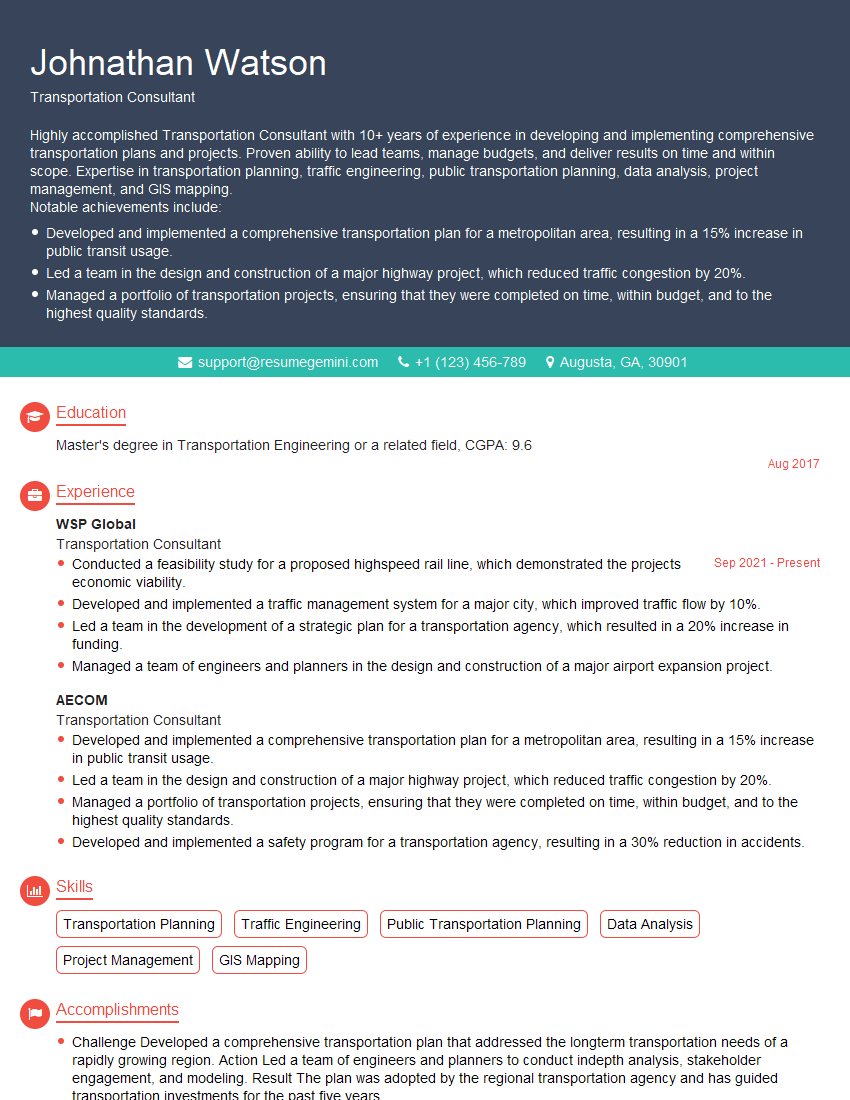
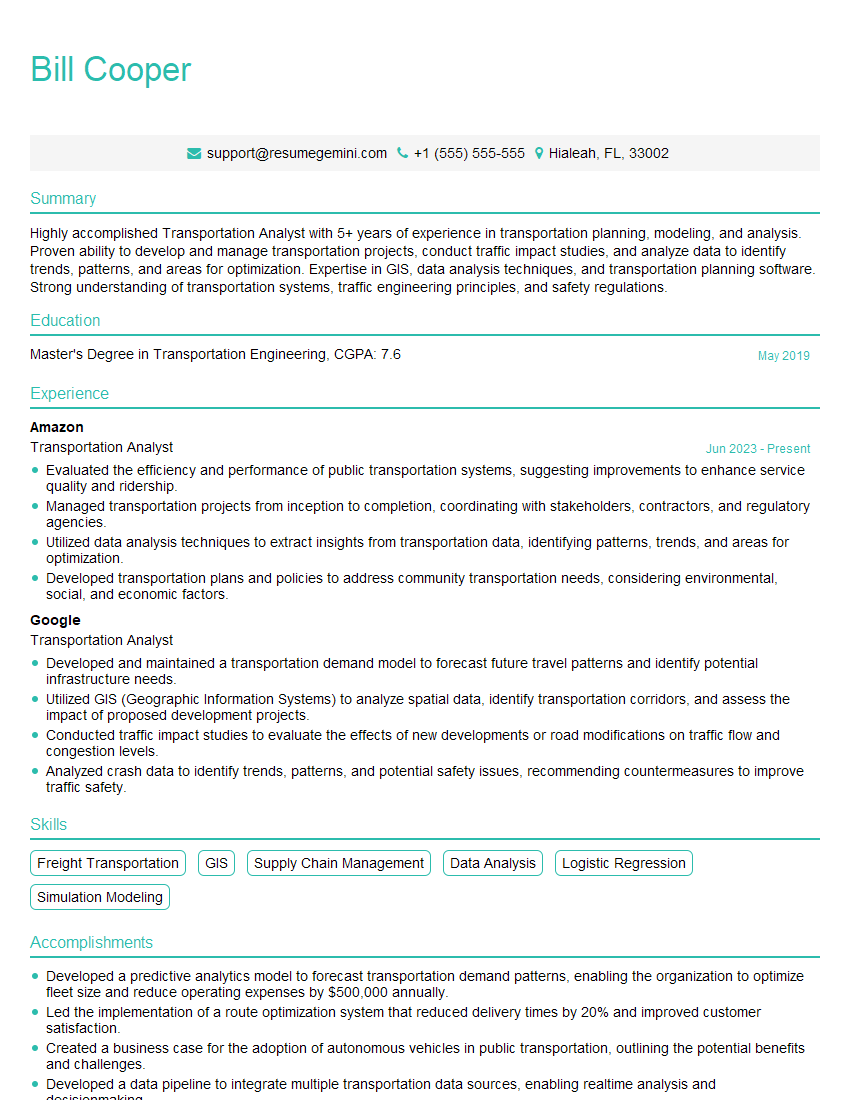
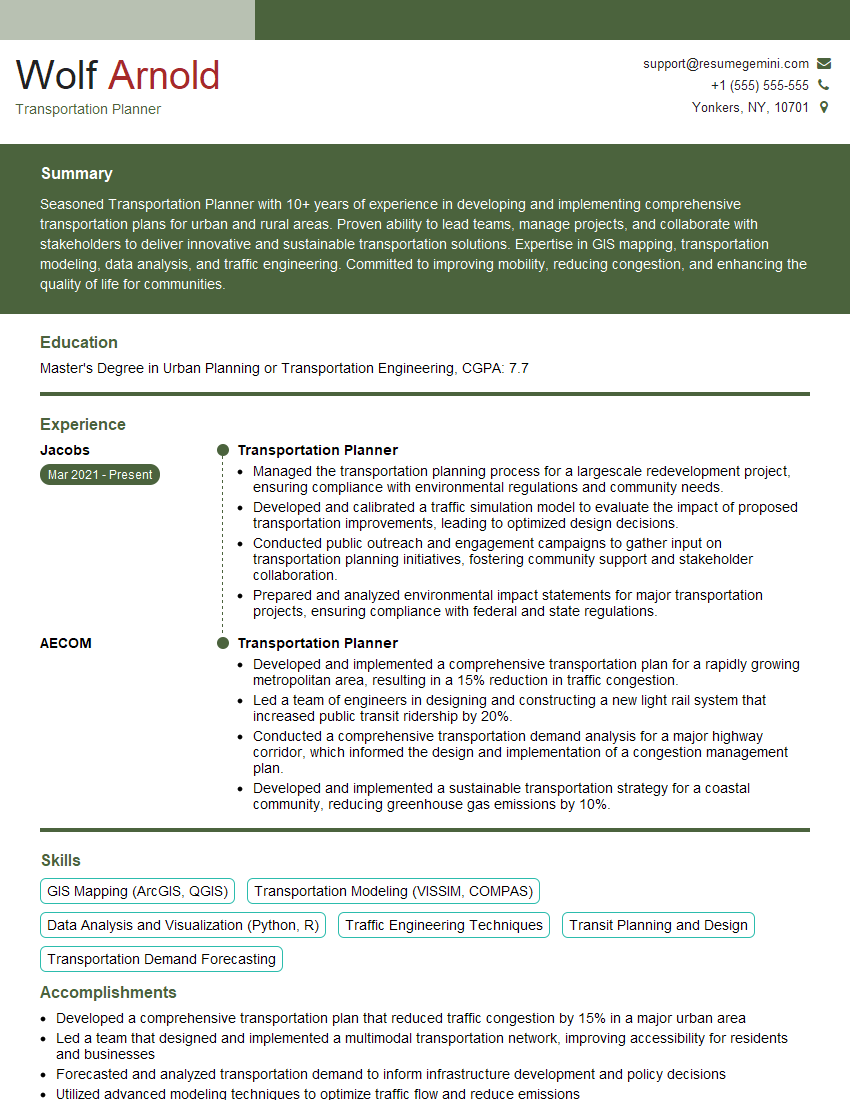
Mastering transit ridership forecasting is crucial for advancing your career in transportation planning and analysis. It demonstrates valuable analytical skills and a deep understanding of complex urban systems. To significantly boost your job prospects, creating an ATS-friendly resume is essential. ResumeGemini is a trusted resource that can help you build a professional and impactful resume tailored to your specific skills and experience. Examples of resumes tailored to Transit Ridership Forecasting are available to help guide your resume building process.

Explore more articles
Users Rating of Our Blogs
Share Your Experience
We value your feedback! Please rate our content and share your thoughts (optional).
What Readers Say About Our Blog
To the interviewgemini.com Webmaster.
Very helpful and content specific questions to help prepare me for my interview!
Thank you
To the interviewgemini.com Webmaster.
This was kind of a unique content I found around the specialized skills. Very helpful questions and good detailed answers.
Very Helpful blog, thank you Interviewgemini team.