Interviews are opportunities to demonstrate your expertise, and this guide is here to help you shine. Explore the essential Understanding of different theoretical approaches to music therapy interview questions that employers frequently ask, paired with strategies for crafting responses that set you apart from the competition.
Questions Asked in Understanding of different theoretical approaches to music therapy Interview
Q 1. Describe the key differences between the psychodynamic and neurologic approaches to music therapy.
The psychodynamic and neurologic approaches to music therapy differ significantly in their underlying philosophies and therapeutic goals. Psychodynamic music therapy, rooted in the theories of Freud and Jung, focuses on the unconscious mind and emotional expression. It utilizes music as a medium to access and process deeply buried feelings and experiences. The therapist uses musical interactions to interpret symbolic meanings within the client’s musical choices and improvisations, helping them gain insight into their inner world and resolve internal conflicts.
In contrast, the neurologic approach emphasizes the brain’s physiological response to music. It centers on the measurable effects of music on brain function, such as improved attention, memory, and motor skills. This approach utilizes music interventions to stimulate specific brain regions and pathways, aiming for measurable improvements in cognitive or physical functioning. For example, rhythmic entrainment might be used to improve motor control in a client with Parkinson’s disease. There’s less emphasis on emotional exploration and more on quantifiable outcomes.
Essentially, psychodynamic therapy uses music to explore the internal landscape, while the neurologic approach utilizes music’s impact on the brain’s physical structure and function.
Q 2. Explain how the behavioral approach informs music therapy interventions.
The behavioral approach in music therapy focuses on observable behaviors and their environmental contingencies. It’s based on principles of learning, such as classical and operant conditioning. In practice, this means we use music to shape desired behaviors through reinforcement and extinction.
For instance, if a client struggles with anxiety, we might use calming music as a reward for practicing relaxation techniques. Conversely, we might fade out preferred music when the client exhibits undesirable behaviors. This approach is highly structured and goal-oriented. The therapist designs specific musical interventions to elicit targeted behavioral changes, carefully measuring progress and adjusting the interventions as needed. It’s particularly useful in working with clients who have difficulties with self-regulation or specific behavioral challenges like autism spectrum disorder.
Q 3. Compare and contrast the humanistic and cognitive behavioral approaches in music therapy.
Humanistic and cognitive-behavioral (CBT) approaches represent contrasting yet potentially complementary perspectives in music therapy. Humanistic therapy, emphasizing self-actualization and personal growth, values the client’s subjective experience and fosters a non-judgmental, empathetic therapeutic relationship. Music is used to facilitate self-discovery and emotional expression, empowering clients to find their own meaning and direction. The focus is on the present moment and the client’s inherent capacity for growth.
In contrast, CBT addresses maladaptive thoughts and behaviors. It aims to help clients identify and modify negative thought patterns and develop coping strategies using music as a tool. For example, a client experiencing depression might learn to use music-assisted relaxation techniques to manage negative emotions or compose music expressing difficult feelings to gain cognitive distance and insight.
While distinct, these approaches aren’t mutually exclusive. A therapist might integrate both, using humanistic principles to build a strong therapeutic alliance while employing CBT techniques to address specific problematic thoughts and behaviors.
Q 4. How does the person-centered approach influence your therapeutic relationship with clients?
The person-centered approach, pioneered by Carl Rogers, profoundly influences my therapeutic relationship. It emphasizes empathy, unconditional positive regard, and genuineness. In practice, this means creating a safe and accepting space where clients feel comfortable expressing themselves musically without judgment. I prioritize active listening, reflecting clients’ feelings and experiences, and mirroring their musical choices to foster deeper self-understanding.
For example, if a client chooses a somber melody, I might gently respond with a similarly reflective musical phrase, showing understanding and validating their emotional state. This approach fosters a collaborative relationship where the client leads the process, and I provide support and guidance, tailored to their individual needs and pace. It allows for genuine connection and promotes self-discovery, empowering clients to drive their therapeutic journey.
Q 5. Discuss the role of improvisation in music therapy from a developmental perspective.
Improvisation plays a crucial role in music therapy from a developmental perspective. It allows clients of all ages to explore their creativity, self-expression, and emotional processing without the constraints of pre-structured musical forms. For younger children, improvisation can support the development of fine motor skills, cognitive flexibility, and social interaction. Free playing with instruments can enhance sensory exploration and emotional regulation.
With adolescents, improvisation can provide a safe space for expressing identity and navigating emotional challenges, allowing them to use music as a form of self-discovery. For adults, it can facilitate emotional release, creative problem-solving, and enhanced self-awareness. The therapist guides the improvisational process, adapting the level of structure and support to meet the client’s developmental stage and needs. Improvisation is not just about creating music; it’s a developmental process that mirrors life itself, fostering flexibility, adaptation, and emotional growth.
Q 6. Explain how you would adapt your approach based on the client’s age and cognitive abilities.
Adapting my approach based on a client’s age and cognitive abilities is paramount. With younger children or clients with cognitive impairments, I might use simpler musical activities, focusing on sensory exploration, rhythm, and repetition. We might engage in song-based interventions, incorporating movement and play. The sessions would be shorter and more structured, emphasizing immediate positive reinforcement.
For adolescents and adults with intact cognitive functions, the interventions can be more complex, involving sophisticated musical concepts and deeper emotional exploration. I might incorporate improvisation, composition, or listening activities that facilitate self-reflection and creative expression. For clients with dementia, I might adapt familiar songs or use reminiscence therapy through music to stimulate memories and reduce anxiety.
Essentially, my approach is always individualized and tailored to the client’s specific needs, strengths, and limitations, ensuring that the musical interventions are developmentally appropriate and engaging.
Q 7. What theoretical framework do you find most effective for working with clients with trauma?
For clients with trauma, I find that a trauma-informed approach, integrated with various theoretical frameworks, is most effective. This involves creating a safe and trusting therapeutic relationship built on empathy and collaboration, understanding the impact of trauma on the client’s nervous system and behaviors, and avoiding potentially re-traumatizing experiences.
Within this trauma-informed framework, I might draw on elements from several theoretical orientations. For instance, psychodynamic concepts can help understand the unconscious manifestations of trauma, while somatic experiencing principles could help process the body’s stored trauma responses through music. Narrative therapy might be used to help clients reframe their traumatic experiences and create a more empowering narrative. The choice of specific therapeutic tools depends on the individual needs and preferences of the client. The primary focus is on providing a safe and supportive space for emotional processing and fostering resilience.
Q 8. How do you integrate different theoretical approaches in your practice?
Integrating different theoretical approaches in music therapy is crucial for providing holistic and effective care. I don’t adhere to a single rigid framework but rather utilize an eclectic approach, drawing on various theories depending on the client’s needs and goals. For example, I might use elements of the neurological music therapy perspective when working with clients experiencing cognitive impairments, focusing on how music impacts brain function. Simultaneously, I might incorporate principles of psychodynamic music therapy to explore unconscious emotions and conflicts expressed through musical improvisation. This flexibility allows me to tailor my interventions for maximum impact.
This integrative approach isn’t simply about mixing techniques; it’s about understanding the underlying principles of each theory and how they can complement one another. For instance, while using a psychodynamic lens to understand a client’s emotional expression through music, I can utilize techniques from developmental music therapy to support their emotional regulation by introducing structured musical activities.
Ultimately, my aim is to create a personalized therapeutic journey, employing the most appropriate tools from various theoretical perspectives to achieve the best possible outcomes for each individual.
Q 9. Describe your understanding of evidence-based practice in music therapy.
Evidence-based practice (EBP) in music therapy means integrating the best available research evidence with clinical expertise and client values to make informed decisions about treatment. It’s not just about following the latest trend; it’s a systematic approach to ensure the effectiveness and ethical delivery of music therapy interventions.
This involves:
- Staying updated with research: Regularly reviewing relevant journal articles, attending conferences, and engaging in continuing professional development to understand the efficacy of different interventions.
- Critical appraisal of research: Evaluating the quality and relevance of research studies before applying them to clinical practice. This includes considering factors such as sample size, methodology, and generalizability.
- Clinical judgment: Using my expertise and experience to adapt evidence-based approaches to meet the unique needs of each client. No two clients are alike, and research findings often need to be tailored to individual situations.
- Client collaboration: Respecting client preferences and involving them in the decision-making process ensures that the treatment aligns with their values and goals.
For example, if research shows the effectiveness of a specific music therapy technique for anxiety reduction, I would consider incorporating it into my practice but always assess its suitability and feasibility with my clients. I also document my treatment rationale, incorporating the evidence base and the client’s unique circumstances to demonstrate my commitment to EBP.
Q 10. How do you assess the effectiveness of your music therapy interventions?
Assessing the effectiveness of music therapy interventions requires a multi-faceted approach that combines qualitative and quantitative data. It’s not enough to simply observe if a client seems ‘better’; we need systematic methods to measure progress.
Quantitative methods might include standardized assessments, such as rating scales for anxiety or depression, or objective measures of physiological responses like heart rate variability. Pre- and post-intervention measurements help quantify change. Qualitative methods involve gathering data through observations, client interviews, and journaling to capture the client’s subjective experience of the therapy. These may include reflections on their emotional well-being, perceived improvements, and challenges encountered during the process.
For example, when working with a client with depression, I might use a standardized depression inventory at the beginning and end of therapy to measure changes in their symptoms. Simultaneously, I’d document my observations of their engagement in musical activities and gather feedback on their experiences through regular discussions. This combination provides a comprehensive understanding of the impact of the intervention.
Data analysis would involve comparing pre- and post-intervention scores, analyzing qualitative data for recurring themes and patterns, and considering the client’s own perspective on the changes observed. This iterative process informs the continuation or modification of the intervention plan, ensuring it remains effective and tailored to the client’s ongoing needs.
Q 11. What are the limitations of your preferred theoretical framework?
While I find the psychodynamic approach incredibly valuable, it’s important to acknowledge its limitations. One major limitation is the subjective nature of interpretation. Unconscious processes are, by definition, difficult to directly observe, making interpretations reliant on the therapist’s clinical judgment, which can be influenced by personal biases. This makes it crucial to maintain rigorous self-reflection and engage in supervision to mitigate potential biases.
Another limitation is the time-intensive nature of the approach. Psychodynamic therapy often involves extensive exploration of past experiences, which might not always be feasible or suitable for all clients or clinical settings. Furthermore, the lack of standardized outcome measures makes it challenging to quantitatively demonstrate its effectiveness compared to more empirically supported approaches. The effectiveness is often perceived subjectively.
Despite these limitations, the depth of understanding it offers about the client’s internal world and the potential for transformative change makes it a valuable tool in my therapeutic arsenal, used judiciously and in conjunction with other methodologies.
Q 12. Explain the ethical considerations of using different theoretical approaches.
Ethical considerations are paramount when using different theoretical approaches in music therapy. The core principles of autonomy, beneficence, non-maleficence, and justice guide my practice.
- Autonomy means respecting the client’s right to self-determination and making informed decisions about their treatment. This includes ensuring they fully understand the theoretical framework being used and its potential implications.
- Beneficence requires me to act in the best interests of the client, striving to maximize benefits and minimize harm. This means carefully selecting theoretical approaches based on the client’s needs and evidence of effectiveness.
- Non-maleficence mandates avoiding actions that could cause harm to the client. This includes being mindful of potential risks associated with specific techniques and appropriately managing those risks.
- Justice involves ensuring fair and equitable access to music therapy services, regardless of the client’s background or circumstances.
For example, if a client expresses discomfort with a specific technique rooted in a particular theoretical approach, I have an ethical obligation to respect their wishes and adapt my approach accordingly. I also need to ensure that my interventions are culturally sensitive and appropriate for the client’s background. Maintaining confidentiality and informed consent are also essential ethical considerations in all aspects of music therapy practice.
Q 13. How do you handle situations where a client’s responses don’t align with your theoretical expectations?
When a client’s responses don’t align with my initial theoretical expectations, I see it as an opportunity for learning and refinement, rather than a failure of the approach. It signals a need for flexibility and critical reflection.
My approach involves several steps:
- Re-evaluation of the intervention plan: I carefully review the chosen theoretical approach, considering whether it’s truly the most appropriate framework for this particular client. Perhaps a different approach, or a combination of approaches, might be more suitable.
- Open communication with the client: I discuss my observations with the client in a non-judgmental and collaborative manner, exploring their experiences and perspectives. This collaborative approach helps to understand the reasons behind their responses.
- Exploration of alternative explanations: I consider alternative explanations for the client’s responses, such as personal experiences, cultural influences, or other factors that might be influencing their engagement.
- Modification of the intervention: Based on the re-evaluation, client feedback, and alternative explanations, I modify the intervention plan to better address the client’s needs. This might involve adjusting the musical materials, changing the therapeutic goals, or employing different techniques.
- Seeking supervision: If necessary, I seek guidance from a supervisor to gain an external perspective and ensure I’m maintaining ethical and best-practice standards.
This iterative process helps me adapt my approach to the unique needs of each client and avoid imposing a rigid theoretical framework that might not be effective or appropriate.
Q 14. Describe your experience using a specific theoretical approach with a specific client population.
I recently worked with a group of children diagnosed with Autism Spectrum Disorder (ASD) using a neurological music therapy approach. The goal was to improve their communication and social skills. This approach focused on the impact of music on brain function, leveraging music’s ability to enhance neural plasticity and improve cognitive abilities.
Specific interventions included:
- Rhythmic entrainment: Using rhythmic stimuli (e.g., drumming) to regulate their physiological arousal and improve attention.
- Melodic intonation therapy (MIT): Using sung melodies to facilitate language development and expression.
- Improvisational activities: Encouraging spontaneous musical expression to foster creative thinking and self-expression.
The interventions were designed to be highly structured and tailored to each child’s individual needs and preferences. I observed improvements in several areas, including their ability to follow instructions, participate in group activities, and engage in more spontaneous communication. Quantitative assessments, such as standardized measures of communication skills, corroborated these observations. The success of this approach underscores the importance of adapting theoretical frameworks to the unique needs of different client populations and the power of music to facilitate meaningful change.
Q 15. What are the strengths and weaknesses of the psychodynamic approach in music therapy?
The psychodynamic approach in music therapy utilizes music as a means to explore the unconscious mind, much like traditional psychoanalysis. It focuses on uncovering unresolved conflicts and defenses that may be impacting a client’s well-being.
- Strengths: It can be incredibly powerful for accessing deeply rooted emotional issues that might not be accessible through verbal therapy alone. The non-threatening nature of music can facilitate emotional expression in clients who struggle to articulate their feelings directly. It allows for a deeper understanding of the client’s inner world through symbolic interpretation of their musical choices and improvisations.
- Weaknesses: It’s a highly interpretive approach, relying heavily on the therapist’s subjective understanding of the client’s musical expressions. This can lead to potential bias. The process can be lengthy and may not be suitable for all clients, particularly those seeking quick solutions or who struggle with abstract thinking. It can also be challenging to measure tangible outcomes, making it difficult to demonstrate effectiveness using traditional outcome measures.
For example, a client might repeatedly choose minor keys in their improvisations. A psychodynamically-oriented therapist might interpret this as reflecting underlying feelings of sadness or depression, prompting further exploration of those feelings through discussion and musical activities.
Career Expert Tips:
- Ace those interviews! Prepare effectively by reviewing the Top 50 Most Common Interview Questions on ResumeGemini.
- Navigate your job search with confidence! Explore a wide range of Career Tips on ResumeGemini. Learn about common challenges and recommendations to overcome them.
- Craft the perfect resume! Master the Art of Resume Writing with ResumeGemini’s guide. Showcase your unique qualifications and achievements effectively.
- Don’t miss out on holiday savings! Build your dream resume with ResumeGemini’s ATS optimized templates.
Q 16. How does the cognitive behavioral approach address anxiety in music therapy?
The cognitive behavioral (CBT) approach in music therapy focuses on changing negative thought patterns and behaviors that contribute to anxiety. It combines cognitive restructuring (identifying and challenging maladaptive thoughts) with behavioral techniques (exposure therapy, relaxation strategies) using music as a tool.
For anxiety, CBT might involve:
- Music-assisted relaxation techniques: Guided imagery with calming music, progressive muscle relaxation paired with slow tempos, or breathing exercises synchronized with rhythmic music.
- Exposure therapy with music: Gradually exposing the client to anxiety-provoking stimuli while using music to manage their emotional responses. For example, a client with social anxiety might start by playing music during simulated social interactions, gradually decreasing the amount of musical support as they feel more comfortable.
- Cognitive restructuring through music creation: Composing or improvising music can help clients express their anxieties and then process them cognitively by analyzing their musical choices and their emotional connections.
Imagine a client experiencing performance anxiety. A CBT music therapist might help them identify negative thoughts like, “I’ll make mistakes and everyone will laugh.” They would then work with the client to challenge these thoughts, practice relaxation techniques with music, and gradually increase their exposure to performance situations, using music to manage their anxiety during each step.
Q 17. Describe the role of music selection in relation to different theoretical approaches.
Music selection is crucial and varies significantly across different theoretical approaches.
- Psychodynamic: The therapist might allow the client free choice, interpreting their selections as reflections of their inner world. The choice itself, even seemingly trivial, can hold symbolic meaning.
- CBT: Music is chosen strategically to evoke specific emotions or facilitate relaxation, for example, calming instrumental pieces for relaxation or upbeat music for mood elevation. The therapist might also select music that matches the client’s emotional state to help them process their feelings.
- Neurological Music Therapy: Music is chosen based on its specific neurological properties, such as rhythm or melody, to target specific brain functions or areas that are damaged or impaired.
- Nordoff-Robbins: The music therapist uses improvisation as a primary tool. The music selected is highly flexible and responsive to the client’s spontaneous musical expressions and their emotional states.
For instance, in a psychodynamic session, a client’s spontaneous selection of a somber piece of classical music might lead to a deeper conversation about grief, whereas in a CBT session, the therapist might intentionally use upbeat music to improve mood during a session focused on managing depression.
Q 18. Explain how you would document your use of different theoretical frameworks.
Documentation of theoretical frameworks used needs to be thorough and compliant with ethical and professional guidelines. I use a structured approach, including:
- Session notes: Clearly stating the theoretical framework guiding the session, specific techniques used (e.g., guided imagery, improvisation, lyric analysis within a CBT framework), and observed client responses. This might include verbatim quotes, descriptions of musical choices, and emotional responses.
- Treatment plans: The initial treatment plan outlines the chosen theoretical approach, goals, objectives, and the rationale for selecting that specific approach for the client.
- Progress notes: Regular updates detailing progress toward goals, modifications to the treatment plan based on client response, and ongoing assessment of the effectiveness of the selected theoretical approaches.
- Case conceptualization: This involves summarizing the client’s presentation, utilizing the lens of the chosen theoretical framework, and connecting the client’s experiences to their musical expressions.
Example: ‘Session 3: Utilizing a CBT framework, we focused on anxiety reduction through guided imagery with calming instrumental music. Client reported decreased anxiety following the imagery exercise and demonstrated improved relaxation techniques. Next session will incorporate cognitive restructuring exercises related to client’s performance anxiety.’
Q 19. How do you incorporate cultural considerations into your choice of theoretical approaches?
Cultural considerations are paramount in music therapy. Ignoring cultural context can render even the most effective technique ineffective or even harmful. My approach involves:
- Client-centered approach: I begin by understanding the client’s cultural background, musical preferences, and beliefs about music and healing.
- Culturally appropriate music: I select music that reflects the client’s cultural background or that is universally appealing while being sensitive to cultural norms. This ensures engagement and avoids causing unintentional offense.
- Adapting techniques: I adapt therapeutic techniques to align with the client’s cultural values and preferences, modifying the approach as needed to foster rapport and trust.
- Collaboration: For complex cultural issues, I may seek consultation with colleagues experienced in culturally relevant therapeutic approaches, and if necessary, involve culturally sensitive interpreters or other professionals who can inform my understanding and practice.
For example, when working with a client from a culture that views music as deeply spiritual, the therapeutic process might involve a more collaborative approach involving shared creation and less direct interpretation. Conversely, with clients who associate certain musical styles with negative emotions or traumatic memories, choosing music will require utmost sensitivity.
Q 20. Describe your understanding of Bonny Method of Guided Imagery and Music (BMGIM).
The Bonny Method of Guided Imagery and Music (BMGIM) is a specific type of music therapy that uses guided imagery and classical music to facilitate exploration of the unconscious and promote personal growth. Clients listen to pre-selected classical music while engaging in guided imagery, allowing their minds to wander and explore whatever images, feelings, or memories arise. The therapist acts as a guide, helping clients interpret their imagery and understand its connection to their life experiences.
Key elements include:
- Pre-selected classical music: BMGIM uses specific pieces of classical music, which are believed to evoke particular emotional states and facilitate deeper levels of imagery.
- Guided imagery: Clients are guided to enter a state of deep relaxation and allow their imagination to explore the musical experience freely.
- Therapist’s role: The therapist plays a crucial role in structuring the session and helping clients understand the symbolic meaning of their experiences. This involves careful questioning and sensitive feedback.
- Process-oriented approach: BMGIM emphasizes the process of the session rather than focusing on specific goals or outcomes. The focus is on understanding the client’s unique experience and promoting self-discovery.
Unlike some other approaches, BMGIM uses a fixed protocol for music selection and sessions are typically structured in a specific way. The goal is not to solve a problem, but to increase self-awareness and facilitate personal growth through the guided musical and imagery experience.
Q 21. How does the Nordoff-Robbins approach differ from other music therapy approaches?
The Nordoff-Robbins approach to music therapy differs significantly from other approaches due to its emphasis on improvisation and the belief that music is an inherent aspect of human experience. It’s not about using music to treat a specific condition, but rather about using music as a medium for communication and relationship building.
Key differences include:
- Improvisation as the primary tool: Nordoff-Robbins therapists primarily use musical improvisation, actively participating in musical interactions with clients. The music is spontaneous, reflecting the client’s emotions and behaviors in the moment.
- Client-led approach: The therapist follows the client’s lead, responding to their musical expressions and engaging in a dynamic, interactive musical exchange.
- Focus on relationship: The therapeutic relationship is central to the Nordoff-Robbins approach, emphasizing trust and mutual respect within the musical dialogue.
- Holistic approach: It addresses the whole person, including emotional, social, cognitive, and physical aspects of well-being, rather than targeting specific symptoms or disorders.
Unlike CBT which targets specific behaviors and cognitions, or psychodynamic approaches which focus on unconscious processes, Nordoff-Robbins sees music itself as the primary therapeutic agent, fostering communication and emotional expression through immediate, shared musical interaction.
Q 22. Explain your understanding of the Orff Schulwerk approach and its applications in music therapy.
Orff Schulwerk is a music education approach, readily adaptable to music therapy, that emphasizes active music-making through movement, singing, improvisation, and playing instruments. It’s based on the belief that music learning should be joyful and experiential, fostering creativity and self-expression. In therapy, this translates to using readily accessible instruments like xylophones, metallophones, and percussion instruments to facilitate communication, emotional release, and cognitive development.
For example, a child struggling with anxiety might use Orff instruments to compose a piece expressing their feelings, promoting emotional regulation. Alternatively, a group of adults with dementia might engage in simple rhythmic activities using body percussion and instruments, stimulating memory and social interaction. The emphasis is always on exploration and creative freedom, allowing clients to discover their musical potential without pressure for perfect execution.
Q 23. What is your understanding of Dalcroze Eurhythmics and its use in therapy?
Dalcroze Eurhythmics is a movement-based approach that connects music, movement, and improvisation. It focuses on developing musicality through physical expression and response to musical elements like rhythm, melody, and dynamics. In music therapy, this translates to using movement to improve physical coordination, musical understanding, and emotional processing.
Imagine a client with Parkinson’s disease. Eurhythmics exercises, focusing on rhythmic patterns and controlled movements, can help improve motor skills and coordination. For a client struggling with depression, improvisational movement to music might encourage emotional expression and release pent-up energy. The core idea is to use the body as an instrument, making music visible and tangible.
Q 24. How do you adapt music therapy techniques for clients with varying levels of musical ability?
Adapting music therapy techniques requires flexibility and creativity. I start by assessing the client’s musical background and current abilities. This includes listening to their preferences, observing their engagement with music, and informally assessing their skill level.
For clients with limited musical experience, I use simpler songs, repetitive patterns, and readily accessible instruments. I might focus on non-instrumental activities like singing, listening, or movement to music. For clients with more advanced musical skills, I might incorporate improvisation, composition, or performance elements. The key is to adjust the complexity and challenge to match the client’s abilities, ensuring engagement and avoiding frustration. Progress is measured not by technical proficiency, but by the client’s emotional and social gains.
Q 25. Discuss the limitations of using solely one theoretical approach in music therapy practice.
Relying solely on one theoretical approach in music therapy can be limiting. Each approach offers a unique perspective and set of techniques, and clients have diverse needs and preferences. Limiting oneself to a single method can neglect important aspects of a client’s therapeutic journey.
For example, using only a psychodynamic approach might overlook the benefits of physical expression offered by techniques like Dalcroze Eurhythmics, while focusing only on behavioural techniques might not address the emotional depth needed to address trauma. An eclectic approach, drawing on multiple frameworks, provides a more comprehensive and effective therapeutic experience tailored to the individual’s unique needs.
Q 26. Describe a situation where you had to adjust your theoretical approach mid-session. How did you adapt?
I recall a session with a young client who was initially withdrawn and unresponsive during a planned improvisation activity using Orff instruments. My initial plan was to encourage self-expression through free-form playing. However, the client remained silent and showed signs of distress.
I realized my approach needed adjustment. Instead of focusing on instrumental play, I shifted to a more receptive approach. I began playing a calming melody on the piano, and gradually, the client started to respond by softly singing along. This led to a quieter, more collaborative session focused on vocal expression and emotional connection, ultimately achieving a more therapeutic outcome than the originally planned instrumental activity.
Q 27. How do you stay current with advancements in music therapy theory and research?
Staying current involves continuous professional development. I regularly attend conferences, workshops, and webinars related to music therapy research and practice. I subscribe to professional journals such as the Journal of Music Therapy and actively participate in online communities of music therapists. Furthermore, I actively engage in continuing education courses to expand my knowledge base on newer techniques and theoretical perspectives.
Staying abreast of the latest research allows me to refine my practice, integrate new evidence-based approaches, and ensure I provide the most effective and ethical care for my clients.
Q 28. How would you explain the benefits of music therapy using a specific theoretical framework to a potential client?
Using the person-centered approach, I would explain that music therapy offers a non-judgmental space to explore emotions and experiences. I would emphasize that it’s not about being a ‘good’ musician, but about using music as a tool for self-discovery and healing.
I would say something like: “Music therapy utilizes the power of music to help you connect with yourself on a deeper level. We’ll work together using music to express your feelings, develop coping mechanisms, and improve your overall well-being. It’s a collaborative journey, and the pace and direction will be based on your comfort and goals.”
Key Topics to Learn for Understanding of different theoretical approaches to music therapy Interview
- Psychodynamic Approach: Understanding the use of music to explore unconscious processes, emotions, and conflicts. Practical application: analyzing musical expression for symbolic meaning in client sessions.
- Behavioral Approach: Applying principles of reinforcement and conditioning to modify behaviors through music. Practical application: using music to reward positive behaviors in therapeutic settings.
- Cognitive Behavioral Approach: Utilizing music to challenge negative thoughts and beliefs, promoting cognitive restructuring. Practical application: composing songs to express and reframe negative self-perception.
- Humanistic Approach: Focusing on self-actualization and personal growth through musical expression. Practical application: facilitating client-led musical improvisation to enhance self-discovery.
- Neurological Music Therapy (NMT): Applying knowledge of neuroscience to understand the impact of music on the brain and nervous system. Practical application: Designing interventions for clients with neurological conditions using specific musical stimuli.
- Developmental Approach: Understanding how music therapy can support development across the lifespan. Practical application: adapting musical activities for clients of different age groups and abilities.
- Analytical Music Therapy: Utilizing musical analysis to understand a client’s musical choices and patterns of expression. Practical application: interpreting the harmonic and rhythmic elements of a client’s improvisation for deeper therapeutic insight.
- Community Music Therapy: Working with groups to foster social interaction and community building. Practical application: leading group music sessions for individuals facing social isolation.
- Evidence-Based Practice: Understanding the importance of research and evidence in informing music therapy practice. Practical application: selecting interventions based on empirical support for effectiveness.
- Ethical Considerations: Recognizing and navigating ethical dilemmas in music therapy practice. Practical application: applying ethical codes and principles in professional settings.
Next Steps
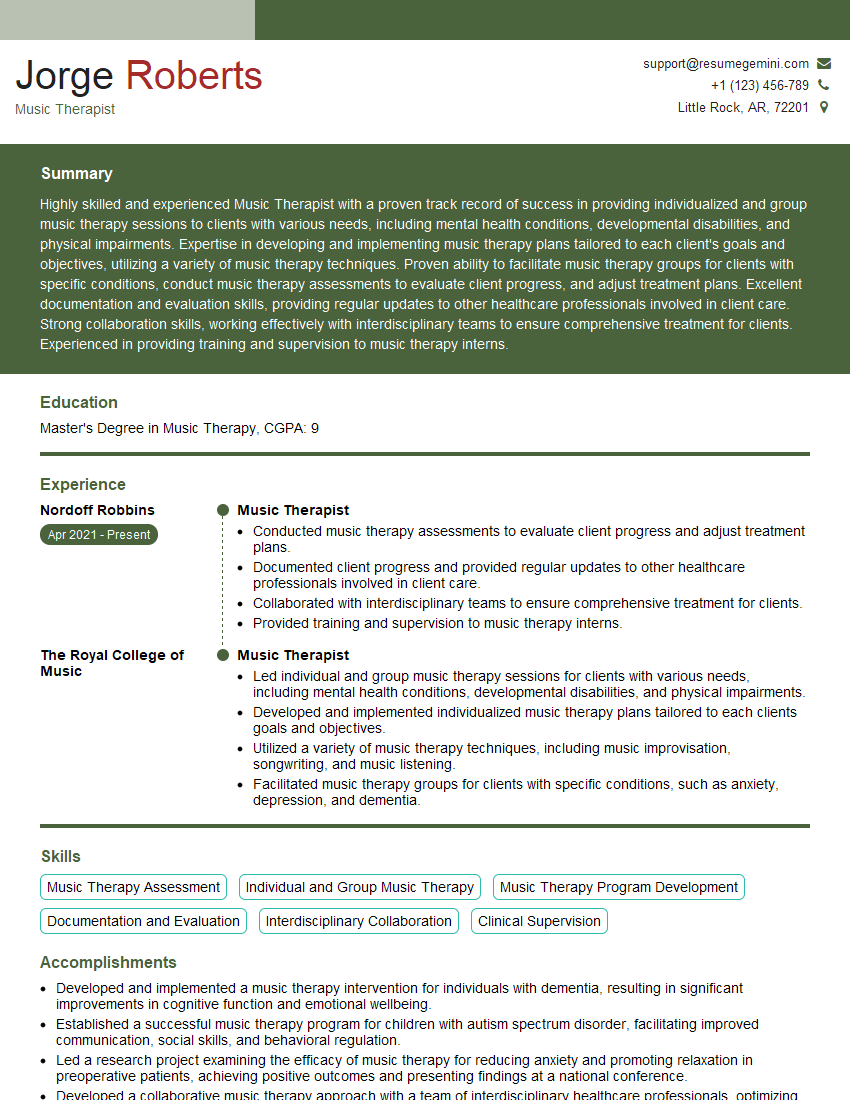
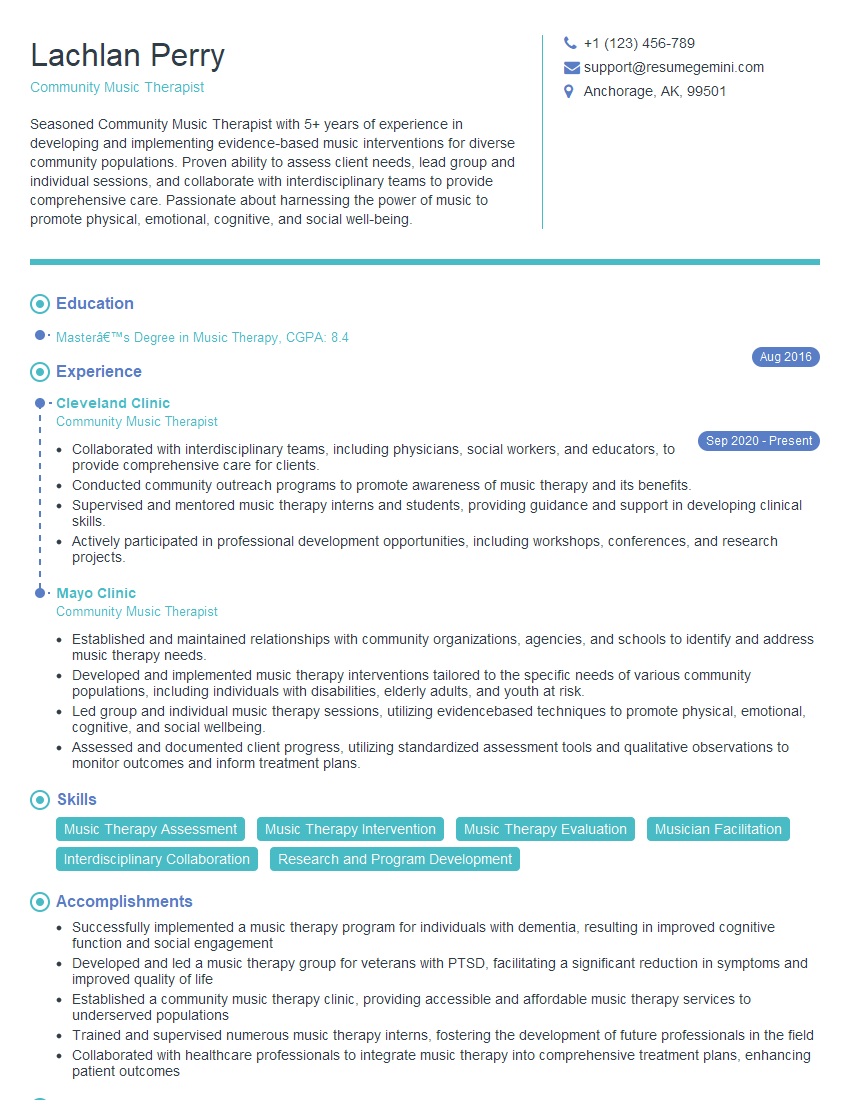
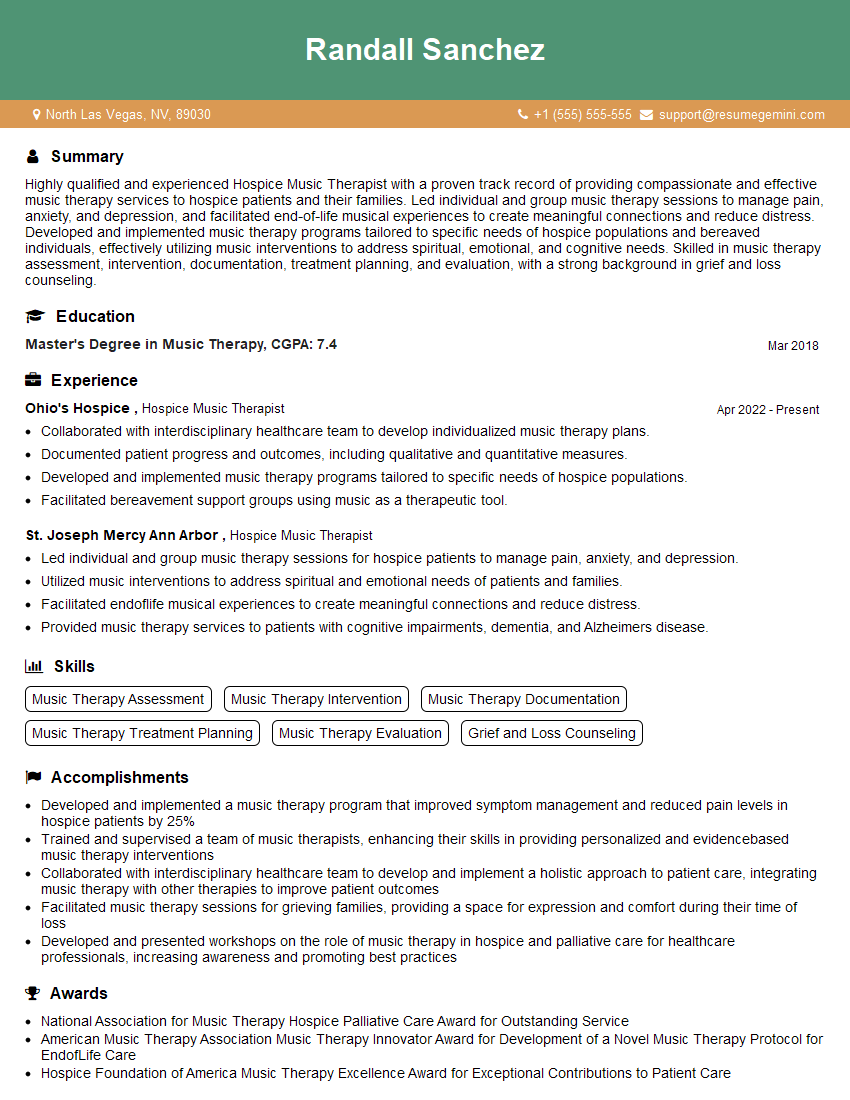
Mastering different theoretical approaches to music therapy is crucial for career advancement, allowing you to tailor your interventions to diverse client needs and demonstrate a comprehensive understanding of the field. To significantly enhance your job prospects, create a resume that is both ATS-friendly and showcases your unique skills and experiences. ResumeGemini is a trusted resource that can help you build a professional and impactful resume. We provide examples of resumes tailored to highlight expertise in understanding different theoretical approaches to music therapy, giving you a head start in your job search.
Explore more articles
Users Rating of Our Blogs
Share Your Experience
We value your feedback! Please rate our content and share your thoughts (optional).
What Readers Say About Our Blog
To the interviewgemini.com Webmaster.
Very helpful and content specific questions to help prepare me for my interview!
Thank you
To the interviewgemini.com Webmaster.
This was kind of a unique content I found around the specialized skills. Very helpful questions and good detailed answers.
Very Helpful blog, thank you Interviewgemini team.