The thought of an interview can be nerve-wracking, but the right preparation can make all the difference. Explore this comprehensive guide to Understanding of social media and online platforms interview questions and gain the confidence you need to showcase your abilities and secure the role.
Questions Asked in Understanding of social media and online platforms Interview
Q 1. What are the key performance indicators (KPIs) you would track for a social media campaign?
Key Performance Indicators (KPIs) are crucial for measuring the success of a social media campaign. They provide quantifiable data to assess progress and inform future strategies. The specific KPIs will depend on the campaign’s objectives, but some common ones include:
- Reach: The total number of unique users who saw your content. Example: A post reached 10,000 unique users.
- Engagement: Interactions like likes, comments, shares, and saves. Example: A post received 500 likes, 100 comments, and 200 shares. High engagement suggests resonating content.
- Website Clicks/Conversions: How many users clicked through from your social media post to your website and completed a desired action (e.g., purchase, sign-up). Example: A campaign drove 500 clicks to the website, resulting in 50 conversions.
- Brand Mentions: The number of times your brand is mentioned online, reflecting brand awareness. Example: Monitoring mentions reveals a significant increase in positive brand sentiment after a successful campaign.
- Follower Growth: The increase in the number of followers on your social media accounts. Example: The campaign resulted in a 15% increase in followers on Instagram.
- Impressions: The total number of times your content was displayed, regardless of whether it was clicked or engaged with. This gives a broad understanding of visibility.
- Click-Through Rate (CTR): The percentage of users who clicked on a link in your post. A higher CTR suggests compelling content and effective targeting.
Tracking these KPIs provides a comprehensive picture of campaign performance, enabling data-driven optimization.
Q 2. Explain your understanding of different social media platforms and their target audiences.
Different social media platforms cater to different demographics and user behaviors. Understanding this is key to effective targeting.
- Facebook: Boasts a broad demographic, including older users and families. It’s ideal for building brand awareness, community engagement, and running targeted ad campaigns.
- Instagram: Highly visual, predominantly younger users, and focused on aesthetics. Excellent for showcasing products visually, influencer marketing, and reaching a style-conscious audience.
- Twitter: Real-time news and conversations, often used by journalists and public figures. Suitable for quick updates, customer service, and participating in trending discussions.
- LinkedIn: Professional networking platform, ideal for B2B marketing, recruiting, and connecting with industry leaders.
- TikTok: Short-form video platform, popular with younger generations. Excellent for creative content, viral marketing, and reaching a highly engaged audience through trends and challenges.
- YouTube: Video-sharing platform; ideal for how-to videos, tutorials, product demonstrations, and building a strong brand presence through video content.
Understanding each platform’s nuances helps tailor content and messaging for optimal engagement and results. For example, a campaign targeting older adults would be less effective on TikTok than on Facebook.
Q 3. How would you measure the success of a social media marketing campaign?
Measuring social media campaign success involves analyzing the KPIs mentioned earlier, but it also requires a holistic approach. We need to consider:
- Alignment with Goals: Did the campaign achieve its predefined objectives (e.g., increased brand awareness, lead generation, sales)?
- Qualitative Data: Analyze user comments, feedback, and sentiment to understand the overall perception of the campaign. Sentiment analysis tools can help.
- Benchmarking: Compare the campaign’s performance against previous campaigns or industry benchmarks to assess its relative success.
- Return on Investment (ROI): Calculate the return on investment by comparing the cost of the campaign to the revenue or other benefits generated.
- Website Traffic and Conversions: Track website traffic originating from social media and the resulting conversions (purchases, sign-ups, etc.).
A successful campaign isn’t just about high numbers; it’s about achieving the defined goals efficiently and effectively. For instance, a high reach with low engagement might indicate an issue with content relevance.
Q 4. Describe your experience with social media advertising platforms like Facebook Ads or Google Ads.
I have extensive experience managing social media advertising campaigns on platforms like Facebook Ads and Google Ads. My experience involves:
- Campaign Setup and Targeting: Defining target audiences based on demographics, interests, behaviors, and location. Utilizing different targeting options within each platform to reach the right users.
- Ad Creative Development: Creating compelling ad copy and visuals tailored to the specific platform and target audience. A/B testing different creative variations to optimize performance.
- Budget Management: Allocating budgets effectively across different campaigns and ad sets to maximize ROI.
- Performance Monitoring and Optimization: Regularly tracking key metrics like CTR, conversion rate, and cost-per-acquisition (CPA). Making data-driven adjustments to improve campaign performance throughout the campaign’s lifecycle. This includes adjusting bids, targeting, and creative.
- Reporting and Analysis: Generating comprehensive reports that summarize campaign performance, highlighting key insights and areas for improvement.
For example, I once managed a Facebook Ads campaign for a small business that resulted in a 30% increase in leads within three months by optimizing targeting and ad copy based on real-time data.
Q 5. How do you stay up-to-date with the latest social media trends and algorithm changes?
Staying current in the rapidly evolving social media landscape requires a multi-pronged approach:
- Following Industry Influencers and Publications: Regularly reading blogs, articles, and newsletters from reputable sources that cover social media marketing trends and algorithm updates.
- Attending Webinars and Conferences: Participating in industry events to learn from experts and network with other professionals.
- Utilizing Social Media Analytics Tools: Using platforms like Google Analytics and social media platform analytics dashboards to track changes in user behavior and algorithm performance.
- Active Participation on Social Media: Staying engaged on the platforms themselves to observe changing trends and user behavior firsthand.
- Monitoring Social Media News and Forums: Tracking social media news sites and online communities to identify emerging trends and algorithm changes.
This continuous learning ensures I’m adapting strategies to stay ahead of the curve and leverage the latest opportunities.
Q 6. What is your experience with social listening tools and how do you use them?
Social listening tools are invaluable for understanding public perception of a brand and identifying potential crises. I’ve used tools like Brandwatch and Talkwalker to:
- Track Brand Mentions: Monitor mentions of our brand and relevant keywords across various social media platforms and online channels to assess brand sentiment.
- Identify Emerging Trends: Discover relevant conversations and emerging trends within our industry to inform content strategy and campaign development.
- Analyze Competitor Activity: Understand what our competitors are doing and how we can differentiate ourselves.
- Gauge Customer Sentiment: Assess overall sentiment towards our brand and identify areas for improvement.
- Proactively Address Customer Issues: Identify and address negative feedback or concerns before they escalate into larger problems.
For example, by using social listening, we once identified a negative sentiment surrounding a product feature before it became widespread, allowing us to address the issue proactively and minimize damage.
Q 7. How would you handle a negative comment or crisis on social media?
Handling negative comments or crises on social media requires a swift, transparent, and empathetic approach. My strategy involves:
- Acknowledge and Respond Promptly: Address the comment or crisis quickly, acknowledging the user’s concerns and showing that you’re listening.
- Empathize and Apologize (If Necessary): Express understanding and offer sincere apologies if the brand was at fault.
- Take the Conversation Offline (If Appropriate): Offer to connect with the user privately to resolve the issue directly.
- Provide a Solution: Offer a concrete solution to address the user’s concerns.
- Monitor and Manage the Conversation: Continue to monitor the situation and respond to further comments or concerns.
- Learn from the Experience: Analyze the situation to identify areas for improvement and prevent similar issues from happening again.
Transparency and a genuine effort to address the issue are key to mitigating negative impact. Ignoring negative comments often worsens the situation.
Q 8. Describe your experience with social media analytics and reporting.
Social media analytics and reporting are crucial for understanding the performance of a social media strategy. My experience encompasses utilizing various analytics platforms like Google Analytics, Facebook Insights, and Twitter Analytics to track key metrics. This includes monitoring engagement (likes, comments, shares), reach (impressions, unique visitors), website traffic driven from social media, and conversion rates (e.g., leads generated, sales attributed to social campaigns). I’m proficient in creating comprehensive reports that visually represent this data using charts and graphs, offering actionable insights to improve campaigns. For example, a recent campaign showed a significant drop in engagement after a specific post type. Analyzing this, we adjusted the content strategy, resulting in a 20% increase in engagement within a month.
I also have experience with A/B testing different content formats and posting times to optimize results. This iterative process ensures we’re constantly refining our approach to maximize ROI. Beyond reporting raw numbers, I focus on interpreting data to identify trends, understand audience behavior, and provide data-driven recommendations for future strategies.
Q 9. What content formats are most effective for different social media platforms?
The most effective content format varies drastically depending on the platform. Think of it like choosing the right tool for the job. Each platform has its own unique audience and features that dictate optimal content.
- Instagram: Thrives on high-quality visuals. Images, Reels, and Stories (using engaging visuals, interactive polls, and quizzes) generally perform best. Short-form video content is king.
- Facebook: A blend of formats works well. Longer-form videos, blog posts, articles, and live streams can drive engagement, depending on the target audience and the nature of the brand. Groups and events also play a significant role.
- Twitter: Short, concise text, engaging questions, polls, and links to relevant articles or longer content. It’s the platform for real-time discussions and quick updates.
- LinkedIn: Professional and informative content, including articles, white papers, case studies, and updates related to industry trends. Thought leadership and professional discussions are highly valued.
- TikTok: Short-form video content is paramount here. Trends, challenges, comedic skits, and educational content in a dynamic visual style are key to success.
Understanding the platform’s native features and its user base is paramount in choosing the right format.
Q 10. How do you create engaging social media content?
Creating engaging social media content requires a multi-faceted approach. It’s not just about posting – it’s about building relationships and adding value to your audience’s experience.
- Know your audience: Understand their interests, demographics, and pain points. What kind of content resonates with them? What problems can you solve for them?
- High-quality visuals: Eye-catching images and videos are essential. Invest in professional-looking content, or use readily available high-quality stock photos and videos that align with your branding.
- Tell compelling stories: People connect with narratives. Craft your posts in a way that tells a story and creates an emotional connection.
- Use a variety of content formats: Mix up text, images, videos, and stories to keep your audience engaged.
- Interact with your audience: Respond to comments and messages promptly. Ask questions and encourage two-way communication.
- Run contests and giveaways: Increase engagement by offering incentives. This is a good way to grow your followers.
- Use relevant hashtags: Help people discover your content by using hashtags that are relevant to your niche.
Essentially, it’s about providing value and fostering a community around your brand.
Q 11. What is your experience with scheduling and managing social media posts?
Scheduling and managing social media posts is vital for consistency and efficiency. I’m proficient in using scheduling tools like Hootsuite, Buffer, and Sprout Social. These tools allow for pre-scheduling posts across multiple platforms, ensuring a consistent stream of content even when time is limited. Beyond scheduling, effective management involves monitoring performance, adjusting the schedule based on analytics, and ensuring brand consistency across all posts and platforms. I also have experience managing multiple social media accounts simultaneously, coordinating content calendars, and ensuring timely responses to comments and interactions.
For example, I might use a scheduling tool to automatically post a series of tweets promoting an upcoming webinar throughout the week, strategically placing them to maximize reach during peak engagement times identified through analytics. This approach saves time and ensures optimized engagement.
Q 12. Describe your experience with influencer marketing.
My influencer marketing experience involves identifying, collaborating with, and managing relationships with relevant influencers. This starts with thorough research to find influencers whose audience aligns with our target demographic and brand values. It’s crucial to avoid influencers solely based on follower count; authenticity and engagement are key. I develop detailed campaign briefs outlining goals, deliverables, and key performance indicators (KPIs). This includes setting clear guidelines for content creation, ensuring brand consistency, and tracking the campaign’s performance through comprehensive reporting.
For example, in a recent campaign, we partnered with a micro-influencer in the fitness industry who consistently created high-quality and engaging content. The collaboration resulted in a substantial increase in brand awareness and website traffic, exceeding our initial expectations.
Q 13. What is your strategy for growing a social media following organically?
Growing a social media following organically requires a long-term strategy focused on building genuine relationships and providing valuable content. It’s a marathon, not a sprint.
- High-quality, consistent content: Regularly posting engaging content that resonates with your target audience is the foundation of organic growth.
- Engage with your audience: Respond to comments, messages, and mentions promptly. Ask questions, start conversations, and show that you value your followers.
- Run interactive contests and giveaways: Offer incentives to encourage engagement and attract new followers.
- Collaborate with other accounts: Partner with accounts in your niche to cross-promote each other’s content and reach a wider audience.
- Use relevant hashtags: Help people discover your content by using hashtags that are relevant to your niche.
- Optimize your profile: Make sure your profile is complete and easy to understand. Include a clear profile picture, a concise bio, and a call to action.
- Analyze your results: Track your progress and make adjustments to your strategy based on your findings.
Building a genuine community takes time, but the rewards of a loyal and engaged following are invaluable.
Q 14. How do you ensure brand consistency across all social media channels?
Maintaining brand consistency across all social media channels is crucial for building a strong brand identity and recognition. This involves a deliberate and strategic approach.
- Develop a brand style guide: This document should outline your brand’s voice, tone, visuals (logo, color palette, fonts), and messaging. This ensures everyone involved in social media management is on the same page.
- Consistent visual branding: Use the same logo, color scheme, and font across all platforms. Maintain a consistent visual aesthetic.
- Consistent messaging: Your brand’s message should be clear and consistent across all platforms. Use a similar tone and style of writing.
- Centralized content calendar: Use a shared calendar to coordinate content across all channels, ensuring a cohesive message and avoiding conflicting content.
- Regular reviews and updates: Regularly review your social media presence and make adjustments as needed to ensure everything aligns with your overall brand strategy.
Think of it as building a house. You wouldn’t use different bricks, paint colors, and architectural styles for each room; the same applies to social media. Consistency creates a unified and recognizable brand image.
Q 15. How do you measure engagement on social media?
Measuring social media engagement goes beyond simply counting likes and followers. It’s about understanding how your audience interacts with your content and brand. We use a multifaceted approach, analyzing various key performance indicators (KPIs).
Engagement Rate: This measures the percentage of your audience that interacts with your posts (likes, comments, shares, clicks). A higher engagement rate signifies a more resonant and interested audience. For example, if a post has 1000 views and 100 likes/comments/shares, the engagement rate is 10%.
Reach: This shows how many unique individuals saw your content. Organic reach is achieved through unpaid efforts, while paid reach is boosted through advertising. Analyzing the difference helps understand content performance and the impact of advertising.
Website Clicks/Conversions: If your social media strategy aims to drive traffic to your website, tracking clicks from social media posts to your website is crucial. Further, tracking conversions (e.g., purchases, sign-ups) provides a strong measure of success.
Sentiment Analysis: Monitoring the sentiment expressed in comments and mentions allows understanding audience perception of your brand. Positive sentiment is ideal, while negative sentiment indicates areas needing improvement.
Brand Mentions: Tracking mentions of your brand (with or without tagging) helps understand how people are talking about your brand outside your official posts. This provides valuable insights into brand reputation.
By tracking these KPIs over time and comparing them across different campaigns, we can identify what resonates most with our audience and refine our strategy accordingly.
Career Expert Tips:
- Ace those interviews! Prepare effectively by reviewing the Top 50 Most Common Interview Questions on ResumeGemini.
- Navigate your job search with confidence! Explore a wide range of Career Tips on ResumeGemini. Learn about common challenges and recommendations to overcome them.
- Craft the perfect resume! Master the Art of Resume Writing with ResumeGemini’s guide. Showcase your unique qualifications and achievements effectively.
- Don’t miss out on holiday savings! Build your dream resume with ResumeGemini’s ATS optimized templates.
Q 16. What are the ethical considerations of social media marketing?
Ethical considerations in social media marketing are paramount. Transparency, authenticity, and respect for user privacy are key principles.
Transparency: Clearly disclosing sponsored content or partnerships is crucial. Audiences should be able to differentiate between organic and paid posts. Failing to do so can lead to a loss of trust.
Authenticity: Presenting a genuine and accurate representation of your brand is essential. Avoid misleading information or exaggerated claims.
Privacy: Respect user data privacy by adhering to data protection regulations (like GDPR or CCPA). Obtain explicit consent before collecting and using personal information.
Targeting: Responsible targeting is crucial. Avoid targeting vulnerable groups with potentially harmful products or services. Ensure that your targeting aligns with ethical considerations and avoids discrimination.
Influencer Marketing: When working with influencers, ensure they adhere to disclosure guidelines. Use influencers who genuinely align with your brand values and audience.
Data Security: Implement security measures to protect user data from breaches and unauthorized access. This includes securing passwords and handling sensitive information properly.
Ethical lapses can severely damage a brand’s reputation, leading to boycotts and loss of customer trust. Prioritizing ethical practices is an investment in long-term brand success.
Q 17. Explain the difference between organic and paid social media reach.
The key difference between organic and paid social media reach lies in how they are achieved.
Organic Reach: This is the number of people who see your content without any paid advertising. It relies on factors such as engaging content, relevant hashtags, strong community interaction, and optimized profiles. Organic reach is limited by the algorithm of each platform and the size of your existing audience. Think of it as word-of-mouth marketing, relying on inherent interest and sharing.
Paid Reach: This involves using social media advertising platforms (like Facebook Ads, Instagram Ads, etc.) to increase the visibility of your content. You pay for your content to be shown to a wider, targeted audience beyond your existing followers. It allows for precise targeting by demographics, interests, or behaviors, ensuring your message reaches the most relevant people.
A successful social media strategy often involves a combination of both. Organic reach builds a loyal following and establishes brand authority. Paid reach accelerates growth and expands your audience, especially when launching new products or campaigns.
Q 18. How do you adapt your social media strategy based on campaign goals?
Adapting social media strategy to campaign goals is crucial for effective marketing. The goals will dictate the content, tone, targeting, and KPIs.
Brand Awareness: Focus on visually appealing content, storytelling, and engaging with relevant communities. KPIs include reach, impressions, and brand mentions.
Lead Generation: Utilize lead magnets (e.g., ebooks, webinars), targeted advertising, and calls to action (CTAs) in posts and stories. KPIs include website clicks, form submissions, and email sign-ups.
Sales: Promote products or services directly, using compelling visuals, detailed descriptions, and strong CTAs. KPIs include website conversions, sales volume, and return on ad spend (ROAS).
Community Building: Prioritize engaging content that encourages interaction. Run contests, Q&A sessions, and polls. KPIs include engagement rate, comments, shares, and follower growth.
For example, a brand awareness campaign might use broad targeting and focus on reaching a large audience with visually striking content, whereas a lead generation campaign would employ more precise targeting and utilize lead capture forms. The KPIs will be tailored to reflect the specific campaign objective.
Q 19. Describe your experience with social media A/B testing.
A/B testing is a cornerstone of optimizing social media campaigns. It involves creating two or more versions of a post (A, B, C, etc.) with slight variations, and then showing them to different segments of your audience to see which performs better.
I’ve extensively used A/B testing to optimize:
Ad creatives: Testing different images, videos, and copy to determine which resonates best with the target audience.
Ad copy: Testing different headlines, body text, and calls to action (CTAs) to improve click-through rates (CTRs).
Targeting parameters: Testing different audience segments to determine which yields the highest conversion rate.
Post timing: Testing different posting times to see when the audience is most active and receptive.
For example, I once A/B tested two versions of a Facebook ad for a new product—one with a close-up product shot, and another with an image showcasing the product in use. The ad with the product-in-use image significantly outperformed the other in terms of clicks and conversions. This provided valuable insights to inform future ad campaigns.
Q 20. What is your experience with social media community management?
Social media community management is about building and nurturing relationships with your audience. It involves responding to comments and messages, engaging with followers, addressing concerns, and fostering a positive brand experience.
My experience encompasses:
Monitoring social media channels: Actively tracking mentions, comments, and messages across all platforms to identify opportunities for engagement and address issues promptly.
Responding to inquiries and comments: Providing timely and helpful responses to audience questions and comments, building rapport and fostering a sense of community.
Managing online reputation: Addressing negative feedback constructively and proactively managing online discussions to protect brand reputation.
Developing and implementing community engagement strategies: Creating content and running campaigns to encourage interaction and participation from the audience.
Identifying and engaging with key influencers: Collaborating with influencers who resonate with the brand and its audience to expand reach and engagement.
I believe in proactive community management. Promptly addressing negative comments or concerns demonstrates responsiveness and can even turn negative experiences into positive ones. This contributes to building a loyal and engaged community.
Q 21. How do you handle social media budget allocation and reporting?
Effective social media budget allocation and reporting require a strategic approach. I typically use a data-driven methodology.
Budget Allocation: I start by defining clear objectives and KPIs for each campaign. This allows me to allocate budget strategically, prioritizing channels and campaigns that are most likely to deliver results. For example, if the goal is lead generation, a larger portion of the budget might be allocated to platforms like LinkedIn or Facebook that are effective for professional networking.
Campaign Tracking: I use analytics tools (like Google Analytics, platform-specific analytics dashboards, etc.) to track campaign performance in real-time. This allows for quick adjustments and optimization based on actual data rather than assumptions.
Reporting & Analysis: Regular reporting is crucial. I create comprehensive reports that include KPIs such as reach, engagement, website traffic, conversions, and ROAS. These reports are presented visually to provide easy-to-understand insights, highlighting successes and areas for improvement.
A/B Testing Integration: Budget allocation and reporting should be closely tied to A/B testing. The results of A/B tests inform future budget allocation, ensuring resources are directed towards the most effective strategies.
By continuously monitoring, analyzing, and adjusting based on data, we can maximize ROI and ensure that the social media budget is being utilized effectively.
Q 22. Describe your experience using social media management tools.
My experience with social media management tools spans several years and various platforms. I’ve worked extensively with tools like Hootsuite, Buffer, Sprout Social, and Lately. Each tool offers unique strengths; for instance, Hootsuite excels at managing multiple accounts simultaneously, while Buffer is particularly user-friendly for scheduling posts. Sprout Social provides robust analytics and customer service features, and Lately focuses on repurposing content across different platforms. My expertise lies not just in using these tools individually but also in strategically selecting the right tool based on specific campaign goals and client needs. For example, for a client with a limited budget and a focus on organic growth, I might choose Buffer for its ease of use and cost-effectiveness. For a larger client requiring in-depth analytics and customer engagement tracking, Sprout Social would be a more suitable choice.
Beyond the core functionalities of scheduling and posting, I’m proficient in utilizing the analytics dashboards within these tools to track key performance indicators (KPIs) such as engagement rate, reach, and website traffic. This data informs strategic adjustments to campaign strategies ensuring optimal results. I’m also comfortable using social listening tools to monitor brand mentions and sentiment, allowing for proactive crisis management and opportunities for engagement.
Q 23. How do you identify and target the right social media audience?
Identifying and targeting the right social media audience is crucial for effective marketing. It’s not a one-size-fits-all approach; it requires a deep understanding of your ideal customer profile (ICP). This involves creating detailed buyer personas, considering factors like demographics (age, location, gender), psychographics (interests, values, lifestyle), and online behavior (platforms used, content consumed).
Once you have a clear picture of your ICP, you can leverage social media platform’s targeting options. For example, on Facebook and Instagram, you can target users based on demographics, interests, behaviors, and even connections. On Twitter, you can use relevant hashtags and keywords to reach specific audiences. LinkedIn allows for highly targeted professional outreach based on job titles, industries, and company size.
Beyond platform-specific targeting, I utilize competitive analysis to identify where my target audience is most active. I also employ A/B testing to refine targeting strategies, constantly optimizing campaigns based on performance data. For example, if one ad creative significantly outperforms another, I’ll adjust future campaigns accordingly, learning from both successes and failures.
Q 24. Explain the importance of social media in a broader marketing strategy.
Social media plays a pivotal role in a broader marketing strategy, acting as a powerful tool for brand building, customer engagement, and driving sales. It’s not just a separate channel; it’s an integral part of the overall marketing ecosystem.
- Brand awareness and building: Social media platforms offer a direct line of communication with potential customers, allowing businesses to share their brand story, values, and personality.
- Customer engagement and relationship building: Social media fosters two-way communication, enabling businesses to interact with customers, build relationships, and create a sense of community.
- Lead generation and sales: Social media can drive traffic to a website, generate leads, and even facilitate direct sales through features like shoppable posts and integrated e-commerce platforms.
- Market research and competitive analysis: Monitoring social media conversations provides valuable insights into customer preferences, emerging trends, and competitor activities.
Think of it like this: your website is your storefront, email marketing is your direct mail, and social media is your public relations team – all working together to achieve your overall marketing objectives. A well-integrated strategy ensures that these channels reinforce each other, creating a cohesive and impactful marketing message.
Q 25. What are some common social media marketing mistakes, and how can they be avoided?
Many businesses make common mistakes in social media marketing, often stemming from a lack of planning or understanding. Some frequent pitfalls include:
- Ignoring analytics: Failing to track key metrics and adapt strategies based on data-driven insights.
- Inconsistent posting: Lack of a regular posting schedule leads to decreased visibility and engagement.
- Poor content quality: Publishing irrelevant, low-quality content that fails to resonate with the target audience.
- Neglecting engagement: Ignoring comments, messages, and other interactions from followers.
- Lack of a defined strategy: Jumping into social media without a clear understanding of goals, target audience, and content plan.
- Ignoring negative feedback: Failing to address negative comments or reviews can severely damage brand reputation.
These mistakes can be avoided by:
- Developing a comprehensive social media strategy: Define clear goals, target audience, and content pillars.
- Creating high-quality, engaging content: Focus on providing value to your audience.
- Monitoring analytics and adapting strategies: Regularly review your performance data and adjust your approach based on insights.
- Engaging actively with your audience: Respond promptly to comments, messages, and reviews.
- Using a social listening tool: Monitor brand mentions and address negative feedback proactively.
Q 26. How do you adapt your communication style for different social media platforms?
Adapting communication style across different social media platforms is crucial for effectiveness. Each platform has its own unique culture, user base, and preferred content formats.
- Facebook: Generally more formal and professional, suitable for sharing longer-form content, articles, and videos.
- Instagram: Visually driven, focusing on high-quality images and short, engaging captions. A more informal and personable tone often works well.
- Twitter: Character-constrained, requiring concise and impactful messaging. Use of relevant hashtags and quick wit is key.
- LinkedIn: Professional networking platform. Content should be informative and focused on industry news, thought leadership, and career development.
- TikTok: Short-form video platform, requiring creative and entertaining content that aligns with current trends.
For instance, a LinkedIn post might feature an in-depth article about industry trends, while an Instagram post would feature a visually appealing image with a short, catchy caption. The key is to understand the nuances of each platform and tailor your messaging accordingly to resonate with the specific audience.
Q 27. What are your thoughts on the future of social media marketing?
The future of social media marketing is dynamic and exciting. Several key trends are shaping the landscape:
- Increased focus on video content: Platforms like TikTok and Instagram Reels are driving the demand for short-form, engaging video content.
- Rise of influencer marketing: Collaborations with influencers remain a powerful way to reach target audiences authentically.
- Growing importance of social commerce: Integration of e-commerce features within social media platforms is facilitating direct sales.
- Enhanced personalization and AI-powered targeting: AI algorithms are enabling more precise audience targeting and personalized content recommendations.
- Emphasis on user privacy and data security: Businesses need to prioritize user privacy and comply with evolving regulations.
- The Metaverse and immersive experiences: Brands are exploring opportunities to engage with customers in virtual worlds.
In short, the future of social media marketing will be characterized by increased personalization, immersive experiences, and a stronger emphasis on data privacy. Adaptability and a willingness to embrace new technologies will be essential for success.
Q 28. Describe your experience with using social media for customer service.
Using social media for customer service offers a powerful and immediate way to address customer queries and resolve issues. It allows for public and private interactions, enabling transparency and building trust. My experience includes managing social media inboxes, responding to customer inquiries, resolving complaints, and escalating complex issues to the appropriate teams.
I’ve found that proactive monitoring of social media mentions is crucial for identifying potential customer service issues before they escalate. Responding promptly and empathetically to both positive and negative feedback is paramount. Using social media for customer service also allows for personalized interactions and opportunities to build stronger customer relationships. This enhances brand loyalty and promotes positive word-of-mouth marketing. For example, publicly resolving a customer issue in a positive and helpful way can demonstrate excellent customer service and build brand credibility. Conversely, neglecting negative comments or responding inappropriately can damage brand reputation and hurt customer relationships.
Key Topics to Learn for Understanding of social media and online platforms Interview
- Social Media Landscape: Understanding the major platforms (Facebook, Instagram, Twitter, LinkedIn, TikTok, etc.), their user demographics, and their unique functionalities.
- Social Media Marketing Strategies: Developing and implementing effective social media campaigns, including content creation, community engagement, and performance analysis. Practical application: Discuss examples of successful campaigns and explain the rationale behind their success.
- Social Media Analytics & Measurement: Utilizing analytics tools to track key metrics (engagement, reach, conversion rates), interpret data, and make data-driven decisions. Practical application: Describe how you would use analytics to optimize a social media strategy.
- Social Listening & Brand Monitoring: Understanding how to track brand mentions, identify trends, and manage online reputation. Practical application: Outline a process for addressing negative feedback or online crises.
- Content Strategy & Creation: Developing engaging and relevant content tailored to different platforms and audiences. Practical application: Discuss different content formats (videos, images, text) and their effectiveness across various platforms.
- Advertising on Social Media Platforms: Familiarity with paid advertising options, targeting parameters, and campaign optimization techniques. Practical application: Explain the differences between various ad formats and targeting options.
- Legal and Ethical Considerations: Understanding privacy regulations (GDPR, CCPA), copyright laws, and best practices for responsible social media use. Practical application: Discuss scenarios where ethical dilemmas might arise in social media management.
- Emerging Trends and Technologies: Staying updated on the latest trends in social media, including new platforms, features, and algorithms. Practical application: Discuss the impact of short-form video or the metaverse on social media strategies.
Next Steps
Mastering your understanding of social media and online platforms is crucial for success in today’s digital landscape. It opens doors to exciting career opportunities and demonstrates valuable skills to potential employers. To increase your chances of landing your dream job, focus on building a strong, ATS-friendly resume that highlights your relevant experience and skills. ResumeGemini is a trusted resource that can help you craft a professional and impactful resume tailored to the specific requirements of your target roles. We provide examples of resumes specifically designed for candidates with expertise in Understanding of social media and online platforms to help you get started.

Marketing Communications Manager Resume Sample
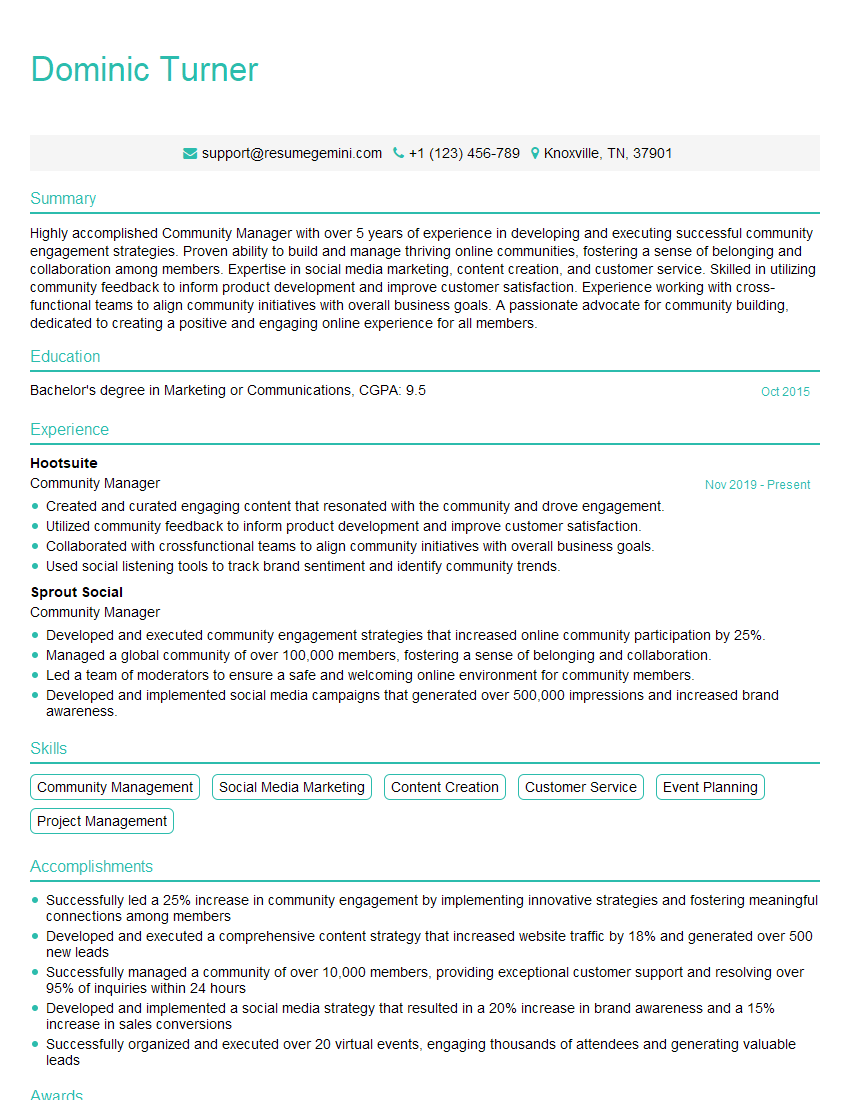
Community Manager Resume Sample

Social Media Manager Resume Sample
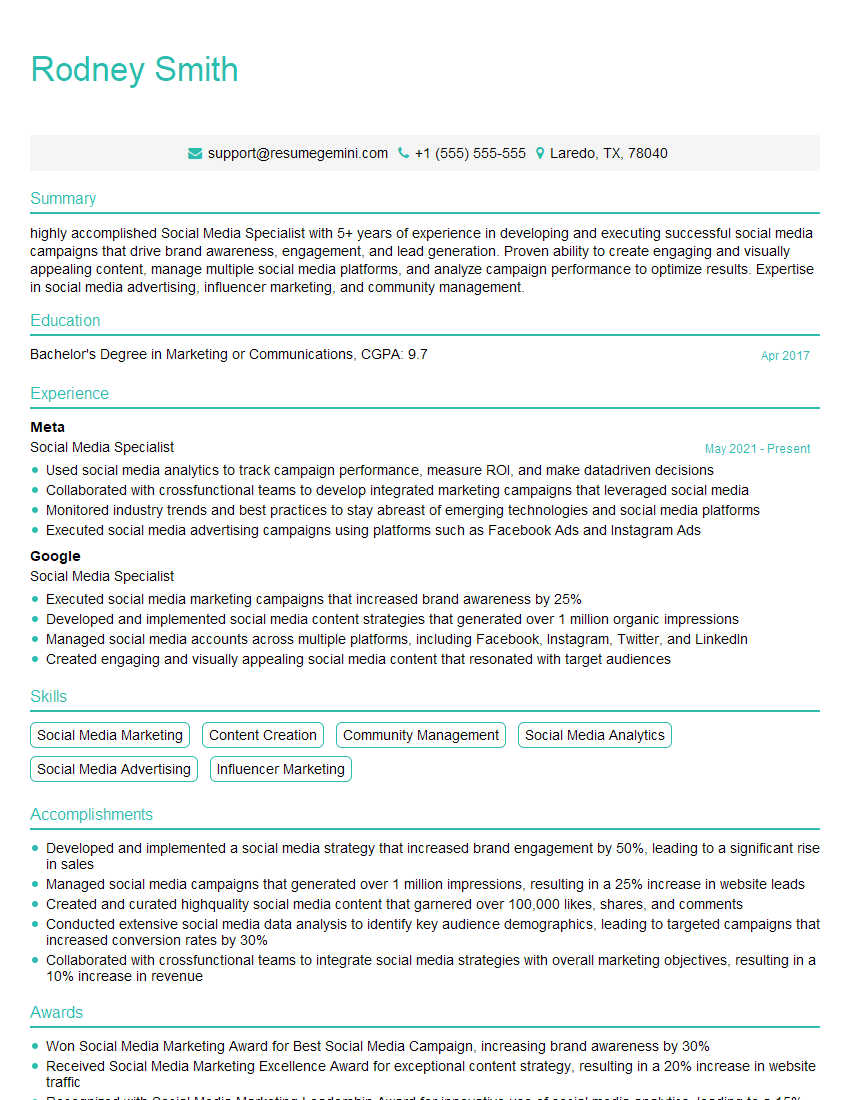
Social Media Specialist Resume Sample
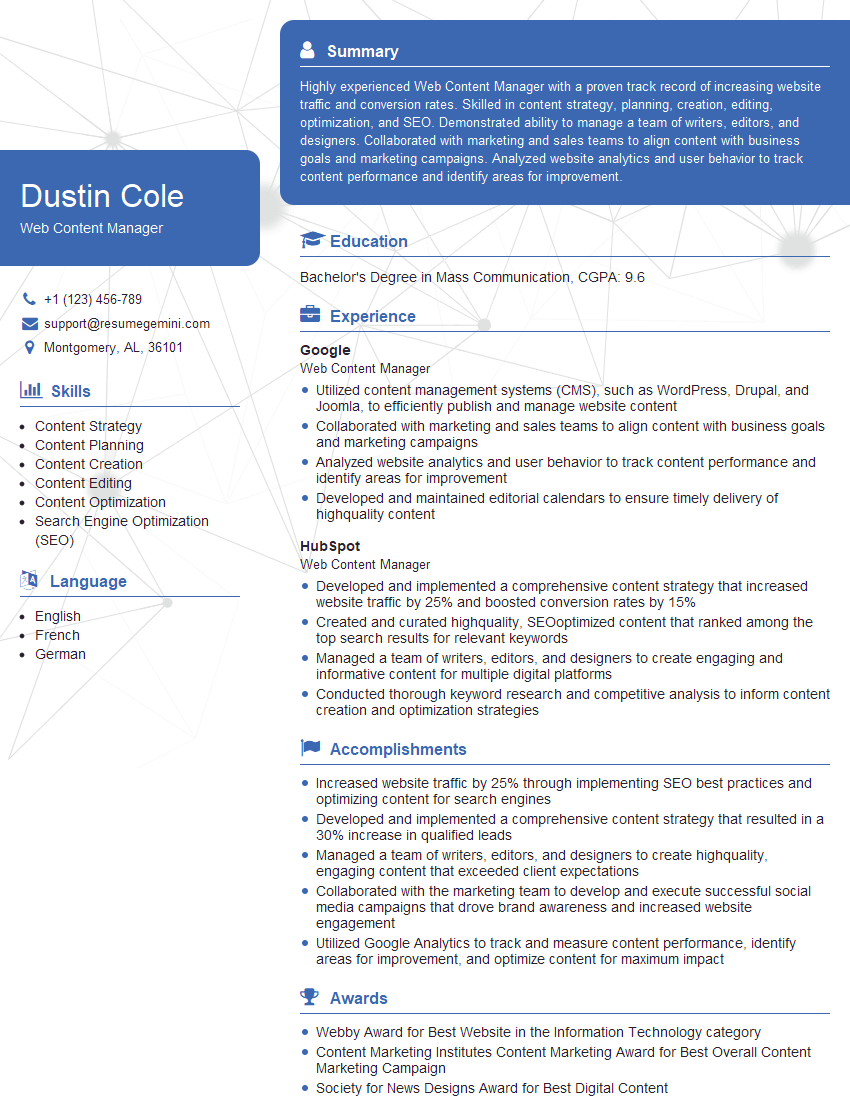
Web Content Manager Resume Sample
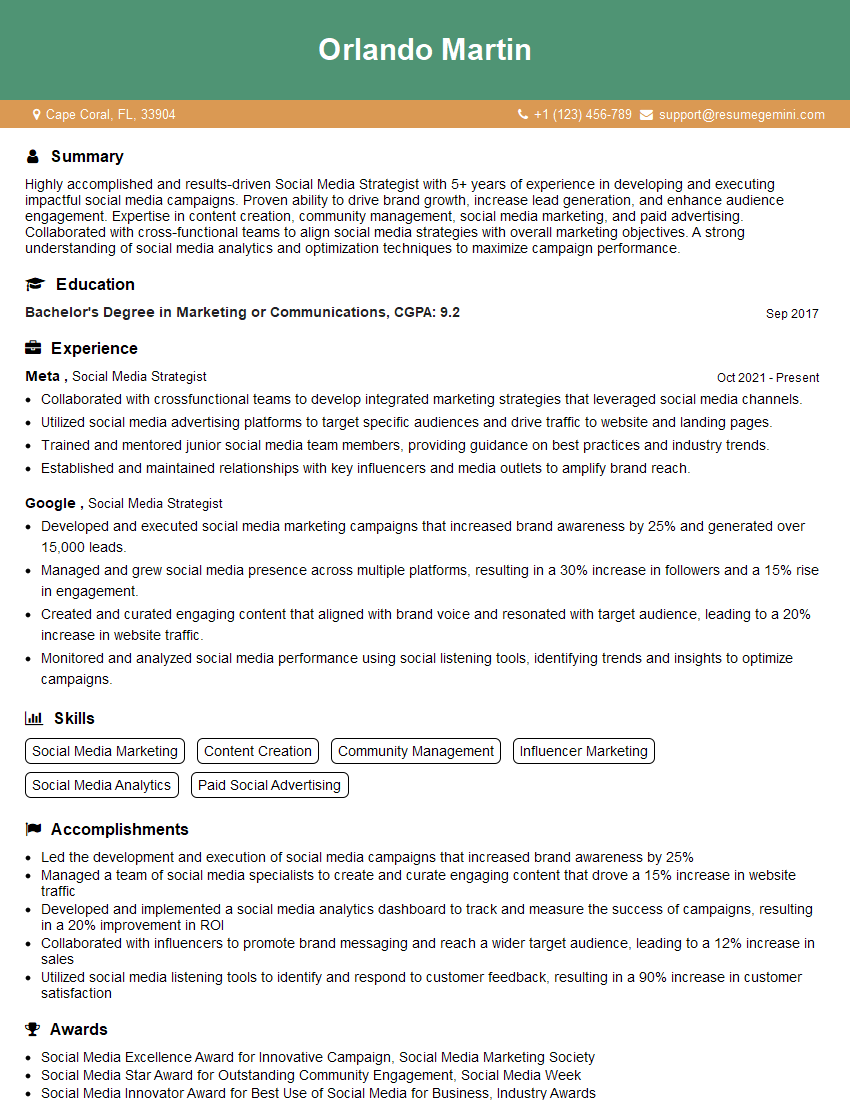
Social Media Strategist Resume Sample

Content Strategist Resume Sample
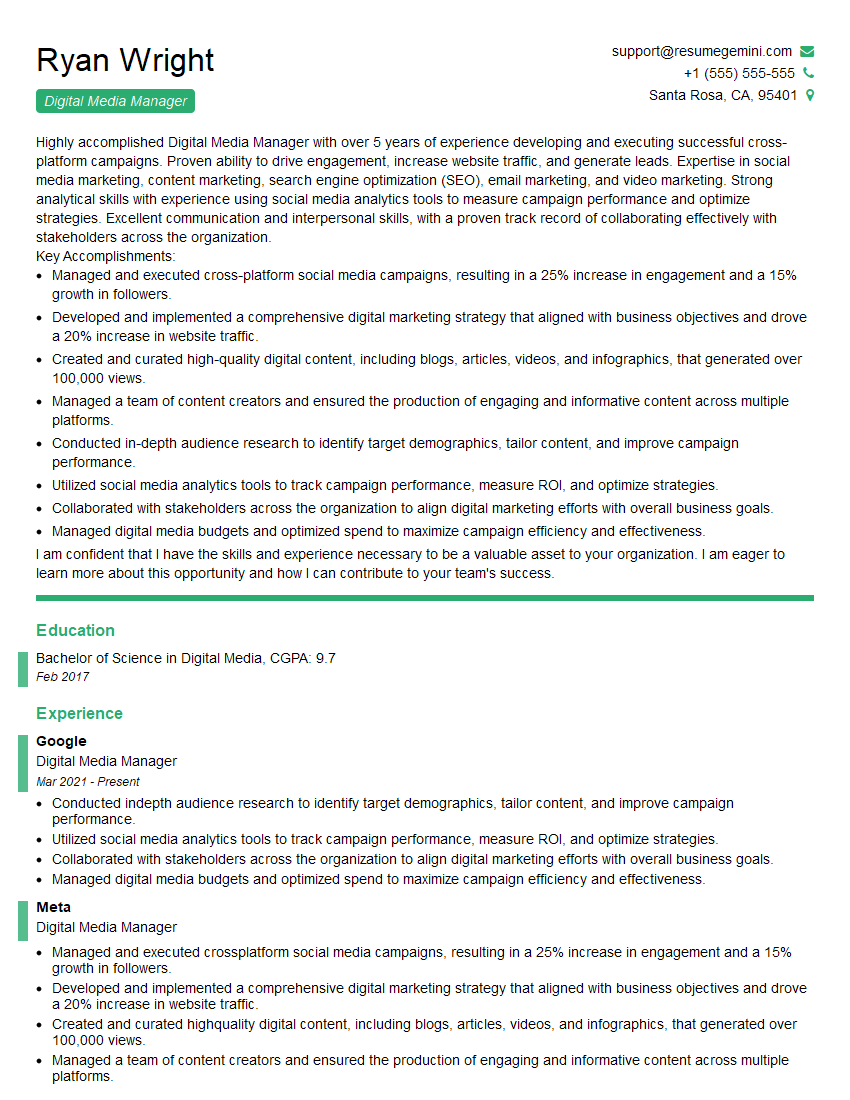
Digital Media Manager Resume Sample
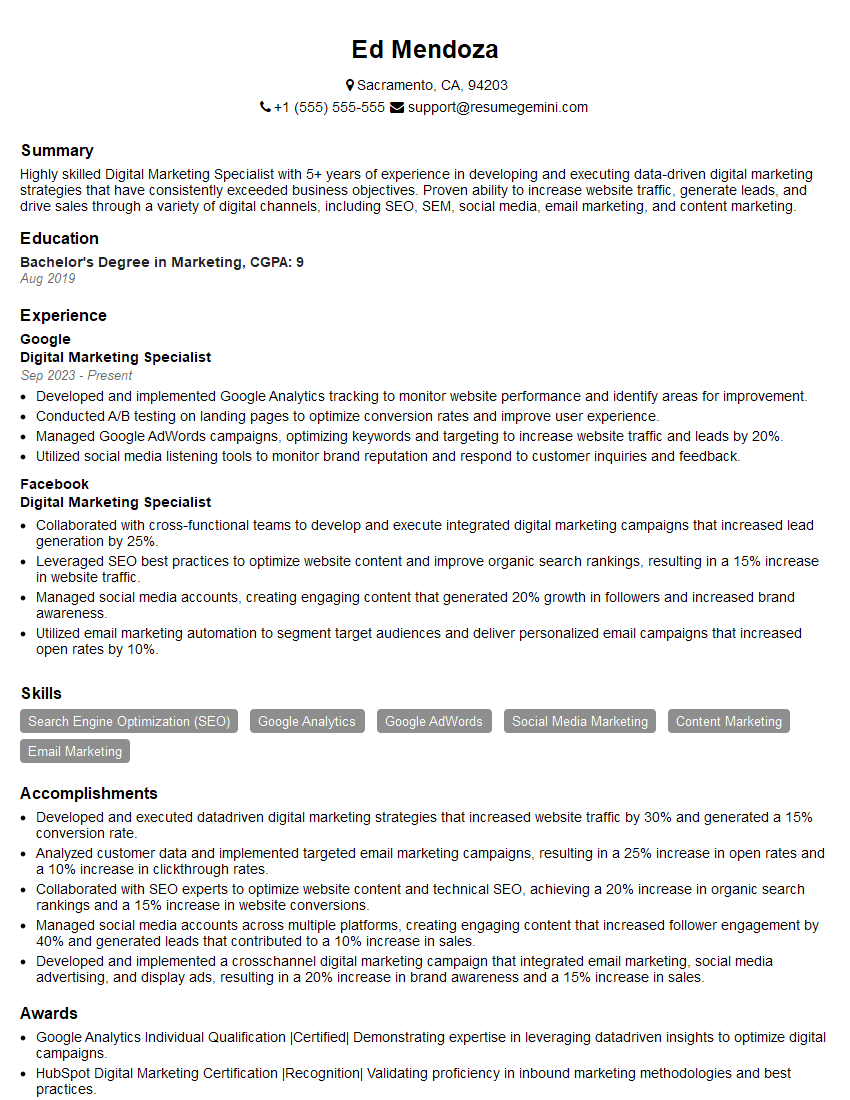
Digital Marketing Specialist Resume Sample
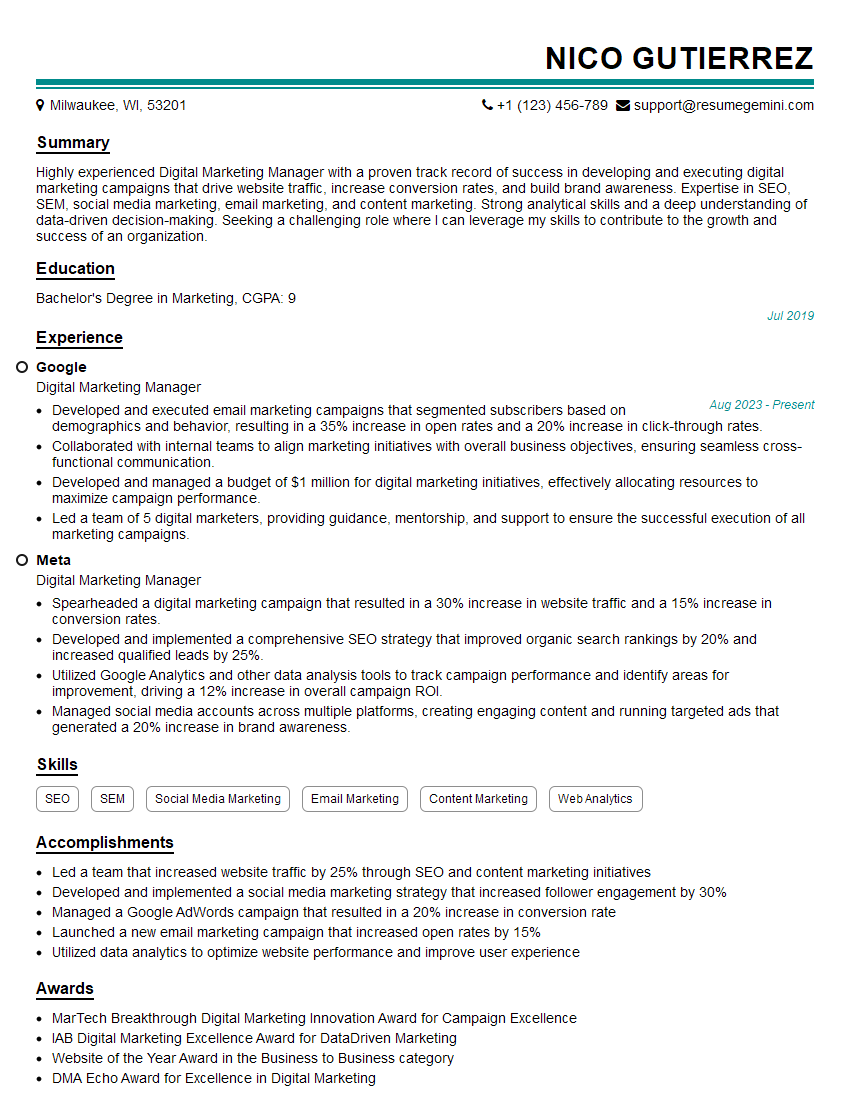
Digital Marketing Manager Resume Sample
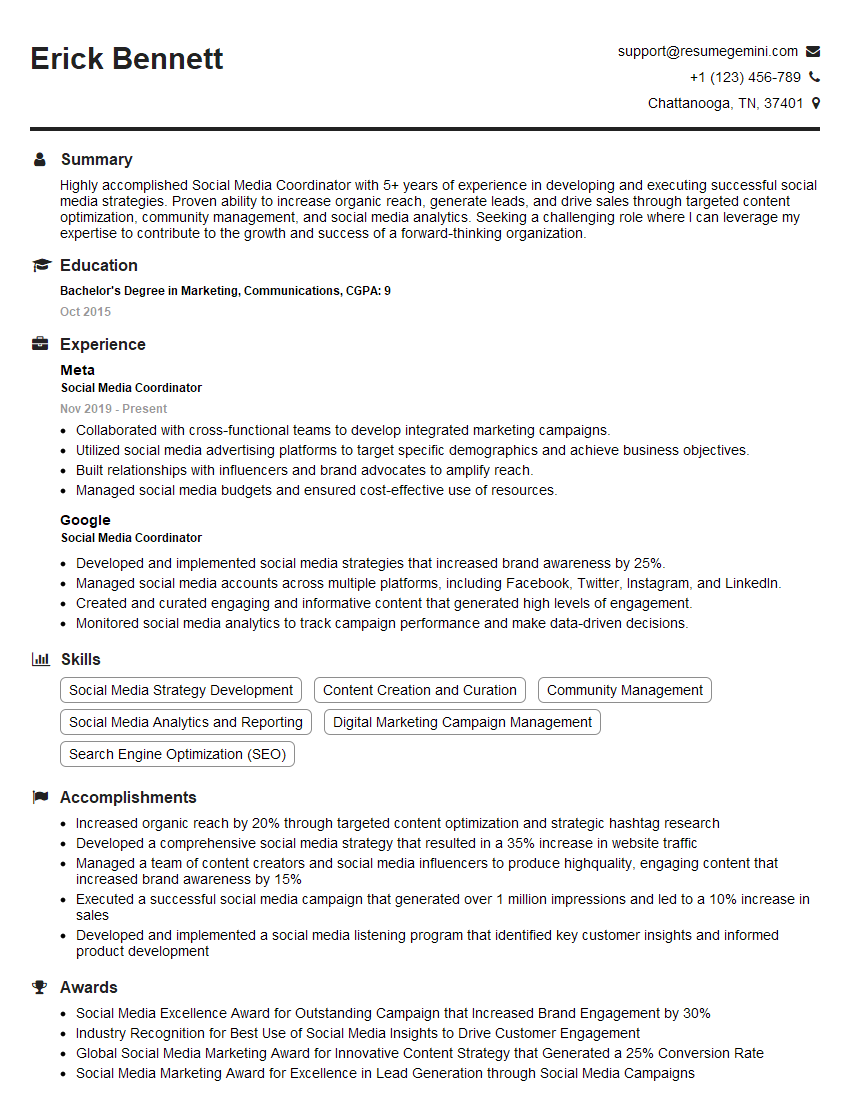
Social Media Coordinator Resume Sample
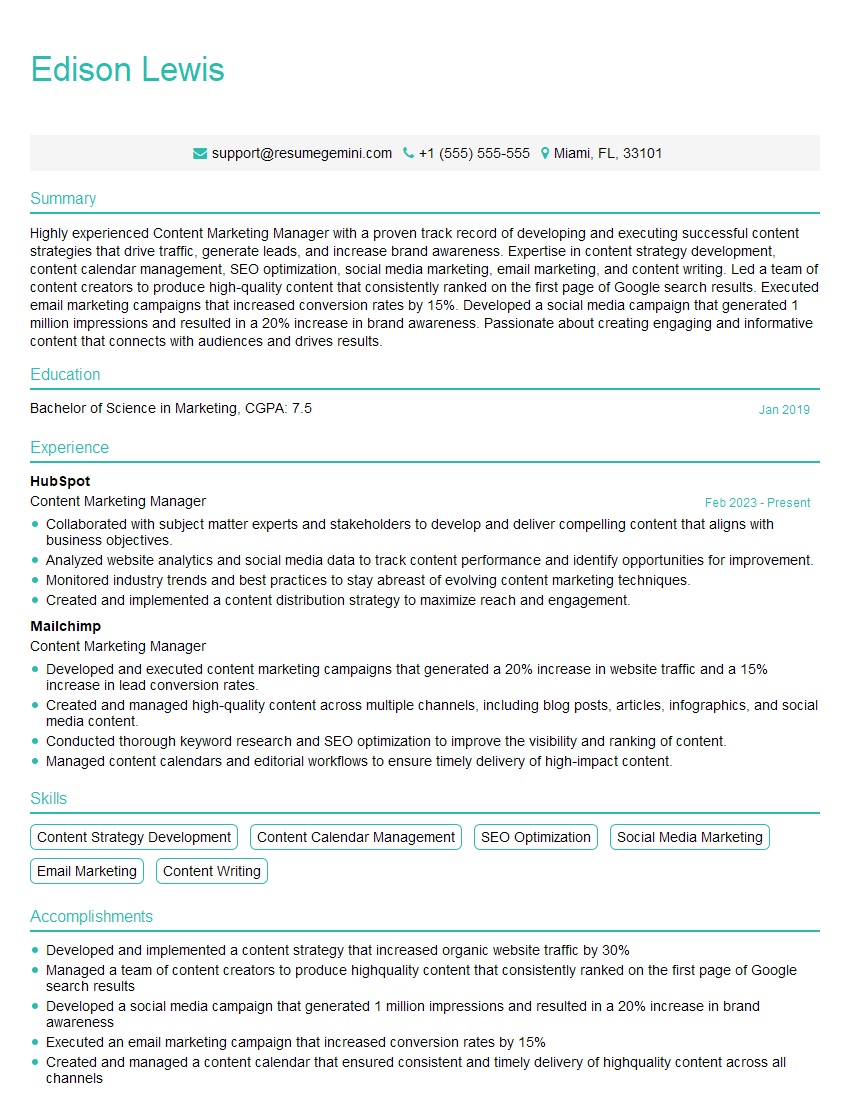
Content Marketing Manager Resume Sample

Social Media Marketing Manager Resume Sample
- Marketing Communications Manager
- Community Manager
- Social Media Manager
- Social Media Specialist
- Web Content Manager
- Social Media Strategist
- Content Strategist
- Digital Media Manager
- Digital Marketing Specialist
- Digital Marketing Manager
- Social Media Coordinator
- Content Marketing Manager
- Social Media Marketing Manager
Explore more articles
Users Rating of Our Blogs
Share Your Experience
We value your feedback! Please rate our content and share your thoughts (optional).
What Readers Say About Our Blog
To the interviewgemini.com Webmaster.
Very helpful and content specific questions to help prepare me for my interview!
Thank you
To the interviewgemini.com Webmaster.
This was kind of a unique content I found around the specialized skills. Very helpful questions and good detailed answers.
Very Helpful blog, thank you Interviewgemini team.