Unlock your full potential by mastering the most common Use of Art Therapy Materials interview questions. This blog offers a deep dive into the critical topics, ensuring you’re not only prepared to answer but to excel. With these insights, you’ll approach your interview with clarity and confidence.
Questions Asked in Use of Art Therapy Materials Interview
Q 1. Explain the therapeutic benefits of using clay in art therapy.
Clay, in art therapy, offers a unique tactile experience that facilitates emotional expression and processing. Its malleable nature mirrors the fluidity of our inner emotional landscape, allowing clients to shape, mold, and reshape their feelings in a non-verbal way.
Therapeutic Benefits:
- Sensory Regulation: The tactile sensation of clay can be grounding and calming, particularly helpful for clients experiencing anxiety or sensory overload. The cool, smooth texture can be soothing, while the act of manipulating it can provide a sense of control and mastery.
- Emotional Expression: Clay allows for symbolic representation of emotions. For example, a client might create a small, fragile figure to represent feelings of vulnerability, or a large, powerful sculpture to express anger. The process of creating allows for a safe exploration of these emotions.
- Non-Verbal Communication: For clients who struggle with verbal expression, clay provides an alternative avenue for communication. The shapes, textures, and colors they choose can reveal unspoken thoughts and feelings.
- Self-Discovery and Self-Esteem: The process of building something tangible from nothing can foster a sense of accomplishment and self-efficacy. This can be particularly beneficial for clients struggling with low self-esteem or a lack of confidence.
Example: I once worked with a young boy who was struggling to express his feelings after the death of his pet. Through clay modeling, he created a small, detailed replica of his pet, and during the process, he began to share memories and process his grief in a way that wasn’t possible through verbal conversation alone.
Q 2. Describe your experience with different types of art media and their suitability for various client populations.
My experience spans a wide range of art media, each suited to different client needs and therapeutic goals. The choice of medium is crucial and is tailored to the individual.
- Paint (Acrylics, Watercolors, etc.): Versatile and accessible, paint allows for a broad spectrum of expression, from delicate washes to bold strokes. It’s suitable for most client populations, though those with fine motor skill limitations might find it challenging.
- Drawing (Pencils, Charcoal, Pastels): Excellent for exploring detail and precision, drawing can be particularly helpful for clients who are detail-oriented or prefer a more controlled form of expression. Charcoal’s smudgeable nature can allow for less structured, more spontaneous work.
- Collage: A great option for clients who prefer a more hands-on, less precise approach. The act of selecting and arranging different materials can be symbolic and allow for a powerful expression of identity or fragmented feelings.
- Mixed Media: Combining various materials allows for complex and layered expression, reflecting the multifaceted nature of human experience. This can be a powerful technique for exploring trauma or complex emotional states.
- Sand Tray Therapy: Utilizing sand, figurines, and miniature objects within a tray, this method is excellent for clients who benefit from symbolic representation and tactile exploration, particularly children and individuals experiencing trauma or anxiety.
Suitability for Client Populations: For example, with children, I might start with finger painting due to its sensory appeal and ease of use. With adults experiencing trauma, I might opt for collage, enabling a more controlled and symbolic expression of fragmented experiences. With clients experiencing physical limitations, I would carefully select adaptable media (see question 3).
Q 3. How do you adapt art therapy materials for clients with physical limitations?
Adapting art therapy materials for clients with physical limitations requires creativity and sensitivity. The goal is to ensure accessibility without compromising the therapeutic process.
- Adaptive Tools: For clients with limited dexterity, I might use larger brushes, chunky crayons, or adapted paint holders. We might explore alternative techniques, such as voice-activated software for digital art or using adapted tools like mouth sticks for painting.
- Alternative Media: If fine motor skills are severely compromised, we could focus on alternative media such as clay, which can be manipulated with both hands, or even using verbal descriptions to create a collaborative artwork with an assistant.
- Environmental Adaptations: The therapy room itself needs to be adaptable. This might involve using adjustable tables, chairs, and supportive devices. Positioning of materials should also consider individual needs.
- Assistive Technology: Depending on the nature of the physical limitation, assistive technology, such as voice-to-text software or specialized adaptive art software, could be incorporated.
Example: A client with limited hand mobility might create art using a wheelchair-mounted easel and adapted paintbrushes or even voice-activated software to create digital artwork. The focus is on maintaining engagement and facilitating meaningful self-expression, not on the technical perfection of the final product.
Q 4. What are the ethical considerations when using client artwork in supervision or presentations?
Ethical considerations surrounding the use of client artwork are paramount. Maintaining client confidentiality and autonomy is crucial.
- Anonymity and Informed Consent: Before using any client artwork in supervision or presentations, I obtain explicit written informed consent, ensuring the client understands how their work will be used and that their identity will be protected through anonymity (blurring faces, omitting identifying details). If the artwork is intrinsically identifying, it should not be used.
- Focus on Therapeutic Process: Any presentation should emphasize the therapeutic process and insights gained, rather than showcasing the artwork itself as a piece of fine art. The client’s identity remains secondary to the therapeutic discussion.
- Protecting Client Vulnerability: I am mindful of the potential for exploitation or misinterpretation of the artwork. I avoid displaying potentially triggering or emotionally sensitive content without the client’s explicit agreement and careful contextualization.
- Storage and Disposal: Client artwork is stored securely, respecting their privacy and ownership rights. Appropriate disposal methods are followed upon the client’s completion of therapy, respecting their wishes for retaining or discarding the work.
Example: When presenting a case study, I might use a photograph of a client’s artwork to illustrate a specific therapeutic technique or the client’s emotional journey, but I would ensure the image is anonymized and the focus remains on the therapeutic process, not the aesthetic merit of the artwork.
Q 5. How do you assess a client’s art-making process and its connection to their emotional state?
Assessing a client’s art-making process involves observing both the product and the process, looking for connections between the artwork and their emotional state.
- Observational Data: I observe the client’s choice of materials, colors, and subject matter. Their body language, working style (e.g., precise vs. spontaneous), and emotional responses during the process are equally important. For example, a client might choose dark colors and aggressive strokes, suggesting underlying anger or distress.
- Process-Oriented Approach: Instead of focusing solely on the final product, I prioritize understanding the *how* and *why* of the creative process. This may involve asking questions like, “Tell me about this color,” or “What does this shape represent to you?” to facilitate verbalization of their feelings.
- Symbolic Interpretation: We explore the symbolic meaning behind their artwork. For example, a recurring symbol might suggest a persistent theme or underlying issue. However, interpretations should always be validated by the client.
- Changes Over Time: Monitoring changes in the client’s art-making process over time provides insight into their progress and emotional shifts. For example, a shift from dark, chaotic compositions to brighter, more organized ones might indicate improved mood and coping mechanisms.
Example: A client consistently uses sharp, jagged lines in their drawings. Through discussion, we discover these represent feelings of anxiety and a sense of being overwhelmed. Over time, the lines become smoother and more controlled, indicating progress in managing their anxiety.
Q 6. Describe your process for selecting appropriate art materials for a specific therapeutic goal.
Selecting appropriate art materials for a specific therapeutic goal requires careful consideration of the client’s needs, personality, and the therapeutic objectives.
- Client Assessment: I begin by understanding the client’s strengths, challenges, and preferences. This might involve assessing their fine motor skills, sensory sensitivities, and past experiences with art-making.
- Therapeutic Goals: The selection of materials is directly linked to the therapeutic goals. For example, if the goal is to improve self-esteem, I might choose materials that allow for a sense of accomplishment, such as clay modeling or creating a collaborative mural. If the goal is to reduce anxiety, I might choose calming materials like watercolors or pastels.
- Material Properties: The physical properties of the materials are important. For instance, the tactile qualities of clay can be calming, while the bright colors of paints might be stimulating.
- Client Preferences: Wherever possible, I incorporate the client’s preferences in the material selection, ensuring the process feels safe, engaging, and motivating.
Example: Working with a client experiencing depression, I might choose soft pastels and calming colors to foster a sense of tranquility and self-soothing. In contrast, with a client needing to express anger, I might provide more robust materials like charcoal or acrylic paints to allow for a more dynamic and expressive process.
Q 7. How do you incorporate art therapy materials into a treatment plan?
Integrating art therapy materials into a treatment plan is a collaborative process. It’s not a stand-alone activity but a tool to enhance the overall therapeutic experience.
- Assessment and Goal Setting: The initial assessment determines the client’s strengths and challenges, informing the selection of art materials and the development of specific goals. These might include improved emotional regulation, increased self-awareness, or enhanced communication skills.
- Treatment Plan Integration: Art therapy materials are incorporated into the overall treatment plan, not as an add-on, but as an integral component. Sessions might involve structured art-making activities, free expression exercises, or the use of art as a metaphor for exploring therapeutic themes.
- Session Structure: The structure of art therapy sessions is flexible. Some sessions might involve a specific art activity related to a specific goal, whereas others might be more open-ended, allowing the client to explore their feelings through free expression.
- Progress Monitoring: Regular evaluation of the client’s progress is crucial. This may involve observing changes in their artwork, discussing their emotional responses during the sessions, and collaborating with the client to adjust the treatment plan as needed.
Example: A client struggling with trauma might use collage to represent fragmented memories and emotions. Each session could involve exploring specific memories through this medium, allowing for gradual processing and integration. The therapist would monitor changes in the collage’s themes and the client’s emotional responses to gauge their progress toward healing.
Q 8. Explain your understanding of transference and countertransference in the context of art therapy.
Transference and countertransference are crucial concepts in art therapy, mirroring those in other therapeutic approaches. Transference refers to the client unconsciously projecting feelings, behaviors, and expectations from past relationships onto the therapist. In art therapy, this might manifest as the client creating artwork that reflects their relationship with a parent, even though the artwork is ostensibly about something else. For example, a client might unconsciously depict the therapist as a controlling figure in their artwork, mirroring a past experience with an authoritarian parent. Countertransference, conversely, describes the therapist’s unconscious emotional reactions to the client, influenced by their own past experiences and personal dynamics. It’s vital for therapists to be self-aware and engage in supervision to manage countertransference. For example, a therapist might find themselves feeling overly protective of a client who reminds them of a vulnerable sibling, impacting their objectivity. Recognizing and addressing both transference and countertransference is essential for maintaining a therapeutic alliance and fostering a safe and effective therapeutic space.
Q 9. How do you address resistance from clients during art therapy sessions?
Resistance in art therapy can manifest in various ways, from refusing to create art to producing highly abstract or symbolic pieces that avoid direct self-expression. Addressing resistance requires a sensitive and collaborative approach. I typically begin by exploring the client’s hesitation. Open-ended questions like, “What’s coming up for you right now?” or “What’s making it challenging to engage with the materials?” can help create a safe space for dialogue. I might suggest alternative art forms or processes, such as collaborative projects or focusing on the tactile experience of the materials to reduce pressure. Sometimes, simply offering a different type of medium, like moving from painting to clay sculpting, can unlock creative expression. It’s crucial to validate the client’s feelings and avoid pressuring them. The goal is not to force creation but to create an environment where creative expression feels safe and accessible.
Q 10. What are some common challenges you’ve encountered when using specific art materials, and how did you overcome them?
Challenges with art materials are common. One example is a client with fine motor skill difficulties struggling with detailed pencil work. In this situation, I’d offer alternative materials like large chunky crayons or paintbrushes to facilitate expression. Another challenge is managing messy materials like paints or clay, particularly with clients who have sensory sensitivities. To address this, I’d work collaboratively to find appropriate protective measures like smocks or provide opportunities to clean the workspace throughout the session, incorporating this process as part of the creative experience. If a client experiences anxiety related to a specific material (e.g., fear of sharp objects), I’d engage in discussion to understand the roots of their discomfort and work together to find suitable replacements or approaches.
Q 11. How do you ensure the safety and hygiene of art materials in a therapy setting?
Maintaining safety and hygiene is paramount. All materials are stored appropriately—sharp objects locked away, paints in sealed containers, etc. I provide disposable aprons, gloves if needed, and emphasize proper handwashing techniques before and after each session. Used materials are disposed of hygienically, according to guidelines. Surfaces are cleaned and disinfected thoroughly after each client, and all shared materials are thoroughly cleaned. I regularly review and update my hygiene protocols based on best practices and any client-specific needs.
Q 12. Describe your experience using art therapy with individuals experiencing trauma.
Working with trauma survivors requires a trauma-informed approach. The focus is on creating a safe and supportive environment where the client feels empowered to express themselves at their own pace. I often begin with less directive, process-oriented art-making, focusing on the sensory experience of the materials. For example, using textured clay to explore bodily sensations or collage to represent fragmented memories. I avoid pushing for specific narrative expression and instead emphasize the client’s agency in determining what they are ready to share. Collaboratively setting boundaries and pacing the creative process are key. Throughout the process, I ensure to prioritize the client’s safety and well-being, paying close attention to any signs of distress and adjusting accordingly. The therapeutic relationship is central, built on trust and respect.
Q 13. What is your approach to documenting the client’s art-making process and progress?
Documentation is crucial. I maintain a detailed case file, including session notes, photographs of the client’s artwork, and written descriptions of the process. These notes aren’t just a record of the artwork itself but also the client’s emotional responses, their verbalizations during the session, and any relevant therapeutic interventions. I keep the documentation confidential and adhere to ethical guidelines regarding client privacy. The documentation serves not only for my own clinical understanding but also to track the client’s progress and to facilitate communication with any other involved professionals.
Q 14. How do you interpret symbolic meaning in client artwork?
Interpreting symbolic meaning is a collaborative process. While I may have an understanding of common symbolic representations in art, I avoid imposing my interpretations on the client. I initiate dialogue using open-ended questions like, “What does this part of the artwork represent to you?” or “What feelings come up when you look at this piece?” The client’s own understanding of their symbolism is paramount. I approach interpretation as a shared exploration, guiding the client to access their own insights and discover meaning in their creative expression. The goal is not to “solve” the artwork, but rather to use it as a vehicle for self-discovery and healing.
Q 15. Explain your familiarity with various art therapy models and theoretical frameworks.
My familiarity with art therapy models and frameworks is extensive. I’m proficient in several prominent approaches, including psychodynamic art therapy, which explores unconscious processes through art-making; Jungian art therapy, focusing on archetypes and symbolism; Gestalt art therapy, emphasizing the present moment and client’s immediate experience; and person-centered art therapy, prioritizing the client’s self-discovery and self-acceptance. I also integrate elements of trauma-informed art therapy, mindful art therapy, and expressive arts therapy into my practice, tailoring my approach to each client’s unique needs. Understanding these diverse models allows me to select the most suitable techniques and materials for optimal therapeutic outcomes. For example, with a client experiencing trauma, I might use a more gentle, sensory-focused approach with materials like clay or sand, while with a client struggling with self-esteem, I might incorporate elements of person-centered therapy with self-portraiture exercises.
Career Expert Tips:
- Ace those interviews! Prepare effectively by reviewing the Top 50 Most Common Interview Questions on ResumeGemini.
- Navigate your job search with confidence! Explore a wide range of Career Tips on ResumeGemini. Learn about common challenges and recommendations to overcome them.
- Craft the perfect resume! Master the Art of Resume Writing with ResumeGemini’s guide. Showcase your unique qualifications and achievements effectively.
- Don’t miss out on holiday savings! Build your dream resume with ResumeGemini’s ATS optimized templates.
Q 16. Describe a situation where you had to modify your approach due to a client’s specific needs or limitations regarding art materials.
I once worked with a client who had severe motor skill limitations due to cerebral palsy. Initially, I planned activities involving detailed drawing and painting. However, it quickly became apparent that these materials were frustrating and inaccessible for him. I adjusted my approach by introducing alternative materials, such as large-format crayons, finger paints, and textured playdough. We focused on the process of creation rather than the final product, emphasizing the sensory experience of the materials and the emotional expression they facilitated. This shift allowed him to engage actively in therapy and experience the benefits of art as a therapeutic tool. The experience highlighted the importance of flexibility and adaptability in choosing and modifying materials to meet a client’s individual needs and limitations.
Q 17. How do you maintain client confidentiality regarding their artwork?
Maintaining client confidentiality regarding their artwork is paramount. I adhere to strict ethical guidelines and legal requirements. Artwork is stored securely in locked cabinets and is only accessed by me. I ensure that no identifying information is visible in any photographs or digital recordings of the artwork. In group therapy settings, artwork remains the property of the individual client unless explicit permission is granted for group sharing. I also inform clients upfront about how their artwork will be stored and handled, ensuring transparency and fostering trust. Discussions about the artwork are kept within the context of the therapeutic relationship and never shared with unauthorized individuals. If any potentially harmful content is created, I follow the appropriate reporting procedures while always respecting client confidentiality as far as legally possible.
Q 18. What are your strategies for managing the disposal of art materials appropriately?
Appropriate disposal of art materials is crucial for both environmental and health reasons. I prioritize environmentally friendly disposal methods whenever possible, separating recyclable materials like paper and cardboard from non-recyclable materials. Hazardous materials like solvents and certain paints are disposed of according to local regulations and safety guidelines, often using designated hazardous waste collection centers. I’m mindful of the potential toxicity of certain materials, particularly for clients who might ingest them, and always ensure safe handling and cleanup. Used materials that are not hazardous are generally disposed of in regular household trash. Regular cleaning and sanitation practices are also followed to maintain a hygienic studio space.
Q 19. Discuss the importance of informed consent when using art therapy materials.
Informed consent is fundamental to ethical art therapy practice. Before commencing any art therapy session, I ensure that clients fully understand the purpose of the session, the types of materials to be used, the process involved, and any potential risks or limitations. This includes explaining the confidentiality policy, the potential emotional impact of the process, and the client’s right to withdraw at any time. I use clear and simple language, avoiding jargon, and I encourage clients to ask questions. Written consent forms are often used to document the agreement and ensure that the client is fully informed and empowered throughout the process. This process helps build trust and ensures that the art-making experience is a positive and empowering one.
Q 20. How do you handle challenging behaviors or emotional outbursts during art therapy sessions involving specific materials?
Challenging behaviors or emotional outbursts during art therapy sessions are sometimes unavoidable. My response depends on the specific situation and the client’s needs. If a client becomes agitated, I prioritize creating a safe and supportive environment. This may involve stepping away from the art materials temporarily, creating space for self-regulation techniques such as deep breathing exercises or mindfulness practices. I might offer verbal support, empathy, and validation of their feelings. In some cases, it might involve removing potentially harmful materials from the reach of the client, or choosing to switch to different, less provocative materials that can better facilitate emotional release. The approach always focuses on de-escalation, ensuring the client feels safe and understood. If the behaviors continue or escalate, I may seek supervision or consultation from other professionals.
Q 21. What are your preferred resources for staying updated on the latest research and best practices in art therapy material use?
Staying updated on the latest research and best practices in art therapy material use is ongoing. I regularly consult professional journals such as the Art Therapy journal and other peer-reviewed publications. I also attend conferences and workshops offered by professional organizations like the American Art Therapy Association (AATA) and engage in continuing education opportunities related to new materials, techniques, and safety protocols. Networking with other art therapists through professional groups and online forums also offers invaluable insights and updates on best practices. Staying abreast of current research helps me to provide the most effective and ethical art therapy services to my clients.
Q 22. How do you integrate art therapy with other therapeutic modalities?
Integrating art therapy with other modalities, like Cognitive Behavioral Therapy (CBT) or Trauma-Informed Care, significantly enhances therapeutic outcomes. It’s not about replacing other therapies but rather using art as a powerful access point to deeper emotional processing. For example, a client struggling with anxiety in CBT might use art to visually represent their anxious thoughts and feelings. This visual representation allows for a more concrete understanding and exploration of their anxieties, making the cognitive restructuring aspects of CBT more effective. Similarly, in trauma-informed therapy, art can provide a non-verbal pathway for expression when verbal processing is too overwhelming. The art becomes a safe space for exploring traumatic experiences, allowing clients to gradually work through their emotions at their own pace.
- Example: A client in grief counseling might create a collage representing their memories of a loved one, leading to a richer emotional discussion and facilitating the grieving process.
- Example: In a couples therapy session, creating a collaborative artwork can help visualize relational dynamics and foster communication about underlying issues.
Q 23. Describe your experience working with diverse populations using art therapy materials.
My experience working with diverse populations has highlighted the incredible adaptability of art therapy. Materials are chosen carefully based on cultural backgrounds and individual needs. For example, when working with children from low-income backgrounds, I might use readily available materials like recycled paper and natural items to make the experience accessible and inclusive. With older adults experiencing cognitive decline, I might focus on simple, tactile materials like clay or finger paints, encouraging sensory exploration. With clients from different cultural backgrounds, incorporating elements representing their heritage into their artwork, such as specific colors or symbols, can create a sense of familiarity and safety. Sensitivity to religious and cultural beliefs is key. It’s crucial to engage in respectful dialogue, understand their unique experiences, and tailor the therapeutic approach to honour their individual values.
- Example: While working with a refugee population, I observed the powerful impact of using art to help them process their trauma and find hope. The act of creating became a form of resilience and self-expression, leading to greater emotional well-being.
Q 24. Explain your understanding of the role of art therapy materials in promoting self-expression and emotional regulation.
Art therapy materials act as powerful catalysts for self-expression and emotional regulation. They provide a non-verbal language that bypasses the limitations of verbal communication, especially when dealing with complex or painful emotions. The process of creating art, in itself, can be therapeutic. For instance, the repetitive motions involved in sculpting or drawing can be calming and grounding. The choice of materials themselves—bright colors for expressing joy, dark colors for sadness, rough textures for frustration—all speak volumes about a client’s inner world. The final artwork serves as a visual representation of their internal experience, offering a unique perspective on their thoughts and feelings. This allows for a deeper understanding of oneself and one’s emotional landscape.
- Example: A client struggling with anger might use aggressive brushstrokes with vibrant red paint to express their rage. This physical release, combined with the visual representation of the emotion, can lead to greater self-awareness and management of anger.
Q 25. What are some of the contraindications or limitations of using specific art materials with certain client populations?
Certain art materials pose contraindications for specific client populations. For example, oil paints and solvents can be hazardous for clients with respiratory issues or allergies. Similarly, small objects like beads or glitter might pose a choking hazard for young children or individuals with swallowing difficulties. Sharp objects such as knives or scissors need careful supervision, especially when working with individuals exhibiting impulsive behaviors or those with self-harm tendencies. Always prioritize safety and consider the client’s physical and mental health conditions before introducing any art materials. A thorough assessment and informed consent are crucial.
- Example: A client with a history of self-harm might not be a suitable candidate for working with sharp objects initially. Safer alternatives, such as clay or soft pastels, could be introduced first.
Q 26. How would you adapt your selection of art materials based on a client’s age and developmental stage?
Adapting material selection based on age and developmental stage is fundamental. For young children (preschool), simple, large, and non-toxic materials like crayons, finger paints, and playdough are ideal, promoting sensory exploration and self-expression. As children mature, the complexity of materials can increase, introducing items like markers, colored pencils, and collage elements. With adolescents, a wider range of media like painting, sculpting, and mixed media techniques can be used to reflect their developing identities and emotional complexities. For adults, the choice of materials is often dictated by their individual preferences and therapeutic needs. However, it’s crucial to avoid material choices that could trigger past trauma or intensify current difficulties. Always consider the individual’s abilities and comfort level.
- Example: Working with an autistic child, I might use materials that offer sensory stimulation, such as textured paper or kinetic sand, to help them regulate their sensory input.
Q 27. Describe a time you had to creatively problem-solve a situation where the desired art material was unavailable.
In one instance, I planned a session involving charcoal, but it was unavailable. Instead of postponing the session, I quickly adapted. Remembering the client’s fascination with natural textures, I took them outdoors for a nature-based art activity. We collected leaves, twigs, and stones, creating a collaborative nature collage on a large piece of paper. The change of setting and using unexpected materials not only addressed the shortage but unexpectedly fostered a deeper connection with nature and enhanced the therapeutic experience. The client found the experience very meaningful, and the resulting artwork was incredibly evocative.
- Lesson learned: Resourcefulness is crucial in art therapy. The absence of a specific material often presents an opportunity for creative improvisation and unexpected therapeutic breakthroughs.
Key Topics to Learn for Use of Art Therapy Materials Interview
- Material Selection & Rationale: Understanding the therapeutic properties of various art materials (e.g., clay, paint, collage) and how to select appropriate materials based on client needs and therapeutic goals. Consider factors like texture, color, and symbolic meaning.
- Practical Application: Demonstrating proficiency in facilitating art therapy sessions using diverse materials. This includes preparing the art therapy space, guiding clients in material exploration, and interpreting the created artwork within a therapeutic context.
- Safety and Ethical Considerations: Understanding and adhering to safety protocols related to art materials (e.g., handling sharp objects, managing allergies). Knowing ethical considerations regarding client confidentiality and appropriate boundaries within the art therapy process.
- Theoretical Frameworks: Connecting the use of art materials to established art therapy theories (e.g., Jungian psychology, Gestalt therapy) and explaining how material choices align with theoretical underpinnings.
- Adapting Materials for Diverse Populations: Demonstrating an understanding of how to modify art materials and techniques to accommodate clients with diverse needs, including those with physical limitations or sensory sensitivities.
- Process vs. Product: Articulating the importance of focusing on the client’s creative process rather than solely evaluating the final product of the art therapy session. This includes understanding how the process reveals insights into the client’s emotional state and therapeutic progress.
- Assessment and Interpretation: Explaining how to use observations of the client’s interaction with art materials to inform assessment and treatment planning. This includes understanding nonverbal communication through art-making.
- Documentation and Record Keeping: Demonstrating awareness of the importance of accurately documenting art therapy sessions, including material usage, client interactions, and observations of the artwork created.
Next Steps
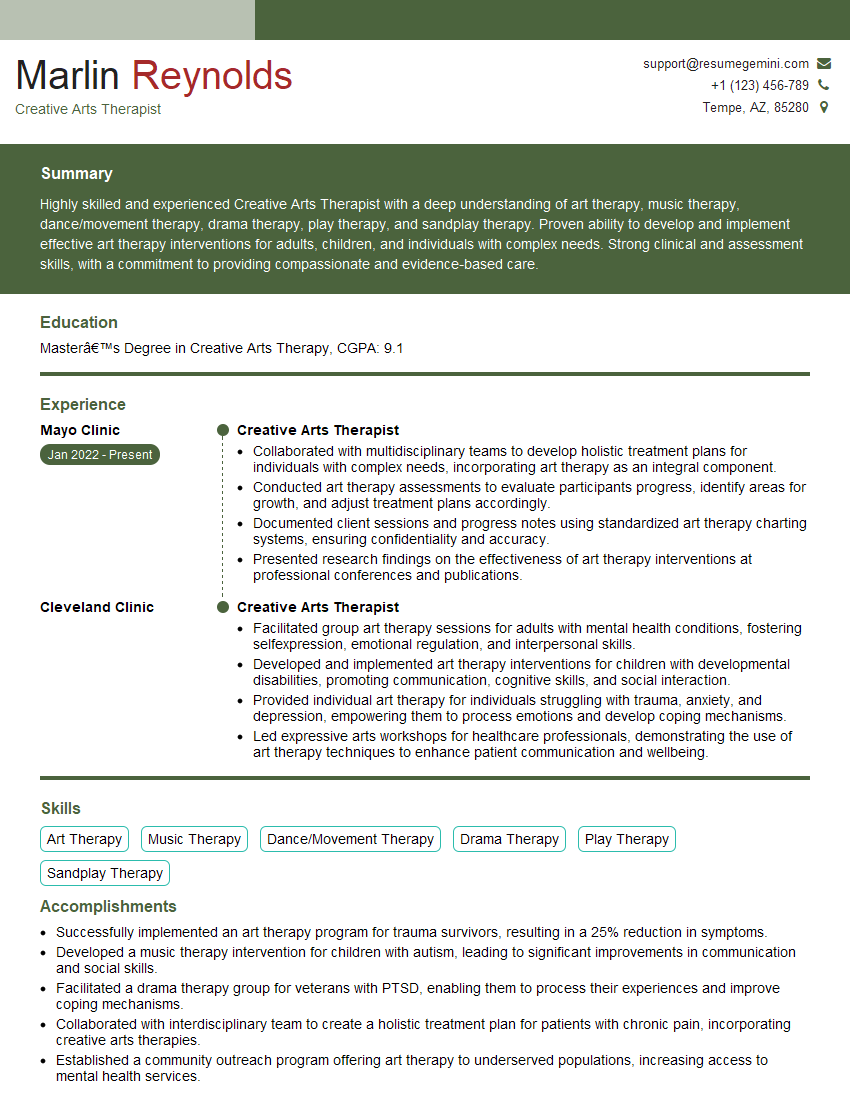
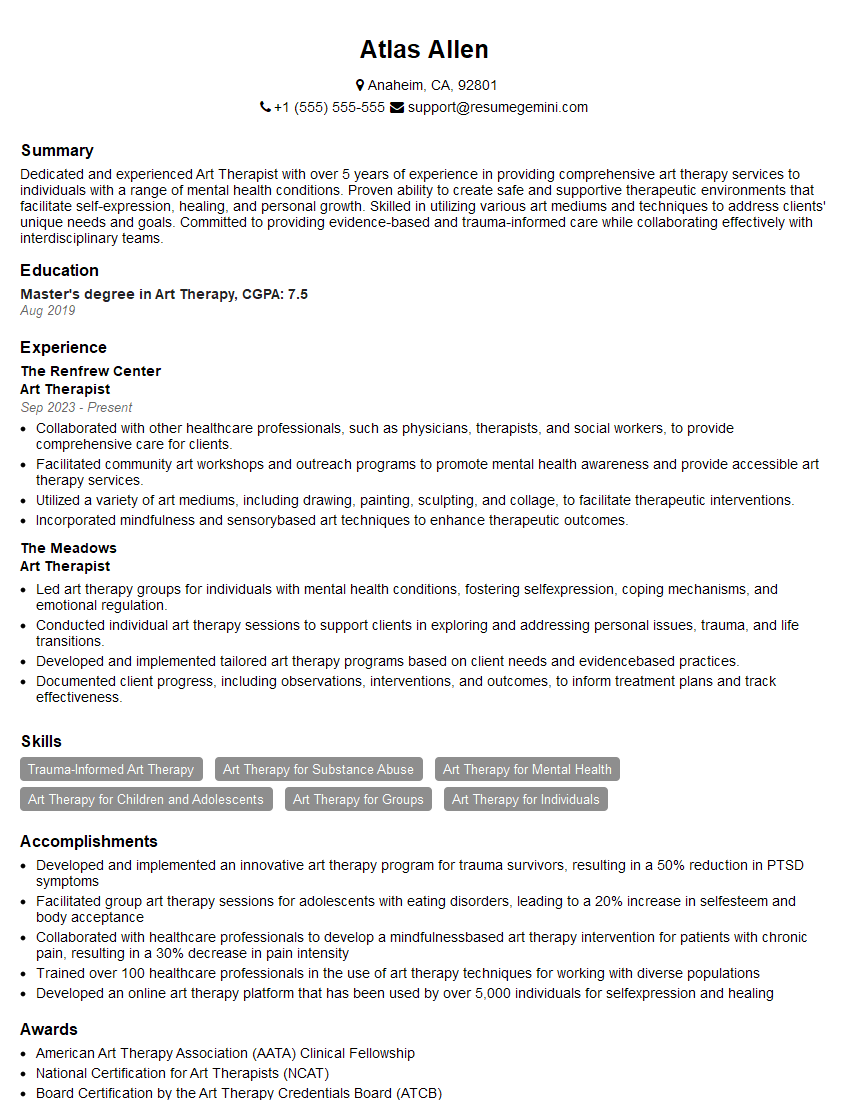
Mastering the use of art therapy materials is crucial for building a successful and impactful career in art therapy. It demonstrates your clinical skills and ability to create a safe and therapeutic environment for your clients. To maximize your job prospects, crafting an ATS-friendly resume is essential. This ensures your application gets noticed by potential employers. ResumeGemini is a trusted resource for building professional and effective resumes that highlight your unique skills and experience. They provide examples of resumes tailored to Art Therapy Materials, allowing you to create a compelling application that showcases your expertise.
Explore more articles
Users Rating of Our Blogs
Share Your Experience
We value your feedback! Please rate our content and share your thoughts (optional).
What Readers Say About Our Blog
To the interviewgemini.com Webmaster.
Very helpful and content specific questions to help prepare me for my interview!
Thank you
To the interviewgemini.com Webmaster.
This was kind of a unique content I found around the specialized skills. Very helpful questions and good detailed answers.
Very Helpful blog, thank you Interviewgemini team.