The right preparation can turn an interview into an opportunity to showcase your expertise. This guide to Wort Chilling and Transfer interview questions is your ultimate resource, providing key insights and tips to help you ace your responses and stand out as a top candidate.
Questions Asked in Wort Chilling and Transfer Interview
Q 1. Explain the importance of rapid wort chilling.
Rapid wort chilling is crucial in brewing because it minimizes the time wort (the unfermented beer liquid) spends at temperatures ideal for bacterial and wild yeast growth. These unwanted microorganisms can produce off-flavors and spoil your beer. Think of it like this: leaving a delicious meal out at room temperature for hours – it’s going to spoil much faster than if you refrigerate it quickly. A fast chill also helps preserve the delicate hop aromas and volatile compounds that contribute to the beer’s final character. The faster the chill, the better the final product.
Q 2. Describe the different wort chilling methods (e.g., plate chiller, immersion chiller).
Several methods exist for chilling wort, each with its own pros and cons. The most common are:
- Plate Chiller: This uses a series of plates with cold water flowing on one side and wort on the other. The large surface area allows for efficient heat transfer. Imagine a radiator in your car, but for wort.
- Immersion Chiller: This is a coiled tube, typically made of copper or stainless steel, submerged directly into the wort. Cold water flows through the coil, chilling the wort from within. It’s simpler and often cheaper than a plate chiller, but generally less efficient.
- Counterflow Chiller: This is a more advanced system where the wort and cooling water flow in opposite directions, maximizing heat exchange. Think of two rivers flowing next to each other, one hot and one cold; the heat transfers more effectively this way.
Q 3. What are the advantages and disadvantages of each wort chilling method?
Here’s a comparison of the advantages and disadvantages:
- Plate Chiller:
- Advantages: Very efficient, relatively fast chilling times, can handle large volumes.
- Disadvantages: More expensive, requires more cleaning, can be bulky.
- Immersion Chiller:
- Advantages: Less expensive, relatively simple to use and clean.
- Disadvantages: Less efficient than plate chillers, can take longer to chill, less suitable for large batches.
- Counterflow Chiller:
- Advantages: Highly efficient, smaller footprint than plate chillers for the same cooling power
- Disadvantages: More complex design, higher initial cost
Q 4. How does wort chilling affect beer flavor and aroma?
Wort chilling significantly impacts beer flavor and aroma. Slow chilling increases the risk of unwanted microbial growth, leading to off-flavors. Rapid chilling, however, helps to retain volatile aromatic compounds, particularly those from hops, which contribute to the beer’s desirable aroma and bitterness. For example, if you chill slowly, you might lose those bright citrusy notes from your hops, resulting in a duller, less expressive beer. Faster chilling helps maintain a fresher, more flavorful product.
Q 5. What are the typical temperature ranges for wort chilling?
Typical temperature ranges for wort chilling target temperatures suitable for yeast pitching (inoculation). This is usually between 60-70°F (15-21°C). The goal is to get the wort to this temperature as quickly as possible to minimize the risk of off-flavors and maximize the retention of volatile aromatic compounds.
Q 6. Explain the role of oxygenation during wort chilling and transfer.
Oxygenation during wort chilling and transfer is a crucial step, but a delicate balance is needed. Dissolved oxygen is essential for healthy yeast growth and fermentation, enabling the yeast to perform optimally and produce a good quality beer. However, excessive oxygen can lead to oxidation, creating undesirable flavors, such as cardboard or papery notes. Therefore, controlled oxygenation during chilling and transfer is vital for ensuring a flavorful and stable beer.
Q 7. How do you prevent oxidation during wort chilling?
Preventing oxidation during wort chilling requires careful attention to several factors:
- Minimize air exposure: Use closed systems whenever possible during transfer and chilling. Keep the wort under pressure, if appropriate for your system.
- Chill quickly: Rapid chilling minimizes the time the wort is exposed to oxygen.
- Use inert gas: Blanket the wort with nitrogen or carbon dioxide during transfer and chilling to displace oxygen.
- Clean equipment: A clean system prevents oxygen from being absorbed by any organic matter present in the system.
Think of it like protecting a delicate fruit – you want to prevent bruising (oxidation) by handling it carefully and keeping it away from air.
Q 8. Describe the process of wort transfer from the kettle to the fermenter.
Wort transfer from the kettle to the fermenter is a critical step in brewing, requiring careful handling to prevent infection and maintain wort quality. The process typically involves several stages. First, the kettle, containing the hot wort, is allowed to settle briefly to allow larger trub (unfermentable solids) to settle. Then, a pump, often a centrifugal pump designed for brewing applications, is used to transfer the wort. This pump should be sanitized meticulously. The wort is pumped through sanitized tubing into the fermenter. The tubing and the fermenter itself must be pre-chilled to the desired temperature range. It’s crucial to avoid splashing and vigorous agitation during transfer, which can introduce oxygen into the wort – promoting unwanted oxidation and affecting the final beer’s flavor. Often, a racking cane or similar device is used to dip below the surface of the wort in the fermenter to minimize splashing and aeration. The entire process demands meticulous attention to sanitation to prevent unwanted bacterial or yeast contamination.
Imagine transferring a delicate soup – you wouldn’t want to spill it or introduce dirt. Wort transfer is similar, requiring a gentle, controlled approach to maintain its quality.
Q 9. What safety precautions are essential during wort chilling and transfer?
Safety during wort chilling and transfer is paramount. This involves several key precautions:
- Personal Protective Equipment (PPE): Always wear appropriate PPE, including heat-resistant gloves when handling hot wort and safety glasses to protect against splashes or spills.
- Equipment Safety: Ensure all equipment, including pumps, chillers, and tubing, is properly grounded and in good working condition. Inspect for any leaks or damage before commencing operations. Use clamps appropriately to prevent any pressure build up.
- Heat Safety: Hot wort can cause severe burns. Handle with extreme care and avoid direct contact. Always have cool water readily available in case of a burn.
- Sanitation Safety: Use appropriate cleaning and sanitizing agents according to manufacturer’s instructions. Ensure thorough rinsing to remove any residual chemicals. Never mix different chemicals.
- Slip and Fall Hazards: The brewery floor can get wet during cleaning and wort transfer. Ensure the area is well-lit and clear of obstructions. Use non-slip mats where appropriate.
By consistently adhering to these procedures, we minimize risks associated with high temperatures, potential spills and ensure a safe working environment.
Q 10. How do you monitor wort temperature during chilling?
Accurate temperature monitoring is essential throughout the wort chilling process. This is typically achieved using a combination of methods:
- Immersion Thermometers: These thermometers are directly immersed into the wort, providing real-time temperature readings. Sanitize the thermometer before each use.
- Temperature Probes and Controllers: Many commercial chillers incorporate temperature probes connected to digital controllers. These offer precise temperature control and monitoring, automatically adjusting the chilling process.
- Temperature Loggers: Data loggers record the temperature over time. This allows for a retrospective analysis of the chilling process and helps maintain consistency.
Regular calibration of thermometers is crucial to maintain accuracy. A simple comparison against a known accurate thermometer will ensure ongoing accuracy. This is particularly important for ensuring consistency in your brewing process.
Q 11. What are the signs of a malfunctioning chiller?
Signs of a malfunctioning chiller can vary but often include:
- Inefficient Cooling: The wort is not cooling down at the expected rate, taking significantly longer to reach the target temperature.
- High Operating Temperature: The chiller itself is running excessively hot, potentially indicating a refrigerant leak or other internal issue.
- Unusual Noises: Grinding, rattling, or unusual humming sounds may indicate mechanical problems within the chiller.
- Leaks: Check for refrigerant leaks or water leaks around the chiller. Refrigerant leaks are particularly dangerous and require immediate professional attention.
- Inconsistent Temperature: The chiller struggles to maintain a stable temperature, cycling on and off frequently.
Addressing these signs promptly helps avoid significant delays and potential damage to your equipment.
Q 12. How do you troubleshoot a malfunctioning chiller?
Troubleshooting a malfunctioning chiller requires a systematic approach:
- Safety First: Disconnect the chiller from the power source before attempting any maintenance or repairs.
- Visual Inspection: Carefully inspect the chiller for any obvious signs of damage, leaks, or loose connections.
- Check Refrigerant Levels: If you are experienced with refrigeration systems, check the refrigerant level. If you’re not qualified to do this, call a professional.
- Check Water Flow: Ensure adequate water flow through the chiller, if applicable. Check for blockages or low water pressure.
- Check Electrical Connections: Verify all electrical connections are secure and functioning correctly.
- Check the Pump: For chillers with integrated pumps, check the pump for correct operation.
- Consult Manufacturer’s Manual: The manual should provide troubleshooting guides and diagrams.
If the problem persists after these steps, contacting a qualified refrigeration technician is recommended. Attempting complex repairs without proper training can be dangerous.
Q 13. What are the potential consequences of inefficient wort chilling?
Inefficient wort chilling has several negative consequences:
- Increased Risk of Infection: Longer chilling times increase the risk of bacterial or wild yeast contamination, potentially ruining the batch.
- Off-Flavors: Hot wort is more susceptible to oxidation and the development of unwanted flavors. Slow chilling exacerbates this issue.
- Yeast Health: Yeast may not ferment efficiently at high temperatures, leading to stuck fermentations or other problems.
- Time Loss: Inefficient chilling adds significant time to the brewing process.
- Equipment Wear and Tear: Prolonged operation of a struggling chiller increases wear and tear, possibly reducing its lifespan.
Think of it like this: a poorly cooled steak will be tough and unappetizing. Similarly, inefficient wort chilling compromises the final beer’s quality.
Q 14. How do you ensure sanitary conditions during wort chilling and transfer?
Maintaining sanitary conditions throughout wort chilling and transfer is critical to prevent infection. This involves a multi-step process:
- Clean-in-Place (CIP): Before chilling, thoroughly clean all equipment, including the kettle, fermenter, pumps, and tubing using appropriate detergents and cleaning agents.
- Sanitization: After cleaning, sanitize all equipment using a suitable sanitizing agent such as Star San or similar. This kills any remaining microorganisms. Allow sufficient contact time as specified by the sanitizing agent instructions.
- Aseptic Techniques: Maintain a sterile environment during transfer. Avoid splashing, minimize air exposure, and ensure all connections are airtight. The use of sanitized tubing and fittings is important. Even a small amount of contamination can spoil an entire batch.
- Post-Transfer Sanitization: Sanitize all equipment again after transfer to prevent any bacterial growth.
Imagine surgery – the utmost sterility is essential. Similarly, brewery sanitation is paramount to ensuring a clean and safe brewing environment.
Q 15. Explain the importance of maintaining proper flow rates during wort transfer.
Maintaining proper flow rates during wort transfer is crucial for several reasons. Too slow a flow can lead to increased chances of infection, as the wort sits longer at warmer temperatures, providing an ideal environment for unwanted microorganisms. Conversely, too rapid a flow can result in incomplete chilling, causing uneven temperatures and potentially impacting fermentation.
Imagine transferring wort like pouring a delicate sauce: too slow, and it might curdle; too fast, and it might splash and create unwanted mess. In brewing, this translates to infection or inefficient cooling. Optimal flow rates are determined by factors like the heat exchanger’s capacity, wort volume, and desired chilling time. A well-designed system will ensure a consistent and controlled transfer that minimizes risk and maximizes efficiency.
Career Expert Tips:
- Ace those interviews! Prepare effectively by reviewing the Top 50 Most Common Interview Questions on ResumeGemini.
- Navigate your job search with confidence! Explore a wide range of Career Tips on ResumeGemini. Learn about common challenges and recommendations to overcome them.
- Craft the perfect resume! Master the Art of Resume Writing with ResumeGemini’s guide. Showcase your unique qualifications and achievements effectively.
- Don’t miss out on holiday savings! Build your dream resume with ResumeGemini’s ATS optimized templates.
Q 16. How do you prevent contamination during wort transfer?
Preventing contamination during wort transfer requires a multi-pronged approach emphasizing sanitation and careful technique. This starts with meticulously cleaning and sanitizing all equipment that comes into contact with the wort – from the kettle and transfer lines to the chilling system itself. We use high-quality sanitizers, following manufacturer instructions carefully, and ensuring thorough rinsing to avoid residual sanitizer interfering with fermentation.
Furthermore, the entire process should be conducted in a clean and controlled environment. Minimizing airborne contaminants is achieved by maintaining a sanitary workspace and using closed transfer systems whenever possible. This reduces exposure to dust, microbes, and other potential sources of infection. Think of it as creating a sterile pathway for your wort, minimizing the chances of unwanted guests joining the party.
Q 17. Describe the cleaning and sanitizing procedures for wort chilling equipment.
Cleaning and sanitizing wort chilling equipment is paramount for preventing spoilage and ensuring consistent beer quality. The process typically involves a two-step approach: cleaning followed by sanitizing. The cleaning phase removes visible debris and organic matter using a detergent solution, often employing a combination of hot water and a specialized brewery cleaner. This step is crucial for removing any lingering proteins or sugars which can harbor bacteria. We thoroughly brush all surfaces, paying special attention to hard-to-reach areas.
Following the thorough rinsing of the cleaner, the sanitizing phase begins. This typically involves a solution of a no-rinse sanitizer, like Star San, which effectively kills most microorganisms. We ensure that all surfaces are completely covered with the sanitizer and left to dwell for the recommended contact time before rinsing with sterile water. The entire procedure is meticulously documented to maintain quality control and traceability.
Q 18. What are the common causes of wort spoilage?
Wort spoilage is a brewer’s worst nightmare, stemming from various causes. The most common culprits are bacterial or wild yeast infections. These microorganisms can enter the wort at any stage, from the mash tun to the fermenter, if proper sanitation is not maintained. Inappropriate temperatures during wort transfer or chilling can create favorable conditions for these unwanted organisms to thrive.
Another factor is oxygen exposure; prolonged contact with oxygen can lead to oxidation, resulting in undesirable off-flavors and spoilage. Finally, the initial quality of the ingredients themselves—contaminated water or grains—can also introduce pathogens and lead to problems downstream. Therefore, maintaining strict hygiene throughout the entire brewing process and minimizing oxygen exposure is crucial to prevent wort spoilage.
Q 19. How do you calculate the chilling rate?
Calculating the chilling rate is essential for optimizing the wort chilling process. It represents the rate at which the wort’s temperature decreases over time. The most straightforward method is to monitor the temperature change over a specific interval. For instance, you could measure the wort temperature at the beginning and end of a 15-minute period, calculating the change. This temperature difference divided by the time interval yields the average chilling rate in degrees per minute or degrees per hour.
Chilling Rate = (Initial Temperature - Final Temperature) / Time
More sophisticated methods may involve continuous temperature monitoring and data logging, allowing for a more precise calculation and visualization of the chilling curve. Accurate calculation helps determine the efficiency of the chilling system and optimize parameters to achieve the desired target temperature quickly and safely.
Q 20. How does wort viscosity affect chilling efficiency?
Wort viscosity, or thickness, significantly impacts chilling efficiency. Higher viscosity wort, typically found in brews with higher grain bills or higher protein content, presents greater resistance to heat transfer. This means it takes longer to cool viscous wort compared to less viscous wort using the same chilling system. The thicker consistency slows down the movement of wort through the heat exchanger, reducing the effectiveness of the cooling process.
Think of it like trying to cool down a thick honey versus water – the honey will take considerably longer to cool down. Brewers need to adjust their chilling parameters accordingly, potentially using slower flow rates or longer chilling times when dealing with high-viscosity worts to ensure optimal cooling.
Q 21. What is the role of a heat exchanger in wort chilling?
The heat exchanger is the heart of the wort chilling system. Its primary role is to rapidly and efficiently cool the hot wort from the boil kettle to the desired fermentation temperature. It works by utilizing the principle of heat transfer, transferring heat from the hot wort to a colder medium, usually chilled glycol or water, which circulates through a separate coil or plate. This process is incredibly efficient, significantly reducing the chilling time compared to traditional methods like ice baths.
There are various types of heat exchangers, each with its strengths and weaknesses. Plate heat exchangers are highly efficient but require careful maintenance to prevent fouling. Immersion chillers are simple and effective, especially for smaller breweries. The choice of heat exchanger depends on factors like brewery size, budget, and desired chilling capacity.
Q 22. Explain the concept of counter-current flow in a plate chiller.
In a plate chiller, counter-current flow means the wort and the cooling medium (typically chilled water or glycol) flow in opposite directions. Imagine two streams flowing past each other; one hot (wort), and one cold (chilled water), running parallel but in opposite directions. This setup maximizes heat transfer efficiency.
The hot wort enters one end of the plate chiller, while the cold cooling medium enters the other. As the wort travels through the plates, it continuously encounters progressively colder cooling medium. This continuous temperature difference between the wort and the cooling medium drives efficient heat exchange, leading to a much more effective chilling process than if both fluids flowed in the same direction (co-current flow).
Think of it like a heat exchanger – a larger temperature difference is essential for effective heat transfer. Counter-current flow ensures the wort is always exchanging heat with cooler medium, resulting in faster and more thorough chilling and minimizing temperature shock to the wort.
Q 23. How do you optimize wort chilling for different beer styles?
Optimizing wort chilling for different beer styles hinges on considering the desired final wort temperature and the sensitivity of the specific yeast strain used. Different yeast strains have different optimal fermentation temperatures. A lager yeast, for instance, will require significantly colder temperatures than an ale yeast.
- Lagers: Require very precise cooling to lower temperatures for a lager’s slower fermentation (often around 50-55°F). Overly rapid chilling can shock the wort and potentially negatively impact the fermentation.
- Ales: Generally require a less stringent chilling process. They’re typically fermented at higher temperatures (60-70°F or more), and can tolerate a slightly faster chill rate.
- High-Gravity Beers: These beers, due to their higher sugar content, have a higher viscosity, making them slightly more challenging to cool efficiently. Therefore, a slower chill rate might be beneficial to prevent clumping.
In practice, this means adjusting the flow rates of both the wort and the cooling medium in the chiller to achieve the desired chilling rate. Monitoring the wort temperature throughout the process with a reliable thermometer is crucial. Some brewers even utilize a staged chilling process, beginning with a faster rate and then slowing it down as the wort approaches the target temperature to help prevent thermal shock.
Q 24. What are the different types of pumps used for wort transfer?
Several pump types are suitable for wort transfer, each with its own set of advantages and disadvantages. The most common include:
- Centrifugal Pumps: These are the most widely used in breweries due to their smooth operation, relatively high flow rates, and relatively low maintenance requirements.
- Positive Displacement Pumps (e.g., Peristaltic, Gear, Diaphragm): These pumps offer more precise flow control and are better suited for handling thick or viscous liquids, although they may be less efficient and more expensive to maintain. These are useful for transferring wort with higher solids content (if you’re adding adjuncts that increase viscosity).
- Rotary Lobe Pumps: Designed for gentle handling of viscous fluids and are sometimes used, particularly for transferring wort that has a higher solids content and to avoid damaging sensitive materials.
Q 25. What are the advantages and disadvantages of each type of pump?
Let’s compare the advantages and disadvantages of these pump types:
- Centrifugal Pumps:
- Advantages: High flow rates, relatively low cost, simple maintenance.
- Disadvantages: Less precise flow control, can be sensitive to cavitation (formation of vapor bubbles), not ideal for highly viscous liquids.
- Positive Displacement Pumps:
- Advantages: Precise flow control, capable of handling high viscosity, gentle on sensitive materials.
- Disadvantages: Higher cost, more complex maintenance, can be less efficient.
- Rotary Lobe Pumps:
- Advantages: Gentle pumping action, suitable for high viscosity and solids content
- Disadvantages: Expensive, relatively high maintenance, less efficient that centrifugal pumps.
Q 26. How do you select the appropriate pump for a specific wort transfer application?
Selecting the right pump depends on several factors:
- Wort Viscosity: For high-viscosity wort (e.g., with adjuncts or high gravity), a positive displacement pump is often preferred.
- Flow Rate: The required volume of wort to be transferred per unit time dictates the pump’s capacity.
- Pressure Requirements: The height and length of the transfer line influence the pressure needed. Centrifugal pumps might be sufficient for short distances and low pressure situations, while positive displacement pumps might be necessary otherwise.
- Budget and Maintenance Considerations: Centrifugal pumps offer lower initial costs and simpler maintenance. However, positive displacement pumps may be worth the higher cost and maintenance if they prevent damage and better manage viscous or sensitive wort.
- Sanitization Requirements: Ensure the pump chosen is easily sanitized and complies with brewery sanitation protocols.
It is wise to consult with pump specialists to help make an informed decision for your specific brewery needs.
Q 27. Describe the process of CIP (Clean-in-Place) for wort chilling equipment.
Clean-in-Place (CIP) for wort chilling equipment involves a systematic cleaning cycle without dismantling the equipment. A typical CIP cycle involves the following steps:
- Pre-rinse: Removes loose debris using cold water.
- Caustic Cleaning: A hot, alkaline solution (caustic) is circulated through the system to dissolve organic matter and residues.
- Acid Cleaning: A hot, acidic solution is then circulated to remove mineral deposits and scale that the caustic cleaner may have left behind.
- Post-rinse: Thorough rinsing with potable water to remove any residual cleaning chemicals.
- Sanitization: A sanitizing solution (e.g., chlorine or peracetic acid) is circulated to kill any remaining microorganisms.
- Final Rinse: A final rinse with sterile water ensures the equipment is ready for production.
The specific chemicals, temperatures, and cycle times will depend on the type of equipment and local regulations. It’s crucial to follow the manufacturer’s recommendations and adhere to all relevant safety protocols.
Automated CIP systems are often utilized in larger breweries to ensure consistency and efficiency.
Q 28. How do you maintain optimal chiller performance?
Maintaining optimal chiller performance involves several key practices:
- Regular CIP: Consistent and effective CIP as mentioned earlier prevents fouling and scale buildup. This is critical to maintaining heat transfer efficiency.
- Cooling Medium Monitoring: Regular checks on the cooling medium (water or glycol) quality are important. This includes monitoring its temperature, pH, and concentration (for glycol). Maintaining appropriate levels is important for efficient heat transfer and to avoid corrosion or damage.
- Plate Inspection: Periodic visual inspection of the chiller plates can help identify any signs of damage or fouling. This is particularly important in plate-and-frame chillers.
- Pump Maintenance: Regular maintenance of the pumps used for both wort and cooling medium circulation is essential. This includes checking for leaks, lubricating moving parts, and replacing worn components.
- Temperature Monitoring: Using sensors to continuously monitor the wort temperature during chilling ensures the process is efficient and doesn’t cause excessive stress on the product.
By following these practices, you can help ensure the chiller operates efficiently, maximizing its lifespan and minimizing the risk of costly repairs or production downtime.
Key Topics to Learn for Wort Chilling and Transfer Interview
- Heat Transfer Principles: Understanding conduction, convection, and radiation as they relate to wort cooling and temperature control.
- Chiller Systems: Familiarity with various chiller types (plate, immersion, etc.), their operation, maintenance, and troubleshooting.
- Wort Cooling Rate Optimization: Understanding the impact of cooling rate on wort quality, including enzymatic activity and potential for bacterial growth.
- Temperature Control and Monitoring: Knowledge of instrumentation and control systems used to maintain precise temperature throughout the chilling process.
- Sanitation and Hygiene: Understanding the importance of maintaining sanitary conditions throughout the wort chilling and transfer process to prevent contamination.
- Energy Efficiency Considerations: Exploring methods to optimize energy consumption during wort chilling, such as using heat recovery systems.
- Process Automation and Control: Familiarity with Programmable Logic Controllers (PLCs) and their role in automated wort chilling systems.
- Troubleshooting Common Issues: Understanding potential problems (e.g., chiller malfunctions, temperature inconsistencies) and strategies for effective troubleshooting.
- Material Selection and Compatibility: Knowledge of materials used in wort chilling equipment and their compatibility with wort and cleaning agents.
- Safety Procedures and Regulations: Familiarity with relevant safety protocols and industry regulations related to wort chilling and transfer operations.
Next Steps
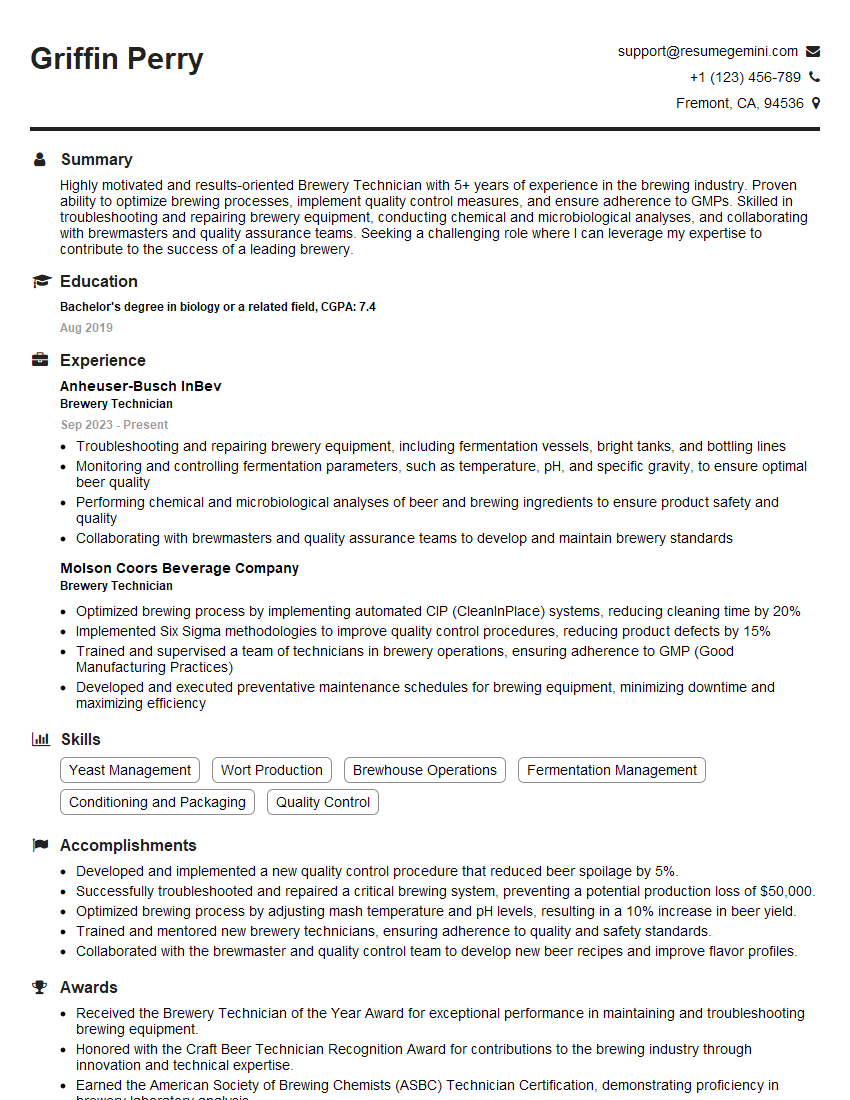
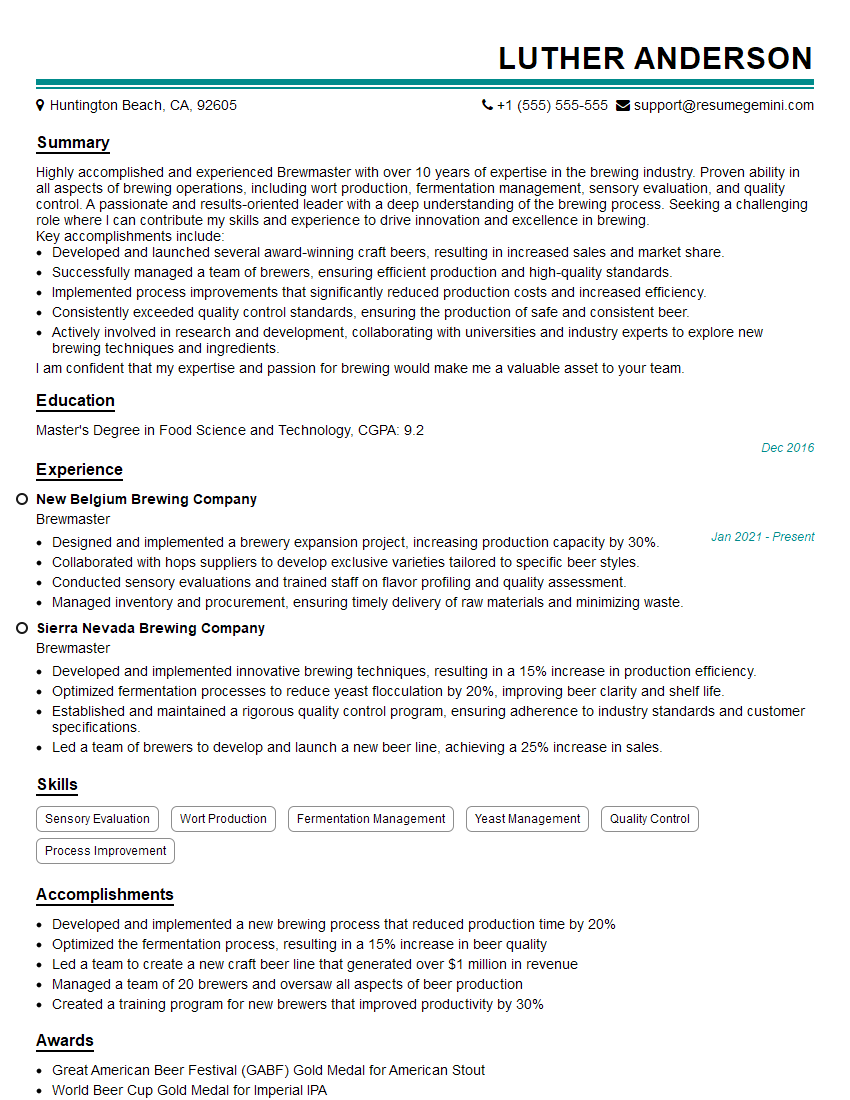
Mastering wort chilling and transfer is crucial for advancement in the brewing industry. A deep understanding of these processes demonstrates technical proficiency and problem-solving skills highly valued by employers. To significantly improve your job prospects, create an ATS-friendly resume that highlights your skills and experience effectively. ResumeGemini is a trusted resource that can help you build a professional and impactful resume. Examples of resumes tailored to Wort Chilling and Transfer are available to guide you in showcasing your qualifications effectively.

Explore more articles
Users Rating of Our Blogs
Share Your Experience
We value your feedback! Please rate our content and share your thoughts (optional).
What Readers Say About Our Blog
To the interviewgemini.com Webmaster.
Very helpful and content specific questions to help prepare me for my interview!
Thank you
To the interviewgemini.com Webmaster.
This was kind of a unique content I found around the specialized skills. Very helpful questions and good detailed answers.
Very Helpful blog, thank you Interviewgemini team.