Are you ready to stand out in your next interview? Understanding and preparing for Water Meter Repair interview questions is a game-changer. In this blog, we’ve compiled key questions and expert advice to help you showcase your skills with confidence and precision. Let’s get started on your journey to acing the interview.
Questions Asked in Water Meter Repair Interview
Q 1. Describe the different types of water meters.
Water meters come in various types, primarily categorized by their measuring mechanism. The most common are:
- Positive Displacement Meters: These meters use a physical mechanism, often a rotating chamber or piston, to directly measure the volume of water passing through. They’re highly accurate, especially at low flows, but can be more prone to wear and tear over time. Think of it like a tiny, highly precise water pump that counts each rotation.
- Velocity Meters: These meters measure the speed of water flowing through a pipe. A sensor detects the flow rate, which is then converted into a volume measurement. They are generally less accurate than positive displacement meters at very low flows, but can handle higher flow rates. Imagine a speedometer for water—it measures how fast the water is moving.
- Compound Meters: These combine both positive displacement and velocity measurement systems. They utilize the positive displacement meter for accurate measurement at low flows and the velocity meter for higher flows. This gives a broader range of accurate readings.
- Smart Meters: These meters incorporate advanced electronics, often communicating wirelessly with a central system. This allows for remote reading, leak detection, and more detailed water usage data. They can be based on either positive displacement or velocity technology.
The choice of meter depends on factors like the size of the pipe, expected flow rate, budget, and desired level of data collection.
Q 2. Explain the process of diagnosing a malfunctioning water meter.
Diagnosing a malfunctioning water meter involves a systematic approach:
- Visual Inspection: Begin by carefully examining the meter for any obvious signs of damage, such as leaks, cracks, or debris obstructing the mechanism. Look for any unusual sounds during operation.
- Check for Registration: Observe the meter’s register to see if it’s moving at all. A completely stationary register indicates a serious problem.
- Check for Leaks: Carefully inspect the connections to and from the meter. Leaks in these connections will cause inaccurate readings and possibly water waste.
- Compare Usage: Compare the meter reading to your household’s typical water consumption. A drastically higher or lower reading compared to usual suggests a potential issue.
- Test with known volume: If possible, carefully measure a known volume of water and observe the meter’s response. This helps verify if the meter is accurately registering the amount of water passed through.
- Advanced Testing (if needed): For more complex issues, specialized testing equipment may be required. This might involve pressure testing or using flow-testing devices to precisely measure water flow against the meter’s registration.
It’s crucial to handle water meters carefully during inspection, as mishandling can cause further damage.
Q 3. What are common causes of water meter inaccuracies?
Water meter inaccuracies can stem from several sources:
- Wear and Tear: Moving parts within the meter, especially in older meters, gradually wear down, leading to under-registration or over-registration.
- Sediment and Debris: Mineral deposits, rust, or other debris can accumulate in the meter’s mechanisms, hindering their operation and leading to inaccurate readings. This is particularly common in areas with hard water.
- Frozen Pipes (in cold climates): Frozen pipes can put immense pressure on the meter, potentially damaging internal components.
- Leaks in the Meter Itself: Internal leaks can bypass the measuring mechanism, resulting in under-registration.
- Improper Installation: Incorrect installation of the meter can lead to misalignment or stress on the internal parts.
- External Factors: Vibrations or impacts from nearby construction or other sources can affect the meter’s accuracy.
Regular maintenance and inspections can minimize the impact of many of these causes.
Q 4. How do you test the accuracy of a water meter?
Testing a water meter’s accuracy often involves using a calibrated flow-testing device. This device precisely controls and measures the volume of water passed through the meter. The meter’s registered volume is then compared to the known volume delivered by the testing device. The difference represents the error rate.
In simpler scenarios, a known volume of water (like a bucket of precisely measured liters) can be used in conjunction with observation of the meter to assess accuracy, although this is less precise than professional testing equipment.
Accuracy tests are critical for ensuring fair billing and identifying meters that require repair or replacement.
Q 5. What are the common types of water meter repairs you’ve performed?
Common water meter repairs I’ve performed include:
- Register Replacement: Replacing faulty or damaged registers.
- Leak Repair: Fixing leaks within the meter casing or its internal components.
- Gear Replacement: Replacing worn-out gears in positive displacement meters.
- Cleaning: Thoroughly cleaning the meter to remove sediment or debris impacting the accuracy.
- Sensor Replacement: In velocity meters, replacing faulty sensors.
- Gasket Replacement: Replacing worn gaskets to prevent leaks.
- Calibration: Adjusting meters that are slightly off after cleaning or repair.
Each repair requires careful attention to detail and the use of appropriate tools and parts.
Q 6. Describe your experience with repairing different types of water meter mechanisms.
My experience spans various water meter mechanisms. I’m proficient in repairing both positive displacement meters (including those with various gear types and chamber designs) and velocity meters (working with different sensor technologies). Understanding the intricacies of each mechanism is critical for accurate diagnosis and repair. For example, in a positive displacement meter, a faulty gear might cause under-registration, while a leak in a velocity meter’s casing could result in an inaccurate flow measurement. I’ve also worked on compound meters, requiring expertise in both mechanisms.
I always prioritize using manufacturer-approved parts and repair procedures to ensure the meter’s continued functionality and accuracy.
Q 7. How do you troubleshoot a water meter that is not registering properly?
Troubleshooting a non-registering water meter involves a systematic approach, much like diagnosing a malfunctioning meter. First, visually inspect the meter for any obvious obstructions or damage. Check if power is supplied to smart meters, and examine connections for loose fittings. Then, examine the internal mechanics. For a positive displacement meter, this may involve checking for gear damage or obstructions within the chamber. In a velocity meter, check the sensor and its connection.
If the issue isn’t immediately apparent, use a known water volume to test the meter. If still no registration, it likely requires professional repair, which may involve part replacement or even meter replacement.
Remember, safety is paramount. Always turn off the water supply before undertaking any serious inspection or repair work.
Q 8. What safety precautions do you take when working with water meters?
Safety is paramount when working with water meters. Before I even touch a meter, I always ensure the water supply is shut off either at the main valve or, if accessible, the meter’s individual shutoff valve. This prevents accidental flooding and potential injury. I also wear appropriate personal protective equipment (PPE), including safety glasses to protect my eyes from debris, gloves to prevent cuts and exposure to waterborne contaminants, and sturdy work boots to protect my feet. In addition, I’m always mindful of the surrounding environment; I check for hazards like exposed wires or unstable ground before beginning any work. It’s all about methodical preparation and a commitment to safety protocols – it’s not just about me, but also about protecting the surrounding property and the public.
For example, once I was working on a meter in a tight space beneath a house. Before I started, I thoroughly inspected the area, identified any potential trip hazards, and ensured there was enough clearance to work safely. This cautious approach not only protects me but also ensures the job gets done efficiently and correctly.
Q 9. How do you handle a water meter leak?
Handling a water meter leak requires immediate action. First, I would shut off the water supply at the main valve to prevent further water loss. This is the absolute top priority. Next, I’d assess the source of the leak. It could be a cracked meter casing, a faulty seal, or a problem with the connection pipes. For minor leaks, like a slight drip from a loose connection, I might be able to tighten the fitting or replace the seal. However, if the leak is significant or I can’t locate the source quickly, I’d immediately notify the water utility company. A major leak requires their expertise to prevent water damage and maintain water pressure in the system. Then, depending on the nature of the leak and the water utility’s protocol, I’d either repair the meter on-site or recommend meter replacement.
I once encountered a leak caused by a corroded meter body. After shutting off the water, I carefully examined the meter and determined a replacement was necessary. I followed the standard replacement procedure, ensuring a clean and leak-free connection upon installation.
Q 10. Explain the procedure for replacing a water meter.
Replacing a water meter involves a series of precise steps. First, after ensuring the water is shut off, I would carefully remove the existing meter, taking note of its type and configuration for accurate replacement. I’d then inspect the connecting pipes for any damage or corrosion. Once the old meter is removed, I meticulously clean the connections, ensuring there’s no debris that could affect the seal of the new meter. The new meter is carefully installed, ensuring a tight fit and leak-free connection. After installation, I’d slowly turn the water back on, carefully monitoring for any leaks. Finally, I’d test the meter to ensure it’s accurately recording water usage. Accurate record keeping is crucial after replacement, including the date, meter serial number, and any observations regarding the old and new meters.
It’s like replacing a part in a machine; precision is vital. A poorly installed meter can lead to leaks, inaccurate readings, and potential damage to the entire water system.
Q 11. What tools and equipment are essential for water meter repair?
The tools and equipment needed for water meter repair vary depending on the nature of the repair. However, some essentials include:
- Various sized wrenches and pipe wrenches: For disconnecting and connecting pipes.
- Screwdrivers (Phillips and flathead): For removing meter covers and accessing internal components.
- Pipe sealant or Teflon tape: To ensure watertight connections.
- Meter testing equipment: To verify meter accuracy after repair or replacement.
- Leak detection tools: To pinpoint the location and cause of leaks.
- Safety equipment: Safety glasses, gloves, and sturdy work boots.
- A water shut-off valve: A key piece of equipment to prevent potential flooding.
Having the right tools greatly reduces repair time and ensures efficient and accurate work. Properly maintained tools are also vital for accurate repairs, and safety.
Q 12. What are your experience with smart water meters?
My experience with smart water meters is extensive. I’ve worked on installations, repairs, and troubleshooting of several different smart meter models. These meters offer significant advantages over traditional meters, providing real-time data on water consumption, leak detection capabilities, and remote monitoring features. However, their advanced technology also introduces unique challenges for repair and maintenance. For instance, understanding the communication protocols between the meter and the central monitoring system is critical for troubleshooting connectivity issues. Also, the intricate internal components require specialized knowledge and tools for repair. The training needed to maintain and repair smart water meters differs significantly from traditional meters.
Recently I worked on a smart meter that malfunctioned due to a software glitch. This involved using specialized software and diagnostic tools to identify and resolve the problem remotely. This highlights the importance of staying updated with the latest technology and training relevant to smart water meters.
Q 13. How do you maintain accurate records of repairs and maintenance?
Maintaining accurate records is crucial for efficient water meter management. I utilize a digital system to track all repairs and maintenance activities. This system allows me to record detailed information for each job, including the date, time, location of the meter, description of the repair, parts used (if any), and meter serial numbers. This detailed information is essential for warranty claims, tracking trends in meter failures, and efficient planning for future maintenance. Additionally, I always obtain a signature of confirmation from the customer after the work is completed.
For example, using a digital system allows me to generate reports on common issues, identify areas that might require preventative maintenance, and track overall efficiency. This data-driven approach enhances my service quality.
Q 14. How do you prioritize multiple water meter repair requests?
Prioritizing multiple water meter repair requests involves a structured approach. I typically prioritize based on urgency, the potential impact of the problem, and the safety of the public and property. Leaks causing significant water waste or posing a risk of flooding would receive top priority. Requests that involve compromised water quality also receive prompt attention. I usually use a ticketing system that helps me categorize and rank requests. This system allows me to track the progress of each request and ensure that the most critical ones are addressed first. Clear communication with the requesting parties is essential to managing expectations and providing updates.
For instance, if I have a report of a significant leak causing significant water damage and another call about a minor leak, the major leak would clearly take precedence. The ticketing system ensures none of the requests fall through the cracks.
Q 15. Describe your experience working with different types of water meter connections.
Throughout my career, I’ve worked extensively with a variety of water meter connections, from the simplest to the most complex. This includes the common threaded connections, flange connections, and various types of couplings. Understanding the nuances of each connection type is crucial for efficient and leak-free installations and repairs.
- Threaded Connections: These are prevalent in residential settings and are relatively straightforward to work with. However, issues like cross-threading or over-tightening can damage the meter or the pipe, requiring careful attention to detail. I’ve often encountered situations where corroded threads needed specialized tools and techniques for removal.
- Flange Connections: Larger commercial and industrial meters typically utilize flange connections. These provide a robust and reliable seal, but require careful alignment and tightening of bolts to ensure a leak-proof connection. Improper tightening can lead to leaks or damage to the gasket, requiring meticulous attention and, sometimes, specialized torque wrenches.
- Couplings: Various types of couplings exist, providing flexible options for connecting meters in different orientations or compensating for pipe misalignment. Understanding the compatibility and limitations of different coupling types – such as compression, push-fit, or mechanical couplings – is essential for a successful and safe installation.
My experience spans different pipe materials as well, including copper, PVC, and ductile iron, each requiring appropriate tools and connection methods. I’m proficient in identifying and addressing connection-related problems, ranging from simple leaks to more complex issues requiring replacement of damaged parts.
Career Expert Tips:
- Ace those interviews! Prepare effectively by reviewing the Top 50 Most Common Interview Questions on ResumeGemini.
- Navigate your job search with confidence! Explore a wide range of Career Tips on ResumeGemini. Learn about common challenges and recommendations to overcome them.
- Craft the perfect resume! Master the Art of Resume Writing with ResumeGemini’s guide. Showcase your unique qualifications and achievements effectively.
- Don’t miss out on holiday savings! Build your dream resume with ResumeGemini’s ATS optimized templates.
Q 16. What is your experience with water meter data logging and analysis?
Water meter data logging and analysis is a critical aspect of modern water management. My experience encompasses both the practical aspects of data acquisition and the analytical interpretation of the results to identify trends and potential issues.
I’m proficient in using various data logging devices, from simple mechanical registers to sophisticated AMR (Advanced Metering Infrastructure) systems. This includes understanding different communication protocols and data formats, and troubleshooting connectivity issues. For example, I’ve dealt with instances where faulty radio transmitters in AMR systems caused data gaps, which required me to identify and replace the faulty components.
Data analysis involves using the collected data to detect anomalies such as unusually high water consumption, potential leaks, or meter malfunctions. I utilize software tools and statistical methods to identify these trends and flag potential issues for further investigation. For instance, a sudden spike in consumption might indicate a leak on the customer’s property, requiring further investigation and communication with the customer.
This data-driven approach not only improves efficiency in identifying and resolving issues but also contributes to better water resource management and conservation efforts.
Q 17. How familiar are you with relevant safety regulations and compliance standards?
Safety is paramount in my work. I am thoroughly familiar with all relevant OSHA (Occupational Safety and Health Administration) regulations and industry best practices related to water meter repair and maintenance. This includes understanding the hazards associated with working with water under pressure, confined spaces, and exposure to potentially harmful substances.
- Lockout/Tagout Procedures: I strictly adhere to lockout/tagout procedures to ensure the safety of myself and others when working on pressurized water lines. This prevents accidental activation of equipment and reduces the risk of injury.
- Personal Protective Equipment (PPE): I consistently use appropriate PPE, including safety glasses, gloves, and protective clothing, to mitigate potential risks during the repair process. The choice of PPE is tailored to the specific task and potential hazards.
- Confined Space Entry: If working in confined spaces such as meter pits or vaults, I follow the appropriate confined space entry procedures, including atmospheric monitoring and ensuring proper ventilation. I would never enter such a space without proper training and equipment.
Compliance with relevant regulations is not just a matter of following rules; it’s about ensuring a safe and efficient work environment for myself and the community. I am always up-to-date with the latest safety standards and proactively seek training on new safety protocols.
Q 18. How do you handle customer inquiries and complaints related to water meter issues?
Handling customer inquiries and complaints effectively is crucial for maintaining positive customer relations. My approach involves active listening, clear communication, and a problem-solving orientation.
When a customer contacts me with a water meter issue, I begin by carefully listening to their concerns and asking clarifying questions to understand the nature of the problem. I then explain the process of investigation and resolution in clear, concise terms, avoiding technical jargon as much as possible.
If the problem is readily identifiable, I provide immediate solutions. For instance, if a meter is simply misread, I provide the correct reading and explain the billing process. For more complex issues, I provide a timeframe for investigation and keep the customer informed throughout the process. For example, if there is a suspected leak, I would explain the steps involved in pinpointing the leak and outline the repair process.
I always strive to resolve issues promptly and professionally, ensuring the customer feels heard and understood. If a problem cannot be immediately resolved, I maintain regular communication with the customer to update them on progress and provide an estimated resolution time. My aim is always to maintain a positive and productive relationship with the customer, even in challenging situations.
Q 19. What is your experience with preventative maintenance for water meters?
Preventative maintenance is key to ensuring the longevity and accuracy of water meters, reducing the frequency of repairs and disruptions to service. My experience in preventative maintenance includes a range of activities designed to detect and address potential problems before they escalate.
- Regular Inspections: I conduct routine visual inspections of meters, checking for leaks, corrosion, damage, and obstructions. This involves checking for signs of wear and tear on the meter casing, and any indication of tampering or damage to the meter connections.
- Testing and Calibration: Periodically, meters need to be tested and calibrated to ensure accuracy in measuring water consumption. This might involve using specialized testing equipment to verify that the meter is operating within acceptable tolerances.
- Lubrication: Moving parts within the meter may require lubrication to prevent wear and tear. This extends the lifespan of the meter and ensures smooth operation.
- Cleaning: Meters can become clogged with debris, affecting their accuracy. Regular cleaning helps to maintain the accuracy of water consumption readings. This could involve flushing the meter or carefully cleaning the meter register and other external components.
By implementing a proactive preventative maintenance program, we can significantly extend the service life of water meters, reduce repair costs, and prevent service interruptions for customers. A well-maintained meter is also more accurate, leading to fairer billing and less disputes.
Q 20. Describe your experience with different types of meter registers.
I’m experienced with a variety of meter registers, each with its own strengths and weaknesses. Understanding the mechanics and limitations of each type is essential for efficient repair and maintenance.
- Mechanical Registers: These are the traditional type of meter register, using gears and dials to display water consumption. While reliable, they are susceptible to wear and tear and may require more frequent maintenance. I’m proficient in repairing and replacing parts in these types of registers.
- Electronic Registers: These registers use electronic sensors and displays to measure and record water consumption. They offer greater accuracy and data logging capabilities, but require different repair techniques compared to mechanical registers. I have experience troubleshooting electronic issues, including sensor failures and display problems.
- AMR (Advanced Metering Infrastructure) Registers: These are integrated with communication systems allowing for remote reading of meter data. This provides significant efficiency gains and improves data accuracy. My experience includes working with various communication technologies, such as radio frequency, cellular, and wired communication protocols, and resolving related connectivity issues.
My expertise covers troubleshooting and repair across all these register types, ensuring accurate water consumption readings and reliable billing.
Q 21. Explain your understanding of water meter registration and billing systems.
Understanding water meter registration and billing systems is critical for ensuring accurate billing and effective water resource management. My experience encompasses the entire process, from initial meter installation and registration to data processing and billing.
Meter registration involves accurately recording the meter’s unique identification number and installation location within the utility’s database. This ensures that consumption data is correctly linked to the appropriate customer account. I’ve been involved in numerous meter installations and registrations, ensuring data integrity from the outset.
The billing system integrates with the data logging system to process the meter readings and generate customer bills. This includes understanding billing cycles, rate structures, and various billing adjustments. I’ve worked with different billing software systems and am familiar with the various algorithms and calculations involved in generating accurate and timely bills. I’ve also assisted in resolving billing discrepancies and troubleshooting billing system issues, ensuring customer satisfaction and data accuracy.
Accurate meter registration and billing systems are essential for efficient revenue generation and fair billing practices, promoting transparency and customer trust.
Q 22. How do you interpret water meter readings accurately?
Accurately interpreting water meter readings is crucial for billing and detecting leaks. Most meters use a dial system or a digital display. For dial meters, each dial represents a specific unit of measurement (e.g., gallons or cubic meters). Start with the dial showing the largest unit and read the number to which the pointer is closest. Move to the next dial, representing a smaller unit, and repeat. The total reading is the sum of all the dials. For example, if you have dials showing 1, 2, 5, and 6 (representing 1000, 100, 10, and 1 units respectively), the reading is 1256 units. Digital meters display the reading directly and are simpler to read.
Regular meter reading is important to track water usage and detect unusual spikes, which might indicate a leak on the customer’s property. Always take multiple readings to ensure accuracy, especially when detecting subtle changes in usage patterns. Comparing readings over time establishes a baseline for normal consumption and helps identify significant deviations.
Q 23. What are the common problems associated with older water meters?
Older water meters, especially those mechanical in nature, are prone to several issues. Common problems include:
- Register inaccuracies: Years of wear and tear can cause the internal gears to become worn, leading to inaccurate readings. This can lead to under- or overcharging customers.
- Leaks: Seals and gaskets can degrade over time, leading to water leaks within the meter itself. This is a significant issue as it wastes water and can cause damage to the meter and surrounding infrastructure.
- Corrosion: Exposure to water and minerals can lead to corrosion of metal parts, hindering their proper function and possibly causing a total meter failure.
- Frozen components: In cold climates, if the meter isn’t properly insulated, internal parts can freeze and crack, rendering it unusable.
- Slow or obstructed flow: Sediment build-up within the meter can restrict water flow, affecting accurate measurement and potentially leading to premature failure.
Regular maintenance and timely replacements of aging meters are essential to avoid these problems and ensure accurate billing and efficient water management.
Q 24. How do you address issues with frozen water meters?
Addressing frozen water meters requires careful and controlled thawing to prevent damage. Never use open flames or high-heat sources, as this can crack the meter’s casing. Here’s a safe and effective approach:
- Safety First: Turn off the water supply to the meter before attempting any thawing.
- Gradual Thawing: Wrap the frozen meter with towels soaked in warm (not hot) water. Gradually increase the water temperature as the ice begins to melt. Alternatively, use a hairdryer on a low setting, keeping it a safe distance from the meter to avoid damage.
- Patience: This process can take time. Be patient and allow the ice to melt slowly and naturally.
- Monitor: Regularly check the meter’s condition and the surrounding area for any signs of damage or leaks.
- Inspect: Once thawed, thoroughly inspect the meter for any cracks or damage. If any damage is found, the meter needs to be replaced.
- Turn on water supply slowly: Carefully turn the water back on, monitoring for any leaks.
Prevention is key. Proper insulation around the meter, especially in areas prone to freezing, can prevent this problem from occurring in the first place.
Q 25. Describe your experience working with pressure gauges and testing equipment.
My experience with pressure gauges and testing equipment is extensive. I regularly use pressure gauges to measure water pressure at various points in the water distribution system, including before and after the water meter. This helps diagnose problems like low water pressure or blockages. I’m proficient with various types of gauges, including analog and digital, and understand the importance of selecting the right gauge for the specific pressure range.
Testing equipment includes flow meters which I use to measure the rate of water flow through the meter. This helps determine if there is a significant restriction in the flow, a sign of internal damage or sediment build-up. I am also experienced in using specialized tools for testing meter accuracy and identifying leaks within the meter itself.
I also have experience with leak detection equipment, including acoustic leak detectors, which can pinpoint the location of underground leaks by listening for the sounds of escaping water. Accurate use of this equipment requires an understanding of signal interpretation and environmental conditions.
Q 26. What is your understanding of water pressure regulations and their impact on meter function?
Water pressure regulations are critical for ensuring safe and efficient water distribution. These regulations specify minimum and maximum pressure levels that must be maintained within the distribution system. Water pressure that is too low can affect the proper functioning of fixtures and appliances, while excessive pressure can cause leaks, damage to pipes, and meter failure.
Meter function is directly impacted by these regulations. Meters are designed to operate within a specific pressure range. Consistent pressure outside of that range can cause damage to internal components, leading to inaccurate readings or meter failure. For instance, excessively high pressure can cause the meter’s seals to fail or internal parts to wear out more quickly. Conversely, low pressure might not register flows properly. Regular pressure monitoring and adjustments are essential for maintaining optimal meter function and prolonging their lifespan.
Q 27. How do you identify and resolve issues related to water meter theft or tampering?
Identifying and resolving water meter theft or tampering requires a keen eye for detail and a systematic approach. Signs of tampering include:
- Visible damage: Broken seals, cut pipes, or forced entry points around the meter.
- Unusual meter readings: Abnormally high or low readings that don’t correspond to typical water usage patterns.
- Missing parts: Any missing components or altered parts, such as bypassing the meter.
- Internal damage: Physical signs of damage within the meter itself.
If tampering is suspected, I would immediately document the situation with photographs and detailed notes. I would also follow established security procedures to report the incident to the appropriate authorities. This often involves securing the area and contacting the relevant utilities company or law enforcement depending on the severity of the case. Then, the meter would need to be replaced along with any other necessary repair or replacement of damaged pipes.
Q 28. Describe a challenging water meter repair you successfully completed and what you learned from it.
One challenging repair involved an old, corroded meter buried deep underground. The meter was almost completely encased in concrete, making access difficult. Standard removal methods weren’t working effectively. After careful assessment, we used a combination of specialized hydraulic tools and precision chiseling to carefully remove the concrete around the meter without damaging the pipes. Once the meter was exposed, we discovered significant internal corrosion. The old meter was replaced with a new one and the connection points were reinforced to prevent future corrosion problems.
The lesson learned from this was the importance of meticulous planning and patience when dealing with difficult access situations. We also reinforced the need for consistent maintenance and prevention of corrosion to extend the lifetime of the equipment and reduce the complexity of future repairs.
Key Topics to Learn for Your Water Meter Repair Interview
- Meter Mechanics: Understanding the internal workings of various water meter types (e.g., positive displacement, turbine, ultrasonic), including their components and functions. This includes knowing how to diagnose malfunctions based on mechanical principles.
- Troubleshooting and Diagnostics: Practical application of diagnostic techniques to identify issues such as leaks, inaccurate readings, and malfunctions. This involves using specialized tools and interpreting meter readings effectively.
- Repair Procedures: Mastering the techniques for repairing common water meter problems, including part replacement, calibration, and sealing. Hands-on experience and a detailed understanding of proper repair protocols are essential.
- Water System Knowledge: Understanding the broader context of water meters within a municipal water system. This includes knowledge of water pressure, flow rates, and the impact of repairs on the overall system.
- Safety Regulations and Procedures: Familiarity with relevant safety regulations and procedures for working with water systems and handling potentially hazardous materials. Demonstrate an understanding of safe working practices and risk mitigation.
- Record Keeping and Reporting: Understanding the importance of accurate record-keeping and reporting procedures, including documenting repairs, meter readings, and any identified issues. This showcases attention to detail and organizational skills.
- Customer Service & Communication: While technical skills are paramount, effective communication with customers and colleagues is crucial. Demonstrate your ability to explain technical information clearly and professionally.
Next Steps
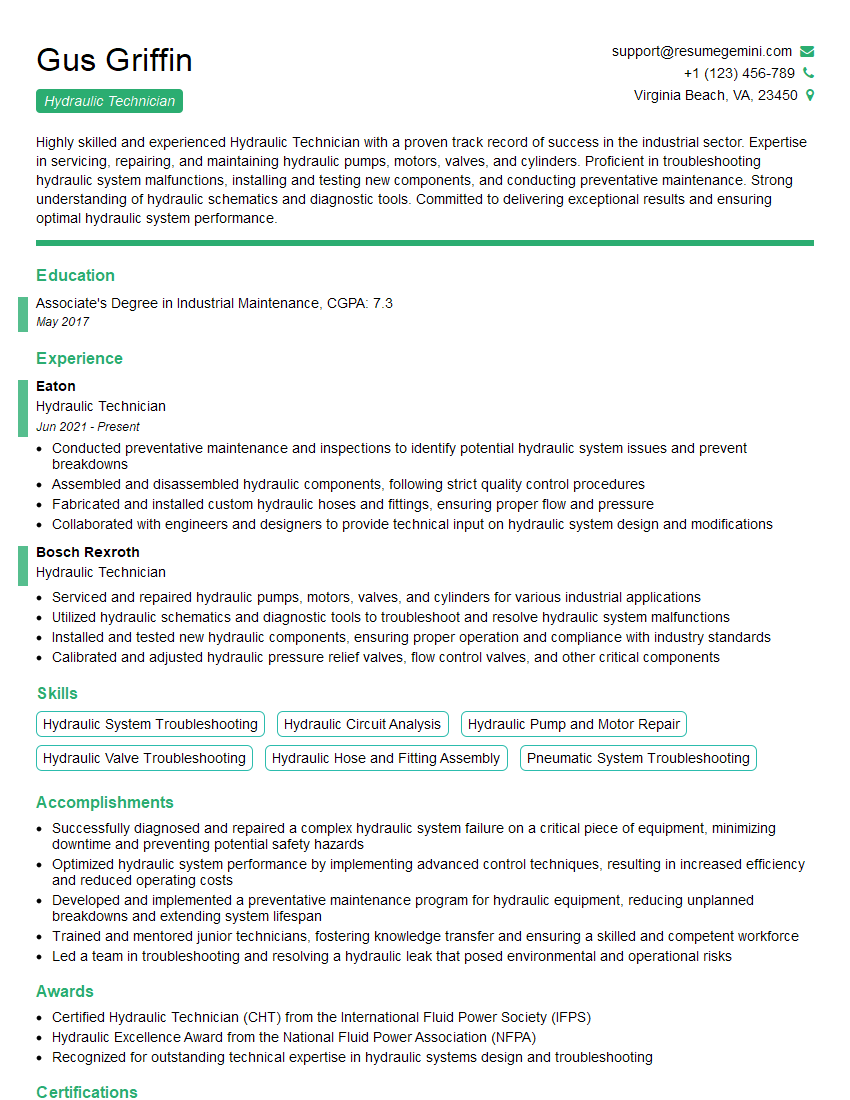
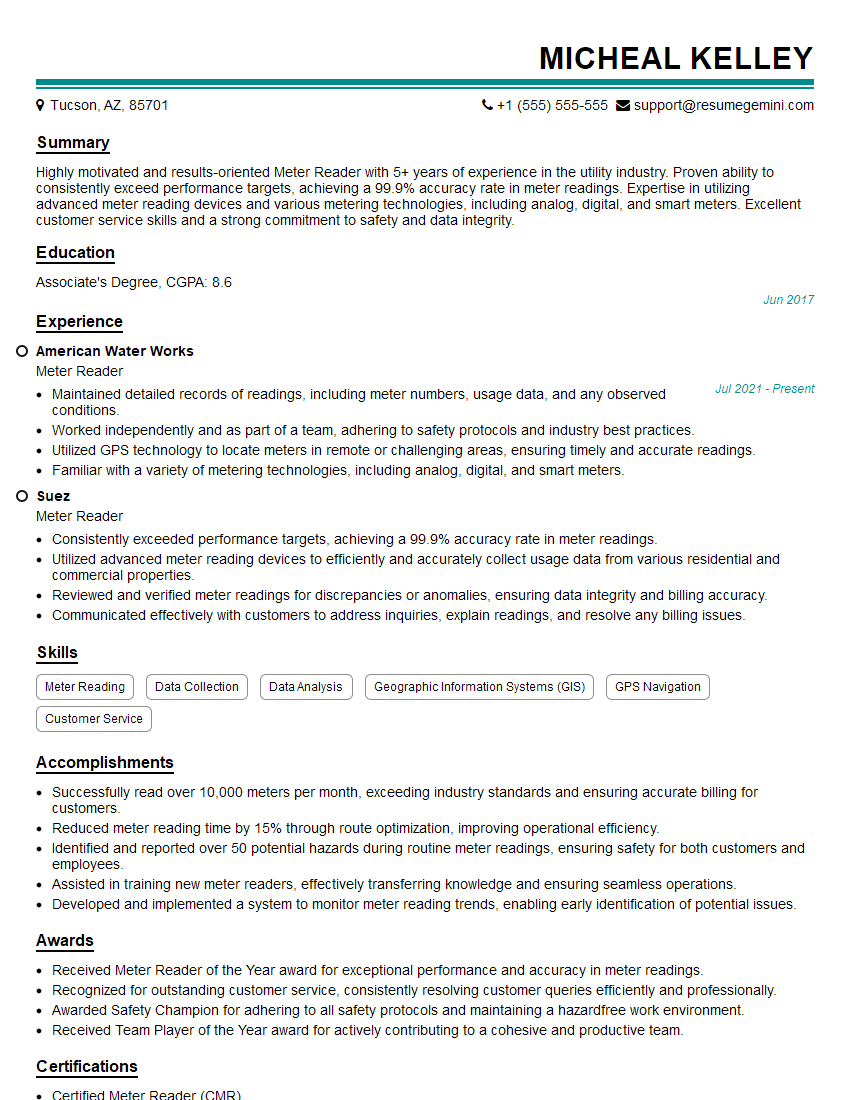
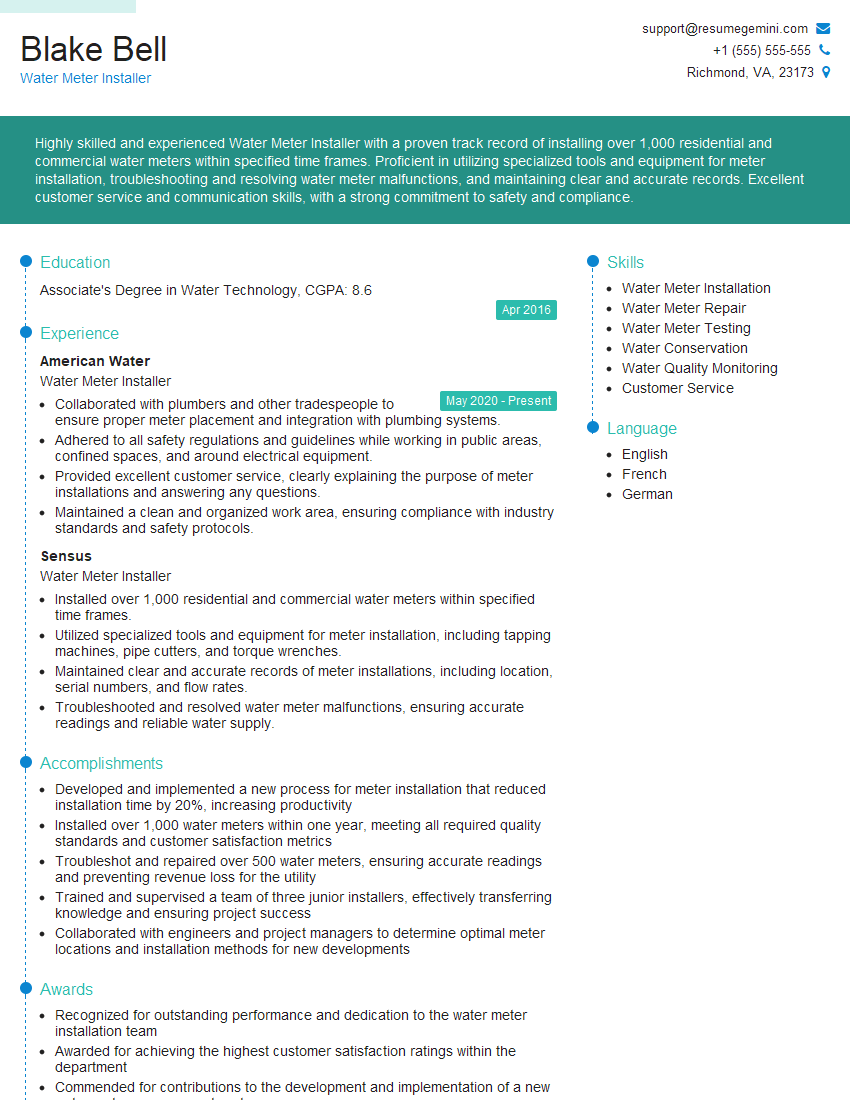
Mastering water meter repair offers excellent career growth opportunities, opening doors to specialized roles and increased earning potential. A strong resume is your key to unlocking these opportunities. Creating an ATS-friendly resume is vital for getting your application noticed by potential employers. To help you craft a compelling and effective resume, we recommend using ResumeGemini, a trusted resource for building professional resumes. Examples of resumes tailored specifically to Water Meter Repair are available to guide you through the process.
Explore more articles
Users Rating of Our Blogs
Share Your Experience
We value your feedback! Please rate our content and share your thoughts (optional).
What Readers Say About Our Blog
To the interviewgemini.com Webmaster.
Very helpful and content specific questions to help prepare me for my interview!
Thank you
To the interviewgemini.com Webmaster.
This was kind of a unique content I found around the specialized skills. Very helpful questions and good detailed answers.
Very Helpful blog, thank you Interviewgemini team.