Cracking a skill-specific interview, like one for Water Treatment System Installation, requires understanding the nuances of the role. In this blog, we present the questions you’re most likely to encounter, along with insights into how to answer them effectively. Let’s ensure you’re ready to make a strong impression.
Questions Asked in Water Treatment System Installation Interview
Q 1. Describe the different types of water treatment systems.
Water treatment systems are designed to remove impurities and contaminants from water, making it safe and palatable for various uses. They range from simple filtration systems to complex multi-stage processes. The choice depends on the water source’s quality and the desired outcome. Common types include:
- Point-of-Use (POU) Systems: These treat water at the tap, like a simple water filter pitcher or an under-sink RO system. They’re ideal for treating water for drinking and cooking.
- Point-of-Entry (POE) Systems: These treat the entire household water supply, often involving a whole-house filter or water softener. They address water quality issues throughout the house.
- Reverse Osmosis (RO) Systems: A membrane filtration method that removes a broad range of contaminants, including dissolved salts and minerals. Often a component of a larger system.
- Water Softeners: These systems primarily remove hard water minerals (calcium and magnesium) by ion exchange, preventing scale buildup and improving appliance longevity.
- UV Disinfection Systems: These utilize ultraviolet light to kill harmful bacteria and viruses in the water. They are often a part of larger treatment processes.
- Distillation Systems: These boil water and collect the condensed steam, leaving behind impurities. This produces very pure water, but can be energy-intensive.
The best system depends on factors like the water’s initial quality, budget, and intended use. A professional water quality test is vital to determine the appropriate system.
Q 2. Explain the process of reverse osmosis (RO).
Reverse osmosis (RO) is a water purification technology that uses a semipermeable membrane to remove contaminants from water. Think of it like a very fine sieve. The process involves applying pressure to water, forcing it through the membrane. The membrane allows water molecules to pass through, but rejects larger dissolved solids, salts, and many other impurities. This results in purified water, known as permeate, and a concentrated stream of waste water called brine, which is usually disposed of.
Here’s a breakdown of the process:
- Pre-filtration: This initial step removes sediment, chlorine, and other larger particles to protect the delicate RO membrane.
- High-Pressure Pump: A pump increases the water pressure to force it across the semipermeable membrane.
- RO Membrane: This membrane acts as a barrier, allowing water molecules to pass through while rejecting contaminants.
- Post-filtration: A final filter often polishes the purified water, enhancing its taste and removing any remaining impurities.
RO systems are highly effective in removing a wide array of contaminants but are more expensive and produce wastewater. They’re particularly suitable for areas with high levels of dissolved solids or specific contaminants.
Q 3. What are the common problems encountered during water treatment system installation?
Installing a water treatment system can present several challenges. Some common problems include:
- Incorrect Sizing: Choosing a system with inadequate capacity for the household’s water usage can lead to insufficient treatment or system overload.
- Plumbing Issues: Existing plumbing may be incompatible with the new system, requiring modifications or replacements. Leaky pipes or fittings can create problems.
- Improper Installation: Incorrect connections or failure to follow manufacturer instructions can result in system malfunction or poor performance. This highlights the need for qualified installers.
- Water Pressure Problems: Low water pressure can affect the efficiency of some systems, especially RO, requiring pressure boosters.
- Lack of Proper Maintenance Access: Systems must be accessible for routine maintenance like filter changes and cleaning.
- Electrical Requirements: Some systems, like UV systems or RO units with pumps, require electrical connections, which need to be properly installed and grounded.
Careful planning, precise measurements, and adherence to best practices are crucial to mitigate these issues. Consulting with a qualified professional is highly recommended.
Q 4. How do you troubleshoot a malfunctioning water softener?
Troubleshooting a malfunctioning water softener involves a systematic approach. First, verify that the unit is receiving power and that the brine tank has sufficient salt. If issues persist, check these points:
- Check the Salt Level: Ensure the brine tank is adequately filled with salt. Low salt levels can cause the system to malfunction.
- Inspect the Water Meter: Observe the water meter to ensure the system is regenerating as expected. A lack of regeneration indicates a potential problem.
- Examine the Control Valve: This valve regulates the regeneration cycle. A faulty valve can disrupt the entire process. Listen for any unusual noises.
- Test Water Hardness: Use a water hardness test kit to measure the hardness of the treated water. High hardness indicates the softener is not functioning correctly.
- Check for Leaks: Inspect the system for any leaks, which could indicate a problem with the plumbing or tank.
- Inspect the Resin Bed: (Only for experienced users) The resin bed contains the ion-exchange resin that softens the water. If channeling or other issues are present, it may require replacement.
If you’re unable to identify and resolve the problem, contact a qualified water treatment technician. Incorrect repairs can worsen the situation.
Q 5. What safety precautions are essential during water treatment system installation?
Safety is paramount during water treatment system installation. Essential precautions include:
- Water Shut-Off: Always turn off the main water supply before starting any work to prevent flooding.
- Proper Ventilation: Ensure adequate ventilation, especially when working with chemicals or in confined spaces.
- Personal Protective Equipment (PPE): Wear appropriate PPE, including gloves, eye protection, and respiratory protection when handling chemicals or working with potentially hazardous materials.
- Electrical Safety: Exercise caution when working near electrical components. Turn off power before working on electrical connections and always ensure proper grounding.
- Plumbing Precautions: Use appropriate pipe fittings and sealant to prevent leaks. Be careful not to damage existing pipes during installation.
- Disposal of Waste: Dispose of waste materials, including old filters or chemical containers, properly according to local regulations.
- Post-Installation Check: After installation, thoroughly inspect for leaks and ensure the system is functioning correctly before restoring the water supply.
Following safety guidelines diligently is crucial to prevent accidents and ensure a safe working environment.
Q 6. Describe your experience with different types of water filters (e.g., carbon, sediment).
I have extensive experience installing and servicing various water filter types. Common examples are:
- Carbon Filters: These are highly effective in removing chlorine, sediment, taste, and odor from water. I’ve worked with granular activated carbon (GAC) filters, which are commonly used in whole-house and POU systems, and carbon block filters, which are more compact and frequently found in under-sink units.
- Sediment Filters: These filters remove suspended solids like sand, silt, rust, and other particles from the water. I often encounter these in pre-filtration stages of larger systems, preventing damage to more sensitive components. They range from simple spun filters to more sophisticated multi-layered systems.
- Ultrafiltration (UF) Membranes: I have experience with UF membranes, which use pressure to remove bacteria, viruses, and other larger molecules. These are often employed in combination with other filtration methods for superior purification.
Selecting the right filter type depends on the specific contaminants present in the water and the desired level of purification. For instance, a home near a construction site might benefit from robust sediment pre-filtration before an RO system.
Q 7. Explain the importance of water quality testing and analysis.
Water quality testing and analysis are critical for several reasons:
- Identifying Contaminants: Testing helps identify the types and levels of contaminants present in the water, guiding the selection of an appropriate treatment system. This prevents purchasing an unsuitable system.
- System Design and Sizing: Accurate testing data enables the proper design and sizing of the water treatment system, ensuring optimal performance and efficiency.
- Monitoring System Effectiveness: Post-installation testing verifies the effectiveness of the treatment system, ensuring it’s adequately removing contaminants. It helps identify issues before they become serious.
- Compliance with Regulations: In some regions, water quality testing is necessary to meet regulatory requirements for potable water.
- Protecting Health: Knowing the quality of your water helps protect against health risks associated with consuming contaminated water.
Regular testing allows for proactive maintenance and ensures the long-term health and safety of those using the treated water. Without testing, potential problems could go unnoticed until they cause significant damage or health issues.
Q 8. How do you determine the appropriate water treatment system for a specific application?
Selecting the right water treatment system is crucial and involves a thorough assessment of the water source’s quality and the desired outcome. We start by analyzing a water sample to identify contaminants like bacteria, viruses, heavy metals, or dissolved solids. This analysis dictates the necessary treatment steps.
For example, if the water has high levels of sediment, we might recommend a combination of filtration (sediment filters) and a softening system (if hardness is also an issue). If bacterial contamination is a concern, UV disinfection or chlorination might be necessary. Industrial applications may require reverse osmosis (RO) for ultra-pure water or specialized ion exchange systems. Ultimately, the system is tailored to the specific needs and budget of the client, balancing effectiveness with cost-efficiency.
We also consider the water flow rate, which dictates the system’s capacity. A small household might only need a simple filter, while a large factory will require a much larger, more complex system. The location also plays a role; access for installation and maintenance is key.
Q 9. What are the different types of water treatment membranes and their applications?
Water treatment membranes are a cornerstone of many modern systems. They function by separating contaminants from the water using a semi-permeable barrier. Several types exist:
- Reverse Osmosis (RO): This high-pressure process forces water through a membrane, rejecting dissolved salts, minerals, and other impurities. It’s commonly used for producing potable water, industrial process water, and desalination.
- Nanofiltration (NF): Similar to RO, but less stringent, NF removes larger molecules like organic compounds and some multivalent ions. It’s used in applications requiring less pure water than RO, such as pre-treatment for RO or softening hard water.
- Ultrafiltration (UF): This membrane removes larger particles like bacteria, colloids, and suspended solids. It’s often used as a pretreatment step for other membrane processes or for producing clarified water.
- Microfiltration (MF): This membrane removes even larger particles such as algae and silt. It’s frequently used for pre-filtration in larger systems or in applications where suspended solids are a significant problem.
The choice depends on the specific contaminants, desired water quality, and operating pressures. For example, a bottling plant might use RO for its final product water, but use UF for pre-treatment to protect the RO membranes.
Q 10. How do you ensure the proper sizing and selection of pumps for a water treatment system?
Pump selection is critical for system efficiency and longevity. We calculate the required flow rate (gallons per minute or liters per minute) and the total dynamic head (TDH), which represents the total pressure required to move the water through the system. This includes friction losses in pipes, fittings, and the membranes themselves.
We use specialized software to model the entire system’s hydraulics and determine the appropriate pump specifications, including flow rate, pressure, and horsepower. Factors such as pump type (centrifugal, positive displacement), material compatibility (to prevent corrosion), and energy efficiency are all carefully considered. Over-sizing a pump is inefficient and costly, while under-sizing can lead to poor performance and system failure.
For instance, a system with high-pressure membrane filtration requires a more powerful pump compared to one utilizing only gravity filtration.
Q 11. Explain your experience with UV disinfection systems.
I have extensive experience with UV disinfection systems, having installed and maintained numerous units in various settings, from municipal water treatment plants to smaller commercial applications. UV systems use ultraviolet light to inactivate microorganisms like bacteria and viruses by damaging their DNA. It’s a chemical-free disinfection method, making it attractive for environmentally sensitive applications.
The key to successful UV disinfection is proper lamp selection (based on required output and lifespan), maintaining sufficient UV intensity, and ensuring adequate water flow and contact time between the water and the UV light. Regular lamp replacement and monitoring of UV intensity are crucial for maintaining efficacy. We often incorporate sensors and automated systems to alert us to any issues.
One project involved installing a UV disinfection system for a large hospital. The stringent requirements for water purity and the need for reliable operation necessitated a redundant system with multiple lamps and robust monitoring capabilities.
Q 12. Describe the process of chlorination and its role in water treatment.
Chlorination is a widely used disinfection method in water treatment that utilizes chlorine or chlorine-based compounds to kill harmful bacteria, viruses, and other microorganisms. The process involves adding a chlorine solution to the water, which reacts with organic matter and then produces hypochlorous acid (HOCl) – the primary disinfecting agent.
The amount of chlorine added (chlorine dose) is carefully controlled to achieve the desired disinfection level while preventing excessive residual chlorine, which can impact taste and odor. Monitoring residual chlorine levels throughout the distribution system is crucial to ensure ongoing disinfection. Different forms of chlorine are used, including gaseous chlorine, sodium hypochlorite (bleach), and calcium hypochlorite, each with its advantages and disadvantages.
The effectiveness of chlorination depends on various factors like contact time, pH, temperature, and the presence of organic matter. We use sophisticated control systems and regular testing to ensure chlorination efficiency and compliance with safety regulations.
Q 13. What are the regulatory requirements for water treatment systems in your region?
Regulatory requirements for water treatment systems vary depending on location and the specific application. Generally, these regulations focus on ensuring safe and potable water, safeguarding public health, and protecting the environment. In my region, we must adhere to strict guidelines set by the [Insert relevant regional authority, e.g., EPA, local water authority]. These often specify acceptable limits for various contaminants, required treatment processes, and regular monitoring and reporting procedures.
Compliance requires rigorous documentation, regular inspections, and adherence to operational standards. We maintain detailed records of water quality testing, system maintenance, and any corrective actions taken. Failure to comply can result in significant penalties and legal consequences. It’s our top priority to ensure complete regulatory compliance in every project.
Q 14. How do you manage water treatment system maintenance and prevent failures?
Preventive maintenance is essential for preventing failures and ensuring the long-term reliability of water treatment systems. We develop a comprehensive maintenance plan tailored to the specific system, including regular inspections, cleaning, and component replacement. This plan typically includes scheduled tasks such as:
- Filter changes: Sediment filters, carbon filters, and other filter media need to be replaced periodically, based on their service life and the level of contamination.
- Membrane cleaning: Membrane systems require periodic cleaning to remove accumulated solids and improve their performance. This might involve chemical cleaning or physical cleaning methods.
- Pump inspections: Pumps should be inspected for leaks, wear and tear, and proper operation. Lubrication and adjustments may be necessary.
- UV lamp replacement: UV lamps lose intensity over time and need to be replaced according to the manufacturer’s recommendations.
- Chemical monitoring and adjustments: Chemical feed systems need regular monitoring and adjustment to maintain the correct dosage.
We use a combination of automated monitoring systems and scheduled inspections to ensure early detection of potential problems. This proactive approach minimizes downtime and extends the lifespan of the system.
Q 15. Explain your experience with different types of piping materials used in water treatment systems.
Selecting the right piping material is crucial for a water treatment system’s longevity and efficiency. The choice depends on factors like the water’s chemical composition, pressure, temperature, and the system’s specific application.
- PVC (Polyvinyl Chloride): Common for lower-pressure applications due to its cost-effectiveness and corrosion resistance. However, it’s less suitable for high temperatures or aggressive chemicals.
- CPVC (Chlorinated Polyvinyl Chloride): A stronger and more heat-resistant alternative to PVC, making it ideal for hotter water or applications requiring higher pressures. It’s also chemically resistant.
- PE (Polyethylene): Flexible and durable, often used for underground piping due to its resistance to cracking. It’s suitable for various chemicals but its pressure limitations should be considered.
- Stainless Steel: A premium option offering superior strength, durability, and resistance to corrosion and many chemicals. It’s used in high-pressure, high-temperature, and demanding applications, despite its higher cost.
- Ductile Iron: Strong and rigid, frequently used for larger diameter pipes and high-pressure applications. It’s particularly useful where resilience to impact and external forces is needed.
For example, in a municipal water treatment plant, you’d likely see ductile iron for the main distribution lines and stainless steel in areas handling highly corrosive chemicals. In a smaller residential system, PVC or CPVC might be sufficient.
Career Expert Tips:
- Ace those interviews! Prepare effectively by reviewing the Top 50 Most Common Interview Questions on ResumeGemini.
- Navigate your job search with confidence! Explore a wide range of Career Tips on ResumeGemini. Learn about common challenges and recommendations to overcome them.
- Craft the perfect resume! Master the Art of Resume Writing with ResumeGemini’s guide. Showcase your unique qualifications and achievements effectively.
- Don’t miss out on holiday savings! Build your dream resume with ResumeGemini’s ATS optimized templates.
Q 16. How do you handle unexpected issues or delays during a water treatment system installation?
Unexpected issues are inevitable in any installation. My approach emphasizes proactive planning and a robust problem-solving strategy.
- Risk Assessment: Before starting, a thorough risk assessment identifies potential challenges, including site conditions, equipment availability, and permitting issues. This allows for contingency plans.
- Communication: Maintaining open communication with the client, subcontractors, and suppliers is key. This allows for prompt updates and collaborative problem-solving.
- Resource Management: Having backup equipment and qualified personnel readily available minimizes downtime. A well-stocked vehicle with common replacement parts is essential.
- Problem-solving Methodology: When problems arise, I follow a structured approach: Identify the problem, gather information, explore solutions, implement the best solution, verify results, and document everything.
- Documentation and Reporting: Keeping detailed records of changes and solutions is crucial for future maintenance and troubleshooting. Regular reports to the client keep them informed and involved.
For instance, if a crucial component is delayed, I’ll explore alternative suppliers or temporary solutions to minimize project delays while maintaining safety and quality.
Q 17. Describe your experience with PLC programming and its role in water treatment automation.
PLC (Programmable Logic Controller) programming is integral to automating water treatment processes. It allows for precise control, monitoring, and optimization of various aspects like chemical dosing, filtration cycles, and effluent discharge.
My experience includes programming PLCs using various platforms like Allen-Bradley and Siemens. I’m proficient in ladder logic, function block diagrams, and structured text. I use these to create programs that control valves, pumps, sensors, and other equipment based on real-time data and pre-defined parameters.
For example, I’ve programmed PLCs to automatically adjust chemical dosages based on real-time water quality readings from sensors. This ensures optimal treatment while minimizing chemical usage and environmental impact. The PLC also monitors system parameters, alerts operators to potential problems, and logs operational data for analysis and reporting.
//Example Ladder Logic (Simplified) //If water turbidity > threshold THEN activate filter pump //If water pH < threshold THEN add pH adjuster chemical Q 18. How do you ensure the proper installation of pressure vessels and tanks?
Proper installation of pressure vessels and tanks is critical for safety and system performance. This involves meticulous attention to detail at every stage.
- Foundation Preparation: Ensuring a level and stable foundation is paramount. This prevents uneven stress on the vessel and potential leaks.
- Vessel Inspection: Before installation, a thorough visual inspection checks for any damage or defects. This includes verifying the vessel's pressure rating and compliance with relevant standards.
- Proper Connections: Connections to piping and other components must be leak-free and comply with design specifications. Appropriate gaskets and seals are essential.
- Pressure Testing: Before putting the system into operation, a pressure test verifies the integrity of the vessel and its connections, preventing costly failures down the line.
- Safety Precautions: Appropriate safety measures, including lockout/tagout procedures, are essential throughout the installation process to prevent accidents.
For example, before installing a pressure vessel, we ensure the foundation can withstand the vessel’s weight and that all connections are properly torqued to prevent leaks. Post-installation, we meticulously pressure test to confirm its structural integrity and leak-free performance.
Q 19. Explain your understanding of water chemistry and its relevance to water treatment.
Understanding water chemistry is fundamental to effective water treatment. It involves analyzing the water's physical and chemical properties to determine the appropriate treatment methods.
Key parameters include pH, turbidity (cloudiness), alkalinity, hardness (calcium and magnesium content), dissolved oxygen, and the presence of various contaminants like heavy metals, bacteria, and organic matter. Each parameter impacts the treatment strategy.
For example, high turbidity requires clarification processes like coagulation and sedimentation. High levels of iron and manganese need oxidation and filtration to remove them. Bacterial contamination necessitates disinfection through processes like chlorination or UV sterilization.
Without a solid understanding of water chemistry, selecting the correct treatment methods is impossible, potentially leading to inefficient or ineffective treatment and even environmental risks.
Q 20. Describe your experience with different types of water treatment chemicals and their applications.
Water treatment uses a range of chemicals to achieve specific goals. The selection and application must be precise and safe.
- Coagulants (e.g., alum, ferric chloride): Used to destabilize suspended particles, allowing them to clump together for easier removal.
- Flocculants (e.g., polymers): Help coagulated particles form larger flocs that settle more quickly.
- Disinfectants (e.g., chlorine, UV light, ozone): Kill harmful bacteria and viruses.
- pH adjusters (e.g., acids, bases): Control the water's pH to optimize the effectiveness of other treatment processes.
- Anti-scalants: Prevent the formation of scale in pipes and equipment.
For instance, in a reverse osmosis system, anti-scalants are crucial to prevent mineral buildup on the membranes. In a municipal water treatment plant, chlorine is used for disinfection, ensuring safe drinking water. Proper handling, dosage, and safety precautions are paramount when working with these chemicals.
Q 21. How do you interpret water quality reports and determine necessary treatment steps?
Water quality reports provide essential information for determining the necessary treatment steps. I carefully analyze the report, considering various parameters.
- Identify Contaminants: The report highlights the presence and concentration of various contaminants (bacteria, heavy metals, chemicals, etc.).
- Assess Water Quality Standards: The report's data is compared to relevant regulatory standards (e.g., WHO guidelines, EPA standards) to identify areas needing improvement.
- Determine Treatment Goals: Based on the analysis, specific treatment goals are defined, such as reducing turbidity, removing specific contaminants, or achieving a certain level of disinfection.
- Select Appropriate Treatment Technologies: Based on the contaminants and goals, appropriate treatment methods are selected. This could involve filtration, coagulation, disinfection, or a combination of techniques.
- Optimize Treatment Processes: The treatment process is optimized to achieve the desired water quality while minimizing costs and environmental impact. This often involves adjusting chemical dosages and monitoring process parameters.
For example, a report showing high levels of iron and manganese would indicate the need for oxidation and filtration. A report indicating high bacterial counts would necessitate disinfection.
Q 22. What are the different types of water storage tanks and their applications?
Water storage tanks are crucial components of any water treatment system, chosen based on factors like capacity, material, and the intended application. Different tank types offer unique advantages and disadvantages.
- Elevated Tanks: These tanks are positioned above ground, utilizing gravity to deliver water to the distribution system. This provides consistent pressure, but requires more structural support and potentially higher initial costs. For example, a municipality might use an elevated tank to ensure adequate water pressure for a large residential area.
- Ground Storage Tanks: These tanks are buried underground, often made of concrete or steel. They offer a lower profile and are less susceptible to temperature fluctuations. They are commonly found in industrial settings or large-scale agricultural operations where large volumes of water are needed.
- Atmospheric Tanks: These tanks operate at atmospheric pressure, meaning there's no pressure boost from the tank itself. They are simpler and less expensive but rely on external pumps to distribute water. A small business might use an atmospheric tank for simple storage and distribution needs.
- Pressure Tanks: These tanks are pressurized and are often used in conjunction with pumps to maintain a consistent pressure within the system. They're ideal for applications where consistent water pressure is critical, like residential homes or smaller commercial buildings. They mitigate the impact of fluctuating demand.
The choice of tank type depends heavily on the specific needs of the project, considering factors such as budget, available space, water pressure requirements, and aesthetic considerations.
Q 23. Explain your experience with the installation and maintenance of water pumps.
My experience with water pump installation and maintenance spans over 15 years, encompassing a wide range of pump types, including centrifugal pumps, submersible pumps, and booster pumps. Installation involves careful site assessment, ensuring proper grounding and connections, and following manufacturer's specifications to prevent issues like cavitation or motor overheating.
Maintenance is crucial for longevity and efficiency. This includes regular inspections for leaks, wear and tear, and performance monitoring. I've developed expertise in identifying potential pump failures early on, through vibration analysis and pressure readings. For example, during a recent project, I identified a bearing failure in a centrifugal pump by detecting unusual vibrations, averting a costly system failure.
I am proficient in various pump maintenance procedures, such as impeller cleaning, lubrication, and seal replacement. I also possess strong troubleshooting skills; I can swiftly diagnose problems using diagnostic tools and systematically eliminate the source of the malfunction. A recent case involved a submersible pump losing prime. Through systematic checks, I identified a leak in the suction line and replaced the faulty section promptly.
Q 24. How do you ensure compliance with all relevant safety standards and regulations?
Safety and compliance are paramount in water treatment system installations. I meticulously follow all relevant safety standards and regulations, including OSHA guidelines, local plumbing codes, and the EPA's Safe Drinking Water Act. Each project begins with a thorough risk assessment, identifying potential hazards and implementing mitigation strategies. This includes proper use of personal protective equipment (PPE), adhering to lockout/tagout procedures, and ensuring correct trenching and excavation practices.
Before commencing any installation, I verify all permits and certifications are in place. Thorough documentation and record-keeping are crucial. I maintain detailed records of inspections, testing results, and any corrective actions, demonstrating our compliance. Regular training updates for myself and my team on the latest safety regulations and best practices ensure we're always operating at the highest safety standards.
For example, during a recent installation in a sensitive environmental area, we conducted regular water quality testing throughout the process and implemented strict erosion control measures to prevent any potential impact on the environment.
Q 25. What are your troubleshooting skills regarding pressure drops in a water treatment system?
Troubleshooting pressure drops requires a systematic approach. The first step is to identify the location and magnitude of the pressure drop. I then systematically investigate potential causes. These include:
- Clogged Filters or Screens: These are common culprits; a simple cleaning or replacement often resolves the issue.
- Pipe Blockages: These can be caused by sediment buildup or corrosion. Hydro-jetting or pipe replacement might be necessary.
- Faulty Valves: Sticking or malfunctioning valves restrict water flow. Repair or replacement is usually required.
- Pump Problems: Low pump performance, due to wear or other issues, can cause pressure drops. Pump repair or replacement may be needed.
- Leaks: Leaks anywhere in the system reduce pressure. Careful inspection and leak detection equipment are crucial here.
I use pressure gauges, flow meters, and diagnostic tools to pinpoint the problem. A logical, step-by-step elimination process is employed. Documentation of each step ensures a clear understanding of the problem and solution for future reference.
Q 26. Describe your experience with different types of water meters and their installation.
My experience encompasses a range of water meters, including mechanical, ultrasonic, and electromagnetic flow meters. The selection of a particular meter depends on factors such as the flow rate, fluid type, accuracy requirements, and budget. Installation involves proper sizing, accurate placement to avoid flow disturbances, and adherence to manufacturer specifications.
- Mechanical Meters: These are relatively simple and inexpensive, suitable for lower flow rates. Installation involves careful alignment and sealing to prevent leaks.
- Ultrasonic Meters: These meters use sound waves to measure flow. They are suitable for a wide range of flows and fluids and require careful positioning of sensors for accurate readings.
- Electromagnetic Meters: These meters are used for higher flow rates and dirty water. They're more complex and require proper grounding and calibration.
I also have experience with the installation of remote meter reading systems, which allow for convenient monitoring of water usage and detection of leaks. Proper installation of water meters is critical for accurate billing, efficient water management and early detection of water theft.
Q 27. How do you prepare a comprehensive water treatment system installation report?
A comprehensive water treatment system installation report serves as a crucial record of the entire project. It starts with an executive summary, followed by a detailed description of the project scope, including the system design, specifications of equipment used, and a schematic diagram.
The report details the installation process, including dates, personnel involved, and any deviations from the original plan. It should include complete testing results, verifying compliance with design specifications and relevant standards. This would include pressure tests, flow rate measurements, and water quality analyses. Any non-conformances found are documented along with the corrective actions taken.
A final section addresses project costs, including material, labor, and any unforeseen expenses. As-built drawings, showing the actual installation, are an essential part of the report. This ensures accurate record-keeping for future maintenance and repairs. A post-installation checklist and system operational guidelines should also be included to help the client maintain the system effectively. The report's clarity is crucial for effective communication among stakeholders.
Q 28. Explain your experience with project management in water treatment system installations.
My project management experience involves overseeing all aspects of water treatment system installations, from initial planning and design to final commissioning and handover. This includes developing detailed project schedules, managing budgets, procuring materials, coordinating with subcontractors, and ensuring adherence to quality standards.
I use project management tools and methodologies, such as Gantt charts and critical path analysis, to track progress and identify potential delays. Effective communication with clients, subcontractors, and my team is vital for project success. I maintain open communication channels and conduct regular progress meetings to address any issues proactively.
Risk management is a crucial aspect of my approach. I identify potential risks early on, develop contingency plans, and document all mitigation strategies. A recent project involved a challenging timeline. Through diligent planning, clear communication, and flexible resource allocation, we successfully completed the project on time and within budget.
Key Topics to Learn for Water Treatment System Installation Interview
- System Design & Selection: Understanding different water treatment technologies (filtration, disinfection, softening, etc.) and selecting appropriate systems based on water quality parameters and client needs. Practical application: Analyzing water quality reports and proposing a suitable system design.
- Hydraulics & Piping: Calculating flow rates, pressure drops, and pipe sizing for efficient system operation. Practical application: Designing and installing piping networks ensuring optimal water flow and minimizing energy consumption.
- Equipment Installation & Commissioning: Safe and efficient installation of various treatment units (filters, pumps, UV sterilizers, etc.), including proper connections, testing, and start-up procedures. Practical application: Troubleshooting equipment malfunctions during installation and commissioning.
- Instrumentation & Control: Understanding and utilizing various sensors, meters, and control systems for monitoring and regulating treatment processes. Practical application: Calibrating instruments and interpreting data to optimize system performance.
- Safety Regulations & Compliance: Adhering to relevant safety standards and regulations during installation and operation of water treatment systems. Practical application: Implementing safety measures to prevent accidents and ensure compliance with local and national codes.
- Troubleshooting & Maintenance: Identifying and resolving common problems in water treatment systems, performing routine maintenance tasks, and extending equipment lifespan. Practical application: Developing a preventative maintenance schedule and responding effectively to system failures.
- Project Management & Communication: Managing projects effectively, coordinating with other trades, and communicating clearly with clients and supervisors. Practical application: Developing a project timeline and budget, and effectively addressing client concerns.
Next Steps
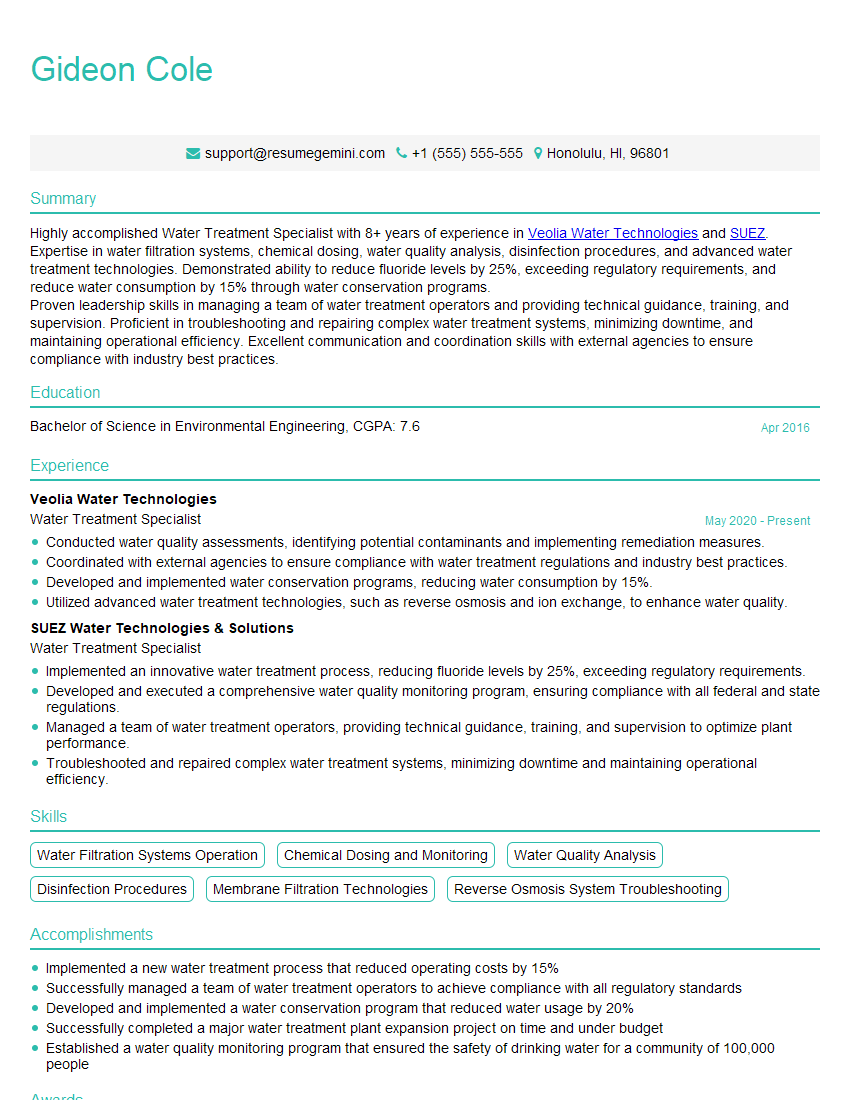
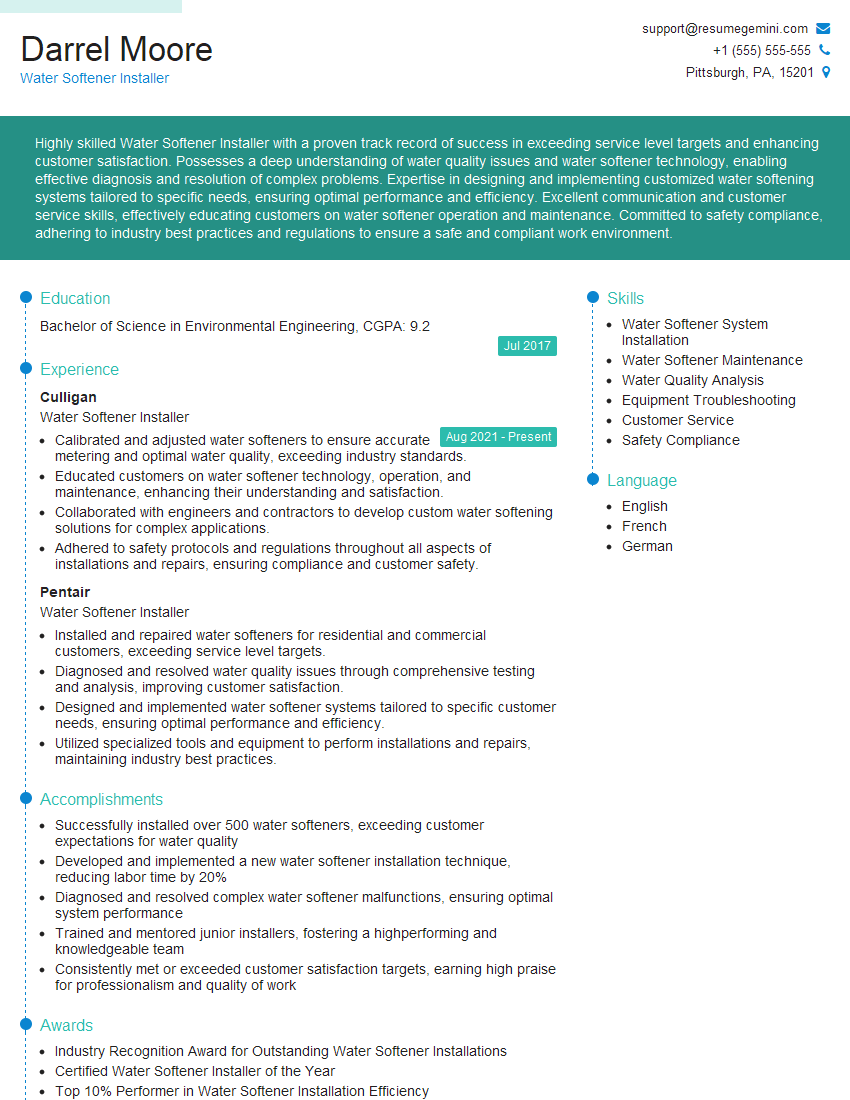
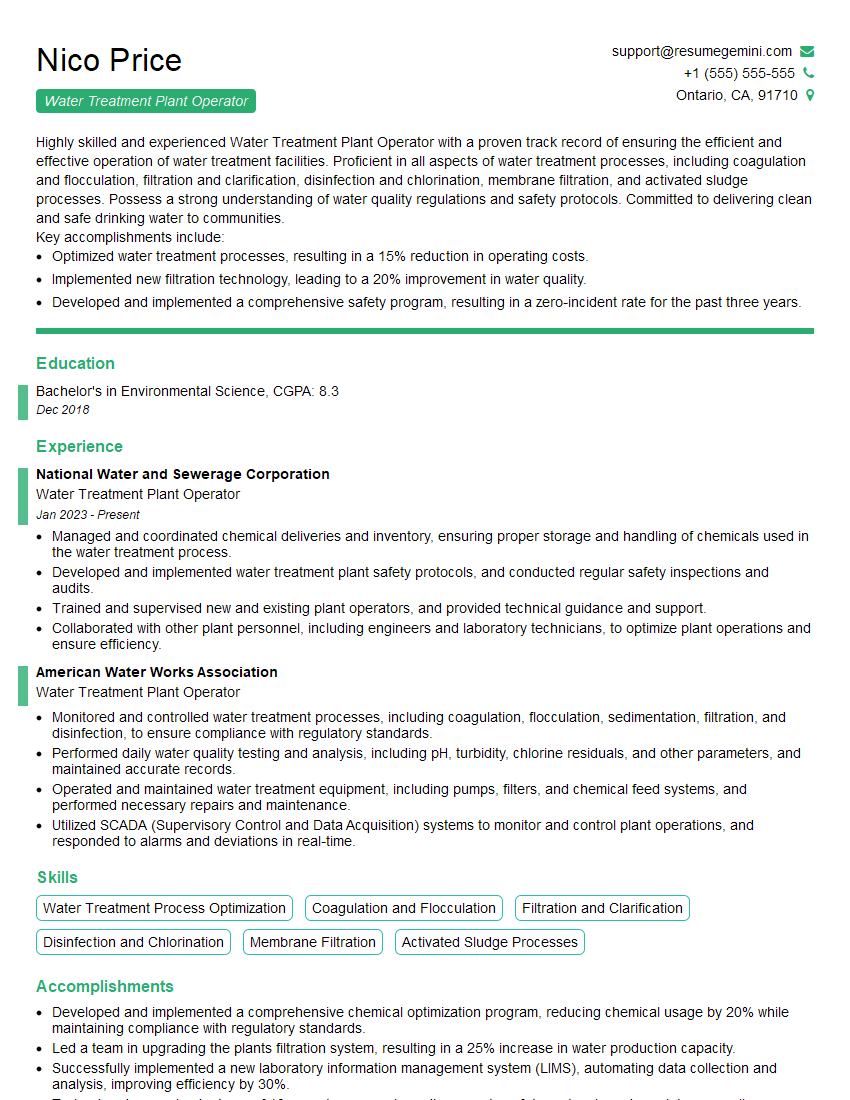
Mastering Water Treatment System Installation opens doors to exciting career opportunities in a vital industry. A strong understanding of these core concepts will significantly enhance your interview performance and career prospects. Creating an ATS-friendly resume is crucial for getting your application noticed. To build a professional and impactful resume that highlights your skills and experience, we highly recommend using ResumeGemini. ResumeGemini provides tools and resources to create a compelling resume, and examples of resumes tailored to Water Treatment System Installation are available to help you get started.
Explore more articles
Users Rating of Our Blogs
Share Your Experience
We value your feedback! Please rate our content and share your thoughts (optional).
What Readers Say About Our Blog
To the interviewgemini.com Webmaster.
Very helpful and content specific questions to help prepare me for my interview!
Thank you
To the interviewgemini.com Webmaster.
This was kind of a unique content I found around the specialized skills. Very helpful questions and good detailed answers.
Very Helpful blog, thank you Interviewgemini team.