Are you ready to stand out in your next interview? Understanding and preparing for Outpatient Physiatry interview questions is a game-changer. In this blog, we’ve compiled key questions and expert advice to help you showcase your skills with confidence and precision. Let’s get started on your journey to acing the interview.
Questions Asked in Outpatient Physiatry Interview
Q 1. Describe your experience with electromyography (EMG) and nerve conduction studies (NCS).
Electromyography (EMG) and nerve conduction studies (NCS) are essential diagnostic tools in outpatient physiatry. EMG measures the electrical activity of muscles, while NCS assesses the speed and strength of nerve impulses. My experience encompasses performing and interpreting both procedures extensively. I’ve used EMG/NCS to diagnose a wide range of conditions, including carpal tunnel syndrome, peripheral neuropathies, radiculopathies, and myopathies.
For example, in a patient presenting with wrist pain and numbness, EMG/NCS can pinpoint the location and severity of nerve compression in carpal tunnel syndrome. A slowed nerve conduction velocity across the carpal tunnel, coupled with abnormal muscle activity in the thenar muscles seen on EMG, provides a definitive diagnosis. Similarly, in suspected radiculopathy, NCS helps identify nerve root involvement by demonstrating slowed conduction across the affected nerve root. I’m proficient in recognizing various EMG/NCS patterns associated with different neurological conditions, which aids in developing an accurate diagnosis and tailored treatment plan.
Beyond technical proficiency, interpreting the results involves carefully considering the patient’s clinical presentation, medical history, and other diagnostic test results. It’s a crucial part of the diagnostic process that requires experience and clinical judgment. I always ensure comprehensive documentation and clear communication of the findings to the patient and referring physician.
Q 2. Explain your approach to diagnosing and managing carpal tunnel syndrome.
My approach to carpal tunnel syndrome (CTS) begins with a thorough history and physical examination, focusing on symptoms like numbness, tingling, pain, and weakness in the hand, particularly at night. I assess for thenar muscle atrophy and perform provocative tests like Phalen’s and Tinel’s signs.
Electrodiagnostic studies (EMG/NCS) are crucial for confirming the diagnosis and ruling out other conditions. Once CTS is confirmed, my management strategy is individualized and multi-faceted. I start with conservative measures, including:
- Splinting: Wrist splints help to maintain a neutral position, reducing pressure on the median nerve.
- Non-steroidal anti-inflammatory drugs (NSAIDs): To manage pain and inflammation.
- Physical therapy: To improve range of motion, strength, and nerve gliding exercises.
- Activity modification: Advising patients to avoid repetitive movements or activities that exacerbate symptoms.
If conservative measures fail to provide adequate relief, I discuss surgical options with the patient. Surgical intervention involves releasing the transverse carpal ligament, relieving pressure on the median nerve. Post-surgical management includes physical therapy to restore function and prevent recurrence.
Q 3. How do you differentiate between various types of peripheral neuropathies?
Differentiating between various peripheral neuropathies requires a systematic approach combining clinical presentation, electrodiagnostic studies (EMG/NCS), and sometimes additional tests such as nerve biopsy. Key features to consider include the distribution of the neuropathy (e.g., symmetrical vs. asymmetrical, length-dependent vs. focal), the type of symptoms (e.g., sensory, motor, autonomic), and the presence of associated medical conditions.
For example:
- Diabetic neuropathy: Typically presents with symmetrical, length-dependent sensory loss in a stocking-glove distribution. EMG/NCS often shows evidence of axonal degeneration.
- Guillain-Barré syndrome: Characterized by rapidly progressive ascending weakness and areflexia. EMG/NCS reveal demyelination.
- Chronic inflammatory demyelinating polyneuropathy (CIDP): Presents with progressive, symmetrical weakness and sensory symptoms. EMG/NCS demonstrate demyelination.
- Carpal tunnel syndrome: A focal mononeuropathy affecting the median nerve in the wrist, characterized by sensory and motor deficits in the median nerve distribution. EMG/NCS is diagnostic.
A detailed history, including medication use, exposure to toxins, and family history, is essential. Each type of neuropathy has unique characteristics which, when combined with electrodiagnostic findings, allows for confident diagnosis and subsequent targeted management.
Q 4. What is your experience with botulinum toxin injections for spasticity?
I have extensive experience with botulinum toxin (Botox) injections for the management of spasticity. Botox is a neurotoxin that temporarily weakens overactive muscles, reducing spasticity and improving function. I use it in various conditions, including cerebral palsy, stroke, multiple sclerosis, and spinal cord injury.
Before injection, a thorough neurological examination is conducted to identify the muscles contributing to spasticity. I carefully select the injection sites and the appropriate dose based on the patient’s specific needs and the muscle size. I use electromyography (EMG) guidance in select cases to ensure precise injection placement. Post-injection, I monitor the patient for any adverse effects and adjust the treatment plan as needed. The effects of Botox injections are temporary, usually lasting for several months, requiring repeat injections to maintain benefits.
For instance, in a patient with stroke-related spasticity in their wrist and fingers, Botox injections into the affected flexor muscles can improve hand function and reduce pain, allowing for better participation in activities of daily living. Success depends on careful patient selection, precise injection technique, and appropriate follow-up care. I always explain the procedure, potential risks and benefits clearly, and provide appropriate post-injection instructions to the patient.
Q 5. Describe your experience with various types of joint injections.
My experience with joint injections includes various types, primarily hyaluronic acid (viscosupplementation) and corticosteroids. These injections aim to reduce pain and inflammation in arthritic joints.
Hyaluronic acid injections lubricate and cushion the joint, providing symptomatic relief in osteoarthritis. The procedure is relatively straightforward, involving injection into the joint space under sterile conditions. The benefits typically become apparent after several injections, with relief lasting for several months. I carefully explain the expected outcomes and potential side effects to the patients before performing the procedure.
Corticosteroid injections are used for acute flares of pain and inflammation in various joint conditions. They provide rapid but short-lived pain relief by reducing inflammation. The injection technique depends on the target joint. I carefully avoid injecting into vascular structures to minimize the risk of adverse effects. While very effective in managing acute symptoms, corticosteroid injections are usually not recommended for long-term management due to potential side effects like joint damage with repeated injections.
Patient selection is crucial for both procedures. I evaluate the patient’s overall health, the severity of the joint condition, and the potential benefits and risks before recommending either type of injection.
Q 6. How do you assess and manage patients with chronic pain?
Managing chronic pain requires a holistic and multidisciplinary approach, recognizing that pain is a complex experience with biological, psychological, and social components. My assessment starts with a comprehensive history, identifying the pain’s location, duration, character, intensity, and any aggravating or relieving factors. I also assess the impact of the pain on the patient’s functional abilities, mood, sleep, and quality of life using standardized questionnaires like the Oswestry Disability Index or the Brief Pain Inventory.
Management strategies are individualized, combining pharmacological and non-pharmacological interventions. Pharmacological approaches may include NSAIDs, opioids (used cautiously and judiciously), antidepressants, and anticonvulsants, always considering potential side effects and ensuring proper monitoring.
Non-pharmacological interventions play a crucial role. These include:
- Physical therapy: To improve strength, flexibility, and endurance.
- Occupational therapy: To adapt daily activities and improve functional independence.
- Cognitive behavioral therapy (CBT): To address psychological factors contributing to pain perception and management.
- Mindfulness and relaxation techniques: To reduce stress and improve coping mechanisms.
- Interventional procedures: Such as nerve blocks or spinal cord stimulation, in select cases.
Regular follow-up appointments are crucial to monitor the patient’s progress, adjust the treatment plan as needed, and provide ongoing support. It’s essential to establish a strong therapeutic alliance with the patient, fostering open communication and shared decision-making.
Q 7. Explain your approach to rehabilitation after stroke.
Rehabilitation after a stroke is crucial for maximizing functional recovery. My approach is highly individualized and focuses on restoring motor function, improving balance and coordination, and enhancing activities of daily living (ADLs). The rehabilitation program is tailored to the patient’s specific deficits and goals.
Early intervention is vital. I start by assessing the patient’s motor function, sensory perception, cognition, and swallowing abilities. The assessment guides the development of a personalized plan addressing both physical and cognitive impairments. Treatment involves a combination of:
- Motor retraining: Using techniques like constraint-induced movement therapy (CIMT) to promote the use of the affected limb.
- Physical therapy: To improve strength, range of motion, and balance.
- Occupational therapy: To improve ADLs, such as dressing, bathing, and eating.
- Speech therapy: If there are communication or swallowing difficulties.
- Cognitive rehabilitation: To improve attention, memory, and problem-solving skills.
Family and caregiver education are integral components of the rehabilitation process. I provide training and support to family members to assist in the patient’s care and encourage active participation in the rehabilitation program. Regular monitoring and reassessment ensure the treatment plan remains effective and is adjusted as needed to optimize the patient’s functional outcome.
Q 8. What is your experience with patients with spinal cord injuries?
My experience with patients with spinal cord injuries (SCI) spans over ten years, encompassing a wide range of injury levels and severities. I’ve worked with individuals experiencing both traumatic and non-traumatic SCI, from complete paraplegia to incomplete tetraplegia. My approach focuses on maximizing functional independence through a holistic rehabilitation program. This includes assessing the patient’s specific needs and limitations, developing individualized treatment plans targeting motor function, sensation, bowel and bladder management, pain management, and psychosocial well-being. For example, I worked with a patient with a C5-C6 SCI who, through intensive therapy including functional electrical stimulation and adaptive equipment training, regained significant upper extremity function enabling him to independently transfer and perform activities of daily living.
A key aspect of my work is collaboration with a multidisciplinary team, including occupational therapists, physical therapists, nurses, and social workers, to ensure comprehensive care. We utilize evidence-based practices, such as task-specific training, constraint-induced movement therapy, and robotic-assisted therapy, to optimize patient outcomes. I am also skilled in identifying and managing secondary complications such as spasticity, pressure sores, and autonomic dysreflexia.
Q 9. How do you manage patients with post-surgical rehabilitation needs?
Post-surgical rehabilitation requires a carefully planned and phased approach. Immediately post-op, the focus is on pain management, wound care, and preventing complications such as deep vein thrombosis (DVT) and pneumonia. As the patient progresses, we gradually increase the intensity and complexity of the rehabilitation program. This typically involves range of motion exercises, strengthening, and functional training, tailored to the specific surgery and the patient’s overall health.
For example, a patient recovering from a total knee replacement might begin with passive range of motion exercises, progressing to active assisted and then active exercises. We use modalities like electrical stimulation to manage pain and edema. A crucial element is patient education on proper techniques for exercises and activities to avoid re-injury. We also incorporate functional training, simulating real-world activities like walking, stair climbing, and getting in and out of a car, to promote the fastest return to independence. The entire process is closely monitored and adjusted based on the patient’s progress and any potential setbacks.
Q 10. Describe your experience with vestibular rehabilitation.
Vestibular rehabilitation is a specialized area requiring a deep understanding of the inner ear and its role in balance and spatial orientation. My experience includes diagnosing and treating a wide range of vestibular disorders, such as benign paroxysmal positional vertigo (BPPV), labyrinthitis, and Meniere’s disease. The treatment plan is tailored to the specific diagnosis and often incorporates canalith repositioning maneuvers (e.g., Epley maneuver) for BPPV, gaze stabilization exercises, and balance retraining exercises using various therapeutic equipment.
A critical aspect is patient education to understand their condition and the rationale behind the exercises. For instance, I often explain the function of the semicircular canals using simple analogies, making it easier for patients to comprehend the cause of their dizziness. I also incorporate visual and proprioceptive feedback during therapy, using visual targets and adapting the exercises to the patient’s current functional level. Regular assessment and modification of the treatment plan based on patient progress are essential.
Q 11. Explain your familiarity with different types of assistive devices.
My familiarity with assistive devices is extensive. This includes mobility aids like wheelchairs (manual and powered), walkers, canes, and crutches. I also have expertise in selecting and fitting upper extremity assistive devices, such as splints, orthoses, and adaptive eating utensils. I understand the biomechanical principles underlying the use of these devices and can assess a patient’s needs to recommend appropriate assistive technology.
For example, I’d assess a patient’s upper extremity strength, range of motion, and functional goals to determine whether a lightweight cane or a more substantial walker is needed. In cases of upper extremity dysfunction, I would consider the appropriateness of various splints or orthoses to improve function and prevent deformity. I also work with occupational therapists to ensure proper training on device usage and to promote maximal independence.
Q 12. How do you approach patient education and counseling?
Patient education and counseling are fundamental to successful rehabilitation. My approach emphasizes shared decision-making, ensuring patients understand their condition, treatment options, and expected outcomes. I use clear, concise language, avoiding medical jargon whenever possible, and I encourage patients to actively participate in the decision-making process.
I often use visual aids, such as diagrams and videos, to enhance understanding. I also provide written materials and resources to reinforce learning. Furthermore, I address psychosocial aspects, providing emotional support and helping patients cope with the challenges of their condition. For instance, I might connect patients with support groups or resources for managing stress and anxiety related to their injury or illness.
Q 13. How do you coordinate care with other healthcare professionals?
Coordinating care with other healthcare professionals is essential for optimal patient outcomes. I regularly communicate with primary care physicians, surgeons, nurses, occupational therapists, physical therapists, social workers, and other specialists. This communication is achieved through various methods, including direct phone calls, electronic health records (EHR), and multidisciplinary team meetings.
Effective communication ensures a seamless transition of care and prevents duplication of efforts. For example, I collaborate closely with occupational therapists to ensure consistency in therapeutic goals and to prevent conflicting approaches to treatment. Clear and concise documentation in the EHR facilitates communication among providers and improves patient safety.
Q 14. Describe your experience with the use of therapeutic modalities (e.g., ultrasound, TENS).
Therapeutic modalities such as ultrasound and Transcutaneous Electrical Nerve Stimulation (TENS) are valuable tools in my practice. Ultrasound is used to manage soft tissue injuries, reduce inflammation, and promote tissue healing. I use pulsed ultrasound for inflammatory conditions and continuous ultrasound for promoting tissue repair. The parameters of treatment, such as frequency, intensity, and duration, are carefully selected based on the patient’s condition and response to treatment.
TENS is often employed for pain management, primarily for acute and chronic pain conditions. I explain to the patient how TENS works, emphasizing the temporary nature of the pain relief. The specific settings, including pulse width, frequency, and intensity, are adjusted based on the patient’s comfort level and the location and type of pain. It is crucial to utilize these modalities appropriately and monitor for any adverse effects. For example, I’d avoid using ultrasound over bony prominences or areas with impaired sensation. The judicious and evidence-based use of these modalities forms a critical component of my treatment strategy.
Q 15. What is your approach to managing patients with complex medical histories?
Managing patients with complex medical histories requires a systematic and collaborative approach. I begin by carefully reviewing all available medical records, including past surgical history, medications, allergies, and previous treatment outcomes. This detailed review helps me establish a baseline understanding of the patient’s condition. Then, I conduct a thorough initial evaluation, incorporating a comprehensive physical examination, neurological assessment, and detailed patient interview. This interview allows me to understand their perspective on their symptoms, functional limitations, and goals.
Crucially, I don’t work in isolation. I believe in building a strong collaborative relationship with other healthcare professionals involved in the patient’s care, such as primary care physicians, specialists, and therapists. Regular communication and shared decision-making are essential, ensuring a holistic approach to managing their complex condition. For instance, I recently worked with a patient with diabetes, hypertension, and chronic low back pain. Collaboration with her endocrinologist and cardiologist ensured her treatment plan addressed her overall health needs, and avoided medication interactions. This collaborative model is crucial to ensuring optimal patient outcomes and preventing adverse events.
Career Expert Tips:
- Ace those interviews! Prepare effectively by reviewing the Top 50 Most Common Interview Questions on ResumeGemini.
- Navigate your job search with confidence! Explore a wide range of Career Tips on ResumeGemini. Learn about common challenges and recommendations to overcome them.
- Craft the perfect resume! Master the Art of Resume Writing with ResumeGemini’s guide. Showcase your unique qualifications and achievements effectively.
- Don’t miss out on holiday savings! Build your dream resume with ResumeGemini’s ATS optimized templates.
Q 16. How do you utilize evidence-based practices in your clinical decision-making?
Evidence-based practice is the cornerstone of my clinical decision-making. I consistently integrate the best available research evidence, clinical expertise, and patient preferences to create individualized treatment plans. This involves regularly reviewing peer-reviewed journals, attending professional conferences, and participating in continuing medical education programs. I use this information to stay up-to-date on the latest research regarding treatment techniques, diagnostic tools, and prognosis.
For example, when choosing a specific exercise modality for a patient with rotator cuff tendinitis, I consider the most current research on the effectiveness of different strengthening exercises and the patient’s specific needs and limitations. I might find that research suggests eccentric exercises are more effective than concentric exercises in this case. I also take into account patient factors like their pain tolerance and compliance with the program when making my final decision. Combining research findings with clinical judgement and patient feedback ensures a tailored, evidence-based approach that maximizes positive outcomes.
Q 17. How do you stay current with advances in outpatient physiatry?
Staying current with advances in outpatient physiatry is a continuous process. I achieve this through several avenues: active membership in professional organizations like the American Academy of Physical Medicine and Rehabilitation (AAPM&R), regular review of reputable medical journals such as the Archives of Physical Medicine and Rehabilitation, and participation in continuing medical education (CME) courses and workshops.
Attending conferences allows for networking with colleagues and learning about the latest innovations in the field from leading experts. I also utilize online resources and databases such as PubMed to access research articles and clinical guidelines. For example, I recently attended a CME course on the use of botulinum toxin for spasticity management, which directly informed my treatment decisions for several patients.
Q 18. Describe your experience with documentation in an outpatient setting.
Documentation in an outpatient setting is critical for effective communication, continuity of care, and legal protection. My approach involves creating concise, accurate, and comprehensive records that adhere to all relevant guidelines and regulations. I utilize electronic health records (EHR) systems to maintain detailed documentation of each patient encounter.
This includes a clear description of the patient’s history, physical examination findings, diagnosis, treatment plan, progress notes, and any changes to the plan. I ensure that my documentation is objective, avoiding subjective opinions or biases. For instance, instead of writing ‘patient is very painful,’ I would write ‘patient reports 8/10 pain on a numerical pain scale, localized to the right knee, with associated guarding during palpation.’ This detailed and objective approach ensures accurate communication and legal defensibility.
Q 19. Explain your experience with different types of musculoskeletal injuries.
My experience encompasses a wide range of musculoskeletal injuries, including acute and chronic conditions. This includes injuries such as sprains (ankle, wrist, knee), strains (back, hamstring), fractures, dislocations, tendonitis (rotator cuff, De Quervain’s), bursitis, and osteoarthritis. I am also experienced in managing nerve compressions like carpal tunnel syndrome and ulnar nerve entrapment.
I have extensive experience diagnosing and treating these injuries using both conservative and interventional techniques. Conservative approaches may include physical therapy, exercise programs, bracing, and modalities like ultrasound or electrical stimulation. In cases where conservative management fails, I collaborate with other specialists to consider surgical options or injections. For example, I recently treated a patient with a lateral epicondylitis (tennis elbow) who didn’t respond to conservative treatments. After careful consideration, I collaborated with an orthopedic surgeon, leading to successful surgical intervention followed by a tailored rehabilitation program.
Q 20. How do you assess functional limitations and develop appropriate treatment plans?
Assessing functional limitations is crucial in developing effective treatment plans. I use a combination of standardized outcome measures (e.g., Oswestry Disability Index for back pain, QuickDASH for upper extremity function) and subjective assessments to quantify the patient’s limitations in activities of daily living (ADLs). The patient’s self-reported difficulties with mobility, work, and recreation are vital aspects of this assessment.
Once functional limitations are identified, I develop individualized treatment plans targeting these specific issues. These plans might include physical therapy, occupational therapy, medication management, bracing, assistive devices, or a combination of approaches. The treatment plan always takes into consideration the patient’s goals, preferences, and overall health status. For instance, a patient with a knee injury limiting their ability to walk may require gait training, strengthening exercises, and modification of their home environment for improved mobility and safety. Regular reassessment of progress and plan adjustments are essential for optimal outcomes.
Q 21. What is your experience with developing home exercise programs?
Developing effective home exercise programs (HEPs) is a key component of outpatient physiatry. I tailor each HEP to the individual patient’s specific needs, functional limitations, and condition. I ensure the exercises are safe, achievable, and progressively challenging.
The HEP typically includes a detailed explanation of each exercise, accompanied by clear instructions and visual demonstrations. I often use pictures or videos to enhance understanding. I also provide written instructions and a schedule to follow. Patient education is a crucial part of the process, ensuring the patient understands the purpose of each exercise, proper technique, and precautions to avoid injury. For example, a HEP for a patient with low back pain might involve core strengthening exercises, stretching, and postural correction techniques. Regular follow-up appointments allow me to assess the effectiveness of the HEP, make modifications as needed, and address any concerns the patient may have.
Q 22. How do you manage patients with falls and balance disorders?
Managing patients with falls and balance disorders requires a comprehensive approach focusing on identifying the underlying cause and implementing targeted interventions. This begins with a thorough history, including medication review (certain drugs increase fall risk), assessment of visual acuity, and a detailed neurological exam to rule out conditions like stroke or Parkinson’s disease. A balance assessment, often using standardized scales like the Berg Balance Scale or Timed Up and Go test, is crucial to quantify impairment.
The treatment plan is individualized but typically includes:
- Balance retraining exercises: These exercises aim to improve proprioception (awareness of body position in space), coordination, and strength. Examples include single-leg stances, tandem walking, and exercises using wobble boards.
- Gait training: Improving walking pattern and speed, often using assistive devices if necessary (canes, walkers).
- Strength training: Building leg and core strength is critical for balance. This involves resistance exercises tailored to the patient’s abilities.
- Environmental modifications: Assessing the home environment to remove fall hazards like loose rugs, poor lighting, and cluttered pathways. Grab bars in the bathroom are often recommended.
- Medication review: Collaborating with the patient’s physician to review medications and assess their potential contribution to falls.
For instance, I recently worked with an elderly woman experiencing frequent falls due to medication side effects and reduced lower extremity strength. Through a combination of strength training, gait retraining, home safety modifications, and medication adjustment in consultation with her physician, we significantly improved her balance and reduced her fall risk.
Q 23. Describe your approach to managing patients with osteoarthritis.
Managing osteoarthritis (OA) focuses on pain management, improving function, and slowing disease progression. It’s a multi-modal approach, tailored to the individual’s needs and severity of their OA.
My approach includes:
- Patient education: Providing detailed information on OA, its progression, and self-management strategies. This includes explaining the importance of joint protection techniques.
- Physical therapy: A cornerstone of OA management. Therapeutic exercises focus on improving range of motion, strength, and endurance. Aquatic therapy can be beneficial for its low-impact nature.
- Pharmacological interventions: Over-the-counter pain relievers (acetaminophen) and nonsteroidal anti-inflammatory drugs (NSAIDs) are often the first line of treatment. For more severe pain, we might consider stronger analgesics or referral to a rheumatologist for disease-modifying osteoarthritis drugs (DMOADs).
- Injections: Corticosteroid injections can provide temporary pain relief in acutely inflamed joints, but are not a long-term solution.
- Assistive devices: Canes, walkers, or adaptive equipment can enhance mobility and reduce joint stress.
- Weight management: Weight loss, especially in patients with knee OA, can significantly reduce pain and improve function.
For example, a patient with significant knee OA might benefit from a program combining strengthening exercises focusing on quadriceps and hamstring muscles, gait training, and the use of a cane to improve mobility, along with over-the-counter pain medication.
Q 24. Explain your familiarity with different types of orthotics and prosthetics.
My familiarity with orthotics and prosthetics extends to a wide range of devices used to improve function, correct deformities, and provide support. I work closely with certified orthotists and prosthetists to ensure appropriate prescription and fitting.
Orthotics encompass devices used to support or correct limb alignment. Examples include:
- Ankle-foot orthoses (AFOs): Support the ankle and foot, improving gait and stability. Various types exist, from simple to complex, depending on the need.
- Knee orthoses: Provide support and stability to the knee joint, often used after injury or surgery.
- Custom foot orthoses (insole orthotics): Address foot deformities and improve biomechanics, reducing pain and improving gait.
Prosthetics are artificial replacements for missing limbs. My role often involves assessing the patient’s functional needs and collaborating with the prosthetist to select the appropriate prosthesis and ensure a successful adaptation.
I regularly integrate orthotics and prosthetics into treatment plans for patients with conditions like stroke, cerebral palsy, peripheral neuropathy, and amputations, ensuring they receive the most appropriate device for their needs and maximizing their functional outcomes.
Q 25. How do you manage patients with rheumatoid arthritis?
Managing rheumatoid arthritis (RA) is a collaborative effort involving the patient, rheumatologist, and myself. My focus is primarily on physical therapy and functional rehabilitation to manage pain, improve joint mobility, and enhance overall function.
My approach includes:
- Joint protection strategies: Educating patients on techniques to minimize stress on affected joints during daily activities.
- Adaptive equipment: Recommending assistive devices to help patients perform daily tasks while minimizing joint strain.
- Exercise therapy: Prescribing a tailored exercise program focused on maintaining range of motion, strengthening muscles, and improving endurance. Low-impact exercises like swimming or cycling are often preferred to protect inflamed joints.
- Energy conservation techniques: Teaching patients strategies to pace themselves and avoid fatigue.
- Pain management: While I don’t prescribe medication, I work closely with the rheumatologist to understand the patient’s medication regimen and its impact on their ability to participate in physical therapy.
For example, a patient with RA affecting their hands might benefit from adaptive equipment like button hooks and jar openers, alongside a program of gentle range-of-motion exercises and strengthening exercises using light weights or resistance bands. Close communication with their rheumatologist is crucial to ensure that the physical therapy program aligns with their disease activity and medication plan.
Q 26. What is your experience with trigger point injections?
Trigger point injections are a procedure I utilize to treat myofascial pain syndrome, characterized by localized muscle pain and tenderness at specific points (trigger points). I perform these injections under strict sterile conditions, typically using a local anesthetic and sometimes a corticosteroid to reduce inflammation.
The procedure involves identifying the trigger point through palpation (physical examination) and injecting the medication directly into the affected area. It’s important to note that trigger point injections are not a cure-all and are only one component of a broader treatment plan. The procedure’s effectiveness varies, and results are often temporary.
I carefully assess patient suitability, considering their medical history and potential contraindications. Informed consent is crucial, ensuring patients understand the procedure’s risks and benefits. Post-injection, patients are advised on appropriate activity modification to prevent reinjury and may benefit from ongoing physical therapy to address underlying muscle imbalances.
For example, a patient with chronic neck pain originating from a trigger point in the trapezius muscle might receive a trigger point injection of local anesthetic. This procedure provides temporary pain relief, and is then combined with stretching exercises and postural correction to reduce the likelihood of recurrence. I carefully monitor the patient for any complications after the procedure.
Q 27. How do you address patient expectations and manage their concerns?
Addressing patient expectations and concerns is paramount in outpatient physiatry. I foster open communication from the initial consultation, actively listening to their concerns, explaining their condition in clear, understandable terms, and collaboratively setting realistic treatment goals.
My approach involves:
- Active listening: Paying close attention to patients’ verbal and nonverbal cues to understand their perspectives and concerns.
- Clear and concise explanations: Using simple language, avoiding medical jargon whenever possible, to explain diagnoses, treatment options, and potential outcomes.
- Shared decision-making: Involving patients in the decision-making process, respecting their preferences, and empowering them to actively participate in their care.
- Setting realistic expectations: Openly discussing the limitations of treatment and potential challenges, ensuring patients have a realistic understanding of the recovery process.
- Regular follow-up and communication: Providing regular updates on progress, addressing any new concerns, and adjusting the treatment plan as needed.
For example, if a patient anticipates a quick fix for chronic pain, I explain that recovery takes time and effort, outlining the steps involved and setting realistic milestones. This approach helps to manage their expectations and build trust, ultimately leading to better treatment adherence and outcomes.
Q 28. Describe a challenging case you encountered and how you approached it.
One particularly challenging case involved a young athlete who sustained a complex knee injury involving multiple ligament tears and significant cartilage damage. Initially, the patient was focused solely on a quick return to his previous level of athletic performance, a goal that, realistically, wasn’t achievable given the severity of the injury.
My approach involved several key steps:
- Realistic goal setting: I worked with the patient to redefine his goals, focusing on restoring joint stability, reducing pain, and gradually increasing functional capacity. This involved explaining the long-term implications of his injury and the need for a phased rehabilitation program.
- Multidisciplinary collaboration: Close collaboration with an orthopedic surgeon, physical therapist, and athletic trainer was crucial to ensure a coordinated and comprehensive treatment plan. Regular communication among the team ensured everyone was working towards the same goals.
- Mental health support: I recognized that the patient’s emotional well-being was crucial for his recovery. We discussed his frustration and disappointment, and I encouraged him to seek counseling to manage the mental impact of his injury.
Through this comprehensive approach, the patient made significant progress, achieving functional stability and reducing pain, though he didn’t return to his pre-injury athletic performance. While the initial expectation was extremely challenging, the patient developed a realistic view of his long-term recovery and made considerable progress.
Key Topics to Learn for Outpatient Physiatry Interview
- Musculoskeletal Examination and Diagnosis: Mastering the techniques for thorough physical assessments, interpreting findings, and differentiating between various musculoskeletal conditions common in outpatient settings.
- Treatment Modalities in Outpatient Physiatry: Develop a strong understanding of various therapeutic interventions including manual therapy, therapeutic exercise prescription, modalities (e.g., ultrasound, electrical stimulation), and patient education strategies. Consider practical application scenarios: How would you treat a patient with chronic low back pain? What exercise program would you design for a patient recovering from a rotator cuff injury?
- Neurological Examination and Differential Diagnosis: Gain proficiency in assessing neurological function and differentiating between various neurological conditions presenting in an outpatient setting. Think about practical application: How would you approach a patient with suspected peripheral neuropathy?
- Pain Management Strategies: Understand various approaches to pain management, including pharmacological and non-pharmacological methods. Be prepared to discuss the ethical considerations and risks associated with different pain management strategies.
- Patient Communication and Collaboration: Develop effective communication skills to build rapport with patients, explain diagnoses and treatment plans, and collaboratively set realistic goals. Consider how you would effectively communicate a complex diagnosis to a patient.
- Rehabilitation Planning and Goal Setting: Demonstrate your ability to develop individualized rehabilitation plans based on patient assessment, functional limitations, and realistic goals. Be able to articulate your thought process in designing a treatment plan.
- Documentation and Reporting: Understand the importance of accurate and concise medical documentation, including progress notes and discharge summaries. Consider the legal and ethical aspects of accurate record keeping.
- Evidence-Based Practice and Current Research: Stay updated on current research and best practices in outpatient physiatry. Be prepared to discuss recent advances in the field.
Next Steps
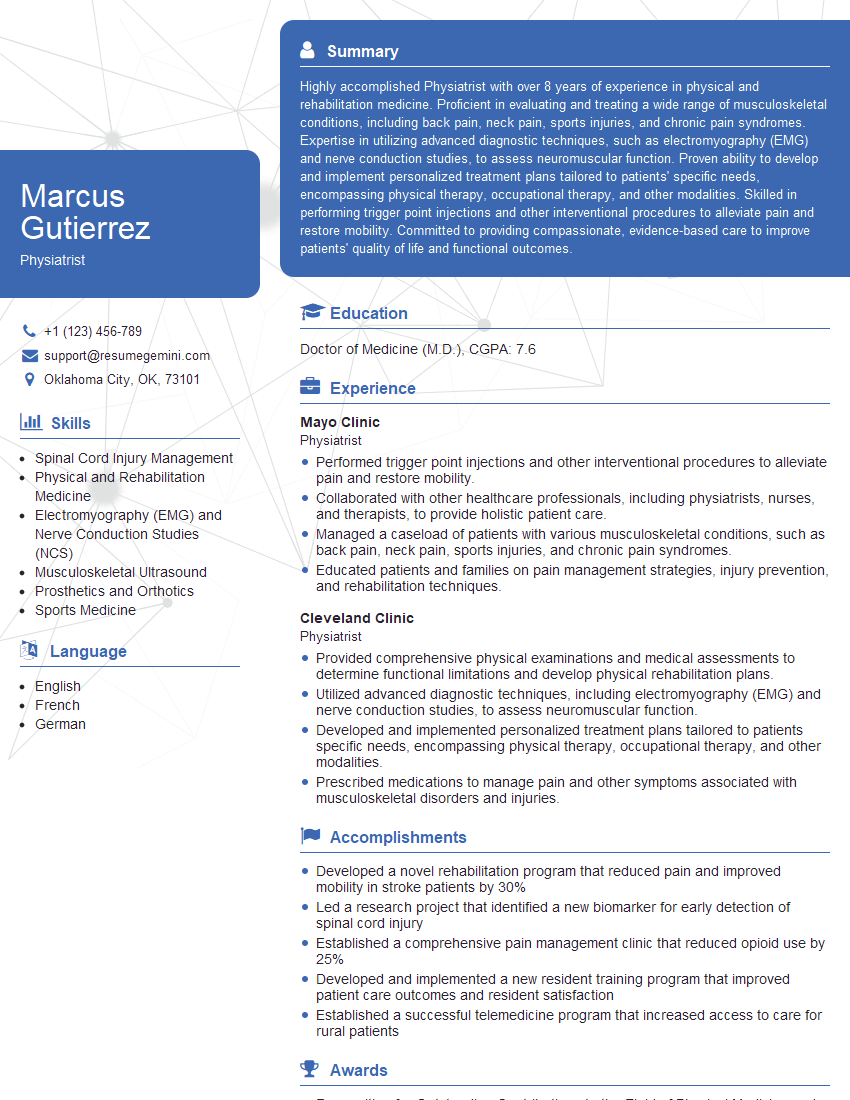
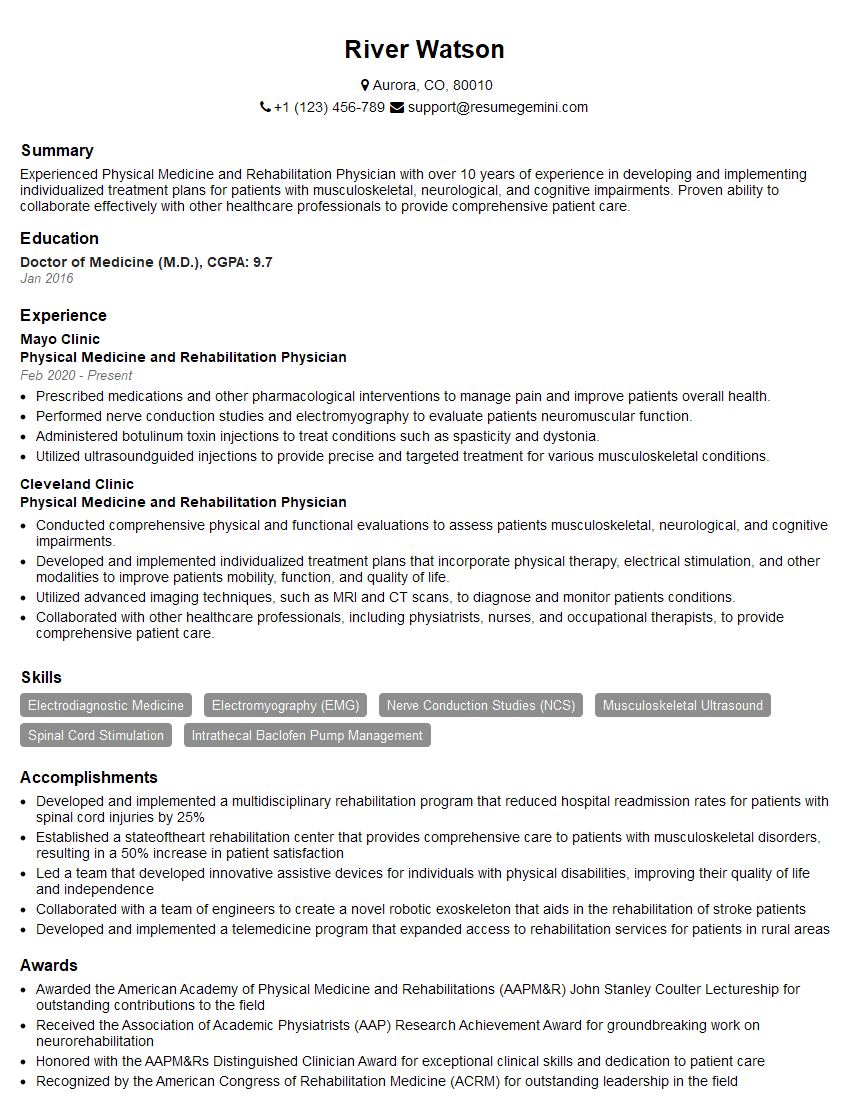
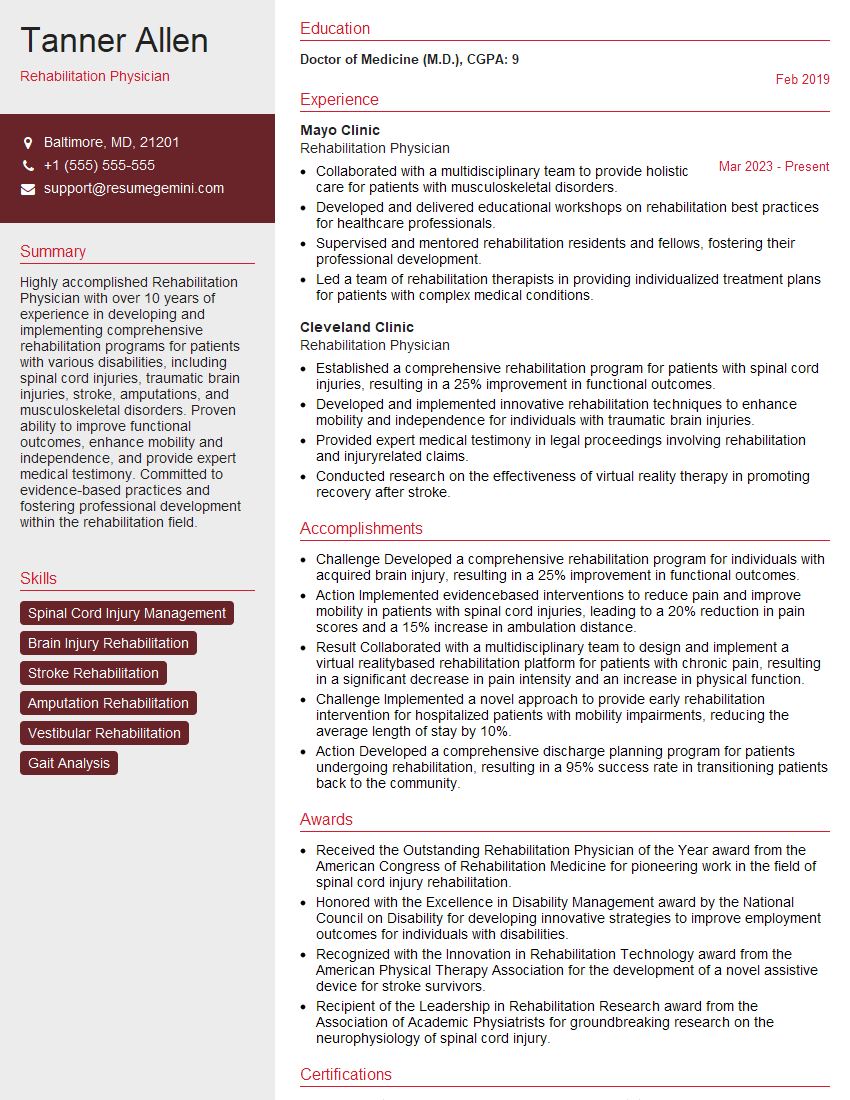
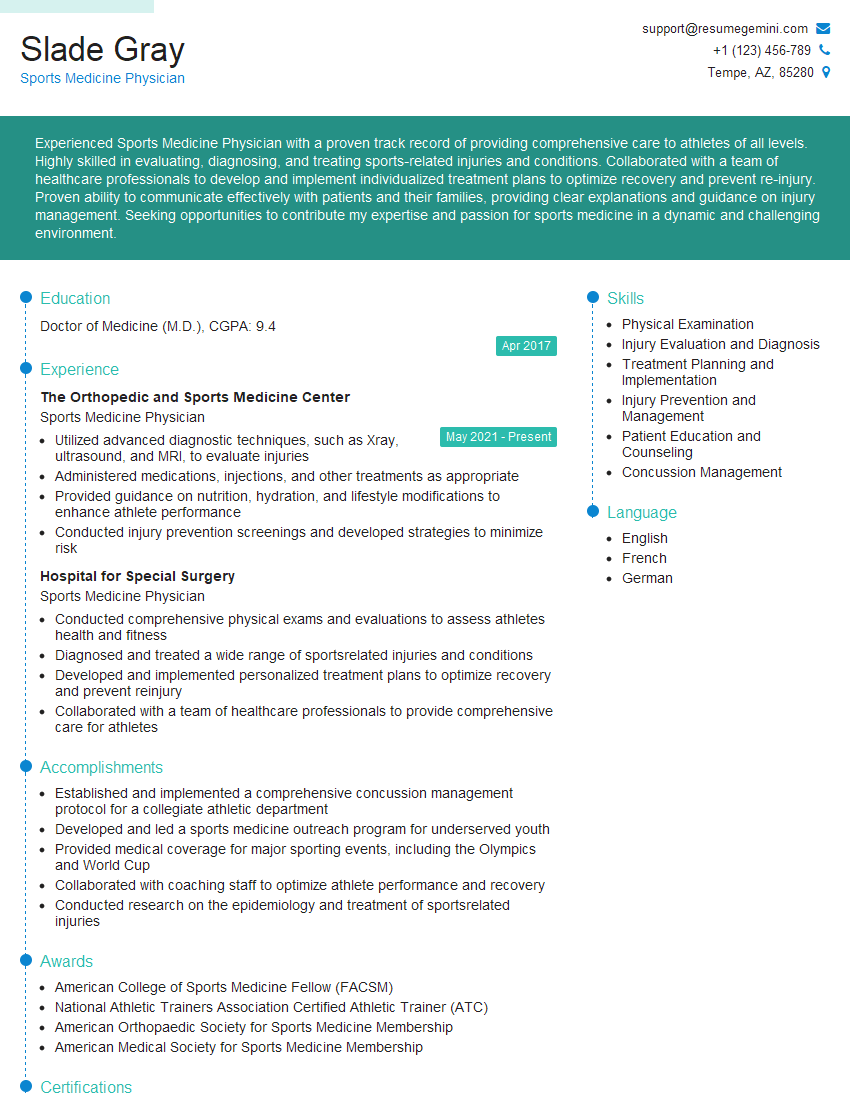
Mastering Outpatient Physiatry principles is crucial for career advancement, opening doors to diverse and rewarding opportunities in a growing field. A strong, ATS-friendly resume is your key to unlocking these opportunities. To ensure your resume effectively showcases your skills and experience, leverage the power of ResumeGemini. ResumeGemini provides a trusted platform for creating professional, impactful resumes, and we offer examples of resumes specifically tailored to Outpatient Physiatry positions to help guide your efforts. Investing time in crafting a compelling resume will significantly enhance your job prospects.
Explore more articles
Users Rating of Our Blogs
Share Your Experience
We value your feedback! Please rate our content and share your thoughts (optional).
What Readers Say About Our Blog
To the interviewgemini.com Webmaster.
Very helpful and content specific questions to help prepare me for my interview!
Thank you
To the interviewgemini.com Webmaster.
This was kind of a unique content I found around the specialized skills. Very helpful questions and good detailed answers.
Very Helpful blog, thank you Interviewgemini team.