The thought of an interview can be nerve-wracking, but the right preparation can make all the difference. Explore this comprehensive guide to Weight Estimation and Load Balancing interview questions and gain the confidence you need to showcase your abilities and secure the role.
Questions Asked in Weight Estimation and Load Balancing Interview
Q 1. Explain the concept of load balancing and its different algorithms.
Load balancing is a crucial technique for distributing network traffic across multiple servers. Imagine a popular website – if all the traffic went to a single server, it would likely crash under the load. Load balancing prevents this by directing incoming requests to different servers, ensuring optimal performance and high availability. Several algorithms achieve this, each with its strengths and weaknesses:
- Round Robin: Requests are distributed sequentially to each server in a circular fashion. Simple to implement but doesn’t account for server capacity differences.
Server 1, Server 2, Server 3, Server 1, Server 2... - Least Connections: The request is sent to the server with the fewest active connections. This algorithm dynamically adapts to changing server loads, ensuring servers aren’t overloaded.
- Weighted Round Robin: Similar to round robin, but servers are assigned weights reflecting their capacity. A more powerful server might receive twice as many requests as a less powerful one.
Server 1 (weight 2), Server 2 (weight 1), Server 1 (weight 2), Server 2 (weight 1)... - Source IP Hashing: A hashing algorithm uses the source IP address to determine which server handles the request. This guarantees that requests from the same client always go to the same server, useful for maintaining session state.
- IP Hash: This distributes requests based on the hash of the client’s IP address. Ensures that a client always connects to the same server.
Choosing the right algorithm depends on your specific needs and application requirements. For simple applications, round robin may suffice. For complex applications with varying server capacities, weighted round robin or least connections are more suitable.
Q 2. Describe different types of load balancers (hardware, software, cloud-based).
Load balancers come in various forms, each offering different advantages and deployment options:
- Hardware Load Balancers: These are dedicated physical devices specifically designed for load balancing. They offer high performance and reliability, often used in enterprise environments with high traffic volumes. They handle complex scenarios and can be expensive.
- Software Load Balancers: These are software applications running on a server. More affordable and flexible than hardware solutions, they can be scaled easily. Examples include HAProxy and Nginx. They can be less performant than hardware options, particularly under extremely high traffic.
- Cloud-Based Load Balancers: Offered by cloud providers (AWS, Azure, GCP), these are managed services that automatically handle scaling and high availability. They are easy to set up and manage but can incur ongoing costs. They offer scalability and ease of management.
The choice between these types depends on factors such as budget, technical expertise, traffic volume, and scalability requirements.
Q 3. What are the advantages and disadvantages of round-robin, least connections, and weighted round-robin load balancing algorithms?
Let’s compare the advantages and disadvantages of three common load balancing algorithms:
- Round Robin:
- Advantages: Simple to implement and understand; distributes requests fairly amongst servers with similar capabilities.
- Disadvantages: Doesn’t account for server load differences; can lead to uneven distribution if servers have varying processing speeds or capacities.
- Least Connections:
- Advantages: Dynamically adjusts to server load; minimizes overload on busy servers; improves responsiveness and performance.
- Disadvantages: More complex to implement than round robin; requires monitoring of server connections; can be less efficient if server capacities are significantly different.
- Weighted Round Robin:
- Advantages: Accounts for server capacity differences; allows for weighted distribution of requests based on server capabilities; more efficient than simple round robin.
- Disadvantages: Slightly more complex to implement than round robin; requires careful weighting of servers; may require adjustments if server capacities change over time.
The ‘best’ algorithm depends on the specific application and its requirements.
Q 4. How do you handle sticky sessions in load balancing?
Sticky sessions (or session persistence) ensure that requests from the same client are always directed to the same server. This is crucial for applications that maintain session state, such as online shopping carts or banking websites. Several methods handle sticky sessions:
- IP Hashing: The load balancer uses the client’s IP address to hash it and direct the request to a specific server. Simple, but can be unreliable if clients use dynamic IPs.
- Cookie-Based Persistence: The load balancer inserts a cookie into the client’s browser. Subsequent requests include this cookie, allowing the load balancer to route them to the original server. This is a more reliable approach than IP hashing.
- URL Rewriting: The load balancer modifies the URL to include a server identifier. This information is used to route subsequent requests to the correct server.
Choosing the best approach depends on your application and requirements. Cookie-based persistence is a popular and reliable choice.
Q 5. Explain the concept of session persistence and its importance in load balancing.
Session persistence, also known as sticky sessions, is the mechanism that ensures a user’s requests are consistently routed to the same server throughout a session. This is crucial for applications that store session data on the server-side. For example, an e-commerce website needs to keep track of the items in a user’s shopping cart. Without session persistence, if the user’s requests are routed to different servers, the shopping cart information will be lost.
The importance lies in maintaining application state and user context. Imagine an online banking application; session persistence ensures the security and integrity of the user’s transaction. Without it, users might face interrupted sessions, lost data, and security risks.
Q 6. Describe health checks in load balancing and their importance.
Health checks are crucial for ensuring the availability and reliability of the servers behind a load balancer. They are regular checks performed by the load balancer to determine if a server is functioning correctly. If a server fails a health check, the load balancer removes it from the pool of active servers, preventing requests from being sent to a malfunctioning server. This prevents user disruption and maintains the overall system’s stability.
Types of health checks include:
- TCP Checks: The load balancer attempts a TCP connection to a specified port on the server. A successful connection indicates the server is running.
- HTTP/HTTPS Checks: The load balancer sends an HTTP or HTTPS request to a specific URL on the server. A successful response (e.g., a 200 OK status code) indicates the application is responding correctly.
- Custom Checks: More sophisticated checks can be implemented using custom scripts or applications, enabling more granular health monitoring tailored to your specific application’s needs.
Health checks ensure high availability and prevent users from being directed to faulty servers.
Q 7. How would you troubleshoot a load balancer that is not distributing traffic evenly?
Troubleshooting an unevenly distributing load balancer involves systematic investigation:
- Check Server Health: Use the load balancer’s health check monitoring tools to verify if all servers are marked as healthy. Unhealthy servers won’t receive traffic.
- Examine Server Capacity: Assess CPU utilization, memory usage, and network I/O of each server. Overloaded servers may appear healthy but be slow to respond, potentially causing traffic skew.
- Review Load Balancing Algorithm: Ensure the selected algorithm is appropriate for your application and that its configuration is correct. For example, incorrect weights in weighted round robin can lead to uneven distribution.
- Inspect Load Balancer Logs: Analyze the load balancer’s logs for errors or unusual patterns. This could indicate misconfigurations or unexpected behavior.
- Monitor Network Connectivity: Check for network connectivity issues between the load balancer and the servers. Network problems can lead to traffic being directed away from some servers.
- Verify Server Configuration: Ensure all servers are similarly configured (same software versions, application settings, etc.). Inconsistent configurations can affect server response times and lead to uneven distribution.
By following these steps, you can isolate the root cause of the uneven traffic distribution and take appropriate corrective actions.
Q 8. Explain how to estimate the weight of a software component based on its resource consumption.
Estimating the weight of a software component involves quantifying its resource consumption. Think of it like weighing a physical object; we need to measure its ‘size’ in terms of CPU usage, memory footprint, disk I/O, and network bandwidth. A heavier component consumes more of these resources.
We can achieve this through profiling and benchmarking. Profiling tools analyze the component’s behavior during execution, revealing hotspots of resource consumption. Benchmarking involves running controlled tests under various loads to measure resource usage under different scenarios. The results of these tests are then analyzed to create a weighted average representing the component’s resource needs.
For example, a component performing complex database queries might have a high weight due to substantial CPU and disk I/O. Conversely, a simple static content server might have a low weight. These weights help in deployment planning and capacity management.
A common approach is to define a weighted score based on several factors: CPU utilization (e.g., 40%), memory usage (30%), disk I/O (20%), and network bandwidth (10%). Each factor is scored based on measurements and these scores are then combined to get a final weight score for the component.
Q 9. What metrics would you use to monitor the performance of a load-balanced system?
Monitoring a load-balanced system’s performance requires a holistic approach, tracking several key metrics. Imagine it like monitoring the health of a patient – you need various vital signs.
- Request latency: How long does it take to process a request? High latency indicates overload.
- Throughput: How many requests are processed per second? A significant drop signals problems.
- Error rate: The percentage of failed requests. Spikes highlight issues needing immediate attention.
- Server load: CPU utilization, memory usage, and disk I/O of individual servers. High values indicate potential bottlenecks.
- Queue length: How many requests are waiting to be processed? Long queues denote system saturation.
- Server health: Status of individual servers, showing whether they are up or down. Crucial for identifying failures.
These metrics can be collected using monitoring tools like Prometheus, Grafana, or cloud provider-specific services (e.g., AWS CloudWatch, Azure Monitor).
Q 10. How do you handle failures in a load-balanced environment?
Handling failures in a load-balanced environment is critical for ensuring high availability. The key is redundancy and graceful degradation.
- Health checks: The load balancer regularly checks the health of backend servers. Unhealthy servers are automatically removed from the rotation.
- Failover mechanisms: If a server fails, the load balancer automatically redirects traffic to healthy servers.
- Automated scaling: Upon detecting increased load or server failures, the system automatically scales up by adding more servers.
- Circuit breakers: Prevent cascading failures by stopping requests to an unhealthy service temporarily.
- Retry mechanisms: Clients retry failed requests after a short delay, giving servers time to recover.
Proper error handling, logging, and alerting are essential for detecting and resolving failures quickly.
Q 11. Explain the concept of load shedding and when you would use it.
Load shedding is a technique to protect a system from overload by selectively dropping requests when it’s nearing capacity. Think of it like a dam releasing excess water to prevent a catastrophic overflow.
It’s used when the system is under extreme stress, and continuing to process all requests would lead to performance degradation or complete failure. This prevents a total system crash, ensuring some service is still available although at a reduced capacity.
Load shedding strategies can include:
- Random request dropping: Requests are dropped randomly.
- Priority-based dropping: Lower-priority requests are dropped first.
- Fair queuing: Requests are dropped based on a fairness algorithm.
Careful consideration of which requests to drop is crucial. For example, you might prioritize critical requests like user logins over less important background tasks.
Q 12. How do you determine the appropriate capacity for a system, considering both current and future load?
Determining appropriate system capacity involves analyzing current load and projecting future needs. It’s like designing a house – you need to account for current residents and future family growth.
We can utilize several techniques:
- Historical data analysis: Analyze past usage patterns to extrapolate future requirements.
- Load testing: Simulate various load scenarios to identify bottlenecks and determine the system’s capacity limits.
- Capacity planning tools: Use specialized tools to model and predict system capacity needs.
- Growth projections: Estimate future growth based on business plans and market trends.
- Margin of safety: Add extra capacity to accommodate unexpected surges in demand.
The goal is to balance cost optimization with sufficient capacity to ensure reliable system performance.
Q 13. Describe your experience with different load balancing technologies (e.g., HAProxy, Nginx, AWS Elastic Load Balancing).
I have extensive experience with various load balancing technologies, each offering unique strengths. HAProxy is known for its high performance and flexibility, making it a solid choice for demanding applications. I’ve used it in scenarios needing advanced traffic routing and sophisticated health checks. Nginx, while often used as a web server, provides efficient load balancing capabilities, particularly suited for simpler setups due to its ease of configuration.
AWS Elastic Load Balancing (ELB) is a powerful cloud-based solution integrating seamlessly with other AWS services. Its autoscaling features simplify capacity management, allowing for dynamic adjustments based on demand. The choice of technology depends on the specific requirements of the application and infrastructure. For instance, for a complex, high-traffic application requiring advanced features like session persistence and sophisticated health checks, HAProxy or a cloud-based solution like ELB would be more appropriate than Nginx.
Q 14. How do you handle scaling issues in a microservices architecture?
Scaling in a microservices architecture involves scaling individual services independently based on their resource needs. It’s not a monolithic scaling operation; instead, we scale granularly.
Strategies include:
- Horizontal scaling: Adding more instances of a service to distribute the load.
- Vertical scaling: Increasing the resources (CPU, memory) of existing instances.
- Caching: Reducing the load on backend services by caching frequently accessed data.
- Asynchronous communication: Using message queues to decouple services and improve scalability.
Monitoring individual service performance is critical to determine which services need scaling. Automated scaling mechanisms triggered by predefined metrics ensure a responsive and adaptive architecture.
Q 15. Explain the trade-offs between different load balancing strategies.
Load balancing strategies offer different trade-offs between performance, complexity, and cost. Let’s examine a few common approaches:
- Round Robin: Simple and easy to implement, distributing requests sequentially. However, it doesn’t account for server capacity variations; a slower server can become a bottleneck. Think of it like serving customers at a restaurant – each gets served in turn, regardless of how fast they eat.
- Least Connections: This directs new requests to the server with the fewest active connections. It’s more efficient than Round Robin because it dynamically adapts to server load, preventing overload. It’s like a smart restaurant assigning servers based on their current table occupancy.
- Weighted Round Robin: Similar to Round Robin, but servers are assigned weights reflecting their processing capacity. A more powerful server receives a proportionally higher number of requests. This is like having a restaurant with chefs of varying skills – the more experienced chefs handle more orders.
- IP Hash: Distributes requests based on the client’s IP address, ensuring consistent server assignment for each client. Useful for maintaining session affinity, where a client consistently interacts with the same server. This is analogous to a restaurant assigning a particular waiter to a regular customer.
The choice depends on your application’s needs. Round Robin is good for simple applications, while Least Connections or Weighted Round Robin are better for handling fluctuating loads. IP Hash is crucial when session persistence is vital.
Career Expert Tips:
- Ace those interviews! Prepare effectively by reviewing the Top 50 Most Common Interview Questions on ResumeGemini.
- Navigate your job search with confidence! Explore a wide range of Career Tips on ResumeGemini. Learn about common challenges and recommendations to overcome them.
- Craft the perfect resume! Master the Art of Resume Writing with ResumeGemini’s guide. Showcase your unique qualifications and achievements effectively.
- Don’t miss out on holiday savings! Build your dream resume with ResumeGemini’s ATS optimized templates.
Q 16. How do you choose the right load balancing algorithm for a specific application?
Selecting the right load balancing algorithm involves carefully considering several factors:
- Application requirements: Does the application require session persistence (IP Hash)? Is it sensitive to latency (Least Connections)? Does it have servers with varying capacities (Weighted Round Robin)?
- Traffic patterns: Is the traffic consistent or bursty? Bursty traffic might benefit from a strategy that adapts quickly to sudden increases in load.
- Server capacity: If servers have different processing power, Weighted Round Robin ensures optimal utilization.
- Complexity and cost: Simpler algorithms (Round Robin) are easier to implement and manage but may be less efficient.
For example, a highly interactive online game might benefit from IP Hash to maintain consistent server assignments for players, ensuring session integrity. An e-commerce website with fluctuating traffic might utilize Least Connections to dynamically distribute load efficiently.
Q 17. What are the key performance indicators (KPIs) you monitor for load balancing?
Key Performance Indicators (KPIs) for load balancing focus on both the load balancer and the backend servers:
- Request latency: The time taken to process a request. High latency indicates potential bottlenecks.
- Throughput: The number of requests processed per unit of time. Low throughput suggests insufficient capacity.
- Server load: CPU utilization, memory usage, and network I/O on each server. High load indicates potential overload.
- Error rate: The percentage of requests resulting in errors. High error rates point to problems in the system.
- Connection pool usage: The number of active connections. High usage can indicate insufficient connection capacity.
- Queue length: The number of requests waiting to be processed. Long queues indicate overloaded servers.
Monitoring these KPIs allows for proactive identification and resolution of performance issues before they significantly impact users.
Q 18. Explain how you would design a load-balanced system for high availability.
Designing a load-balanced system for high availability involves several crucial elements:
- Redundancy: Multiple load balancers and backend servers are deployed to handle failures. If one component fails, others seamlessly take over.
- Health checks: The load balancer regularly monitors the health of backend servers, removing unhealthy servers from the pool and directing traffic to healthy ones.
- Failover mechanisms: Automated procedures ensure that if a load balancer or server fails, traffic is redirected to available resources without significant downtime.
- Session persistence (where needed): If the application requires session persistence, mechanisms like sticky sessions (using IP Hash) ensure that a user’s requests are consistently handled by the same server, even in case of failover.
- Geographic distribution (if needed): Distributing servers across different geographic locations reduces latency for users in various regions and mitigates the impact of regional outages.
Imagine a cloud-based service; by using multiple availability zones and regions, the system can tolerate individual datacenter failures without impacting service.
Q 19. How do you handle network latency in a distributed system?
Network latency in a distributed system significantly impacts performance. Here are strategies to handle it:
- Geographic proximity: Place servers closer to users to reduce latency. CDNs are excellent for this purpose.
- Caching: Caching frequently accessed data closer to users reduces the need to fetch it from distant servers.
- Content Delivery Networks (CDNs): CDNs distribute content geographically, allowing users to access content from a nearby server.
- Optimized network infrastructure: Use high-bandwidth, low-latency network connections between servers.
- Asynchronous communication: Use asynchronous communication patterns (e.g., message queues) to decouple components and reduce latency dependencies.
For instance, using a CDN minimizes latency for users globally, as content is served from a server in their region rather than from a central location.
Q 20. What are the challenges of implementing load balancing in a geographically distributed environment?
Implementing load balancing in a geographically distributed environment adds complexity:
- Latency variations: Network latency varies significantly across geographic locations, requiring sophisticated algorithms to account for these differences.
- Network connectivity: Maintaining reliable network connectivity between geographically dispersed servers and load balancers is challenging.
- Data synchronization: Keeping data consistent across geographically distributed servers can be complex, requiring mechanisms like data replication and synchronization.
- Regulatory compliance: Data residency regulations might require servers to be located within specific geographic regions.
- Increased operational complexity: Managing a geographically distributed system involves more complex monitoring and maintenance processes.
For example, an international e-commerce company must consider latency and data residency regulations when distributing its servers across multiple countries. Sophisticated load balancing algorithms and robust monitoring are essential.
Q 21. Explain how you would integrate load balancing with a CDN.
Integrating load balancing with a CDN enhances performance and scalability. The load balancer can direct traffic to the CDN’s edge servers, which then distribute content to users based on their geographic location. This integration reduces latency and improves the user experience.
The load balancer acts as the entry point, directing traffic to the CDN based on the user’s location and potentially other factors. The CDN then handles content delivery, ensuring that users receive content from the geographically closest edge server. This architecture offloads traffic from the origin servers, reducing their load and improving overall system performance and resilience.
Consider a global media streaming service. The load balancer directs user requests to the CDN based on geolocation. The CDN then handles the streaming, ensuring low latency delivery for users worldwide. The origin servers focus on content management and upload, resulting in a scalable and efficient system.
Q 22. Describe a time you had to optimize the performance of a load-balanced system.
In a previous role, we experienced a significant performance bottleneck in our e-commerce platform during peak shopping seasons. Our load balancer, while initially sufficient, couldn’t handle the surge in traffic, resulting in slow response times and frustrated users. To optimize performance, we first conducted thorough performance testing to pinpoint the bottlenecks. This involved using tools like JMeter to simulate high traffic loads and identify the slowest parts of the system. We discovered that our image server was the major culprit.
Our optimization strategy involved a multi-pronged approach. First, we upgraded the image server hardware to handle a greater volume of requests. Second, we implemented content delivery network (CDN) integration to cache static images closer to users, reducing the load on the origin server. Third, we refined our load balancing algorithm from a simple round-robin to a more sophisticated approach using weighted round-robin, assigning more weight to the healthier, less-utilized servers. Finally, we improved our image optimization techniques to reduce file sizes, thus decreasing bandwidth consumption. These combined efforts resulted in a significant improvement in response times and a much more robust system capable of handling peak traffic demands.
Q 23. How do you perform capacity planning for a large-scale application?
Capacity planning for large-scale applications is a crucial aspect of ensuring reliability and scalability. It involves forecasting future resource needs based on current usage patterns, predicted growth, and potential peak demands. My approach typically involves a combination of bottom-up and top-down estimation.
The bottom-up approach involves analyzing individual components of the application, like databases, web servers, and application servers, to determine their individual resource requirements. This often necessitates detailed profiling and performance testing to understand the resource consumption of different functionalities under varying loads.
The top-down approach takes a more holistic perspective, considering overall anticipated user growth, transaction volumes, and expected system load. This approach relies on historical data, market trends, and business projections.
Once I have gathered data from both approaches, I use a combination of statistical modeling and forecasting techniques to predict future resource needs. This might involve extrapolating from historical data or using more sophisticated models, such as ARIMA or Prophet, to account for seasonality and trends. Finally, I create capacity plans that include recommendations for hardware upgrades, infrastructure scaling, and potential architectural changes to accommodate anticipated growth and ensure the application remains responsive and reliable under all conditions.
Q 24. Explain your experience with load balancing tools and monitoring systems.
My experience encompasses a wide range of load balancing tools and monitoring systems. I’ve worked extensively with hardware load balancers like F5 BIG-IP and Citrix NetScaler, as well as software solutions such as HAProxy and Nginx. For cloud environments, I’m proficient with AWS Elastic Load Balancing (ELB), Google Cloud Load Balancing, and Azure Load Balancer.
In terms of monitoring, I’m experienced with tools like Prometheus, Grafana, Datadog, and New Relic. These tools are vital for tracking key metrics such as response times, request rates, server utilization, and error rates. These metrics are crucial for identifying potential bottlenecks and ensuring the health of the load-balanced system. I find that a proactive monitoring approach, with automated alerts for critical thresholds, is crucial for timely intervention and issue resolution.
Q 25. Describe a situation where you had to debug a load balancing issue.
During a recent project, we encountered a situation where our application experienced intermittent slowdowns, despite seemingly adequate server capacity and load balancing configuration. Initial investigations revealed no obvious server-side issues.
Using the logging and monitoring tools, we discovered that a specific backend service was exhibiting unusual delays. Further analysis of the logs indicated a subtle correlation between these delays and specific client IP addresses. This suggested a potential network-level issue, perhaps related to routing or DNS resolution. After investigating our DNS configuration and network topology, we found that a misconfiguration in our DNS server was causing certain client requests to be routed inefficiently, leading to increased latency. Correcting this DNS configuration immediately resolved the intermittent slowdowns.
Q 26. How do you ensure security within a load-balanced environment?
Security within a load-balanced environment requires a multi-layered approach. First, the load balancer itself should be hardened against common attacks, with regular security updates and strong authentication mechanisms in place. This includes utilizing appropriate firewall rules and access controls.
Second, all backend servers should be secured individually, employing best practices like secure coding, regular patching, and robust intrusion detection systems.
Third, SSL/TLS encryption should be implemented to protect communication between clients and the load balancer, as well as between the load balancer and backend servers.
Fourth, regular security audits and penetration testing should be conducted to identify and mitigate potential vulnerabilities. Finally, implementing robust logging and monitoring mechanisms allows for timely detection and response to any security incidents. Employing a Web Application Firewall (WAF) in front of the load balancer is a further protective measure.
Q 27. What are some best practices for weight estimation and load balancing in cloud environments?
Best practices for weight estimation and load balancing in cloud environments emphasize automation, scalability, and observability.
- Dynamic Weight Adjustment: Instead of statically assigning weights, leverage cloud monitoring tools to automatically adjust weights based on real-time server performance metrics. This ensures that resources are dynamically allocated to handle fluctuating workloads.
- Auto-scaling: Integrate load balancing with auto-scaling capabilities to automatically add or remove server instances based on demand. This prevents bottlenecks during peak periods and optimizes cost efficiency during low-demand periods.
- Health Checks: Implement robust health checks to ensure that only healthy servers are included in the load balancing pool. This prevents unhealthy servers from receiving traffic and ensures high availability.
- Blue/Green Deployments: Utilize blue/green deployments for zero-downtime updates and seamless transitions between versions of your application.
- Monitoring and Alerting: Continuous monitoring of key metrics, with automated alerts for critical thresholds, is crucial for early detection and resolution of performance issues.
By embracing these best practices, you build a highly available, scalable, and resilient load-balanced system in the cloud.
Q 28. Describe your understanding of different load balancing techniques for database systems.
Load balancing techniques for database systems require careful consideration of data consistency and transaction management.
- Read/Write Splitting: Separates read and write operations across different database servers. Read-only queries are directed to read replicas, while write operations are handled by the primary database server. This offloads read traffic from the primary server and improves overall performance.
- Connection Pooling: Efficiently manages database connections by creating a pool of connections that applications can reuse, minimizing the overhead of establishing new connections for each request.
- Database Replication: Creates copies of the database on multiple servers, ensuring data redundancy and high availability. Different replication strategies exist, including synchronous and asynchronous replication, each offering a different trade-off between consistency and performance.
- Sharding: Horizontally partitions the database across multiple servers, distributing the data across a cluster. This improves scalability by allowing different portions of the database to be accessed concurrently.
The optimal technique depends on the specific database system, application requirements, and performance goals. Careful planning and consideration of data consistency are crucial in implementing these load balancing strategies effectively.
Key Topics to Learn for Weight Estimation and Load Balancing Interview
- Fundamentals of Load Balancing: Understanding different load balancing algorithms (round-robin, least connections, weighted round-robin), their strengths and weaknesses, and appropriate use cases.
- Weight Estimation Techniques: Exploring methods for estimating the resource consumption (CPU, memory, network) of different tasks or services. This includes understanding factors influencing resource needs and potential bottlenecks.
- Practical Application in Distributed Systems: Analyzing how load balancing and weight estimation are implemented in cloud architectures (AWS, Azure, GCP) and microservices environments. Consider scenarios involving scaling and failover.
- Performance Modeling and Analysis: Learning to use metrics to evaluate the efficiency of a load balancing strategy. This includes understanding concepts like throughput, latency, and resource utilization.
- Data Structures and Algorithms: Reviewing relevant data structures (e.g., hash tables, queues) and algorithms (e.g., sorting, searching) that are fundamental to efficient load balancing implementations.
- Capacity Planning: Understanding how load balancing and weight estimation play a role in predicting future resource needs and proactively scaling systems to meet demand.
- Failure Handling and Resilience: Exploring strategies for handling failures in load balancers and ensuring system availability and stability. This includes concepts like active-passive and active-active configurations.
- Security Considerations: Understanding potential security vulnerabilities associated with load balancing and how to mitigate them.
Next Steps
Mastering Weight Estimation and Load Balancing is crucial for advancing your career in high-demand areas like cloud computing, distributed systems, and DevOps. These skills demonstrate a strong understanding of system architecture and performance optimization, highly valued by employers. To significantly boost your job prospects, create an ATS-friendly resume that clearly showcases your expertise. ResumeGemini is a trusted resource to help you build a professional and impactful resume. We provide examples of resumes tailored to Weight Estimation and Load Balancing to give you a head start. Take advantage of these resources and present your skills effectively!
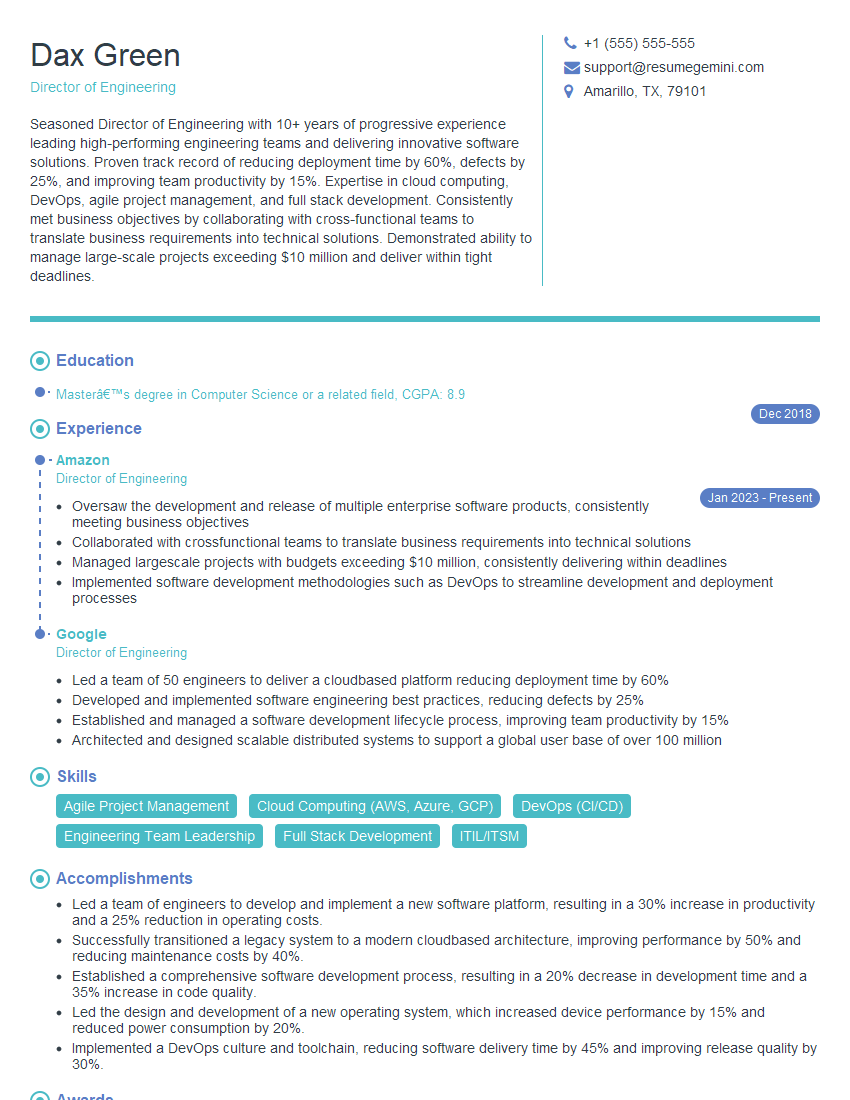
Director of Engineering Resume Sample

Network Engineer Resume Sample
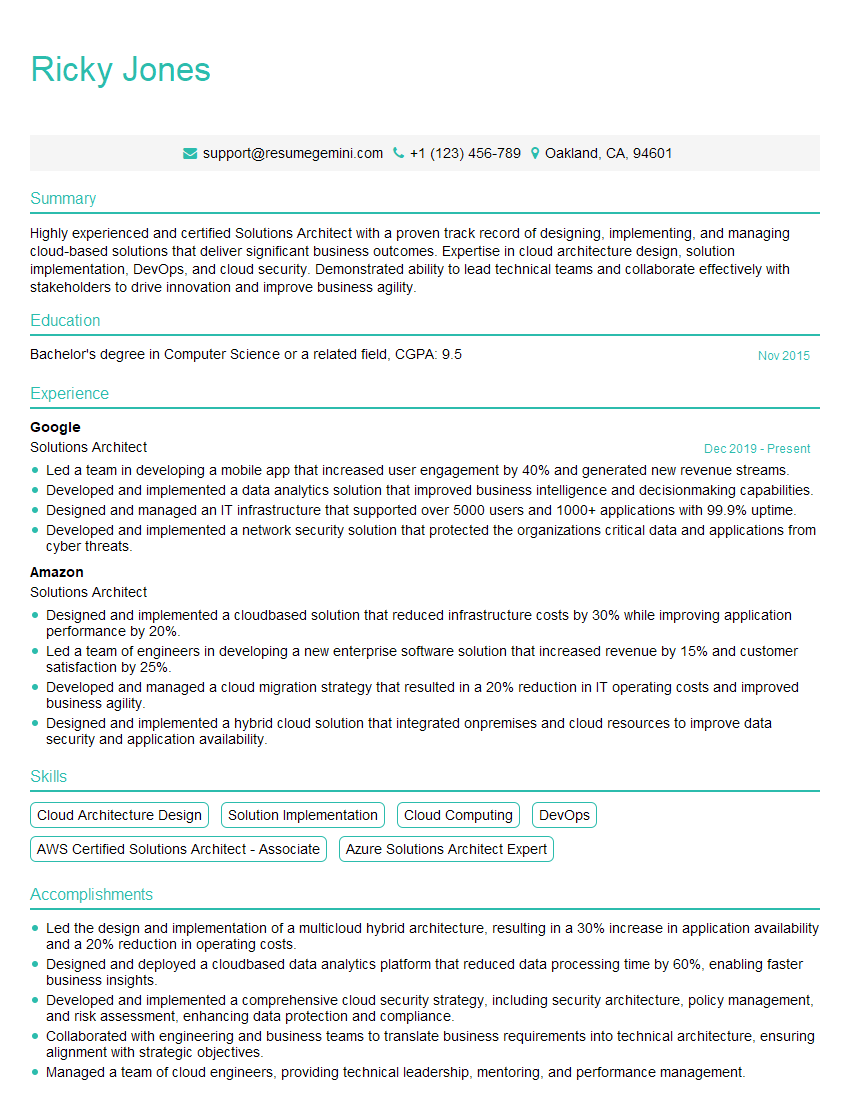
Solutions Architect Resume Sample

Infrastructure Engineer Resume Sample

System Architect Resume Sample

IT Manager Resume Sample

Database Administrator Resume Sample
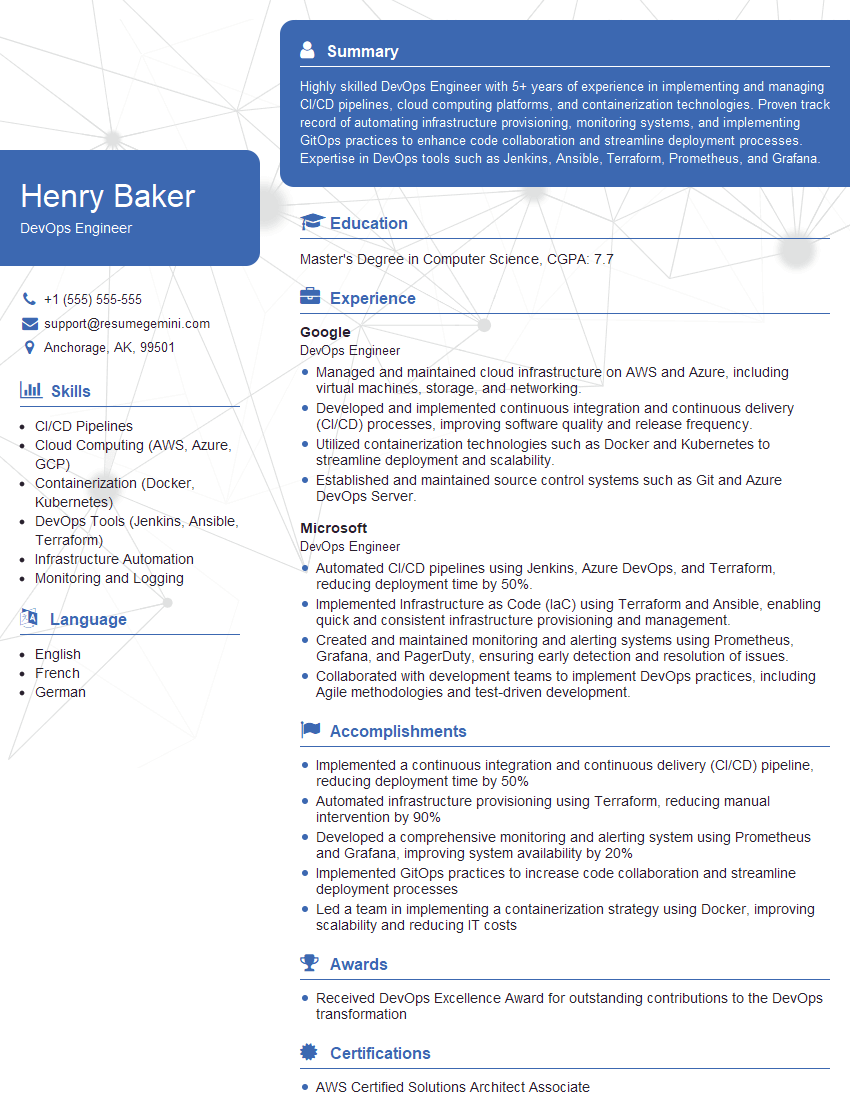
DevOps Engineer Resume Sample
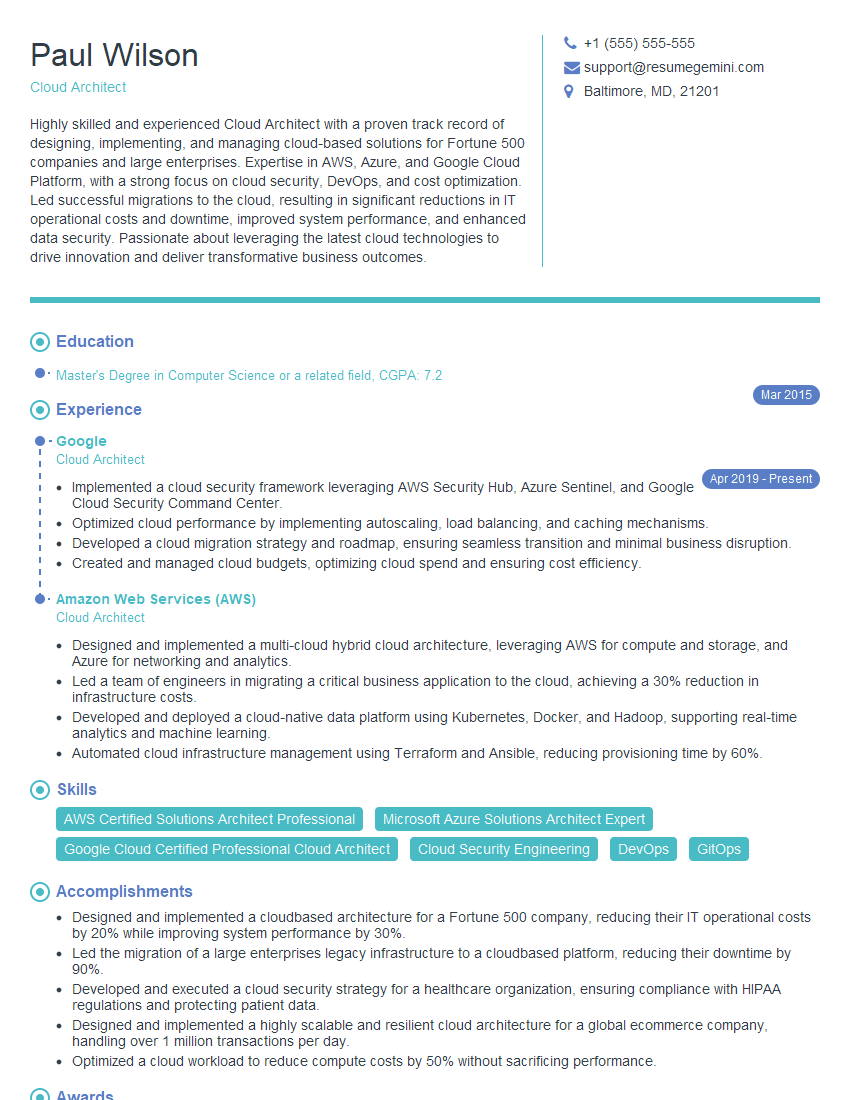
Cloud Architect Resume Sample

Cloud Security Engineer Resume Sample
Explore more articles
Users Rating of Our Blogs
Share Your Experience
We value your feedback! Please rate our content and share your thoughts (optional).
What Readers Say About Our Blog
To the interviewgemini.com Webmaster.
Very helpful and content specific questions to help prepare me for my interview!
Thank you
To the interviewgemini.com Webmaster.
This was kind of a unique content I found around the specialized skills. Very helpful questions and good detailed answers.
Very Helpful blog, thank you Interviewgemini team.