Every successful interview starts with knowing what to expect. In this blog, we’ll take you through the top Wine Innovation interview questions, breaking them down with expert tips to help you deliver impactful answers. Step into your next interview fully prepared and ready to succeed.
Questions Asked in Wine Innovation Interview
Q 1. Describe your experience with sustainable winemaking practices.
Sustainable winemaking is paramount to me, encompassing environmental, social, and economic responsibility. It’s not just a trend; it’s a necessity for the long-term health of the industry and our planet.
- Reduced Water Usage: I implement precision irrigation techniques, using soil moisture sensors to optimize water delivery, minimizing waste and preserving groundwater resources. For example, at one vineyard, we reduced water consumption by 25% through this method.
- Organic and Biodynamic Viticulture: I strongly advocate for minimizing synthetic pesticides and fertilizers, favoring organic and biodynamic practices that foster biodiversity and soil health. This improves grape quality and reduces environmental impact. We’ve seen improved disease resistance and a more complex flavor profile in grapes grown biodynamically.
- Waste Reduction and Recycling: We meticulously manage waste streams from the winery, recycling materials like glass and cardboard and implementing composting programs for pomace (grape skins and seeds) to create nutrient-rich soil amendments.
- Renewable Energy: I’m a strong proponent of incorporating renewable energy sources, such as solar power, into winery operations to reduce our carbon footprint. This not only benefits the environment, but can also result in significant cost savings in the long run.
- Carbon Footprint Reduction: We are constantly seeking ways to reduce our carbon emissions across the entire production chain, from transportation to packaging.
The success of these practices is measured through regular audits and certifications like organic and biodynamic certifications, ensuring transparency and accountability. Sustainable winemaking is not just an environmental imperative, but it also enhances brand reputation and consumer appeal.
Q 2. Explain the impact of climate change on wine production and your proposed solutions.
Climate change presents significant challenges to wine production, primarily through altered growing seasons, increased frequency of extreme weather events (heatwaves, droughts, hailstorms), and shifting viticultural zones.
- Impact on Grape Quality: Warmer temperatures can lead to earlier harvests, potentially resulting in grapes with lower acidity and less complex aromas. Increased drought stress can negatively impact yield and berry size.
- Disease and Pest Pressure: Changing weather patterns can alter the dynamics of pests and diseases, making them more difficult to manage.
- Shifting Viticultural Zones: As temperatures rise, suitable regions for specific grape varietals may shift, potentially forcing winemakers to adapt their cultivation practices or even relocate.
Proposed Solutions:
- Adaptation Strategies: Implementing drought-resistant rootstocks, adjusting vineyard canopy management to provide shade during heatwaves, and exploring alternative grape varieties better suited to warmer climates.
- Precision Viticulture: Using technology like remote sensing and weather forecasting to make informed decisions regarding irrigation, fertilization, and pest control.
- Carbon Sequestration: Promoting soil health through cover cropping and other sustainable practices, which helps to absorb carbon dioxide from the atmosphere.
- Innovation in Winemaking Techniques: Exploring new fermentation and preservation techniques to maintain wine quality under changing environmental conditions.
Addressing climate change requires a multi-faceted approach involving both mitigation (reducing greenhouse gas emissions) and adaptation (adjusting to the changing climate). Collaboration between winemakers, researchers, and policymakers is crucial to developing effective solutions.
Q 3. How do you stay updated on the latest winemaking technologies and trends?
Staying abreast of the latest winemaking technologies and trends is crucial for maintaining a competitive edge and producing high-quality wines. I employ several strategies:
- Industry Publications and Journals: I regularly read publications like the American Journal of Enology and Viticulture and Vineyard & Winery Management to stay informed about the latest research and innovations.
- Conferences and Trade Shows: Attending international winemaking conferences and trade shows such as Vinexpo and Unified Wine & Grape Symposium provides invaluable networking opportunities and insights into emerging trends.
- Online Resources and Webinars: I utilize online resources such as specialized websites and webinars to access the latest information and participate in online discussions with other wine professionals.
- Collaboration and Networking: I actively collaborate with other winemakers, researchers, and industry experts through professional organizations and networks, sharing best practices and knowledge.
- Research and Development: I dedicate time to conducting independent research, experimenting with new technologies, and collaborating with universities on research projects.
Continuous learning is essential in this dynamic field. By combining various information sources, I build a comprehensive understanding of emerging trends and their potential applications in winemaking.
Q 4. Describe your experience with different wine fermentation techniques.
Wine fermentation is a complex process involving yeast converting grape sugars into alcohol and carbon dioxide. My experience encompasses various techniques:
- Traditional Fermentation: This involves using indigenous or commercially available yeast strains in stainless steel tanks or oak barrels. The approach allows for a natural expression of the grape’s characteristics. I often prefer this method for lighter-bodied wines.
- Malolactic Fermentation (MLF): This secondary fermentation converts malic acid into lactic acid, resulting in a softer, rounder mouthfeel. I strategically employ MLF for specific varietals like Chardonnay and Cabernet Sauvignon, depending on the desired style.
- Controlled Temperature Fermentation: Precise temperature control during fermentation allows for fine-tuning the extraction of color, tannins, and flavors, leading to more consistent results. I use this extensively for optimal extraction and flavor control.
- Carbonic Maceration: This technique involves fermenting whole berries in a carbon dioxide-rich environment, resulting in fruit-forward wines with lower tannins. This is very useful for certain Gamay or Pinot Noir styles.
- Mixed Culture Fermentation: Using a blend of yeast strains can add complexity and unique characteristics to the wine. I explore this route when I wish to add more unique characters to the wine.
The choice of fermentation technique depends on the grape variety, desired wine style, and overall winemaking philosophy. I carefully consider these factors to achieve the optimal balance of flavors and aromas in each wine.
Q 5. What are the key quality control measures you implement during wine production?
Quality control is integral to wine production, ensuring consistent quality and meeting consumer expectations. My approach involves several key measures:
- Grape Receiving and Sorting: Rigorous checks are performed at grape reception to assess ripeness, health, and potential for defects. Any damaged or unsuitable grapes are immediately rejected.
- Monitoring Fermentation: Regular monitoring of fermentation parameters, such as temperature, pH, and sugar levels, is critical for preventing spoilage and ensuring optimal yeast activity. We use sensors and automated systems to maintain consistent conditions.
- Sensory Evaluation: Regular sensory evaluations are conducted throughout the winemaking process, from fermentation to aging. This allows for early detection of potential problems and informed adjustments to the winemaking process.
- Laboratory Analysis: Comprehensive laboratory testing is undertaken to analyze key chemical parameters, such as acidity, sugar, and volatile acidity. This data helps inform winemaking decisions and ensure the wine meets quality standards.
- Bottling and Packaging: Strict quality control is maintained during bottling and packaging to prevent contamination and ensure that the final product is consistent with the intended quality.
- Post-Bottling Monitoring: Even after bottling, samples are regularly tested to monitor for any potential issues with oxidation or spoilage.
A comprehensive quality control program is a continuous process, requiring vigilance and a commitment to excellence at every stage of wine production. It’s a key driver of consumer satisfaction and brand reputation.
Q 6. Explain your understanding of sensory evaluation in wine.
Sensory evaluation is the cornerstone of winemaking, involving the assessment of wine’s aroma, flavor, appearance, and texture. It’s a crucial tool for quality control, style development, and communication with consumers.
- Visual Assessment: Examining the wine’s color, clarity, and viscosity provides valuable clues about its age, grape variety, and overall condition.
- Olfactory Assessment (Aroma): Identifying the various aromatic compounds (e.g., fruit, floral, spice, oak) and their intensity is crucial for understanding the wine’s complexity and character. We use standardized aroma wheels to help categorize these components.
- Gustatory Assessment (Taste): Evaluating the wine’s sweetness, acidity, tannins, alcohol, and body helps determine its balance and overall harmony. We assess the finish and length of flavors.
- Tactile Assessment (Mouthfeel): The texture of the wine, including its viscosity and astringency, impacts its overall sensory experience.
Sensory evaluation is best conducted by trained professionals using standardized protocols, ensuring objectivity and reproducibility. We use both blind and non-blind tasting methods to compare and assess different wines and provide constructive feedback to improve wine quality.
Q 7. How do you manage risks related to grape yield and wine quality?
Managing risks related to grape yield and wine quality requires a proactive and multi-faceted approach.
- Crop Forecasting and Yield Estimation: Utilizing historical data, weather forecasting models, and remote sensing to predict grape yields and adjust production plans accordingly.
- Risk Diversification: Cultivating multiple grape varieties and having vineyards in different locations reduces the risk of crop failure due to localized events (e.g., frost, hail, disease outbreaks).
- Pest and Disease Management: Implementing integrated pest management (IPM) strategies minimizes the reliance on chemical interventions and reduces the risk of crop losses due to disease.
- Weather Monitoring and Mitigation: Using weather stations and frost protection systems to minimize the impact of extreme weather events on grape production.
- Insurance and Risk Management Plans: Having appropriate crop insurance and implementing business continuity plans to mitigate financial losses in case of unforeseen events.
- Wine Quality Assurance: Employing rigorous quality control measures throughout the winemaking process reduces the risk of wine spoilage and ensures consistent quality.
- Inventory Management: Managing inventory efficiently to avoid losses due to spoilage or obsolescence.
Risk management is an ongoing process requiring continuous assessment and adaptation. It involves building resilience into the production system through diversified practices and careful planning to protect against unforeseen circumstances.
Q 8. Describe your experience in developing new wine products or improving existing ones.
My experience in wine innovation spans over a decade, encompassing both the development of novel wine products and the enhancement of established ones. I’ve spearheaded projects ranging from creating a new line of organic sparkling wines using a unique fermentation technique to improving the color stability and shelf life of a flagship Cabernet Sauvignon through optimized barrel aging protocols. For example, in the organic sparkling wine project, we experimented with different yeast strains and fermentation temperatures to achieve a specific flavor profile while maintaining the integrity of the organic grapes. This involved rigorous sensory evaluation and chemical analysis at every stage. In the Cabernet Sauvignon project, we utilized advanced spectrophotometry to monitor color evolution and implemented a precise temperature and humidity control system in the aging cellar, resulting in a demonstrably improved product.
- New Product Development: This involved market research, concept creation, recipe development, sensory analysis, and finally, scaling up for production.
- Existing Product Improvement: This included process optimization, quality control enhancements, and exploring new packaging solutions to extend shelf life and enhance consumer appeal.
Q 9. How do you approach the optimization of wine production processes?
Optimizing wine production processes requires a holistic approach, combining enological expertise with data-driven decision making. My strategy involves a three-pronged approach: First, we meticulously analyze the existing production workflow identifying bottlenecks and areas for improvement using lean manufacturing principles. This might involve streamlining tasks, improving efficiency of equipment, or reducing waste. Second, we leverage data analytics tools to track key performance indicators (KPIs), such as yield, energy consumption, and quality parameters. This allows for precise monitoring of the production process. Finally, we implement continuous improvement methodologies, such as Six Sigma or Kaizen, to make incremental improvements over time and maintain consistent quality. A good example is our implementation of a smart irrigation system guided by soil moisture sensors and weather data, which resulted in a 15% reduction in water usage while maintaining grape quality.
Example KPI Tracking: Yield (kg/ha), pH, TA, Malolactic Fermentation completion rate, Bottling losses.Q 10. Explain your familiarity with various wine packaging options and their impact on wine quality.
My familiarity with wine packaging extends across various options, each impacting wine quality differently. Traditional glass bottles offer excellent protection against oxygen and light, preserving the wine’s integrity, but they are heavy, fragile and their carbon footprint is significant. Alternatives such as bag-in-box packaging offer better oxygen protection compared to PET bottles, but are less aesthetically pleasing. PET bottles are lightweight and cost-effective, yet they offer less oxygen protection than glass, affecting shelf life. Furthermore, the choice of closure (cork, screw cap, etc.) significantly impacts the wine’s interaction with oxygen, influencing its evolution and aging potential. For example, a screw cap is better for preventing oxidation in wines meant for early consumption. Each packaging solution requires a thorough understanding of the wine’s characteristics and intended market to optimize quality and shelf-life.
- Glass Bottles: Traditional, high-quality, but heavy and fragile.
- Bag-in-Box: Cost-effective, good oxygen barrier, but less visually appealing.
- PET Bottles: Lightweight, cost-effective, but offer less protection against oxidation.
Q 11. What are the key factors influencing wine’s aroma and flavor profiles?
Wine’s aroma and flavor profiles are a complex interplay of several factors. The most critical are the grape varietal itself, which dictates the primary aromatic compounds. Terroir – the combination of soil, climate, and geographical location – profoundly influences the secondary compounds. Viticultural practices, like canopy management, significantly impact the concentration of desirable compounds. Winemaking techniques including fermentation methods, malolactic fermentation, oak aging (type of oak, toast level, new vs. used barrels), and fining all contribute to the final sensory profile. For example, Cabernet Sauvignon grown in a cool climate might exhibit more herbaceous notes compared to one grown in a warmer climate. Similarly, the use of new oak barrels will impart more vanilla and spice notes than used barrels.
Q 12. How do you utilize data analysis to improve wine production efficiency?
Data analysis plays a crucial role in improving wine production efficiency. We use various tools to collect and analyze data from various stages of the process, from vineyard management to bottling. This includes data on soil conditions, weather patterns, grape yield and quality, fermentation parameters, and even consumer preferences (gathered from sales data and customer feedback). We employ statistical modeling and machine learning algorithms to identify correlations and predict outcomes. For example, we use predictive modeling to optimize irrigation scheduling based on soil moisture, evapotranspiration, and weather forecasts, maximizing water use efficiency and minimizing stress on the vines. We also use sensory data analysis, coupled with chemical analysis to correlate specific winemaking parameters with consumer acceptance to fine-tune our production processes and target specific flavor profiles.
Q 13. Discuss your experience with different grape varietals and their unique characteristics.
My experience encompasses a wide range of grape varietals, each possessing unique characteristics. For example, Cabernet Sauvignon is known for its full-bodied structure, high tannins, and dark fruit aromas, while Pinot Noir is characterized by its lighter body, delicate tannins, and red fruit notes. Furthermore, Sauvignon Blanc exhibits herbaceous and citrus notes, while Chardonnay offers a broad spectrum of flavors depending on the winemaking style (oaked or unoaked). Understanding these varietal characteristics, including their optimal growing conditions, ripening characteristics, and ideal winemaking approaches, is fundamental for creating high-quality wines. Furthermore, the interactions between climate and varietal can significantly affect the final product; a cool-climate Chardonnay will exhibit a different character than a warm-climate Chardonnay.
Q 14. How do you manage and resolve conflicts within a wine production team?
Conflict resolution within a wine production team requires a proactive and collaborative approach. I utilize a structured process that begins with open communication and active listening to understand the root cause of the conflict. This involves creating a safe environment for team members to express their concerns without fear of retribution. I then facilitate a discussion focusing on the shared goals of the team, emphasizing mutual respect and finding common ground. Where necessary, I utilize conflict-resolution techniques such as mediation, helping team members to find mutually acceptable solutions. Following conflict resolution, I reinforce positive communication and collaboration within the team to prevent similar issues from arising in the future. The focus is always on building strong working relationships and maintaining a productive work environment.
Q 15. Describe your experience in navigating the regulatory aspects of wine production.
Navigating the regulatory landscape of wine production is crucial for success. It involves understanding and adhering to a complex web of laws concerning labeling, alcohol content, production methods, and trade practices, which vary significantly between countries and even regions within a country. My experience includes direct engagement with agencies like the Alcohol and Tobacco Tax and Trade Bureau (TTB) in the US and equivalent bodies in other wine-producing regions. This involves meticulous record-keeping, ensuring accurate labeling that complies with all relevant regulations (e.g., accurate varietal labeling, alcohol by volume declaration, allergen information), and staying updated on any changes to the legal framework. For example, I’ve successfully guided several clients through the application process for organic or biodynamic certifications, which requires stringent documentation and adherence to specific farming practices. I regularly consult legal experts to ensure our practices remain compliant and to proactively address any potential issues before they arise.
A key aspect is understanding the nuances of appellation rules, which often dictate permitted grape varietals, viticultural practices, and winemaking techniques for specific regions. Non-compliance can lead to significant penalties and reputational damage. Therefore, a proactive and preventative approach, involving ongoing education and consultation, is vital.
Career Expert Tips:
- Ace those interviews! Prepare effectively by reviewing the Top 50 Most Common Interview Questions on ResumeGemini.
- Navigate your job search with confidence! Explore a wide range of Career Tips on ResumeGemini. Learn about common challenges and recommendations to overcome them.
- Craft the perfect resume! Master the Art of Resume Writing with ResumeGemini’s guide. Showcase your unique qualifications and achievements effectively.
- Don’t miss out on holiday savings! Build your dream resume with ResumeGemini’s ATS optimized templates.
Q 16. Explain your approach to developing a new wine brand or marketing an existing one.
Developing a new wine brand or marketing an existing one requires a holistic, data-driven approach. It starts with thorough market research to identify target demographics, their preferences, and existing competition. This includes analyzing sales data, conducting consumer taste tests, and understanding current market trends. For instance, the rising popularity of organic and sustainable wines significantly influences our brand development strategy. We then develop a comprehensive brand identity, including naming, labeling, and overall messaging, aiming to resonate with the target audience.
Marketing involves a multi-channel strategy leveraging both traditional and digital platforms. This might include partnerships with wine distributors, participation in wine festivals and trade shows, targeted online advertising campaigns, and building a strong social media presence to engage with consumers directly. Building relationships with key influencers, such as sommeliers and wine writers, is also invaluable. We use analytics to track campaign performance, allowing us to optimize strategies and ensure a maximum return on investment. For example, by analyzing social media engagement, we identified a strong preference for sustainable practices, leading us to highlight this aspect more prominently in our marketing materials.
Q 17. What are your strategies for attracting and retaining talented individuals in the wine industry?
Attracting and retaining top talent in the wine industry requires a multifaceted approach focusing on creating a positive and rewarding work environment. This begins with competitive compensation and benefits packages but goes far beyond that. We emphasize professional development opportunities, providing employees with access to training courses, conferences, and mentorship programs to enhance their skills and advance their careers. We foster a collaborative and supportive culture where employees feel valued and respected. We encourage innovation and creativity, giving employees the autonomy to contribute their ideas and participate in decision-making processes.
To attract younger talent, we highlight the sustainability and technological aspects of modern winemaking, appealing to their values and interests. We also invest in creating a dynamic and inclusive workplace that reflects the diversity of our industry and broader society. Employee retention is bolstered through opportunities for career advancement, recognition of achievements, and maintaining open communication channels to address concerns and feedback proactively.
Q 18. How do you measure the success of a wine innovation project?
Measuring the success of a wine innovation project requires a combination of qualitative and quantitative metrics. Quantitative metrics might include sales figures, market share growth, and return on investment (ROI). These provide a clear picture of the project’s financial performance. However, qualitative factors are equally important. We assess consumer feedback through surveys, taste tests, and social media engagement to understand consumer perception and satisfaction.
For example, a new winemaking technique aimed at reducing environmental impact might show a slightly lower profit margin initially, but the positive environmental and brand image benefits could outweigh the short-term financial impact. We would measure success not only in terms of sales but also through increased brand loyalty, positive media coverage, and higher ratings from sustainability organizations.
Q 19. How do you balance innovation with the traditional aspects of winemaking?
Balancing innovation with tradition in winemaking is a delicate but essential act. Tradition provides a foundation of knowledge and expertise, representing centuries of accumulated knowledge about terroir, grape varieties, and winemaking techniques. However, embracing innovation allows for improvements in efficiency, sustainability, and product quality. The key lies in finding a synergistic approach where innovation builds upon tradition, rather than replacing it.
For example, we might use modern precision viticulture techniques, like sensor-based irrigation and yield monitoring, to optimize vineyard management, while still adhering to traditional pruning methods. Similarly, we may employ innovative fermentation technologies to enhance wine quality, but maintain traditional aging practices, allowing the wine to develop its unique character. This balance ensures we honor the heritage of winemaking while adapting to meet the demands of a modern market.
Q 20. Describe your experience with vineyard management techniques.
My experience in vineyard management encompasses a wide range of techniques aimed at maximizing grape quality and yield while minimizing environmental impact. This includes sustainable soil management practices, such as cover cropping and composting, to improve soil health and reduce reliance on synthetic fertilizers. Precision viticulture, employing sensors and data analysis to optimize irrigation, fertilization, and pest control, is also a key component of my approach. This allows us to tailor vineyard management to the specific needs of each block and minimize resource consumption.
Careful canopy management, including pruning and leaf removal, is critical for optimizing sunlight exposure and airflow, leading to improved fruit quality. We also employ integrated pest management strategies, prioritizing natural methods to control pests and diseases while minimizing the use of chemical pesticides. Regular soil testing and analysis provide valuable insights into soil nutrient levels and inform our fertilization strategies. This data-driven approach ensures that our vineyards are healthy and productive while respecting the environment.
Q 21. How do you integrate technology into various stages of the wine production process?
Technology is transforming various stages of wine production. In the vineyard, precision viticulture tools, incorporating sensors, drones, and GPS, enable data-driven decision-making, optimizing irrigation, fertilization, and pest control. In the winery, automated sorting machines improve grape quality by removing damaged or undesirable berries. Advanced fermentation monitoring systems, using sensors to track temperature, pH, and other critical parameters, allow for more precise control of fermentation, enhancing consistency and quality.
Furthermore, spectral analysis can assess the chemical composition of grapes and wine, providing valuable insights for quality control and decision-making throughout the winemaking process. Blockchain technology can be used to enhance traceability and transparency, assuring consumers about the origin and production methods of the wine. Finally, data analytics and machine learning can be used to predict yields, optimize winemaking processes, and personalize marketing efforts, providing valuable insights to help us produce higher-quality wine more efficiently and sustainably.
Q 22. Explain your understanding of different wine aging techniques and their impact on quality.
Wine aging is a crucial process influencing a wine’s quality, complexity, and overall character. It involves storing wine under specific conditions to allow chemical and physical changes to occur, enhancing its sensory attributes. Different techniques are employed, depending on the desired outcome and the wine’s style.
- Oak Aging: This involves aging wine in oak barrels, which imparts flavors of vanilla, spice, and toast, as well as tannins that contribute to structure and complexity. The type of oak (French, American, etc.), the barrel’s age, and the toasting level all impact the final product. For example, new French oak imparts more pronounced vanilla notes than older American oak.
- Bottle Aging: This involves aging wine in the bottle, allowing for slower, more subtle changes. It’s crucial to control temperature and humidity to prevent oxidation and premature aging. Bottle-aged wines often develop more nuanced aromas and flavors over time.
- Underwater Aging: This less common technique involves submerging bottles in the sea, supposedly benefiting from constant low temperature, pressure, and darkness, leading to unique characteristics. The effects are debated, but proponents claim smoother tannins and enhanced complexity.
- Sur Lie Aging: This technique involves aging wine on its dead yeast cells (lees), which imparts richness, creaminess, and complexity. It’s particularly common with sparkling and some white wines.
The impact on quality is significant. Proper aging can lead to increased complexity, smoother tannins, improved integration of flavors, and a more refined overall sensory experience. However, improper aging can result in oxidation, volatile acidity, and a deteriorated quality.
Q 23. Discuss your experience in international wine markets and trends.
My experience spans several international wine markets, including Europe (France, Italy, Spain), South America (Chile, Argentina), and parts of Asia (Japan, China). I’ve witnessed considerable shifts in consumer preferences and trends.
- Growing demand for organic and biodynamic wines: Consumers are increasingly concerned about sustainability and environmentally friendly practices in wine production. This has driven a significant increase in the demand for certified organic and biodynamic wines.
- Rise of natural wines: Natural wines, made with minimal intervention, are gaining popularity amongst consumers seeking authentic, terroir-driven expressions. However, consistency and quality control remain challenges in this segment.
- Increased interest in alternative grape varieties: Consumers are showing more interest in exploring wines made from less-known grape varieties, leading to greater diversity in the market.
- Growing importance of direct-to-consumer sales: Wineries are increasingly leveraging online sales and direct-to-consumer channels to build stronger relationships with customers and bypass intermediaries.
Understanding these trends is crucial for adapting production, marketing, and sales strategies to meet evolving consumer demands. For example, our winery has recently invested in biodynamic farming practices to cater to the growing demand for sustainable wines.
Q 24. How do you ensure the traceability and authenticity of your wine products?
Traceability and authenticity are paramount in the wine industry, ensuring consumer confidence and protecting against fraud. Our approach involves a multi-layered system:
- Blockchain Technology: We’re exploring blockchain technology to create a transparent and immutable record of the wine’s journey, from grape cultivation to bottling. This allows consumers to verify the origin and authenticity of each bottle.
- Detailed Record Keeping: From vineyard management to harvest, fermentation, and bottling, every step of the winemaking process is meticulously documented. This includes details on the vineyard block, date of harvest, yeast strains used, and aging techniques employed.
- Unique Batch Numbers and QR Codes: Each bottle is assigned a unique batch number and a QR code that links to detailed information about the wine on our website. This offers consumers immediate access to verification details.
- Independent Lab Analysis: We regularly submit samples to independent laboratories for analysis to ensure the quality and authenticity of our wines and to comply with regulatory standards.
By implementing these strategies, we ensure the traceability and authenticity of our products, building consumer trust and safeguarding our brand reputation.
Q 25. What strategies do you use for reducing water and energy consumption in wine production?
Water and energy consumption are significant concerns in wine production. We’ve implemented several strategies to reduce our environmental impact:
- Water Recycling and Reuse: Wastewater from cleaning processes is recycled and reused for irrigation, minimizing fresh water consumption. We also employ drip irrigation systems to deliver water directly to the roots of the vines, reducing water loss through evaporation.
- Energy-Efficient Equipment: We use energy-efficient pumps, chillers, and other equipment to minimize electricity consumption. We are also exploring renewable energy sources, such as solar panels, to power our winery.
- Improved Fermentation Techniques: Utilizing precise temperature control during fermentation optimizes yeast activity, resulting in better energy efficiency.
- Precision Viticulture: Implementing precision viticulture techniques, including soil monitoring and targeted irrigation, helps optimize water usage and reduces energy needs for machinery operation.
These initiatives not only reduce our environmental footprint but also contribute to cost savings in the long run.
Q 26. Explain your understanding of different yeast strains and their impact on wine fermentation.
Yeast strains are crucial in wine fermentation, influencing the wine’s aroma profile, flavor development, and overall sensory characteristics. Different strains exhibit varying properties and produce diverse results.
- Saccharomyces cerevisiae: This is the most commonly used yeast strain in winemaking, known for its ability to ferment a wide range of sugars efficiently. Different strains within this species produce varying levels of esters, higher alcohols, and other compounds influencing the final wine’s aroma and flavor.
- Non-Saccharomyces yeasts: These yeasts are increasingly used in winemaking either alone or in combination with Saccharomyces. They can enhance aromatic complexity, add unique flavor notes, and improve mouthfeel. However, they require careful management as they are often less efficient at completing fermentation than Saccharomyces.
For example, using a specific Saccharomyces strain known for producing high levels of fruity esters may be favored for a fruity white wine, while a strain known for producing more subtle aromas might be preferred for a more delicate red.
Careful selection of yeast strains is essential for achieving the desired wine style and quality. We use a combination of traditional and innovative strains, carefully testing and selecting the best options for each wine based on the grape variety and desired sensory profile. We also conduct regular trials to explore novel yeast strains and their impact on the wine’s final quality.
Q 27. How would you handle a situation where a key piece of winemaking equipment malfunctions?
A malfunctioning key piece of equipment in winemaking can lead to significant delays, losses, and potential quality issues. Our approach to handling such a situation is proactive and systematic:
- Immediate Assessment: The first step is to quickly assess the extent of the malfunction and its potential impact on the winemaking process. This involves identifying the problem, determining the affected processes, and evaluating the potential risks.
- Emergency Response Plan: We have a pre-defined emergency response plan that outlines procedures for handling equipment malfunctions. This includes contacting qualified technicians, identifying backup equipment (if available), and implementing contingency measures.
- Damage Control: If the malfunction affects ongoing processes, we take immediate steps to mitigate potential damage. This may involve transferring partially processed wine to alternative tanks or taking other necessary precautions.
- Repair and Maintenance: Once the cause of the malfunction is identified, we prioritize repairs and maintenance to restore the equipment to full functionality. We schedule regular maintenance to prevent future malfunctions.
- Post-Incident Review: After the issue is resolved, we conduct a thorough review to identify root causes, analyze the effectiveness of our response, and implement improvements to prevent similar incidents in the future.
For instance, if our main fermentation tank malfunctions during harvest, we would immediately activate our emergency plan, contacting our technicians and transferring the must to backup tanks. This may involve some delay, but it prevents significant loss of product and ensures minimal impact on the quality of the wine.
Q 28. Describe your experience with using different analytical tools for wine quality assessment.
Analytical tools are essential for ensuring wine quality and consistency. We employ various techniques across different stages of winemaking.
- Titration: This method is used to determine the acidity levels (tartaric, malic, lactic) in the wine, essential for understanding its balance and potential for aging.
- Spectrophotometry: This is used to measure the concentration of various compounds, such as anthocyanins (in red wines), which contribute to color and intensity.
- Chromatography (HPLC, GC): These techniques allow for the identification and quantification of numerous compounds, including volatile aromas, sugars, and organic acids, providing a comprehensive understanding of the wine’s chemical composition.
- Sensory Analysis: While not a purely analytical tool, sensory evaluation by trained panels is crucial for assessing the overall quality, including aroma, flavor, and mouthfeel. This subjective evaluation is often complemented by objective analytical data.
- Near Infrared Spectroscopy (NIR): This rapid and non-destructive technique allows for the quick determination of several wine parameters, including sugar concentration, alcohol content, and pH.
The data generated from these tools allows us to make informed decisions during winemaking, fine-tuning processes to achieve the desired quality and consistency across different vintages. For example, using HPLC data on phenolic compounds helps us optimize extraction during maceration for red wines, contributing to a better-balanced and structured final product.
Key Topics to Learn for Wine Innovation Interview
- Sustainable Winemaking Practices: Understand the principles of sustainable viticulture and enology, including organic and biodynamic farming, water conservation, and waste reduction. Explore the economic and environmental benefits of these practices.
- Wine Production Technology: Familiarize yourself with modern winemaking technologies, such as precision fermentation, advanced filtration techniques, and innovative packaging solutions. Consider the impact of these technologies on wine quality and consistency.
- Sensory Science and Wine Analysis: Develop a strong understanding of sensory evaluation methods and wine chemistry. Be prepared to discuss the role of analytical techniques in quality control and wine characterization.
- Consumer Trends and Market Analysis: Analyze current trends in wine consumption, including evolving consumer preferences, emerging market segments, and the influence of social media. Discuss the implications for wine producers and marketers.
- Wine Packaging and Branding: Explore innovative approaches to wine packaging, including alternative closures, unique bottle designs, and sustainable packaging materials. Understand the importance of effective branding strategies in a competitive market.
- Problem-Solving in Wine Production: Practice applying your knowledge to solve common challenges faced in wine production, such as managing vineyard diseases, optimizing fermentation processes, and addressing quality control issues. Be ready to discuss your approach to troubleshooting and decision-making.
- Data Analytics in Viticulture and Enology: Explore the use of data analytics and precision viticulture techniques to improve vineyard management, optimize wine production, and enhance the overall quality of the wine.
Next Steps
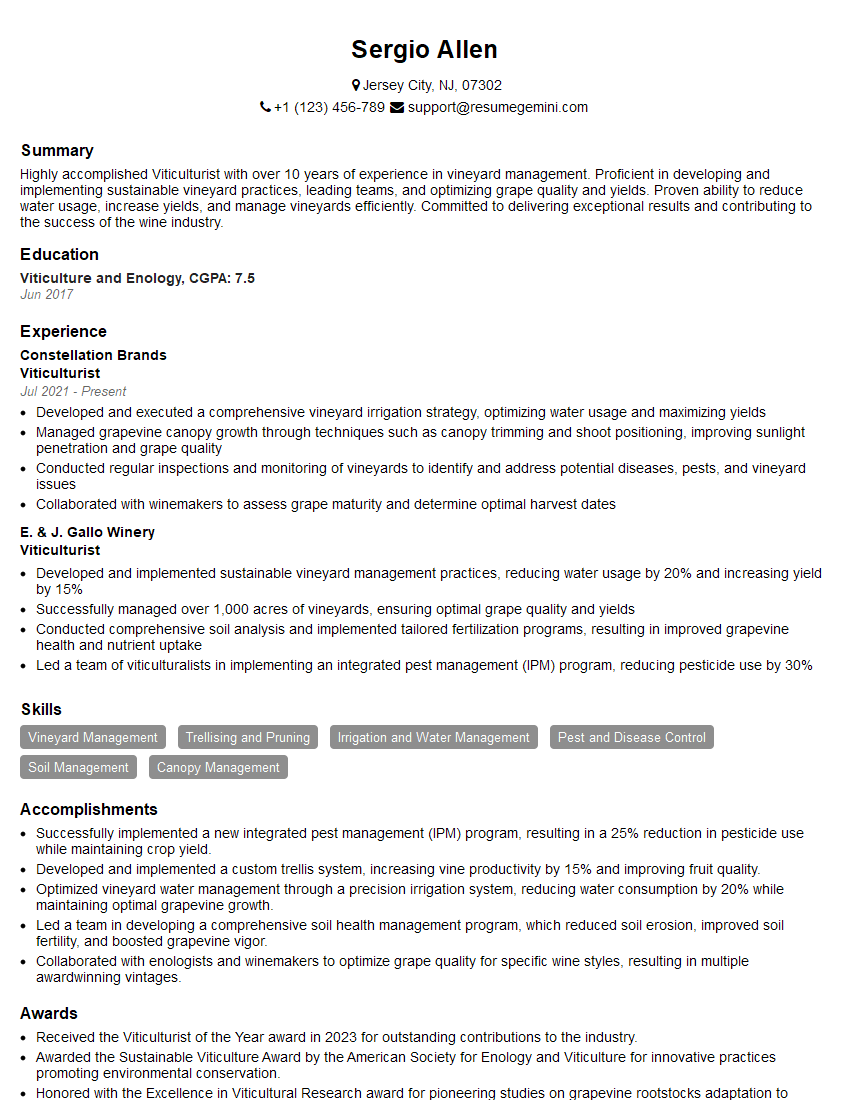
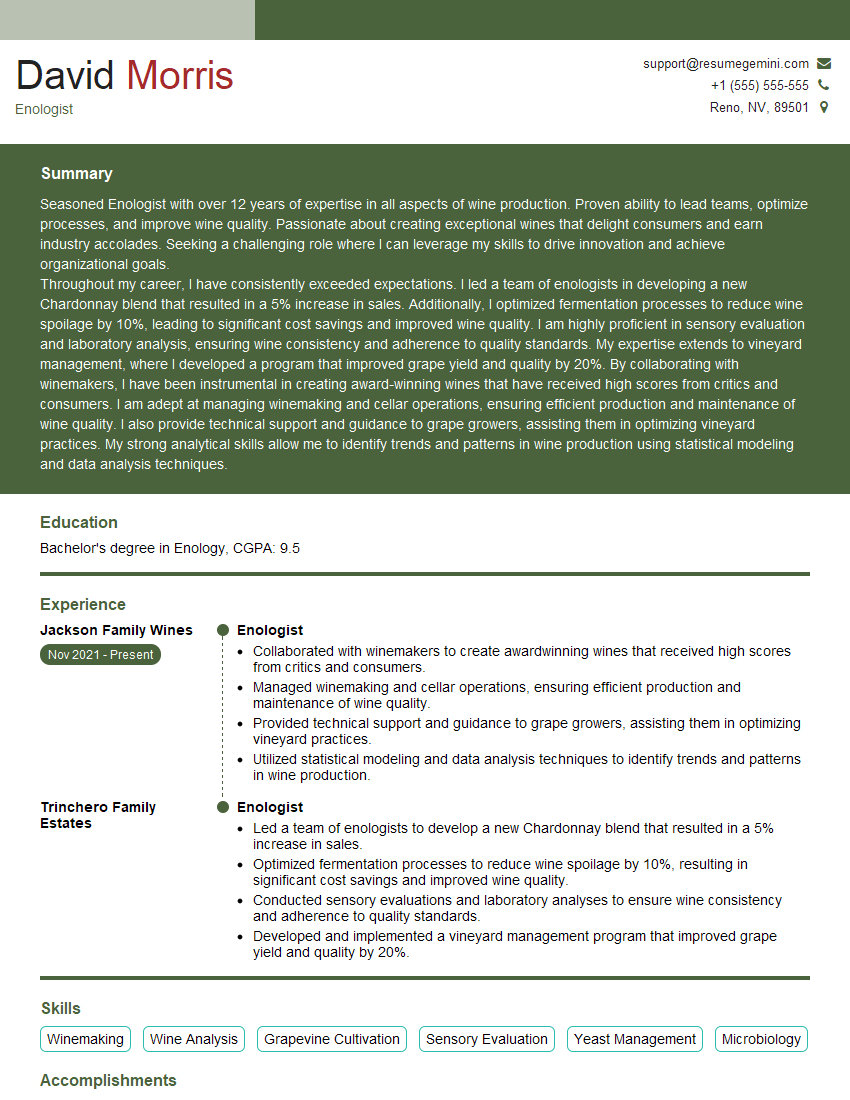
Mastering Wine Innovation is crucial for career advancement in this dynamic and exciting field. A strong understanding of these key areas will significantly enhance your interview performance and set you apart from other candidates. To maximize your job prospects, crafting an ATS-friendly resume is essential. ResumeGemini can help you build a professional, impactful resume tailored to the specific requirements of Wine Innovation roles. Examples of resumes optimized for this industry are available to guide you. Invest time in building a compelling resume – it’s your first impression and a key to unlocking your career goals.
Explore more articles
Users Rating of Our Blogs
Share Your Experience
We value your feedback! Please rate our content and share your thoughts (optional).
What Readers Say About Our Blog
To the interviewgemini.com Webmaster.
Very helpful and content specific questions to help prepare me for my interview!
Thank you
To the interviewgemini.com Webmaster.
This was kind of a unique content I found around the specialized skills. Very helpful questions and good detailed answers.
Very Helpful blog, thank you Interviewgemini team.