Unlock your full potential by mastering the most common Wine List Development interview questions. This blog offers a deep dive into the critical topics, ensuring you’re not only prepared to answer but to excel. With these insights, you’ll approach your interview with clarity and confidence.
Questions Asked in Wine List Development Interview
Q 1. What are the key factors to consider when pricing wines on a list?
Pricing a wine list is a delicate balance between profitability and customer appeal. It’s not just about the cost of the wine; it’s about perceived value, target market, and competitive landscape. Key factors include:
- Cost of Goods Sold (COGS): This is the actual cost of acquiring the wine, including wholesale price, shipping, and storage. A good rule of thumb is to aim for a 3x markup on COGS, though this varies greatly depending on the restaurant and wine type.
- Market Analysis: What are comparable restaurants charging for similar wines? Are you in a high-end or casual dining setting? Pricing should be competitive but also reflect your restaurant’s positioning.
- Wine Type and Quality: A prestigious Bordeaux will command a significantly higher price than a simple Pinot Grigio. Consider vintage, producer reputation, and critical acclaim.
- Profit Margin Goals: Determine your desired profit margin for the wine program as a whole. This will inform your pricing strategy for individual bottles.
- Menu Engineering: Consider the price points of your food menu. Wine prices should complement the overall dining experience and feel cohesive.
- Customer Segmentation: Think about your typical customer. What price points are they most comfortable with? Offering a diverse selection with a range of price points caters to a broader audience.
For example, a restaurant might use a 3x markup on a $10 bottle of wine, pricing it at $30. However, a highly sought-after vintage might have a higher markup due to its scarcity and prestige.
Q 2. How do you balance a wine list’s profitability with customer satisfaction?
Balancing profitability and customer satisfaction on a wine list requires a strategic approach. You want to maximize profit without alienating your patrons. Here’s how I approach it:
- Value Perception: Focus on offering wines that provide exceptional value for the price. This might mean featuring lesser-known regions or producers that offer excellent quality at a more accessible price point.
- Price Point Variety: Ensure a diverse range of prices to accommodate various budgets. Include some ‘value’ wines, mid-range options, and premium selections.
- Wine Descriptions: Craft engaging descriptions that highlight the wine’s unique characteristics and appeal to the customer’s palate. This adds perceived value and justifies higher prices for certain wines.
- Staff Training: Invest in training your staff to expertly guide customers through the wine list. They should be able to recommend pairings, discuss flavor profiles, and respond to customer inquiries effectively. This personal touch enhances the customer experience and can influence higher-priced wine sales.
- Promotions and Specials: Occasionally offer promotions like wine flights, discounted bottles, or happy hour specials to attract customers and increase sales without compromising long-term profit.
- Customer Feedback: Actively solicit customer feedback to identify what they value in your wine program and address any concerns.
For instance, offering a sommelier’s selection of wines at a slightly discounted price can enhance customer perception of value while still maintaining profitability. Regularly reviewing customer feedback can reveal hidden insights into pricing strategies.
Q 3. Explain your process for selecting wines for a wine list.
Selecting wines for a wine list is a multi-step process that requires careful consideration of various factors. My process generally involves:
- Defining the Restaurant’s Concept: What is the overall style and cuisine of the restaurant? This dictates the wine style and price point.
- Target Market Analysis: Who is your typical customer? Understanding their preferences—both in food and wine—is essential.
- Competitive Analysis: Research what wines other successful restaurants in the area are offering and at what price points.
- Wine Sourcing: Establish relationships with reputable wine importers, distributors, and wholesalers.
- Wine Selection: Select wines that offer a balance of quality, variety, and price points, catering to different preferences and budgets. Include a selection of classic options alongside some more adventurous choices.
- Tasting and Evaluation: Personally taste and evaluate the wines before including them on the list. This ensures quality and aligns with the restaurant’s brand.
- Region and Varietal Diversity: Offer a diverse selection of wines from different regions and varietals to cater to a broader customer base.
- By-the-glass Selection: Curate a by-the-glass list that features a range of popular and accessible wines.
For example, a steakhouse might prioritize full-bodied red wines from Bordeaux or Napa Valley, while a seafood restaurant might focus on lighter-bodied white wines like Sauvignon Blanc or Pinot Grigio.
Q 4. Describe your experience with wine list design and layout.
Wine list design and layout are crucial for creating a positive customer experience and driving sales. I approach this as an opportunity to enhance the overall ambiance and provide clear and intuitive information. My experience encompasses:
- Clear and Concise Information: The list should be easy to read and navigate, with clear information about each wine, including region, producer, varietal, and tasting notes.
- Visual Appeal: Consider the overall design and layout. Use high-quality paper stock, a visually appealing font, and potentially some imagery to elevate the experience.
- Organization: Organize wines by region, varietal, style, or price point to facilitate easy navigation.
- Grouping and Category Use: Consider using headers and subheadings to break up large sections of the wine list and emphasize different categories.
- Color and Typography: Choose a color scheme and typography that complement the restaurant’s ambiance and branding.
- Digital Wine Lists: I am also proficient in developing digital wine lists for tablets or online ordering systems, providing interactive features like tasting notes and food pairing suggestions.
For example, I’ve worked on wine lists that utilize a combination of bold headings to highlight sections, italicized type for tasting notes, and high-quality images of the wine labels. The key is balance and readability.
Q 5. How do you manage wine inventory and prevent spoilage?
Effective inventory management is vital to prevent spoilage and minimize waste. My approach involves:
- First-In, First-Out (FIFO): Employ a FIFO system to ensure that older bottles are served before newer ones. This minimizes the risk of spoilage.
- Regular Inventory Counts: Conduct regular physical inventory counts to accurately track stock levels and identify slow-moving items.
- Proper Storage: Maintain optimal storage conditions, including proper temperature and humidity, to preserve wine quality.
- Wine Storage Software: Utilize wine inventory management software to automate tracking and reporting.
- Sales Data Analysis: Regularly analyze sales data to identify trends and adjust inventory accordingly. This ensures that you have enough of popular wines on hand while minimizing waste.
- Spoilage Mitigation: Implement procedures to quickly identify and remove spoiled bottles. This might involve regular checks for leaks, mold, or cork taint.
- Staff Training: Train staff on proper wine handling and storage procedures to minimize the risk of spoilage.
For instance, I’ve implemented a system that uses colored stickers on bottles to indicate their arrival date, making FIFO implementation straightforward. Regular staff training also ensures everyone understands the importance of proper storage and handling techniques.
Q 6. What software or systems have you used for managing wine lists?
Throughout my career, I’ve utilized various software and systems for managing wine lists, including:
- Point of Sale (POS) Systems: Many POS systems integrate wine list management features, allowing for inventory tracking, sales reporting, and automated ordering.
- Dedicated Wine Inventory Software: Specialized wine management software provides more advanced features for inventory control, cost analysis, and reporting.
- Spreadsheet Software (Excel, Google Sheets): Spreadsheets can be used for simpler wine list management, though they lack the advanced features of dedicated software.
- Restaurant Management Systems: Integrated restaurant management systems often include wine list management modules.
The choice of software depends on the size and complexity of the restaurant’s operation and budget. For example, a smaller restaurant might use a spreadsheet, while a larger establishment would benefit from a dedicated wine inventory management system that integrates with their POS system.
Q 7. How do you stay updated on current wine trends and new releases?
Staying updated on wine trends and new releases is crucial for maintaining a relevant and exciting wine list. My strategies include:
- Wine Trade Publications: Regularly read wine trade publications, both print and online, to stay abreast of industry news, new releases, and emerging trends.
- Wine Blogs and Websites: Follow reputable wine bloggers and websites for reviews, tasting notes, and insights into the latest releases.
- Wine Competitions and Events: Attend wine competitions and trade shows to sample new wines and connect with producers and importers.
- Importer and Distributor Relationships: Maintain strong relationships with wine importers and distributors to be informed about new releases and upcoming trends.
- Sommelier Networks: Engage with sommelier networks and communities to share information and learn from other professionals.
- Wine App Use: Utilize wine apps and databases to research wines, access reviews, and stay organized.
For example, I actively participate in online sommelier forums and regularly attend trade tastings to discover hidden gems and upcoming trends. This ensures my wine lists remain current and reflect the evolving preferences of wine consumers.
Q 8. How do you create a wine list that caters to diverse customer preferences?
Creating a wine list that appeals to diverse palates requires a strategic approach. It’s like building a menu that caters to various tastes – some prefer spicy, others sweet, and some want something in between. Similarly, wine preferences vary widely. To achieve this, I focus on building a list with breadth and depth.
- Breadth: Offer a range of wine styles. This means including reds, whites, rosés, sparkling wines, and perhaps even dessert wines. Consider various grape varietals, representing both Old World (e.g., Cabernet Sauvignon, Pinot Noir, Chardonnay) and New World (e.g., Sauvignon Blanc, Pinot Grigio, Zinfandel) styles. I’d also incorporate different price points to cater to various budgets.
- Depth: Within each category, provide a selection of wines with varying characteristics. For example, alongside a full-bodied Cabernet Sauvignon, I might include a lighter-bodied Merlot or a Pinot Noir. This allows customers to find a wine that suits their specific taste preferences and the occasion.
- Regional Variety: Include wines from different regions known for specific styles. For instance, a crisp Sauvignon Blanc from the Loire Valley and a richer Chardonnay from Burgundy.
- Descriptive Language: Use clear and concise descriptions that highlight the wine’s key characteristics (e.g., fruity, oaky, earthy, tannic) without using overly technical terms. A simple phrase like “bright and citrusy” works better than “exhibits notes of grapefruit and lime with a vibrant acidity.”
For example, I once curated a list for a restaurant that attracted a very diverse clientele. By including everything from a light Pinot Grigio to a bold Malbec and a selection of sparkling wines, we saw increased wine sales across the entire price spectrum.
Q 9. What are some key metrics you use to evaluate the success of a wine list?
Evaluating a wine list’s success involves several key metrics beyond simply sales figures. It’s about understanding how well it aligns with the restaurant’s overall goals and customer satisfaction.
- Wine Sales Revenue: This is a fundamental metric, but it needs to be analyzed in context. What is the average bottle price? What’s the percentage of wine sales compared to total revenue? Are certain sections of the list outperforming others?
- Bottle Turnover Rate: This shows how quickly wines are being consumed, indicating popularity and potential inventory management issues. A slow turnover suggests a need to review certain wines on the list.
- Customer Feedback: This could be collected via surveys, online reviews, or direct conversations with guests. Positive feedback about the selection and service indicates success. Negative feedback can pinpoint areas for improvement.
- Gross Profit Margin on Wine: This shows profitability – factoring in purchase price, markup, and sales. It’s essential to ensure a healthy margin while maintaining competitive pricing.
- Wine List Complementation of Menu: The wine list should enhance the dining experience by pairing well with the food. Successful lists achieve this symbiosis.
For example, a high turnover rate for a particular wine suggests its popularity. However, a low profit margin despite high sales might mean the pricing needs adjustment.
Q 10. How would you handle a customer complaint about a wine’s quality?
Handling customer complaints about wine quality is crucial for maintaining reputation and satisfaction. It’s a delicate balance between empathy and problem-solving.
- Listen Empathetically: First, listen carefully to the customer’s concerns without interrupting. Show genuine understanding of their disappointment. A simple phrase like, “I understand your frustration. Let’s see how we can resolve this,” can go a long way.
- Assess the Situation: Try to identify the potential cause. Was the wine corked (contaminated)? Was it stored improperly? Or is it simply a matter of personal preference?
- Offer a Solution: Depending on the cause, offer a suitable solution. If the wine is genuinely faulty (corked or oxidized), replace it with another bottle, offer a different wine, or even refund the cost. If it’s a matter of preference, perhaps offer a tasting of another wine to suit the customer’s palate.
- Apologize Sincerely: Regardless of the cause, a sincere apology is essential. This demonstrates a commitment to customer satisfaction.
- Follow Up: After resolving the issue, it’s a good practice to follow up with the customer to ensure their satisfaction.
Once, a customer complained about a bottle of red wine being “off.” After inspecting the bottle and confirming a cork taint, I immediately replaced the bottle with a different wine from the same region and vintage, apologizing for the inconvenience. This turned a negative experience into a positive one.
Q 11. Describe your experience with wine tasting and evaluation.
My experience in wine tasting and evaluation spans many years and involves both formal training and extensive practical experience. I’ve attended numerous blind tastings, participated in wine judging competitions, and regularly attend winemaker dinners and vineyard visits.
My evaluation process is systematic and considers several key aspects:
- Visual Examination: Observing the wine’s clarity, color, and viscosity.
- Olfactory Examination (Aroma): Identifying the bouquet – the range of aromas from fruity and floral to earthy and spicy notes.
- Gustatory Examination (Taste): Assessing the wine’s sweetness, acidity, tannins (in reds), body, and overall balance.
- Finish: The lingering sensation after swallowing the wine.
I’m proficient in identifying varietals, recognizing regional characteristics, and assessing a wine’s quality and aging potential. For example, I can easily distinguish between a young, fruity Pinot Noir and an older, more complex one through its aroma and taste profiles.
Q 12. How do you train staff on wine service and knowledge?
Training staff on wine service and knowledge is vital. It’s about empowering them to confidently interact with customers and enhance the overall dining experience. My training program is multi-faceted:
- Basic Wine Knowledge: Covering fundamental concepts like grape varietals, wine regions, and winemaking processes. I use visual aids, tasting notes, and interactive sessions.
- Service Skills: Teaching proper wine-pouring techniques, handling complaints, recommending wines based on customer preferences and food pairings.
- Wine List Familiarity: Ensuring staff understands the wine list thoroughly, including the descriptions and price points. I create quizzes and tasting sessions to reinforce learning.
- Ongoing Training: Regular refresher sessions, blind tastings, and participation in wine education events keep their skills sharp.
- Product Knowledge: I provide in-depth information on specific wines, focusing on unique characteristics and stories related to the winemaker or the region.
I’ve found that interactive training, incorporating practical exercises and role-playing, is much more effective than simple lectures. For instance, I regularly conduct blind tastings to help staff hone their sensory skills and improve their ability to describe wines.
Q 13. How do you ensure the accuracy of wine descriptions on a list?
Accuracy in wine descriptions is paramount. Inaccurate information can mislead customers and damage the restaurant’s reputation. My approach to ensuring accuracy involves several steps:
- Source Verification: I always use reliable sources such as wine producer websites, reputable wine guides (e.g., Wine Spectator), and tasting notes from trusted importers. I cross-reference information to confirm accuracy.
- Professional Tasting: Whenever possible, I personally taste each wine to verify the descriptions. This allows for first-hand evaluation and ensures consistency.
- Consistent Terminology: I maintain a consistent style and terminology throughout the list, avoiding jargon and emphasizing clarity. Using simple language is key.
- Regular Updates: Wine lists should be updated regularly to reflect any changes in wine availability, pricing, or vintages. This ensures the information remains current and accurate.
- Proofreading and Editing: Before publishing, the wine list is meticulously proofread and edited to ensure accuracy and consistency.
For example, I once caught a misleading description on a supplier’s sheet – they described a wine as “oaky” when it had minimal oak influence. I contacted the supplier to clarify this, ensuring the corrected information was used on the list.
Q 14. How do you manage wine storage and cellar conditions?
Proper wine storage and cellar conditions are essential to maintain wine quality. This is about safeguarding the investment in the wine inventory and ensuring customers receive the best possible product.
- Temperature Control: Maintaining a consistent temperature between 55-58°F (13-14°C) is crucial. Fluctuations can accelerate aging and negatively impact wine quality.
- Humidity Control: Ideal humidity levels range between 50-70%. Low humidity can cause corks to dry out and allow air to enter, while high humidity can lead to mold growth.
- Darkness: Wine should be stored away from direct sunlight or artificial light to prevent oxidation and unwanted chemical reactions.
- Vibration Minimization: Minimizing vibrations is important to prevent sediment disturbance and potential deterioration.
- Proper Storage Orientation: Bottles should be stored on their sides to keep the cork moist and prevent it from drying out.
- Inventory Management: Implementing a robust inventory management system to track stock levels, monitor aging, and ensure proper rotation (FIFO – First In, First Out).
In my experience, investing in a good quality wine refrigerator and using a dedicated wine storage area significantly improves wine preservation. Proper storage ensures the wines are consistently of high quality, allowing us to present the best possible product to our customers.
Q 15. How do you balance a wine list’s diversity with its focus?
Balancing a wine list’s diversity with its focus is a crucial aspect of creating a successful wine program. Think of it like curating a museum exhibit – you want a variety of pieces, but they should all relate to a central theme. Too much diversity leads to confusion; too little, to boredom.
My approach involves defining a clear concept first. This could be a focus on a specific region (e.g., Burgundy), a grape varietal (e.g., Pinot Noir), or a price point (e.g., exclusively under $50). Once the focus is established, I carefully introduce diversity within that framework. For example, if focusing on Burgundy, I’d include a range of appellations (e.g., Chablis, Côte de Nuits, Côte Chalonnaise) and producers to showcase the region’s complexity while remaining true to the central theme. I also ensure a balance of styles (e.g., oaked vs. unoaked Chardonnay). It’s about offering choices within a coherent narrative.
Ultimately, a successful wine list tells a story, and the balance between diversity and focus is what makes that story engaging and memorable for the guests.
Career Expert Tips:
- Ace those interviews! Prepare effectively by reviewing the Top 50 Most Common Interview Questions on ResumeGemini.
- Navigate your job search with confidence! Explore a wide range of Career Tips on ResumeGemini. Learn about common challenges and recommendations to overcome them.
- Craft the perfect resume! Master the Art of Resume Writing with ResumeGemini’s guide. Showcase your unique qualifications and achievements effectively.
- Don’t miss out on holiday savings! Build your dream resume with ResumeGemini’s ATS optimized templates.
Q 16. What is your approach to creating wine pairings for a menu?
Creating wine pairings for a menu is a highly creative process that requires a deep understanding of both cuisine and wine. I start by meticulously analyzing the menu, identifying the key flavors, textures, and weights of each dish. Then, I consider the wine’s characteristics – its acidity, tannins, body, and fruit profile – and how those elements will complement or contrast the dish.
For example, a rich, buttery dish might pair well with a full-bodied Chardonnay with its oaky notes, while a lighter fish dish might call for a crisp Sauvignon Blanc or a delicate Pinot Grigio. A bold red meat dish might be best served with a Cabernet Sauvignon or a robust Zinfandel, while a delicate pasta dish might be enhanced by a light-bodied Chianti or Pinot Noir.
I always prioritize balance – the wine shouldn’t overpower the food, but neither should it be completely overshadowed. It’s about creating a harmonious union of flavors and textures, an experience that enhances both the food and the wine.
Furthermore, I often create tasting notes to help guide the staff and guests in their selections. These notes should be concise and informative, highlighting the wine’s key characteristics and how they interact with the food.
Q 17. Describe your experience with building a wine program from scratch.
Building a wine program from scratch is a significant undertaking, requiring careful planning and execution. I begin by understanding the restaurant’s concept, target audience, and budget. This informs every decision, from the overall style of the list to the specific wines included.
My first step is thorough market research: I investigate local and regional wine distributors, identifying those who align with my vision for the restaurant. I also consider the price points and competition, ensuring the list is both competitive and profitable. Next, I develop a framework for the wine list – its size, categories (by region, grape, style, price), and the overall narrative it will convey.
After securing initial wine selections, I then conduct blind tastings to evaluate the quality and suitability of each wine, ensuring they meet the standards of the restaurant. Finally, the list is meticulously designed for presentation, with careful consideration for typography, layout, and the overall aesthetic. Once launched, the program requires continuous monitoring and adjustments based on guest feedback and sales data. I recently built a program from scratch for a new Italian restaurant, focusing on organic and biodynamic wines from small, family-owned vineyards. The process involved extensive research and tasting sessions.
Q 18. How do you determine the appropriate wine list size for a restaurant?
Determining the appropriate wine list size hinges on several factors: the restaurant’s concept, its target audience, the size of the dining area, and the overall budget. A small, intimate restaurant might only need 20-30 wines, whereas a large, upscale establishment could easily justify 100 or more.
The key is to strike a balance: offer enough variety to satisfy diverse palates, but avoid overwhelming guests with an overly extensive list. A well-organized list, categorized by region, style, or price, will enhance the selection process. Too many wines can be intimidating to guests and inefficient for staff management.
I typically recommend starting smaller and gradually expanding the list based on sales data and customer feedback. It’s better to start with a well-curated, focused selection than a large, unwieldy list.
Q 19. How do you handle wine list updates and changes?
Wine list updates are crucial to keep the list fresh, relevant, and profitable. I typically review the list quarterly, monitoring sales data, seasonality, and availability.
Low-selling wines are carefully analyzed. Sometimes, this simply means repositioning the wine on the list or adjusting the description to highlight its unique attributes. In other cases, it may necessitate removing the wine altogether.
Seasonal changes influence updates, particularly for lighter-bodied wines that are more popular during the warmer months, or wines that complement seasonal dishes on the menu. Availability issues – due to vintage variations or supply chain problems – may require substitutions or temporary removals. Changes are documented, and staff are updated through training sessions and tastings.
Q 20. How do you source wines for your list and negotiate pricing?
Sourcing wines and negotiating pricing requires a strong understanding of the market and a network of reliable contacts. I start by researching potential suppliers, comparing their offerings, pricing, and overall reputation. I usually work with several distributors, leveraging their expertise and diverse portfolios.
Negotiations involve a balance of building strong relationships and securing favorable terms. I look beyond just the price per bottle, considering factors like volume discounts, marketing support, and the distributor’s willingness to partner in building the restaurant’s wine program. Transparent communication is key, and a collaborative approach often leads to mutually beneficial agreements.
I also attend trade shows and wine tastings to discover new producers and explore unique offerings. This ensures the wine list remains diverse, exciting, and reflects current trends.
Q 21. Describe your experience working with wine distributors.
My experience working with wine distributors has been largely positive and collaborative. I view them as partners in building a successful wine program.
Effective collaboration involves clear communication, shared goals, and mutual respect. I rely on distributors for their expertise in navigating the complexities of wine importation, distribution, and pricing. They often provide valuable insights into market trends, emerging producers, and seasonal availability. Regular communication and open dialogue are essential to resolving issues and ensuring a smooth operation. Strong relationships foster mutual trust and lead to better pricing and support.
I also appreciate distributors who are willing to participate in staff training and tasting events, adding value beyond just the product supply.
Q 22. What strategies do you employ to increase wine sales?
Increasing wine sales requires a multi-pronged approach focusing on both the list itself and the customer experience. It’s not just about offering a wide selection; it’s about curating an experience that encourages exploration and purchase.
- Strategic Wine Selection: The list needs a balance of popular, well-known wines (the ‘anchors’) and unique, exciting options (the ‘discoveries’). Including wines from different price points caters to a wider customer base. For example, offering a classic Cabernet Sauvignon alongside a lesser-known but equally delicious organic Pinot Noir from a smaller vineyard sparks curiosity.
- Effective Wine Descriptions: Avoid technical jargon. Instead, use evocative language that paints a picture for the customer. Instead of ‘ripe tannins,’ write ‘smooth, velvety texture’. Instead of ‘notes of black currant,’ write ‘dark fruit flavors with hints of spice’.
- Staff Training: Your staff are your ambassadors. Comprehensive wine knowledge training is crucial. They should be confident in recommending pairings and explaining the nuances of each wine, effectively guiding customers to selections they’ll enjoy.
- Targeted Promotions: Offer themed wine flights, special promotions on specific regions or varietals, or happy hour discounts. This incentivizes customers to try new things and increases sales volume.
- Data-Driven Decisions: Track sales data closely. Identify your best-selling wines, popular regions, and price points. This information provides invaluable insights to refine your list and marketing efforts. For example, if Sauvignon Blanc consistently outperforms other whites, consider expanding the Sauvignon Blanc section of your list.
Q 23. How do you handle wine theft or breakage?
Wine theft and breakage are serious concerns affecting profitability and inventory management. A robust strategy is essential.
- Inventory Control System: Implement a sophisticated inventory management system that tracks every bottle from delivery to sale. This allows for quick identification of discrepancies and potential theft. Regular stock checks are vital.
- Security Measures: Visible security cameras, secure storage areas, and staff awareness are key deterrents. Consider using tamper-evident seals on high-value bottles.
- Staff Accountability: Clear procedures for handling wine, including opening, serving, and discarding, must be established and strictly enforced. Regular staff training on theft prevention is crucial.
- Insurance: Adequate insurance coverage protects against losses due to theft, breakage, or spoilage. Review your policy regularly and ensure it’s suitable for your operation.
- Internal Audits: Regular internal audits will help uncover any inconsistencies in inventory and highlight potential weaknesses in your security procedures.
Q 24. What is your understanding of different wine regions and styles?
Understanding wine regions and styles is fundamental to curating a compelling wine list. It involves knowing the terroir (soil, climate, and topography) and how they influence the grapes and resulting wines.
- Classic Regions: Bordeaux (France), Tuscany (Italy), Napa Valley (California), Rioja (Spain) – each has unique characteristics and grape varieties. For instance, Bordeaux is known for Cabernet Sauvignon-based blends, while Rioja specializes in Tempranillo.
- Emerging Regions: Exploring lesser-known but high-quality regions adds diversity and excitement to the list, such as the Loire Valley in France (known for Sauvignon Blanc and Chenin Blanc), or the Okanagan Valley in Canada (known for its Pinot Noir and Riesling).
- Varietal Knowledge: A deep understanding of different grape varietals and their flavor profiles is essential. Cabernet Sauvignon is bold and tannic, Pinot Noir is elegant and delicate, Chardonnay can range from buttery to crisp – this knowledge allows for informed wine selection and recommendations.
- Wine Styles: Understanding different wine styles – dry, semi-dry, sweet, sparkling, fortified – allows you to create a balanced list catering to various palates. Offering a range of styles ensures there’s something for everyone.
This expertise allows me to present a well-rounded wine list, highlighting the unique characteristics of each wine and its origin.
Q 25. How do you create a wine list that is both sophisticated and accessible?
Balancing sophistication and accessibility requires careful consideration of price points, descriptions, and wine selection.
- Price Range: Offer a diverse price range to cater to all budgets, including affordable everyday wines and high-end selections. This allows for both casual diners and connoisseurs to find suitable options.
- Descriptive Language: Use accessible language that avoids overly technical terms. Focus on aroma and flavor profiles that resonate with the average consumer. For example, instead of ‘bright acidity,’ say ‘crisp and refreshing’.
- Wine Categories: Organize the wine list into logical categories (e.g., by region, varietal, or style) to ease navigation. A well-structured list allows customers to easily locate wines that align with their preferences.
- Staff Knowledge: Train your staff to confidently recommend wines based on customer preferences, food pairings, and price points. Their expertise bridges the gap between sophistication and accessibility.
- Tasting Notes: Concise, clear tasting notes alongside each wine description help inform customer choices without being overwhelming.
For example, a sophisticated yet accessible list might include a classic Bordeaux alongside a well-described, approachable Malbec from Argentina, catering to both experienced wine drinkers and those seeking new discoveries.
Q 26. How do you incorporate sustainability considerations into your wine list?
Incorporating sustainability is increasingly important to consumers and reflects a responsible approach to business. It requires looking at the entire wine production chain.
- Organic and Biodynamic Wines: Feature wines produced using sustainable farming practices, minimizing the use of pesticides and herbicides. This reflects a commitment to environmental responsibility.
- Sustainable Packaging: Choose wines using lighter weight bottles or recycled materials for labels and packaging. This reduces the environmental footprint of the product.
- Local and Regional Wines: Prioritizing locally sourced wines reduces transportation costs and emissions, contributing to lower carbon emissions.
- Carbon Footprint Information: If available, indicate the carbon footprint of selected wines, allowing customers to make informed choices.
- Transparency: Highlight wineries committed to sustainable practices, clearly communicating their ethos to consumers. Transparency builds trust and brand loyalty.
Clearly labeling sustainable options on the wine list, perhaps with a dedicated section or a symbol, makes it easy for environmentally conscious customers to make appropriate choices.
Q 27. Explain your knowledge of wine laws and regulations.
Wine laws and regulations vary significantly by location but generally cover areas like labeling, alcohol content, distribution, and taxation. Compliance is paramount.
- Labeling Requirements: Accurate and complete labeling is crucial, including details like alcohol percentage, producer information, and origin. Variations in required information exist across jurisdictions.
- Alcohol Content Limits: Regulations regarding allowable alcohol content exist. Understanding and adhering to these limits is non-negotiable.
- Distribution Laws: Laws govern the distribution of wine, including licenses, permits, and import/export regulations. These are specific to each region and must be meticulously followed.
- Taxation: Taxes and duties on wine vary significantly. Accurate calculation and remittance of taxes are crucial for compliance.
- Age Restrictions: Understanding and adhering to age restrictions on the sale and consumption of alcohol is vital to avoid legal penalties.
Staying updated on relevant laws and regulations is crucial. Regular consultation with legal and regulatory experts is often necessary to ensure full compliance.
Q 28. What are your salary expectations for this role?
My salary expectations for this role are commensurate with my experience, skills, and the responsibilities involved. Considering my extensive expertise in wine list development, my proven ability to increase sales, and my deep understanding of wine regulations and sustainability, I am seeking a salary in the range of [Insert Salary Range]. I am open to discussing this further based on a more comprehensive understanding of the role and its associated benefits package.
Key Topics to Learn for Wine List Development Interview
- Wine Region Knowledge: Understanding key wine regions globally, their characteristic grape varietals, and typical wine styles. This includes knowing climate influences and terroir impacts on wine production.
- Varietal Selection & Blending: Applying knowledge of grape varietals to curate a balanced and diverse wine list. This involves understanding how different varietals complement each other and appeal to diverse palates.
- Pricing & Profitability: Developing a wine list that maximizes profit margins while remaining competitive and appealing to the target customer base. This includes understanding cost analysis and pricing strategies.
- Menu Pairing & Food Compatibility: Demonstrating expertise in selecting wines that complement various menu items, enhancing the dining experience. This requires practical understanding of food and wine pairing principles.
- Legal & Regulatory Compliance: Understanding and adhering to all relevant alcohol beverage regulations, licensing requirements, and responsible service standards. This is crucial for legal compliance and maintaining a reputable establishment.
- Inventory Management & Ordering: Efficiently managing wine inventory to minimize waste and ensure sufficient stock. This includes understanding ordering procedures, tracking inventory levels and predicting customer demand.
- Customer Segmentation & Targeting: Understanding different customer demographics and preferences to create a wine list that appeals to a broad audience while also catering to specific tastes.
- Presentation & Design: Creating a visually appealing and user-friendly wine list, including format, descriptions, and organization. This also incorporates the overall branding and aesthetics of the restaurant or establishment.
- Data Analysis & Reporting: Tracking sales data, analyzing trends, and using this information to optimize the wine list and improve profitability. This might involve using spreadsheet software or dedicated restaurant management systems.
Next Steps
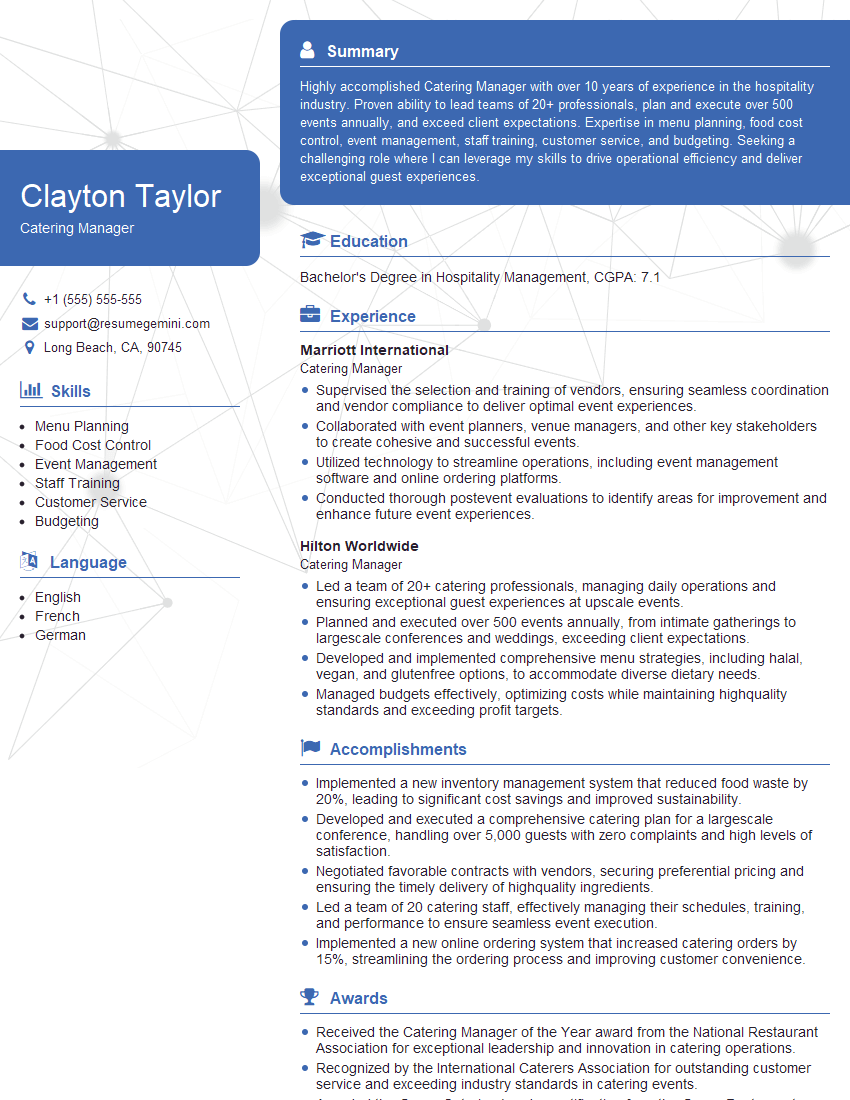
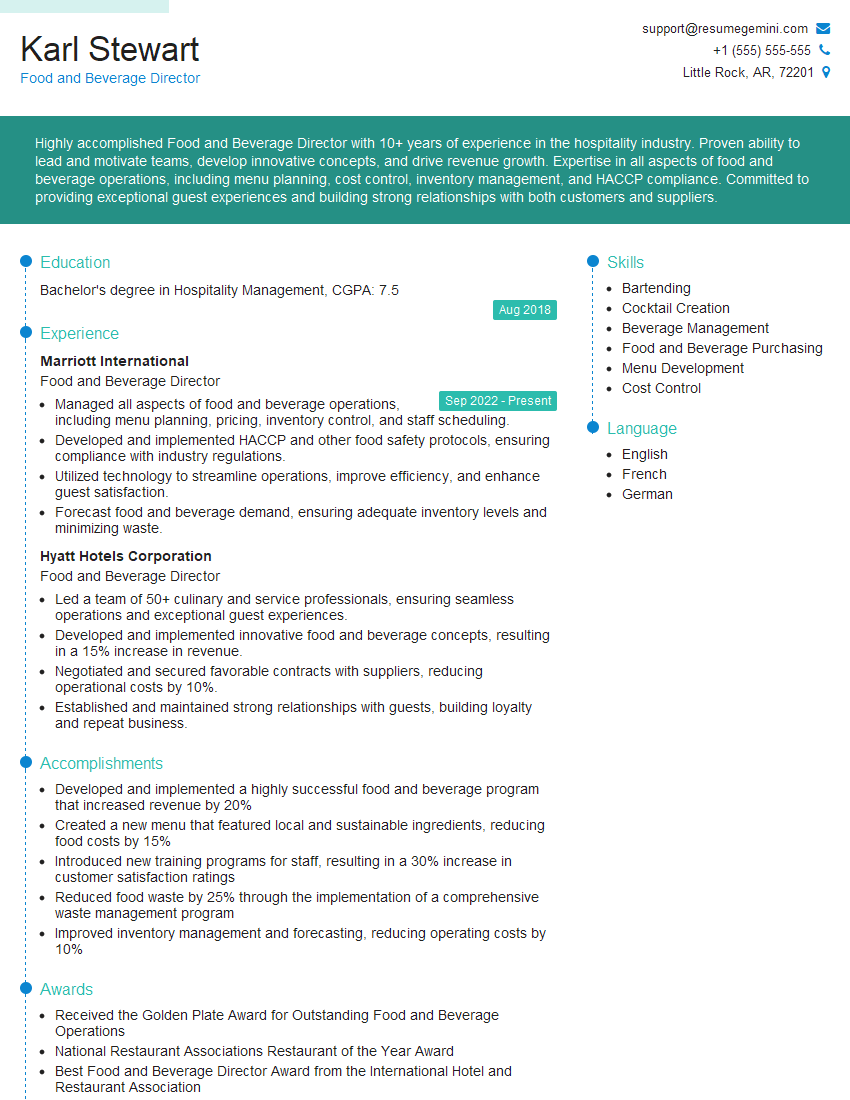
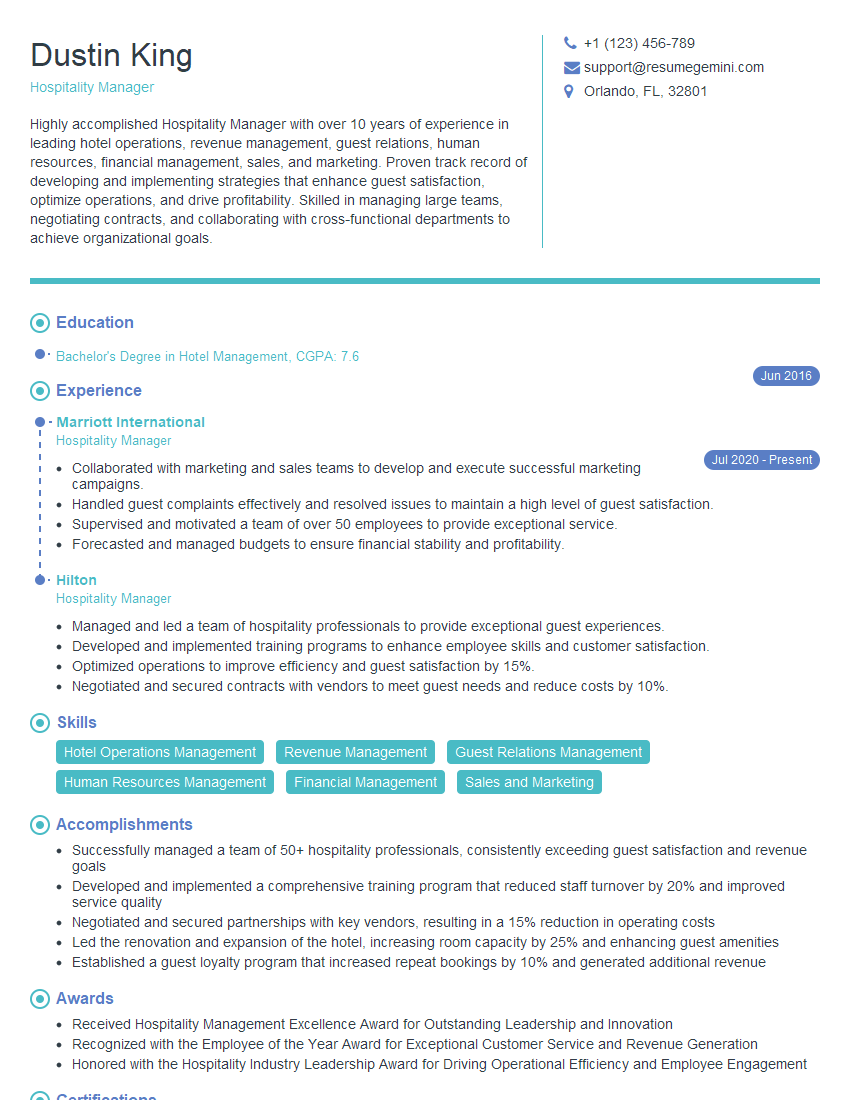
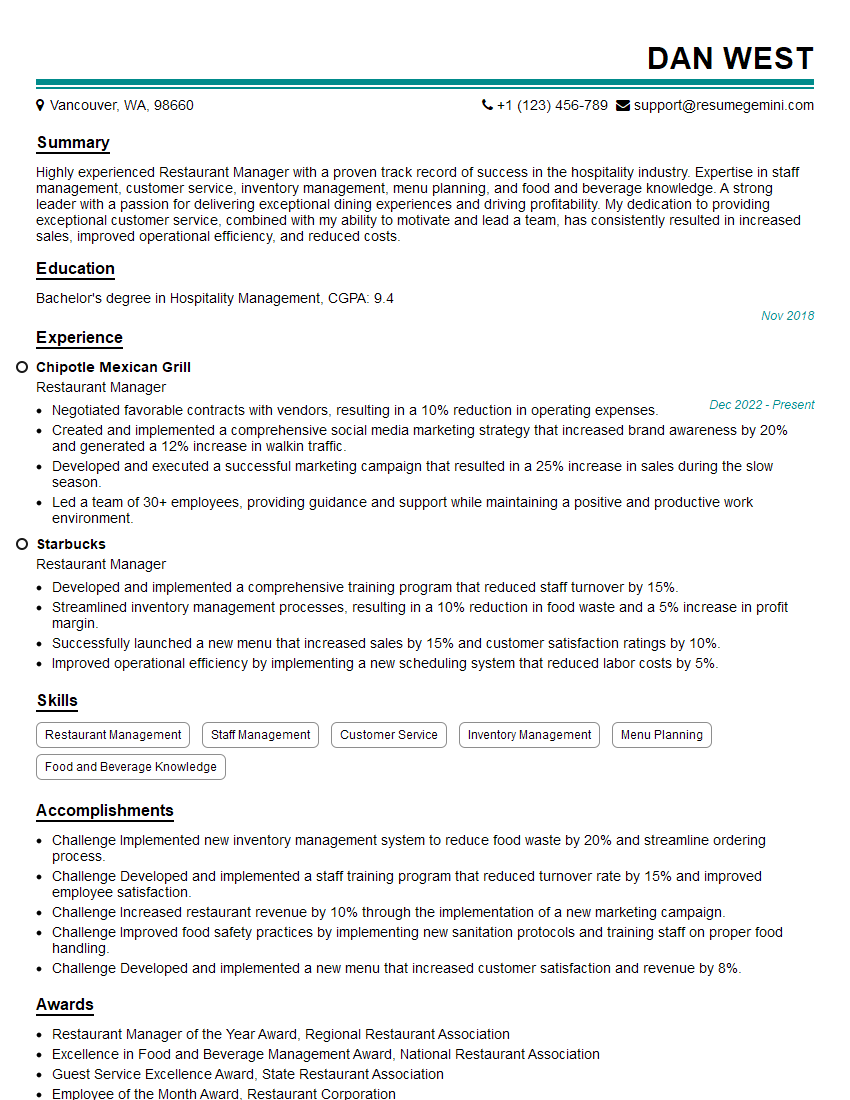
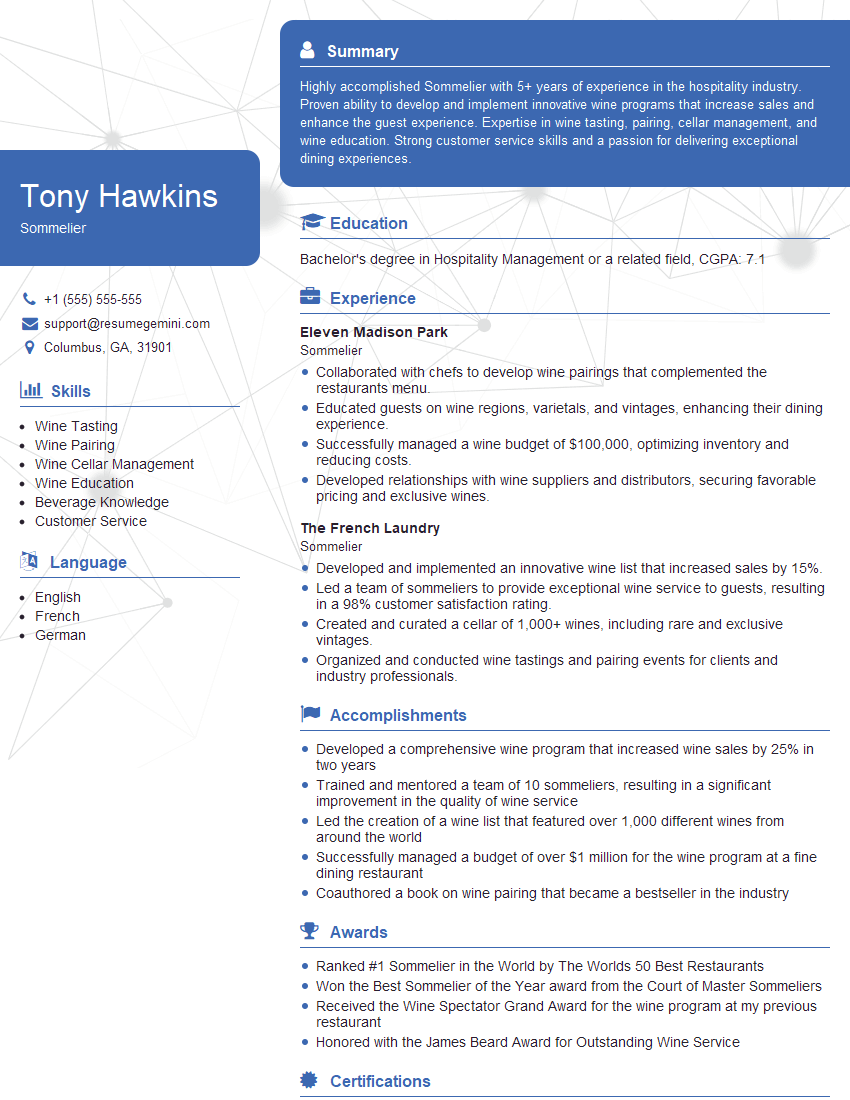
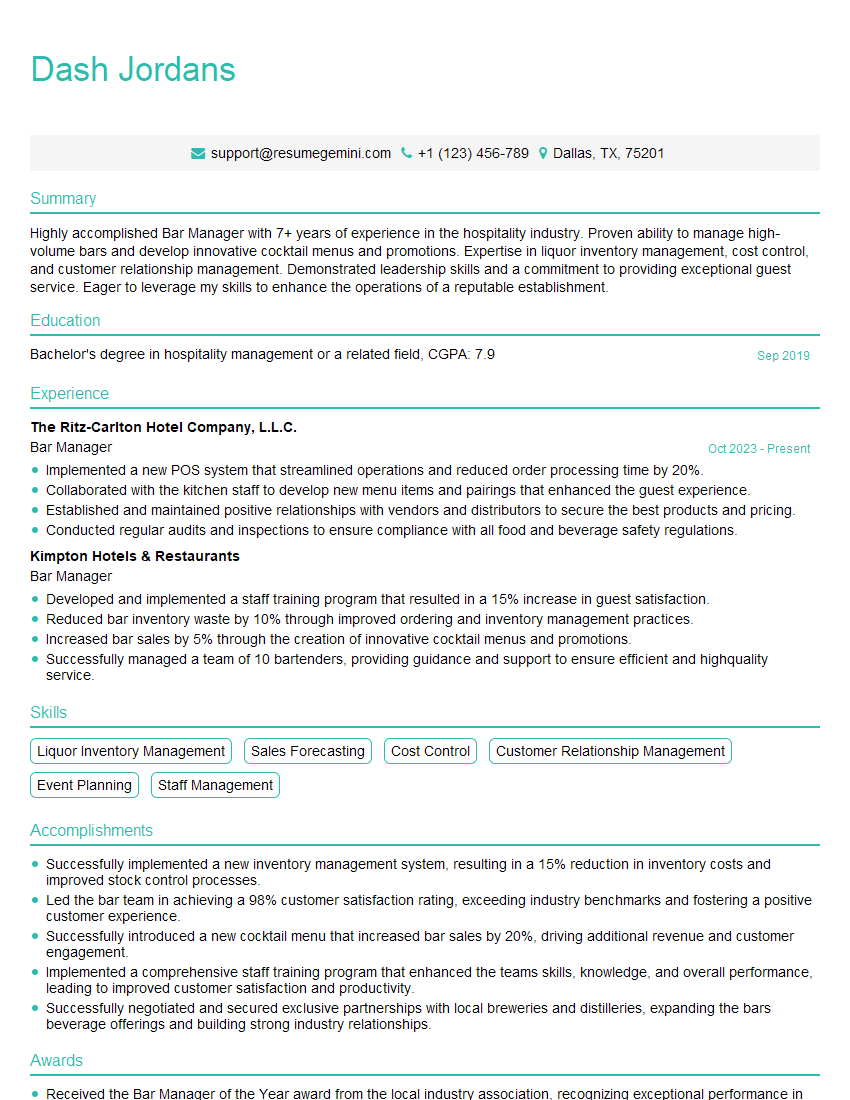
Mastering Wine List Development significantly enhances your career prospects in the hospitality industry, opening doors to managerial roles and increased earning potential. An ATS-friendly resume is crucial for getting your application noticed by recruiters. To build a compelling resume that showcases your skills and experience effectively, we strongly encourage you to use ResumeGemini. ResumeGemini provides a user-friendly platform and resources to craft professional resumes, including examples specifically tailored for Wine List Development roles. Take advantage of these resources to present yourself in the best possible light to prospective employers.
Explore more articles
Users Rating of Our Blogs
Share Your Experience
We value your feedback! Please rate our content and share your thoughts (optional).
What Readers Say About Our Blog
To the interviewgemini.com Webmaster.
Very helpful and content specific questions to help prepare me for my interview!
Thank you
To the interviewgemini.com Webmaster.
This was kind of a unique content I found around the specialized skills. Very helpful questions and good detailed answers.
Very Helpful blog, thank you Interviewgemini team.