Preparation is the key to success in any interview. In this post, we’ll explore crucial Wine Tasting and Evaluation interview questions and equip you with strategies to craft impactful answers. Whether you’re a beginner or a pro, these tips will elevate your preparation.
Questions Asked in Wine Tasting and Evaluation Interview
Q 1. Describe the four primary taste sensations in wine.
While wine tasting encompasses a much wider sensory experience, the four primary taste sensations are sweetness, sourness (acidity), saltiness, and bitterness. These are the basic tastes our tongue’s taste buds detect. In wine, sweetness is determined by residual sugar levels after fermentation, impacting the overall perception of balance. Sourness, or acidity, from malic and tartaric acids, provides freshness and structure. Saltiness is usually subtle, contributed by minerals in the soil and grapes, and often interacts with other elements to create a complex flavor profile. Finally, bitterness comes from tannins, often from grape skins and seeds, providing structure and a dry finish. Imagine tasting a ripe peach (sweetness), a lemon (sourness), a touch of sea salt on a watermelon (saltiness), and the subtle astringency of dark chocolate (bitterness) – these components interact to give wine its unique character.
Q 2. Explain the impact of oak aging on wine’s aroma and flavor profile.
Oak aging significantly impacts a wine’s aroma and flavor. The type of oak (French, American, etc.), its toast level (light to heavily toasted), and the duration of aging all play crucial roles. Oak imparts vanillin (vanilla), diarylpropanoids (spicy notes such as clove and cinnamon), lactones (coconut or creamy notes), and furfural (caramelized sugar aromas). These compounds contribute complexity, structure, and sometimes sweetness. For example, a Chardonnay aged in new French oak might develop notes of vanilla, toast, and subtle coconut, while one aged in American oak might exhibit more pronounced vanilla and spice notes. In contrast, a wine aged in stainless steel will retain the primary fruit aromas and exhibit a crisper profile.
Q 3. What are the key volatile compounds responsible for wine aroma?
Hundreds of volatile compounds contribute to a wine’s aroma, making it a complex and fascinating area of study. Key players include esters (fruity aromas like apple, pear, banana), terpenes (floral and citrus notes like rose, lemon, and grapefruit), thiols (passion fruit, grapefruit, and guava notes), and norisoprenoids (rose, lychee, and other floral notes). The specific combination and concentration of these compounds, along with others like aldehydes and ketones, dictate the wine’s aromatic profile. For instance, high levels of certain esters might lead to a strong fruity character, while an abundance of thiols might contribute to a tropical or grapefruit aroma. The interaction between these compounds is key to the overall impression of the wine’s bouquet.
Q 4. How does temperature affect wine tasting?
Temperature significantly impacts wine tasting. Serving wine too cold can mask its aromas and flavors, making it taste flat and lacking complexity. Conversely, serving it too warm can lead to harshness and an overly alcoholic character. The ideal serving temperature varies by wine style. For example, light-bodied white wines like Sauvignon Blanc are best served slightly chilled (around 45-50°F), while full-bodied reds like Cabernet Sauvignon are better enjoyed at slightly warmer temperatures (around 60-65°F). Experimentation is key; start with recommended temperatures and adjust to your preferences. Think of it like enjoying a fine meal; the wrong temperature can drastically alter the perceived quality and enjoyment.
Q 5. Differentiate between Old World and New World winemaking styles.
Old World and New World winemaking styles differ significantly. Old World (Europe) emphasizes tradition, terroir (the influence of the land), and subtlety. Wines often have lower alcohol content, higher acidity, and more earthiness. Minimal intervention is common, prioritizing the expression of the grape and vineyard. New World (primarily the Americas, Australia, New Zealand) focuses on fruit-forward, bolder styles, often with higher alcohol and ripe fruit flavors. Winemakers use more modern techniques, such as temperature control fermentation and oak aging, to achieve specific stylistic goals. Imagine comparing a rustic, earthy Burgundy (Old World) with a fruit-bomb California Cabernet Sauvignon (New World) – the differences in approach and resulting flavors are readily apparent.
Q 6. Explain the process of wine blending.
Wine blending involves combining different wines, typically from the same vintage and varietal, to create a superior product. The goal is to enhance complexity, balance, and consistency. Winemakers might blend wines from different vineyard sites to capture the best characteristics of each, or combine wines with varying levels of ripeness to achieve optimal flavor profiles. Blending is an art and science, requiring skill and experience to achieve a harmonious result. It’s like combining different musical instruments to create a symphony; each wine contributes its unique character, ultimately resulting in a more complex and satisfying overall experience. The process involves careful tasting and analysis before making final decisions on the blend ratios.
Q 7. Describe the different types of wine faults and their causes.
Wine faults can significantly detract from a wine’s quality. Cork taint (TCA), caused by a chemical compound in the cork, imparts a musty, moldy aroma. Oxidation, from exposure to air, can lead to browning and loss of fruit character. Reduction, from insufficient exposure to air, can result in unpleasant sulfurous aromas (like rotten eggs). Volatile acidity (VA), from excessive acetic acid, causes a vinegary smell and taste. Brettanomyces, a yeast, produces barnyard or sweaty aromas. These faults can stem from various sources, including poor vineyard practices, improper winemaking techniques, or storage issues. Understanding these faults is crucial for winemakers and consumers alike to ensure quality and enjoyment.
Q 8. How do you assess the acidity of a wine?
Assessing a wine’s acidity involves a multi-sensory approach. It’s not just about the sourness; it’s about the overall freshness and vibrancy. We’re looking for a balanced acidity that provides structure and length to the wine, preventing it from tasting flat or dull.
How to assess it:
- Taste: The most direct method. Look for a refreshing, tart, or zesty sensation on your palate. Think of the feeling of biting into a lemon or lime, but in a more nuanced and integrated way. The intensity and type of acidity varies; some wines exhibit a crisp, bright acidity, while others have a softer, more subtle one.
- Mouthfeel: Acidity affects the wine’s texture. A high-acid wine will typically feel crisp and lively on the palate, while a low-acid wine might feel flabby or dull. We often describe this as the wine’s ‘structure’.
- Finish: A lingering, pleasant acidity on the palate after swallowing is a sign of well-balanced acidity that contributes to the wine’s overall complexity and length.
- Smell: Although less direct, the aroma can sometimes hint at the acidity level; certain aromatic compounds are associated with higher acidity.
Example: A Sauvignon Blanc from the Loire Valley often exhibits a vibrant, high acidity, giving it a crisp, refreshing character. Compare that to a ripe Chardonnay from California, which may possess a softer, rounder acidity.
Q 9. What are the key indicators of a wine’s age?
Determining a wine’s age involves a combination of visual, olfactory, and gustatory observations. Age is also highly dependent on the grape varietal, winemaking techniques, and storage conditions. Older wines often undergo a series of chemical and physical changes.
Key Indicators:
- Color: Red wines typically evolve from a deep, vibrant color to a lighter, brick-red or brownish hue with age. White wines may develop amber or golden tones.
- Aroma: Young wines often show fruity or floral aromas, while older wines might exhibit more complex, earthy, or tertiary notes (nutty, leathery, mushroomy). The primary fruit aromas will fade and evolve into secondary or tertiary aromas. This is often referred to as the evolution of the bouquet.
- Taste: The tannins in red wines soften with age, making the wine smoother and more mellow. Acidity might also lessen or become more integrated over time. The flavors may shift from primary fruit-driven to complex, tertiary notes.
- Sediment: A slight sediment at the bottom of the bottle is common in older wines. This is not necessarily a sign of spoilage but rather a natural occurrence.
Example: A young Cabernet Sauvignon will be firm and tannic, with concentrated dark fruit. An aged Cabernet Sauvignon might display softened tannins, a more complex array of flavors including cedar, tobacco, and earthy notes, and a lighter color.
Q 10. Explain the concept of tannins in wine.
Tannins are naturally occurring polyphenols found in grape skins, seeds, and stems. They are responsible for the astringent, drying sensation in red wines, as well as the bitterness and structure. Think of the puckering feeling you get when you bite into an unripe persimmon.
Role of Tannins:
- Structure and Body: Tannins provide a wine’s structure, contributing to its mouthfeel and weight.
- Ageing Potential: Tannins act as antioxidants, helping the wine age gracefully over time. Wines with high tannins tend to have a longer aging potential.
- Flavor and Complexity: Tannins interact with other components in wine, contributing to its overall flavor profile and complexity. The aging process modifies tannins, causing a reduction in their astringency, making the wine more approachable with age.
Example: A young Cabernet Sauvignon is often high in tannins, causing a dry, firm texture. With appropriate aging, those tannins will mellow, resulting in a smoother, more refined texture.
Q 11. How do you evaluate the body of a wine?
The body of a wine refers to its weight and texture in the mouth. It’s a sensory experience that describes the wine’s density and fullness. It’s not simply a measure of alcohol content, though alcohol does contribute to a wine’s perceived body.
How to Evaluate:
- Mouthfeel: Swirl the wine in your mouth. A full-bodied wine will coat your palate, exhibiting more weight and texture. A light-bodied wine will feel lighter and less substantial.
- Glycerol: Glycerol contributes to a wine’s body and mouthfeel, contributing to a sweeter, rounder sensation.
- Tannins: Tannins significantly contribute to the mouthfeel and body. High tannin wines, typically red, tend to have a more full-bodied sensation.
- Alcohol Content: Higher alcohol content contributes to a perceived fuller body.
Example: A Pinot Noir is typically considered a light to medium-bodied wine, while a Cabernet Sauvignon is often described as full-bodied.
Q 12. Describe the role of yeast in fermentation.
Yeast is a crucial element in wine fermentation. These single-celled microorganisms consume sugars in the grape juice, converting them into alcohol and carbon dioxide. Different yeast strains can impart various flavor and aroma compounds, influencing the final wine’s style and character.
Role in Fermentation:
- Sugar Conversion: Yeast converts the natural sugars in grapes (primarily glucose and fructose) into ethanol (alcohol) and carbon dioxide through a process called alcoholic fermentation.
- Flavor and Aroma Production: Besides alcohol and carbon dioxide, yeast produces various aromatic compounds, esters, and higher alcohols which contribute to the wine’s aroma and flavor profile. Different yeast strains produce different compounds, leading to a wide range of flavor profiles.
- Control over Fermentation: Winemakers carefully select yeast strains to control the fermentation process and influence the wine’s final characteristics. This is particularly relevant in creating specific styles of wine.
Example: Using a specific yeast strain might enhance fruity notes in a Sauvignon Blanc, while another strain might be chosen to emphasize the oaky notes in a Chardonnay fermented in oak barrels.
Q 13. What are the major grape varietals used in red wine production?
Numerous grape varietals are used in red wine production, each contributing unique characteristics. The choice of grape significantly impacts the wine’s color, aroma, flavor profile, tannin structure, and aging potential. Here are some of the major ones:
- Cabernet Sauvignon: Known for its full body, high tannins, and flavors of black currant, cedar, and tobacco.
- Merlot: Softer tannins than Cabernet Sauvignon, with flavors of plum, cherry, and chocolate.
- Pinot Noir: Lighter-bodied, with elegant red fruit flavors (cherry, raspberry) and earthy notes.
- Syrah/Shiraz: Bold, full-bodied with dark fruit, pepper, and spice notes. The style can vary based on the climate of the region of production.
- Zinfandel: High alcohol content, often displaying jammy fruit flavors and peppery notes.
- Nebbiolo: Known for its high acidity, high tannins, and complex aromas of rose, tar, and truffle.
This list is not exhaustive, and many other varietals contribute to the world’s diverse range of red wines.
Q 14. What are the major grape varietals used in white wine production?
White wine production uses a variety of grapes, resulting in wines with diverse flavors, aromas, and body. The choice of grape varietal, as well as winemaking techniques such as oak aging, greatly influences the final product. Here are some of the major ones:
- Chardonnay: Versatile grape, capable of producing wines ranging from lean and crisp to rich and buttery, depending on the winemaking style.
- Sauvignon Blanc: Known for its crisp acidity, grassy notes, and citrus flavors.
- Riesling: Highly aromatic, with a wide range of styles from dry to very sweet, often exhibiting notes of citrus, honey, and petrol in older wines.
- Pinot Grigio/Gris: Light-bodied, with crisp acidity and subtle fruit flavors.
- Gewürztraminer: Highly aromatic, with intense lychee, rose petal, and spice notes.
- Albariño: Known for its bright acidity, citrus and stone fruit flavors, often with subtle herbal notes.
These are just a few of the numerous white wine grapes cultivated globally, each offering a unique contribution to the world of wine.
Q 15. Explain the difference between a ‘blind’ and ‘open’ wine tasting.
The core difference between blind and open wine tasting lies in the knowledge of the wine’s identity. In a blind tasting, the taster is unaware of the wine’s producer, region, grape variety, or vintage. This eliminates bias based on preconceived notions or reputation. Imagine tasting a Cabernet Sauvignon without knowing it’s a Cabernet Sauvignon – your evaluation will be purely based on sensory perception. In an open tasting, all this information is provided upfront. This allows for a comparison against expectations and a deeper understanding of how the wine fits within its stylistic profile. For example, knowing you’re tasting a Barolo from Piedmont, Italy, influences your expectations regarding tannins, acidity, and aging potential.
Blind tastings are invaluable in professional competitions and training, helping to refine objective evaluation skills. Open tastings, on the other hand, are more common in casual settings and can be useful for learning about specific wine styles and regions.
Career Expert Tips:
- Ace those interviews! Prepare effectively by reviewing the Top 50 Most Common Interview Questions on ResumeGemini.
- Navigate your job search with confidence! Explore a wide range of Career Tips on ResumeGemini. Learn about common challenges and recommendations to overcome them.
- Craft the perfect resume! Master the Art of Resume Writing with ResumeGemini’s guide. Showcase your unique qualifications and achievements effectively.
- Don’t miss out on holiday savings! Build your dream resume with ResumeGemini’s ATS optimized templates.
Q 16. How do you document and record your wine tasting notes?
My wine tasting notes are meticulously documented to capture a comprehensive sensory experience. I typically use a structured format, either a dedicated notebook or a digital document. Each note begins with the date, wine name (if known), and any relevant information provided. Then, I record my observations using a systematic approach. This includes:
- Appearance: Color intensity, clarity, viscosity (legs).
- Aroma: Primary, secondary, and tertiary aromas. I use descriptive language, such as ‘black cherry’, ‘cedar’, ‘vanilla’, ‘leather’, and ‘earthiness’. I also note the intensity of the aromas (subtle, medium, intense).
- Taste: Acidity, tannins, sweetness, body, alcohol level, and any noticeable flavors mirroring the aroma profile.
- Finish: Length, complexity, and any lingering flavors or sensations. I often note the overall impression – balanced, harmonious, or unbalanced.
- Overall Impression: A brief summary encapsulating my experience.
Using consistent terminology and a structured approach ensures clarity and allows for easy comparison of different wines across tastings. For example, I might note: ‘Deep ruby color, intense aromas of black currant and oak, medium-bodied with firm tannins, long finish with hints of vanilla and spice. Excellent balance.‘
Q 17. Describe your experience with different wine regions.
My experience spans numerous wine regions worldwide. I’ve had the privilege of tasting wines from classic regions like Bordeaux (France), Tuscany (Italy), Rioja (Spain), Napa Valley (USA), and Burgundy (France). Each offers unique terroir and stylistic expressions.
- Bordeaux wines often showcase a blend of Cabernet Sauvignon, Merlot, and Cabernet Franc, resulting in complex wines with structure and aging potential.
- Tuscany is known for its Sangiovese-based wines like Chianti Classico, characterized by their high acidity and earthy notes.
- Rioja produces elegant, age-worthy Tempranillo wines with notes of vanilla and leather from oak aging.
- Napa Valley is renowned for its powerful Cabernet Sauvignon and Chardonnay wines.
- Burgundy is famous for its Pinot Noir and Chardonnay wines, highlighting terroir and elegant complexity.
Understanding the specific characteristics of each region and its typical grape varieties is crucial in evaluating a wine’s quality and typicity.
Q 18. What is your approach to evaluating a wine’s finish?
Evaluating a wine’s finish involves assessing the lingering sensations after swallowing or spitting the wine. It’s more than just the length (how long the flavors persist); I consider its complexity and overall pleasantness. A long, complex finish may contain evolving layers of flavor or subtle nuances.
For instance, a wine might have a long finish, but it may be dominated by a single, potentially unpleasant note, such as excessive bitterness. On the other hand, a shorter finish might be remarkably harmonious and enjoyable. I might describe a finish as ‘lingering’, ‘complex’, ‘clean’, ‘bitter’, ‘astringent’, ‘balanced’, or ‘harmonious’, considering both length and character. A truly exceptional wine offers a long, complex, and pleasurable finish that leaves a lasting impression.
Q 19. How do you identify a wine’s flaws during a tasting?
Identifying wine flaws requires a keen palate and experience. Flaws can manifest in various ways.
- Off-odors: Cork taint (TCA), resulting in a musty or moldy aroma; oxidation, leading to sherry-like or dried fruit notes; reduction, characterized by cabbage-like or burnt rubber aromas.
- Off-flavors: Acidity issues (too high or too low), excessive bitterness or astringency, excessive sweetness or dryness, or unpleasant aftertastes.
- Visual flaws: Haze, sediment, or discoloration.
The approach to identifying flaws involves comparing the wine against expectations for its style and age. For example, a reduction in a young red wine from a cool climate might be expected, but would be unacceptable in an older wine. Detecting flaws takes practice; however, a systematic approach to aroma and taste evaluation is essential to pinpoint these imperfections.
Q 20. What is your experience with wine scoring systems?
Wine scoring systems, such as the Robert Parker 100-point scale or the Wine Spectator scoring system, provide a framework for evaluating wines. These systems are useful for comparison, though they are subjective and should not be taken as absolute truth.
While these systems have their place, I believe that a nuanced description based on sensory experience surpasses simple numerical scores. A score doesn’t capture the full picture. A wine may receive a high score but lacks personality; conversely, a wine with a lower score could possess unique qualities or regional typicity that make it interesting. I prefer to provide detailed notes that allow readers to understand the wine’s characteristics, allowing for a more informed judgment.
Q 21. Describe your understanding of wine preservation techniques.
Proper wine preservation ensures the wine maintains its quality and integrity. The key is to minimize oxidation and maintain a stable temperature.
- Proper Storage: Storing wine in a cool, dark place with consistent temperature and humidity is crucial. A dedicated wine cellar is ideal.
- Bottle Closure: Using quality corks or alternative closures that prevent air ingress is important after opening.
- Wine Preservation Systems: Devices that remove air from the bottle or infuse inert gas like argon help to slow oxidation and extend the shelf life of an opened bottle.
- Refrigeration: Refrigerating opened wine will dramatically slow down oxidation and preserve its freshness for a short period.
Understanding the wine’s type and aging potential will dictate the appropriate storage techniques and preservation methods. For example, a young, tannic red wine may benefit from longer-term cellaring, while a delicate white wine is best consumed sooner.
Q 22. Explain the different wine service temperatures for various types of wine.
Serving wine at the correct temperature is crucial for optimal enjoyment, as it significantly impacts the aroma and flavor profile. Too warm, and the wine can taste flabby and lack nuance; too cold, and delicate aromas and flavors are masked.
- Sparkling Wines (Champagne, Prosecco): 45-50°F (7-10°C). Think refrigerator temperature. This preserves the bubbles and enhances the wine’s crispness.
- White Wines (light-bodied): 45-55°F (7-13°C). Sauvignon Blanc, Pinot Grigio, and other lighter whites benefit from this cooler temperature range.
- White Wines (medium-bodied): 50-55°F (10-13°C). Chardonnay (unoaked) and Riesling fall into this category.
- White Wines (full-bodied, oaked): 55-60°F (13-15°C). Oaked Chardonnay and richer white blends can handle a slightly higher temperature.
- Rosé Wines: 50-55°F (10-13°C). Similar to lighter-bodied whites.
- Light-bodied Red Wines (Pinot Noir, Gamay): 55-60°F (13-15°C). Serving too warm will overpower these delicate wines.
- Medium-bodied Red Wines (Merlot, Dolcetto): 60-65°F (15-18°C). A slightly warmer temperature allows for better expression of their fruit.
- Full-bodied Red Wines (Cabernet Sauvignon, Syrah): 60-68°F (15-20°C). These robust wines can handle warmer temperatures, highlighting their tannins and structure.
Remember that these are guidelines; personal preferences may vary. Always prioritize enjoying the wine at a temperature that best reveals its qualities.
Q 23. How do you handle difficult or challenging wine tasting experiences?
Difficult wine tasting experiences are inevitable. Whether it’s a flawed wine, a clash of personalities, or a challenging environment, handling these situations professionally requires tact and experience.
My approach is multifaceted:
- Identify the Problem: Is the wine genuinely flawed (corked, oxidized)? Is there a communication breakdown? Is the setting inappropriate (too noisy, too bright)?
- Maintain Professionalism: Even if the wine is faulty, I avoid negative comments. Instead, I might note, ‘This wine shows some unusual characteristics. Let’s move on to the next one.’
- Engage in Active Listening: If there’s a disagreement on a wine’s quality, I encourage open discussion. I’ll ask questions, trying to understand the others’ perspectives and experiences.
- Offer Alternative Explanations: If someone’s evaluation differs greatly from mine, I might suggest reasons for the discrepancy – palate differences, environmental conditions, or the individual’s current mood.
- Learn from the Experience: Every ‘challenging’ experience is a learning opportunity. I reflect on what went well, what could have been handled differently, and apply those lessons to future tastings.
For instance, at a recent tasting, one wine exhibited significant TCA (Trichloroanisole, a cork taint). Rather than stating bluntly that it was ‘corked,’ I explained the possible cause, emphasizing the subtle but distinctive aroma often associated with TCA. This approach preserved the integrity of the tasting and the reputation of the winery.
Q 24. What is your experience with different wine glass shapes and their purpose?
Different wine glass shapes are not merely aesthetic choices; they significantly influence the wine’s aromas and how it’s perceived on the palate. The shape directs the wine’s flow to specific areas of the mouth, enhancing certain characteristics.
- Burgundy Glass: Its large bowl with a gentle curve allows for maximum surface area, releasing subtle aromas and concentrating them towards the nose. Ideal for Pinot Noir and Chardonnay.
- Bordeaux Glass: Taller and more slender than the Burgundy glass, it directs the wine towards the back of the mouth, emphasizing tannins and structure. Suitable for Cabernet Sauvignon and Merlot-based wines.
- Riesling Glass: Often narrower at the top than the bowl, this shape helps retain the wine’s aromatics, perfect for aromatic white wines like Riesling and Gewürztraminer.
- Champagne Flute: Preserves the bubbles and emphasizes the wine’s effervescence, although some argue that a wide bowl allows for better aroma appreciation.
- Universal Glass: A more versatile glass that can accommodate a range of wine styles. However, a specialized glass often provides a more nuanced tasting experience.
The choice of glass is a critical detail in any professional tasting or service. Ignoring it is a missed opportunity to enhance the experience.
Q 25. Explain the concept of terroir and its effect on wine.
Terroir, a French term, encompasses all environmental factors influencing a vineyard and its grapes: soil composition, climate, topography, and even human intervention. It fundamentally affects a wine’s unique characteristics.
Soil Composition: Different soil types (clay, limestone, sand, gravel) impart varying levels of minerals and drainage, influencing the grape’s growth and the wine’s minerality and structure. A limestone-rich soil, for instance, often yields wines with a distinct chalkiness.
Climate: Temperature, sunlight, and rainfall profoundly affect grape ripening and the concentration of flavors and tannins. A warm, dry climate might lead to concentrated, ripe fruit flavors, while a cooler climate produces wines with higher acidity and more delicate flavors.
Topography: Altitude, slope, and aspect (direction of sun exposure) affect sunlight exposure, air circulation, and temperature variation. A south-facing slope receives more sun, leading to riper grapes compared to a north-facing slope.
Human Intervention: While ‘terroir’ often emphasizes natural factors, viticultural practices like pruning and yield control also influence the final product. These practices impact the grape’s concentration of flavors and overall quality.
Understanding terroir allows for a deeper appreciation of wine’s individuality. Two Pinot Noirs from different terroirs, even from the same region, can display vastly different characteristics—a testament to the power of this concept.
Q 26. How do you stay updated on the latest trends in the wine industry?
Staying current in the dynamic wine industry is vital. I employ several strategies to keep abreast of the latest trends:
- Trade Publications and Journals: I regularly read publications like Wine Spectator, Wine Advocate, and Decanter, examining their reviews, articles, and reports on emerging regions and wine styles.
- Industry Conferences and Events: Attending trade shows (like Vinexpo) and wine tastings provides invaluable firsthand experience, networking opportunities, and access to new products and trends.
- Online Resources and Blogs: Numerous websites and blogs offer insights into new developments in winemaking techniques, consumer preferences, and market trends.
- Winemaker Interactions: Direct communication with winemakers through visits to wineries and tasting events gives me an intimate understanding of their production philosophies and innovations.
- Data Analytics: Examining sales data, consumer reviews, and import/export statistics provides a broader perspective on market forces shaping the industry.
A recent trend I’ve observed is the increasing focus on sustainable and biodynamic winemaking practices. This reflects not only consumer demand for environmentally conscious products but also a shift toward winemaking techniques that emphasize soil health and biodiversity.
Q 27. Describe your experience with wine pairings.
Wine pairing is a complex art, balancing the wine’s characteristics with the food’s flavors and textures. My approach relies on understanding fundamental principles:
- Acidity and Fat: Acidic wines cut through the richness of fatty foods, while rich wines complement lighter dishes. For example, a crisp Sauvignon Blanc pairs well with fatty fish, while a full-bodied Cabernet Sauvignon works well with a steak.
- Tannins and Protein: Tannins in red wine bind with proteins in meat, creating a harmonious balance. This is why red wines are often paired with red meats.
- Sweetness and Spice: Sweet wines can complement spicy or savory dishes. A Riesling, for instance, might pair beautifully with Thai cuisine.
- Weight and Intensity: A lighter-bodied wine should generally pair with lighter dishes, and vice versa. This ensures that neither the wine nor the food overwhelms the other.
- Regional Pairings: Wines often pair well with dishes from their region of origin. Burgundy pairs elegantly with classic French cuisine.
One memorable pairing involved a delicate Alsace Gewürztraminer and a richly spiced Indian curry. The wine’s aromatic complexity and sweetness balanced the curry’s heat and spice creating a fantastic culinary experience.
Q 28. How do you adapt your tasting notes to different audiences (e.g., experts vs. consumers)?
Adapting tasting notes to different audiences requires a nuanced approach. The language, depth of detail, and level of technical information must be tailored accordingly.
For Experts: I use precise and detailed language, including technical terms (e.g., ‘ripe tannins,’ ‘volcanic minerality’) and chemical analyses of the wine’s composition. The focus is on nuanced sensory descriptions and critical evaluation.
For Consumers: My language becomes more approachable and less technical. I focus on evocative descriptions relating the wine to familiar experiences (‘bright citrus notes reminiscent of a summer day’). Emphasis is on conveying enjoyment and accessibility rather than technical analysis. I might use comparisons such as, ‘This Pinot Noir has a similar profile to a good strawberry jam.’
For instance, describing a wine’s ‘high acidity’ to an expert might be sufficient. But for consumers, I’d likely translate that into ‘crisp and refreshing’ to create a positive association and understanding.
Key Topics to Learn for Wine Tasting and Evaluation Interview
- Sensory Evaluation: Understanding the nuances of sight, smell, taste, and touch as they relate to wine appreciation. Practical application: Describing the appearance, aroma, and taste profiles of various wines with precision and accuracy.
- Wine Classification & Regions: Familiarity with major wine regions globally and their characteristic grape varietals and wine styles. Practical application: Explaining the factors that influence the unique characteristics of wines from specific regions.
- Viticulture & Vinification: Basic knowledge of grape growing and winemaking processes. Practical application: Connecting winemaking techniques to the final product’s sensory attributes and quality.
- Wine Faults & Preservation: Recognizing common wine flaws and understanding proper storage and handling techniques. Practical application: Identifying potential problems in a wine sample and suggesting solutions.
- Tasting Techniques & Terminology: Mastering the systematic approach to wine tasting, including proper swirling, sniffing, and tasting methods, as well as utilizing precise wine vocabulary. Practical application: Conducting a professional wine tasting and articulating your findings clearly and concisely.
- Food & Wine Pairing: Understanding the principles of food and wine pairing. Practical application: Suggesting appropriate food pairings for different wine styles.
- Blind Tasting & Analysis: Developing the skill to evaluate wines without prior knowledge of their origin or varietal. Practical application: Demonstrating the ability to identify key characteristics and accurately assess quality based solely on sensory input.
Next Steps
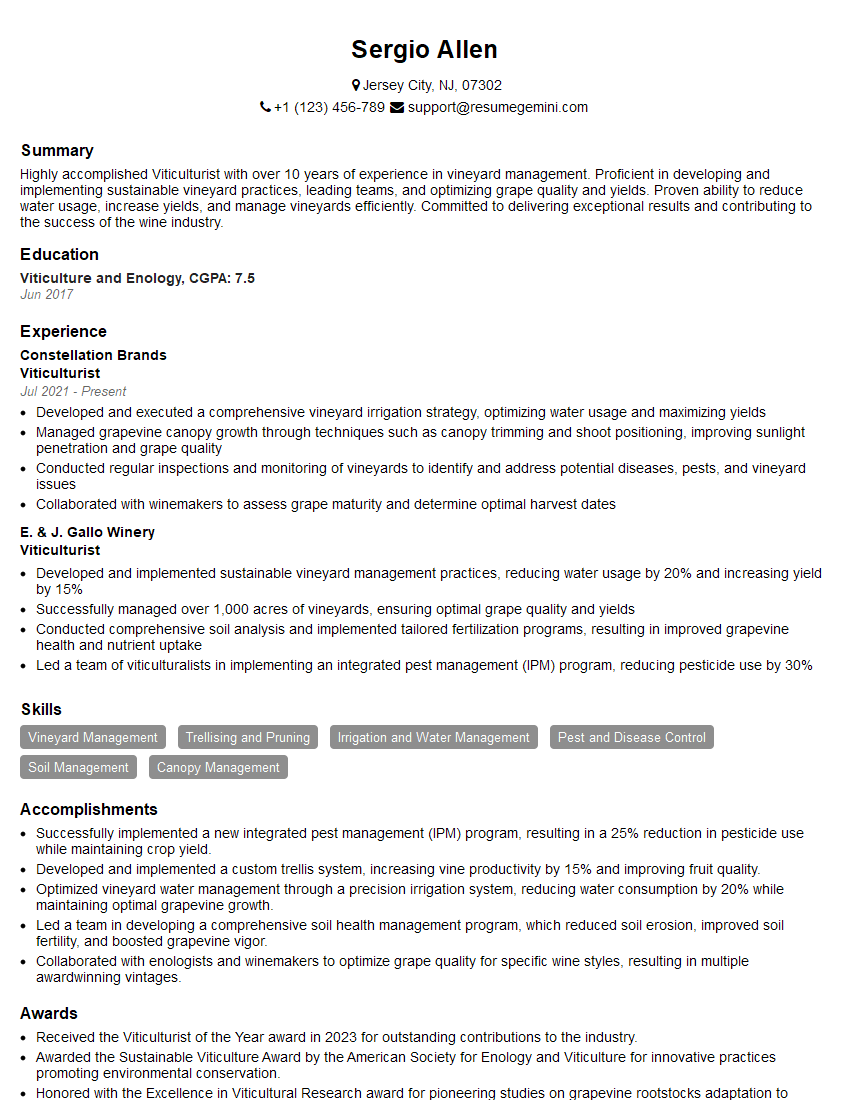
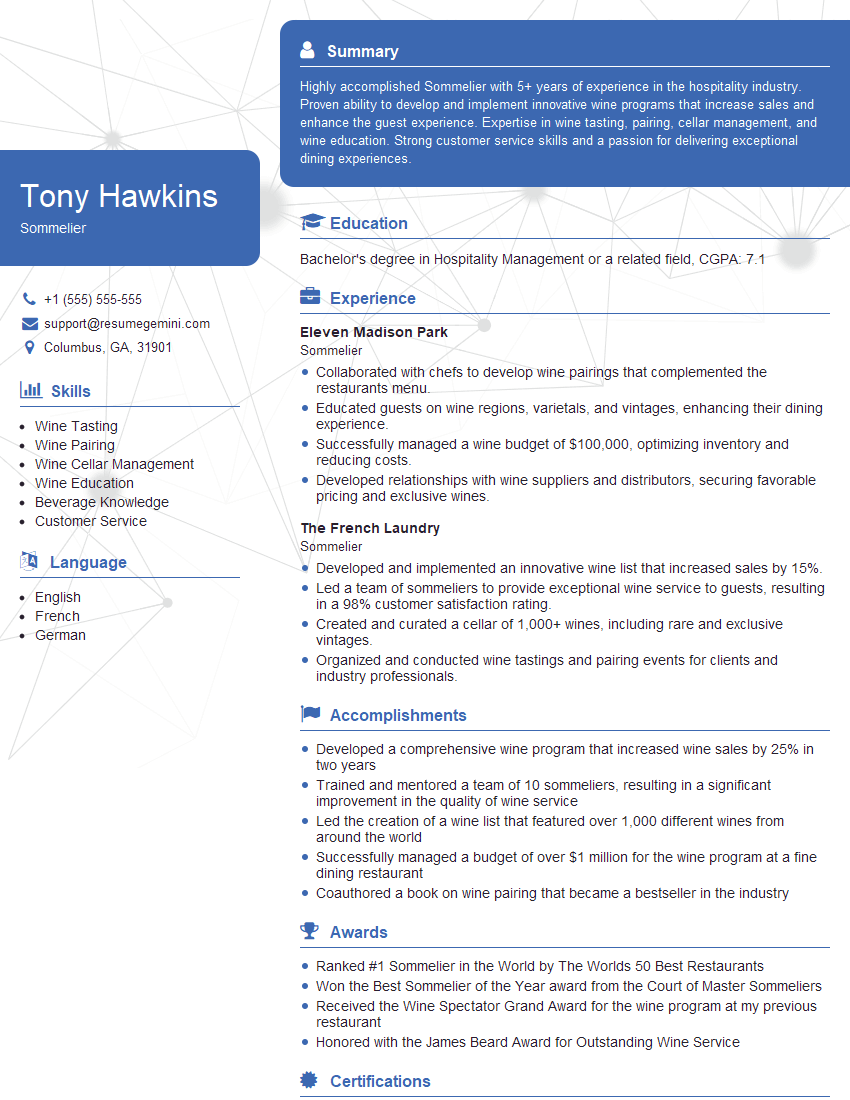
Mastering wine tasting and evaluation is crucial for career advancement in the hospitality, wine retail, or wine production industries. A strong understanding of these concepts demonstrates expertise and professionalism, opening doors to exciting opportunities. To maximize your job prospects, crafting an ATS-friendly resume is paramount. ResumeGemini is a trusted resource to help you build a compelling and effective resume that highlights your skills and experience. ResumeGemini provides examples of resumes tailored to Wine Tasting and Evaluation roles, ensuring you present your qualifications in the best possible light.
Explore more articles
Users Rating of Our Blogs
Share Your Experience
We value your feedback! Please rate our content and share your thoughts (optional).
What Readers Say About Our Blog
To the interviewgemini.com Webmaster.
Very helpful and content specific questions to help prepare me for my interview!
Thank you
To the interviewgemini.com Webmaster.
This was kind of a unique content I found around the specialized skills. Very helpful questions and good detailed answers.
Very Helpful blog, thank you Interviewgemini team.