Preparation is the key to success in any interview. In this post, we’ll explore crucial Working with masonry tools interview questions and equip you with strategies to craft impactful answers. Whether you’re a beginner or a pro, these tips will elevate your preparation.
Questions Asked in Working with masonry tools Interview
Q 1. What types of masonry tools are you proficient with?
My proficiency spans a wide range of masonry tools, from basic hand tools to more specialized equipment. I’m highly skilled in using tools like brick trowels (for spreading mortar and placing bricks), pointing trowels (for creating precise joints), levels (to ensure plumb and level surfaces), plumb bobs (for vertical accuracy), brick hammers (for breaking and shaping bricks), and various types of saws (for cutting bricks and stone). I’m also comfortable operating power tools like masonry saws, grinders, and mixers for larger projects. My experience extends to using specialized tools for specific applications such as a jointing tool for creating decorative joints and a bolster for supporting materials during cutting. I’ve also been trained and am experienced in using scaffolding and other safety equipment required for working at height.
Q 2. Describe your experience with different types of mortar.
My experience encompasses various mortar types, each suited for different applications. I’m familiar with Type N mortar, a general-purpose mortar ideal for most masonry work, including walls and chimneys. Type S mortar, a higher-strength option, is often used for foundations and load-bearing walls. Type M mortar, the strongest type, is typically reserved for applications under extreme pressure or in harsh environments. I also have experience working with specialized mortars, including those designed for specific brick types or to meet certain aesthetic requirements, such as lime-based mortars for historic restoration projects. Understanding the properties of each mortar type – its strength, workability, and setting time – is crucial to ensuring a successful and durable structure. For instance, using Type N mortar where Type S is required could lead to structural weakness.
Q 3. Explain the process of laying bricks using a running bond pattern.
Laying bricks in a running bond pattern is a fundamental skill in masonry. It involves alternating the position of each brick, creating a staggered effect. The process begins with establishing a level and plumb foundation. Then, I spread a bed of mortar about 3/8 to 1/2 inch thick using my trowel. I place the first brick at the corner, ensuring it’s level and plumb. Each subsequent brick is laid, overlapping the previous brick by approximately half its length. I use my trowel to create even mortar joints, ensuring they’re consistent in thickness and appearance. Throughout the process, I regularly check for level and plumb using a level and plumb bob, making adjustments as needed. Maintaining consistent mortar joints is vital for the overall aesthetic appeal and structural integrity of the wall. A poorly executed running bond can result in weak points and an uneven look.
Q 4. How do you ensure the accuracy and plumbness of your work?
Accuracy and plumbness are paramount in masonry. I use a combination of tools and techniques to achieve this. Before starting any work, I establish a level and plumb baseline using a transit level and string lines. Throughout the process, I regularly check my work using a level, plumb bob, and measuring tape. For larger walls, I’ll use a laser level for greater accuracy and efficiency. I also rely on my experience and eye to ensure that bricks are properly aligned and that the mortar joints are consistent. Any deviations are immediately corrected to prevent compounding errors. For example, a slight deviation at the base of a wall can become increasingly significant as the wall gets taller.
Q 5. What safety precautions do you take when using masonry tools?
Safety is my top priority. When working with masonry tools, I always wear appropriate personal protective equipment (PPE), including safety glasses, gloves, and dust masks to protect against flying debris and inhaling dust. I ensure that my work area is free of obstructions and properly lit. When working at heights, I use scaffolding that is properly erected and secured and always use a safety harness. I’m trained in the safe handling and operation of power tools and regularly check tools for damage before use. I’m also aware of the potential hazards associated with working with different materials and I take necessary precautions to mitigate those risks. For instance, when cutting bricks, I always direct the cut away from myself and others.
Q 6. How do you handle damaged or substandard materials?
Handling damaged or substandard materials requires careful attention to detail. I thoroughly inspect all materials upon delivery, rejecting anything that shows significant cracks, chips, or other defects that could compromise the structural integrity of the project. Damaged bricks or stones are separated from the usable materials. Minor imperfections are dealt with by careful selection and placement, ensuring that visually unappealing elements are not in highly visible areas. I always communicate any issues with substandard materials to the supervisor or project manager to discuss replacement options or potential adjustments to the project design.
Q 7. Describe your experience with different types of stone.
My experience with stone includes working with various types, each presenting unique challenges and characteristics. I’ve worked extensively with granite, known for its strength and durability; limestone, appreciated for its aesthetic appeal and relative ease of carving; and sandstone, which is more porous and requires careful consideration during installation to prevent water damage. My skills extend to handling both natural and manufactured stone, each requiring different tools and techniques. For instance, cutting granite usually necessitates specialized diamond blades, while working with more porous stones might require different sealing treatments. Knowing the properties of each stone—its strength, density, and susceptibility to weathering—allows me to choose the right techniques and materials for a successful project.
Q 8. What methods do you use to cut and shape masonry units?
Cutting and shaping masonry units requires precision and the right tools. The method depends heavily on the material – brick, stone, or concrete block – and the desired shape.
Bricks: A brick saw, either wet or dry, is commonly used for accurate cuts. For more intricate shapes, a grinder with a diamond blade offers versatility. A bolster chisel and hammer can be used for rough shaping but requires skill to avoid chipping.
Stone: Stone cutting is more demanding and often requires specialized equipment. Angle grinders with diamond blades are used frequently, but for large, intricate cuts, a masonry saw or even a wire saw might be necessary. Hand tools like chisels and hammers are used for finer detailing after initial cuts.
Concrete Blocks: These are usually cut using a masonry saw, a hand-held electric saw with a diamond blade, for straight cuts. For more complex shapes, a grinder with a diamond blade or a specialized block cutter might be needed.
Safety is paramount. Always wear appropriate safety glasses and a dust mask, especially when using power tools. Wet cutting minimizes dust generation.
Q 9. How do you prepare a surface for masonry work?
Surface preparation is crucial for a strong and lasting masonry structure. A poorly prepared surface leads to weak bonds and potential structural issues. The process involves:
Cleaning: Removing loose debris, dirt, dust, and any existing coatings is essential. A wire brush, pressure washer, or even a stiff broom can be used, depending on the surface.
Leveling: Uneven surfaces need to be leveled to ensure a consistent bond and prevent uneven settling. This might involve adding leveling mortar or using shims.
Priming (if necessary): Some surfaces, particularly concrete, benefit from a bonding agent or primer to improve adhesion of the mortar.
Dampening: Slightly dampening the surface before applying mortar prevents the mortar from drying out too quickly and helps it bond effectively. This is particularly important in hot and dry conditions.
I always carefully inspect the surface before starting any work and tailor my preparation accordingly. For instance, on a severely weathered brick surface, I’d spend more time cleaning and potentially use a masonry cleaner to remove efflorescence (salt deposits).
Q 10. Explain the importance of proper jointing techniques.
Proper jointing isn’t just about aesthetics; it’s crucial for the structural integrity and weather resistance of the masonry wall. Well-jointed walls are stronger and better protected against water penetration.
Joint Type: Different joint types (concave, convex, weathered, etc.) serve different purposes. For example, a concave joint helps shed water, while a weathered joint offers a more rustic look.
Mortar Consistency: The mortar must be the right consistency to create a strong bond and fill the joint completely. Too stiff, and it won’t fill properly; too wet, and it will shrink and crack.
Tooling: Jointing tools, like a pointing tool or a jointer, are used to shape and compact the mortar, creating a neat and durable joint. This process helps create a watertight seal.
Weather Protection: Proper jointing protects the wall from water damage by creating a barrier against rain and snow penetration. This prevents problems like efflorescence and frost damage.
Imagine a wall with poorly tooled joints – the gaps would allow water ingress, leading to weakening of the structure and costly repairs down the line.
Q 11. How do you ensure proper drainage in a masonry wall?
Ensuring proper drainage in a masonry wall is crucial to prevent water damage and extend the life of the structure. Key strategies include:
Weep Holes: These are small holes built into the wall at regular intervals near the base. They allow water that has penetrated the wall to drain out, preventing it from accumulating and causing damage.
Flashing: Metal flashing is installed at critical areas like window and door openings, preventing water from running down and penetrating the wall. It redirects water away from the vulnerable points.
Proper Grading: The ground around the base of the wall should slope away from the structure, directing water away and preventing it from pooling against the wall.
Damp Proof Course (DPC): A DPC, usually a waterproof membrane, is installed at the base of the wall to prevent moisture from rising by capillary action.
Failure to implement these measures can lead to dampness, mold growth, and eventually, structural degradation. I always prioritize drainage planning in my designs to ensure long-term durability.
Q 12. What are the signs of a poorly laid brick or stone?
Several signs point to a poorly laid brick or stone:
Inconsistent Mortar Joints: Uneven, excessively wide, or thin mortar joints indicate sloppy workmanship and weak bonding.
Cracks: Cracks in the masonry units or mortar joints suggest stress or poor workmanship. Hairline cracks might be minor, but larger cracks warrant immediate attention.
Leaning Units: Bricks or stones that are not plumb or level indicate poor installation. This can compromise the structural integrity of the wall.
Gaps and Hollows: Large gaps between units mean inadequate mortar filling, leading to weak points in the structure and potential water penetration.
Efflorescence: White, powdery deposits on the masonry surface indicate salt migration due to moisture problems, which often stems from poor construction practices.
These issues highlight the importance of skilled labor and attention to detail in masonry work. A properly laid wall will be strong, durable, and aesthetically pleasing.
Q 13. Describe your experience with different types of concrete blocks.
My experience encompasses various concrete block types, each with its own properties and applications:
Standard Concrete Blocks (CMUs): These are the most common type, used widely for load-bearing and non-load-bearing walls. Their strength and affordability make them versatile.
Lightweight Concrete Blocks: These are lighter than standard CMUs, often made with hollow cores and lightweight aggregates. They are suitable for non-load-bearing walls where weight reduction is important.
Insulating Concrete Blocks (ICFs): These have insulation incorporated into their design, offering excellent thermal performance. They are increasingly popular in energy-efficient construction.
Decorative Concrete Blocks: These come in a variety of colors, textures, and shapes, providing architectural versatility and aesthetic appeal. I’ve used these for feature walls and landscaping projects.
Choosing the right type of block depends on the project requirements, considering factors like structural load, thermal performance, and aesthetics. My experience allows me to select and utilize these effectively.
Q 14. How do you clean and maintain masonry tools?
Cleaning and maintaining masonry tools is crucial for their longevity and effectiveness. Neglect can lead to damage, rust, and inefficiency.
Immediate Cleaning: After each use, remove excess mortar and debris from tools. A stiff brush, wire brush, or even a putty knife works well. For stubborn mortar, soaking in water can help.
Thorough Cleaning: At the end of the day or project, give tools a more thorough cleaning. Use water and a cleaning solution appropriate for the tool material to remove any remaining mortar.
Storage: Store tools in a dry place to prevent rust. Oil or grease can be applied to metal tools to prevent corrosion. Keep tools organized to prevent damage.
Sharpening: Sharpening is essential for chisels and other tools to ensure clean cuts. This extends the life of your tools and improves the quality of your work.
Regular maintenance not only prolongs the life of your tools but also saves time and effort in the long run, ensuring efficient and high-quality workmanship.
Q 15. What are the different types of masonry bonds?
Masonry bonds refer to the pattern in which bricks or masonry units are arranged to create a strong and aesthetically pleasing wall. Different bonds offer varying levels of strength and visual appeal. Think of it like weaving a fabric – the pattern dictates the overall strength and look.
- Running Bond: The simplest, with bricks laid in horizontal courses, each brick overlapping the one below by half its length. It’s efficient and common but less strong than others.
- Common Bond: Alternates courses of headers (bricks laid with their short ends showing) and stretchers (bricks laid with their long sides showing). Stronger than running bond and visually more interesting.
- English Bond: Uses alternating courses of headers and stretchers, but the headers are centered on the stretchers below, creating a more robust bond.
- Flemish Bond: Alternates headers and stretchers in each course, creating a visually complex and strong bond. It’s more time-consuming but adds a classic, elegant look.
- Stack Bond: Bricks are laid vertically on top of each other. This is the least strong bond and primarily used for decorative purposes or where structural integrity isn’t a primary concern.
The choice of bond depends on the project’s structural requirements, aesthetic preferences, and the type of masonry unit used. For instance, a retaining wall might benefit from the stronger English bond, while a garden wall might use the more visually appealing Flemish bond.
Career Expert Tips:
- Ace those interviews! Prepare effectively by reviewing the Top 50 Most Common Interview Questions on ResumeGemini.
- Navigate your job search with confidence! Explore a wide range of Career Tips on ResumeGemini. Learn about common challenges and recommendations to overcome them.
- Craft the perfect resume! Master the Art of Resume Writing with ResumeGemini’s guide. Showcase your unique qualifications and achievements effectively.
- Don’t miss out on holiday savings! Build your dream resume with ResumeGemini’s ATS optimized templates.
Q 16. How do you handle uneven or sloped surfaces?
Handling uneven or sloped surfaces requires careful planning and execution. The key is to create a level bed for each course of masonry units, ensuring stability and a consistent, aesthetically pleasing result.
Strategies Include:
- Building up the base: Using compacted gravel or concrete to level the foundation before laying the first course. Think of this as creating a solid, even base for a house.
- Using a leveling course: A bed of mortar adjusted to compensate for the slope. This involves using more mortar on the lower side to level the bricks. It’s like using shims to level a picture frame.
- Cutting and shaping bricks: Carefully cutting bricks to fit the slope, creating a custom fit that adapts to the uneven surface. This requires precision and skilled use of brick saws or grinders.
- Using stepped construction: Creating a series of steps or offsets to accommodate the slope, which can be a visually pleasing solution for certain projects.
Careful measurement and precise execution are crucial to prevent instability and ensure the wall’s longevity. I always double-check levels and use appropriate tools to ensure accuracy throughout the process.
Q 17. Explain the process of installing coping stones.
Coping stones are the protective caps placed on top of walls, parapets, or other masonry structures. They are crucial for shedding water, preventing water damage, and enhancing the structure’s aesthetic appeal. Installing them correctly requires precision and attention to detail.
The Process Typically Involves:
- Preparation: Ensure the top of the wall is clean, level, and free from debris. This is the foundation for a successful installation.
- Mortar Application: Applying a bed of mortar to the top of the wall, ensuring even distribution. The consistency of the mortar is key here.
- Stone Placement: Carefully setting the coping stones in place, ensuring proper alignment and level. This often requires careful adjustment and tweaking.
- Grouting and Finishing: Filling gaps between stones and the wall with mortar and carefully tooling the joints for a neat finish. This protects against water ingress.
- Sealing (Optional): Applying a sealant to enhance water resistance and protect the coping stones and the underlying masonry.
Throughout the process, precision is paramount. I always use level checks and ensure proper support to prevent cracking or shifting of the stones.
Q 18. Describe your experience with pointing and repointing masonry.
Pointing refers to filling the mortar joints between masonry units. Repointing is the process of removing old, deteriorated mortar and replacing it with new mortar. Both are essential for maintaining the structural integrity and aesthetic appeal of masonry structures.
My experience encompasses various pointing techniques, including tuckpointing (creating a recessed joint), weatherpointing (creating a slightly concave joint), and concave pointing (a deeper recessed joint). I’ve worked on a wide range of projects, from restoring historic buildings to maintaining modern structures.
Repointing Process:
- Assessment: Carefully assessing the condition of the existing mortar, identifying areas needing repair.
- Mortar Removal: Using appropriate tools, such as chisels and hammers, to carefully remove the old mortar without damaging the bricks. This step requires precision and skill to avoid damage.
- Cleaning: Cleaning the joints thoroughly to ensure good bonding of the new mortar.
- Mortar Application: Applying the new mortar, ensuring proper compaction and tooling for a uniform and aesthetically pleasing finish.
I always select the correct mortar mix for the specific application and adhere to best practices to ensure the longevity of the repair.
Q 19. How do you determine the correct mortar mix for a specific application?
The correct mortar mix is crucial for the strength, durability, and aesthetic appeal of masonry work. The mix depends on several factors, including the type of masonry unit, the application (interior or exterior), and the required strength.
Mortar is typically a mixture of cement, lime, sand, and water. The proportions of these ingredients determine the mortar’s properties. For example, a high-strength mortar for structural applications will have a higher cement-to-sand ratio than a mortar used for decorative pointing.
Factors Affecting Mortar Mix Selection:
- Strength Requirements: High-strength applications necessitate a higher cement content.
- Workability: The mix must be workable enough to allow for easy placement and tooling.
- Weather Conditions: Extreme temperatures might require modifications to the mix.
- Aesthetic Considerations: Color and texture may influence the choice of aggregates.
I carefully review project specifications and consult relevant standards to determine the appropriate mortar mix. When in doubt, testing and consulting with material specialists are always valuable approaches.
Q 20. What are the different methods of waterproofing masonry?
Waterproofing masonry is essential to prevent damage from water penetration, which can lead to deterioration and structural problems. Several methods are available, each with its own advantages and disadvantages.
Waterproofing Methods:
- Hydrophobic Sealers: These penetrate the masonry and repel water, preventing it from entering the pores. They are typically used on exterior walls.
- Membrane Waterproofing: Applying a continuous membrane to the exterior or interior of the wall to create a barrier against water. This is common in basements and below-grade applications.
- Integral Waterproofing: Adding waterproofing chemicals to the mortar mix during construction. This is a preventative measure used during the building process.
- Cavity Wall Construction: Building walls with a cavity between two layers of masonry. This allows for ventilation and prevents water from penetrating through the entire wall.
The best method depends on the specific application, the type of masonry, and the level of protection required. For example, a historic building might benefit from hydrophobic sealers to maintain its original appearance, while a new basement might use membrane waterproofing for maximum protection.
Q 21. How do you read and interpret masonry blueprints?
Reading and interpreting masonry blueprints requires a thorough understanding of architectural drawings and masonry construction techniques. Blueprints contain detailed information about wall dimensions, materials, bonds, and other relevant information.
Blueprint Interpretation:
- Dimensions: Understanding the scale of the drawing and accurately measuring wall heights, lengths, and thicknesses.
- Materials: Identifying the type of bricks, blocks, or stones specified, along with their sizes and properties.
- Bonds: Recognizing the type of masonry bond used (running, common, English, Flemish, etc.).
- Details: Interpreting detailed sections and elevations to understand wall construction, including foundations, openings, and details like lintels and sills.
- Specifications: Reviewing the project specifications for details about mortar mixes, waterproofing methods, and other relevant information.
I’ve worked on numerous projects interpreting blueprints, making use of my knowledge of masonry construction to translate the design into a physical structure. I am proficient in reading architectural drawings and am comfortable translating the blueprint requirements into a detailed construction plan.
Q 22. Explain your understanding of building codes related to masonry construction.
Building codes for masonry construction are crucial for ensuring safety and structural integrity. They dictate everything from the type and strength of materials allowed (like brick, block, or stone) to the design and construction methods used. These codes vary by location (e.g., local, state, national) and are often quite detailed. For instance, they specify minimum compressive strengths for mortar, the required thickness of walls depending on their height and load-bearing requirements, and the necessary reinforcement for stability, particularly in seismic zones. I’m very familiar with the International Building Code (IBC) and the relevant sections addressing masonry, and I always ensure my work meticulously adheres to the specific codes governing each project’s location.
A common example is the specification of weep holes in brick walls. These small holes allow for moisture drainage, preventing water damage and ensuring the long-term health of the structure. Ignoring this code requirement could lead to significant problems down the line, such as efflorescence (salt deposits on the surface) or even structural degradation.
Q 23. Describe your experience with working at heights.
I have extensive experience working at heights, having completed numerous projects involving multi-story buildings and elevated structures. Safety is paramount, and I always adhere to strict safety protocols. This includes using appropriate fall protection equipment such as harnesses, lifelines, and anchored safety systems. I’m proficient in using scaffolding and ensuring its proper erection and dismantling, always conducting thorough inspections before commencing work. I’ve been trained in fall arrest systems and rescue techniques and am comfortable working on complex projects requiring elevated work platforms.
For example, on a recent project involving the restoration of a historic building, we used a combination of scaffolding and swing-stage platforms to safely access and repair the upper sections of the masonry facade. We meticulously checked every component before starting, and conducted daily safety briefings to maintain focus on the risks involved. Safety is not just a guideline for me; it is a critical part of my approach to every project.
Q 24. How do you handle different weather conditions during masonry work?
Weather significantly impacts masonry work. Extreme heat can cause rapid drying of mortar, leading to reduced strength and cracking. Conversely, cold temperatures and rain can delay work, impacting curing time and potentially freezing water within the mortar, leading to damage. I adapt to different conditions by using appropriate techniques and materials. In hot weather, I use shade cloths to protect the work area and add water to the mortar mix more frequently, ensuring slow and even drying. In cold weather, I protect the masonry from freezing temperatures using tarps and heaters. I also closely monitor the weather forecasts to plan my work accordingly and avoid unnecessary delays or damage.
For instance, during a particularly cold winter project, we carefully monitored the mortar temperature, using heated water and adjusting the mix to ensure proper setting and curing. We also used insulated blankets to protect freshly laid sections, preventing freezing and potential damage.
Q 25. What are some common problems encountered during masonry work, and how do you solve them?
Common masonry problems include improper mortar mixing, leading to reduced strength or cracking; inconsistent brick laying, causing unevenness or instability; efflorescence (salt deposits on brick surfaces); and the appearance of voids or hollow spaces within the masonry structure. Solving these requires careful attention to detail. For instance, if I encounter efflorescence, I’d investigate the source of moisture, potentially improving drainage or addressing water penetration issues. Voids are usually rectified through careful inspection and filling with suitable mortar, ensuring a proper bond to adjacent bricks. Unevenness often requires addressing the laying process, either by starting again or through targeted repairs, using specialized tools such as a brick chisel to correct alignment.
For example, when dealing with cracks in a wall, I’d first determine the cause—settling, thermal stress, or poor workmanship. Then, I’d choose the correct repair method: repointing, injecting epoxy, or even complete section replacement, depending on the severity and cause of the damage. The key is thorough diagnosis before selecting a remedy.
Q 26. Describe your experience with using specialized masonry tools (e.g., power tools).
My experience with specialized masonry tools is extensive. I’m proficient in using various power tools, including brick saws, angle grinders with diamond blades for cutting and shaping bricks, and pneumatic drills for creating precise holes in masonry units. I also utilize a variety of hand tools, such as levels, plumb bobs, trowels, and chisels, to maintain precise accuracy and quality in my work. Safety is a priority, and I always ensure that all power tools are properly maintained and used in accordance with manufacturer’s guidelines and safety regulations. I’m also comfortable using laser levels for precise alignment and leveling, significantly improving accuracy and efficiency.
A recent project involved the intricate cutting of curved bricks for a decorative archway. Using a combination of a brick saw and an angle grinder with a diamond blade, I was able to precisely cut the bricks to the required shape and ensure a smooth, aesthetically pleasing finish.
Q 27. How do you ensure the structural integrity of your masonry work?
Ensuring structural integrity in masonry work requires careful attention to several factors. First, the quality of materials is essential; using the right type and strength of bricks, mortar, and reinforcing elements is crucial. Second, proper construction techniques, such as ensuring proper bonding patterns, using appropriate mortar proportions and ensuring proper curing time, are vital for achieving structural soundness. Third, complying with building codes and incorporating necessary reinforcements, especially in load-bearing walls or in seismic zones, is non-negotiable. Finally, regular inspections during and after construction help identify and address potential issues before they become major problems.
For example, I always employ a systematic approach to laying bricks, following specified bonding patterns to distribute loads efficiently and ensure the wall’s overall stability. In seismic areas, I’d also incorporate steel reinforcement as per the building codes to improve the structure’s resistance to earthquakes.
Q 28. What are your methods for quality control and inspection?
My quality control methods involve several steps. First, I meticulously check the quality of materials before starting the work. Second, I consistently monitor the construction process, ensuring that bricks are laid correctly and that the mortar is properly applied and cured. Third, I utilize accurate measuring tools (levels, plumb bobs, and laser levels) to ensure precise alignment and verticality of walls. Finally, I conduct regular inspections throughout the project and upon completion to identify any defects or potential issues. Documentation, including photographs and detailed records of materials used and the construction process, is an essential part of my quality control process.
For example, after each day’s work, I inspect the laid masonry to check for any imperfections or gaps. This proactive approach ensures that any small issues are addressed immediately, preventing larger problems down the line. This commitment to quality is reflected in my dedication to detail and constant self-assessment.
Key Topics to Learn for Working with Masonry Tools Interview
- Safety Procedures and Regulations: Understanding and applying OSHA safety standards for masonry work, including proper use of Personal Protective Equipment (PPE) and hazard identification.
- Mortar Mixing and Application Techniques: Mastering different mortar mixes for various applications (e.g., bricklaying, blocklaying, stonework), achieving proper consistency, and applying techniques for strong, weather-resistant bonds.
- Bricklaying and Blocklaying Techniques: Understanding different bonding patterns (running bond, common bond, stack bond, etc.), achieving plumb and level walls, and ensuring proper jointing techniques.
- Stonework and other Masonry Materials: Familiarity with different types of stone, their properties, and appropriate cutting and laying techniques. Experience with other materials like concrete blocks and pavers.
- Reading and Interpreting Blueprints: Accurately interpreting construction drawings, including dimensions, specifications, and details relevant to masonry work.
- Tools and Equipment: Demonstrating proficiency with a range of masonry tools, from trowels and levels to power tools like saws and mixers, understanding their maintenance and safe operation.
- Quality Control and Inspection: Understanding quality control measures to ensure the structural integrity and aesthetic appeal of masonry structures, including methods for detecting and addressing imperfections.
- Problem-Solving and Troubleshooting: Describing approaches to identifying and resolving common problems encountered during masonry construction, such as uneven walls, cracked mortar, or material defects.
- Construction Practices and Best Practices: Demonstrating knowledge of efficient workflow, material handling, and techniques to optimize speed and quality of work within a construction setting.
Next Steps
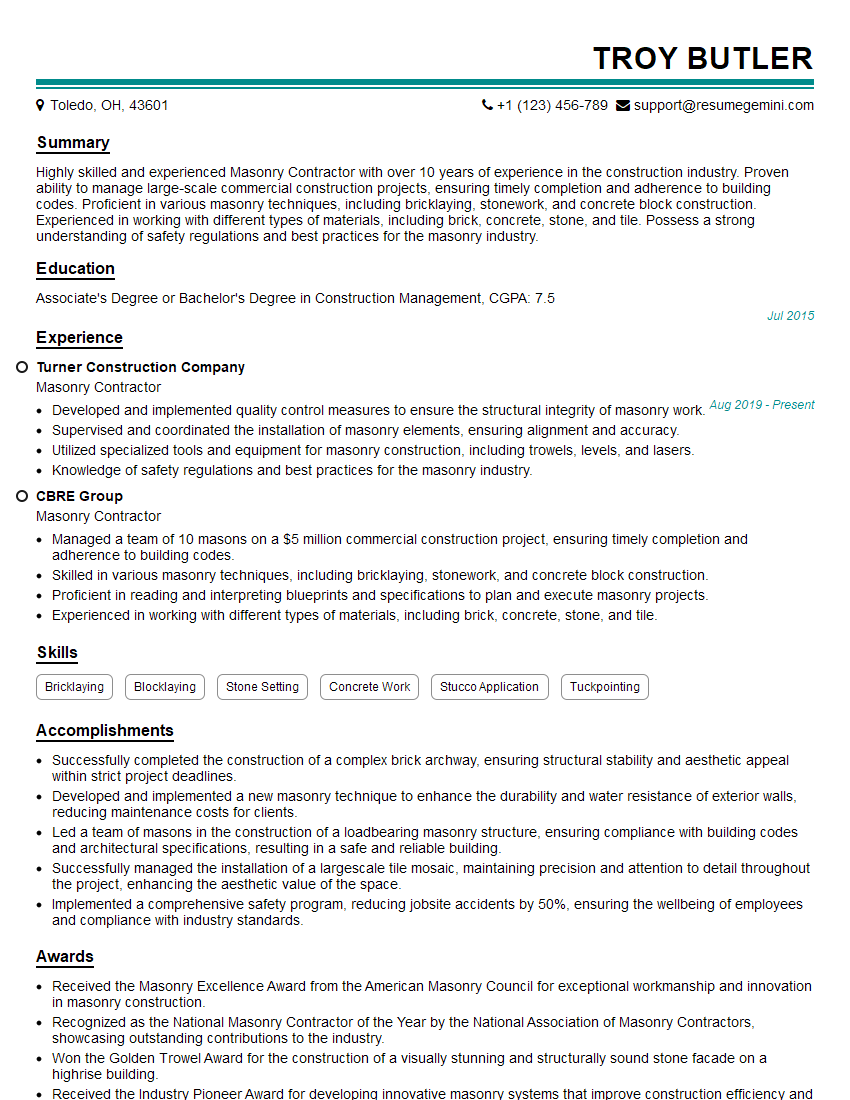
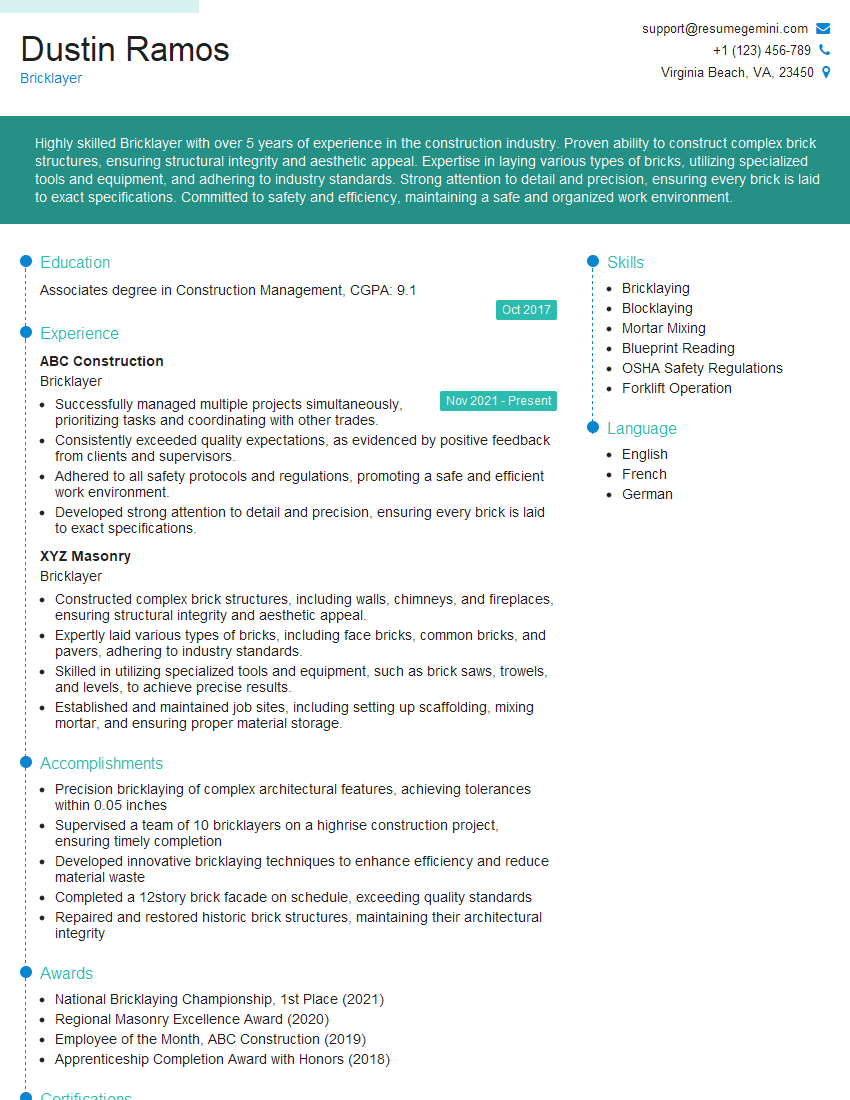
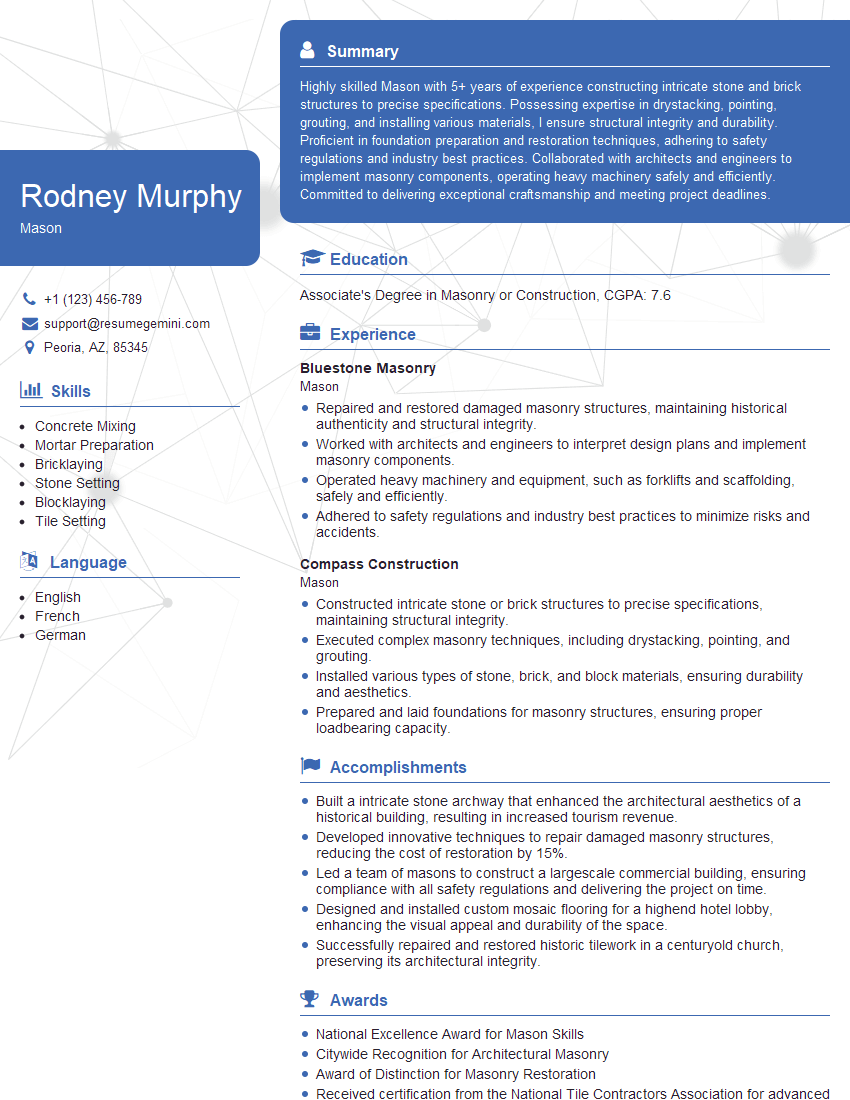
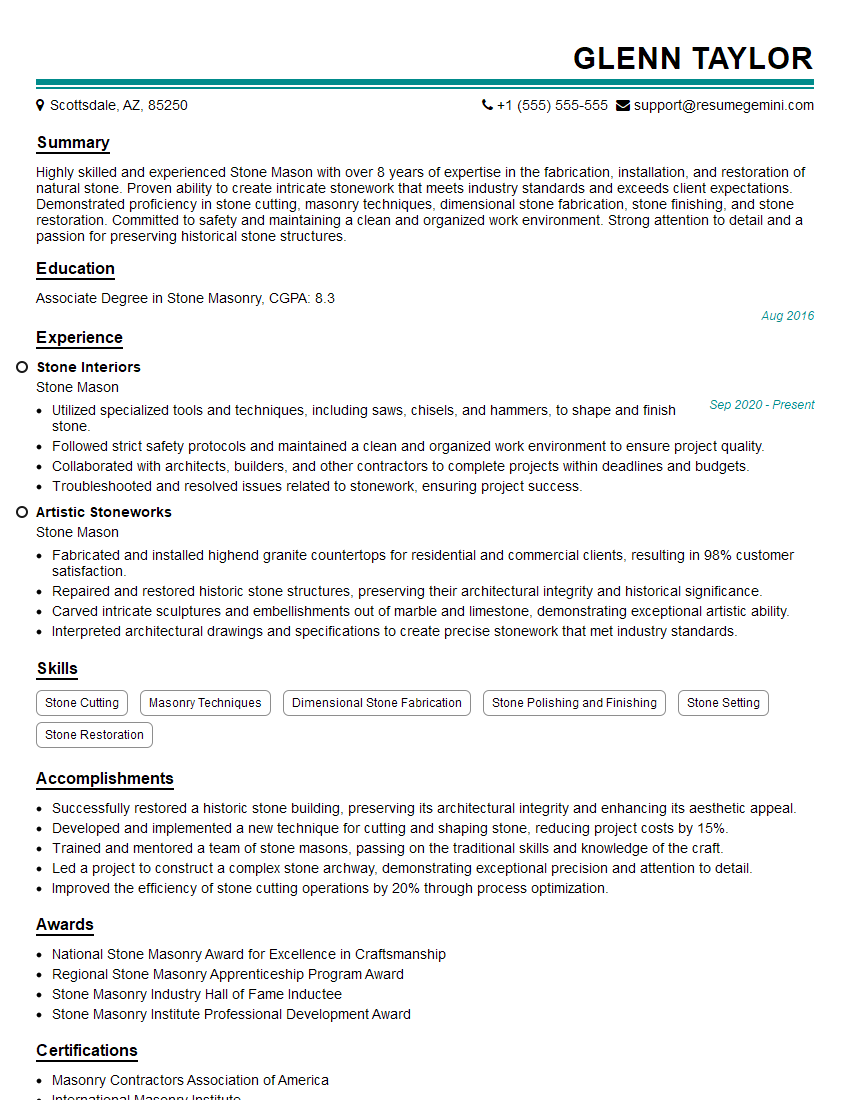
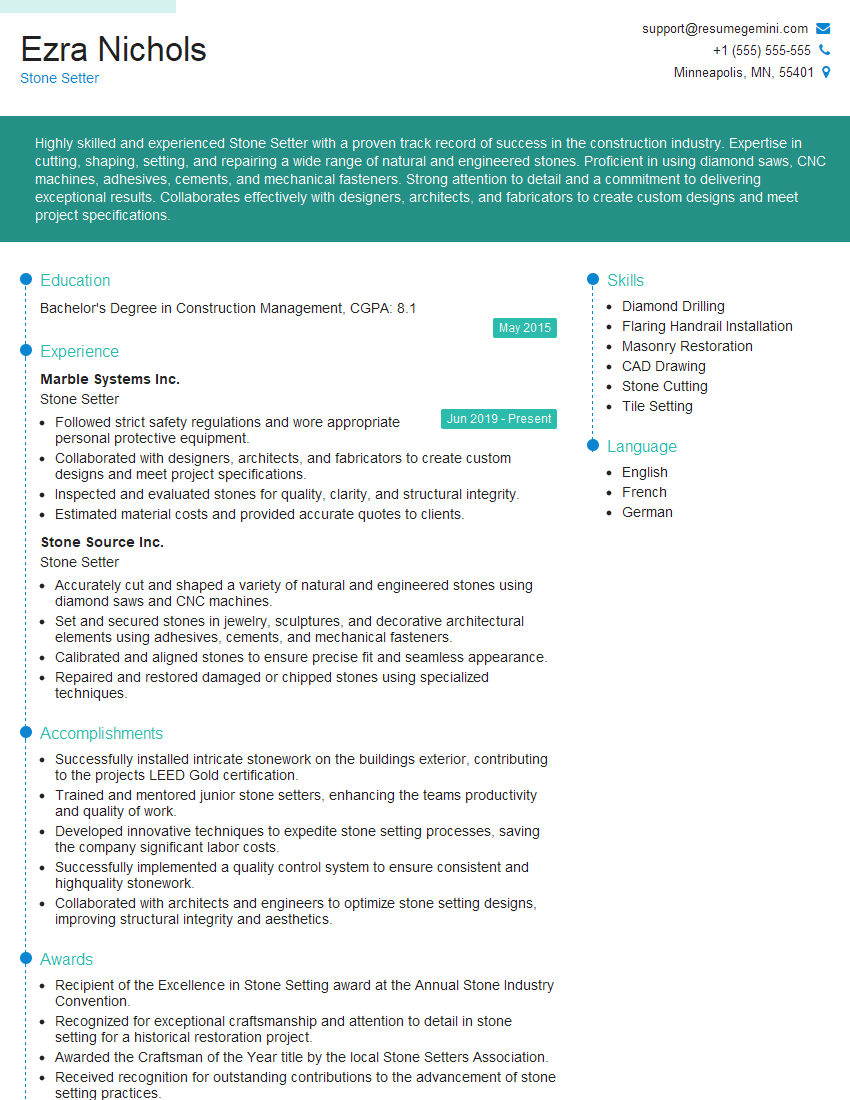
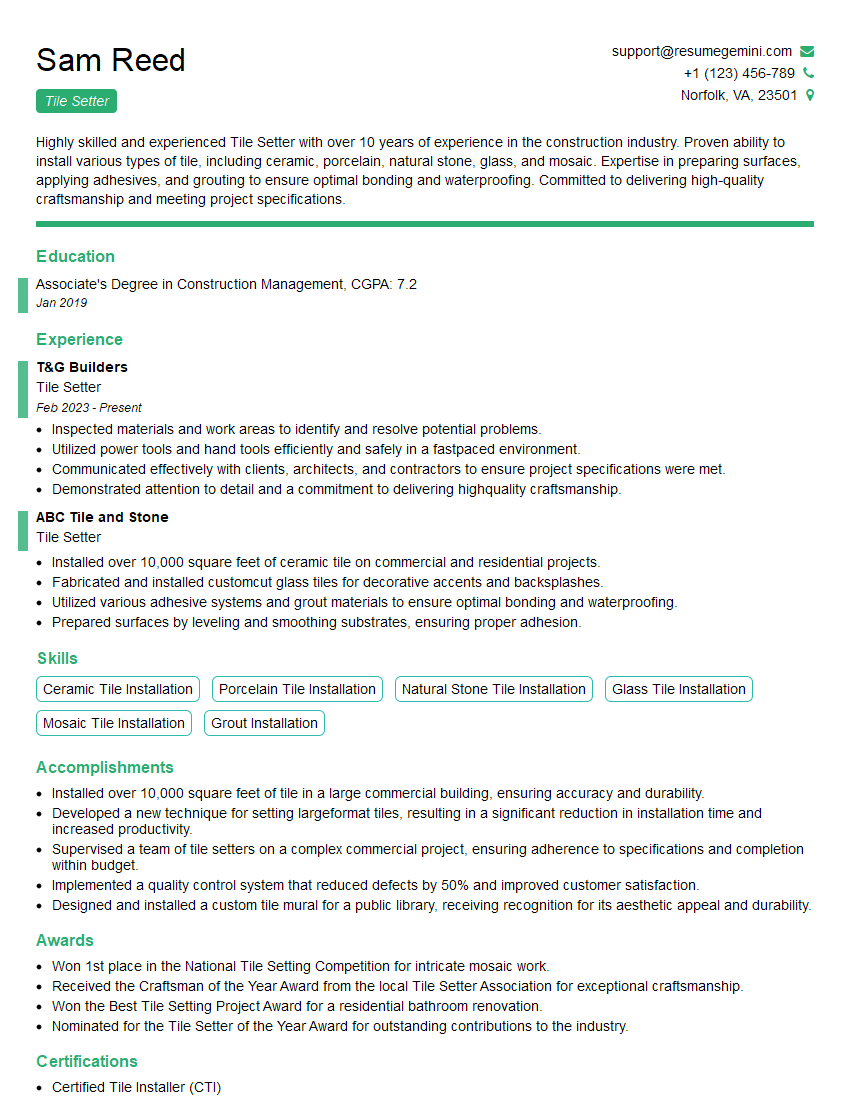
Mastering working with masonry tools is crucial for career advancement in the construction industry, opening doors to higher-paying positions and greater responsibility. To significantly boost your job prospects, create a compelling and ATS-friendly resume that highlights your skills and experience effectively. ResumeGemini is a trusted resource to help you build a professional and impactful resume that gets noticed. We offer examples of resumes tailored to masonry work to guide you, providing a head-start in your job search.

Explore more articles
Users Rating of Our Blogs
Share Your Experience
We value your feedback! Please rate our content and share your thoughts (optional).
What Readers Say About Our Blog
To the interviewgemini.com Webmaster.
Very helpful and content specific questions to help prepare me for my interview!
Thank you
To the interviewgemini.com Webmaster.
This was kind of a unique content I found around the specialized skills. Very helpful questions and good detailed answers.
Very Helpful blog, thank you Interviewgemini team.